PART 2: He Let Them Think He’d Given Up—Then He Walked Into the Meeting With the State Attorney
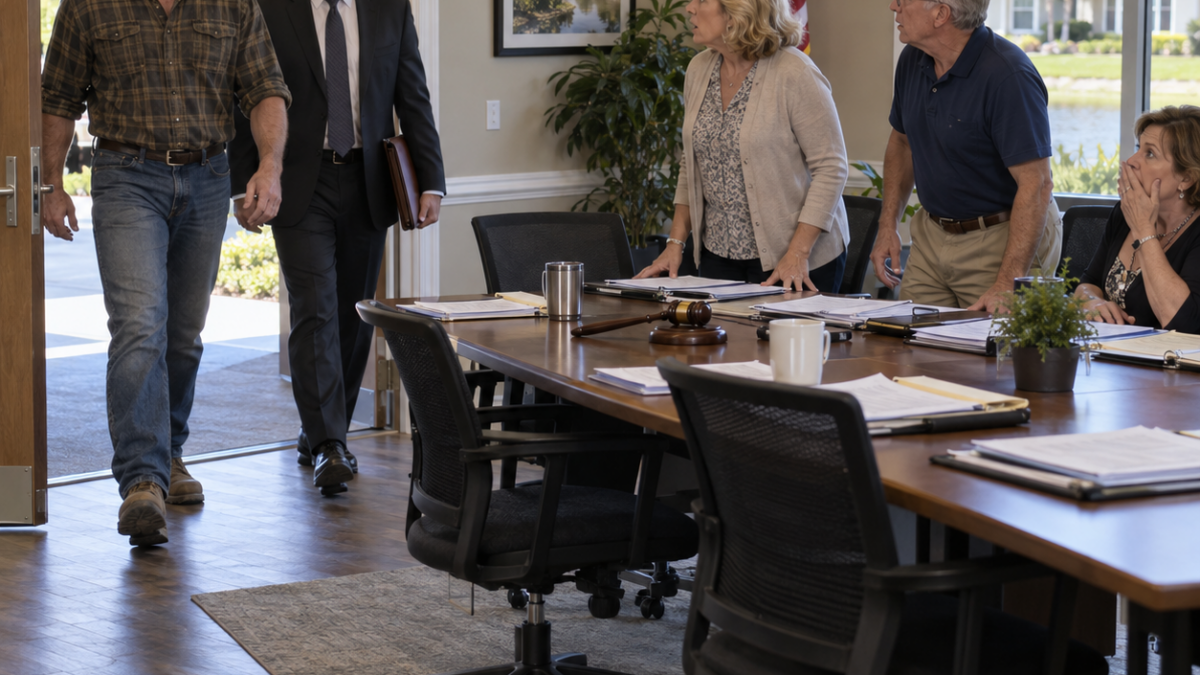
The HOA president gave me three minutes to explain why my dead wife’s garden mattered, then smiled while four board members voted to have every rose, every stone, and the little Japanese maple she loved ripped out of my yard.
A month later, I came home from visiting my daughter and found the garden reduced to churned dirt, Sarah’s bronze memorial plaque bent in half beneath a muddy boot print—and an invoice on my front door charging me $1,200 for the privilege of having my own memories destroyed.
For the next several months, I let Karen believe grief had finally made me quiet, because she had no idea I was documenting every dollar, every contractor, every frightened neighbor, and every connection that would eventually follow me through the clubhouse doors.
My name is Mark Henderson.
I spent twenty-five years in the Army and retired as a sergeant major.
You learn certain things after that much time in uniform.
You learn not to confuse noise with authority.
You learn that the person shouting loudest in a room is often the person least prepared for someone to check the paperwork.
And you learn that grief can make a man look weak when, in reality, he is simply saving his strength for the only fight that matters.
My wife Sarah died thirteen months before this began.
Cancer.
Aggressive.
Six months from diagnosis to goodbye.
We had lived in Oak Creek Estates for twenty years. After decades of moving from one military installation to another, that house was supposed to be our permanent place.
Sarah never cared much about the house.
She cared about the dirt around it.
She grew roses beside the porch.
Lavender along the walk.
Herbs beside the kitchen window.
After she died, the house became unbearably quiet.
The garden was different.
I could sit there with coffee before sunrise and remember her kneeling in the soil, hair tied up badly, dirt on her cheek, arguing with squirrels as if they understood English.
So I rebuilt the front yard for her.
I removed the plain turf and created a small memorial garden.
A winding flagstone path.
A cedar bench.
English roses.
Lavender.
A Japanese maple with dark burgundy leaves.
At the center, I placed a small bronze plaque.
SARAH’S GARDEN.
IN LOVING MEMORY.
Nothing flashy.
Nothing commercial.
Just a place where I could still feel married instead of widowed.
For three months, nobody complained.
Then the beige envelope arrived.
HOA VIOLATION.
Unapproved landscaping modification.
Fine: $50.
I assumed it was a mistake.
Two weeks later, the fine doubled.
This time they specifically cited the Japanese maple as “noncompliant non-native vegetation.”
So I attended the board meeting.
That was where I met Karen Miller.
Fuchsia pantsuit.
Perfect blonde hair.
Little wooden gavel.
The kind of person who could turn approving mailbox paint into a coronation.
When my turn came, I explained Sarah.
Not dramatically.
I didn’t want sympathy.
I wanted common sense.
Karen listened for about ninety seconds.
Then she interrupted.
“Mr. Henderson, while your personal story is touching, sentiment does not exempt homeowners from the covenants.”
“I’m asking for a variance.”
“We don’t grant variances for emotion.”
“It’s a tree.”
“It’s prohibited.”
“It’s maintained.”
“That is irrelevant.”
Then she looked past me at the other board members.
“All in favor of requiring full compliance?”
Four hands rose.
Nobody looked at me.
Karen smiled.
“Motion carries.”
“What does full compliance mean?”
“Remove the unapproved elements.”
“All of them?”
“All.”
I stared at her.
“The roses too?”
“If they are part of the unapproved redesign.”
“The bench?”
“Yes.”
“The memorial plaque?”
Her eyes barely moved.
“If necessary.”
Something inside me went cold.
“This is my wife’s memorial.”
Karen folded her hands.
“And this is a covenanted community.”
I appealed formally.
Photographs.
Landscaper’s report.
Horticultural information.
Certified mail.
Then the letters stopped.
For three weeks, silence.
I thought I had won.
My daughter Emily convinced me to visit her and the grandkids.
I was gone seven days.
When I came home, Sarah’s garden no longer existed.
The maple had been cut down.
The roses ripped out.
The flagstones shattered.
The plaque bent almost double.
And taped to my door was the HOA’s invoice charging me for the demolition.
I knelt in the dirt holding Sarah’s broken name in my hands.
For several minutes, I couldn’t breathe.
Then I looked at the tire tracks, the invoice, the stump, and the flattened flowers.
I stopped thinking like a grieving husband.
And started thinking like a sergeant major.
Because if Karen believed destroying that garden had ended the dispute, she had just made the most expensive mistake of her life.
PART 2
I stayed on my knees longer than I want to admit.
The late-afternoon sun was behind the houses, turning everything gold except the place where Sarah’s garden had been.
That looked gray.
Dead.
Wrong.
I picked up the bronze plaque.
SARAH’S GARDEN.
The center crease had nearly split her name.
There was dirt packed into the lettering.
One corner was scratched badly enough to expose bright metal underneath the weathered finish.
Then I saw the footprint.
Right across the word Sarah.
That was the moment the grief changed.
Until then, the fight had been bureaucratic.
Letters.
Fines.
Meetings.
Karen talking down to me.
I could have absorbed that.
I had absorbed worse things from better people.
But somebody had walked through Sarah’s memorial, bent her plaque, and stepped on her name.
I stood.
Not quickly.
My knees hurt.
My back hurt.
I was sixty-two, not twenty-two.
But something I had not felt since my Army days settled into place.
Purpose.
Not rage.
Rage burns too fast.
Purpose lasts.
I carried the plaque into the house.
Set it on the dining table.
Then I called the sheriff.
A deputy arrived about forty-five minutes later.
Young guy.
Polite.
He walked the yard with me while I explained.
Japanese maple.
Roses.
Bench.
Plaque.
HOA dispute.
Certified appeal.
My trip.
Then the destruction.
He photographed everything.
“Who did the work?” he asked.
I handed him the invoice.
Evergreen Landscape Solutions.
FORCED ABATEMENT OF VIOLATION 427-B.
Labor.
Equipment.
Disposal.
Administrative coordination.
Total: $1,200.
The deputy read it twice.
“They billed you?”
“Yes.”
He looked at the stump.
“That’s…”
He stopped himself.
Then asked:
“Did the HOA have authorization under your governing documents to enter the property?”
“That is exactly what I’m disputing.”
He sighed.
I knew what was coming.
“Mr. Henderson, I’m not saying what they did was right.”
“But?”
“But if they’re claiming contractual authority through the HOA covenants, our prosecutor may view this as civil unless there’s evidence they knowingly exceeded that authority.”
“They entered private property.”
“Yes.”
“They destroyed personal property.”
“Yes.”
“They destroyed a memorial plaque.”
“Yes.”
“And I’m supposed to call a lawyer.”
He looked genuinely sorry.
“Yes, sir.”
I hated the answer.
I also knew enough about systems to recognize when someone was telling me the truth instead of what I wanted to hear.
So I nodded.
“Can I have the report number?”
He wrote it down.
“Photograph everything before touching it.”
“Already started.”
He looked at me.
“Military?”
“Army.”
“What rank?”
“Sergeant major.”
He smiled slightly.
“I figured.”
“Why?”
“You’re the first homeowner I’ve ever met who asked for the incident number before yelling at me.”
I almost laughed.
He left.
Then I turned my dining room into a command post.
Every HOA letter went on the table.
Initial notice.
Second notice.
Meeting minutes.
My appeal.
Certified-mail receipt signed by Karen.
Fine statements.
Abatement invoice.
Photographs.
Sheriff incident number.
I printed a calendar.
Built a timeline.
Sarah’s death.
Garden installation.
First notice.
Second notice.
Board hearing.
Appeal.
Silence.
My departure.
Demolition.
Every date.
Then I photographed the yard again at high resolution.
Tire tracks.
Broken stones.
Cut stump.
Discarded plant material.
Damage to the plaque.
I measured everything.
At 2:15 in the morning, I was still working.
Sarah would have hated that.
She used to say I could turn taking out the trash into an operations briefing.
At 3:00, I finally sat down.
The house was quiet.
Too quiet.
The plaque was in front of me.
I ran a thumb over the bent metal.
“I’m sorry,” I whispered.
I’m not sure whether I was apologizing because the garden was gone or because I had left town.
Probably both.
That is what grief does.
It makes you invent responsibilities you never had.
I should have stayed.
I should have known.
I should have protected it.
But a man cannot guard his yard twenty-four hours a day.
And the people who destroyed it were not confused teenagers with baseball bats.
They were adults using letterhead.
That mattered.
The next morning I called my daughter.
Emily answered immediately.
“Dad?”
“I’m home.”
“Good. Did you—”
She stopped.
“What’s wrong?”
I didn’t answer fast enough.
“Dad?”
“They took the garden.”
Silence.
“What?”
“The HOA.”
“What do you mean, took it?”
I looked out the window.
“They removed everything.”
“What?”
Her voice changed.
“They cut down Mom’s tree?”
“Yes.”
“The roses?”
“Yes.”
“The plaque?”
I looked at it.
“Yes.”
Emily started crying.
That was harder to hear than finding the garden destroyed.
She had helped choose the plaque.
Sarah had been her mother.
This wasn’t only mine.
“I shouldn’t have made you come here.”
“Emily.”
“If you hadn’t visited me—”
“No.”
“But—”
“No.”
I used the voice I had used with young soldiers who were about to blame themselves for things outside their control.
“You did not do this.”
She was quiet.
“Neither did you,” she said.
I looked at the plaque.
“Working on believing that.”
“What are you going to do?”
“I’m going to find out exactly who authorized it.”
“And then?”
“I don’t know yet.”
She knew me well enough to hear what I wasn’t saying.
“Dad.”
“Yes?”
“Don’t ruin your life trying to punish them.”
“I won’t.”
“Promise me.”
I hesitated.
She heard it.
“Dad.”
“I promise I won’t ruin my life.”
“That isn’t the same promise.”
“It’s the one I can make.”
Emily sighed.
“Mom would hate this.”
“I know.”
“She’d tell you to plant another garden.”
“I know.”
“She’d also probably poison Karen’s roses.”
That caught me completely off guard.
I laughed.
Really laughed.
The first time since I had pulled into the driveway.
Emily laughed too.
Then cried harder.
When we hung up, I had my first clear thought about what justice should look like.
Not revenge for revenge’s sake.
Not destruction.
Accountability.
And restoration.
I called a financial adviser I had known for years.
“I need some liquidity.”
“What happened?”
“Legal dispute.”
“How much?”
“I don’t know.”
“That’s a dangerous answer.”
“I know.”
We discussed my retirement accounts.
I did not liquidate everything like an idiot.
I freed enough cash to fight without putting my future at risk.
Then I found Jessica Miller.
Property law.
HOA disputes.
Contract litigation.
Homeowner advocacy.
No glossy promises.
No billboard photographs.
I called.
She answered herself.
“Jessica Miller.”
“My name is Mark Henderson.”
“How can I help you?”
“My HOA destroyed my late wife’s memorial garden while I was out of town.”
Silence.
Then:
“Start at the beginning.”
I did.
No adjectives.
No ranting.
Dates.
Documents.
Rules.
Appeal.
Destruction.
Invoice.
When I finished, Jessica asked:
“You still have the plaque?”
“Yes.”
“Keep it.”
“The stump?”
“Don’t grind it.”
“Okay.”
“Landscaping invoice?”
“Yes.”
“Certified-mail receipt for your appeal?”
“Yes.”
“Response?”
“None.”
“Meeting minutes?”
“I have a copy.”
“Good.”
Then she asked:
“Do you want the garden replaced, or do you want war?”
It was a good question.
I thought before answering.
“I want whoever did this to be unable to do it to anyone else.”
“That sounds like war.”
“Then maybe war.”
Jessica did not laugh.
“Come in tomorrow.”
Her office was small.
Functional.
She wore a gray suit and reading glasses she constantly pushed onto the top of her head.
I laid out the documents.
She read everything.
Then she said:
“The obvious case is property damage and wrongful enforcement.”
“Okay.”
“That case is boring.”
I looked at her.
“My wife’s garden wasn’t boring.”
“I know.”
She softened slightly.
“I’m talking strategically.”
She held up the Evergreen invoice.
“If we sue only over the garden, their insurer may write a check, the HOA calls it a misunderstanding, and nothing changes.”
“What changes it?”
“Pattern.”
“What kind?”
“Selective enforcement. Financial conflicts. Self-dealing. Unlawful fines. Abuse of board authority.”
“You think that exists?”
Jessica leaned back.
“People rarely become comfortable enough to bulldoze a widow or widower’s memorial garden unless they’ve spent a long time learning nobody stops them.”
That sentence stayed with me.
She recommended Frank Kowalski.
Former Army CID.
Financial and corporate investigator.
When Frank answered the phone, he sounded like someone who had eaten gravel for breakfast.
“Kowalski.”
“Sergeant Major Mark Henderson.”
There was a pause.
“Retired?”
“Yes.”
“So am I.”
“CID?”
“Eighteenth MP Brigade.”
“I need help.”
“Good.”
“What’s good?”
“Means you didn’t call to sell me insurance.”
I liked him immediately.
The next day, Frank joined Jessica and me.
Big man.
Rumpled suit.
Worn leather briefcase.
Hands like cinder blocks.
He looked at Sarah’s plaque photograph for a long time.
Then at the invoice.
“Evergreen Landscape Solutions.”
“Yes.”
Frank tapped the paper.
“I start here.”
“Why?”
“Because somebody got paid.”
Jessica nodded.
“Follow the money.”
Frank looked at me.
“Your job isn’t to investigate.”
“I know.”
“Do you?”
“Yes.”
“No breaking into offices.”
“I’m sixty-two.”
“That does not answer the question.”
Jessica almost smiled.
“No tracking anybody.”
“Fine.”
“No secretly recording conversations without checking the law.”
“Fine.”
“You talk to neighbors.”
“That’s it?”
“That’s enough.”
He closed the folder.
“Find people who have paper.”
That became my mission.
Not rumors.
Paper.
I started with Mark Wilson next door.
Thirty-eight.
Married.
Two kids.
Worked in medical-device sales.
His front yard looked perfect.
Except for small solar fairy lights wrapped around the mailbox post.
I caught him mowing.
“Mark?”
He shut off the machine.
“Hey, Mr. Henderson.”
“You can call me Mark too.”
“That gets confusing.”
“Fair.”
I told him what happened.
He already knew part of it.
“Karen said the board had to take emergency action.”
“Emergency?”
“That’s what she called it.”
“My Japanese maple was attacking?”
Mark looked embarrassed.
“I’m just telling you what she said.”
“You ever have trouble with them?”
He looked toward the street.
Then his house.
Then back at me.
“You asking as a neighbor or because you’ve hired a lawyer?”
Both.
He nodded slowly.
“Fairy lights.”
“What?”
He pointed at the mailbox.
“Three letters.”
“For that?”
“Unapproved decorative attachment.”
“Fine?”
“Two hundred.”
“You paid?”
“Yes.”
“Why?”
Mark shrugged.
“Two kids. Mortgage. Job. I don’t have time to spend Tuesday nights arguing with retirees over Christmas lights.”
That was exactly the system.
Resistance cost more than compliance.
“Keep your letters.”
He laughed.
“My wife keeps everything.”
“Smart woman.”
“Why?”
“Because I think you’re not the only one.”
I visited Mrs. Gable next.
Eighty-two.
Widow.
Purple martin birdhouse in the backyard.
Her late husband built it.
The pole rose just high enough that the upper section could be seen above the fence.
Fine: $75 a month.
Unapproved accessory structure.
Wildlife nuisance.
“I can’t take it down,” she whispered.
“Why not?”
“Howard built it after his heart surgery.”
She touched the envelope.
“He said if he had to sit inside recovering, at least the birds could keep him company.”
Howard had been dead six years.
Karen wanted his birdhouse gone.
The pattern was not identical to mine.
But the emotional logic was.
The board picked things people loved.
Those were easiest to use as leverage.
“Don’t stop paying anything you legally owe,” I told Mrs. Gable.
She nodded.
“But keep every violation letter.”
“I have them.”
“How many?”
She brought out a grocery bag.
That answered the question.
Over the next three weeks, neighbors talked.
Quietly at first.
Then more openly.
Work van.
Blue front door.
Basketball hoop.
Children’s slide.
Flower boxes.
Bird feeders.
Flags.
Decorative stones.
Some violations appeared supported by actual rules.
Jessica told me not to pretend otherwise.
“That’s important, Mark.”
“Why?”
“Because if we say everything Karen ever enforced was fraudulent, we lose credibility.”
“So we separate valid from questionable.”
“Exactly.”
“What about cruel but technically valid?”
“Different category.”
I liked the discipline.
Truth was stronger without exaggeration.
Meanwhile, Frank traced Evergreen.
He called one afternoon.
“Got your first problem.”
“Mine?”
“Theirs.”
“Go.”
“Evergreen Landscape Solutions is owned by Gerald Donovan.”
“Know him?”
“No.”
“You do indirectly.”
“How?”
“Karen’s brother-in-law.”
I stood in my kitchen staring at the ruined front yard.
“You’re certain?”
“Corporate registration. Marriage records. Same Gerald Donovan.”
“How long has Evergreen had the HOA contract?”
“Two and a half years.”
“How long has Karen been president?”
“Just over two and a half.”
I closed my eyes.
“No-bid?”
“I’m still looking.”
“How much money?”
“Over two hundred thousand from the HOA based on records I have so far.”
“For regular landscaping?”
“And violation abatement.”
There it was.
The system.
Issue violation.
Order abatement.
Family company gets paid.
Homeowner gets billed.
Jessica was cautious.
“Conflict of interest is not automatically fraud.”
“I know.”
“We need more.”
Frank found more.
HOA financial reports.
Evergreen invoices.
Administrative charges.
Common-area work.
Then irregular spending.
Meals.
Retail purchases.
Spa charges listed under wellness or board-development categories.
Vehicle detailing.
Not all necessarily criminal.
But enough to demand explanation.
David Gable—Mrs. Gable’s son and a CPA—agreed to look through records available to homeowners.
He spent two nights at my dining room table.
“Mark.”
“What?”
He pointed to a spreadsheet.
“Do you know what a board wellness retreat is?”
“No.”
“Apparently it costs eight hundred dollars at a luxury spa.”
“Maybe the directors were extremely tense.”
David gave me a look.
“Funny.”
“Sorry.”
He continued.
“Administrative supplies tripled after Karen became president.”
“For what?”
“No detail.”
“Could be legitimate?”
“Could.”
“Could be nonsense?”
“Also could.”
He highlighted more entries.
“Community event expense.”
“What event?”
“I asked my mother.”
“And?”
“She remembers no event.”
We were not proving crimes.
We were proving questions.
That distinction mattered.
Jessica kept repeating it.
“Never outrun your evidence.”
Frank obtained lawful public and business records.
He documented visible use of association purchasing where appropriate.
He did not hack emails.
He did not break into offices.
Some later evidence came through formal legal discovery, not private surveillance.
That made our eventual case cleaner.
The coalition began almost accidentally.
I printed a simple flyer.
HAVE YOU RECEIVED HOA FINES OR ABATEMENT NOTICES?
PRIVATE HOMEOWNER DISCUSSION.
My address.
Saturday.
Seven p.m.
No accusations.
No Karen.
No Evergreen.
I delivered them where legally allowed.
Saturday came.
Seven o’clock.
Nobody.
Seven-ten.
Nobody.
I felt stupid.
Seven-fifteen.
Doorbell.
Mark Wilson.
Then Mrs. Gable with David.
Then Eleanor Price, retired English teacher.
Then a young couple.
Then another.
By eight, thirty people were in my living room.
Kitchen chairs.
Dining chairs.
Folding chairs.
Two teenagers sat on the stairs.
I stood beside the fireplace.
Sarah’s photograph was on the mantel.
“I’m not here to tell you what to think.”
Good opening.
Military habit.
“I want facts.”
I held up my invoice.
“This is what happened to me.”
Then I told them.
Not every detail.
Enough.
When I mentioned the bent memorial plaque, Mrs. Gable covered her mouth.
When I explained Evergreen’s relationship to Karen, the room changed.
Mark Wilson sat forward.
“Her brother-in-law owns the company?”
“Yes.”
“Confirmed?”
“Public corporate records.”
David added:
“And Evergreen has received substantial association payments.”
A man near the back asked:
“So every time she fines somebody, her family makes money?”
Jessica had warned me about this exact leap.
“We don’t know that.”
The man frowned.
“But—”
“We know Evergreen has performed some violation-abatement work.”
I continued.
“We know the owner is Karen’s brother-in-law.”
“We know the relationship needs scrutiny.”
“We do not claim every fine created profit for Karen.”
Eleanor smiled slightly.
“Good.”
“What?”
“You sound like a teacher correcting a thesis statement.”
“I had a good lawyer.”
Then people began telling stories.
A young Army family fined over a plastic slide visible from the street.
A plumber threatened over his work van.
A widow ordered to repaint her blue door.
A family warned about a basketball hoop.
Another over holiday decorations.
A man named Robert mentioned a lien threat.
“Actual lien?”
Jessica asked later.
“Threat only.”
“Important.”
By midnight, we had names.
Dates.
Letters.
Checks.
Photographs.
Thirty isolated frustrations became one record.
That was the first night I felt less alone.
After everyone left, I sat in the living room.
Sarah’s photograph watched from the mantel.
“I know,” I said.
She would have told me I was turning the house into a headquarters.
She would have been right.
The group formed a steering committee.
Me.
Mark Wilson.
Eleanor.
David.
We did not call ourselves a rebellion publicly.
Privately?
Absolutely.
Eleanor built case files.
One family per folder.
Violation.
Exact rule cited.
Fine paid.
Appeal.
Board response.
Any contractor.
Any abatement.
David analyzed financial disclosures.
Frank investigated corporate relationships.
Jessica prepared legal theories.
I coordinated.
Old habits die hard.
Then the evidence reached the point where Jessica called a formal meeting.
She placed three thick binders on her conference table.
“Here’s what we have.”
Breach of fiduciary duty.
Conflict-of-interest allegations.
Questionable enforcement procedures.
Potential misuse of association funds.
Potential civil conspiracy.
Wrongful property destruction.
Possibly statutory consumer or debt-collection violations depending on particular notices.
I asked:
“What about racketeering?”
Jessica leaned back.
“Maybe.”
“Maybe?”
“Civil racketeering theories are serious and technical.”
“But possible?”
“Potentially, if evidence supports a qualifying pattern and predicates.”
Frank smiled.
“She’s saying don’t put the word mafia on a T-shirt yet.”
“I wasn’t planning to.”
Mark Wilson looked disappointed.
Jessica continued.
“We also refer evidence of possible criminal financial misconduct to appropriate authorities.”
“State attorney?”
“District attorney, attorney general, licensing authorities—depends on conduct and jurisdiction.”
That phrase hit me.
Appropriate authorities.
The source story in my life was no longer only Sarah’s garden.
If the money trail was real, it belonged somewhere beyond a civil courtroom.
Jessica filed the civil complaint after final review.
Not because drama demanded it.
Because evidence did.
The complaint alleged wrongful destruction of property, breach of fiduciary duty, civil conspiracy, self-dealing and additional financial theories supported by the records.
Where racketeering theories were included, Jessica pleaded them carefully.
No shouting.
No press conference.
Then we made one strategic choice.
Service would happen at the next HOA meeting.
Jessica asked:
“Are you sure?”
“Yes.”
“Why?”
“Because Karen uses the meeting to control the narrative.”
“That is true.”
“If the complaint arrives at her house, she spends a week telling everyone I’m one bitter widower.”
“And if she receives it publicly?”
“People see the other plaintiffs.”
Eleanor nodded.
“The et al.”
Exactly.
I let Karen think I had gone quiet.
That part wasn’t difficult.
For two months, I stopped arguing with her.
No angry appearances.
No confrontations.
When she sent another balance statement, Jessica handled it.
When I saw Karen’s SUV, I looked away.
Rumors reached her that I was “finally accepting reality.”
Good.
Let her believe it.
The yard stayed bare.
I deliberately did not rebuild yet.
Every morning, that dirt reminded me why patience mattered.
Then authorities became interested.
Jessica had referred financial records to state investigators and the local prosecutor’s office.
We did not know what, if anything, would happen.
Investigations are not vending machines.
You do not insert evidence and receive handcuffs.
Weeks passed.
Then Jessica called.
“The state financial-crimes unit wants supporting records.”
“You serious?”
“Yes.”
“Does Karen know?”
“Not from us.”
A state attorney assigned to review the referral spoke with Jessica.
No promises.
No dramatic declarations.
Just document requests.
Corporate relationships.
Invoices.
Board minutes.
Payment records.
Abatement orders.
Evergreen contract.
That was enough for me.
The night before the HOA meeting, I barely slept.
I stood in Sarah’s ruined garden at six in the morning.
Weeds had begun pushing through bare soil.
Nature doesn’t wait for litigation.
I held the repaired bronze plaque.
A metalworker friend had straightened it as much as possible.
The crease remained.
I chose to keep it.
Emily thought I should replace it.
I said no.
Some scars are evidence.
I sat on the front step.
“Tomorrow,” I told Sarah.
I knew I was talking to myself.
Still.
“Tomorrow.”
The clubhouse parking lot filled early.
Usually fifteen people attended.
That night there were more than eighty.
Karen walked through the crowd smiling.
She thought turnout meant support.
That is one of my favorite details.
She wore royal blue.
Large shoulder pads.
Gavel polished.
Todd beside her.
Brenda.
Gary.
All four board members.
Frank Kowalski stood near the back wall in his rumpled suit.
Leather briefcase.
Jessica was outside nearby with additional counsel and instructions.
A state attorney was not sitting beside me as some dramatic bodyguard.
Real cases do not work like television.
But evidence from that very case was already under state review, and Karen did not know it yet.
The meeting crawled.
Mailbox flags.
Pool schedule.
Landscape contract.
Sunshine committee.
I watched Karen control every word.
“Submit that in writing.”
“Not on the agenda.”
“Your time has expired.”
Then:
“Homeowner forum.”
I stood.
Karen’s smile tightened.
“Mr. Henderson.”
“President Miller.”
“We have already resolved your landscaping dispute.”
“No.”
Her eyes narrowed.
“You have three minutes.”
I walked to the podium.
Looked at the room.
Then at the board.
“Six months ago, I asked this board to leave my late wife’s memorial garden alone.”
People became quiet.
Karen reached toward the gavel.
I continued.
“This board fined me.”
“Mr. Henderson—”
“I appealed.”
“You have limited time.”
“While I was visiting my daughter, a contractor entered my property.”
Murmurs.
“They removed every rose.”
More murmurs.
“They cut down the Japanese maple.”
Someone whispered:
“Jesus.”
“They broke the memorial plaque with my wife’s name.”
Karen struck the gavel.
“Your three minutes are over.”
I looked at her.
She smiled.
Exactly like the first meeting.
“That’s enough, Mr. Henderson. This issue has been formally closed.”
I remembered Sarah laughing in the garden.
I remembered the footprint over her name.
Then I said:
“This issue is not closed.”
The room became silent.
Karen sighed theatrically.
“The board voted. The abatement was lawful. Fees remain due. We have other business.”
“One more point.”
“You have one minute.”
I turned toward Frank.
He moved.
Slowly.
No theatrics.
No intimidation.
Just a large former investigator carrying a leather briefcase toward a table full of people who had never expected anyone to check them.
Karen frowned.
“Who is that?”
Frank reached the podium.
“This is Frank Kowalski.”
Karen snapped:
“This meeting is for homeowners.”
“He’s an investigator.”
Her face changed.
Only slightly.
“Security.”
The volunteer security guys looked at Frank.
Then at me.
Then at Karen.
Nobody moved.
Frank opened the briefcase.
Removed the complaint.
Placed the thickest packet before Karen.
Then packets for Todd.
Brenda.
Gary.
Karen read the first page.
I watched the blood leave her face.
Todd leaned sideways.
“What is that?”
I answered.
“A civil complaint.”
The room stirred.
“For destruction of private property.”
Karen looked up.
“For breach of fiduciary duty.”
Someone gasped.
“For conspiracy and financial misconduct related to association enforcement and contracting.”
Todd began turning pages rapidly.
“And for additional statutory claims supported by the evidence gathered over the last several months.”
Karen stood.
“This is harassment.”
I kept my voice level.
“It is filed.”
“You can’t serve legal papers in my meeting.”
Frank spoke for the first time.
“Already did.”
The room exploded.
Mrs. Gable stood.
“They fined me over Howard’s birdhouse!”
Luis Benton shouted:
“You threatened a lien over my son’s basketball hoop!”
Mark Wilson stood.
“Tell them who owns Evergreen!”
That sentence cut through everything.
Karen looked at him.
“What?”
“Evergreen Landscape Solutions.”
He turned toward the crowd.
“The company this board pays to remove our supposed violations is owned by her brother-in-law.”
People began shouting questions.
Karen hammered the gavel.
“Order!”
Nobody cared.
The gavel sounded pathetic.
Tap.
Tap.
Tap.
A piece of wood against laminate.
That was all.
Karen shouted:
“The meeting is adjourned!”
David Gable raised a folder.
“Not before residents see the financials!”
“Meeting adjourned!”
Eleanor stood.
“We have association rights too.”
Karen pointed at me.
“This is your doing.”
I looked at her.
“No.”
I gestured toward the homeowners.
“This is theirs.”
Then Jessica entered.
She had been waiting outside because counsel had agreed Frank would handle service.
Now she walked directly to the front.
“Jessica Miller, counsel for the plaintiffs.”
Karen stared.
Jessica continued.
“President Miller, you and the named defendants have been served. Please preserve all association records, emails, financial documents, electronic files, contracts, invoices and communications related to enforcement and Evergreen Landscape Solutions.”
Todd looked sick.
“Preserve?”
Jessica looked at him.
“Yes.”
“What happens if something gets deleted?”
“You should discuss that with your own counsel before touching anything.”
Nobody on that board touched anything after that.
Then Jessica said the sentence Karen wasn’t expecting.
“Separately, certain financial records have been referred to state and local authorities for review.”
The entire room went quiet.
Karen’s face went white.
“What authorities?”
Jessica did not answer beyond what she was authorized to say.
“Appropriate authorities.”
Karen looked at me.
“You went to the state?”
“I went to my lawyer.”
“You’re trying to have me arrested?”
“No.”
I shook my head.
“I’m trying to make sure the evidence goes where it belongs.”
Karen’s mouth trembled with rage.
“You think you’re some hero because your wife died?”
The room froze.
Even her own board looked at her.
I felt the old white-hot anger rise.
For one second, I wanted to destroy her with words.
Then I saw Sarah in my mind.
Dirty gardening gloves.
Hair falling loose.
The way she hated cruelty.
So I answered quietly.
“No.”
I looked at Karen.
“I think I’m a man who asked you not to destroy one small place where I could still feel close to her.”
Karen opened her mouth.
Nothing came out.
“You did it anyway.”
That was enough.
I stepped away from the podium.
Chaos followed.
The board tried to adjourn.
Residents demanded records.
Todd blamed Karen.
Brenda started crying.
Gary called his attorney from the hallway.
Someone recorded everything.
By morning, clips were online.
LOCAL HOA BOARD SERVED DURING PACKED MEETING.
The headline spread.
I hated the attention.
Emily hated it more.
“Dad, there’s a reporter outside your house.”
“I know.”
“Don’t talk to them.”
“I’m not.”
“Good.”
“Jessica already yelled at me.”
“She’s smart.”
“She charges accordingly.”
The lawsuit changed everything.
Todd’s attorney called Jessica within twenty-four hours.
Then Brenda’s.
Then Gary’s.
They all wanted the same thing.
Cooperate.
Separate themselves from Karen.
Reduce personal exposure.
That was predictable.
The HOA management company issued a statement.
It denied knowledge of misconduct.
Announced an internal review.
Suspended involvement pending legal guidance.
The association’s bank required additional authorization on accounts.
The board lost easy access to discretionary spending.
Evergreen’s invoices came under scrutiny.
Then formal discovery began.
Emails.
Contracts.
Minutes.
Payment records.
What we suspected became clearer.
The Architectural Review Committee had barely functioned as a genuine committee.
Brenda admitted Karen frequently instructed members how to vote.
Some decisions had little documented deliberation.
Evergreen had received substantial work.
Conflict disclosures were incomplete or absent.
Then came the email.
Jessica called me.
“You sitting down?”
“People keep asking me that lately.”
“Sit.”
I did.
She read:
Henderson corner property should generate a good abatement. If he doesn’t fold, full tear-out will be worth several thousand.
I stopped breathing for a second.
“Who wrote it?”
“Karen.”
“To?”
“Gerald Donovan.”
“Her brother-in-law.”
“Yes.”
“When?”
“Before they destroyed Sarah’s garden.”
That mattered more than every smug comment Karen had made.
The destruction had not merely happened after a rule dispute.
Evidence suggested money had been discussed.
My grief had been a revenue opportunity.
I looked out the window at the bare dirt.
“That’s why they did it.”
Jessica corrected me.
“It is evidence relevant to motive. Let the fact-finder decide the rest.”
Lawyers.
Always ruining a perfect sentence with accuracy.
She was right.
The state investigators requested the email.
Then more records.
Again, no promises.
The district attorney’s office opened a financial investigation.
Licensing authorities reviewed Evergreen.
The civil and potential criminal processes separated.
That was important.
Jessica could not trade criminal leniency.
Frank could not promise prosecution.
I could not order anyone arrested.
The story belonged to institutions now.
Karen hated that most.
She could manipulate a meeting.
She could bully a homeowner.
She could intimidate a volunteer board.
She could not bang a gavel at a subpoena.
Oak Creek Estates called an emergency membership meeting.
Karen refused to attend.
Residents voted no confidence.
The remaining board members resigned or were removed according to the association’s procedures.
Interim directors were elected.
Eleanor.
David.
Mark Wilson.
Mrs. Gable refused.
“I’m eighty-two.”
“That didn’t stop you from organizing half the neighborhood.”
“It should have.”
The new board hired independent counsel.
Then did something I never expected.
They voted to join parts of the civil action against the former leadership and pursue recovery of association money where appropriate.
Karen was now being challenged by homeowners and the association she had controlled.
The interim board’s first nonlegal action was simple.
Freeze outstanding discretionary fines.
Review every lien threat.
Audit every abatement.
Some fines were legitimate.
They stayed.
Others were reduced.
Others disappeared.
Money was refunded where the association’s lawyers determined collection had been improper.
Mrs. Gable received a check.
She brought it to my house.
“Seventy-five dollars times eight months.”
“Good.”
She smiled.
“Howard’s birds won.”
“Howard’s birds had excellent counsel.”
She laughed so hard she started coughing.
The Wilsons put their fairy lights back.
Luis rolled the basketball hoop to the end of the driveway.
Eleanor repainted her front door blue.
Nobody declared independence from civilization.
Property values did not collapse.
The neighborhood simply started breathing again.
Then came depositions.
Karen’s was six hours.
Jessica did not raise her voice.
That made it worse.
Email.
Invoice.
Contract.
Credit-card charge.
Committee minutes.
Evergreen relationship.
Each question was a small door.
Karen tried not to walk through them.
Eventually the room ran out of doors.
“Mrs. Miller, did you know Gerald Donovan owned Evergreen?”
“Yes.”
“He is married to your sister?”
“Yes.”
“Did you disclose that relationship before Evergreen received the association contract?”
“I don’t recall.”
“Is there a disclosure in these minutes?”
“I don’t know.”
“Please look.”
Silence.
“No.”
“Did the Architectural Review Committee vote in person before issuing the Henderson abatement order?”
“I don’t recall.”
Brenda’s deposition answered that later.
“No.”
“Did you review his certified appeal?”
“Yes.”
“Did the committee meet?”
“No.”
“What happened?”
“Karen said the appeal changed nothing.”
“Did you vote?”
“She told us the vote was four-to-zero.”
“Was there a vote?”
Brenda cried.
“I don’t remember an actual vote.”
That hurt more than I expected.
Not because it strengthened the case.
Because I remembered standing at that podium while four hands rose against Sarah’s garden.
Had they even made decisions?
Or had they simply performed obedience?
Todd admitted he suspected the Evergreen relationship was inappropriate.
“Why did you approve payments?”
“She said counsel had reviewed it.”
“Did you verify?”
“No.”
Gary’s answer was simpler.
“I didn’t want the fight.”
That is how bad systems survive.
Not everyone inside is evil.
Some are lazy.
Some afraid.
Some distracted.
Some convince themselves that silence is neutrality.
It isn’t.
Eventually Gerald Donovan’s company collapsed under legal and financial pressure.
Evergreen stopped operating.
Its insurer disputed coverage for intentional conduct.
Gerald retained criminal counsel.
Civil negotiations began.
The prosecutors made their own decisions.
Not ours.
Months later, the state announced charges relating to financial misconduct and misuse of association funds against certain individuals.
The exact charges were narrower than neighborhood rumors.
That is normal.
Criminal law requires proof beyond a reasonable doubt.
Not every ugly thing is criminal.
Not every suspicious expense becomes embezzlement.
But enough evidence had survived scrutiny that the matter moved forward.
Karen stopped appearing in public.
Her house blinds remained closed.
For years she had driven Oak Creek Estates in her SUV like a mayor inspecting a city.
Now residents could go weeks without seeing her.
The civil case moved toward settlement.
Jessica called me into her office.
“Offer.”
“How much?”
She slid the document across.
Enough to replace the garden many times.
Enough to reimburse plaintiffs.
Enough to cover legal fees.
Enough to fund refunds and reforms.
But the number didn’t interest me first.
“What happens to Karen?”
“Civilly?”
“Yes.”
“Personal contribution.”
“Her house?”
Jessica looked at me.
“Possibly, depending on how she funds the settlement. That is her decision with counsel.”
“Board service?”
“We can require resignation as part of settlement with parties before us. A nationwide permanent ban from all HOA boards is not something I’m promising without legal basis.”
Good.
Plausibility over fantasy.
“Can Oak Creek prohibit her from board service here?”
“Under a settlement and its governing rules, we can negotiate that.”
“Do it.”
“Why?”
“She can live wherever she wants.”
I looked toward the window.
“But nobody here should ever again have to sit in front of her while she uses a gavel to decide which memories are acceptable.”
Jessica nodded.
“Garden?”
“Full restoration.”
“Professional?”
“No.”
She looked confused.
“I want materials.”
“Why?”
“I want to rebuild it myself.”
The settlement took weeks to finalize.
Multiple plaintiffs.
Insurance.
Personal contributions.
Association reforms.
Evergreen.
Former directors.
No one got everything.
That is settlement.
Compromise after everybody has spent too much money learning obvious lessons.
Karen’s portion required serious personal assets.
Eventually she listed her house.
When the FOR SALE sign appeared, neighbors photographed it.
I didn’t.
Emily called.
“You see it?”
“Yes.”
“Do you feel good?”
I thought.
“No.”
“Really?”
“Ask me when the garden is back.”
That Saturday became the day I remember more than the legal documents.
At seven in the morning, Mark Wilson arrived with a shovel.
Then David.
Then Eleanor carrying coffee.
Luis brought his sons.
Mrs. Gable’s son drove her over.
She carried a small Japanese maple in a nursery pot.
I stared at it.
“No.”
She frowned.
“What do you mean no?”
“You’re not paying for that.”
“I didn’t.”
“Who did?”
She pointed toward the street.
Neighbors.
Dozens.
Someone had organized a collection.
English roses.
Lavender.
Flagstones.
Mulch.
Topsoil.
Cedar.
Nobody waited for instructions.
For once, I wasn’t the sergeant major.
I was just Mark.
The first thing we did was remove the old stump.
I had kept it for evidence until settlement.
Now it could go.
Luis’s oldest son helped me dig around the roots.
When it finally loosened, I stopped.
The cut trunk was gray now.
Dead for nearly a year.
I put my hand on it.
“Dad?”
Emily had arrived with Sam and Noah.
She was crying.
“You okay?”
“No.”
That was the truth.
She crouched beside me.
“Mom loved that stupid tree.”
“It wasn’t stupid.”
“She paid two hundred dollars for a tree no taller than me.”
“That part was stupid.”
Emily laughed through tears.
We lifted the stump together.
Not symbolic on purpose.
But some moments become symbolic whether you want them to or not.
We filled the hole.
Mrs. Gable’s maple went nearby.
Not in the exact same spot.
Emily chose a place six feet closer to the bench.
“Why there?”
“Mom would have changed her mind eventually anyway.”
Also true.
Sarah redesigned every room at least twice after declaring it finished.
We laid the path.
Reset the flagstones.
Some old stones survived the demolition.
I insisted on using them.
Cracks and all.
Mark asked:
“Why not replace these?”
“Because they were here.”
He understood.
By noon, the front yard was full of people.
Children carried mulch.
Adults planted roses.
Someone brought sandwiches.
Someone else brought a cooler.
Nobody issued a work order.
Nobody billed me.
Nobody asked whether lavender was on the approved species list.
Then the car appeared.
Beat-up sedan.
Slowed near the curb.
Karen.
I recognized her immediately.
No power suit.
Faded sweatshirt.
Hair flat.
Face tired.
Her house sale had closed that morning.
She was leaving Oak Creek Estates.
People noticed.
Conversations quieted.
Karen stopped.
Window down.
She looked at the garden.
Then at me.
For months, I had imagined this moment.
In some versions, I delivered a perfect line.
Something Sarah would have admired.
Something Karen would remember forever.
In reality, I had dirt on my knees.
Sweat on my shirt.
A rose bush in my hands.
And nothing to say.
Karen stared at the new maple.
Her mouth tightened.
Then she looked at me.
“You got what you wanted.”
The old Mark might have answered:
You earned it.
The sergeant major might have listed every failure.
The widower might have screamed.
Instead I said:
“No.”
Her expression shifted.
“No?”
I looked around.
Neighbors.
Emily.
Grandchildren.
Mrs. Gable sitting under an umbrella.
Luis’s kids throwing mulch at each other until Eleanor yelled at them.
“This is what I wanted.”
Karen followed my gaze.
For the first time, I think she understood.
Maybe not morally.
Maybe only strategically.
She had destroyed something because she thought destruction proved power.
All it had done was give thirty people a reason to rebuild together.
She looked back at me.
“You ruined me.”
“No.”
I shook my head.
“I documented you.”
That was the only line I ever gave her.
Her face twisted.
She accelerated.
The car disappeared.
Nobody applauded.
I was grateful.
Applause would have cheapened it.
Mark Wilson picked up a shovel.
“Where do you want this rose?”
I pointed.
“Sarah liked morning sun.”
We went back to work.
By six o’clock, the garden existed again.
Not identical.
It couldn’t be.
That was another lesson.
Restoration is not reversal.
The first garden belonged to Sarah and me.
The second belonged to memory and community.
The new maple was smaller.
The bench was rebuilt.
The roses would need years to mature.
I mounted the bronze plaque beside the path.
Emily had asked if we should replace it.
I refused.
The bend had been repaired.
But the crease remained.
One muddy scratch remained across Sarah’s name.
I could have polished it out.
I didn’t.
Sam, my grandson, noticed.
“Grandpa, why is Grandma’s sign broken?”
“Someone damaged it.”
“Why don’t you get a new one?”
I thought about that.
“Because this one came back.”
He seemed satisfied.
Kids understand survival differently.
The criminal case took longer.
Much longer.
I learned patience all over again.
State prosecutors do not schedule their calendar around a widower wanting closure.
There were hearings.
Continuances.
Motions.
Negotiations.
Some charges changed.
Some allegations remained civil only.
Gerald Donovan cooperated in parts of the investigation.
Former board members provided records.
Karen eventually entered a resolution on several financial charges rather than face trial on every count.
I will not pretend the outcome matched every fantasy people had after the viral video.
It didn’t.
Real justice rarely arrives with music.
There were financial penalties.
Restitution.
Probationary restrictions.
Consequences tied to proven misconduct.
The civil settlement remained the larger financial reckoning.
For Oak Creek Estates, the more important outcome happened outside court.
The new board rewrote procedures.
No board president could unilaterally approve abatement.
Conflicts of interest had to be disclosed.
Large vendor contracts required competitive review.
Enforcement decisions required written citation to actual covenant language.
Appeals had to be heard by people who had not made the initial decision.
Entering a homeowner’s property for forced abatement required strict legal review and notice.
Sentimental items weren’t given blanket immunity.
That would be unrealistic.
But discretion now had procedure around it.
Power had friction.
That is healthy.
Mrs. Gable became the unofficial conscience of the board.
She refused an official seat.
“I’ve survived eighty-two years without committee minutes.”
Nobody could argue.
Her purple martin house stayed.
The birds returned every spring.
Mark Wilson eventually joined the architectural committee.
First meeting, someone complained about a porch swing.
Mark said:
“Does the swing create a safety problem?”
“No.”
“Damage common property?”
“No.”
“Violate a clearly written rule?”
“Well, it’s not exactly—”
“Then we’re done.”
I heard that story three times.
Each version made him sound more heroic.
He denies all of them.
Eleanor became president for one term.
Her first meeting lasted forty-two minutes.
Karen’s usually lasted two hours.
“How?”
I asked.
She smiled.
“I don’t enjoy hearing myself talk.”
Revolutionary leadership principle.
The financial audit uncovered enough sloppy spending that Oak Creek spent two years rebuilding reserves.
Not every questionable charge turned out to be theft.
Some were simply poorly documented.
That distinction angered people who wanted every dollar to prove corruption.
Jessica reminded everyone:
“Accountability means accepting exonerating facts too.”
That line impressed me.
We kept it.
The association recovered money through settlements and insurance where available.
Dues stabilized.
The neighborhood survived.
Nobody’s house collapsed because the HOA stopped regulating joy.
Children played basketball.
Mailboxes developed personality.
Someone installed a red front door.
Nobody died.
At first, reporters kept contacting me.
Then interest faded.
Another story replaced ours.
Good.
I had never wanted fame.
The viral clip followed me for a while.
At the hardware store, a man recognized me.
“You’re the HOA guy.”
“I own a house.”
“No, the garden guy.”
“That too.”
“You really brought the state attorney into the meeting?”
I laughed.
Internet stories had evolved.
“No.”
He looked disappointed.
“My investigator served the civil complaint. My lawyer later referred evidence to state authorities.”
“That’s less dramatic.”
“Reality often is.”
“But the state came after them?”
“Authorities reviewed evidence and handled what they believed they could prove.”
He nodded slowly.
“So the title was wrong?”
“What title?”
“He Let Them Think He’d Given Up—Then He Walked Into the Meeting With the State Attorney.”
I shook my head.
“Close enough for the internet.”
But privately, I understood why people told it that way.
They wanted one dramatic ally.
One powerful government lawyer walking beside the grieving veteran.
A visible force balancing Karen’s power.
The truth was less cinematic and, in some ways, better.
I walked into that meeting with neighbors.
With documents.
With Frank.
With Jessica’s legal work.
With Mrs. Gable’s letters.
With Mark’s fines.
With David’s spreadsheets.
With the sheriff report.
With the broken plaque.
And with evidence already strong enough that state authorities were beginning to look.
I wasn’t suddenly powerful.
I was no longer alone.
That was the difference.
Sarah understood community better than I did.
She was the one who knew every neighbor’s name.
She delivered soup when people were sick.
She watched kids after school.
She planted extra tomatoes because someone always needed them.
I had spent twenty-five years believing strength came from structure.
Ranks.
Plans.
Chains of command.
Sarah knew another kind.
Connection.
I wish I had understood that while she was alive.
The rebuilt garden taught me.
People cared for it.
Not intrusively.
Respectfully.
Mrs. Gable would leave small packets of seeds.
Luis’s boys shoveled snow from the flagstone path.
Mark replaced one damaged solar light without telling me.
Eleanor sometimes sat on Sarah’s bench when walking.
The first time I saw her there, I almost felt protective.
Then I realized that was ridiculous.
Sarah would have loved someone using the bench.
So I started leaving it open.
A tiny plaque appeared beside it one spring.
Not from the HOA.
From Emily.
SIT A WHILE.
SARAH WOULD HAVE.
Perfect.
Two years after the garden was rebuilt, I received a letter.
Not beige.
White.
No HOA logo.
Handwritten address.
Karen.
I almost threw it away.
Instead, I opened it.
Mark,
I do not expect forgiveness.
My attorney advised me not to contact you during the cases, and afterward I did not know what I could say.
I still believe some of the things written about me were unfair.
I also understand now that what happened to your wife’s garden should never have happened.
I told myself I was enforcing rules.
I told myself you were challenging the board because you believed your grief made you special.
I did not understand that I had started treating disagreement as disrespect.
I do not expect this to mean anything to you.
I am sorry about the plaque.
Karen
I read it twice.
Then again.
Emily happened to be visiting.
“Who’s that from?”
“Karen.”
Her face changed.
“What does she want?”
I handed it over.
Emily read.
“Well?”
“What?”
“Are you going to answer?”
“No idea.”
“She apologized.”
“Partly.”
“She also defended herself.”
“Yes.”
“That sounds human.”
I looked at my daughter.
“When did you become wise?”
“Therapy.”
Fair.
I carried the letter outside.
Sat on Sarah’s bench.
New maple overhead.
It had doubled in size.
The roses were established.
Lavender leaned over the stones.
I tried to imagine what Sarah would tell me.
Probably:
Don’t be dramatic, Mark.
Then:
You don’t have to like her to put it down.
So I wrote one sentence.
Karen,
I received your letter.
I appreciate the apology regarding Sarah’s garden.
Mark Henderson
That was all.
Forgiveness is not the same as forgetting.
Closure is not friendship.
I did not need Karen destroyed forever.
I needed her unable to destroy anybody else’s memorial garden because she was angry at being challenged.
That goal had been accomplished.
Years passed.
Sam, my oldest grandson, grew tall enough to sit beside me and complain about college applications.
One evening he asked:
“Grandpa, is this really the tree?”
“What tree?”
“The HOA tree.”
I looked at the Japanese maple.
“The replacement.”
“So the original one got cut down?”
“Yes.”
“And that started the whole thing?”
“Not exactly.”
“What started it?”
Good question.
“The first letter, maybe.”
“Why didn’t you just take the tree out?”
I looked at him.
“Would have been easier.”
“So why?”
I thought about Sarah.
“Because there are things in life where giving in costs more than fighting.”
He nodded like he understood.
He didn’t yet.
I hope he never needs to.
Then he asked:
“Did you actually walk into the meeting with the state attorney?”
I groaned.
“You too?”
“Dad showed me the video.”
“Your father is banned from technology.”
“So no?”
“No.”
“Who was the big guy?”
“Frank.”
“Was he scary?”
“Yes.”
“Cool.”
“He would enjoy hearing that.”
“Did the state attorney come later?”
“State investigators and prosecutors got involved after evidence was referred.”
Sam looked disappointed.
“The other version is better.”
“Your generation is doomed.”
He laughed.
Then pointed at Sarah’s plaque.
“Why didn’t you replace that?”
Same question he asked as a child.
I ran my hand over the crease.
“Because it survived.”
He looked at me.
“That’s kind of dramatic, Grandpa.”
“Get off my bench.”
He laughed harder.
When I look back now, I realize Karen’s biggest mistake was not the fine.
Not the Japanese maple.
Not even Evergreen.
It was assuming that silence meant surrender.
She saw me stop attending meetings.
Thought I had broken.
Saw the ruined front yard remain empty.
Thought I had accepted defeat.
Saw me stop responding personally to letters.
Thought she had won.
What she never understood was that some people get quieter when they’re scared.
Others get quieter when they’re working.
I was working.
Eleanor was working.
David was working.
Frank was working.
Jessica was working.
Thirty homeowners were gathering records.
A system Karen had built around keeping people isolated was being dismantled by those same people comparing paperwork.
That is why the final HOA meeting mattered.
Not because she received a thick packet.
Paper alone is not justice.
It mattered because the room she controlled stopped behaving like an audience.
People became participants.
They asked questions.
They compared experiences.
They stopped looking at the gavel before deciding whether they were allowed to speak.
The gavel did not lose power that night.
They realized it had never possessed power by itself.
People had given it power.
And people could take that power back.
The neighborhood eventually installed a new common-area garden.
Not mine.
Community garden.
Vegetable beds.
Native flowers.
Benches.
No memorials unless families requested them.
At the entrance, the board wanted to install a plaque honoring “the residents who restored accountability.”
I hated the idea.
Eleanor overruled me.
The final plaque said:
THIS GARDEN BELONGS TO EVERYONE.
CARE FOR IT ACCORDINGLY.
No names.
Perfect.
At the dedication, Mrs. Gable brought a photograph of Howard.
Mark Wilson’s children hung fairy lights along the fence.
Luis rolled the basketball hoop onto the common pavement afterward.
Nobody measured anything.
I stood beside Emily.
She slipped her arm through mine.
“Mom would have loved this.”
“Yes.”
“She would also be furious that you spent part of your retirement savings on lawyers.”
“Yes.”
“Then proud.”
“Maybe.”
“Definitely.”
I looked toward Sarah’s memorial garden visible down the street.
She had been gone nearly six years.
Grief had changed.
At first it was absence everywhere.
Then memories became traps.
Then comfort.
Now there were days I could think of Sarah and smile before hurting.
That felt like progress.
Losing the garden had once felt like losing her again.
Rebuilding it taught me something I wish nobody has to learn.
Memory does not live in objects.
But objects can give memory a place to rest.
That is why destroying them is cruel.
And why rebuilding them can heal.
Karen thought she removed a landscaping violation.
What she actually destroyed was a place I used to survive grief.
That was the harm no invoice could measure.
But the second garden became something the first never was.
Shared.
The first had been mine and Sarah’s.
The second carried fingerprints from half the neighborhood.
Mark’s shovel marks.
Mrs. Gable’s maple.
Emily’s stone placement.
My grandsons’ crooked mulch piles.
Eleanor’s roses.
That is why, eventually, I stopped wishing I could undo everything.
I would still bring the original garden back if I could.
Of course.
But I would not erase the people who showed up afterward.
One October evening, I sat outside alone.
Leaves on the maple had turned dark red.
Almost the exact color of Sarah’s original tree.
I had coffee.
The air smelled like lavender.
A car slowed.
Not Karen.
New family.
They had moved into her old house years earlier.
Young couple.
Two little girls.
The father waved.
I waved back.
His daughters were decorating their front steps with pumpkins.
One orange.
One white.
One painted blue.
I smiled.
Under Karen, somebody probably would have measured the pumpkin colors.
Now nobody cared.
That was a satisfying ending.
Not because rules vanished.
Oak Creek still had rules.
Important ones.
Roof materials.
Drainage.
Common-area responsibilities.
Parking restrictions.
Budget assessments.
A community needs structure.
But structure and control are not the same.
The new board understood that rules should solve actual communal problems, not provide emotional gratification to whoever happens to hold office.
Sarah understood that instinctively.
Plant what helps things grow.
Cut what is diseased.
Give everything else room.
Years after the lawsuit, Jessica retired.
At her retirement dinner, she made the mistake of handing me a microphone.
“I’ll be brief.”
Everyone laughed.
Jessica shouted:
“He was never brief.”
I ignored her.
“I hired Jessica because I wanted revenge.”
Jessica raised an eyebrow.
“At least he admits it.”
“I thought I needed somebody aggressive enough to destroy an HOA.”
More laughter.
“What she actually did was teach me something harder.”
The room quieted.
“She taught me that if you want justice, you have to care about facts even when facts are less satisfying than anger.”
Jessica smiled.
“That means we can finally bill him for therapy.”
I continued.
“She stopped me from exaggerating.”
“Stopped me from calling every questionable thing a crime.”
“Stopped me from confusing suspicion with proof.”
“And because of that, when evidence did show wrongdoing, it mattered.”
I raised my glass.
“To Jessica.”
Everyone drank.
Frank sat at the back.
Same terrible suit.
Older.
Still enormous.
I walked over afterward.
“You ever replace that briefcase?”
“No.”
“Why?”
“History.”
He looked at me.
“Still have Sarah’s plaque?”
“Yes.”
“Same reason.”
We didn’t need more.
The funniest thing is that, after everything, I eventually served on the HOA board.
One term.
Never president.
Absolutely not.
Eleanor trapped me into joining the compliance committee.
“You’re qualified.”
“I hate compliance committees.”
“Exactly.”
The first violation file placed in front of me involved an ornamental tree.
Japanese maple.
I stared at the page.
The homeowner wanted to plant one near a drainage easement.
The actual issue was root interference with infrastructure.
Legitimate concern.
A young committee member said:
“We should just deny it.”
“Why?”
“It’s easier.”
I looked at him.
“That sentence is how bad boards start.”
So we talked to an arborist.
Moved the proposed planting six feet.
Approved it.
Nobody sued anyone.
Revolutionary.
After one year, I resigned.
My final recommendation to the board was:
“If a rule cannot be explained to a reasonable homeowner in plain English, rewrite it.”
They actually adopted that principle during the next covenant review.
I like to think Sarah would have approved.
She hated instructions longer than seed packets.
One spring morning, I found a bird nesting in the Japanese maple.
Tiny thing.
Maybe a finch.
I sat with coffee watching it.
Sarah used to name every bird incorrectly.
Cardinals became “red guys.”
Chickadees were “those nervous little ones.”
Anything she couldn’t identify became “Steve.”
I looked at the nest.
“Morning, Steve.”
A neighbor walking by heard me.
“What?”
“Nothing.”
He kept walking.
Good.
Some things are private.
The garden is older now.
Roses thicker.
Lavender wider.
Maple tall enough to shade part of the bench.
The broken plaque is dark with age.
The crease remains.
Sometimes new residents ask what happened.
I tell them briefly.
“My HOA destroyed the original garden during a dispute.”
Eyes widen.
“This HOA?”
“Old leadership.”
“What happened?”
“We fixed it.”
That is all they need.
The dramatic version belongs to memory.
The useful version is shorter.
We fixed it.
Not me.
We.
That is the word Karen never understood.
She thought community meant authority flowing down from the board.
We learned community works better sideways.
Neighbor to neighbor.
Document to document.
Question to question.
Person to person.
The day she destroyed Sarah’s garden, she believed she had reduced me to one man with a dead wife and an invoice.
She was wrong.
Mrs. Gable had a birdhouse.
Mark had fairy lights.
Luis had a basketball hoop.
Eleanor had a blue door.
David had spreadsheets.
Frank had a briefcase.
Jessica had the law.
And eventually, state investigators had records.
None of us alone looked particularly dangerous to Karen’s system.
Together, we were enough.
People still ask what the best part was.
Serving Karen publicly?
No.
Her losing the presidency?
No.
The settlement?
No.
Watching Evergreen collapse?
No.
Seeing her drive away?
Closer.
But still no.
The best part happened on the day we rebuilt Sarah’s garden.
Late afternoon.
Most people had finished.
I was kneeling near the last rose bush.
Sam, still little then, crouched beside me.
He put both hands into the soil.
“Like this, Grandpa?”
“Gentler.”
He loosened his grip.
“Like this?”
“Perfect.”
We pressed dirt around the roots.
Then he asked:
“Will Grandma know we fixed it?”
I stopped.
Kids ask questions adults spend years avoiding.
I did not know what I believed about death.
Still don’t.
So I told him the truth.
“I don’t know.”
He thought about that.
Then looked around at the neighbors.
“She’d like it anyway.”
I swallowed.
“Yes.”
“She’d like everyone helping.”
“Yes.”
He stood.
Dirt covered both knees.
“Then it’s okay.”
Children are sometimes wiser because they have fewer words available to complicate obvious things.
It was okay.
Not unchanged.
Not erased.
Okay.
That was enough.
The sun dropped behind the roofs.
The new maple leaves moved in the breeze.
Neighbors laughed near the driveway.
Somebody opened another cooler.
Mrs. Gable sat on Sarah’s bench with Emily.
For the first time since coming home to that crater, I looked at the front yard and did not see what Karen had destroyed.
I saw what we had built.
That is where the story ends for me.
Not in the meeting.
Not with Frank dropping court papers on the table.
Not with the state reviewing financial records.
Not with Karen’s house being sold.
Those were consequences.
Necessary ones.
The ending was life returning to damaged ground.
Roses.
Lavender.
A bench.
A scarred bronze plaque.
A young maple reaching upward.
And a neighborhood that had finally learned the difference between keeping standards and controlling people.
Karen had believed my silence meant I had surrendered.
What she never understood was that I had stopped talking because I was gathering proof.
She believed my grief made me weak.
It made me patient.
She believed destroying Sarah’s garden ended the argument.
It created thirty witnesses.
She believed the board protected her.
The board eventually became evidence against her.
She believed people stayed quiet because they respected her.
They stayed quiet because they felt alone.
Once they stopped feeling alone, her entire system collapsed.
So yes, I let them think I had given up.
Then I walked into the meeting.
Not with some magical hero who could fix everything for me.
With an investigator.
A lawyer’s case.
A room full of neighbors.
And enough documented truth that even state authorities eventually had to look.
That turned out to be stronger than the fantasy.
Because I didn’t need someone powerful to save me.
I needed ordinary people to stop being isolated.
And when they did, Karen’s power disappeared faster than Sarah’s roses ever had.
The roses grew back.
Her power didn’t.








