PART 2: He Dumped Two Bulldogs on an Empty Highway—Then I Realized My Dashcam Had Recorded Everything
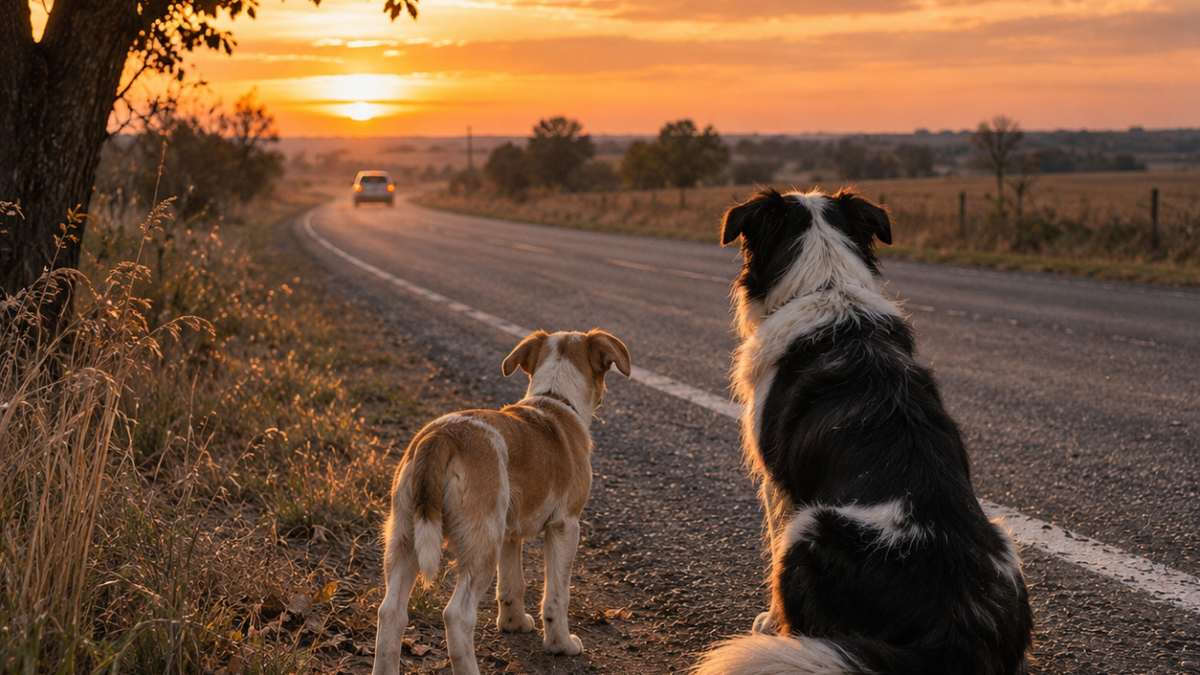
PART 2
The white bulldog’s tag said:
**BUDDY**
Beneath it was a phone number.
I stared at it.
For a second, I genuinely wondered whether I’d misunderstood what I’d seen.
Maybe the man wasn’t their owner.
Maybe he’d found them.
Maybe there was some bizarre explanation.
Then the fawn dog came closer.
He wore a tag too.
**BRUNO**
Same phone number.
I took out my phone.
My hands were shaking.
“Okay, Buddy. Bruno. Let’s see what happens.”
I dialed.
The dogs immediately reacted to the ringtone.
Buddy’s ears perked.
Bruno stepped toward me.
Then someone answered.
A man’s voice.
“Yeah?”
I looked toward the empty stretch of road.
“Hi. I think I found your dogs.”
Silence.
Not surprise.
Not relief.
Silence.
I continued.
“Two English Bulldogs? Buddy and Bruno?”
Another pause.
Then:
“Where?”
That question told me everything.
Not “Are they okay?”
Not “How did they get out?”
Where.
I gave him the name of the road.
He sighed.
Actually sighed.
Then he said:
“They’re not mine anymore.”
I thought I’d misheard.
“What?”
“I gave them away.”
I looked at Buddy.
He was still staring toward the bend.
“You gave them away to the man driving the white SUV?”
Silence.
“Sir?”
“I don’t know what you’re talking about.”
“I just watched someone let them out of a white SUV and drive away.”
“I said they’re not mine.”
“The tags have your phone number.”
“Old tags.”
“What is the license plate?”
He hung up.
I stared at the phone.
Then I called again.
Straight to voicemail.
Bruno sniffed my knee.
I looked down.
“Yeah.”
He panted.
“I know.”
I didn’t know what I knew.
Only that I wasn’t leaving either of them there.
Getting two bulldogs into my car should have been simple.
It wasn’t.
Buddy came willingly enough.
He was tired.
I opened the rear door and patted the seat.
“Come on.”
He placed his front paws inside.
Tried to climb.
Failed.
I lifted his back end.
He weighed far more than he looked.
Once inside, he turned immediately toward the window facing the road.
Bruno refused.
Not aggressively.
He simply planted himself.
Every time I approached, he moved back toward the direction the SUV had gone.
“He’s not coming back,” I said again.
Bruno stared.
I hated saying it.
It felt cruel.
But I couldn’t let him stay there waiting.
I sat on the shoulder.
“I’m not going to chase you.”
Bruno panted.
“We can sit here.”
He looked toward the road.
Then at Buddy inside my car.
Buddy whined.
Bruno’s ears lifted.
Buddy whined again.
That did it.
Bruno approached.
I opened the door wider.
Buddy moved closer to the edge.
Bruno put his front paws inside.
Then looked back one final time.
Toward the bend.
The place where the SUV disappeared.
I will never forget that look.
Dogs don’t understand abandonment the way humans explain it.
They don’t think:
My owner made a calculated decision to dispose of me.
They think in simpler, more painful terms.
Where did you go?
Why can’t I follow?
What am I supposed to do now?
Bruno climbed in.
I closed the door.
Both immediately crowded toward the rear window.
Even as I drove in the opposite direction, they watched behind us.
For miles.
I called the county animal shelter.
They were still open for another hour.
The woman on the phone told me to bring the dogs in so they could scan for microchips and document the circumstances.
“Did you witness the abandonment?”
“Yes.”
“Did you get the plate?”
My heart sank.
“I don’t know.”
“Try to remember.”
“I was focused on the dogs.”
“Any photos?”
“No.”
Then I remembered.
My dashcam.
I nearly slammed the brakes.
“I have a dashcam.”
There was a pause.
“Does it record continuously?”
“Yes.”
“Do not overwrite that footage.”
My pulse jumped.
“I won’t.”
“And don’t contact the owner again for now.”
“Why?”
“Because if what you saw is on video, animal control will want it.”
That was the moment the story changed.
Until then, I was simply a woman who had found two dogs abandoned beside a road.
Now I had evidence.
At the shelter, Buddy and Bruno walked through the entrance side by side.
They stayed so close their shoulders touched.
A technician named Carla crouched.
“Hi, handsome.”
Buddy went straight to her.
Bruno stayed half a step behind him.
“They’re bonded,” she said.
“Very.”
“Let’s scan.”
Buddy had a microchip.
Bruno did too.
Both were registered to the same man.
**Ethan Cole.**
Same phone number on the tags.
Same residential address.
Carla looked at the computer.
“You spoke with him?”
“Yes.”
“What did he say?”
“That he gave them away.”
“Did he give you a name?”
“No.”
“Transfer information?”
“No.”
“He update the microchips?”
“No.”
She looked at me.
“Interesting.”
The shelter supervisor, Karen, joined us.
I told the entire story.
The white SUV.
The doors.
The dogs running.
The acceleration.
The phone call.
Karen wrote everything down.
Then she asked:
“What happened when the dogs were released?”
“They were excited.”
“Did they hesitate?”
“No.”
“Did they appear afraid of the driver?”
“No.”
“Did they attempt to return to the vehicle?”
“They chased it.”
“How far?”
“Maybe a couple hundred yards. Bruno farther.”
She stopped writing.
“And the vehicle accelerated?”
“Yes.”
“Could the driver have been unaware?”
“No.”
I answered too quickly.
But I was certain.
“He looked in his mirrors.”
“You saw that?”
“I saw his head turn. And I honked.”
Karen nodded.
“Good.”
I felt sick that the word good applied to any of it.
“Can I see them tomorrow?”
“If they’re placed on a legal hold, visits may be restricted.”
“Legal hold?”
“If animal control opens an abandonment investigation, the dogs may temporarily become evidence.”
I looked at Buddy.
He was sitting against Bruno.
“What happens to them?”
“They stay here while we determine ownership and disposition.”
“In a kennel?”
“For now.”
Buddy looked around at the barking dogs.
His face changed.
Bruno pressed closer to him.
I hated leaving.
“Can they stay together?”
“We’ll do our best.”
“They have to.”
Karen looked at me.
“I can see that.”
Before I left, I crouched beside them.
Buddy licked my hand.
Bruno sniffed my sleeve.
“I’m sorry.”
Buddy’s tail moved.
“I’ll come back.”
That promise mattered to me immediately.
Maybe because someone else had just broken one.
I went home and pulled the dashcam card.
My husband, Mark, found me sitting at the kitchen table with the laptop open.
“You’re late.”
“I found two dogs.”
He stopped.
“Of course you did.”
“No.”
I looked at him.
“Someone dumped them.”
The smile left his face.
“What?”
“On Route 16.”
I played the footage.
The dashcam image was wider than what I’d seen through my windshield.
The SUV slowed.
Hazards.
Door.
Buddy.
Bruno.
Driver.
The camera caught his profile.
Not perfectly.
But enough.
Then the SUV moved.
The dogs ran.
My horn sounded.
The vehicle accelerated.
Mark leaned closer.
“Jesus.”
Then the rear of the SUV filled the frame for several seconds.
The license plate was visible.
Not crystal clear.
But readable.
I paused it.
Enhanced nothing.
Didn’t need to.
The numbers were there.
Mark sat back.
“You have him.”
I didn’t feel triumphant.
I watched Buddy fall behind again.
Then Bruno.
Then both stop.
“No.”
I swallowed.
“I have what he did.”
The next morning, I gave animal control the original footage.
Officer Lena Ruiz met me at the shelter.
She was small, serious, and carried herself like someone who had heard every excuse humans could invent.
“You called the phone number?”
“Yes.”
“Tell me exactly what he said.”
I repeated it.
She wrote.
“Anything else?”
“He said they weren’t his anymore.”
“Did he claim they ran away?”
“No.”
“Were stolen?”
“No.”
“Given to someone?”
He said “gave them away.”
“Name?”
“No.”
Ruiz nodded.
“Okay.”
“Can you do anything?”
“If the plate matches the registered owner and the video shows what you described, yes.”
“What kind of anything?”
“That depends on local statutes, prosecutor discretion, prior history, and whether he cooperates.”
I looked through the kennel window.
Buddy and Bruno were curled together on one bed, despite having two.
“He shouldn’t get them back.”
Ruiz didn’t answer immediately.
“I agree.”
“That’s not the same as he won’t.”
“No.”
That scared me.
“What if he says he wants them?”
“Then the legal process matters.”
“He dumped them.”
“If evidence supports that, it matters too.”
I realized then that saving the dogs from the road had been the easy part.
The harder part was proving they shouldn’t be returned to the person who had placed them there.
Ruiz left to visit Ethan Cole.
Two hours later, she called.
“He says he gave the dogs to a friend three days ago.”
“What friend?”
“He provided a name.”
“Who?”
“Marcus Lane.”
“And?”
“I’m checking.”
“What about the SUV?”
“Registered to Ethan.”
My jaw tightened.
“So he lied.”
“Maybe.”
“How is that maybe?”
“Because his explanation is that Marcus borrowed the SUV.”
I almost laughed.
“You believe that?”
“What I believe isn’t the same as what I can prove.”
I hated how reasonable she was.
“Can you prove who was driving?”
“We’re working on it.”
“His face is on the video.”
“Part of his face.”
“It was him.”
“I know what you think you saw.”
“I was there.”
Ruiz’s voice softened.
“I am not arguing with you. I’m building something that survives when somebody hires an attorney.”
That silenced me.
By afternoon, the story became stranger.
Marcus Lane existed.
He knew Ethan.
He had not taken Buddy and Bruno.
Not three days ago.
Not ever.
Ruiz called again.
“Marcus agreed to a recorded statement.”
“What did he say?”
“That Ethan asked him this morning to tell us he’d taken the dogs.”
I sat down.
“He asked him to lie?”
“That is what Marcus claims.”
“Why would Marcus admit that?”
“Apparently he doesn’t like Ethan enough to risk charges for him.”
For the first time, I felt something like satisfaction.
Not happiness.
Just the faint sense that the truth was beginning to push back.
Ruiz continued.
“Marcus also says Ethan had been trying to rehome the dogs for months.”
“Why?”
“Money.”
“What do you mean?”
“Vet costs. Housing. Girlfriend didn’t want them.”
That last part made me stop.
“Girlfriend?”
“According to Marcus, Ethan recently moved into a place where keeping two bulldogs caused conflict.”
“So he left them on a highway.”
“That part remains under investigation.”
I closed my eyes.
“Can I visit them?”
Ruiz paused.
“Yes. Shelter approved supervised visits.”
I drove there immediately.
Buddy heard my voice before he saw me.
The moment I entered the kennel wing, he stood.
His entire back end started moving.
Bruno stood too.
“Hey.”
Buddy barked once.
Bruno pushed against the kennel gate.
Carla opened it.
Both dogs came straight at me.
Forty-five seconds later, I was sitting on the floor with nearly a hundred pounds of bulldog trying to occupy my lap.
“You guys are ridiculous.”
Buddy licked my face.
Bruno shoved his head beneath my arm.
Then something happened that hurt more than I expected.
Footsteps passed the hall.
A man’s voice.
Both dogs froze.
Bruno lifted his head.
Buddy moved toward the door.
The man laughed somewhere outside.
Both dogs waited.
Then the footsteps faded.
Buddy returned slowly.
Bruno didn’t.
He stood staring at the hallway.
Still expecting Ethan.
Carla saw my face.
“They do that every time a man comes through.”
“Every time?”
“Pretty much.”
I rubbed Bruno’s back.
“He doesn’t deserve that.”
“Who?”
“Their owner.”
Carla shrugged sadly.
“Dogs don’t measure deserving the way we do.”
That became obvious over the next week.
Buddy adjusted faster.
He loved everyone.
Volunteers.
Staff.
Visitors.
If someone had hands, Buddy assumed they existed to scratch his chest.
Bruno was different.
He was friendly.
But watchful.
Every time the front door opened, he listened.
Whenever an older white SUV drove through the parking lot, he became restless.
Twice, he pulled toward the fence.
The second time, I was there.
He saw the vehicle.
His tail shot up.
He ran to the end of the leash.
Then the driver stepped out.
Wrong man.
Bruno stopped.
The tail fell.
He walked back to me.
I crouched.
“I’m sorry.”
I was apologizing constantly for something I hadn’t done.
Maybe that is part of rescuing an abandoned animal.
You spend months proving that not every person keeps the promises someone else broke.
Officer Ruiz interviewed Ethan again.
This time with the dashcam plate confirmation and Marcus’s statement.
Ethan changed his story.
He now admitted he had driven the SUV.
But claimed the dogs had jumped out when he stopped because one had vomited.
Then, he said, both ran away.
I stared at Ruiz when she told me.
“He says they jumped out?”
“Yes.”
“He opened the rear door.”
“He claims to check on them.”
“He closed the door after they got out.”
“I know.”
“He drove away.”
“I know.”
“I honked!”
“I know.”
“They chased him!”
Ruiz nodded.
“Which is why the footage matters.”
“Does he know you have the full video?”
“He does now.”
“What did he say?”
She almost smiled.
“He requested an attorney.”
Good.
I thought it.
Didn’t say it.
The dogs remained under legal hold.
Two weeks passed.
Then three.
I visited every other day.
Mark came with me sometimes.
Buddy immediately loved him.
Bruno took longer.
On Mark’s third visit, he sat on the floor without reaching toward him.
Bruno approached.
Sniffed his shoes.
Walked away.
Returned.
Sniffed his hand.
Then sat beside him.
Mark looked at me.
“I think I passed.”
“Barely.”
He scratched Bruno’s chest.
“Do not ruin this.”
Bruno leaned harder.
Mark smiled.
That evening, while driving home, he asked:
“What happens when they’re released?”
“Adoption.”
“Together?”
“I hope.”
“People adopt two bulldogs at once?”
“Someone will.”
He was quiet.
I looked at him.
“No.”
“I didn’t say anything.”
“You’re thinking something.”
“So are you.”
“We already have a dog.”
“We have Daisy.”
“Exactly.”
“Daisy likes dogs.”
“We have one couch.”
“We have two.”
“The other one barely counts.”
Mark laughed.
“I didn’t say we should adopt them.”
“Good.”
“I just asked what happens.”
“No, you didn’t.”
He kept smiling.
I looked out the window.
I was already imagining Buddy asleep beside our fireplace.
That was dangerous.
I knew enough about rescue not to fall in love with animals whose legal future wasn’t decided.
I did it anyway.
Then, in the fourth week, something happened that changed the case again.
A woman named Rachel contacted the shelter.
She had seen a local post asking whether anyone had information about Buddy and Bruno.
She claimed she had lived with Ethan for almost three years.
And both dogs had originally belonged to her.
Ruiz called me later that evening.
“You should know this may get complicated.”
“How?”
“Rachel says she bought Buddy as a puppy and adopted Bruno a year later.”
“So Ethan wasn’t the original owner?”
“No.”
“Why were the chips under his name?”
“She changed them after they moved in together because he handled vet appointments.”
“What happened when they broke up?”
“She moved out six months ago.”
“And the dogs?”
“She says Ethan refused to let her take them.”
I stood from my chair.
“What?”
“She has text messages.”
My heart started pounding.
“What kind?”
Messages where Rachel asked for Buddy and Bruno.
Messages where Ethan said the dogs were his.
Messages where he threatened to take them “somewhere she’d never find” if she kept bothering him.
I felt cold.
“That’s not abandonment.”
“No.”
Ruiz’s voice hardened.
“That may be retaliation.”
Suddenly, the empty highway looked different.
It had been cruel before.
Now it may have been deliberate cruelty aimed at someone else.
“Does Rachel want them?”
“Yes.”
That answer should have made me happy.
Instead, I felt something twist inside me.
Not because I wanted to keep the dogs.
At least I told myself that.
But because I didn’t know Rachel.
“What if she’s lying too?”
“We verify.”
“What does she have?”
“Puppy photographs. Adoption contract for Bruno. Vet receipts. Purchase receipt for Buddy. Microchip registration history. Messages.”
That was a lot.
“Do the dogs recognize her?”
“We haven’t tested that.”
“Can I be there?”
Ruiz paused.
“Why?”
“I found them.”
“I know.”
“I’ve been visiting.”
“I know.”
“I just…”
My voice trailed.
She understood.
“I’ll ask.”
Rachel came to the shelter two days later.
I stood behind the observation window with Ruiz and Carla.
I didn’t know what to expect.
Rachel was in her early thirties.
She looked exhausted before the door even opened.
“Which one comes first?” Carla asked.
Rachel covered her mouth.
“Buddy.”
Buddy entered.
For half a second, nothing happened.
Then his entire body changed.
He stopped.
Stared.
Rachel whispered:
“Bubs?”
Buddy exploded.
There is no other word.
He ran.
Not trotted.
Not walked.
Ran.
He hit Rachel so hard she nearly fell backward.
She dropped to her knees.
Buddy climbed her.
Licked her face.
Cried.
Actually cried.
High, breathless whining sounds I had never heard from him.
Rachel sobbed.
“Oh my God.”
Buddy pawed at her shoulders.
“You remember me.”
He licked her mouth.
She laughed through tears.
“You gross little monster.”
Then Bruno entered.
He froze in the doorway.
Rachel looked toward him.
“Bruno Bear?”
Bruno made a sound that broke every person in the room.
Not a bark.
Not a whine.
Something between the two.
Then he ran.
Rachel fell completely onto the floor.
Both dogs covered her.
Buddy pressed into her chest.
Bruno buried his head beneath her chin.
She held them.
“I tried.”
Her voice shook.
“I tried to get you back.”
Bruno licked her tears.
“I didn’t leave you.”
I turned away.
Ruiz touched my arm.
“You okay?”
“Yes.”
I wasn’t.
Not because I was sad.
Because everything suddenly made sense.
Why the dogs had trusted the SUV driver.
Why they chased him.
Why they expected him to return.
They had already lost one person.
Then the person who kept them afterward abandoned them too.
Rachel spent nearly an hour with them.
When she left the room, her face was swollen from crying.
She saw me.
“Are you the one who found them?”
I nodded.
She walked toward me.
Then hugged me.
Hard.
“Thank you.”
“You don’t have to—”
“Yes.”
She pulled away.
“I’ve been imagining them dead for weeks.”
“Weeks?”
She nodded.
“Ethan stopped sending pictures a month ago.”
“Did you ask?”
“Every day.”
“What did he say?”
“That they were fine.”
My stomach turned.
“When did he dump them?”
“The day you found them?”
“Yes.”
Rachel took out her phone.
“Look.”
The last message Ethan sent her that morning read:
**Stop asking about the dogs. They aren’t your problem anymore.**
Five hours later, I watched him leave them beside the road.
Ruiz added the message to the case.
Ethan’s attorney then attempted a new strategy.
He claimed Rachel had abandoned the dogs when she moved out.
Rachel produced messages from the same week showing that she repeatedly asked to collect them.
He claimed she had no stable housing.
She produced a lease allowing pets.
He claimed the dogs were happier with him.
The dashcam footage did most of the arguing for her.
Then came the detail that finally destroyed what remained of Ethan’s credibility.
A gas station camera.
Officer Ruiz had traced the SUV backward along its route on the day of abandonment.
Thirty minutes before I saw him stop, Ethan had pulled into a rural gas station.
The camera showed Buddy and Bruno inside the vehicle.
It also showed Ethan buying bottled water.
For himself.
Then speaking with the cashier.
The cashier remembered him because the bulldogs were visible through the open window.
“He said they were driving him crazy,” she told investigators.
Then she remembered something else.
“He asked if there were any shelters nearby.”
“What did you tell him?” Ruiz asked.
“That the county shelter was about twenty minutes east.”
“And what did he say?”
According to the cashier:
“Too much paperwork.”
That sentence made it into the investigative report.
Too much paperwork.
So he drove them to an empty road instead.
Suddenly Ethan’s claims about accidental escape became almost impossible to maintain.
The prosecutor authorized charges under local animal abandonment laws and related offenses.
The custody process moved separately.
Rachel petitioned for return of the dogs.
Ethan contested it.
Not because he wanted them back.
That was the ugliest part.
He said through his lawyer that if Rachel received them, she should reimburse him for years of food and veterinary expenses.
Rachel laughed when she heard.
Not because it was funny.
Because she had paid many of those expenses herself.
She had bank records.
Receipts.
Transfers.
Everything.
The hearing took place seven weeks after I found Buddy and Bruno.
I attended.
I had to testify.
So did Ruiz.
So did Rachel.
So did Marcus.
Ethan sat with his attorney.
He looked at me once.
Only once.
Then looked away.
The prosecutor played the dashcam video.
No music.
No editing.
Just the truth.
SUV stops.
Doors open.
Dogs step out.
SUV leaves.
Dogs chase.
SUV accelerates.
Buddy falls behind.
Bruno keeps running.
Both stop.
The courtroom was silent.
Then the prosecutor paused on a frame showing the SUV’s brake lights and both dogs directly behind it.
“Mr. Cole testified in his written statement that he did not know the dogs were outside the vehicle when he drove away.”
Ethan’s attorney shifted.
The prosecutor continued.
“Yet approximately eleven seconds later, the defendant’s vehicle accelerated while both animals were visible in the rear travel path.”
Another clip.
My horn.
Long.
Loud.
The SUV continues.
The prosecutor looked at Ethan.
“No reaction.”
Then the gas station footage.
Then the cashier’s statement.
Too much paperwork.
Then Rachel’s messages.
**Please let me pick them up.**
**No.**
**They’re mine too.**
**Not anymore.**
**Please don’t do anything to them.**
Then Ethan’s message:
**Keep pushing and I’ll make sure you never see them again.**
I heard Rachel inhale beside me.
She had read it before.
But hearing it in court was different.
The prosecutor finished with the message sent the day of the abandonment.
**They aren’t your problem anymore.**
Then the dashcam timestamp.
Five hours later.
Buddy and Bruno standing on the highway.
The judge looked at Ethan.
He didn’t look angry.
That somehow made it worse.
He looked tired.
Annoyed.
As if all of us had turned a simple inconvenience into something unnecessarily serious.
When his lawyer asked him why he stopped on the road, Ethan said:
“Bruno was sick.”
“Did he vomit?”
“Yes.”
“Did you stop to check him?”
“Yes.”
“Did the dogs exit voluntarily?”
“Yes.”
“What happened next?”
“They ran.”
“What did you do?”
“I tried to get them back.”
I almost made a sound.
His attorney continued.
“How?”
“I called them.”
The prosecutor stood.
“Where in the recording do you call them?”
Ethan stared.
“It may not have picked up.”
“Your windows were closed?”
“I don’t remember.”
“Your door was open initially.”
“I don’t remember.”
“Did you physically attempt to catch either dog?”
“No.”
“Did you exit the vehicle again?”
“No.”
“Did you reverse?”
“No.”
“Did you stop once they began chasing?”
“No.”
“Why?”
“I panicked.”
The prosecutor nodded.
“You panicked for approximately two miles?”
Ethan’s lawyer objected.
The judge overruled.
Ethan’s face reddened.
“I didn’t know what to do.”
“You knew where the county shelter was.”
Silence.
“You had asked for directions thirty minutes earlier.”
“I was frustrated.”
“So instead of driving twenty minutes to the shelter, you drove to an isolated road.”
“I wasn’t thinking.”
“Then you removed two dogs from your vehicle.”
“They jumped out.”
“You closed the door.”
“Yes.”
“You drove away.”
“Yes.”
“They chased you.”
Silence.
“Mr. Cole?”
“Yes.”
“You saw them?”
Long pause.
“Yes.”
Rachel began crying quietly.
That was the moment.
Not the dashcam.
Not the gas station.
Not the messages.
That word.
Yes.
He had seen them.
He knew.
Buddy running.
Bruno running.
Short legs pounding pavement.
Tongues out.
Bodies struggling.
He knew.
And he kept accelerating.
The judge took a recess.
When she returned, the immediate custody ruling came first.
Ethan’s claim over Buddy and Bruno was terminated.
Rachel was recognized as having superior documented ownership rights, subject to shelter and county release procedures.
Ethan would not receive the dogs.
Rachel covered her face.
I grabbed her hand.
But the judge wasn’t finished.
She looked directly at Ethan.
“Whatever relationship dispute existed between you and Ms. Miller, these animals were dependent on you.”
Ethan stared at the table.
“You had options.”
The judge continued.
“You had an animal shelter twenty minutes away.”
No response.
“You had a former owner repeatedly requesting possession.”
No response.
“You had friends.”
Silence.
“You had a phone.”
Nothing.
“What you did not have was the right to turn two domestic animals loose beside a public highway and drive away.”
Ethan finally looked up.
The judge’s voice hardened.
“And the fact that they trusted you enough to chase your vehicle makes the conduct more disturbing, not less.”
I swallowed hard.
That was exactly it.
Trust had become part of the cruelty.
The criminal case did not end that day.
There were later fines.
Probation.
Restitution for shelter and veterinary costs.
Mandatory animal welfare conditions.
A prohibition on possessing dogs for a court-specified period.
No movie-style prison sentence.
No dramatic handcuffs outside the courtroom.
But Ethan lost the one thing he had tried to control.
The dogs.
And eventually, the truth became part of a public court record.
He could never again tell Rachel that Buddy and Bruno had simply disappeared.
He could never say they ran away.
He could never claim she abandoned them.
The video existed.
The messages existed.
The judgment existed.
Truth had paperwork now.
After the hearing, Rachel sat in her car for almost twenty minutes.
I waited nearby.
Finally she opened the door.
“I’m scared.”
That wasn’t what I expected.
“Of what?”
“Taking them home.”
I stared.
“You fought for them.”
“I know.”
“They recognized you.”
“I know.”
She wiped her face.
“What if I fail them again?”
“You didn’t fail them.”
“I left that house without them.”
“You tried to get them.”
“I should have done more.”
“Rachel.”
She looked at me.
“Ethan wanted you to believe that.”
Her mouth tightened.
“What?”
“That their suffering proves you didn’t fight hard enough.”
She said nothing.
“That’s how people like him keep control after they lose it.”
Rachel looked toward the shelter.
“I kept thinking if I’d broken a window or called police or…”
“And then you might have been arrested while he still had the dogs.”
She laughed sadly.
“Probably.”
“You documented.”
“You kept asking.”
“You saved messages.”
“You never stopped.”
I paused.
“And when the truth finally had a path back to you, you were still there.”
She nodded slowly.
Then asked:
“Will you come with me when I take them home?”
I smiled.
“Yes.”
Release day happened three days later.
Buddy wore a blue harness.
Bruno wore red.
Rachel arrived with two new beds in the back of her SUV.
New bowls.
Blankets.
Leashes.
Enough supplies for a small pet store.
Carla laughed.
“You know they don’t need all of this today.”
Rachel looked embarrassed.
“I panicked.”
I pointed at a bag.
“Is that four kinds of treats?”
“Five.”
“Reasonable.”
Buddy saw Rachel first.
Instant chaos.
Bruno followed.
Within seconds, Rachel was against the wall laughing and crying while both dogs tried to climb her.
Then we reached the parking lot.
Both stopped.
White SUV.
Not Ethan’s.
Rachel’s.
But white.
Bruno froze.
Buddy’s excitement vanished.
I felt sick.
Rachel immediately understood.
“Oh.”
She didn’t pull.
Didn’t force them.
She opened the rear door.
Both dogs stepped backward.
Rachel sat on the pavement.
“It’s okay.”
Buddy looked at her.
Bruno looked toward the shelter doors.
She stayed there.
Five minutes.
Ten.
“I should’ve borrowed another car,” she whispered.
“You didn’t know.”
“I should’ve thought.”
“Don’t turn this into another thing to blame yourself for.”
She nodded.
Then took a treat.
Buddy approached.
Ate it.
She placed another near the vehicle.
Then another.
Within fifteen minutes, Buddy put his front paws on the running board.
Bruno watched.
Buddy climbed in.
Rachel didn’t close the door.
Bruno approached.
Stopped.
Buddy turned toward him.
Bruno climbed in.
Still no closed door.
Rachel sat beside them in the cargo area.
For several minutes, they simply stayed there.
Then Bruno lay down.
Rachel looked at me.
“Now?”
“Now.”
She closed the door gently.
Nothing terrible happened.
That became their first lesson.
A car door closing did not always mean abandonment.
I followed them home.
Rachel lived in a small rental house with a fenced backyard.
The moment Buddy and Bruno stepped onto the grass, they exploded.
Running.
Chasing.
Body-checking each other.
Rolling.
Buddy found a tennis ball.
Bruno stole it.
Buddy stole it back.
Rachel stood on the porch crying.
“They never had a yard this size.”
“How long since you’ve lived with them?”
“Seven months.”
“They remember you.”
She nodded.
“But they changed.”
“Of course.”
“So did you.”
That seemed to help.
The first night didn’t go perfectly.
Bruno refused to sleep in another room.
Buddy barked whenever Rachel went into the bathroom and closed the door.
At 2:00 a.m., both dogs stood beside her bed panting.
She gave up.
“Fine.”
They climbed in.
Two bulldogs.
One woman.
One queen bed.
At 2:14 a.m., Rachel sent me a photo.
Buddy was asleep with his head across her stomach.
Bruno occupied most of the pillow.
The message said:
**I cannot move.**
I replied:
**Justice.**
She sent:
**I deserve this.**
I wrote:
**Yes, but not for the reason you think.**
Recovery took months.
The dogs had developed what the behaviorist called separation-related distress.
Not surprising.
They had lost Rachel.
Then been abandoned by Ethan.
Now every departure could mean forever.
Rachel began training.
Keys picked up.
Keys put down.
Coat on.
Coat off.
Front door opened.
Closed.
One second outside.
Back.
Five seconds.
Back.
Thirty seconds.
Back.
Again.
Again.
Again.
Buddy improved first.
Bruno struggled.
If Rachel reached the driveway, he cried.
So she installed a camera.
I watched one session with her.
She stepped outside.
Bruno stood at the window.
Whined.
Buddy nudged him.
Bruno paced.
Rachel returned twenty seconds later.
Both dogs celebrated like she’d survived war.
“That feels cruel,” she said.
“It isn’t.”
“He thinks I’m leaving.”
“For twenty seconds.”
“He doesn’t know that.”
“Not yet.”
She looked at me.
“Then what’s the point?”
“To make ‘not yet’ become ‘now he knows.’”
Weeks later, Rachel left for five minutes.
Then ten.
Then thirty.
The first time she returned after an entire hour and found both dogs asleep, she called me crying.
“They didn’t wait at the door.”
“That’s good.”
“I know.”
“Then why are you crying?”
“Because they finally believed me.”
That was the real healing.
Not that they stopped loving her.
That they stopped believing love always disappeared in a vehicle.
Buddy developed one strange habit.
Whenever Rachel drove somewhere with them, he watched the road carefully.
But when the car stopped, he refused to get out until Rachel got out first.
Bruno did the opposite.
He jumped down immediately.
Then turned.
Waited.
If Rachel didn’t move, he climbed back in.
They had created their own rules.
Everyone leaves together.
Everyone gets out together.
Nobody disappears alone.
Rachel honored it.
A year passed.
Buddy gained weight.
Too much.
The veterinarian politely said he was “well loved.”
Rachel called me outraged.
“He called my dog fat.”
“Is your dog fat?”
“That is irrelevant.”
Bruno became obsessed with sprinklers.
Buddy hated them.
Bruno chased water until he coughed.
Buddy stood on the patio judging him.
They went to farmers markets.
Pet-friendly cafés.
A lake.
The beach.
Their first trip to the beach nearly destroyed Rachel emotionally.
She sent me a video.
Bruno running through shallow water.
Buddy digging in wet sand.
Both off-leash inside a secure dog area.
No road.
No SUV disappearing.
No desperate chase.
Just movement because they chose to move.
The caption said:
**This is what running is supposed to look like.**
I saved that video.
The abandonment case eventually faded from public attention.
That was fine.
Buddy and Bruno didn’t need to become symbols forever.
They needed to become dogs.
Ordinary dogs.
Annoying dogs.
Spoiled dogs.
Dogs who stole food.
Snored.
Farted.
Dragged mud through the house.
Barked at delivery drivers.
Fought over the same toy despite owning twenty-three.
Their lives became boring.
That may have been the most beautiful outcome.
But Ethan’s consequences weren’t entirely over.
Almost eighteen months after the highway incident, Rachel called me.
“You’re going to laugh.”
“What?”
“Guess who applied to adopt a dog.”
I already knew.
“No.”
“Yes.”
“Ethan?”
“Different county.”
“How do you know?”
“A rescue volunteer recognized his name from the case.”
My anger came back instantly.
“Did they approve him?”
“No.”
Because the court order and documented abandonment history were still active, the rescue denied the application.
No drama.
No confrontation.
Just:
No.
Rachel was quiet for a moment.
Then she said:
“Part of me wanted someone to tell him why.”
“He knows why.”
“Do you think he cares?”
I looked at the old dashcam video still stored on my computer.
“I don’t know.”
“That bothers me.”
“I know.”
“I wanted him to feel what they felt.”
There it was.
Revenge.
The thing people always imagine will make betrayal feel balanced.
I thought about Buddy and Bruno standing in Rachel’s yard.
“How would you even do that?”
“I don’t know.”
“Leave him on a highway?”
She laughed despite herself.
“Tempting.”
“But then you’d have to go back for him.”
“That ruins it.”
“Exactly.”
She became serious again.
“It just feels unfair that they carry trauma and he gets to move on.”
I understood.
“Maybe.”
“That’s your answer?”
“No.”
I paused.
“He lost the right to decide what happens to them.”
Silence.
“He wanted them gone.”
“Yes.”
“They got you instead.”
Rachel said nothing.
“He wanted to erase them from his problem.”
“Yeah.”
“Instead his name is attached to a court record explaining exactly what he did.”
She breathed out.
“He wanted to make you never see them again.”
Her voice cracked.
“And I see them every morning.”
“That is the part I would keep.”
She was quiet for a long time.
Then she laughed softly.
“Bruno is currently sitting on my foot.”
“There you go.”
“Buddy is eating a cardboard box.”
“Perfect.”
“He has food.”
“Of course he does.”
“He prefers the box.”
“Justice takes many forms.”
Two years after the rescue, Rachel invited me to Buddy’s birthday.
We didn’t know his exact birthday.
She picked the date from his original paperwork.
Buddy wore a blue bandana.
Bruno wore red.
There was a dog-safe cake.
Buddy ate his slice.
Then Bruno’s.
Then attempted to eat the paper plate.
Rachel stopped him.
“You were abandoned on a highway and this is how you repay me?”
Buddy sneezed cake onto her shirt.
I nearly fell over laughing.
Later, after everyone left, we sat outside.
The dogs slept in the grass.
Rachel looked at them.
“I used to think I’d never stop being angry.”
“Did you?”
“No.”
She smiled.
“I just got happier than I am angry.”
That was better.
Happiness had grown larger than revenge.
Three years passed.
Then something happened that brought the highway back into all our lives.
A local news station was doing a segment about animal dumping.
They had obtained public statistics showing an increase in pets abandoned along rural roads.
Someone remembered Buddy and Bruno’s case.
The reporter contacted Rachel.
She almost refused.
“I don’t want them turned into sad-dog content.”
“Then don’t let them.”
“What do you mean?”
“Tell the whole story.”
Rachel agreed under one condition.
The segment had to show the dogs as they were now.
Not just the dashcam footage.
The news piece opened with Buddy and Bruno chasing each other through Rachel’s yard.
Then came the highway clip.
The contrast was devastating.
Buddy running happily in grass.
Buddy running desperately behind the SUV.
Bruno rolling onto his back for belly rubs.
Bruno sprinting until he stumbled.
Rachel spoke on camera.
“He didn’t just dump two dogs. He dumped two animals that trusted him enough to run after him.”
Then I appeared.
I hated seeing myself on television.
I looked exhausted.
The reporter asked:
“What do you remember most?”
I said:
“The moment they stopped.”
“Why?”
“Because that’s when they understood they couldn’t catch him.”
The reporter asked:
“Do you think they understood they’d been abandoned?”
I thought carefully.
“I think they understood the person they trusted had gone somewhere they couldn’t follow.”
The segment ended with Rachel loading them into her SUV.
Buddy jumped in.
Bruno followed.
Rachel closed the door.
Then walked around.
Opened the driver’s door.
Bruno watched until she sat down.
Only then did he lie down.
The reporter’s final line was simple:
“They still watch to make sure everyone gets in.”
The story spread farther than any of us expected.
People recognized Ethan.
His name wasn’t broadcast because of editorial choices, but the court case was public.
Some viewers found it.
Rachel called me.
“This is getting ugly.”
“What?”
“People are posting his information.”
My stomach tightened.
“That’s not good.”
“I know.”
“Don’t participate.”
“I won’t.”
“I mean it.”
“I said I won’t.”
There is a point where accountability becomes harassment.
That line mattered.
Ethan had been charged.
Judged.
Restricted from owning animals for a period.
He didn’t need strangers threatening him.
Buddy and Bruno wouldn’t be healed by another person being terrorized.
Rachel posted one statement:
**Please do not contact or threaten anyone connected to our dogs’ past. Buddy and Bruno are safe. Their case was handled through the proper legal process. Their lives now are about healing, not harassment.**
I was proud of her.
That statement did more than any revenge campaign could have.
It showed the difference between cruelty and accountability.
Ethan had used helpless animals to hurt someone.
Rachel refused to use public anger to hurt him back.
She had changed.
Maybe pain hadn’t made her harder.
Maybe it had made her clearer.
The dogs became minor local celebrities for about a month.
Then people moved on.
Again, good.
Buddy preferred sandwiches to fame.
Bruno preferred hoses.
Their next few years were quiet.
Buddy developed arthritis first.
Bulldogs age in ways that sneak up on you.
One year, they’re running.
The next, stairs look steeper.
Rachel installed ramps.
Soft beds.
Non-slip rugs.
Bruno developed allergies.
Expensive allergies.
The kind that required special food and medication.
Rachel complained constantly about the cost.
Then paid every bill without hesitation.
“Do you know how much this dog costs me?”
“Less than your emotional therapy.”
“Debatable.”
Buddy began sleeping closer to Rachel as he aged.
Bruno remained the watchdog.
Not a good watchdog.
If someone entered, he mostly barked until they petted him.
But he watched Rachel leave.
Still.
Years later.
He no longer panicked.
But he watched.
Door.
Driveway.
Car.
Then waited.
When she returned, he met her at the entrance.
Every time.
One winter evening, Buddy struggled to stand.
Rachel called.
Her voice was shaking.
“I think something’s wrong.”
I drove over.
Buddy lay on his bed.
He was eleven, maybe twelve.
Old for an English Bulldog.
His breathing was different.
Rachel had already called the emergency veterinarian.
We loaded him into the car.
Bruno refused to stay home.
“Bring him,” I said.
At the clinic, tests showed a large abdominal mass.
Bleeding.
The veterinarian’s expression told us before she explained.
Surgery was possible.
Technically.
But Buddy’s age, heart, airway, and condition made the odds terrible.
Rachel sat on the floor.
Buddy rested his head in her lap.
Bruno lay beside him.
“What would you do?” Rachel asked the vet.
The vet paused.
“I would ask whether surgery gives him a real chance at comfortable time.”
“And?”
“I don’t think it does.”
Rachel cried silently.
Buddy licked her wrist.
She laughed through tears.
“You always do that when I’m upset.”
Bruno pushed his head under her arm.
Two dogs taking care of the person who once fought to get them back.
Rachel looked at me.
“I can’t do this.”
“Yes, you can.”
“I lost them once.”
“This isn’t that.”
“It feels like it.”
“I know.”
She looked at Buddy.
“I promised him I’d never leave him.”
“You aren’t.”
That sentence mattered.
Buddy went home that night with medication.
The vet came to Rachel’s house the following afternoon.
Buddy spent his final morning in the yard.
Sunlight.
Blanket.
Chicken.
Too much chicken.
Bruno stayed beside him.
Rachel sat on the grass.
I sat a few feet away.
Buddy was tired.
But peaceful.
At one point, a white SUV drove past the house.
Bruno’s ears lifted.
Buddy didn’t move.
Rachel saw it.
“So many years.”
I nodded.
“He doesn’t care anymore.”
“No.”
The SUV disappeared.
Buddy closed his eyes.
That image almost felt like an answer.
Once, a white SUV disappearing had meant the end of his entire world.
Now it was just traffic.
Nothing more.
When the veterinarian arrived, Rachel held Buddy.
Bruno lay with one paw touching his back.
Rachel whispered into Buddy’s ear:
“You never have to chase anybody again.”
I started crying.
“You hear me?”
Buddy breathed slowly.
“If someone leaves, let them.”
Her voice broke.
“You were always worth stopping for.”
Buddy died with Rachel’s hand on his chest.
No highway.
No confusion.
No one accelerating away.
Just home.
Bruno searched for him that night.
Room to room.
Bed.
Kitchen.
Backyard.
He stood beside Buddy’s empty bed.
Whined.
Rachel sat on the floor.
Bruno climbed into her lap, even though he was far too big.
They stayed there.
Grief returned to the house.
Different grief.
Clean grief.
Grief without betrayal.
Buddy had not disappeared.
He had been held.
Loved.
Given time.
Bruno eventually adjusted.
He became quieter.
More attached to Rachel.
For the first time in his life, he was an only dog.
Rachel worried.
“I think he’s lonely.”
“He probably is.”
“Should I get another dog?”
“Not yet.”
“Why?”
“Because you’re asking while you’re grieving Buddy.”
She sighed.
“You’re annoying.”
“I know.”
Six months later, she called again.
“Okay. Now?”
“Now what?”
“Can I adopt another dog?”
I smiled.
“What did you find?”
“A bulldog mix.”
“Of course.”
“Female.”
“Age?”
“Eight.”
“Senior.”
“Nobody wants her because she needs medication.”
I laughed.
“You already applied.”
“Yesterday.”
Her name was Mabel.
Bruno hated her for approximately six minutes.
Then she found his favorite bed and took it.
He stared.
Mabel stared back.
Bruno chose the other bed.
That was the beginning.
Mabel did not replace Buddy.
Nothing could.
She simply entered the empty spaces that were ready for something new.
Bruno taught her the yard.
Rachel taught her the house.
Mabel taught Bruno that having someone steal his bed was apparently his fate.
Another year passed.
Then another.
Bruno reached thirteen.
His muzzle became almost completely gray.
His black mask faded.
He moved slowly.
He still watched the door.
But now Mabel watched with him.
One evening, Rachel sent me a photograph.
Bruno asleep on the couch.
Mabel beside him.
Her message read:
**Do you realize it’s been almost eight years?**
I did.
Eight years since the highway.
Eight years since two dogs ran after a vehicle.
Eight years since my dashcam happened to be recording.
Eight years since Ethan chose an empty road because a shelter required “too much paperwork.”
I thought about the strange mathematics of consequence.
A few minutes of cruelty.
Years of recovery.
One reckless decision.
A lifetime of changed behavior.
People sometimes talk about animal abandonment as though once the animal is rescued, the harm ends.
It doesn’t.
The body may be safe.
The nervous system remembers.
Bruno remembered white SUVs.
Car doors.
People leaving.
Buddy remembered too.
Until he didn’t need to anymore.
Safety had overwritten fear slowly.
Not erased it.
Written over it.
Again.
Again.
Again.
The last time I saw Bruno, he was lying in Rachel’s backyard.
Mabel slept nearby.
Rachel brought coffee.
We sat on the porch.
Bruno lifted his head when he heard my voice.
“Hey, old man.”
His tail thumped.
Once.
I sat beside him.
“You remember me?”
Rachel laughed.
“Of course he does.”
“How do you know?”
“He acts different with you.”
“Different how?”
“He looks like he’s expecting a car ride.”
I laughed.
“Maybe he remembers the first one.”
Rachel looked away.
“That was a terrible car ride.”
“No.”
I scratched Bruno’s chest.
“The first one with me took him away from the road.”
She smiled.
“Fair.”
Bruno rested his head on my foot.
I thought about that evening.
The sunset.
The hazard lights.
Buddy jumping out first.
His tail wagging.
Bruno following.
Both believing they were about to take a walk.
I thought about the moment the SUV accelerated.
The desperate run.
Then the silence.
And I realized something.
For years, I had thought the saddest part was watching them stop.
Maybe it wasn’t.
Maybe the saddest part was that they started running at all.
They trusted him so completely that being left behind made no sense.
They assumed he must want them to follow.
That was why they ran.
Not because they understood abandonment.
Because they didn’t.
Trust made them chase.
But trust also allowed them to heal.
They trusted me enough to get into my car.
They trusted shelter workers.
They trusted Rachel again.
Buddy trusted the vet in his final hours.
Bruno trusted Mabel.
The thing Ethan had exploited was also the thing he failed to destroy.
That mattered.
Bruno died the following spring.
Quietly.
Old age and heart disease.
Rachel called me several days later.
She had waited because she knew I would cry.
She was right.
“Was he scared?”
“No.”
“Did he suffer?”
“No.”
“Were you there?”
“The whole time.”
I closed my eyes.
“Good.”
“He was on my bed.”
I smiled through tears.
“Of course.”
“Mabel was beside him.”
“Good.”
“And…”
Rachel stopped.
“What?”
“I told him Buddy was waiting.”
That finished me.
After Bruno’s death, Rachel created a small memorial in her yard.
Nothing dramatic.
Two flat stones.
Buddy.
Bruno.
Between them, she planted a tree.
The first year it barely grew.
The second year, it took off.
By the fifth, it cast enough shade for Mabel to sleep beneath it.
I visited one summer afternoon.
Rachel brought out a box.
“What is that?”
“You remember their old tags?”
My heart tightened.
Buddy.
Bruno.
The tags I’d read beside the highway.
She had kept them.
I held Buddy’s first.
Same phone number.
Ethan’s.
Then Bruno’s.
“I almost threw them away.”
“Why didn’t you?”
“I used to hate looking at them.”
“And now?”
She took them from my hand.
“Now they’re just old metal.”
That was healing.
The phone number no longer mattered.
The man attached to it no longer mattered.
The tags did not define ownership.
Love had done that.
Presence had done that.
Coming back had done that.
Rachel placed both tags into the box again.
“I’m going to bury them under the tree.”
“Why?”
She smiled.
“Because they spent enough years carrying somebody else’s name.”
We dug a small hole.
Not beneath Buddy’s stone.
Not beneath Bruno’s.
Between them.
Rachel placed the tags inside.
Covered them.
Then stood.
“That feels good.”
I looked at the tree.
“Yeah.”
Years had passed since Ethan’s probation ended.
I had no idea where he lived.
Whether he changed.
Whether he ever understood what he’d done.
For a long time, I wanted to know.
Eventually, I stopped caring.
That was another kind of victory.
People think revenge means making the person who hurt you suffer.
Sometimes it does.
But the most satisfying consequence in Buddy and Bruno’s story was much simpler.
Ethan wanted them gone.
They became impossible to erase.
He wanted them separated from Rachel forever.
They returned to her.
He tried to abandon responsibility on an empty road.
The dashcam made responsibility visible.
He tried to claim the dogs escaped.
His own actions, his own messages, and his own words proved otherwise.
He used their trust against them.
Then he lost the right to receive it.
And after all that, Buddy and Bruno lived long enough for Ethan to become irrelevant.
That was the ending I liked best.
Not punishment.
Irrelevance.
The highway stopped being the most important thing that ever happened to them.
It became one terrible evening inside much larger lives.
Buddy had birthdays.
Beach trips.
Chicken.
Couch naps.
A yard.
A woman who came home every time she left.
Bruno had sprinklers.
Car rides.
Mabel.
A bed he pretended not to share.
Years of watching Rachel walk through the door.
The road didn’t win.
The abandonment didn’t win.
Ethan didn’t get the final word.
The dogs did.
And if I close my eyes now, I can still see that road.
But the image has changed.
I no longer picture two bulldogs standing on the shoulder, panting and staring at an empty bend.
I picture Buddy running across Rachel’s yard with a tennis ball.
I picture Bruno chasing sprinkler water.
I picture both of them sleeping sideways across a bed that was technically built for one person.
I picture them at the beach.
Running again.
But this time nobody was leaving.
There was no SUV speeding away.
No desperate race.
No need to catch anyone.
They ran because they could.
And when they got tired, they turned around.
Rachel was still there.
Every single time.








