PART 2: He Couldn’t Stand on His Swollen Paw—But the Hand Dow Jones Once Feared Became the One He Refused to Let Go
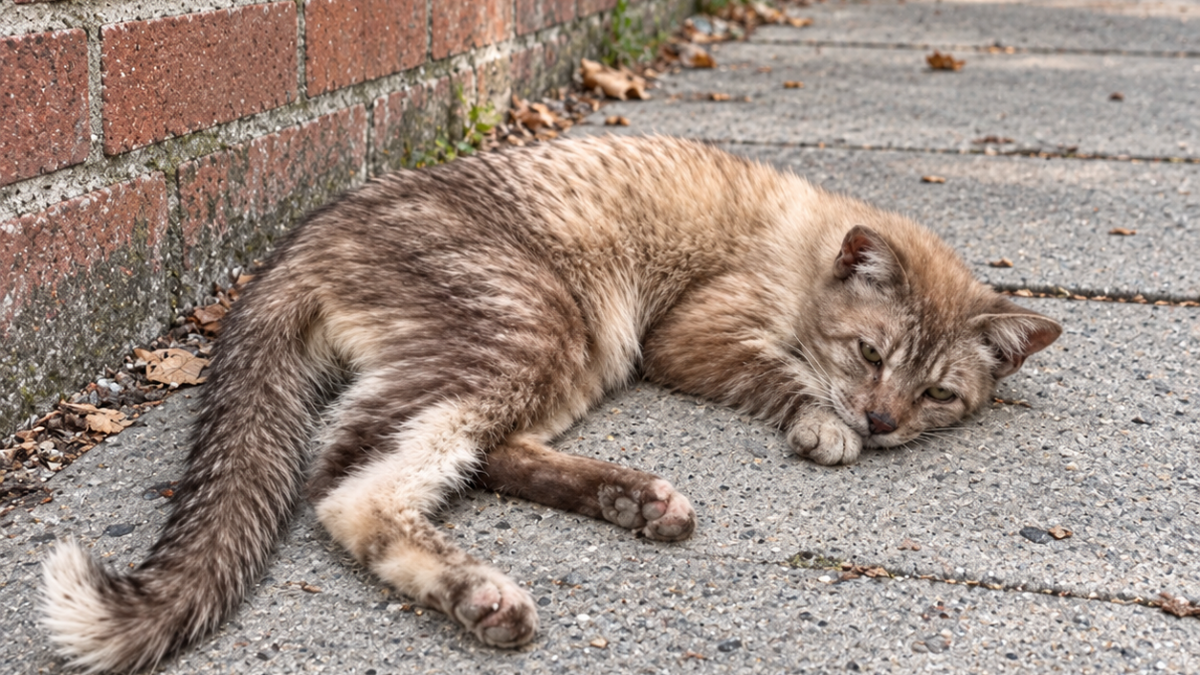
PART 2
I stood outside Dow Jones’s room for several seconds after Rebecca gave me the news.
Through the glass, he was curled on his side with the bandaged front paw resting against the blanket.
Two weeks.
Under normal circumstances, two weeks would have sounded like nothing.
With Dow Jones, two weeks felt enormous.
Every day in treatment meant medication.
Stress.
Bandage changes.
Monitoring.
Every day meant asking a frightened animal to tolerate people touching him when his first instinct was still to pull away.
But there was something else now.
For the first time, we had progress worth protecting.
“He’s going to hate us,” I said.
Rebecca smiled.
“He already hates the thermometer.”
“That’s different.”
“Is it?”
Dow Jones lifted his head and looked at us through the glass.
Rebecca waved.
He narrowed his eyes.
I laughed.
“See? He knows you’re talking about him.”
“He’s feeling well enough to judge us. That’s progress.”
She was right.
The first Dow Jones I had carried from the cold ground had not had enough energy for opinions.
He had simply endured whatever happened.
That frightened me more than anger would have.
A sick animal who protests still believes discomfort can change.
An animal who lies perfectly still sometimes has nothing left to spend on resistance.
Dow Jones was beginning to resist again.
I liked that.
Even when he tried to pull his paw away during cleaning.
Even when he turned his head sharply from the medication syringe.
Even when he gave Rebecca a look that clearly suggested she was the worst person alive for checking his temperature.
Personality required energy.
Dow Jones was finding some.
The next morning, I entered carrying his breakfast.
His ears lifted before I had even opened the door.
“Oh, now you know me.”
Dow Jones stared at the bowl.
“Right. You know the food.”
His appetite had become one of our strongest signs of hope.
The bowl went down.
Dow Jones immediately began eating.
For the first few days, he had eaten quickly enough that we worried he would upset his stomach.
So we divided his meals into smaller portions.
More often.
Measured carefully.
He was severely underweight, and although his condition was not comparable to extreme starvation cases where refeeding syndrome becomes an immediate crisis, we still wanted his body to recover without unnecessary stress.
I sat beside him.
“You know there’s more later.”
Dow Jones kept eating.
“You don’t believe me yet.”
That was understandable.
Animals do not believe promises because humans say them.
They believe routines.
Breakfast.
Then breakfast again the next day.
Water always present.
A bed still there when they wake up.
The same gentle hands returning.
Safety becomes real through repetition.
I would eventually learn that almost everything Dow Jones needed emotionally worked that way.
Not one dramatic breakthrough.
Hundreds of ordinary ones.
The first major breakthrough happened during a bandage change.
The paw had to be cleaned regularly because the infection had damaged tissue between the toes and along one side of the foot.
Rebecca unwrapped it carefully.
The swelling had decreased, but the skin was still angry and tender.
Dow Jones immediately tried to pull away.
“Easy.”
His body tightened.
I placed one hand near his shoulder without touching him.
“You’re okay.”
Rebecca paused.
Nobody restrained him harder.
Nobody rushed.
Dow Jones looked from her to me.
Then he stopped pulling.
Rebecca continued.
When it was over, I offered a small piece of food.
Dow Jones ate it.
“That was brave.”
He looked unimpressed.
Rebecca smiled.
“He thinks bravery should come with more food.”
“Honestly, I agree.”
Each dressing change became slightly easier.
Not because the paw stopped hurting immediately.
Because Dow Jones learned what happened next.
Touch.
Cleaning.
Bandage.
Treat.
Finished.
No surprise pain.
No hand suddenly becoming cruel.
By the end of the first week, I could rest my palm against his shoulder throughout the procedure.
Three days later, he leaned into it.
Barely.
I looked at Rebecca.
She had seen it too.
Neither of us said anything until the bandage was secure.
Then I whispered, “You leaned on me.”
Dow Jones immediately began washing his chest as though nothing significant had happened.
That was another lesson.
Animals rarely appreciate our dramatic interpretation of their progress.
Dow Jones did not know he had just changed my entire day.
He was simply getting comfortable.
His breathing improved more slowly than his leg.
The pneumonia had weakened him badly.
Sometimes after walking only a few steps inside the treatment room, he sat and breathed harder.
We never pushed.
His lungs needed time.
The antibiotics needed time.
Nutrition needed time.
Rest needed time.
People hear the word rescue and imagine speed.
Sometimes rescue is waiting.
Waiting for a fever to break.
Waiting for bloodwork.
Waiting for a wound to close.
Waiting for an animal to discover that the person touching him today will not hurt him the way somebody did before.
That last part was the slowest.
Dow Jones accepted food from my hand by the end of the first week.
He accepted a cheek scratch several days later.
But if I reached too quickly from above, he flinched.
If someone entered carrying a broom or mop, he backed into the bed.
If a metal object dropped, he froze.
We did not pretend to know exactly what had happened before we found him.
Behavior gives clues.
It does not give sworn testimony.
I refused to invent an abuse story simply because one would fit.
Something had made Dow Jones cautious.
That was enough.
We responded to the cat in front of us.
Slow movements.
Low voices.
Choice whenever possible.
One afternoon, a young veterinary assistant named Katie opened his door and sat on the floor without approaching him.
She had a book.
She began reading.
Not to Dow Jones exactly.
Just reading aloud.
I stopped outside.
“What are you doing?”
Katie looked up.
“He gets tense when we come in because he thinks something medical is about to happen.”
“So you’re reading?”
“I want him to learn people can enter and not do anything to him.”
It sounded simple.
It was brilliant.
Dow Jones watched her.
Katie returned the next day.
Same routine.
The third day, he remained asleep when she entered.
The fourth day, he moved closer.
A week later, I opened the door and found Dow Jones lying beside Katie while she read.
His body was touching her leg.
I leaned against the frame.
“Traitor.”
Katie laughed.
Dow Jones opened one eye.
“You make me do all the medication and she gets cuddles?”
He closed his eye again.
That was the first time I heard him purr.
Very soft.
Almost hidden beneath the sound of his breathing.
I froze.
Katie looked down.
“You hear it?”
“Yes.”
It grew slightly louder.
I had known Dow Jones for almost two weeks.
I had heard coughing.
Labored breathing.
The rustle of blankets.
The tiny sounds he made during painful cleaning.
I had never heard happiness.
Purring is complicated in cats.
They sometimes purr under stress too.
But this was different.
His paws were relaxed.
Eyes closed.
Head resting against Katie.
He was comfortable.
That afternoon, I sat in my car and cried.
Not because anything dramatic had happened.
Because a frightened cat had fallen asleep touching someone.
Trust looks small from the outside.
Inside the story, it can be everything.
The follow-up chest exam at the end of those additional two weeks finally brought the news we had been waiting for.
Rebecca came into the room holding new images.
I braced myself.
“Well?”
“The lungs look significantly better.”
“Gone?”
“Almost completely clear.”
I exhaled.
“Almost?”
She smiled.
“Clinically, I’m very happy.”
“You could have started with that.”
“I wanted to see your face.”
“That’s cruel.”
Dow Jones was sitting on the table.
His front paw was no longer wrapped as heavily.
He put weight on it while shifting toward the edge.
I pointed.
“Look.”
Rebecca watched.
Dow Jones stepped down with assistance.
Four paws.
A slight limp.
But four paws.
He walked three steps.
Stopped.
Then continued toward the carrier.
Rebecca laughed.
“Apparently he’s discharging himself.”
“Can he go?”
“Soon.”
That word felt dangerous.
Soon.
Home.
We still had to decide what home meant.
Dow Jones could not simply be returned to wherever he had come from.
We did not know exactly where that was.
No microchip connected him to a verified owner.
No one had reported him missing in a way that matched his description and timeline.
He had been found in poor condition near the back of a commercial property, and the people nearby knew almost nothing about him.
At first, we assumed he might have been a community cat who had become injured and sick.
Then a woman named Mrs. Rivera saw his photograph.
She called the rescue.
“I know that cat.”
Those four words changed everything.
I returned her call.
“Where do you know him from?”
“He lived at a house behind my block.”
“Are you sure?”
“I used to see him in the window.”
My stomach tightened.
“Inside?”
“Yes.”
“Do you know the owner?”
“A man named Dean.”
Dow Jones was sleeping beside me when she said the name.
I looked at him.
“Do you know how long ago?”
Mrs. Rivera thought.
“Maybe three months since I last saw him inside.”
“Did he go outside regularly?”
“Sometimes.”
“Was he thin?”
“Not like that picture.”
That mattered.
Mrs. Rivera had old photographs.
Not of Dow Jones intentionally.
Pictures taken from her backyard during a family barbecue.
In the background, on the neighboring fence, was a black-and-white cat.
Healthier.
Fuller.
Standing normally on both front paws.
The face markings matched.
We sent the photographs to animal control.
Officer Mark Ellis handled the investigation.
He visited the address.
A man named Dean Lawson answered.
Dean initially said he had never owned a cat named Dow Jones.
Then Mark showed him the photographs.
His answer changed.
“He said the cat belonged to an ex-girlfriend.”
“Does she exist?”
“We’re checking.”
“Did he explain why the cat was at his house for months?”
“He says she left the cat temporarily.”
“Where is she?”
“He claims they’re no longer in contact.”
The explanation did not immediately prove neglect.
People share animals.
Pets change homes.
Relationships end.
We needed evidence.
The ex-girlfriend was eventually located.
Her name was Claire.
Her statement complicated things further.
Dow Jones had originally been her cat.
But when she moved for work, Dean agreed to keep him permanently.
She provided messages.
In one, Dean wrote:
He’s basically mine now. Don’t worry about him.
Another message months later showed Claire asking for a photograph.
Dean replied that Dow Jones was outside.
Then later:
He comes and goes. He’s fine.
Claire believed him.
She had not seen Dow Jones’s condition.
When Mark showed her the rescue photograph, she started crying.
“I would have taken him back.”
That was included in the report.
The investigation then focused on timeline.
When did Dow Jones become sick?
When was he injured?
Did Dean know?
Several neighbors provided information.
One remembered seeing Dow Jones limping approximately three weeks before the rescue.
Another saw him beneath a parked car and described him as “very skinny.”
Mrs. Rivera said she once mentioned to Dean that the cat looked ill.
“What did he say?” Mark asked her.
“He said cats take care of themselves.”
That sentence stayed with me.
Cats take care of themselves.
People use the independence of cats as an excuse for neglect far too easily.
Cats hide illness.
They survive quietly.
That does not mean they do not depend on us.
Dow Jones had pneumonia.
An infected paw.
Severe weight loss.
A compromised immune system from FIV.
No animal “takes care of” that alone.
I felt anger building.
But I had learned from other cases not to let anger become the story before facts were established.
We documented.
The hospital provided records.
Weight.
Infection.
Pneumonia.
FIV status.
Physical condition.
Rebecca wrote that the paw injury had been present long enough for significant infection to develop and would have required veterinary attention.
She also documented chronic underweight body condition.
Could every problem be legally traced to one person?
Maybe not.
FIV did not prove neglect.
Pneumonia can develop in many contexts.
But failing to seek care for an obviously injured, emaciated cat was another question.
Mark asked Dean directly when he last saw Dow Jones.
Dean claimed weeks before the rescue.
Then a delivery-camera recording surfaced.
A camera across the alley showed Dow Jones entering Dean’s backyard only eight days before we found him.
Dean was visible on the porch later that afternoon.
Dow Jones crossed the frame.
He was limping badly.
That made the case harder to dismiss.
The video was not perfect.
But it established proximity.
A cat matching Dow Jones was present.
Obviously lame.
Dean was there.
No veterinary visit followed.
Another neighbor had footage from two days later.
Dow Jones moving slowly beneath the fence.
The swollen paw was visible even at a distance.
He disappeared from the property sometime after that.
Then he was found several blocks away.
Cold.
Thin.
Sick.
Unable to escape.
The question was no longer whether somebody should have known something was wrong.
The question became why nobody acted.
Meanwhile, Dow Jones had no interest in our investigation.
He was discovering blankets.
Specifically one blue fleece blanket.
The hospital had used it during his last week.
When we moved him into foster care with me, I brought it home.
I placed it on his bed.
Dow Jones sniffed.
Circled.
Lay down.
And refused every other bed afterward.
I bought a more expensive orthopedic cat bed.
He ignored it.
I bought a plush cave.
Ignored.
A heated pad.
Used only if the blue blanket was placed on top.
“You have terrible financial judgment.”
Dow Jones looked at me.
“Do you know how much that fleece blanket cost?”
Nothing.
“Seven dollars.”
Purr.
“Exactly.”
Home life introduced new challenges.
Dow Jones was walking much better, but he still limped after too much activity.
We limited jumping.
That offended him.
I installed small steps to help him onto the couch.
He stared at them.
Then attempted to jump directly onto the couch.
He almost made it.
I caught him.
“No.”
Dow Jones glared.
“You have stairs.”
He walked away.
Five minutes later, he used them when he thought I wasn’t watching.
Cats.
His appetite remained excellent.
That became comedy quickly.
Breakfast was at seven.
At 6:45, Dow Jones appeared beside the bed.
At 6:50, he sat on my chest.
At 6:55, he touched my face with one paw.
The healed paw.
The same paw he once could not put on the ground.
The first morning that happened, I opened my eyes and stared at it.
Dow Jones touched my cheek again.
“You realize that’s the paw.”
He meowed.
“The one you couldn’t use.”
Another tap.
I laughed.
“Fine.”
He led me to the kitchen.
Every morning after that, I secretly enjoyed being slapped awake.
Healing changes the meaning of things.
The paw that had once represented pain became the paw he used to demand breakfast.
His breathing improved completely.
The coughing disappeared.
Repeat chest imaging finally showed clear lungs.
Rebecca called me.
“Pneumonia resolved.”
I smiled so hard my face hurt.
“And the paw?”
“Keep building strength. Infection is resolved.”
“FIV?”
“That doesn’t go away.”
I knew.
FIV would remain part of his medical history.
We would need good preventive care.
Prompt treatment of illness.
A safe indoor life.
Regular veterinary monitoring.
But FIV did not mean Dow Jones was doomed.
It did not make him dangerous to humans.
It did not erase the possibility of years of comfortable life.
Rebecca made sure everyone involved understood that.
“He needs a home that sees a cat, not a diagnosis.”
I looked at Dow Jones.
He was attacking the string on my sweatshirt.
“I see an expensive nuisance.”
He bit the string.
Rebecca laughed.
“Excellent prognosis, then.”
Trust at home developed faster than I expected.
The first night, Dow Jones slept under a chair.
The second, beside the chair.
The fourth, on the couch.
By the second week, he followed me from room to room.
Not closely.
He maintained the appearance of independence.
If I entered the kitchen, he happened to need water.
If I went to the living room, he suddenly needed to inspect the rug.
If I worked at my desk, he chose that exact moment to sleep beneath it.
“You’re following me.”
Dow Jones looked away.
“Absolutely following me.”
Tail flick.
Then came the hand.
The moment I remembered most from his rescue was reaching toward him and watching him retreat.
One painful step.
A full-body shudder.
Then surrender.
So I became careful about hands.
I let him approach first.
He began rubbing his cheek against my fingers.
Then my wrist.
Then my palm.
One evening, while I sat on the couch, Dow Jones climbed beside me.
I placed my hand on the cushion.
He stared at it.
Then lowered his head beneath my palm.
Not near it.
Under it.
He pushed upward.
I stroked his head.
Dow Jones began purring.
Loudly.
The cat who once backed away from a hand was asking one to stay.
I kept petting him until my arm went numb.
I would have stayed longer.
The investigation reached the prosecutor several weeks later.
Dean’s attorney argued that Dow Jones was an outdoor cat and that Dean had not known the severity of his condition.
The prosecution focused on the documented signs.
Visible lameness.
Swelling.
Extreme thinness.
Video evidence showing Dow Jones at the property while obviously injured.
Neighbor testimony that concerns had been mentioned.
Messages showing Dean had accepted long-term responsibility for the cat.
It was not a simple story of someone locking an animal in a room and intentionally starving him.
Real neglect cases are often less cinematic and more frustrating.
Failure.
Delay.
Minimization.
The belief that an animal will somehow recover without care.
But the result can be equally devastating.
Dow Jones had been sitting on cold ground because a series of moments where somebody could have acted had passed without action.
That was enough to make me angry.
The case went to court.
I attended.
Dow Jones stayed home.
He did not need human justice explained to him.
Dean looked at the veterinary photographs.
His expression gave little away.
Rebecca testified.
The prosecutor asked:
“Would a swollen paw like this be obvious to someone seeing the cat move?”
“Yes.”
“Would severe underweight body condition be obvious?”
“Yes.”
“Could pneumonia be invisible?”
“Early respiratory disease can be subtle, but in Dow Jones’s condition he was clinically ill.”
“Would you recommend veterinary care for a cat unable to bear weight on a swollen limb?”
“Immediately.”
Dean’s attorney asked whether a free-roaming cat could disappear for days without the caretaker seeing him.
“Yes.”
“Could the injury have worsened while he was away?”
“Yes.”
“So you cannot state that every aspect of his condition developed while he was physically on my client’s property?”
“No.”
That was true.
Facts do not become weaker because we admit limits.
Then the prosecutor displayed the camera footage.
Dow Jones crossing the yard eight days before rescue.
Limping.
Dean visible.
Rebecca watched.
“Does the cat appear injured there?”
“Yes.”
“How?”
“He is avoiding normal weight-bearing on the affected forelimb.”
That mattered.
The case ultimately resulted in Dean accepting responsibility for neglect-related violations supported by the evidence.
There were fines.
Restitution toward veterinary expenses.
Restrictions and monitoring related to future animal ownership.
Mandatory compliance requirements.
No dramatic prison door.
No revenge fantasy.
Just consequences.
At first, I was disappointed.
Then Mark called me several months later.
“The ownership restriction did something.”
“What?”
Dean had attempted to take in another cat through an informal local placement.
The prior case surfaced during the check.
The placement was stopped.
No animal entered his care.
I sat in my kitchen looking at Dow Jones.
He was stretched across the blue blanket.
One healthy paw over his face.
“That matters.”
“It does.”
Justice often works best when the victim never sees it.
Dow Jones did not need Dean punished emotionally.
He needed the next animal protected.
That was the only revenge I cared about after a while.
At home, Dow Jones continued changing.
He gained weight.
Not rapidly.
Healthy weight.
His shoulders filled out.
His coat became smoother.
His face changed.
The deep exhaustion around his eyes disappeared.
His walk became confident.
The limp faded until only someone who knew where to look could notice a slight difference after heavy activity.
Rebecca watched him walk across the examination room several months after rescue.
“Look at that.”
I smiled.
“He’s showing off.”
Dow Jones jumped onto a low chair.
Rebecca pointed.
“Definitely.”
“He couldn’t put that paw down.”
“I remember.”
Dow Jones reached toward her with the same paw.
“Now he uses it to assault veterinarians.”
He tapped her coat.
She gave him a treat.
“Successful rehabilitation.”
The pneumonia never returned.
His FIV remained medically manageable.
We transitioned from recovery to ordinary preventive care.
That appointment felt strangely emotional.
No bandage change.
No chest x-ray.
No antibiotics.
Just routine bloodwork and a general exam.
Rebecca listened to his lungs.
“Clear.”
Checked the paw.
“Good.”
Heart.
Teeth.
Weight.
“Looking great.”
I stared at her.
“That’s it?”
“That’s it.”
“No new treatment?”
“No.”
“No two more weeks?”
She laughed.
“No two more weeks.”
I nearly hugged her.
Dow Jones looked disappointed because routine appointments produced fewer treats.
We drove home.
He complained from the carrier.
“Normal vet visit.”
Meow.
“Imagine that.”
Meow.
“You’re very ungrateful.”
By then, foster care had become another fiction I maintained mostly for myself.
The rescue organization asked whether Dow Jones was ready for adoption.
“Yes.”
Then they asked me to send updated photographs.
I did.
Beautiful ones.
Dow Jones standing in sunlight.
Dow Jones on the couch.
Dow Jones using the healed paw.
Applications arrived.
A quiet couple with no other animals.
A retired teacher.
A woman experienced with FIV-positive cats.
All good.
I read every application.
Then did nothing.
The coordinator called.
“Any thoughts?”
“They seem nice.”
“Which one?”
“I don’t know.”
Pause.
“You’re keeping him.”
“What?”
“You’ve rejected nobody.”
“I’m evaluating.”
“For three weeks?”
“He has medical needs.”
“They understand them.”
“He has preferences.”
“They asked about those.”
“He likes the blue blanket.”
“We can send the blanket.”
I looked across the room.
Dow Jones was asleep with his head against my laptop bag.
The coordinator laughed through the phone.
“You sound ridiculous.”
“I’m aware.”
“What happens when you imagine him leaving?”
I didn’t answer.
There was the truth.
I could imagine a good home.
I could not imagine this home without him.
That evening, Dow Jones climbed beside me.
I held out my hand.
He pushed his face into it.
That settled it.
I completed the adoption papers.
Officially, Dow Jones became mine.
Practically, I had become his weeks earlier.
His first year after rescue was full of ordinary discoveries.
Sunlight through windows.
Cardboard boxes.
The dangerous excitement of an empty paper bag.
Birds outside.
Warm laundry.
He had a strange obsession with pens.
Not cat toys shaped like pens.
Actual pens.
If I left one on the table, Dow Jones knocked it to the floor.
Every time.
I began hiding them.
He began searching.
“You survived pneumonia for this?”
Meow.
“Great priorities.”
His favorite game involved hiding behind the couch and attacking shoelaces.
I bought expensive enrichment toys.
He preferred shoelaces.
The seven-dollar blanket remained undefeated.
His relationship with food also softened.
Initially, every meal was consumed urgently.
If I moved near the bowl, Dow Jones positioned himself between me and the food.
I never took it.
I added food while he watched.
Again.
Again.
Again.
The message slowly changed.
Hands near food did not mean food disappeared.
One evening, Dow Jones ate half his dinner.
Then walked away.
I stared.
“Hey.”
He looked back.
“You forgot this.”
No response.
I worried.
Then ten minutes later he returned and finished it.
The next evening, same thing.
That became normal.
He trusted food to remain.
Another invisible wound healing.
There were occasional setbacks.
Once, I accidentally dropped a metal pan.
Dow Jones disappeared beneath the bed.
I found him pressed against the wall.
I sat on the floor.
“Sorry.”
He watched.
I did not reach under.
Five minutes passed.
Then ten.
Finally, Dow Jones emerged.
He stopped several feet away.
I held my hand low.
He approached.
Sniffed.
Then rubbed his cheek against my fingers.
That moment reminded me healing does not erase fear.
It gives fear somewhere safe to end.
Dow Jones still startled.
But now startling no longer meant danger continued.
He recovered faster.
Returned faster.
Trusted the room again.
Trust is not never being afraid.
Trust is knowing what happens after fear.
Years passed.
His FIV remained stable.
We kept him indoors.
Regular exams.
Dental care.
Fast treatment whenever anything looked unusual.
Rebecca became one of his favorite humans despite the thermometer betrayal.
At appointments, he no longer backed into the carrier.
He walked around the room.
Investigated cabinets.
Attempted to steal cotton balls.
Once, Rebecca left a drawer slightly open.
Dow Jones climbed inside.
We spent five minutes searching.
I heard movement.
Opened the drawer.
Two yellow eyes stared back.
“Seriously?”
Rebecca laughed.
“He feels secure.”
“He’s a criminal.”
Dow Jones stayed in the drawer.
There are worse outcomes.
At five years after rescue, I attended an animal-welfare workshop where Mark discussed neglect investigations.
He used Dow Jones’s case anonymously as an example.
Not because it was the worst case he had seen.
Because it demonstrated something important.
Neglect often unfolds where responsibility becomes vague.
Outdoor cat.
Someone else’s cat.
Cat disappeared.
Cat comes back.
Probably fine.
Cats are independent.
Every phrase creates space for inaction.
But ownership—or caregiving, regardless of paperwork—still carries responsibilities.
Food.
Shelter.
Medical care when illness or injury is obvious.
Dow Jones had fallen into that space where everyone could pretend he belonged partly somewhere else.
I sat in the back listening.
When the presentation ended, Mark found me.
“How is he?”
“Annoying.”
“Good.”
“He wakes me up at six even though breakfast is seven.”
“Still?”
“Every day.”
Mark smiled.
“That’s the best update.”
It was.
Nobody wants the rescued animal to spend the rest of life acting grateful.
Gratitude is a human story.
Safety produces entitlement.
Healthy animals make demands.
Dow Jones had become extremely entitled.
I loved him for it.
At seven years after rescue, the old paw developed mild arthritis.
Rebecca showed me the imaging.
“Expected after that level of infection and tissue damage.”
“Can we treat it?”
“Yes.”
Medication when needed.
Weight management.
Warm resting spaces.
Appropriate activity.
I immediately bought a heated orthopedic bed.
Dow Jones ignored it.
He chose the blue blanket.
I placed the blanket on the heated bed.
Problem solved.
“You manipulated me.”
Purr.
“Unbelievable.”
Age softened Dow Jones.
Not his opinions.
Those intensified.
But his movements became slower.
He stopped launching himself onto the highest shelf.
He preferred windows at couch level.
He slept more.
His coat developed silver around the face.
I loved every gray hair.
During the rescue, I had not known if he would survive pneumonia.
Now he was aging.
Old age can feel cruel when you love an animal.
It can also feel like the prize.
Dow Jones had earned the right to become old.
At nine, he became more affectionate.
He started sleeping against my side.
Not nearby.
Against me.
The cat who once trembled when a hand reached toward him now became offended if my hand stopped petting.
He would tap me.
Always with the healed paw.
Tap.
“Enough.”
Tap.
“I’m trying to work.”
Tap.
“You have another paw.”
Tap.
I would give in.
Every time.
That paw became my favorite thing about him.
Not because it had been injured.
Because of what it became afterward.
The paw that once could not touch the ground became a tool for demanding love.
If I stopped petting, tap.
If breakfast was late, tap.
If I was reading instead of paying attention, tap.
If I slept past his schedule, tap.
I sometimes imagined telling the frightened cat on the cold ground:
One day, that paw will control an entire household.
He would never have believed me.
At eleven, Dow Jones developed a respiratory infection.
Because of FIV, we took it seriously immediately.
The first cough sent me straight back mentally to the rescue hospital.
Pneumonia.
Two extra weeks.
Breathing.
Fear.
I called Rebecca.
She examined him.
“This is not the same thing.”
“I know.”
“You’re panicking.”
“I know.”
“Good news: you noticed early.”
Treatment started.
Dow Jones improved quickly.
That episode taught me something.
His FIV diagnosis had never disappeared.
But neither had our ability to respond.
There is a difference between a chronic medical vulnerability and a death sentence.
Dow Jones lived years proving that.
The respiratory infection resolved.
He returned home.
Within hours, he was knocking pens off the table.
“Clearly terminal.”
Tap.
“Okay.”
At twelve, arthritis worsened.
The old paw bothered him more during cold weather.
We adjusted pain management.
Added low steps beside furniture.
I put more rugs down so he would not slip.
The house slowly became designed around him.
Visitors noticed.
“Why are there stairs beside every chair?”
“Dow Jones.”
“Why is there a heated pad on the couch?”
“Dow Jones.”
“Why are all the pens in a drawer?”
“Dow Jones.”
“Whose house is this?”
I looked at the cat.
“Apparently his.”
No argument.
One afternoon, Mrs. Rivera visited.
She had not seen Dow Jones since the investigation.
When she entered, she stopped.
“That’s him?”
Dow Jones was standing in the hallway.
Healthy weight.
Gray around the face.
Tail raised.
“That’s him.”
She put a hand over her mouth.
“He looks completely different.”
Dow Jones approached.
Sniffed her shoe.
Mrs. Rivera crouched slowly.
“I’m sorry I didn’t do more sooner.”
He rubbed against her hand.
She started crying.
I sat beside her.
“You said something.”
“What?”
“You told Dean he looked sick.”
“It wasn’t enough.”
“No.”
I did not lie to comfort her.
Sometimes guilt comes from knowing we could have done more.
But the value of guilt depends on what happens next.
Mrs. Rivera had since become the person on her block who checked on community cats.
Water.
Spay-neuter referrals.
Calling when somebody looked ill.
She had helped transport three cats to veterinary appointments.
“That matters.”
She looked at Dow Jones.
“I learned too late for him.”
“Not completely too late.”
Dow Jones climbed into her lap.
She laughed through tears.
He had no interest in keeping anyone’s guilt alive.
Cats are useful that way.
A warm lap is a warm lap.
At thirteen, Dow Jones’s kidneys began showing early age-related changes.
Rebecca explained the options.
Diet.
Hydration support.
Monitoring.
We adapted.
His appetite remained good.
Too good.
“You’re supposed to eat the kidney food.”
Dow Jones sniffed it.
Walked away.
“It’s expensive.”
No interest.
I mixed in an approved topper.
He ate.
“Financial terrorist.”
Purr.
For almost another two years, he did remarkably well.
The old paw stiffened.
His kidneys slowly declined.
His hearing weakened.
But his routines remained.
Morning tap.
Breakfast.
Sun patch.
Nap.
Lunch request whether lunch existed or not.
Window.
Dinner.
Blue blanket.
Bed.
The predictable life we had built for him became especially important as age changed everything else.
One winter morning, I woke before Dow Jones.
That had almost never happened.
He was curled beside me.
I looked at his face.
Gray.
Thin in the way old cats sometimes become thin even when cared for.
Peaceful.
My hand hovered over him.
Years earlier, reaching toward him had made him retreat.
Now I placed my palm on his head.
He woke.
Immediately pushed upward into it.
That movement nearly broke me.
The body remembers safety too.
After enough years, perhaps more strongly than fear.
His final decline came slowly.
Not pneumonia.
Not infection.
Not anything dramatic.
Age.
Kidneys.
Arthritis.
Time.
He began eating less.
We adjusted medication.
Hydration.
Food.
Some days improved.
Some didn’t.
The scale moved downward.
I hated that.
The first rescue photograph came back into my head.
Thin.
Cold.
Sick.
Rebecca saw my expression during an appointment.
“This is different.”
“I know.”
“He is not neglected.”
“I know.”
“He is not starving.”
“I know.”
“You’re caring for him.”
“I know.”
She put her hand on my shoulder.
“Your nervous system doesn’t know.”
That was true.
Every ounce lost felt like history repeating.
But Dow Jones was not back on the cold ground.
He was old in a warm house.
There is a difference.
A huge one.
The last month became about comfort.
No unnecessary stress.
Medication only where benefits outweighed discomfort.
Favorite foods.
Warm beds.
The blue blanket.
Hands.
So many hands.
Dow Jones had become a cat who loved touch.
The irony never stopped moving me.
His final morning arrived quietly.
I found him awake on the blue blanket.
He had not come to wake me.
That alone told me something.
I sat beside him.
“Hey.”
His eyes moved toward me.
I placed my hand near his face.
Dow Jones lifted his head just enough to press into my palm.
Even then.
Even exhausted.
He wanted the hand.
I started crying.
“You know what you did?”
His breathing was slow.
“You made me completely useless around cats.”
A faint purr.
“I used to have boundaries.”
The purr continued.
“You destroyed them.”
I stroked his cheek.
The healed paw rested beside my knee.
I touched it gently.
“I remember the first time you put this down.”
His eyes closed.
“One second.”
I laughed through tears.
“We celebrated one second.”
Years later, that paw had carried him through an entire life.
Across rooms.
Onto couches.
Through veterinary offices.
Into sun patches.
Toward food.
Onto my face every morning.
One swollen, infected paw had become just an old paw.
Scarred slightly.
Arthritic.
Loved completely.
Rebecca came to the house.
She examined him quietly.
We both knew.
There are times medicine is supposed to fight.
There are times medicine is supposed to protect comfort.
The wisdom is knowing when the job has changed.
Dow Jones remained on his blanket.
I stayed beside him.
Rebecca gave us time.
I put my hand in front of his face.
He pushed into it once more.
That was the gesture I will always remember.
Not stepping backward.
Forward.
Into my hand.
“You don’t have to be afraid of this one.”
My voice broke.
“You haven’t had to be afraid for a long time.”
He purred faintly.
I rested my forehead against his.
“You were so cold when I found you.”
His breathing slowed.
“So skinny.”
My fingers moved along his face.
“You couldn’t stand.”
The purr became quieter.
“And somehow you turned into the bossiest cat I’ve ever met.”
A tear fell onto the blanket.
“Thank you for that.”
Rebecca asked if I was ready.
Nobody is.
I nodded.
I kept my hand on Dow Jones.
He stayed relaxed.
No carrier.
No cold ground.
No hospital.
No fear.
Warm room.
Blue blanket.
Familiar voice.
The hand he had learned to trust.
His breathing became slower.
Then still.
I did not move my hand.
For a long time, I could not.
The house became silent afterward.
The first morning without the paw tapping my face was the hardest.
I woke at six automatically.
Waited.
Nothing.
At seven, I walked into the kitchen.
No Dow Jones.
No demand.
No impatient meow.
I filled no bowl.
I sat on the floor.
That was when grief arrived completely.
Not when Rebecca said his heart had stopped.
When breakfast did not happen.
Grief lives inside routines.
A leash not lifted.
A bowl not filled.
A door nobody scratches.
A hand with nothing beneath it.
For weeks, I kept reaching toward empty spaces.
Eventually, the pain softened.
Not because I forgot.
Because other memories began standing beside the last one.
Dow Jones eating his first hospital breakfast.
Dow Jones lowering the injured paw onto the blanket.
Dow Jones purring beside Katie.
Dow Jones discovering the couch.
Dow Jones refusing the expensive bed.
Dow Jones knocking pens onto the floor.
Dow Jones tapping my face.
Dow Jones gray and bossy and warm.
Those became larger than the cold ground.
The legal case became smaller too.
People occasionally asked:
“What happened to the man?”
I told them.
There was an investigation.
The evidence supported neglect-related consequences.
There were fines, restitution and restrictions.
Those restrictions later helped prevent another animal from being placed in his care.
That mattered.
But it was never the most satisfying ending.
The satisfying ending was Dow Jones becoming old enough for arthritis.
Old enough for kidney disease.
Old enough to have gray fur.
That sounds strange until you remember we once did not know whether pneumonia would let him survive the month.
Old age was the victory.
So was entitlement.
So was trust.
Dean had once said cats take care of themselves.
He was wrong.
Cats need us.
Not for everything.
That is part of what makes them beautiful.
They maintain independence even while building deep bonds.
But dependence and dignity are not opposites.
Dow Jones needed antibiotics.
A bandage.
Food.
Warmth.
Monitoring.
A safe indoor home.
Someone who noticed.
Someone who acted.
Someone who came back.
Once he had those things, he did what cats do.
He took over.
That became my favorite revenge against neglect.
Not Dean suffering.
Dow Jones thriving.
The cat somebody could not be bothered to treat became an animal an entire household rearranged itself around.
The paw somebody ignored became the paw that woke me every morning.
The pneumonia somebody failed to notice became a distant line in an old medical file.
The frightened retreat from a hand became years of pushing his face into one.
Neglect had written the opening.
Dow Jones rewrote everything after it.
Several months after he died, Katie came by.
She had moved to another clinic but remembered him.
I showed her the blue blanket folded in a box.
She touched it.
“He used to fall asleep on my leg.”
“I remember.”
“I was terrified the first time.”
“Why?”
“I thought if I moved, he’d stop trusting me.”
I laughed.
“I’ve spent years trapped by sleeping animals because of him.”
Katie smiled.
Then she cried.
“I didn’t know he lived that long.”
“He got old.”
“That’s beautiful.”
There it was again.
Old.
People usually say beautiful about kittens.
Healthy coats.
Bright eyes.
Perfect photographs.
I had learned another kind of beauty.
An old animal who once almost died.
Gray fur is beautiful.
Stiff steps are beautiful.
A ridiculous medication schedule is beautiful.
A heated bed surrounded by rugs is beautiful.
Because every inconvenience of old age represents time that suffering failed to steal.
Dow Jones got that time.
After Katie left, I took his old rescue photograph from the folder.
I had not looked at it in years.
There he was.
Thin.
Trembling.
Paw lifted.
Eyes wary.
I studied the photograph for maybe thirty seconds.
Then I put it beside another one.
Dow Jones at fourteen.
Gray-faced.
Lying on the blue blanket.
One front paw stretched confidently toward the camera.
Same cat.
That contrast contained the entire story.
I wrote one sentence on the back of the older photograph:
He stepped away from my hand once. For the rest of his life, he kept reaching for it.
I still have both pictures.
If someone asks me about Dow Jones, I no longer begin with FIV.
Or pneumonia.
Or the infected leg.
I say:
“He was a cat who loved a seven-dollar blanket.”
Then I tell them he knocked pens from tables.
That he hated expensive beds.
That he thought breakfast should happen before sunrise.
That he learned to use his repaired paw to wake me.
That he became a professional lap thief.
That he lived long enough to become gray.
Only later, if it matters, I tell them where we started.
Because neglect should not receive top billing forever.
The person who failed Dow Jones controlled only the beginning.
The veterinary team, his caregivers, and eventually Dow Jones himself controlled the years that followed.
And in those years, something happened that no court could order and no fine could create.
Fear lost.
Slowly.
Quietly.
Completely enough.
At first, a hand meant danger.
Then tolerance.
Then food.
Then comfort.
Then home.
By the end, Dow Jones did not merely accept my hand.
He searched for it.
If I stopped petting, he reached out.
If I slept too long, he tapped my face.
If I sat beside him without touching him, he moved closer until my palm found his head.
The thing he once feared became proof he was safe.
That was his real recovery.
Walking confidently on the paw mattered.
Clear lungs mattered.
Healthy weight mattered.
But trust changed the meaning of everything else.
One evening, long after he was gone, I dreamed about Dow Jones.
Not sick.
Not old.
Somewhere in between.
Healthy adult body.
Bright eyes.
Walking toward me.
In the dream, I held out my hand.
For a second, I remembered the rescue.
I expected him to step back.
He didn’t.
Dow Jones walked directly to me and pressed his face into my palm.
I woke crying.
But I was smiling too.
That is the image I choose now.
Not the cold ground.
Not the swollen paw.
Not his trembling body.
Dow Jones coming forward.
Because that is what his life became.
Forward.
One painful paw placement.
Then another.
One meal.
Another.
One treatment.
Another.
One gentle touch.
Another.
Until somewhere along the way, the terrified cat who could barely stand became an old cat who knew exactly where he belonged.
The first time I reached for Dow Jones, he stepped away.
The last time I reached for him, he leaned in.
Everything worth remembering happened between those two moments.
For a long time after Dow Jones died, mornings were the hardest.
For years, I had never needed an alarm clock because Dow Jones believed breakfast was a legal obligation that began before sunrise, and he enforced that rule with the same injured front paw I had once watched him keep lifted off the ground because touching anything hurt too much.
At 6:45, he would climb onto the bed.
At 6:50, he would stare.
At 6:55, he would tap my cheek.
If I ignored him, another tap followed.
Then another.
Sometimes he added a quiet meow, as though he wanted the record to show that he had attempted diplomacy before resorting to physical pressure.
The first morning after he was gone, I woke at 6:47 without knowing why.
For several seconds, I lay there waiting.
My eyes were still closed.
I expected the familiar weight beside my shoulder.
Then the tap.
Nothing came.
I opened my eyes.
The room was silent.
The place beside me was empty.
That was when I understood that grief often arrives through routines rather than dramatic moments.
I had been beside Dow Jones when his breathing stopped.
I had heard Rebecca quietly tell me his heart was still.
I had touched his face afterward.
I knew he was gone.
But knowing something in a veterinary sense and understanding what it means inside your ordinary life are different things.
The finality did not reach me fully until breakfast failed to happen.
I walked into the kitchen.
His bowl was still on the mat.
For years, I had complained about washing that bowl.
Now I stood over it and would have given anything to hear him demanding that I fill it.
I picked it up.
Then put it down.
Picked it up again.
I could not decide what someone was supposed to do with a bowl that had suddenly become useless.
So I left it there.
For almost two weeks.
Visitors noticed.
Nobody mentioned it.
The blue fleece blanket remained on the couch too.
That blanket had cost seven dollars.
I had bought heated beds, orthopedic beds, plush caves and an expensive memory-foam cushion advertised as perfect for senior cats.
Dow Jones ignored nearly all of them unless the blue blanket was on top.
It was ridiculous.
It was also exactly who he was.
After he died, I could not wash it.
His fur remained caught in the fibers.
A small flattened area showed where his head usually rested.
I knew washing it would not erase him.
Grief does not always listen to logic.
For a while, preserving his fur on a cheap blanket felt like preserving something I was not ready to surrender.
Several weeks passed before I folded it.
I sat on the couch first.
Placed the blanket across my knees.
Ran my hands over it.
And remembered the first warm bed we gave him at the hospital.
That first bed had represented rescue.
This one represented home.
There was a difference.
The hospital bed said, You are safe tonight.
The blue blanket said, You are safe here.
Forever had not turned out to mean endless.
It never does.
But to Dow Jones, forever had meant every day he had left.
I could live with that.
Eventually, I placed the blanket inside a wooden storage box with his collar, veterinary tags, old photographs and the first bandage wrap I had saved from his recovery.
I almost threw that old bandage away years earlier.
I kept it for reasons I couldn’t explain.
Maybe because the infected paw had been such a large part of the beginning.
Maybe because I needed physical proof that something once damaged could become something entirely different.
The first time Dow Jones lowered that paw onto the blanket, everybody celebrated one second.
One second of weight.
That was all.
Years later, that same paw controlled my entire household.
Tap for breakfast.
Tap for attention.
Tap if petting stopped.
Tap if I was holding a phone instead of acknowledging him.
Tap if he believed I had committed the unforgivable crime of closing a bathroom door.
The transformation still made me laugh.
That was the memory I began choosing when people asked about him.
Not the swollen paw.
The demanding paw.
That distinction became important.
For a long time, rescue stories stay trapped in the emergency because emergencies are dramatic.
People remember the photograph.
The infection.
The diagnosis.
The cold ground.
The body too weak to run.
But the animal has to live after the rescue.
If we are lucky, the rescue becomes the shortest chapter.
Dow Jones got that luck.
His frightened beginning eventually occupied only a tiny fraction of his life.
The majority was ordinary.
That ordinary life became my favorite revenge against everything he had endured.
He became difficult.
Choosy.
Entitled.
He learned preferences.
A truly frightened animal does not waste energy having opinions about blanket texture.
Dow Jones had very strong opinions about blanket texture.
He rejected one brand of wet food after accepting it for six months.
He preferred the left side of the couch.
He liked one windowsill in winter and a different one in summer.
He considered closed doors an insult.
If I moved furniture, he inspected the change as though preparing a formal complaint.
He learned which cabinet contained treats and would sit beside it while staring at me with an expression that suggested I was morally deficient for not opening it.
All of those things were proof that fear had lost territory.
That mattered more than perfection.
Dow Jones never became a fearless cat.
I don’t believe healing needs to mean that.
Loud metal noises could still startle him.
A hand approaching too quickly from above sometimes made his body tense.
If strangers moved directly toward him, he occasionally retreated.
But something changed after the fear.
In the beginning, fear meant he disappeared.
Later, fear became temporary.
He startled.
Then looked for me.
He hid.
Then came back.
A noise happened.
The world remained safe.
That was trust.
Not the absence of alarm.
The expectation of recovery.
Years after his death, I still think that is one of the most accurate ways to understand healing.
Fear does not always leave.
Sometimes safety simply becomes larger.
Mrs. Rivera taught me that in another way.
About six months after Dow Jones died, she came to see me.
She carried a small bag.
“I found something.”
Inside was an old photograph.
A family barbecue in her backyard from years before the rescue.
People around a table.
Children.
Paper plates.
A fence in the background.
And there, sitting comfortably on top of that fence, was Dow Jones.
Healthy.
Full coat.
Normal weight.
Both front paws supporting him.
I stared at the photograph for a long time.
“That’s really him.”
“I knew you might want it.”
I did.
But the picture also hurt.
There was Dow Jones before everything went wrong.
Before the infection.
Before pneumonia.
Before the cold ground.
Before that frightened backward step.
For years, I had known intellectually that he once had another life.
The photograph made that life real.
Mrs. Rivera sat beside me.
“I still think about what I should have done.”
I knew what she meant.
She had noticed Dow Jones looking unwell.
She had said something to Dean.
Then trusted his dismissive answer.
Cats take care of themselves.
That phrase had followed her.
“I should have called.”
“Maybe.”
She looked surprised that I didn’t immediately absolve her.
I had learned not to use false comfort when truth was more useful.
“Yes,” I continued. “Maybe calling earlier would have helped.”
Tears filled her eyes.
“I knew it.”
“But you did speak.”
“It wasn’t enough.”
“No.”
She looked down.
I let the silence remain for a moment.
Then I said, “What have you done since?”
She looked at me.
Mrs. Rivera had become the unofficial guardian of several community cats near her block.
She kept fresh water outside.
Helped coordinate spay and neuter appointments.
Called animal welfare whenever a cat appeared injured.
Transported older neighbors’ pets to veterinary clinics.
The previous winter, she had trapped a sick feral cat and spent three nights checking the humane trap in freezing weather.
“That matters.”
She shook her head.
“It doesn’t change what happened to Dow Jones.”
“No.”
Nothing would.
That was another lesson I learned.
Growth does not rewrite the past.
It changes the future.
Mrs. Rivera could not rescue Dow Jones sooner.
She could prevent the next cat from being ignored.
Guilt had two possible directions.
One pointed backward forever.
The other pointed forward and became responsibility.
Dow Jones had no use for the first kind.
The second saved lives.
A year after he was gone, Mrs. Rivera called me about a cat under a parked van.
Thin.
Limping.
She had already contacted a rescue.
Already placed water nearby.
Already asked the property owner not to move the vehicle until help arrived.
When I reached the scene, she was sitting fifteen feet away.
Waiting.
“You stayed.”
She looked at me.
“I learned.”
The cat had an abscess in one hind leg.
Painful.
Treatable.
He recovered.
The rescue named him Charlie.
He was adopted three weeks later.
When Mrs. Rivera sent me the adoption picture, she wrote:
This time I called first.
I kept the message.
Not because Dow Jones’s suffering had been necessary.
It wasn’t.
Nothing about neglect becomes noble just because somebody improves afterward.
But if pain has already happened, we owe the victim more than sadness.
We owe change.
Dow Jones got some of that change.
The legal consequences connected to Dean became more meaningful over time too.
At the hearing, I had been disappointed.
I expected justice to feel bigger.
I wanted something that matched the weight of seeing Dow Jones sitting on cold ground unable to use his paw.
Instead, justice looked administrative.
Veterinary records.
Camera footage.
Statements.
Fines.
Restitution.
Restrictions.
Paperwork.
I remember leaving court thinking, That’s it?
Then months later, Mark told me another cat had almost been placed with Dean.
The ownership restriction surfaced during the placement check.
The transfer stopped.
I never met that cat.
I don’t know his name.
I don’t know where he eventually went.
That became exactly the point.
The best outcome was that the animal never became part of a rescue story connected to Dean.
He never had to become famous for surviving.
He simply avoided the danger entirely.
That changed my understanding of justice.
Retribution looks backward.
Prevention looks forward.
Dow Jones had already paid too much for someone’s failure.
Making another animal pay would not restore him.
Stopping repetition mattered more.
Eventually, even my anger toward Dean changed.
I did not forgive what happened.
Forgiveness was never necessary for me.
But I stopped allowing him to occupy so much space inside Dow Jones’s story.
Dean controlled a period.
The neglect.
The delay.
The failure to act.
But after Dow Jones came into our care, Dean’s role ended.
Why should I give him years of memory when he had already taken enough?
So when people asked about the case, I answered briefly.
Then I redirected the story.
“Do you want to hear what Dow Jones did every morning?”
That was better.
Dow Jones never knew about the courtroom.
He knew breakfast.
He knew the blue blanket.
He knew Katie reading beside him.
He knew Rebecca had treats.
He knew the sunlight moved across the living room floor around two in the afternoon during winter.
He knew that if he tapped my face long enough, I eventually surrendered.
His justice was not abstract.
It was physical.
Warmth.
Food.
Medicine.
Consistency.
Years.
That was enough for him.
It became enough for me.
The longer I lived without Dow Jones, the more I realized his FIV diagnosis had once frightened me far more than it eventually deserved to.
On the first day, I heard FIV and imagined a shortened future.
Complication.
Fragility.
Another burden on a body already fighting too much.
Rebecca corrected me immediately.
“FIV is not the end of his life.”
She was right.
It became part of our routine.
Preventive care.
Indoor life.
Watching infections closely.
Regular examinations.
But most days, FIV did not define Dow Jones at all.
He was not “the FIV cat.”
He was Dow Jones.
A cat with FIV.
The order mattered.
His medical status was real.
So was everything larger than it.
I became sensitive to the way people reduced rescued animals to diagnoses.
The blind dog.
The three-legged dog.
The FIV cat.
The burned cat.
The abused dog.
Those descriptions can help people understand a rescue story quickly.
But an animal deserves more identity than damage.
Dow Jones was funny.
Suspicious.
Manipulative.
Affectionate.
Stubborn.
Obsessed with pens.
A terrible judge of expensive bedding.
Those traits were just as true as FIV.
Maybe more important.
When he grew old enough that kidney disease appeared, I found myself almost laughing at the medical irony.
We had spent years preparing for complications associated with one condition.
Then age arrived with something ordinary.
Not pneumonia.
Not an infected leg.
Not some dramatic recurrence.
Kidneys.
Arthritis.
The common inconveniences of growing old.
It sounds strange to call disease a gift.
I don’t.
The gift was age itself.
Dow Jones lived long enough to encounter old-cat problems.
That was extraordinary only because the beginning had been so uncertain.
At thirteen, he began slowing down.
The first time I saw him hesitate before jumping onto the couch, I felt fear.
Not because the hesitation was severe.
Because I remembered the ground.
The paw.
The limp.
I called Rebecca.
She examined him.
“Mild arthritis.”
“In the old injured paw?”
“Mostly.”
My stomach dropped.
“Is the infection back?”
“No.”
“Something worse?”
“No.”
She smiled.
“He’s old.”
I stared.
“That’s your medical opinion?”
“Yes.”
The relief was so intense I laughed.
Rebecca raised an eyebrow.
“You’re the first person today to be happy about arthritis.”
“He got old.”
“I know.”
I looked at Dow Jones.
He was attempting to steal a treat from her pocket.
“Good.”
That became one of my favorite memories.
He got old.
Three words.
People who have never watched an animal fight for survival may not understand why those words can feel miraculous.
Old age is not always an enemy.
Sometimes it is proof that another enemy failed.
The infection failed.
Pneumonia failed.
Cold failed.
Neglect failed.
Dow Jones got old anyway.
He developed habits belonging only to elderly cats.
He began sleeping more deeply.
Needed lower steps.
Preferred warm surfaces.
He stopped pretending he could hear me when I called unless food was involved.
I sometimes suspected the hearing loss was selective.
He could ignore his name from six feet away, then respond instantly to the sound of a treat pouch opening behind a closed door.
“Medical miracle.”
Meow.
His gray fur spread.
At first around the muzzle.
Then lightly above the eyes.
I took too many photographs.
I knew what I was doing.
Trying to keep time.
Time does not cooperate.
But photographs help us negotiate with it.
There is one photograph I love more than all the others.
Dow Jones is fourteen.
He is lying on the blue blanket.
The old paw stretched toward me.
Eyes half closed.
Gray around the face.
No dramatic background.
No hospital.
No bandage.
No rescue context.
Just an old cat.
Nobody seeing that picture alone would understand why it meant everything.
They would not know that the paw in the foreground was once so infected he could not place it on the ground.
They would not know his lungs once struggled with pneumonia.
They would not know he shuddered when someone reached toward him.
They would only see a comfortable senior cat.
Perfect.
That was exactly what I wanted.
Trauma should not remain visibly necessary for someone to believe recovery happened.
Sometimes the most beautiful outcome is that the crisis disappears from the image completely.
The photograph looks boring.
Boring can be sacred.
The final weeks were harder.
Kidney disease progressed.
His appetite became inconsistent.
Every unfinished meal frightened me.
The first time he left half the bowl untouched, I immediately imagined the thin rescue body.
I could see every rib again.
Rebecca had to remind me repeatedly.
“This is not the same.”
I knew.
My body did not.
Trauma can belong to caregivers too.
A cough becomes pneumonia.
A limp becomes infection.
A missed meal becomes starvation.
We carry the first emergency inside us long after the animal has moved on.
Dow Jones handled aging better than I did.
If he felt good, he ate.
If he didn’t, he slept.
If he wanted affection, he asked.
No future anxiety.
No reading old medical charts at midnight.
No calculating how much time remained.
Cats are better at occupying the day they have.
I tried to learn from him.
So the final season became simpler.
Stop chasing numbers that no longer mattered.
Focus on comfort.
Was he eating enough to enjoy himself?
Could he move without severe pain?
Did he still seek warmth?
Did he still ask for touch?
Did he still enjoy the window?
The answer remained yes for a while.
Then gradually, some answers changed.
That was when medicine changed too.
For years, medicine meant fighting.
Antibiotics.
Bandages.
Imaging.
Treatment.
Monitoring.
At the end, medicine meant protecting him from unnecessary suffering.
That shift broke my heart.
It was also part of loving him responsibly.
The last full evening we shared, Dow Jones climbed beside me on the couch.
Slowly.
He used the little steps we had placed there.
I spread the blue blanket.
He circled once.
Lay down.
Then put one paw on my leg.
The paw.
Of course.
I looked at it.
“Still bossing me around?”
His claws flexed gently.
I placed my hand on his head.
Purr.
Very faint.
I remembered Katie.
The first purr.
The hospital.
The surprise on her face.
I whispered, “You know how long I waited to hear that sound the first time?”
Dow Jones closed his eyes.
“Now look at you.”
I stroked his cheek for almost an hour.
My shoulder hurt.
My hand cramped.
I did not stop.
I had once promised to wait for him to trust hands.
Now I wanted to give him as much touch as he wanted.
The next morning, he did not wake me.
That was how I knew something had changed.
I opened my eyes at 7:12.
Late.
No tap.
Dow Jones was still on his blanket.
Eyes open.
Watching me.
I got down beside him.
“Hey.”
His head lifted slightly.
I held my hand out.
Dow Jones pressed his face into it.
Weakly.
But deliberately.
That gesture became the ending of the entire story for me.
The first time my hand reached toward him, Dow Jones moved away.
The last time, he moved toward it.
Everything in between was healing.
Not perfect healing.
Complete enough healing.
He did not forget every fear.
He learned there were hands worth choosing.
I called Rebecca.
She came to the house.
No carrier.
I did not want his final hour inside something he had once associated with frightening trips and unfamiliar places.
She examined him on the blue blanket.
Her face told me what I already knew.
“Is it time?”
Rebecca did not answer immediately.
She had known us too long to offer something careless.
“He’s tired.”
“I know.”
“He’s comfortable right now.”
“I know.”
“We can keep managing for a little longer, but I don’t think we’re going to turn this around.”
I looked at Dow Jones.
He was watching my hand.
No interest in food.
No interest in standing.
Just touch.
I knew what I wanted.
More mornings.
More taps.
More years.
The question was what he needed.
Those are different questions.
I whispered, “I don’t want his last day to be an emergency.”
Rebecca nodded.
That decided it.
We stayed on the couch.
I held him.
Not tightly.
Just enough for his side to rest against me.
The blue blanket beneath us.
Sunlight beginning to reach the room.
Rebecca gave the medication that would help him relax.
Dow Jones’s body softened.
The purr returned.
Barely audible.
I cried into his fur.
“You were supposed to be scared of me.”
His ear moved.
“You made this much harder by loving me.”
I laughed once.
Then cried harder.
“Thank you.”
There are many things I could have thanked him for.
Trust.
Routine.
Humor.
Years.
The way his recovery changed the way I saw neglected animals.
The way his story helped Mrs. Rivera act sooner.
The way the legal case protected another cat.
But in that moment, I thanked him simply for staying.
Not in the sense that animals owe us survival.
They don’t.
Dow Jones had stayed as long as his body allowed.
Long enough to become himself.
Long enough to stop being a rescue case and become family.
That was everything.
I kept my hand beneath his chin.
He leaned into it until he could no longer hold his head up.
Rebecca asked quietly whether I was ready.
Again, nobody is.
I nodded.
Dow Jones died with his face resting against the hand he had once feared.
I could not imagine a more complete ending.
Not happy.
Death is not happy.
But complete.
The circle closed somewhere other than where it began.
Not cold ground.
Warm blanket.
Not infection.
Old age.
Not fear.
Trust.
Not a stranger’s hand.
Mine.
Afterward, I remained on the couch long after Rebecca had finished.
I looked at the paw.
The old injury had left small changes in its shape.
Nothing dramatic.
Nobody else might have noticed.
I remembered all the things that paw had done.
Trembled above frozen ground.
Touched a hospital blanket for one second.
Learned to bear weight.
Walked.
Jumped.
Climbed.
Swatted pens.
Pressed against windows.
Tapped veterinarians.
Woke me thousands of mornings.
Rested on my leg at the end.
If a life could be represented by one body part, Dow Jones had chosen his.
Several months later, I spoke at a small rescue fundraiser.
I almost declined.
Public speaking has never been comfortable.
Katie convinced me.
“Tell them about Dow Jones.”
“Everyone knows the rescue story.”
“Tell them the rest.”
So I brought two photographs.
The first: Dow Jones on the cold ground.
Thin.
Paw raised.
Eyes frightened.
The second: Dow Jones at fourteen.
Blue blanket.
Gray face.
Paw stretched toward the camera.
I held them side by side.
“This is what rescue is supposed to create.”
People expected me to point to the difference in body condition.
I didn’t.
“The first photograph shows a cat waiting to learn what a hand will do to him.”
I held up the second.
“The second shows a cat who already knows.”
That was the transformation.
Medical recovery saved his body.
Trust gave the saved body somewhere to live.
People cried.
I did too.
Afterward, someone asked, “What happened to the person who neglected him?”
I answered.
Consequences.
Restrictions.
Restitution.
Then I added:
“But that isn’t the ending.”
The ending was Dow Jones using the once-injured paw to demand breakfast.
The ending was gray hair.
The ending was a seven-dollar blanket defeating every expensive bed.
The ending was a frightened cat becoming annoying enough that silence after him felt unbearable.
That was justice I could feel.
Over time, I became more careful about how I told his story.
I stopped saying, “Poor Dow Jones,” unless I was speaking specifically about the rescue day.
He had been pitiful then.
He did not remain pitiful.
We do survivors a disservice when pity becomes permanent.
Dow Jones deserved admiration sometimes.
Laughter often.
Annoyance occasionally.
Respect always.
But not endless pity.
He became too much of a personality for that.
I also stopped saying he was “lucky” without qualification.
Yes, he was lucky someone found him.
Lucky the infection could be treated.
Lucky pneumonia responded.
Lucky FIV did not prevent him from having years.
But rescue should not depend on luck alone.
Someone should have acted sooner.
Someone had responsibility.
The fact that Dow Jones survived did not make the neglect less serious.
Happy endings can accidentally soften beginnings if we are not careful.
I refused to let that happen.
Both truths belonged together.
He suffered unnecessarily.
He also recovered beautifully.
Neither erased the other.
One winter, several years after his death, I found myself awake before sunrise.
6:45.
The old time.
I smiled.
For an instant, I expected the tap.
Then I remembered.
Instead of sadness, something warmer came.
I touched my own cheek.
I could almost feel that paw.
There are losses that shrink with time.
There are others that change shape.
Dow Jones became the second kind.
I stopped needing him physically present to feel grateful that he had existed.
The empty space turned into memory rather than absence.
That took years.
No shortcut.
But eventually, I could look at the blue blanket without crying.
Then I could tell the breakfast stories and laugh.
Then I could see a cat with a swollen paw online and respond with action rather than only panic.
That may have been Dow Jones’s final gift.
He changed my threshold for noticing.
If an animal cannot put weight on a limb, I notice.
If someone says, “Cats take care of themselves,” I challenge it.
If a person says, “He’ll probably get better on his own,” I ask what evidence supports that.
Sometimes the answer is harmless.
Sometimes the animal truly only needs observation.
Sometimes veterinary care is urgent.
The point is not to panic.
The point is to care enough to check.
Dow Jones had spent too much time being somebody else’s assumption.
Probably fine.
Probably wandering.
Probably independent.
Probably coming back.
Probably able to handle it.
He wasn’t.
He needed help.
So did Charlie later.
So did other cats.
A responsible community is not one where every person knows veterinary medicine.
It is one where enough people are willing to say, Something is wrong. I should not ignore it.
Dow Jones taught me that.
Not through suffering with purpose.
Through suffering that should never have happened.
We honor that truth by acting differently afterward.
Today, the wooden box still sits in my closet.
Blue blanket.
Collar.
Tag.
Photographs.
The old bandage.
Sometimes I open it.
Not often.
I do not need objects to remember him.
But every few years, I take out the two photographs.
The frightened cat.
The old cat.
I place them beside each other.
The difference is not merely weight.
Not pneumonia resolved.
Not infection gone.
The difference is posture.
In the first picture, Dow Jones’s body is protecting itself.
Everything pulled inward.
Paw lifted.
Eyes watching.
Ready to retreat even though he barely has strength.
In the later picture, he is stretched out.
Taking space.
One paw extended.
Completely unguarded.
That is safety made visible.
I think about that whenever people ask what rescue success looks like.
Sometimes it looks like weight gain.
Sometimes surgery.
Sometimes a healed wound.
Sometimes adoption.
For Dow Jones, success looked like taking up space without fear.
He belonged enough to inconvenience everyone.
That is a beautiful thing.
He stepped away from my hand once.
I will never forget that.
The tremble.
The pain.
The uncertainty.
But I refuse to let that be the defining image.
Because Dow Jones spent far more years moving toward hands than away from them.
Toward Katie’s leg while she read.
Toward Rebecca’s treat pouch.
Toward Mrs. Rivera’s lap.
Toward me.
Again and again.
Until touching became ordinary.
Until affection stopped being an event.
Until trust became habit.
The greatest victories in rescue are often the moment miracles become boring.
The first meal is celebrated.
Years later, breakfast complaints are annoying.
The first touch is emotional.
Years later, you pet the animal absentmindedly while watching television.
The first step feels impossible.
Years later, the same paw wakes you before sunrise and you groan.
That progression is everything.
Dow Jones got to become ordinary.
He was not a permanent emergency.
Not forever fragile.
Not eternally defined by rescue.
He became a cat.
Just a cat.
A loved one.
A difficult one.
An old one.
And when the end came, the cat who once had no idea where strangers were carrying him knew exactly where he was.
Home.
He knew the room.
The blanket.
The voice.
The smell.
The hand.
There was no uncertainty left for him to solve.
That is why, when I think about his final breath, I do not think of failure.
I think of completion.
We could not save him from mortality.
We saved him from dying without safety.
We saved years.
We saved ordinary mornings.
We saved the possibility that a frightened cat might one day become arrogant enough to demand breakfast.
That was enough.
More than enough.
If I could go back to the cold ground where I first found Dow Jones, I would kneel beside him again.
I would not tell him the future all at once.
He would not understand.
I would only hold out my hand.
Wait.
And when he stepped backward, I would not feel hurt.
I would know.
Not yet.
That is all fear means sometimes.
Not yet.
Then I would wrap him in the blanket.
Carry him.
Drive carefully.
Stay through the treatment.
Stay through pneumonia.
Stay through FIV conversations.
Stay through the paw healing.
Stay through the first purr.
Stay through the adoption.
Stay through the gray years.
Stay through the final morning.
Because trust was never something Dow Jones owed me.
It was something I had to become worthy of.
And in the end, he gave it completely.
The first time I reached for Dow Jones, he stepped away.
The last time I reached for him, he pressed his face into my palm and stayed there until his heart stopped.
Between those two moments, an entire life happened.
A healed paw.
Clear lungs.
A warm house.
Thousands of meals.
Thousands of touches.
Thousands of mornings.
Years of ordinary love.
That is the part I choose to keep.
That is the part that matters.
Dow Jones had once been too sick to run from a stranger.
He died as an old cat who no longer wanted to run from the hand beside him.
And there is no ending I could have asked for that would have meant more.








