PART 2: For Two Years, the Old Pit Bull Never Left His Corner—Then a 71-Year-Old Widower Whispered, “I Know Who You’re Waiting For”
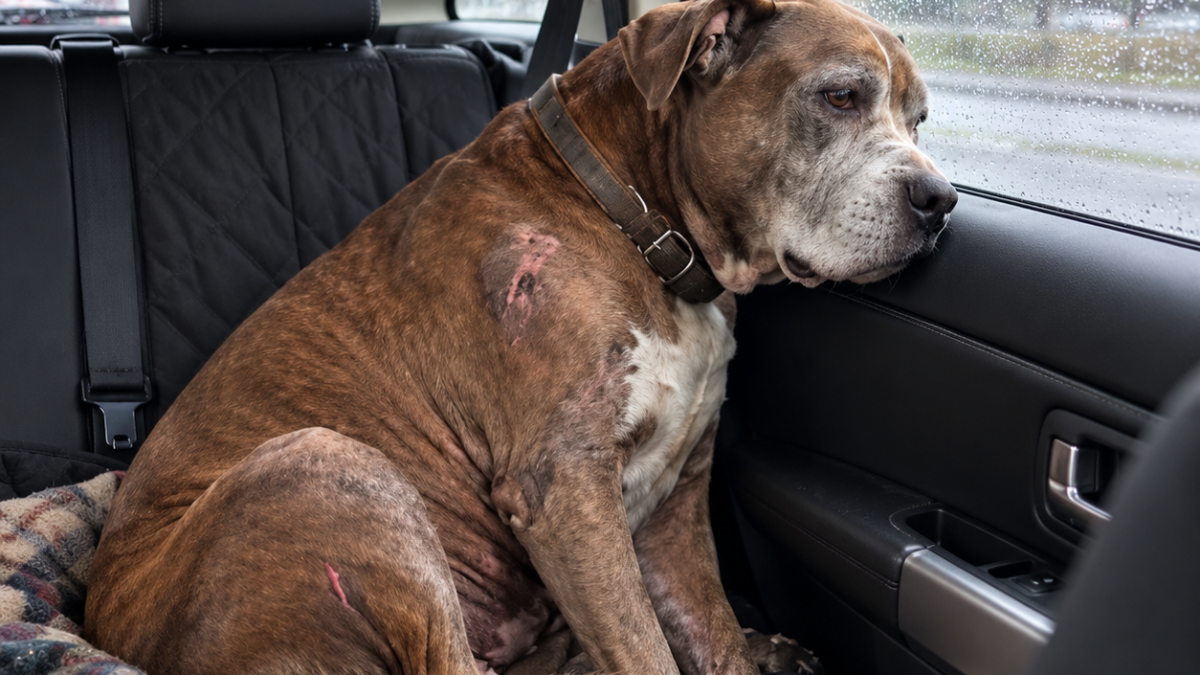
I walked into the shelter hoping to find a cheerful dog who would make my empty house feel alive again, but the only animal I could not stop looking at was a thirteen-year-old pit bull who had spent almost two years facing a concrete wall.
The shelter worker warned me that he might never play, never greet me at the door, and perhaps never learn to love another person after watching his owner die in a field.
Then she told me one detail about the morning he lost everything, and I realized that old dog and I had been waiting for the same impossible thing.
My name is George Harvington.
I was seventy-one years old when I walked into the Briar County Animal Shelter on a cold Tuesday morning.
Two years earlier, my wife, Evelyn, had died.
For forty-six years, she had filled every room of our house without ever trying.
She sang badly while cooking.
She left books open facedown even though I told her it ruined the spines.
She complained that I made coffee strong enough to strip paint.
Then one autumn morning, she was gone.
My children lived overseas. They called. Friends invited me to dinner. Neighbors knocked.
I learned to say, “I’m doing fine,” so convincingly that eventually people stopped asking.
But I wasn’t fine.
I was simply quiet.
That was why I went looking for a dog.
“I need something happy,” I told the young shelter employee who introduced herself as Claire.
She smiled.
“We have plenty of happy.”
She showed me a little terrier that bounced against his kennel door like a spring.
A golden mix brought me the same tennis ball six times.
A beagle howled until I laughed.
Any one of them would have been the sensible choice.
Then, at the far end of the corridor, I noticed a kennel where there was no barking.
Inside, an old brindle pit bull lay curled tightly in the back corner.
His muzzle was almost completely gray.
His ribs showed beneath his coat.
He did not lift his head when Claire stopped beside the gate.
“Who’s he?”
Claire’s smile disappeared.
“That’s Arthur.”
I crouched.
“Hey there, Arthur.”
Nothing.
“How long has he been here?”
Claire hesitated.
“Twenty-two months.”
I turned toward her.
“Almost two years?”
She nodded.
“He came in after his owner died.”
My chest tightened.
“What happened?”
“His owner was a farmer named Samuel Brooks. Arthur had been with him since he was a puppy. Apparently they went everywhere together.”
Claire looked through the bars.
“One morning Samuel suffered a massive heart attack while checking fencing in one of his fields.”
I looked at Arthur.
“He was there?”
“Yes.”
Claire swallowed.
“Arthur barked and cried beside him until a neighbor heard. They found him lying across Samuel’s chest.”
I stopped breathing for a moment.
“Afterward?”
“No close family came for him. Animal control brought Arthur here.”
“And he’s been in this corner ever since?”
“Mostly.”
She lowered her voice.
“He goes outside if we give him enough space. He eats when no one is watching. But he always comes back here.”
I looked at the old dog.
Then I saw my own house.
Evelyn’s chair.
Her coffee mug still hanging beneath the cabinet.
The dresses I could not bring myself to remove from our bedroom closet.
The second pillow I had not moved in two years.
Arthur wasn’t just lying in a corner.
He was waiting.
So was I.
I slipped my fingers through the bars, keeping my hand far enough away that he wouldn’t feel trapped.
“My wife died too,” I whispered.
One of Arthur’s ears twitched.
That was all.
Claire touched my shoulder.
“George, we have several senior dogs who are much more social.”
“I want him.”
She stared at me.
“You haven’t even touched him.”
“That’s all right.”
“He may never become affectionate.”
“That’s all right.”
“You said you wanted a happy dog.”
I looked at Arthur again.
“I changed my mind.”
Claire’s eyes softened, but she still looked worried.
“He could spend the rest of his life like this.”
I stood slowly, my knees cracking.
“So could I.”
For several seconds, neither of us spoke.
Then Claire reached for the latch.
The metal door clicked open.
Arthur finally raised his head.
For the first time, his tired brown eyes met mine.
And when I saw the fear in them, I had no idea that bringing him home would uncover a secret someone at that shelter had buried for nearly two years.
PART 2
Claire opened the kennel door, but Arthur did not come out.
He lowered his head again and pressed his body closer to the wall.
The reaction was so small that another person might have missed it.
I didn’t.
Fear has a way of making itself invisible.
I had become an expert in that.
People thought grief had made me antisocial.
The truth was simpler.
If you stopped letting people close, you stopped giving life opportunities to take them away.
Arthur seemed to understand the same strategy.
Claire stepped into the kennel.
“Come on, buddy.”
Arthur’s muscles tightened.
She immediately stopped.
“He doesn’t like being cornered.”
“Then don’t corner him.”
She looked back at me.
“What do you suggest?”
I lowered myself onto the floor outside the kennel.
At seventy-one, sitting on concrete is a decision you reconsider immediately, but I stayed there.
“What are you doing?” Claire asked.
“Waiting.”
She glanced at Arthur.
“You might be waiting awhile.”
“I’ve got experience.”
For the next ten minutes, I said nothing.
Other dogs barked around us.
A phone rang near the front office.
A metal bowl crashed somewhere down the hall.
Arthur remained still.
Then I began talking.
Not to make him move.
Just because silence suddenly felt dishonest.
“My wife’s name was Evelyn,” I said.
Arthur didn’t react.
“She would’ve told me this was a terrible idea.”
Claire smiled.
I continued.
“She liked dogs, but she liked clean rugs more.”
One of Arthur’s ears shifted.
“She had this ridiculous rule that dogs weren’t allowed on furniture. We had a shepherd years ago named Murphy. Every afternoon, she would leave the house for groceries, and Murphy would climb onto her couch before her car reached the end of the street.”
Claire laughed quietly.
Arthur raised his head.
There it was again.
The slightest movement.
“I’d tell him to get down,” I continued. “He’d look at me like I was betraying the union.”
Arthur’s eyes moved toward me.
I didn’t reach for him.
I simply kept talking.
I told him about Evelyn’s peach pie.
About the way she always burned toast.
About the Christmas she accidentally wrapped my own wrench set and gave it back to me because she had forgotten where she hid my present.
Twenty-five minutes passed.
Then Arthur stood.
Slowly.
His back legs trembled.
He took one step.
Stopped.
Another.
Claire held her breath.
Arthur walked toward the kennel entrance.
Then froze six feet away from me.
I looked down at my hands.
“You don’t owe me anything,” I said.
Another step.
He reached the doorway.
Then, instead of coming to me, he walked past me.
That was enough.
Claire blinked rapidly.
“What?”
She shook her head.
“He usually makes us use a slip lead.”
“Well, maybe he likes bad stories about marriage.”
Arthur stood in the hallway.
Uncertain.
Claire handed me a faded blue leash.
“You still sure?”
“Yes.”
The shelter veterinarian wanted to speak with me before finalizing the adoption.
Her name was Dr. Moreno.
She was direct.
“Arthur has significant arthritis in both hips. Early kidney disease. Several missing teeth. A heart murmur. At his age, we’re not talking about years and years.”
“I’m seventy-one.”
She looked at me.
“I’m serious.”
“So am I.”
“He may require medication, prescription food, additional blood work, and possibly emergency care.”
“I understand.”
“And emotionally…”
She paused.
“He’s shut down.”
I glanced through the office window.
Arthur sat beside Claire, staring at the floor.
“I know.”
Dr. Moreno leaned forward.
“Why him?”
The question stayed between us.
Then I answered.
“Because nobody should spend the last part of his life believing the best thing that ever happened to him was also the last thing that ever will.”
Dr. Moreno stopped writing.
For a moment, she looked as if she might say something else.
Instead, she signed the paperwork.
The drive home took thirty-five minutes.
Getting Arthur into my truck took twenty.
He stopped several feet from the open rear door and refused to move.
Claire tried treats.
Nothing.
She tried encouragement.
Nothing.
Finally I climbed into the back seat myself.
Claire stared.
“You’re going to sit back there?”
“I’ve done stupider things.”
I sat sideways, feet hanging out.
Arthur watched me.
“See?” I said. “No trap.”
Five minutes passed.
Then he approached.
He sniffed the floorboard.
One front paw went up.
Then another.
He climbed inside.
I slid carefully out the opposite door and moved to the driver’s seat.
Claire leaned through my window.
“If he refuses food, call me.”
“I will.”
“If he seems sick, call Dr. Moreno.”
“I will.”
“If you become overwhelmed—”
“I’ll call.”
She smiled.
“George?”
“Yes?”
“Thank you.”
I looked at Arthur in the rearview mirror.
“Don’t thank me yet. He hasn’t seen my cooking.”
Arthur stared out the window the entire way.
I talked.
I told him about my house.
About the backyard.
About Larry the mailman.
About Mrs. Jensen across the road, who considered everybody’s business community property.
Then without thinking, I started humming an old song Evelyn used to sing.
Arthur’s ears lifted.
I kept going.
My voice cracked halfway through.
I stopped.
The truck became quiet again.
At home, Arthur climbed down slowly.
He stood in my driveway and looked toward the fields behind the neighborhood.
His nose lifted into the wind.
For one second, I saw something awake inside him.
Then it disappeared.
He walked toward the side of the porch and sat beside the brick foundation.
Another corner.
I sighed.
“All right, old man. We’ll start there.”
I had prepared a bed beside the fireplace.
Arthur ignored it.
I had purchased three toys.
Arthur ignored those too.
I had spent twenty-eight dollars on a supposedly irresistible bag of dried beef treats.
Arthur sniffed one and turned his head.
“That hurts,” I told him.
He didn’t care.
That evening he wandered through the living room.
When he reached Evelyn’s chair, he stopped.
It was a faded green armchair I hadn’t allowed anyone to sit in since her death.
Not consciously.
Nobody had asked.
Maybe they could sense it.
Arthur sniffed the cushion.
Then he lowered himself onto the rug beside it.
I stood in the doorway.
My throat tightened.
“You picked her spot.”
Arthur closed his eyes.
That first night, neither of us slept.
At midnight, I checked on him.
He was still there.
At two, I checked again.
Still there.
At four, I gave up and made coffee.
When I returned to the living room, Arthur had lifted his head.
I sat in my own chair across from him.
“You do this every night?”
He stared.
“Because I should warn you, I’m not much company before sunrise.”
He put his head back down.
And somehow that felt comfortable.
The first week was built entirely around distance.
Arthur would not eat if I stood near the bowl.
So I put down food and left.
He would not drink if I watched.
So I stopped watching.
If I approached him directly, he turned his head.
So I approached nothing.
I simply existed nearby.
Every morning I drank coffee in the kitchen.
Every afternoon I read the newspaper aloud.
Every evening I sat in the living room and told him something about Evelyn.
It became our ritual.
“She hated mushrooms,” I said one night.
Arthur lay beside the green chair.
“Could detect one chopped mushroom in a casserole meant for twenty people.”
His ear moved.
“I once tried to hide them under cheese.”
Arthur looked at me.
“Exactly. Terrible judgment.”
On the ninth morning, I was pouring coffee when I heard nails scraping the floor.
Slow.
Uneven.
Click.
Pause.
Click.
Pause.
I turned.
Arthur stood in the kitchen doorway.
My hand froze around the coffee pot.
He walked toward me.
One step.
Two.
Then sat beside my feet.
He didn’t touch me.
He didn’t wag his tail.
He simply sat.
I swallowed.
“Well.”
Arthur stared forward.
“I guess this is happening.”
I did not bend down.
I did not pet him.
I didn’t want to scare the moment away.
For five minutes, we stayed like that.
Then he stood and returned to the living room.
The next morning he did it again.
And the next.
By the end of the second week, Arthur had added a new part to the routine.
After breakfast, he followed me into the backyard.
Always six or seven feet behind.
If I stopped, he stopped.
If I sat on the porch, he lay beside the steps.
I started fixing things I had neglected after Evelyn died.
A loose fence board.
A cracked flower box.
A gutter that sagged over the garage.
Arthur watched all of it.
One afternoon, I caught myself talking to him while replacing a hinge.
“You know what the problem with this is?”
Arthur looked at me.
“I bought the cheap screws.”
He blinked.
“Don’t judge me.”
His tail moved.
Once.
I stared.
Arthur looked away.
“Was that a wag?”
Nothing.
“Arthur.”
His tail tapped the grass again.
I dropped the screwdriver.
“No.”
He stared at me.
“You did.”
Another small movement.
I laughed.
It startled both of us.
I laughed until my eyes filled.
Then I sat on the porch step.
Arthur remained six feet away.
But his tail moved once more.
That evening I called Claire.
“He wagged.”
There was a pause.
“What?”
“His tail.”
“Are you sure?”
“I know what a tail is.”
She laughed.
“George, he barely wagged for us after the first few months.”
“Well, apparently my fence repair is inspirational.”
Her voice became soft.
“How are you doing?”
The question caught me off guard.
Nobody had asked in a way that sounded as if they actually wanted the answer.
I looked through the window.
Arthur was curled beside Evelyn’s chair.
“Better.”
That was the truth.
Not good.
Not healed.
Better.
My daughter Sarah called two days later from Germany.
She knew I had adopted a dog, but she didn’t know much about him.
“How old is he?”
“Thirteen.”
Silence.
“Dad.”
“What?”
“You adopted a thirteen-year-old pit bull?”
“Yes.”
“With heart disease?”
“Murmur.”
“And kidney problems?”
“Early.”
“And arthritis?”
“Both hips.”
Another silence.
“Dad, why?”
I knew what she meant.
She wasn’t criticizing Arthur.
She was afraid.
For me.
“What happens when he dies?” she asked quietly.
I leaned against the kitchen counter.
The question hurt because I had been refusing to ask it.
“I suppose I’ll be devastated.”
“You’ve already lost Mom.”
“Yes.”
“I don’t want you going through that again.”
Something rose in my throat.
“Sarah, we don’t get to refuse love because it might end.”
Neither of us spoke.
Then I realized I had just said the sentence I had needed somebody to say to me two years earlier.
Sarah heard it too.
“Dad?”
“Yes?”
“Are you talking about the dog?”
I looked at Arthur.
“No.”
Sarah cried.
So did I.
After that call, things began changing faster.
Not dramatically.
Arthur did not suddenly become a puppy.
He did not leap onto the couch or race around the house.
Healing is rarely theatrical.
It was smaller.
He started waiting outside the bathroom.
He began following me from room to room.
He accepted a biscuit from my hand.
One evening, after a thunderstorm shook the windows, he walked over and rested his chin on my knee.
I nearly stopped breathing.
My hand hovered above his head.
“Can I?”
Arthur closed his eyes.
I touched him.
Very gently.
Behind one ear.
His body trembled.
For a second, I thought he might pull away.
Instead, he leaned closer.
That first touch lasted perhaps ten seconds.
It felt like being trusted with something sacred.
Two months after the adoption, I decided to take Arthur to a small piece of farmland I rented outside town.
I had farmed when I was younger.
After Evelyn and I retired, I sold most of the land, but I still leased ten acres from an old friend.
I told myself I kept it for vegetables.
In truth, I missed open ground.
The moment I turned onto the gravel road, Arthur changed.
He lifted his head.
His nose went toward the cracked window.
His body began trembling.
I slowed.
“You know this smell?”
He stood.
For an old dog with bad hips, that was unusual.
We reached the field.
I opened the rear door.
Arthur jumped down.
Too fast.
“Easy.”
He ignored me.
He stared over the grass.
Wind moved through it in long silver-green waves.
A tractor worked somewhere in the distance.
A metal gate knocked softly against its post.
Arthur took one step.
Then another.
Then he ran.
Not fast.
Not gracefully.
But he ran.
I stood beside the truck with tears already on my face.
“Arthur!”
He kept going.
His old legs carried him farther than I thought possible.
Fifty yards.
Seventy.
Nearly a hundred.
Then he stopped beneath a large oak tree on a low hill.
He turned.
Looked back.
At me.
And waited.
I walked toward him.
At my age, crossing a field quickly is not dignified.
By the time I reached the oak tree, I was breathing hard.
“You trying to kill me?”
Arthur’s mouth opened.
His tongue showed.
For the first time, he looked almost happy.
I knelt.
He approached me.
Then rested his head against my chest.
I wrapped both arms around him.
He trembled.
So did I.
“You miss him.”
Arthur pressed harder.
“I know.”
I thought of Evelyn.
“You don’t have to stop missing him.”
The wind moved above us.
“You just have to keep going.”
I don’t know whether I was talking to Arthur or myself.
Probably both.
After that afternoon, the old dog changed.
He began greeting me when I came home.
At first, he merely stood.
Then came the tail wag.
Then one Tuesday, I walked through the front door and Arthur picked up an old rope toy.
He carried it toward me.
I stared.
“What am I supposed to do with that?”
Arthur dropped it.
I picked it up.
He grabbed the other end.
We played tug for perhaps thirty seconds before his hips gave out and he sat down.
I laughed until my stomach hurt.
That was the first time my house sounded alive again.
Then, six months after Arthur came home, Claire called.
Her voice was tense.
“George, are you sitting down?”
“No.”
“Sit down.”
I lowered myself into a kitchen chair.
Arthur was asleep under the table.
“What happened?”
“We found something connected to Arthur’s intake.”
My hand tightened around the phone.
“What?”
“Our records room was being reorganized. One of the volunteers found an old property envelope that had been filed under the wrong case number.”
“What was inside?”
“Arthur’s original collar.”
I looked down at him.
“And?”
“There was a metal tag attached to it.”
“His ID?”
“No.”
Claire inhaled.
“There’s an address engraved on the back.”
“Samuel’s?”
“No.”
The fear came immediately.
“What address?”
She read it to me.
A county road forty miles north.
I didn’t recognize it.
“There was also a folded piece of paper inside the envelope.”
I waited.
“George, I think Samuel wrote it.”
“What does it say?”
Claire’s voice softened.
“‘If anything happens to me, take Arthur to Daniel. He knows.’”
I felt the room tilt.
“Who is Daniel?”
“We don’t know yet.”
Arthur lifted his head.
He must have sensed my voice.
I reached down and placed my hand against his shoulder.
“What does that mean for the adoption?”
“Legally? Nothing. Arthur was available for adoption. You adopted him properly.”
“But Samuel wanted him with somebody.”
“Yes.”
“And nobody took him there.”
“No.”
I looked at the old dog.
Six months earlier, the thought of returning him would not have hurt because he had not yet become part of my life.
Now I couldn’t imagine waking without hearing his nails in the hallway.
Claire seemed to know what I was thinking.
“George, no one is taking him from you.”
“That’s not the point.”
“What is?”
“If Samuel trusted somebody enough to leave instructions…”
I closed my eyes.
“We have to find him.”
There was silence.
Then Claire said, “I was hoping you’d say that.”
The address belonged to a weathered farmhouse surrounded by maple trees.
Claire came with me.
Arthur rode in the back.
As we approached the property, his behavior changed.
He stood.
Whined.
Then barked.
I nearly drove off the road.
Arthur had rarely barked since coming home.
A man stepped onto the porch.
Tall.
Late fifties or early sixties.
Gray beard.
Work boots.
He raised one hand to shade his eyes.
Then he saw the dog through the truck window.
His face changed completely.
“Arthur?”
The dog exploded.
He scratched at the door.
Barked.
Whined.
His entire body shook.
I barely got the door open before he jumped.
“Arthur!”
The man ran down the porch steps.
Arthur ran toward him faster than I had ever seen him move.
The man dropped to his knees.
Arthur crashed into his chest.
The sound that came from the man was half laugh, half sob.
“My God.”
He wrapped his arms around Arthur.
“I thought you were dead.”
I stood beside the truck.
Something sharp entered my chest.
Claire looked at me.
I looked away.
Arthur licked the man’s face.
His tail whipped from side to side.
He made sounds I had never heard.
For one terrible second, jealousy rose inside me.
Ugly.
Immediate.
I hated myself for it.
This was happiness.
Arthur had recognized someone he loved.
Why did that frighten me?
The man finally looked up.
“Where did you find him?”
Claire approached.
“At Briar County Animal Shelter.”
His expression hardened.
“No.”
“I’m sorry?”
“No. That’s impossible.”
“Why?”
“I called them.”
Claire froze.
The man stood.
“My name is Daniel Brooks. Samuel was my brother.”
I felt cold despite the sunlight.
Daniel continued.
“When Samuel died, I was in a hospital in Wyoming after a construction accident. Crushed pelvis. Broken leg. I didn’t even know Sam was dead for almost three weeks.”
Arthur stayed pressed against his side.
“As soon as I got home, I called the county. They said Sam’s dog had been transferred.”
“Transferred where?” Claire asked.
“That changed depending on who answered. First they said a rescue group. Then they said Arthur had already been adopted.”
Claire turned pale.
“He was never adopted.”
Daniel stared at her.
“What?”
“He was at our shelter almost two years.”
The silence that followed was brutal.
Daniel looked at Arthur.
Then at us.
“I searched for him for eleven months.”
He went inside.
Returned with a folder.
Inside were printed emails.
Certified-mail receipts.
Copies of letters.
Dates.
Names.
Phone logs.
“I contacted animal control seventeen times.”
Claire took the papers.
Her face drained of color.
“These were sent to our office.”
“I know.”
She flipped through them.
“This email was addressed directly to our intake supervisor.”
Daniel pointed.
“Richard Cole.”
Claire’s head snapped up.
“You know him?”
“He told me Arthur had been transferred to a senior-dog rescue in another state.”
“No.”
Claire whispered the word.
“What?”
“He lied.”
Daniel stared.
Claire swallowed.
“Arthur never left Briar County.”
My hands became fists.
I remembered twenty-two months.
Twenty-two months in a concrete kennel.
Twenty-two months while Daniel looked.
Twenty-two months because somebody had either made a catastrophic mistake or deliberately buried the truth.
“Why?” I asked.
Claire looked at me.
“I don’t know.”
Arthur moved away from Daniel.
He walked back toward me.
Then sat against my leg.
Daniel watched.
Something softened in his face.
“He chose you.”
I shook my head.
“No. He remembers your brother.”
“I know.”
“I’m not replacing Samuel.”
“No.”
Daniel wiped his face.
“And I’m not asking you to.”
I looked down at Arthur.
He leaned into my knee.
That simple movement taught me more about love than most people learn in a lifetime.
He could remember Samuel.
Love Daniel.
Trust me.
The heart was not a house with one bedroom.
We spent three hours talking.
Daniel told me about Arthur as a puppy.
Samuel had found him behind an abandoned feed store.
Too skinny.
Covered in fleas.
Terrified of men.
Samuel spent two weeks sitting on the floor of his barn before Arthur allowed him close.
That story made me laugh.
“So he’s always liked making old men sit on hard floors.”
Daniel smiled.
“Pretty much.”
He showed me photographs.
Arthur riding in Samuel’s truck.
Arthur sitting beside a tractor tire.
Arthur asleep with his head across Samuel’s work boot.
One photograph stopped me.
Samuel sat beneath an oak tree.
Arthur was beside him.
The tree looked almost identical to the one on my leased field.
I understood suddenly why Arthur had run.
It wasn’t the place.
It was the memory.
Before we left, Daniel crouched beside him.
“You’ve got a good man now.”
Arthur licked his chin.
Daniel stood and extended his hand to me.
“Keep him.”
“You’re sure?”
“I spent two years hoping he was alive.”
He looked at Arthur.
“He is.”
His eyes filled again.
“And he’s happy.”
“You can see him whenever you want.”
Daniel stared.
“You mean that?”
“Samuel was part of his life for eleven years. You’re part of that.”
Daniel shook my hand harder.
“I’d like that.”
On the drive home, Claire barely spoke.
Finally, I asked, “What are you thinking?”
“That something is very wrong.”
“What?”
“Samuel’s note should have been logged.”
“It wasn’t?”
“No.”
“Daniel’s contact information?”
“If he called, yes.”
“He has proof.”
“I know.”
“So why wasn’t Arthur sent to him?”
Claire stared through the windshield.
“I’m going to find out.”
Two days later, she called.
“Come to the shelter.”
I arrived that afternoon.
Arthur came with me.
Claire met us outside instead of at the desk.
That was my first warning.
“You found something.”
“Yes.”
“How bad?”
“Worse than I thought.”
She led me into a small conference room.
Shelter director Mark Halpern sat at one end of the table.
Beside him was a woman from the county’s animal-services department.
Folders covered the table.
Arthur lay beneath my chair.
Halpern looked exhausted.
“Mr. Harvington, thank you for coming.”
“Tell me what happened.”
Claire placed a photocopy in front of me.
Arthur’s intake record.
Samuel Brooks.
Deceased.
Pit bull, male, approximately eleven years.
Then I saw handwriting near the bottom.
Emergency contact:
Daniel Brooks.
A phone number.
An address.
A line had been drawn through all of it.
Beside it, somebody had written:
NO FAMILY AVAILABLE.
My stomach turned.
“That’s not a mistake.”
Nobody answered.
I looked at Halpern.
“Is it?”
“No.”
“Who crossed it out?”
The county representative spoke.
“The intake supervisor at the time was Richard Cole.”
“The man Daniel contacted.”
“Yes.”
“Where is he?”
“He left county employment last year.”
“Why?”
Silence.
“Why?”
Halpern rubbed his forehead.
“There were concerns regarding documentation.”
“Stop using office language.”
He looked at me.
“What did he do?”
Claire answered.
“Some transfer records didn’t match.”
I leaned back.
“What does that mean?”
“Dogs listed as sent to partner rescues had no matching intake records at those rescues.”
My blood went cold.
“How many?”
“We don’t know yet.”
Arthur shifted beneath my chair.
I looked down at him.
Then back up.
“Was Arthur supposed to be transferred?”
Halpern nodded slowly.
“There’s a record showing he was scheduled for transfer to an out-of-state senior rescue three weeks after intake.”
“But he never went.”
“No.”
“Yet Daniel was told he did.”
“Yes.”
“Why?”
“We don’t know.”
I stood.
The chair scraped backward.
Arthur lifted his head.
“Twenty-two months.”
Nobody moved.
“This dog spent twenty-two months in the same corner because somebody crossed out a phone number.”
The county representative said, “Mr. Harvington, we understand your frustration.”
“No.”
My voice stayed quiet.
That made everyone listen.
“You understand paperwork. You don’t understand what twenty-two months feels like when you are waiting for someone who is never coming.”
Claire stared at me.
I continued.
“Daniel was looking for him. Arthur was waiting. Samuel left instructions.”
I pointed at the form.
“And somebody erased a family with one line of ink.”
Halpern looked ashamed.
“We are reviewing the matter.”
“No.”
“George—”
“Reviewing isn’t enough.”
The county representative folded her hands.
“What are you asking us to do?”
“Every file.”
She frowned.
“What?”
“Every animal Richard Cole handled.”
Halpern inhaled.
“That could be hundreds.”
“Then you better start.”
“We may not have the resources—”
“Find them.”
My anger was cold now.
Focused.
“If Arthur’s record was altered, check every altered record. Every transfer. Every family contact. Every animal that disappeared between one system and another.”
Claire nodded.
“He’s right.”
Halpern looked at her.
“We can’t assume—”
“We don’t have to assume,” she snapped.
She held up Daniel’s emails.
“We have proof.”
That was the beginning of the part of Arthur’s story I never expected.
People like to imagine revenge as something dramatic.
A confrontation.
A public humiliation.
A person who hurt you finally begging for mercy.
I wanted that at first.
I wanted Richard Cole standing in front of me.
I wanted to ask him how he could look at a grieving animal every day and still ignore the man trying to take him home.
But anger burns quickly.
Records last.
So my revenge became paper.
Dates.
Emails.
Signatures.
Transfer numbers.
Claire and I began helping the county review old cases.
Daniel joined us.
At first, we expected a handful of errors.
Then we found fourteen.
Then thirty-one.
Some were harmless clerical mistakes.
Wrong cage numbers.
Misspelled names.
Late data entries.
Others were not.
Several animals had been listed as transferred to rescues that had never received them.
Two families had called repeatedly asking for lost pets and been told the animals were no longer at the shelter.
One dog had actually remained in the building for another four months.
Another had been adopted locally while his original family was still searching.
A twelve-year-old spaniel named Maggie had been picked up after escaping during a storm.
Her owner, an eighty-year-old woman named Mrs. Aldridge, had called the shelter three times.
The intake notes said:
No owner located.
Claire found the call log.
Mrs. Aldridge’s number was there.
When we contacted her, she cried so hard she couldn’t speak.
Maggie had been transferred to a rescue two counties away.
We found her.
Still alive.
Fourteen months after she disappeared, Mrs. Aldridge walked into that rescue carrying the same red leash she had bought when Maggie was a puppy.
I was there.
Maggie was asleep behind a gate.
Mrs. Aldridge said her name once.
“Maggie?”
The dog’s head came up.
She stared.
Then began screaming.
Not barking.
A high, broken cry of recognition.
She ran.
Mrs. Aldridge dropped to her knees.
They collided.
Everybody in that room cried.
I looked at Claire.
“This is what he took from Arthur.”
She nodded.
“And from Daniel.”
That reunion changed the county’s attitude.
Until then, some officials still treated the problem as administrative failure.
After Maggie, it became human.
The county board scheduled a public hearing.
I did not want to speak.
Claire told me I had to.
“You’re the reason this came to light.”
“No. Arthur is.”
“Arthur can’t use a microphone.”
“Probably for the best.”
Daniel smiled.
“You should speak.”
I hated microphones.
I hated public rooms.
I hated strangers staring at me.
Two years earlier, I had stopped attending church because I could not tolerate people asking how I was doing.
Now I sat beneath fluorescent lights in a county meeting hall with nearly eighty people behind me.
Arthur lay at my feet wearing his faded blue leash.
When my name was called, I walked to the podium.
My hands shook.
I looked at the officials.
Then at Arthur.
And I began.
“My name is George Harvington. I am seventy-two years old.”
I told them about Evelyn.
Briefly.
Then I told them about the shelter.
The corner.
Samuel.
Daniel.
Twenty-two months.
I held up the intake form.
“This line changed a life.”
The room was silent.
“One line through a phone number.”
I pointed toward Arthur.
“He was not inventory. He was not a cage number. He was a dog whose owner had died in front of him.”
My voice tightened.
“Samuel Brooks left instructions for the person who should care for him. His brother spent almost a year searching.”
I looked toward Daniel.
“He was told Arthur was gone.”
Then I faced the board.
“You can call that a documentation issue if you want.”
I paused.
“I call it twenty-two months stolen from an old dog.”
Nobody moved.
“I cannot give those months back.”
I looked at Arthur.
“But you can make sure nobody steals them from another family.”
The hearing lasted nearly four hours.
Former employees testified.
Rescue groups submitted records.
Families spoke.
Then came the revelation that turned a bad system into something uglier.
Richard Cole had not simply been careless.
An audit found that certain animals had been marked as transferred to organizations associated with a private transport company.
That company billed the county for transportation.
Some transfers never occurred.
The county had paid anyway.
Arthur’s name was on one of those invoices.
I stared at the document.
They had billed taxpayers to transport a dog who never left the building.
Daniel whispered, “You’ve got to be kidding.”
Claire looked sick.
The investigation widened.
Richard Cole had approved several questionable invoices.
Whether he personally profited became a matter for investigators and prosecutors.
I did not speculate.
I did not need to.
The documented truth was enough.
Three months later, the county announced formal charges related to falsified records and fraudulent billing.
I read the announcement at my kitchen table.
Arthur was asleep beside my feet.
I expected satisfaction.
Instead, I felt tired.
Daniel called.
“Did you see?”
“Yes.”
“How do you feel?”
I looked at Arthur.
“Like I wish none of it had happened.”
Daniel was quiet.
“Me too.”
That was the strange thing about revenge.
When you finally reach the place where the person who hurt you faces consequences, it does not return what was taken.
Samuel was still dead.
Arthur was still old.
Daniel had still lost two years.
Justice mattered.
But it was not time travel.
So we turned our attention toward what could still be repaired.
The shelter replaced its intake system.
Every owner or emergency contact attempt had to be documented electronically.
Records could no longer be erased without leaving a permanent audit trail.
Transfers required confirmation from the receiving rescue.
Families received case numbers that could be tracked online.
Senior animals with known histories received special review before being moved.
Claire was promoted to adoption coordinator.
When she told me, I laughed.
“Does that mean you’re finally important?”
“I was already important.”
“Debatable.”
Arthur adored her by then.
Whenever she visited, he leaned against her leg.
Daniel came every Sunday.
The first few visits were painful.
Arthur reacted to his truck before it reached the driveway.
He knew the engine.
Daniel said Samuel had owned the same model.
Arthur would stand near the front door, tail moving, listening.
When Daniel entered, the dog became younger.
Not physically.
Emotionally.
I learned not to feel jealous.
Instead, Daniel brought Samuel into my house through stories.
“He used to fry eggs for Arthur every Sunday.”
“So that’s why he stares at my breakfast.”
“He expects payment.”
“He’s getting dog food.”
“You’ll lose.”
Daniel was right.
By Arthur’s fourteenth birthday, I was frying him one egg every Sunday.
He became shameless.
Life developed a rhythm.
Morning coffee.
Medication hidden in cheese.
Short walk.
Nap.
Lunch.
Porch.
Daniel on Sundays.
The little farm once or twice a week.
Arthur’s favorite place remained the oak tree.
Whenever we reached it, he would lie beneath the branches and look across the field.
I sometimes wondered what he saw.
Samuel?
A younger version of himself?
Nothing at all?
I stopped needing to know.
Memory belongs to the one carrying it.
My own grief changed too.
For the first time since Evelyn’s death, I opened her closet.
I had avoided it for more than two years.
One Saturday morning, Arthur followed me into the bedroom.
I stood in front of the doors.
My hand rested on the knob.
I couldn’t move.
Arthur sat beside me.
“You know what’s in there?”
He looked up.
“Everything I’m afraid to touch.”
I opened the door.
Her perfume was gone.
I had feared it would still be there.
I had also feared it wouldn’t.
Her dresses hung exactly as she left them.
Blue.
Yellow.
The red one she wore to Sarah’s wedding.
I touched the sleeve.
Then sat on the floor.
Arthur lowered himself beside me.
I cried.
Not quietly.
Not politely.
I cried the way grief had wanted me to cry for two years.
Arthur placed his head across my leg.
When it was over, I took one dress from the closet.
Then another.
I did not throw them away.
I packed them carefully for Sarah.
Healing did not mean destruction.
It meant movement.
That evening I called my son.
Then my daughter.
For the first time, we spoke about Evelyn without changing the subject when one of us cried.
Sarah said, “You sound different.”
“Better or worse?”
“Alive.”
I looked at Arthur.
“That’s his fault.”
The next spring, something happened that nearly ended everything.
Arthur collapsed in the backyard.
One second he was sniffing near the fence.
The next, his legs folded.
I ran.
At seventy-two, running is a negotiation with several body parts that strongly object.
I dropped beside him.
“Arthur.”
His eyes were open.
His breathing was shallow.
I called Dr. Moreno while trying not to panic.
We reached the clinic in twelve minutes.
I do not remember driving.
Daniel met me there.
Claire came straight from work.
Dr. Moreno ran blood tests.
Ultrasound.
Heart monitoring.
After nearly two hours, she entered the waiting room.
I stood.
“Tell me.”
“His kidney values have worsened.”
I sat back down.
“And his heart?”
“The murmur has progressed.”
“How bad?”
She hesitated.
I hated that hesitation.
“How bad?”
“We need to be realistic.”
Daniel put a hand on my shoulder.
I stared at Dr. Moreno.
“Months?”
“Possibly.”
My throat closed.
“Could be longer with medication and diet. Could be less.”
I looked through the glass door.
Arthur lay on a blanket.
A technician rubbed his head.
I wanted to bargain.
Another year.
Six months.
One summer.
Anything.
Then Dr. Moreno said something I never forgot.
“Don’t turn his remaining time into a countdown.”
I looked at her.
“What?”
“You’ll lose the days you still have because you’ll spend them grieving days that haven’t happened yet.”
Daniel squeezed my shoulder.
That was exactly what I had done after Evelyn.
Lost parts of my life mourning the possibility of more pain.
Arthur came home with new medication.
I built a ramp beside the porch.
Then replaced it because the first one was too steep.
Daniel laughed at my second attempt.
“You’re an engineer now?”
“No.”
“Clearly.”
Arthur approved version three.
His walks became shorter.
We no longer went around the block.
We went to the mailbox.
Then halfway down the street.
Then sometimes only around the backyard.
It didn’t matter.
He still woke every morning.
Still stood beside the kitchen while I made coffee.
Still expected his Sunday egg.
Still barked once when Daniel arrived.
Still leaned against my leg when Claire visited.
And he still wanted the farm.
So I took him.
When walking became too difficult, I bought a large garden wagon.
The first time I tried to put him inside, he looked offended.
“You’re fifteen years old.”
Arthur stared.
“You have arthritis.”
Stare.
“I’m not carrying you.”
He looked away.
“You are emotionally manipulative.”
Eventually he accepted the wagon.
I pulled him across the field toward the oak tree.
He sat upright, nose in the wind.
I laughed.
“You look like a king.”
At the tree, I helped him out.
He lowered himself into the grass.
I sat beside him.
For an hour, we watched sunlight move across the field.
Those became my favorite days.
One afternoon, Daniel brought something.
A framed photograph.
Samuel sat on the step of an old red tractor.
Arthur, young and muscular, stood beside him.
Samuel’s hand rested on the dog’s back.
I stared.
“I thought you should have it.”
“I can’t take this.”
“Yes, you can.”
“It belongs to you.”
“I have copies.”
I looked at Arthur.
Then back at the photograph.
That evening, I placed it on the bookshelf beside Evelyn’s picture.
Samuel on one side.
Evelyn on the other.
Two strangers.
Two people whose deaths had broken the hearts of the creatures who loved them.
Arthur stood beneath the shelf.
I said, “There they are.”
He looked at me.
“You think they’d get along?”
His tail moved.
“I’ll take that as yes.”
Arthur turned fifteen that October.
Claire organized a small celebration at the shelter.
I objected.
“He doesn’t need a party.”
Claire ignored me.
There was a blue bandanna.
A dog-safe cake.
Daniel brought boiled chicken.
Dr. Moreno stopped by.
Several volunteers came.
Arthur tolerated all of it because food was involved.
Near the end, Claire stood beside the kennel where I had first seen him.
It was empty.
“Do you remember?” she asked.
“Every day.”
“He looked dead inside.”
“I know.”
She stared at Arthur.
He was lying beside Daniel, chewing chicken.
“You changed him.”
“No.”
Claire glanced at me.
“We changed each other.”
She smiled.
The old kennel corner remained empty that day.
I stood there longer than I expected.
Twenty-two months.
Arthur had spent almost two years facing that wall.
Now the shelter had changed its senior-dog policy partly because of him.
A volunteer had placed a soft bed in that kennel.
There were toys.
A handwritten sign:
SENIORS DESERVE SUNSHINE TOO.
I touched the bars.
For the first time, I did not feel rage.
I felt closure.
Richard Cole eventually pleaded guilty to several charges involving falsified records and fraudulent billing.
I attended sentencing because Daniel wanted to go.
Arthur stayed home with Claire.
In court, Cole looked smaller than I imagined.
That surprised me.
I had spent months turning him into a giant in my mind.
The man who stole Arthur’s time.
The man who lied to Daniel.
The man who represented everything unfair about grief.
But sitting at the defense table, he was just a tired middle-aged man.
The prosecutor described altered files.
False transfers.
Improper invoices.
Families misled.
Then victims were allowed to speak.
Daniel went first.
He carried Samuel’s note.
“My brother died believing he had arranged for his dog to be cared for.”
His voice shook.
“I spent almost a year looking for Arthur while Arthur sat seven miles from my house.”
He looked toward Cole.
“You didn’t just falsify a form.”
He paused.
“You made grief worse for a dog that had already lost everything.”
Then my name was called.
I walked forward.
I had prepared three pages.
I used none of them.
I looked at Cole.
“I wanted to hate you.”
He kept his eyes down.
“I wanted revenge.”
The courtroom became still.
“I imagined standing here and feeling satisfied.”
I glanced at Daniel.
“I don’t.”
Cole finally looked at me.
“You stole time.”
My throat tightened.
“Time is the one thing old dogs and old men cannot replace.”
His face changed.
I continued.
“But Arthur is home now.”
I folded the paper in my hand.
“You don’t get to own the rest of his story.”
That was all.
I sat down.
The judge imposed a sentence that included incarceration, restitution, and a prohibition on working in animal-care contracting during supervision.
Some people thought it was too harsh.
Others thought it was too light.
I stopped caring.
Justice had happened.
My life was somewhere else.
With Arthur.
The following winter was difficult.
Cold weather made his hips worse.
Some mornings I had to help him stand.
I bought a support harness.
Arthur hated it.
“You know,” I told him while fastening it, “for somebody who spent two years refusing to move, you have strong opinions about mobility.”
He glared.
Daniel laughed.
“He’s always been stubborn.”
“One of us needs to be reasonable.”
Daniel looked at me.
“Which one?”
Arthur’s appetite became unpredictable.
Some days he devoured chicken.
Others he ignored everything.
Dr. Moreno adjusted medication.
Then one morning, Arthur refused his Sunday egg.
I knew.
Daniel knew too.
We looked at each other across the kitchen.
Neither said anything.
Arthur drank water.
Then walked slowly toward Evelyn’s chair.
He lay down.
That afternoon, I called Dr. Moreno.
She came to the house.
She examined him on the rug.
Then asked me to step onto the porch.
The March air was cool.
“What are you seeing?” I asked.
“His kidneys are failing.”
“How long?”
“George…”
“How long?”
“Days, maybe.”
I stared across the yard.
The fence board I had repaired after Arthur arrived was weathered again.
“I can take him to the hospital tonight. We can give IV fluids. It might buy some time.”
“Would he be comfortable?”
She didn’t answer immediately.
“That’s not what I asked.”
“No.”
I nodded.
The hardest decisions are often the ones you understand before anybody explains them.
“I don’t want his last days in a cage.”
“I know.”
“I promised him.”
Dr. Moreno put a hand on my arm.
“I can come back when you’re ready.”
I laughed once.
Broken.
“I’ll never be ready.”
“No.”
She looked through the window.
“But you’ll know.”
Daniel came that evening.
Claire arrived with a blanket from the shelter.
The same type Arthur had slept on during his first weeks there.
We sat in the living room.
Arthur lay beside Evelyn’s chair.
Nobody spoke much.
At one point Daniel told a story.
“When Sam first got Arthur, he chewed through a screen door.”
I looked at the dog.
“You?”
Arthur barely lifted an ear.
Daniel laughed.
“Then he ate half a bag of chicken feed.”
“He had ambition.”
“He had diarrhea for three days.”
Claire covered her face.
“Daniel.”
“What? It’s part of his history.”
I laughed.
A real laugh.
Arthur opened his eyes.
For a few minutes, the room felt normal.
At midnight, Claire went home.
Daniel slept on the couch.
I stayed beside Arthur.
Around four in the morning, his breathing changed.
I knew.
I called Dr. Moreno.
She arrived before sunrise.
Daniel woke.
We carried Arthur outside in his bed.
I wanted him to feel the morning air.
The sky was turning pale.
Birds had begun calling from the maple trees.
Arthur rested with his head in my lap.
Daniel sat beside us.
Dr. Moreno waited.
No rush.
No fluorescent lights.
No steel table.
No strangers.
Just home.
I stroked Arthur’s gray face.
“Remember the shelter?”
His eyes moved toward me.
“You made me sit on that floor for half an hour.”
Daniel smiled through tears.
“You deserved it.”
I continued.
“You remember the farm?”
Arthur’s tail moved slightly.
“The oak tree?”
Another small movement.
My voice broke.
“You remember Samuel?”
Arthur’s eyes remained on mine.
Daniel covered his mouth.
“I know you do.”
I leaned closer.
“You don’t have to stop loving him.”
Tears fell onto Arthur’s coat.
“You never did.”
I swallowed.
“And you don’t have to worry about me.”
That was a lie.
We both knew it.
“I’ll be all right.”
Arthur exhaled.
Slowly.
I pressed my forehead to his.
“You waited long enough.”
His eyes softened.
“You can rest now.”
Dr. Moreno asked quietly, “Are you ready?”
“No.”
I kissed Arthur between the eyes.
“Do it anyway.”
Daniel placed one hand on Arthur’s back.
I kept mine against his chest.
The medication went in.
Arthur’s breathing slowed.
Then slowed again.
His eyes stayed on me.
I whispered the last words he ever heard.
“You’re home.”
His heart stopped beneath my hand.
No dramatic sound.
No final struggle.
Just stillness.
For several seconds, I could not understand what had happened.
The world was there.
The birds.
The wind.
Daniel.
Dr. Moreno.
My porch.
Everything continued.
Arthur didn’t.
I bent over him.
The grief was enormous.
But it felt different from Evelyn.
When Evelyn died, I had believed grief meant everything was over.
When Arthur died, I knew grief meant something had mattered.
That knowledge did not reduce the pain.
It gave it somewhere to go.
We buried Arthur at the little farm.
Beneath the oak tree.
Daniel brought Samuel’s old work glove.
“I found it in a box.”
He placed it beside Arthur.
Claire brought Arthur’s old shelter tag.
I looked at it.
Then shook my head.
“No.”
She stopped.
“What?”
“Not that.”
“Why?”
I held the faded tag.
BRIAR COUNTY ANIMAL SHELTER.
A number.
No name.
“He spent twenty-two months being a number.”
I handed it back.
“That isn’t how he leaves.”
Claire nodded, crying.
I placed his blue birthday bandanna beside him instead.
Daniel set the framed copy of Samuel’s photograph near the grave while we worked.
Then he helped me lower the simple wooden box.
We covered Arthur together.
No speeches.
No ceremony.
Just three people who loved the same dog in different ways.
I returned the next morning alone.
The ground was dark and fresh.
I sat beneath the oak tree.
For the first time since adopting Arthur, there was no sound of him breathing beside me.
I cried.
Then I said aloud, “Thank you.”
I stayed until sunset.
Three weeks later, Claire called.
“Come to the shelter.”
“I’m not adopting another dog.”
“I didn’t say you were.”
“You were thinking it.”
“I’m always thinking it.”
I drove over.
Daniel was already there.
That made me suspicious.
“What are you two doing?”
Claire smiled.
“Walk with us.”
We went down the kennel corridor.
The shelter had renovated the back section.
New flooring.
Better lighting.
Larger beds.
Quiet panels between kennels to reduce stress for senior dogs.
At the entrance hung a wooden sign.
I stopped.
THE ARTHUR ROOM
Below it:
FOR THE ONES STILL WAITING.
I couldn’t speak.
Claire stood beside me.
“The county approved the name last month.”
I touched the wood.
“No.”
She looked worried.
“No?”
“It’s too much.”
Daniel shook his head.
“No, it isn’t.”
Inside hung a photograph.
Arthur beneath the oak tree.
Head raised.
Eyes bright.
Not the shelter photograph.
Not the dog facing a wall.
The dog who ran.
The dog who healed.
I stared at it.
Claire said, “We wanted people to see who he became.”
I wiped my eyes.
“Good.”
The Arthur Room became more than a name.
A local donor funded veterinary care for senior dogs.
Volunteers created a foster program.
Older animals were photographed outside whenever possible instead of behind kennel bars.
Families received counseling about adopting seniors.
Within a year, the average stay for dogs over ten dropped dramatically.
Claire sent me every success story.
A twelve-year-old shepherd adopted by a retired teacher.
A fourteen-year-old Chihuahua taken home by a widowed nurse.
Two bonded senior beagles adopted together.
Every photograph hurt.
Every photograph helped.
I did not adopt again immediately.
For three months, I told myself Arthur had been enough.
Then I returned to the shelter one rainy afternoon to bring Claire coffee.
That was all.
Coffee.
Nothing else.
I had barely entered the lobby when she looked at me.
“No.”
I frowned.
“What?”
“That face.”
“What face?”
“The face you made the day you saw Arthur.”
“I’m carrying coffee.”
“You’re emotionally vulnerable and carrying coffee.”
“Those are unrelated.”
She took the cup.
Then glanced toward the hallway.
I followed her eyes.
“Don’t.”
“I didn’t say anything.”
“Claire.”
“There’s an eleven-year-old hound mix.”
“No.”
“Her name is Daisy.”
“No.”
“Her owner went into assisted living.”
“Stop.”
“She has a crooked front paw.”
I covered my ears.
“You are a terrible person.”
Claire laughed.
Five minutes later, I was standing outside Daisy’s kennel.
She lay on a bed.
Cloudy eyes.
White face.
One front paw bent inward.
She looked at me.
I looked at her.
“No.”
Her tail moved.
“Absolutely not.”
She stood.
Walked toward the bars.
Pressed her nose through.
I touched it.
Claire stood behind me.
“Twenty seconds.”
“Quiet.”
“Arthur made you wait thirty minutes.”
“Daisy is more efficient.”
Her tail wagged again.
I closed my eyes.
“This is manipulation.”
Claire handed me an adoption form.
Daisy came home two days later.
She did not replace Arthur.
That was never the point.
Her bed went beside Evelyn’s chair.
Not Arthur’s exact spot.
Beside it.
The first Sunday Daniel came for breakfast, Daisy stole his egg.
He stared at the empty plate.
“You trained her?”
“I’ve had her five days.”
“Arthur would approve.”
I looked at Daisy.
“No.”
Daniel smiled.
“No?”
“He’d be furious somebody took his egg.”
We laughed.
That evening, after Daniel left, Daisy slept beside my feet.
The house was quiet.
But it was no longer empty.
There is a difference.
I am seventy-four now.
Evelyn’s photograph remains on the shelf.
Samuel’s picture is beside hers.
Arthur’s blue leash hangs near the back door.
I could put it away.
I don’t.
Not because I am waiting for him to return.
I learned that lesson.
I leave it there because some things deserve to remain visible.
Daniel is one of my closest friends now.
We visit Arthur’s oak tree every few weeks.
Sometimes we talk about Samuel.
Sometimes Evelyn.
Sometimes Arthur.
Sometimes baseball, weather, grocery prices, or absolutely nothing important.
Claire eventually became shelter director.
The first thing she did was remove the old paper intake system entirely.
Everything now has a record.
Every call.
Every transfer.
Every emergency contact.
Every change.
She once told me, “No animal should disappear because someone found it convenient to change a line on a form.”
I said, “Arthur taught you that.”
She shook her head.
“Arthur taught all of us.”
The county investigation eventually closed.
Families received explanations.
Some received settlements.
Policies changed.
People were held accountable.
But when I look back, that is not the part I remember most.
I remember a thirteen-year-old pit bull facing a wall.
I remember lowering myself onto cold concrete.
I remember saying, “My wife died too.”
I remember one ear moving.
One tiny sign that somewhere inside that broken old dog, something was still listening.
People sometimes ask me whether I rescued Arthur.
I always tell them no.
Rescue makes it sound like one of us was strong and the other was weak.
That isn’t what happened.
Arthur had spent nearly two years refusing to leave his corner.
I had spent nearly two years doing the same thing inside my own home.
His corner had concrete walls.
Mine had curtains, family photographs, and a refrigerator.
But grief does not care what the room looks like.
It can turn any place into a cage.
Arthur did not teach me to forget Evelyn.
I would not have listened if he tried.
He taught me something harder.
He taught me that moving forward is not betrayal.
He loved Samuel every day until his last.
When Daniel appeared, Arthur remembered him instantly.
When he came home with me afterward, he did not love me less.
His heart simply made room.
That was the lesson.
Love does not evict the dead to make space for the living.
It expands.
I could still miss Evelyn and laugh again.
Daniel could miss Samuel and become my friend.
Arthur could carry eleven years with one man and still give his final years to another.
Daisy could sleep beside Arthur’s place without stealing it.
There was room.
There had always been room.
I just didn’t know.
Last month, I visited the shelter on Arthur’s birthday.
The Arthur Room was full.
But not for long.
A family arrived to meet a twelve-year-old pit bull named Chester.
He had been surrendered after his owner entered hospice.
Chester was frightened.
He stayed in the back of his kennel.
The father crouched near the door.
His teenage daughter sat beside him.
Claire started explaining that Chester might need time.
The man smiled.
“That’s okay.”
He lowered himself onto the floor.
My chest tightened.
I stood quietly at the end of the hallway.
The man began talking to Chester.
Not commanding him.
Not calling.
Just talking.
Ten minutes passed.
Chester lifted his head.
I had to leave.
I walked outside before anyone saw me crying.
Daisy was waiting in my truck.
I opened the door.
She wagged her tail.
“Yeah,” I said. “I know.”
We drove to the farm.
The oak tree had turned gold.
I walked slowly because my knees are worse now.
Daisy wandered ahead.
Arthur’s stone sits beneath the tree.
It is simple.
I had Daniel help me carve it.
ARTHUR
2011–2026
Under his name are five words:
HE TAUGHT ME TO COME BACK.
I sat beside the stone.
Daisy lay in the grass.
The wind moved across the field.
I thought of that first shelter morning.
I had wanted a cheerful dog.
Something easy.
Something that would run to the door.
Something that would distract me from grief.
Instead, I chose the oldest, saddest dog in the building.
The one who would not look at me.
The one everyone thought had given up.
And because of him, a man found his brother’s dog again.
A shelter changed.
Families were reunited.
Records were investigated.
A corrupt system was exposed.
Senior dogs received another chance.
And an old widower finally opened his bedroom closet.
That is Arthur’s real story.
Not that he spent two years in a corner.
Not even that he eventually ran again.
His story is what happened when somebody stopped demanding that he become who he used to be.
I did not save Arthur by making him forget Samuel.
I saved him by allowing him to remember.
Arthur did the same for me.
He never asked me to stop loving Evelyn.
He simply sat beside me until I understood that loving her did not require me to die while I was still breathing.
Toward sunset, Daisy stood.
She came over and placed her head on my knee.
I scratched behind her ear.
“You ready?”
She wagged.
I looked once more at Arthur’s stone.
For years, I believed the saddest thing in the world was losing someone you loved.
Now I think there is something sadder.
Losing them and believing your own life must end with theirs.
Arthur proved otherwise.
At thirteen years old, after twenty-two months staring at a wall, he walked out of that kennel.
He learned another house.
Another routine.
Another voice.
He ran through another field.
Loved another person.
And when his time came, he did not die as shelter dog number 4721.
He died as Samuel’s dog.
Daniel’s family.
Claire’s old friend.
My Arthur.
Home.
I stood slowly beneath the oak tree.
Daisy waited beside me.
The sun was dropping behind the field.
For one second, the long grass moved in the wind, and I remembered an old brindle pit bull running through it as fast as his aching legs could carry him.
I could almost see him turn.
Waiting for me.
But this time, I did not ask him to wait.
I smiled.
Then I followed Daisy home.








