PART 2: For 730 Mornings, This Dog Waited at the Same Gate for His Soldier—Then One Morning, Everything Changed
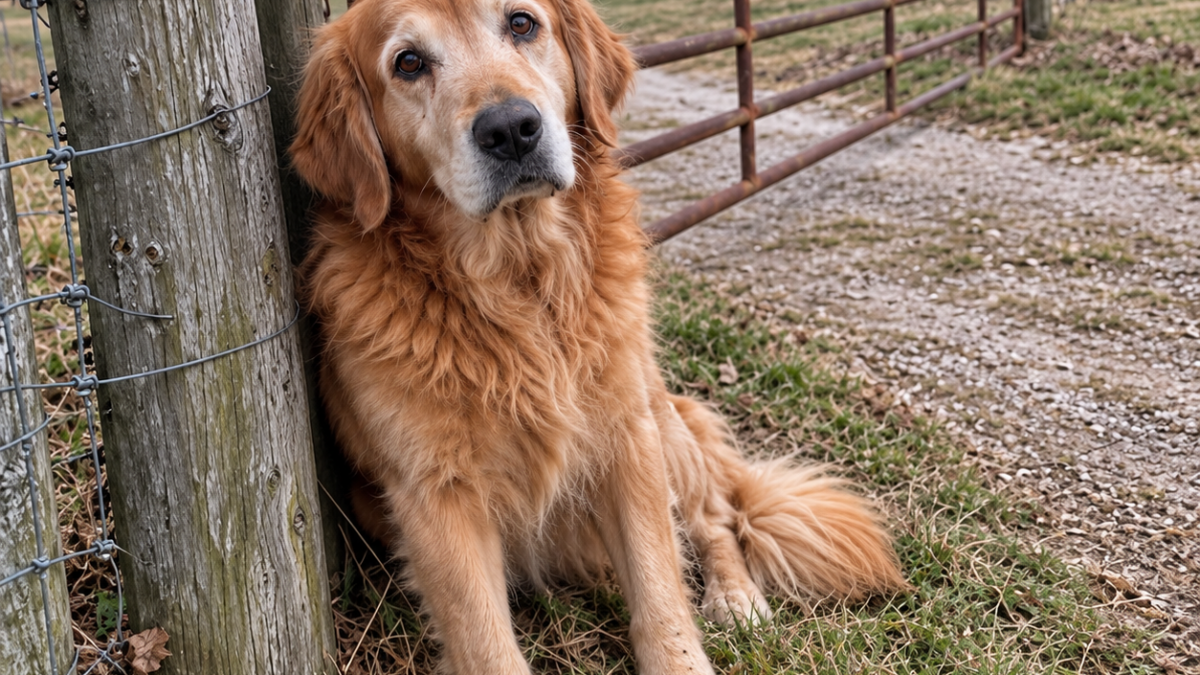
PART 2
“Don’t touch him.”
Cole’s hand stopped inches from Buddy’s collar.
I had never heard my voice sound quite like that before.
Buddy stood partly behind my leg, but his eyes remained fixed on Cole.
He was not hiding.
He was positioning himself.
There is a difference.
Golden Retrievers are not dogs most people fear. Buddy had spent his life greeting delivery drivers, children, fishermen, and strangers with the same ridiculous optimism. If a burglar had broken into Michael’s house three years earlier, Buddy probably would have brought him a tennis ball.
But the sound coming from his chest now was unmistakable.
A low warning.
Cole looked down at him.
Then he laughed.
“You’ve turned him against me.”
“You did that yourself.”
“He’s my brother’s property.”
“He’s Michael’s family.”
“That’s sentimental nonsense.”
“Maybe.”
I tightened my grip on the paperwork.
“But you still aren’t taking him.”
Cole’s expression hardened.
The sunlight behind him made his face look sharper than I remembered.
He and Michael had the same jaw.
The same dark eyes.
But that was where the resemblance ended.
I had known both brothers since they were boys.
Their father, Frank Archer, owned the only repair shop within twenty miles. Michael had worked there every summer through high school. Cole worked there too, but never for long.
Cole was always leaving.
Leaving jobs.
Leaving town.
Leaving debts behind.
Then returning whenever he needed something.
Michael was the opposite.
He stayed.
When Frank developed heart trouble, Michael drove him to appointments.
When the shop struggled, Michael worked nights.
When their mother died, Michael was the one who remained in the house for months afterward because Frank could not stand being alone.
Cole came to the funeral.
Then disappeared for nearly a year.
That history mattered because when Frank finally died, he left the old house to Michael.
Cole got his share of the repair shop.
He sold it within six months.
I remembered the argument that followed.
Cole had stood in this same driveway shouting that Michael had “stolen” their father’s property.
Michael had answered quietly.
“Dad wrote the will.”
Cole had never forgiven him.
Now here he was, nearly five years later, holding a document claiming Michael had voluntarily transferred everything back.
“Give me the paper,” Cole said.
I kept reading.
There was a property description.
A transfer date.
Michael’s name.
Cole’s name.
And a notarized signature at the bottom.
It was close.
Too close.
Whoever copied Michael’s signature had practiced.
But I knew his writing now.
Twenty-two letters had done that.
Michael always made the second leg of his M taller than the first.
This one did not.
His last name always slanted slightly upward.
This one ran perfectly straight.
And there was one tiny detail almost nobody would have noticed.
Michael never crossed the final r in Archer cleanly.
The stroke always dragged into a faint tail.
The signature on Cole’s paper ended sharply.
“This isn’t Michael’s signature.”
Cole gave a dry laugh.
“You’re a retired high school teacher, Henry. Not a forensic examiner.”
“No.”
I looked at him.
“But I’ve read more of Michael’s handwriting in the past two years than you probably have in your entire life.”
Cole stepped closer.
“Give me the paper.”
“Not yet.”
“What are you doing?”
“Reading.”
“You have no right.”
“And you have no right to enter that house.”
His face reddened.
“The deed says otherwise.”
“Then let the sheriff explain it.”
That made him stop.
Only for a fraction of a second.
But I noticed.
“What sheriff?”
“Tom Walker.”
“There’s no reason to involve Tom.”
“Then you won’t mind if I call him.”
Cole stared at me.
Buddy growled again.
Cole looked down.
“Shut that dog up.”
I almost smiled.
“Funny. Michael never had to.”
Cole reached toward the paper.
I stepped back.
That was when a patrol vehicle rounded the bend.
I could not have planned it better.
Sheriff Tom Walker slowed when he saw us standing beside Michael’s gate.
He rolled down his window.
“You boys having a neighborhood meeting without inviting me?”
Cole turned away immediately.
“Nothing going on.”
Tom looked at me.
“Henry?”
“Actually, you might want to see this.”
Cole spun back.
“There is no reason—”
Tom parked.
“That usually means there is.”
He stepped out, adjusted his belt, and approached.
Tom was fifty-six, broad-shouldered, gray-haired, and had the unhurried manner of a man who had spent thirty years watching people lie badly.
“What’s going on?”
Cole spoke first.
“My brother transferred this property to me.”
Tom looked toward Michael’s house.
“Michael?”
“Yes.”
“The one still on active duty?”
“Yes.”
“When did that happen?”
“Last month.”
Tom held out his hand.
Cole hesitated.
I gave him the paper.
Tom read it slowly.
Buddy moved beside me.
His growl had stopped.
Tom reached the bottom.
His eyebrow lifted.
“Marjorie Bell notarized this?”
Cole folded his arms.
“That’s what it says.”
Tom looked up.
“Interesting.”
“What?”
“Marjorie retired.”
“That doesn’t mean she can’t notarize something.”
“She surrendered her commission.”
Cole’s jaw tightened.
“When?”
“Eight months ago.”
Silence.
Tom looked back at the document.
“And this county seal?”
Cole said nothing.
Tom tapped the page.
“We changed the format in January.”
Cole recovered quickly.
“So Michael used an old form.”
“Could be.”
Tom folded the paper once.
“I’ll check.”
Cole held out his hand.
“Give it back.”
“No.”
“That belongs to me.”
“It might be evidence.”
“Evidence of what?”
Tom looked directly at him.
“That’s what I’m going to find out.”
Cole laughed, but the sound was forced.
“You can’t just seize documents.”
“You can call your attorney.”
“I don’t need one.”
Tom nodded.
“Maybe not.”
Cole looked at me.
Then Buddy.
Then Michael’s house.
“This is ridiculous.”
“Probably,” Tom said. “Until I confirm the deed, you’re not entering the property.”
“What about the dog?”
“What about him?”
“He belongs to Michael.”
“Correct.”
“Michael transferred his property.”
“Not confirmed.”
“He’s been gone two years. Henry has no legal right to keep him.”
Tom looked at me.
“Michael leave the dog with you?”
“Yes.”
“Any written instructions?”
“Not formal ones.”
“Letters?”
“Twenty-two.”
Tom looked at Cole.
“Good enough for today.”
Cole stared at both of us.
“This isn’t over.”
He walked to his pickup.
Before getting in, he looked directly at Buddy.
“You’ll be coming with me sooner or later.”
Buddy’s ears flattened.
I moved in front of him.
“No.”
Cole drove away.
Tom watched until the truck disappeared.
Then he looked at the paper again.
“How well do you know Michael’s signature?”
“Well enough.”
“Show me.”
We walked to my house.
I brought out the wooden box containing Michael’s letters.
Tom looked surprised.
“You kept all of them?”
“They’re Buddy’s.”
Tom stared at me.
I shrugged.
“Don’t ask.”
I placed the twenty-two envelopes on the kitchen table.
Buddy jumped onto the rug beside us.
Tom compared the signatures.
One.
Two.
Five.
Ten.
By the twelfth, he stopped.
“You’re right.”
“I know.”
“This doesn’t prove forgery.”
“I know.”
“But it’s enough to make me curious.”
He looked at the envelopes again.
“Any letter mention Cole?”
“No.”
“Property?”
“No.”
“Money?”
“Never.”
Tom tapped the latest envelope.
“When did you get this?”
“Six weeks ago.”
“And Michael said?”
“Same as usual. His assignment had been extended. He missed Buddy. He’d be home when he could.”
Tom nodded.
“Nothing about transferring the house?”
“Nothing.”
Buddy got up.
He walked toward the front door.
I checked the clock.
7:03 in the evening.
“He wants out.”
Tom smiled.
“Walk?”
“Gate.”
Tom frowned.
I opened the door.
Buddy crossed the yard.
Crossed the road.
Walked directly to Michael’s gate.
Sat.
Tom followed me outside.
“He does that every day?”
“Every morning.”
“You said evening.”
“He sometimes checks twice.”
Tom looked at the dog for a long time.
“How long?”
“Since the day Michael left.”
“Two years?”
“Almost.”
Tom exhaled.
“Damn.”
We stood there until Buddy eventually returned.
The next morning, I called the military family support number Michael had given me before deployment.
I had avoided using it unless absolutely necessary because Michael never wanted unnecessary questions directed toward his command.
This felt necessary.
A woman answered.
I explained that I was caring for Sergeant Michael Archer’s dog.
I explained the monthly letters.
Then I explained Cole.
Her tone changed immediately.
“Do not release Sergeant Archer’s personal property to anyone unless you receive verified legal authorization.”
“What about Buddy?”
“I’m not an attorney.”
“I understand.”
“But if Sergeant Archer placed the animal in your care, I would not surrender him based solely on an unverified document.”
“Can you tell me if Michael is all right?”
There was a pause.
“I cannot provide operational information.”
“I’m not asking where he is.”
“I understand.”
“Is he alive?”
Another pause.
Longer.
“I’m sorry, Mr. Caldwell. I cannot discuss his status.”
My hand went cold around the phone.
“Can you at least tell him I called?”
“I can submit a message.”
“Tell him Cole came.”
“All right.”
“Tell him there are forged papers.”
“I’ll note that.”
“And tell him Buddy is fine.”
The woman’s voice softened.
“I’ll include that.”
I hung up.
Buddy was sitting beside my chair.
I looked at him.
“I hate official answers.”
His tail moved once.
The following week felt longer than the previous month.
No letter.
No phone call.
Every morning Buddy went to the gate.
And for the first time, I began wondering whether I was doing him a kindness by letting him.
Maybe people had been right.
Maybe waiting was hurting him.
He was eleven now.
The golden fur around his eyes had turned pale.
His back legs were stiff when he stood after lying down too long.
The veterinarian had started him on arthritis medication.
Yet at 7:10 every morning, he still went.
That Thursday, rain came hard enough to flood the drainage ditch.
Buddy stood at the door.
“No.”
He looked at me.
“It’s pouring.”
He waited.
“Michael is not walking home in this.”
Buddy walked toward the door.
I sighed.
“You are the most unreasonable animal I’ve ever met.”
I pulled on a raincoat.
We crossed the road.
Buddy sat at the gate.
Rain soaked his back.
I held an umbrella over him.
“You know what normal dogs are doing right now?”
He stared down the road.
“Sleeping.”
Nothing.
“Probably dreaming about bacon.”
His ears moved.
“Now I have your attention.”
His tail tapped the mud once.
We stayed fifteen minutes.
Then I made him come home.
That afternoon, Sheriff Walker called.
“Henry, come to the office.”
“Did you find something?”
“I found several somethings.”
My stomach tightened.
“About Michael?”
“About Cole.”
I drove into town with Buddy.
Tom met me in an interview room.
A copy of the deed sat on the table.
Beside it were several other documents.
“What are those?”
“Your friend Cole has been busy.”
“He’s not my friend.”
“You know what I mean.”
Tom slid one paper toward me.
“Vehicle title transfer.”
Michael’s blue Ford.
Another.
“Power of attorney.”
Another.
“Bank authorization.”
I stared.
“He tried to access Michael’s account?”
“Two accounts.”
“Did he get anything?”
“Bank rejected the paperwork.”
“Why?”
“Signatures didn’t match.”
I almost laughed.
“What about the deed?”
“Fake seal.”
“I knew it.”
“Possibly forged signature.”
“Possibly?”
“We need an expert.”
“Tom.”
He held up a hand.
“I agree with you.”
“Then arrest him.”
“That’s not how this works.”
“He tried to steal a house.”
“And if we want charges to stick, we do it correctly.”
Buddy lay beneath the table.
I stared at his gray muzzle.
“Why now?”
Tom was quiet.
“What?”
“Michael’s been gone almost two years. Why would Cole suddenly start doing this now?”
Tom leaned back.
“We’re looking into that.”
“That doesn’t answer me.”
“No.”
“Does he know something about Michael?”
Tom’s face remained neutral.
“That possibility occurred to us.”
My stomach twisted.
“What possibility?”
“Henry, don’t make more out of what I said.”
“What am I supposed to make out of it?”
“That desperate people sometimes act when they believe an opportunity exists.”
“Why would Cole think Michael wasn’t coming home?”
“We don’t know that he does.”
I looked at Buddy.
The dog slept peacefully.
I envied him.
Tom continued.
“There may be another reason.”
“What?”
“Debt.”
That surprised me.
“Cole?”
“A lot.”
“How much?”
“Enough that losing Michael’s house to a bank loan would solve several problems.”
“So this is money.”
“Looks like it.”
I sat back.
Relief and anger collided inside me.
Money was terrible.
But money was better than learning Cole knew Michael was dead.
I drove home.
Buddy climbed slowly from the truck.
He went directly to Michael’s gate.
I followed.
The sky was already darkening.
Buddy sat.
I stood beside him.
For a long time, neither of us moved.
Then I made a mistake.
“What if he can’t come back?”
Buddy turned his head.
The words sounded cruel the moment they left my mouth.
“I’m sorry.”
He looked at me.
“I’m tired, buddy.”
He stood.
Walked over.
Pressed his head against my thigh.
And that broke me.
I sat on the grass.
Buddy leaned against me.
“I’m supposed to be taking care of you.”
His tail moved.
“But somehow you keep doing this.”
I rested my forehead against his.
“He’s coming home.”
I did not know if I believed it.
Buddy apparently did.
Three days later, the mail carrier stopped outside my house.
She did not put the envelope in the box.
She walked it to the porch.
“Henry?”
I opened the door.
“What?”
“This looked important.”
The envelope was different.
Military forwarding markings.
Buddy’s name written across the front.
My hands shook.
“Thank you.”
She looked at Buddy behind me.
“Is that another one?”
“Yes.”
“Good.”
I sat at the kitchen table.
Buddy immediately came closer.
“Ready?”
His ears lifted.
I opened it.
“Dear Buddy.”
Buddy sat.
“If Henry is reading this, you’re probably staring at him like you understand English better than he does.”
I laughed.
“He’s insulting me now.”
Buddy’s tail moved.
Michael wrote that communication had been delayed.
He was safe.
His assignment had changed unexpectedly.
He could not provide details.
Then I reached a paragraph beginning with my name.
“Henry, I need you to listen carefully.”
My chest tightened.
“I received notice that Cole claims to have authority over my property. He does not.”
I stopped.
Buddy stared at me.
I continued.
“I have never signed a deed transferring my house to him. I have never given him power of attorney. I have never authorized him to sell my truck, access my accounts, or take Buddy.”
I closed my eyes.
“Especially Buddy.”
Buddy stepped closer.
Michael wrote that he had already reported suspicious activity through the proper channels.
Then came the words I had been waiting nearly two years to read.
“Buddy, I know I keep saying soon.”
My voice weakened.
“I know soon probably doesn’t mean anything to you anymore.”
Buddy’s head tilted.
“But I need you to believe me one more time.”
I swallowed.
“I’m coming home.”
Buddy stood.
“I don’t have the exact date yet.”
He came closer.
“But I’m coming.”
Buddy put his paw on my knee.
“I told you I would.”
I finished the letter.
Silence filled the kitchen.
Then Buddy lowered his paw onto the envelope.
I covered it with my hand.
“He’s coming.”
Buddy looked at me.
“He’s coming home.”
His tail began moving.
Not wildly.
Slowly.
Steadily.
I laughed through tears.
“You knew, didn’t you?”
The next morning he reached the gate earlier than usual.
7:02.
“Now you’re getting ridiculous.”
Buddy sat.
“You heard one letter.”
Nothing.
“He said he doesn’t know the date.”
Buddy stared down the road.
I gave up.
Two days later, Cole returned.
This time he brought a tow truck.
The driver followed his black pickup into Michael’s driveway.
I stepped outside immediately.
Buddy came behind me.
Cole climbed out.
“Stay out of this.”
“That depends.”
“On what?”
“Whether you plan to steal something.”
Cole pointed toward Michael’s Ford.
“That truck is mine.”
“No.”
“I have a signed title.”
“You have a forged title.”
The tow-truck driver looked between us.
“Hold on.”
Cole snapped, “Ignore him.”
I walked toward the driver.
“Sheriff’s office is investigating ownership of that vehicle.”
The driver took a step back.
“You said this was clear.”
“It is.”
“No,” I said. “It isn’t.”
Cole turned toward me.
“You have no authority here.”
“Neither do you.”
He moved closer.
“Go home, Henry.”
“Michael says no.”
That stopped him.
“What?”
I pulled the letter from my jacket.
Cole stared at it.
“He wrote again?”
“Yes.”
“When?”
“None of your business.”
Cole’s eyes narrowed.
“What did he say?”
I unfolded the letter.
“I have never authorized Cole to sell my truck.”
Cole’s face changed.
Only slightly.
Enough.
The tow-truck driver looked at him.
“You told me you had a clean title.”
“I do.”
“The owner is saying otherwise.”
“He’s overseas.”
“So?”
Cole pointed toward the Ford.
“Load the damn truck.”
The driver shook his head.
“Nope.”
“I’m paying you.”
“Not enough to get charged with theft.”
He climbed into the tow truck.
Cole grabbed his door.
“Wait.”
The driver pulled it shut.
Thirty seconds later, he was gone.
Cole turned toward me.
“You think this is funny?”
“No.”
“You have no idea what Michael did to me.”
“What did he do?”
“He took everything.”
“Your father left him the house.”
“He manipulated Dad.”
“You sold your share of the shop.”
“For half what it was worth.”
“That was your decision.”
Cole stepped closer.
“You weren’t there.”
“No.”
“You don’t know what happened in our family.”
“You’re right.”
I looked toward the house.
“But I know who stayed when your father was sick.”
Cole shoved me.
Hard.
I stumbled backward.
Buddy exploded between us.
His bark echoed across the road.
Cole froze.
Buddy stood with his body rigid, teeth visible.
I had never seen him like that.
“Call him off!”
“Back away.”
“Henry!”
“Back away from me.”
Cole raised his hands.
Buddy barked again.
Cole took one step backward.
I reached for my phone.
“What are you doing?”
“Calling Tom.”
“You’re kidding.”
“You assaulted me.”
“I pushed you.”
“Yes.”
“This is insane.”
“So was forging a deed.”
Cole’s face twisted.
For one second, I thought he might rush me.
Instead he looked at Buddy.
Then his truck.
Then me.
He pointed.
“You’re going to regret this.”
“No.”
I rubbed Buddy’s neck.
“I don’t think I am.”
Cole left.
Sheriff Walker arrived fifteen minutes later.
Buddy wagged his tail at him as if nothing had happened.
Tom looked at the dog.
“You’re suddenly everybody’s hero?”
Buddy sat.
Tom looked at me.
“He bite Cole?”
“No.”
“Good.”
“He wanted to.”
“How do you know?”
“I know him.”
Tom shook his head.
“You and this dog are starting to worry me.”
The following morning, Cole was arrested.
I learned about it from Tom.
Fraud.
Attempted theft.
Forgery-related charges.
Other financial allegations that did not concern Michael.
Tom would not give me every detail.
He did tell me investigators had searched Cole’s house.
They found scanned copies of Michael’s signatures.
Blank forms.
Financial statements.
And notes listing estimated values for the house, truck, land, and investment account.
At the bottom of one page was a line that made my blood run cold.
DOG — REMOVE.
I stared at Tom.
“What does that mean?”
“We don’t know.”
“You do know.”
“It likely means Buddy complicated access to the property.”
“He was going to hurt him?”
“I didn’t say that.”
“But—”
“Henry.”
Tom’s voice hardened.
“Don’t invent what we can’t prove.”
I forced myself to breathe.
“What happens now?”
“Cole gets an attorney.”
“And Michael’s property?”
“Protected.”
“Buddy?”
Tom smiled slightly.
“Still your problem.”
“Good.”
The next two weeks were almost peaceful.
Buddy waited.
I waited.
Michael wrote once more.
Short letter.
No date.
But closer.
He said paperwork was processing.
He said he was coming.
Buddy’s hips worsened in the cold.
November arrived.
One morning sleet covered the road.
Buddy stood beside the door.
“No.”
He looked at me.
“Absolutely not.”
He pushed his nose against my coat.
“You are eleven years old.”
His tail moved.
“It is twenty-eight degrees.”
He stared.
“I’m supposedly the intelligent one here.”
Nothing.
I sighed.
“Five minutes.”
We walked to the gate.
I held an umbrella over him while sleet rattled against it.
Buddy sat.
“You know normal dogs sleep by fireplaces?”
He watched the road.
“Normal people don’t stand in ice storms talking to animals.”
His tail tapped once.
We stayed twenty-three minutes.
I carried him back because his legs were stiff.
That night, I found him asleep beside Michael’s latest envelope.
One paw rested on it.
I took a photograph.
I do not know why.
Maybe because I wanted Michael to understand someday.
Maybe because I had started thinking about how quickly Buddy was aging.
Maybe because photographs are what humans use when we realize something precious is already becoming memory.
The call came three mornings later.
5:48 a.m.
Unknown number.
I nearly ignored it.
“Hello?”
“Henry?”
I sat upright.
Two years had changed Michael’s voice.
But not enough.
“Michael?”
“Yeah.”
Buddy lifted his head from the rug.
I turned on the lamp.
“Michael.”
Buddy stood.
His ears came forward.
Michael laughed softly.
“Is he there?”
“He heard your name.”
There was silence.
Then:
“Put me on speaker.”
I did.
“Buddy.”
The dog froze.
“Hey, big guy.”
Buddy ran toward the phone.
A sound came from him that I had never heard.
Half whine.
Half cry.
He sniffed the phone.
Then looked behind me.
Then ran to the front door.
Michael inhaled sharply.
“Oh, God.”
Buddy scratched the door.
“He knows your voice.”
Michael tried speaking again.
“I’m coming home, buddy.”
Buddy barked once.
“Tomorrow.”
I stopped breathing.
“What?”
“Tomorrow morning.”
“You’re sure?”
“Yes.”
“What time?”
“Not exactly.”
“You need a ride?”
“No.”
“Michael—”
“I want to walk the last part.”
I understood immediately.
“Okay.”
“Henry?”
“Yeah?”
“Don’t tell Buddy.”
I burst out laughing.
Buddy was still standing at the door.
“You already did.”
Michael laughed too.
A real laugh.
The first I had heard from him in two years.
Then he asked quietly, “Did he really wait every day?”
I looked at Buddy.
“Every morning.”
“Even after the first year?”
“Yes.”
“Snow?”
“Yes.”
“Rain?”
“Yes.”
“How long would he sit?”
“Depends.”
“Henry.”
“What?”
“I need the truth.”
“Sometimes five minutes. Sometimes an hour. Longer when I couldn’t convince him to leave.”
Michael was silent.
“He never stopped?”
“No.”
I heard his breathing change.
“I didn’t deserve that.”
“Probably not.”
He laughed weakly.
“Thanks.”
“He didn’t deserve to wait either.”
“No.”
“Come home.”
“I am.”
I did not sleep after that.
At 6:30 the next morning, Buddy ate half his breakfast.
At 6:50, he started pacing.
At 7:01, he stood at the door.
“You’re early.”
Buddy whined.
I opened it.
He ran across the road.
The sky was pale.
Mist hung low over the fields.
Buddy sat at Michael’s gate.
I stood behind him.
At 7:18, a delivery truck appeared.
Buddy rose.
Wrong vehicle.
He sat again.
7:31.
Mrs. Dalton’s Buick.
Buddy barely reacted.
7:40.
Nothing.
7:44.
Buddy’s ears lifted.
I heard nothing.
Then he stood.
Completely still.
A few seconds later, I heard footsteps.
Coming around the bend.
Buddy took one step forward.
A man appeared.
Dark jacket.
Green duffel.
Thinner.
Older.
But unmistakable.
Michael.
He stopped.
His duffel slid from his shoulder.
Buddy stared.
For one impossible second, neither moved.
Then Michael said one word.
“Buddy.”
The old dog ran.
I had watched Buddy struggle getting up from the rug the previous evening.
I had carried him inside after the sleet.
But now age disappeared.
Arthritis disappeared.
Two years disappeared.
He ran down that road like the nine-year-old dog Michael had left behind.
Michael dropped to his knees.
Buddy reached him.
And then, strangely, stopped.
He stood inches away.
He stared into Michael’s face.
Michael’s hands shook.
“Hey.”
Buddy stepped closer.
He pressed his forehead against Michael’s chest.
Michael wrapped both arms around him.
Then he broke.
Completely.
“I’m sorry.”
His face disappeared into Buddy’s fur.
“I’m so sorry.”
Buddy leaned into him.
“I told you I’d come back.”
His tail moved slowly.
“I told you.”
I stood beside the gate crying like a fool.
Michael looked up.
“Henry.”
I nodded.
Nothing came out.
Buddy suddenly started licking Michael’s face.
Michael laughed.
“Okay.”
Buddy circled him.
Returned.
Pressed against him.
Circled again.
Two years of restraint vanished.
Michael sat in the road.
Buddy climbed halfway into his lap.
“I missed you too.”
Finally I walked toward them.
Michael stood.
Then he hugged me.
Hard.
“Thank you.”
“You don’t owe me.”
“Yes.”
“No.”
“You kept him.”
“He kept me.”
Michael pulled away.
He looked older than thirty-seven.
There were lines around his eyes I did not remember.
A thin scar ran near his temple.
He looked tired.
But when he looked at Buddy, those two years fell away.
I pulled the final letter from my jacket.
“You should see this.”
Michael looked at the envelope.
“Why are you carrying that?”
“Because he likes it.”
I handed it over.
Buddy immediately lifted one paw.
Placed it on the envelope.
Michael froze.
“He really does that?”
“Every letter.”
Michael stared at him.
“Buddy.”
The dog looked up.
“You knew?”
Buddy licked his hand.
Michael started crying again.
“Damn dog.”
We walked toward the house.
At the gate, Michael opened it.
He stepped through.
Buddy stopped.
Michael looked back.
“Come on.”
Buddy remained outside.
I knew what he was doing.
So did Michael.
The gate had become Buddy’s line between waiting and home.
For two years, he had sat outside it waiting for Michael to return.
Now Michael stood inside.
Buddy would not cross until he was invited.
Michael crouched.
His voice became soft.
“Buddy.”
The dog’s ears lifted.
“Come home.”
Buddy walked through.
Michael closed the gate.
For the first time in nearly two years, Buddy did not sit beside it.
The house smelled of dust.
Michael stood in the living room looking around.
“Everything’s smaller.”
“You got bigger.”
“I lost fifteen pounds.”
“Metaphorically bigger.”
“That sounds like teacher nonsense.”
“It is.”
Buddy followed him from room to room.
Michael went upstairs.
Buddy went upstairs.
Michael came down.
Buddy followed.
Michael entered the kitchen.
Buddy stood against his leg.
He tried to use the bathroom.
Buddy scratched the door.
Michael opened it.
“You waited two years. I guess privacy is canceled.”
That evening, we sat at the kitchen table.
Buddy slept with his head on Michael’s boot.
I told Michael everything about Cole.
The fake deed.
The truck.
The attempt to take Buddy.
The shove.
The arrest.
Michael listened without interrupting.
His expression gradually changed.
“What did he say about Buddy?”
“He said the dog came with the house.”
Michael’s hand tightened.
“He touched him?”
“He tried.”
Michael stood.
“Where’s Cole?”
“Jail, last I heard.”
“I want to see him.”
“No.”
He stared.
“No?”
“Not tonight.”
“He tried to steal Dad’s house.”
“Yes.”
“My truck.”
“Yes.”
“My accounts.”
“Yes.”
“My dog.”
“He failed.”
“That isn’t the point.”
“I know.”
“Then why are you stopping me?”
I looked down.
Buddy was asleep.
“Because Buddy waited two years for tonight.”
Michael followed my gaze.
I continued.
“He doesn’t know what a forged deed is.”
Michael sat slowly.
“He doesn’t know about bank fraud or property law.”
Buddy’s paw twitched in his sleep.
“He knows you’re here.”
Michael rubbed his face.
“And tomorrow?”
“Tomorrow you become very inconvenient for Cole.”
That made him smile.
“Still bossy.”
“Still younger than you.”
“You’re twenty years older than me.”
“Details.”
The next morning, Michael met Sheriff Walker.
I stayed with Buddy.
By lunchtime Michael called.
“Cole’s still in custody.”
“Good.”
“Prosecutor wants to talk Monday.”
“Good.”
“They found more.”
“How much more?”
“Enough.”
His voice was cold.
“Michael.”
“I’m fine.”
“No, you’re angry.”
“Of course I’m angry.”
“Don’t do anything stupid.”
“I’m not.”
“That sounded exactly like something a man about to do something stupid would say.”
He sighed.
“I’m going home.”
“Good.”
“Henry?”
“Yes?”
“Thank you for talking me out of going yesterday.”
“Anytime.”
“I would’ve hit him.”
“I know.”
“I still might.”
“Then I’ll bring Buddy to court. He’ll embarrass you.”
Michael laughed.
“See you tonight.”
The legal case unfolded over the next several months.
Cole had not only forged Michael’s deed.
He had attempted to use a fraudulent power of attorney to access an investment account Frank Archer had left Michael.
He tried transferring the truck title.
He submitted false insurance forms.
Investigators found scanned versions of Michael’s signatures stored on his computer.
There were practice sheets.
Dozens of them.
Michael Archer.
M. Archer.
Michael J. Archer.
Again and again.
The most damaging evidence came from the supposedly notarized property transfer.
The document claimed Michael signed it locally on March 18.
Military records proved Michael was thousands of miles away that entire week.
Cole’s defense began collapsing before a trial date was even set.
But Cole refused to admit what he had done.
He claimed Michael had verbally agreed to compensate him for “years of unfair treatment.”
He claimed the documents merely formalized an existing arrangement.
Nobody believed him.
The confrontation I remember happened at the courthouse.
Michael asked me to come.
We stood outside a conference room waiting for the prosecutor.
Cole appeared with his attorney.
The brothers looked at each other.
Cole spoke first.
“You look like hell.”
Michael almost smiled.
“Good morning to you too.”
Cole’s attorney touched his arm.
“Keep walking.”
But Cole stopped.
“This is really what you want?”
Michael said nothing.
“Put your own brother in prison?”
Michael looked at him.
“You forged my name.”
“I was correcting what Dad did.”
“You tried to steal my house.”
“Our house.”
“No.”
“Dad should’ve divided it.”
“He divided the estate.”
“He favored you.”
“You sold your share.”
Cole stepped closer.
“You always got everything.”
Michael remained calm.
“Like what?”
“Dad’s trust.”
“Because I stayed.”
“That house.”
“Because I stayed.”
“The investment account.”
“Because I stayed.”
“You think that makes you better than me?”
“No.”
Michael’s voice lowered.
“But it made me there.”
Cole laughed bitterly.
“You think taking Dad to doctors made you some hero?”
“No.”
“Then what are you saying?”
“I’m saying you kept leaving.”
Cole’s face tightened.
“And every time you came back, you were angry that people trusted the person who hadn’t.”
Silence.
Michael continued.
“You want to know the difference between us?”
Cole’s attorney said, “Michael, don’t—”
Michael ignored him.
“Buddy waited at my gate every morning for two years.”
Cole rolled his eyes.
“There you go with that dog.”
Michael’s expression changed.
“You tried to take him.”
“He’s property.”
“No.”
Cole laughed.
“Legally—”
“I don’t care legally.”
Michael stepped closer.
“That dog waited longer for me than you waited before trying to steal my house.”
Cole’s lawyer pulled him back.
Cole’s face flushed.
“You always cared more about animals than family.”
Michael looked at him for a long time.
“Buddy never forged my signature.”
Cole had no answer.
His lawyer moved him down the hallway.
Michael stayed where he was.
After a moment, he leaned against the wall.
“That didn’t feel as good as I thought it would.”
“Good.”
He looked at me.
“Good?”
“Means you’re not him.”
Cole eventually accepted a plea agreement.
He admitted to multiple fraud-related offenses.
The forged deed was voided.
Michael retained the house.
The Ford.
The accounts.
Everything Cole had tried to seize.
There was restitution.
Probation conditions after incarceration.
Financial penalties.
But what mattered to Michael had already happened.
He came home.
Buddy had him back.
One afternoon, several months after the case ended, Michael came to my house with a folder.
I groaned.
“Not another legal document.”
“This one’s real.”
“What is it?”
“Something I’m setting up.”
He placed the papers on my table.
THE BUDDY PROMISE FUND.
I looked at him.
“What’s this?”
“Emergency foster assistance.”
“For dogs?”
“Pets.”
He sat down.
“When I left, I had you.”
Buddy lay beside his chair.
“If you hadn’t been here, what would I have done?”
“Found somebody else.”
“Maybe.”
Michael shook his head.
“But a lot of people don’t have somebody else.”
He explained the idea.
Service members facing long absences.
Hospital patients.
People entering temporary treatment.
Families displaced by emergencies.
The fund would help pay for food, veterinary care, medication, and temporary fostering so owners would not have to permanently surrender animals because of a crisis.
“How are you funding it?”
“Part of Cole’s restitution.”
I stared.
Michael smiled.
“I thought that part might amuse you.”
“It does.”
“The rest is mine.”
“You sure?”
“Yes.”
Buddy lifted his head.
Michael scratched his ears.
“This old fool spent two years proving temporary separation doesn’t have to mean abandonment.”
Buddy sighed.
Michael looked at him.
“So his name goes on it.”
The county shelter agreed to manage the program.
The first case came six weeks later.
A National Guard member named David needed temporary placement for his black Lab, Ranger.
Michael volunteered personally.
Ranger stayed at Michael’s house for four months.
Buddy hated sharing his favorite rug for approximately three days.
Then the two became inseparable.
When David returned, Michael invited me to watch.
Ranger heard the truck before we did.
He raced to the fence.
David stepped out.
Ranger nearly knocked him over.
Michael stood beside me.
His eyes filled.
“Hard to watch?”
I asked.
“No.”
He smiled.
“Best thing in the world.”
I looked at Buddy.
He was sitting quietly beside Michael.
Maybe remembering.
Maybe not.
After Ranger went home, more animals came through the fund.
A German Shepherd named Annie.
Two cats belonging to a woman undergoing cancer treatment.
A Beagle named Cooper whose owner had emergency surgery.
An elderly terrier whose family lost their house in a fire.
Not everyone could pay.
That was the point.
Donations began arriving.
Local veterans contributed.
The repair shop contributed.
The bank contributed after hearing what Cole had attempted.
Sheriff Walker donated anonymously.
I knew because he spelled Buddy’s name wrong on the first check.
BUDDY became BUDY.
I told him his handwriting was worse than a criminal’s.
He threatened to arrest me.
Michael changed after coming home.
Not dramatically.
Not all at once.
At first he hated crowds.
He slept poorly.
Some nights I saw his kitchen light burning at three in the morning.
Buddy always stayed beside him.
When Michael woke from bad dreams, Buddy climbed against his legs.
When Michael could not sit still, Buddy followed him around the house.
When Michael walked to the river before dawn, Buddy went too.
I never asked Michael what he had seen overseas.
He never volunteered much.
One evening he said, “People keep asking if I’m glad to be home.”
“Aren’t you?”
“Yes.”
“Then?”
He stared toward the fields.
“It’s hard to explain that being home doesn’t mean every part of you arrived at the same time.”
I understood enough not to answer immediately.
Buddy was lying between us.
Michael rested a hand on his head.
“He helps.”
“I know.”
“He doesn’t ask.”
“That’s dogs.”
“He doesn’t need me to explain why I’m awake.”
“No.”
“He just stays.”
I smiled.
“That’s Buddy.”
Michael looked down.
“He did enough waiting.”
After that, Michael refused assignments that would take him away again for extended periods.
He transitioned out of active service the following year.
He found work with a regional transportation company and volunteered with the shelter fund.
His life became ordinary again.
Ordinary was exactly what he wanted.
Coffee.
Work.
River walks.
Dinner.
Buddy snoring beneath the table.
Sometimes happiness is not fireworks.
Sometimes it is routine returned.
Buddy aged.
Slowly at first.
Then all at once.
At twelve, his muzzle was mostly white.
At thirteen, he stopped jumping into Michael’s truck.
Michael built a wooden ramp.
Buddy refused to use it.
“He thinks it insults him,” Michael complained.
“You raised a stubborn dog.”
“I did not.”
Buddy stood at the truck looking offended.
Michael pointed.
“That is entirely his personality.”
I laughed.
One morning Buddy tried jumping anyway.
His back legs slipped.
After that, he used the ramp.
Michael celebrated like they had negotiated a peace treaty.
At thirteen and a half, Buddy’s hearing began fading.
Michael started clapping before approaching him from behind.
At fourteen, his walks to the river became shorter.
Then slower.
But he still wanted to go.
The gate remained part of their route.
Every morning they passed it.
Buddy sometimes stopped.
Looked down the road.
Then looked at Michael.
Michael would touch his head.
“Still here.”
Buddy’s tail moved.
Then they continued.
I once asked Michael if he thought Buddy remembered waiting.
“Of course.”
“How do you know?”
Michael looked at him.
“He checks.”
“For what?”
“For me.”
“You’re standing beside him.”
“I know.”
“That makes no sense.”
Michael smiled.
“Neither did writing letters to a dog.”
Fair point.
One summer evening, almost four years after Michael returned, we sat on his porch.
Buddy slept between us.
Cicadas buzzed in the trees.
The fields were gold under the late sun.
Michael said, “Do you think dogs understand time?”
“Yes.”
“You didn’t even think.”
“I watched yours count two years.”
“Maybe he was just following routine.”
“Maybe.”
“So you agree?”
“No.”
He laughed.
“Then what?”
I watched Buddy breathe.
“Maybe routine is how animals hold onto faith.”
Michael went quiet.
I continued.
“He didn’t understand deployment.”
“No.”
“He didn’t know what an assignment extension was.”
“No.”
“He knew you left.”
Michael looked down.
“And every morning, he repeated the same act.”
“Going to the gate.”
“Yes.”
“Why?”
“Because yesterday you didn’t come home.”
Michael’s face tightened.
“And today might be different.”
Buddy opened one eye.
Michael scratched his head.
“I hate that.”
“What?”
“That he spent that long waiting.”
“You came back.”
“Two years late.”
“You came back.”
Michael stared toward the road.
“That doesn’t erase it.”
“No.”
“But it finished it.”
He nodded slowly.
That autumn, Buddy turned fourteen.
Michael held a ridiculous birthday party.
Sheriff Walker attended.
Mrs. Dalton attended.
Half the shelter staff came.
Buddy received three beds, twelve toys, enough treats to destroy his kidneys, and a bandanna that read OLD MAN.
Michael hated it.
Buddy wore it proudly.
There was cake for people.
A separate dog-safe cake for Buddy.
He ignored the cake and stole a hamburger from Tom’s plate.
Tom pointed.
“That’s theft.”
Michael said, “Arrest him.”
“I’ve been trying for fourteen years.”
Buddy swallowed the evidence.
We laughed until I cried.
I think about that afternoon often because grief has a cruel habit of making us remember endings more clearly than middles.
But Buddy had a long middle.
A good middle.
Thousands of ordinary hours with Michael.
That matters.
The first sign of real trouble came in January.
Buddy stopped finishing breakfast.
Michael noticed immediately.
“He left half.”
“He’s fourteen.”
“He never leaves food.”
“You’re catastrophizing.”
“I know him.”
He did.
The veterinarian ran tests.
Early kidney disease.
Manageable.
For a while.
Special food.
Medication.
More water.
Regular bloodwork.
Buddy improved.
Michael relaxed slightly.
Then spring came.
Buddy started slowing again.
Not every day.
Some days he seemed almost young.
He would trot toward the river.
Bark at ducks.
Carry a stick.
The next day he struggled getting off his bed.
Michael reorganized the house around him.
Rugs over hardwood.
Water bowls in three rooms.
A larger orthopedic bed.
A ramp off the porch.
A nightlight near the hallway.
Nobody asked him to.
Love simply notices inconvenience before it becomes suffering.
One April morning Michael knocked on my door.
Buddy stood beside him.
Slow.
Thin.
Still smiling in the way Golden Retrievers seem to smile.
Michael carried an envelope.
I looked at it.
“No.”
He nodded.
“No what?”
“I know that face.”
“What face?”
“The emotional nonsense face.”
Michael almost smiled.
“I wrote something.”
“To me?”
“To Buddy.”
I stared.
“He lives with you.”
“I know.”
“So read it yourself.”
“I can’t.”
The humor vanished.
“Henry.”
I looked down at Buddy.
“Please.”
That one word did it.
We crossed the road.
Buddy walked slowly toward the gate.
The three of us sat there.
The same place.
Different men.
Different dog, almost.
Time had touched all of us.
I opened the envelope.
BUDDY ARCHER
CARE OF HENRY CALDWELL
Exactly like the first one.
My throat tightened.
“You’re cruel.”
Michael looked at the road.
“Read.”
I unfolded the letter.
“Dear Buddy.”
Buddy lifted his head.
“I told you once I would be gone a few weeks.”
Michael closed his eyes.
“That was the first promise I ever broke to you.”
I stopped.
Michael whispered, “Keep going.”
“You waited anyway.”
Buddy rested his chin on his paws.
“You waited through summer heat, winter snow, thunderstorms, quiet mornings, twenty-three letters, and more days than I deserved.”
Michael’s hand rested on Buddy’s back.
“You believed I would come home longer than I knew how to believe in much of anything.”
My voice cracked.
“When I finally came down that road, you did not ask why I was late.”
Buddy breathed slowly.
“You did not punish me.”
Michael wiped his face.
“You did not turn away.”
I swallowed.
“You ran.”
Buddy’s ear moved.
“And that run is the greatest welcome I will ever receive in this life.”
Michael covered his mouth.
I continued.
“There is one promise I want to make correctly this time.”
Buddy opened his eyes.
“When the day comes that your legs are too tired to follow me, you don’t have to follow.”
Michael’s shoulders shook.
“When you cannot walk to the gate, I will sit with you wherever you are.”
Buddy turned slightly toward him.
“When you are too tired to wait for me anymore, I will do the waiting.”
I could barely see the page.
“And wherever good dogs go when they leave people like us behind, you do not need to worry about whether I will find you.”
Michael pressed his forehead against Buddy’s.
“Because this time, old friend, I’ll be the one who comes to you.”
I lowered the letter.
Nobody moved.
Then Buddy slowly lifted his paw.
Placed it on the envelope.
Michael laughed through tears.
“Of course you did.”
I covered my face.
Buddy lived another nine days.
Nine good enough days.
Chicken.
Sunlight.
Short walks.
A hamburger Michael pretended not to give him.
Then the final morning came.
Michael called me at 5:31.
“Henry.”
I knew.
“I’m coming.”
Buddy could no longer stand.
He lay on his bed near the living-room window.
Michael sat beside him.
“I want to take him to the gate.”
I did not question it.
We placed Buddy on a blanket.
Carried him together.
The sun was just rising.
The same pale light as the morning Michael returned.
We laid him beside the gate.
Buddy opened his eyes.
He looked down the road.
Michael sat in the grass.
“Remember this place?”
Buddy breathed.
“You drove Henry crazy here.”
I laughed through tears.
Michael smiled.
“Every morning?”
“Every damn morning.”
Buddy’s tail moved faintly.
Michael placed a hand on him.
“You heard that?”
His voice broke.
“He says you were annoying.”
Buddy blinked.
I sat beside them.
The veterinarian arrived twenty minutes later.
She gave us time.
Michael held Buddy’s face.
“You know something?”
Buddy looked at him.
“You were supposed to be my dog.”
He swallowed.
“Turns out I was your person.”
Buddy’s eyes softened.
Michael leaned closer.
“Thank you for waiting.”
The first medication relaxed him.
His breathing slowed.
Michael kept touching his ears.
His forehead.
His chest.
“You don’t have to wait anymore.”
Buddy exhaled.
Michael whispered:
“Still here.”
Another breath.
“Still here, buddy.”
One final breath.
Then silence.
Michael stayed bent over him.
I looked down the road because I could not watch my friend break again.
The first time Michael had knelt on that road crying into Buddy’s fur, two years of separation had ended.
This time, a lifetime had.
We buried Buddy beside the gate.
There was no debate about location.
Michael chose a simple stone.
HE WAITED.
I CAME HOME.
THEN HE TAUGHT ME TO STAY.
Underneath were Buddy’s years.
No military insignia.
No elaborate sculpture.
Just those words.
The letters went into a weatherproof box beneath a bench beside the grave.
The first letter.
The last.
Every one between.
Sometimes Michael sat there and read them.
Sometimes I did.
The Buddy Promise Fund continued growing.
Within five years, it had helped more than a hundred animals remain temporarily fostered while their owners faced military duty, medical treatment, disasters, or other emergencies.
Every time an owner returned, Michael tried to attend the reunion.
I once asked why he kept putting himself through it.
He smiled.
“Because I know what the person walking toward that dog feels.”
“What about the dog?”
Michael looked toward Buddy’s stone.
“I know that too.”
Cole eventually left the county after completing his sentence and supervision.
I heard he started working construction several states away.
Michael never contacted him.
Cole wrote once.
An apology.
Michael read it.
Folded it.
Put it in a drawer.
I asked if he planned to answer.
“No.”
“Still angry?”
“Yes.”
“Forever?”
“I don’t know.”
“Then why not answer?”
Michael looked toward the gate.
“Because forgiveness and access aren’t the same thing.”
That was all he said.
I understood.
Cole had tried to steal Michael’s home while Michael was away.
But in the end, the revenge people expected never came.
Michael did not destroy Cole.
He did not chase him across town.
He did not humiliate him publicly.
He let evidence do the work.
Cole lost the house he had tried to steal.
Lost the money he expected.
Lost his freedom for a time.
Lost the trust of almost everyone who knew him.
And part of the restitution he was forced to pay became the foundation of a program that kept other families together.
Michael once called that poetic.
I called it justice.
Buddy probably would have called it irrelevant.
That dog never cared about Cole.
Never cared about money.
Never cared about legal documents.
His world had always been simpler.
Michael leaves.
Michael returns.
Wait.
Love.
Stay.
Years passed.
Michael and I grew older.
His hair grayed.
My knees worsened.
The road was repaved twice.
Mrs. Dalton finally sold the Buick.
Sheriff Walker retired.
The old repair shop became a hardware store.
But the gate remained.
So did Buddy’s stone.
Children who had never met him knew the story.
Sometimes they came with parents and left flowers.
Once a little boy placed a tennis ball there.
Michael found it and sat beside the grave for an hour.
“He would’ve stolen that,” he told me.
“I know.”
“Probably buried it.”
“Definitely.”
Michael laughed.
Then cried.
Grief changes with time.
It stops screaming every day.
But it never completely leaves.
Maybe love should leave a mark.
One autumn morning, almost twelve years after Michael first handed me Buddy’s leash, I stood beside the gate alone.
Michael was visiting the shelter fund office.
The road was quiet.
Sunlight moved through orange leaves.
For some reason, I remembered the first morning Buddy had sat there.
Nine years old.
Golden coat.
Eyes fixed on the road.
I remembered thinking it was cute.
I had no idea I was watching the beginning of the greatest lesson an animal would ever teach me.
People call dogs loyal.
The word is too small.
Loyalty sounds passive.
Buddy’s waiting was not passive.
It was a decision repeated every morning.
Go to the gate.
Look down the road.
Believe today might be the day.
Human beings think faith requires certainty.
Buddy had none.
No calendar.
No orders.
No return date.
No explanation.
Only a voice that once said:
I’ll be back.
That was enough.
Michael was late.
Terribly late.
But he came.
And Buddy ran.
That is the image I choose to keep.
Not the old dog on his final blanket.
Not the gray muzzle.
Not the empty house after.
I remember the mist.
The green duffel dropping.
Michael kneeling.
Buddy frozen for one heartbeat.
Then running.
Running as though every morning at that gate had been preparation.
Running past the loneliness.
Past the rain.
Past the forged documents.
Past Cole.
Past two winters.
Past every car that was not Michael’s.
Running toward the man he had never stopped believing would return.
People sometimes ask whether Buddy really understood the letters.
Maybe not.
Maybe he recognized Michael’s name.
Maybe he reacted to my voice.
Maybe the paw on the envelope was coincidence repeated twenty-three times.
I no longer care about proving it.
Some truths do not need laboratory confirmation to matter.
Every month, Michael wrote.
Every month, I read.
Every month, Buddy listened.
Every morning, he waited.
And one morning, finally, there were footsteps on the road.
Cole tried to use paper to prove the house belonged to him.
He failed.
He tried to use another paper to prove the truck belonged to him.
He failed.
He tried to turn Michael’s absence into abandonment.
Buddy had already disproved that without signing anything.
Because being gone is not always leaving.
Waiting is not always weakness.
And home is not just a building with your name on the deed.
Home is the place where someone still knows your footsteps after two years.
Home is the gate somebody refuses to abandon.
Home is an old dog running down a country road toward a soldier who came back later than he promised—but came back.
Michael once told Buddy to wait.
For 730 mornings, he did.
And when Michael finally appeared at the end of that road, Buddy did not ask where he had been.
He did not demand those lost years back.
He did not make him earn forgiveness.
He simply ran.
Years later, when Buddy could no longer run anywhere, Michael kept his second promise.
He stayed.
Right beside him.
Until the very end.
And whenever I pass that old gate now, I still see them both.
Buddy waiting on one side.
Michael appearing on the other.
A road between them.
One word carried across the morning.
“Buddy.”
Then gold fur moving through the mist.
And for one perfect moment, nothing in the world was late anymore.








