PART 2: Fake HOA Cops Came to Take My 78-Year-Old Grandpa—They Picked the Wrong Family
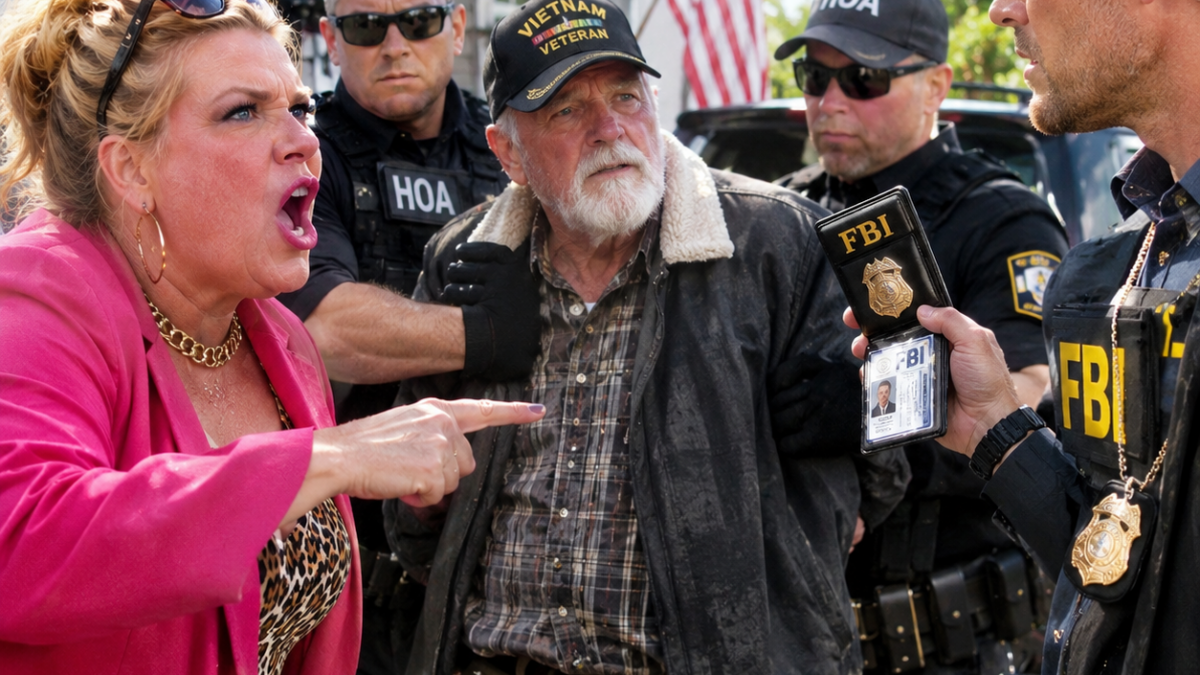
PART 2
Grandpa did not sleep much that night.
Neither did I.
Around midnight, after he went to bed, I carried my laptop to his kitchen table and started with the one thing criminals always leave behind eventually.
Patterns.
I searched public complaints involving HOAs in Maricopa County.
Then elder-fraud reports.
Then business names containing words like *community compliance*, *community safety*, and *residential enforcement*.
Most were unrelated.
A landscaping company.
A neighborhood patrol service.
Two legitimate property-management businesses.
But the forum post bothered me.
Not because somebody had paid two thousand dollars.
Because the story matched Grandpa’s encounter almost perfectly.
Dark uniforms.
Vague authority.
Immediate pressure.
No real paperwork.
No time to verify anything.
And, most importantly, elderly victims.
At 1:17 in the morning, I found another complaint on an archived neighborhood site.
Different subdivision.
Same description.
A man in his eighties said two “community officers” had demanded seventeen hundred dollars for an alleged property-maintenance violation.
He had refused.
They returned twice.
The second time, they asked whether he had children living nearby.
I stared at that line.
There are questions people ask because they are making conversation.
And there are questions people ask because they are calculating risk.
*Do you live alone?*
*Does anyone check on you?*
*Do you have family nearby?*
Those were not HOA questions.
They were target-selection questions.
I looked toward the hallway.
Grandpa’s bedroom door was closed.
For the first time, the anger became personal enough that I had to physically step away from the computer.
I went to the sink.
Ran cold water.
Stood there with both hands against the counter.
My training told me to slow down.
My family instincts told me to find whoever had frightened him and put them in handcuffs before sunrise.
Those instincts could not run the investigation.
So I went back to the table.
At three, I finally closed the laptop.
Grandpa was already making coffee when I woke a few hours later.
He stood in the kitchen in an old Arizona Cardinals T-shirt, pouring dark roast into two mugs as though nothing had happened.
That was his way.
If he could keep the morning ordinary, maybe the world would become ordinary with it.
I sat down.
“I need you to tell me everything again.”
He handed me coffee.
“I already did.”
“Tell me again.”
He knew that tone.
I had inherited it from Grandma.
He sat across from me.
“The first time they came was about ten yesterday morning.”
“Three men?”
“Yes.”
“Same SUV?”
“Yes.”
“They stayed how long?”
“Maybe fifteen minutes.”
“What happened?”
“They said I had landscaping violations.”
“Anything specific?”
“No.”
“They asked for money?”
“Not then.”
“What did they ask?”
He thought.
“If I understood the seriousness of noncompliance.”
“What else?”
“If I owned the house outright.”
My pen stopped.
“They asked that?”
“Yes.”
“Exact words?”
“Something like, ‘Is there still a mortgage on the property?’”
I looked at him.
“And you answered?”
“I said that was none of their business.”
Good.
“What happened at four?”
Grandpa’s hands tightened around the coffee mug.
“They came back.”
“Same men?”
“Yes.”
“Tone different?”
He nodded.
“The one with the tattoo stood close to the door.”
“What kind of tattoo?”
“Circle. Maybe some kind of bird.”
“Left arm?”
“Yes.”
“What did he say?”
“That I had ignored an official compliance order.”
“Which didn’t exist.”
“I know that now.”
His voice went quiet.
Then he said:
“They asked if I lived alone.”
I wrote it down.
“Anything else?”
“If my daughter lived nearby.”
“You told them?”
“No. I said my granddaughter was coming.”
“That may have helped.”
He gave me a tired smile.
“Finally useful for something.”
I reached across and squeezed his wrist.
“Grandpa.”
“I’m joking.”
“You’re allowed to be scared.”
“I’m not.”
“Your hands are shaking.”
He looked down.
They were.
That hurt worse than the phone call.
Grandpa had built avionics systems for aircraft flying in conditions that would terrify most people.
He had buried his wife.
Recovered from heart surgery.
Lived alone because he valued his independence more than convenience.
Three men with plastic badges had managed to make his own doorway feel unsafe.
I wanted names.
The fake notice gave me almost nothing.
But Grandpa gave me something better.
A neighbor.
Ruth Navarro.
Seventy-four.
Three houses down.
Widow.
“Something strange happened to her a few weeks ago,” Grandpa said.
“What?”
“She wouldn’t tell me.”
I went over at nine.
Ruth answered with the chain still on the door.
“Yes?”
“My name is Megan. I’m Harold’s granddaughter.”
Her expression softened slightly.
“He told me you work for the government.”
“He talks too much.”
She almost smiled.
“I’m trying to understand who came to his house yesterday.”
The smile disappeared.
“What did they look like?”
“Dark uniforms.”
Ruth’s hand tightened around the door.
“Black SUV?”
“Yes.”
She let me inside.
Her living room was spotless.
Family photographs filled two bookshelves.
Children.
Grandchildren.
Christmases.
Graduations.
All of them apparently somewhere else.
Ruth brought iced tea neither of us touched.
“They came three weeks ago.”
“How many?”
“Three.”
“What did they want?”
“Two thousand dollars.”
“For what?”
“Compliance violations.”
“Which ones?”
“I don’t know.”
She stared at her hands.
“They said I had ignored notices.”
“Had you received any?”
“No.”
“Did you ask for proof?”
“Yes.”
“What happened?”
“They gave me a paper.”
“Like this?”
I showed her the photo of Grandpa’s notice.
Her face drained.
“Yes.”
“Did they identify the actual HOA?”
“They said they represented enforcement.”
“Did you call anyone?”
“I tried.”
“What did they say?”
“That if I delayed payment, legal action could begin immediately.”
She took a breath.
“I was alone.”
I nodded.
“My daughter lives in Oregon.”
“Did they know that?”
Ruth looked up sharply.
“I don’t know.”
“How did you pay?”
“Cash.”
“No check?”
“They said cash or wire only.”
“Receipt?”
She stood and disappeared into a hallway.
When she returned, she handed me a small piece of paper.
Handwritten.
$2,000.
Illegible signature.
No business name.
No phone number.
No address.
I photographed it.
“Did you report this?”
“The police non-emergency number.”
“What happened?”
“They said it sounded like an HOA dispute.”
Her eyes dropped.
“I felt stupid.”
“You’re not.”
“I paid strangers two thousand dollars.”
“You were threatened by people pretending to have authority.”
“I should’ve known.”
“No.”
I kept my voice firm.
“They built the situation specifically so you wouldn’t have time to know.”
She looked at me.
“That doesn’t make me feel better.”
“I know.”
“What happens now?”
“I find out who they are.”
I left Ruth’s house and called the actual community management office.
A woman named Linda answered.
I described the situation without identifying myself as FBI.
“Does your community employ uniformed enforcement officers?”
“No.”
“Any contractor authorized to visit homes and collect compliance payments?”
“Absolutely not.”
“Any circumstance where residents would be ordered to leave with HOA personnel?”
There was silence.
“No.”
“Have you received similar complaints?”
Another pause.
“A few.”
“How many?”
“I’d have to check.”
“What did you do?”
“We thought there might be confusion with private security.”
“You don’t have private security?”
“Neighborhood patrol, but they do not collect fines.”
“Do they wear police-style uniforms?”
“No.”
“Do they drive black SUVs?”
“No.”
I thanked her.
Before I hung up, she asked:
“Who are you?”
“Harold Meyers’s granddaughter.”
“Is he okay?”
“For now.”
I returned to Grandpa’s house just after noon.
He was in the backyard adjusting an irrigation timer.
The normalcy almost made me laugh.
Then a black SUV turned into the driveway.
Two men stepped out.
The first had the tattoo.
Grandpa was right.
Circular mark on the left forearm.
The second was younger.
Shaved head.
Rigid stance.
They walked toward the porch.
I stood before they reached it.
The tattooed man stopped.
His eyes moved over me.
“You family?”
“Yes.”
“We’re here for Mr. Meyers.”
“No.”
His eyebrows rose.
“This is official HOA business.”
“The HOA says it has no enforcement officers.”
A fraction of a second.
That was all.
But I saw it.
Not surprise.
Calculation.
He recovered.
“You spoke to the wrong office.”
“Then show me your authority.”
He smiled.
“Ma’am—”
“Documentation.”
“We don’t need to justify internal procedures to family members.”
I raised my phone.
“Then you can explain it while being recorded.”
The younger man shifted.
The tattooed one looked at the camera.
His smile disappeared.
“Turn that off.”
“No.”
“You’re interfering with an official matter.”
“What agency?”
He said nothing.
“What statute?”
Nothing.
“What authority lets you take a seventy-eight-year-old man from his home?”
His jaw tightened.
“You’re making this harder than it needs to be.”
“That sounds like a threat.”
“It’s advice.”
“You’re trespassing.”
He stared at me.
Then looked toward the house.
Grandpa stood behind the closed glass door.
The tattooed man lowered his voice.
“We’ll come back with lawyers.”
“Bring real ones.”
The younger man tugged lightly at his partner’s sleeve.
They left.
I filmed the vehicle.
License plate.
Rear window.
Driver.
Everything visible from my property.
Then I went inside.
Grandpa looked at me.
“You didn’t show them.”
“No.”
“Why?”
“Because I wanted to see what they’d say first.”
“And?”
“They lied.”
“You expected that.”
“I hoped I was wrong.”
I ran the plate through public records first.
The vehicle was registered to Community Safety Solutions LLC.
Established eighteen months earlier.
Scottsdale mailing address.
PO box.
No meaningful website.
No listed employees.
The name was designed to create exactly the impression Grandpa had described.
Official enough to discourage questions.
Vague enough to avoid making a specific claim that could easily be checked.
I knew shell companies.
Community Safety Solutions looked like one.
That afternoon, I made the investigation official.
I called the Phoenix FBI office and asked for the white-collar unit.
Special Agent Daniel Rodriguez called me back.
Fifteen years in.
Elder-fraud experience.
I gave him the facts.
Not my suspicions.
Two confirmed victims.
Fake HOA enforcement.
Cash demand.
Wire-payment option.
Uniforms.
Questions about living arrangements.
Company registration.
Rodriguez was silent for a moment.
Then:
“How many victims do you think?”
“More than two.”
“Financial loss?”
“Confirmed two thousand so far.”
“That’s not enough for what you’re implying.”
“I know.”
“You think organized?”
“I think someone is selecting elderly homeowners based on vulnerability.”
“What makes you say that?”
“The questions.”
I told him.
Mortgage status.
Living alone.
Family proximity.
He went quiet again.
“Send me the LLC.”
I did.
“I’ll run what I can.”
“Keep me posted.”
“I will.”
Then I went door to door.
By noon the next day, I had spoken to eleven residents.
Four had seen the men.
Mr. Patterson was eighty-two.
He paid thirty-five hundred dollars after being threatened with a lien.
“Did they show you lien paperwork?”
“No.”
“Did they tell you where the money went?”
“Compliance processing.”
“How did you pay?”
“Wire.”
“To what account?”
He found the transfer confirmation.
Community Safety Solutions LLC.
Mrs. Dominguez was seventy-nine.
Her story stopped me cold.
“They drove me somewhere.”
“Who?”
“The men.”
“You got into their vehicle?”
“They said I needed to sign papers.”
“Where did they take you?”
“I don’t know.”
“Office?”
“Something like one.”
“What did you sign?”
She brought me copies.
I read the first page.
Then the second.
My stomach tightened.
Power of attorney.
Broad financial authority.
She had believed she was signing HOA compliance documents.
“Mrs. Dominguez, did anyone explain this?”
“They said it was temporary.”
“Did you have a lawyer?”
“No.”
“Did they tell you to get one?”
“No.”
The Williams couple had refused to pay.
Both in their early eighties.
The fake officers returned three times.
Each visit more aggressive.
After the second, Mr. Williams installed cameras.
He handed me a USB drive.
“You can have a copy.”
The footage showed the same SUV.
The tattooed man.
Another uniformed man.
Standing at the door.
Gesturing.
Pointing toward the house.
At one moment, the tattooed man looked directly into the security camera.
He smiled.
That smile was arrogance.
He believed even evidence would not matter because the victims would never connect.
Rodriguez called me at 4:30.
“Megan.”
“What did you find?”
“Community Safety Solutions is registered to Victor Harmon.”
“Who?”
“Fifty-two. Former real-estate developer.”
“History?”
“Civil fraud suits.”
“Criminal?”
“Nothing that stuck.”
“Money?”
He paused.
“Over four hundred thousand in incoming wires during the last eighteen months.”
I stood up.
“From where?”
“A lot of individuals over seventy.”
“How many?”
“Still working that.”
I looked toward Grandpa.
He was reading in his chair.
“Daniel.”
“Yeah?”
“This is an enterprise.”
“I think you’re right.”
The next morning, I met Maricopa County Detective Pamela Adams.
She had already reviewed complaints involving the so-called enforcement teams.
The problem was classification.
Each one arrived separately.
HOA dispute.
Civil issue.
Suspicious collection.
No one had connected them.
Now we did.
Pamela spread the documents across a coffee-shop table.
“Ruth Navarro.”
“Cash.”
“Patterson.”
“Wire.”
“Dominguez.”
“Power of attorney.”
She looked up.
“That last one could be much worse.”
“I know.”
“Property?”
“Possibly.”
Pamela leaned back.
“You think they’re trying to take houses.”
“I think money is only one layer.”
She tapped the Community Safety Solutions paperwork.
“Local jurisdiction is mine.”
“Agreed.”
“Federal financial trail is yours.”
“Agreed.”
“And your grandfather?”
I hesitated.
“What about him?”
“You’re too close.”
She was right.
I hated that she was right.
“I know.”
“Can you handle that?”
“Yes.”
She held my gaze.
“That answer was too fast.”
I looked down at the table.
“Probably.”
Then my phone buzzed.
Grandpa.
I answered immediately.
“Everything okay?”
“Megan.”
His voice was low.
“The black SUV is back.”
Pamela was already standing.
We drove separately.
I got there first.
Three men were approaching the porch.
The tattooed man.
Two others.
One broad-shouldered.
They spread slightly as they walked.
Not enough to look tactical to an ordinary homeowner.
Enough that I noticed.
I stepped between them and the door.
The tattooed man stopped.
His expression hardened.
“We tried to be polite.”
“You did?”
“Mr. Meyers has obligations.”
“What obligations?”
“That’s between us and him.”
“No.”
His eyes narrowed.
“You need to step aside.”
I did not.
The larger man moved one pace forward.
Not a threat by itself.
But the tattooed man let him.
That mattered.
My credentials were in my pocket.
I had hoped to keep my role hidden longer.
That option was disappearing.
The tattooed man said:
“He’s coming with us tonight.”
I reached into my pocket.
Opened the leather case.
The FBI badge caught the Arizona sun.
For the first time, nobody spoke.
“My name is Special Agent Megan Meyers.”
The broad-shouldered man took half a step back.
The tattooed man’s face went blank.
I continued.
“You are not law enforcement.”
His eyes dropped to the credentials again.
“You have no authority to remove anyone from this property.”
“This is a misunderstanding.”
“No.”
“We’re contractors.”
“For whom?”
He did not answer.
“Who authorized you to impersonate enforcement personnel?”
“We’re not impersonating anybody.”
“Then what agency is on your badge?”
Silence.
The younger man looked toward the SUV.
I pointed to the street.
“Leave.”
The tattooed man recovered enough to smile.
Thin.
Unconvincing.
“You’re making accusations you can’t prove.”
“I’m building that proof right now.”
His expression changed.
“You don’t know what you’re dealing with.”
“Then educate me.”
He did not.
The three men walked back to the SUV.
Nobody turned their back fully until they reached it.
When the vehicle disappeared, Grandpa opened the door.
He looked at me.
“That went well.”
I turned.
“You think?”
“They left.”
“Because they know now.”
“Isn’t that good?”
“No.”
“Why?”
“Because people who run scams disappear when they know law enforcement is watching.”
I called Pamela.
“They know I’m FBI.”
She swore under her breath.
“They’ll clean house.”
“Exactly.”
“We move faster.”
“Exactly.”
The next forty-eight hours were quiet.
Too quiet.
No black SUVs.
No strange men.
No calls.
No fake notices.
I installed cameras around Grandpa’s house.
Front.
Back.
Driveway.
Window sensors.
Door sensors.
Nothing elaborate.
Just enough warning to matter.
Grandpa watched from the kitchen.
“You’re turning my house into Fort Knox.”
“I’m improving your resale value.”
“I’m not selling.”
“Then you’re welcome.”
He smiled faintly.
Then looked at the camera above the back door.
“I never used to lock that door during the day.”
“I know.”
“Your grandmother hated locked doors.”
“I remember.”
“She said a house should feel open.”
My hands stopped.
“I’m sorry.”
“For what?”
“For bringing this into your life.”
Grandpa stared at me.
“They brought it.”
“I’m the reason they know they’re being investigated.”
“You’re the reason I’m not sitting in their SUV.”
That silenced me.
On the third night, my phone rang at 2:14.
Grandpa.
I was staying at a motel twenty minutes away, partly so I could work without keeping him awake and partly because Pamela was right.
I was too close.
“Megan.”
He whispered.
“Someone’s at the back door.”
I was already moving.
“Bedroom.”
“I’m going.”
“Lock it.”
“I will.”
“Call 911.”
“What about you?”
“I’m calling Pamela.”
I drove faster than I should have.
By the time I reached Grandpa’s street, a sheriff’s cruiser was already outside.
Red and blue light washed across the stucco walls.
The back door had pry marks.
The lock was damaged.
They had not gotten through.
Grandpa stood in the hallway wrapped in a robe.
He looked furious.
Not afraid.
That was almost worse.
Pamela arrived minutes later.
She examined the frame.
“Attempted burglary.”
“They weren’t after the television.”
“You don’t know that.”
“I do.”
“Megan.”
“They know he’s tied to the investigation.”
“We still need evidence.”
“I know.”
We watched the camera footage.
Two masked figures.
One worked the door.
The other watched the yard.
The image was grainy.
Then the first man shifted.
A slight hitch.
Left leg.
I had noticed it at the porch before.
The tattooed man had favored that leg when he turned.
“Freeze.”
Pamela stopped the footage.
“What?”
“Watch him walk.”
She replayed.
“Again.”
She looked at me.
“You recognize the gait.”
“I think it’s him.”
“Think isn’t enough.”
“I know.”
But it changed the case emotionally.
For me.
They were no longer merely intimidating Grandpa.
They were coming after him at night.
That morning, I called the other victims.
Mrs. Dominguez had found her back gate open two weeks earlier.
Mr. Patterson had seen an unfamiliar vehicle parked across from his house repeatedly.
The Williams couple had heard footsteps near their patio.
Separate incidents.
Together, surveillance.
Pamela looked at the notes.
“They’re monitoring victims.”
“And escalating when people resist.”
“Maybe.”
“Pamela.”
“I need you to hear yourself.”
I stopped.
“You’re working backward from what happened to your grandfather.”
She was right again.
I hated that too.
She continued.
“We follow evidence.”
“I know.”
“Not fear.”
“I know.”
“Not anger.”
I looked toward Grandpa’s damaged door.
“That one’s harder.”
“I know.”
My supervisor in Denver called that afternoon.
He had reviewed the preliminary case.
“Meyers.”
“Sir.”
“You want arrests.”
“Yes.”
“You can get the field guys.”
“Yes.”
“But Harmon walks.”
I said nothing.
“The money trail is bigger.”
“I know.”
“If you grab Finch now, you may lose whoever feeds him targets.”
“He tried to break into my grandfather’s house.”
“Local can pursue that.”
“He came there because of our investigation.”
“You don’t know that yet.”
I closed my eyes.
He was doing exactly what I would have done in his position.
That was the problem.
“I need to protect Grandpa.”
“Then protect him.”
“Without ending the case.”
“Yes.”
I hung up and stared at the ceiling.
Patience had always been easy when the victim was somebody else.
That realization made me uncomfortable.
I had told witnesses for years:
“We need more.”
“We need the money trail.”
“We need the larger organization.”
“We need patience.”
Now my grandfather had pry marks on his back door.
Patience suddenly sounded like cowardice.
That evening, I called Frank Dawson.
Retired Air Force colonel.
Old friend of Grandpa’s.
Tucson.
Frank answered:
“Megan?”
“How fast can you make a guest room?”
“As fast as Harold can complain about the mattress.”
Grandpa protested.
Of course.
“I’m not leaving my house.”
“For a week.”
“No.”
“Grandpa.”
“This is exactly what they want.”
“What?”
“To scare me out.”
“They want money.”
“Then I’m not giving them my house.”
“You’re not.”
“It feels like it.”
I sat beside him.
“Grandpa.”
He looked away.
“I lost your grandmother here.”
“I know.”
“I learned to live alone here.”
“I know.”
“I’m not letting those men decide when I leave.”
I took his hand.
“You’re not leaving because they won.”
“You’re leaving because I need you safe while I stop them.”
He studied me.
Then sighed.
“You sound like her.”
“Grandma?”
“Yes.”
“I’ll take that.”
“She was irritating too.”
He packed.
I drove him to Tucson myself.
Frank met us in the driveway.
Tall even in his seventies.
White hair.
Military posture.
He hugged Grandpa.
Then looked at me.
“Nobody gets near him.”
“I know.”
“You go do your job.”
Grandpa turned to me before I left.
“Promise me.”
“What?”
“You end it.”
I hugged him.
“I promise.”
I returned to Sun City alone.
Grandpa’s house was dark.
The cameras were live.
Pamela arranged periodic local patrols.
We had a direct call plan if someone approached.
I waited.
Night one.
Nothing.
Night two.
Nothing.
Night three.
Nothing.
By night four, I started wondering if showing my credentials had scared them off permanently.
On night five, at 3:22 a.m., my phone buzzed.
Motion.
Backyard.
Four figures.
Dark clothing.
Faces covered.
No fake badges this time.
One carried a pry bar.
Another had restraints clipped at his waist.
The last doubt disappeared.
This was not compliance.
This was not fraud theater.
They were coming inside.
I called Pamela.
Left the line open.
Then positioned myself where I had cover and a clear view of the back entry.
I had my service weapon.
I hoped I would not use it.
The first impact shook the door.
Second cracked the frame.
Third broke it inward.
The first man stepped inside.
“FBI!”
He froze.
“Don’t move.”
The second man collided with him.
Everything became noise.
Commands.
Boots.
Splintered wood.
Hands.
The first two went down.
A third turned and ran before fully entering.
Outside, voices erupted.
Sheriff’s deputies.
Pamela.
The fourth man never reached the door.
Within minutes, four men were in custody.
The tattooed man was among them.
His real name, we would later learn, was Derek Finch.
As deputies walked him past me, he finally looked directly into my eyes.
No fake smile.
No rehearsed authority.
Just hate.
“You ruined everything.”
I answered quietly.
“You came back.”
He looked away.
Pamela processed the vehicle.
Inside was something worse than anything I expected.
A list.
Fifteen names.
Addresses.
All Sun City.
Every person over seventy-five.
Grandpa’s name near the top.
Crossed out in red.
I stared at it.
Pamela stood beside me.
“What do you think the red means?”
“I don’t know.”
“You do.”
I swallowed.
“They were done pretending.”
The other names remained uncrossed.
Fifteen future victims.
Maybe more.
Four arrests gave us leverage.
Finch gave us the rest.
He lasted two days.
He was thirty-eight.
Petty fraud history.
No loyalty strong enough to survive serious prison exposure.
Pamela led the local interrogation while federal agents coordinated the broader financial questions.
Finch described himself as a supervisor.
Not the architect.
Victor Harmon gave orders.
Harmon supplied target lists.
Scripts.
Uniforms.
Payment methods.
Finch managed crews.
“Where did the targets come from?” Pamela asked.
“Public records.”
“That’s not enough.”
Finch looked at his lawyer.
The lawyer nodded.
“HOA information.”
“Whose?”
“I didn’t ask.”
“You used names, ages, mortgage information, family proximity.”
Finch stared at the table.
“Harmon gave us packets.”
“What was the selection criteria?”
Another glance at counsel.
Then:
“Old.”
“How old?”
“Seventy-five plus.”
“Living alone?”
“Usually.”
“Property value?”
“Three hundred or more.”
“Family nearby?”
“Preferably not.”
I watched through the glass.
My hands went cold.
Grandpa had not been randomly unlucky.
Somebody had selected him.
Profiled him.
Measured his isolation.
Turned his age into a vulnerability score.
Finch continued.
“We started with fees.”
“And if they paid?”
“We moved on.”
“To what?”
“Depends.”
“On?”
“Assets.”
The power-of-attorney paperwork suddenly made sense.
Rodriguez called before the interrogation ended.
“We got more on the money.”
“How much?”
“Four hundred seventy thousand through Community Safety Solutions.”
“That’s only one company.”
“Exactly.”
“What else?”
He paused.
“Property transfers.”
I sat down.
“How many?”
“Three confirmed in Sun City.”
“To whom?”
“Shell entities.”
“Linked to Harmon?”
“We’re working it.”
“Value?”
“Over one point two million.”
This was no longer an elder-fraud crew.
It was an acquisition machine.
They began with fear.
If fear produced cash, they took cash.
If the victim had property and weak family oversight, they pushed paperwork.
Power of attorney.
Transfers.
Liens.
Anything that could be disguised as compliance.
We spent three days inside the Phoenix field office building the structure.
Community Safety Solutions was one of five front companies.
A parent entity emerged.
Senior Living Solutions LLC.
Delaware.
Minimal visibility.
Then Nevada.
New Mexico.
California.
Same pattern.
Retirement communities.
Fake compliance teams.
Elderly homeowners.
Threats.
Wires.
Property transfers.
By the time the analysts completed the first cross-state victim map, the number on the screen stopped me.
214.
Confirmed victims.
Estimated losses exceeding twelve million dollars.
I leaned back.
Rodriguez stood behind me.
“Still think this started with your grandfather?”
“No.”
“It started before him.”
“I know.”
“But he broke it open.”
I looked at Grandpa’s name in the case notes.
“No.”
“What?”
“They made the mistake of coming back.”
The more we traced Harmon, the smarter he appeared.
Former developer.
Fifty-two.
Civil fraud cases.
Settlements.
One criminal case that had collapsed over evidence issues.
He had learned.
Not to stop.
To insulate himself.
He did not meet victims.
Did not collect cash.
Did not wear uniforms.
Did not send obvious messages under his name.
Layers.
Finch.
Crews.
Shell companies.
Board insiders.
Then one name appeared repeatedly.
Richard Oaks.
Sixty-one.
Three-term HOA board member.
He had access to homeowner records.
Age.
Contact details.
Property information.
Emergency contacts.
And Oaks received quarterly consulting payments.
Fifteen thousand per year.
From a Harmon-linked company.
The amount almost looked small compared with the theft.
But Oaks had debt.
Bankruptcy.
Creditor disputes.
He had sold his neighbors for what amounted to a modest side income.
That betrayal made me angrier than Harmon.
Harmon was a predator.
Oaks had been elected to protect the people he delivered to predators.
When we showed the payment trail to the assistant U.S. attorney, he sat quietly for several seconds.
Then said:
“Grand jury.”
The case expanded.
Wire fraud.
Mail fraud.
Conspiracy.
Elder exploitation.
RICO theories.
Impersonation-related offenses.
The exact charges would depend on the proof tied to each defendant.
I called Grandpa that night.
“How are you?”
“Frank cheats at cards.”
Frank shouted something in the background.
I smiled.
“That good?”
“No.”
“Are you sleeping?”
“Better.”
I hesitated.
“We found more victims.”
“How many?”
“A lot.”
“How many, Megan?”
“Over two hundred.”
He went quiet.
“That many?”
“Yes.”
“And they picked me because I’m old.”
I hated the sentence.
“They picked people based on age and isolation.”
“Same thing.”
“No.”
“It is.”
“Grandpa—”
“I’m not ashamed.”
That surprised me.
“I’m angry.”
“Good.”
“Your grandmother would be furious.”
“Definitely.”
He laughed softly.
Then:
“I’m proud of you.”
I stopped breathing for half a second.
“Grandpa.”
“She would be too.”
I looked down at my desk.
The evidence blurred.
“I haven’t done anything alone.”
“I didn’t say you did.”
He was quiet.
“But you listened when I called.”
That broke me more than anything else.
Because the entire network depended on people not being listened to.
Ruth.
Patterson.
Dominguez.
The Williamses.
All of them had tried in some way to tell someone.
Civil matter.
HOA issue.
Misunderstanding.
Handle it privately.
The scam had survived partly because every victim looked isolated.
Only the pattern looked criminal.
The case was elevated within a week.
Five fronts.
Four states.
More than two hundred victims.
The Bureau formed a multistate task force.
Operation Golden Shield.
I was assigned as a lead field agent.
The name made Grandpa laugh when I told him.
“Sounds like an insurance company.”
“I didn’t name it.”
“Good.”
The task-force room filled with maps.
Accounts.
Corporate charts.
Victim clusters.
Names connected by red lines.
One Las Vegas agent found something politically sensitive.
Victor Harmon had donated significant money over several years to an Arizona state senator, Mark Devlin.
Devlin chaired a committee considering broader private HOA enforcement authority.
The connection was suspicious.
It was not proof.
The assistant U.S. attorney made that distinction very clear.
“We document.”
He pointed around the room.
“We do not turn this into an election-year fishing expedition.”
Nobody argued.
The public-corruption unit received the referral.
We stayed focused on Harmon.
Oaks.
Finch.
The operational network.
The grand jury returned eleven indictments.
Arrests were planned simultaneously across four states.
I requested to be present for Harmon’s arrest.
Approved.
Then, twenty-four hours before the coordinated operation, Harmon disappeared.
His car was found at a coffee shop in Scottsdale.
Phone off.
No card usage.
No visible surveillance trail.
He had been tipped.
The task-force room became very quiet.
Somebody had leaked.
We reviewed coordination logs.
Emails.
Access.
Then we found the weak point.
A local deputy copied on a routine coordination message had a family connection to a property-management company tied to one of Harmon’s shells.
Whether the leak had been intentional or careless would be investigated separately.
It did not change the immediate problem.
Harmon was running.
But people like Harmon do not run empty-handed.
We watched the money.
Four hours later, an alert hit.
Attempted transfer.
$2.3 million.
Brokerage account.
Offshore destination.
Originating IP:
Sedona, Arizona.
Property records tied the location to a vacation home owned through Harmon’s ex-wife.
We moved.
By the time I arrived in Sedona, federal teams had established the perimeter.
The house sat against red rock and juniper.
Beautiful place.
Ugly reason to be there.
I was not the tactical commander.
That mattered.
HRT handled the entry plan.
My role was investigative.
When the team went in, I followed only after the initial rooms were secured.
Harmon was found in a bedroom near an open laptop.
Trying to delete files.
He was pulled away from the desk.
Cuffed.
When I entered, he looked at me.
Recognition came slowly.
“You.”
I stopped.
“You know me?”
“Finch described you.”
“That must’ve been flattering.”
His expression stayed flat.
“You have no idea how many people are involved.”
“We’ve got a pretty good spreadsheet.”
“You think this ends with me?”
“I think your part does.”
He smiled faintly.
“People like your grandfather are easy marks.”
Everything in me went still.
I stepped closer.
Not threatening.
Just close enough that he could see my credentials.
“My grandfather is why you got noticed.”
Harmon’s smile disappeared.
“That old man cost you twelve million dollars.”
I watched that land.
Then I stepped away.
The forensic team took the laptop.
Harmon had not deleted enough.
Financial records.
Victim lists.
Internal messages.
Payment schedules.
Conversations with Oaks.
Targeting criteria.
Operational instructions.
The insulation he had spent years building collapsed because digital systems remember more than criminals want them to.
Simultaneous arrests happened that night.
Oaks was arrested at home.
Neighbors watched.
Three suspects in Las Vegas.
Two in Albuquerque.
Three in Los Angeles.
By midnight, all eleven primary targets were in federal custody.
The press conference came two days later.
United States Attorney.
FBI.
Sheriff’s office.
Arizona attorney general representatives.
Eleven arrests.
214 confirmed victims.
Losses exceeding twelve million.
I stood in the back.
I did not want a microphone.
Grandpa’s name was one of 214.
That was enough.
The Sun City community meeting happened the following week.
Not an FBI event.
A neighborhood meeting.
Helen Marsh, the new interim HOA president after Oaks’s arrest, invited me.
“Speak as Harold’s granddaughter,” she said.
“Not as an agent?”
“We’ve heard from agents.”
She smiled.
“We need the granddaughter.”
The room was packed.
Ruth sat in the front row.
Mr. Patterson beside her.
Mrs. Dominguez.
The Williamses.
People I had never met.
I stood at the front.
No badge.
No weapon.
No case files.
Just me.
I explained what the fake enforcement teams had relied on.
Official-looking uniforms.
Urgency.
Isolation.
Demands for cash or wire.
Pressure to sign documents immediately.
Threats that verification would make things worse.
“When someone refuses to let you independently verify who they are,” I said, “that is information.”
A man near the back raised his hand.
“What if they say they’re from the HOA?”
“Call the HOA using a number you already trust.”
“What if they say police will come?”
“Call police yourself.”
Ruth stood.
Her hands trembled slightly.
“I paid them.”
Nobody laughed.
Nobody looked away.
“They came to my house.”
She swallowed.
“I knew something felt wrong.”
Then she looked at me.
“But I thought if I was wrong, I’d get in more trouble.”
Mr. Patterson spoke next.
Then Mrs. Dominguez.
The room changed.
It stopped being a fraud briefing.
It became people returning shame to the people who deserved it.
Not the victims.
Oaks confessed three days after his arrest.
His story was disappointingly ordinary.
Debt.
Desperation.
A consulting offer.
Just homeowner information, he told himself.
Nobody would get hurt.
Then money kept coming.
Rationalization grew.
He stopped seeing names.
He saw lists.
Payments.
Data.
The prosecutor reminded him what the data meant.
Forty-seven people affected through the lists he supplied.
Families financially damaged.
Homes transferred.
One victim had died by suicide during the broader scheme.
Oaks cried.
Maybe genuinely.
It did not undo anything.
Grandpa returned home in November.
I drove him from Tucson.
As we turned onto his street, he became quiet.
“You okay?”
“Yes.”
“You can stay longer with Frank.”
“No.”
“Grandpa.”
“Megan.”
He looked at me.
“I want my chair.”
I laughed.
“Your chair?”
“My chair.”
“What about your life?”
“That too.”
The front door had been repaired.
Cameras remained.
Grandpa walked through every room.
Touched the kitchen counter.
Opened the blinds.
Then sat in his recliner.
“See?”
“What?”
“Home.”
I stood in the doorway and realized how much I had wanted that moment.
Not Harmon in cuffs.
Not Finch talking.
Not the press conference.
Grandpa sitting in his chair.
That was the victory.
The sentencing process took months.
Victor Harmon was convicted on the principal federal charges tied to the enterprise.
Twenty-two years.
Millions in restitution.
Asset forfeiture.
He stood still as the sentence was read.
His hands did not.
Richard Oaks received seven years after cooperation.
The judge acknowledged his assistance.
Then reminded him that he had sold information entrusted to him by neighbors who believed he was serving them.
Derek Finch received twelve years for the conduct tied to the intimidation crew, including the attempted abduction plot and impersonation scheme.
The other conspirators received varying prison terms.
Professionals who had knowingly helped structure parts of the fraudulent network faced their own disciplinary and criminal consequences.
Recovered assets did not cover every loss.
They never do.
But millions were recovered for compensation.
Mrs. Dominguez’s property interests were restored.
Patterson was reimbursed.
Pending transfers were blocked.
Fraudulent documents were challenged.
Homes that had nearly disappeared into shell companies remained with the people who had earned them.
It was not complete justice.
Complete justice would require returning fear.
Sleep.
Health.
Time.
Dead loved ones.
Courts cannot do that.
But accountability mattered.
The political connection involving Senator Devlin was referred separately.
The legislation that would have expanded HOA enforcement contracting stalled and died before passage.
State officials issued stronger guidance around contracted community personnel and verification.
The Sun City association changed its own rules.
Board transparency.
Financial disclosure.
Credential verification.
Clear communication to residents.
Nobody could undo the vulnerability that had existed.
They could make exploiting it harder.
Grandpa did something I never expected.
He started speaking at senior centers.
The first time he told me, I thought he was joking.
“You hate public speaking.”
“I hate criminals more.”
“What do you talk about?”
“You.”
“Grandpa.”
He smiled.
“I tell them not everyone has an FBI granddaughter.”
“That’s useful.”
“Then I tell them what you told me.”
He began teaching people to ask questions.
Department name.
Badge number.
Written notice.
Independent callback.
Never hand cash to someone at the door.
Never wire money because a stranger says the deadline is today.
Never sign documents you do not understand.
He became good at it.
Of course he did.
He was an engineer.
Give him a system and a problem, and he would improve both.
Six months after sentencing, an agent in Miami sent me a message.
Similar complaints.
Florida retirement communities.
Fake enforcement.
Elderly targets.
Different names.
Same structure.
I stared at the email for a long time.
Part of me wanted to ignore it.
Operation Golden Shield had consumed months.
Grandpa was safe.
The people who targeted him were gone.
I was tired.
Then I remembered Ruth’s face when she said she thought she was the only one.
I forwarded the information to my supervisor.
Two weeks later, I flew back to Arizona for a Sunday dinner.
Grandpa cooked Grandma’s old recipe badly.
He always had.
Ruth Navarro joined us.
Apparently she had become a regular guest.
I looked between them.
Grandpa noticed.
“Don’t.”
“I didn’t say anything.”
“Your face did.”
Ruth laughed.
“Leave him alone.”
I raised both hands.
“Federal investigation closed.”
Grandpa shook his head.
Dinner was ordinary.
That was what made it perfect.
No case discussion for the first hour.
Weather.
Baseball.
Ruth’s grandchildren.
Grandpa’s latest argument with his irrigation controller.
Eventually, while clearing plates, I caught him looking at me.
“What?”
“Nothing.”
“That’s a lie.”
He smiled.
“You did well.”
I looked down at the dish in my hands.
“You’ve said that.”
“I’m old. I repeat things.”
“You’re seventy-nine now. Not ninety-nine.”
“Feels the same before coffee.”
I turned toward the sink.
He said:
“Megan.”
I looked back.
“Your grandmother would’ve been proud.”
I swallowed.
“I know.”
“No.”
He shook his head.
“You hope.”
He came closer.
“She would.”
I hugged him.
For a second, I was twelve again.
Grandpa’s arms around me.
Grandma shouting from the kitchen that dinner was getting cold.
All the years between then and now disappeared.
When I finally pulled away, he wiped at one eye.
“Arizona dust.”
“Inside?”
“Very aggressive dust.”
Ruth pretended not to notice.
That evening, Grandpa walked me to the door.
The front camera blinked above us.
Months earlier, that little light would have felt like evidence that something had been damaged.
Now it was simply part of the house.
“You checking it every night?” I asked.
“No.”
“Really?”
“Sometimes.”
“Grandpa.”
“Megan.”
“Fine.”
He smiled.
“I’m not afraid anymore.”
That was the sentence I had wanted from the beginning.
Not:
They went to prison.
Not:
We recovered millions.
Not:
The case made headlines.
I’m not afraid anymore.
I kissed his cheek.
“Call me.”
“I always do.”
“Not only when fake cops appear.”
“No promises.”
I walked toward the rental car.
My phone buzzed before I reached it.
Work email.
New elder-fraud leads in Texas.
I opened the message.
Different front company.
Different retirement communities.
Familiar tactics.
For a moment, I looked back at Grandpa’s house.
He stood in the doorway.
Safe.
Home.
Then I typed three words to my supervisor.
**Send the file.**
Grandpa waved.
I waved back.
Then he closed the door.
Not because someone had frightened him into hiding.
Because dinner was over, the desert air was cooling, and he was ready to settle into his chair with an old movie.
The porch light stayed on behind me as I drove away.
And this time, when I checked the mirror, I did not see a frightened old man trapped inside his own house.
I saw my grandfather exactly as he had always been.
Standing on his own ground.
[FACEBOOK OPENING — 700–800 WORDS]
My grandfather’s voice was shaking when he called me from Arizona and whispered that three men dressed like police were standing outside his house, telling him he had violated HOA rules and needed to leave with them immediately. They had no warrant, no department names on their uniforms, no badge numbers they were willing to give him, and one of them kept asking whether he lived alone and whether anyone would notice if he was gone for a few hours. What frightened me most was that whoever had sent them seemed to know exactly what kind of man my grandfather was, where he lived, and how isolated they believed he would be.
I was standing outside a briefing room at the FBI’s Denver Field Office when I told him, “Grandpa, lock the door.”
“What?”
“Lock it. Right now.”
I heard the deadbolt turn through the phone.
“Good. Don’t open it again.”
“They say they’re from HOA enforcement.”
“There is no such thing as an HOA arrest.”
A long pause.
Then he whispered, “One of them says I have forty-eight hours to report for processing.”
My hand tightened around the phone.
“Did they give you paperwork?”
“Yes.”
“Any agency seal?”
“I don’t think so.”
“Warrant?”
“No.”
“Badge numbers?”
“I asked. They wouldn’t tell me.”
That was enough.
My name is Megan Meyers. I was thirty-two and had spent seven years as an FBI special agent working financial crimes—fraud, embezzlement, money laundering, shell companies, and people who made theft look respectable by wrapping it in official language.
And Harold Meyers was not some anonymous seventy-eight-year-old homeowner to me.
He was Grandpa.
A retired Boeing engineer who had spent four decades working on aircraft navigation systems and who still corrected my math when we played cards.
Since Grandma died three years earlier, he had lived alone in Sun City, Arizona.
He was independent.
Stubborn.
Sharp.
I had never heard fear in his voice before.
“Describe them.”
“Dark shirts. Badges.”
“What department?”
“Doesn’t say.”
“Guns?”
“I haven’t seen any.”
“Vehicle?”
“Black SUV.”
“One man keeps tapping a flashlight against his leg,” Grandpa said. “Another keeps his hand near his hip like he wants me to think something is there.”
“Stay inside.”
“Megan—”
“I’m coming.”
I walked back into the briefing room.
My supervisor saw my face before I said anything.
“Family?”
“My grandfather.”
“What happened?”
“Possible impersonation. Possible elder fraud.”
He closed the folder in front of him.
“Go.”
Three hours later, I was on a flight to Phoenix with my laptop open.
I stayed in public databases. No protected systems. No shortcuts.
The HOA name the men used was Whispering Sands Community Association.
Its public footprint was strange.
A PO box.
Thin filings.
No listed employees.
A cheap website.
Then I found a community forum post from six weeks earlier.
HAS ANYONE ELSE BEEN VISITED BY HOA ENFORCEMENT OFFICERS?
I opened it.
An elderly woman described men arriving in dark uniforms and threatening “legal consequences” unless she paid a two-thousand-dollar compliance fee.
She paid.
Three people had replied.
One said the same thing happened to his mother.
Another had contacted police and been told it sounded like an HOA civil dispute.
The last reply contained only six words:
Be careful. Something is wrong here.
I saved everything.
By the time I landed, it was almost eleven.
Grandpa was standing inside his doorway when I arrived.
He looked smaller than I remembered.
Not physically.
Something else.
Like somebody had made him question whether his own home was still safe.
He handed me the paper they left.
Plain white stock.
Generic shield logo.
No address.
No phone number.
No signature.
At the top:
COMMUNITY COMPLIANCE DIVISION
Below that:
FAILURE TO REPORT WITHIN 48 HOURS MAY RESULT IN ESCALATED ENFORCEMENT.
I read the alleged violation.
Landscaping.
I looked through Grandpa’s front window at a yard filled with rocks, cactus, and drought-resistant plants.
There was barely anything to trim.
“Grandpa.”
He looked at me.
“These men weren’t here because of your landscaping.”
He sat down slowly.
“What were they here for?”
I looked again at the paper.
Then at the notes I had saved from the forum.
At that moment, I did not know the answer.
But I knew I was no longer looking at an HOA dispute.
[END OF FACEBOOK OPENING]
[FULL STORY CONTINUATION]
Grandpa did not sleep much that night.
Neither did I.
Around midnight, after he went to bed, I carried my laptop to his kitchen table and started with the one thing criminals always leave behind eventually.
Patterns.
I searched public complaints involving HOAs in Maricopa County.
Then elder-fraud reports.
Then business names containing words like community compliance, community safety, and residential enforcement.
Most were unrelated.
A landscaping company.
A neighborhood patrol service.
Two legitimate property-management businesses.
But the forum post bothered me.
Not because somebody had paid two thousand dollars.
Because the story matched Grandpa’s encounter almost perfectly.
Dark uniforms.
Vague authority.
Immediate pressure.
No real paperwork.
No time to verify anything.
And, most importantly, elderly victims.
At 1:17 in the morning, I found another complaint on an archived neighborhood site.
Different subdivision.
Same description.
A man in his eighties said two “community officers” had demanded seventeen hundred dollars for an alleged property-maintenance violation.
He had refused.
They returned twice.
The second time, they asked whether he had children living nearby.
I stared at that line.
There are questions people ask because they are making conversation.
And there are questions people ask because they are calculating risk.
Do you live alone?
Does anyone check on you?
Do you have family nearby?
Those were not HOA questions.
They were target-selection questions.
I looked toward the hallway.
Grandpa’s bedroom door was closed.
For the first time, the anger became personal enough that I had to physically step away from the computer.
I went to the sink.
Ran cold water.
Stood there with both hands against the counter.
My training told me to slow down.
My family instincts told me to find whoever had frightened him and put them in handcuffs before sunrise.
Those instincts could not run the investigation.
So I went back to the table.
At three, I finally closed the laptop.
Grandpa was already making coffee when I woke a few hours later.
He stood in the kitchen in an old Arizona Cardinals T-shirt, pouring dark roast into two mugs as though nothing had happened.
That was his way.
If he could keep the morning ordinary, maybe the world would become ordinary with it.
I sat down.
“I need you to tell me everything again.”
He handed me coffee.
“I already did.”
“Tell me again.”
He knew that tone.
I had inherited it from Grandma.
He sat across from me.
“The first time they came was about ten yesterday morning.”
“Three men?”
“Yes.”
“Same SUV?”
“Yes.”
“They stayed how long?”
“Maybe fifteen minutes.”
“What happened?”
“They said I had landscaping violations.”
“Anything specific?”
“No.”
“They asked for money?”
“Not then.”
“What did they ask?”
He thought.
“If I understood the seriousness of noncompliance.”
“What else?”
“If I owned the house outright.”
My pen stopped.
“They asked that?”
“Yes.”
“Exact words?”
“Something like, ‘Is there still a mortgage on the property?’”
I looked at him.
“And you answered?”
“I said that was none of their business.”
Good.
“What happened at four?”
Grandpa’s hands tightened around the coffee mug.
“They came back.”
“Same men?”
“Yes.”
“Tone different?”
He nodded.
“The one with the tattoo stood close to the door.”
“What kind of tattoo?”
“Circle. Maybe some kind of bird.”
“Left arm?”
“Yes.”
“What did he say?”
“That I had ignored an official compliance order.”
“Which didn’t exist.”
“I know that now.”
His voice went quiet.
Then he said:
“They asked if I lived alone.”
I wrote it down.
“Anything else?”
“If my daughter lived nearby.”
“You told them?”
“No. I said my granddaughter was coming.”
“That may have helped.”
He gave me a tired smile.
“Finally useful for something.”
I reached across and squeezed his wrist.
“Grandpa.”
“I’m joking.”
“You’re allowed to be scared.”
“I’m not.”
“Your hands are shaking.”
He looked down.
They were.
That hurt worse than the phone call.
Grandpa had built avionics systems for aircraft flying in conditions that would terrify most people.
He had buried his wife.
Recovered from heart surgery.
Lived alone because he valued his independence more than convenience.
Three men with plastic badges had managed to make his own doorway feel unsafe.
I wanted names.
The fake notice gave me almost nothing.
But Grandpa gave me something better.
A neighbor.
Ruth Navarro.
Seventy-four.
Three houses down.
Widow.
“Something strange happened to her a few weeks ago,” Grandpa said.
“What?”
“She wouldn’t tell me.”
I went over at nine.
Ruth answered with the chain still on the door.
“Yes?”
“My name is Megan. I’m Harold’s granddaughter.”
Her expression softened slightly.
“He told me you work for the government.”
“He talks too much.”
She almost smiled.
“I’m trying to understand who came to his house yesterday.”
The smile disappeared.
“What did they look like?”
“Dark uniforms.”
Ruth’s hand tightened around the door.
“Black SUV?”
“Yes.”
She let me inside.
Her living room was spotless.
Family photographs filled two bookshelves.
Children.
Grandchildren.
Christmases.
Graduations.
All of them apparently somewhere else.
Ruth brought iced tea neither of us touched.
“They came three weeks ago.”
“How many?”
“Three.”
“What did they want?”
“Two thousand dollars.”
“For what?”
“Compliance violations.”
“Which ones?”
“I don’t know.”
She stared at her hands.
“They said I had ignored notices.”
“Had you received any?”
“No.”
“Did you ask for proof?”
“Yes.”
“What happened?”
“They gave me a paper.”
“Like this?”
I showed her the photo of Grandpa’s notice.
Her face drained.
“Yes.”
“Did they identify the actual HOA?”
“They said they represented enforcement.”
“Did you call anyone?”
“I tried.”
“What did they say?”
“That if I delayed payment, legal action could begin immediately.”
She took a breath.
“I was alone.”
I nodded.
“My daughter lives in Oregon.”
“Did they know that?”
Ruth looked up sharply.
“I don’t know.”
“How did you pay?”
“Cash.”
“No check?”
“They said cash or wire only.”
“Receipt?”
She stood and disappeared into a hallway.
When she returned, she handed me a small piece of paper.
Handwritten.
$2,000.
Illegible signature.
No business name.
No phone number.
No address.
I photographed it.
“Did you report this?”
“The police non-emergency number.”
“What happened?”
“They said it sounded like an HOA dispute.”
Her eyes dropped.
“I felt stupid.”
“You’re not.”
“I paid strangers two thousand dollars.”
“You were threatened by people pretending to have authority.”
“I should’ve known.”
“No.”
I kept my voice firm.
“They built the situation specifically so you wouldn’t have time to know.”
She looked at me.
“That doesn’t make me feel better.”
“I know.”
“What happens now?”
“I find out who they are.”
Before I left, Ruth reached for my arm.
“Please don’t tell Harold I paid.”
I stopped.
“Why?”
Her face tightened with embarrassment.
“He always thought I was careful.”
“Ruth.”
“I don’t want him thinking I’m some foolish old woman.”
I sat back down.
“You know what these people are counting on?”
She shook her head.
“Exactly that.”
“What?”
“Shame.”
I leaned forward.
“If everybody hides what happened because they feel embarrassed, nobody sees the pattern.”
Ruth looked toward the family photographs.
“My daughter would be furious.”
“At you?”
“At them first. At me second.”
“That sounds like family.”
That earned a tiny smile.
“Can I tell Grandpa only if it becomes necessary?”
She thought about it.
Then nodded.
“Only if necessary.”
It became necessary sooner than either of us expected.
I left Ruth’s house and called the actual community management office.
A woman named Linda answered.
I described the situation without identifying myself as FBI.
“Does your community employ uniformed enforcement officers?”
“No.”
“Any contractor authorized to visit homes and collect compliance payments?”
“Absolutely not.”
“Any circumstance where residents would be ordered to leave with HOA personnel?”
There was silence.
“No.”
“Have you received similar complaints?”
Another pause.
“A few.”
“How many?”
“I’d have to check.”
“What did you do?”
“We thought there might be confusion with private security.”
“You don’t have private security?”
“Neighborhood patrol, but they do not collect fines.”
“Do they wear police-style uniforms?”
“No.”
“Do they drive black SUVs?”
“No.”
I thanked her.
Before I hung up, she asked:
“Who are you?”
“Harold Meyers’s granddaughter.”
“Is he okay?”
“For now.”
I returned to Grandpa’s house just after noon.
He was in the backyard adjusting an irrigation timer.
The normalcy almost made me laugh.
Then a black SUV turned into the driveway.
Two men stepped out.
The first had the tattoo.
Grandpa was right.
Circular mark on the left forearm.
The second was younger.
Shaved head.
Rigid stance.
They walked toward the porch.
I stood before they reached it.
The tattooed man stopped.
His eyes moved over me.
“You family?”
“Yes.”
“We’re here for Mr. Meyers.”
“No.”
His eyebrows rose.
“This is official HOA business.”
“The HOA says it has no enforcement officers.”
A fraction of a second.
That was all.
But I saw it.
Not surprise.
Calculation.
He recovered.
“You spoke to the wrong office.”
“Then show me your authority.”
He smiled.
“Ma’am—”
“Documentation.”
“We don’t need to justify internal procedures to family members.”
I raised my phone.
“Then you can explain it while being recorded.”
The younger man shifted.
The tattooed one looked at the camera.
His smile disappeared.
“Turn that off.”
“No.”
“You’re interfering with an official matter.”
“What agency?”
He said nothing.
“What statute?”
Nothing.
“What authority lets you take a seventy-eight-year-old man from his home?”
His jaw tightened.
“You’re making this harder than it needs to be.”
“That sounds like a threat.”
“It’s advice.”
“You’re trespassing.”
He stared at me.
Then looked toward the house.
Grandpa stood behind the closed glass door.
The tattooed man lowered his voice.
“We’ll come back with lawyers.”
“Bring real ones.”
The younger man tugged lightly at his partner’s sleeve.
They left.
I filmed the vehicle.
License plate.
Rear window.
Driver.
Everything visible from my property.
Then I went inside.
Grandpa looked at me.
“You didn’t show them.”
“No.”
“Why?”
“Because I wanted to see what they’d say first.”
“And?”
“They lied.”
“You expected that.”
“I hoped I was wrong.”
I ran the plate through public records first.
The vehicle was registered to Community Safety Solutions LLC.
Established eighteen months earlier.
Scottsdale mailing address.
PO box.
No meaningful website.
No listed employees.
The name was designed to create exactly the impression Grandpa had described.
Official enough to discourage questions.
Vague enough to avoid making a specific claim that could easily be checked.
I knew shell companies.
Community Safety Solutions looked like one.
That afternoon, I made the investigation official.
I called the Phoenix FBI office and asked for the white-collar unit.
Special Agent Daniel Rodriguez called me back.
Fifteen years in.
Elder-fraud experience.
I gave him the facts.
Not my suspicions.
Two confirmed victims.
Fake HOA enforcement.
Cash demand.
Wire-payment option.
Uniforms.
Questions about living arrangements.
Company registration.
Rodriguez was silent for a moment.
Then:
“How many victims do you think?”
“More than two.”
“Financial loss?”
“Confirmed two thousand so far.”
“That’s not enough for what you’re implying.”
“I know.”
“You think organized?”
“I think someone is selecting elderly homeowners based on vulnerability.”
“What makes you say that?”
“The questions.”
I told him.
Mortgage status.
Living alone.
Family proximity.
He went quiet again.
“Send me the LLC.”
I did.
“I’ll run what I can.”
“Keep me posted.”
“I will.”
Then I went door to door.
By noon the next day, I had spoken to eleven residents.
Four had seen the men.
Mr. Patterson was eighty-two.
He paid thirty-five hundred dollars after being threatened with a lien.
“Did they show you lien paperwork?”
“No.”
“Did they tell you where the money went?”
“Compliance processing.”
“How did you pay?”
“Wire.”
“To what account?”
He found the transfer confirmation.
Community Safety Solutions LLC.
His hands shook as he handed it to me.
“I knew it felt wrong.”
“Why did you send it?”
He looked toward the hallway.
A framed photograph showed him beside a woman in a hospital bed.
“My wife had just started treatment.”
He swallowed.
“I couldn’t deal with one more problem.”
That sentence stayed with me.
Fraud investigators talk about pressure points.
Financial distress.
Loneliness.
Fear.
Urgency.
But sitting in Patterson’s living room, I understood the human version.
He had not been gullible.
He had been exhausted.
Mrs. Dominguez was seventy-nine.
Her story stopped me cold.
“They drove me somewhere.”
“Who?”
“The men.”
“You got into their vehicle?”
“They said I needed to sign papers.”
“Where did they take you?”
“I don’t know.”
“Office?”
“Something like one.”
“What did you sign?”
She brought me copies.
I read the first page.
Then the second.
My stomach tightened.
Power of attorney.
Broad financial authority.
She had believed she was signing HOA compliance documents.
“Mrs. Dominguez, did anyone explain this?”
“They said it was temporary.”
“Did you have a lawyer?”
“No.”
“Did they tell you to get one?”
“No.”
She studied my face.
“Is it bad?”
I did not want to scare her.
I also would not lie.
“It gives someone significant authority.”
“Over what?”
“Your finances.”
The room went quiet.
She sat down.
“I thought it was about my yard.”
I crouched beside her chair.
“We’re going to deal with it.”
“Can they take my house?”
“I don’t know yet.”
Her eyes filled immediately.
“My husband bought this house before he died.”
“I know.”
“He told me never to sell unless I wanted to.”
“Mrs. Dominguez.”
She looked at me.
“Don’t sign anything else. Don’t answer anyone at the door. If somebody calls about the HOA, you call me first.”
I wrote my number on a card.
She held it in both hands.
“Are you police?”
“Federal agent.”
Her shoulders dropped slightly.
That reaction hit me harder than I expected.
She believed the badge meant I could fix everything.
Badges do not work like that.
Investigations take time.
Courts take time.
Paperwork takes time.
People like Mrs. Dominguez had already been hurt while legitimate systems were still deciding jurisdiction.
The Williams couple had refused to pay.
Both in their early eighties.
The fake officers returned three times.
Each visit more aggressive.
After the second, Mr. Williams installed cameras.
He handed me a USB drive.
“You can have a copy.”
The footage showed the same SUV.
The tattooed man.
Another uniformed man.
Standing at the door.
Gesturing.
Pointing toward the house.
At one moment, the tattooed man looked directly into the security camera.
He smiled.
That smile was arrogance.
He believed even evidence would not matter because the victims would never connect.
Mrs. Williams sat beside her husband while I copied the files.
“Do you think they’ll come back?”
“Possibly.”
Her fingers tightened around his.
“What do we do?”
“Keep the doors locked. Don’t engage. Call 911 if they threaten entry.”
Mr. Williams looked at me.
“They told me police wouldn’t help because it was an HOA matter.”
“That’s what they needed you to believe.”
He nodded slowly.
“Worked for a while.”
Rodriguez called me at 4:30.
“Megan.”
“What did you find?”
“Community Safety Solutions is registered to Victor Harmon.”
“Who?”
“Fifty-two. Former real-estate developer.”
“History?”
“Civil fraud suits.”
“Criminal?”
“Nothing that stuck.”
“Money?”
He paused.
“Over four hundred thousand in incoming wires during the last eighteen months.”
I stood up.
“From where?”
“A lot of individuals over seventy.”
“How many?”
“Still working that.”
I looked toward Grandpa.
He was reading in his chair.
“Daniel.”
“Yeah?”
“This is an enterprise.”
“I think you’re right.”
The next morning, I met Maricopa County Detective Pamela Adams.
She had already reviewed complaints involving the so-called enforcement teams.
The problem was classification.
Each one arrived separately.
HOA dispute.
Civil issue.
Suspicious collection.
No one had connected them.
Now we did.
Pamela spread the documents across a coffee-shop table.
“Ruth Navarro.”
“Cash.”
“Patterson.”
“Wire.”
“Dominguez.”
“Power of attorney.”
She looked up.
“That last one could be much worse.”
“I know.”
“Property?”
“Possibly.”
Pamela leaned back.
“You think they’re trying to take houses.”
“I think money is only one layer.”
She tapped the Community Safety Solutions paperwork.
“Local jurisdiction is mine.”
“Agreed.”
“Federal financial trail is yours.”
“Agreed.”
“And your grandfather?”
I hesitated.
“What about him?”
“You’re too close.”
She was right.
I hated that she was right.
“I know.”
“Can you handle that?”
“Yes.”
She held my gaze.
“That answer was too fast.”
I looked down at the table.
“Probably.”
Then my phone buzzed.
Grandpa.
I answered immediately.
“Everything okay?”
“Megan.”
His voice was low.
“The black SUV is back.”
Pamela was already standing.
We drove separately.
I got there first.
Three men were approaching the porch.
The tattooed man.
Two others.
One broad-shouldered.
They spread slightly as they walked.
Not enough to look tactical to an ordinary homeowner.
Enough that I noticed.
I stepped between them and the door.
The tattooed man stopped.
His expression hardened.
“We tried to be polite.”
“You did?”
“Mr. Meyers has obligations.”
“What obligations?”
“That’s between us and him.”
“No.”
His eyes narrowed.
“You need to step aside.”
I did not.
The larger man moved one pace forward.
Not a threat by itself.
But the tattooed man let him.
That mattered.
My credentials were in my pocket.
I had hoped to keep my role hidden longer.
That option was disappearing.
The tattooed man said:
“He’s coming with us tonight.”
I reached into my pocket.
Opened the leather case.
The FBI badge caught the Arizona sun.
For the first time, nobody spoke.
“My name is Special Agent Megan Meyers.”
The broad-shouldered man took half a step back.
The tattooed man’s face went blank.
I continued.
“You are not law enforcement.”
His eyes dropped to the credentials again.
“You have no authority to remove anyone from this property.”
“This is a misunderstanding.”
“No.”
“We’re contractors.”
“For whom?”
He did not answer.
“Who authorized you to impersonate enforcement personnel?”
“We’re not impersonating anybody.”
“Then what agency is on your badge?”
Silence.
The younger man looked toward the SUV.
I pointed to the street.
“Leave.”
The tattooed man recovered enough to smile.
Thin.
Unconvincing.
“You’re making accusations you can’t prove.”
“I’m building that proof right now.”
His expression changed.
“You don’t know what you’re dealing with.”
“Then educate me.”
He did not.
The three men walked back to the SUV.
Nobody turned their back fully until they reached it.
When the vehicle disappeared, Grandpa opened the door.
He looked at me.
“That went well.”
I turned.
“You think?”
“They left.”
“Because they know now.”
“Isn’t that good?”
“No.”
“Why?”
“Because people who run scams disappear when they know law enforcement is watching.”
I called Pamela.
“They know I’m FBI.”
She swore under her breath.
“They’ll clean house.”
“Exactly.”
“We move faster.”
“Exactly.”
The next forty-eight hours were quiet.
Too quiet.
No black SUVs.
No strange men.
No calls.
No fake notices.
I installed cameras around Grandpa’s house.
Front.
Back.
Driveway.
Window sensors.
Door sensors.
Nothing elaborate.
Just enough warning to matter.
Grandpa watched from the kitchen.
“You’re turning my house into Fort Knox.”
“I’m improving your resale value.”
“I’m not selling.”
“Then you’re welcome.”
He smiled faintly.
Then looked at the camera above the back door.
“I never used to lock that door during the day.”
“I know.”
“Your grandmother hated locked doors.”
“I remember.”
“She said a house should feel open.”
My hands stopped.
“I’m sorry.”
“For what?”
“For bringing this into your life.”
Grandpa stared at me.
“They brought it.”
“I’m the reason they know they’re being investigated.”
“You’re the reason I’m not sitting in their SUV.”
That silenced me.
Later that evening, I found him standing at the kitchen window.
“Can’t sleep?”
“It’s six-thirty.”
“You know what I mean.”
He watched a golf cart roll past.
“You remember your first summer here after college?”
I smiled.
“I remember Grandma making me repaint the guest room.”
“You picked the color.”
“She picked the color. I was blamed for it.”
He laughed softly.
Then his face changed.
“I used to leave the garage open when I worked out there.”
“I know.”
“I used to walk to Ruth’s after dark.”
“You will again.”
“You can’t promise that.”
“No.”
That was hard for me to say.
He looked at me.
“That’s the first honest thing you’ve said in two days.”
I frowned.
“What have I lied about?”
“You keep saying everything’s going to be fine.”
I stared at him.
He continued.
“You don’t know that.”
“No.”
“Then stop telling me.”
He was right.
I nodded.
“What should I say?”
“Say you’re working on it.”
“I’m working on it.”
“That I believe.”
On the third night, my phone rang at 2:14.
Grandpa.
I was staying at a motel twenty minutes away, partly so I could work without keeping him awake and partly because Pamela was right.
I was too close.
“Megan.”
He whispered.
“Someone’s at the back door.”
I was already moving.
“Bedroom.”
“I’m going.”
“Lock it.”
“I will.”
“Call 911.”
“What about you?”
“I’m calling Pamela.”
I drove faster than I should have.
By the time I reached Grandpa’s street, a sheriff’s cruiser was already outside.
Red and blue light washed across the stucco walls.
The back door had pry marks.
The lock was damaged.
They had not gotten through.
Grandpa stood in the hallway wrapped in a robe.
He looked furious.
Not afraid.
That was almost worse.
Pamela arrived minutes later.
She examined the frame.
“Attempted burglary.”
“They weren’t after the television.”
“You don’t know that.”
“I do.”
“Megan.”
“They know he’s tied to the investigation.”
“We still need evidence.”
“I know.”
We watched the camera footage.
Two masked figures.
One worked the door.
The other watched the yard.
The image was grainy.
Then the first man shifted.
A slight hitch.
Left leg.
I had noticed it at the porch before.
The tattooed man had favored that leg when he turned.
“Freeze.”
Pamela stopped the footage.
“What?”
“Watch him walk.”
She replayed.
“Again.”
She looked at me.
“You recognize the gait.”
“I think it’s him.”
“Think isn’t enough.”
“I know.”
But it changed the case emotionally.
For me.
They were no longer merely intimidating Grandpa.
They were coming after him at night.
That morning, I called the other victims.
Mrs. Dominguez had found her back gate open two weeks earlier.
Mr. Patterson had seen an unfamiliar vehicle parked across from his house repeatedly.
The Williams couple had heard footsteps near their patio.
Separate incidents.
Together, surveillance.
Pamela looked at the notes.
“They’re monitoring victims.”
“And escalating when people resist.”
“Maybe.”
“Pamela.”
“I need you to hear yourself.”
I stopped.
“You’re working backward from what happened to your grandfather.”
She was right again.
I hated that too.
She continued.
“We follow evidence.”
“I know.”
“Not fear.”
“I know.”
“Not anger.”
I looked toward Grandpa’s damaged door.
“That one’s harder.”
“I know.”
My supervisor in Denver called that afternoon.
He had reviewed the preliminary case.
“Meyers.”
“Sir.”
“You want arrests.”
“Yes.”
“You can get the field guys.”
“Yes.”
“But Harmon walks.”
I said nothing.
“The money trail is bigger.”
“I know.”
“If you grab Finch now, you may lose whoever feeds him targets.”
“He tried to break into my grandfather’s house.”
“Local can pursue that.”
“He came there because of our investigation.”
“You don’t know that yet.”
I closed my eyes.
He was doing exactly what I would have done in his position.
That was the problem.
“I need to protect Grandpa.”
“Then protect him.”
“Without ending the case.”
“Yes.”
I hung up and stared at the ceiling.
Patience had always been easy when the victim was somebody else.
That realization made me uncomfortable.
I had told witnesses for years:
“We need more.”
“We need the money trail.”
“We need the larger organization.”
“We need patience.”
Now my grandfather had pry marks on his back door.
Patience suddenly sounded like cowardice.
That evening, I called Frank Dawson.
Retired Air Force colonel.
Old friend of Grandpa’s.
Tucson.
Frank answered:
“Megan?”
“How fast can you make a guest room?”
“As fast as Harold can complain about the mattress.”
Grandpa protested.
Of course.
“I’m not leaving my house.”
“For a week.”
“No.”
“Grandpa.”
“This is exactly what they want.”
“What?”
“To scare me out.”
“They want money.”
“Then I’m not giving them my house.”
“You’re not.”
“It feels like it.”
I sat beside him.
“Grandpa.”
He looked away.
“I lost your grandmother here.”
“I know.”
“I learned to live alone here.”
“I know.”
“I’m not letting those men decide when I leave.”
I took his hand.
“You’re not leaving because they won.”
“You’re leaving because I need you safe while I stop them.”
He studied me.
Then sighed.
“You sound like her.”
“Grandma?”
“Yes.”
“I’ll take that.”
“She was irritating too.”
He packed.
I drove him to Tucson myself.
Frank met us in the driveway.
Tall even in his seventies.
White hair.
Military posture.
He hugged Grandpa.
Then looked at me.
“Nobody gets near him.”
“I know.”
“You go do your job.”
Grandpa turned to me before I left.
“Promise me.”
“What?”
“You end it.”
I hugged him.
“I promise.”
I returned to Sun City alone.
Grandpa’s house was dark.
The cameras were live.
Pamela arranged periodic local patrols.
We had a direct call plan if someone approached.
I waited.
Night one.
Nothing.
Night two.
Nothing.
Night three.
Nothing.
By night four, I started wondering if showing my credentials had scared them off permanently.
On night five, at 3:22 a.m., my phone buzzed.
Motion.
Backyard.
Four figures.
Dark clothing.
Faces covered.
No fake badges this time.
One carried a pry bar.
Another had restraints clipped at his waist.
The last doubt disappeared.
This was not compliance.
This was not fraud theater.
They were coming inside.
I called Pamela.
Left the line open.
Then positioned myself where I had cover and a clear view of the back entry.
I had my service weapon.
I hoped I would not use it.
The first impact shook the door.
Second cracked the frame.
Third broke it inward.
The first man stepped inside.
“FBI!”
He froze.
“Don’t move.”
The second man collided with him.
Everything became noise.
Commands.
Boots.
Splintered wood.
Hands.
The first two went down.
A third turned and ran before fully entering.
Outside, voices erupted.
Sheriff’s deputies.
Pamela.
The fourth man never reached the door.
Within minutes, four men were in custody.
The tattooed man was among them.
His real name, we would later learn, was Derek Finch.
As deputies walked him past me, he finally looked directly into my eyes.
No fake smile.
No rehearsed authority.
Just hate.
“You ruined everything.”
I answered quietly.
“You came back.”
He looked away.
Pamela processed the vehicle.
Inside was something worse than anything I expected.
A list.
Fifteen names.
Addresses.
All Sun City.
Every person over seventy-five.
Grandpa’s name near the top.
Crossed out in red.
I stared at it.
Pamela stood beside me.
“What do you think the red means?”
“I don’t know.”
“You do.”
I swallowed.
“They were done pretending.”
The other names remained uncrossed.
Fifteen future victims.
Maybe more.
Four arrests gave us leverage.
Finch gave us the rest.
He lasted two days.
He was thirty-eight.
Petty fraud history.
No loyalty strong enough to survive serious prison exposure.
Pamela led the local interrogation while federal agents coordinated the broader financial questions.
Finch described himself as a supervisor.
Not the architect.
Victor Harmon gave orders.
Harmon supplied target lists.
Scripts.
Uniforms.
Payment methods.
Finch managed crews.
“Where did the targets come from?” Pamela asked.
“Public records.”
“That’s not enough.”
Finch looked at his lawyer.
The lawyer nodded.
“HOA information.”
“Whose?”
“I didn’t ask.”
“You used names, ages, mortgage information, family proximity.”
Finch stared at the table.
“Harmon gave us packets.”
“What was the selection criteria?”
Another glance at counsel.
Then:
“Old.”
“How old?”
“Seventy-five plus.”
“Living alone?”
“Usually.”
“Property value?”
“Three hundred or more.”
“Family nearby?”
“Preferably not.”
I watched through the glass.
My hands went cold.
Grandpa had not been randomly unlucky.
Somebody had selected him.
Profiled him.
Measured his isolation.
Turned his age into a vulnerability score.
Finch continued.
“We started with fees.”
“And if they paid?”
“We moved on.”
“To what?”
“Depends.”
“On?”
“Assets.”
The power-of-attorney paperwork suddenly made sense.
Rodriguez called before the interrogation ended.
“We got more on the money.”
“How much?”
“Four hundred seventy thousand through Community Safety Solutions.”
“That’s only one company.”
“Exactly.”
“What else?”
He paused.
“Property transfers.”
I sat down.
“How many?”
“Three confirmed in Sun City.”
“To whom?”
“Shell entities.”
“Linked to Harmon?”
“We’re working it.”
“Value?”
“Over one point two million.”
This was no longer an elder-fraud crew.
It was an acquisition machine.
They began with fear.
If fear produced cash, they took cash.
If the victim had property and weak family oversight, they pushed paperwork.
Power of attorney.
Transfers.
Liens.
Anything that could be disguised as compliance.
We spent three days inside the Phoenix field office building the structure.
Community Safety Solutions was one of five front companies.
A parent entity emerged.
Senior Living Solutions LLC.
Delaware.
Minimal visibility.
Then Nevada.
New Mexico.
California.
Same pattern.
Retirement communities.
Fake compliance teams.
Elderly homeowners.
Threats.
Wires.
Property transfers.
By the time the analysts completed the first cross-state victim map, the number on the screen stopped me.
Confirmed victims.
Estimated losses exceeding twelve million dollars.
I leaned back.
Rodriguez stood behind me.
“Still think this started with your grandfather?”
“No.”
“It started before him.”
“I know.”
“But he broke it open.”
I looked at Grandpa’s name in the case notes.
“No.”
“What?”
“They made the mistake of coming back.”
Before leaving the office that night, I opened Ruth Navarro’s file.
Cash payment.
Two thousand dollars.
No account trail.
No wire.
No easy recovery.
Then Patterson.
Then Dominguez.
Then Williams.
Hundreds of names now existed in the master victim table, but those first four still felt different.
They were people whose houses I had stood inside.
Whose hands I had watched shake.
A spreadsheet can make suffering look neat.
Columns.
Amounts.
Dates.
The real thing is never neat.
The next afternoon, Mrs. Dominguez called me.
“Someone from a bank contacted me.”
“What did they want?”
“They said there was a request regarding my property.”
I sat up.
“Did you authorize anything?”
“No.”
“Did you speak to them beyond that?”
“No. I remembered what you said.”
“Good.”
“What’s happening?”
I could hear fear returning.
“Your documents may have been used.”
“To sell the house?”
“We’re working to stop any transfer.”
“Can you stop it?”
“I’m going to do everything I can.”
Silence.
Then:
“My husband built the shelves in this kitchen.”
I closed my eyes.
“I know.”
“He put them in crooked.”
A weak laugh.
“He was terrible with tools.”
I smiled despite myself.
“We’re not letting anybody quietly take your house.”
That call changed the urgency inside the case.
Financial teams flagged fifteen pending property transfers tied to the shell network.
Some were already deep in processing.
Emergency legal steps began immediately.
Title companies were notified.
Banks received preservation requests.
Local courts were alerted where appropriate.
One by one, transactions froze.
Fifteen addresses.
Fifteen houses.
Fifteen families who might never know how close they came to opening a letter that said the home they had lived in for decades was no longer legally theirs.
The more we traced Harmon, the smarter he appeared.
Former developer.
Fifty-two.
Civil fraud cases.
Settlements.
One criminal case that had collapsed over evidence issues.
He had learned.
Not to stop.
To insulate himself.
He did not meet victims.
Did not collect cash.
Did not wear uniforms.
Did not send obvious messages under his name.
Layers.
Finch.
Crews.
Shell companies.
Board insiders.
Then one name appeared repeatedly.
Richard Oaks.
Sixty-one.
Three-term HOA board member.
He had access to homeowner records.
Age.
Contact details.
Property information.
Emergency contacts.
And Oaks received quarterly consulting payments.
Fifteen thousand per year.
From a Harmon-linked company.
The amount almost looked small compared with the theft.
But Oaks had debt.
Bankruptcy.
Creditor disputes.
He had sold his neighbors for what amounted to a modest side income.
That betrayal made me angrier than Harmon.
Harmon was a predator.
Oaks had been elected to protect the people he delivered to predators.
When we showed the payment trail to the assistant U.S. attorney, he sat quietly for several seconds.
Then said:
“Grand jury.”
The case expanded.
Wire fraud.
Mail fraud.
Conspiracy.
Elder exploitation.
RICO theories.
Impersonation-related offenses.
The exact charges would depend on the proof tied to each defendant.
I called Grandpa that night.
“How are you?”
“Frank cheats at cards.”
Frank shouted something in the background.
I smiled.
“That good?”
“No.”
“Are you sleeping?”
“Better.”
I hesitated.
“We found more victims.”
“How many?”
“A lot.”
“How many, Megan?”
“Over two hundred.”
He went quiet.
“That many?”
“Yes.”
“And they picked me because I’m old.”
I hated the sentence.
“They picked people based on age and isolation.”
“Same thing.”
“No.”
“It is.”
“Grandpa—”
“I’m not ashamed.”
That surprised me.
“I’m angry.”
“Good.”
“Your grandmother would be furious.”
“Definitely.”
He laughed softly.
Then:
“I’m proud of you.”
I stopped breathing for half a second.
“Grandpa.”
“She would be too.”
I looked down at my desk.
The evidence blurred.
“I haven’t done anything alone.”
“I didn’t say you did.”
He was quiet.
“But you listened when I called.”
That broke me more than anything else.
Because the entire network depended on people not being listened to.
Ruth.
Patterson.
Dominguez.
The Williamses.
All of them had tried in some way to tell someone.
Civil matter.
HOA issue.
Misunderstanding.
Handle it privately.
The scam had survived partly because every victim looked isolated.
Only the pattern looked criminal.
The case was elevated within a week.
Five fronts.
Four states.
More than two hundred victims.
The Bureau formed a multistate task force.
Operation Golden Shield.
I was assigned as a lead field agent.
The name made Grandpa laugh when I told him.
“Sounds like an insurance company.”
“I didn’t name it.”
“Good.”
The task-force room filled with maps.
Accounts.
Corporate charts.
Victim clusters.
Names connected by red lines.
One Las Vegas agent found something politically sensitive.
Victor Harmon had donated significant money over several years to an Arizona state senator, Mark Devlin.
Devlin chaired a committee considering broader private HOA enforcement authority.
The connection was suspicious.
It was not proof.
The assistant U.S. attorney made that distinction very clear.
“We document.”
He pointed around the room.
“We do not turn this into an election-year fishing expedition.”
Nobody argued.
The public-corruption unit received the referral.
We stayed focused on Harmon.
Oaks.
Finch.
The operational network.
The grand jury returned eleven indictments.
Arrests were planned simultaneously across four states.
I requested to be present for Harmon’s arrest.
Approved.
Then, twenty-four hours before the coordinated operation, Harmon disappeared.
His car was found at a coffee shop in Scottsdale.
Phone off.
No card usage.
No visible surveillance trail.
He had been tipped.
The task-force room became very quiet.
Somebody had leaked.
We reviewed coordination logs.
Emails.
Access.
Then we found the weak point.
A local deputy copied on a routine coordination message had a family connection to a property-management company tied to one of Harmon’s shells.
Whether the leak had been intentional or careless would be investigated separately.
It did not change the immediate problem.
Harmon was running.
But people like Harmon do not run empty-handed.
We watched the money.
Four hours later, an alert hit.
Attempted transfer.
$2.3 million.
Brokerage account.
Offshore destination.
Originating IP:
Sedona, Arizona.
Property records tied the location to a vacation home owned through Harmon’s ex-wife.
We moved.
During the drive north, my phone rang.
Grandpa.
I almost let it go to voicemail.
Then answered.
“Everything okay?”
“Frank says you’re chasing somebody.”
I closed my eyes.
“Frank should stop reading local news.”
“He’s bored.”
“I’m working.”
“I know.”
There was a pause.
“You don’t have to prove anything to me.”
“What?”
“You heard me.”
“I’m not proving anything.”
“You sound like your father.”
That stopped me.
Dad had died when I was twenty-four.
Car accident.
Grandpa rarely brought him up unexpectedly.
“What does that mean?”
“He used to think being brave meant being the one who went first.”
I looked through the windshield at the desert highway.
“And?”
“It doesn’t.”
“What does?”
Grandpa was quiet for a moment.
“Coming home.”
I swallowed.
“I’ll call you after.”
“You better.”
By the time I arrived in Sedona, federal teams had established the perimeter.
The house sat against red rock and juniper.
Beautiful place.
Ugly reason to be there.
I was not the tactical commander.
That mattered.
HRT handled the entry plan.
My role was investigative.
When the team went in, I followed only after the initial rooms were secured.
Harmon was found in a bedroom near an open laptop.
Trying to delete files.
He was pulled away from the desk.
Cuffed.
When I entered, he looked at me.
Recognition came slowly.
“You.”
I stopped.
“You know me?”
“Finch described you.”
“That must’ve been flattering.”
His expression stayed flat.
“You have no idea how many people are involved.”
“We’ve got a pretty good spreadsheet.”
“You think this ends with me?”
“I think your part does.”
He smiled faintly.
“People like your grandfather are easy marks.”
Everything in me went still.
I stepped closer.
Not threatening.
Just close enough that he could see my credentials.
“My grandfather is why you got noticed.”
Harmon’s smile disappeared.
“That old man cost you twelve million dollars.”
I watched that land.
Then I stepped away.
The forensic team took the laptop.
Harmon had not deleted enough.
Financial records.
Victim lists.
Internal messages.
Payment schedules.
Conversations with Oaks.
Targeting criteria.
Operational instructions.
The insulation he had spent years building collapsed because digital systems remember more than criminals want them to.
Simultaneous arrests happened that night.
Oaks was arrested at home.
Neighbors watched.
Three suspects in Las Vegas.
Two in Albuquerque.
Three in Los Angeles.
By midnight, all eleven primary targets were in federal custody.
The press conference came two days later.
United States Attorney.
FBI.
Sheriff’s office.
Arizona attorney general representatives.
Eleven arrests.
214 confirmed victims.
Losses exceeding twelve million.
I stood in the back.
I did not want a microphone.
Grandpa’s name was one of 214.
That was enough.
The Sun City community meeting happened the following week.
Not an FBI event.
A neighborhood meeting.
Helen Marsh, the new interim HOA president after Oaks’s arrest, invited me.
“Speak as Harold’s granddaughter,” she said.
“Not as an agent?”
“We’ve heard from agents.”
She smiled.
“We need the granddaughter.”
The room was packed.
Ruth sat in the front row.
Mr. Patterson beside her.
Mrs. Dominguez.
The Williamses.
People I had never met.
I stood at the front.
No badge.
No weapon.
No case files.
Just me.
I explained what the fake enforcement teams had relied on.
Official-looking uniforms.
Urgency.
Isolation.
Demands for cash or wire.
Pressure to sign documents immediately.
Threats that verification would make things worse.
“When someone refuses to let you independently verify who they are,” I said, “that is information.”
A man near the back raised his hand.
“What if they say they’re from the HOA?”
“Call the HOA using a number you already trust.”
“What if they say police will come?”
“Call police yourself.”
Ruth stood.
Her hands trembled slightly.
“I paid them.”
Nobody laughed.
Nobody looked away.
“They came to my house.”
She swallowed.
“I knew something felt wrong.”
Then she looked at me.
“But I thought if I was wrong, I’d get in more trouble.”
Mr. Patterson spoke next.
“I paid too.”
He looked around the room.
“I told nobody for months.”
“Why?” someone asked.
His face tightened.
“Because I’m eighty-two years old and I didn’t want my children deciding I couldn’t live alone anymore.”
The room changed.
That sentence touched something bigger than money.
Many of the residents understood immediately.
Reporting the fraud could mean admitting vulnerability.
Admitting vulnerability could threaten independence.
That was another weapon Harmon’s network had used without needing to say it aloud.
Mrs. Dominguez stood next.
“They made me sign papers.”
She held one hand against her chest.
“I was scared people would think I was losing my mind.”
Helen walked around the table and stood beside her.
“No one thinks that.”
Mrs. Dominguez looked at her.
“I did.”
The Williamses spoke about the footsteps at night.
Then another resident stood.
Then another.
The room stopped being a fraud briefing.
It became people returning shame to the people who deserved it.
Not the victims.
Oaks confessed three days after his arrest.
His story was disappointingly ordinary.
Debt.
Desperation.
A consulting offer.
Just homeowner information, he told himself.
Nobody would get hurt.
Then money kept coming.
Rationalization grew.
He stopped seeing names.
He saw lists.
Payments.
Data.
The prosecutor reminded him what the data meant.
Forty-seven people affected through the lists he supplied.
Families financially damaged.
Homes transferred.
One victim had died by suicide during the broader scheme.
Oaks cried.
Maybe genuinely.
It did not undo anything.
When Grandpa heard about the confession, he was quiet.
Then he said:
“I voted for him.”
I looked at him.
“For Oaks?”
“Twice.”
“That doesn’t make this your fault.”
“I know.”
He rubbed his thumb along the edge of his coffee cup.
“I shook his hand.”
“Grandpa.”
“He knew who lived alone.”
“Yes.”
“He knew who had lost a spouse.”
“Yes.”
“He knew who had money problems.”
“Yes.”
His jaw tightened.
“And he sold that.”
There was nothing useful I could say.
Betrayal hurts differently when it comes through institutions people rely on.
A stranger stealing from you is theft.
A neighbor selling your vulnerability feels personal.
Grandpa returned home in November.
I drove him from Tucson.
As we turned onto his street, he became quiet.
“You okay?”
“Yes.”
“You can stay longer with Frank.”
“No.”
“Grandpa.”
“Megan.”
He looked at me.
“I want my chair.”
I laughed.
“Your chair?”
“My chair.”
“What about your life?”
“That too.”
The front door had been repaired.
Cameras remained.
Grandpa walked through every room.
Touched the kitchen counter.
Opened the blinds.
Then sat in his recliner.
“See?”
“What?”
“Home.”
I stood in the doorway and realized how much I had wanted that moment.
Not Harmon in cuffs.
Not Finch talking.
Not the press conference.
Grandpa sitting in his chair.
That was the victory.
The next morning, Ruth knocked.
She held a pie.
Grandpa looked suspicious.
“You bake now?”
“No.”
“Good.”
She laughed.
“I bought it.”
They sat at the kitchen table while I made coffee.
Ruth looked at the repaired back door.
“You keeping the cameras?”
Grandpa nodded.
“Megan would probably arrest me if I took them down.”
“I would not.”
“You’d consider it.”
Ruth smiled.
Then she became serious.
“I’m glad you’re back.”
Grandpa looked at her.
“So am I.”
She hesitated.
“I’m sorry I didn’t tell you.”
He frowned.
“Tell me what?”
Her eyes went to me.
I stayed silent.
Ruth took a breath.
“I paid them.”
Grandpa looked at her for a long moment.
Then:
“Two thousand?”
She blinked.
“You knew?”
“Megan told me after it became evidence.”
Ruth glared at me.
“You promised.”
“I said if necessary.”
Grandpa leaned back.
“You think I’d judge you?”
“I judged myself.”
He shook his head.
“I almost opened the door.”
That surprised both of us.
“When?”
“The second visit.”
Grandpa looked at Ruth.
“I thought if I just went with them and got it over with, maybe it would stop.”
My chest tightened.
He had never told me that.
“Grandpa.”
He waved me off.
“Point is, they knew exactly how to make us doubt ourselves.”
Ruth’s eyes filled.
Grandpa reached across the table.
“You’re not stupid.”
She covered his hand with hers.
Neither of them said anything for a while.
I turned away under the excuse of getting more coffee.
The sentencing process took months.
Victor Harmon was convicted on the principal federal charges tied to the enterprise.
Twenty-two years.
Millions in restitution.
Asset forfeiture.
He stood still as the sentence was read.
His hands did not.
Richard Oaks received seven years after cooperation.
The judge acknowledged his assistance.
Then reminded him that he had sold information entrusted to him by neighbors who believed he was serving them.
Derek Finch received twelve years for the conduct tied to the intimidation crew, including the attempted abduction plot and impersonation scheme.
The other conspirators received varying prison terms.
Professionals who had knowingly helped structure parts of the fraudulent network faced their own disciplinary and criminal consequences.
Recovered assets did not cover every loss.
They never do.
But millions were recovered for compensation.
Mrs. Dominguez’s property interests were restored.
Patterson was reimbursed.
Pending transfers were blocked.
Fraudulent documents were challenged.
Homes that had nearly disappeared into shell companies remained with the people who had earned them.
When Mrs. Dominguez received confirmation that her deed was secure, she called me crying.
“I slept last night.”
“That’s good.”
“No, you don’t understand.”
Her voice shook.
“I slept all night.”
I understood.
More than she realized.
It was not complete justice.
Complete justice would require returning fear.
Sleep.
Health.
Time.
Dead loved ones.
Courts cannot do that.
But accountability mattered.
The political connection involving Senator Devlin was referred separately.
The legislation that would have expanded HOA enforcement contracting stalled and died before passage.
State officials issued stronger guidance around contracted community personnel and verification.
The Sun City association changed its own rules.
Board transparency.
Financial disclosure.
Credential verification.
Clear communication to residents.
Nobody could undo the vulnerability that had existed.
They could make exploiting it harder.
Grandpa did something I never expected.
He started speaking at senior centers.
The first time he told me, I thought he was joking.
“You hate public speaking.”
“I hate criminals more.”
“What do you talk about?”
“You.”
“Grandpa.”
He smiled.
“I tell them not everyone has an FBI granddaughter.”
“That’s useful.”
“Then I tell them what you told me.”
He began teaching people to ask questions.
Department name.
Badge number.
Written notice.
Independent callback.
Never hand cash to someone at the door.
Never wire money because a stranger says the deadline is today.
Never sign documents you do not understand.
He became good at it.
Of course he did.
He was an engineer.
Give him a system and a problem, and he would improve both.
I attended one of his talks without telling him.
The senior center room held maybe forty people.
Grandpa stood beside a whiteboard with three words written across the top:
STOP. VERIFY. CALL.
He told the audience about the flashlight tapping against the fake officer’s leg.
About the pressure.
About the moment he considered opening the door.
He did not make himself sound brave.
That was what made people listen.
“I was embarrassed,” he said.
A woman in the second row nodded.
“I thought I should know better.”
Another nod.
“But people who do this for a living are good at making normal people feel stupid.”
He pointed at the board.
“So don’t prove how smart you are. Slow them down.”
I stood in the hallway outside the room until he finished.
When he came out and saw me, he frowned.
“You spying on me?”
“Federal habit.”
“How long were you there?”
“Long enough.”
He adjusted the papers under his arm.
“Well?”
“You were good.”
“I know.”
I laughed.
He looked pleased with himself all the way to lunch.
Six months after sentencing, an agent in Miami sent me a message.
Similar complaints.
Florida retirement communities.
Fake enforcement.
Elderly targets.
Different names.
Same structure.
I stared at the email for a long time.
Part of me wanted to ignore it.
Operation Golden Shield had consumed months.
Grandpa was safe.
The people who targeted him were gone.
I was tired.
Then I remembered Ruth’s face when she said she thought she was the only one.
I forwarded the information to my supervisor.
Two weeks later, I flew back to Arizona for a Sunday dinner.
Grandpa cooked Grandma’s old recipe badly.
He always had.
Ruth Navarro joined us.
Apparently she had become a regular guest.
I looked between them.
Grandpa noticed.
“Don’t.”
“I didn’t say anything.”
“Your face did.”
Ruth laughed.
“Leave him alone.”
I raised both hands.
“Federal investigation closed.”
Grandpa shook his head.
Dinner was ordinary.
That was what made it perfect.
No case discussion for the first hour.
Weather.
Baseball.
Ruth’s grandchildren.
Grandpa’s latest argument with his irrigation controller.
Eventually, while clearing plates, I caught him looking at me.
“What?”
“Nothing.”
“That’s a lie.”
He smiled.
“You did well.”
I looked down at the dish in my hands.
“You’ve said that.”
“I’m old. I repeat things.”
“You’re seventy-nine now. Not ninety-nine.”
“Feels the same before coffee.”
I turned toward the sink.
He said:
“Megan.”
I looked back.
“Your grandmother would’ve been proud.”
I swallowed.
“I know.”
“No.”
He shook his head.
“You hope.”
He came closer.
“She would.”
I hugged him.
For a second, I was twelve again.
Grandpa’s arms around me.
Grandma shouting from the kitchen that dinner was getting cold.
All the years between then and now disappeared.
When I finally pulled away, he wiped at one eye.
“Arizona dust.”
“Inside?”
“Very aggressive dust.”
Ruth pretended not to notice.
That evening, Grandpa walked me to the door.
The front camera blinked above us.
Months earlier, that little light would have felt like evidence that something had been damaged.
Now it was simply part of the house.
“You checking it every night?” I asked.
“No.”
“Really?”
“Sometimes.”
“Grandpa.”
“Megan.”
“Fine.”
He smiled.
“I’m not afraid anymore.”
That was the sentence I had wanted from the beginning.
Not:
They went to prison.
Not:
We recovered millions.
Not:
The case made headlines.
I’m not afraid anymore.
I kissed his cheek.
“Call me.”
“I always do.”
“Not only when fake cops appear.”
“No promises.”
I walked toward the rental car.
My phone buzzed before I reached it.
Work email.
New elder-fraud leads in Texas.
I opened the message.
Different front company.
Different retirement communities.
Familiar tactics.
For a moment, I looked back at Grandpa’s house.
He stood in the doorway.
Safe.
Home.
Then I typed three words to my supervisor.
Send the file.
Grandpa waved.
I waved back.
Then he closed the door.
Not because someone had frightened him into hiding.
Because dinner was over, the desert air was cooling, and he was ready to settle into his chair with an old movie.
The porch light stayed on behind me as I drove away.
And this time, when I checked the mirror, I did not see a frightened old man trapped inside his own house.
I saw my grandfather exactly as he had always been.
Standing on his own ground.








