PART 2: Everyone Walked Past the Puppy Wired to an Abandoned Gate—But I Stopped, and What We Uncovered Made His Owner Pay
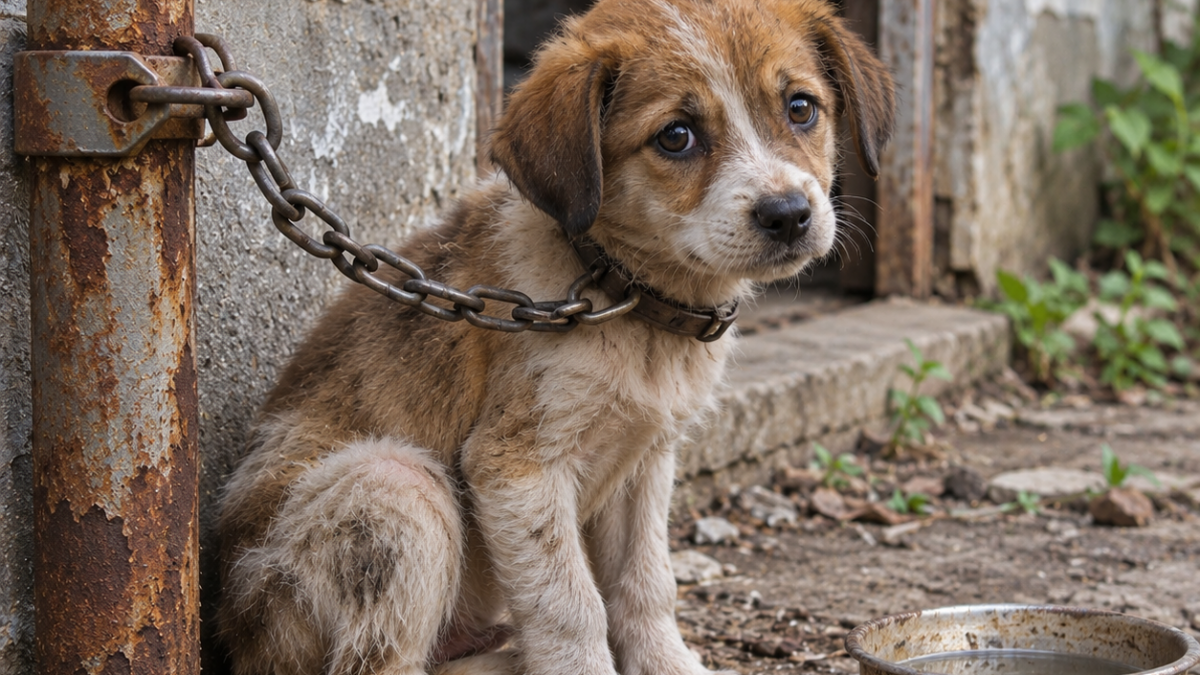
PART 2
Sarah arrived eleven minutes later.
I know because I checked the time three times.
Those eleven minutes felt like an hour.
I spent them sitting on the cold pavement with the puppy, speaking softly whenever his eyes started to close.
“Stay with me, little man.”
His ears would twitch.
“That’s it. You can sleep later. Just stay with me right now.”
I didn’t know whether keeping him awake actually mattered. I only knew I was terrified that if he closed his eyes, he might not open them again.
When Sarah’s faded blue SUV came around the corner, I stood so quickly my legs had gone numb.
She parked half on the curb and jumped out carrying a red medical bag and a pair of heavy wire cutters.
Then she saw him.
Her entire expression changed.
“Oh, no.”
Sarah had been rescuing animals for almost twelve years. I’d seen her remain calm around injured dogs, frightened cats, even an aggressive German shepherd trapped beneath a collapsed shed.
But this stopped her.
She crouched beside me and examined the puppy without touching the wire.
“How long has he been here?”
“I don’t know.”
“Did anybody see who left him?”
“Not that I know of.”
She looked at the wound.
Her jaw tightened.
“This didn’t happen today.”
“That’s what I thought.”
“No.” She shook her head. “This has been rubbing for a while.”
The puppy tried to lift his head when she reached toward him.
Sarah spoke in a voice so gentle it barely sounded like the same woman.
“Hey, sweetheart. We’re going to get you out of here.”
She pulled a small bottle of water from her bag.
“Don’t let him gulp,” she warned me. “Just wet his mouth first.”
I poured some into my palm and held it near his muzzle.
He began licking immediately.
Not drinking.
Licking.
Frantically.
I felt something twist inside my chest.
“Easy,” Sarah said. “A little at a time.”
After a few minutes, she examined the wire again.
“We need to cut the section attached to the gate and transport him with the part around his neck still in place. The vet can remove it safely.”
I nodded.
The cutters made one sharp metallic snap.
The puppy flinched.
I put my hand against his shoulder.
“You’re okay.”
Sarah wrapped him in a clean blanket and carefully lifted him.
He weighed almost nothing.
That was the first thing I noticed.
The second was what happened when she tried to carry him toward the car.
He reached one paw toward me.
Sarah stopped.
We both looked at him.
Then she looked at me.
“I think you’ve been selected.”
Despite everything, I laughed.
It came out shaky.
“Can I ride with him?”
“You’re going to.”
She gave me the keys.
“You drive. I’ll keep an eye on him.”
—
The nearest emergency veterinary clinic was sixteen minutes away.
I made it in twelve.
Sarah didn’t complain.
Every red light felt personal.
Every slow driver seemed to be deliberately blocking us.
I kept checking the rearview mirror.
The puppy lay wrapped in Sarah’s lap. His eyes were half-open.
“Still breathing?” I asked.
“Yes.”
Thirty seconds later:
“Still okay?”
“Yes.”
Another minute passed.
“Sarah?”
“He’s still with us.”
“I know I’m being annoying.”
“You’re being worried.”
There was a difference.
At the clinic, a veterinary technician met us at the door with a stretcher.
“What happened?”
“Wire around the neck,” Sarah said. “Possible dehydration. Malnutrition. Unknown duration.”
The technician looked down.
“Oh, sweetheart.”
They took him through a set of double doors before I could say anything else.
Then the doors swung shut.
And suddenly I had nothing to do.
No puppy to comfort.
No car to drive.
No problem I could fix with my hands.
Just a plastic chair and a waiting room that smelled like disinfectant.
Sarah sat beside me.
“You did the right thing.”
“I should’ve gotten there sooner.”
She looked at me.
“Sooner than what?”
“I don’t know.”
“Exactly.”
I stared at the floor.
“What if he doesn’t make it?”
“Then he won’t die alone at a gate.”
That sentence hit me harder than I expected.
I leaned forward and covered my face.
Sarah rested a hand on my shoulder.
“But,” she continued, “I don’t think that’s where this is going.”
I looked at her.
“You don’t?”
“He tried to move toward you.”
“So?”
“So animals that have completely given up don’t usually waste energy trying to make friends.”
I thought of his tail tapping the concrete once.
Barely.
Maybe she was right.
Maybe there was still something inside him that wanted to fight.
Forty minutes later, a veterinarian came through the doors.
She was a woman in her forties with tired eyes and a navy scrub top. Her name tag said DR. MARTINEZ.
“You brought in the puppy?”
I stood.
“Yes. Is he okay?”
“He’s stable.”
I exhaled so hard I had to grab the back of the chair.
She held up a hand.
“Stable is good, but we’re not finished. He’s severely dehydrated and underweight. The wire caused a circumferential wound around part of his neck. Fortunately, it didn’t damage his airway or any major vessels.”
“Can you remove it?”
“We already did.”
“Was it embedded?”
“Partially.”
I closed my eyes.
Dr. Martinez continued carefully.
“He’ll need wound care, fluids, antibiotics, pain medication, bloodwork, and monitoring. But he’s young. That’s working in his favor.”
Sarah asked, “Any estimate on age?”
“Four months, maybe five.”
Four months.
I stared at her.
Four months old, and somebody had already taught him how cruel the world could be.
“Can I see him?”
“In a little while.”
“Does he have a microchip?”
“We scanned him. Nothing.”
Sarah and I exchanged a look.
Dr. Martinez noticed.
“You should file an animal cruelty report.”
“We will,” Sarah said.
The veterinarian’s expression hardened.
“Take pictures of everything you can. The gate. The wire. The surrounding area. Preserve the cut section of wire. We photographed the wound before and after removal, and I’ll document his condition.”
That was the moment the anger inside me changed.
Until then, it had been hot and useless.
The kind that makes your hands shake.
Now it became something colder.
Focused.
Evidence.
Names.
Dates.
Consequences.
Someone had left that puppy there.
And I wanted to know who.
—
The police officer who took the initial report was named Officer Brennan.
He met Sarah and me back at the abandoned building that evening.
By then, the sun was low.
The spot where the puppy had been lying looked painfully small.
Officer Brennan photographed the gate.
He put the remaining wire into an evidence bag.
“Any witnesses?” he asked.
“Lots of people saw the puppy,” I said. “I don’t know if anyone saw who left him.”
“Nearby cameras?”
I looked around.
The abandoned building had none.
Across the street was a closed laundromat.
Next to that, an auto repair shop.
Sarah pointed.
“That place has cameras.”
The shop was still open.
A stocky man named Luis came to the counter when we entered.
When I told him what happened, his face changed immediately.
“The little brown dog?”
“You saw him?”
“I saw him there this morning.”
My heart jumped.
“Did you see who tied him?”
“No. When I opened around seven, he was already there.”
“How long was he there?”
Luis frowned.
“Wait.”
He looked toward the ceiling.
“Our camera covers the street.”
Officer Brennan stepped forward.
“How far back does your recording system go?”
“About two weeks.”
We all went silent.
Luis understood.
“You want to see last night?”
“Yes,” the officer said.
We crowded into a tiny office behind the service bays.
Luis sat at a computer and opened the security footage.
The image was grainy, but the gate was visible.
He rewound.
Midnight.
Nothing.
11:00 p.m.
Nothing.
10:00.
Empty sidewalk.
Then Sarah pointed.
“Stop.”
Luis froze the screen.
A pickup truck had pulled up beside the curb at 9:43 p.m.
White.
Older model.
One brake light dimmer than the other.
My pulse quickened.
“Play it.”
The truck stopped.
The driver’s door opened.
A man got out.
He was wearing jeans, boots, and a dark hooded sweatshirt.
He walked around to the passenger side, opened the door, and reached inside.
Then he lifted out a puppy.
My stomach turned.
Even in low-resolution footage, I knew him.
The same small body.
The same floppy ears.
The puppy wriggled in the man’s arms.
“Zoom in,” Officer Brennan said.
Luis enlarged the picture.
The man’s face remained partly hidden by the hood.
But the truck’s rear license plate came into view for several seconds.
Not perfectly.
Enough.
Brennan leaned closer.
“Back it up.”
Luis did.
We watched again.
The man carried the puppy to the gate.
Then he bent down.
For nearly two minutes.
When he stood up, the puppy stayed behind.
The man returned to his truck.
And drove away.
Nobody spoke.
The video continued.
The puppy pulled toward the street.
The wire stopped him.
He tried again.
And again.
Then he sat down.
My hands curled into fists.
Luis whispered something in Spanish under his breath.
Sarah looked away.
Officer Brennan wrote the time and partial plate number in his notebook.
“Can you copy this footage?”
Luis nodded.
“Anything you need.”
I stared at the frozen image of the white truck.
“Can you find him?”
Brennan looked at me.
“If the plate is readable enough, maybe.”
“Maybe?”
“Let us work it.”
I stepped closer.
“That puppy could have died.”
“I understand.”
“No, I don’t think you do.”
Sarah touched my arm.
The officer didn’t get angry.
Instead, he lowered his voice.
“I do understand. That’s why I’m taking the wire. That’s why I’m taking the video. That’s why I’m asking you not to post the plate online or try to find this person yourself.”
I didn’t answer.
Brennan held my gaze.
“If we identify him, I want a case that survives court. Not a social media war that gives his attorney something to complain about.”
That made sense.
I hated that it made sense.
“So I do nothing?”
“No. You help the dog recover. You save every medical bill. You write down exactly what you saw while it’s fresh. And if anyone contacts you about this animal, you call me.”
I looked again at the screen.
The man was frozen halfway toward his truck.
Walking away.
As though what he’d done meant nothing.
“All right,” I said.
But inside, I made another promise.
If there was a legal way to make the person responsible answer for this, I was going to see it through.
—
I went back to the veterinary clinic that night.
The puppy was sleeping when I entered the treatment area.
A bandage covered his neck.
An IV line ran into one front leg.
He looked even smaller on the white blanket.
Dr. Martinez warned me not to excite him, so I sat beside the kennel and said nothing.
A few seconds passed.
Then his nose moved.
His eyes opened.
He saw me.
His tail tapped the blanket.
Once.
Twice.
I smiled.
“Hey, buddy.”
His tail moved faster.
Not much.
But enough.
“You scared me today.”
He tried to lift his head.
“No, no. Stay down.”
I slipped my fingers through the bars.
He sniffed them.
Then he rested his chin against my hand.
That was it.
I was finished.
Whatever reasonable distance I might have maintained disappeared in that moment.
I already cared about him.
Maybe too much.
Sarah walked up behind me.
“I’ve seen that face before.”
“What face?”
“The ‘I guess I own a dog now’ face.”
“I don’t own him.”
She raised an eyebrow.
“I’ve known him for six hours.”
“Sure.”
“He needs a foster.”
“Sure.”
“I might foster him.”
“Absolutely.”
I turned around.
“Stop saying it like that.”
“Like what?”
“Like you’ve already decided.”
Sarah smiled.
“I haven’t decided anything.”
Then she looked at the puppy.
“He has.”
—
The next morning, Officer Brennan called.
“We got a plate.”
I sat straight up in bed.
“You found the truck?”
“We identified the registered owner.”
“Who?”
“I can’t give you all the case details yet.”
My excitement collapsed.
“Then why did you call?”
“Because I need to ask you something. Did the puppy have anything with him besides the wire? Collar? Tag? Blanket?”
“No.”
“Was there anything written on the gate?”
“No.”
“Any chance you’d seen the truck before?”
“Not that I remember.”
“All right.”
I heard papers moving.
“What’s happening?”
“We’re following up.”
“That’s all you can tell me?”
“For now.”
I clenched the phone.
Then Brennan added, “The registered address is local.”
That was enough to send a chill through me.
“How local?”
“Don’t go looking.”
“I didn’t say I would.”
“You got very quiet.”
“I’m thinking.”
“Think somewhere far away from that address.”
Despite myself, I almost smiled.
“Fine.”
“I’m serious.”
“So am I.”
Before hanging up, he said, “Your vet documentation helped. Keep everything.”
That afternoon I brought a notebook to the clinic.
On the first page, I wrote:
Found puppy — 4:18 p.m.
Location.
Weather.
Condition.
People present.
Time Sarah arrived.
Time we reached the clinic.
Everything I could remember.
I even wrote down the exact words I’d said to him.
You’re not staying here tonight.
It seemed silly.
But I wanted a record.
Not because I was planning to become some amateur detective.
Because somebody had treated his life like trash.
I wanted every detail to say the opposite.
He mattered.
—
By the third day, he was drinking normally.
By the fourth, he was eating small meals without getting sick.
By the fifth, he stood on his own.
Dr. Martinez called me into the recovery room.
“Want to see something?”
The puppy was standing on a rubber mat.
His legs trembled.
Sarah was crouched three feet away.
“Come on,” she said.
The puppy looked at her.
Then he saw me.
He took one shaky step.
Then another.
Then three more.
Straight toward me.
I dropped to my knees.
He stumbled into my chest.
I caught him carefully.
“You did it.”
His tail went wild.
Sarah laughed.
“Oh, now he’s suddenly got energy.”
I pressed my forehead gently against his.
“You stubborn little thing.”
Dr. Martinez smiled.
“He’s doing much better.”
“When can he leave?”
“Possibly tomorrow, if his bloodwork continues improving.”
Sarah crossed her arms.
“And where might he be going tomorrow?”
I sighed.
“My house.”
“There it is.”
“Temporarily.”
“Of course.”
“For fostering.”
“Obviously.”
I looked down at the puppy.
He was licking my wrist.
“Stop helping her.”
His tail wagged harder.
We needed a name for his medical records.
Sarah suggested Lucky.
I rejected it immediately.
“Too obvious.”
“Chance?”
“No.”
“Rusty?”
I looked at the bandage around his neck.
“Absolutely not.”
Sarah laughed.
“What do you want to call him?”
I watched him struggle to climb into my lap.
For some reason, one name came to me.
“Milo.”
He looked up.
His ears lifted.
Sarah pointed.
“He answered.”
“He did not.”
“Milo.”
His head tilted.
She grinned.
“Congratulations. You have a Milo.”
And that was how he got his name.
—
When I brought Milo home, he was afraid of doorways.
I discovered it almost immediately.
He walked across the front yard slowly, sniffing every patch of grass as though grass itself were a miracle.
Then we reached my front door.
He stopped.
I stepped inside.
“Come on.”
He backed away.
I crouched.
“It’s okay.”
He stared into the house.
His entire body became tense.
I didn’t pull him.
Didn’t pick him up.
I just sat on the floor inside the doorway.
After a minute, he moved one paw forward.
Then another.
He stretched his neck and sniffed the threshold.
Finally he stepped across.
I smiled.
“Welcome home.”
He immediately peed on the rug.
I stared at him.
He stared at me.
Then his tail wagged.
“Okay. We have some things to discuss.”
That night I put a dog bed beside my couch.
Milo refused to use it.
He slept with his chin on my foot instead.
Every time I moved, he woke up.
Every sound from outside made him flinch.
At two in the morning, a motorcycle passed the house.
Milo shot upright and crawled beneath the coffee table.
I lay on the floor nearby.
“You’re safe.”
He trembled.
I kept talking.
“Nobody’s tying you anywhere. Nobody’s leaving you outside.”
Eventually, he came out.
He rested against my shoulder.
And for the first time since I’d found him, I heard him sigh deeply before falling asleep.
I barely slept at all.
But I didn’t mind.
—
A week after the rescue, Officer Brennan called again.
This time his voice was different.
“We found the man from the video.”
I stood in my kitchen, gripping the counter.
“Who is he?”
“Name’s Derek Cole.”
The name meant nothing to me.
“Did he admit it?”
“Not exactly.”
“What does that mean?”
“It means he gave us a story.”
“What story?”
Brennan hesitated.
“He says the puppy wasn’t his.”
I laughed once.
There was nothing funny in it.
“Then why was he carrying him?”
“He claims he found the dog wandering near his property, couldn’t keep him, and left him somewhere he thought people would see him.”
“With wire around his neck?”
“He says the wire was temporary.”
I felt my face get hot.
“Temporary?”
“I know.”
“No, say that again. I want to make sure I heard you.”
“I’m telling you what he claimed, not what I believe.”
“He tied a four-month-old puppy to an abandoned building with rusty wire and drove away.”
“Yes.”
“And that’s his excuse?”
“At the moment.”
I paced across the kitchen.
Milo followed me.
“Charge him.”
“That’s the goal.”
“The goal?”
“We need to establish more than abandonment. The medical evidence helps with neglect and cruelty. The video helps. But there’s something else.”
I stopped.
“What?”
“We received another report after asking animal control to check his property.”
My stomach tightened.
“What did they find?”
“I can’t discuss an active investigation in detail.”
“Brennan.”
His voice softened.
“I can tell you this much. Milo may not be the only animal involved.”
I looked down.
Milo was sitting beside my leg.
His head was tilted.
Suddenly the line Sarah had spoken at the gate came back to me.
This didn’t happen today.
But now I wondered something worse.
Maybe it hadn’t begun with Milo either.
“What do you need from me?”
“Right now? Nothing.”
“That’s not enough.”
“It has to be.”
I closed my eyes.
“Are there other dogs?”
A pause.
“Yes.”
That one word changed everything.
—
The next three days were torture.
I followed Brennan’s instructions.
I didn’t search Derek Cole’s address.
I didn’t contact him.
I didn’t post his name online.
But I did research public records.
That was how I learned he ran a small backyard breeding business under the name Cole Family Kennels.
The website looked harmless.
Photos of puppies sitting in baskets.
Blue ribbons.
Little captions:
Raised with love.
Family socialized.
Healthy, happy pups.
I stared at those words until I felt sick.
There were reviews too.
Most were positive.
But buried among them were several complaints.
Puppy sick within days.
Wouldn’t provide vet records.
Stopped responding.
Refund refused.
One woman wrote that the puppy she’d purchased had parasites and was terrified of men.
Another said her dog had scars beneath its fur.
I took screenshots.
Then I called Brennan.
“I’m not contacting anybody. I’m not posting anything. But you need to look at the reviews for Cole Family Kennels.”
“We are.”
“You already knew?”
“Yes.”
“So something is happening.”
“Yes.”
“What?”
“I still can’t tell you.”
I exhaled through my nose.
“You know you’re becoming my least favorite person.”
“I’ll survive.”
“Are the dogs safe?”
There was silence.
That frightened me more than anything.
“Brennan?”
“We’re working on it.”
I looked at Milo.
He was asleep in a patch of sunlight.
“Work faster.”
—
Two mornings later, my phone rang at 6:12.
Sarah.
I answered immediately.
“What’s wrong?”
“Turn on Channel Eight.”
I grabbed the remote.
Local news filled the screen.
A reporter stood outside a rural property surrounded by police vehicles and animal control vans.
Behind her was a white pickup truck.
One brake light darker than the other.
My heart began pounding.
The headline at the bottom of the screen read:
MULTIPLE ANIMALS REMOVED FROM COUNTY PROPERTY
I turned up the volume.
Authorities had executed a search warrant early that morning after an investigation into suspected animal neglect.
Seventeen dogs had been removed.
Seventeen.
Several were puppies.
Three required immediate veterinary care.
The property owner had been questioned.
Charges were pending.
I sank onto the couch.
Milo climbed beside me.
His eyes followed the movement on the television.
Sarah was still on the phone.
“They got them.”
I couldn’t speak.
“Did you hear me?” she asked.
“Yeah.”
“They got them out.”
I covered my mouth.
For days, I’d imagined other dogs trapped somewhere.
Now they were leaving.
Not all healthy.
Not all safe yet.
But leaving.
Milo nudged my arm.
I pulled him against me.
“You did that,” I whispered.
Sarah heard.
“No. You did.”
“No. Milo survived.”
“And you stopped.”
I looked at the television again.
Animal control workers carried crate after crate from the property.
One contained a frightened black dog.
Another held two puppies pressed against each other.
I thought about everyone who had walked past Milo.
Then I thought about how close I had come to doing the same.
“What happens now?”
Sarah sighed.
“Now comes the hard part.”
—
The hard part was evidence.
The hard part was veterinary reports.
The hard part was proving ownership, documenting conditions, tracking sales, comparing records, interviewing former customers, and waiting while lawyers argued over words that seemed painfully simple to me.
Cruelty.
Neglect.
Abandonment.
But criminal cases weren’t built on outrage.
They were built on proof.
Officer Brennan explained that to me repeatedly.
Derek was arrested several days after the search.
The local news showed him walking from a police car into the courthouse.
For the first time, I saw his face clearly.
He looked ordinary.
That bothered me more than I expected.
I had imagined someone visibly monstrous.
Instead, he looked like someone you’d pass in a grocery store without noticing.
A man in jeans.
Short hair.
A tired expression.
Someone who could stand behind you in line buying milk.
Sarah watched the clip with me.
“You expected horns?”
“Kind of.”
“Most cruelty doesn’t come with horns.”
I looked at Milo.
“No. I guess it doesn’t.”
Derek’s attorney released a statement saying the accusations had been exaggerated and that the animals were “working dogs temporarily housed in rustic conditions.”
Rustic conditions.
I read those words twice.
Then a third time.
Sarah saw my face.
“Don’t.”
“Don’t what?”
“Write a comment.”
“I wasn’t.”
“You absolutely were.”
I put my phone down.
“He called wire around Milo’s neck rustic?”
“His lawyer didn’t mention Milo.”
“Exactly.”
I stood.
“This is what they do, right? They turn everything into language.”
“That’s part of legal defense.”
“He left him to die.”
“And that’s why you don’t need to win an argument on Facebook. You need the evidence to win in court.”
I hated it.
But again, she was right.
So I waited.
And I took care of Milo.
—
His recovery wasn’t a straight line.
Physically, he improved quickly.
Emotionally, some wounds took longer.
He panicked when I clipped a leash to his collar for the first time.
The instant he felt tension around his neck, he threw himself backward.
I immediately released it.
“Okay. No collar.”
Milo crouched against the floor.
I sat several feet away.
“I’m sorry.”
He stared at me.
I hated seeing fear on his face because of something I’d done, even accidentally.
We switched to a soft harness.
For three days, I left it beside his food bowl.
Then near his bed.
Then I held it while giving him treats.
Eventually he let me put it on.
The first time we walked outside with it, he took five steps and froze.
I waited.
He looked back at the house.
Then at me.
“Your choice.”
He sniffed the grass.
Took another step.
Then another.
By the end of the week, he was walking to the corner.
By the end of the month, he was trying to chase leaves.
The day he barked for the first time, I nearly dropped a plate.
A delivery driver knocked.
Milo jumped up.
“Woof!”
He froze.
I froze.
Then he barked again.
Louder.
I stared at him.
“Was that you?”
His tail wagged.
He barked a third time.
I laughed so hard I had to sit down.
“That’s your voice!”
Milo ran in a circle.
I called Sarah.
“He barked.”
“What?”
“Milo barked.”
There was a pause.
Then she laughed too.
“Congratulations. In six months you’re going to call me asking how to make him stop.”
“I don’t care.”
“You will.”
“I won’t.”
I was wrong.
But that came later.
—
About six weeks after the rescue, I received a letter from the county prosecutor’s office asking whether I would be willing to provide a statement.
I read it three times.
Then I called the number.
The prosecutor assigned to the case was a woman named Naomi Price.
We met in a small conference room at the courthouse.
She had a thick file in front of her.
Milo’s name was written on one tab.
That affected me more than I expected.
Not “dog.”
Not “animal.”
Milo.
Naomi opened the file.
“I want you to understand something before we start.”
“Okay.”
“This case is bigger than the puppy you found.”
“I know about the seventeen dogs.”
“Good. But Milo matters because the video creates a clear timeline. We can show a specific person transporting him, leaving him, and driving away.”
“Will he go to jail?”
She didn’t answer immediately.
“That depends on the charges, what we can prove, his prior history, and ultimately the court.”
“So maybe.”
“Yes.”
I looked at the folder.
“I want him to understand what he did.”
Naomi leaned back.
“Courts can’t guarantee remorse.”
“Then what can they guarantee?”
“Consequences.”
That word stayed with me.
Consequences.
Maybe that was enough.
She asked me to describe finding Milo.
I told the story.
The gate.
The silence.
The wire.
The way he tried to move toward me and collapsed.
When I reached that part, my voice broke.
Naomi waited.
I apologized.
“Don’t,” she said. “Take your time.”
I continued.
When I finished, she closed the folder.
“One more question.”
“What?”
“If this goes to trial, are you willing to testify?”
I thought of Derek walking away from the gate.
I thought of the seventeen crates coming out of his property.
“Yes.”
“Even if his attorney challenges your memory?”
“Yes.”
“Even if this becomes public?”
“Yes.”
She nodded.
“All right.”
I stood to leave.
Then I turned back.
“Can I bring pictures of Milo now?”
Naomi smiled slightly.
“If they’re relevant to his recovery, yes.”
“They’re relevant to me.”
“That isn’t quite the same legal standard.”
“I have one where he’s wearing a sweater.”
She laughed.
“Save that one for me.”
—
The case spread through town.
Not because of anything I posted.
Because former customers began coming forward.
One man said he’d purchased a puppy from Derek and spent nearly $4,000 treating infections during the first month.
A family said their dog arrived so frightened it hid under furniture for weeks.
Another woman had saved text messages in which Derek told her a puppy’s vomiting was “normal adjustment.”
Animal control records showed prior complaints.
None had been strong enough alone to result in major action.
Together, they formed a pattern.
And then investigators found financial records.
Derek had sold far more puppies than his small property should have been able to produce responsibly.
Some animals were kept in outdoor runs with inadequate shelter.
Several had untreated skin conditions.
One female dog was severely underweight.
A veterinarian believed she’d been bred repeatedly.
When Sarah told me that, I had to step outside.
Milo followed.
I sat on the back steps.
He leaned against my leg.
“Your mother might have been there,” I whispered.
I didn’t know whether that was true.
No one did.
But Milo had come from somewhere.
Someone had produced him.
Someone had handled him before Derek carried him to the gate.
I wondered whether any of the rescued dogs had watched him disappear.
I wondered if they expected the same thing to happen to them.
Milo rested his chin on my knee.
“Not anymore.”
He looked up.
I scratched behind his ear.
“None of you are going back.”
—
That wasn’t entirely my decision.
Legally, the seized animals remained evidence while the case moved forward.
That meant rescues had to house them.
Vet bills climbed.
Food costs climbed.
Sarah’s organization became involved.
So did two neighboring shelters.
I started volunteering.
At first, I told myself it was only because of Milo.
Then I met Daisy.
Daisy was a tan female dog who had come from Derek’s property.
She was older than Milo and terrified of human hands.
The first time I entered her kennel, she pressed herself into the farthest corner.
I sat down without approaching.
For twenty minutes, nothing happened.
Then she sniffed.
Another ten minutes.
One step.
Then another.
She never reached me that day.
The next day, she came closer.
On the fifth day, she took a piece of chicken from my hand.
On the eighth, she let me touch her shoulder.
I cried in the parking lot afterward.
Not because it was sad.
Because trust that small felt enormous.
Sarah found me sitting in my car.
“You okay?”
“Yeah.”
“You’re crying.”
“Daisy let me pet her.”
Sarah nodded as though that explained everything.
Because to her, it did.
“Be careful.”
“Why?”
“You keep doing this and we’ll put you on the volunteer schedule permanently.”
“You already did.”
She smiled.
“True.”
—
Then came the phone call I had been dreading.
Naomi Price.
“We may have a plea offer.”
I felt my chest tighten.
“What kind?”
She explained the proposed agreement.
Derek would plead guilty to multiple animal cruelty and neglect charges.
He would surrender ownership of all seized animals.
He would be prohibited from owning, breeding, selling, or residing with animals for a court-defined period.
He would pay restitution toward veterinary and care expenses.
There would be probation.
Fines.
And depending on the judge, possible jail time.
“Possible?”
“Yes.”
I stood in my kitchen.
“That doesn’t sound like enough.”
“I understand.”
“Seventeen dogs.”
“Yes.”
“Milo had wire cutting into his neck.”
“I know.”
“He left him beside a road.”
“I know.”
“And he gets to sign papers?”
Naomi was silent for a moment.
Then she said, “A guilty plea is not nothing.”
“It feels like nothing.”
“It gives us certainty. He cannot later claim he was acquitted. The animals are surrendered immediately. They become eligible for adoption instead of remaining in legal limbo. Restrictions on animal ownership become enforceable.”
I looked through the window.
Milo was digging a hole beside my fence.
I had told him not to do that at least thirty times.
He continued as though it were his career.
Naomi continued.
“A trial gives us a chance at a harsher outcome. It also gives us risk.”
“What risk?”
“Evidence can be challenged. Witnesses can become unavailable. Charges can be reduced. A jury can surprise you. And every month the case continues, those dogs remain evidence instead of simply becoming dogs who can go home.”
That silenced me.
Daisy.
The black dog from the news.
The puppies pressed together in the crate.
“How soon could they be adopted?”
“If the surrender is signed, very soon.”
I closed my eyes.
Suddenly revenge looked different.
I had imagined Derek standing in court and hearing every ugly detail.
I had imagined a judge condemning him.
I had imagined him finally being forced to look at what he’d done.
But what did Daisy care about that?
What did seventeen dogs care about my anger?
They needed homes.
They needed beds.
They needed names.
They needed lives.
“What would you do?” I asked.
“I can’t make that decision for you.”
“That wasn’t my question.”
Naomi exhaled.
“If my priority were maximizing the animals’ chance of moving forward quickly, I would take a strong plea with enforceable restrictions and restitution.”
I looked at Milo.
He had now put his entire head inside the hole.
I almost laughed.
“Then do it.”
“The final decision belongs to the prosecution, but victim input matters.”
“Tell them I support it.”
“All right.”
“But Naomi?”
“Yes?”
“Don’t make it easy.”
Her answer came immediately.
“I wasn’t planning to.”
—
Derek rejected the first plea offer.
That surprised everyone.
His attorney claimed the animal ownership restrictions were “excessive.”
When Naomi told me, I laughed.
Not because it was funny.
Because the arrogance was almost unbelievable.
“He thinks that’s excessive?”
“Apparently.”
“He tied Milo to a gate.”
“Yes.”
“He kept seventeen dogs in those conditions.”
“Yes.”
“And being told not to own animals is where he draws the line?”
“That’s what negotiations are for.”
“No.”
I stood.
“That’s what consequences are for.”
The case moved toward trial.
Derek’s lawyer began challenging the search warrant.
Then the medical evidence.
Then the interpretation of the security video.
He argued that Derek had not intended to harm Milo.
He claimed leaving the puppy in a visible public area showed an intention for him to be found.
I wanted to scream.
Instead, I sent Naomi every document she requested.
The original photographs.
My written timeline.
Sarah’s statement.
Luis’s camera footage.
Veterinary invoices.
Dr. Martinez’s medical report.
One line in that report became particularly important:
The placement and tightness of the wire, combined with the puppy’s inability to access food or water, created a substantial and foreseeable risk of serious injury or death.
Foreseeable.
In other words:
You didn’t have to admit you wanted him to die.
You only had to know what any reasonable person should know.
A puppy tied by the neck without food or water could die.
That was enough.
—
Three months after I found Milo, I saw Derek in person for the first time.
Not on a screen.
Not in a photograph.
In a courthouse hallway.
I was there for a pretrial hearing.
He came around the corner with his attorney.
I recognized him immediately.
My body reacted before my mind did.
My shoulders tightened.
My hands went cold.
He looked at me.
Then at Sarah, who stood beside me.
Then back at me.
For half a second, neither of us moved.
I wondered whether he knew who I was.
Then his attorney leaned toward him and whispered something.
His expression changed.
He knew.
He walked past.
No apology.
No embarrassment.
Nothing.
I turned.
“Derek.”
Sarah whispered, “Don’t.”
But he’d already stopped.
His attorney turned first.
Then Derek.
I had imagined this moment a hundred times.
In every version, I delivered some perfect speech.
Something devastating.
Something that would force him to feel exactly what Milo had felt.
Instead, only one sentence came out.
“He survived.”
Derek stared at me.
I continued.
“The puppy you left at the gate. He survived.”
His lawyer stepped between us.
“We’re not discussing this.”
I wasn’t talking to the lawyer.
Derek’s eyes shifted away.
That tiny movement told me more than words would have.
I smiled.
Not because I was happy.
Because suddenly I understood something.
He had expected Milo to disappear.
Maybe die.
Maybe get picked up and forgotten.
He had never expected that little dog to become the center of a case that pulled apart everything he had been doing.
“He has a name now,” I said.
Sarah took my arm.
“Come on.”
I let her guide me away.
Behind us, the attorney said something sharply to Derek.
I didn’t hear it.
I didn’t need to.
For the first time, I didn’t feel powerless.
—
Milo’s neck healed with a thin scar beneath his fur.
Most people couldn’t see it.
I could.
When I brushed him, my fingers sometimes passed over the slightly uneven skin.
Every time, he looked back at me as though asking why I’d stopped.
“Nothing,” I’d say.
Then I’d continue.
He gained weight.
Too much, according to Dr. Martinez.
“This is your fault,” I told Sarah after the vet appointment.
“My fault?”
“You give him treats.”
“You give him cheeseburger pieces.”
“Very small pieces.”
“Milo is twenty-seven pounds.”
“He was starving when I found him.”
“That was four months ago.”
Milo sat between us looking pleased with himself.
Sarah pointed at him.
“See? He’s manipulating you.”
“He’s traumatized.”
“He just stole half my sandwich.”
“He’s rebuilding confidence.”
Sarah stared at me.
“You’re hopeless.”
Milo burped.
I laughed.
The ordinary moments became my favorite part of his recovery.
Not dramatic rescues.
Not courtroom calls.
Just normal life.
Milo asleep upside down on the couch.
Milo barking at his own reflection.
Milo carrying one shoe into another room for reasons known only to him.
Milo discovering snow for the first time and immediately deciding it was edible.
Milo learning that the refrigerator door sometimes produced cheese.
Milo sitting beside me whenever I was sad.
I had thought I rescued him from the gate.
But slowly, I began to understand that rescue wasn’t one moment.
It was hundreds of ordinary moments afterward.
Moments that taught him the world could be safe.
—
The trial date was set for early spring.
Two weeks before jury selection, Derek changed his plea.
Naomi called me at work.
“He accepted.”
“All of it?”
“The revised agreement, yes.”
“What changed?”
“His motion to suppress the search evidence was denied yesterday.”
I smiled.
“So now he wants a deal.”
“That’s one interpretation.”
“What does he plead guilty to?”
She listed the counts.
Animal cruelty.
Animal neglect.
Abandonment.
Violations connected to the conditions of multiple animals.
He would surrender all animals permanently.
He would be barred from owning or breeding animals for years, subject to the judge’s final order.
He would owe restitution.
He would be subject to inspections related to compliance.
And Naomi would argue for incarceration at sentencing.
I sat very still.
“So he finally admits it.”
“He’ll enter a guilty plea in open court.”
“Can I be there?”
“Yes.”
“Can I speak?”
“At sentencing, you can submit a victim impact statement. The judge may allow you to read it.”
I looked toward the floor.
Milo was lying under my desk.
He came to work with me occasionally now.
My boss had stopped pretending this was temporary.
“I want to read it.”
“Then write it carefully.”
I knew immediately what I wanted to say.
Not about revenge.
Not really.
About a puppy who had been too weak to stand.
—
The night before sentencing, I sat at my kitchen table with six versions of my statement.
Every one sounded wrong.
Too angry.
Too sentimental.
Too polished.
Milo lay beneath the table.
Finally, I tore up the last version.
Then I wrote what I actually remembered.
The silence.
That was the part people didn’t understand.
When I found Milo, he wasn’t screaming.
He wasn’t fighting.
He wasn’t making some dramatic plea for help.
He was quiet.
Almost invisible.
Cruelty had reduced him to something people could walk past.
That was what frightened me.
I began again.
The next morning, Sarah drove me to court.
“You okay?”
“No.”
“Good.”
I looked at her.
“Good?”
“If you told me you were relaxed, I’d be worried.”
I held the folded pages tightly.
“What if I mess it up?”
“You won’t.”
“What if I cry?”
“You probably will.”
“That isn’t encouraging.”
“You’re not auditioning for television. You’re telling the truth.”
We entered the courthouse.
Luis from the repair shop was there.
Dr. Martinez was there.
Two rescue volunteers were there.
One of the families who had purchased a sick puppy from Derek was there.
We filled almost an entire row.
Derek entered with his attorney.
He looked smaller than I remembered.
Not physically.
Somehow just smaller.
When the judge reviewed the plea, she asked him several questions.
Did he understand the rights he was giving up?
Yes.
Was he entering the plea voluntarily?
Yes.
Did he understand the charges?
Yes.
Then came the question I had been waiting for.
“How do you plead?”
Derek hesitated.
“Guilty.”
The word was quiet.
But I heard it.
Every person in our row heard it.
Sarah reached over and squeezed my hand.
Guilty.
Not misunderstood.
Not exaggerated.
Not rustic conditions.
Guilty.
—
Several people spoke before me.
A veterinarian described the condition of the rescued dogs.
An animal control officer described sanitation problems on the property.
A woman named Heather spoke about buying a puppy that became critically ill forty-eight hours later.
Then Naomi said my name.
My legs felt weak when I stood.
I walked to the front.
The judge looked at me.
“You may begin.”
I unfolded the paper.
For a second, the words blurred.
Then I started.
“The first thing I remember about Milo is how quiet he was.”
The courtroom disappeared.
I was back at the gate.
“He was a puppy, but he didn’t bark when people walked by. He didn’t run toward anyone. He sat with his head down because a piece of rusty wire had been wrapped around his neck and attached to an abandoned gate.”
I heard someone behind me sniff.
I continued.
“When I reached toward him, he tried to come to me. He couldn’t. The wire stopped him.”
My voice tightened.
“I want the court to understand what that looks like when you’re standing three feet away. It doesn’t look like a legal argument. It looks like a baby animal trying to trust someone after a human being has already taught him not to.”
Derek was looking down.
I kept going.
“There was no food. No water. No note. No call to a shelter. No attempt to ask for help.”
I looked toward him.
“There was only a puppy, a wire, and a person driving away.”
His attorney shifted.
I returned my eyes to the judge.
“Milo survived because people eventually helped him. But survival should not erase what happened to him.”
Then I told the judge about the first time he walked.
The first time he barked.
His fear of collars.
The harness.
The scar.
The ordinary things.
“I’ve heard people describe animal cases as though animals simply move on because they can’t explain what happened. Milo can’t tell this court where he was born. He can’t tell us what happened before that gate. But he can tell me when he’s afraid. He can tell me when he feels safe. He can tell me who he trusts.”
My hands were shaking.
I didn’t hide it.
“The person who left him there probably thought he was getting rid of a problem.”
I paused.
“But Milo was never the problem.”
For the first time, Derek looked up.
I met his eyes.
“He was evidence of one.”
The courtroom was completely silent.
“The search that followed his abandonment helped remove seventeen animals from conditions they should never have been living in.”
I turned back to the judge.
“I don’t know what punishment makes that right. Maybe nothing can make it right. But I am asking the court for one thing above everything else.”
I lowered the paper.
“Please make sure he never gets the chance to do it again.”
Then I sat down.
Sarah had tears running down her face.
“So much for me being the emotional one,” I whispered.
“Shut up.”
I laughed quietly through my own tears.
—
Derek’s attorney asked for leniency.
He described financial pressure.
Business difficulties.
Stress.
Poor judgment.
He said Derek had become overwhelmed by the number of animals under his care.
The judge listened.
Then she asked a question.
“If he was overwhelmed, why did he continue selling puppies?”
His attorney paused.
“He was attempting to resolve his financial difficulties.”
“By producing additional animals?”
No answer came quickly.
The judge looked through the file.
Then she addressed Derek.
“You had alternatives.”
Her voice was calm.
That made it stronger.
“You could have contacted animal control. You could have contacted a shelter. You could have surrendered animals. You could have stopped breeding.”
She paused.
“You chose not to.”
Derek stared forward.
The judge continued.
“And in the incident involving the puppy now known as Milo, you transported an animal to an abandoned property, restrained him by the neck using wire, provided no food or water, and left.”
Hearing it stated that plainly made my skin prickle.
“You argue through counsel that you expected someone to find him. That does not reduce the cruelty of the act. It emphasizes the irresponsibility of it.”
Then she imposed the sentence.
There was jail time.
Not forever.
Not even close.
But real jail time.
There was supervised probation.
Restitution.
Fines and court costs.
A prohibition on owning, breeding, selling, or caring for animals for the full period authorized under the agreement and applicable law.
Compliance checks.
And permanent surrender of the seized animals.
When the judge finished, I didn’t feel triumphant.
Not immediately.
I felt empty.
Months of anger had been aimed at this moment.
Now the moment had arrived, and the world had not changed shape.
Milo’s scar didn’t disappear.
The dogs didn’t suddenly forget fear.
Nothing became undone.
Then Naomi walked toward us.
“The surrender order is effective.”
Sarah’s eyes widened.
“Today?”
“Today.”
That was when I understood.
Daisy could be adopted.
The puppies could go home.
The seventeen animals were no longer evidence belonging to a case.
They were free.
That was the revenge I hadn’t understood I wanted.
The man who had treated them like inventory had lost the right to possess them.
The puppy he’d thrown away had helped expose him.
And now the animals he’d profited from were going to become somebody’s family.
—
The rescue posted adoption announcements three days later.
Applications poured in.
Sarah made everyone go through the same screening process.
“No exceptions,” she said.
A man complained.
“I have a fenced yard.”
“Wonderful.”
“I’ve owned dogs my entire life.”
“Wonderful.”
“So why do I need a home check?”
Sarah smiled.
“Because I’ve heard ‘I’ve owned dogs my entire life’ from people I wouldn’t trust with a houseplant.”
I nearly choked on my coffee.
Daisy received twenty-three applications.
We narrowed them down.
Then a quiet retired teacher named Evelyn came to meet her.
She didn’t walk into the kennel and reach for Daisy.
She sat on the floor.
Exactly as I had.
Daisy stayed back.
Evelyn waited.
Ten minutes.
Twenty.
Then Daisy walked forward and smelled her hand.
Evelyn didn’t move.
Daisy leaned closer.
Then, very carefully, rested her head against the woman’s knee.
Sarah looked at me.
I looked at Sarah.
We both knew.
Evelyn began crying.
“I’m sorry.”
Sarah handed her a tissue.
“Don’t apologize.”
“I wasn’t expecting that.”
I smiled.
“Neither was Daisy.”
The adoption became official the following week.
I helped load Daisy’s bed into Evelyn’s car.
Before they left, Daisy came over to me.
I knelt.
“You’re going home.”
She licked my chin.
Then walked toward Evelyn without looking back.
I thought that would hurt.
Instead, it felt perfect.
She didn’t need to look back.
There was finally something safe ahead of her.
—
One by one, the others left too.
The black dog from the television went to a family with two teenagers.
The two puppies who had been pressed together inside the crate were adopted by neighboring families who promised regular playdates.
An older female went to a couple who had recently lost their fourteen-year-old dog.
A shy male with one white paw became inseparable from a six-year-old girl.
Every adoption photo felt like another door closing on Derek’s old operation.
Not dramatically.
Quietly.
Permanently.
Beds instead of dirty runs.
Names instead of inventory numbers.
Veterinary appointments.
Toys.
Birthday pictures.
People arguing about whether dogs should be allowed on couches and then allowing them on couches anyway.
Normal life.
That became the victory.
—
There was one thing left unresolved.
Milo.
Technically, I’d been his foster parent.
For months.
Everyone found this hilarious except me.
Sarah arrived at my house one Saturday carrying a folder.
“What?”
“Paperwork.”
“What paperwork?”
She sat at the table.
“Transfer and adoption.”
I stared at her.
“I thought that already happened.”
“No. The legal surrender had to clear first.”
“Oh.”
She opened the folder.
“Now we can finalize.”
I suddenly felt nervous.
“Okay.”
Sarah looked around.
Milo was asleep on the couch with all four paws in the air.
“You can still say no.”
I stared at her.
She started laughing.
“Sorry. I couldn’t finish that with a straight face.”
“Give me the pen.”
“You should review the terms.”
“Sarah.”
She slid it over.
I signed.
She signed as the rescue representative.
Then she held out her hand.
“Congratulations.”
I shook it.
“On what?”
“You officially adopted Milo.”
I looked toward the couch.
Milo opened one eye.
That was all.
Months of veterinary visits.
Police reports.
Court hearings.
Rescue shifts.
Fear.
Anger.
And the big official moment ended with him barely waking up.
I walked over.
“Hey.”
His tail thumped once.
“You’re mine.”
Another thump.
“I mean legally.”
He yawned.
“This is important.”
Milo rolled onto his side.
Sarah called from the kitchen.
“He’s overwhelmed.”
“Clearly.”
I sat beside him.
He moved closer until his head rested in my lap.
I ran my fingers gently beneath his collar—his soft, loose collar that he could now wear without fear.
Under the fur was the scar.
I touched it for one second.
Then I let it go.
—
I thought the story ended there.
It didn’t.
About eight months after I first saw Milo beside that gate, I received a message from a number I didn’t recognize.
It read:
Are you the person who found the puppy from the Cole case?
I almost deleted it.
Then another message arrived.
My name is Amanda. I think I owned his mother.
I stared at the screen.
My heartbeat changed.
I called Sarah before responding.
“Is this a scam?”
“Could be.”
“What do I do?”
“Ask for proof without giving her information first.”
So I replied:
What makes you think that?
Amanda sent photographs.
The first showed a female dog with brown fur, a white patch on her chest, and the same oddly folded left ear Milo had.
The second showed that dog nursing six tiny puppies.
One had a white mark beneath his chin.
Just like Milo.
The photo was dated months before I found him.
My hands began to shake.
I called Amanda.
She answered immediately.
“Hello?”
“This is about Milo.”
Her voice cracked.
“Oh my God.”
We talked for nearly an hour.
Amanda had owned a dog named Rosie.
She wasn’t a breeder.
She’d fallen on hard times after losing her job and had temporarily given Rosie to someone she believed was running a legitimate foster-and-rehoming network.
That person had connections to Derek.
Amanda later tried to get Rosie back.
She was told Rosie had been rehomed.
Then communication stopped.
When the Cole case made the news, Amanda saw one of the seized dogs in the background of a photograph.
Rosie.
She contacted authorities immediately.
Records eventually confirmed enough of her story that Rosie was returned to her after the court surrender.
But Amanda never knew what had happened to the litter Rosie had delivered while away from her.
Until she saw a photograph of Milo.
“Could I meet him?” she asked.
I didn’t answer immediately.
Not because I didn’t want to.
Because suddenly I felt protective.
“What exactly are you asking?”
“Oh—no. I don’t want to take him.”
Her answer came fast.
“I know he’s yours. I just want to see him. If that’s okay.”
I looked down.
Milo was chewing the edge of a cardboard box.
“Can you bring Rosie?”
Amanda laughed through tears.
“Yes.”
“Then come Saturday.”
—
I was more nervous about that meeting than I had been about court.
Saturday afternoon, a gray sedan pulled into my driveway.
Amanda stepped out.
Then opened the back door.
A brown dog jumped down.
I stopped breathing for a second.
Rosie looked like Milo grown into adulthood.
Same eyes.
Same ears.
Same white mark.
Milo stood beside me wearing his harness.
He stared.
Rosie stared back.
Neither moved.
Amanda covered her mouth.
“Oh.”
Milo took one step forward.
Rosie whined.
A soft, trembling sound.
Then she pulled toward him.
I loosened the leash.
They met in the middle of my yard.
First noses.
Then circles.
Sniffing.
Milo’s tail began wagging.
Rosie’s did too.
Suddenly Milo dropped into a play bow.
Rosie jumped sideways.
Then both of them exploded across the grass.
Amanda began crying.
I did too.
They ran around the yard as though they’d known exactly what to do.
Maybe dogs don’t understand family the way we do.
Maybe Milo didn’t know she was his mother.
Maybe Rosie didn’t know he was her puppy.
I didn’t care.
For twenty minutes, they ran until both were panting.
Then Rosie lay in the grass.
Milo dropped beside her.
He rested his head over her front paw.
Amanda sat next to me on the steps.
“I thought I’d lost everything.”
I looked at her.
“She survived.”
Amanda nodded.
“So did he.”
We watched them.
After a moment she asked, “Can I tell you something?”
“Sure.”
“When Rosie disappeared, I blamed myself every day.”
I didn’t know what to say.
She continued.
“I trusted the wrong person. I kept thinking that if I’d been smarter, none of this would have happened.”
I looked toward Rosie.
“You tried to get her back.”
“I did.”
“And you kept looking.”
“Yes.”
“Then maybe don’t let the worst person in this story decide what you think of yourself.”
Amanda wiped her eyes.
“That’s surprisingly wise.”
“Don’t get used to it.”
She laughed.
Milo rolled onto his back.
Rosie sniffed him and walked away.
“So much for the emotional reunion,” I said.
Amanda laughed harder.
That afternoon became the beginning of something good.
Rosie and Milo saw each other regularly afterward.
Amanda and I became friends.
Sarah said our rescue had accidentally created a family reunion service.
I told her to put it on the website.
—
A year passed.
The abandoned building was eventually purchased.
Workers repaired the walls.
They replaced the broken windows.
And one morning, when I drove past, I saw them removing the old gate.
I pulled over.
I don’t know why.
Maybe I wanted to see it one last time.
The gate looked smaller than I remembered.
A construction worker saw me staring.
“You need something?”
“No.”
I hesitated.
“Actually, could I have a piece of that?”
He looked confused.
“The rusty gate?”
“Yeah.”
“Why?”
I considered telling him the entire story.
Instead I said, “Something important happened there.”
He shrugged.
“Take whatever you want. It’s scrap.”
I chose a small section from the lower bar.
Not the exact place where Milo had been tied.
That part was long gone as evidence.
Just a small piece.
I took it home.
Sarah came over later and saw it in my garage.
“What are you doing with that?”
“I don’t know yet.”
“You brought home rusty metal?”
“Yes.”
“From the gate?”
“Yes.”
She stared at me.
“You’re weird.”
“I rescued a dog because you told me not to cut wire off his neck. You’re partly responsible for everything after that.”
“Fair.”
A week later, I took the metal to a local craftsman.
I asked him to clean it, seal it, and mount a small engraved plate on it.
The plate read:
HE WAS LEFT HERE.
HE DIDN’T STAY HERE.
I hung it in the rescue’s new intake room.
Sarah pretended she wasn’t crying.
“You’re crying.”
“Dust.”
“Inside the building?”
“Very aggressive dust.”
I smiled.
Below the plaque, we eventually added photographs.
Milo.
Daisy.
Rosie.
The black dog.
The two puppies.
All the animals from the case who had found homes.
Not photographs from the day they were rescued.
Photographs from afterward.
Running.
Sleeping.
Playing.
Living.
Because suffering wasn’t the most important thing about them.
Survival was.
—
Milo became a completely different dog.
Or maybe he became the dog he had always been underneath the fear.
He loved children.
He hated vacuum cleaners.
He stole socks.
He believed every delivery driver existed specifically to visit him.
He learned to open one kitchen cabinet with his nose.
I moved the treats.
He found them.
I moved them again.
He found them again.
Eventually I bought a childproof latch.
The dog had forced me to baby-proof my kitchen.
Sarah considered this justice.
“You said you’d do anything for him.”
“I meant medical care.”
“Milo interpreted it broadly.”
He barked at her.
“See?” she said. “He agrees.”
The first anniversary of his rescue, we took him back to the veterinary clinic.
Dr. Martinez came into the lobby.
Milo recognized her immediately.
His entire body wagged.
She knelt.
“Look at you.”
Milo nearly climbed into her lap.
“You were a little skeleton when you came in.”
I smiled.
“He’s making up for lost meals.”
“So I see.”
She ran her fingers carefully along his neck.
The scar was barely visible.
“Any sensitivity?”
“Not anymore.”
“Fear of restraint?”
“Much better.”
She looked at him.
“You got lucky, kid.”
I thought about that.
Lucky.
I’d rejected the name because it sounded too obvious.
But maybe she was right.
Milo had been lucky.
Not because he deserved what happened and escaped it.
Because chance mattered.
I happened to walk down that street.
Sarah happened to be available.
Luis happened to have a camera pointed toward the gate.
The plate happened to be visible.
Dr. Martinez happened to document everything carefully.
Brennan happened to take it seriously.
Naomi happened to push the case.
So many little things could have gone differently.
That bothered me.
Because no animal’s survival should depend entirely on luck.
—
So I started doing something I never expected.
Speaking.
At schools.
Community meetings.
Rescue fundraisers.
Not as an expert.
I wasn’t one.
I simply told Milo’s story.
I told people that helping doesn’t always require heroics.
Sometimes it requires making one phone call.
Taking one photograph.
Saving security footage.
Reporting something that looks wrong.
Refusing to assume someone else will handle it.
At one community meeting, a teenager raised his hand.
“What if you’re wrong?”
“About what?”
“Like if you see a dog and think it’s being abused, but you’re wrong.”
“Then don’t trespass or confront someone. Report what you actually saw and let the right people investigate.”
He nodded.
Another person asked, “Weren’t you scared of the guy who did it?”
I thought about Derek.
“Yes.”
“Then why keep going?”
I looked at Milo, who was lying beside the podium wearing a little blue therapy vest.
“Because he was more scared than I was.”
The room became quiet.
Then Milo stood and shook himself so hard his tags jingled.
Everyone laughed.
The tension broke.
He walked into the front row and placed his head on an older woman’s knee.
She scratched his ears.
That was Milo.
He could walk into a room full of strangers and somehow remind everyone what the whole story was actually about.
Not Derek.
Not court.
Not revenge.
Him.
—
Still, I’ll admit something.
Part of me had wanted Derek to suffer.
For months, I imagined consequences.
Losing money.
Losing his business.
Standing in court.
Going to jail.
I wanted him to feel trapped the way Milo had been trapped.
I wanted him to understand fear.
That anger was real.
I won’t pretend otherwise.
But when the sentence finally happened, the thing that satisfied me most wasn’t watching Derek lose.
It was watching the dogs win.
That changed how I understood revenge.
The best revenge against someone who treats a living creature as worthless is to prove, every day afterward, that the creature mattered.
Derek left Milo at a rusted gate like garbage.
Milo became the reason seventeen dogs were removed from neglect.
Derek tried to erase one puppy from his life.
That puppy became evidence in the case that ended his breeding operation.
Derek left him nameless.
Thousands of people in our town eventually knew his name.
And Derek?
He became a footnote in Milo’s story.
That seemed fitting.
—
Two years after the rescue, Milo and I attended the opening of the rescue organization’s expanded facility.
Sarah stood outside with giant scissors for a ribbon-cutting ceremony.
I stared at her.
“Those scissors seem dangerous.”
“They’re ceremonial.”
“You once told me not to cut wire with the wrong tool.”
“That was different.”
Milo barked.
Sarah pointed at him.
“Control your dog.”
“He’s expressing concerns about safety.”
The new building had more kennels.
A medical isolation room.
A fenced exercise yard.
A small education area.
And near the entrance was the piece of the old gate.
HE WAS LEFT HERE.
HE DIDN’T STAY HERE.
Below it was a second plaque that donors had surprised me with.
It said:
THE MILO FUND
Emergency veterinary assistance for abandoned and injured animals.
I stared at it.
“You did this?”
Sarah shrugged.
“A lot of people did.”
“You named it after him?”
“He’s more popular than you.”
“That isn’t difficult.”
Milo sat underneath his own name while people took pictures.
I crouched beside him.
“Look what you started.”
He licked my face.
“Thank you. Very dignified.”
Sarah handed me a tissue.
“For the dog slobber?”
“For whatever you need it for.”
I looked at the plaque again.
My vision blurred.
“Dust?”
Sarah asked.
“Very aggressive dust.”
She smiled.
—
That evening, after everyone left, I took Milo for a walk.
We ended up on the street where I’d found him.
I hadn’t planned it.
At least I don’t think I had.
The abandoned building was gone.
In its place stood a renovated community center.
New windows.
Fresh paint.
Flower beds.
The rusty gate had been replaced by an open walkway.
Children were playing basketball in the courtyard.
Milo stopped to sniff a tree.
He had no idea.
Or maybe he did.
I looked at the exact area where he had once been unable to move more than a few inches.
Now his leash was loose.
His harness rested comfortably across his chest.
He could walk left.
Right.
Forward.
Back.
Wherever he wanted.
I unclipped the leash inside the fenced dog area beside the center.
Milo looked at me.
Then ran.
Full speed.
Across the grass.
He made a huge circle, ears flying behind him.
I laughed.
“Go!”
He ran faster.
There was something almost painful about watching it.
The first time I’d seen him try to move, rusty wire had stopped him.
Now nothing did.
He raced from one side of the field to the other.
Then came charging back toward me.
At the last second, he swerved.
“Hey!”
He ran another lap.
Eventually he collapsed dramatically in the grass, panting.
I sat beside him.
The sun was setting.
For a while, I didn’t say anything.
Then I touched the fur around his neck.
“You know something?”
Milo looked at me.
“I thought I was going to get revenge for you.”
His tail moved.
“And maybe we did.”
I smiled.
“Just not the way I expected.”
He rolled onto his back.
I scratched his chest.
“You got a house. Your mom got home. Daisy got Evelyn. The others got families. Sarah got a new rescue building.”
Milo sneezed.
“And I got you.”
That was the part I still struggled to say without emotion.
Because before Milo, I thought rescue meant taking an animal out of a bad place.
Now I knew better.
Rescue was everything that came after.
It was the first bowl of clean water.
The first safe night.
The first time a frightened dog chose to walk through a doorway.
The first walk without fear.
The first bark.
The first stolen sandwich.
The first time a scar became just a scar instead of an open wound.
It was courtrooms and paperwork when necessary.
It was people refusing to look away.
It was making sure cruelty didn’t get the final word.
I had promised Milo one thing beside that gate.
You’re not staying here tonight.
At the time, I meant that patch of concrete.
I didn’t understand how much bigger the promise would become.
He wasn’t going to stay trapped in fear.
He wasn’t going to stay known as the puppy someone abandoned.
He wasn’t going to stay evidence.
He wasn’t going to stay a victim.
He was going home.
And this time, home meant forever.
I clipped his leash back onto the harness.
“Come on, Milo.”
He stood.
We walked toward the exit.
Halfway there, he stopped and looked behind us.
For one strange second, I remembered that tiny puppy sitting silently beside the rusty gate.
Then Milo turned forward.
His tail lifted.
And he kept walking.
So did I.
Because the man who abandoned him had already taken enough from his life.
He wasn’t getting the ending too.
Milo was.
And his ending wasn’t a piece of rusty wire.
It wasn’t an abandoned building.
It wasn’t a courtroom.
It was a warm house waiting at the end of the walk.
A bowl with his name on it.
A ridiculous number of toys.
A couch he wasn’t technically supposed to sleep on.
A mother he still got to visit.
A rescue fund carrying his name.
And someone who would never walk past him again.
That was the justice.
That was the revenge.
And for Milo, it was finally enough.








