PART 2: Every Shelter Said This Dying Dog Was Too Far Gone—So I Took Him Home, and What We Found in His Old Collar Changed Everything
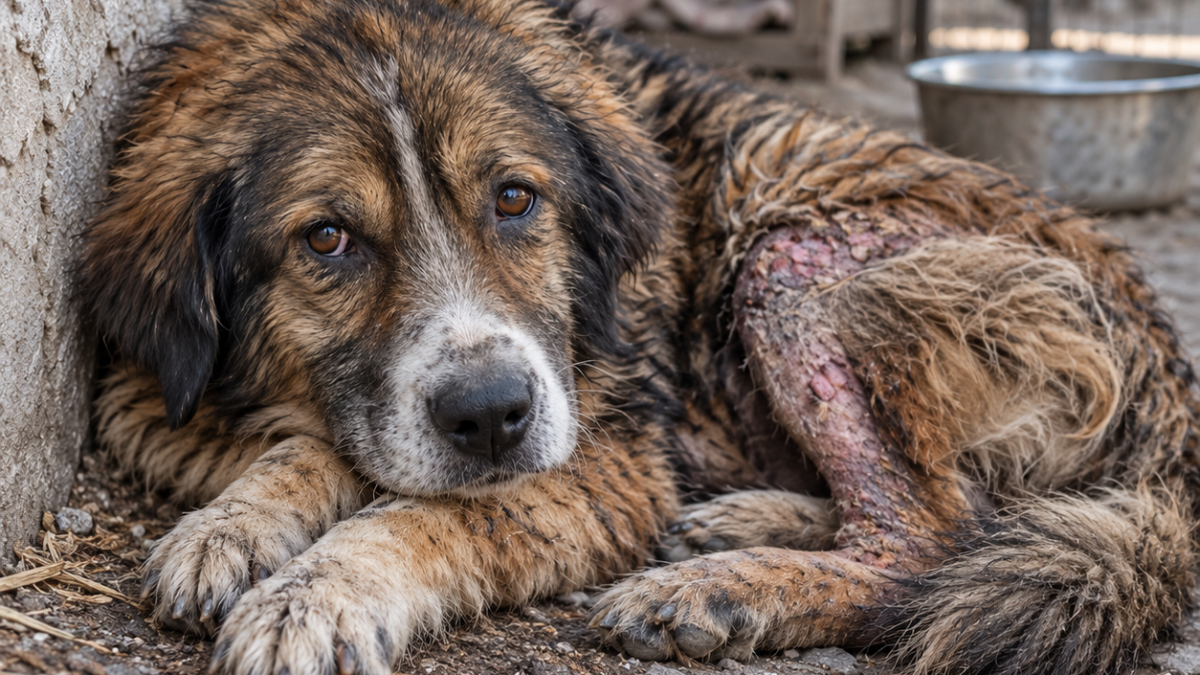
Three shelters told me the dog lying on the frozen concrete was too badly injured to save, and the fourth wouldn’t even send someone after I described what he looked like.
He could barely lift his head, one back leg dragged uselessly behind him, and every sign around me said I was already too late.
But when that exhausted dog looked straight into my eyes and tried to crawl toward me anyway, I made a decision that would eventually bring me back to that abandoned warehouse for a reason I never could have imagined.
My name is Daniel Mercer, and I was fifty-six years old the afternoon I found him.
I wasn’t looking for a dog.
I had gone to the industrial edge of town to pick up some old shelving a contractor was throwing away. The place was a forgotten stretch of cracked pavement, loading docks, chain-link fences, and warehouses with faded signs hanging crooked above rusted doors.
That was where I saw something moving beside a stack of broken pallets.
At first, I thought it was a trash bag shifting in the wind.
Then it lifted its head.
I stopped walking.
He was a large mixed-breed dog, maybe part shepherd, maybe part Labrador, though it was difficult to tell beneath the dirt and matted fur. His coat had once been dark brown, but dust had turned most of it gray. His ribs showed sharply. One ear was torn near the tip. Along his left side were several old wounds that had healed badly, and his right rear leg lay at an unnatural angle.
He tried to stand when he saw me.
He couldn’t.
His front legs pushed against the concrete, his shoulders trembled, and he managed to lift himself only a few inches before collapsing again.
“Easy,” I said. “Don’t do that.”
He stared at me.
No growling.
No barking.
No attempt to defend himself.
That was somehow worse.
I had grown up around dogs. A frightened dog usually warns you. A hurt dog tries to protect the part of himself that still works.
This one seemed to have run out of reasons to fight.
I crouched about ten feet away.
“Where did you come from, buddy?”
His tail moved once.
Just once.
I took out my phone and called the closest shelter.
I explained what I had found.
The woman sounded tired before I even finished.
“We’re full.”
“He can’t walk.”
“That sounds like an emergency veterinary case.”
“Can somebody come get him?”
“We don’t have medical transport available.”
I called another shelter.
They asked about his injuries.
When I told them, there was a pause.
“He may require surgery, hospitalization, possibly long-term rehabilitation.”
“I understand.”
“We don’t have funding for a case like that.”
The third shelter was even more direct.
“If the rear leg is severely damaged and he’s been lying outside that long, his prognosis may be very poor.”
“Can you at least send somebody?”
“I’m sorry.”
The call ended.
I looked at the dog.
He was still watching me.
People like to believe there’s always a number you can call, always somebody whose job it is to come when something helpless is suffering.
That afternoon, I learned that sometimes everybody has a limit.
Space.
Money.
Staff.
Time.
I understood all of those things.
But the dog didn’t understand any of them.
He only knew he was still lying on cold concrete.
I went back to my truck and found an old moving blanket behind the passenger seat.
When I returned, he tried to lift his head again.
“You and I are going to make a very bad financial decision,” I told him.
His tail moved once more.
I slid the blanket underneath him as carefully as I could. When I touched his injured leg, he whimpered, then immediately went silent as if even making noise had become something he was afraid to do.
That nearly broke me.
I wrapped him up, lifted him against my chest, and carried him toward the truck.
He weighed almost nothing.
At a small veterinary clinic twelve minutes away, two technicians rushed outside with a stretcher.
The veterinarian, Dr. Emily Carter, examined him for nearly an hour.
X-rays.
Bloodwork.
Ultrasound.
Temperature.
Hydration.
Infection.
Every time another test came back, her expression became more serious.
Finally, she walked into the room where I was waiting.
She closed the door behind her.
“Mr. Mercer,” she said, “I need you to understand that this dog has been suffering for a long time.”
I stood.
“Can you save him?”
Dr. Carter looked toward the treatment room.
Then she looked back at me.
“We might.”
I let out a breath.
But she wasn’t finished.
“The question is whether someone is willing to go through everything it will take if we do.”
PART 2
I looked through the narrow glass window in the treatment-room door.
The dog was lying beneath a warmed blanket with an IV line taped to one front leg. A technician was cleaning dirt and dried blood from his coat.
“What exactly does ‘everything’ mean?” I asked.
Dr. Carter pulled a chair across from me.
“His biggest immediate problems are dehydration, malnutrition, infection, and pain. Those are serious, but they’re manageable. The rear leg is more complicated.”
“Broken?”
“Previously broken.”
I frowned.
“Previously?”
She turned one of the X-rays toward me.
Even to an untrained eye, I could see something was wrong.
The bone looked crooked.
“The femur fractured some time ago. Weeks at least. Possibly longer. It healed in a bad position. There’s also damage around the hip.”
“So somebody never treated it.”
“That’s what it looks like.”
“Can you repair it?”
“Maybe. We need an orthopedic surgeon to evaluate him after he’s stable. Surgery could be expensive. Rehabilitation would take months. And I can’t promise he’ll ever walk normally.”
I looked through the glass again.
“What happens if nobody pays?”
Dr. Carter didn’t answer immediately.
She didn’t need to.
I rubbed my forehead.
I lived alone.
My mortgage was paid.
I wasn’t rich, but after thirty-two years working logistics and warehouse management, I had savings.
Savings intended for responsible things.
A new roof.
Retirement.
Maybe a trip to Montana I had been talking about for ten years without ever taking.
Not emergency orthopedic surgery for a dog I had known for forty-five minutes.
“How much?”
She gave me the estimate.
I actually laughed.
Not because it was funny.
Because sometimes a number is so much worse than you expected that your brain rejects it as a joke.
“That’s before rehabilitation?”
“Yes.”
“Medication?”
“Some included. Some not.”
“Follow-up?”
“No.”
I looked toward the dog again.
He turned his head weakly.
Through the glass, our eyes met.
My father had once told me that most important decisions don’t feel important when they first arrive. They look like inconvenience. Bad timing. An expense you didn’t plan for.
My father had also been terrible with money.
Maybe I inherited more than his nose.
“Do it.”
Dr. Carter studied me.
“Mr. Mercer, you should think about—”
“I have.”
“You’ve known him less than an hour.”
“That seems to be longer than anybody else wanted to know him.”
Her expression softened.
“All right.”
I signed the papers.
On the line marked ANIMAL NAME, the receptionist stopped.
“What should we put?”
I looked through the doorway.
The dog was still watching me.
“I don’t know his name.”
“We can enter Unknown.”
For some reason, I hated that.
Nobody should go through what that dog had gone through and end up named Unknown.
I glanced at the faded green collar around his neck.
It was frayed and stained, but still intact.
“Hunter,” I said.
The receptionist smiled.
“Hunter?”
I wasn’t sure why that name came to me.
Maybe because he looked like something that had survived too long outside.
Maybe because I needed him to sound strong.
“Hunter.”
She typed it.
That night, I went home without him.
My house felt strange.
I had lived there alone for six years, ever since my divorce, and silence had never bothered me.
That night it did.
I kept thinking about Hunter lying under fluorescent lights in a veterinary clinic.
I kept thinking about three shelters saying no.
I understood why.
That was the part I kept reminding myself.
They weren’t monsters.
Animal rescue is math nobody wants to do.
Ten kennels.
Fifteen animals.
One surgery can consume money that vaccinates fifty healthy dogs.
People make impossible decisions every day.
But understanding something doesn’t always make it easier to accept.
At 6:40 the next morning, Dr. Carter called.
I answered before the second ring.
“Is he alive?”
“Yes.”
The word hit me harder than I expected.
“He had a rough night, but his temperature is improving. He ate a few bites.”
I sat on the edge of my bed.
“He ate?”
“With some encouragement.”
“When can I see him?”
“Come after nine.”
I was there at 8:42.
Hunter lifted his head when I entered.
That alone felt like progress.
I sat beside him.
“Apparently we’re both bad at following normal visiting hours.”
His nose moved toward my hand.
I let him sniff me.
Then, slowly, he placed his chin across my fingers.
That was it.
Nothing dramatic.
No music.
No miraculous recovery.
Just the weight of his head on my hand.
But something in me changed.
I realized I was already hoping for a future that included him.
Three days later, the orthopedic specialist examined Hunter.
Dr. Samuel Patel was blunt.
“The hip can probably be improved. The femur is harder.”
“Can he keep the leg?”
“Yes. I think amputation should be a last resort here.”
I liked him immediately.
“What are his chances?”
“Of walking?”
“Yes.”
“He will walk.”
I stared at him.
“Normally?”
“I didn’t say normally.”
That became our goal.
Not normal.
Walking.
Then comfortable.
Then strong.
One step at a time.
Surgery took almost four hours.
I spent most of it sitting in my truck because the waiting room made me crazy.
At one point I drove to a hardware store and bought a baby gate.
Then I bought another.
A dog bed.
Food bowls.
A rubber-backed rug.
A nonslip runner.
A ridiculous stuffed duck.
I had no idea whether Hunter liked toys.
Apparently near-death orthopedic patients require stuffed ducks.
When I finally brought him home nine days after finding him, two technicians helped lift him from my truck.
He stood with a support sling beneath his belly.
His injured leg barely touched the ground.
My front steps might as well have been Mount Everest.
So I picked him up.
“You weigh more now,” I told him.
He licked my chin.
That was the first time.
I almost dropped him.
Inside, I had turned my dining room into a recovery area.
Mattress.
Blankets.
Medication schedule taped to the wall.
Water.
Food.
Physical therapy instructions.
Dr. Carter had looked at my setup and said, “You know he’s eventually going to take over your whole house.”
“No chance.”
She had smiled.
I should have listened.
The first week was brutal.
Hunter hated the sling.
He hated pills unless they were hidden in cheese.
He hated the cone around his neck with a level of personal resentment usually reserved for tax audits.
He woke crying twice a night.
Sometimes pain.
Sometimes fear.
When he cried, I slept on the floor beside him.
The first time I did it, I told myself it was temporary.
The fourth night, I brought a pillow.
By the second week, Hunter had learned that when I said, “Outside,” I meant the backyard.
He also learned I would wait as long as necessary.
Sometimes ten minutes.
Sometimes forty.
He would stand in the grass with the sling supporting him, staring toward the fence as if he had forgotten why we were there.
I never rushed him.
A dog that has spent too long without control over his life deserves patience when he finally gets choices.
The first time he put real weight on his injured leg, I nearly shouted.
Dr. Carter had warned me not to celebrate too loudly because sudden excitement could make him slip.
So I whispered, “That’s it.”
Hunter looked at me.
“Do it again.”
He took another step.
Crooked.
Shaky.
Beautiful.
“You stubborn son of a gun.”
His tail wagged.
Two weeks turned into four.
Four became eight.
His coat changed first.
Under good food and regular brushing, the muddy brown turned into a deep chocolate color with black along his shoulders.
Then his eyes changed.
I hadn’t noticed how dull they were until they brightened.
And then his personality arrived.
Hunter, it turned out, was not solemn.
Hunter was a thief.
Socks.
Dish towels.
One television remote.
A paintbrush.
My left work glove.
He never chewed them.
He simply collected things.
I would find them arranged around his bed.
“You’re building a retirement account?” I asked him once.
He wagged.
By the third month, he could walk without the sling.
He limped.
Probably always would.
But he walked.
The first time he crossed my backyard alone, I called Dr. Carter.
“He did it.”
“Did what?”
“Walked all the way from the porch to the maple tree.”
She laughed.
“Daniel, I have surgery in six minutes.”
“I thought you should know.”
“I’m glad you told me.”
I ended the call and sat on the porch.
Hunter reached the tree, sniffed it, then looked back.
“Now you have to come back.”
He did.
Slowly.
Thirty uneven steps.
Then he sat against my leg.
That should have been the whole story.
A terrible case.
A rescue.
A recovery.
Except one question never stopped bothering me.
Where had Hunter come from?
A dog does not acquire a badly healed femur, infected wounds, a torn ear, and severe malnutrition overnight.
Somebody had owned him.
Somebody had watched his condition deteriorate.
Or somebody had deliberately abandoned him when he became inconvenient.
I started with the faded collar.
There was no tag.
No name embroidered inside.
No phone number.
But when I took it off one afternoon to wash it, I noticed something under the inner fold.
A small stitched pocket.
At first, I thought it was part of the manufacturing.
Then my fingernail caught a seam.
Inside was a tiny plastic rectangle.
Not a microchip.
A tracking tag.
Old.
Dead battery.
But printed on the back were six faded letters and four numbers.
K9S-1847.
I stared at them.
K9S.
Could mean anything.
A product number.
Inventory.
A kennel.
I searched online.
Nothing.
Then I searched businesses in our county.
Police K9 units.
Dog training companies.
Boarding kennels.
Security services.
Eventually, I found a company called K9 Sentinel Security.
Their website advertised trained guard dogs for warehouses, construction sites, scrap yards, and private industrial properties.
My stomach tightened.
I clicked through the photographs.
German shepherds.
Malinois.
Large mixed breeds.
Dogs standing beside fences and security guards.
Then I saw an older photo in their gallery.
A line of six dogs.
Third from the left was a dark brown shepherd mix.
Torn right ear.
A pale mark along the chest.
Hunter lifted his head from the floor.
I enlarged the photo.
“Is that you?”
He walked over.
I turned the screen toward him.
He sniffed it.
Not useful evidence.
But I knew.
The photo caption said:
*Sentinel Team—North District, 2023.*
I took screenshots.
Then I called the company.
A man answered.
“K9 Sentinel.”
“I’m calling about a dog.”
“We don’t do adoptions.”
“I found one.”
“Then call animal control.”
“He may have belonged to your company.”
The line went quiet.
“What dog?”
“Brown shepherd mix. Torn ear. Old green collar. Possible identification K9S-1847.”
The man didn’t answer for several seconds.
Then his voice changed.
“That ID doesn’t mean anything to me.”
I looked down at Hunter.
“That’s interesting.”
“What?”
“I hadn’t told you it was an ID.”
Silence.
Then the call disconnected.
That was the moment curiosity became suspicion.
I called Officer Megan Ruiz with county animal control.
She had been one of the people who helped me file Hunter’s stray paperwork after the clinic stabilized him.
I explained what I had found.
“You still have the collar?”
“Yes.”
“Don’t alter it.”
“I washed it months ago.”
“That’s fine. Bring it in.”
I took Hunter too.
Officer Ruiz examined the tracking tag.
“K9S-1847,” she read.
“I found a photo.”
I showed her.
She zoomed in.
“That could be him.”
“It is him.”
“It looks like him. That’s different.”
She was right.
I hated that she was right.
“What can we do?”
“I can contact the company. I can check licensing records. Commercial guard-dog operators have paperwork requirements.”
“Do they?”
“In this county, yes.”
She looked toward Hunter.
“Especially if they transport animals between client properties.”
“What happens if he belonged to them?”
“Depends on what we find.”
I hesitated.
“They’re not getting him back.”
Officer Ruiz gave me a look.
“That isn’t remotely the first thing we’re discussing.”
Good answer.
Three days later, she called.
“Daniel, K9 Sentinel had a dog registered under that number.”
I gripped the phone.
“Named?”
“Rex.”
Hunter was sleeping on the rug.
Rex.
I said it softly.
His ears moved.
“Does he respond?”
“I think so.”
“There’s more.”
I sat down.
“The company reported Rex dead eight months ago.”
I looked at Hunter.
“What?”
“According to their records, he was euthanized after a severe hip injury.”
“But he wasn’t.”
“Obviously.”
“Who signed the paperwork?”
“That’s where this gets interesting.”
The euthanasia record listed a veterinary facility that had closed two years earlier.
I felt cold.
“So they forged it.”
“Maybe.”
“They reported a living dog dead.”
“It appears that way.”
“Why?”
“We don’t know yet.”
But I knew the simplest explanation.
Money.
Hunter had become injured.
Repairing him cost money.
Retiring him humanely cost money.
Feeding him cost money.
A dead dog on paperwork cost nothing.
Officer Ruiz told me not to contact K9 Sentinel again.
So naturally, every part of me wanted to drive there immediately.
I didn’t.
That was one lesson age had finally taught me.
Anger enjoys speed.
Justice often requires paperwork.
The investigation expanded.
K9 Sentinel was owned by a man named Marcus Hale.
Forty-seven.
Former private-security supervisor.
His company provided dogs to warehouses throughout three counties.
The old warehouse where I found Hunter had been one of their contracts.
That explained the location.
Officer Ruiz and a sheriff’s investigator interviewed former employees.
At first, nobody said much.
Then one man agreed to speak.
His name was Luis Mendoza.
He had worked as a handler for K9 Sentinel for five years.
Officer Ruiz called me afterward.
“Rex was his dog.”
“His?”
“His assigned dog. Not personally owned.”
“What did he say?”
“He said Rex injured his leg during a night patrol.”
“How?”
“He fell from a loading platform.”
I closed my eyes.
That explained the femur.
“Did they take him to a veterinarian?”
“Luis says he begged management to.”
“And?”
“They gave the dog pain medication left over from another animal and put him in a kennel.”
My hand tightened around the phone.
“How long?”
“Several weeks.”
I couldn’t speak.
“Daniel?”
“I’m here.”
“Luis says the leg swelled. Rex stopped using it. Marcus Hale didn’t want to authorize surgery because the contract at that warehouse was ending.”
“So he just left him there?”
“Luis says he was ordered to transport Rex to a rural kennel. But when he arrived for work, Rex was gone.”
“Gone where?”
“That’s what investigators are trying to establish.”
A week later, Luis asked to meet me.
We sat outside the veterinary clinic.
Hunter was in the back seat of my truck.
Luis was about forty, thin, tired-looking, with the kind of face that carried guilt badly.
When Hunter saw him through the glass, he stood immediately.
His tail did not wag.
But he didn’t bark.
Luis covered his mouth.
“Rex.”
Hunter stared.
Luis stepped closer.
“Hey, buddy.”
Hunter’s ears tilted forward.
Luis started crying.
Not politely.
He put both hands over his face and cried like somebody had been waiting months for permission.
I stood beside him.
Part of me felt sorry for him.
Another part wanted to ask why the hell he hadn’t done more.
Eventually I did.
“You knew he was hurt.”
Luis wiped his face.
“Yes.”
“You knew they weren’t treating him.”
“Yes.”
“And you stayed.”
He looked at me.
“Yes.”
No excuse.
That made it harder to hate him.
“I had two kids,” he said. “My wife was pregnant. I needed the job. Marcus kept saying Rex would be seen by a vet. Every week I believed him because believing him was easier than quitting.”
I looked toward Hunter.
“You could have called someone.”
“I know.”
“You could have taken him yourself.”
“I know.”
“You could have stopped it.”
His eyes filled again.
“I know.”
I had imagined this confrontation differently.
In my imagination, I would say something devastating and righteous.
Instead, I saw a man who had already repeated every accusation to himself a thousand times.
“What happened the last night you saw him?”
Luis looked toward the truck.
“Rex couldn’t stand. I carried him outside. He put his head here.”
Luis touched his chest.
“I told him I’d come back the next morning and get him out, even if it cost me my job.”
“What happened?”
“Marcus fired me that night.”
“Why?”
“He found messages between me and another employee about reporting him.”
“And Hunter?”
“Gone when animal control finally checked two days later.”
“Rex.”
Luis nodded.
“Rex.”
I opened the truck door.
Hunter stayed where he was.
Luis didn’t reach for him.
Good.
After a minute, Hunter stepped down carefully.
His limp was more noticeable when he was nervous.
Luis crouched.
“Hey, Rex.”
Hunter approached.
He sniffed Luis’s hand.
Then stepped backward.
Luis cried again.
“I’m sorry.”
Hunter looked at him for several seconds.
Then walked back to me.
He pressed against my leg.
Luis nodded slowly.
“He chose.”
I put my hand on Hunter’s shoulder.
“He needed someone to.”
Luis eventually became one of the state’s strongest witnesses.
The investigation uncovered more than Hunter.
K9 Sentinel had seventeen dogs listed as active.
Investigators physically located eleven.
Two had legitimate documented deaths.
Four were missing.
Of those four, three had suspicious records nearly identical to Hunter’s.
One was eventually found alive at a private junkyard.
Old.
Thin.
Untreated skin disease.
Another had been surrendered under a false name to a rural pound.
The last was never found.
That one bothered me most.
His name was Atlas.
A black shepherd.
Seven years old when the records claimed he died.
Sometimes justice finds evidence.
Sometimes it finds absence.
Marcus Hale denied everything.
Through his attorney, he blamed employees.
He said paperwork mistakes had occurred.
He said Hunter—Rex—might have escaped after being transferred.
He said no executive at K9 Sentinel had ordered anyone to abandon or mistreat an animal.
Then investigators found text messages.
Not from Marcus directly at first.
From his operations manager.
One message about Rex read:
*Hale says no more money on 1847. Write him off.*
Another:
*If county asks, he was put down.*
And then:
*Do not bring that dog back to main kennel.*
I read those messages in Officer Ruiz’s office.
My hands shook.
“Write him off.”
Two words.
That was what Hunter had been reduced to.
A line item.
An expense.
Something not worth fixing.
Officer Ruiz looked at me.
“You okay?”
“No.”
“Good.”
I looked at her.
She folded her arms.
“If this stopped making you angry, I’d worry.”
Charges followed.
Animal cruelty.
Falsification of business records.
Fraud-related counts tied to client billing.
Because that became the next discovery.
K9 Sentinel had continued billing at least one warehouse for an “active canine patrol unit” during weeks when the assigned dog was injured and confined.
They had charged clients for veterinary maintenance that, according to prosecutors, was not actually being provided.
The case became bigger than Hunter.
Marcus Hale’s license to operate the company was suspended pending proceedings.
Contracts disappeared.
Warehouses canceled service.
The business that had treated dogs as disposable equipment started collapsing under its own paperwork.
People called it revenge when they heard what happened.
I didn’t.
Revenge would have been me driving to Marcus Hale’s house and doing something stupid.
This was consequences.
But I would be lying if I said I didn’t enjoy some of them.
The best came six months after the investigation began.
K9 Sentinel’s main facility was seized under a court order related to unpaid obligations and the suspension of its operating license.
Several dogs needed temporary placement.
Officer Ruiz called.
“I have an idea you’re going to hate.”
“No.”
“I haven’t told you.”
“I know your ideas.”
“We need foster volunteers.”
“I have one dog.”
“You have a fenced yard.”
“One recovering dog.”
“Who likes other dogs.”
I looked at Hunter.
He was lying upside down with all four legs in the air.
Very dignified.
“How many?”
“One.”
“No puppies.”
“Adult.”
“No severe medical cases.”
She paused.
“Mild arthritis.”
“Megan.”
“What?”
“That pause was criminal.”
The foster dog arrived that afternoon.
Her name was Daisy.
Nine-year-old yellow Labrador.
Former warehouse patrol dog.
She walked into my house, drank Hunter’s water, stole his bed, and fell asleep.
Hunter stood beside me looking offended.
“You wanted justice,” I told him. “Apparently justice snores.”
His tail wagged.
Daisy stayed three weeks before being adopted by a retired schoolteacher.
Then came Bruno.
Then Patch.
Then a shepherd named Cass.
I became the man with the recovery dogs.
I had not planned this.
At fifty-six, I had planned a quiet retirement and possibly Montana.
Instead, I had ramps.
Medication charts.
Dog hair in places physics could not explain.
And for the first time in years, I didn’t mind coming home.
The criminal case took almost a year.
That part frustrated me.
Real justice moves slowly.
Continuances.
Motions.
Hearings.
Evidence reviews.
Lawyers arguing over language ordinary people would settle in ten minutes.
I attended when I could.
Marcus Hale usually wore a dark suit.
He never looked at me.
Then came the hearing that mattered most.
Luis testified.
He described Hunter’s injury.
The untreated fracture.
The weeks in the kennel.
The order to “write him off.”
Marcus’s attorney attacked him hard.
“You continued accepting paychecks, correct?”
“Yes.”
“You continued working for Mr. Hale?”
“Yes.”
“So you benefited from the system you now condemn.”
Luis swallowed.
“Yes.”
“Only after you were fired did you make allegations.”
“No.”
“You expect this court to believe you suddenly became concerned for these dogs?”
Luis looked toward the gallery.
Hunter wasn’t allowed inside, but I was sitting there.
Then Luis answered.
“No. I expect the court to believe I was a coward longer than I should have been.”
The room went still.
“I knew something was wrong. I told myself I needed the job. I told myself somebody else would fix it. I told myself the dogs would be okay. I was wrong.”
The attorney started to interrupt.
Luis continued.
“Rex paid for my fear.”
I looked down.
That sentence stayed with me.
Rex paid for my fear.
How many terrible things survive because decent people are afraid of losing something?
A job.
Money.
Approval.
Comfort.
How often does somebody helpless pay the bill?
Dr. Carter testified about Hunter’s injuries.
She was careful.
Professional.
She refused to exaggerate.
That made her testimony stronger.
“Could the femur have healed in that position within a day or two?”
“No.”
“A week?”
“No.”
“Would a dog with such an injury experience pain?”
“Yes.”
“How much?”
She paused.
“Significant, persistent pain.”
“Would a reasonable caretaker know the animal needed veterinary treatment?”
“Yes.”
The defense suggested Hunter might have escaped before treatment could occur.
Dr. Carter replied, “His fracture healed substantially before I examined him. Whatever happened during that period, he did not receive appropriate orthopedic care.”
No drama.
No anger.
Just fact.
That was enough.
Then prosecutors introduced the records.
K9S-1847.
Reported euthanized.
False veterinary facility.
Billing entries.
Internal texts.
*Write him off.*
I watched Marcus Hale for reaction.
Nothing.
Until the photograph.
The prosecutor displayed the original company photo on a screen.
Six working dogs.
Hunter third from the left.
Healthy.
Strong.
Standing straight.
Then she displayed a photograph from the day I found him.
Same torn ear.
Same white chest mark.
Forty pounds of difference.
Crooked leg.
Open wounds.
Collapsed on concrete.
Marcus finally looked away.
I didn’t.
I made myself look.
Because Hunter had lived it.
The least I could do was witness it.
The proceedings eventually resulted in Marcus accepting a plea agreement rather than risking trial on every count.
Some people around town were disappointed.
They wanted decades in prison.
Reality was less cinematic.
He received jail time, probation, financial penalties, business restrictions, and a court order barring him from owning, managing, training, or commercially handling dogs during the probationary period and subject to applicable licensing restrictions afterward.
K9 Sentinel was finished.
The company dissolved.
Several civil judgments followed.
Former clients sued.
A rescue coalition acquired the kennel property after foreclosure.
That was the part nobody expected.
Officer Ruiz called me one Saturday morning.
“You busy?”
“Yes.”
“Doing what?”
“Drinking coffee.”
“So no.”
“What do you want?”
“Drive to Sentinel.”
I almost hung up.
“Megan.”
“Trust me.”
Hunter came along.
When I pulled through the old gate, the sign was gone.
No K9 Sentinel Security.
Instead, volunteers were painting the building.
A new sign leaned against a trailer.
**SECOND WATCH CANINE RECOVERY CENTER**
I sat in my truck.
Officer Ruiz opened my door.
“Well?”
I stared.
“What is this?”
“Nonprofit partnership. County rescue coalition, private donors, two shelters, veterinary network.”
I looked toward the kennels.
“What do they do?”
“Rehabilitation for working dogs, severe neglect cases, long-term medical fosters.”
I laughed once.
“You turned his kennel into a rescue.”
“We turned Hale’s kennel into a rescue.”
That difference mattered.
Hunter climbed out.
He stopped.
His body changed immediately.
Tail low.
Shoulders tight.
He recognized it.
Of course he did.
Smells live longer than human explanations.
I crouched beside him.
“We don’t have to go in.”
Officer Ruiz nodded.
“Absolutely not.”
Hunter stared at the building.
Then took one step.
Another.
He walked toward the gate.
Slowly.
I followed.
Inside the first kennel wing, volunteers had removed the old chain runs.
Walls were brighter.
Beds sat inside each enclosure.
There were outdoor yards.
Shade.
Heating.
Medical rooms.
Quiet rooms.
Dr. Carter walked out wearing scrubs.
“You’re part of this?”
“Medical director, unpaid.”
“You enjoy suffering.”
“Apparently.”
She knelt several feet from Hunter.
“Hey, handsome.”
Hunter wagged.
We walked through the building.
At the far end, one old kennel remained untouched.
Not in use.
A small plaque was mounted outside it.
**For the dogs who were treated as equipment—and for the people who finally spoke.**
I stood there a long time.
Hunter sniffed the floor.
Then he walked away.
That was all.
No dramatic recognition.
No shaking.
No collapse.
He just walked away.
I followed him outside.
Sometimes healing is not facing the past.
Sometimes it is realizing you are free to leave it.
I became a volunteer at Second Watch.
Of course I did.
First one Saturday a month.
Then two.
Then every Saturday.
Hunter sometimes came with me.
He was especially good with frightened dogs.
Maybe because he understood silence.
There was one dog named Milo who wouldn’t let anyone touch him.
Small cattle-dog mix.
Found inside a storage unit after his owner was arrested.
He snapped at hands.
Hid beneath bedding.
Refused eye contact.
Hunter lay outside Milo’s kennel for almost three hours.
Didn’t stare.
Didn’t bark.
Just existed.
On the fourth visit, Milo lay down beside the fence.
On the sixth, he touched noses with Hunter.
Two weeks later, Milo let a technician clip on a leash.
Dr. Carter looked at Hunter.
“Employee of the month.”
“He expects benefits.”
“Already has.”
She handed him a treat.
Hunter took it gently.
Three years passed.
His limp never disappeared.
Cold weather made it worse.
He developed arthritis around the damaged hip.
But he lived.
Really lived.
He rode in my truck.
He learned to swim using a canine life jacket.
He slept on my couch despite my repeated claim that he was not allowed on furniture.
He attended Second Watch fundraisers.
Children loved him because he sat calmly while they touched his torn ear.
His old collar—the green one with K9S-1847 hidden inside—ended up in a glass case at the center.
I almost refused.
I didn’t want Hunter turned into a symbol.
Then Officer Ruiz explained.
“It’s not about making people sad.”
“What’s it about?”
“Making them notice.”
So beside the collar we placed two photographs.
Hunter when I found him.
Hunter two years later, standing beside me in the yard with his coat shining and his bad leg planted firmly on the grass.
The card beneath them said:
**A hopeless case is sometimes only a case nobody has chosen yet.**
I liked that.
Because nobody had promised Hunter would become perfect.
He hadn’t.
He still limped.
Still startled at metal doors slamming.
Still hated being left alone in unfamiliar buildings.
Recovery did not erase history.
It gave history somewhere else to lead.
One winter evening, when Hunter was around ten, I received a letter.
Not email.
Actual paper.
No return address I recognized.
Inside were three handwritten pages.
The writer was Marcus Hale.
I almost threw them away.
Then I read.
He did not ask forgiveness.
I appreciated that.
He said jail had given him too much time to think and not enough ability to avoid it.
He wrote that he had spent years telling himself the dogs were assets because thinking of them that way made business decisions easier.
He wrote that every expense became a calculation.
Food.
Veterinary bills.
Retirement.
Transport.
And eventually suffering itself had become a number.
He admitted he had approved the falsified death record for Hunter.
Not the abandonment directly, he claimed.
But the record.
The order not to spend more money.
The decision that created everything afterward.
Near the end, he wrote:
*I saw a newspaper photo of the recovery center. I know I have no right to ask, but I would like to know whether Rex survived.*
I read that sentence three times.
Hunter was sleeping beside the wood stove.
I could have ignored the letter.
Part of me wanted to.
Marcus did not deserve comfort.
Then I realized answering would not be for him.
It would be for me.
I wrote one sentence.
*His name is Hunter now, and he survived you.*
I mailed it.
Was that petty?
Probably.
Did I regret it?
Not for one second.
But that wasn’t the real revenge.
The real revenge happened every ordinary morning afterward.
Hunter waking me at six because breakfast was apparently a constitutional right.
Hunter limping across my kitchen.
Hunter stealing socks.
Hunter lying in sunshine.
Hunter comforting damaged dogs inside the building that once considered him disposable.
That was the kind of revenge nobody could appeal.
Years later, I learned Marcus had begun volunteering—not with animals, because his restrictions prevented that, but with a community food program after his probation ended.
Officer Ruiz mentioned it.
“How do you feel about that?”
I thought for a moment.
“I don’t know.”
“Fair.”
“People want stories where bad people stay bad because it makes everything easier.”
“And?”
“And if he became less bad, that doesn’t undo what he did.”
“No.”
“But maybe it prevents somebody else from paying for it.”
She nodded.
That was enough for me.
Hunter turned twelve.
Then thirteen.
His muzzle whitened.
He slept more.
One morning, he struggled to rise.
Not the injured leg.
Both back legs.
Dr. Carter examined him.
Age.
Arthritis.
Nerve degeneration.
Nothing dramatic.
Nothing fixable either.
“We can keep him comfortable,” she said.
“How long?”
She gave me the veterinarian answer I hated most.
“We’ll let him tell us.”
So we adjusted.
Rugs across every slippery floor.
A ramp beside the porch.
Medication twice daily.
Shorter walks.
More naps.
The stuffed duck I had bought the first week still lived in his bed.
Its beak was missing.
One spring afternoon, I brought Hunter to Second Watch.
We walked slowly through the building.
Young dogs barked from rehabilitation runs.
Volunteers moved between kennels.
Somebody was bathing a shepherd.
A technician carried towels.
Life everywhere.
Hunter stopped in front of the glass case containing his old collar.
His reflection stared back.
Gray muzzle.
Bent leg.
Torn ear.
Alive.
I stood beside him.
“You made a mess of my retirement.”
His tail moved.
“I could be in Montana.”
He looked at me.
“Yeah. You’re right. Probably overrated.”
Dr. Carter found us there.
“He looks tired.”
“He is.”
She knelt.
Hunter leaned into her hand.
Her eyes changed.
I knew.
Not today.
But soon.
I had learned the difference.
Two months later, Hunter stopped eating breakfast.
That frightened me more than anything.
He had never refused breakfast voluntarily in his life.
I offered chicken.
Nothing.
Cheese.
He sniffed it, then turned away.
We went outside.
He walked to the maple tree in my backyard.
The same tree he had reached during those first months of rehabilitation.
He lowered himself beneath it.
I sat beside him.
His breathing was calm.
He looked at me.
I knew.
I called Dr. Carter.
She came to the house.
Not because she had to.
Because she had been there from the beginning.
We placed Hunter’s bed beneath the tree.
I brought the destroyed stuffed duck.
He rested his chin on it.
Officer Ruiz came.
Luis came too.
I had not seen him in nearly a year.
He had become a truck mechanic and eventually adopted an older shepherd from Second Watch.
When Hunter saw him, his tail moved twice.
Luis knelt.
“Hey, Rex.”
Hunter lifted his head.
Then Luis smiled through tears.
“Sorry. Hunter.”
I put my hand on Hunter’s chest.
He looked from Luis to me.
No fear.
No warehouse.
No concrete.
No cold floor.
Only people who had finally chosen to stay.
Dr. Carter explained the injection.
I already knew.
Still, I needed her to explain.
Maybe information gives grief something to hold.
I leaned close to Hunter.
“Remember that warehouse?”
His ears moved.
“I do.”
I swallowed.
“Everybody kept telling me how bad you were.”
His eyes stayed on mine.
“They said expensive.”
I stroked his torn ear.
“They said complicated.”
My voice cracked.
“They said hopeless.”
Hunter exhaled.
I pressed my forehead against his.
“They were wrong about one thing.”
Dr. Carter waited.
“You were never hopeless.”
His tail moved against the blanket.
One last time.
Then I whispered the words I had never been able to say during all those years because saying them felt like tempting fate.
“You can rest now.”
Hunter died beneath the maple tree with my hand on his chest.
No concrete.
No empty warehouse.
No strangers refusing him.
Home.
The silence afterward was enormous.
I stayed there long after everyone else moved away.
Dr. Carter eventually sat beside me.
“I’m sorry.”
“I know.”
“You gave him years he wasn’t supposed to have.”
I shook my head.
“That’s what people keep saying.”
“What do you think?”
I looked at Hunter.
“He gave me years I wasn’t planning to live that way.”
She understood.
We buried his ashes beneath the tree.
Second Watch held a small memorial a month later.
I almost didn’t attend.
I hate public grief.
But when I arrived, there were more than a hundred people.
Shelter workers.
Veterinarians.
Families who had adopted dogs from the center.
Former K9 handlers.
Volunteers.
Luis.
Officer Ruiz.
Even two people from shelters that had originally refused Hunter.
One woman recognized me.
Her name was Janet.
She had answered my first call.
“I remember you,” she said quietly.
“I remember you too.”
She looked uncomfortable.
“I’m sorry we couldn’t take him.”
Years earlier, that sentence would have angered me.
Now I knew more.
“How many dogs did you have that day?”
She looked surprised.
“Seventy-three.”
“How many kennels?”
“Forty-eight.”
I nodded.
“You didn’t do this to him.”
Her eyes filled.
“Still feels terrible.”
“I know.”
We stood there together.
No villain.
No victory.
Just two people who had been asked by the world to care about more suffering than they had room to hold.
Second Watch named its physical rehabilitation wing after Hunter.
I objected.
They ignored me.
The plaque reads:
**THE HUNTER MERCER REHABILITATION WING**
**For the cases someone was told were too difficult, too expensive, or too late.**
Underneath is a smaller line:
**Try anyway.**
That part was Officer Ruiz’s idea.
I approved.
I still volunteer there.
I am sixty-four now.
My retirement looks nothing like I imagined.
I never went to Montana.
Maybe someday.
My house is quieter without Hunter, but not empty.
There is usually a foster dog somewhere in it.
At the moment, there is a fifteen-year-old beagle named Earl who snores like construction equipment and demands dinner at 4:37 every afternoon.
Why 4:37?
No idea.
At 4:36, he is asleep.
At 4:37, famine.
Sometimes I sit beneath Hunter’s maple tree.
The grass has grown over the place where I scattered some of his ashes.
His old stuffed duck sits on a shelf inside my house.
I still have one photograph framed beside it.
Not the warehouse picture.
Not the injured-dog picture.
I hate when suffering becomes the only thing people remember about a life.
The photograph I keep was taken three summers before he died.
Hunter is standing in a lake wearing an orange life jacket.
His damaged back leg is slightly lifted.
Water is dripping from his muzzle.
I am behind him, soaked because he had just knocked me over.
We both look ridiculous.
That is the dog I remember.
Not helpless.
Not broken.
Not the dog nobody wanted to take.
Hunter.
The dog who survived long enough to become annoying.
Long enough to steal my socks.
Long enough to help frightened dogs.
Long enough to turn a failed security kennel into a place where animals learned to trust people again.
Long enough to prove that “hopeless” is sometimes nothing more than the word people use when the cost of hope frightens them.
I understand now why those shelters said no.
I understand limits.
I understand budgets.
I understand that nobody can save everything.
But I also know what happened because one ordinary man standing beside an old warehouse looked at one broken dog and decided not to walk away.
I did not know what I was starting.
I thought I was carrying an injured animal to a veterinarian.
I was carrying evidence.
I was carrying a future lawsuit.
A criminal investigation.
A recovery center.
A dozen dogs who would later sleep safely inside the building where Hunter had once suffered.
I was carrying years of companionship I had not known I needed.
Most of all, I was carrying a dog everyone had already started talking about in the past tense.
He wasn’t finished.
That became his answer to them.
Not anger.
Not violence.
Not even punishment.
Life.
A full, stubborn, limping, beautiful life.
And if there was revenge in Hunter’s story, it was this:
The people who once wrote him off eventually watched his name go up on the wall of the building they lost.
The dog they treated as an expense became the reason other dogs received care.
The animal whose death had been falsely recorded lived for years afterward.
And the man who once wrote, *No more money on 1847*, had to live knowing that Number 1847 had become somebody’s family.
But I never called Hunter 1847.
Not once.
He had spent enough of his life being treated like inventory.
To me, he was the dog who lifted his head three inches from a freezing warehouse floor because he saw a stranger approaching and somehow found enough hope left to look at me.
He was the dog who took his first crooked steps across my backyard.
The dog who stole my remote.
The dog who sat beside frightened animals until they stopped shaking.
The dog who made coming home matter again.
And on the hardest days, when people ask whether I regret spending that money, changing my plans, losing sleep, fighting through court hearings, physical therapy, medication, and finally the grief of losing him, I always give the same answer.
No.
The expensive part was never saving Hunter.
The expensive part would have been walking away and spending the rest of my life remembering that I could have stopped.
Everybody else had looked at him and seen how much it might cost to keep him alive.
I looked into his eyes and saw what it would cost me if I left him there.
That was the only calculation I ever needed.
And Hunter spent the rest of his life proving I had gotten the answer right.
And Hunter spent the rest of his life proving I had gotten the answer right.
For a long time after he died, though, knowing that did not make the house any easier to walk into.
The first evening without him, I unlocked my front door and automatically stepped sideways.
I had done that for years because Hunter always waited just inside, tail swinging, body blocking half the doorway as if I had been gone for six months instead of forty minutes.
That night, there was nothing there.
No nails clicking against the hardwood.
No crooked-legged shuffle from the living room.
No nose shoved against the grocery bag to inspect whether I had brought home anything interesting.
Just the refrigerator humming in the kitchen and the faint ticking of the clock above the stove.
I stood in the doorway longer than I want to admit.
Then I said, “I’m home.”
The words disappeared into the house.
That was when I understood how deeply a dog can become woven into a person’s ordinary life.
You expect the dramatic memories to hurt.
The day you found him.
The surgery.
The courtroom.
The last morning beneath the maple tree.
But grief usually hides in smaller places.
An empty water bowl.
A leash still hanging beside the back door.
A prescription bottle you no longer need.
A piece of cheese falling from your sandwich and hitting the floor because you forgot there was nobody waiting to catch it.
For the first week, I couldn’t move Hunter’s bed.
It stayed beside the wood stove with the ruined stuffed duck lying exactly where he had left it.
Twice I woke in the middle of the night and nearly called his name.
Once I actually did.
“Hunter?”
Silence answered.
I sat on the edge of my bed and stared at the dark hallway.
I had spent years believing the worst thing that could happen to Hunter was death.
I had been wrong.
The worst thing would have been if he had died on that warehouse floor believing nobody was coming.
Death eventually comes for every living thing.
Loneliness does not have to.
That thought became the only one that helped.
Hunter’s last memory was not concrete.
It was grass.
His last smell was not rust and engine oil.
It was the maple tree in my backyard.
His last sound was not a security gate slamming.
It was my voice.
His last touch was a hand he trusted.
I held onto that.
A week after his memorial, I returned to Second Watch.
I almost turned around in the parking lot.
Hunter had always ridden there beside me. Even when his arthritis worsened, he would lift his head the moment we turned onto that road because he knew where we were going.
Now the passenger seat was empty.
Officer Ruiz saw me through the front window and came outside.
She didn’t hug me.
I appreciated that.
Some people mean well when they rush toward grief.
Megan knew better.
She leaned against my truck.
“You don’t have to be here.”
“I know.”
“You can take time.”
“I’ve taken nine days.”
“That is not what normal people call time.”
“I’m not especially interested in being normal.”
“That part is well established.”
I looked toward the building.
“You have dogs inside?”
“Unfortunately, yes. Turns out they keep arriving whether we’re emotionally prepared or not.”
That made me smile.
She noticed.
“Come inside.”
I followed her.
The rehabilitation wing had changed since Hunter’s first visit. There were more nonslip floors, wider recovery pens, underwater treadmills donated by a veterinary foundation, and a quiet room with soft lighting for dogs recovering from severe neglect.
Hunter’s name was already on the wall.
I stopped when I saw it.
The letters were simple brushed metal.
HUNTER MERCER REHABILITATION WING
Underneath:
TRY ANYWAY.
I touched the bottom edge of the plaque.
“I still think this is excessive.”
Megan stood beside me.
“You’ve said that twenty-three times.”
“You counted?”
“No. I’m estimating based on your personality.”
Then barking came from the last room.
One bark in particular was different.
Sharp.
Panicked.
Repeated.
“What’s that?”
Megan’s face changed.
“New intake.”
I should have kept walking.
Instead I followed the sound.
Inside the quiet room, a dog was pressed into the corner of a recovery kennel.
He was a shepherd mix, black along the back with tan legs and a white patch beneath his throat.
Young.
Maybe two.
Too thin.
One front paw bandaged.
Every time someone moved near the kennel, he slammed himself farther against the wall.
“What happened?”
“Found behind an abandoned rental property yesterday. Cable wrapped around one leg. He chewed through most of it himself.”
I stared.
“Anyone know the owner?”
“Not yet.”
The dog barked again.
Not angry.
Terrified.
I recognized the difference immediately.
Megan opened a cabinet and handed me a paper cup of coffee.
“You going to stand there?”
“What do you expect me to do?”
“Nothing.”
“Helpful.”
She pointed toward a chair about eight feet from the kennel.
“Sit.”
So I sat.
The dog barked.
I ignored him.
He barked again.
I drank coffee.
After ten minutes, the barking slowed.
After twenty, he lay down but kept his eyes fixed on me.
After thirty-five, he stretched his nose forward.
I said nothing.
Megan appeared in the doorway.
“Still leaving?”
“In a minute.”
“You said that fifteen minutes ago.”
“Go supervise something.”
“Yes, sir.”
She disappeared.
I stayed another hour.
Before I left, the dog had not approached me.
He had not accepted food.
He had not suddenly decided humans were wonderful.
But when I stood, he didn’t bark.
That felt like enough.
The next morning, I returned.
Then the next.
His shelter name was Cooper.
On the fourth day, he ate while I was in the room.
On the seventh, he took a treat from the floor three feet from my shoe.
On the eleventh, he sniffed the back of my hand.
I went home that afternoon and realized I had spoken to him for forty minutes.
Not baby talk.
Not nonsense.
I told him about Hunter.
About the warehouse.
About the first surgery.
About how Hunter had stolen my television remote and hidden it beneath his bed for three days.
Cooper had no idea what I was saying.
But neither had Hunter.
Sometimes speaking to a dog is less about what the dog understands than what the person finally allows himself to say.
A month later, a family adopted Cooper.
A woman named Melissa and her teenage son came every afternoon for a week before taking him home.
They sat with him the same way I had.
No grabbing.
No forcing.
No promises he couldn’t understand.
When the day came, Cooper walked out on a blue leash between them.
He stopped beside me.
Sniffed my hand.
Then licked one finger.
That was all.
I cried in my truck afterward.
Not because I wanted to keep him.
Because I didn’t.
For the first time, helping a frightened dog did not feel like replacing Hunter.
It felt like continuing something Hunter had started.
That changed the way I saw Second Watch.
Before, I had thought Hunter’s story ended when his heart stopped beneath my maple tree.
It didn’t.
Stories don’t always continue through the same character.
Sometimes they continue through consequences.
Because Hunter survived, investigators looked closer.
Because investigators looked closer, K9 Sentinel collapsed.
Because K9 Sentinel collapsed, the kennel property became Second Watch.
Because Second Watch existed, Cooper had somewhere quiet to recover.
Then Daisy.
Bruno.
Patch.
Cass.
Milo.
Dozens more.
Eventually hundreds.
One decision beside an abandoned warehouse had stretched farther than I ever imagined.
A year after Hunter died, Second Watch held an open house.
I hated the idea.
Officer Ruiz loved it.
“You need donors.”
“I thought dogs needed donors.”
“They do. Donors enjoy meeting people.”
“Dogs have better judgment.”
“Wear a clean shirt.”
I did.
Nearly three hundred people came.
Families toured the recovery wing.
Veterinarians gave demonstrations.
Children wrote messages on paper paw prints and taped them to a wall.
Some were simple.
GET WELL SOON.
YOU ARE A GOOD DOG.
One little girl wrote:
I HOPE SOMEBODY WAITS FOR YOU.
I stared at that one until the words blurred.
Dr. Carter found me.
“You okay?”
“Kids shouldn’t accidentally say things that profound.”
“It’s annoying.”
I pointed to the paw print.
“She got the whole thing in six words.”
Dr. Carter read it.
Her eyes softened.
“Yes.”
Later that afternoon, Megan brought a man toward me.
I recognized him before she spoke.
Marcus Hale.
Older.
Thinner.
No expensive suit.
No attorney beside him.
My entire body went rigid.
Megan stopped several feet away.
“He asked to come.”
I looked at her.
“And you said yes?”
“I said he could attend a public event. I didn’t promise you’d speak with him.”
Marcus kept his hands visible at his sides.
“I can leave.”
Part of me wanted that.
Another part of me remembered his letter.
I would like to know whether Rex survived.
He had learned the answer.
“Why are you here?”
Marcus looked toward Hunter’s name on the wall.
“I wanted to see what they did with the place.”
“They turned it into something useful.”
“I can see that.”
“You surprised?”
“Yes.”
At least he didn’t lie.
We stood in silence while families passed behind us.
Finally Marcus said, “I saw your reply.”
I knew exactly what he meant.
His name is Hunter now, and he survived you.
“You deserved it.”
“I did.”
That answer disarmed me more than any excuse would have.
He looked toward the rehabilitation kennels.
“I used to walk through here and think about capacity. Numbers. Contracts. Which dog could work. Which one couldn’t.”
“And if they couldn’t?”
He swallowed.
“I know what I did.”
“No. You know what paperwork says you did.”
He looked at me.
I felt anger that had survived years rise again.
“Hunter screamed when technicians first moved his leg.”
Marcus looked down.
“He had wounds infected enough that Dr. Carter worried about sepsis.”
Nothing.
“He was thirty-eight pounds when he should have been fifty.”
Marcus closed his eyes briefly.
“He woke crying for weeks.”
“I’m sorry.”
My voice hardened.
“You don’t get to say that so I’ll make you feel better.”
“I know.”
“Good.”
A long silence followed.
Then he said something I did not expect.
“I don’t want you to forgive me.”
I studied him.
“I wouldn’t know what to do with it if you did.”
That sounded less like a performance.
Maybe because nobody else was standing close enough to hear.
“Then why come?”
He looked toward Hunter’s plaque.
“To see what happened after me.”
I followed his eyes.
A volunteer was helping an older dog through the rehabilitation hallway with a support harness.
A woman sat cross-legged beside a frightened pit bull.
Two children were filling water bowls.
Life.
Care.
Work.
Marcus said quietly, “I thought losing the company was the punishment.”
I said nothing.
“It wasn’t.”
“What was?”
“Seeing what this place became.”
He looked at me.
“Realizing all the things I said were too expensive were possible once people decided they mattered.”
For years I had imagined what I would say if Marcus Hale ever stood in front of me without lawyers between us.
I thought I would destroy him with some perfect sentence.
Instead, I felt tired.
Not weak.
Finished.
“You want to do something useful?”
He nodded.
“Donate.”
His face changed.
“To this place?”
“Yes.”
“I don’t know if they’d take it.”
“They will if there are no strings attached.”
“How much?”
“As much as you can afford without needing anyone to admire you for it.”
For the first time, Marcus almost smiled.
“I suppose I earned that.”
“You earned worse.”
Three weeks later, Second Watch received an anonymous donation large enough to cover several months of physical therapy equipment maintenance.
Megan knew who had sent it.
So did I.
We never put his name on anything.
That felt right.
Some restitution should not come with a plaque.
On the second anniversary of Hunter’s death, Sarah from the neighboring county brought in a German shepherd named Nolan.
His owner had died suddenly.
The family could not keep him.
For days Nolan sat facing the front door.
He refused toys.
Refused most food.
Every vehicle sound made him stand.
Watching him hurt me in a different way.
This was not Hunter’s story.
But grief has familiar postures.
I sat beside Nolan’s kennel one afternoon.
“You think he’s coming back.”
Nolan stared toward the hallway.
“I know.”
His ears moved.
“You’d wait forever if nobody stopped you.”
I leaned against the wall.
“But sometimes the person we’re waiting for can’t come.”
My throat tightened.
“I had to learn that too.”
Nolan eventually went home with a widower named Frank.
Seventy-two years old.
His wife had died eight months earlier.
He had arrived at Second Watch saying he wanted “a quiet dog, not a project.”
Nolan walked directly toward him.
Sat.
Put his head on Frank’s knee.
I turned toward Megan.
“Don’t.”
“I didn’t say anything.”
“You’re thinking loudly.”
Frank adopted Nolan two days later.
Six months afterward, he mailed us a photograph.
Nolan on a porch.
Frank beside him.
Two old faces looking slightly less lonely.
I framed it in the office.
Underneath, I wrote:
Sometimes rescue goes both directions.
Years passed.
Second Watch grew.
The county purchased the neighboring parcel and expanded the outdoor rehabilitation yards.
Dr. Carter convinced a veterinary college to send students for clinical rotations.
Luis became a regular volunteer.
The first time I saw him teaching a young handler how to move slowly around a frightened dog, I stopped and watched.
He noticed.
“You checking my work?”
“Always.”
He smiled.
“I deserve that.”
“No. You already admitted what you did wrong. Now do something right long enough that it becomes who you are.”
He looked at me for a moment.
“Hunter teach you that?”
“Probably.”
By the time I turned sixty-seven, people at Second Watch had started calling me Mr. Hunter.
I hated it.
Then secretly stopped hating it.
I eventually did go to Montana.
Megan practically forced me.
“You’ve talked about this trip for fifteen years.”
“I’m busy.”
“You are retired.”
“I have obligations.”
“You have volunteers.”
“I have Earl.”
“The beagle sleeps twenty hours a day.”
“He has emotional requirements.”
“Go to Montana, Daniel.”
So I went.
I stood beneath mountains I had spent years imagining.
Beautiful.
Absolutely worth seeing.
And after nine days, I was ready to go home.
That surprised me.
For most of my adult life, travel had represented escape.
Then Hunter taught me something I had not known I was missing.
It is good to have somewhere you want to return to.
When my plane landed, Megan met me at Second Watch.
“Why am I here instead of my house?”
“You’ll see.”
She opened the recovery-room door.
Inside sat a scruffy brown dog with a gray muzzle and one damaged back leg.
I stared at her.
“No.”
“I haven’t asked anything.”
“No.”
“His name is Tucker.”
“No.”
“He’s eleven.”
“Megan.”
“Owner died. No family.”
“I foster old dogs. I don’t adopt them.”
“Of course.”
Tucker walked toward me.
Slowly.
He sat on my shoe.
I looked at Megan.
“I dislike you.”
“Documented.”
Tucker came home that night.
He lived with me for two years.
Not long.
Long enough.
That became another lesson Hunter left me.
Length is not the measure of whether loving something is worthwhile.
If you know an old dog may only have a year, you do not love him less to protect yourself.
You love him faster.
More deliberately.
You take the extra walk.
You buy the better food.
You let him sleep on the sofa.
You stop pretending there will always be another Saturday.
Tucker died peacefully at fourteen.
I cried again.
And survived again.
That is the thing nobody tells you about rescuing animals.
You save them knowing that if everything goes right, one day they may break your heart.
Then eventually you understand the broken heart is not evidence you made a mistake.
It is the receipt.
Proof that the life mattered.
Today, Hunter’s maple tree is taller than my house.
Every spring, the branches fill with new leaves.
At the base sits a small stone.
Nothing elaborate.
Just his name and the years I had him.
I stopped putting flowers there because Tucker used to eat them.
Now I leave old tennis balls occasionally.
Children from Second Watch sometimes add painted stones.
One says BRAVE.
Another says HOME.
My favorite was made by a boy who couldn’t have been older than eight.
It says:
HE GOT A SECOND LIFE.
That boy didn’t know how true it was.
Hunter had two lives.
In the first, he was Rex.
Working dog.
Identification number K9S-1847.
Useful while healthy.
Expensive when injured.
Declared dead before he actually died.
In the second, he was Hunter.
Patient.
Thief.
Bad swimmer.
Excellent listener.
Terrible judge of personal space.
Friend to frightened dogs.
Family.
The second life did not erase the first.
Nothing can.
I used to want that.
I wanted recovery to mean the bad part vanished.
But scars do not disappear because something good happens later.
Hunter always limped.
Cold mornings always hurt.
Metal gates always made him uneasy.
None of that meant he had failed to heal.
Healing meant those things were no longer the whole story.
That is what I tell people now when they bring damaged dogs to Second Watch.
A woman once stood crying beside a terrified shepherd and asked me, “Will she ever forget what happened?”
I told her the truth.
“I don’t know.”
She looked devastated.
Then I added, “She doesn’t need to forget it to have a good life.”
That is what Hunter taught me.
Maybe that is what all survivors know eventually.
The past does not need to disappear.
It just needs to stop owning every room in the future.
Last fall, Second Watch celebrated its tenth year.
More than fourteen hundred dogs had passed through the program.
Not all survived.
That matters to say.
Some arrived too sick.
Some injuries really were too severe.
Some hearts stopped despite everything doctors did.
Rescue does not guarantee miracles.
It guarantees only that suffering will not be ignored.
During the anniversary ceremony, Megan asked me to speak.
I refused.
She put my name on the program anyway.
When I saw it, I told her, “This is coercion.”
“Correct.”
So I stood in front of volunteers, veterinarians, adopters, county officials, and more dogs than any reasonable gathering needed.
I had prepared notes.
I didn’t use them.
Instead, I told them about the first moment I saw Hunter.
Cold concrete.
Dirty coat.
Crooked leg.
Eyes that still lifted when I approached.
I told them about the phone calls.
The shelters that had no room.
The estimate that made me laugh because I couldn’t believe the number.
The tracking tag.
The investigation.
Marcus Hale.
The courtroom.
The recovery center.
Then I looked toward the rehabilitation wing bearing Hunter’s name.
“I used to think this story was about the moment I decided to save a dog.”
The room went quiet.
“It wasn’t.”
I paused.
“It was about what happens when one living thing stops being somebody else’s problem.”
I saw Dr. Carter wiping her eye.
Luis looked down.
Megan smiled.
I continued.
“Nobody here can save every dog. Nobody should pretend otherwise. Money runs out. Kennels fill. Medicine fails. Sometimes we lose them.”
My voice tightened.
“But being unable to save everything is not permission to stop seeing what is in front of you.”
Behind me, a dog barked.
People laughed softly.
I smiled.
“Hunter was one dog.”
I looked at his photograph near the entrance.
“One dog became an investigation. An investigation became consequences. Consequences became this building. This building became fourteen hundred chances.”
I let that settle.
“Not because I’m special.”
That part mattered.
“I was a man with a truck and an old blanket who happened to stop.”
I thought of Hunter’s head lifting those few inches.
“That was enough to begin.”
Afterward, people came to talk to me.
I slipped away.
Crowds have never been my strength.
I went outside to Hunter’s tree beside the center.
We had planted a second maple there years earlier in his memory.
I sat on the bench.
Megan found me eventually.
“You disappeared from your own standing ovation.”
“I have standards.”
She sat beside me.
“You did good.”
“I talked.”
“That is extremely good by your standards.”
We watched a family walk toward the parking lot with a newly adopted dog between them.
The dog kept looking up at the little girl holding his leash.
The girl never stopped smiling.
Megan said, “Think Hunter would’ve liked this?”
I looked toward the building.
People carrying bags of dog food.
A technician pushing a recovery cart.
Volunteers washing bowls.
A frightened animal entering through one door.
A family leaving through another.
“I think he would’ve tried to steal everybody’s lunch.”
“That too.”
We sat quietly.
Then I said, “You know the strange part?”
“What?”
“I used to wonder why he looked at me that day.”
She turned toward me.
“Hundreds of cars probably passed that warehouse. Workers had been around. People had seen him.”
“Probably.”
“But when I walked toward him, he lifted his head.”
Megan shrugged.
“Maybe you smelled like a sucker.”
I laughed.
“Very moving.”
“I try.”
Then she became serious.
“Maybe he was asking one more time.”
“Asking what?”
“Whether this person would stop.”
I looked down at my hands.
Maybe she was right.
Maybe Hunter had already learned most people kept walking.
Maybe lifting his head cost him everything he had left.
Maybe that tiny movement was the bravest thing he ever did.
Not surviving surgery.
Not learning to walk.
Not entering the old kennel again.
Simply looking at one more human being after humans had already failed him.
I think about that often now.
Trust is usually described as something we give.
With damaged animals, trust is something they risk.
Hunter risked it one last time.
I happened to be there when he did.
I am seventy now.
I move more slowly.
My knees complain.
I forget why I walk into rooms.
Megan says I am banned from climbing ladders at Second Watch because apparently one incident becomes policy.
I still volunteer.
Not every day.
Enough.
There is currently an old brindle dog sleeping beneath my kitchen table.
Her name is June.
Cancer.
Maybe six months.
Maybe a year.
Nobody wanted to adopt a dog with that clock running.
So she came home with me.
At night, she sleeps beside my bed.
Sometimes I wake and hear her breathing.
I know what is coming.
I also know that knowing does not make tonight less valuable.
That may be Hunter’s final lesson.
Do not measure love by how long you get to keep it.
Measure it by what changes because it was there.
Hunter changed a warehouse.
A company.
A courtroom.
A kennel.
Hundreds of dogs.
Several people.
Me.
His body has been gone for years.
His consequences are everywhere.
They are in Cooper’s family photographs.
In Nolan sleeping beside Frank’s chair.
In Luis teaching young handlers patience.
In every dog walking on the rehabilitation treadmill under Hunter’s name.
In every frightened animal given one more day before somebody decides what is possible.
And whenever someone asks me whether saving that dying dog was worth everything it cost, I think back to the first afternoon.
The cold concrete.
The old blanket.
The doctor’s estimate.
The uncertainty.
I remember looking through the treatment-room glass while Hunter lay beneath warming blankets, unable to stand.
I had no guarantee.
No promise.
No idea what would happen.
Only a choice.
Walk away because the ending might hurt.
Or stay because he was still alive.
I stayed.
Years later, when I sat beneath that maple tree with his head in my lap and felt his final breath leave his body, the pain was worse than anything I had imagined that first day.
And I would make the same choice again before the question was finished.
Because between those two moments—between the cold warehouse floor and the warm grass beneath our tree—Hunter had a life.
Not a perfect life.
A life.
Meals.
Sunlight.
Car rides.
Friends.
A home.
A name.
Someone who came when he cried.
Someone who noticed when he entered a room.
Someone who missed him when he left it.
That is all any rescue can promise.
Not forever.
Not perfection.
Only this:
You matter while you are here.
Hunter mattered.
And long after he was gone, he kept proving that one life, properly loved, can leave behind more life than anyone expects.








