PART 2: Elementary School Kids Found an Injured Puppy Searching a Trash Can—That Night, He Started Convulsing in My Arms
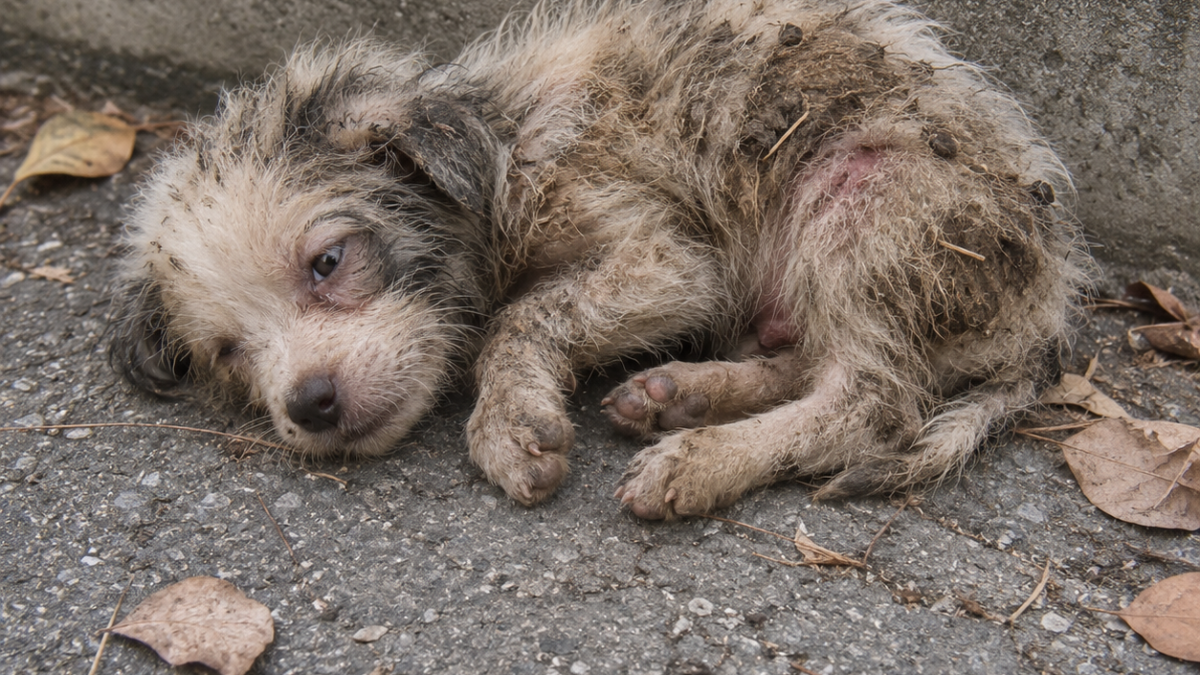
PART 2
The first time he vomited, I told myself it might be the stress.
He had been dehydrated.
Starving.
Injured.
His stomach had almost nothing inside it.
“Get a towel,” I said.
My friend brought one.
We cleaned him carefully without moving his head more than necessary.
The puppy looked exhausted afterward.
“Poor little thing.”
“He needs rest.”
I checked the IV line again.
Still flowing.
For several minutes, everything was quiet.
Then his body stiffened.
At first, I thought he was trying to stretch.
His front legs went straight.
His head pulled strangely.
And then the convulsion began.
“Oh, no.”
His body jerked.
I dropped beside him.
“Don’t hold him down.”
“I know.”
We cleared everything around him.
My heart was pounding so hard that I could hear it.
“Come on, baby.”
The seizure seemed to last forever.
It probably didn’t.
Time behaves differently when you’re watching a small animal lose control of its body.
Finally, the movements stopped.
The puppy lay completely still.
I stared at his chest.
“Is he breathing?”
“Yes.”
“Are you sure?”
My friend leaned closer.
“Yes.”
I touched the blanket near him.
I didn’t want to overstimulate him.
“Hey.”
Nothing.
“Come back.”
His eyelids moved.
I exhaled.
We called the veterinary contact.
Explained what happened.
Head trauma.
Vomiting.
Convulsions.
They told us what we already feared.
The neurological injury was serious.
“Can we move him?”
“Only if necessary. Monitor him closely. If the seizures repeat or his breathing changes, get him to emergency care immediately.”
There wasn’t a fully equipped emergency hospital close enough to make the decision simple.
Every move had risks.
Every minute had risks.
So we watched.
Ten minutes.
Twenty.
Thirty.
Then he vomited again.
My friend looked at me.
“This is bad.”
“I know.”
The puppy tried to lift his head.
It dropped.
I wiped his mouth.
“Don’t worry about anything else.”
His eyes were open but unfocused.
“Just stay here.”
He convulsed again later.
By then, fear had changed into a kind of exhausted concentration.
Check breathing.
Keep him safe.
Watch the IV.
Clean him.
Call for guidance.
Repeat.
Nobody slept.
At some point after midnight, another rescuer brought coffee.
I took it.
Set it down.
Forgot about it.
An hour later, it was cold.
The rescue station was dim except for the lights around our little corner.
The other dogs settled down.
Some slept.
A few watched us.
The puppy lay between blankets with the IV line running toward him.
I couldn’t stop thinking about the children.
Please save him.
I wished saving an animal worked like that.
You arrive.
You pick them up.
You take them to a hospital.
The danger ends.
Sometimes it does.
Not this time.
Getting this puppy off the street only revealed how badly he had already been hurt.
The injury had followed him inside.
It was in his skull.
His nervous system.
The stiff front legs.
The vomiting.
The seizures.
We could protect him from cars and hunger now.
We couldn’t simply reach inside and remove the damage.
Around three in the morning, he vomited again.
My friend leaned against the wall afterward.
“I don’t know how much more his body can take.”
“Neither do I.”
“You should rest for twenty minutes.”
“No.”
“We can switch.”
“No.”
“You haven’t moved.”
“I’ll move when he does.”
She gave me a tired look.
“That doesn’t make sense.”
“Nothing about tonight makes sense.”
She sat beside me.
For a while, we watched him breathe.
Then she asked, “Do you think anyone is looking for him?”
I looked at the puppy.
“I don’t know.”
“No collar.”
“No.”
“No one reported him?”
“Not that we’ve heard.”
She was quiet.
“Two days beside a trash can.”
I knew what she was thinking.
“How do people walk past?”
I had asked myself the same question.
I could have given an angry answer.
Maybe some people didn’t notice.
Maybe some thought he belonged nearby.
Maybe someone assumed somebody else would help.
Maybe people were busy.
Maybe they didn’t want responsibility.
None of those answers felt sufficient.
Then I thought about the kids.
“Not everybody walked past.”
She looked at me.
“No.”
“The children stopped.”
That mattered.
When adults had normalized the sight of a suffering puppy near garbage, children had looked at him and immediately understood:
This is wrong.
Help him.
By four in the morning, the puppy finally rested for a longer stretch.
I was afraid to call it sleep.
I checked his breathing so often that my friend eventually said, “You’re going to drive yourself insane.”
“Probably.”
“He’s breathing.”
“I know.”
Five seconds later, I checked again.
Morning arrived slowly.
Gray light appeared in the windows.
The rescue station began waking.
Dogs stretched.
Water bowls moved.
Someone opened a door.
I felt as though I had aged five years.
My back hurt.
My eyes burned.
My clothes smelled like vomit and disinfectant.
My friend looked worse.
“We made it to morning.”
I looked at the puppy.
“Did he?”
His eyes were open.
Something was different.
His head moved.
Slowly.
He tilted it.
Then looked across the room.
Really looked.
Not the unfocused stare from the night before.
He seemed to be noticing the other dogs.
One barked softly.
The puppy’s ears reacted.
I leaned closer.
“Hey.”
His gaze moved toward me.
I froze.
“Did you see that?”
My friend came over.
“What?”
“He looked at me.”
The puppy turned his head again.
At the other dogs.
Then back.
My friend smiled for the first time all night.
“Well, hello.”
I felt tears sting my eyes.
“Good morning.”
The puppy blinked.
I laughed.
“You have no idea how terrible you were last night.”
He stared at me.
“Absolutely terrible.”
His nose moved.
He smelled something.
Another rescuer was preparing food for the dogs.
The puppy lifted his head a little higher.
My friend noticed too.
“Is he smelling breakfast?”
“No way.”
We moved a small amount of appropriate food closer.
He sniffed.
“Easy.”
His tongue came out.
One lick.
Then another.
I almost shouted.
“He wants food.”
“Don’t let him eat too fast.”
“I know.”
The puppy licked again.
I laughed through tears.
“You spent the entire night terrifying us, and now you’re asking for breakfast?”
His eyes seemed brighter.
Not normal.
Not safe.
But present.
That morning did not mean he was healed.
Far from it.
But it gave us our first glimpse of the puppy underneath the injury.
Hungry.
Curious.
Watching other dogs.
Interested in the world.
Later, one of the sponsors helping with his treatment offered him a name.
Fubao.
The name stayed.
“Fubao,” I said.
The puppy looked toward the food.
“Well, apparently your name is Fubao now.”
My friend smiled.
“It suits him.”
“What does he think?”
“He thinks breakfast suits him.”
Fubao ate a small meal.
Then rested.
The hospital checked him again that day.
His neurological condition remained concerning.
His front legs stayed unnaturally stiff and straight.
At times, they looked almost locked.
The veterinarian manipulated them gently.
“What does that mean?”
“It could be related to the brain injury and increased pressure.”
“Increased pressure where?”
“Inside the skull.”
The words made my stomach tighten.
Intracranial pressure.
Pressure inside the skull.
The kind of thing you cannot see by looking at a puppy who has started eating again.
That became the cruel part of Fubao’s recovery.
On the outside, he could look better.
He could eat.
He could watch the other dogs.
He could respond to voices.
But the danger inside his head was still there.
His front legs told the truth.
They remained rigid.
When he tried to reposition himself, they didn’t cooperate normally.
“Can physical therapy fix it?”
“We don’t know yet.”
“Can medication reduce the pressure?”
“We can manage some symptoms, but he needs more advanced evaluation.”
So I took him to a larger hospital.
The drive felt different from the first one.
Fubao was awake.
His appetite had returned enough that he now protested when food didn’t appear quickly.
That was encouraging.
His neurological signs were not.
At the larger hospital, the veterinary team examined him carefully.
Imaging and assessment confirmed our fear.
Pressure was building inside his skull.
I sat with the veterinarian.
“What do we do?”
He explained that surgery might eventually be necessary.
“Eventually?”
“He’s extremely small.”
“How small is too small?”
“In his current condition, surgery carries very high risk.”
“What happens if we wait?”
“We monitor closely.”
“What happens if the pressure increases?”
The veterinarian didn’t need to finish.
I knew.
“Could he die?”
“Yes.”
“Could he become permanently disabled?”
“Yes.”
“Could he recover?”
“Yes.”
I stared at him.
“Those are three very different answers.”
“I know.”
I hated uncertainty.
I wanted a plan with a guaranteed ending.
Medicine doesn’t work that way.
Especially not with a tiny puppy whose skull has already suffered major injury.
I looked at Fubao.
He was awake in his carrier.
One front leg remained stiff.
“You’re too small.”
He blinked.
“That might be the first time anyone has told you to grow faster.”
For the next period, our lives revolved around monitoring him.
Food became important.
Every bite meant strength.
Every bit of weight gained might make future treatment safer.
Fubao took this responsibility seriously.
Very seriously.
At first, we were thrilled whenever he ate.
Then he discovered preferences.
I placed one kind of food in front of him.
He sniffed.
Turned his head away.
I stared.
“You’re joking.”
Nothing.
“Two days ago, you were eating garbage.”
Fubao looked at me.
“This is premium puppy food.”
He refused.
My friend tried a different option.
Fubao sniffed.
Ate.
I pointed.
“Oh, so now we have standards?”
His tail moved slightly.
“That is unbelievable.”
My friend laughed.
“You wanted him to feel better.”
“I didn’t ask for a food critic.”
Fubao continued eating.
The joke became part of our routine.
His appetite improved faster than his legs.
His front limbs still remained stiff.
We supported him when he tried to move.
He wanted to explore.
His body wouldn’t cooperate.
That was heartbreaking in a different way.
The puppy inside him had awakened.
The puppy wanted things.
Food.
Attention.
Movement.
Play.
His nervous system placed limits on all of it.
One afternoon, Fubao watched another puppy walk past.
His eyes followed every step.
Then he tried to push himself up.
His rear legs moved.
His front legs stayed straight.
He toppled.
I caught him.
“Easy.”
Fubao struggled.
“I know.”
He tried again.
“Wait.”
His body seemed furious with itself.
That was the first time I wondered what frustration feels like to an animal who cannot understand why his own legs refuse him.
He had no concept of intracranial pressure.
No concept of neurological damage.
He only knew:
I want to go there.
My body won’t take me.
I held him close until he stopped struggling.
“I’m sorry.”
He pressed his face against my shirt.
“We’re working on it.”
The pressure inside his skull continued to worry us.
We followed every medical instruction.
Every appointment.
Every medication schedule.
Every change.
Then came the day I had been afraid of.
Fubao became less responsive.
At first, we thought he was tired.
He had bad days.
Then his head dropped.
“Fubao?”
No response.
I touched him.
“Hey.”
His breathing continued.
But he didn’t properly wake.
My friend grabbed the phone.
“We’re going.”
“To the hospital?”
“Yes.”
Something inside me already knew.
This was not ordinary sleep.
By the time we reached medical care, Fubao was slipping into a coma.
I stood beside the examination table while the veterinarian worked.
“Fubao.”
Nothing.
The puppy who had looked around at other dogs after that terrible first night was now disappearing from us again.
“What’s happening?”
“The pressure may be worsening.”
“Can you operate now?”
The answer was complicated.
His size.
His condition.
The facility.
The expertise required.
We needed more.
“We need to transfer him.”
“Where?”
“Hangzhou.”
The word immediately became our destination.
“How fast?”
“As fast as safely possible.”
We didn’t debate.
We didn’t ask about inconvenience.
We didn’t ask whether the trip would be exhausting.
We didn’t ask whether this was becoming too difficult.
Those questions had become irrelevant.
Before we left, I looked at Fubao.
His eyes were closed.
His front legs were stiff.
“Listen to me.”
No response.
“I don’t know if you can hear this.”
I touched his paw.
“If you wake up and never walk normally, we’ll deal with it.”
My voice shook.
“If you need somebody to carry you forever, we’ll carry you.”
My friend stood beside me.
“If you need help eating, we’ll help.”
“If you need rehabilitation for the rest of your life, we’ll do it.”
I swallowed.
“You don’t have to wake up perfect.”
That was important.
I didn’t want survival to come with conditions.
Not:
Wake up and walk.
Not:
Wake up and become normal.
Not:
Wake up and make this worth the money or time.
Just:
Wake up.
“We’ll figure out the rest.”
We rushed him toward Hangzhou.
The drive was terrifying.
Every bump felt too large.
Every delay felt personal.
Traffic became an enemy.
I kept watching Fubao.
“Still breathing.”
My friend nodded.
“Still breathing.”
I checked again.
“Still.”
At one point, I whispered, “The children would be so mad at you if you gave up now.”
My friend glanced over.
“You’re guilt-tripping a comatose puppy.”
“Yes.”
“Fair.”
I leaned closer to Fubao.
“They called us because they believed somebody would help you.”
His body remained still.
“Don’t make children lose faith in adults.”
It was absurd.
It kept me from falling apart.
When we reached the hospital in Hangzhou, the medical team took over immediately.
They had more advanced capabilities.
More experience with a case like his.
They reviewed the imaging.
Examined him.
Evaluated the pressure.
Then a surgeon came to speak with us.
“He needs surgery.”
This time there was no “eventually.”
“How dangerous?”
“All surgery has risk. In his condition, the risk is significant.”
“If you don’t operate?”
The surgeon’s expression said enough.
I looked through the window.
Fubao lay unconscious.
“Do it.”
The consent papers blurred in front of me.
I signed.
My friend signed where necessary.
Someone explained possible complications.
I heard words.
Anesthesia.
Bleeding.
Neurological damage.
Death.
I nodded.
I understood each one individually.
Together, they sounded like noise.
Then they took Fubao away.
Waiting for surgery was worse than the first night.
During the first night, I could do things.
Clean him.
Watch the IV.
Protect him during seizures.
Talk to him.
Now there was nothing.
We sat.
We waited.
My friend stared at her phone without reading anything.
I paced.
She finally said, “Sit down.”
“I can’t.”
“You’re making me dizzy.”
“I’ll pace farther away.”
“That doesn’t solve the problem.”
I sat for maybe thirty seconds.
Then stood again.
I thought about the trash can.
That stupid trash can.
If the children had walked another route—
No.
I stopped.
There is no useful ending to that sentence.
If.
If.
If.
Rescue is full of terrifying alternate timelines.
What if nobody stops?
What if help arrives ten minutes later?
What if we choose a different hospital?
What if we wait one more day?
You can torture yourself forever.
The reality was simple.
The children had stopped.
We had come.
Fubao was in surgery.
That was the timeline we had.
Hours later, the surgeon came toward us.
I stood so quickly my chair moved backward.
“He’s out of surgery.”
I searched the doctor’s face.
“Alive?”
“Yes.”
I closed my eyes.
“Did it work?”
“The procedure went as planned. Now we have to see how he responds.”
“Will he wake up?”
“We hope so.”
Hope.
Again.
Always hope.
Never promise.
We were allowed to see him later.
Fubao looked impossibly small surrounded by hospital equipment.
His head had been treated surgically.
His body remained still.
I stood beside him.
“We said we’d do our part.”
My hand rested near him.
“They did the surgery.”
No response.
“Your turn.”
Hours passed.
Then something changed.
A nurse called us closer.
“He’s responding.”
I stopped breathing.
“What?”
“Watch.”
She spoke to him.
Touched him.
Fubao moved.
Barely.
His eyelids fluttered.
My hand went to my mouth.
“Fubao?”
One eye opened slightly.
Then closed.
I began crying.
The nurse smiled.
“He’s waking.”
“Say it again.”
“He’s waking up.”
I laughed while crying.
My friend did the same.
“Did you hear that, Fubao?”
His eyelids moved.
“You are unbelievably dramatic.”
The nurse laughed.
We had told him he didn’t need to wake up perfect.
He didn’t.
Recovery after brain surgery is not a movie scene.
Fubao did not open his eyes, jump off the bed, and run into our arms.
He woke slowly.
He was weak.
Confused.
His neurological problems did not instantly disappear.
His legs still needed help.
He required constant medical supervision.
But he was awake.
That was enough.
For that day, it was everything.
The first time he seemed to recognize us, I leaned close.
“Do you know me?”
His eyes focused.
Maybe.
I chose to believe yes.
My friend said, “Don’t overwhelm him.”
“I’ve spent half my life with this dog now.”
“It has been less than two weeks.”
“Emotionally, it has been twenty years.”
She laughed.
Fubao’s recovery became a series of tiny milestones.
He swallowed.
Good.
He tolerated feeding.
Good.
He stayed awake longer.
Good.
He reacted to voices.
Good.
By the end of that first week, something wonderful happened.
Fubao tried to play.
A nurse had placed a soft little toy near him.
He looked at it.
The toy squeaked.
His head moved.
The nurse squeezed it again.
Fubao opened his mouth.
“You want this?”
She brought it closer.
He grabbed it.
Not strongly.
But enough.
The nurse gently pulled.
Fubao held on.
I stared.
“Is he playing?”
The nurse smiled.
“A little.”
I laughed.
“Fubao.”
He released the toy.
Then reached for it again.
“That is absolutely ridiculous.”
My friend looked confused.
“What?”
“He was in a coma.”
“I know.”
“Now he’s playing tug.”
“Tiny tug.”
“I don’t care.”
For a few seconds, nobody in that room was thinking about intracranial pressure.
We were watching a puppy play.
The hospital staff fell in love with him quickly.
It wasn’t difficult.
Fubao had survived enough that everyone felt personally invested.
Nurses came in even when they weren’t assigned to him.
Receptionists found excuses to stop by.
Someone would pick him up when medically appropriate.
Another person would hold him later.
He became a tiny celebrity in the hospital.
One afternoon, I arrived and found him in the arms of a receptionist.
“Excuse me.”
She smiled.
“He requested this.”
“He cannot talk.”
“He communicated clearly.”
Fubao looked comfortable.
I crossed my arms.
“Traitor.”
The receptionist cuddled him closer.
“You can have him back later.”
That became another sign of recovery.
Fubao started wanting to be held.
Not merely tolerating it.
Wanting it.
If someone walked past, he watched.
If a person came close, he leaned toward them.
He had spent two days beside a trash can apparently ignored by adult after adult.
Now, if he wanted human attention, there was almost always someone available.
I thought about that often.
His life had moved from invisibility to abundance.
From nobody stopping to too many people volunteering to hold him.
That felt like justice.
His front legs remained the biggest physical challenge.
They had been stiff and straight for so long that normal movement was not going to return instantly.
The neurological injury had affected the way his body functioned.
Rehabilitation became the next stage.
The first session looked almost too gentle to matter.
A therapist positioned him.
Supported his chest.
Helped align his limbs.
Encouraged small movements.
I watched.
“That’s it?”
The therapist looked at me.
“What were you expecting?”
“I don’t know. Something dramatic.”
She smiled.
“Recovery is usually boring.”
She helped Fubao shift weight.
“Boring is good.”
His front paws touched the surface.
At first, they didn’t bear much.
“Come on.”
The therapist supported him.
“Feel the floor.”
Fubao tried.
His legs trembled.
I wanted to help.
The therapist stopped me.
“He needs to work.”
“He looks tired.”
“He is.”
“How much is too much?”
“I’ll tell you.”
That became my job.
Trust people who knew more than I did.
Fubao pushed.
For one second, part of his weight passed through his front legs.
The therapist smiled.
“There.”
“What?”
“He supported himself.”
“That’s support?”
“A little.”
I leaned closer.
“Do it again.”
Fubao looked at me.
“Come on.”
The therapist laughed.
“Don’t become that parent.”
“What parent?”
“The one screaming at the sidelines.”
“I am supportive.”
“You are intense.”
Fair.
Rehabilitation was slow.
Some days, Fubao seemed stronger.
Other days, exhaustion hit him quickly.
There were no straight lines.
No perfect upward graph.
Recovery zigzagged.
A good morning could be followed by a weak afternoon.
One day his leg position looked better.
The next, it looked almost unchanged.
I had to learn not to panic over every fluctuation.
The rehab team focused on consistency.
Gentle weight-bearing.
Positioning.
Muscle activation.
Preventing contractures.
Encouraging neurological pathways.
I learned phrases I had never expected to use.
Fubao learned only one phrase:
“Good boy.”
He loved that one.
Every successful effort earned praise.
“Good boy.”
His ears lifted.
“One more.”
He tried.
“Good boy.”
Eventually, he started anticipating the reward.
The therapist placed him in position.
Fubao looked toward the treat.
“Already?”
His eyes stayed fixed.
“You haven’t done anything.”
The therapist smiled.
“He knows the system.”
Fubao attempted the exercise.
Then looked at the treat again.
“Manipulative.”
She gave it to him.
“You’re encouraging corruption.”
“He worked for it.”
As his appetite strengthened, the puppy who once searched for scraps beside garbage became increasingly selective.
This part amused everyone.
One lunch, a nurse brought his meal.
Fubao sniffed.
Turned away.
The nurse stared.
“You’re hungry.”
Fubao refused to look.
She offered again.
Nothing.
She changed the food slightly.
Fubao immediately ate.
The nurse put her hands on her hips.
“Oh, so that’s what we’re doing?”
I walked in.
“What happened?”
“Your son is picky.”
“My son?”
“You’re here every day. He’s your son.”
Fubao ate enthusiastically.
I laughed.
“Remember the trash can?”
The nurse said, “He doesn’t.”
I looked at Fubao.
Maybe she was right.
Maybe he didn’t.
Or maybe animals remember differently.
Either way, I liked the idea that the trash can was becoming irrelevant to him.
Fubao’s world now contained better things.
Medical beds.
Warm blankets.
People.
Toys.
Food worth rejecting.
Hands that reached toward him gently.
His old world had required survival.
His new one allowed preference.
There is something profound about an abandoned animal becoming picky.
It means scarcity has lost its grip.
A dog who believes this may be the only meal of his life does not complain about flavor.
A dog who trusts that another meal is coming can say:
No thanks.
I want the good one.
Every time Fubao rejected food, part of me wanted to laugh and cry at once.
“You are spoiled.”
He ate.
“Completely spoiled.”
The nurses agreed.
The receptionists made it worse.
Someone bought him a small blanket.
Another brought a toy.
One person carried him through a quiet section of the hospital because he seemed bored.
“Why are you carrying him?”
“He asked.”
Again.
“He cannot ask.”
She looked at Fubao.
Fubao looked at her.
“He asked.”
I surrendered.
Fubao became skilled at being held.
His body relaxed differently in people’s arms now.
The first time I picked him up near the trash can, he had felt almost absent.
His body was there.
His spirit seemed buried under pain and exhaustion.
Now he leaned into people.
Looked around.
Sniffed.
Sometimes protested when put down.
One nurse placed him back in his recovery bed.
Fubao made a small noise.
She turned.
“What?”
He looked at her.
She picked him up again.
I pointed.
“You realize you’re creating a problem.”
“He needs emotional support.”
“He needs to learn he’s a dog.”
“He is a baby.”
“He is a manipulator.”
Fubao rested his chin on her arm.
She looked at me.
“Case closed.”
I couldn’t argue.
Weeks passed.
His surgical recovery progressed.
The danger of the acute crisis decreased.
Then came a different question.
What would Fubao’s long-term life look like?
Could he stand independently?
Could he walk normally?
Would his front legs always need support?
Would neurological damage remain permanent?
Nobody could promise.
That used to terrify me.
Then I remembered what we said before Hangzhou.
You don’t have to wake up perfect.
We had meant it.
So we prepared ourselves emotionally for every possibility.
Mobility aids.
Long-term therapy.
Carrying him.
Special care.
Home modifications.
Whatever.
One evening, I sat beside Fubao after rehab.
He was tired.
“You know something?”
He looked at me.
“We already made the deal.”
His head tilted slightly.
“You do your part.”
I rubbed his chest.
“We do ours.”
He relaxed.
“If you stand, great.”
I smiled.
“If you don’t, we’ll figure it out.”
His eyes closed.
“Your life isn’t a test you have to pass.”
That was something I wished every rescued animal could understand.
Humans often celebrate the dramatic recovery.
Walking again.
Running.
Perfect before-and-after photos.
Those are beautiful.
But an animal who remains disabled is not a failed rescue.
Survival is not valuable only when it produces normality.
If Fubao needed help forever, he would still deserve the help.
That belief changed the way I viewed every rehabilitation session.
I stopped treating each exercise as an exam.
Instead, it became an invitation.
Try.
See what your body can do today.
No shame if today is less than yesterday.
No disappointment if progress stops.
Just try.
And Fubao did.
Again and again.
His front legs began bearing more weight.
At first, the improvement was so small that only the therapists noticed.
One day, the therapist said, “He’s holding more.”
“How much more?”
“Enough that I can feel a difference.”
“I can’t see it.”
“You don’t need to.”
“That is not satisfying.”
She laughed.
“Recovery doesn’t care whether you are satisfied.”
Fair.
A week later, I could see it.
Fubao was positioned with support.
His front paws were placed properly.
The therapist gradually reduced how much she held him.
His body stayed up.
Not fully.
Not independently.
But more.
I crouched in front of him.
“Fubao.”
He looked at me.
“Look at you.”
His legs shook.
“Good boy.”
He held for another second.
Then sank.
I clapped.
The therapist shook her head.
“You really are a sideline parent.”
“Yes.”
“No shame?”
“None.”
Fubao looked pleased.
After that, every small improvement became part of our private celebration.
An extra second upright.
A better paw position.
A stronger push.
A controlled shift of weight.
The first time he moved one front paw forward intentionally, I nearly lost my mind.
“Did you see that?”
“Yes.”
“He moved it.”
“Yes.”
“Forward.”
“Yes.”
“On purpose.”
“Yes.”
The therapist laughed.
“I was present.”
I hugged Fubao.
He wanted the treat.
“Fine.”
I handed it over.
“Apparently emotional praise isn’t enough.”
His appetite had become legendary.
But still selective.
The hospital staff created nicknames for him.
Prince Fubao.
Mr. No-Not-That-One.
Lunch Inspector.
One afternoon, three different foods were offered before he accepted one.
I stared at him.
“I need the children who found you to see this.”
Fubao kept eating.
“They would never believe the trash-can puppy now rejects lunch.”
The receptionist said, “Personal growth.”
“Economic growth.”
“Standards.”
Fubao ignored us.
I did eventually contact the school through the appropriate adults to let the children know the puppy they had found had survived the worst crisis and was receiving treatment.
We protected everyone’s privacy.
But I wanted them to know one thing.
Their decision mattered.
When I was told that the children were relieved, I had to stop speaking for a moment.
One of them apparently asked, “Can he walk yet?”
The answer was:
Not normally.
But he’s working on it.
Another asked whether people stayed with him.
Yes.
Always.
That answer mattered too.
I thought about what those children had seen.
A puppy beside trash.
Adults passing.
They could have learned a terrible lesson.
That suffering is ordinary.
That someone else will deal with it.
That small lives don’t matter.
Instead, they acted.
And because they acted, they got a different lesson.
Sometimes calling for help works.
Sometimes adults show up.
Sometimes a puppy lives.
I hoped they remembered that longer than they remembered the frightening sight of Fubao injured.
His story became, to me, as much about them as about him.
Children had noticed what adults ignored.
Fubao later became surrounded by adults who refused to ignore anything about him.
Every meal.
Every medication.
Every physical therapy session.
Every change in behavior.
His life swung from one extreme to another.
Invisible.
Then intensely seen.
One afternoon, I watched him sleeping in a nurse’s arms.
His face looked peaceful.
I remembered seeing him near the trash can.
For a moment, the two images wouldn’t fit together.
“What’s wrong?” the nurse asked.
“Nothing.”
“You’re staring.”
“I was remembering.”
She looked down at Fubao.
“The beginning?”
“Yeah.”
She adjusted the blanket around him.
“He doesn’t look like that dog anymore.”
“No.”
Fubao opened his eyes.
The nurse whispered, “Go back to sleep.”
He did.
I smiled.
“Maybe that’s the best revenge.”
“What?”
“That he can sleep.”
She understood.
A vulnerable animal cannot truly rest unless the environment feels safe.
Sleep requires trust.
The trash can had offered no safety.
The roadside had offered no protection.
Now Fubao could fall asleep in someone’s arms.
That was not a small transformation.
The question of “revenge” had come to bother me during rescue stories.
People wanted to know whether whoever caused suffering had been punished.
Sometimes we knew.
Sometimes we didn’t.
In Fubao’s case, we didn’t have a documented person to confront.
We knew he had been found injured.
We knew adults had passed him.
We knew children finally called.
Anything beyond that would have been invention.
I didn’t want invention.
Fubao’s real story was powerful enough.
There was no need to create a villain with a face.
Neglect itself was the enemy.
Indifference was the enemy.
The injury was the enemy.
The pressure inside his skull was the enemy.
The coma was the enemy.
And Fubao kept answering each one.
Trash can?
He got hospital meals.
Nobody stopping?
Now people argued over who got to hold him.
Unable to stand?
He went to rehabilitation.
Too small for surgery?
He grew and reached a team capable of operating when his condition demanded it.
Coma?
He woke.
That was enough drama for any life.
One morning, during rehabilitation, Fubao did something new.
The therapist supported his body lightly.
He positioned his front paws.
His rear legs engaged.
Then she loosened her hands.
Fubao remained upright.
I held my breath.
“One.”
The therapist looked at me.
“Don’t count.”
“Two.”
“Seriously.”
“Three.”
Fubao trembled.
“Four.”
He dropped.
I jumped up.
“Four seconds.”
The therapist laughed.
“You are impossible.”
“Four!”
Fubao looked around for food.
I gave him a treat.
“You stood.”
He ate.
“Four whole seconds.”
He wanted another treat.
“Don’t exploit the milestone.”
He did.
The four seconds became five.
Then longer.
Some days he managed less.
Some days more.
Progress remained uneven.
But his body was learning.
Neural pathways adapting.
Muscles strengthening.
His front legs no longer looked completely disconnected from his intentions.
He began trying to pull himself toward people.
If someone stood just out of reach, Fubao became determined.
“Come on.”
He pushed.
His paws moved.
His chest lifted.
“Good.”
He moved again.
“That’s it.”
Sometimes he collapsed.
Then tried again.
The rehab staff knew when to stop him.
Fubao did not.
His determination could become a problem.
“Enough,” the therapist said.
He tried again.
“No.”
Another attempt.
She picked him up.
“You’re done.”
Fubao protested.
I laughed.
“Now you know what we’ve been dealing with.”
The therapist held him.
“He’s stubborn.”
“That’s why he’s alive.”
Maybe that was too simple.
Many animals fight and still don’t survive.
Survival is not proof of superior character.
Sometimes biology, timing, treatment, resources, and luck decide things no amount of determination can overcome.
But with Fubao, stubbornness helped.
He wanted food.
He wanted people.
He wanted toys.
He wanted movement.
Desire kept pulling him forward.
The hospital eventually started discussing the next phase of his care.
He no longer needed the same level of acute medical monitoring.
He still needed rehabilitation.
Follow-up.
Neurological assessment.
Support.
But his world could become less clinical.
That transition scared me.
Hospitals feel safe because machines and experts are nearby.
Leaving means responsibility moves closer to you.
“What if he has another seizure?”
“We have a plan.”
“What if he loses consciousness?”
“Emergency plan.”
“What if—”
The veterinarian looked at me.
“You’re going to ask twenty more.”
“At least.”
He smiled.
“Write them down.”
I did.
Twenty-three.
He answered all of them.
Fubao sat nearby, uninterested.
I looked at him.
“You should care more about this.”
He licked his paw.
“Apparently I’m the anxious one.”
When he eventually left intensive hospital care, the nurses gathered.
It reminded me of a graduation.
One receptionist was already crying.
“He’s not leaving forever.”
“I know.”
“He’ll come back for rehab.”
“I know.”
“Then stop crying.”
She cried harder.
Fubao was passed through several pairs of arms before reaching me.
“You are never going to learn independence at this rate.”
A nurse kissed his head.
“He can learn tomorrow.”
Everyone said some version of goodbye.
“Keep eating.”
“Do your exercises.”
“Don’t scare us again.”
“Come back stronger.”
Fubao looked from face to face.
He had no idea how many people had rearranged parts of their lives around him.
Maybe that was good.
Love doesn’t need to become a debt.
He didn’t owe anyone.
He was simply allowed to receive it.
At the rescue environment, Fubao was different from the puppy we had brought there during his first night.
Back then, the other dogs seemed like distant shapes.
Now he noticed everything.
Barks.
Movement.
Food.
People.
One dog approached carefully.
Fubao became excited.
His body moved more than his legs could manage.
“Easy.”
He wanted to play.
That created another rehabilitation motivation.
We allowed safe interaction.
Fubao watched the other dog walk.
Then tried to follow.
His front legs pushed.
He struggled.
The other dog waited.
Fubao tried again.
I felt tears coming.
My friend said, “Don’t.”
“Don’t what?”
“Cry every time he moves.”
“I don’t.”
“You do.”
“Mind your business.”
She laughed.
Fubao kept trying.
Sometimes the other dog lay down beside him.
That friendship changed his mood.
He began vocalizing more.
Demanding more.
His personality became clearer.
Fubao was affectionate.
Persistent.
Food-driven.
Curious.
Occasionally dramatic.
And completely convinced that being held was a human obligation.
If I sat near him without picking him up, he stared.
“No.”
Stare.
“You need floor time.”
Stare.
“Rehab.”
A small whine.
“Manipulation.”
Another whine.
I picked him up.
My friend walked past.
“Excellent boundary-setting.”
“Be quiet.”
Fubao rested against my chest.
I whispered, “Five minutes.”
Twenty minutes later, he was asleep.
That happened often.
He had gone from being unable to get anyone to stop beside him to being almost incapable of spending time without human contact.
I worried briefly that we were making him overly dependent.
Then I remembered how early he was in recovery.
Security first.
Independence could come later.
His rehabilitation continued.
We incorporated supported standing.
Gentle movement.
Weight shifts.
Controlled reaching.
Appropriate massage.
Exercises prescribed by professionals.
I became obsessive about technique.
“Is my hand here?”
“Lower.”
“Here?”
“Yes.”
“Too much pressure?”
“No.”
“Like this?”
The therapist looked at me.
“You know you’re allowed to breathe.”
“I am breathing.”
“Barely.”
Fubao meanwhile looked bored.
He only became enthusiastic when treats appeared.
One session, the therapist used food to encourage him forward.
Fubao worked harder than I had ever seen.
I laughed.
“So all the inspirational speeches were useless.”
The therapist grinned.
“Chicken works better.”
“Excellent.”
I looked at Fubao.
“Very profound.”
He reached for the next piece.
Over time, the stiffness in his front legs became less absolute.
There was still abnormal tone.
Still weakness.
Still a long rehabilitation road.
But he could engage more.
Support more.
Control more.
Those three words became our new milestones.
Engage.
Support.
Control.
One day, Fubao shifted from lying down into a semi-upright position with less help than usual.
I froze.
“Did he do that?”
The therapist nodded.
“Mostly.”
“Mostly?”
“I guided one leg.”
“So he did most.”
“Yes.”
I grabbed my phone to record the next attempt.
Fubao refused.
Nothing.
“Come on.”
Nothing.
“You just did it.”
He looked at me.
The therapist laughed.
“Performance anxiety.”
“Or sabotage.”
Eventually he did it again.
I recorded three seconds.
I watched that video probably a hundred times.
To anyone else, it looked unimpressive.
A puppy struggling to position himself.
To me, it contained weeks of fear.
Trash can.
Seizures.
Coma.
Surgery.
Rehab.
Every tiny movement carried history.
That is something people who haven’t cared for a severely injured animal sometimes don’t understand.
Progress becomes microscopic.
You celebrate things nobody else would notice.
A paw turning slightly inward instead of remaining rigid.
A head held steady for five extra seconds.
One meal finished without nausea.
A night without seizures.
A stronger grip.
A tail wag.
Tiny things.
Together, they rebuild a life.
Fubao’s appetite continued rebuilding his body.
He gained weight.
His face changed.
The hollow, exhausted look softened.
His coat improved.
He looked younger somehow.
Which was strange because he had always been a puppy.
But illness had made him look ancient.
Now his age returned to his face.
People meeting him for the first time said, “He’s adorable.”
I always wanted to show them the first photograph.
Not to shock them.
To understand why the word mattered.
Adorable.
Not tragic.
Not critical.
Not neurological case.
Puppy.
That transition felt huge.
One afternoon, the children who had originally found Fubao received another update through responsible channels.
This time, the message included a photograph of him awake, holding a small toy.
I was later told they were thrilled.
One child apparently said, “He looks happy.”
That sentence stayed with me.
Not alive.
Happy.
We had crossed another line.
Survival had become life.
I wished I could tell those children everything.
That their call had set off a chain they could never have imagined.
A rescue vehicle.
A hospital.
An IV.
A sleepless night.
A name.
A larger hospital.
A coma.
A drive to Hangzhou.
Brain surgery.
Nurses holding him.
Rehabilitation.
All because they looked at a puppy beside trash and decided he mattered.
That is how lives change sometimes.
Not through one heroic person.
Through a chain.
Someone notices.
Someone calls.
Someone drives.
Someone treats.
Someone stays awake.
Someone operates.
Someone rehabilitates.
Someone pays.
Someone feeds.
Someone holds.
No one link gets to claim the whole rescue.
Fubao belonged to the chain.
Months into recovery, I visited the place where he had been found.
I hadn’t planned to.
I was nearby.
The trash can was still there.
That bothered me.
It looked ordinary.
People walked past.
A scooter went by.
Someone threw something away.
No sign remained that a tiny puppy had spent two days there with a head injury.
I stood across the street.
My friend asked, “Why did you want to come?”
“I don’t know.”
“Closure?”
“Maybe.”
I looked at the ground.
I imagined Fubao there.
Searching.
Waiting.
Confused.
I felt anger rise.
Then my phone buzzed.
A message from the rehab center.
A video.
Fubao was supported upright.
He took a clumsy little forward movement.
Then another.
The therapist’s voice in the video said, “Good boy!”
I laughed.
Right there beside the trash can.
My friend looked at me.
“What?”
I showed her.
She smiled.
“Timing.”
“Yeah.”
I watched the video again.
Then looked at the place he had been found.
Suddenly, the trash can felt smaller.
It had once represented his entire world.
Food scraps.
Pain.
People passing.
Now it was just a trash can.
Fubao’s world had become larger than that place.
That realization changed something in me.
We left.
I never needed to go back.
Fubao continued improving.
His long-term outcome still wasn’t guaranteed.
We didn’t know whether he would ever move exactly like a typical dog.
That stopped mattering as much.
He had quality of life.
He had interest.
He had appetite.
He had connection.
He could participate in rehabilitation.
He could play.
He could demand affection.
And increasingly, his front legs were supporting him.
One morning, he surprised us all.
He was on a padded surface during therapy.
The therapist positioned him.
Fubao stabilized.
Then, instead of immediately collapsing, he shifted weight forward.
One front paw moved.
Then the other.
His rear legs followed awkwardly.
It wasn’t normal walking.
It wasn’t independent walking in the way people imagine.
But it was movement.
Forward.
Generated by him.
I forgot every instruction about staying calm.
“FUBAO!”
He stopped.
The therapist looked at me.
“You scared him.”
“Sorry!”
Fubao stared.
“Do it again.”
She laughed.
“No shouting.”
I covered my mouth.
The next attempt, I whispered.
“Come on.”
Fubao moved.
One.
Two.
A wobble.
Support.
Another small motion.
My eyes filled.
My friend beside me whispered, “He really is doing it.”
“Yeah.”
Not perfectly.
But Fubao had never agreed to perfect.
Neither had we.
That evening, I thought about the promise we made while he was unconscious.
If you need help forever, we’ll help.
We still meant it.
His progress did not cancel the promise.
It simply changed what help looked like.
Sometimes help meant carrying him.
Sometimes holding a sling.
Sometimes driving to therapy.
Sometimes buying food he would actually eat.
Sometimes refusing to hold him when he needed exercise.
That last one was hardest.
Fubao stared from the floor.
“No.”
Whine.
“No.”
Stare.
“You need to work.”
Whine.
My friend walked in.
“Don’t surrender.”
“I wasn’t.”
Fubao whined again.
I picked him up.
She sighed.
“You lasted twelve seconds.”
“He was emotionally distressed.”
“He’s fine.”
Fubao relaxed in my arms.
I whispered, “Don’t listen to her.”
We spoiled him.
There is no defense.
But he worked hard too.
The balance seemed fair.
His relationship with hospital staff continued through follow-ups.
Every visit became a reunion.
Receptionists looked up.
“Fubao!”
He recognized voices.
Tail movement.
Excitement.
Someone always came around the desk to hold him.
One day, a new employee asked, “Why does everybody know this dog?”
The entire room started explaining at once.
“Trash can—”
“Brain injury—”
“Coma—”
“Hangzhou—”
“Surgery—”
“Rehab—”
The new employee looked overwhelmed.
I laughed.
“Short version: he’s dramatic.”
Fubao looked innocent.
The receptionist said, “And spoiled.”
“Very.”
Fubao’s lunch arrived during one visit.
He sniffed it.
Rejected it.
The new employee stared.
“This is the dog who ate trash?”
“Exactly.”
She laughed.
“I love him.”
Everyone did.
That love was another kind of rehabilitation.
Physical therapy worked on his body.
Affection worked on everything harder to measure.
Confidence.
Security.
Expectation.
Fubao learned that reaching toward people brought warmth.
Making a sound brought attention.
Looking hungry brought food.
Being tired brought rest.
Pain brought care.
These associations are not automatic for abandoned animals.
They have to be learned.
Fubao learned fast.
Soon, when he wanted to be held, he didn’t wait quietly.
He made it known.
One evening, I was speaking to another rescuer.
Fubao vocalized.
“One second.”
He did it again.
“I’m talking.”
Again.
The other rescuer smiled.
“He’s calling you.”
“He can wait.”
Fubao became louder.
I sighed.
Picked him up.
Immediately quiet.
The rescuer laughed.
“He has you trained.”
“I am aware.”
That was how far he’d come.
Once, he could spend two days near adults who didn’t respond.
Now one small sound brought someone running.
If that isn’t a satisfying reversal, I don’t know what is.
People sometimes asked me what happened to whoever had let him end up there.
I had no honest answer.
So I never invented one.
There was no confirmed villain for me to punish.
There was only Fubao.
That became enough.
The most satisfying revenge wasn’t imagining harm coming to somebody else.
It was watching Fubao become difficult to ignore.
He took up space now.
In hospital schedules.
In rehab appointments.
In people’s arms.
In conversations.
In photo galleries.
In hearts.
The invisible puppy had become unforgettable.
That was his revenge against indifference.
He lived loudly enough that nobody around him could pretend he wasn’t there.
During one rehabilitation milestone, Fubao supported enough weight through his front legs that the therapist briefly removed one hand.
I caught my breath.
“Don’t move.”
She smiled.
“I’m not telling you. I’m telling myself.”
Fubao held.
His body trembled.
His front legs bent more naturally than before.
“Good.”
He stayed up.
“Good boy.”
Then he lowered himself.
I checked the video.
“Eight seconds.”
The therapist laughed.
“You’re still counting?”
“Always.”
A month earlier, four seconds had made me cry.
Now eight.
Later, ten.
Then the measure changed.
We stopped counting seconds and started watching quality.
Was his alignment better?
Could he control descent?
Could he shift without collapsing?
Could he reach?
Could he recover balance?
As his abilities expanded, our definition of progress matured.
That happened emotionally too.
At first, success meant:
Don’t die.
Then:
Wake up.
Then:
Eat.
Then:
Play.
Then:
Bear weight.
Eventually, success became:
Enjoy your life.
That was the largest goal.
If Fubao never reached perfect mobility but enjoyed his life, the rescue was successful.
If he needed help and remained happy, successful.
If he walked differently, successful.
A life does not have to resemble someone else’s to be worth living.
Fubao taught me that without trying.
He simply enjoyed what he had.
A nurse’s lap.
A favorite meal.
A toy.
Sunlight.
Another dog nearby.
He did not spend his day comparing his gait to healthy puppies.
Humans did that.
Fubao cared whether he could get to the person holding food.
Practical priorities.
On one warm afternoon, we took him outside in a safe area after medical approval.
Fresh air touched his face.
He lifted his nose.
For a moment, he stayed completely still.
Then sniffed again.
I watched his expression.
“That’s grass.”
He looked down.
“Different from trash.”
My friend nudged me.
“Don’t make it sad.”
“I’m not.”
Fubao explored the scent.
We supported him.
He moved slightly forward.
Sunlight hit his coat.
He seemed fascinated by everything.
A leaf.
Wind.
Another dog barking far away.
Someone opening a door.
This was another first.
Not the first time he’d been outdoors.
Obviously.
But maybe the first time outdoors had meant safety.
No scavenging.
No injury untreated.
No passing feet.
Just exploration.
We stayed only as long as he had energy.
When it was time to return inside, Fubao objected.
“You’re tired.”
He wanted to stay.
“Tomorrow.”
He looked toward the grass.
“Tomorrow.”
I realized how beautiful it was to be able to promise that word.
Tomorrow.
During his first night, we couldn’t.
When he entered a coma, we couldn’t.
Now we could reasonably say:
Tomorrow, we can come outside again.
That might have been the greatest change.
A future had become ordinary.
Fubao continued growing.
The too-small puppy who once couldn’t undergo certain surgery because of his size no longer looked impossibly fragile.
He gained weight.
Strength.
Personality.
The body beneath our hands became sturdier.
One day, I picked him up and immediately said, “You’re heavy.”
My friend smiled.
“Good.”
I held him out slightly.
“When did this happen?”
Fubao looked offended.
“You were tiny.”
He leaned back toward me.
“Okay, okay.”
I hugged him.
Being heavy became another milestone.
Healthy weight.
Muscle.
Substance.
The first time I lifted him near the trash can, I had felt as though I was carrying something that might vanish.
Now I needed both arms comfortably.
Wonderful.
His food pickiness intensified.
Less wonderful.
I placed lunch down.
Fubao sniffed.
No.
“Absolutely not.”
He looked at me.
“This is what you ate yesterday.”
No interest.
“You loved it.”
Turn away.
“Do not reinvent yourself every twenty-four hours.”
My friend tried adding a small amount of another food.
Fubao ate.
I stared.
“You’re a criminal.”
He continued.
“You know what? Fine.”
I sat beside him.
“Be picky.”
He ate.
“Be impossible.”
More eating.
“Just keep being here.”
That was our bargain.
Fubao could annoy me for as many years as he wanted.
A dog has never abused permission more successfully.
His rehab team eventually documented real improvement in front-limb support.
The phrase sounded clinical.
To us, it was huge.
He was not fully independent.
He still had significant work ahead.
But the same legs that once stayed rigid and straight were participating.
Supporting.
Learning.
I looked at an old video.
The contrast shocked me.
“I forgot how stiff they were.”
The therapist said, “You adapt to seeing improvement.”
“Do you think he’ll stand independently?”
“I think he has potential.”
“That’s not a yes.”
“You know I don’t make promises I can’t keep.”
I sighed.
“You veterinarians and therapists ruin everything.”
She laughed.
“Hope is allowed. Guarantees aren’t.”
So we hoped.
Fubao worked.
Life moved forward.
The elementary school children who started the whole chain went back to their own lives.
The hospital staff treated new patients.
The rescue received new calls.
The world kept moving.
But Fubao’s story stayed with all of us.
Whenever someone said, “It’s just one puppy,” I thought:
One puppy can keep twenty adults awake.
One puppy can make a hospital receptionist cry.
One puppy can teach children their compassion mattered.
One puppy can make medical professionals celebrate a single paw movement.
There is no “just” one puppy when you’re the puppy.
To Fubao, his life was everything.
That was enough reason to fight for it.
Months after his surgery, I sat with him during a quiet afternoon.
He was tired from rehabilitation.
His head rested against my thigh.
The room was warm.
Other dogs slept nearby.
I looked down.
“You know what I remember?”
His ear twitched.
“The first morning.”
He stayed still.
“You looked around at all the dogs.”
I smiled.
“After making us clean vomit all night.”
Nothing.
“You were a terrible guest.”
Fubao breathed slowly.
“Then you wanted breakfast.”
His paw shifted.
“That was when I thought maybe we’d get to know you.”
I rubbed his back.
“We didn’t know how much trouble you were.”
He opened one eye.
“Worth it.”
I said it quietly.
“Every second.”
Fubao went back to sleep.
His body still carried the consequences of his injury.
That fact mattered.
Happy endings don’t require pretending damage never happened.
His recovery was real because the damage was real.
Some movements remained difficult.
Rehabilitation continued.
Monitoring continued.
There were still days when we worried.
But those things coexisted with happiness.
A life can contain disability and joy at the same time.
Painful history and safety at the same time.
Limitations and play at the same time.
Fubao’s story did not need to end with him becoming exactly like a puppy who had never been injured.
It needed to end with him becoming himself.
That was enough.
One of the receptionists later sent me a photograph from his hospitalization.
Fubao was tiny in her arms.
I compared it with a newer photograph.
His face had filled out.
His eyes were brighter.
I wrote:
“You spoiled him.”
She responded:
“Correct.”
No apology.
The nurses felt the same.
One said, “He earned it.”
I understood what she meant, though technically love isn’t something animals should have to earn through suffering.
Fubao deserved kindness before the injury.
Before the trash can.
Before anybody knew his story.
But after everything he survived, nobody felt inclined toward restraint.
Toys appeared.
Treats.
Blankets.
Attention.
If there was a contest for overcompensating, we won.
Fubao benefited.
His favorite thing remained being held.
There were days when he would position himself as close to someone’s feet as possible, look up, and wait.
A person would eventually surrender.
Every time.
“Don’t pick him up immediately,” I once warned a volunteer.
“He needs to practice independence.”
The volunteer nodded.
Fubao looked at her.
Five seconds.
She picked him up.
I stared.
“Five seconds?”
“He looked sad.”
“He always looks like that when he wants something.”
Fubao nestled into her chest.
The volunteer whispered, “He’s just a baby.”
I walked away.
No allies anywhere.
Maybe that was another kind of revenge.
Once, adults passed.
Now adults couldn’t pass without stopping.
Fubao had reversed the entire pattern.
I often wished the children who found him could understand that specific part.
They had been the first people in the story to stop.
After them, stopping became contagious.
Rescuers stopped.
Doctors stopped.
Nurses stopped.
Receptionists stopped.
Therapists stopped.
Volunteers stopped.
People rearranged what they were doing because Fubao needed something.
Compassion spread outward from a group of kids who refused to keep walking.
That may be the part of the story I love most.
Not surgery.
Not even the coma recovery.
The first rescue happened before we arrived.
It happened when children decided that seeing suffering created responsibility.
Everything after that depended on their call.
Years from now, I hope none of them remembers the exact medical details.
They don’t need to remember intracranial pressure.
They don’t need to remember the IV.
They should remember:
We stopped.
We told someone.
The puppy lived.
That is a powerful thing for a child to know.
Fubao’s rehabilitation continued into a longer phase.
There were exercises I could now perform with professional guidance.
Positioning.
Supported stance.
Encouraging forward movement.
Gentle strengthening.
His body tolerated more.
We also had to make sure enthusiasm didn’t become injury.
Fubao believed every good day meant he should do everything.
“No.”
He tried to move farther.
“Rest.”
He complained.
“You had brain surgery.”
Complaint.
“That argument should work longer than this.”
It didn’t.
His spirit recovered faster than his body.
That mismatch could be frustrating.
He wanted to go.
His legs sometimes said no.
On those days, we distracted him.
Toys.
Training that didn’t require too much movement.
Affection.
Food puzzles adapted to his ability.
Fubao became surprisingly clever.
Or perhaps food-motivated intelligence looks especially impressive.
One simple puzzle required him to nudge something to reveal a treat.
He learned quickly.
Then started hitting it repeatedly even when empty.
“There’s nothing left.”
Hit.
“Nothing.”
Hit.
“You checked.”
Hit.
My friend laughed.
“He doesn’t trust you.”
“He shouldn’t. I control lunch.”
Fubao stared at the puzzle.
Then at me.
“Fine.”
I added one treat.
Corruption again.
Fubao flourished in an environment where people responded to him.
His confidence grew.
The frightened, neurologically compromised puppy gave way to a demanding little personality.
He started greeting familiar people enthusiastically.
His tail wag strengthened.
The first time he barked clearly, everybody stopped.
“What was that?”
Fubao barked again.
I laughed.
“Oh no.”
The receptionist said, “He found his voice.”
“Put it back.”
Another bark.
Everyone cheered.
That was a mistake.
Fubao learned barking produced attention.
Within a week, we had created a monster.
“Who encouraged this?”
Everyone looked away.
“Cowards.”
Fubao barked.
Someone picked him up.
“Stop rewarding him!”
Nobody listened.
I lost control of the rescue.
Fubao ran it now.
Metaphorically.
Actual running remained a future goal.
But I didn’t mind.
Laughter had replaced fear.
That was priceless.
During the first night, every sound Fubao made frightened us.
Vomiting.
Convulsions.
Abnormal breathing.
Now a bark could make us laugh.
Same puppy.
Different world.
His medical follow-ups remained important.
The team monitored neurological status.
Recovery from surgery.
Development.
Mobility.
There were no careless declarations of “completely cured.”
That wasn’t the truth.
Fubao was recovering.
Working.
Adapting.
Improving.
Those words were enough.
I began to dislike dramatic rescue language that demanded every story fit into “before” and “after.”
Fubao had many afters.
After the trash can.
After the first hospital.
After the seizure night.
After his name.
After the larger hospital.
After the coma.
After Hangzhou.
After surgery.
After the first week.
After rehab began.
After his front legs first bore weight.
There was no single transformation point.
Life is rarely that neat.
Fubao was still transforming.
Maybe all of us were.
Caring for him taught me patience I didn’t know I lacked.
It also taught me how much control I falsely believed I had.
I could get him to hospitals.
I could pay for care.
I could monitor.
I could learn exercises.
I could love him.
I could not command nerve tissue to heal.
I could not force outcomes.
Sometimes care means doing everything and then waiting.
That is brutally difficult.
Fubao made it easier by remaining himself.
One evening, after a frustrating rehab day when his body seemed weaker, I sat beside him.
“I hate this.”
He looked at me.
“Not you.”
I rubbed his head.
“The waiting.”
His eyes softened.
“I want to know where this ends.”
Fubao yawned.
“You don’t care.”
He shifted into a comfortable position.
“Maybe you’re smarter.”
He lived in the present.
Today, he could eat.
Today, someone held him.
Today, his body did what it could.
Tomorrow wasn’t his problem until tomorrow.
I tried to learn from that.
The next day went better.
Of course.
Fubao supported more weight.
I laughed.
“You did that just to make me look stupid.”
The therapist said, “Dogs don’t plan emotional lessons.”
“You don’t know him.”
Fubao wanted his treat.
One day, months into his journey, he managed something close to standing with minimal support.
Not fully independent.
But close enough that everyone went silent.
The therapist’s hands hovered.
Fubao held himself.
His front legs shook.
His rear legs adjusted.
He stayed up.
I didn’t count this time.
I just watched.
His head lifted.
He looked around.
For one moment, he seemed taller than he had ever been.
Then he lowered himself.
The therapist exhaled.
“That was good.”
I couldn’t speak.
My friend said, “You’re crying.”
I nodded.
“I’m allowed.”
Fubao looked toward the food.
I laughed through tears.
“Of course.”
I gave him a piece.
Standing was hard.
Eating was effortless.
Priorities.
We celebrated later.
Not because the journey was finished.
Because milestones deserve celebration even when there are more miles ahead.
That became the tone of Fubao’s life.
Not waiting for perfect before allowing joy.
Celebrate now.
Four seconds.
Eight seconds.
One paw.
One meal.
One bark.
One afternoon outside.
One supported stand.
Joy doesn’t have to wait for the final outcome.
Fubao taught that too.
Eventually, updates about him became less urgent.
That was wonderful.
No more middle-of-the-night messages about convulsions.
No desperate calls about consciousness.
Instead:
“He ate well.”
“Rehab went nicely.”
“He was picky again.”
“He wanted to be held all morning.”
“He put more weight through his left front leg.”
Ordinary.
I loved ordinary.
Emergency rescue people often dream of boring updates.
Boring means alive.
Boring means stable.
Boring means tomorrow is expected.
Fubao had become boring in the most beautiful way.
One afternoon, I sat in the reception area while he was being checked.
A woman nearby asked, “Is he yours?”
I hesitated.
How do you answer that?
He belonged to the rescue.
To the people funding his care.
To the medical team.
To everyone who held him.
To himself.
“He’s ours,” I said.
She smiled.
“Lucky dog.”
I looked through the doorway.
Fubao was refusing a snack because apparently it was not the correct snack.
“Very.”
But I wasn’t sure who she meant.
Maybe we were the lucky ones.
That sounds sentimental.
It’s still true.
Fubao’s story restored something in me that rescue sometimes wears away.
Faith in people.
Not all people.
I’m not naïve.
A puppy can still spend two days beside trash while adults pass.
But children stopped.
Rescuers came.
Veterinarians worked.
People stayed awake.
Sponsors paid.
Surgeons operated.
Nurses held him.
Receptionists loved him.
Therapists worked with his legs.
Human failure was part of his story.
Human compassion was larger.
I needed that reminder.
There is a temptation after seeing neglect to believe cruelty is the truest thing about people.
Fubao’s recovery argued otherwise.
Cruelty or indifference may create the emergency.
Compassion can still build what comes next.
Not erase.
Build.
That distinction mattered.
We could not remove the first two days from history.
We could surround them with hundreds of better days.
Fubao’s life became a ratio.
A few terrible days.
Then more good ones.
And more.
And more.
Eventually, the terrible beginning occupied less of the total.
That is one way healing works.
The past does not shrink.
The future grows around it.
I watched that happen.
One day, I took out the first photo of Fubao beside the trash area.
Then compared it with a new photo.
He was being held by a nurse.
Bright eyes.
Rounder face.
Toy near his mouth.
I stared.
My friend asked, “What?”
“Nothing.”
“You’re doing the comparison thing.”
“Yes.”
“Stop making yourself sad.”
“I’m not sad.”
“What are you?”
I thought about it.
“Proud.”
Not proud of myself.
Proud of the chain.
Proud of Fubao.
Proud of the kids.
Proud that the worst-looking moment had not been allowed to decide the ending.
Fubao eventually reached a stage where discussions focused on how much independence he might gain rather than whether he would survive.
That transition was so gradual I nearly missed it.
A veterinarian said, “As he matures, we’ll continue evaluating his mobility.”
I nodded.
Then realized.
Matures.
We were discussing him growing up.
During the coma, I couldn’t imagine next week.
Now we were planning adulthood.
I smiled.
The veterinarian noticed.
“What?”
“Nothing.”
“You look strange.”
“You said ‘as he matures.’”
“Yes.”
“That sounded good.”
She smiled.
“I understand.”
Future tense becomes a luxury after critical illness.
When someone says “when he’s older,” you hear a promise even if it isn’t intended as one.
Fubao was allowed a future tense now.
When he grows.
When he gets stronger.
When rehab progresses.
When he learns.
When.
Not if.
I treasured that.
His front legs gradually became more functional.
I will not turn that into a magical cure.
He still had challenges.
He still required work.
Some movements remained abnormal.
But his ability to support himself improved.
He could participate more actively in his own mobility.
For us, that was huge.
He even became impatient with assistance.
Sometimes when we supported him too much, he fought against the help.
“Fine.”
I loosened my hold.
He tried.
Wobbled.
Recovered slightly.
“Okay.”
His determination surprised me.
“Show-off.”
He pushed again.
There was that stubborn puppy.
The one who had survived seizures.
Coma.
Surgery.
He was still inside.
Now using stubbornness against my hands.
Good.
I wanted him difficult.
I wanted him demanding.
I wanted him opinionated enough to insist on doing things himself.
The first time he moved away from my support because he preferred another person, I pretended to be offended.
“After everything?”
Fubao moved toward the nurse.
“Unbelievable.”
She picked him up.
“He has taste.”
“You met him after the coma.”
“He doesn’t care.”
True.
Dogs don’t assign loyalty according to medical invoices.
Probably healthier.
Fubao loved generously.
Anyone gentle enough could become important.
I liked that about him.
He had no reason to trust humans based on the beginning of his story.
Yet he did.
Again.
And again.
That felt brave.
Not because dogs think philosophically about betrayal.
But because vulnerability had not become permanent withdrawal.
He remained open.
When somebody reached toward him, Fubao often leaned in.
I hoped he would always have reason to keep doing that.
One evening, we had a small celebration for a rehabilitation milestone.
Nothing elaborate.
A few people.
Appropriate food.
Fubao’s favorite toy.
Someone joked about making him a crown.
“No.”
“Why?”
“He’s already impossible.”
“We should.”
“No crowns.”
The next morning, a photograph appeared in the group chat.
Fubao wearing a tiny paper crown.
I stared.
Text:
“King Fubao.”
I replied:
“Who did this?”
No one confessed.
Fubao looked pleased.
Of course.
That photograph became one of my favorites.
Not because of the crown.
Because his expression had attitude.
The puppy from the trash can had attitude.
Perfect.
When people later asked me for the most dramatic moment of his story, they expected me to say surgery.
Or waking from the coma.
Those were enormous.
But the moment I remember most clearly is still the morning after the first night.
We had spent hours cleaning vomit.
Watching seizures.
Checking the IV.
Terrified.
Then sunlight entered the rescue station.
Fubao tilted his head.
Looked at the other dogs.
And became interested in food.
That tiny turn of the head was the first time I saw him come back toward life.
Everything afterward grew from it.
A head tilt.
A glance.
Hunger.
Simple things.
Maybe that’s why I never dismiss small changes anymore.
Life often announces its return quietly.
Fubao’s revenge on the world was quiet too.
He didn’t need anyone punished for the story to feel complete.
He needed more life.
And he got it.
Every time someone picked him up, he won.
Every meal he rejected because it wasn’t good enough, he won.
Every rehab session he completed, he won.
Every front-paw weight shift, he won.
Every toy he grabbed, he won.
Every nap in warm arms, he won.
Every tomorrow, he won.
The people who once passed him by became irrelevant.
They belonged to two days.
The people who stopped became his future.
That was the ending I wanted.
Not a violent revenge.
Not an invented villain dragged into a courtroom.
Something better.
Proof that indifference didn’t get the final word.
One afternoon, much later in his recovery, Fubao wanted to be held.
I knew because he stared at me.
“No.”
He made a sound.
“You just finished therapy.”
Another sound.
“You need floor time.”
He looked toward another rescuer.
Traitor.
She immediately picked him up.
I raised both hands.
“Fine.”
Fubao settled happily.
The other rescuer laughed.
“What?”
“I was just thinking.”
“Dangerous.”
“Very funny.”
I watched Fubao.
“Two days.”
“What?”
“He spent two days waiting beside trash.”
She looked down at him.
“And now?”
“Now he can’t make it thirty seconds without getting picked up.”
She smiled.
“Seems fair.”
Yes.
More than fair.
Necessary.
Maybe the world owed him that correction.
I don’t believe suffering automatically leads to something better.
I don’t believe “everything happens for a reason.”
Those ideas can become cruel when applied to animals who never deserved what happened.
Fubao didn’t need the head injury to become special.
He didn’t need a coma to become loved.
He should have been safe from the beginning.
But since we could not change the beginning, we could change what followed.
That was our responsibility.
Not to romanticize his suffering.
To overwhelm it with care.
Fubao’s life afterward became full of hands.
Hands that adjusted his IV.
Hands that protected him during seizures.
Hands that drove him.
Hands that signed surgical consent.
Hands that performed surgery.
Hands that carried him.
Hands that positioned his legs.
Hands that fed him.
Hands that applauded him.
Hands that held him when he asked.
The first two days were defined by people passing.
The rest became defined by people reaching.
I love that symmetry.
Eventually, one rehab session ended with Fubao standing with less assistance than I had ever seen.
His body trembled.
But he was up.
The therapist looked at me.
I stayed silent.
She smiled.
“Very good.”
Fubao held.
Then lowered himself.
I crouched.
“Hey.”
He looked at me.
“You’re getting there.”
His nose moved toward my pocket.
I laughed.
“Yes, yes.”
I gave him the reward.
“You don’t care about symbolic moments.”
He ate.
“Probably healthier.”
The journey toward standing on his own remained unfinished.
And that was okay.
Not every story needs to pretend the next challenge vanished simply because one chapter ended well.
Fubao still had work.
Rehab.
Strength.
Coordination.
Growing.
But he also had something he didn’t have beside the trash can.
Time.
People.
Medical care.
A plan.
He no longer had to solve survival by himself.
That was enough to make the ending satisfying to me.
One night, after everyone had mostly gone quiet, I sat beside him.
Fubao was tired.
I put one hand near him.
He moved closer.
“You know those kids?”
His ear twitched.
“The ones who found you?”
He relaxed.
“They probably have homework right now.”
Nothing.
“Maybe they’re eating dinner.”
Fubao’s nose moved at the word dinner.
I laughed.
“Of course.”
I scratched beneath his chin.
“They probably don’t know what they started.”
His eyes closed.
“I hope someday somebody tells them.”
A group of elementary school kids had done something many adults didn’t.
They looked at suffering and refused to normalize it.
Fubao was alive because that refusal reached us.
I wanted that to be part of the ending.
Not just:
Puppy survives.
But:
Compassion worked.
Maybe not instantly.
Maybe not easily.
Maybe at enormous cost.
But it worked.
Fubao’s breathing slowed.
He fell asleep beside me.
I looked at his front paws.
They no longer seemed like symbols of everything broken.
They looked like unfinished work.
There is hope in unfinished work.
It means the story continues.
I covered him lightly.
“Sleep.”
He did.
No vomiting.
No convulsions.
No monitor alarms.
Just sleep.
That quiet felt almost holy.
By then, I understood what the happiest revenge could look like.
It could look like a puppy sleeping so deeply that he trusted someone else to keep watch.
It could look like a bowl of food he had the confidence to reject.
It could look like a hospital receptionist carrying him because he demanded attention.
It could look like physical therapists arguing about progress instead of doctors discussing whether he would survive the night.
It could look like children hearing, “The puppy you found is still here.”
It could look like tomorrow.
Fubao had tomorrow now.
Then another.
Then another.
And as long as he wanted to be held, somebody was usually close enough to hear him.
That may not sound dramatic compared with brain surgery or coma.
To me, it is the most important part.
Because the puppy beside the trash can had learned the world could ignore him.
The puppy after rescue learned something different.
Make a sound.
Someone comes.
Look for food.
Someone feeds you.
Fall.
Someone helps you up.
Get tired.
Someone carries you.
Wake from surgery.
Someone is waiting.
That is how you rewrite a beginning without pretending it never happened.
Fubao’s beginning will always be true.
Two days.
Trash can.
Head injury.
Hunger.
Adults walking past.
Children stopping.
Then everything changed.
And every time I see him now working to put more weight through those front legs, I don’t think first about what he still cannot do.
I think about what he has already survived.
He survived being overlooked.
He survived dehydration.
He survived that brutal first night.
He survived vomiting.
Convulsions.
Pressure building inside his skull.
Being too small for the first surgical option.
A coma.
The rush to Hangzhou.
An operation.
The beginning of rehabilitation.
Then he became picky about lunch.
Of all the details in his story, I think that one makes me happiest.
Because you have to trust the future to be picky.
You have to believe another meal will come.
Fubao does.
He expects food.
Warmth.
Hands.
Tomorrow.
And after everything he went through, I hope he keeps expecting them for the rest of his life.
One day, maybe he’ll stand completely on his own.
Maybe his movement will always look a little different.
Maybe his rehabilitation will take longer than any of us imagined.
Whatever happens, the promise remains the same.
He never had to become perfect to deserve us.
He only had to stay.
And he did.
So when Fubao lifts his head now and looks toward the nearest person because he wants to be picked up, someone usually reaches down.
Not because he is helpless.
Not because we pity him.
Because once, he spent two days where people did not stop.
That part of his life is over.
Now people stop.
They bend down.
They call his name.
They lift him carefully.
And every single time Fubao settles into someone’s arms as though he always knew the world could be this kind, the ending becomes a little more complete.
The trash can didn’t get the final word.
The injury didn’t get the final word.
The coma didn’t get the final word.
Fubao did.
And for now, his answer is wonderfully simple:
Hold me.
Feed me the good lunch.
And tomorrow, I’ll try to stand again.








