PART 2: Doctors Said Lupinho’s Heart Could Never Be Repaired—But No One Expected What Love Would Do Next
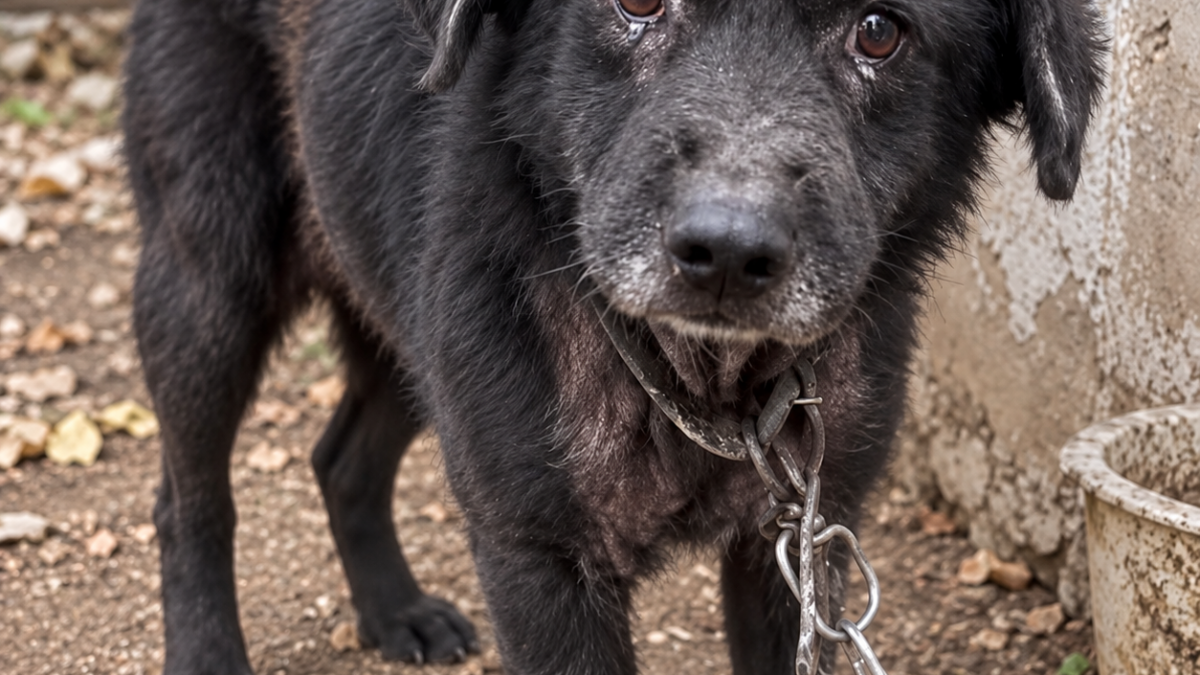
PART 2
I knew something was wrong before the man even spoke.
It was early afternoon, and I was changing blankets in the recovery room when Mara, one of our volunteers, appeared in the doorway.
Her face had gone tight.
“There’s somebody outside asking about Lupinho.”
I straightened.
“Who?”
“He says he knows him.”
I looked toward Lupinho.
He was asleep beneath the window, curled on a thick gray blanket.
The fur along his ribs had begun to regain its shine.
His breathing was slow.
Peaceful.
Three months earlier I had found him sleeping on dirt.
Now he slept so deeply that opening a door no longer made him lift his head in fear.
“Did he give a name?”
“Yes.”
I recognized it.
Not because I knew the man personally.
Because the name appeared in the paperwork connected to the property where we had found Lupinho.
My stomach hardened.
“What does he want?”
“He says Lupinho belongs to him.”
For a second I thought I had misheard.
“Excuse me?”
“He wants him back.”
I laughed.
There was nothing funny about it.
The sound just came out.
“Back?”
Mara nodded.
“He says there’s been a misunderstanding.”
Of course there had.
There was always a misunderstanding when a neglected animal started looking healthy.
I walked toward the front office.
Mara followed.
“Don’t do anything stupid.”
“I never do anything stupid.”
“You absolutely do.”
“I do emotionally satisfying things.”
“That is exactly what worries me.”
I stopped at the door.
“Is animal welfare still involved?”
“I already called Officer Mateo.”
“Good.”
“Until he gets here, we do not hand over anything.”
“I wasn’t planning to hand over a paperclip.”
Mara gave me a look.
Then we stepped outside.
The man stood near the gate.
He was probably in his late forties.
Work boots.
Dark jacket.
Arms folded.
He looked irritated rather than worried.
That irritated me immediately.
“You’re the woman who took the dog?”
I stopped several feet away.
“We’re the rescue caring for Lupinho.”
“That’s my dog.”
I felt every muscle in my back tighten.
“Then you know his name.”
“Of course I know his name.”
“Do you know what disease he has?”
His expression changed.
“What?”
“Do you know what disease he has?”
“He’s always had heart problems.”
“That wasn’t my question.”
The man shifted his weight.
“He was born sick.”
I stared at him.
Lupinho’s congenital condition had been present since birth.
That part was true.
But heartworm disease was not something he had been born with.
Neither were the skin problems.
The poor body condition.
The untreated discomfort.
The cold nights.
The man continued.
“He was fine when he was with us.”
Mara’s hand touched my arm before I could answer.
I looked at her.
She shook her head once.
Facts.
Use facts.
I turned back.
“When was his last veterinary appointment?”
The man’s jaw tightened.
“I don’t keep dates in my head.”
“Within the last year?”
No answer.
“Two years?”
“He didn’t need a vet.”
“He has heartworm.”
Silence.
“Advanced enough that treatment is complicated by his heart condition.”
The man looked toward the building.
“I didn’t know that.”
“That’s the problem.”
His expression hardened.
“You people always think you know everything.”
“No. Our veterinarian knows what she found.”
“He’s my dog.”
I took a breath.
“Officer Mateo will be here shortly. You can discuss ownership with him.”
The man stepped closer.
“I’m not waiting around for some officer. Bring Lupinho out.”
“No.”
“I said bring him out.”
“No.”
“I want to see my dog.”
My voice became quieter.
“You don’t get to give me orders on this property.”
Something flickered across his face.
Anger.
Maybe embarrassment.
“You stole him.”
Mara moved between us slightly.
“He was removed during an animal welfare intervention.”
“That place wasn’t mine.”
“Your name is connected to his records.”
“He stayed there sometimes.”
“Sometimes?”
“He was looked after.”
I thought about the empty bowl.
The dirt.
The cold.
Lupinho’s exhausted coat.
The skin lesions.
The positive heartworm test.
I nearly lost control.
Then I remembered Lupinho sleeping peacefully inside.
This was not about giving me the satisfaction of an argument.
It was about making sure nobody dragged him backward.
So I folded my arms.
“We’ll wait for Officer Mateo.”
The man swore under his breath.
Then his eyes moved past me.
The front door had opened.
Mara turned.
Lupinho stood in the doorway.
One of the volunteers had accidentally let him follow her from the recovery room.
For a second, everyone froze.
The man stared.
“Lupo.”
Lupinho’s ears moved.
My heart stopped.
That voice meant something to him.
The man crouched.
“Come here, boy.”
Lupinho remained still.
“Come on.”
I could hear my pulse.
Part of me hated myself for wondering what he would do.
Would he recognize him?
Of course he did.
Dogs remember.
Would Lupinho run to him?
Would months of safety disappear under one familiar voice?
The man slapped his thigh.
“Lupo.”
Lupinho took one step.
Then stopped.
The man smiled.
“There you go.”
Lupinho looked at him.
Then at me.
I didn’t call him.
I didn’t move.
He had spent enough of his life having choices made for him.
The man extended a hand.
Lupinho stared for another second.
Then he turned around.
And walked directly to me.
He pressed his shoulder against my leg.
I could barely breathe.
The man stood.
“That doesn’t mean anything.”
I rested my hand lightly against Lupinho’s neck.
Maybe it didn’t mean anything legally.
But to me, it meant everything.
Officer Mateo arrived ten minutes later.
By then Lupinho was back inside.
The conversation became official.
Paperwork replaced shouting.
Dates replaced accusations.
The man claimed Lupinho had not been abandoned.
He claimed responsibility had been shared among several people.
He said financial problems had made veterinary care difficult.
He said nobody realized how sick Lupinho had become.
He said the dog had always had a heart defect and there was “nothing anyone could do about it anyway.”
That sentence stayed with me.
Nothing anyone could do.
It was the sentence people use when they want helplessness to excuse indifference.
Yes, Lupinho’s congenital heart condition could not be surgically repaired.
But food could have been provided.
Shelter could have been provided.
Heartworm prevention could have been discussed with a veterinarian.
Skin problems could have been treated.
Pain could have been noticed.
Cold nights could have been avoided.
Love could have been given.
There had been plenty anyone could do.
Officer Mateo asked the man to produce veterinary records.
He couldn’t.
Proof of regular care?
None.
Heartworm prevention receipts?
None.
Medication history?
None.
Current registration?
Unclear.
The man’s confidence slowly disappeared.
Before leaving, Officer Mateo said, “Until ownership and welfare status are resolved, the dog remains with the rescue.”
The man looked at me.
“This isn’t over.”
I looked down at Lupinho’s medical folder.
“No,” I said. “It isn’t.”
He left.
I stood in the office after the gate closed.
My hands were shaking.
Mara exhaled.
“You were surprisingly reasonable.”
“Thank you.”
“That wasn’t entirely a compliment.”
I ignored her.
“What happens now?”
“Documentation.”
I hated that word.
Documentation sounded so small compared with what animals endured.
But documents were what turned suffering into evidence.
So we documented everything.
The condition of the property.
Photographs from intake.
Lupinho’s skin.
His weight.
The parasite test.
The veterinary findings.
The congenital heart diagnosis.
The complications caused by simultaneous heartworm disease.
Treatment expenses.
Statements from people who had observed his previous living conditions.
Dates.
Times.
Medication schedules.
Progress notes.
The folder grew thicker.
Meanwhile, Lupinho continued treatment.
That mattered more than any hearing.
Heartworm treatment was already difficult in a healthy dog.
For Lupinho, every decision had to account for a heart that had never worked normally.
Dr. Elena monitored him constantly.
One afternoon I sat across from her while Lupinho lay between us.
“How dangerous is this?”
She looked at him before answering.
“More dangerous than I wish it were.”
“That’s not a number.”
“I can’t give you a useful number.”
“What can you give me?”
“The truth.”
“Okay.”
“His congenital condition makes his heart less tolerant of stress. The heartworms add another burden. We have to move carefully.”
I swallowed.
“And if we don’t treat?”
“The worms continue damaging him.”
“So both choices are dangerous.”
“Yes.”
I hated that.
I looked down.
Lupinho’s head rested on my shoe.
He seemed completely unconcerned with mortality.
Dogs are fortunate that way.
They rarely spend their afternoons imagining the worst thing that might happen next month.
“What would you do?”
Dr. Elena sighed.
“If he were mine?”
“Yes.”
“I’d treat.”
“Why?”
“Because he’s still interested in life.”
That sentence decided it.
Interested in life.
Lupinho loved breakfast now.
He watched birds through the fence.
He followed my footsteps.
He had discovered that one particular volunteer carried cheese.
He wanted to walk beside the younger dogs even when we had to stop him from doing too much.
He wanted tomorrow.
So we fought for it.
Treatment began.
The first phase required patience.
Medication.
Restricted activity.
Monitoring.
Lupinho hated the restricted activity almost immediately.
For a dog who had once barely moved, he had developed very strong opinions about being told not to.
One morning I clipped his leash on for a short bathroom break.
Two young dogs raced past the fence.
Lupinho surged forward.
I caught him.
“No.”
He stared after them.
“No running.”
His tail moved.
“You heard the doctor.”
He tried again.
“Lupinho.”
He looked at me.
“I am serious.”
He sneezed.
“You cannot disrespect medical advice by sneezing.”
Another sneeze.
I laughed.
That became one of the strangest parts of his recovery.
The healthier he felt, the more carefully we had to restrict him.
His spirit was improving faster than his heart.
The old dog who had once accepted every circumstance silently began protesting.
If dinner was late, he stood in the kitchen.
If I closed a door between us, he scratched once.
If another dog received affection first, Lupinho inserted himself between us.
The first time he did it, I looked at Mara.
“Did he just get jealous?”
Mara smiled.
“He’s learning entitlement.”
“Excellent.”
“It’s healthy.”
“Until he takes over the house.”
Lupinho leaned harder against my leg.
Mara laughed.
“Too late.”
He had changed physically too.
The dust was gone.
His skin improved.
Healthy weight returned.
The dullness disappeared from his coat.
But the biggest change remained his eyes.
When I first met Lupinho, his gaze asked a question.
Do I still matter?
Months later, the question had begun disappearing.
He no longer waited for permission before approaching me.
He assumed his bed would still be there at night.
He expected food.
He expected warmth.
He expected hands to be gentle.
Those expectations were victories.
Then came the first major scare.
It happened after one of his heartworm treatment appointments.
Dr. Elena had warned us that the following days were critical.
“Keep him quiet,” she said.
“I will.”
“Quiet means quiet.”
“I know.”
“No excitement.”
“I understand.”
“No running.”
I looked at Lupinho.
“You hear that?”
He looked away.
Dr. Elena pointed at me.
“I’m serious.”
“So am I.”
We went home.
That evening everything seemed normal.
Lupinho ate a smaller dinner.
He drank.
He rested.
At 2:13 in the morning, I heard him cough.
Once.
Then again.
I was out of bed before the third cough.
“Lupinho?”
He was sitting upright.
His breathing looked wrong.
Too fast.
I touched his chest.
My heart began pounding.
“No, no, no.”
He coughed again.
I called the emergency number while pulling on clothes.
Dr. Elena answered.
“What’s happening?”
I described it.
“Bring him in.”
Those three words erased everything else.
I wrapped Lupinho in a blanket.
Mara met me at the clinic.
Dr. Elena was already there.
They took him through the doors.
I stood in the hallway.
Again.
Rescue work has too many hallways.
Places where you surrender control.
Places where the animal you love disappears behind a door and strangers become responsible for whether he comes back.
Mara sat beside me.
“Breathe.”
“I am breathing.”
“Not well.”
“He was fine three hours ago.”
“I know.”
“What if we made the wrong choice?”
“We didn’t.”
“You don’t know that.”
“No.”
I looked at her.
She continued.
“But leaving the worms untreated wasn’t safe either.”
“What if his heart can’t take it?”
“Then we deal with what happens.”
I hated her calmness.
Then I realized she was scared too.
Her hands were clenched together.
Forty minutes passed.
Dr. Elena finally came out.
I stood.
“He’s stable.”
My knees weakened.
“What happened?”
“Inflammation. His lungs and cardiovascular system are reacting. We expected some risk. This was more than I wanted to see, but we caught it.”
“Is he dying?”
“Not right now.”
“Can I see him?”
“In a few minutes.”
I leaned against the wall.
Dr. Elena touched my shoulder.
“This is why we monitor.”
“I thought I was going to lose him.”
“I know.”
She looked through the door toward treatment.
“He’s not finished.”
Neither was I.
Lupinho stayed overnight.
I slept in a plastic chair for forty-three minutes at a time.
At dawn, a technician came into the waiting room.
“He’s awake.”
I stood immediately.
“And?”
“He ate a little.”
I laughed.
Food had become my favorite medical indicator.
“Can I go in?”
She nodded.
Lupinho lay inside an oxygen-supported recovery area.
He looked exhausted.
I crouched outside.
“Hey.”
His eyes opened.
His tail moved once.
That one movement nearly broke me.
“You scared me.”
Another weak wag.
“You are not allowed to do that.”
His eyes closed again.
I stayed.
For the rest of treatment, we became even more careful.
Short walks.
No excitement.
Medication on schedule.
Check breathing.
Check appetite.
Check gum color.
Call if anything changes.
Lupinho slowly stabilized.
Weeks became months.
His follow-up testing eventually brought the result we had been praying for.
The active heartworm infection had responded.
I stared at Dr. Elena.
“Say it again.”
She smiled.
“The treatment worked.”
“He’s clear?”
“We’ll continue follow-up, but yes. The result is what we wanted.”
I covered my face.
For months I had imagined that conversation ending differently.
Lupinho stood beside me, tail moving.
Dr. Elena crouched.
“You did well, old man.”
I lowered my hands.
“What about his heart?”
Her smile softened.
“The congenital condition is still there.”
Of course.
The part of him we could not fix.
“How bad?”
“Stable today.”
“And tomorrow?”
“We take tomorrow when it comes.”
I looked at Lupinho.
He licked Dr. Elena’s hand.
She laughed.
“That’s his entire philosophy.”
It became mine too.
The welfare hearing regarding his former conditions happened two weeks later.
I had almost forgotten about it during treatment.
Almost.
The man who had come to our gate attended.
So did another person connected to the property.
Officer Mateo brought the documentation.
Dr. Elena provided a medical statement.
I testified about Lupinho’s condition when we found him.
There was no screaming.
No dramatic courtroom television moment.
Just facts.
The defense was simple.
They said Lupinho had always been sick.
They said the congenital heart problem explained his weakness.
They said they had limited resources.
They said he had been fed.
They said he had shelter “available.”
They said heartworm disease could happen to any dog.
Technically, several of those statements contained fragments of truth.
That made them more frustrating.
Yes, Lupinho had been born with a heart problem.
That did not explain heartworm disease.
It did not explain untreated skin problems.
It did not explain cold exposure.
It did not explain inadequate protection.
Limited money can restrict medical choices.
It does not excuse doing nothing.
Dr. Elena was asked whether the congenital defect could have caused Lupinho’s poor condition.
“It contributed to his vulnerability,” she said.
“So his condition wasn’t necessarily caused by neglect?”
“That is not what I said.”
The room became quiet.
She continued.
“His congenital heart problem was not preventable. His heartworm disease was a separate acquired condition. His skin issues and environmental exposure were also separate concerns. A dog can be born medically fragile and still receive appropriate care.”
That was the entire case in one sentence.
The man leaned toward his representative and whispered something.
Later he testified.
He said Lupinho had been “difficult to keep healthy.”
I felt anger rise in me.
Difficult.
As if Lupinho had caused his own neglect by refusing to be easy.
He continued.
“He never had much energy.”
Of course he didn’t.
His heart was malformed.
Parasites were damaging him.
He had spent nights outside.
Then came the question that changed the room.
Officer Mateo’s report contained photographs from the property.
The decision-maker pointed to one.
“This is the shelter you say was available?”
The man looked.
A damaged wooden structure sat against the fence.
One side was partly open.
The roof was warped.
“Yes.”
“In winter?”
“We put blankets sometimes.”
“Where were they when officers arrived?”
No answer.
Another photograph.
The empty water container.
Another.
The dirt where Lupinho had slept.
Then the medical images.
His irritated skin.
His thin frame.
I looked away.
I did not need to see those pictures again.
The man did.
That was enough for me.
At the conclusion, the welfare authority upheld the removal.
Lupinho would not be returned.
Financial penalties were imposed.
The individuals responsible were required to comply with animal care restrictions and monitoring before keeping animals again.
Part of the documented veterinary cost became subject to restitution.
It wasn’t dramatic revenge.
There was no cheering.
No one left in handcuffs.
But the truth became official.
Lupinho had been failed.
And the people who failed him no longer had the right to decide what happened next.
Outside, the man caught up with me.
“Wait.”
I stopped.
Mara tensed beside me.
He looked less angry than before.
Tired.
“You really think we didn’t care about him?”
I could have said yes.
For months I had imagined saying yes.
Instead, I thought about Lupinho walking toward me at the gate.
“I think caring isn’t always enough.”
His jaw tightened.
“You don’t know what we were dealing with.”
“No.”
I nodded.
“I don’t.”
That seemed to surprise him.
I continued.
“But Lupinho was dealing with it too.”
He looked away.
“We didn’t know about the worms.”
“I believe you.”
“You do?”
“Yes.”
I stepped closer.
“That’s part of the problem.”
His eyes returned to mine.
“He lived with you, and you didn’t know.”
He said nothing.
I went on.
“You didn’t know his heart was under that much strain. You didn’t know he had heartworm. You didn’t know how bad his skin had become. You didn’t know how much the cold was affecting him.”
The man’s face changed.
Maybe shame.
Maybe anger.
Maybe both.
“You keep saying you cared.”
I looked toward the parking lot.
“Then you should understand why caring had to become action.”
Mara touched my elbow.
Time to go.
Before I turned away, the man asked, “Is he happy?”
That question stopped me.
I looked back.
He seemed genuine.
I could have punished him.
I could have said none of your business.
Instead, I told the truth.
“Yes.”
He swallowed.
“Good.”
We left.
On the drive home, Mara glanced at me.
“You okay?”
“I think so.”
“You could have been cruel.”
“I wanted to be.”
“Why weren’t you?”
I watched the road.
“Because Lupinho doesn’t need me to hurt anybody for him.”
Mara nodded.
“He already won.”
I almost argued.
Then I thought about what waited at home.
A warm bed.
A full bowl.
Three dogs who adored him.
Medicine lined up in a labeled container.
A fenced yard.
People who noticed if he coughed once.
Yes.
He had already won.
When I opened the front door, Lupinho stood in the hallway.
His tail began moving.
Slowly at first.
Then faster.
“There he is.”
I knelt.
He came to me.
I held his face.
“You’re staying.”
He licked my chin.
“You hear me?”
Another lick.
“You are never going back.”
His tail thumped against the wall.
Mara stood behind me.
“Pretty sure he understands.”
That night, Lupinho slept beside my bed.
Not in the temporary shelter room.
Not in the kennel area.
Beside me.
I had moved his bed there during the worst weeks of treatment because I needed to hear his breathing.
After the hearing, I decided it would stay.
Temporary had ended.
A month later, the rescue director handed me an envelope.
“What’s this?”
“Adoption paperwork.”
I stared.
“For who?”
She raised an eyebrow.
“Really?”
I looked through the glass door.
Lupinho was lying in a patch of sunlight.
“Me?”
“No, the mailman.”
I smiled.
Technically, Lupinho belonged to the rescue until a permanent home was chosen.
We had received several adoption inquiries once his story became known.
Wonderful families.
People with experience caring for heart patients.
People with quiet homes.
People who could afford his medication.
I had interviewed them.
That was my job.
Every interview made me miserable.
One couple lived near a lake.
Another family had a retired veterinarian in the household.
A woman who had previously adopted two senior dogs sounded perfect.
I hated all of them.
Not personally.
They were kind.
Responsible.
Exactly the kind of people we wanted.
I just did not want any of them to take Lupinho.
The rescue director knew.
Apparently everyone knew.
“You’ve been rejecting perfectly good adopters for increasingly creative reasons.”
“I have not.”
“One house had three steps.”
“Cardiac safety.”
“They had a ramp.”
“It was steep.”
“It was eight degrees.”
“That’s practically a mountain.”
She stared at me.
I looked down.
“Fine.”
“Sign the paperwork.”
“What if I’m not the best home?”
“You already rearranged your life around his medication schedule.”
“That doesn’t prove anything.”
“You slept on a clinic floor.”
“Chair.”
“You took emergency first aid classes.”
“Useful generally.”
“You bought a second blood-pressure monitor because you didn’t trust the first one.”
“It gave inconsistent readings.”
“You cook chicken at midnight because he prefers it fresh.”
I sighed.
She slid a pen toward me.
“Adopt your dog.”
I signed.
Lupinho officially became mine that afternoon.
I expected the moment to feel dramatic.
Instead, I went home and cleaned up vomit because he had eaten grass.
Family life begins quickly.
His first year after rescue was not defined only by medicine.
That was the beautiful part.
Once heartworm treatment ended and Dr. Elena allowed more activity, Lupinho discovered movement.
Not exercise.
Joy.
The first time I let him into the larger yard with the other dogs, I expected him to walk slowly.
He did.
For about ten seconds.
Then one of the younger dogs ran past him carrying a rope toy.
Lupinho’s ears lifted.
He followed.
Two steps.
Four.
Then a trot.
“Lupinho!”
He accelerated.
Not fast.
His heart would never make him fast.
But he was running.
I stood frozen.
Mara yelled from the porch.
“Should he be doing that?”
“Probably not!”
I hurried after him.
Lupinho chased the other dog in a crooked circle.
The rope dropped.
He grabbed one end.
The younger dog grabbed the other.
They pulled.
Lupinho’s tail whipped back and forth.
I started crying.
Mara looked at me.
“You’re crying over tug-of-war.”
“Yes.”
“Understandable.”
I crouched.
“Okay, old man. Enough.”
Lupinho refused to release the rope.
“Doctor’s orders.”
Pull.
“Your heart.”
Pull.
“You literally have a defective heart.”
Pull.
Mara laughed.
“He has selective hearing.”
Eventually I traded him a treat.
For months afterward, I carried that moment in my head.
Not because he ran.
Because he wanted to.
When we found him, Lupinho moved as if every step was an obligation.
Now his body was asking for more life than we could safely allow.
That was a problem I was grateful to have.
We developed a routine.
Morning medication hidden in soft food.
Short walk.
Breakfast.
Nap.
Midday yard time.
Another nap.
Dinner.
Evening cuddle.
Lupinho loved routine.
At 6:45 every morning he appeared beside my bed.
If I did not move, he placed one paw on the mattress.
“Five minutes.”
Paw again.
“Lupinho.”
Paw.
“You are retired. I am not.”
Tail wag.
I got up.
At breakfast, he sat beside the counter.
Medication disappeared inside chicken.
If I attempted to hide it in anything cheaper, he became suspicious.
One morning I used canned food.
Lupinho ate around the pill.
I stared at the bowl.
He had cleaned everything except the tablet.
“You have got to be kidding me.”
He looked proud.
“You survived heartworm treatment and now you’re using your intelligence for this?”
Tail wag.
I tried cheese.
Gone instantly.
“Manipulative.”
Another wag.
His favorite activity became walking with the other dogs.
Not far.
Dr. Elena had set limits.
But Lupinho no longer needed distance.
He needed companionship.
We went to a quiet field near the rescue.
The younger dogs ran.
Lupinho walked.
Sometimes he trotted.
When he became tired, he sat beside me and watched.
He never seemed embarrassed that he could not keep up.
That was another thing dogs understand better than humans.
They do not compare themselves unless we teach them to.
Lupinho did not measure his life against healthier dogs.
He measured it in smells.
Sunlight.
Meals.
Safe places.
Familiar people.
One warm afternoon, he lay on his side while two young dogs wrestled nearby.
His tail moved every time they rolled close.
I sat beside him.
“You good?”
He looked up.
I touched his chest gently.
Beneath my palm was the heart we could never repair.
Irregular in structure.
Limited.
Fragile.
But beating.
Still beating.
“You know,” I whispered, “everyone keeps saying you have a bad heart.”
Lupinho licked my wrist.
“I think they mean medically.”
His tail moved.
“Because otherwise, yours might be the best one here.”
Months passed.
Then something strange happened.
Lupinho became the dog we used to calm frightened newcomers.
It began accidentally.
A young female dog arrived after being removed from another neglect case.
She shook violently in the kennel.
Would not eat.
Would not let anyone touch her.
We tried sitting nearby.
Soft voices.
Treats.
Nothing.
Lupinho walked past the kennel.
The female lifted her head.
He stopped.
They stared at each other.
Lupinho lowered himself onto the floor outside her gate.
He did nothing else.
Ten minutes.
Twenty.
The female stopped shaking.
Later she approached the gate.
Lupinho remained there.
The next morning she ate while he lay nearby.
Mara watched.
“He’s good at this.”
“He knows.”
“Knows what?”
“What it feels like when people stop making sense.”
From then on, Lupinho had a job.
Not a formal one.
No vest.
No title.
When a frightened dog arrived, we sometimes let Lupinho sit nearby.
He never crowded them.
Never demanded.
He simply existed calmly.
Dogs trusted him.
Maybe they sensed what humans couldn’t see.
He had been where they were.
He knew fear could be survived.
One dog in particular changed because of him.
His name was Benji.
Benji had spent years tied behind a warehouse.
When rescued, he would not walk through doorways.
Thresholds terrified him.
We tried everything.
Treats.
Leashes.
Ramps.
Nothing.
Then Lupinho walked through.
Benji watched.
Lupinho turned.
Waited.
Benji took one step.
Stopped.
Lupinho stayed.
Another step.
Eventually Benji crossed.
I covered my mouth.
Mara whispered, “Did he just teach him?”
“Yeah.”
Lupinho wagged as if it were nothing.
The dog whose own heart could not be fixed was helping repair everyone else.
That became the sentence people repeated about him.
I never liked it completely.
It sounded too neat.
Too poetic.
Real life wasn’t neat.
Lupinho still had bad days.
There were mornings when he coughed more.
Days when heat made him tired.
Appointments when Dr. Elena heard changes that frightened me.
Medication adjustments.
Imaging.
Bloodwork.
Every good month carried the knowledge that his congenital condition had not disappeared.
The future remained uncertain.
One afternoon, nearly two years after his rescue, Dr. Elena listened to his heart longer than usual.
I watched her face.
“What?”
She finished.
“Sit down.”
I hated those words.
“What?”
“His condition has progressed.”
My mouth went dry.
“How much?”
“Enough that we need to change medication.”
“Is he in heart failure?”
“Early signs.”
I looked at Lupinho.
He was sitting under the exam table because he had learned that was where treats appeared.
“How long?”
Dr. Elena shook her head.
“You know I don’t answer that question.”
“I’m asking again.”
“And I still don’t know.”
“Months?”
“Possibly.”
“Years?”
“Also possible.”
“That’s not helpful.”
“I know.”
I put my face in my hands.
Dr. Elena waited.
“I thought we had more time.”
“You may.”
“But not forever.”
“No.”
I laughed bitterly.
“That was never an option.”
She crouched beside me.
“He’s still doing well clinically.”
I looked up.
“He’s happy?”
“You tell me.”
Lupinho chose that moment to nose open her treat cabinet.
She laughed.
“Apparently.”
We adjusted medication.
Our walks became shorter.
Lupinho adapted.
That was what he did.
When he tired sooner, he simply stopped and sat in the grass.
If the other dogs continued, he watched them.
No resentment.
No sadness.
At home he became more affectionate.
He followed me constantly.
Bathroom.
Laundry room.
Kitchen.
Porch.
I joked that I had adopted a seven-year-old dog and somehow acquired a seventy-year-old supervisor.
One evening I was working at the table when I realized Lupinho had been staring at me for several minutes.
“What?”
Tail wag.
“You ate.”
Tail wag.
“You went outside.”
Tail wag.
“You had your medicine.”
He walked forward and rested his head on my knee.
“Oh.”
I closed the computer.
“That’s what you wanted.”
I sat on the floor.
He leaned against me.
It struck me then how much had changed.
The first time he leaned into my hand, he had seemed surprised I was touching him gently.
Now he expected affection so confidently that he demanded I stop working to provide it.
That was healing.
Not forgetting the past.
Learning the future would respond differently.
Our happiest year began after that diagnosis.
I know that sounds strange.
Maybe knowing time was limited changed me.
I stopped saving experiences for later.
Lupinho went on short car rides.
We visited a quiet lake.
He sat on a blanket beneath trees.
We went to a pet-friendly café where he attempted to charm food from every table.
We celebrated the anniversary of his rescue as his birthday.
The first year, I bought him a blue bandana.
The second, I bought a ridiculous paper crown.
He tolerated it for nine seconds.
Mara took a photograph.
In it, Lupinho looked furious.
It became my favorite picture.
We also started taking him to educational events for senior and special-needs animals.
Not because I wanted to turn him into a mascot.
Because people needed to see him.
They saw an older dog with heart disease.
Then they saw him greet strangers.
Walk beside other dogs.
Lie happily beneath a table.
Ask for treats.
A woman approached me after one event.
“My dog was just diagnosed with heart disease.”
Her eyes were red.
“I’ve been crying for three days.”
I nodded.
“I understand.”
“They said it can’t be cured.”
I looked down at Lupinho.
He was sniffing her shoe.
“Neither can his.”
She looked at him.
“He looks happy.”
“He is.”
The woman crouched.
Lupinho immediately leaned into her.
She laughed through tears.
“I thought an incurable diagnosis meant everything good was over.”
“No.”
I stroked Lupinho’s back.
“It means you pay attention differently.”
The woman stayed with him for several minutes.
Before leaving, she said, “Thank you.”
I wanted to tell her not to thank me.
Thank him.
He had learned something I was still learning.
A life does not become worthless because it has a limit.
All lives have limits.
Some of us just receive the information earlier.
The third year after Lupinho’s rescue brought another surprise.
Officer Mateo called.
I had not spoken to him in months.
“How’s our guy?”
“Bossy.”
“Good.”
“Why?”
“I wanted to tell you something.”
I sat down.
One of the individuals from the original property had attempted to acquire another dog.
The welfare restrictions triggered a review.
Because the prior case remained documented, the placement was denied until compliance requirements were met.
I was quiet.
“You there?”
“Yes.”
“I thought you’d want to know the order is actually doing what it was supposed to do.”
I looked at Lupinho sleeping near the window.
“That another dog didn’t end up there?”
“That’s the idea.”
Something loosened inside me.
For years, part of me had wondered whether any legal consequence mattered compared with what Lupinho endured.
Now I had the answer.
The purpose had never been revenge.
It was prevention.
One dog could not get his old years back.
But another dog might never lose them.
“That matters,” I said.
“It does.”
After we hung up, I walked over to Lupinho.
“You did that.”
His eyes opened.
“Well, technically Officer Mateo did the paperwork.”
Tail wag.
“But you were the evidence.”
Lupinho sneezed.
I laughed.
“Very humble.”
The seasons continued.
Lupinho’s muzzle became lighter.
His steps slowed.
His heart medication increased.
Yet he remained himself.
One afternoon, a new volunteer asked, “How old is he?”
“About ten now.”
She looked surprised.
“He acts younger.”
“That’s because he spent his first seven years saving all his nonsense for me.”
Lupinho stole a treat from her pocket five minutes later.
Case proven.
At ten and a half, his health changed quickly.
The cough returned.
Not the heartworm cough from years earlier.
Different.
Deeper.
He began waking at night.
Restless.
Unable to get comfortable.
Dr. Elena adjusted medication.
For a while, it helped.
Then he fainted.
I was in the kitchen.
He stood beside his water bowl.
Suddenly his legs folded.
“Lupinho!”
I dropped to the floor.
His body went limp for several seconds.
Then his eyes opened.
I could barely breathe.
Emergency clinic.
Tests.
Oxygen.
Hours.
Dr. Elena sat with me afterward.
“His heart isn’t pumping as efficiently anymore.”
I stared at the wall.
“Can we fix that?”
“We can support it.”
“That wasn’t my question.”
“No.”
The word hurt.
“How do I know when we’re asking too much from him?”
Dr. Elena’s eyes softened.
“That’s the hardest question.”
“I need an answer.”
“Watch what he chooses.”
“What does that mean?”
“Food. Connection. Comfort. Interest. Does he still want the things that make him Lupinho?”
I looked through the window.
He was eating chicken from a technician’s hand.
Dr. Elena followed my gaze.
“Today,” she said, “I know his answer.”
So we went home.
I began keeping a notebook.
Not because anyone told me to.
Because fear distorts memory.
On bad days, I worried every day had become bad.
On good days, I convinced myself nothing was wrong.
I needed evidence.
So each night I wrote:
Ate breakfast.
Enjoyed yard.
Coughed twice.
Slept comfortably.
Asked for chicken.
Followed me to laundry room.
Good day.
Another:
Skipped breakfast.
Tired.
Breathing faster in afternoon.
Ate dinner.
Wanted cuddles.
Mixed day.
Then:
Very good morning.
Trotted after Benji.
Stole cheese.
I underlined that one.
The notebook helped.
For months, good days still outnumbered bad ones.
Then the balance began changing.
Lupinho stopped joining the other dogs every morning.
Some days he stayed on the porch.
He still watched.
Still wagged.
But he saved his energy.
One afternoon Benji ran toward the gate and looked back.
Lupinho tried to follow.
He made it halfway across the yard.
Then stopped.
I went to him.
“Enough.”
He looked toward Benji.
“I know.”
I sat beside him in the grass.
“You don’t have to keep up.”
He leaned against me.
The younger dogs returned.
One lay on each side of him.
Lupinho closed his eyes.
That became our new version of play.
He could not chase them.
So they came back to him.
There is love in adaptation.
Not the dramatic kind.
The quiet kind that says:
If you cannot reach us, we will reach you.
The final winter was mild.
I was grateful.
Cold had always been hard on him.
We placed a heated orthopedic bed near the living room window.
Lupinho spent mornings there watching birds.
I moved my desk nearby so he could see me.
Some days he slept for hours.
Other days he stared until I stopped working.
“You are extremely needy.”
Tail wag.
“I have deadlines.”
Tail wag.
I closed the laptop.
He won every time.
One rainy night, Lupinho became restless.
He paced.
Stopped.
Paced again.
Coughed.
I checked his breathing.
Too fast.
I called Dr. Elena.
We adjusted medication as instructed.
I lay beside him.
By 3:00 a.m., his breathing eased.
I kept my hand on his chest.
The heart beneath it beat unevenly.
I remembered the first diagnosis.
Seven years old.
Heartworm positive.
Congenital defect.
No surgical repair.
No promise of time.
I had asked how long he had.
No one knew.
That had been more than three years earlier.
Three years of breakfasts.
Three years of blankets.
Three years of other dogs.
Three years of stubbornness.
Three years of his tail learning to wag without hesitation.
Maybe time should never be measured only in years.
Maybe it should be measured in mornings someone was happy to wake up.
Lupinho had collected thousands.
By spring, Dr. Elena became more concerned.
Fluid retention.
Lower stamina.
More frequent faint spells.
We discussed quality of life.
I hated every conversation.
“Not yet,” I kept saying.
She never pressured me.
But one afternoon she looked directly at me.
“Promise me something.”
“What?”
“You will make the decision for him, not for your fear.”
I looked away.
“I know.”
“Do you?”
I became angry.
“You think I would let him suffer?”
“No.”
“Then why say that?”
“Because you love him.”
My anger disappeared.
She continued.
“Love can make us brave. It can also make us selfish without realizing it.”
I cried in the car afterward.
Lupinho slept beside me.
“I’m not going to do that to you.”
His eyes opened.
“I promise.”
For another month, he did well enough.
Then came a beautiful Saturday.
Sunlight.
Warm air.
No wind.
Lupinho ate an entire breakfast.
I stared.
“Who are you?”
He licked the bowl.
“You haven’t cleaned a bowl in a week.”
Tail wag.
I decided we would go somewhere.
Not far.
The lake.
The same quiet place we had visited years earlier.
I packed water.
Medication.
Blankets.
Emergency supplies.
More supplies than any reasonable person would carry for a forty-minute outing.
Lupinho rode in the back seat.
At the lake, I lifted him from the car.
He could still walk, but distance was difficult.
We moved slowly.
He sniffed every patch of grass as if conducting an official inspection.
We reached our old tree.
I spread the blanket.
Lupinho lay down.
The water moved quietly.
Birds called from the reeds.
I sat beside him.
“Remember this?”
He looked toward the lake.
“I’m pretending that means yes.”
His head lowered onto my leg.
For almost an hour, neither of us did anything.
No treatment.
No decisions.
No fear.
Just sunlight.
When it was time to leave, Lupinho stood and took several steps on his own.
His tail lifted.
For a few seconds, he looked exactly like the dog who had trotted after the others the first year.
I took a photograph.
I did not know it would become the last picture of him standing outdoors.
Three days later, he stopped eating.
Not completely.
But enough.
Chicken interested him for a moment.
Then he turned away.
That had never happened.
I opened the notebook.
The last seven entries hurt to read.
Poor appetite.
Restless night.
Coughing.
Tired.
Still wants affection.
The next day:
Little food.
Faint spell.
Stayed close to me.
Then:
Wouldn’t walk outside.
Ate three bites of chicken.
Tail wagged when Mara came.
I called Dr. Elena.
She came to the house.
I did not want Lupinho making another stressful clinic trip unless absolutely necessary.
She examined him on his bed.
Listened to his chest.
Checked his breathing.
Sat back.
I already knew.
“Tell me.”
Her eyes met mine.
“We’re close.”
“How close?”
“I think he’s telling us.”
I looked at him.
Lupinho rested with his chin against the blanket.
His eyes were open.
Watching me.
“He still knows me.”
“Yes.”
“He still wants me.”
“Yes.”
“Then how can it be time?”
Dr. Elena took my hand.
“Because love doesn’t disappear when the body is finished.”
I broke.
I put my face against Lupinho’s neck.
For three years I had known this day would come.
Knowing did nothing.
There is no preparation for the last ordinary moment.
The last breakfast.
The last time your dog watches you enter a room.
The last time you say his name and his eyes answer.
I asked for one more night.
Not because I thought a miracle would happen.
Because I needed to say goodbye without making him spend that night struggling.
Dr. Elena adjusted his comfort medication.
“If anything changes, call me immediately.”
“I will.”
Mara came over.
Benji lay beside Lupinho.
The younger dogs seemed to understand something.
They were unusually quiet.
I cooked chicken.
Lupinho ate two small pieces from my fingers.
“That’s enough.”
He licked my hand.
Mara started crying.
“Don’t,” I said.
“I’m not doing anything.”
“You’re crying.”
“So are you.”
Fair.
We sat on the floor.
I told stories.
The first day.
His first tail wag.
His heartworm scare.
The hearing.
His adoption.
The first time he stole medication cheese.
The day he taught Benji to cross a doorway.
Lupinho slept through most of them.
At midnight Mara went home.
I stayed on the floor beside him.
Around 2:00 a.m., Lupinho woke.
He looked at me.
I leaned closer.
“Hey.”
His tail moved.
Barely.
But it moved.
My throat closed.
“You know you did enough, right?”
He blinked.
“You don’t have to prove anything.”
I placed my hand over his chest.
The fragile heart beat beneath it.
“You mattered before I found you.”
Another breath.
“You mattered when nobody acted like you did.”
His eyes stayed on me.
“You mattered when you were sick.”
I began crying.
“You mattered when you couldn’t play.”
His tail moved once.
“You mattered every single day.”
I kissed his forehead.
“And you matter now.”
He slept again.
At dawn, I called Dr. Elena.
By then his breathing had become more difficult.
I knew.
This time I did not ask for another day.
She arrived just after sunrise.
The room was filled with soft golden light.
Lupinho lay on his favorite blanket.
Benji rested near the doorway.
Mara came back.
I sat on the floor with Lupinho’s head in my lap.
Dr. Elena explained every step.
I barely heard her.
I was looking at him.
The dog from the dirt.
The dog with dust in his coat.
The dog who had stood before me and trusted a stranger.
The dog born with a heart nobody could repair.
The dog who survived heartworm.
The dog who learned to play.
The dog who taught frightened dogs how to walk through doors.
The dog who had spent three years answering the question in his eyes.
Do I still matter?
Yes.
Yes.
A thousand times yes.
Dr. Elena administered the sedative.
Lupinho relaxed.
His breathing became slower.
I rubbed his ears.
“You’re home.”
His eyes softened.
“You’re safe.”
One breath.
“You’re loved.”
Another.
“You can rest.”
His eyes closed.
The defective heart that had carried him through everything finally became still beneath my hand.
I cried into his fur.
Mara placed a hand on my shoulder.
Dr. Elena gave us time.
There are no beautiful words for that moment.
Death does not become less painful because it is peaceful.
But there was one mercy.
Lupinho was not cold.
He was not outside.
He was not neglected.
He was not alone.
The dog whose heart had been called unrepairable died surrounded by people whose hearts he had changed permanently.
Afterward, the house became painfully quiet.
For weeks, I expected to see him beside the window.
I still prepared his medication once by mistake.
I opened the refrigerator, picked up the cheese, and stood there holding it.
Then remembered.
I sat on the kitchen floor and cried.
Benji found me.
He pressed his body against mine.
I laughed through tears.
“Of course you did.”
Maybe Lupinho had taught him that too.
Months later, the rescue held a small gathering in his memory.
I did not want anything elaborate.
Lupinho had never cared about attention.
Only food.
So we kept it simple.
Volunteers.
Dr. Elena.
Officer Mateo.
A few adopters whose dogs Lupinho had helped.
Benji.
On one wall we placed photographs.
The first intake picture.
I nearly removed it.
Lupinho looked tired.
Thin.
Dusty.
His eyes carried that terrible uncertainty.
Beside it was the last lake photograph.
Same dog.
Older.
Gray around the muzzle.
But his body relaxed.
His face peaceful.
Between those two photographs were three years no diagnosis could summarize.
Officer Mateo stood beside me.
“He had a good run.”
“He did.”
“You know the old case still gets referenced in training?”
I looked at him.
“What?”
“Documentation. Welfare intervention. Medical evidence.”
I laughed softly.
“Lupinho became paperwork.”
“Useful paperwork.”
He pointed toward Benji.
“And apparently a therapist.”
Benji was greeting guests near the door.
“He learned from the best.”
Dr. Elena joined us.
She looked at the photographs.
“You know what I remember?”
“What?”
“The first time you asked how long he had.”
I smiled sadly.
“You refused to answer.”
“I didn’t know.”
“Three years.”
“Three good years.”
I looked at the lake photograph.
“Not enough.”
“No.”
She put an arm around me.
“It never is.”
Later, a woman I did not recognize approached.
She looked nervous.
“I’m sorry to bother you.”
“You’re not.”
“My husband and I adopted a senior dog last month.”
“That’s wonderful.”
“He has heart disease.”
I nodded.
“We almost didn’t take him.”
“Why?”
“We were scared.”
Her eyes moved toward Lupinho’s pictures.
“Then someone at the shelter told us about him.”
I stopped breathing for a second.
“They said he had an incurable heart condition and still had years of happiness.”
“Yes.”
“We took the dog home.”
She smiled.
“He snores louder than my husband.”
I laughed.
Before leaving, she touched the edge of Lupinho’s photograph.
“Thank you.”
After everyone left, I sat alone with Benji.
I thought about revenge.
For years, people had asked whether I was angry at the people who neglected Lupinho.
Of course I was.
At first.
I wanted them to understand what they had done.
I wanted consequences.
I wanted them to see the dog they had overlooked becoming beloved.
Some part of me had wanted their regret.
But by the end, none of that mattered much.
Lupinho’s life had become too large for them.
His story was no longer about the people who failed him.
It was about what happened after.
The legal decision had mattered because another dog later avoided the same situation.
The restrictions mattered.
The documentation mattered.
But that was not revenge.
The real revenge was quieter.
Lupinho had been treated like a dog whose broken heart made him less valuable.
Then he spent the rest of his life proving value had nothing to do with medical perfection.
His heart could not be surgically repaired.
So what?
It still loved.
It still trusted.
It still raced when it should have walked.
It still recognized my footsteps.
It still opened frightened dogs.
It still changed people.
It still beat faster when dinner appeared.
It still held three years of joy after someone else had nearly reduced his life to neglect.
That was enough.
I kept his collar.
Not in a box.
I hung it beside the door.
For a long time I could not touch it.
Then one morning a new dog arrived at the rescue.
Older.
Terrified.
Heart condition.
Different diagnosis.
Different story.
I almost stayed home.
Grief told me I had already done enough.
Then I looked at Lupinho’s collar.
I went.
The dog would not let anyone approach.
He stood at the back of the kennel.
Eyes uncertain.
Asking the same question.
Do I still matter?
I sat on the floor several feet away.
I did not reach.
I did not speak immediately.
I remembered Lupinho.
The dust.
The steady gaze.
The first step.
Eventually I extended my hand.
“Hey, buddy.”
The dog watched.
“You don’t have to come to me.”
One step.
Then another.
He touched his nose to my fingers.
My throat tightened.
For one second, I could almost feel Lupinho beside me.
Not as some ghost.
Not as a miracle.
As memory.
As instruction.
I knew what to do because he had taught me.
“Okay,” I whispered.
“I’ve got you.”
That became Lupinho’s final gift.
He had entered my life asking whether he mattered.
He left behind an answer I could give every frightened animal after him.
Yes.
Before medicine.
Before adoption.
Before recovery.
Before you become easy.
Before you become beautiful.
Before you trust us.
Yes.
You matter now.
I still visit the lake sometimes.
There is a tree near the water where Lupinho used to rest.
I sit there.
Usually alone.
Once, while I was there, a family walked past with an elderly dog.
The dog moved slowly.
A little stiff.
The family matched his pace.
They did not pull the leash.
Did not hurry.
A child stopped every few feet to let him sniff.
I watched them until they disappeared around the path.
Then I looked at the place beside me where Lupinho once rested his head.
“That’s how it’s supposed to be.”
Wind moved through the grass.
I smiled.
I no longer remember Lupinho first as the sick dog we found.
That image has been replaced.
Now when I think of him, I see the rope toy.
The kitchen.
The stolen cheese.
The younger dogs circling him.
The lake.
The ridiculous birthday crown.
Benji crossing the doorway.
His head against my knee.
A slow tail wag becoming confident.
People sometimes say we repaired his broken heart with love.
That sounds beautiful.
It is also not true.
His heart remained medically damaged until the final morning.
Love did not cure him.
It did something different.
Something just as important.
It gave that broken heart reasons to keep beating.
Breakfast.
Friends.
Warm blankets.
Sunlight.
Cheese.
Trust.
Home.
Me.
And when that heart finally stopped, it did not stop wondering whether Lupinho mattered.
He knew.
For three years, we had answered him every day.
With food.
With medicine.
With patience.
With laughter.
With consequences for the people who failed him.
With protection.
With a permanent home.
With hands that stayed gentle.
With a place beside my bed.
With one final promise whispered against his fur.
You matter.
You always did.
And long after Lupinho’s fragile heart gave out, that answer kept beating inside everyone who had loved him.
[END OF FULL STORY]








