PART 2: At Nine, I Was Homeless Under a Freeway—Then They Offered Me a Bed on One Condition: Abandon My Starving Dog
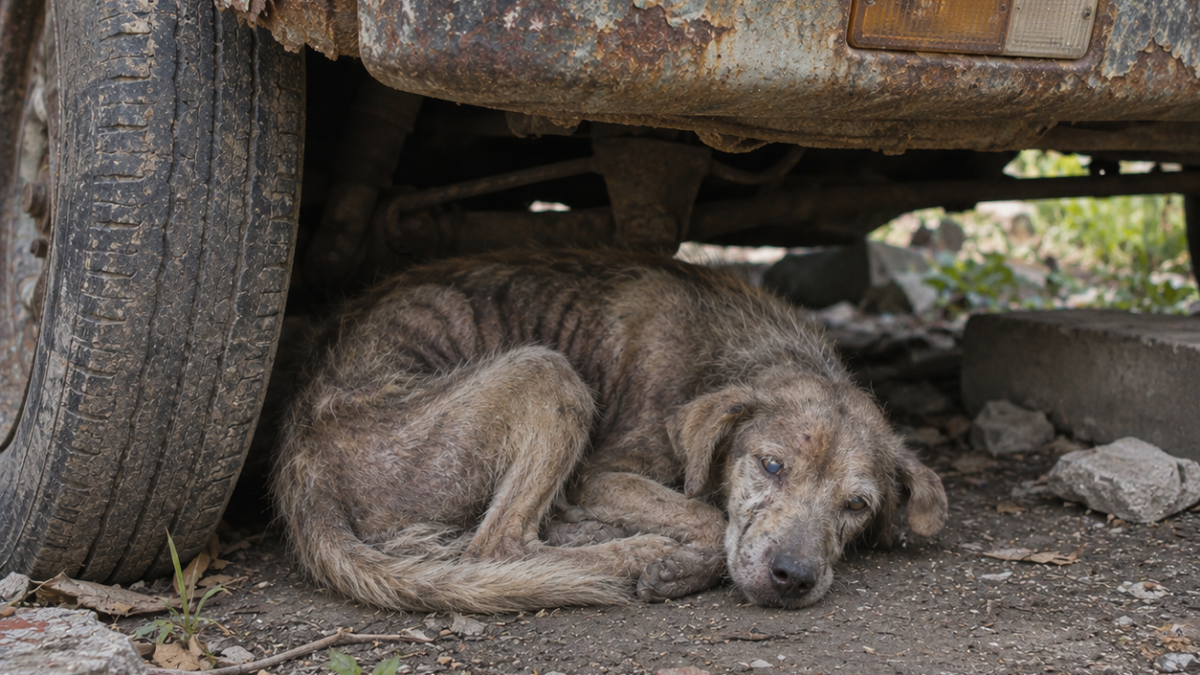
PART 2
“I’m not leaving her.”
The man stared at me.
For a second, I thought maybe he hadn’t heard.
“What?”
“I said I’m not leaving Lada.”
Mom squeezed my shoulder.
“Artiom.”
“She’ll die.”
The man closed the SUV door halfway and sighed.
“I understand you’re attached to the dog.”
“She has a name.”
He glanced at her.
“Fine. Lada.”
His tone told me the name changed nothing for him.
“There are rules. The shelter doesn’t take animals.”
“Then I’m not going.”
“You’re nine.”
“I know.”
“Your mother is sick.”
I looked at Mom.
That hurt because it was true.
Her cough had worsened.
Sometimes, when she thought I was sleeping, I heard her trying to breathe quietly so I wouldn’t worry.
The man continued.
“You’re sleeping underneath a freeway during winter.”
“I know.”
“And you’re willing to stay here because of a dog you found three days ago?”
I felt something hot rise behind my eyes.
“She stayed with us.”
He frowned.
“What?”
“When she could barely walk, she stayed with us.”
“She’s an animal.”
“So?”
The man looked toward Mom as if expecting her to take control.
“Ma’am, you need to explain this to him.”
Mom’s hand remained on my shoulder.
For several seconds, she said nothing.
Then she asked quietly, “What happens to the dog if we leave?”
“As I said, municipal animal control can be contacted.”
“Will you make sure she is accepted?”
“I can’t guarantee that.”
“Will you make sure she isn’t euthanized?”
His face tightened.
“That isn’t something I control.”
Mom looked at Lada.
Then at me.
I knew what she was thinking.
A warm bed.
Medicine.
Food.
A locked door.
A toilet.
Things other children didn’t have to choose between.
And all we had to do was walk away from one starving dog.
For one terrible moment, I thought Mom was going to say yes.
Instead, she asked the man, “Is there really no other shelter?”
“Not through our program.”
“No temporary foster?”
“No.”
“No exception?”
“Rules exist for a reason.”
Mom nodded slowly.
Then she took her hand from my shoulder and wrapped it around me.
“We’ll stay.”
The man looked genuinely shocked.
“Excuse me?”
“My son said he won’t abandon her.”
“You’re seriously choosing a stray dog over emergency housing?”
Mom’s voice became harder.
“No. I’m choosing not to teach my son that saving something is only important when it’s convenient.”
The man’s face reddened.
“That sounds noble until someone gets pneumonia.”
Mom coughed.
The timing was cruel.
The man stared at her.
“You need medical care.”
“I know.”
“Then get in the car.”
“With the dog?”
“No.”
Mom shook her head.
“Then we’re not going.”
He looked at us as if we were the most unreasonable people he had ever met.
Maybe we were.
At nine years old, I didn’t understand policy.
I didn’t understand liability.
I didn’t understand why shelters banned animals or how many people were waiting for beds.
I understood only one thing.
Lada had trusted me.
And I had promised her, even if I had never said the words aloud.
I wasn’t going to become another human being who disappeared.
The man handed Mom a business card.
“When you change your mind, call.”
He got back into his SUV.
The tires splashed through a puddle as he drove away.
I watched until the black vehicle disappeared.
Then I looked at Mom.
“I’m sorry.”
She frowned.
“For what?”
“You could’ve had a bed.”
“So could you.”
“Because of me—”
She pulled me against her.
“No.”
Her body felt frighteningly thin.
“This wasn’t because of you.”
“What if you get worse?”
Mom didn’t answer.
That scared me more than if she had lied.
Lada dragged herself closer and placed her head against my shoe.
I knelt.
“I won’t leave you.”
Her tail moved.
Once.
That tiny movement felt like a promise returned.
But promises don’t stop winter.
That night, the temperature dropped.
Rain became sleet.
Wind pushed underneath our tarp.
Mom’s coughing became violent.
I gave her my blanket.
She refused.
I gave it to her anyway.
Lada lay between us.
Around midnight, Mom began shaking.
“Mom?”
“I’m okay.”
“You’re not.”
“Just cold.”
I touched her forehead.
It was burning.
I knew almost nothing about medicine, but I knew hot skin and shaking were bad together.
“Mom.”
“Go to sleep.”
“I’m getting help.”
“No.”
“Yes.”
“Artiom, it’s dark.”
“I know where the soup volunteers stay.”
“That’s six blocks.”
“I know.”
“Absolutely not.”
She tried to sit up.
A coughing fit doubled her over.
That ended the argument.
I pulled on my wet shoes.
Lada tried to stand.
She collapsed.
“Stay.”
Her head lifted.
“Stay with Mom.”
I crawled out from beneath the tarp.
The rain hit me immediately.
I ran.
At first, my feet hurt because they were cold.
Then they stopped hurting.
That scared me.
The streets were almost empty.
I slipped twice.
By the time I reached the community kitchen where the volunteers prepared meals, the lights were off.
I banged on the metal door.
Nothing.
I banged again.
“Please!”
A light appeared in the back.
Footsteps.
The door opened.
It was the woman who had given me the empty cup.
She recognized me immediately.
“You’re the boy with the dog.”
“My mom’s sick.”
Her expression changed.
“How sick?”
“She’s shaking and she’s hot and she can’t stop coughing.”
The woman grabbed a coat.
“What’s your name?”
“Artiom.”
“I’m Elena.”
She called to someone inside.
“Call an ambulance.”
I panicked.
“No.”
She stopped.
“Why not?”
“They’ll take Mom.”
“Yes. To a hospital.”
“And me?”
Her face softened.
“We’ll figure it out.”
“And Lada?”
There it was again.
The question that seemed to ruin everything.
Elena crouched so we were eye level.
“Is Lada still under the freeway?”
“Yes.”
“Then we go get all three of you.”
“All three?”
“All three.”
I stared at her.
“You won’t leave her?”
“No.”
That was the first time an adult had answered the question without hesitating.
We drove back in Elena’s old hatchback.
An ambulance followed.
When we reached the viaduct, Mom was lying on her side.
Lada was pressed against her chest.
The dog was shivering violently but had somehow moved close enough to keep part of Mom’s body warm.
Elena ran.
The paramedics rushed in.
“Ma’am, can you hear me?”
Mom opened her eyes.
“Artiom?”
“I’m here.”
They checked her temperature.
Her oxygen.
Her breathing.
One paramedic looked at the other.
“We need to move.”
Mom grabbed my hand.
“My son.”
“He can ride with us.”
“And the dog?”
The paramedic hesitated.
I felt my stomach fall.
Elena stepped in.
“I’ll take the dog.”
I looked at her.
“You promise?”
“I promise.”
“Don’t take her to animal control.”
“I won’t.”
“Promise.”
She held my gaze.
“I promise, Artiom.”
I let the paramedics take Mom.
Before I climbed into the ambulance, I ran back to Lada.
She tried to lift her head.
I touched her nose.
“Elena’s taking you.”
Lada looked toward the woman.
“Don’t be scared.”
I didn’t know whether I was talking to the dog or myself.
At the hospital, doctors treated Mom for pneumonia and severe exhaustion.
That was the phrase they used.
Severe exhaustion.
It sounded simple.
It wasn’t.
She was dehydrated.
Underweight.
Her original illness had gone largely untreated for months.
They admitted her.
And because I was a nine-year-old child with nowhere to live, suddenly there were social workers asking questions.
Where did I sleep?
Did I attend school?
When had I last seen a doctor?
Did I have family?
I hated those questions.
Not because the people asking them were mean.
Because every answer made Mom sound like she had failed me.
She hadn’t.
Poverty had happened to us.
Sickness had happened.
People leaving had happened.
Mom had never stopped trying.
A social worker named Ana sat beside me.
“We need somewhere safe for you tonight.”
“I’m staying with Mom.”
“You can stay for a while, but not overnight.”
“Why?”
“Hospital rules.”
Rules again.
I had started to hate that word.
“Then I’ll go back under the freeway.”
Ana looked horrified.
“No.”
“That’s where our stuff is.”
“Elena collected what she could.”
“And Lada?”
“She’s at an animal clinic.”
I stood.
“What?”
“She’s safe.”
“You said clinic.”
“Yes.”
“Is she sick?”
Ana hesitated.
My heart began pounding.
“Is she dying?”
“No one said that.”
“I want to see her.”
“Artiom—”
“I want to see her!”
Mom woke at the sound of my voice.
“Hey.”
I ran to her bed.
“I’m sorry.”
Her face was pale.
There was a tube beneath her nose giving her oxygen.
“Lada?”
“At a vet.”
Mom closed her eyes.
“Good.”
“What if they keep her?”
“They won’t.”
“How do you know?”
“Elena promised.”
I started crying then.
I had tried not to.
For months, I thought crying was something I couldn’t afford.
If Mom saw me scared, she became more scared.
So I learned to swallow it.
But sitting beside that hospital bed, everything came out.
“I should’ve taken the shelter.”
Mom reached for my face.
“No.”
“You’re sick because we stayed.”
“I was sick before.”
“But the cold—”
“Listen to me.”
Her voice was weak, but firm.
“You did not make me sick.”
“If we went—”
“I made the decision too.”
I wiped my face.
“Would you still make it?”
Mom looked toward the rain on the hospital window.
“Yes.”
I didn’t understand.
She squeezed my hand.
“When we lost the apartment, I thought the worst thing that could happen was losing a home.”
She looked at me.
“I was wrong.”
“What’s worse?”
“Losing who you are because you’re desperate.”
I didn’t fully understand that either.
Years later, I did.
The next morning, Elena arrived.
She carried a paper bag.
Inside were clean clothes.
A toothbrush.
A sandwich.
And a photograph.
Lada lay wrapped in a blanket at the veterinary clinic.
Her eyes were open.
“She’s alive?”
Elena smiled.
“Very much.”
I grabbed the photograph.
“What’s wrong with her?”
“Malnutrition. Skin infection. Parasites. Dehydration.”
Each word felt like a punch.
“But the veterinarian says she can recover.”
“Can I see her?”
“Yes.”
“When?”
“Today.”
I hugged Elena before I realized I was doing it.
She stiffened with surprise.
Then hugged me back.
After I ate, she took me to the clinic.
Lada was in a large kennel in the treatment area.
She looked different.
Cleaner.
Smaller somehow without dirt hiding her bones.
An IV line ran into one front leg.
When she saw me, her ears lifted.
“Lada.”
She tried to stand.
A technician opened the kennel.
“Slowly.”
I knelt.
Lada walked two steps.
Then collapsed against me.
Her tail began hitting the blanket.
Once.
Twice.
Again.
Strong enough this time that I heard it.
I buried my face against her neck.
“You’re okay.”
Her skin smelled like medicine.
“You’re okay.”
A veterinarian named Dr. Mara knelt beside us.
“She’s been waiting for you.”
“Really?”
“Every time the door opened, she looked.”
I stared at Lada.
“No one’s taking you away.”
Dr. Mara and Elena exchanged a glance.
I noticed.
“What?”
Elena sat beside me.
“We need to talk about where you’re going when your mom leaves the hospital.”
“With Mom.”
“Yes.”
“And Lada.”
Elena hesitated.
My stomach tightened.
“You said.”
“I know what I said.”
“You promised.”
“And I intend to keep it.”
“Then why are you looking like that?”
Dr. Mara almost smiled.
Elena sighed.
“Because the foundation that offered you shelter is still saying they have no pet-friendly placement.”
“Then we don’t go.”
“Artiom.”
“No.”
“I know.”
“You don’t.”
“I do.”
“No, everyone keeps saying they understand and then they say ‘but.’”
Elena became quiet.
I continued.
“They say they understand, but Lada can’t come. They understand, but there are rules. They understand, but she’s only a dog.”
I put my arms around Lada.
“I’m tired of people understanding.”
Elena nodded slowly.
“Okay.”
I expected an argument.
Instead, she said, “Then I’m going to find out why that rule exists.”
I looked at her.
“What?”
“Because something about yesterday bothered me.”
“What?”
“The man who came to your camp.”
“The one with the SUV?”
“Yes.”
“Do you know him?”
“His name is Victor Damian. He manages emergency placements for the foundation.”
“Is he the boss?”
“Not exactly.”
“What does that mean?”
“It means there are people above him.”
For the first time since the shelter offer, something shifted.
Not hope exactly.
But possibility.
Elena started asking questions.
At first, I didn’t know anything about it.
I spent my time between Mom’s hospital room and Lada’s clinic.
Ana arranged for me to sleep temporarily at a small church residence where children could stay with screened volunteers.
I hated the first night.
The bed was soft.
That was the problem.
After months beneath the freeway, silence felt dangerous.
I woke up every time the building creaked.
I kept thinking someone would tell me the bed wasn’t really mine.
Lada remained at the clinic.
Mom remained in the hospital.
I felt as if our family had been scattered across the city.
Elena visited daily.
On the third day, she arrived angry.
Adults think children don’t notice certain kinds of anger.
We do.
Her mouth was tight.
She put her phone face down.
“What happened?”
“Nothing you need to worry about.”
“That means something happened.”
She stared at me.
“You’re annoying.”
“Mom says that too.”
That made her smile.
Then it disappeared.
“I spoke with someone at the foundation.”
“And?”
“The official policy isn’t exactly what Victor told you.”
My chest tightened.
“What do you mean?”
“They do have restrictions at the main shelter.”
“So he was right.”
“At the main shelter.”
I waited.
“But the foundation also funds transitional apartments.”
“What are those?”
“Small temporary homes for families who need longer-term help.”
“Dogs allowed?”
“Some of them.”
I stopped breathing for a second.
“Some?”
“Yes.”
“Could we go there?”
“There’s supposed to be a process.”
“Did Victor know?”
Elena looked away.
That was my answer.
“He knew.”
“I don’t know yet.”
“You think he knew.”
“Yes.”
“Why didn’t he tell us?”
“I’m trying to find out.”
I looked down at my hands.
Anger spread through me slowly.
Not the explosive anger I felt when someone insulted Mom.
Something colder.
He had stood beneath the freeway.
He had watched my mother cough.
He had watched Lada barely able to lift her head.
And he had told us there was only one choice.
Leave the dog.
Or stay outside.
“What happens now?”
“I sent a formal complaint.”
“To who?”
“The foundation director.”
“Will they care?”
Elena sighed.
“They should.”
“That’s not what I asked.”
She looked at me.
“No. It isn’t.”
Two days later, Mom was discharged.
She was better, but nowhere near healthy.
The hospital gave her medicine.
Ana helped arrange follow-up appointments.
We still had nowhere permanent to go.
The church residence could keep us for three nights.
No animals.
Lada wasn’t ready to leave the clinic anyway.
Mom sat beside her kennel that afternoon.
Lada crawled over and placed her chin on Mom’s foot.
“She kept you warm,” Elena said.
Mom stroked her head.
“I remember.”
“Probably helped more than anyone knows.”
Mom smiled faintly.
“Then I guess we owe her rent.”
I laughed.
It felt good.
Then Elena’s phone rang.
She answered.
“Yes?”
Her expression changed.
“When?”
She looked at Mom.
“Okay. We’ll be there.”
She hung up.
“What?” I asked.
“The foundation wants a meeting.”
“With us?”
“With your mother.”
“And me?”
“You too.”
“Victor?”
“Yes.”
I didn’t want to go.
Mom did.
So the next morning, we entered a building with glass doors and polished floors.
I remember looking at my shoes.
Someone had donated them.
They were clean, but I still felt dirty.
People walked through the lobby carrying laptops and paper cups of coffee.
Nobody looked like they had ever slept under a freeway.
Victor was waiting upstairs.
Same expensive coat, hanging over the back of a chair.
When he saw us, his expression tightened.
Elena was with us.
So was Ana.
Across the table sat a woman I had never met.
She introduced herself as Irina Pavel, the foundation’s regional director.
“Artiom,” she said. “I’ve heard a lot about you.”
I didn’t answer.
Mom nudged me gently.
“Hello.”
Victor folded his hands.
Irina looked at him.
“Mr. Damian tells me there was a misunderstanding.”
I looked at Victor.
He avoided my eyes.
“What misunderstanding?”
Irina paused.
“The emergency shelter does not allow animals.”
“That’s what he said.”
“Yes.”
“But?”
Elena leaned slightly forward.
Irina continued.
“But there are two transitional units in this district where pets may be permitted following review.”
I stared at Victor.
“You knew.”
He finally looked at me.
“The units were occupied.”
Irina turned.
“No, they weren’t.”
Silence.
Victor’s jaw tightened.
“One was undergoing maintenance.”
“For a broken bathroom cabinet.”
“It was still unavailable.”
“The other?”
Victor didn’t answer immediately.
Irina did.
“It had been vacant for eleven days.”
I felt Mom’s hand close around mine.
Victor spoke.
“Those units are meant for families who have already completed intake.”
Elena said, “They could have completed intake.”
“Not at the roadside.”
“You didn’t offer.”
“I assessed the immediate situation.”
“And decided a dying dog was disposable.”
Victor looked annoyed.
“This conversation is becoming emotional.”
I hated him in that moment.
Not because he raised his voice.
He didn’t.
Because he made cruelty sound professional.
I said, “You told me they might kill her.”
Irina looked sharply at him.
“What?”
Victor’s face changed.
“I said municipal shelter capacity was not guaranteed.”
“You said if they didn’t have space…”
I stopped.
I remembered his unfinished sentence.
He hadn’t said the word.
He hadn’t needed to.
Irina looked at Mom.
“Mrs. Sokolov, I apologize.”
Mom’s voice was quiet.
“Can my son keep his dog?”
Irina nodded.
“Yes.”
That was all Mom cared about.
But Elena wasn’t finished.
“Why were they denied the unit?”
Victor exhaled.
“I explained.”
“No,” Elena said. “You used policy as a shield.”
“I manage dozens of placements every week.”
“And?”
“Animals complicate placement. Cleaning. Liability. Complaints. Allergies.”
“So you decided it was easier to force families to surrender them?”
Victor’s face reddened.
“I decide where limited resources have the greatest impact.”
I didn’t understand every word.
But I understood the meaning.
People like us were numbers.
Lada was an inconvenience.
Irina opened a folder.
“Victor, how many families with animals have you redirected to the municipal shelter in the last six months?”
He froze.
I saw Elena notice too.
“What does that have to do with this?”
“Answer.”
“I don’t know.”
“You submitted reports.”
“I handle many cases.”
Irina’s voice became colder.
“Then we’ll review them.”
Victor leaned back.
For the first time since I met him, he looked afraid.
We left the building with keys.
Not forever keys.
Temporary keys.
But keys.
The apartment was small.
One bedroom.
A tiny kitchen.
A bathroom with a cabinet door that didn’t close properly.
I loved that broken cabinet.
It was the reason Victor had claimed the place was unavailable.
Mom stood in the middle of the room.
She touched the wall.
Then the window.
Then the radiator.
Heat came out.
Real heat.
She began crying.
I didn’t know what to do.
“Mom?”
She laughed while crying.
“We have a door.”
I looked at it.
“I know.”
“A door that locks.”
I understood then.
I started crying too.
Lada came home three days later.
Dr. Mara carried her outside in a blanket even though Lada could walk.
“She’s spoiled now,” the veterinarian said.
“I’m okay with that.”
“You need to give her medicine twice daily.”
“I will.”
“Special food.”
“I know.”
“Baths with the medicated shampoo.”
“I know.”
“And she needs rest.”
I nodded seriously.
Dr. Mara handed me the leash.
Lada stepped onto the sidewalk.
She looked at me.
Then at Mom.
Then at Elena.
Her tail wagged.
Not once.
Not weakly.
Back and forth.
I knelt.
“Want to see home?”
When we entered the apartment, Lada walked through every room.
That took about thirty seconds.
She sniffed the kitchen.
The bathroom.
The bed.
Then she found the old blanket we had used beneath the freeway.
Mom had washed it.
We placed it in the corner.
Lada circled twice and lay down.
She sighed.
That sound nearly broke me.
For the first time since I found her, she slept without rain above her.
The next few weeks were not magical.
That’s important.
People like stories where someone receives a key and suddenly everything is fixed.
That wasn’t what happened.
Mom was still sick.
We were still poor.
The apartment was temporary.
I returned to school and discovered I was far behind.
Children asked where I had been.
Some had heard rumors.
One boy asked if I really lived “in a sewer.”
I punched him.
That created another meeting.
Mom was furious.
Then she laughed when we got home.
“You cannot punch everyone who says something stupid.”
“Why not?”
“Your hands will get tired.”
Even when she was sick, Mom could do that.
Make the world less ugly with one sentence.
I started school counseling.
I hated that too.
Then I stopped hating it.
Lada improved faster than either of us.
Her fur grew back.
Her eyes became clear.
She gained weight.
Her legs grew stronger.
And with strength came personality.
She was stubborn.
She hated closed bathroom doors.
She stole bread.
The first time she stole an entire loaf from the kitchen counter, Mom stared at the empty bag.
“Artiom.”
“It wasn’t me.”
“I know.”
Lada was hiding beneath the table with half a loaf sticking out of her mouth.
Mom pointed.
“Criminal.”
Lada wagged her tail.
We laughed until Mom started coughing.
Then we laughed more carefully.
Meanwhile, the foundation investigation continued.
Elena didn’t tell me everything.
Mom tried not to either.
But I heard pieces.
Victor had apparently told other families with pets that no alternatives existed.
A woman had surrendered an elderly cat she’d had for twelve years.
An older man had refused housing because he wouldn’t abandon two small dogs.
Another mother had slept in her car for three extra weeks after being told her son’s dog couldn’t come.
The pet-friendly apartments had been vacant during some of those cases.
Why?
Convenience.
Victor had decided pet placements required too much paperwork.
Too many inspections.
Too many complaints.
So he stopped offering them unless someone specifically knew enough to ask.
Then the audit discovered something worse.
The foundation had received a special grant meant partly to help homeless families remain with companion animals.
Money had been allocated for cleaning fees, vaccinations, crates, and temporary veterinary care.
Victor had reported the program as “underutilized.”
I asked Elena what that meant.
“It means he told the people funding it that families weren’t using it.”
“But he wasn’t telling families it existed.”
“Yes.”
“That’s lying.”
“Yes.”
“Did he take the money?”
“Not exactly.”
I was disappointed.
At nine, I wanted villains to steal bags of cash.
Reality was less dramatic and somehow more infuriating.
Victor hadn’t become rich from the program.
He had simply made his job easier by denying people something the foundation was already funded to provide.
His laziness had separated families.
His indifference had consequences.
Irina suspended him.
Then the foundation fired him.
When Elena told us, I expected to feel happy.
I did.
But not as much as I imagined.
“Is that it?” I asked.
“What were you expecting?”
“I don’t know.”
“Fireworks?”
“Maybe.”
Mom smiled.
Elena sat at our tiny kitchen table.
“The important part is that the policy is being changed.”
“What change?”
“They’re creating a written pet-placement process. Staff have to tell families about it.”
“So nobody can do what Victor did?”
“They can still make bad decisions.”
I frowned.
“That’s not good.”
“No system can remove every bad decision.”
“Then what’s the point?”
“The point is making it harder for one person’s convenience to become somebody else’s tragedy.”
I remembered that sentence for years.
But Victor wasn’t finished with us.
About a month after he lost his job, I saw him outside my school.
At first, I thought I was mistaken.
He was standing beside a gray car.
No expensive foundation SUV anymore.
I stopped walking.
Lada wasn’t with me.
Mom had begun letting me walk home alone because the apartment was only six blocks away.
Victor noticed me.
“Artiom.”
I didn’t move.
“What are you doing here?”
“I wanted to talk.”
“My mom says I’m not supposed to talk to adults who wait outside school.”
His mouth tightened.
“I’m not a stranger.”
“You kind of are.”
He walked closer.
I stepped back.
“I lost my job because of that complaint.”
I stared at him.
“You lost your job because you lied.”
His face changed.
Children are sometimes protected by the fact that adults don’t expect us to answer back.
“You have no idea how complicated my work was.”
“You told us to leave Lada.”
“I was trying to get you off the street.”
“Without her.”
“Yes, because sometimes people have to make difficult choices.”
I thought about that.
Then I said, “You were making the choice for us.”
He looked surprised.
I continued.
“You still got to go home.”
His face hardened.
“What?”
“You told us to leave her because it made your job easier. Then you got back in your car and went home.”
I didn’t know then that this was the thing that would hurt him.
But it did.
“I helped hundreds of people.”
“Maybe.”
“You think one dog makes me a monster?”
“No.”
I looked at him.
“I think what you did when nobody could stop you tells me who you are.”
Victor stepped closer.
Then another voice called my name.
“Elena!”
She was crossing the street toward us.
Victor immediately backed away.
Elena looked from him to me.
“What’s happening?”
“Nothing,” Victor said.
She took out her phone.
“Then you won’t mind if I call the police and explain why a former foundation employee is waiting outside a nine-year-old client’s school.”
Victor stared at her.
“You’re unbelievable.”
“No.”
She smiled without warmth.
“I’m prepared.”
He got into his car.
As he drove away, my hands started shaking.
I hadn’t realized how afraid I was until he was gone.
Elena crouched.
“Did he touch you?”
“No.”
“Threaten you?”
“No.”
“What did he say?”
I told her.
She listened.
Then she hugged me.
“Don’t ever stand there arguing with an angry adult again.”
“I won.”
“That is not the point.”
“He left.”
“Because I arrived.”
“I was doing okay.”
“You are nine.”
“I know.”
“You say that a lot.”
“People tell me a lot.”
She laughed despite herself.
The police documented the incident.
Victor received a formal warning not to contact us.
He never came near me again.
That should have been the end.
But the real climax of that winter came from somewhere else.
The rain.
The freeway had always leaked.
We knew the low ground flooded.
That was one reason authorities periodically cleared people from beneath it.
A storm arrived in late winter.
Three days of hard rain.
The drainage channel near our old camp overflowed.
Water rushed through the area where our tarp had once stood.
I watched footage on television.
Wooden pallets floated away.
Blankets.
Plastic bags.
Pieces of tents.
Mom sat beside me.
Neither of us spoke.
If we had still been there, we would have been asleep when the water came.
I looked down.
Lada was lying across my feet.
Mom whispered, “That could have been us.”
I nodded.
Then something occurred to me.
“The others.”
“What?”
“The people still there.”
The news showed emergency workers evacuating several homeless residents.
I recognized one man.
Pavel.
He had lived two columns down from us.
He had shared canned beans with me once.
I jumped up.
“We need to go.”
“Where?”
“To the shelter.”
“We cannot go into a flood.”
“No. The emergency center.”
Mom looked at me.
“What are we going to do?”
“I don’t know.”
That wasn’t good enough for her.
She grabbed her coat.
“Fine.”
Elena drove us to the temporary evacuation center.
Dozens of people were there.
Wet.
Cold.
Angry.
Scared.
And near the entrance, I heard barking.
Three dogs.
A cat inside a carrier.
A man holding a soaked puppy.
For a moment, the old problem was happening again.
The building normally didn’t allow animals.
A staff member was arguing with a man at the door.
“You have to leave the dog with animal control.”
“No.”
“Sir—”
“No.”
I looked at Elena.
Her face changed.
She walked straight to the desk.
“Who is supervising?”
A woman raised her hand.
Elena introduced herself.
Then she mentioned the new foundation protocol.
The woman shook her head.
“This isn’t foundation housing.”
“No. But the foundation has emergency pet crates, cleaning supplies, and veterinary funding.”
“We don’t have authorization.”
“Call Irina Pavel.”
“I don’t have—”
Elena already had her phone out.
Twenty minutes later, the rules changed.
Not forever.
Not everywhere.
But that night.
An unused meeting room became the animal room.
Crates arrived.
Blankets.
Food.
A veterinarian came.
People who had spent hours afraid they would have to choose between safety and their animals walked inside with both.
Pavel recognized me.
“You got taller.”
“I didn’t.”
“You did.”
His dog sniffed Lada.
“Is this the skeleton you found?”
“She’s not a skeleton anymore.”
Lada looked almost offended.
Pavel laughed.
That night, I helped fill water bowls.
I carried towels.
I showed a little girl where her cat’s crate would be.
At some point, Irina arrived.
She stood in the doorway watching.
“Artiom.”
“Hi.”
She looked around.
“Do you know why this room exists tonight?”
“Because Elena yelled at people?”
Elena shouted from across the room, “I heard that.”
Irina laughed.
“Partly.”
Then she became serious.
“It exists because your case forced us to change.”
I looked at all the animals.
Dogs sleeping beside exhausted owners.
A cat staring furiously through a carrier.
A tiny terrier wrapped inside someone’s jacket.
“Victor said animals complicated things.”
“They do.”
I looked at her.
She continued.
“So do children. So do wheelchairs. So do illnesses. So do people.”
I waited.
“Helping people is complicated.”
That was the first time I heard an adult say it like complexity wasn’t an excuse.
I liked her after that.
Mom eventually became strong enough to work part-time.
Not at her old job.
She started in the kitchen of the community center where Elena volunteered.
At first, only four hours a day.
Then five.
She still had medical appointments.
Some weeks were difficult.
But we stopped moving backward.
After six months in transitional housing, we qualified for a small subsidized apartment.
When Irina told us, Mom cried again.
This apartment was slightly bigger.
Two bedrooms.
A balcony so narrow you could barely stand on it.
I thought it was a palace.
Lada disagreed with the elevator.
She refused to enter.
The first day, four adults tried to convince her.
Treats.
Praise.
Nothing worked.
Finally, I walked inside.
Sat on the floor.
And said, “I’m not leaving you.”
Lada stared at me.
Then stepped into the elevator.
Everyone became quiet.
Elena looked at Mom.
“She remembers.”
Maybe she did.
Maybe not.
I did.
Our first night in the permanent apartment, Mom made soup.
Real homemade soup.
There was bread on the table.
I watched Lada.
Mom noticed.
“Don’t.”
“What?”
“You’re thinking about giving her your bread.”
“She likes bread.”
“So do you.”
“We have more.”
Mom smiled.
That sentence meant everything.
We have more.
There had been a time when half a cup of soup was a sacrifice.
Now there was more.
I ate my bread.
Lada got a small piece afterward.
Life became ordinary.
I learned that ordinary life is one of the greatest luxuries in the world.
School.
Homework.
Groceries.
Laundry.
Walking the dog.
Mom complaining that I left my shoes in the hallway.
Lada stealing socks.
Rain hitting a real roof.
Sometimes I woke during storms and expected concrete above me.
For a few seconds, I wouldn’t know where I was.
Then I would hear Lada breathing beside my bed.
And remember.
Home.
Years passed.
I learned what had happened to Victor through Elena.
After being fired, he tried to challenge the foundation’s decision.
The audit records were too clear.
He had knowingly failed to offer eligible placements.
The foundation reviewed dozens of old cases.
Several families received assistance afterward.
The grant reporting system was changed.
Victor never returned to nonprofit housing work, at least not in our city.
When I was twelve, I saw him once at a bus station.
He saw me too.
Neither of us approached.
Lada was beside me.
Healthy.
Thick coat.
Bright eyes.
She looked nothing like the animal beneath the rusted van.
Victor stared at her.
I watched his face.
I wanted him to feel embarrassed.
I wanted him to remember what he had said.
Maybe he did.
I didn’t need to ask.
Lada leaned against my leg.
The bus arrived.
We left.
That felt better than any argument.
At fourteen, I began volunteering at Dr. Mara’s clinic.
I cleaned kennels.
Swept floors.
Carried food.
At first, they didn’t let me do anything interesting.
I complained.
Dr. Mara said, “You’re fourteen.”
“I know.”
She laughed.
“You still say that.”
Apparently I did.
Eventually, she taught me how to hold frightened dogs safely.
How to prepare food for recovering animals.
How to recognize dehydration.
How to tell when fear looks like aggression.
Every frightened animal reminded me a little of Lada.
Not because they looked like her.
Because of their eyes.
Animals who have been failed by people watch hands differently.
They expect grabbing.
Hitting.
Taking.
You have to teach them another meaning.
Food.
Medicine.
Touch.
Safety.
When I was sixteen, the foundation opened its first dedicated family-and-pet transitional housing unit.
Eight small apartments.
A fenced dog area.
A room for pet supplies.
A partnership with Dr. Mara’s clinic.
They invited Mom and me to the opening.
A photographer asked to take our picture.
I hated photographs.
Mom forced me.
Lada stood between us.
Elena stood on one side.
Irina on the other.
Someone asked me to say a few words.
I hadn’t prepared anything.
I looked at the building.
Then at the families arriving.
One woman had two children and a cat.
A man carried a little elderly dog in his arms.
I thought about that rainy afternoon beneath the freeway.
“I don’t think anyone should have to prove they love their family by abandoning part of it.”
That was all I said.
People applauded.
I hated that too.
But Mom cried.
So I pretended it was worth it.
Lada grew older.
Her muzzle turned gray before I was ready.
She developed arthritis.
Dr. Mara gave her medication.
I built a small ramp for our couch because she refused to stop sleeping there.
Mom said we should simply stop letting her onto the couch.
Lada stared at her.
Mom lasted three minutes.
“Fine.”
Some battles are unwinnable.
By the time I was seventeen, Lada moved more slowly.
But every evening when I returned from school or the clinic, she still came to the door.
Tail moving.
Not as fast.
But moving.
One winter night, Mom became ill again.
Not as badly as before.
But she fainted in the kitchen.
I was in my room wearing headphones.
I didn’t hear.
Lada did.
She barked.
Once.
Then again.
Then she came to my room and scratched the door.
I opened it.
“What?”
She ran toward the kitchen.
Mom was on the floor.
I called emergency services.
Doctors later said Mom’s blood pressure had dropped dangerously low because of a medication interaction.
She recovered.
On the way home from the hospital, Mom sat in the passenger seat while Lada rested in the back.
Mom looked at her.
“She saved me.”
I smiled.
“Now you owe her more rent.”
Mom laughed.
The circle had closed in a way neither of us expected.
We had saved Lada.
Then Lada had helped save Mom twice.
Once beneath the freeway with her body heat.
Once years later with her bark.
When I graduated high school, there were three people and one dog I looked for in the audience.
Mom.
Elena.
Dr. Mara.
And Lada.
Dogs weren’t technically supposed to be inside the school auditorium.
Irina knew someone.
Rules, apparently, could sometimes become flexible for good reasons too.
Lada wore a red ribbon around her collar.
When my name was called, Mom screamed louder than anyone.
I saw Elena crying.
Dr. Mara pretending not to.
And Lada sleeping.
I laughed all the way across the stage.
After graduation, I was accepted into a veterinary training program.
It wasn’t easy.
Money was still an issue.
Scholarships helped.
The foundation paid part of my tuition through a community service grant.
I worked weekends.
Mom worked full-time by then.
She never became wealthy.
Neither did I.
But wealth stopped being the thing I dreamed about.
I wanted stability.
I wanted useful work.
I wanted a door that locked.
Food in the kitchen.
Medicine when somebody was sick.
And enough left over that giving half my soup to a starving animal wouldn’t mean going hungry.
That felt like riches.
Lada died during my second year of training.
She was old.
Older than Dr. Mara originally guessed she would ever become.
Her kidneys began failing.
We tried treatment.
For a while, it helped.
Then it didn’t.
One morning, she refused food.
Even bread.
That was how I knew.
I sat on the clinic floor with her head in my lap.
Mom sat beside me.
Elena came.
Dr. Mara gave us time.
Lada’s breathing was slow.
I stroked the brown-and-gray fur between her eyes.
I remembered a rusted van.
A piece of bread.
A tail moving once.
“I’m here.”
Her eyes opened slightly.
“I’m not leaving.”
Mom started crying.
So did I.
I had promised Lada that when I was nine.
I kept the promise.
I stayed until her final breath.
For a long time afterward, I couldn’t walk past the place where we first found her.
The van had been removed years earlier.
The parking lot was being redeveloped.
Nothing looked the same.
That bothered me.
It felt wrong that a place so important to my life could disappear without permission.
Then I realized the place didn’t matter.
Lada had not lived beneath that van.
That was only where suffering had ended.
Her real life came after.
The warm apartment.
The stolen bread.
The couch.
Walks with Mom.
The elevator she learned to trust.
The children she let pet her.
The night she woke me when Mom collapsed.
The years.
Those were her life.
Not the starvation.
Not abandonment.
Not fear.
That realization changed how I thought about my own childhood too.
For years, when people asked where I grew up, the first image in my mind was the freeway.
Concrete.
Rain.
Cold.
Hunger.
I thought that was my story.
It wasn’t.
It was where one chapter happened.
My story was also Elena opening a door in the middle of the night.
Dr. Mara wrapping Lada in blankets.
Mom refusing to trade compassion for comfort.
A broken bathroom cabinet in an apartment that became our first real home after the street.
People changing a policy because a nine-year-old refused to accept that cruelty was practical.
That was my story too.
When I finished veterinary school, I didn’t open a glamorous clinic.
I joined a nonprofit program.
We treated animals belonging to people experiencing homelessness.
Dogs.
Cats.
Occasionally rabbits.
Once, a parrot that swore at everyone.
Our mobile clinic went to shelters, encampments, food distribution centers, and transitional housing buildings.
The first time I parked our veterinary van beneath the old freeway, I sat behind the wheel for several minutes.
The pillars were still there.
Traffic still roared above.
Some tents were gone.
Others had appeared farther down.
Rainwater stained the concrete.
I could almost see our old blue tarp.
A boy approached carrying a skinny dog.
He looked about ten.
“Are you the vet?”
“I am.”
The words felt strange.
“What’s wrong with him?” I asked.
The boy looked worried.
“He doesn’t eat much.”
“Does he have a name?”
“Boris.”
“Okay. Let’s help Boris.”
The boy hesitated.
“Will you take him away?”
I looked at him.
That question.
After all those years.
The same fear.
“No.”
“You promise?”
I crouched.
“I promise.”
His shoulders relaxed.
We treated Boris for parasites and an infection.
He recovered.
Before the boy left, I gave him dog food.
Then human food from the boxes Elena’s community center had donated.
He looked surprised.
“This is for me?”
“Yes.”
“And this is for Boris?”
“Yes.”
“So I don’t have to give him mine?”
My throat tightened.
“No.”
He smiled.
That was the moment I understood exactly what Lada had given me.
Not just companionship.
Direction.
She had taken one starving nine-year-old boy and quietly pointed him toward the rest of his life.
Years after Victor had told me that helping animals complicated housing, the program created because of cases like ours had expanded across the region.
Families were still screened.
There were still rules.
Sometimes there really wasn’t space.
Sometimes difficult decisions still happened.
But now no staff member could simply pretend alternatives didn’t exist.
Pet-inclusive housing information had to be provided during intake.
Emergency foster networks existed.
Veterinary grants existed.
And the foundation tracked how many families stayed together with their animals.
Every year, Irina sent me the report.
I read it.
Not because I loved statistics.
Because every number represented a decision somebody did not have to make.
One year, the report said 214 families had entered temporary housing without surrendering their pets.
Two hundred fourteen.
I stared at that number for a long time.
Then I thought about Victor.
He had once made me feel powerless.
A nine-year-old boy under a freeway.
A sick mother.
A dying dog.
A man with keys to warmth telling us the price was abandonment.
For years, I thought our revenge was that he lost his job.
It wasn’t.
Our revenge was 214.
Then 301 the next year.
Then more.
Our revenge was every child who walked into a warm room holding a leash.
Every elderly person whose old dog remained beside their bed.
Every cat carrier carried through a shelter doorway instead of toward a surrender desk.
Victor had believed compassion was an inconvenience.
The system he tried to avoid eventually became larger than his authority ever was.
That was revenge.
Not hurting him.
Outlasting his cruelty.
Years later, the foundation invited me to another opening.
A new building.
Twenty-four family units.
Pet-friendly.
There was a small veterinary room downstairs.
They asked me to name it.
I refused at first.
Irina insisted.
So above the door, we placed a small sign.
**LADA ROOM**
No dramatic statue.
No giant photograph.
Just her name.
On opening day, Mom stood beside me.
Her hair had gone gray.
She was healthy enough to complain constantly, which I considered a good sign.
Elena was there too.
She still brought soup to people beneath the freeway.
Dr. Mara had retired but arrived early because, according to her, retired people were allowed to annoy everyone.
A little girl entered the building holding a scruffy brown dog.
The dog pulled toward me.
I crouched.
“Hey there.”
The girl said, “His name is Lucky.”
“Good name.”
“He wasn’t lucky before.”
I looked at her.
“No?”
“We lived in a car.”
I nodded.
“What about now?”
She pointed upstairs.
“We have apartment fourteen.”
Her mother stood behind her crying quietly.
The girl smiled.
“And Lucky gets to come.”
I looked toward the small sign above the veterinary room.
LADA.
For a moment, I could hear rain on concrete.
I could smell wet bread.
I could feel a starving dog’s nose touch my hand.
Then Mom touched my shoulder.
“You okay?”
“Yeah.”
She smiled.
“You’re crying.”
“No.”
“Liar.”
I laughed.
Somewhere along the way, she had stolen my line.
That night, after everyone left, I walked through the empty building.
Warm hallways.
Locked doors.
Dog bowls.
Small pet beds donated by the clinic.
In one apartment, I heard a baby crying.
In another, a dog barked.
Ordinary sounds.
Beautiful sounds.
I stopped by the window.
Traffic moved on the highway in the distance.
I thought about the man in the expensive coat.
I hadn’t seen Victor in decades.
I didn’t know where he lived.
Whether he regretted what he did.
Whether he remembered me.
It no longer mattered.
At nine, I thought revenge meant making the person who hurt you feel the same pain.
Age taught me something different.
The strongest revenge against cruelty is building something it cannot destroy.
Victor had given me a choice.
Warmth or loyalty.
Safety or compassion.
A bed or a dog.
He had been wrong.
We deserved all of them.
So did everyone else.
I went downstairs.
Before leaving, I turned off the light inside the Lada Room.
The little sign remained visible in the hallway.
I touched it once.
“Good night, girl.”
Then I walked outside.
It was raining.
I stood under the awning and listened.
For a second, the sound reminded me of the freeway.
But I wasn’t nine anymore.
I wasn’t hungry.
Mom was safe.
And somewhere inside that building, a little girl was sleeping in a warm bed while her dog slept beside her.
I smiled.
That was the ending Lada deserved.
And after everything we had survived, it was the ending I wanted too.
**THE END**








