PART 2: A Veterinarian Hit Tito With His Car and Left Him to Die—469 Days Later, the Blind Little Dog Was Finally Chosen
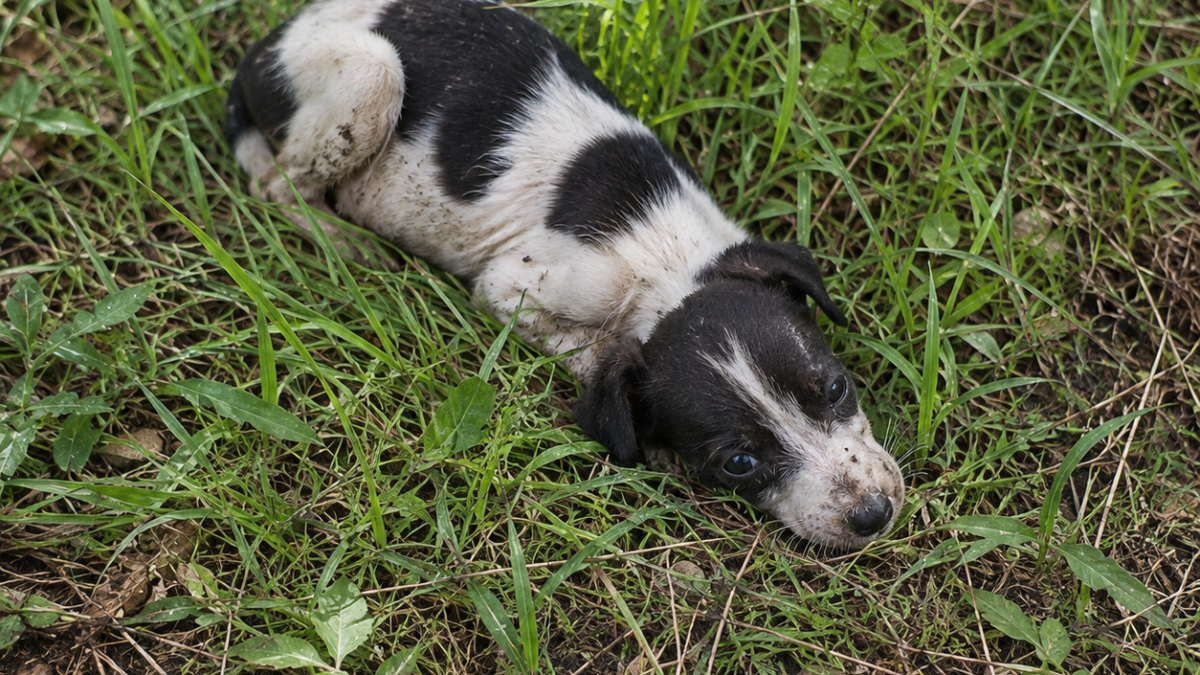
The first time I saw Tito, he was lying motionless beside a dark road where somebody had dragged him out of traffic and left him like something that no longer mattered, and the only reason I knew the tiny dog was still alive was because his eyes moved when I whispered that help had finally found him.
By sunrise, three veterinarians and a team of nurses were fighting a traumatic brain injury, uncontrolled bleeding, a fractured jaw, a torn palate, spinal compression, and injuries so severe that one doctor quietly told me the kindest choice might be to stop before Tito had to suffer any more than he already had.
But the two people who had watched the driver strike him remembered something that would later change everything, because the person who drove away wasn’t simply someone who should have known better—and before Tito’s story was over, the man who had left him in the darkness would be forced to watch the little dog he treated as disposable become impossible for an entire city to forget.
My name is Elena, and I had been answering rescue calls long enough to know that people exaggerate when panic takes over, so when my phone rang just after ten that night and a shaking voice said, “There’s a dog beside the road and I don’t know if he’s alive,” I grabbed my keys without asking the questions I normally would.
The caller was a man named Lucas.
His wife, Camila, was with him.
They had been driving home when the accident happened.
By the time I reached the road, their car was parked at an angle with hazard lights flashing, illuminating a strip of asphalt, weeds and broken gravel. Lucas stood near the shoulder holding his phone flashlight toward something small beside a drainage ditch.
Camila was crying.
“Over here.”
I ran.
Then stopped.
Tiny dog.
Brown-and-white coat.
Blood around his mouth.
One front paw twisted awkwardly.
Body completely still.
I crouched.
“Hey.”
Nothing.
“Can you hear me?”
No whine.
No movement.
I placed two fingers carefully against his neck.
Pulse.
Fast.
Weak.
Alive.
His eyes shifted.
That was all.
Camila knelt several feet behind me.
“He was moving before.”
“What happened?”
She looked toward the road.
“A car hit him.”
“Did the driver stop?”
“Yes.”
“Where is he?”
“He left.”
I turned.
“What?”
Lucas stepped closer.
“He stopped. Got out. Walked over. Grabbed the dog.”
My stomach tightened.
“To help him?”
Lucas looked sick.
“No.”
“What did he do?”
“He dragged him out of the road.”
“Dragged?”
“By the back legs.”
Camila covered her mouth.
“Then he left him here.”
For a moment, I thought I had misunderstood.
“He hit the dog, pulled him off the road, and drove away?”
“Yes.”
“Did you see the license plate?”
Lucas nodded.
“Most of it.”
“Car?”
“Dark SUV.”
Camila whispered:
“We know who he is.”
That changed the air.
I looked at her.
“How?”
“He’s a veterinarian.”
I stared.
“Are you sure?”
She nodded.
“He has a clinic two neighborhoods over. I’ve taken my mother’s dog there.”
Behind us, the little dog made the faintest sound.
Barely more than air.
Everything else could wait.
I wrapped him in a blanket, supporting his head and spine as carefully as I could.
His body was limp.
When I lifted him, blood touched my sleeve.
“What’s his name?” Lucas asked.
“I don’t know.”
Camila looked at the little face.
“Angel?”
I shook my head.
Something smaller came to me.
“Tito.”
The dog didn’t react.
“Okay, Tito.”
I carried him toward my van.
“You don’t have to know me.”
His eyes moved again.
“You just have to stay.”
Camila followed us.
“Will he live?”
I hated that question.
I opened the van door.
“I don’t know.”
Lucas asked:
“What about the driver?”
I looked back at the road.
At the place where a man trained to save animals had apparently decided this one wasn’t worth saving.
“Remember everything.”
“Why?”
“Because if Tito survives tonight, we’re going to need the truth tomorrow.”
Then I closed the door and drove toward the emergency clinic with one hand on Tito’s chest, counting every shallow breath as though numbers alone could keep him alive.
PART 2
Emergency medicine has its own language, and most of it sounds terrifying when the patient is an animal you met twenty minutes earlier and already cannot imagine losing.
“Shock.”
“Head trauma.”
“Active bleeding.”
“Neurologic deficits.”
“Possible spinal involvement.”
“Jaw instability.”
“Get oxygen.”
“Blood pressure?”
“Falling.”
“Another line.”
Tito disappeared behind swinging doors almost immediately.
Dr. Sarah Bennett met me in the hallway.
She knew our rescue.
She knew me.
She also knew I was about to ask questions before she had answers.
“Let us stabilize him.”
“How bad?”
“Elena.”
“How bad?”
She looked back toward the treatment room.
“Very.”
That was enough.
Three veterinarians ended up working the case that night.
Sarah.
Dr. Michael Chen, the emergency surgeon.
Dr. Priya Shah, who handled neurologic assessment.
Nurses rotated constantly.
Someone held pressure on bleeding.
Someone placed IV access.
Someone checked oxygenation.
Someone cleaned debris from his mouth.
Tito never cried.
That scared me more than screaming would have.
He was so far into shock that pain had become almost silent.
The Brain Injury
Dr. Shah came out first.
“There are signs of significant traumatic brain injury.”
“Swelling?”
“Likely.”
“Can you treat it?”
“We can manage pressure, support oxygenation, control inflammation where appropriate, monitor neurological responses.”
“Will he wake normally?”
“I don’t know.”
“Will he walk?”
“I don’t know.”
“Will he survive?”
She looked at me.
“I don’t know.”
Three answers.
Same words.
Every one heavier than the last.
The Jaw
Dr. Chen found the fracture.
The lower jaw was broken.
The palate had torn open.
Blood and swelling made eating impossible.
Even if Tito became neurologically stable, nutrition would become another battle.
Then came the spine.
Compression.
Trauma near the neck.
Damage severe enough that nobody could yet predict long-term function.
Dr. Chen pointed at the scan.
“This area worries me.”
“Paralysis?”
“Possible.”
“Permanent?”
“Too early.”
I leaned against the wall.
“And his eyes?”
Nobody answered immediately.
That silence gave me the answer before Sarah finally spoke.
“We’re not seeing normal visual response.”
“Because of swelling?”
“Maybe.”
“Temporary?”
“Maybe.”
I stared.
Everyone in medicine learns to hate the word maybe eventually.
The Choice Nobody Wanted
Around three in the morning, Sarah sat beside me.
Not across.
Beside.
That is how doctors sit when they’re about to discuss death.
“Tito is suffering from multiple catastrophic injuries.”
I nodded.
“He’s heavily medicated.”
“Good.”
“If the swelling worsens, he could arrest.”
I swallowed.
“If his neurological status declines further, we may have to discuss quality of life.”
“No.”
“Elena.”
“No.”
“Listen.”
I stood.
“He was hit by someone who knew exactly what an injured animal needed and still left him there.”
“I know.”
“He doesn’t get to die because that man decided not to help.”
“That isn’t what I’m saying.”
“Then don’t ask me to let him go.”
Sarah waited.
Then spoke softly.
“I am not asking you to prove a point with his body.”
That stopped me.
She continued.
“If Tito tells us his body cannot continue, we listen. If treatment becomes only pain, we stop. That isn’t giving the driver a victory. That is protecting Tito.”
I looked through the glass.
Tiny body.
Tubes.
Bandages.
Machines.
Three people moving around him.
“Does he still have a chance?”
“Yes.”
“How much?”
“Small.”
“But real?”
“Yes.”
“Then we take it.”
Sarah nodded.
“That is what I needed to hear.”
The Witnesses
Lucas and Camila came to the clinic before dawn.
Neither had gone home.
Lucas handed me a piece of paper with the license plate.
Almost complete.
Vehicle description.
Time.
Location.
Then Camila said:
“I found his clinic.”
She showed me a photo online.
Dr. Adrian Cole.
Veterinarian.
Owner of Green Valley Veterinary Center.
Smiling in a white coat.
Holding a golden retriever.
Underneath:
Compassionate care for every animal.
I felt something inside me go cold.
“Are you completely certain?”
Camila nodded.
“I’ve seen him before.”
Lucas said:
“I saw his face when he got out of the car.”
“What did he do exactly?”
Lucas swallowed.
“He looked at the dog. Checked his car. Looked around.”
“Did he touch Tito?”
“Yes.”
“How?”
“Grabbed both back legs and pulled him.”
Camila started crying.
“He didn’t even support his head.”
I closed my eyes.
With a suspected spinal injury.
A veterinarian.
“He dragged Tito maybe ten feet into the grass.”
“Then?”
“He wiped his hands on something from the trunk.”
“Called anyone?”
“No.”
“Checked breathing?”
“No.”
“Pulse?”
“No.”
“Nothing?”
Lucas shook his head.
“He got back in the car.”
Camila whispered:
“We yelled.”
“What?”
“I shouted, ‘You can’t leave him!’”
“And?”
“He said, ‘It’s a stray.’”
Silence.
That sentence changed everything for me.
Not:
I didn’t see him.
Not:
I panicked.
Not:
I thought he was dead.
It’s a stray.
As if that made emergency care optional.
Officer Ruiz
I called Officer Daniel Ruiz.
He’d handled animal neglect cases with our rescue before.
He listened.
Then said:
“Traffic accident is one issue. Leaving an injured animal after striking it may be another depending on local law. His profession complicates things ethically, but don’t assume criminal charges yet.”
“Two witnesses.”
“Good.”
“License plate.”
“Better.”
“He’s a veterinarian.”
“I heard you.”
“He dragged Tito by the legs.”
“Elena.”
“What?”
“Stop building the courtroom before I build the file.”
I hated him when he was right too.
“What do you need?”
“Statements.”
“Done.”
“Vehicle.”
“Can you get it?”
“We’ll try.”
“Camera footage?”
Daniel paused.
“Now you’re useful.”
The Camera
A convenience store sat roughly half a block from where Tito had been hit.
One camera faced the road.
The angle wasn’t perfect.
But it captured enough.
Dark SUV.
Impact partially obscured by another vehicle.
Brake lights.
SUV stopping.
Driver exiting.
Figure moving toward the shoulder.
Dragging something small.
Returning to the vehicle.
Leaving.
Timestamp matched.
Vehicle plate partially readable.
Lucas and Camila’s account matched.
Daniel called me.
“We have video.”
I sat down.
“Enough?”
“Enough to keep going.”
Tito’s First Three Days
The first seventy-two hours became a blur of machines, medication adjustments and watching.
Tito remained heavily sedated.
Brain swelling was the greatest immediate fear.
His jaw was stabilized as much as possible.
The torn palate required careful management.
He couldn’t eat normally.
His spine and neck were protected.
Nurses turned him gently to avoid pressure injury.
Every movement required two people.
Head.
Neck.
Body.
Together.
No twisting.
No sudden motion.
Sometimes I’d sit beside him and whisper:
“Tito.”
No response.
Day One.
“Tito.”
Nothing.
Day Two.
“Tito.”
An ear flicked.
Maybe reflex.
I counted it.
Day Three.
“Tito.”
His paw twitched.
Sarah saw.
“Don’t get excited.”
“Too late.”
“It may not be voluntary.”
“Still moved.”
“Elena.”
“Still moved.”
Dr. Adrian Cole’s First Story
When investigators contacted Adrian, he admitted being on the road.
He admitted striking something.
He claimed he believed Tito was dead.
That contradicted the witnesses.
Lucas said Tito had moved.
Camila said his eyes were open.
Adrian said he pulled Tito from traffic so other cars wouldn’t hit the body.
Then he left because he was “in shock.”
A veterinarian.
In shock.
Possible.
Profession does not make people immune to panic.
But the camera showed him walking normally.
Checking damage to his vehicle.
Opening the trunk.
Dragging Tito.
Driving away.
No call.
No attempt at aid.
No emergency clinic contact.
Nothing.
Daniel told me:
“His attorney says panic.”
I looked through the glass at Tito.
“Panic had time to check the bumper.”
Daniel didn’t answer.
The Car
Investigators photographed Adrian’s SUV.
Damage.
Hair caught near part of the lower front area.
Evidence consistent with impact.
Repair appointment had already been scheduled.
For the car.
Not Tito.
That detail spread through the rescue team and made everyone furious.
Nina said:
“He arranged care for the bumper faster than the dog.”
Nobody laughed.
Day Four
Tito remained alive.
That’s how low our standards had become.
Alive.
Enough.
His blood pressure improved slightly.
Bleeding controlled.
Neurological swelling still concerning.
Sarah began reducing sedation carefully.
We waited.
His eyes opened.
Not focusing.
Not tracking.
But open.
“Tito?”
His ear moved.
I leaned closer.
“I’m here.”
His eyes moved toward the sound, not toward me.
That was when the fear about blindness became real.
The Sight Test
Dr. Shah tested responses repeatedly over several days.
Light.
Movement.
Menace response.
Pupillary reaction.
Some neurological reflexes remained.
Functional vision did not.
“Can swelling still change this?”
“Possibly.”
“You don’t sound hopeful.”
“I don’t want to lie.”
“Permanent?”
“Likely.”
I looked at Tito.
His world had gone dark because somebody hit him with a car and left.
The anger returned so fast I could taste it.
Dr. Shah saw my face.
“Blindness isn’t the worst outcome.”
I looked at her.
“He can still have a good life if the rest of him recovers.”
That sentence became important later.
At the time, I barely believed it.
Day Five: The Neck
As swelling changed, the extent of the neck trauma became clearer.
Tito’s head rested at an unnatural angle.
We repositioned him carefully.
It returned.
Muscle spasm.
Spinal damage.
Structural trauma.
Nobody knew whether it would straighten.
Physical therapy was months away if he survived.
Dr. Chen said:
“He may always have a tilt.”
“How bad?”
“Could be significant.”
“Painful?”
“We’ll manage pain.”
I hated the phrase.
We’ll manage.
Not fix.
The list of things we could not fix was growing.
The Professional Board
News reached the veterinary licensing authority through formal complaint.
I didn’t file the first one.
Camila did.
Then our rescue provided documentation.
The complaint was not that Adrian had accidentally hit a dog.
Accidents happen.
The complaint centered on what came after.
Failure to render aid.
Possible unethical conduct.
Abandoning an injured animal.
Potential dishonesty in his account.
His own professional standards became relevant.
That was the first moment the story turned in a way I hadn’t expected.
Adrian had not simply left Tito.
He had done it while belonging to a profession built around relieving animal suffering.
The Clinic Staff Speak
One employee from Adrian’s clinic contacted investigators privately.
Her name was Mara.
She was a veterinary technician.
She said Adrian had arrived late that night agitated.
Asked whether anyone had cleaned the front parking area.
Asked for a hose.
Changed clothes.
Then told staff he had “hit some stray dog” and didn’t want “drama.”
Daniel interviewed her formally.
She gave a statement.
Another staff member remembered Adrian asking about body damage on the SUV.
No one heard him ask whether an injured dog had been brought in.
No one heard him call animal control.
The panic defense weakened.
Day Six
Tito responded more to voices.
Not sight.
Voice.
When Sarah entered and said his name, one ear moved.
When I spoke, his breathing changed.
Nina said:
“He knows you.”
“Maybe.”
“He does.”
I put my hand near his nose.
Tito smelled.
Then moved his head a fraction toward it.
First time he sought contact.
I cried.
Again.
Day Seven
No miracle.
No sudden standing.
No dramatic recovery.
Just slightly more stable blood pressure.
Less swelling.
Better oxygenation.
Enough to plan nutrition.
The palate injury still prevented normal eating.
He had lost weight.
That terrified us.
His body needed fuel to heal injuries that made eating almost impossible.
Day Eight: The Feeding Tube
On Day Eight, Tito was stable enough for the feeding tube.
We celebrated a tube.
That’s rescue.
Dr. Chen placed it carefully.
Nutrition began slowly.
Measured.
Controlled.
Tito’s body finally received what it had been missing during the most violent week of his life.
I watched the first feeding go in.
“That’s dinner.”
No reaction.
“Very glamorous.”
Nina smiled.
“Five-star.”
The Paw
That evening, Tito’s front paw moved.
Not the damaged neck.
Not head.
Paw.
A tiny twitch.
Maya called me.
“Elena.”
I leaned closer.
Tito’s toes flexed.
Once.
Then again.
“Did you see?”
“Yes.”
Sarah warned us.
“Could be reflex.”
We ignored her emotionally.
A paw moved.
Inside that hospital, it felt like fireworks.
Wet Food
A few days later, after careful assessment, we allowed Tito to taste a tiny amount of soft food.
Not a meal.
A test.
He smelled it.
Tongue moved.
One lick.
Then another.
His broken jaw made everything awkward.
The torn palate still required caution.
But Tito wanted it.
That mattered.
We cheered over three licks.
Sarah rolled her eyes.
“You people have very low standards.”
“Yes.”
“Good.”
Adrian Gives an Interview
The story became public.
Not because we posted everything.
Because local media learned a veterinarian was under investigation after allegedly striking a dog and leaving.
Adrian’s attorney issued a statement.
“Dr. Cole deeply regrets the incident. He believed the animal had died on impact and, while distressed, moved the animal away from traffic to prevent further harm.”
Lucas watched the interview.
Called me.
“He’s lying.”
“I know what you saw.”
“He looked at Tito’s face.”
“We have your statement.”
“He knew.”
“I know.”
Camila was angrier.
“He didn’t even say Tito’s name.”
“He may not know it.”
“He should.”
That line stayed with me.
Standing
The first time Tito stood happened so unexpectedly that nobody had a camera ready.
Physical support.
Harness.
Two people.
Sarah expected maybe weight-bearing.
Tito planted his paws.
Shook violently.
Head tilted.
Body crooked.
But upright.
Three seconds.
Then five.
Then he collapsed gently into the support.
I started crying.
Tito’s tail moved.
Barely.
Sarah looked at me.
“Now you can celebrate.”
I did.
The Floor Kennel
We moved Tito into a larger floor-level recovery kennel.
No risk of falling from height.
More room to reposition.
Soft walls.
Padded bedding.
He began learning his body again.
Blind.
Head tilted.
Weak.
But moving.
The first attempts looked heartbreaking.
He’d stand.
Lean wrong.
Fall.
Try again.
His brain and body had to renegotiate everything.
Balance.
Orientation.
Where his legs were.
Where the floor was.
Three Weeks: The CT
The CT scan confirmed what we feared.
The neck injury had healed into a position that would not fully correct.
Tito would likely carry a permanent twist.
His head would never sit straight.
His blindness appeared permanent.
I sat in the consultation room while Dr. Shah explained.
“No surgery?”
“Not one that offers acceptable risk-benefit.”
“So this is him.”
“Yes.”
Blind.
Crooked neck.
Neurological deficits.
Possible future pain.
Long rehabilitation.
I thought of adoption.
Then hated myself for thinking it.
Who would choose him?
Dr. Shah read my face.
“Don’t decide the ending on Week Three.”
Same lesson.
Different day.
Tito’s Tail
Then something happened that made every diagnosis feel less important.
Maya entered his kennel area.
“Tito.”
Tail wag.
Full.
Not big.
But unmistakable.
She called again.
“Tito.”
More wagging.
Blind dog.
Crooked neck.
Still happy somebody came.
That was when I stopped measuring Tito against the body he’d had before the accident.
This was his body now.
The question was whether he could build a life inside it.
He could.
The Board Hearing Begins
The veterinary board opened formal proceedings.
Adrian’s defense relied heavily on panic.
He said he had been overwhelmed.
Thought Tito dead.
Feared confrontation.
Moved him out of traffic.
Left because he was emotionally distressed.
Then Mara’s statement came in.
The technician.
He had spoken casually about “some stray dog.”
Discussed his car.
No emergency call.
No attempt to locate the dog afterward.
No report until investigators reached him.
The ethical question sharpened.
A veterinarian is not expected to be superhuman.
But when faced with a living injured animal, the standard cannot be indifference.
Lucas Testifies
At a preliminary hearing, Lucas described the impact.
Then the stop.
The dragging.
The leaving.
Adrian’s attorney asked:
“Mr. Rivera, was it dark?”
“Yes.”
“Were you upset?”
“Yes.”
“So your perception may have been affected.”
“My wife saw the same thing.”
“You could have influenced each other’s memory.”
Lucas looked at Adrian.
Then said:
“I remember what I saw because I kept thinking he was going to put the dog in his car.”
Silence.
“I thought he was helping.”
That hurt more than accusation.
The expectation.
Then betrayal.
Camila
Camila testified next.
The attorney asked:
“You recognized Dr. Cole?”
“Yes.”
“You’d met him?”
“He treated my mother’s dog.”
“Was your relationship positive?”
“Yes.”
“So you respected him before this?”
“Yes.”
That made her testimony stronger.
No prior grudge.
No motive.
She had trusted him.
Then watched him leave Tito.
The Video
The road camera played.
Grainy.
No sound.
SUV.
Impact.
Stop.
Driver.
Small body.
Dragging.
Return.
Leave.
Nobody in the room spoke.
Video removes imagination.
Adrian looked down.
Tito Starts Walking
Meanwhile, the dog at the center of all this learned to follow sound.
We used gentle verbal cues.
“Tito.”
Step.
“Here.”
Another.
His neck pulled his orientation sideways.
Blindness made distance uncertain.
At first, he walked in curved lines.
Bumped padded barriers.
Stopped.
Listened.
Adjusted.
We used textured mats.
One near water.
One near bed.
Different surfaces gave information.
He learned fast.
Hydrotherapy
When medically cleared, hydrotherapy began.
Warm water reduced weight on joints.
Supported movement.
Tito hated the first session.
Absolutely hated it.
He froze.
Looked offended despite blindness.
The therapist, Melissa, held him carefully.
“Come on.”
Tito paddled once.
Then stopped.
“That’s not how water works.”
Another paddle.
Soon the limbs moved more rhythmically.
Session by session, strength returned.
Acupuncture
Acupuncture was added as part of a broader pain and rehabilitation plan.
People argued online about it.
I didn’t care.
Our rehabilitation team used what they judged appropriate, monitored response, and never replaced necessary medical treatment with wishful thinking.
Tito relaxed during sessions.
Sometimes fell asleep.
That was enough for me.
Physical Therapy
Weight shifts.
Controlled standing.
Assisted walking.
Balance work.
Gentle range-of-motion exercises.
Tito hated some of it.
Loved the treats.
Eventually associated the rehab room with food.
Problem solved.
Foster Home
When Tito became medically stable enough to leave the hospital, we needed a specialized foster.
Enter Maria Torres.
Retired physical therapist.
Two calm dogs.
Single-story home.
Rugs everywhere.
Experience with blind animals.
She walked into the clinic.
Tito heard her.
Tail wag.
Traitor.
I loved her immediately.
Learning the House
Maria changed almost nothing after Tito arrived.
That’s important for blind dogs.
Furniture became landmarks.
Rugs became maps.
Scent became orientation.
Sound became distance.
She placed a textured mat near water.
Another near the back door.
Bell on one other dog’s collar.
Wind chime near the patio.
Tito learned.
Not instantly.
But steadily.
First Grass
Maria sent video.
Tito stepped onto grass.
Stopped.
Nose lifted.
Sun on his face.
He rolled.
Actually rolled.
Crooked neck.
Blind eyes.
Whole body twisting happily in the lawn.
I watched the video six times.
That was the moment the accident stopped owning the story.
Squeaky Toys
Tito discovered he could chase sound.
Maria squeaked a toy.
His head turned.
She tossed it a few feet.
Squeak on landing.
Tito ran toward the sound.
Missed.
Turned.
Found it with his nose.
Tail everywhere.
The dog who couldn’t lift a paw now chased toys he couldn’t see.
Children
Maria’s grandchildren visited.
We were cautious.
Tito adored them.
They learned to speak before touching.
“Tito, it’s Anna.”
Tail.
“Tito, it’s Ben.”
Tail.
They sat on the floor.
He crawled between them.
Cuddles.
No fear.
Other Dogs
Tito slept beside Maria’s older Labrador, Daisy.
At first, Daisy avoided his crooked movement.
Then adjusted.
She began positioning herself beside him during naps.
Sometimes Tito used her body as a landmark.
She tolerated it.
Dogs often adapt without speeches.
The Driver’s Clinic Loses Clients
As the case became public, Adrian’s clinic faced backlash.
I did not encourage harassment.
Neither did the rescue.
I repeatedly asked people to let investigators and professional regulators handle it.
Still, clients made their own decisions.
Some transferred records.
Some asked questions.
Some stayed.
That’s how public trust works.
A medical profession depends on more than technical skill.
It depends on believing the person in front of you cares when an animal suffers.
Adrian Contacts the Rescue
Through his attorney, Adrian offered to pay part of Tito’s medical costs.
People celebrated.
I didn’t.
Not yet.
The letter included no direct admission.
It described the payment as “a gesture of concern.”
Daniel said:
“Take legal advice before responding.”
We did.
Eventually, funds were accepted through an appropriate channel without waiving any rights or altering the investigation.
Money could pay bills.
It couldn’t rewrite the road.
One Hundred Days
Tito reached Day 100.
Still no adopter.
That was okay.
He was healing.
His head remained permanently tilted.
Blindness permanent.
Walking improved.
He could navigate Maria’s home confidently.
Outside unfamiliar environments, he needed guidance.
We began attending carefully selected adoption events.
First Adoption Event
Tito wore a soft harness.
A sign explained:
Blind. Neurologically impaired. Loves people. Follows sound. Expert cuddler.
Families stopped.
Smiled.
Asked questions.
Then moved on.
One woman said:
“He’s adorable, but we need a normal dog.”
I heard it.
Maria heard it.
Tito didn’t understand.
Good.
Normal
I hated that word for days.
Normal.
Tito ate.
Slept.
Played.
Loved.
Got annoyed.
Begged for treats.
Stole blankets.
Snored.
What exactly was abnormal?
His neck?
Eyes?
Or people’s expectations?
Second Event
A family with children loved him.
Then learned his long-term care might include neurological monitoring and rehabilitation.
They hesitated.
Fair.
Adoption must be realistic.
They chose another dog.
Tito wagged goodbye.
Third Event
An older couple spent forty minutes with him.
I thought:
This is it.
Then the husband whispered:
“I don’t think I can handle seeing his neck every day.”
He wasn’t cruel.
He was honest.
Still hurt.
Tito leaned against him.
The man cried before leaving.
Day 150
Tito still wasn’t adopted.
Maria said:
“He doesn’t know.”
“What?”
“That nobody chooses him.”
I looked at him.
He was chewing a toy.
“He thinks everyone comes to visit him.”
Maybe that was healthier.
The Board Decision
Months after the accident, the veterinary board issued findings.
Adrian had violated professional ethical standards related to the handling of an injured animal and conduct after the collision, based on the evidence presented.
The consequences included a formal disciplinary record, mandated professional remediation and restrictions/suspension provisions consistent with the board’s authority in this dramatized account.
His reputation was damaged.
His clinic changed ownership arrangements later.
People asked whether I felt satisfied.
I thought I would.
I didn’t.
Tito was still blind.
His neck still twisted.
No ruling straightened it.
Justice has limits.
The Court Case
Separate legal proceedings addressed the collision and abandonment-related conduct under the laws that applied.
Adrian’s attorney again argued panic.
Then one prosecutor asked:
“Doctor, if a client brought you an animal with visible movement after a motor vehicle trauma, what would you advise?”
Adrian didn’t answer immediately.
“Emergency stabilization.”
“And if the owner said, ‘I dragged him to the roadside and left’?”
Silence.
“What would you tell that owner?”
Adrian looked down.
That was the most powerful moment of the case.
He knew the answer.
Everyone did.
His Apology
Eventually, Adrian spoke.
Not through an attorney.
“I failed.”
The room was quiet.
“I panicked.”
No one interrupted.
“I thought the dog was going to die.”
Then:
“I didn’t want to deal with what I’d done.”
There it was.
Not ignorance.
Avoidance.
He continued:
“I treated the animal as a problem to remove from the road instead of a patient.”
I looked at him.
For the first time, he said patient.
Not stray.
Not dog.
Patient.
Did I Forgive Him?
No.
Not then.
Maybe not ever in the way people mean forgiveness.
But I believed the apology was closer to truth than his first statements.
People can regret terrible choices.
That doesn’t erase consequences.
Both can exist.
Tito Keeps Waiting
Day 200.
Adoption event.
No family.
Day 240.
Another.
No family.
Day 300.
Still Maria.
Still rescue.
Still happy.
Birthday Guess
We didn’t know Tito’s exact birthday.
So Maria chose rescue day as his celebration.
He got a dog-safe cake.
Couldn’t see it.
Definitely smelled it.
Nearly knocked the plate over.
Excellent.
The Neck Becomes Tito
At some point, we stopped noticing the tilt.
Visitors still did.
We didn’t.
That’s what familiarity does.
Difference becomes person.
“Tito’s crooked neck” became simply Tito.
The Blindness
Same.
He learned new spaces by slow introduction.
He followed voices.
Bells.
Smells.
In Maria’s yard, he ran confidently.
If you watched from a distance, you might forget he was blind.
Then he’d miss a toy by two feet.
Turn.
Listen.
Find it anyway.
Day 350
A family applied.
Seemed perfect.
Home visit good.
Veterinary references good.
Met Tito twice.
Then withdrew.
Reason:
Their relatives worried Tito’s condition would be “too sad.”
Maria called me furious.
“He’s not sad.”
“I know.”
“He’s happier than their dog.”
“Probably.”
“Tito doesn’t need pity.”
“No.”
“He needs a couch.”
Correct.
Day 400
Still waiting.
The rescue team began joking:
“Maybe he’s already home with Maria.”
Maria refused.
“I foster.”
“You’ve fostered him more than a year.”
“Still foster.”
Tito slept in her bed.
“Foster.”
Sure.
But Maria was older and wanted Tito placed with a family able to support long-term rehabilitation needs for many years.
That mattered.
Love includes planning.
Day 430
A young couple came.
Loved Tito.
Then their landlord rejected disability-related pet accommodations not applicable to their situation.
Another no.
Tito wagged.
Day 450
Maria started getting anxious.
“What if nobody chooses him?”
I looked at Tito lying upside down.
“Then we choose him every day.”
She nodded.
But we both wanted permanent certainty.
Day 469
The family arrived without drama.
No viral announcement.
No television crew.
No perfect music.
Their names were Emily and David Brooks.
Their daughter Sophie was ten.
They had lost a senior blind Beagle the previous year.
That detail changed my attention immediately.
Emily knelt.
Didn’t reach for Tito.
She said:
“Hi, Tito.”
His head turned.
Tail wag.
He walked toward her voice.
Crooked.
Confident.
Smelled her hand.
Then leaned against her knee.
David smiled.
Sophie sat on the floor.
“Can I touch him?”
“Tell him first,” Maria said.
“Tito, I’m Sophie.”
Tail.
She touched his shoulder.
Tito climbed halfway into her lap.
Maria began crying.
I pretended not to.
The Questions
Emily asked about everything.
Neurology.
Pain.
Blindness.
Future imaging.
Medication.
Physical therapy.
Cost.
Emergency signs.
House layout.
Stairs.
Travel.
Eating.
Dental care with old jaw trauma.
She took notes.
David asked:
“Will his neck get worse?”
“Maybe arthritis over time. We monitor.”
“Can he run?”
“In familiar safe spaces.”
“Can he be alone?”
“Yes, with gradual routine.”
“Does he like children?”
Sophie was already trapped beneath Tito’s cuddling.
Question answered.
No Pity
Emily said something I will never forget.
“We’re not adopting him because we feel sorry for him.”
Good.
“We’re adopting him because he’s delightful.”
Better.
“And because our house already knows what a blind dog needs.”
Perfect.
Home Visit
One story.
Fenced yard.
Rugs.
No open staircase.
Textured floor near exits.
They already had bells from their previous blind dog.
Furniture stable.
Toy basket ready.
I hated how perfect it was.
Maria’s Goodbye
Adoption day broke her.
Tito had lived with her more than a year.
She packed his things.
Blankets.
Bell toys.
Medication.
Records.
Favorite bed.
Squeaky duck.
Then sat on the floor.
“Tito.”
He found her.
Climbed into her lap.
She held him.
“You were supposed to stay two weeks.”
Tail wag.
“Liar.”
I cried.
469 Days
We had written the number on the adoption paperwork.
469 days from roadside abandonment to permanent home.
People online later focused on it.
I understood.
Four hundred sixty-nine days sounds enormous.
To Tito, it was just mornings.
Meals.
Rehab.
People.
Toys.
Sleep.
Waiting without knowing he was waiting.
The Car
This worried us.
The original trauma involved a car.
Tito had ridden in vehicles for vet appointments, but adoption day carried emotion.
David opened the rear door.
Tito hesitated.
Emily spoke from inside.
“Come on, buddy.”
He stepped onto the ramp.
One paw.
Then another.
Climbed.
No panic.
I exhaled.
First Night
Photo at 8:37.
Tito asleep under a blanket.
Second photo at 9:15.
Toy basket emptied across the floor.
Caption:
He cannot see the toys, but apparently believes all of them belong outside the basket.
Third photo.
Tito beside Sophie.
Both asleep.
That one destroyed me.
The Yard
Within days, Tito mapped it.
Fence.
Tree.
Patio.
Back door.
Grass.
Squeaky toy zone.
Sophie ran with a bell attached lightly to her shoe sometimes so Tito could follow her.
He loved it.
Running
The first video showed Tito running.
Actually running.
Head tilted permanently.
Blind eyes.
Body moving with confidence.
He followed Sophie’s laughter.
The dog who once couldn’t lift a paw crossed an entire yard because a child called his name.
Adrian Sees the Video
Someone sent the rescue update to Adrian.
I didn’t.
He later wrote a letter.
Short.
No excuses.
“I watched Tito running. I am grateful he survived my failure.”
I read it twice.
He did not ask for forgiveness.
Good.
He donated anonymously to an emergency-treatment fund afterward, though the rescue later learned where it came from.
We accepted the money under policies that protected transparency.
People asked if that redeemed him.
No.
Redemption isn’t a receipt.
But better choices matter.
Tito’s Ordinary Problems
He snored.
Loudly.
Stole food if left low enough.
Loved warm laundry.
Hated rain.
Hated nail trims.
Loved children.
Barked at the vacuum.
Sometimes walked into a chair when someone moved it.
Emily banned casual furniture rearrangement.
David complained.
Sophie said:
“Tito wins.”
Correct.
One Year Home
Anniversary.
Not rescue day.
Home day.
Tito had a blue bandana.
Despised it.
Got chicken.
Accepted.
Maria came.
Tito recognized her voice instantly.
He almost knocked her over.
She cried.
His Medical Life
The injuries didn’t disappear.
Neurologic checkups.
Pain monitoring.
Occasional physical therapy.
Neck stiffness.
Dental follow-up.
Blindness.
But care transformed limitations into routine.
That’s the difference between disability and suffering.
Disability can be lived with.
Untreated pain cannot.
Public Perception
People saw Tito and often said:
“Oh, poor baby.”
Emily began answering:
“He’s not poor anything.”
I loved that.
Tito didn’t need strangers mourning the body he had.
He needed them to respect the life he was living.
Sophie Explains Tito
At school, a classmate asked:
“Why would you adopt a broken dog?”
Sophie answered:
“He’s not broken. His neck is just weird.”
Ten-year-olds sometimes understand what adults overcomplicate.
The Old Clinic
Adrian eventually stepped away from ownership of Green Valley Veterinary Center.
The practice continued under different leadership.
New policies emphasized emergency response, reporting and staff ethics.
Mara, the technician who testified, later became head technician.
She sent me a photo of an emergency protocol posted in the treatment room.
One line:
Any injured animal encountered by staff must receive or be directed toward immediate appropriate care regardless of ownership status.
I stared at it.
Tito had changed a clinic he would never visit.
The Road
A small sign went up near the accident area reminding drivers to report injured animals and contact emergency services.
No Tito name.
No sensationalism.
Good.
Systems should improve quietly too.
Two Years Home
Tito became slightly chubby.
Veterinarian warned Emily.
“He needs to lose half a kilogram.”
She stared.
“This dog almost died.”
“Yes.”
“And now you’re putting him on a diet?”
“Yes.”
I laughed.
The medical journey had reached its greatest achievement.
Mild obesity.
Squeaky Duck
His favorite toy survived somehow.
Barely.
One wing missing.
Sophie repaired it.
Tito recognized the sound after months.
Three Years
Neck arthritis increased.
Medication.
Heat therapy.
Gentle exercise.
No drama.
Just responsibility.
David built a low ramp to the couch because Tito insisted couch access was a civil right.
Blind-Dog Confidence
Tito knew the house better than guests did.
New visitor left a bag in the hallway.
Tito bumped it.
Stopped.
Barked.
Emily said:
“That’s why we don’t leave things there.”
The guest apologized to Tito.
Correct protocol.
Maria Ages
Maria eventually stopped fostering medical dogs.
Age.
Health.
She visited Tito instead.
Every time:
“Tito.”
Tail explosion.
Some bonds don’t end at adoption.
They change shape.
Four Years
Sophie became a teenager.
Tito became grayer.
She still announced herself before touching him if he slept.
Habit.
Respect.
He trusted her completely.
The Car Fear That Never Came
People assumed Tito would hate vehicles forever.
He didn’t.
He loved car rides.
Window cracked.
Scent.
Air.
No sight needed.
Trauma does not always attach itself neatly to objects humans expect.
We never forced meaning onto him.
Adrian’s Final Hearing
Professional restrictions were eventually reviewed.
Adrian had completed required remediation, ethics training, community service-related obligations where applicable, and the disciplinary record remained.
Some people were furious he could ever work near animals again.
Others believed permanent destruction of a career served no one if genuine change occurred.
I didn’t need to decide that debate.
My responsibility had been Tito.
Regulators handled Adrian.
My One Conversation With Him
Years later, Adrian asked through Daniel whether I would speak to him.
I nearly refused.
Then agreed.
Public place.
No Tito.
He looked older.
“I don’t expect forgiveness.”
“Good.”
He nodded.
“I saw him move that night.”
There it was.
Finally.
“I knew he was alive.”
I said nothing.
“I panicked because I thought if I took him to my clinic, everyone would know I hit him.”
My hands tightened.
“So you protected yourself.”
“Yes.”
“At the cost of his brain, his eyes, his spine, his jaw—”
“I know.”
“No. You know words.”
He looked down.
I continued.
“Two strangers gave him what you were trained to give.”
“I know.”
“Why are we here?”
He swallowed.
“Because I needed to say it without a lawyer.”
“Say what?”
“I was a coward.”
Silence.
“I am sorry.”
I believed he was sorry.
That did not change Tito’s neck.
“I hope you become somebody who would stop now.”
He looked at me.
“I would.”
“Good.”
Then I left.
That was enough.
Revenge
People would have preferred I scream.
Hit him.
Destroy him.
Tell him Tito hated him.
Tito didn’t know him.
Didn’t need to.
The best revenge was that Adrian became irrelevant to Tito’s life.
Five Years Home
Tito slowed.
Still ran in short bursts.
Still followed squeaks.
Still collected cuddles.
Sophie went to high school.
Tito waited at the door when she came home.
Blind dog somehow knew school-bus timing.
Dogs are terrifyingly good at routine.
The Neck
The permanent tilt became more pronounced with age.
Pain remained manageable.
Sometimes he needed muscle relaxants.
Physical therapy returned.
Tito complained.
Treats fixed attitude.
The Jaw
Old fracture created dental challenges.
Regular checks.
Soft food sometimes.
Surgery for one problematic tooth.
He handled it.
Six Years
Tito’s hearing began fading.
That worried us more than blindness had.
Sound was his map.
So the family added vibration cues.
Gentle floor taps.
Touch cues.
Scent markers.
Sophie trained him to respond to a light touch on shoulder.
Adaptation again.
The World Gets Smaller
Not sadder.
Smaller.
House.
Yard.
Family.
Familiar walks.
Maria.
Veterinarian.
That’s enough for many old dogs.
Adventure is overrated when home is good.
The Final Medical Problem
Tito developed heart disease.
Manageable initially.
Medication.
Monitoring.
Then kidney changes.
Age had arrived.
I remember laughing when Emily told me.
“What?”
“He’s old.”
“Yes.”
“We actually got him old.”
She started crying.
So did I.
That was the miracle.
Not blindness overcome.
Age achieved.
The Last Year
Tito slept more.
Sophie, now nearly grown, did homework beside him.
David covered him with blankets.
Emily monitored medicine.
Snoring continued.
Happy snores.
Exactly what the original story promised.
The Toy Basket
Still full.
Always.
Tito couldn’t see it.
Didn’t matter.
He knew where it was.
One evening, he pulled out three toys and fell asleep on them.
The Final Week
Appetite decreased.
Breathing changed.
Heart and kidneys struggling.
Veterinarian adjusted medication.
Small improvement.
Then decline.
Emily called.
“I think we’re close.”
I went.
Tito recognized my scent before my voice.
Tail moved.
Slow.
“Hey, crooked little man.”
His head was still tilted.
Of course.
I kissed it.
Sophie
She was no longer ten.
She sat on the floor and said:
“Tito, it’s Sophie.”
Habit.
Even though he knew.
He moved toward her voice.
Rested his head against her leg.
One Last Grass Roll
On a warm afternoon, they carried him outside.
Tito smelled grass.
Tried to roll.
Body couldn’t complete it.
David helped gently.
Tito lay on his back.
Sun.
Grass.
Family laughter.
Perfect.
The Choice
Home euthanasia.
No emergency panic.
No road.
No strangers.
No dark.
The opposite of his beginning.
Final Meal
Soft chicken.
A little wet food.
Two bites.
Then no more.
Nobody pushed.
A dog who once needed a feeding tube had earned the right to refuse dinner.
The Last Night
Everyone stayed near.
Sophie slept on the couch.
Emily on a mattress.
David in a chair.
Tito on his favorite bed beneath warm blankets.
Squeaky duck beside him.
He snored.
They recorded it.
Not for social media.
For later.
Morning
The veterinarian arrived.
Maria came too.
Old now.
She sat beside Tito.
“Tito.”
Tail movement.
Still.
She cried.
“You remembered.”
Of course he did.
Goodbye
Sedation first.
Tito relaxed.
His crooked neck softened as much as it ever could.
Emily held his face.
David touched his back.
Sophie held one paw.
Maria rested a hand on the blanket.
I sat near his shoulder.
The veterinarian asked:
“Ready?”
Nobody was.
Emily nodded.
The final medication entered.
Tito’s breathing slowed.
One.
Another.
Then silence.
The veterinarian listened.
Waited.
“He’s gone.”
No Roadside
That was my first thought.
Not roadside.
Not alone.
Not dragged.
Not dark.
Home.
After
Sophie pressed her face into Tito’s blanket.
David cried openly.
Maria whispered:
“469 days.”
I looked at her.
“What?”
“We waited 469 days for someone to choose him.”
She looked around the room.
“He got years.”
Yes.
The number that once felt enormous became small.
469 days waiting.
Years belonging.
The Crooked Neck
After Tito died, Sophie made a photo book.
She refused to choose pictures where his head looked straighter.
“That’s not him.”
Correct.
His crooked neck had become part of his face.
Not damage to hide.
History carried visibly.
The Eyes
People used to say:
“It must be terrible that he never saw his family.”
Sophie corrected them.
“He knew us.”
That’s enough.
Sight is one way of knowing.
Not the only one.
Adrian Hears
Through Daniel, Adrian learned Tito had died of old age-related disease.
He sent no letter.
Good.
He donated again to emergency trauma care.
Quietly.
Better.
The Rescue Fund
We eventually created a fund for animals injured in traffic accidents whose owners were unknown.
Named not after Tito.
At Sophie’s request.
She said:
“He doesn’t need a fund with his name. Just help the next one.”
I loved her for that.
What Tito Changed
Emergency reporting procedures.
Clinic ethics conversations.
Rescue partnerships.
Public awareness.
But most importantly:
One family.
One child.
One foster.
One dog.
The Two Witnesses
Lucas and Camila stayed in Tito’s life.
They attended his first adoption anniversary.
Later, final memorial.
Lucas told me:
“I almost kept driving.”
I stared.
“What?”
“We were behind Adrian. I thought maybe he handled it.”
Camila said:
“I made him stop.”
Lucas nodded.
“Five seconds.”
Again.
Life turns on tiny intervals.
If they had trusted the professional and kept driving, Tito might have died beside the road.
Instead, two ordinary people questioned what they saw.
That’s heroism too.
The Road Visit
After Tito’s death, Lucas asked if we should place flowers where he was found.
We did once.
Then stopped.
Tito’s life belonged more to the yard than the road.
I didn’t want the worst place to become the monument.
The Favorite Photo
Not hospital.
Not adoption.
Not before-and-after.
Tito asleep upside down beneath a blanket, crooked neck twisted even more ridiculously, mouth open, Sophie beside him reading.
Nothing happening.
That is my favorite.
He earned nothing happening.
The Word Broken
I stopped using it.
Broken dog.
No.
Tito was injured.
Disabled.
Changed.
Not broken.
Broken implies a failed object.
Tito wasn’t an object.
He adapted.
What Dogs Endure
The original story said animals endure silently.
True.
But silence should never be romanticized.
Tito didn’t deserve pain because he was brave enough to survive it.
Strength does not justify suffering.
His courage was extraordinary.
The responsibility was ours to make courage unnecessary.
The Heartbeat
People like to say:
“As long as there’s a heartbeat, never give up.”
I understand the emotion.
But I learned something from Tito.
Sometimes letting go is kindness too.
The important part isn’t refusing death at any cost.
It’s listening carefully to the life in front of you.
Early on, Tito still had responses.
Still had chances.
Treatment was meaningful.
Years later, when his body was tired, we did not force him to fight because of the old slogan.
We let him rest.
That’s love too.
The Real Victory
Adrian’s discipline?
Part of it.
The legal judgment?
Part.
The apology?
Maybe.
But no.
The real victory was Tito learning the layout of a yard.
Learning Sophie’s voice.
Sleeping under blankets.
Having a full toy basket.
Becoming slightly overweight.
Growing old.
Dying home.
If I Could Go Back to the Road
I would kneel beside the tiny body before touching him.
“Tito.”
His eyes would move.
“You can’t see me yet.”
At that moment he still had eyes but the world was already disappearing.
“You’re going to lose things.”
“Your sight.”
“The straight line of your neck.”
“Some of the body you knew.”
“You’re going to spend days unable to stand.”
“You’ll need a tube to eat.”
“You’ll hate rehab.”
“You’ll fall.”
“You’ll try again.”
“You’ll learn sound.”
“You’ll learn scent.”
“You’ll roll in grass.”
“You’ll chase toys you can’t see.”
“You’ll love children.”
“You’ll wait 469 days.”
“That sounds long.”
“It is.”
“But then a girl named Sophie will say your name.”
“You’ll know.”
“You’ll go home.”
“You’ll fill that home with snores.”
“You’ll become old.”
“And one day, when your heart is tired, you will leave the world surrounded by people who know exactly how to touch you without frightening you.”
Then I’d tell him the most important part.
“The man who left you here will not get the ending.”
“You will.”
THE END
Tito’s story began with a collision.
But the collision was not the cruelest part.
Accidents happen.
Good people cause accidents.
Veterinarians cause accidents.
Rescuers cause accidents.
Human beings make mistakes behind the wheel every day.
The cruelty came in the seconds afterward.
A tiny dog was alive.
Injured.
Bleeding.
Terrified.
The person who hit him stopped.
Saw him.
Moved him.
Then chose himself.
That choice nearly killed Tito.
Two strangers made another choice.
They stopped.
Called.
Stayed.
That choice saved him.
Most lives are changed by choices that look small while they’re happening.
Stop the car.
Make the call.
Tell the truth.
Pay the bill.
Show up to rehab.
Foster the dog.
Attend another adoption event.
Then another.
Then another.
Four hundred sixty-nine days.
Choose him.
That’s how Tito survived.
Not because one person performed a miracle.
Because dozens of people kept making the next correct decision after somebody made the wrong one.
Three veterinarians worked through that first night.
Nurses turned his body.
A feeding tube carried nutrition when his broken jaw could not.
Therapists helped legs remember movement.
A foster home taught him how to navigate darkness.
Children taught him voices meant joy.
Dogs taught him where bodies were in a room.
Maria taught him a house.
Emily, David, and Sophie taught him home.
People often ask whether Tito ever understood what happened to him.
I hope not.
I hope he never understood that the person who struck him was trained to help animals.
I hope he never understood why that man drove away.
I hope Tito’s memories were simpler.
Pain.
Then hands.
Darkness.
Then voices.
Hunger.
Then food.
Falling.
Then standing.
Hospital.
Then grass.
Waiting.
Then home.
That is enough.
For more than a year, families passed him.
Some saw blindness first.
Others saw the crooked neck.
Some worried about medical costs.
Some simply couldn’t imagine living with a dog who looked visibly different.
Tito greeted them anyway.
Tail wag.
Hope.
Again.
Again.
Again.
Until Day 469.
Emily didn’t straighten his story.
David didn’t ask whether he would ever look normal.
Sophie didn’t ask why his head tilted.
She asked whether she could touch him.
That was the right question.
Tito never saw her face.
He knew her anyway.
Years later, when Sophie’s voice had changed from a child’s into a young woman’s, Tito still turned toward it.
Sight was never the center of their relationship.
Presence was.
People sometimes say Tito’s family looked beyond his scars.
I don’t think that’s quite right.
They saw the scars.
Saw the blindness.
Saw the neck.
Saw the medical needs.
Then chose the entire dog.
That’s better.
Love isn’t pretending damage never happened.
Love is seeing all of it and refusing to reduce a life to the worst thing that happened to the body.
The veterinarian who left Tito eventually had to confront what he’d done.
His professional record changed.
His reputation changed.
His career changed.
His own explanation changed from denial to admission.
Those consequences mattered.
Professionals entrusted with vulnerable lives should be accountable.
But none of that restored Tito’s sight.
None straightened his neck.
Justice could not reverse physics.
What it could do was draw a line.
What happened was wrong.
What came after would be different.
And Tito’s life became the proof.
The dog who could not lift a paw eventually ran.
The dog who could not eat eventually became picky.
The dog who could not see eventually mapped an entire home.
The dog whose broken body was dragged from a road eventually rolled joyfully through grass.
The dog strangers passed over for more than a year eventually had people arguing over who got to cuddle him.
The dog left alone in darkness died surrounded by family.
If you want revenge, that’s the part to remember.
Not Adrian losing clients.
Not the board hearing.
Not legal penalties.
Tito’s revenge was ordinary happiness.
Every meal.
Every squeaky toy.
Every warm blanket.
Every happy snore.
Every birthday.
Every time Sophie called his name and his tail moved.
Every year he lived after somebody assumed he was not worth the inconvenience of stopping.
And in the end, Tito did something no courtroom ever could.
He made the road small.
Once, that roadside was the entire world.
Blood.
Pain.
Darkness.
Abandonment.
Years later, it was just a place his family drove past without needing to stop.
Because Tito’s real life was somewhere else.
At home.
On a rug.
Under a blanket.
Toy nearby.
Family within hearing distance.
He never saw the world again.
But the world finally saw him.
Not as broken.
Not as damaged.
Not as a burden.
Not as a case.
Tito.
Simply Tito.
And after everything he’d survived, that was more than enough.
THE END








