PART 2: A Starving Mother Walked Two Miles Into Town Every Day—Then I Followed Her Back Into the Cold
PART 2
The map stayed open on my kitchen table all night.
I had circled every reliable sighting of Betty in black marker.
A convenience store.
A warehouse parking lot.
The shoulder of a county road.
A fast-food dumpster.
A small neighborhood near the Fowler city limits.
The places looked random until I connected them.
Then they became something else.
A route.
Not a perfect straight line, but a repeated path.
Betty had not been wandering aimlessly.
She had been traveling.
I traced one finger across the marks.
From the rural outskirts toward town.
Then back again.
Over and over.
I tried to imagine doing that while starving.
Then I tried to imagine doing it while nursing ten puppies.
At that point, of course, I didn’t know there were ten.
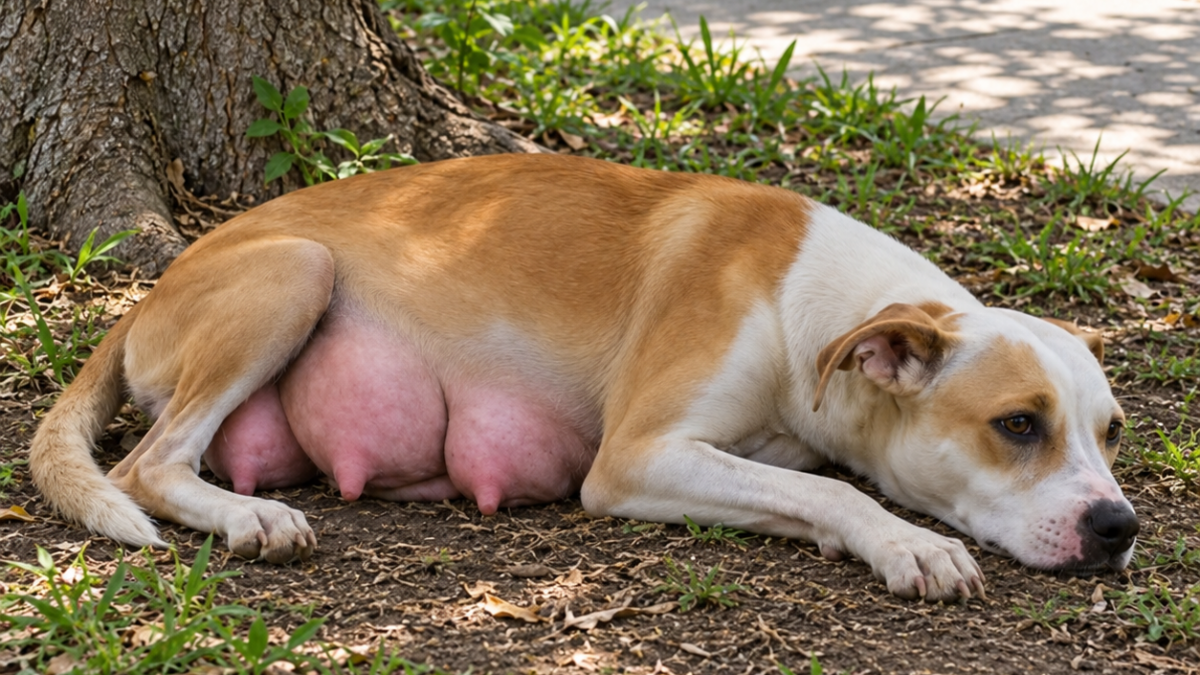
I only knew Betty’s body told us there were babies somewhere.
Possibly alive.
Possibly waiting.
Possibly already in trouble.
I hated that last thought.
The next morning I arrived early.
Betty was awake but curled into the blanket we had given her.
When I opened the door, her ears moved.
A few days earlier, that sound would have sent her backward into the farthest corner.
Now she lifted her head.
“Morning, Betty.”
Her eyes followed me.
I put her breakfast down.
She waited.
That had become our routine.
I placed the food several feet away.
Then I sat.
No reaching.
No staring.
No pressure.
Eventually, she would stand and eat.
That morning, she surprised me.
She got up before I had backed away.
One step.
Then another.
She hesitated.
I remained completely still.
“It’s okay.”
She reached the bowl.
She ate while I was still sitting there.
It may sound like nothing.
To me, it felt enormous.
Trust with a dog like Betty didn’t arrive as some magical moment where she suddenly understood every human being was good.
It came in inches.
A bowl eaten while I stayed in the room.
A glance that lasted one second longer.
A body that didn’t flinch quite as hard.
A tail wag so small I almost convinced myself I had imagined it.
I was learning not to rush those inches.
But there was one thing I could not stop thinking about.
The puppies didn’t have time for inches.
I called one of the other rescuers, Maria.
“I want to search again today.”
She was quiet for a moment.
“You think she’s strong enough?”
“I don’t know.”
“That sounds like a no.”
“I don’t want to drag her anywhere. I want to see if she’ll show us.”
“How?”
I looked at Betty.
“I’m working on that.”
Maria arrived about forty minutes later carrying coffee, a leash, extra food, towels, and the expression of someone who had already decided we were probably about to spend the entire day crawling through fields.
She looked at the map.
“You really did all this?”
“Couldn’t sleep.”
“I can tell.”
“Thank you.”
“That wasn’t a compliment.”
I pointed at the sightings.
“Look.”
She leaned over the table.
I explained what I thought I was seeing.
Betty appeared in town where food was easiest to find, then disappeared toward the same rural corridor.
Even witnesses who had seen her on different days described roughly the same direction of travel.
Maria studied it.
“If you’re right, she’s walking at least a mile and a half each way.”
“Maybe closer to two depending on where she’s starting.”
“And doing it every day.”
“Maybe more than once.”
Maria looked toward the room where Betty was resting.
“She shouldn’t even have enough energy.”
“No.”
“But she did.”
We both knew why.
Motherhood can make a frightened animal do things her body should no longer be capable of doing.
It isn’t romantic when you see it up close.
It’s brutal.
Betty’s body had been consuming itself to feed her babies.
Every rib I could see represented energy she no longer had.
Every hollow place around her hips told the same story.
She had been turning herself into milk.
I had seen neglected dogs before.
I had seen abandoned dogs.
But there was something particularly cruel about Betty’s situation.
Somebody had failed her.
Whether she had been deliberately dumped, had escaped, or had been left behind, we still didn’t know.
What we did know was that when she needed help most, she had been forced to survive alone.
And still, she had returned to her puppies.
Again and again.
Maria looked at me.
“How do we get her to show us?”
I picked up my phone.
“I found recordings.”
“Of what?”
“Puppies.”
She stared at me.
“You’re going to play puppy noises?”
“I don’t know if it’ll work.”
“And if it stresses her?”
“We stop immediately.”
Maria nodded.
“Fair.”
We waited until Betty had eaten.
Then I sat near her, not too close, and lowered the volume on my phone.
The first recording was barely audible.
Tiny newborn cries.
High-pitched squeaks.
The restless sounds puppies make when searching for their mother.
Betty’s head snapped up.
Maria and I looked at each other.
I stopped the recording.
Betty stood.
Her entire posture changed.
The frightened, withdrawn dog disappeared for one second.
In her place was a mother.
Alert.
Listening.
Searching.
She looked behind her.
Then at the door.
I played two seconds again.
Betty walked toward the sound.
Then she looked directly at me.
There was an intensity in her eyes I hadn’t seen before.
Maria whispered, “She knows.”
I turned the recording off.
Betty moved toward the door.
My heartbeat kicked harder.
“Okay, mama.”
I stood slowly.
“Show us.”
We fitted her carefully with secure equipment because losing her again was not an option.
The moment we stepped outside, Betty froze.
Her nose lifted.
She smelled the air.
Cars moved in the distance.
A truck passed on the road.
Somewhere a dog barked.
Betty looked left.
Then right.
For nearly a minute, nothing happened.
I wondered whether I had been wrong.
Maybe the recordings had simply awakened an instinct.
Maybe she had no idea where her puppies were anymore.
Maybe—
Betty started walking.
Not toward town.
Away from it.
Maria followed several yards behind while I stayed with Betty.
We didn’t lead her.
That mattered.
Every time I felt tension on the leash, I slowed.
Every time Betty changed direction, I followed.
Within minutes, I realized she knew exactly where she was going.
She avoided the busiest stretch of road.
Cut through an open dirt path.
Moved behind a line of buildings.
Stopped at one intersection and waited.
Then continued.
I looked back at Maria.
Her eyes were wide.
“This is the route.”
I nodded.
Betty had done this alone.
At night.
In cold weather.
Starving.
There were burrs in the weeds.
Broken glass near one shoulder.
Cars traveling fast enough that one mistake could have killed her.
Yet these were the roads she had crossed again and again.
I began seeing every place differently.
That patch of gravel?
Maybe Betty had rested there when her legs hurt.
That dumpster behind the restaurant?
Maybe one night she had found enough food there to keep producing milk.
That drainage ditch?
Perhaps she’d used it to stay hidden.
Every few minutes, she stopped and looked back at us.
The first time she did it, my stomach tightened.
I couldn’t tell whether she was frightened that we were following.
“It’s okay,” I whispered.
She continued.
Half a mile.
Then another.
Her pace wasn’t fast.
She was still recovering.
At times I worried we were asking too much.
“Want to stop?” I asked Maria.
Before she could answer, Betty pulled forward.
Maria smiled sadly.
“I don’t think she does.”
We kept going.
After about a mile, we reached a more rural stretch.
Fewer houses.
More open land.
Tall weeds along fences.
The air felt colder without buildings blocking the wind.
Betty’s energy changed again.
Her nose stayed close to the ground.
She became impatient.
Focused.
We turned away from the road.
Then another few hundred yards.
One and a quarter miles.
One and a half.
The numbers on my phone became almost meaningless.
All I could think was:
She did this hungry.
She did this after giving birth.
She did this because no one else was going to feed them.
Betty suddenly stopped.
Her ears went forward.
I heard nothing.
Maria stopped behind me.
“What is it?”
“I don’t know.”
Betty pulled.
Then came a sound so faint I thought the wind had created it.
A squeak.
I held my breath.
Another one.
Then several.
Puppies.
“Oh, God.”
Maria covered her mouth.
Betty began pulling harder.
“Easy. Easy, mama.”
We followed.
The hiding place was easy to miss.
That was probably why the puppies had survived without anyone finding them.
They were tucked away from the road, protected by brush and whatever shelter their mother had chosen for them.
Betty reached them first.
The moment she did, ten tiny bodies began moving.
Ten.
For a second my brain couldn’t process the number.
One puppy climbed over another.
A little face appeared.
Then another.
Then another.
Black.
Brown.
White markings.
Soft ears.
Round bellies that weren’t round enough.
Small paws pushing toward their mother.
Betty stepped into the middle of them.
The puppies exploded with sound.
They climbed over each other trying to reach her.
They pressed against her stomach.
They crawled beneath her legs.
Betty lowered herself.
And suddenly the terrified dog who had spent days afraid even to look at me was completely calm.
Her babies were there.
Alive.
Maria began crying.
Not quietly.
She turned away and wiped her face with both hands.
I wasn’t doing much better.
“Ten,” she said.
“I counted ten.”
“Count again.”
I did.
One.
Two.
Three.
Four.
Five.
Six.
Seven.
Eight.
Nine.
Ten.
“All alive.”
Maria whispered, “She kept all ten alive.”
I looked at Betty.
Her ribs showed as she lay on her side.
Ten puppies crowded against her.
And I understood the entire journey.
Every sighting.
Every dumpster.
Every frightened dash across a road.
Every escape from someone trying to catch her.
Every time she had disappeared back toward the county.
She hadn’t been running away from us because she didn’t want help.
She had been running back to them.
That realization hurt.
All those people who had seen a stray dog wandering alone had only seen half the story.
Betty had known exactly what she was doing.
She had gone into town because she needed food.
Then she had returned because ten lives depended on her.
I crouched several feet away.
“Betty.”
She looked at me.
I expected fear.
Instead, her eyes were different.
Tired.
Guarded.
But almost relieved.
As if she had finally allowed another living creature into the secret she had carried alone.
I whispered, “You did it.”
Betty lowered her head toward the puppies.
“You kept them alive.”
We didn’t immediately grab anyone.
That would have been the fastest way to destroy the little trust Betty had begun giving us.
We assessed the situation carefully.
The puppies needed safety.
Betty needed rest.
The weather was too cold to leave them where they were.
But moving a frightened mother and ten babies could go badly if we rushed.
Maria called for help.
I stayed with Betty.
She watched every movement.
Whenever I shifted closer, her eyes followed my hands.
I talked to her constantly.
“You’re okay.”
“We’re taking everybody.”
“Nobody gets left.”
“I promise.”
The word came out before I thought about it.
Promise.
I had learned not to make promises in rescue because so much can go wrong.
But that one I meant.
Nobody was leaving Betty’s family behind.
Help arrived with crates, blankets, food, and transportation.
We moved the puppies first only because Betty could see every second of what we were doing.
One puppy.
Then another.
And another.
Every tiny body was checked.
Cold, but responsive.
Hungry.
Thin.
In need of care.
But alive.
When we reached the tenth, Maria looked at me.
“All accounted for.”
Betty stood beside the crate.
She sniffed every puppy through the opening.
Then she looked at us.
“Your turn, mama.”
Betty hesitated.
For one terrible second, I thought she would panic and bolt.
She backed away.
My heart stopped.
“Don’t chase her,” I said.
Everyone froze.
Betty looked at the puppies.
Then at the open crate prepared for her.
Then at me.
I lowered myself to the ground.
No reaching.
No pulling.
Just waiting.
The same way we had begun.
“Come on, Betty.”
She stared at me.
“I know.”
Her body trembled.
“You have every reason not to trust us.”
She glanced toward the road.
Freedom was behind her.
Her puppies were in front of her.
Then something happened that I still think about.
Betty walked past me.
Toward the puppies.
We positioned her safely with them.
The moment she settled beside the crate, the babies quieted.
Ten little bodies pressed toward her.
Maria shut the vehicle door.
For the first time since we’d found Betty, her entire family was headed somewhere warm.
I sat in the passenger seat on the way back.
Betty rode behind us with the puppies.
Every few minutes I turned around.
Her eyes were open.
She was watching me.
Not shrinking.
Not turning away.
Watching.
Maria noticed.
“She knows.”
“Knows what?”
“That you followed her.”
I looked back again.
“I hope she knows we aren’t taking them away.”
“She’ll figure it out.”
I wasn’t as confident.
For a dog who had survived by expecting humans to hurt her, rescue could feel frightening before it felt safe.
Back at the foster space, we prepared a quiet room.
Clean bedding.
Heat.
Water.
Food for Betty.
A protected area for the puppies.
The moment Betty realized all ten babies were still beside her, some of the tension left her body.
She walked from puppy to puppy, sniffing each one.
Then she ate.
And ate.
And ate.
We didn’t let her gorge beyond what was safe, but we gave her the nutrition she desperately needed.
When she finished, she returned to the puppies and collapsed beside them.
Within minutes, she was asleep.
Actually asleep.
Not the light, frightened rest I’d seen before, where every sound made her head jerk upward.
Her eyes closed.
Her breathing slowed.
One puppy crawled onto her front leg.
Another rested across her tail.
She didn’t move.
I stood in the doorway with Maria.
“Do you realize this might be the first time she’s slept without needing to protect them out there?”
Maria nodded.
“That might be the first time she’s slept knowing food will still be here when she wakes up.”
I had to walk outside after that.
Some rescue moments make you celebrate.
Others make you angry.
This one did both.
I was grateful Betty had survived.
Grateful the puppies were alive.
Grateful that enough people had paid attention to her sightings for us to piece together the route.
But I was furious that she had needed to do any of it.
A dog that thin should have been resting somewhere warm after giving birth.
Someone should have been filling her bowl.
Someone should have been checking her puppies.
Instead, Betty had walked nearly two miles into town because garbage was more dependable than people.
I wanted someone to blame.
The truth was, we still didn’t know exactly how she had ended up there.
Rumors came quickly.
Someone said she had been dumped.
Someone else believed an owner had moved and left her.
Another person claimed to recognize her from a property outside town.
None of it could be confirmed.
I refused to build Betty’s story around an accusation we could not prove.
What I could prove was standing inside that room.
Her ribs.
Her fear.
Her ten puppies.
The miles she had walked.
Whatever had happened before, the result was undeniable.
She had been left to survive without the care she needed.
And in the absence of a human being she could depend on, Betty had become the only thing standing between ten puppies and death.
The next few days were exhausting.
Ten puppies do not create ten times the work.
They somehow create fifty times the work.
Blankets needed washing constantly.
Food bowls needed cleaning.
Weights had to be monitored.
Every puppy needed examination.
Betty needed her own medical attention.
There were schedules taped to walls.
Notes on counters.
Laundry running at ridiculous hours.
And for a while, I think Maria and I communicated mostly through exhausted looks.
One night, around eleven, she handed me a bag of dirty bedding.
“This is your glamorous rescue life.”
“I was promised emotional fulfillment.”
“You got eleven dogs.”
“That isn’t the same thing.”
She laughed.
From the room behind us came the sound of puppies squeaking.
I pointed.
“Your turn.”
“You said you wanted emotional fulfillment.”
We both went in.
Betty watched from her bed as we changed the bedding.
A week earlier, she would have tried to make herself invisible.
Now she stayed.
One puppy waddled directly toward me.
I held out a hand.
He climbed over my fingers like they were a mountain.
“You realize your mother walked miles for you.”
The puppy responded by chewing my thumb.
“Very grateful.”
Maria smiled.
“They have no idea.”
No.
They didn’t.
That was the beautiful part.
They would never need to know what Betty had done to keep them alive.
They would know full bowls.
Warm blankets.
Vaccinations.
Hands that held them gently.
Homes where they belonged.
They would grow up believing safety was normal.
That was the life Betty had bought for them with every step of that terrible walk.
Betty herself improved more slowly.
Physically, the changes came first.
Her appetite became enormous.
Her body desperately needed calories.
Day by day, the sharpness of her spine softened.
Her eyes looked clearer.
Her coat improved.
Her legs grew stronger.
Emotionally, she remained careful.
Especially around unfamiliar people.
If a stranger entered too quickly, Betty backed away.
If someone reached over her head, she ducked.
Sudden movements sent her behind me.
We never punished the fear.
We never called her stubborn.
Fear had kept Betty alive.
You don’t take away a survival skill by demanding that an animal stop using it.
You replace the need for it.
One safe experience at a time.
I began spending quiet periods sitting in her room while reading or answering messages.
Sometimes I didn’t interact with her at all.
Betty watched.
Eventually, she started choosing to come closer.
First six feet away.
Then four.
Then two.
One afternoon, I was sitting on the floor looking through paperwork when something touched my elbow.
I looked sideways.
Betty’s nose.
I didn’t move.
She sniffed me.
Then my sleeve.
Then my hand.
I whispered, “Hello.”
She stepped back.
But she didn’t run.
The next day she did it again.
Two days later, she allowed me to scratch beneath her chin.
It lasted maybe three seconds.
Then she moved away.
I sat there grinning like an idiot.
Maria walked past the doorway.
“What happened?”
“She let me touch her.”
“You’ve touched her before.”
“No. I’ve had to touch her before.”
There was a difference.
This time Betty had chosen it.
Maria understood.
“Oh.”
“Exactly.”
A few days later, Betty greeted me at the gate.
Her tail began moving.
Not the tiny uncertain twitch from before.
A real wag.
Left.
Right.
Left.
Right.
Her whole rear end followed.
I laughed.
“There she is.”
Betty came forward.
I scratched her neck.
The tail moved harder.
Soon her entire body was wiggling.
Maria came in behind me.
“What is happening?”
I pointed at Betty.
“We have a wiggle butt.”
Maria laughed.
“A what?”
“Look at her.”
Betty’s hindquarters moved so dramatically that she almost walked sideways.
“You went from terrified stray to wiggle butt in record time.”
Betty sneezed.
“Don’t argue with me.”
That became her nickname.
Wiggle Butt.
Not because we forgot what she had survived.
Because she deserved an identity that wasn’t built entirely around suffering.
Rescue stories often freeze animals at their worst moment.
The starving dog.
The injured dog.
The abandoned dog.
The terrified dog.
But Betty did not remain the starving mother on the roadside.
That was something that happened to her.
It was not all she was.
She was funny.
She was suspicious of mops.
She could hear a food container being opened from three rooms away.
She loved soft blankets but somehow always pushed them into one giant pile before lying beside the pile instead of on it.
She began greeting people she trusted with a dance that involved her entire body.
And she remained an extraordinary mother.
As the puppies grew, they became chaos with feet.
Ten tiny personalities emerged.
One was bold enough to investigate everything first.
Another preferred watching his siblings before participating.
One female repeatedly escaped the puppy area and then cried because she couldn’t figure out how to get back inside.
One puppy slept through almost anything.
Another believed every human shoelace existed for his personal entertainment.
Betty handled them with patience I did not possess.
When they climbed on her, she tolerated it.
When they pulled at her ears, she corrected them gently.
When their games became too wild, one look from Betty could stop an entire pile of wrestling puppies.
I respected her authority.
“I need you at my house,” I told her one afternoon.
She wagged.
“Can you train humans?”
No response.
“Thought so.”
But underneath the humor was a difficult reality.
The puppies would not stay with her forever.
They were growing.
Soon they would be old enough for adoption.
That was what we wanted.
It was also painful.
Because after everything Betty had done to keep her family together, we would eventually separate them.
I wrestled with that.
One evening, I sat beside her while the puppies slept.
“You walked all that way for them.”
Betty rested her chin on her paws.
“And now we’re going to send them away.”
She looked at me.
“I know that’s how this works.”
I rubbed her shoulder.
“They’re going to homes. Good ones.”
Her eyes slowly closed.
“But I wish I could explain that to you.”
We became obsessive about the adoption process.
Maybe too obsessive.
I didn’t care.
These puppies were not going from one uncertain life into another.
Applicants were screened.
Living situations discussed.
Veterinary references checked where appropriate.
We talked about exercise.
Training.
Costs.
Commitment.
What happens when the cute puppy becomes an adult dog who chews something expensive?
What happens when someone moves?
Has a baby?
Changes jobs?
Gets frustrated?
A puppy is easy to want.
A dog is a promise.
I wanted people who understood the difference.
Some applicants withdrew when the process felt too demanding.
That was fine.
Better now than six months later.
One man seemed perfect on paper until he joked that if the puppy became destructive, he would “just put him outside.”
The conversation ended quickly.
Another family arrived with questions written down.
They wanted to know what food the puppies were eating.
What socialization they had received.
Whether Betty had any known behavioral tendencies that could be inherited or learned.
They sat on the floor and let the puppies approach instead of grabbing the cutest one.
I watched one of the calmer puppies crawl into the daughter’s lap and fall asleep.
The girl didn’t squeal.
Didn’t squeeze.
She just looked at her parents and whispered, “I think he picked me.”
That application moved to the top of my mind.
One by one, homes were approved.
And every approval brought two opposite emotions.
Happiness.
And grief.
The first puppy left on a Saturday.
I had imagined a dramatic goodbye between Betty and her baby.
It wasn’t.
The puppy had reached an age where independence was already growing.
He sniffed his new family’s shoes.
Wagged.
Tried to eat part of the leash.
Betty inspected the people.
Then the puppy.
She watched them leave.
Afterward, she walked through the room once.
Sniffed the empty space.
Then returned to the others.
I stayed with her longer than necessary.
“That’s one.”
Betty leaned against my leg.
“He’s going to be okay.”
I hoped she understood my tone if not my words.
The second puppy left two days later.
Then the third.
Each adoption was different.
A retired couple.
A family with a secure yard.
A woman who had recently lost an older dog and had waited until she knew she was ready.
A young couple who sent us pictures before they even reached home.
Every time my phone lit up with an update, I showed Betty.
“I know you can’t see this properly, but that’s your baby sleeping on a couch.”
Betty licked my wrist.
“Way better than sleeping in the cold, right?”
By the time five puppies had left, the room felt enormous.
With ten, it had been constant movement.
Now there were gaps.
Empty beds.
Unused bowls.
Betty noticed.
I know she did.
She began spending more time near the remaining puppies.
On the night before number six was scheduled to leave, I found her sleeping with all five still at home pressed against her.
I sat in the doorway and couldn’t make myself interrupt.
Maria came up behind me.
“You okay?”
“No.”
“Me neither.”
“Tell me we’re doing the right thing.”
She leaned against the doorway.
“We’re doing the right thing.”
“She nearly killed herself keeping them together.”
“She kept them alive so they could have lives.”
I looked at her.
“That sounds like something people say to make themselves feel better.”
“Maybe.”
She looked at Betty.
“But it’s also true.”
The sixth puppy left.
Then seven.
Eight.
Nine.
Each family promised updates.
Most began sending them almost immediately.
A puppy asleep upside down on a sofa.
One staring suspiciously at a television.
Another in a ridiculous sweater.
One proudly sitting beside a destroyed roll of paper towels.
Another lying across a child’s feet during homework.
Normal things.
Beautifully normal things.
The tenth puppy was the hardest.
He had been smaller than some of the others and had spent more time near Betty.
His new family arrived in the afternoon.
They had passed every check.
They were kind.
Patient.
Prepared.
There was no reason to worry.
I worried anyway.
The puppy ran toward them.
The woman knelt.
He climbed into her lap.
Betty watched.
The woman’s husband looked at Betty.
“She really did all that?”
“All that?”
“The walking. Into town.”
“About a mile and a half to two miles, depending on the route.”
“Every day?”
“As far as we can tell.”
He looked down at the puppy.
“Just to feed these guys?”
“To feed herself so she could feed them.”
The man’s expression changed.
He crouched near Betty but didn’t reach for her.
“You’re a good mama.”
Betty looked at him.
Her tail moved once.
The puppy eventually left in his new family’s arms.
The door closed.
And for the first time since we had found them, Betty had no puppies in the room.
She stood still.
I stayed beside her.
Betty walked to the bedding.
Sniffed.
Then to the gate.
Then back.
My eyes filled.
“I’m sorry.”
She looked at me.
“They’re safe.”
Betty walked toward me.
I sat on the floor.
For several seconds, she stood there.
Then she pressed her head into my chest.
I wrapped one arm around her.
Not tight.
Just enough.
Her body softened.
I cried into the fur above her neck.
“All ten,” I whispered.
“You did it.”
Her tail thumped once against the floor.
“All ten have homes.”
For a while we stayed like that.
I wanted to believe she understood.
Maybe she did.
Maybe she only knew the room had changed.
Maybe she knew her babies were old enough to leave.
Whatever the truth, she did not collapse when they were gone.
She started becoming more playful.
More curious.
More herself.
Motherhood had consumed almost everything she possessed when we met her.
Now, for the first time, Betty could live for Betty.
Her body continued filling out.
The hollows disappeared.
Her coat became glossy.
Her eyes brightened.
She discovered toys.
At first, she had no idea what to do with them.
I tossed a soft ball.
Betty watched it roll.
Then she looked at me as if I were an idiot.
“That’s supposed to be fun.”
She stared.
“Go get it.”
Nothing.
Maria laughed from behind me.
“She’s judging you.”
“Clearly.”
I picked up the ball.
Tossed it again.
This time Betty took three steps.
Stopped.
Sniffed it.
Then walked away.
“Progress.”
Two days later, I found her carrying that same ball around the room.
I pointed.
“I knew it.”
She dropped it.
“Don’t pretend I didn’t see that.”
Soon she learned tug.
Then she learned that if she brought me a toy, I usually stopped what I was doing.
That became dangerous.
I could be on the phone.
Betty brought a toy.
Cleaning.
Toy.
Eating lunch.
Toy.
Talking to someone.
Toy.
One afternoon she dropped a ball directly into a bucket of mop water and looked offended when I refused to throw it.
“You did that.”
Wiggle.
“No.”
Wiggle harder.
“Absolutely not.”
She bumped my hand with her nose.
“Manipulation.”
Her whole body shook with enthusiasm.
I threw a different ball.
Betty raced after it.
Watching her run became one of my favorite things.
The first time I saw her run, she had been escaping me.
Thin legs.
Tail tucked.
Fear pushing her forward.
Now she ran toward me.
Tail high.
Eyes bright.
Mouth open.
There are transformations photographs don’t fully capture.
Weight gain can be photographed.
A healed wound can be photographed.
But how do you photograph trust?
How do you show the difference between a dog who watches your hand because she fears it and a dog who watches your hand because she hopes it contains a treat?
How do you photograph the first time she sleeps deeply while you walk through the room?
The first time she rolls onto her back because she wants her belly rubbed?
The first time she chooses the seat beside you?
Those were the milestones that mattered most to me.
One afternoon we received an update from the family who had adopted the first puppy.
The picture showed him stretched across an entire couch.
He was bigger.
Healthy.
Completely relaxed.
Another update arrived.
Then another.
All ten were growing.
Some had already started training classes.
One had become inseparable from an older dog in his new home.
Another loved riding in the car.
One puppy discovered swimming and apparently believed every body of water belonged to him.
I printed several pictures.
Maria caught me taping them near Betty’s space.
“What are you making?”
“Her wall.”
“Her wall?”
“Look.”
Ten photographs.
Ten puppies.
Ten homes.
Maria stood beside me.
For a while neither of us spoke.
Then she pointed to one.
“That one looks exactly like Betty.”
“I know.”
“The ears.”
“And the eyes.”
Betty wandered over.
She sniffed the bottom of the wall.
Then turned around and wagged at us.
Maria laughed.
“She does not care about your gallery.”
“It’s for me.”
“That I believe.”
Weeks passed.
Now there was another question.
Betty needed a permanent home too.
The thought made me unexpectedly anxious.
I had spent so much time worrying about her puppies that I had delayed thinking about the day someone might take Betty away.
Applicants began showing interest.
Her story had traveled.
A starving mother walking miles for her puppies affected people.
But attention creates its own problem.
Some people wanted Betty because of the story.
I wanted someone who would still want Betty when the story wasn’t new anymore.
Someone who wanted the dog, not the drama.
A woman contacted us and wrote three paragraphs about how inspiring Betty was.
Then, during the conversation, she mentioned she worked ten-hour days and wanted a dog who could “mostly entertain herself” in an apartment.
Not the right fit.
Another applicant wanted to breed her.
That discussion lasted about thirty seconds.
Absolutely not.
Betty had already given enough of her body to puppies.
That chapter was finished.
Then there was a couple with two young children who loved her photographs but became uncomfortable when I explained Betty might always need patience around sudden movements and unfamiliar people.
“So she’ll never be normal?” the man asked.
I felt irritation rise.
“What do you mean by normal?”
“You know. Like a regular dog.”
“Betty is a regular dog.”
“But she’s traumatized.”
“She had frightening experiences. She’s also affectionate, playful, food motivated, smart, and increasingly social.”
The man hesitated.
“We really want something easier.”
“Then Betty isn’t your dog.”
I wasn’t angry at him for being honest.
In fact, I preferred it.
A mismatch helps nobody.
Still, after the call I sat beside Betty.
“You’re not difficult.”
She put one paw on my shoe.
“You’re specific.”
The paw remained there.
“I might be biased.”
Her tail moved.
“Fine. I’m very biased.”
The right person finally appeared almost quietly.
No dramatic message.
No declaration that Betty’s story had changed her life.
Just a thoughtful application.
Experience with rescue dogs.
A secure yard.
Realistic expectations.
Time.
Patience.
The willingness to visit Betty more than once before making any decision.
The first meeting lasted nearly an hour.
Betty did not immediately run into anyone’s arms.
Good.
I didn’t want an adopter who expected that.
The woman sat sideways on the ground, avoiding direct pressure.
Betty watched from several feet away.
The woman didn’t reach.
Didn’t call repeatedly.
Didn’t pat her knees.
She simply talked with me.
Eventually Betty approached.
Sniffed.
Retreated.
Came back.
The woman smiled but still didn’t touch her.
“You can pet her if she asks,” I said.
“I think she’s still deciding whether I’m worth the effort.”
I smiled.
That was exactly the answer I wanted to hear.
On the second visit, Betty took a treat from her hand.
On the third, she allowed a gentle scratch beneath the chin.
On the fourth, Betty’s tail started moving before the woman even reached the gate.
I saw it.
The woman saw it.
We both pretended not to make too much of it.
But inside, my heart cracked a little.
Because I knew what it meant.
Betty was choosing again.
Her adoption day came several weeks later.
I had imagined I would be prepared.
I wasn’t.
I packed her things.
Favorite blanket.
Food.
Medical records.
Toys.
The ball she had once dropped into mop water.
A folder containing information about the puppies in case her new family ever wanted updates.
Then I sat with Betty.
“You know, I followed you a mile and a half for this.”
She wagged.
“You made me crawl through dirt.”
Another wag.
“You have cost me sleep, shoes, gas money and probably several years of my life.”
Betty pushed her face into my hand.
My voice broke.
“And I’d do it again.”
Her adopter arrived.
Betty greeted her with the full-body wiggle.
That helped.
We loaded everything.
Before Betty got into the vehicle, she turned back.
People like to attach human meaning to moments like that.
Maybe Betty was saying goodbye.
Maybe she was simply checking where I was.
I don’t know.
What I do know is that she walked back toward me.
She pressed her head against my stomach.
I bent down.
Wrapped my arms around her.
“You’re done surviving now.”
I kissed the top of her head.
“You hear me?”
Her tail tapped my leg.
“You get to live.”
Then I let go.
Betty climbed into the vehicle.
She didn’t have to be lifted.
She wasn’t shaking.
She didn’t flatten herself against the seat.
She stood behind the passenger side, looking through the window.
Her adopter waved.
The vehicle pulled away.
I watched until I couldn’t see it anymore.
Maria stood beside me.
“You’re crying.”
“No.”
“You absolutely are.”
“Dust.”
“We’re standing on pavement.”
“Very dusty pavement.”
She put an arm around my shoulders.
We stood there for another minute.
Then my phone buzzed.
A picture.
Betty was lying across the back seat with her head on her new blanket.
The message beneath it said:
“She sighed, curled up and fell asleep before we reached the freeway.”
That destroyed whatever was left of my attempt not to cry.
For the next several weeks, Betty’s new family sent updates.
She explored the yard.
Claimed a place on the couch.
Learned where treats were stored.
Began following her adopter from room to room.
On her first night, she slept beside the bedroom door.
Within a week, she slept beside the bed.
Then came a photo I stared at for several minutes.
Betty on her back.
Legs in the air.
Completely relaxed.
A dog does not expose herself like that when she believes danger is coming.
Safety had finally become stronger than memory.
Months after the rescue, we arranged a reunion.
Not all ten puppies could come, but several families were able to make it.
I wondered whether Betty would recognize them.
By then the puppies were much larger.
Long legs.
Adult features beginning to replace round puppy faces.
Betty arrived wearing a new collar.
Healthy weight.
Bright eyes.
Her tail began moving the second she saw me.
Then her whole body joined.
“Wiggle Butt!”
She ran toward me.
I knelt.
Betty nearly knocked me over.
Her adopter laughed.
“She still does that every morning.”
“Good.”
Then the first of her puppies arrived.
Betty froze.
The young dog pulled at the leash.
They approached.
Noses touched.
There was a pause.
Then both tails exploded.
The puppy—who was barely a puppy anymore—bounced around Betty.
She chased him.
Another arrived.
Then another.
Soon the yard was chaos.
Dogs running.
People laughing.
Leashes tangling.
Phones recording.
Betty moved among them differently than she had when they were tiny.
She wasn’t nursing them.
Wasn’t guarding them.
Wasn’t starving herself to keep them alive.
She was simply playing.
At one point she ran past me with two of her offspring chasing her.
I remembered the county road.
The hollow ribs.
The frightened eyes.
The dumpsters.
The cold.
I remembered following her for a mile and a half, wondering whether we were already too late.
Now I watched her sprint across green grass with the dogs she had nearly died to save.
If there is such a thing as revenge against abandonment, maybe that was it.
Not suffering returned for suffering.
Not cruelty answered with cruelty.
Something better.
Betty survived.
Her babies survived.
The hunger didn’t win.
The cold didn’t win.
Whoever failed her didn’t get to write the ending.
Her ending belonged to her.
And it was full of food bowls.
Soft beds.
Ridiculous toys.
People who showed up.
Ten dogs growing safely in ten homes.
And one mother whose body no longer had to choose between feeding herself and feeding her children.
That was enough for me.
But Betty had one more surprise.
Nearly a year after I first heard about the skinny dog wandering outside Fowler, I received a message from her adopter.
There was no explanation.
Just a video.
I opened it.
Betty was standing in the kitchen.
Healthy.
Shiny coat.
Her adopter held a piece of chicken.
“Betty, sit.”
Betty sat immediately.
“Good girl.”
Tail wagging.
“Shake.”
Betty placed one paw in her hand.
“Good.”
Then the woman laughed.
“Okay, wiggle.”
Betty’s entire backside began swinging.
I laughed aloud.
The video ended.
Then another message arrived.
“She does this every night before dinner. Thought you should see what your terrified street dog has become.”
I watched it again.
And again.
Then I thought about the first time Betty had wagged her tail for me.
One tiny movement.
Almost nothing.
Back then, I had been afraid even to celebrate because trust was so fragile.
Now her entire body shook with happiness.
People sometimes ask which part of Betty’s rescue affected me most.
They expect me to say the moment we found the puppies.
That moment was extraordinary.
Ten little faces appearing from the hiding place.
Ten bodies moving toward their mother.
The realization that Betty’s daily journey had kept every one of them alive.
I’ll never forget it.
But that wasn’t the moment that changed me most.
The moment I remember happens earlier.
Betty is standing outside after being caught.
She’s thin.
Cold.
Terrified.
She won’t look at me.
I’m trying to come closer and she keeps pulling away.
At that moment, Betty has no reason to believe I am different from whoever taught her to fear people.
And yet, days later, she looks at me.
Then she wags her tail.
One time.
That tiny movement required something extraordinary.
She risked trust.
After hunger.
After fear.
After being left to survive.
Betty tried again.
People call rescuers heroes sometimes.
I have never liked that.
I didn’t walk miles every day while starving.
Betty did.
I didn’t produce milk when my own body had almost nothing left.
Betty did.
I didn’t hide ten vulnerable babies and return to them every time hunger forced me away.
Betty did.
I followed her.
She had already done the impossible part.
Even now, when I drive some of those roads, I think about her.
I pass the places where people reported seeing her.
The convenience store.
The parking lot.
The shoulder where someone once watched her searching for scraps.
The road leading back toward the place where her puppies waited.
The distance seems longer when I know what every step meant.
One day I drove the entire route slowly.
No emergency.
No search.
Just memory.
I stopped near the place where we had first seen her scavenging.
Cars moved past.
People entered businesses.
Someone threw away a half-eaten meal without thinking.
A year earlier, scraps like that could have meant the difference between Betty producing enough milk or not.
Now she had regular meals.
Her own bed.
A family.
Veterinary care.
A yard.
A ridiculous number of toys.
I smiled.
Then I continued driving.
Eventually I reached the rural stretch.
The landscape looked ordinary.
That’s another thing rescue taught me.
Extraordinary suffering often happens in ordinary places.
A ditch.
A field.
A parking lot.
A backyard.
A house everyone drives past.
There isn’t always dramatic music telling you to look.
Sometimes there is only a thin dog crossing a road.
Betty could easily have become scenery.
People could have noticed her and kept driving.
Some did.
But enough didn’t.
Nearly forty sightings created pieces of a puzzle.
One person tried to catch her.
The city tried a trap.
Others reported where she appeared.
We kept searching.
One person alone didn’t rescue eleven dogs.
Attention did.
Persistence did.
Small choices from multiple people finally converged.
And Betty did the rest.
I parked for a moment.
I thought about the first question that had haunted me:
Had someone kept her babies and abandoned her?
Were the puppies already gone?
Was she returning to the place where she had been dumped, hoping somebody would return?
We had feared every possible ending.
The truth was both worse and better.
Worse because Betty had been doing something almost unimaginable.
Walking into town while severely underweight.
Searching for scraps.
Then walking back through the cold.
Again.
And again.
And again.
Better because the puppies were alive.
All ten.
Sometimes rescue gives you that.
Not often enough.
But sometimes.
A second chance arrives before the final door closes.
I started the car and drove home.
Later that evening, my phone buzzed.
Another puppy update.
One of Betty’s sons was stretched across a bed beside his owner.
His legs were so long now that he barely looked like the tiny creature I remembered.
The caption beneath the picture said:
“Still thinks he’s a lap dog.”
Minutes later, another family sent a photograph.
Then another.
Ten puppies had become ten young dogs.
Different houses.
Different routines.
Different lives.
But all of them existed because Betty refused to quit.
I made another collage for the wall.
Maria saw it the next morning.
“You’re still doing those?”
“Obviously.”
“She doesn’t live here anymore.”
“Doesn’t matter.”
Maria looked at the pictures.
“You going to need a bigger wall.”
“Probably.”
She pointed toward the center.
I had placed a recent photograph of Betty there.
Her body looked completely different.
Healthy.
Strong.
Eyes bright.
Mouth open in what looked like a smile.
“That doesn’t even look like the same dog,” Maria said.
“Yes, it does.”
She looked at me.
I pointed at Betty’s eyes.
“That’s her.”
The fear wasn’t there anymore.
But the dog was.
That distinction matters.
Healing doesn’t erase who you were.
It reveals who you might have been if you had felt safe all along.
A few months later, Betty visited us again.
I had not seen her in several weeks.
I heard a car door outside.
Then her adopter laughing.
Before I reached the gate, Betty saw me.
That tail started.
Then the hips.
Then the entire dog.
“Here comes trouble.”
The gate opened.
Betty ran straight into my legs.
I almost went down.
“Good to see you too.”
She spun around.
Came back.
Spun again.
Her adopter handed me the leash.
“You created this.”
“I created nothing.”
“She hears your voice and loses her mind.”
“That’s because I’m charming.”
Betty jumped against me.
Her adopter shook her head.
“You’re both impossible.”
We walked around the property.
Betty stopped near the room where her puppies had once stayed.
She sniffed the door.
Then looked at me.
I wondered whether she remembered.
Dogs remember far more than we sometimes give them credit for.
Smells.
Routes.
People.
Associations.
But they also live with an immediacy humans often struggle to achieve.
Betty sniffed the old doorway for a few seconds.
Then a bird moved in the yard.
She forgot the door completely and dragged us toward the fence.
I laughed.
Maybe that was another lesson.
Memory can matter without becoming a prison.
Before Betty left, I sat beside her.
She leaned against me.
Not cautiously anymore.
Her entire weight.
“You know you’re heavy now.”
Wag.
“That is a compliment.”
Another wag.
“I used to be able to count every rib.”
Betty looked up.
I rubbed the side of her face.
“Now you’re crushing my leg.”
Her adopter smiled.
“Should I move her?”
“No.”
I wanted to remember the weight.
The healthy weight.
The warm body leaning into mine without fear.
That was the opposite of the dog we had caught.
Eventually Betty stood.
She walked to the car.
Before climbing inside, she looked back.
I raised one hand.
“Go home, Betty.”
Home.
I loved being able to say that word to her.
Not shelter.
Not foster.
Not hiding place.
Not roadside.
Home.
She jumped into the vehicle.
The car disappeared down the road.
I went inside.
On the wall were eleven photographs.
Ten puppies.
One mother.
There had been a time when the entire future of that family depended on Betty finding enough food in town to survive another day.
Now the future was scattered across loving homes.
Safe.
Warm.
Wanted.
And Betty?
Betty no longer had to walk two miles because hunger forced her to.
Now she walked because someone clipped on her leash and asked:
“Ready to go?”
She no longer scavenged for scraps.
She had to be reminded that dinner wasn’t due for another twenty minutes.
She no longer hid her babies in the cold.
They had grown into dogs with beds of their own.
She no longer trembled when someone reached toward her.
She pushed her head under trusted hands and demanded scratches.
And that tiny first tail wag?
It turned into the movement that gave her a nickname.
Wiggle Butt.
I think that’s the part people sometimes miss when they hear a rescue story.
They focus on the saving.
The dramatic moment.
The capture.
The reunion.
The puppies being found.
But rescue isn’t one moment.
It is hundreds of ordinary moments afterward.
Feeding.
Cleaning.
Waiting.
Earning trust.
Driving to appointments.
Answering adoption applications.
Saying no to the wrong home.
Saying yes to the right one.
Letting go when your heart wants to hold on.
And then watching an animal discover a life that no longer requires survival skills every minute of every day.
Betty’s story didn’t end when we caught her.
It didn’t end when she led me back.
It didn’t even end when all ten puppies were adopted.
It ended—or maybe truly began—the day being safe became ordinary to her.
The day food stopped being something she had to search for.
The day a hand approaching her meant affection instead of danger.
The day a car ride ended at home.
The day she fell asleep without listening for trouble.
That is the ending she earned.
And whenever I think about whoever failed her before we found her, I no longer feel the anger I once did.
Not because what happened was acceptable.
It wasn’t.
But because anger doesn’t get the last word in Betty’s story.
Betty does.
If someone discarded her, they failed to destroy her.
If someone neglected her, they failed to erase her ability to love.
If fear taught her to distrust people, kindness patiently taught her that some people could still be safe.
If hunger tried to take her puppies, she walked until she found enough food to keep them alive.
And when the world seemed to have reduced her to one exhausted body moving along the side of a road, Betty was quietly carrying ten futures with her.
Ten.
That number still gets me.
Ten dogs who grew up because their mother refused to stop walking.
Ten tails wagging inside ten homes.
Ten families who know a dog they would never have met if Betty had given up once.
One mother who nearly disappeared in the effort to save them.
And one route through Fresno County that I will never look at the same way again.
Sometimes I wonder what Betty thought during those walks.
Did she know exactly how far town was?
Did she have certain places where she usually found food?
Did she rest before starting back?
Did she ever stand halfway there, body shaking, and wonder whether she had enough strength?
We’ll never know.
But we know what she did next.
She kept moving.
That is why the image I carry with me is not the starving dog we first caught.
It is Betty after everything.
Healthy.
Bright-eyed.
Running across a yard.
Her ears bouncing.
Her tail going so hard her entire body moves.
Nothing chasing her.
Nothing forcing her.
No puppies waiting hungry in the cold.
She runs because she can.
Then someone she loves calls her name.
Betty turns.
And instead of running away from a human being—
she runs straight toward them.
Every time I see that, I remember the terrified mother who wouldn’t meet my eyes.
And I think about the distance between those two dogs.
It was much farther than a mile and a half.
Betty crossed it anyway.
She crossed it one meal at a time.
One safe night at a time.
One gentle hand at a time.
One tail wag at a time.
And in the end, the mother who had once dragged a starving body into town simply to keep her babies alive got something she had never dared search for on those roads.
A life where someone else finally took care of her.
All ten puppies made it.
All ten eventually went to loving homes.
Betty made it too.
And the dog who once survived by trusting no one became the bright-eyed, affectionate Wiggle Butt who could barely keep her body still when the people she loved walked through the door.
Whoever abandoned her never got to decide how her story ended.
Hunger didn’t decide.
Fear didn’t decide.
The cold didn’t decide.
Betty did.
She kept walking until help finally caught up with her.
And once it did, she never had to make that lonely journey again.








