PART 2: A Homeless Man Gave Four Stray Dogs Everything He Had—Then I Learned Why They Refused to Leave Him
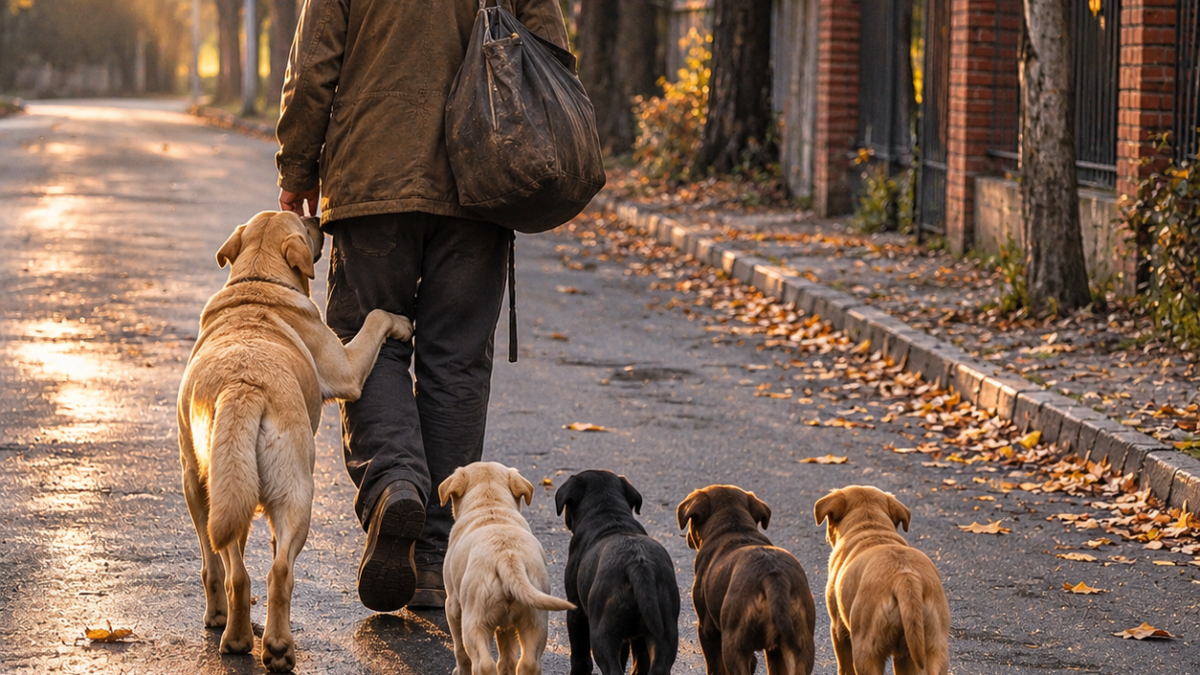
PART 2
The next morning, I made five breakfast sandwiches.
My manager, Maria, caught me wrapping them.
She was fifty-two, had owned Maple & Main for almost seventeen years, and could detect unauthorized use of bacon from across the building.
“Emily.”
I kept wrapping.
“Yes?”
“Why are you making five sandwiches when we have one mobile order?”
I turned.
“Quality control?”
She folded her arms.
“You’re a terrible liar.”
Through the window, the old man and his four dogs were approaching.
Maria followed my eyes.
“Oh.”
“You’ve seen him?”
“Everyone’s seen him.”
“Do you know his name?”
“No.”
I placed the sandwiches in a bag.
Maria looked at me.
“You know if I start giving breakfast to every homeless person on this street, I won’t own a café for long.”
“I’ll pay.”
“With what? The enormous fortune I pay you?”
I reached for my wallet.
She sighed.
“Put it away.”
I smiled.
“You’re a wonderful person.”
“Don’t spread that rumor.”
I carried the bag outside.
The old man stopped when he saw me.
His shepherd moved to his side.
“Again?” he asked.
“We made too much.”
He looked through the window.
Maria quickly turned away and pretended to wipe the counter.
The man almost smiled.
“You people must be terrible at inventory.”
“We’re working on it.”
I handed him the bag.
“This time there are five.”
He frowned.
“One for you.”
“I understood the math.”
“Then eat yours.”
His eyes narrowed.
“You always this bossy?”
“Only before eight.”
That tiny smile returned.
It changed his whole face.
For the first time, he didn’t look like a homeless man.
He looked like someone’s father.
Someone’s grandfather.
Someone who had laughed a lot once.
He sat on the bench.
I hesitated.
“Can I ask their names?”
He looked down at the dogs.
The shepherd was sitting closest to him.
“This is Duke.”
Duke’s ears moved when he heard his name.
“The black one is Max. The lady there is Rosie.”
The brown-and-white dog looked at me.
“And this criminal is Benny.”
The shaggy little terrier was already trying to investigate the bag.
I laughed.
“Why is Benny a criminal?”
“He steals socks.”
“From who?”
“Anyone careless enough to own socks around him.”
Benny wagged his tail.
“And you?”
The old man looked at me.
“What about me?”
“You gave me all their names.”
He was silent for a second.
“Arthur.”
“Emily.”
“I know.”
I blinked.
He nodded toward my apron.
My name tag was still clipped to it.
“Right.”
That made him laugh.
It was quiet, but it was real.
Over the next few weeks, Arthur became part of my mornings.
I learned he drank coffee black.
I learned Rosie hated rain.
I learned Max was terrified of motorcycles.
I learned Benny really did steal socks.
And I learned Duke watched Arthur constantly.
Not obsessively.
Carefully.
Whenever Arthur coughed, Duke lifted his head.
Whenever Arthur stood, Duke stood.
Whenever another person approached too quickly, Duke placed himself between them.
One Friday afternoon, I saw Arthur near the loading alley behind the café.
It was colder than usual.
He was sitting on a flattened cardboard box.
His dogs were gathered around him.
I carried out a bowl of soup.
“You’re going to make me fat,” he said.
I looked at his face.
“I think we have some room before that becomes an emergency.”
He accepted the soup.
I sat on an overturned milk crate.
For several minutes, neither of us spoke.
Then I asked the question I’d been trying not to ask.
“How long have you been out here?”
Arthur’s spoon stopped.
“Long enough.”
“That isn’t a number.”
“No.”
I waited.
He glanced at me.
“You ask a lot of questions.”
“I’ve been told.”
“About three years.”
Three years.
I looked at the dogs.
“All of them?”
“No.”
“Which one came first?”
Arthur looked at Duke.
“Him.”
Duke’s tail tapped once against the pavement.
Arthur stared into his soup.
“I found him behind an abandoned warehouse. Somebody had tied him to a fence.”
I felt my stomach tighten.
“How long had he been there?”
“Don’t know.”
“Was he hurt?”
“Mostly hungry.”
Arthur scratched behind Duke’s ear.
“Took two days before he’d let me touch him.”
“And then he stayed?”
Arthur gave a short laugh.
“I tried to get rid of him.”
“You what?”
“I couldn’t afford to feed myself.”
He nodded toward Duke.
“I took him to a rescue. Full. Took him to another one. Wouldn’t accept him without an appointment.”
He shrugged.
“So he came back with me.”
“What about Rosie?”
“Car.”
My face changed.
“She was hit?”
“Not badly enough to kill her.”
Arthur’s voice became quieter.
“Driver didn’t stop.”
He had found her lying under a parked car, shaking.
He carried her almost six blocks to a veterinary clinic.
“You paid for that?”
“No.”
“Then how—”
“I worked there for three weeks.”
I stared.
“The veterinarian agreed to treat her if I cleaned kennels, repaired a fence and repainted the back hallway.”
“Arthur.”
“What?”
“You didn’t even have a place to sleep.”
“She was hurt.”
He said it as if that answered everything.
Maybe it did.
Max had belonged to another homeless man named Leon who died unexpectedly in a public shelter.
Benny had appeared one winter night under Arthur’s bench, small enough to fit inside his coat.
“People abandon dogs?” I asked.
Arthur looked at me.
“People abandon everything.”
Something in his voice made me stop.
I didn’t ask what had abandoned him.
Not yet.
A week later, the first snow came.
It wasn’t much.
Barely enough to cover the tops of cars.
But the temperature dropped hard after dark.
I finished my shift around nine and found Arthur beside the river path.
He was spreading a blanket over the dogs.
One blanket.
Four animals.
“What about you?”
He looked up.
“I’ve got a coat.”
“That coat looks older than I am.”
“Good coat.”
“Arthur.”
“I’ve slept through worse.”
I crouched beside him.
“There are warming shelters open tonight.”
“Dogs aren’t allowed.”
“Some must take animals.”
“Not four.”
I had already suspected that was why he remained outside.
Now I knew.
“You could let someone foster them.”
“No.”
The answer came so quickly it almost startled me.
“Just for cold nights.”
“No.”
“They’d be safe.”
Arthur looked at Duke.
Then Rosie.
Max.
Benny.
“They’re safe with me.”
“But are you?”
He didn’t answer.
“Arthur.”
His face hardened.
“I’ve had people tell me for three years that I should give them up because my life would be easier.”
He looked at me.
“My life isn’t more important than theirs.”
“That isn’t what I said.”
“It becomes what everyone says eventually.”
I sat back.
He must have seen something in my face because his expression softened.
“I’m sorry.”
“You don’t have to apologize.”
“Yes, I do.”
He pulled the blanket higher around Benny.
“I know you’re trying to help.”
“What are you afraid will happen if you let them go for one night?”
Arthur didn’t answer immediately.
Then he said, “People don’t always come back.”
That sentence stayed with me.
The next morning, he was gone.
For the first time in weeks, the bench was empty.
I kept checking through the café window.
Seven.
Eight.
Nine.
Nothing.
At ten, I finally told Maria I was taking my break.
“You’re going looking.”
“Yes.”
She picked up her coat.
“I’ll drive.”
We checked the park.
The library.
The church steps.
The bus station.
Nothing.
Finally, near an underpass almost two miles away, we saw Duke.
He was standing beside the road.
When he recognized me, he barked.
Once.
Then he ran beneath the bridge.
Arthur was there.
His face was pale.
Rosie and Max were pressed against him.
Benny was under his coat.
“What happened?”
Arthur tried to stand.
His right leg collapsed.
I caught him.
“I slipped.”
“You’re freezing.”
“I’ve been colder.”
Maria knelt beside him.
“Congratulations. You’ve won a free ride to the hospital.”
“No.”
“That wasn’t a question.”
“I can’t leave the dogs.”
I had never heard Maria use the voice she used next.
“Arthur Bennett, you are going to the hospital.”
He blinked.
“How do you know my last name?”
She pointed to a torn prescription bottle beside his bag.
Arthur looked annoyed.
Then defeated.
An ambulance took him.
The dogs came with us in Maria’s old minivan.
That was the first time I learned something else about Arthur.
He had an old injury in his right hip.
Not from life on the street.
From years before.
“Car accident?” I asked later.
He shook his head.
“Shop accident.”
“What shop?”
He looked away.
“Doesn’t matter.”
The emergency room kept him for five hours.
Severe dehydration.
A respiratory infection.
Low blood pressure.
Nothing life-threatening.
Not yet.
When the doctor released him, Maria refused to let him return outside that night.
“My brother owns a closed storage unit behind the café,” she said.
Arthur frowned.
“I’m not sleeping in a storage unit.”
“It has heat.”
He paused.
“A bathroom?”
“Next door.”
“Dogs?”
“Yes.”
He looked suspicious.
“You always this difficult?” Maria asked.
Arthur glanced at me.
“She is.”
That was how Arthur and the dogs spent their first night indoors in a long time.
The room wasn’t much.
Concrete floor.
One window.
A folding cot.
An old refrigerator that didn’t work.
But it had heat.
I brought blankets.
Maria brought a lamp.
Arthur stood in the center of the room with his bag over his shoulder.
For several seconds, he didn’t move.
“What?” I asked.
“Nothing.”
But I saw him touch the wall.
Just once.
As if he’d forgotten what a warm wall felt like.
That night changed our relationship.
Arthur still refused money.
He still hated being treated like a charity case.
But he began talking.
Piece by piece.
Never all at once.
I learned he’d been married for thirty-eight years.
His wife’s name was Margaret.
She had died five years earlier from pancreatic cancer.
He carried one photograph of her inside a plastic bag to keep it dry.
In it, she stood beside a red pickup truck, laughing at something outside the frame.
“She looks happy,” I said.
“She was angry.”
I looked closer.
“She doesn’t look angry.”
“I had just told her I’d bought the wrong anniversary gift.”
“What did you buy?”
“A vacuum cleaner.”
I stared at him.
“Arthur.”
“I know.”
“You bought your wife a vacuum cleaner for your anniversary?”
“It was expensive.”
“That makes it worse.”
He smiled.
“I figured that out.”
Margaret had worked as a school secretary.
Arthur had repaired engines.
Not simply in a shop.
His shop.
Bennett Motor Works.
He’d owned it for twenty-seven years.
That stopped me.
“You owned a business?”
“Past tense is doing a lot of work there.”
“What happened?”
He went silent.
“I lost it.”
“How?”
“Bad decisions.”
That was all he would say.
Then one January morning, a black SUV stopped outside Maple & Main.
A man in his late fifties stepped out.
Everything about him looked expensive.
Charcoal coat.
Perfect shoes.
Silver watch.
He came inside and ordered an espresso.
Arthur happened to be sitting near the rear door, repairing the strap on his canvas bag.
The instant the stranger saw him, his face changed.
Arthur’s did too.
For a second, they simply stared at each other.
Then the man smiled.
Not kindly.
“Well.”
Arthur stood.
Duke stood with him.
The stranger looked at the four dogs.
“So this is where you ended up.”
I felt something cold move through me.
Arthur’s voice was flat.
“Hello, Richard.”
The man removed his gloves.
“I heard rumors.”
Arthur said nothing.
Richard looked around the café.
“This is fitting.”
“Finish your coffee and leave.”
Maria had heard the change in Arthur’s voice.
She moved closer to the counter.
Richard smiled.
“You don’t own the place, Arthur.”
“No.”
“I actually own the building.”
Maria froze.
I looked at her.
She whispered, “Richard Vale.”
The name meant nothing to me.
Yet.
Richard took a step toward Arthur.
Duke moved between them.
Richard stopped.
“Control your animal.”
“He’s controlled.”
“Doesn’t look like it.”
Duke hadn’t growled.
Hadn’t barked.
He simply stood there.
Richard looked at Arthur again.
“You should be careful. The city has rules about animals downtown.”
Arthur’s jaw tightened.
“You threatening my dogs?”
“I’m offering advice.”
“No, you’re not.”
For the first time, Richard’s smile disappeared.
“You always were stubborn.”
“And you always were a thief.”
The room went silent.
Richard’s eyes hardened.
“Careful.”
Arthur took one step closer.
“You took everything else. You won’t take them.”
Richard stared at him for several seconds.
Then he smiled again.
“I didn’t take anything from you, Arthur.”
He put on his gloves.
“You lost.”
He walked out.
I immediately turned to Arthur.
“Who was that?”
Arthur grabbed his bag.
“Emily.”
“Who was he?”
“Leave it.”
“No.”
He looked at me.
I had never seen anger in his eyes before.
Not irritation.
Not embarrassment.
Anger.
“Please.”
That stopped me.
He left.
Duke followed.
Then Max.
Rosie.
Benny.
I watched them disappear down the sidewalk.
Behind me, Maria whispered, “We may have a problem.”
“What?”
She looked toward the door.
“Richard Vale’s company bought this entire block last year.”
That night, I searched his name.
Richard Vale owned Vale Urban Development.
Hotels.
Apartment buildings.
Commercial properties.
He sat on charity boards.
His photograph appeared beside mayors and council members.
And twenty-two years earlier, his name appeared in a different place.
Bennett & Vale Motor Works.
I stared at the old newspaper scan.
Arthur Bennett.
Richard Vale.
Partners.
The photo had been taken at the opening of their second repair location.
Arthur looked twenty years younger.
Richard stood beside him.
I read everything I could find.
Twelve years later, Bennett & Vale collapsed under debt.
Richard emerged almost untouched.
Arthur filed a civil claim accusing him of financial misconduct.
The case was dismissed.
Then Arthur’s home was foreclosed.
I closed the computer.
The next morning, I placed a printed copy of the article in front of Arthur.
He stared at it.
“You went digging.”
“Yes.”
“I told you to leave it.”
“You told me he took everything from you.”
Arthur folded the paper.
“Forget Richard.”
“I don’t think you have.”
“That’s different.”
“What happened?”
He looked toward the dogs.
Then at me.
“You really want to know?”
“Yes.”
So Arthur told me.
He had started the garage at thirty-two.
Richard joined six years later.
Arthur fixed cars.
Richard handled money.
For years, it worked.
Then Margaret became sick.
Arthur spent more time at hospitals.
More time away from the shop.
He trusted Richard.
Too much.
Richard opened lines of credit.
Moved money.
Used company assets to secure loans Arthur said he’d never approved.
When the debts collapsed, Arthur discovered his signature on documents he didn’t remember signing.
“I fought him.”
“What happened?”
“His lawyers said I signed everything.”
“Did you?”
“Some.”
Arthur’s face tightened.
“Margaret was dying. Richard would bring papers to the hospital. Insurance. Payroll. Tax forms. I’d sign where he put a tab.”
“And some weren’t what he said they were.”
“That was my claim.”
“You couldn’t prove it?”
“No.”
Richard had better lawyers.
Better records.
And Arthur was exhausted.
Margaret died before the case ended.
He lost the business.
Then the house.
Then almost everything else.
“Why didn’t you tell anyone?”
“Who?”
“Family?”
Arthur laughed without humor.
“My brother lives three states away. We haven’t spoken in fifteen years.”
“Friends?”
“They had families. Mortgages.”
He looked at me.
“And shame is a strange thing, Emily. The less you have, the more ashamed you become to ask for anything.”
I looked at his four dogs.
“You still had enough to help them.”
Arthur’s expression softened.
“They never asked me what I used to own.”
Two weeks later, Richard raised the rent on Maple & Main.
Not a little.
Thirty-eight percent.
Maria read the letter twice.
Then sat down.
“He wants us gone.”
“Why?”
She looked toward Arthur.
I understood.
“You think this is because of him?”
“I think Richard Vale has wanted this space for a luxury bakery since he bought the building.”
“Then why now?”
Maria didn’t answer.
She didn’t need to.
Arthur heard.
He packed his bag.
“I’m leaving.”
I stepped in front of the door.
“No.”
“This is my problem.”
“No, it isn’t.”
“Emily.”
“He was already planning to push Maria out.”
“You don’t know that.”
“You aren’t helping him by disappearing.”
Arthur looked at Maria.
She pointed at me.
“For once, she’s right.”
“For once?”
“Not the moment.”
Arthur sat down again.
But Richard wasn’t finished.
Three days later, animal control approached Arthur in the park.
Someone had reported four “aggressive unattended dogs.”
The accusation was absurd.
They were never unattended.
None had bitten anyone.
But an officer told Arthur the complaint required inspection.
I arrived halfway through.
Richard stood across the street.
Watching.
I marched toward him.
Arthur caught my arm.
“No.”
“He’s doing this.”
“I know.”
“Then let me—”
“No.”
His grip tightened.
“You don’t fight people like Richard by giving them the reaction they want.”
It was one of the few times Arthur sounded like the businessman he’d once been.
“So what do we do?”
He looked at Richard.
“We survive him.”
For the next month, things got worse.
The storage room was declared unsuitable for overnight occupancy after an anonymous complaint.
Arthur lost the only warm place he had.
Maria’s lawyer challenged the rent increase, but the lease gave Richard room to force it eventually.
Animal control returned twice.
Police began clearing sleeping areas near the river.
Winter deepened.
And Arthur refused every shelter that required surrendering or separating the dogs.
Then came the storm.
Meteorologists called it the worst cold front in eleven years.
Temperatures were expected to fall below zero.
Wind chills much lower.
I found Arthur near the park.
“You cannot stay outside tonight.”
“I’ll manage.”
“No.”
“We’ve had this conversation.”
“This isn’t normal cold.”
He looked at the dogs.
“I have somewhere.”
“Where?”
“Old service tunnel near the rail yard.”
“That sounds incredibly safe.”
“Safer than the street.”
“Arthur, please.”
He looked at me.
The anger disappeared from my voice.
“I don’t want to find you frozen tomorrow.”
His expression changed.
Just slightly.
“You won’t.”
“Promise?”
He hesitated.
Then smiled.
“I promise.”
It was the only promise Arthur ever made me that he didn’t keep.
That evening, the city began clearing sidewalks ahead of the storm.
Around seven, Maria and I closed early.
Snow was already falling sideways.
I called Arthur.
His phone had been a cheap prepaid one Maria gave him for emergencies.
No answer.
At eight, I called again.
Nothing.
At nine, I drove toward the rail yard.
Roads were terrible.
Police had blocked two streets.
I couldn’t find him.
At ten-thirty, Maria called.
“Come back. You’re going to get stranded.”
“I haven’t found him.”
“You won’t help him by crashing.”
She was right.
I hated her for being right.
I returned home around eleven.
I didn’t sleep.
At 1:17 a.m., something hit my apartment door.
Three hard bangs.
I sat up.
Another bang.
Then scratching.
I grabbed my phone.
“Who’s there?”
A bark answered.
I ran to the door.
Duke stood in the hallway.
Snow covered his coat.
His paws were bleeding.
My brain couldn’t understand it.
“Duke?”
He barked.
Turned.
Ran toward the stairwell.
Then looked back.
I didn’t even put on proper shoes.
I grabbed my coat and followed him.
He raced outside.
I called Maria while running.
“I found Duke.”
“What?”
“He came to my apartment.”
“How?”
“I don’t know.”
“Where’s Arthur?”
“I think that’s what he’s trying to show me.”
Duke ran.
Stopped when I fell behind.
Ran again.
The snow stung my face.
We went six blocks.
Then seven.
Toward the industrial district.
My lungs burned.
At the edge of an abandoned loading area, Duke disappeared between two buildings.
I followed.
And heard barking.
Not Duke.
Three dogs.
I turned the corner.
Arthur was lying against a concrete wall.
Rosie was pressed against his chest.
Max lay along his legs.
Benny was buried beneath Arthur’s coat.
The only blanket Arthur owned was spread over the dogs.
Not him.
Them.
Beside his hand was an empty paper wrapper.
I found out later he’d bought one bread roll that afternoon.
His last food.
He had divided it among the four dogs.
Again.
Arthur’s eyes were closed.
“Arthur!”
Nothing.
I dropped beside him.
His skin felt terrifyingly cold.
“Arthur!”
Duke pushed against his shoulder.
Rosie whined.
I called 911.
The dispatcher told me to keep him sheltered from the wind.
I pulled off my coat and laid it over him.
Duke pressed against his side.
Max did the same.
The dogs were shivering violently.
But none moved away.
“Stay with me,” I whispered.
I don’t know whether I was talking to Arthur or myself.
“Please stay with me.”
His lips moved.
I leaned closer.
“What?”
His voice was barely there.
“Dogs.”
“They’re here.”
“Don’t… leave them.”
“I won’t.”
His eyes closed.
“Arthur!”
The ambulance arrived eleven minutes later.
It felt like an hour.
The paramedics later told me Arthur’s core temperature was dangerously low.
His pulse was weak.
His breathing was shallow.
One of them looked at the dogs surrounding the place where Arthur had been lying.
“How long were they against him?”
“I don’t know.”
He shook his head.
“They may have bought him time.”
Duke had done more than that.
He had somehow remembered the route to my apartment.
I’d taken Arthur there once, weeks earlier, when I gave him a spare coat.
One visit.
Duke remembered.
He left Arthur in the storm.
Found my building.
Got through the outer door when another tenant entered.
Climbed three floors.
Found my apartment.
Then led me back.
Arthur had spent months feeding four dogs before feeding himself.
That night, they saved him.
The hospital admitted him to intensive care.
Hypothermia.
Pneumonia.
Cardiac complications.
The doctor used the phrase “very fortunate.”
I wanted to scream.
There was nothing fortunate about it.
Arthur had almost died on a concrete floor because every warm place he’d been offered required him to leave behind the only family he had.
Maria took the dogs.
Technically, her apartment allowed one pet.
She brought home four.
Her landlord objected.
Maria told him to read the lease carefully and call her attorney.
I had never loved her more.
For two days, Arthur barely woke.
On the third morning, I was sitting beside his bed when his eyes opened.
He stared at me.
“Where are they?”
I knew exactly who he meant.
“Safe.”
“All four?”
“Yes.”
“Duke?”
“He’s fine.”
Arthur closed his eyes.
A tear moved down the side of his face.
“He left.”
“What?”
“He left me.”
I thought he sounded hurt until I understood.
Arthur remembered Duke running away into the storm.
“He came to get me.”
Arthur opened his eyes.
“What?”
“He came to my apartment.”
He stared.
“Duke found me.”
For several seconds, Arthur said nothing.
Then his face broke.
I had seen him hungry.
Angry.
Humiliated.
Cold.
I’d never seen him cry.
He turned his face away.
“That damn dog.”
I took his hand.
“He learned it from you.”
Arthur remained in the hospital for eleven days.
During that time, something happened I never intended.
The photograph.
The first one.
The old man on the bench surrounded by four dogs.
I’d posted it months earlier on my private social page with a short caption about kindness.
A friend of mine who worked at a local paper recognized Arthur after hearing about the rescue.
She asked permission to write about him.
Arthur said no.
Then he learned the story might help Maria fight the building owner and might force the city to create pet-friendly emergency shelter arrangements.
He changed his mind.
The article was published on Sunday.
By Monday, people knew Arthur’s name.
But the attention created something else.
A retired accountant named Leonard Price called me.
“I used to work for Bennett & Vale Motor Works.”
I almost dropped my phone.
“What?”
“I knew Arthur.”
“Then why haven’t you spoken to him?”
Silence.
“Because I was a coward.”
Leonard was seventy-four.
He agreed to meet at the café.
He arrived carrying a metal document box.
Arthur was still hospitalized.
Maria sat with me.
Leonard placed the box on the table.
“I should have done this years ago.”
“Done what?”
He opened it.
Inside were old ledgers.
Copies of wire transfers.
Payroll records.
Loan applications.
And several handwritten notes.
Leonard had been the company’s bookkeeper.
He said Richard began moving money through a second company years before Bennett & Vale collapsed.
“Arthur knew some of it.”
“Then why didn’t these records help him?”
“Because these copies didn’t exist officially.”
My stomach tightened.
“What does that mean?”
Leonard looked ashamed.
“Richard ordered me to destroy records.”
Maria whispered, “Oh my God.”
“I didn’t.”
“Why?”
“Because I knew something was wrong.”
“Why didn’t you give them to Arthur?”
Leonard looked at his hands.
“Richard threatened to report me as part of the fraud. I had two children in college. A mortgage.”
His eyes filled.
“So I kept copies. Told myself I’d use them if things got worse.”
“They got worse.”
“I know.”
“You watched Arthur lose everything.”
“I know.”
I was furious.
Maria touched my arm.
Leonard didn’t defend himself.
“I’ve lived with it for thirteen years.”
He pushed the box toward me.
“I saw the story about the dogs. I saw where Arthur was sleeping.”
His voice cracked.
“I realized my silence had lasted long enough.”
One set of papers mattered more than the others.
Arthur’s house.
The house hadn’t simply been foreclosed.
It had been pledged as additional security for a business loan.
Arthur had always claimed he never knowingly agreed to that.
Leonard had a copy of the original paperwork Richard gave Arthur at the hospital.
The property guarantee wasn’t there.
It had been inserted later.
And one signature page looked different.
Very different.
Maria called a lawyer she knew.
The lawyer called someone else.
Within forty-eight hours, a legal aid attorney named Hannah Greene was sitting beside Arthur’s hospital bed.
She spent an hour reviewing documents.
Then she looked at him.
“Mr. Bennett, I think someone needs to reopen your case.”
Arthur shook his head.
“No.”
I stared.
“What do you mean, no?”
He looked at Hannah.
“How much?”
“I’m taking the case pro bono.”
“Why?”
“Because I don’t like fraud.”
Arthur looked at the documents.
Then away.
“I buried Margaret thirteen years ago.”
His voice was tired.
“I buried the business after that. The house. My old life.”
He shook his head.
“I don’t want to dig up bones.”
I moved closer.
“This isn’t about digging up your old life.”
“No?”
“No. Richard is still doing it.”
Arthur looked at me.
“He tried to force Maria out. He reported the dogs. He pushed you from the one warm place you had.”
“We can’t prove all of that.”
“Then prove what you can.”
His eyes hardened.
“You want revenge.”
The accusation hurt because part of it was true.
“Yes.”
I surprised him.
“I do.”
Hannah stayed silent.
“I want him scared. I want him to know what it feels like to watch someone else decide whether you get to keep your home.”
Arthur looked at me for a long time.
Then I said, “But that isn’t why you should do it.”
“Then why?”
“Because if Leonard is telling the truth, Richard didn’t just beat you.”
I pointed at the files.
“He cheated you.”
Arthur closed his eyes.
“And if you walk away now, he gets to keep telling himself he was right.”
Arthur didn’t answer that day.
The next morning, he signed the papers.
Richard’s response was immediate.
His attorney called the claims “desperate fiction.”
Vale Urban Development issued a statement accusing Arthur of exploiting public sympathy.
That was a mistake.
Because people who had ignored an old homeless man’s story suddenly became interested when a millionaire publicly attacked him.
More former employees came forward.
A mechanic remembered Richard asking him to backdate invoices.
A secretary had kept emails.
A former bank employee recalled inconsistencies in loan documents.
The story grew.
Richard became furious.
Then he came to the hospital.
I was walking down the hall when I saw him entering Arthur’s room.
I ran.
By the time I reached the door, Richard was standing at the foot of Arthur’s bed.
Arthur looked almost amused.
“You always did have bad timing.”
Richard glanced at me.
“This is private.”
“No, it isn’t.”
“Emily,” Arthur said.
“I’m staying.”
Richard sighed.
“Fine.”
He placed a folder on the bed.
“What is that?” Arthur asked.
“A solution.”
Arthur didn’t touch it.
Richard opened the folder.
Settlement.
Enough money for Arthur to buy a modest house.
Medical costs covered.
Additional compensation.
In return, Arthur would drop all claims.
Sign a confidentiality agreement.
And publicly state that Richard had not intentionally harmed him.
Arthur looked at the number.
I did too.
It was more money than Arthur had probably seen in years.
Richard leaned forward.
“You could be done with this.”
Arthur stared at the page.
“A house?”
“Yes.”
“For me?”
“Whatever you want.”
Arthur looked toward the window.
“What about Maria’s café?”
Richard’s smile disappeared.
“This is about you.”
“What about the people whose businesses you’ve been squeezing out?”
“Arthur.”
“What about Leonard?”
“He is an old man trying to clear his conscience.”
Arthur looked at him.
“So am I.”
Richard stood straight.
“The offer expires tomorrow.”
Arthur picked up the folder.
For one second, I thought he might accept.
Then he tore it in half.
Richard’s face went white.
Arthur tore it again.
And again.
He placed the pieces on the blanket.
“You know the difference between us, Richard?”
Richard said nothing.
“You always thought being desperate meant being for sale.”
Arthur leaned back against the hospital pillow.
“You were wrong.”
Richard left without another word.
That was the moment the fight became personal for him.
Two nights later, someone broke into Leonard’s garage.
Nothing expensive was stolen.
Only old boxes.
Fortunately, Leonard had already given Hannah the original documents.
Police opened an investigation.
Richard denied involvement.
Then one of his employees made another mistake.
A junior executive sent Hannah an email that had accidentally included an internal forwarding chain.
In it, Richard had written:
*Find out what Bennett has and who else has copies.*
Not enough to prove burglary.
More than enough to deepen suspicion.
Then investigators discovered something even bigger.
The old Bennett & Vale fraud hadn’t ended when the company collapsed.
Richard had continued using shell companies.
False invoices.
Inflated development costs.
Improper transfers between businesses.
The new case widened beyond Arthur.
State investigators became involved.
Then federal tax authorities.
When Arthur heard that, he laughed for almost thirty seconds.
“What?”
I asked.
“Nothing.”
“You look pleased.”
“I spent thirteen years thinking I was too stupid to understand what he did.”
He looked at me.
“Turns out there were professionals who couldn’t understand it either.”
Arthur was released from the hospital in February.
His four dogs waited outside.
Maria had convinced the hospital to let her bring them to the entrance.
The second Arthur appeared in the wheelchair, Duke broke free from her hand.
“Duke!”
He ran.
A security guard stepped forward.
I shouted, “Don’t!”
Duke reached Arthur.
He didn’t jump.
Didn’t bark.
He simply pressed his entire body against Arthur’s knees.
Arthur bent down.
Max arrived next.
Then Rosie.
Benny climbed halfway into the wheelchair.
Arthur buried his face in Duke’s neck.
People walking through the hospital entrance stopped.
A nurse cried.
I cried.
Maria pretended not to.
“You’re crying,” I told her.
“Wind.”
“We’re indoors.”
“Hospital ventilation.”
Arthur looked up.
“Where am I going?”
That was the problem.
He still had nowhere permanent to live.
At least, that’s what he thought.
Maria drove us fifteen minutes outside downtown.
We stopped in front of a small one-story house.
Arthur stared through the windshield.
“What is this?”
“Get out.”
“Maria.”
“Get out.”
The house belonged to Maria’s cousin, who was working overseas for a year.
It had a fenced yard.
Two bedrooms.
A fireplace.
He had agreed to rent it for almost nothing.
Arthur looked at us.
“No.”
“Yes,” I said.
“No.”
“Arthur.”
“I cannot let you people keep—”
Duke jumped from the minivan and ran toward the yard.
Benny followed.
Max.
Rosie.
All four disappeared through the open gate.
Arthur stared after them.
Maria shrugged.
“Looks like you’ve been outvoted.”
Arthur covered his face.
I realized he was crying again.
Living indoors wasn’t easy for him.
That surprised me.
I thought a bed would solve everything.
It didn’t.
For the first week, Arthur slept on the living room floor.
The bedroom felt too closed.
He kept his shoes beside him.
His bag packed.
One morning, I found canned food hidden beneath the couch.
“Why is this here?”
Arthur looked embarrassed.
“I forget sometimes.”
“Forget what?”
“That there’ll be food tomorrow.”
That sentence taught me more about homelessness than anything I had ever read.
The dogs adjusted faster.
Benny claimed the couch.
Rosie slept beside the heater.
Max chose the kitchen.
Duke slept outside Arthur’s bedroom door.
Never inside.
Always at the door.
The lawsuit moved slowly.
Richard’s company continued to operate, but lenders began backing away.
Projects stalled.
Board members resigned.
Maria received a letter offering to renew her lease under the original terms.
She framed it.
Arthur laughed when he saw it.
“Your revenge.”
“Absolutely.”
“No shame?”
“None.”
Spring arrived.
Arthur gained weight.
His pneumonia cleared.
He still walked with a limp, but he looked stronger.
He started repairing things.
First Maria’s broken freezer.
Then my car.
Then a neighbor’s lawn mower.
Word spread.
One Saturday, I arrived at the little house and found three cars parked outside.
Arthur was under the hood of an old Ford.
“What is this?”
“Work.”
“Are you supposed to be doing that?”
“Probably not.”
A handwritten sign leaned against the fence.
BENNETT REPAIRS
PAY WHAT YOU CAN
I stared.
“Arthur.”
“What?”
“Somebody paid you with tomatoes.”
He pointed toward a basket.
“Good tomatoes.”
Another customer paid with twenty dollars.
Someone else brought dog food.
Arthur seemed happier than I’d ever seen him.
He wasn’t trying to rebuild his old life.
He was building a new one from whatever pieces remained.
Then Richard was arrested.
It happened on a Tuesday morning.
Fraud.
Forgery.
Tax-related charges.
Conspiracy.
The case was larger than Arthur’s original lawsuit.
News footage showed Richard leaving one of his offices beside two investigators.
He wore a suit.
No handcuffs were visible from the camera angle.
But he looked furious.
Arthur watched the report silently.
I expected him to smile.
He didn’t.
“Nothing?”
I asked.
“What do you want me to do?”
“I don’t know. Celebrate?”
“He hasn’t been convicted.”
“You tore up enough money to buy a house. At least give me a little satisfaction.”
Arthur looked at the television.
“There was a time I imagined him losing everything.”
“And now?”
Arthur scratched Duke’s head.
“Now I know what losing everything feels like.”
He switched off the television.
“I wouldn’t wish that on anyone.”
“Not even him?”
Arthur considered it.
“I want him stopped.”
“That isn’t the same thing.”
“No.”
I sat beside him.
“Do you forgive him?”
“No.”
The answer surprised me.
Arthur looked at me.
“People confuse letting go with forgiveness.”
“What is it then?”
“Refusing to keep drinking poison because you’re waiting for the other person to get sick.”
I was quiet.
He smiled.
“Margaret used to say that.”
“She sounds smarter than you.”
“She was.”
Richard’s trial began the following winter.
Arthur had to testify.
The night before, I found him sitting at his kitchen table.
His old canvas bag lay beside the chair.
“What is that doing here?”
“I was looking for something.”
He pulled out Margaret’s photograph.
She was still standing beside that red truck.
Still laughing.
Arthur rubbed his thumb over the plastic.
“She told me not to trust him.”
“Richard?”
“Not exactly.”
Arthur smiled sadly.
“She told me I was too willing to believe the best in people.”
“That’s not the worst flaw.”
“It can be expensive.”
He looked toward Duke.
“Dogs are easier.”
“Because?”
“If they trust you, they show you.”
“And people?”
“People can smile while they’re taking your house.”
The courtroom was packed.
Richard looked different.
Older.
He’d lost weight.
His hair had gone almost completely gray.
When Arthur walked toward the witness stand, Richard watched him.
Arthur didn’t look back.
The prosecutor asked about the business.
Margaret’s illness.
Documents signed in the hospital.
The collapse.
The house.
Then she showed Arthur one of the disputed signature pages.
“Is this your signature?”
“It looks like it.”
“Did you sign this document?”
“I signed a signature page Richard gave me.”
“Was the property guarantee attached?”
“No.”
Richard’s attorney objected.
Overruled.
Leonard testified after Arthur.
He admitted destroying original company records under Richard’s instructions.
He admitted remaining silent.
Then he explained the copies.
On cross-examination, Richard’s attorney attacked him.
“You expect this jury to believe you kept secret documents for more than a decade out of conscience?”
Leonard looked down.
“No.”
The attorney paused.
“No?”
“I kept them because I was afraid.”
“Afraid of what?”
“Going to prison.”
“So you’re protecting yourself now.”
Leonard nodded.
“In part.”
The attorney smiled.
Then Leonard continued.
“But I’m seventy-five years old. My wife died last year. My children know what I did.”
He looked toward Arthur.
“I don’t have enough years left to keep lying.”
The smile disappeared from the attorney’s face.
More witnesses followed.
Bank officers.
Forensic accountants.
Former employees.
The evidence became overwhelming.
Then came the recording.
I hadn’t known it existed.
A former office manager had kept an old voicemail Richard left after Arthur first challenged the loan documents.
His voice filled the courtroom.
*Arthur is emotional right now. Margaret’s condition has him confused. Keep the original packet out of his hands until this settles.*
I looked at Arthur.
He didn’t move.
The prosecutor replayed one sentence.
*Keep the original packet out of his hands.*
That was the crack.
The jury deliberated for two days.
Richard was convicted on multiple fraud and forgery charges.
Not every allegation.
Enough.
At sentencing, Arthur was allowed to speak.
He walked to the podium.
I expected him to talk about money.
The business.
The house.
He didn’t.
“I used to think Mr. Vale made me homeless.”
Richard looked up.
Arthur continued.
“He didn’t.”
I frowned.
“He helped take my business. He helped take my house. He took advantage of the worst period of my life.”
Arthur paused.
“But the street came later.”
His voice softened.
“Grief put me there. Pride kept me there. Shame made me stay longer than I should have.”
He looked toward Richard.
“I spent years blaming you for every cold night.”
Richard stared at him.
“Some of them belong to you.”
The courtroom went silent.
“But not all of them.”
Arthur took a breath.
“I have four dogs who never cared what my bank account said.”
His voice trembled.
“They slept beside me when I had nothing. They ate when I ate. They went hungry when I went hungry.”
I felt tears in my eyes.
“And when I was too cold to save myself, they did.”
He looked toward the judge.
“I don’t want Richard homeless.”
I saw Richard’s expression change.
“I don’t want him hungry.”
Arthur looked at him one last time.
“I want him to understand that a man’s life is not a business opportunity.”
Then he stepped away.
Richard received a prison sentence.
His company eventually collapsed under lawsuits and debts.
Several properties were sold.
One of them was the building containing Maple & Main.
A local family bought it.
Maria signed a ten-year lease.
She threw a party.
Arthur ate three pieces of cake.
Then denied it.
But the civil case mattered too.
Nearly two years after Duke found my apartment in the snow, Arthur received a settlement.
It wasn’t enough to make him rich.
It was enough.
The court voided part of the old property transaction.
Additional damages were awarded.
Arthur received compensation from the sale of assets.
When Hannah told him the number, he sat silently for almost a minute.
“What are you going to do?” I asked.
Arthur looked at the dogs.
“I don’t know.”
“Buy a house.”
“I have somewhere to live.”
“Your cousin’s coming home eventually.”
“Maria will threaten him.”
“She probably will.”
Arthur smiled.
Then he became serious.
“I want to see my old place.”
The house had not survived.
Richard’s company had demolished it years earlier.
In its place stood an empty commercial lot.
Arthur stood beside the fence.
“This was the kitchen.”
He pointed.
“Over there.”
There was nothing there.
“And Margaret planted roses along that side.”
I didn’t know what to say.
Arthur wasn’t crying.
That somehow made it worse.
“Do you regret fighting?”
He shook his head.
“No.”
“Even though you can’t get the house back?”
He looked at the empty lot.
“I didn’t fight for the house.”
“What did you fight for?”
He turned toward me.
“The truth.”
Six months later, Arthur bought a property.
Not a house.
An old mechanics garage on the edge of the city.
The building needed everything.
Roof repairs.
Windows.
Electrical work.
Heating.
I walked through it with him.
“You bought a disaster.”
He smiled.
“I know how to fix disasters.”
“What are you going to do with it?”
He opened an old office door.
“Garage.”
“That part I guessed.”
He pointed toward a second section.
“Dog kennels.”
I stared at him.
“What?”
“Temporary.”
“For what?”
“People.”
“What people?”
He sighed.
“Emily, you’re going to make this explanation exhausting.”
The idea was simple.
People living on the street often refused emergency shelter because their animals weren’t allowed.
Arthur wanted a place where dogs could stay safely while their owners slept indoors nearby.
Not an animal shelter.
Not exactly.
A temporary pet refuge connected with local warming centers.
Hannah helped form a nonprofit.
Maria handled paperwork.
Sarah—the veterinarian who had once treated Rosie years earlier—agreed to volunteer twice a month.
I painted walls.
Badly.
Arthur repainted them.
“Why did you let me do this if you were going to redo it?”
“I was trying to build your confidence.”
“You’ve destroyed it.”
He smiled.
Duke followed Arthur everywhere.
The other dogs supervised from a blanket.
The place opened that November.
Arthur named it Margaret’s Door.
I cried when I saw the sign.
“You never told me.”
“You ask too many questions. I wanted one surprise.”
Under the name was a smaller line:
**NO ONE HAS TO CHOOSE BETWEEN SHELTER AND FAMILY.**
On the first freezing night that winter, Margaret’s Door housed eleven dogs and two cats while their owners stayed in a church warming center across the street.
Arthur slept in the office.
I found him there the next morning.
“You know you own a bed now.”
“I was working.”
“You were snoring.”
“Mechanical thinking.”
Duke lay beside him.
I looked at Arthur.
Three years earlier, he had been sleeping beneath an underpass with one blanket.
Now he was making sure someone else never had to do the same.
That should have been the end.
It wasn’t.
Because life doesn’t know when a story has reached a satisfying stopping point.
Duke began getting sick.
At first, it was small.
He became slower.
He hesitated before climbing stairs.
Then one morning, his back legs gave out.
Arthur carried him to the veterinary clinic.
Tests showed cancer.
Advanced.
I was with Arthur when the veterinarian explained it.
“How long?” he asked.
“We can’t know exactly.”
“Pain?”
“Manageable right now.”
Arthur nodded.
No tears.
No questions about cost.
“What does he need?”
The veterinarian explained medications.
Diet.
Rest.
Arthur listened carefully.
That evening, Duke lay inside Margaret’s Door while Arthur sat beside him.
I sat on the other side.
“You okay?”
“No.”
It was the most immediate answer Arthur had ever given me.
Duke lifted his head.
Arthur smiled.
“I’m fine.”
Duke put his head back down.
I watched Arthur.
“He knows when you’re lying.”
“He always has.”
For the next three months, Arthur built his schedule around Duke.
Some mornings were good.
Duke walked through the garage inspecting everything.
Some were harder.
Arthur carried him outside.
Rosie, Max and Benny became quieter around him.
Animals know.
I believe that now.
One evening, Arthur called me.
“Come over.”
His voice told me.
I arrived fifteen minutes later.
Duke lay on the same old blanket Arthur had once given all four dogs during that freezing night.
The blanket had been repaired twice.
Arthur sat beside him.
Maria was there.
The veterinarian too.
Duke’s breathing was shallow.
I knelt.
His eyes moved toward me.
“Hey, boy.”
His tail moved once.
Arthur laughed softly.
“Still showing off for women.”
I tried to smile.
Duke looked at Arthur.
Just looked.
For several seconds.
Arthur put both hands around his face.
“You did enough.”
His voice broke.
“You hear me?”
Duke blinked.
“You did enough.”
Arthur pressed his forehead against Duke’s.
“You found me when nobody else could.”
I looked away.
Arthur whispered something I almost didn’t hear.
“You can stop watching me now.”
Duke died with Arthur’s hand on his head.
Rosie lay beside him.
Max stayed near his back.
Benny curled against his front legs.
The same formation they had used around Arthur on the street.
Two on one side.
Two on the other.
Except this time, Duke was the one in the middle.
We buried him behind Margaret’s Door.
Arthur made the marker himself.
He carved only three words.
**HE CAME BACK.**
I asked why.
Arthur touched the wood.
“Because he always did.”
After Duke died, Arthur changed.
Not in the way I feared.
He became quieter.
But also softer.
He began allowing other people to do things for him.
When Maria brought food, he said thank you instead of arguing.
When I bought him a new winter coat, he actually wore it.
When volunteers offered to cover night shifts, he went home.
It was as if Duke’s final gift had been teaching Arthur that staying alive did not require doing everything alone.
Years passed.
Margaret’s Door expanded.
A second room opened.
Then a small veterinary clinic.
Then a fund to pay temporary boarding fees for people entering hospitals or rehabilitation programs.
Arthur never wanted his name on anything.
So we didn’t use it.
The dogs grew older.
Rosie was next.
She died peacefully at fourteen.
Max lived almost two years longer.
Benny, somehow, seemed determined to outlive everyone.
“He’s fueled by stolen socks,” I told Arthur.
“Pure evil is preserving him.”
Benny wagged his tail.
Arthur was seventy-four when he finally bought another house.
Small.
Blue shutters.
A fenced yard.
Nothing like the one Richard had helped take from him.
When I first visited, there was almost no furniture.
“You have money now,” I said.
“I have a chair.”
“You have one chair.”
“I only sit in one place at a time.”
“Normal people own more than one chair.”
“Wasteful.”
I bought him another.
He complained.
Then put it beside his.
“You see?” I said. “Now someone can visit.”
Arthur looked at me.
“You were already visiting.”
“Yes, but now I don’t have to sit on a dog bed.”
Benny looked offended.
Arthur’s health began declining slowly.
Heart problems.
Arthritis.
The old hip injury worsened.
But he kept working.
The volunteers eventually had to hide tools from him.
One afternoon, I found him trying to replace a garage-door spring.
“You are seventy-seven years old.”
“So?”
“So if that spring releases, you’re going to become a weather event.”
He laughed.
“You sound like Margaret.”
“Best compliment you’ve ever given me.”
He sat down.
By then, I was thirty-eight.
Nine years had passed since the morning I first photographed him.
I had become manager of Maple & Main.
Maria insisted she was retiring, although she came in four times a week and criticized everything.
Margaret’s Door had helped hundreds of people.
Arthur never kept count.
I did.
One winter morning, I printed the number.
Eight hundred and forty-three animals.
I placed the paper in front of him.
“What is this?”
“How many animals have stayed here.”
He looked at the number.
“Why are you counting?”
“Because it’s incredible.”
He folded the paper.
“You know what number matters?”
“What?”
“One.”
I frowned.
“The one in front of you.”
He pointed toward a woman checking in a thin gray dog.
“If you start thinking about eight hundred, you stop seeing that one.”
That was Arthur.
He could turn an argument about numbers into something I’d remember for the rest of my life.
Benny died that spring.
Arthur was devastated.
He was the last of the original four.
Afterward, Arthur said he would never own another dog.
I believed him for six weeks.
Then someone left a frightened elderly mutt tied outside Margaret’s Door.
Arthur found her before dawn.
He called me.
“I have a problem.”
“What?”
“She won’t stop following me.”
I started laughing.
“This isn’t funny.”
“What color?”
“Gray.”
“Big?”
“Medium.”
“Name?”
“Doesn’t have one.”
“Congratulations on your new dog.”
“Emily.”
“What?”
“I am serious.”
“So am I.”
He named her Maggie.
For Margaret.
Of course he did.
The last time Richard Vale ever entered our lives came almost twelve years after I first met Arthur.
Richard had served his sentence and disappeared from public view.
One afternoon, a letter arrived at Margaret’s Door.
Arthur read it.
Then placed it on his desk.
“What is it?”
“Nothing.”
I waited.
Arthur sighed.
“You’re going to look the second I leave.”
“Yes.”
He handed it to me.
It was from Richard.
Short.
No excuses.
No legal language.
He wrote that prison had stripped away the stories he’d spent years telling himself.
That Arthur had been weak.
That Arthur would have failed anyway.
That business justified whatever survived.
He said he now understood that he’d mistaken ruthlessness for intelligence.
At the bottom, he wrote:
*I don’t expect forgiveness. I only wanted you to know I finally understand that I stole more than money.*
I looked at Arthur.
“What are you going to do?”
“Nothing.”
“Not answer?”
“No.”
“Why?”
Arthur leaned back.
“Because this isn’t my letter.”
“What?”
“He wrote that for himself.”
I looked again.
“Do you forgive him?”
Arthur smiled.
“You really like that question.”
“You’ve avoided it for twelve years.”
He thought for a moment.
“I don’t know.”
“That isn’t very profound.”
“Sorry to disappoint you.”
He looked through the office window.
A young man was kneeling beside his dog in the kennel area.
“He paid his legal price.”
Arthur shrugged.
“I stopped needing anything else from him a long time ago.”
“But after everything he did?”
Arthur nodded toward Margaret’s Door.
“Emily.”
I looked around.
The warm kennel room.
The volunteers.
The repair garage.
The photographs covering one wall.
Duke.
Rosie.
Max.
Benny.
People Arthur had helped.
Dogs he’d kept with their owners.
“What?”
Arthur smiled.
“Look what happened.”
I understood.
That was his revenge.
Richard took a garage.
Arthur built another.
Richard took his house.
Arthur created shelter for hundreds.
Richard tried to convince him he was worthless.
Four abandoned dogs disagreed.
And in the end, their opinion mattered more.
Arthur lived to eighty-one.
His final winter was difficult.
Heart failure weakened him.
He stopped working at the garage.
Then stopped driving.
Eventually, he moved into a small room attached to Margaret’s Door because he refused to be far away.
Maggie slept beside his bed.
One evening, I brought him coffee.
Black.
Still.
“Doctor says you shouldn’t drink caffeine.”
“Doctor isn’t here.”
“You’re impossible.”
“Learned from you.”
I sat beside him.
Snow was falling outside.
Exactly like the night Duke had found me.
Arthur watched it.
“You ever think about that night?” I asked.
“All the time.”
“Were you afraid?”
He considered the question.
“At the end?”
“Yes.”
“No.”
I looked at him.
“Really?”
“I was tired.”
He rubbed Maggie’s ear.
“And they were warm.”
“The dogs?”
He nodded.
“I thought if I died, at least they had the blanket.”
My throat tightened.
“That’s a terrible thing to say.”
“It’s true.”
“Duke didn’t agree.”
Arthur smiled.
“No.”
“He came for me.”
“I know.”
“He saved your life.”
Arthur looked at the photograph of Duke on the wall.
“Maybe.”
“Maybe?”
Arthur shook his head.
“They all did.”
“What do you mean?”
He turned toward me.
“Before them, I wasn’t really trying to live.”
I didn’t speak.
“When Margaret died, then the business, then the house…”
His eyes moved back to the snow.
“I thought I was surviving.”
He shook his head.
“I wasn’t. I was just continuing.”
He looked at Maggie.
“Then Duke needed food.”
A faint smile.
“Rosie needed a vet.”
“Max needed someone after Leon died.”
“Benny needed everything because Benny was ridiculous.”
I laughed through tears.
Arthur continued.
“They gave me jobs.”
“Jobs?”
“Wake up. Find food. Keep moving. Find somewhere dry.”
His voice became softer.
“I thought I was keeping them alive.”
He looked at me.
“Took me years to understand what was actually happening.”
I knew then what the title of his story really was.
Not a homeless man who saved four dogs.
Not four dogs who saved a homeless man.
It was something simpler.
They had kept choosing each other.
Arthur died three weeks later.
Peacefully.
In his sleep.
Maggie was beside him.
I found him in the morning.
For several minutes, I couldn’t move.
He looked calm.
Not like a homeless man.
Not like a victim.
Not like someone Richard Vale had defeated.
Just Arthur.
My friend.
I sat beside the bed and cried until Maria arrived.
She was sixty-four by then.
She put her arms around me.
Neither of us said anything.
Arthur’s funeral filled a church.
Mechanics came.
Veterinarians.
Former homeless residents.
Police officers.
Nurses.
People from the café.
Children.
City workers.
Men and women I had never met who said Arthur had helped them keep their animals during the worst period of their lives.
One man carried an old bulldog.
A woman brought a photograph of a cat Arthur had boarded while she escaped an abusive relationship.
A veteran stood beside me after the service.
“Mr. Bennett saved my dog.”
I smiled sadly.
“He did that a lot.”
The man shook his head.
“No.”
He pointed toward himself.
“He saved my dog.”
Then his voice broke.
“My dog saved me.”
I understood.
Arthur was buried beside Margaret.
The original four dogs had small markers behind Margaret’s Door.
Duke.
Rosie.
Max.
Benny.
We placed Arthur’s old canvas bag in the office.
Not in a museum case.
Arthur would have hated that.
It hangs on a hook.
The same kind of hook people use for coats.
Inside is one thing.
The photograph I took that first October morning.
Arthur on the bench.
Four dogs at his feet.
Years ago, I thought the photograph showed a homeless man with four unusually loyal dogs.
Now I know better.
It shows five homeless souls.
Five lives that had been abandoned in different ways.
And somehow, by finding each other, they became a family.
Margaret’s Door still operates today.
Arthur left most of his settlement money to it.
Maria sits on the board.
I run the program now.
I never planned to.
Arthur put my name in his will.
When Hannah read the relevant paragraph, I laughed.
“He did that to annoy me.”
Hannah smiled.
“There is a handwritten note.”
She gave it to me.
It said:
*Emily asks too many questions. Put her in charge so she can finally find some answers.*
That was Arthur.
There was another line below it.
*And never turn away someone because they come with a dog.*
I framed that part.
Years after Arthur died, city shelters finally changed some of their emergency policies.
Partnerships were created for pets.
Temporary boarding expanded.
No system is perfect.
People still fall through gaps.
But fewer people have to make the choice Arthur faced.
Warm bed.
Or family.
One cold October morning, almost exactly twenty years after I first saw Arthur, I stood outside Maple & Main.
I was forty-nine.
My coffee was in my hand.
I was late.
Apparently some things never change.
Across the street, a young woman sat beside a backpack.
A dog lay against her leg.
People walked past.
Some looked away.
Some stared.
For a second, I saw Arthur.
Not literally.
Just a memory.
Brown coat.
Canvas bag.
Four dogs walking in perfect rhythm.
I went inside.
Maria was long retired by then, but the café still made the same breakfast sandwich.
I ordered two.
One for the woman.
One for the dog.
When I crossed the street, she looked suspicious.
“I don’t want charity,” she said.
I stopped.
For a moment, I couldn’t speak.
Then I laughed.
“What?”
“Nothing.”
I handed her the bag.
“We made too much.”
She looked through the café window.
Then at me.
“You expect me to believe that?”
“No.”
She almost smiled.
Her dog sniffed the bag.
“Is there onion?” she asked.
My eyes filled instantly.
“No.”
I sat beside her.
The morning traffic moved around us.
People hurried to work.
Phones rang.
Cars honked.
The city kept going.
Just like it had that first morning.
She opened the sandwich.
Broke off a piece.
Fed her dog first.
I looked toward the sky.
Maybe Arthur would have laughed at me for finding meaning in that.
Maybe he’d say it was just breakfast.
But I knew better.
For most of my life, I thought rescue meant one person reaching down and pulling another person up.
Arthur taught me something different.
Sometimes rescue is a dog crossing a frozen city because the man who fed him has stopped moving.
Sometimes it’s an old man giving away his last piece of bread.
Sometimes it’s a stranger asking too many questions.
Sometimes it’s accepting a second chair in your house because someone loves you enough to keep showing up.
And sometimes the person who appears to have nothing is the person quietly giving away everything that matters.
Richard Vale spent years believing he’d destroyed Arthur Bennett.
For a while, I believed it too.
He took Arthur’s garage.
His home.
His savings.
His reputation.
He pushed a grieving man so far down that eventually Arthur stopped believing he belonged anywhere.
But Richard made one mistake.
He thought a man’s value could be measured by what could be taken from him.
Arthur’s four dogs proved otherwise.
When Arthur had no house, they gave him somewhere to belong.
When he had no money, they gave him a reason to get up.
When he had no family beside him, they became one.
And on the night Arthur finally had nothing left—not food, not shelter, not even enough warmth to keep himself conscious—the love he had spent years giving away came back for him.
Duke crossed the storm.
Rosie, Max and Benny pressed their bodies against him.
They held on until help arrived.
Arthur had given them his last bread.
His only blanket.
His warmth.
His loyalty.
He thought he was saving four abandoned dogs.
He never understood that every small act of kindness was building the very thing that would one day save him.
And maybe that’s why I still keep that first photograph.
Because every time I look at it, I remember the truth I almost missed when I was twenty-nine and rushing to work.
The richest person on that sidewalk wasn’t the businessman in the expensive coat.
It wasn’t me with my apartment, my job and my hot coffee.
It was the old man sitting on a bench with four dogs around his feet.
He had almost nothing the world considered valuable.
But he had earned something Richard Vale could never buy.
Absolute trust.
And when the worst night came, that trust refused to let him die alone.
Arthur once told me that people abandon everything.
He was right.
People abandon animals.
Homes.
Friends.
Promises.
Sometimes even themselves.
But he taught me the other half of that truth too.
Sometimes something abandoned finds you.
And if you’re brave enough to love it when you have almost nothing left to give, it may become the very thing that leads you home.
Twenty years later, whenever snow begins falling over the city, I still think about Duke standing outside my apartment door.
Covered in ice.
Paws bleeding.
Refusing to leave.
I remember following him into the storm.
I remember finding Arthur beneath that thin blanket with three dogs pressed against his body.
And I remember the first words Arthur whispered when he regained consciousness.
Not, “Am I going to live?”
Not, “What happened?”
Not even, “Where am I?”
He asked one thing.
“Where are the dogs?”
That was Arthur Bennett.
The world took almost everything from him.
He responded by protecting what little love he still had.
And in the end, love protected him back.
Richard Vale’s name now exists mostly in old court records.
Bennett & Vale Motor Works disappeared decades ago.
The house Arthur once owned is gone.
Even the bench where I first saw him was replaced during a park renovation.
But Margaret’s Door is still open.
Every winter, its lights stay on through the night.
Inside, there are warm kennels.
Bowls of clean water.
Blankets.
Food.
And above the entrance is a photograph.
An old man.
Four dogs.
A park bench.
Underneath it are the words Arthur never got to see because we added them after he died:
**HE GAVE THEM A REASON TO TRUST PEOPLE AGAIN.**
**THEY GAVE HIM A REASON TO LIVE.**
Whenever someone asks me whether Arthur ever got revenge on the man who destroyed his old life, I tell them yes.
But not the kind Richard expected.
Arthur didn’t burn Richard’s house.
He didn’t destroy his family.
He didn’t spend the settlement buying things just to prove he’d won.
His revenge was far worse for a man like Richard.
Arthur became proof that Richard had failed.
He had tried to make Arthur disappear.
Instead, Arthur’s name ended up on hundreds of veterinary records, shelter files and letters from people whose families stayed together because of Margaret’s Door.
Richard tried to leave him with nothing.
Arthur turned nothing into a place where nobody else had to face the same choice.
Richard spent millions building structures with his name attached.
Most were eventually sold.
Arthur built one place around kindness.
It outlived him.
That was the ending Richard never imagined.
And it was the only revenge Arthur ever needed.
Because some people win by taking everything they can.
Others win because, even after everything has been taken from them, they still find something to give.
Arthur was one of those people.
I know because I watched him do it.
One piece of bread at a time.
One blanket.
One tired hand resting on a dog’s head.
One quiet promise repeated every morning without words:
I’m here.
You’re here.
We keep going.
And somehow, they did.








