Our 80-Year-Old Neighbor Moved Away—But Every Morning, Our Dog Waited at the Fence for the Man Who Never Came Back
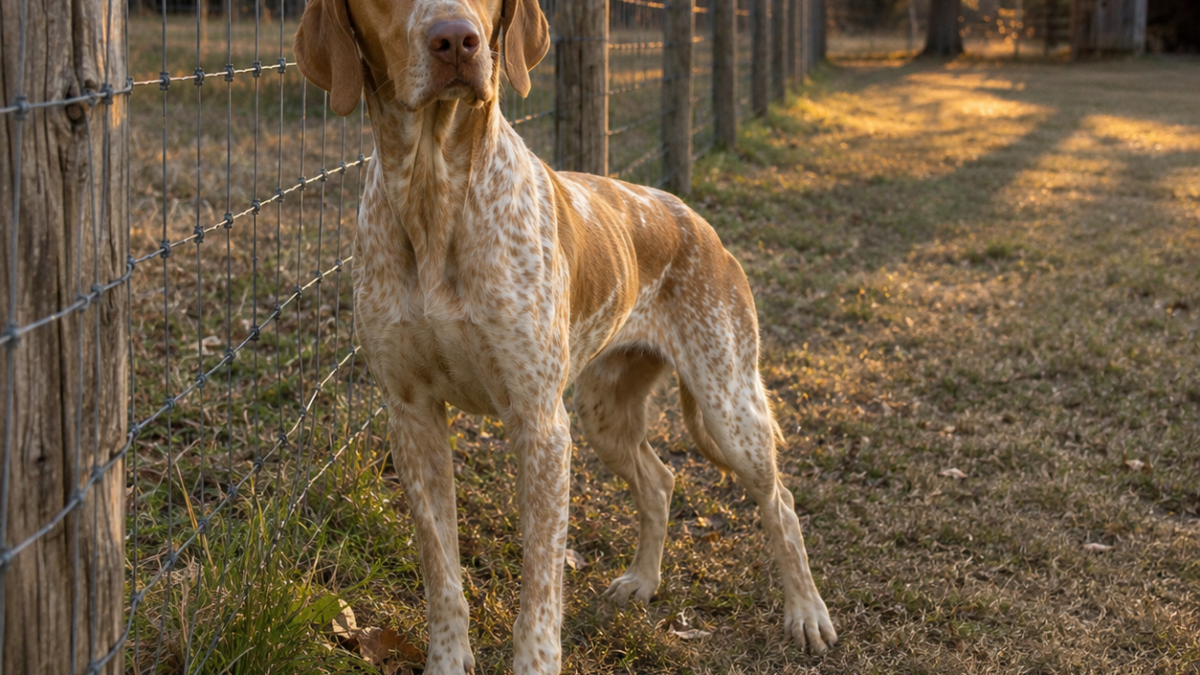
PART 2
For the first week, I told myself Harvey would adjust.
Dogs adjust.
That was what everyone said.
They learn new routines.
They live in the moment.
They don’t understand absence the way humans do.
By the second week, I stopped believing any of that.
Harvey understood absence perfectly.
He just didn’t accept it.
Every morning at seven-thirty, he went to the fence.
If I kept him inside, he paced between the back door and the kitchen window.
If I distracted him with breakfast, he’d eat three bites, then go check the yard.
If Sophie threw his favorite red ball, he chased it once.
Then carried it to the fence.
One Saturday morning, I found him lying there with the ball between his paws.
His nose was pressed against the same crack where Mr. Holden used to push biscuits through.
I sat beside him.
“I miss him too.”
Harvey sighed.
I had spoken to Mr. Holden hundreds of times.
Usually across the fence.
Sometimes at the mailbox.
Once or twice over lemonade on our porch.
Yet until he disappeared, I hadn’t realized how much he’d become part of our lives.
Sophie used to take him tomatoes from our garden even though his tomatoes were objectively better.
Ben showed him school projects.
David helped change a light fixture in his garage.
And every December, Mr. Holden put a wooden reindeer in his front yard that looked so badly made we assumed it had sentimental value.
It did not.
He’d bought it at a gas station twenty years earlier.
Harvey loved him anyway.
Two weeks after Mr. Holden left, I asked David, “Do you know Richard’s number?”
“No.”
“Can we find it?”
David looked at me over his coffee.
“For Harvey?”
“For Mr. Holden.”
He smiled slightly.
“Sure.”
Finding Richard wasn’t difficult.
The town was small enough that a name and a vague description could still get you somewhere.
A neighbor had his number.
I called.
A man answered after four rings.
“Hello?”
“Is this Richard Holden?”
“Yes.”
“My name is Ella Morgan. I live next door to your father’s house.”
Pause.
“Is something wrong with the property?”
That wasn’t the response I’d expected.
“No. Nothing’s wrong.”
“Okay.”
“I’m calling about your father.”
Another pause.
“What about him?”
I looked through the window.
Harvey was at the fence.
“I wanted to see how he’s doing.”
“He’s fine.”
“Could I speak to him?”
Richard exhaled.
“He’s resting.”
“I can call later.”
“No, I mean he’s had a difficult few weeks.”
“I understand.”
“Who did you say you were?”
“Ella. Your dad’s neighbor.”
“Oh.”
That one word bothered me.
I continued.
“Our dog Harvey was very close to him.”
Silence.
Then Richard said, “The brown dog?”
“Yes.”
“He talked about that dog constantly.”
I smiled.
“He’s been waiting by the fence every morning.”
Richard gave a small laugh.
“Well, dogs do that.”
Something in his tone irritated me.
“Could we bring Harvey to visit?”
“No.”
The answer came too quickly.
I blinked.
“I’m sorry?”
“That wouldn’t work.”
“Why?”
“Dad needs stability.”
“Harvey is part of his routine.”
“Not anymore.”
I straightened.
“Richard—”
“Look, Mrs. Morgan, I appreciate your concern, but Dad is eighty. He fell. He’s confused sometimes. We’re trying to help him settle.”
“Has he asked about Harvey?”
Silence.
That answered me.
“Yes,” Richard admitted.
“Then perhaps seeing him would help.”
“I don’t think that’s a good idea.”
“Why?”
“Because he needs to accept that his old life is over.”
His old life.
The phrase landed badly.
“He’s alive.”
“I know that.”
“Then I don’t think his life is over.”
“I didn’t mean it that way.”
But he had.
At least partly.
Richard softened his voice.
“Thank you for checking in.”
Then he ended the call.
I stood in my kitchen holding the phone.
David came in.
“How’d it go?”
“His son is an ass.”
“Ella.”
“What?”
“Our children are right there.”
Ben looked up from cereal.
“I’ve heard worse.”
David pointed toward the hallway.
“Go get your backpack.”
Ben left.
David turned back.
“What happened?”
“He won’t let us visit.”
“Maybe there’s a reason.”
“There probably is.”
“You sound unconvinced.”
I looked toward Harvey.
“I am.”
For another week, I tried to let it go.
Then something happened.
At seven-thirty one morning, Harvey went to the fence.
But this time, he started digging.
“Harvey!”
He ignored me.
Dirt flew behind him.
He clawed at the base of the fence, pushing his nose beneath the lowest board.
I ran outside.
“Stop.”
He dug harder.
“Harvey.”
Finally I grabbed his collar.
He resisted me.
Not aggressively.
Desperately.
“What are you doing?”
Then I saw what he’d uncovered.
A small plastic bag.
Buried just beneath the fence line.
Inside were dog biscuits.
Old ones.
Probably put there weeks earlier.
Harvey pawed at the bag.
I stared.
Mr. Holden had hidden treats beside the fence.
Maybe for days when his knees hurt too much to come outside.
Maybe because he liked knowing Harvey would find them.
I opened the bag.
Harvey ate one.
Then he carried the second to the fence and set it down.
He didn’t eat it.
That broke me.
He was saving it.
For a man who wasn’t there.
That afternoon, I called Richard again.
He didn’t answer.
I left a message.
“Richard, it’s Ella Morgan. I’m not asking to interfere with your father’s care. I only want to bring Harvey for fifteen minutes. Please ask your father whether he wants that. Ask him, not yourself.”
He didn’t call back.
Three days later, I received a call from an unfamiliar number.
“Ella?”
The voice was weak.
But I recognized it immediately.
“Mr. Holden?”
“Arthur.”
I sat down.
“Arthur.”
He laughed.
“That’s better.”
“How did you get my number?”
“I stole Richard’s phone.”
I laughed so loudly Sophie came into the room.
“Are you okay?”
I waved her away.
Arthur continued.
“How’s my boy?”
Harvey was asleep near the couch.
I said his name.
His head lifted.
“Harvey?”
The dog stood.
I put the phone on speaker.
Arthur said, “Hey there, buddy.”
Harvey froze.
Every muscle.
Every hair.
Frozen.
Then his tail began moving.
Slowly at first.
“That’s my good boy.”
Harvey rushed toward the phone.
He whined.
Licked it.
Knocked it from my hand.
“Harvey!”
Arthur was laughing through the speaker.
The dog barked.
Not his warning bark.
A strange, high sound that sounded almost like crying.
I picked up the phone.
Arthur’s laughter stopped.
“Ella?”
“Yes.”
His voice changed.
“I want to see him.”
“Then you will.”
“Richard says I need to let things go.”
I looked at Harvey.
“He’s wrong.”
A long silence followed.
Then Arthur whispered, “Thank you.”
We arranged a visit without telling Richard.
That sounds childish now.
At the time, it felt necessary.
Arthur was living at Richard’s home in Tyler, about ninety minutes away.
His daughter-in-law, Melissa, worked weekday afternoons.
Richard worked at an auto dealership.
A home health aide named Rosa stayed with Arthur until four.
Arthur told me Rosa would let us in.
“She knows?”
“She likes me better than Richard does.”
“That’s a terrible thing to say about your son.”
“Doesn’t make it false.”
The following Wednesday, David took the afternoon off.
We put Harvey in the SUV.
The moment we turned out of our neighborhood, he became restless.
He had never made that drive.
There was no possible way he knew.
Yet he stood in the back seat between Sophie and Ben, staring through the windshield.
“Do you think he knows?” Sophie asked.
“I don’t know.”
I did know one thing.
When we pulled into Richard’s driveway, Harvey started screaming.
I don’t know another word for it.
Whining.
Barking.
Scratching at the door.
His entire body shook.
“Wait!”
David barely stopped the vehicle before Harvey tried climbing over the seats.
The front door opened.
Arthur Holden stood there with a walker.
Harvey saw him.
Everything happened at once.
He pushed past me.
I grabbed the leash just before he reached the driveway.
Arthur let go of his walker.
“Harvey!”
Rosa caught Arthur’s elbow.
David caught the other.
I released Harvey.
He ran.
Arthur went down onto one knee.
Harvey crashed into him.
I thought they were both going to fall.
Arthur wrapped his arms around Harvey’s neck.
Harvey pressed his entire body into him, whining so loudly the sound echoed off the house.
Arthur buried his face in Harvey’s fur.
“Oh, boy.”
His shoulders shook.
“Oh, my boy.”
Sophie began crying.
Then Ben.
Then me.
David pretended he had something in his eye.
For five minutes, nobody could separate them.
Not that anyone tried.
Arthur sat on the porch.
Harvey put his head in his lap.
The old man ran both hands over his ears.
“You waited?”
Harvey’s tail moved.
“You fool.”
Another wag.
Arthur looked at me.
“He waited?”
“Every morning.”
His eyes filled again.
“At the fence?”
“Yes.”
Arthur closed his eyes.
Richard’s SUV pulled into the driveway thirty minutes later.
That was when everything changed.
He got out.
Saw us.
Stopped.
“What is this?”
Arthur’s hands tightened around Harvey.
Richard walked toward the porch.
“I told you not to bring the dog.”
I stood.
“Your father asked us.”
“He isn’t supposed to have visitors without—”
“Without what?”
Richard’s face hardened.
“Without discussing it with us.”
Arthur spoke.
“I am sitting right here.”
Richard turned.
“Dad.”
“No.”
Arthur’s voice was weak but firm.
“Talk to me.”
Richard rubbed his forehead.
“This is exactly what I was trying to avoid.”
“What?” I asked.
“Upsetting him.”
Arthur laughed.
“I’m having the best afternoon I’ve had since you dragged me out of my house.”
Richard flinched.
“Dad, you fell.”
“I know.”
“You couldn’t live alone.”
“Maybe not.”
“So we brought you here.”
“You brought me here before I could say goodbye to anybody.”
“We were trying to keep you safe.”
Arthur looked down at Harvey.
“Safe isn’t the same thing as alive.”
No one spoke.
Richard pointed toward us.
“You need to leave.”
Harvey stood.
Arthur grabbed his collar.
“No.”
“Dad.”
“They stay.”
“This is my house.”
Arthur looked at his son for a long moment.
Then quietly said, “Yes.”
Something in his face broke.
He let go of Harvey.
“That’s the problem.”
We left ten minutes later.
Harvey fought the leash all the way to the car.
Arthur stood on the porch.
He didn’t wave.
He just watched.
That night, Harvey returned to the fence.
But things were different now.
He knew.
His friend existed somewhere.
His friend wanted him.
And Harvey became impossible.
Not badly behaved.
Determined.
Every time the front door opened, he was ready.
Every time we approached the SUV, he followed.
If David left for work, Harvey tried to climb inside.
When Sophie packed her school bag, he sat beside it.
He had decided someone eventually had to take him back.
A week later, Arthur called.
This time from Rosa’s phone.
“Ella.”
“What happened?”
“I need you to check my house.”
“Why?”
“Richard’s selling it.”
I stopped breathing.
“What?”
“He says I can’t go back.”
“Did you agree?”
“No.”
“Is the house yours?”
“Yes.”
“Then how can he sell it?”
Arthur was silent.
“Arthur?”
“I signed papers after I fell.”
“What papers?”
“Power of attorney.”
My stomach tightened.
“Did you understand what you were signing?”
“I thought it was so Richard could pay bills.”
“Did he tell you he could sell your house?”
“No.”
There are moments when ordinary life quietly ends.
That was one.
“What do you want me to do?”
“Go next door.”
I looked toward the window.
“What am I looking for?”
“A sign.”
I walked outside.
Harvey came with me.
We crossed our lawn.
At the edge of Arthur’s property, I saw it.
A real estate sign.
COMING SOON.
Harvey walked toward the porch.
He sniffed the door.
Then sat.
I stared at the sign.
“How long?”
Arthur asked through the phone.
“It’s already listed as coming soon.”
Silence.
“Arthur?”
“I want to go home.”
His voice sounded so small that for a second he didn’t sound eighty.
He sounded eight.
“I know.”
“Richard says I can’t.”
“That’s not his decision.”
“He says the doctors agree.”
“Do they?”
“I don’t know anymore.”
That answer frightened me.
Arthur had always been sharp.
Funny.
Opinionated.
Now he sounded uncertain about his own life.
I went home and told David everything.
He listened.
Then said, “We need to be careful.”
“I know.”
“This is family business.”
“I know.”
“We don’t know Arthur’s medical situation.”
“I know.”
“And a power of attorney can authorize a sale.”
“I know.”
David looked at me.
“You’re going to get involved anyway.”
“Yes.”
He sighed.
“Okay.”
“Okay?”
“You’re my wife. I’ve been married to you fourteen years. I know when I’ve already lost.”
I kissed him.
“You’re a smart man.”
“No. I’m trained.”
The next morning, I called an elder-law attorney.
Her name was Denise Carter.
I expected her to dismiss me because I wasn’t family.
She didn’t.
She asked very precise questions.
Was Arthur competent?
I didn’t know.
Had a physician declared him incapacitated?
I didn’t know.
Was the power of attorney durable?
I didn’t know.
Was Richard listed as agent?
Yes.
Was there evidence Richard was acting against Arthur’s expressed wishes?
Maybe.
Denise said, “A power of attorney is a duty, not ownership.”
That sentence mattered.
“What can I do?”
“You personally? Very little unless Mr. Holden asks you to help.”
“He has.”
“Then get his permission in writing if he’s capable.”
“Capable according to whom?”
“That’s what we may need to determine.”
Two days later, Rosa helped Arthur make a video.
He sat in a chair.
Looked into the camera.
Said his full name.
Date of birth.
Address.
The date.
Then:
“I do not want my house sold. I want independent medical evaluation. I want to speak to an attorney without my son present. I want Ella and David Morgan allowed to visit me. I want to see Harvey.”
He paused.
Then added:
“And if Richard says I’m confused, ask me who won the 1968 World Series.”
Rosa laughed behind the camera.
Arthur glared.
“Detroit Tigers.”
He was correct.
Denise watched the video.
“This helps.”
“What happens next?”
“We speak to Arthur.”
Richard blocked her first attempt.
He told Denise his father was medically fragile.
She informed him she represented Arthur, not him.
Suddenly things became serious.
Richard called me that evening.
“What are you doing?”
“Helping your father talk to a lawyer.”
“You need to stay out of my family.”
“He asked me.”
“He doesn’t know what he’s asking.”
“Then let an independent doctor decide that.”
Silence.
“You think I’m stealing his house?”
“I didn’t say that.”
“You’re implying it.”
“No.”
I looked through the window.
Harvey sat at the fence.
“I think your father wants to go home and you’re making decisions he doesn’t agree with.”
“You have no idea what I’ve been dealing with.”
That gave me pause.
Richard’s voice cracked.
“He falls. He forgets medication. He left the stove on twice.”
I softened.
“Richard…”
“I drove ninety miles every weekend for two years.”
I said nothing.
“He wouldn’t move. Wouldn’t hire full-time help. Wouldn’t give up his license. Then he fell and lay there for four hours.”
I closed my eyes.
That was new.
“He could have died.”
“I know.”
“No, you don’t.”
Maybe I didn’t.
Richard continued.
“I am trying to keep my father alive.”
“I believe you.”
He went silent.
“But keeping him alive doesn’t mean you get to erase everything he loves.”
Richard exhaled.
“You don’t understand.”
“Then explain the house.”
“He can’t go back.”
“That doesn’t mean it has to be sold immediately.”
“It’s costing money.”
“Whose money?”
“Dad’s.”
“Then shouldn’t Dad decide?”
“He isn’t realistic.”
“Maybe.”
I paused.
“But you didn’t even let him say goodbye to Harvey.”
Richard laughed bitterly.
“That’s what this is about? A dog?”
“No.”
I looked at Harvey.
“This is about whether your father is still a person or just a problem you’re managing.”
Richard hung up.
I felt terrible.
Because some of what I’d said was cruel.
And some of it was true.
The independent evaluation happened three weeks later.
Arthur had mild cognitive impairment.
Not dementia.
Not legal incapacity.
He needed help managing medications.
He shouldn’t drive.
He was at high risk for falls.
But he understood his finances.
He understood the house.
He understood his choices.
He could make decisions.
When Denise called me, I nearly cried.
“So he can go home?”
“That’s more complicated.”
“Why?”
“Capacity doesn’t erase physical risk.”
Arthur’s solution was simple.
He would hire in-home care.
Install rails.
Wear an emergency alert device.
Move his bedroom downstairs.
Accept help.
“No driving?” Denise asked.
Arthur sighed.
“No driving.”
“Medication assistance?”
“Yes.”
“Physical therapy?”
“If they don’t treat me like a toddler.”
“And what about the house?”
“Mine.”
Denise smiled.
“That’s not what I asked.”
“I’m keeping it.”
Richard fought.
Not in court.
Not yet.
He argued.
Pleaded.
Called doctors.
Called Claire—no, that’s previous story. Here maybe called us.
Then the financial records arrived.
And everything changed again.
Richard hadn’t stolen from Arthur.
I want that clear.
What he had done was something less criminal and more human.
He had convinced himself that efficiency gave him the right to decide.
He had accepted an offer from a developer.
The offer was good.
Very good.
Arthur’s property sat on a corner parcel the developer wanted for a private subdivision entrance.
Richard had signed a preliminary agreement under the power of attorney.
The sale wasn’t final.
But there was something else.
A bonus.
If the deal closed before January, the developer would cover the cost of a new addition to Richard’s house—a downstairs suite for Arthur.
Arthur stared at the paperwork.
“They’re buying me a room?”
Denise said nothing.
Richard sat across the table.
“Dad, it was for you.”
Arthur looked at him.
“You were going to sell my house and use part of the deal to build me a bedroom in yours.”
“So you could stay with us safely.”
“Did you ask me?”
“You would’ve said no.”
Arthur nodded slowly.
“Yes.”
Richard’s jaw tightened.
“Exactly.”
“No, son.”
Arthur leaned forward.
“That isn’t proof you were right.”
The room went quiet.
“It’s proof you knew you were doing it against my wishes.”
Richard looked away.
Arthur revoked the power of attorney that afternoon.
That should have been the end.
But the developer didn’t want to lose the deal.
The company’s representative, Mark Hensley, contacted Arthur directly.
He offered more money.
Arthur refused.
He offered to purchase only the rear acreage.
Arthur refused.
Then someone began reporting Arthur’s property to the county.
Overgrown weeds.
A loose fence board.
An old shed that supposedly violated setback rules despite standing there since 1987.
Three complaints in two weeks.
Anonymous.
David looked at the notices.
“You think it’s the developer?”
“I think somebody wants him tired.”
Arthur had returned home by then.
The first day was one of the happiest things I’ve ever witnessed.
We drove to Richard’s house.
Harvey knew before we arrived.
He started whining ten minutes away.
Arthur sat waiting on the porch.
Beside him was a small suitcase.
Richard stood behind him.
Nobody spoke much.
The relationship between father and son had become fragile.
Not destroyed.
But bruised.
David loaded the suitcase.
Arthur looked at Richard.
“You can visit.”
Richard’s eyes filled.
“Dad.”
“I mean it.”
“You’re making a mistake.”
“Maybe.”
Arthur nodded toward us.
“At least it’ll be mine.”
Richard didn’t answer.
Harvey climbed halfway out the window when Arthur approached the SUV.
“Move over, you idiot.”
Harvey moved approximately two inches.
Arthur laughed.
During the ride home, Harvey sat with his head in Arthur’s lap.
For ninety minutes.
Arthur barely stopped touching him.
When we turned onto our street, Arthur became quiet.
His house appeared.
The porch.
The pecan tree.
The ridiculous wooden reindeer still stored beside the garage.
Then Harvey barked.
Arthur laughed.
“Oh, yes.”
We pulled into the driveway.
Arthur stepped out.
Harvey jumped after him.
The old man stood staring at his home.
Then he looked toward our fence.
“Still a hole?”
I smiled.
“Same one.”
He walked slowly toward it.
Harvey followed.
Arthur went to his side.
Harvey went to ours.
For the first time in months, they sat exactly where they’d always sat.
One man.
One dog.
A wooden fence between them.
Arthur reached through the gap.
“Good boy.”
Harvey pressed his face against his hand.
I turned away.
David didn’t.
He was crying openly now.
“Something in your eye?”
“Shut up.”
Arthur’s return created a new routine.
Rosa agreed to work mornings.
Another caregiver handled afternoons.
David installed grab bars.
We moved furniture.
Richard reluctantly brought over Arthur’s medication organizer and medical records.
He stayed only twenty minutes.
Before leaving, he stopped beside the fence.
Harvey was there.
Richard crouched.
“You’re the reason he came back, aren’t you?”
Harvey wagged.
Richard smiled sadly.
“Troublemaker.”
For a while, things were good.
Then the county notices continued.
So did calls from the developer.
Arthur ignored them.
One afternoon, Mark Hensley came to the house.
I happened to be in Arthur’s yard planting winter pansies he had no intention of watering properly.
A black pickup stopped.
Mark got out.
Mid-fifties.
Expensive boots.
Professional smile.
“Mr. Holden?”
Arthur was on the porch.
“Yes.”
“Mark Hensley. We’ve spoken.”
“I remember telling you no.”
Mark laughed as if Arthur had made a joke.
“I just wanted to revisit the numbers.”
“No.”
“You haven’t heard the new offer.”
“Still no.”
Mark looked toward the property.
“That’s a lot of land for one person.”
Arthur’s face changed.
“I’ve had it forty-two years.”
“I understand.”
“No, you don’t.”
Mark tried another approach.
“Your son thought this was a sensible plan.”
“My son and I disagree.”
“Sometimes family sees things more objectively.”
I stood.
“Mr. Hensley.”
He looked at me.
“Who are you?”
“The neighbor.”
“Then this is private business.”
Arthur answered before I could.
“She’s family enough.”
That shut him up.
Mark handed Arthur an envelope.
“Just look at it.”
Arthur didn’t take it.
Mark placed it on the porch rail.
Then he looked at Harvey.
“That’s the famous dog?”
Arthur smiled.
“Famous?”
“Your son mentioned him.”
Harvey stared at Mark.
“Nice animal.”
Arthur said, “Best judge of character I’ve ever met.”
Harvey walked away.
I nearly laughed.
Mark didn’t.
After he left, Arthur picked up the envelope.
“Want me to throw it away?”
“No.”
He opened it.
The offer was enormous.
Enough to make almost anyone hesitate.
Arthur didn’t.
He tore it in half.
Harvey grabbed one piece and ran across the yard.
“Give me that!”
For ten minutes, an eighty-year-old man and I chased a dog carrying a six-figure real estate offer.
Arthur laughed so hard Rosa had to make him sit down.
“That may be the best use anybody’s made of that contract,” he said.
I thought the pressure would stop.
Instead, it became uglier.
Someone left the side gate open.
Harvey escaped our yard for the first time in his life.
I found him on Arthur’s porch.
At first, I assumed one of the kids hadn’t latched it.
Then David checked our security camera.
A man in a baseball cap had walked along the alley behind our property at 2:11 p.m.
He paused at our gate.
Reached over.
Opened it.
Then walked away.
We couldn’t identify him.
The next week, Arthur’s mailbox was knocked down.
Then a county inspector arrived because someone claimed Arthur was operating an illegal boarding kennel.
“There is one dog,” Arthur said.
The inspector looked around.
“Where?”
Arthur pointed through the fence.
Harvey stared back.
“He doesn’t even live here.”
The inspector laughed.
Complaint dismissed.
But Arthur stopped laughing once the man left.
“They want me tired.”
I remembered thinking the same thing.
“Then we’ll be more stubborn.”
Arthur looked at me.
“You have no idea how stubborn I am.”
Harvey barked.
“I think he does.”
The real break came from Richard.
He arrived one Sunday evening without warning.
Arthur almost didn’t let him inside.
I was on our porch when Richard called my name.
“Ella.”
I crossed over.
He looked terrible.
“What happened?”
He held a folder.
“I screwed up.”
Arthur stared.
Richard sat at the kitchen table.
For a long time, he said nothing.
Then he opened the folder.
Emails.
Messages.
Documents.
The developer had contacted Richard months before Arthur’s fall.
Not after.
Mark had known Arthur’s property mattered for the proposed subdivision.
They had offered Richard a “consulting fee” if he helped persuade his father to sell.
Richard had refused the fee.
That mattered.
But he hadn’t told Arthur.
Then Arthur fell.
The power of attorney gave Richard leverage.
Mark returned.
This time with the offer to build the accessible suite.
Richard convinced himself it solved everything.
“I thought you were going to die alone in this house,” he told his father.
Arthur’s face softened slightly.
Richard continued.
“I came in and found you on that floor.”
His voice broke.
“You kept saying you were fine.”
Arthur looked down.
“You weren’t fine.”
“No.”
“You scared me.”
“I know.”
Richard wiped his face.
“I started thinking if I could remove the house from the equation, you’d have to stay with me.”
Arthur closed his eyes.
“And Harvey?”
Richard looked toward the fence.
“I knew if you saw him, you’d fight harder to come back.”
There it was.
The truth.
“You kept him away on purpose,” I said.
Richard nodded.
I felt anger rise.
Arthur lifted one hand.
“Ella.”
I stopped.
He looked at his son.
“You thought that dog was making me unreasonable.”
“Yes.”
“He was.”
Richard blinked.
Arthur smiled faintly.
“He reminded me I still had somewhere I wanted to be.”
Richard began crying.
Arthur didn’t forgive him immediately.
Real life is rarely that clean.
But he listened.
Then Richard told us why he had come.
“Mark’s company filed another plan with the county.”
Arthur frowned.
“For what?”
“Road expansion.”
The proposed subdivision entrance had been moved.
Instead of buying Arthur’s whole property, they intended to argue for an easement along its western edge.
That edge included the old pecan tree.
And the fence.
Harvey and Arthur’s fence.
Legally, it wasn’t about the dog.
Emotionally, it absolutely was.
The developer claimed the road was necessary for public safety.
Their traffic analysis said the alternate entrance created sightline problems.
David read the report.
“Who prepared this?”
Richard pointed to a consulting firm.
David’s expression changed.
“What?”
“My company used these guys once.”
David was a civil engineer.
I sometimes forgot because most of his work sounded like discussions about drainage no normal person would willingly attend.
He took the report home.
For three nights, he studied it.
Maps.
Measurements.
Traffic projections.
County records.
Then he came into the kitchen at eleven-thirty holding twenty pages.
“They lied.”
I sat up.
“Who?”
“The developer.”
“About what?”
“The sight distance.”
I stared.
“In English.”
“The alternate entrance is safe.”
“How do you know?”
“They used an outdated survey.”
“Accident?”
“No.”
He laid two aerial maps side by side.
“They omitted a county road improvement completed last year.”
“So?”
“So their entire argument for needing Arthur’s side is based on a condition that doesn’t exist anymore.”
I started smiling.
David pointed at me.
“Don’t.”
“What?”
“That face.”
“What face?”
“The revenge face.”
“I don’t have a revenge face.”
“You absolutely have a revenge face.”
Arthur’s attorney filed an objection.
The county scheduled a public hearing.
Mark’s company arrived with attorneys.
Engineers.
Slides.
Charts.
Arthur arrived with a walker.
Richard on one side.
Me on the other.
Harvey couldn’t come inside.
So Sophie and Ben waited with him outside the county building.
David testified.
Calmly.
Professionally.
He explained the outdated survey.
The road improvement.
The corrected sightline.
The unnecessary easement.
The developer’s engineer tried to defend the report.
David asked one question.
“When did your team last physically inspect County Road 18?”
Silence.
The engineer checked notes.
David already knew the answer.
“Fourteen months ago?”
“Yes.”
“The road was reconstructed nine months ago.”
“Yes.”
“So your recommendation to take part of Mr. Holden’s property is based on conditions you haven’t observed since the reconstruction.”
The engineer swallowed.
“That would be fair.”
Mark’s attorney asked for a recess.
I nearly applauded.
Arthur squeezed my hand.
“Don’t.”
“I wasn’t doing anything.”
“You had the face.”
Apparently everyone knew about the face.
Then Richard testified.
That surprised Mark.
He produced the communications.
The pressure.
The offers.
The attempts to rush a sale after Arthur’s fall.
Nothing was necessarily criminal.
But it looked terrible.
Especially after an eighty-year-old man stood and spoke.
Arthur refused the microphone at first.
Then accepted it because nobody could hear him.
“My wife and I bought that house in 1984.”
He paused.
“We raised our son there.”
Richard looked down.
“My wife died in the back bedroom.”
Arthur’s voice shook.
“I planted that pecan tree the spring Richard graduated high school.”
Another pause.
“When I fell last year, I learned something humiliating.”
The room went silent.
“Getting old means people begin discussing your life while you’re sitting right there.”
No one moved.
“They say safe.”
“They say practical.”
“They say best interest.”
Arthur looked toward Mark.
“Sometimes they’re right.”
Then toward Richard.
“Sometimes they’re scared.”
Richard wiped his eyes.
“And sometimes they’re making money.”
A few people shifted.
Arthur continued.
“I need help.”
He gripped his walker.
“I know that now.”
“I cannot drive.”
“I need someone to check my medication.”
“I may fall again.”
His voice strengthened.
“But needing help does not mean I stopped being the owner of my own life.”
I felt tears rise.
Arthur looked toward the hallway where, through the glass doors, Harvey could be seen sitting beside Sophie.
“And yes, part of why I wanted to go home was a dog.”
A few people smiled.
Arthur did too.
“Some of you may think that’s foolish.”
He shrugged.
“At eighty-one, I’ve earned a few foolish things.”
Laughter.
Then his expression became serious again.
“That dog waited for me every morning when people were telling me I needed to forget the life I’d left.”
He swallowed.
“I think that deserves more respect than a traffic report based on the wrong road.”
That time people did applaud.
The easement request was denied.
Unanimously.
Mark left without looking at us.
Outside, Harvey saw Arthur.
His tail exploded.
Arthur walked down the steps slowly.
Harvey strained toward him.
Sophie released the leash.
Harvey ran.
Arthur braced himself.
“Easy!”
Harvey stopped just before hitting him.
Then leaned gently against his legs.
Arthur scratched his neck.
“We won, buddy.”
Richard stood a few feet away.
Arthur looked at him.
“Come here.”
Richard hesitated.
Then walked over.
Harvey sniffed him.
Richard crouched.
“Can I get forgiven too?”
Harvey licked his face.
Arthur sighed.
“Show-off.”
That should have been the end of the drama.
Life gave us something better.
Consequences.
The developer withdrew from the subdivision project six months later.
Not because of us alone.
County officials reviewed several pending applications after the hearing and discovered other outdated studies and questionable shortcuts.
Mark lost his position.
I heard he blamed Arthur.
Arthur laughed when I told him.
“That’s generous.”
“What?”
“Apparently I still have enough power to ruin a corporation.”
He did not.
Mark’s choices had done that.
But there was one final bit of justice Arthur enjoyed.
The county later approved a conservation easement requested by Arthur himself.
The western strip of his property—including the pecan tree and the fence line—was permanently protected from road development.
Arthur paid for the legal work.
Then added one strange condition to his estate plan.
The section of fence where he and Harvey sat would never be removed as long as either property remained in the family.
Denise asked why.
Arthur answered, “Historical significance.”
I nearly choked laughing.
“Historical?”
“Yes.”
“A dog stuck his nose through it.”
“Exactly.”
Arthur and Richard slowly repaired their relationship.
Slowly is important.
There was no magical apology.
Richard had to earn trust back.
He started visiting every Sunday.
At first, Arthur made him sit across the room like a salesman.
Then eventually they watched football.
Richard began helping with doctor appointments.
This time, Arthur attended every conversation.
No decisions about him without him.
That became the rule.
And Harvey?
Harvey became more devoted than ever.
Every morning at seven-thirty, he went to the fence.
Arthur came out with coffee.
Two biscuits.
“One now.”
Harvey took it.
“The other after we solve the world’s problems.”
Some mornings, Richard joined them.
Harvey took weeks to stop watching him suspiciously.
I considered that appropriate.
One Sunday, Richard held out a biscuit.
Harvey looked at Arthur.
Arthur nodded.
Only then did Harvey take it.
Richard laughed.
“He really doesn’t trust me.”
Arthur sipped coffee.
“Smart dog.”
“Dad.”
“I said what I said.”
Two years passed.
Arthur turned eighty-three.
His walking worsened.
His mind stayed sharp.
He stopped using the backyard steps, so David built him a ramp.
We cut a small opening in the fence and installed a gate.
Not for humans.
For Harvey.
Arthur cried when he saw it.
“What’s this?”
David shrugged.
“Efficiency.”
Arthur looked at me.
“I like him.”
“I married him for his carpentry.”
“I thought he was an engineer.”
“Same difference.”
From then on, Harvey didn’t have to sit on his side of the fence.
At seven-thirty, I opened the little gate.
He walked through.
Sat beside Arthur’s chair.
Stayed until breakfast.
Sometimes longer.
Our dog had acquired a second home.
We finally stopped pretending otherwise.
Then one summer morning, Arthur wasn’t outside.
Harvey waited.
I noticed because it was nearly eight.
I looked through the kitchen window.
Arthur’s chair was empty.
Harvey sat beside it.
Something felt wrong.
I crossed the yard.
The back door was unlocked.
“Arthur?”
No answer.
Harvey entered before I could stop him.
He went straight down the hallway.
Then barked.
Once.
Sharp.
I found Arthur on the bedroom floor.
He was conscious.
Barely.
He had suffered a stroke.
The ambulance arrived twelve minutes later.
Harvey had to be pulled away from the stretcher.
Richard met us at the hospital.
This time there were no fights.
No one needed to remind him Arthur was still a person.
Richard stood beside his father’s bed and asked:
“What do you want?”
Arthur’s speech was badly affected.
His right side weak.
He struggled for nearly a minute.
Then whispered one word.
“Home.”
Richard closed his eyes.
Then nodded.
“Okay.”
Arthur couldn’t return immediately.
He needed rehabilitation.
Three months.
Harvey went to see him every Sunday.
Richard arranged it.
The first visit was difficult.
Arthur was in a wheelchair.
Harvey entered the rehab garden.
Stopped.
He had never seen his friend that way.
Arthur lifted his left hand.
“Boy.”
One broken word.
Harvey ran.
Then, as if understanding Arthur was fragile, he slowed before reaching him.
He placed his head on Arthur’s lap.
Arthur bent over him.
Cried into his fur.
Harvey didn’t move for nearly an hour.
The therapists began using him.
Not officially at first.
Arthur hated repetitive hand exercises.
Then one therapist handed him Harvey’s red ball.
“Throw it.”
Arthur tried.
The ball fell two feet away.
Harvey retrieved it.
Returned.
Arthur tried again.
Three feet.
Harvey retrieved it.
Five feet.
Ten.
Week after week.
Richard watched one afternoon.
“You know, Dad, I’ve spent thousands on therapy and apparently the dog is better.”
Arthur’s speech had improved.
He smiled.
“Told you.”
When Arthur finally returned home, we recreated the first homecoming.
No one planned it.
It simply happened.
The car pulled into his driveway.
Harvey was at the fence.
Arthur stepped out with a cane.
Harvey ran through his little gate.
He stopped in front of Arthur.
Arthur lowered one shaky hand.
“Good boy.”
Harvey pressed against him.
Arthur remained home another eighteen months.
They were good months.
Not perfect.
Good.
There is a difference.
Arthur needed more help.
Richard hired overnight care.
He visited twice a week.
Sometimes Arthur was frustrated.
Sometimes afraid.
Sometimes exhausted.
But every morning he had Harvey.
Eventually, morning visits became porch naps.
Arthur sat in his chair.
Harvey slept beside his feet.
I would bring coffee.
Sometimes Arthur talked about June.
One morning he asked me, “You know why I liked him?”
“Harvey?”
“No, the mailman.”
I stared.
He laughed.
“Of course Harvey.”
“Why?”
“He never talked to me like I was old.”
I looked at the dog.
“Harvey can’t talk.”
“Exactly.”
I smiled.
Arthur became serious.
“People change when you get old.”
“How?”
“They start putting their hand on your shoulder.”
“What?”
“You haven’t noticed?”
“No.”
“They lean in.”
Arthur demonstrated.
Soft voice.
“How are we doing today, Mr. Holden?”
I laughed.
“Stop.”
“Doctors. Bankers. Everybody.”
“You’re impossible.”
“Harvey never did.”
He looked down.
“He expected the same man every morning.”
That sentence stayed with me.
The end came quietly.
Arthur was eighty-five.
Harvey was eight.
One October evening, Richard knocked on our door.
His face told me before he spoke.
“Dad’s in hospice.”
My throat tightened.
“At home?”
“Yes.”
“Does he know?”
“Yes.”
“What does he want?”
Richard looked past me.
Harvey stood in the hallway.
“He wants the dog.”
We walked over.
Arthur’s bed had been moved into the living room near the windows.
The same room where he’d once watched June decorate Christmas trees.
He looked very small beneath the blankets.
Harvey approached slowly.
Arthur opened his eyes.
“Hey.”
Harvey put his front paws beside the mattress.
Arthur’s fingers moved weakly over his head.
“Good boy.”
Harvey climbed onto the rug beside the bed.
For the next two days, he barely left.
We brought his food.
He ate there.
He slept there.
If anyone approached Arthur, Harvey watched.
Not threatening.
Guarding.
The final morning, Richard called us before sunrise.
David and I went over.
Sophie and Ben came too.
Arthur was barely conscious.
Harvey’s chin rested on the mattress.
At 7:28, Arthur opened his eyes.
He looked toward the window.
Then at me.
“Time?”
I looked at the clock.
“Seven twenty-eight.”
A tiny smile.
“Late.”
I laughed through tears.
“Yes.”
“Coffee?”
“Absolutely not.”
“Mean woman.”
Harvey’s ears lifted at Arthur’s voice.
Arthur looked down.
“Biscuit.”
Richard started crying.
He went to the kitchen.
Returned with the old treat bag.
There were two biscuits inside.
Of course there were.
Richard handed one to Arthur.
His fingers couldn’t hold it.
So Richard helped.
Arthur gave it to Harvey.
“One now.”
Harvey took it.
Arthur closed his eyes.
For nearly a minute, we thought he’d fallen asleep.
Then he whispered:
“Other one…”
Richard bent closer.
“Dad?”
Arthur’s eyes moved toward me.
“After…”
He couldn’t finish.
I knew.
I took the second biscuit.
“I’ve got it.”
Arthur relaxed.
Harvey rested his head against his hand.
At 7:34 that morning, Arthur Holden died.
His hand remained on Harvey’s head.
No drama.
No fear.
Just a room full of people.
And one dog.
Harvey did not understand immediately.
He stayed.
Even after the hospice nurse came.
Even after Richard covered his father.
Even after everyone began moving around the room.
Harvey remained beside the bed.
Finally Richard knelt.
He wrapped both arms around him.
“He’s gone, buddy.”
Harvey looked at him.
Richard cried into Harvey’s neck.
“I know.”
For once, I think they understood each other perfectly.
We buried Arthur beside June.
At the cemetery, dogs were technically prohibited.
Richard called the caretaker.
Explained.
The caretaker said one sentence.
“Bring the dog.”
Harvey sat beside the gravesite.
When the service ended, I gave him the second biscuit.
The one Arthur hadn’t been able to give him.
Harvey took it.
Then lay down beside Richard.
That was the first morning since we’d adopted him that Harvey didn’t go to the fence at seven-thirty.
He never waited there again.
I think he understood.
The fence remained.
Arthur’s will surprised all of us.
The house went to Richard.
Nobody objected.
But there were conditions.
The western section had to remain protected.
The fence section had to stay.
And Richard could not sell the house for at least ten years unless he first offered it to us at a fixed, fair-market formula.
Richard laughed when he read that.
“Dad still doesn’t trust me.”
Denise smiled.
“Your father revised this after you reconciled.”
Richard went quiet.
“So why the restriction?”
I knew.
“Because he trusted himself.”
Richard looked at me.
“What?”
“He knew exactly what mattered to him.”
Richard nodded slowly.
Then he did something none of us expected.
He moved in.
Not immediately.
Six months later.
He sold his house in Tyler.
Melissa wasn’t thrilled.
There were arguments.
Eventually they separated.
Not because of Arthur.
Their marriage had been struggling for years.
Richard moved into his father’s old house alone.
The first morning after he arrived, I opened our back door.
Harvey ran toward the little gate.
Then stopped.
Richard was sitting in Arthur’s chair.
Coffee in one hand.
A bag of biscuits in the other.
Harvey stared.
So did Richard.
“Morning, buddy.”
Harvey didn’t move.
Richard held up a biscuit.
“One now?”
I covered my mouth.
Harvey slowly walked through the gate.
He approached Richard.
Sniffed the biscuit.
Then sat.
Richard gave it to him.
Harvey ate.
Richard looked toward me.
His eyes were wet.
“What comes next?”
I smiled.
“You solve the world’s problems.”
He laughed.
Harvey lay at his feet.
That became their routine.
Not because Richard replaced Arthur.
Nobody could.
But love has a strange way of leaving doors open.
Richard spent the next few years repairing things.
The house.
The garden.
The relationship with his children.
Himself.
He began volunteering with a local program that helped seniors remain in their homes safely.
Grab bars.
Ramps.
Transportation.
Medication systems.
Small things.
Practical things.
The kinds of support his father had needed.
One day I asked why.
Richard looked across the fence.
“Because I confused helping Dad with controlling him.”
He paused.
“I don’t want somebody else making the same mistake.”
That was the real revenge.
Not Mark losing his position.
Not the development collapsing.
Not the county denying the road.
Not even Arthur revoking Richard’s power of attorney.
The real victory was that everyone who had treated Arthur’s wishes as an inconvenience eventually had to live with the evidence that he had been right about what kept him alive.
Home mattered.
Routine mattered.
Choice mattered.
Harvey mattered.
And the man everyone thought needed to let go had instead forced all of us to hold on to something important.
Years passed.
Harvey’s muzzle turned gray.
He stopped running to the fence.
He walked.
Then eventually he limped.
Richard became the one who waited.
Every morning at seven-thirty, his coffee was ready.
Harvey came through the little gate.
Two biscuits.
One immediately.
One after.
When Harvey was eleven, arthritis made the trip difficult.
David widened the gate.
We built a little ramp.
“Again?” Richard asked.
David shrugged.
“Historical preservation.”
Arthur would’ve loved that.
Harvey’s final year was gentle.
He slept more.
Ate slower.
His eyes became cloudy.
But every morning he still went next door.
One spring morning, he didn’t.
I found him lying near our back door.
Awake.
Calm.
But unable to stand.
I knew.
You learn the shape of certain days before anyone explains them.
David carried him to the car.
Richard came with us.
The veterinarian told us what we already understood.
Harvey’s body was failing.
Pain.
Neurological weakness.
Age.
We could buy a little time.
Not good time.
We brought him home.
I refused to let his last memory be a clinic.
We carried his bed outside.
Beside the fence.
Richard brought Arthur’s old chair from the porch.
It had been repaired twice.
He sat.
I sat on the grass.
David and the children—no longer children by then—joined us.
Sophie was twenty-one.
Ben nineteen.
Harvey looked around at everyone.
Then toward the fence.
Richard reached into his pocket.
A biscuit.
“You know the rule.”
Harvey’s tail moved once.
Richard gave him the biscuit.
Harvey ate half.
Then stopped.
Richard broke the remaining piece smaller.
Harvey finished it.
“What about the second?” Sophie whispered.
Richard held another biscuit.
His hand shook.
I looked at him.
“No.”
He understood.
Not yet.
We waited.
The veterinarian came to the house.
Harvey’s head was in my lap.
Richard’s hand rested on his side.
I talked.
Because silence felt impossible.
“You were supposed to be our dog.”
Harvey’s ear twitched.
“Do you remember that?”
Sophie laughed through tears.
“He failed.”
“Completely.”
I stroked his gray muzzle.
“You belonged to everyone.”
His breathing slowed.
“You gave an old man a reason to sit outside every morning.”
Richard lowered his head.
“You gave his son a second chance.”
David wiped his eyes.
“You gave our family another family.”
The veterinarian administered the sedative.
Harvey relaxed.
His eyes became heavy.
Richard whispered, “Dad’s waiting.”
That destroyed all of us.
I leaned down.
“If he has biscuits, don’t let him give you too many.”
Harvey’s tail moved.
One tiny tap.
Then another.
I kissed his head.
“You’re a good boy.”
The same words Arthur had said through the fence on Harvey’s second day with us.
“Yes, you are.”
Harvey died at 7:31 in the morning.
Beside the fence.
Surrounded by both of his homes.
Richard still held the second biscuit.
We buried Harvey on our side of the fence, beneath a live oak where he used to sleep in summer.
Richard placed Arthur’s old coffee mug beside the grave before we filled it.
I looked at him.
“Really?”
“He’d want it.”
“He loved that mug.”
“Exactly.”
Then Richard broke the second biscuit in half.
One piece went into the grave.
The other he carried next door.
He buried it beneath Arthur’s side of the fence.
I couldn’t ask why.
I already knew.
We placed a simple stone over Harvey’s grave.
It reads:
HARVEY
HE HAD ONE FAMILY ON EACH SIDE OF THE FENCE
AND NEVER UNDERSTOOD WHY HUMANS THOUGHT LOVE HAD TO CHOOSE
A year later, the old fence finally began collapsing.
A storm took down three sections.
David said replacing the whole thing would be easier.
Richard stood in his yard.
I stood in mine.
We looked at the gap.
For decades, a fence had separated the properties.
For years, Harvey and Arthur had turned one crack in it into a doorway.
Richard smiled.
“What if we don’t replace this section?”
I looked at David.
He shrugged.
So we didn’t.
We rebuilt the fence everywhere except a twelve-foot opening between our yards.
No gate.
No barrier.
Just grass.
People sometimes ask if that bothers us.
It doesn’t.
Richard still lives next door.
We share a garden now.
His tomatoes are better than mine.
I refuse to tell him that.
Every November, we put Arthur’s ridiculous wooden reindeer between the two houses.
It still looks terrible.
That feels important.
The subdivision was eventually built somewhere else.
Mark Hensley’s name disappeared from the company website long ago.
Nobody around here talks about the fight anymore.
That’s fine.
Justice doesn’t need to remain dramatic forever.
Sometimes justice becomes something boring and beautiful.
An old man’s house still standing.
A tree still growing.
A son who learned how to ask instead of decide.
A fence that no longer divides anything.
And a dog remembered by two families.
I used to think Harvey couldn’t imagine life without Arthur.
I was right.
But I misunderstood what that meant.
Harvey did survive Arthur.
He ate.
He played.
He aged.
He loved us.
He even learned to love Richard.
But he never lived as though Arthur had vanished.
He carried him forward.
In routines.
In places.
In the way he paused every morning at seven-thirty.
In the way Richard eventually repeated the words his father once said.
“Good boy.”
Maybe that is what loyalty really is.
Not refusing to continue after someone leaves.
Continuing in a way that keeps what they gave you alive.
Arthur gave Harvey biscuits.
Harvey gave Arthur companionship.
But what they gave the rest of us was much larger.
Arthur taught us that growing old should not mean becoming invisible.
Richard taught us that love can become controlling when fear is allowed to make every decision.
And Harvey taught us the simplest lesson of all.
If someone matters to you, show up.
Again.
And again.
And again.
Even if there’s a fence.
Even if people tell you the old routine is over.
Even if the person you love has been moved somewhere you don’t understand.
Harvey kept showing up.
And because he did, I picked up a phone.
Arthur found his voice.
Richard faced what he’d done.
A house stayed standing.
A family repaired itself.
An old man got to spend his final years where he wanted to be.
Sometimes I wonder what would have happened if Harvey had simply adjusted.
If he had stopped going to that fence after a few days.
Maybe I would have accepted what Richard told me.
Maybe Arthur’s house would have been sold.
Maybe the development road would run through the pecan tree.
Maybe Richard would still believe he had done everything perfectly.
Maybe Arthur would’ve died believing nobody had heard him when he said he wanted to go home.
But Harvey didn’t adjust.
He waited.
Dogs are stubborn that way.
Thank God.
This morning, I walked into the backyard just after seven-thirty.
The live oak above Harvey’s grave was moving in the Texas wind.
Across the open space where the fence used to be, Richard sat in Arthur’s chair.
He had two cups of coffee.
One for himself.
One for me.
I walked over.
For a moment, neither of us spoke.
Then Richard looked toward Harvey’s grave.
“You ever miss hearing him scratch at that gate?”
“Every day.”
He nodded.
“Me too.”
I sat beside him.
Between our two yards, the grass was worn along an old path.
Harvey’s path.
From our back door.
Through the fence.
To Arthur’s chair.
Years after he was gone, the line was still visible.
Richard noticed me staring.
“Should probably reseed that.”
“No.”
He looked at me.
“Leave it.”
Richard smiled.
“Historical significance?”
“Exactly.”
We drank our coffee.
The neighborhood slowly woke around us.
A truck passed.
A sprinkler clicked on.
Birds argued in the pecan tree Arthur had planted decades earlier.
Everything ordinary.
Everything changed.
And I thought about the first morning Harvey sat at that old wooden fence listening to an eighty-year-old widower tell him he was a good boy.
Neither of them knew what they were beginning.
Neither did I.
We thought it was a dog accepting a biscuit.
It wasn’t.
It was a friendship.
Then a lifeline.
Then a fight.
Then a family.
And eventually, after all the lawyers, arguments, tears, illness, forgiveness, and goodbyes, it became something even simpler.
A path between two homes where there used to be a fence.
Harvey had spent years refusing to believe love stopped at that boundary.
In the end, we finally became smart enough to agree with him.








