Karen Thought Her Family Would Protect Her—Then Her Own Niece Spoke Up and the Whole Scheme Collapsed
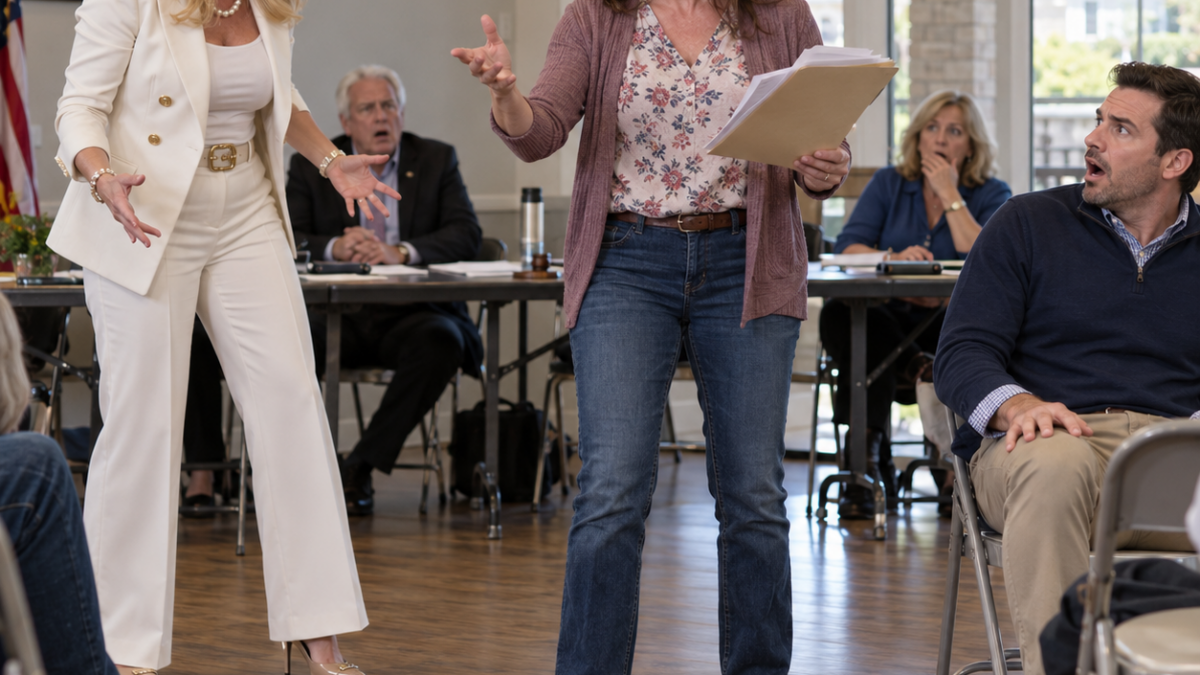
PART 2
The convoy was six miles from my ranch when Special Agent Elena Ramirez looked over at me.
“You heard me the first time, right?”
I knew exactly what she meant.
“I stay out of the arrest.”
“You stay out of everything unless there is an immediate safety issue.”
“I understand.”
“You do not question Karen. You do not search her. You do not direct agents because you own the property.”
“I understand.”
Elena studied my face.
“You’re angry.”
“My employees are restrained against a fence on my land.”
“That wasn’t a question.”
I turned toward the windshield.
“Then yes.”
She nodded once.
“That’s why I’m repeating it.”
There are moments in a career when professionalism feels effortless.
This wasn’t one of them.
I had spent fourteen months refusing to let Karen drag me into the kind of fight she wanted.
She sent letters designed to humiliate me.
She called county departments.
She accused me of illegal commercial operations because cattle trucks used my road.
She sent landscapers onto the edge of my land to “correct” boundary markers.
She told neighbors I was obstructing regional growth.
She even suggested publicly that I was hiding behind “government connections.”
I ignored the bait.
Every time.
But hearing that Luis, Ray, Tommy, Calvin, Marcus Hill, and Ben—the six men replacing my drainage culvert—were standing against an iron fence with restraints around their wrists changed the emotional equation.
Those men had nothing to do with Karen.
They were working.
That was all.
Elena’s phone buzzed.
She looked down.
“County dispatch received a silent emergency activation from Wade’s watch.”
I almost smiled.
“Of course he did.”
“Your manager always this prepared?”
“He thinks two backup plans means you’re being reckless.”
“What did dispatch get?”
“Armed private security. Unlawful detention. Possible confiscation of phones.”
I exhaled slowly.
“Good.”
Elena gave me a sideways look.
“Good?”
“Good that Wade got it out.”
She understood.
The investigation Karen was about to collide with had begun months before she ever imagined raiding my property.
And it had not begun because of me.
That became critically important later.
Karen would spend weeks telling anyone who would listen that I had transformed a private land dispute into federal retaliation.
If that accusation had been true, it would have destroyed my career.
The truth was much simpler.
Karen’s niece had found something she could no longer ethically ignore.
Allison Whitcomb was thirty-six years old, an attorney with a reputation for being painfully meticulous.
She had represented the Ridge Valley Property Owners Association for nearly four years.
Everyone knew she was related to Karen.
Karen made sure of that.
At meetings, she would say things like, “Our attorney agrees,” with a little emphasis on our, as if family blood somehow made the legal opinion more powerful.
Allison had admired her aunt when she was younger.
Karen had helped with part of her law-school tuition.
She attended Allison’s graduation.
She recommended her for early legal work.
When Allison joined a mid-sized regional firm, Karen pushed the board to retain that firm for association matters.
To Allison, Karen was difficult.
Demanding.
Sometimes overbearing.
But she believed her aunt cared about the neighborhood.
That belief began cracking when a contract landed on Allison’s desk.
Marrow Creek Advisory LLC.
The association had authorized nearly eighteen thousand dollars per month for “regional infrastructure consulting.”
Allison looked for the board vote approving it.
Nothing.
She checked executive-session records.
Nothing.
She emailed Karen.
Karen responded within minutes.
**Approved in closed session. File it.**
Allison checked again.
She found no closed-session authorization.
So she called.
“Aunt Karen, I can’t find the vote.”
Karen sighed audibly.
“Allison, I’m in the middle of something.”
“I just need the authorization date.”
“It was discussed privately.”
“Discussed or approved?”
Silence.
Then Karen’s tone hardened.
“Why are you making this complicated?”
“Because the contract requires board authorization.”
“You’re the attorney. Make it work.”
That sentence stayed with Allison.
She later told investigators it was the first moment she stopped feeling like an attorney being asked for advice and started feeling like an attorney being asked to decorate a decision that had already been made.
She did not file the contract.
Instead, she started looking backward.
Marrow Creek wasn’t the only strange vendor.
There were landscaping companies with no visible crews.
Security consulting fees that doubled within six months.
Environmental analysis invoices from a company registered to a mailbox store.
Community development expenses that did not correspond to any approved project.
Individually, every transaction had an explanation.
Together, they formed a pattern.
Allison searched business records.
One company owned another.
That entity had a manager tied to a consulting group.
The consulting group had received payments from the resort developer proposing the project north of my ranch.
Then Allison found a land document.
It described a supposed historic easement affecting acreage near my northern boundary.
The association had been quietly using it as justification for some of Karen’s notices.
The deed looked official.
Recorded-document format.
Legal description.
County stamp.
Notary seal.
Allison recognized the notary’s name.
Helen Bowers.
A retired county clerk.
Allison had met her years earlier.
She checked the date of the notarization.
Then she checked Helen’s obituary.
The woman had been dead for eighteen months when the document was supposedly notarized.
Allison sat alone in her office for almost an hour.
She wanted another explanation.
Scanning error.
Wrong seal.
Old template.
Something.
Anything.
So she dug further.
She found three more questionable documents.
Two involved neighboring parcels.
One attempted to characterize land near the proposed resort road as “association-controlled access.”
All three used suspicious notarizations.
Then came the ledger.
Allison discovered it in a digital folder incorrectly attached to a routine vendor packet.
It contained payment schedules.
Initials.
Account references.
Percentages.
Karen’s name was not written in full.
It didn’t need to be.
**KW — 35% upon corridor control.**
**MV — 12% security/admin.**
**Board pool — 18%.**
**Developer retention — remaining.**
The phrase corridor control appeared repeatedly.
So did my property.
**Barrett Access Corridor.**
Allison printed the ledger.
Then she sat at her desk until after dark.
She later described that evening as the loneliest of her life.
Because if the documents were real, her aunt wasn’t bending rules.
Karen was orchestrating fraud.
And if Allison was wrong, accusing her aunt could destroy a family, a career, and an entire association.
She called her mother.
Karen’s older sister, Catherine.
“Allison? It’s late.”
“Mom, can I ask you something?”
“Of course.”
“If you thought someone in the family was doing something illegal, what would you do?”
A pause.
“What happened?”
“Nothing. Hypothetically.”
“Allison.”
“I’m serious.”
Catherine lowered her voice.
“Is this about your aunt?”
Allison said nothing.
That was answer enough.
Her mother exhaled.
“Karen is intense. You know that.”
“I know.”
“She gets carried away.”
“I know.”
“She also helped you.”
There it was.
Not malicious.
Not calculated.
Just family gravity.
The invisible weight of everything Karen had done for them.
Allison stared at the ledger.
“Mom, that isn’t what I asked.”
“I’m saying don’t overreact before you know everything.”
“I’m trying to know everything.”
“Then talk to Karen.”
Allison almost did.
That was what terrified her later.
She almost called the person whose financial records she suspected were fraudulent and announced exactly what she had found.
Instead, she closed the office door.
Made two copies.
Put one in a locked file.
Put the other in her briefcase.
Then she contacted the regional FBI office through counsel.
Not me.
Not Karen.
Not the board.
The FBI.
That decision set everything else in motion.
Investigators started quietly.
They did not assume Allison was correct.
They verified.
Bank subpoenas revealed money moving from association accounts into vendors that ultimately linked back to private accounts.
The resort developer had paid consulting entities that fed money into shell companies.
Several transfers ended in accounts controlled by Karen or Marcus Vale, the chief of the private security company Karen increasingly relied upon.
Investigators found offshore investment vehicles.
They found emails discussing “resistance management.”
They found draft agreements assigning money to board members if the resort gained reliable access.
Then they compared Allison’s records to the harassment I had documented.
The timelines matched.
The first developer meeting.
Karen’s first easement offer.
My refusal.
The first fine.
The boundary complaints.
The moved stakes.
The demand that I recognize an alleged historical easement.
The increased security spending.
None of it had been random.
Karen had been trying to increase pressure until selling the road seemed easier than fighting.
My files filled the missing space between financial fraud and physical intimidation.
That was when prosecutors understood the broader conspiracy.
And still I was kept outside the investigative core.
Intentionally.
My role remained property owner and witness.
The FBI drove the financial case.
The U.S. Attorney’s Office handled prosecutors.
An independent grand jury reviewed evidence.
The arrest warrants had been signed the afternoon before Karen entered my ranch.
Execution was scheduled for eight o’clock Wednesday morning.
Karen did not know.
At 7:14, she arrived first.
Wade saw the vehicles through the ranch-office window.
Nine black SUVs.
Two pickup trucks.
Later, two flatbeds carrying excavators.
At first he assumed some contractor had taken a wrong turn.
Then doors opened.
Men in matching dark uniforms stepped out.
No sheriff insignia.
No state markings.
No agency identification.
Private security patches.
Marcus Vale exited the lead SUV.
Karen followed.
She was wearing designer boots and carrying a leather folder.
Wade stepped onto the porch.
“What’s going on?”
Karen barely looked at him.
“Emergency association action.”
Wade descended one step.
“This ranch isn’t in your association.”
“That issue has been administratively resolved.”
“No, it hasn’t.”
Karen turned toward the construction crew.
“Stop all work immediately.”
Luis Mendoza looked at Wade.
“Boss?”
Wade said, “Keep working.”
Karen’s face tightened.
She opened the folder.
“Ridge Valley Property Owners Association has issued an Emergency Community Protection Order authorizing temporary control of this site pending environmental and access review.”
Wade held out his hand.
“Court order?”
Karen thrust the document toward him.
It had thick paper.
A gold embossed association seal.
Three signatures.
Karen’s.
A board treasurer.
A board secretary.
Wade scanned it.
“Judge?”
“The board authorized it.”
“So no judge.”
“You don’t need to understand the process.”
“I understand it perfectly.”
He handed the paper back.
“This has the same legal authority as a restaurant menu.”
Marcus moved closer.
“Sir, step away.”
Wade looked at the sidearm on Marcus’s belt.
“You law enforcement?”
“I’m head of security.”
“That wasn’t my question.”
“Step away.”
Wade didn’t move.
“What crime are those men committing?”
Karen snapped, “Unauthorized construction.”
“On Jack’s land.”
“Land subject to community impact restrictions.”
Wade laughed.
That enraged her more than shouting would have.
“You find this funny?”
“I find you standing on somebody else’s ranch holding a homemade court order pretty damn funny.”
Karen turned toward Marcus.
“Detain the work crew.”
For a fraction of a second, Marcus hesitated.
Later, in a proffer interview, he admitted he knew the order made no legal sense.
But the resort deal had promised him more money than his company normally earned in several years.
He nodded.
His men moved.
“Tools down!”
Luis lifted both hands.
“Man, we’re just working.”
“Against the fence.”
“What?”
“Move!”
Wade stepped forward.
“No one touches my crew.”
Two guards blocked him.
One put a hand near his holster.
Wade stopped.
Not because he was frightened.
Because he was smart.
Six working men, unarmed.
Twelve security contractors.
Multiple visible firearms.
This was no time for macho nonsense.
The crew complied.
They walked toward the iron fence.
Hands were pulled behind them.
Heavy plastic restraints tightened around their wrists.
Ray Porter said, “This is insane.”
A guard shoved his shoulder into the fence.
Wade’s voice dropped.
“Easy.”
Karen watched.
That detail bothered me for a long time afterward.
She watched.
She did not look shocked when the restraints went on.
She did not tell Marcus his men had misunderstood.
She stood there like the image proved something.
Control.
Authority.
Victory.
Wade took out his phone.
“Karen, I’m calling the sheriff.”
“Confiscate the phones.”
Marcus looked at her.
“Karen—”
“All of them.”
That crossed another line.
Security contractors took phones from restrained men and dropped them into a hard plastic crate.
One guard approached Wade.
“Phone.”
Wade looked him in the eye.
“You understand you’re taking my property while I’m unlawfully detained?”
The guard hesitated.
Marcus said, “Take it.”
Wade handed it over.
What they did not know was that his watch had already sent an emergency alert.
Then the flatbed trucks arrived.
Karen directed one excavator toward my northern access road.
Wade said, “You unload that machine on this property and I will personally testify about it.”
Karen walked toward him.
“Do you understand what’s happening, Wade?”
“Do you?”
“This ranch owner has obstructed regional economic development for more than a year.”
“No. Jack said no to selling land.”
“He doesn’t own the right to damage an entire community.”
“He owns this road.”
“That is disputed.”
“Only by you.”
Karen leaned closer.
“That road will become permanent resort access.”
Wade stared at her.
“So that’s what this is.”
She realized she had said too much.
Her expression shifted.
“The road is a community infrastructure asset.”
“No, it’s Jack’s driveway.”
Karen turned away.
“Secure the gate.”
They installed a heavy new padlock.
Then Karen started directing association signs along the drive.
**TEMPORARY ADMINISTRATIVE CONTROL ZONE.**
**AUTHORIZED PERSONNEL ONLY.**
Visual theater.
If the ranch looked seized, perhaps people would assume she possessed authority to seize it.
That strategy had worked for her for years.
Print the right letterhead.
Use official language.
Wear confidence.
Most people did not challenge someone who acted certain.
Wade checked his watch.
7:43.
Karen noticed.
“Waiting for something?”
“Yeah.”
“What?”
“Time.”
She rolled her eyes.
Then she walked toward the ranch office.
Wade straightened.
“Karen.”
She kept walking.
“That office is private.”
She climbed the porch.
“You do not have permission to enter.”
Karen opened the door.
One of Marcus’s men looked uncomfortable.
Even he understood what he had just watched.
Karen disappeared inside.
My office was simple.
Oak desk.
Two filing cabinets.
A wall map.
Coffee maker.
Photographs.
A few locked storage drawers.
She opened one filing cabinet.
Then another.
Nothing useful.
Then she saw the manila folder centered on my desk.
It had been placed there before dawn.
Not as bait for Karen.
That point later mattered.
Federal agents had asked me to assemble specific copies of correspondence and financial records already available to investigators so the documents could be formally collected during the warrant process.
I had prepared them and left the folder in my office for transfer.
Karen opened it.
Security video captured her face.
She recognized something.
Maybe an account number.
Maybe a vendor name.
Maybe an email.
She shoved the folder into her leather tote.
Then she returned outside.
Wade looked at the bag.
“What did you take?”
“Association property.”
“There is no association property in that office.”
“You wouldn’t know.”
“I run the ranch.”
“Not anymore.”
Wade checked his watch again.
7:58.
Karen smirked.
“Still waiting?”
“Yes.”
“For Jack?”
Wade looked toward the road.
“No.”
A low engine rumble appeared beyond the ridge.
Karen smiled.
“That’ll be the sheriff.”
Wade shook his head.
“You really have no idea what morning you picked, do you?”
The first federal vehicle rounded the curve.
Then another.
Then another.
Karen’s smile faded.
Six armored vehicles stopped outside the chained gate.
Agents deployed.
FBI.
U.S. Marshals Service.
Federal task-force personnel.
Real badges.
Real warrants.
Real authority.
Marcus’s security contractors changed instantly.
Hands moved away from weapons.
Feet shifted backward.
Nobody barked commands anymore.
Elena stepped from the lead vehicle.
I exited after the team secured initial positions.
Karen saw me.
She stared.
I wore my duty vest.
My badge was visible over my chest.
For months Karen had treated me like a stubborn rancher too stupid to understand her paperwork.
The expression on her face when she saw that silver star was not satisfying.
It was almost sad.
Because I could see the exact moment she understood that she had never bothered to learn who she was threatening.
“You?”
Her voice was barely audible.
I said nothing.
An agent used bolt cutters on the gate chain.
The padlock fell into the dust.
We moved inside.
Elena pointed at Marcus.
“Hands where I can see them.”
Marcus obeyed.
“Step away from the weapon.”
He did.
Every private security contractor was secured.
Their weapons were collected.
The workers were released.
Luis rubbed his wrists.
I went directly to him.
“You okay?”
“I’m fine.”
“Medical checks everyone.”
“Boss, I’m good.”
“Everyone.”
He nodded.
Ray had a scrape on his cheek.
Nothing severe.
But seeing those marks made my anger burn hotter.
Wade approached.
“Took your time.”
“Traffic.”
He smiled.
“You going to fire me for letting somebody steal the ranch?”
“Thinking about it.”
“Fair.”
Then Karen found her voice.
“This is outrageous!”
Elena turned.
“Ma’am, stay where you are.”
“You are participating in an illegal retaliation.”
“No.”
“This man owns the ranch!”
“Yes.”
“He is using federal resources in a private dispute.”
Elena held up the warrant packet.
“The investigation was conducted independently of Deputy Marshal Barrett.”
Karen looked at me.
“This is your doing.”
Still I said nothing.
Elena continued.
“Multiple federal warrants were authorized yesterday.”
Karen blinked.
“Yesterday?”
“Yes.”
“Before this morning?”
“Yes.”
That mattered.
Her raid had not caused the federal case.
The case was already mature.
Karen’s raid had simply added fresh evidence.
Elena noticed the tote bag.
The corner of my folder protruded from the zipper.
“Ms. Whitcomb, place the bag on the ground.”
Karen clutched it.
“No.”
“Place it down.”
“This is privileged association material.”
That caught Elena’s attention.
“What’s privileged?”
Karen realized the mistake.
“I mean the bag.”
“You said association material.”
Karen’s eyes darted toward the office.
Wade spoke.
“She went inside and took a folder off Jack’s desk.”
Karen shouted, “He’s lying.”
Wade pointed above the door.
Camera.
Karen looked up.
I watched her face collapse one degree further.
Elena asked, “Did you enter the office?”
“I had administrative authority.”
“Did the property owner give permission?”
“The association—”
“Yes or no?”
Karen refused to answer.
An agent secured the tote.
Inside was the manila folder.
Elena removed it carefully.
Karen’s breathing quickened.
“That was ours.”
Elena looked at her.
“Yours?”
“Yes. Those records were stolen from the association.”
Everything became very quiet.
I had spent enough years around investigations to recognize a damaging statement in real time.
Elena did too.
“You’re saying you recognize these documents?”
“I recognize the type.”
“That’s not what you said.”
Karen backtracked.
“I don’t know exactly what’s in there.”
“But you just said they were association records.”
“Because he’s been collecting our documents.”
“How would you know what he collected?”
Karen’s mouth opened.
Nothing came out.
Marcus had been watching.
His face had gone gray.
He looked at Karen.
Then at the federal vehicles.
Then at Elena.
“I want a lawyer.”
Elena nodded.
“That’s your right.”
“And I want to cooperate.”
Karen spun around.
“Marcus.”
He ignored her.
“I have information.”
“Marcus!”
“There are encrypted drives at the association office.”
Karen took a step toward him.
Two agents blocked her.
Marcus continued.
“Under her desk. One behind the boardroom cabinet.”
“You liar!”
“She ordered us here.”
“Shut up!”
“She said the ranch would be under HOA control before nine.”
“Marcus!”
“She told us nobody would challenge it once equipment was on the road.”
Karen looked like she wanted to strike him.
Then Elena’s phone rang.
She answered.
The second federal team had reached the association headquarters.
While we secured the ranch, agents twelve miles away were executing warrants on Karen’s administrative office.
The search uncovered hard drives.
Altered surveys.
Shell-company invoices.
Forged documents.
A set of old notary stamps hidden inside a hollowed legal book.
Then they found the red binder.
**RIDGELINE EXPANSION.**
Karen had handwritten parts of it herself.
The binder turned a complicated fraud case into a road map.
Pages outlined the resort development.
Payments.
Target properties.
Legal pressure.
Security escalation.
My ranch occupied an entire section.
**PHASE 1 — VOLUNTARY EASEMENT PURCHASE**
Failed.
**PHASE 2 — COMPLIANCE PRESSURE**
Barn-color notice.
Grass-height violations.
Dust complaints.
Road damage assessments.
**PHASE 3 — BOUNDARY LEVERAGE**
Move markers.
Initiate survey dispute.
Create historical access claim.
**PHASE 4 — ADMINISTRATIVE OCCUPATION**
Establish temporary control.
Introduce equipment.
Restrict owner access.
**PHASE 5 — SETTLEMENT**
Obtain permanent easement before developer deadline.
There was even a column labeled:
**OWNER FATIGUE COST**
My harassment had a budget.
Karen had converted exhaustion into a line item.
Elena received the preliminary report from the second team.
She listened without expression.
Then she approached Karen.
“Karen Whitcomb, you are under arrest pursuant to federal warrants.”
Karen stared at her.
“No.”
Elena paused.
“No?”
“You cannot arrest me.”
Elena began reading the required warnings.
Karen looked at me.
“You did this.”
I finally answered.
“No.”
Her face twisted.
“You’ve been waiting for this.”
“I’ve been waiting for you to leave my land alone.”
“You used your badge!”
“This investigation didn’t start with me.”
She laughed bitterly.
“Then who?”
Elena should probably have avoided answering in that moment.
But the name was already contained in supporting case material Karen’s attorneys would receive.
“Allison Whitcomb provided information relevant to the initial inquiry.”
Karen stopped.
Everything else disappeared from her face.
“My niece?”
No one answered.
“My niece?”
Her voice cracked.
Not anger.
Not yet.
Something closer to betrayal.
“Allison gave you records?”
Elena said, “You’ll discuss evidence with your attorney.”
Karen looked at me.
“What did you do to her?”
“Nothing.”
“She would never—”
Her sentence died.
Maybe because some part of her knew Allison absolutely would.
Not out of hatred.
Because she was a lawyer.
Because the documents were real.
Because Karen had finally pushed her past the point where family loyalty could disguise participation.
The cuffs went on.
Karen looked down at them.
Then toward Marcus.
Then at Wade.
Then me.
For the first time in fourteen months, she had no order left to give that anyone had to follow.
She was placed in a federal vehicle.
Wade stood beside me.
“You okay?”
“I don’t know.”
“You don’t look happy.”
“I’m not.”
He rubbed his wrists where the zip ties had pressed into the skin.
“I am.”
I looked at him.
“A little,” he added.
That made me laugh.
The morning raid became news almost immediately.
Helicopter footage showed federal vehicles outside the association offices.
Reporters gathered at the ranch road.
Neighbors stood along sidewalks watching agents carry evidence boxes from the building Karen had controlled for years.
Within seventy-two hours, prosecutors expanded the charges.
Karen.
Marcus.
Four board members.
Two executives connected to the development company.
The alleged conduct involved wire fraud, conspiracy, extortion-related activity, falsified land records, financial diversion, and other counts arising from the scheme.
Marcus negotiated cooperation.
His loyalty lasted exactly as long as his belief Karen could protect him.
He provided passwords.
Meeting locations.
Text-message threads.
Offshore-account references.
Security deployment instructions.
He admitted Karen knew from the beginning my ranch was outside HOA jurisdiction.
That destroyed one of her best defenses.
Misunderstanding was gone.
This had been intentional.
The resort company withdrew its proposal.
The development froze.
Bank accounts tied to the investigation were restrained.
Board members resigned.
Residents began telling investigators stories they had previously been too afraid to raise publicly.
But Karen refused to disappear quietly.
Through her attorneys, she launched a public narrative.
Federal abuse.
Personal revenge.
Government intimidation.
A marshal using national resources to win a property dispute.
It was a serious accusation.
For a brief period, some reporters treated it seriously.
They should have.
Abuse of federal power would have mattered far more than an HOA fight.
Then the timeline came out.
My disclosure to supervisors: fourteen months before the raid.
My formal recusal from the financial investigation.
Allison’s independent disclosure.
Bank subpoenas.
Grand-jury activity.
Prosecutorial review.
Judicially approved warrants.
Everything existed before Karen put a padlock on my gate.
Then security video from the ranch became part of public court proceedings.
People saw the workers against the fence.
They saw phones collected.
They saw Karen enter my office.
They saw her leave with my folder.
Her retaliation story collapsed.
What happened next mattered more to the neighborhood than the criminal case.
Karen was gone.
Several board members were gone.
The association’s attorney resigned because his firm wanted distance from the scandal.
The security contract was terminated.
Suddenly Ridge Valley had to govern itself without the woman who had spent years convincing everyone nothing functioned without her.
The first emergency community meeting after the arrests was packed.
I sat near the back.
Wade sat beside me.
“You know they’re going to ask you to speak.”
“No.”
“Yes.”
“No.”
“You’re wearing the face.”
“What face?”
“The ‘I don’t want to speak’ face.”
“That is my normal face.”
The temporary chair called the meeting to order.
People were furious.
Some wanted the entire association dissolved immediately.
Others wanted every rule canceled.
Several demanded refunds for years of fines.
A few defended Karen.
One man stood and said, “This has all been blown out of proportion.”
A woman across the aisle yelled, “They found forged deeds!”
“We haven’t seen convictions yet.”
“She sent armed men onto private land!”
The room erupted.
The temporary chair banged the gavel.
“Please!”
Nobody listened.
Then an elderly woman named Margaret Shaw stood.
She did not shout.
That worked better.
“We are doing it again.”
People quieted.
Margaret looked around.
“We are waiting for one person to control the room for us.”
That landed.
She continued.
“For years we said Karen was the reason meetings were orderly.”
A bitter laugh moved through the crowd.
“She told us when to speak. She told us what questions mattered. She told us which documents we were allowed to see. And whenever someone challenged her, the rest of us sat quietly because at least the meeting ended on time.”
Nobody interrupted.
“I complained about her for years.”
Margaret shook her head.
“But I complained in my kitchen.”
A man behind her whispered, “Same.”
“We all did.”
She looked toward the empty board table.
“Maybe that is how this happened.”
The room changed.
Not dramatically.
But enough.
People stopped talking about replacing Karen.
They started talking about replacing the system that had allowed Karen to become untouchable.
Independent audits.
Competitive bids.
Published minutes.
Conflict disclosures.
Term limits.
Clear appeal procedures.
No board member allowed to unilaterally control architectural review.
No security contractor allowed to exercise police-like power.
Outside legal review for property-boundary disputes.
The association hired two independent surveyors.
They reviewed every disputed boundary.
When they reached my ranch, the conclusion was painfully simple.
The ranch was not HOA property.
No association easement crossed my road.
No greenbelt touched my northern fence.
No historical corridor existed.
Karen’s entire jurisdictional argument had been fiction.
The new interim president, Denise Carter, came to see me.
She brought a map and two coffees.
I looked at the folder.
She smiled.
“No violation notice.”
“Good start.”
We sat on the porch.
She opened the survey.
My ranch boundaries were marked in blue.
Association land in yellow.
No overlap.
“I owe you an apology on behalf of Ridge Valley.”
“You weren’t on the board.”
“I’m president now.”
“Temporarily.”
“Very temporarily if these meetings keep going four hours.”
I smiled.
She became serious.
“Our organization was used to harass you.”
“It was used to harass a lot of people.”
“I know.”
“Then fix that first.”
“I’m trying.”
She looked toward the ranch gate.
“I still don’t understand how everybody let it get so far.”
“You don’t get there all at once.”
“What do you mean?”
“You get there five hundred dollars at a time.”
She frowned.
“One family gets a ridiculous fine. They pay because fighting costs more.”
I pointed toward the valley.
“Another gets threatened. They stay quiet.”
Another.
Another.
Another.
“Eventually the person issuing the threats assumes compliance proves authority.”
Denise nodded slowly.
“And everyone else assumes everyone else agrees.”
“Exactly.”
For months, the community focused on reforms.
The criminal case moved in parallel.
But Allison remained invisible.
Her name appeared occasionally in court filings.
Reporters called her the “family whistleblower.”
Some neighbors praised her.
Others blamed her for not speaking sooner.
Her own family fractured.
Karen’s supporters called Allison disloyal.
One cousin sent her a message saying:
**Whatever Karen did, you never turn federal agents against family.**
Allison stared at that sentence for days.
Because part of her believed it.
Her mother stopped calling.
That hurt most.
Catherine had not defended the fraud.
She was simply trapped between her daughter and her sister.
Instead of choosing, she withdrew.
Four months after the raid, my phone rang.
“Allison Whitcomb?”
“Yes.”
Her voice sounded thinner than I expected.
“Marshal Barrett?”
“Jack is fine.”
“Okay. Jack.”
Silence.
I waited.
“I don’t really know why I called.”
“You don’t need a reason.”
“That’s not true.”
“Fair.”
Another silence.
Then she said, “I’m sorry.”
“For what?”
“The letters.”
I knew exactly which letters.
Allison’s law firm had sent some of Karen’s enforcement demands.
She had drafted several before realizing the larger scheme.
“My name was on them.”
“Yes.”
“I threatened your property.”
“You communicated Karen’s claims.”
“I signed them.”
“That’s true.”
“You should be angrier.”
“I was.”
She inhaled sharply.
“I still may be. But anger doesn’t change what happened.”
She said, “I should have known earlier.”
“Known what?”
“What she was.”
“That’s different from knowing what she was doing.”
“I saw things.”
“Everybody did.”
“But I was her lawyer.”
“That means you had more responsibility once you understood.”
“I did.”
“And what did you do?”
“I reported it.”
“Then start there.”
She began crying.
Quietly.
“I lost my mother.”
“You didn’t lose her.”
“She won’t speak to me.”
“That may change.”
“She says I destroyed the family.”
I leaned back in my office chair.
“Allison, Karen’s choices created this case.”
“She says I could have handled it privately.”
“How?”
“I don’t know.”
“Ask Karen to stop moving money?”
Allison laughed through tears.
“Exactly.”
“Ask her to return the forged deeds?”
Another small laugh.
“She would have destroyed evidence.”
“Yes.”
“I know.”
“Then you know why you did what you did.”
She became silent.
After a moment, I asked, “What do you need from me?”
“I don’t know.”
“Then I’ll tell you something anyway.”
“Okay.”
“You did not put six workers against my fence.”
“No.”
“You didn’t order armed men onto my ranch.”
“No.”
“You didn’t forge a deed.”
“No.”
“You didn’t take the developer money.”
“No.”
“You discovered evidence and reported it.”
“Yes.”
“Don’t let anyone make you responsible for choices that belonged to Karen.”
She cried harder then.
Not because the sentence magically fixed anything.
Because she needed to hear someone outside her family say it.
The new board invited Allison to speak at a special governance meeting.
At first, she refused.
Denise called me.
“She won’t come.”
“Then don’t pressure her.”
“We need to understand how this happened.”
“You need the auditors.”
“We have auditors.”
“Then why Allison?”
“Because documents show the mechanics.”
Denise paused.
“Allison can explain the culture.”
That was true.
I called her.
“You don’t have to do it.”
“I know.”
“But?”
“I think I should.”
“Why?”
“Because people keep saying they would have noticed.”
I waited.
“And?”
“They wouldn’t.”
That was the most honest answer possible.
The clubhouse was packed the night Allison walked in.
Conversation stopped.
She wore a navy suit.
No jewelry except a thin silver necklace.
A plain black folder in her hands.
I sat in the third row.
Catherine was not there.
Denise introduced Allison carefully.
“No one is required to forgive anyone tonight. This meeting is about understanding failures in governance.”
Good opening.
Allison stood.
“My name is Allison Whitcomb.”
Someone near the back muttered, “We know.”
She heard him.
“Yes. I’m Karen Whitcomb’s niece.”
No euphemism.
No attempt to separate herself.
“I served as outside counsel to the association during part of her presidency.”
A woman stood immediately.
“Your office threatened us.”
Denise raised her hand.
Allison said, “Let her speak.”
The woman’s name was Rachel Monroe.
I remembered her from the reform committee.
“My husband was going through chemotherapy when your firm sent us a ten-day demand over a fence.”
Allison opened her folder.
“Monroe?”
“Yes.”
“Cedar Lane?”
Rachel’s eyes narrowed.
“You remember.”
“I reviewed your file before tonight.”
Rachel’s voice shook.
“You threatened four thousand dollars in penalties.”
“Yes.”
“We borrowed money from my parents.”
Allison closed the folder.
“I didn’t know about your husband.”
“You didn’t ask.”
“No.”
Rachel folded her arms.
“What do you want me to say?”
“Nothing.”
“What?”
“You don’t owe me anything.”
Allison took a breath.
“My name was on that letter. I relied on information the board gave me, but I signed it.”
The room went completely still.
“I’m sorry.”
Rachel stared at her.
Karen had apologized before.
Everyone remembered how.
**I’m sorry you feel that way.**
**I’m sorry you don’t understand the rules.**
**I’m sorry this became necessary.**
Allison’s apology had no escape hatch.
No but.
No excuse.
Just responsibility.
Rachel slowly sat.
Allison continued.
“I’m not here to ask for forgiveness.”
She looked around.
“I’m here because I helped operate a system I did not understand until much too late.”
She projected the first document.
Marrow Creek Advisory.
She explained the payment.
The missing board vote.
Karen’s instruction.
Then came vendor charts.
Shell companies.
Linked ownership.
Transfers.
The screen filled with arrows.
Someone whispered, “Jesus.”
Allison changed slides.
The forged deed appeared.
She highlighted the notary seal.
“This notary died eighteen months before the date listed here.”
Murmurs.
“This was the document that made me stop assuming incompetence.”
Another slide.
The ledger.
Names redacted.
Percentages visible.
**CORRIDOR CONTROL.**
Allison looked toward me.
“I did not know at that time what ‘corridor control’ meant.”
She faced the audience.
“Now we do.”
She showed emails.
Karen telling staff to keep certain contracts out of regular minutes.
Karen telling Marcus to code security payments as maintenance.
Karen telling a developer representative:
**Barrett is stubborn, not stupid. Increase pressure until the cost of resistance exceeds the value he places on keeping the road private.**
Wade whispered beside me, “Charming.”
I said nothing.
Then Allison projected a text exchange I had never seen.
**KAREN:** Stop asking questions about Ridgeline.
**ALLISON:** I need documentation for the payments.
**KAREN:** You’re family. Act like it.
Allison paused.
Nobody moved.
She read her own answer aloud.
“Being family does not change my legal obligations.”
The next message appeared.
**KAREN:** Your obligation is to your client.
Allison swallowed.
Then read her response.
“My obligation is not to help a client commit fraud.”
A woman in the audience gasped.
Allison stepped away from the podium for a moment.
When she returned, her eyes were wet.
“She called me immediately after that.”
Allison’s voice became quieter.
“She told me I was embarrassing her.”
A pause.
“She told me I was naive.”
Another.
“She told me development deals always looked messy if you didn’t understand the structure.”
She looked toward the screen.
“And I wanted her to be right.”
That sentence changed the room.
Until then, Allison had sounded like a witness.
Now she sounded like family.
“My aunt helped me through law school.”
Her voice trembled.
“She attended my graduation.”
“She gave me opportunities.”
“She defended me when relatives said I was wasting money becoming a lawyer.”
Allison looked down.
“So when I found something that suggested she might be committing serious crimes, my first instinct was not to expose her.”
A long pause.
“My first instinct was to find an explanation that let me keep loving her the same way.”
Nobody spoke.
“I checked the records repeatedly because I wanted to be wrong.”
She looked up.
“I wasn’t.”
Then she projected the copied ledger again.
“That is why I went outside the association.”
Someone asked, “Why didn’t you confront her?”
Allison’s answer came instantly.
“Because she would have destroyed the evidence.”
No hesitation.
No softness.
The room understood.
She showed copies of document-preservation steps.
Dates.
Emails to counsel.
Her first contact with investigators.
She had built her own chain of evidence before reporting Karen.
Exactly the way I had documented the property harassment.
Two people, working independently.
One following money.
One following pressure.
Those two lines eventually crossed.
Then Rachel Monroe stood again.
Allison stiffened.
Rachel walked to the aisle.
For several seconds, I thought she was going to confront her.
Instead, she moved to the front.
And hugged her.
Allison froze.
Then broke completely.
Her face disappeared against Rachel’s shoulder.
Rachel whispered something.
Later, Allison told me the words.
“You stopped when it mattered.”
That did not erase the letters.
It did not refund Rachel’s money.
It did not make Allison blameless for every professional mistake.
But it gave her somewhere to begin.
Others came forward.
Not all.
One man left.
Another woman told Allison she was still angry.
Allison said, “You have every right to be.”
That mattered too.
Forgiveness is not something a room can order by majority vote.
After the meeting, Allison sat outside alone.
I brought her water.
“That was rough.”
She laughed weakly.
“That’s your assessment?”
“I’m trying to be diplomatic.”
“You’re bad at it.”
“I’ve been told.”
She checked her phone.
Her face changed.
“What?”
“My mom.”
I waited.
“She texted me.”
“What did she say?”
Allison turned the screen.
**I watched the meeting. We need to talk.**
Her eyes filled again.
“She hasn’t contacted me in four months.”
“Call her.”
“What do I say?”
“I arrest fugitives. I have absolutely no qualifications for this.”
She laughed.
It was the first easy laugh I had heard from her.
Then she called.
I walked away.
The criminal case moved slowly.
That surprised people who expected the raid to be the ending.
Real legal consequences rarely arrive with movie timing.
Defense motions.
Discovery.
Financial experts.
Authentication disputes.
Cooperating witnesses.
Plea negotiations.
Challenges to search warrants.
Claims of prosecutorial misconduct.
Karen fought everything.
Marcus did not.
He entered a cooperation agreement.
Two board members followed.
The developer executives eventually began talking too.
Piece by piece, the case became less about whether a conspiracy existed and more about how many people knew what, and when.
Karen’s defense shifted repeatedly.
First, she claimed the payments were legitimate consulting fees.
Then she claimed board members had authorized them.
Then she claimed Allison misunderstood the books.
Then she suggested Marcus manipulated accounts.
Then she returned to the argument that I had targeted her.
But the records remained.
Money moved.
Emails existed.
The red binder existed.
My security video existed.
The forged deeds existed.
The dead notary remained dead.
Facts have an annoying habit of refusing to negotiate.
A year after the ranch raid, several defendants had resolved their cases.
Karen had not.
She went to trial.
Allison testified.
I watched part of it.
Karen’s lawyer approached her carefully.
“Ms. Whitcomb, you loved your aunt, correct?”
“Yes.”
“She paid part of your education.”
“Yes.”
“She helped you professionally.”
“Yes.”
“And yet you secretly copied documents belonging to her association.”
“Yes.”
“You went to federal agents without warning her.”
“Yes.”
“You never gave your aunt a chance to explain herself.”
“I asked repeatedly for explanations.”
“But you never told her you intended to report her.”
“No.”
“Because you wanted to surprise her.”
“No.”
“Because you were angry at her.”
“No.”
“Because your relationship had deteriorated.”
“No.”
The attorney changed direction.
“Were you promised immunity?”
“No.”
“Career assistance?”
“No.”
“Money?”
“No.”
“Public recognition?”
Allison almost smiled.
“No.”
“Then why?”
The courtroom became quiet.
Allison looked toward Karen.
For a moment, neither looked like witness or defendant.
Just niece and aunt.
“Because the records were real.”
That was it.
Nothing theatrical.
The defense lawyer returned to his table.
At sentencing months later, victims were allowed to speak.
I considered declining.
Luis changed my mind.
He found me beside the equipment barn.
“You speaking?”
“Probably not.”
“Why?”
“I don’t need to say anything.”
He rubbed his wrist absentmindedly.
The restraint marks had vanished long ago.
“Maybe it isn’t about what you need.”
I looked at him.
“What would you say?”
Luis shrugged.
“I’m going to tell her what my daughter asked.”
“What did she ask?”
“Why bad guys tied up Daddy.”
That settled it.
The courtroom was packed.
Rachel spoke first among the people I knew.
Her husband sat behind her.
His hair had grown back after chemotherapy.
She described borrowing money from her parents because an HOA enforcement letter threatened escalating penalties during the most frightening year of their marriage.
Karen looked down.
Wade spoke about watching armed private contractors bind his crew.
Luis followed.
He wore a blue button-down shirt his wife had probably chosen for him.
He looked uncomfortable at the microphone.
“My name is Luis Mendoza.”
He paused.
“I pour concrete.”
A few people smiled.
“I’m not good at speeches.”
The judge told him to take his time.
Luis looked toward Karen.
“I went to work that morning because Wade said rain was coming Friday.”
He swallowed.
“I thought my biggest problem was finishing the culvert.”
Then his voice changed.
“After I got home, my eight-year-old daughter saw bruises around my wrists.”
Karen raised her eyes.
“She asked me why.”
Luis breathed in.
“I didn’t know how to explain that somebody decided neighborhood rules meant armed strangers could tie me to a fence.”
Nobody moved.
“I’m not asking for revenge.”
He looked directly at Karen.
“I just need you to understand that your plan reached my house.”
That sentence stayed with me.
Your plan reached my house.
Karen had treated everyone as pieces.
Workers.
Homeowners.
Board members.
Lawyers.
Contractors.
But every person in a scheme goes home somewhere.
Then Allison’s name was called.
Her mother sat in the gallery.
Catherine had started speaking to her again.
Slowly.
Carefully.
Not every wound had closed.
But they were sitting together.
Allison approached the podium.
Karen watched her.
“My aunt helped me become a lawyer.”
Karen’s expression changed.
“She encouraged me.”
Allison’s hands trembled.
“She paid part of my tuition.”
“She came to my graduation.”
“She helped me find work.”
Her voice broke.
“I loved her.”
Karen closed her eyes.
Allison continued.
“I still love parts of the person I believed she was.”
Catherine began crying.
“But love is not permission.”
Allison looked toward Karen.
“Family is not permission.”
Another breath.
“Gratitude is not permission.”
Her voice strengthened.
“And loyalty does not require helping someone hurt other people.”
Karen looked away.
Allison said, “I wish you had stopped when I asked you to stop.”
Then she returned to her seat.
Catherine immediately took her hand.
When my turn came, I stood.
The prosecutor had told me I could describe fourteen months of harassment.
The fines.
The survey markers.
The land threats.
The armed raid.
The stolen folder.
I looked at Karen.
Then at the judge.
“I have spent most of my career enforcing warrants and locating people who did not want to be found.”
The room waited.
“I know what it looks like when government power is abused, which is why I disclosed my conflict before this investigation ever began.”
Karen’s lawyer watched me closely.
“I don’t want Ms. Whitcomb punished because she irritated me.”
I paused.
“I want the court to judge the evidence.”
Then I looked at Karen again.
“You asked me once if I knew how much one road was worth.”
Her eyes narrowed.
“I do now.”
I returned to my seat.
That was all.
The sentence included significant prison time, restitution, forfeiture, and other penalties connected to the fraud.
I will not pretend I felt joy.
I felt something quieter.
An ending.
Outside, reporters surrounded us.
“Marshal Barrett, are you satisfied?”
“The court ruled.”
“Do you forgive Karen?”
I stopped.
That question was everywhere after high-profile cases.
As if forgiveness were a switch victims flipped to prove moral superiority.
“I don’t think forgiveness and consequences cancel each other out.”
“Do you forgive her?”
“I think I’m going home.”
Wade was waiting near my truck.
“Very inspirational.”
“Get in.”
“Yes, sir.”
Back at the ranch, the drainage culvert was finished.
Luis had poured the final retaining section months earlier.
I discovered later that before the concrete set, he had written with a nail:
**NO HOA JURISDICTION**
I made him smooth it over.
Mostly.
Wade preserved the cut pieces of Karen’s padlock.
He mounted them in a shadow box.
Below them, he put a brass label.
**EMERGENCY ADMINISTRATIVE CONTROL**
**DURATION: 43 MINUTES**
I told him it was immature.
He agreed.
Then hung it in my office anyway.
The neighborhood changed slowly.
Not perfectly.
The new board argued.
Meetings ran long.
People accused each other of wasting money.
Several residents believed rules were now too loose.
Others believed they remained too strict.
One meeting spent forty-five minutes debating mailbox materials.
I sat in the back smiling.
Denise caught me afterward.
“You enjoyed that.”
“Immensely.”
“Why?”
“Nobody got zip-tied over it.”
She laughed.
The association became boring.
Budgets posted online.
Contracts bid competitively.
Related-party relationships disclosed.
Enforcement appeals heard by people who did not issue the original decisions.
Security reduced to ordinary patrol and property protection.
No tactical uniforms.
No invented jurisdiction.
No gold seals pretending to be court orders.
That was success.
One Saturday, Denise called.
“We want to hold the fall picnic on part of your ranch.”
I waited.
“Jack?”
“I’m appreciating the irony.”
“Understandable.”
“What part?”
“Eastern field.”
“No easement.”
“No easement.”
“No resort.”
“No resort.”
“No armed security.”
“Not even a little.”
“You may proceed.”
The picnic happened in October.
Families brought food.
Children climbed hay bales.
Wade ran wagon rides.
Rachel and her husband came.
His cancer was in remission.
Luis brought his daughter.
She stared at my badge clipped to my belt.
“Are you the police cowboy?”
I looked at Luis.
He pretended to be fascinated by a plate of ribs.
“I am not a police cowboy.”
“You have a horse.”
“I do.”
“And a badge.”
“Yes.”
“Police cowboy.”
I had no legal argument strong enough.
Near sunset, a car pulled into the field.
Allison stepped out.
Then her mother.
Catherine had Karen’s eyes.
That hit me harder than expected.
Allison carried a pie.
“Peace offering.”
“What did I do?”
“It’s apple.”
“Then apology accepted.”
Catherine approached.
“Mr. Barrett.”
“Jack.”
“I wanted to thank you.”
I looked at Allison.
“For what?”
Catherine answered.
“For not treating Karen like she stopped being human.”
I didn’t know what to say.
“My sister did terrible things.”
She spoke calmly.
“I spent months trying to find a version where that wasn’t true.”
Her voice shook slightly.
“Every time the news called her a monster, part of me wanted to defend her.”
“That’s your sister.”
“Yes.”
She looked toward Allison.
“And because I wanted to defend Karen, I punished my daughter.”
Allison lowered her eyes.
Catherine continued.
“I stopped speaking to her.”
“I heard.”
“I thought family should protect family.”
She looked across the field.
“Then Allison asked me something.”
“What?”
“If Karen had done all of this to somebody else’s family, would I want their niece to stay silent?”
Catherine smiled sadly.
“I couldn’t say yes.”
No one spoke for a while.
Children shouted near the hay wagon.
Music drifted from the picnic area.
Wade argued with Denise about whether chili needed beans.
Normal life continued ten yards away.
Catherine said, “I still love my sister.”
“You should.”
She looked surprised.
“You think so?”
“I think love and approval are different things.”
Her eyes filled.
“I wish she had understood that.”
So did I.
A few months later, the new board held a community meeting reviewing the final reforms.
I went only because Denise insisted.
Halfway through, she announced an annual ethics award.
I nearly left.
Awards make people sentimental.
Then she called Allison’s name.
Allison looked horrified.
“No.”
Everyone laughed.
Denise said, “Yes.”
“No.”
“Come up here.”
Rachel started clapping.
Then the entire room stood.
Allison reluctantly walked forward.
Denise handed her a small glass plaque.
Allison stared at it.
“I don’t deserve this.”
Someone shouted, “Take the award, counselor.”
She laughed.
Then looked across the room.
“I need to say something.”
The applause stopped.
“Please don’t tell this story as if I was fearless.”
She gripped the plaque.
“I wasn’t.”
“I was terrified.”
Her voice remained steady.
“I was afraid of losing my aunt.”
She looked toward Catherine.
“I was afraid of losing my mother.”
“I was afraid I had misunderstood the documents.”
“I was afraid reporting them would ruin innocent people.”
She looked down.
“I checked everything over and over because I wanted to discover a mistake.”
Then she raised her eyes.
“I didn’t.”
A long silence.
“So if anyone remembers anything about what I did, remember this.”
Her voice softened.
“Being afraid is not the same thing as being powerless.”
People stood again.
This time, Catherine rose first.
Afterward, she insisted on taking a picture of Allison and me.
“I don’t belong in this.”
Catherine waved me closer.
“You’re already in the story.”
Wade appeared holding the framed padlock.
“Bring this?”
“No.”
“Yes.”
“No.”
The final photograph included Allison holding the ethics plaque, me looking uncomfortable, Catherine smiling, and Wade standing behind us with the broken padlock like a trophy.
I keep a copy in my office.
Years from now, someone will ask what it means.
I’ll tell them the truth.
The most important evidence in that entire case was not found during the raid.
It began before that.
A lawyer opened a file.
She recognized something wrong.
She could have closed it.
She could have accepted the explanation.
She could have called her aunt and warned her.
She could have convinced herself that family came first.
Instead, she copied the documents.
That single act broke the silence Karen’s entire system depended upon.
Because corruption rarely survives on cleverness alone.
It survives because people decide speaking is too expensive.
A board member does not challenge a contract.
A homeowner does not contest a fine.
A contractor does not question an order.
A relative does not ask where the money came from.
One silence supports another.
Eventually the structure looks permanent.
It isn’t.
Months later, I rode the northern boundary alone.
The resort property remained undeveloped.
The road Karen wanted still crossed my ranch.
Exactly where it had always crossed.
No construction traffic.
No golf carts.
No gated entrance.
Just grass.
Fence.
Sky.
I stopped near one of the boundary markers Karen’s people had moved.
After the case, licensed surveyors reset every monument.
I dismounted.
Brushed dirt from the metal cap.
Permanent coordinates.
Recorded.
Verified.
A line nobody could move by dragging a stake three inches at midnight.
I thought about Karen.
For a long time, I tried not to.
Then I realized refusing to think about her gave the memory more power than it deserved.
So I stopped turning her into a monster.
Monsters are convenient.
They let ordinary people believe wrongdoing always announces itself.
Karen did not begin with armed contractors.
She began with smaller choices.
A favor.
An undisclosed contract.
A dishonest payment.
A rule stretched because nobody objected.
A board member pressured.
A record changed.
Then another.
Every successful abuse became proof she could go further.
Until one Wednesday morning she had armed men restraining construction workers because a rancher would not sell her a road.
That is how people become dangerous.
Usually not through one enormous decision.
Through a hundred smaller decisions they never reverse.
I remounted.
At the ranch entrance, Wade had installed a new sign.
**BARRETT RANCH**
**PRIVATE PROPERTY**
**ACCESS BY PERMISSION ONLY**
Underneath, in much smaller lettering, he had added:
**GOLD HOA SEALS HAVE NO MAGICAL POWERS**
I stared at it.
He stepped out of the equipment shed.
“You like it?”
“Take off the bottom line.”
“Why?”
“Because we’re adults.”
“Debatable.”
“Wade.”
“Fine.”
It remained for three days.
I did not rush him.
The following spring, Allison called.
“Can I stop by?”
“Of course.”
She arrived with Catherine.
Between them they carried a small cardboard box.
“What is that?”
Catherine smiled.
“Something released after the case.”
Allison opened the box.
Inside lay the association’s original brass seal.
The same seal Karen had stamped onto her Emergency Community Protection Order.
I lifted it.
Heavy.
Polished.
Official-looking.
Completely meaningless outside the authority actually granted by the association’s governing documents.
Allison said, “I thought it belonged here.”
“Why?”
“Because this is where she learned it didn’t mean what she thought it meant.”
Wade emerged behind me.
“Shadow box.”
“No.”
“I know a guy.”
“No.”
Allison laughed.
Catherine said, “What if the community displayed it?”
That idea I liked.
We took it to Denise.
The board placed the seal in a glass case inside the clubhouse.
Beneath it, they installed a plaque.
No Karen Whitcomb.
No Jack Barrett.
No Allison.
No names at all.
Just a sentence:
**AUTHORITY COMES FROM LAW AND CONSENT, NOT FROM HOW OFFICIAL SOMETHING LOOKS.**
I attended a meeting a month later.
Nobody mentioned the seal.
Residents argued about irrigation repairs.
One homeowner wanted backyard chickens.
Another wanted stricter dog rules.
Somebody complained that the association website was confusing.
Denise looked like she wanted to disappear under the table.
I loved every second.
Afterward, Allison caught me near the door.
“You’re smiling.”
“Good meeting.”
“That was awful.”
“It was perfect.”
“They spent thirty minutes arguing about chickens.”
“Exactly.”
She shook her head.
“My mom wants you to come to Thanksgiving.”
“Why?”
“She likes you.”
“She doesn’t know me.”
“That’s what she said she likes.”
I laughed.
Allison became serious.
“Jack?”
“Yeah?”
“I finally understand something.”
“What?”
She looked through the glass doors toward the brass seal.
“I thought reporting Karen was betraying my family.”
I waited.
“Now I think staying silent would have been the betrayal.”
That was the whole story.
Karen believed loyalty meant obedience.
Marcus obeying her.
Board members protecting her.
Residents fearing her.
Allison hiding her secrets.
But real loyalty does not mean helping someone destroy themselves.
Sometimes the most loyal thing a person can do is refuse.
Refuse to sign.
Refuse to lie.
Refuse to hide money.
Refuse to pretend wrong is right simply because the person doing it shares your name.
A year later, Wade and I stood by the completed culvert during a heavy storm.
Water moved cleanly beneath the road.
No flooding.
No erosion.
Exactly what the project had been designed to fix on the morning Karen stopped it.
Wade shoved his hands into his jacket pockets.
“Remember when this almost caused a federal standoff?”
“It did cause a federal standoff.”
“True.”
Rain hit the metal roof over the equipment shed.
“You ever regret saying no to the resort?”
“No.”
“Not even when they started moving survey markers?”
“No.”
“When the armed guys showed up?”
“I regretted not installing a second gate camera.”
Wade laughed.
Then he looked toward the northern road.
“You think somebody else will try someday?”
“To buy access?”
“Yeah.”
“Probably.”
“And?”
“If they ask legally, I’ll answer legally.”
“And if they bring zip ties?”
“I recommend against that.”
He grinned.
The storm passed before sunset.
Clouds broke over the ridge.
Light spilled across the wet pasture.
The ranch smelled like rain and soil.
For the first time in years, nothing about the northern road felt contested.
It was simply a road.
That simplicity had cost far too much.
But it was ours again.
People sometimes ask me what moment felt like revenge.
They expect a dramatic answer.
Karen seeing my badge.
The federal vehicles arriving.
Marcus turning on her.
The judge sentencing her.
None of those felt like revenge.
The closest thing came much later.
A Tuesday evening.
No cameras.
No agents.
No courtrooms.
I was driving home and passed the Ridge Valley clubhouse.
Through the windows, I saw Allison standing beside her mother.
Rachel Monroe was nearby.
Denise was laughing.
Residents were stacking chairs after another ordinary meeting.
On the wall behind them was Karen’s brass seal inside its glass case.
Nobody was afraid of it anymore.
That was enough.
I continued to the ranch.
Wade had left the gate open.
I drove through.
Then stopped and got out.
The evening was cool.
I closed the gate by hand.
The latch dropped with a simple metallic click.
No padlock.
No association notice.
No armed guards.
No manufactured emergency.
Fourteen months earlier, Karen believed the road through my ranch would make her rich.
By the end, the road stayed exactly where it was.
The developer left.
The money was frozen.
The board was rebuilt.
Her security chief testified.
Her documents exposed her.
And the person she believed family loyalty would keep quiet became the first person brave enough to put the truth where investigators could see it.
Karen had spent years building a system based on fear.
In the end, it did not collapse because someone became stronger than she was.
It collapsed because one person inside it finally stopped being silent.
Then another.
Then another.
And another.
By the time Karen realized nobody was obeying anymore, the authority she thought she owned had already disappeared.
I looked toward the house.
Warm light glowed through the kitchen windows.
Behind me, the road stretched toward the highway.
Ahead, the ranch was quiet.
For the first time in a long time, nothing was approaching my gate that I hadn’t invited in.
And that was all the victory I needed.








