I Followed a Fading Cry Into the Grass—And Found a 300-Gram Kitten No One Expected to Survive
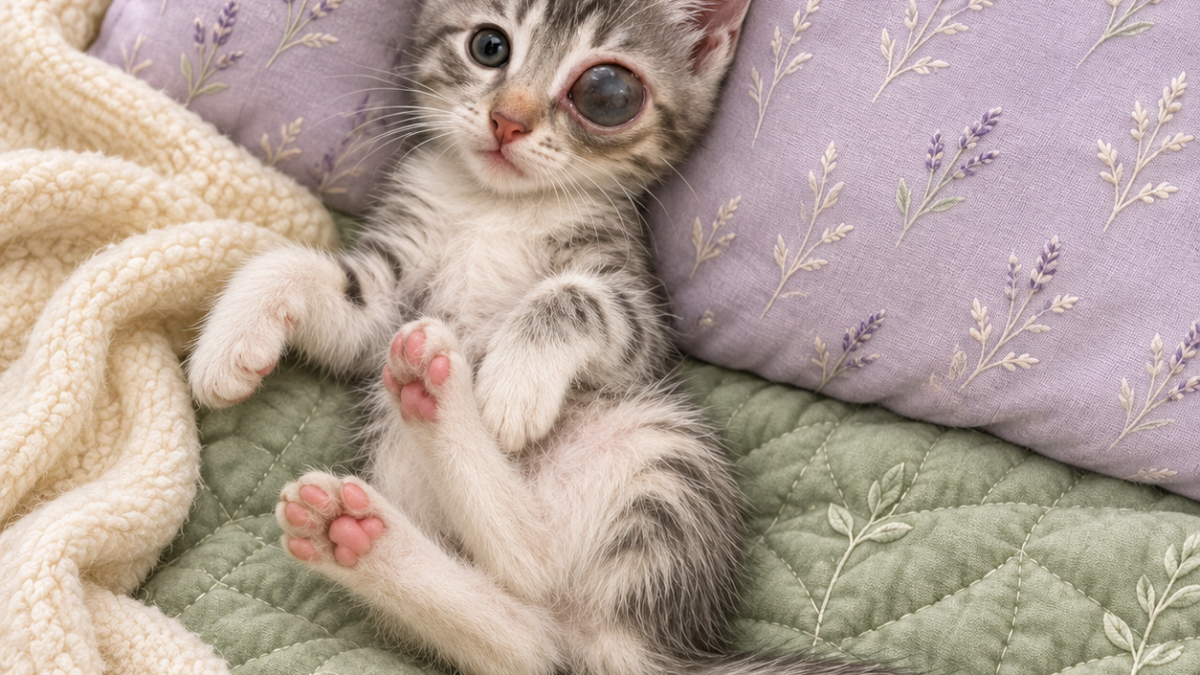
PART 2
That first night without Steve was one of the longest nights I can remember.
It made no sense.
I had known him for less than two hours.
I had spent more time driving him to the hospital than actually holding him.
Yet when I went home and walked through my front door, everything felt wrong.
The towel I had used to wrap him was still on the passenger seat.
A little patch of dirt remained where the carrier had rested.
I stood beside the car and stared at it.
Three hundred grams.
The number wouldn’t leave my head.
I went inside, put my phone on the table, then immediately picked it up again.
What if the hospital called while I was in another room?
What if Steve stopped breathing?
What if I had found him five minutes too late?
I tried making coffee.
I forgot to drink it.
I sat on the couch.
Two minutes later, I stood up again.
Finally, around midnight, I called the clinic.
“I know you said you’d call if anything changed.”
The technician’s voice was gentle.
“He’s still with us.”
I closed my eyes.
“Is he awake?”
“Off and on.”
“Is he eating?”
“Not on his own yet.”
“Is he in pain?”
“We’re managing his discomfort.”
I hesitated.
“Can you tell him I’m coming back?”
There was a small silence.
Then she said, “I can tell him.”
I laughed weakly.
“I know that sounds ridiculous.”
“It doesn’t.”
That kindness nearly made me cry.
“Thank you.”
I barely slept.
At six the next morning, my phone rang.
I grabbed it before the second ring.
“This is about Steve?”
“Yes.”
The veterinarian sounded calmer than the day before.
“He made it through the night.”
My knees nearly gave out.
“Is he okay?”
“I wouldn’t use that word yet. But he’s stable.”
Stable.
I had never loved a word so much.
“Can I see him?”
“Yes.”
I was at the hospital as soon as visiting hours allowed.
Steve was inside a heated enclosure.
A tiny IV line was taped to one of his legs.
His breathing still sounded rough.
His damaged eye was swollen.
But when I moved closer, his good eye opened.
“Hey, Steve.”
One ear twitched.
I smiled.
“You remember me?”
The veterinarian stood beside me.
“He’s slightly more responsive today.”
“That’s good, right?”
“Yes.”
I looked at Steve.
“You hear that?”
He blinked.
“Apparently you’re doing something right.”
The veterinarian explained that they were treating a viral infection and supporting his body while he fought dehydration, malnutrition, and respiratory symptoms.
Then she turned her attention to his eye.
“The pressure is significant.”
“What caused it?”
“We can’t know for certain. Severe infection can cause complications. Trauma may also have played a role.”
I looked at the raw areas on his body.
“And these?”
“They resemble burns or chemical irritation, but again, without knowing what happened before he arrived, I don’t want to give you an answer I can’t support.”
I appreciated her caution.
But the uncertainty hurt.
Because every unanswered question created a worse possibility in my mind.
Had Steve crawled somewhere dangerous?
Had another animal attacked him?
Had someone hurt him?
Had someone deliberately left him there?
He was only around four weeks old.
At that age, he should have been beside his mother.
He should have been sleeping against siblings.
He should have been learning to eat.
Instead, he had been alone in a field calling until his voice almost disappeared.
“How long do you think he was out there?”
The veterinarian shook her head.
“There’s no way to know.”
“Could it have been overnight?”
“Yes.”
“Longer?”
“Possibly.”
I looked at Steve.
He had fallen asleep again.
That question stayed with me.
How long?
How many times had he cried before somebody finally heard him?
How many cars had passed?
How many people had driven that road without realizing a tiny life was disappearing a few yards away?
For the next five days, Steve remained in intensive care.
My schedule began revolving around hospital updates.
Every morning I called.
Every afternoon I visited.
Every night I wondered whether he would still be there the next day.
On the second day, he accepted food.
Not much.
But enough for the technician to smile when she told me.
“He ate?”
“A little.”
“By himself?”
“With encouragement.”
I practically celebrated.
When I reached his enclosure, I whispered, “That’s my boy.”
The words surprised me.
My boy.
At some point, without noticing it, I had stopped thinking of Steve as a kitten I had found.
He had become mine to worry about.
Mine to fight for.
On the third day, he tried to stand.
His legs shook.
He made it for perhaps two seconds before collapsing back onto the bedding.
My heart jumped anyway.
“Did you see that?”
The technician laughed.
“We saw.”
“He stood.”
“For a moment.”
“That’s progress.”
“It is.”
Steve looked exhausted by the effort.
But I saw something different in him that day.
Fight.
When I first found him, his body seemed to have surrendered.
Now there was frustration in him.
He didn’t like being handled.
He didn’t like medicine.
He especially didn’t like having his face cleaned.
And I loved every complaint.
“Go ahead,” I told him when he squeaked angrily at a technician. “Be difficult.”
The technician smiled.
“Most people don’t encourage that.”
“Most people didn’t find him too weak to complain.”
By the fifth day, Steve was stable enough to leave intensive care.
That should have felt like the end of a nightmare.
Instead, it became the beginning of a different fight.
His eye still wasn’t improving.
The veterinarian showed me the examination results.
“We have reduced some inflammation, but the pressure is still high.”
“What happens now?”
“We continue medication and monitor him very closely.”
“Can it still be saved?”
She hesitated.
“There is a possibility.”
Possibility.
I clung to it.
“If there’s a chance, I want to try.”
“I understand.”
I looked at Steve.
He was sitting awkwardly on the examination table, wrapped in a towel.
“If it were your kitten?”
She knew exactly what I was asking.
“I would get an ophthalmic evaluation before making a final decision.”
So I did.
I took Steve for a second opinion.
The next veterinarian examined his eye carefully.
He used equipment that looked enormous beside Steve’s tiny face.
I stood there holding my breath.
Finally, he leaned back.
“There is significant damage.”
My heart sank.
“But?”
He looked at me.
“There is enough uncertainty that I think a medication trial is reasonable.”
I almost grabbed him.
“You think we can save the eye?”
“I think we can try.”
“What do we need to do?”
He listed medications.
Drops.
Ointments.
Injections.
Follow-up visits.
Monitoring.
It sounded overwhelming.
I didn’t care.
“Tell me when to start.”
Steve came home with me shortly afterward.
I prepared an entire room.
Soft blankets.
A heating pad on a safe setting.
Food.
Water.
A litter box with low sides.
I even bought a tiny stuffed animal because I couldn’t stop thinking about the fact that he should still have had siblings beside him.
When I opened his carrier, Steve didn’t move.
“It’s okay.”
I sat on the floor.
“No one’s going to make you come out.”
Five minutes passed.
Then ten.
Eventually his nose appeared.
He sniffed.
I slid a small bowl of food closer.
That changed everything.
Hunger defeated fear.
Steve crawled out.
He ate as though the food might disappear if he looked away.
I felt my throat tighten.
“Slow down.”
He ignored me.
“There’s more.”
He kept eating.
“You don’t have to fight for it.”
Of course he couldn’t understand the words.
But I wanted to say them anyway.
There will be more.
You will not go hungry tonight.
You will not wake up alone in wet grass.
When Steve finally finished, he sat beside the bowl looking exhausted.
I reached toward him.
He flinched.
I stopped.
“Okay.”
I pulled my hand back.
“You decide.”
A few minutes later, he crawled toward my leg.
Slowly.
Carefully.
Then curled against my ankle.
I didn’t move.
My foot went numb.
I didn’t care.
That was Steve’s first night home.
And it wasn’t peaceful.
At two in the morning, he woke crying.
I jumped up.
“What happened?”
He was congested and struggling to breathe comfortably.
I cleaned his nose the way the veterinarian had shown me.
He fought me.
“There it is.”
He squeaked angrily.
“That attitude.”
He pushed against my thumb with one tiny paw.
“Good.”
When his breathing eased, I wrapped him in a towel and held him against my chest.
His body relaxed.
A minute later, I felt it.
Purring.
Very faint.
Almost impossible to hear.
But it was there.
I sat in the dark with tears running down my face.
The kitten I had found crying for help was now purring in my arms.
The next two weeks became a blur of medication schedules.
Steve had to go back to the clinic every day for injections.
Every single day.
I became familiar with the receptionists.
The technicians.
The parking spaces.
The exact amount of time it took to get there when traffic was light.
At home, there were roughly five different eye medications involved in his daily care.
Some had to be given several times.
Others had to be spaced apart.
I wrote everything on a large sheet of paper and taped it to the wall.
7:00 a.m.—Medication.
8:00 a.m.—Medication.
Later—another.
Then another.
Then another.
My phone was full of alarms.
Steve quickly learned what each bottle meant.
The first few days, he simply tolerated me.
By the end of the first week, he had developed opinions.
Strong opinions.
I would pick up an eye-drop bottle.
His ears would flatten.
“Don’t.”
He backed away.
“Steve.”
He stared.
“We have to.”
He disappeared beneath a blanket.
I lifted the edge.
He moved deeper.
“Really?”
Nothing.
“You weigh less than a loaf of bread. How are you winning this?”
A tiny growl came from beneath the blanket.
I laughed.
Then immediately covered my mouth.
Because that sound meant something.
Steve felt strong enough to be angry.
I gave him the medication.
He yelled at me.
“That’s fine.”
He yelled again.
“Keep yelling.”
His voice was stronger now.
The contrast hit me every time.
In the field, his cries had been fading.
Now the entire house knew when Steve was unhappy.
His appetite grew too.
At first, meals were carefully measured because his stomach had to adjust.
Soon, Steve considered every portion an insult.
He would finish eating and stare at me.
“No.”
Meow.
“You ate.”
Meow.
“You just ate.”
Louder meow.
I started laughing.
“Where was this voice two weeks ago?”
Steve walked directly into the empty bowl and stood there.
“You think that makes your point stronger?”
Apparently he did.
His personality emerged day by day.
Steve was stubborn.
Curious.
Food-obsessed.
Fearless in situations where fear would have been useful.
And terrified of objects that made absolutely no sense.
Vacuum cleaner?
Terrifying.
Paper bag?
Terrifying for three minutes, then excellent.
A small ball?
Suspicious.
My sock?
Mortal enemy.
The first time I saw him play, I cried.
I rolled a soft ball across the floor.
Steve watched it.
The ball stopped.
He looked at me.
I rolled it again.
He raised one paw.
Tap.
The ball moved.
Steve jumped backward.
I laughed.
He stared at it.
Then pounced.
For a few seconds, he wasn’t a sick kitten.
He wasn’t a medical case.
He wasn’t the abandoned baby from the grass.
He was just a kitten discovering that objects could move when he hit them.
That tiny moment felt enormous.
But every happy moment came with a shadow.
His eye.
Some mornings, I thought it looked better.
The swelling seemed smaller.
He seemed more comfortable.
I would allow myself to hope.
Then we’d go to the clinic.
The pressure would still be high.
Or the inflammation would return.
Or the veterinarian would look at the eye longer than usual.
One afternoon, after nearly three weeks of treatment, she finally said, “We need to talk.”
I hated those words.
“What happened?”
“The response isn’t what we hoped.”
I looked down at Steve.
He was trying to chew the edge of the towel.
“But we’re not done.”
“No.”
“So we keep going.”
“For now.”
“For now?”
She sat across from me.
“We need to separate what we want from what Steve needs.”
“I want him to keep his eye.”
“I know.”
“Isn’t that what he needs?”
“Not if saving it means keeping him in pain.”
I felt defensive immediately.
“He doesn’t look like he’s in pain.”
“Cats can hide pain extremely well.”
I hated hearing that.
She continued gently.
“We can continue medication a little longer because he’s stable. But if the eye doesn’t respond, removal may be the kindest option.”
I stared at her.
Removal.
The word sounded brutal.
“He’s barely a month old.”
“I know.”
“He’s already gone through everything else.”
“I know.”
“He should get to keep something.”
The veterinarian’s expression softened.
“This isn’t punishment.”
“It feels like it.”
“For you, maybe.”
That hurt because she was right.
Steve didn’t care about appearances.
He didn’t care whether people thought one eye made him look different.
He only cared about whether he felt safe and comfortable.
Still, I wasn’t ready.
“Can we give the medication more time?”
“Yes.”
So we did.
Every dose.
Every injection.
Every appointment.
Every chance.
And while we fought for Steve’s eye, another question began bothering me more and more.
Where had he come from?
I posted in local rescue groups.
Not a dramatic post.
Just the facts.
Tiny kitten found near the old service road.
Approximately four weeks old.
No mother nearby.
If anyone had information about a litter or a stray mother cat in the area, please contact the rescue.
Several people responded.
Most messages led nowhere.
Someone had seen a gray cat miles away.
Someone else knew of kittens behind a grocery store.
None matched.
Then one evening, I received a message from a man named Daniel who worked at a storage yard near the road.
“Are you the person who found the injured kitten?”
“Yes.”
“Where exactly?”
I described the location.
There was a pause before his next message.
“Our cameras face part of that road.”
I sat upright.
“What kind of cameras?”
“Security cameras. They record twenty-four hours.”
My heart started pounding.
“Would they show the shoulder?”
“Part of it.”
“When could I come?”
Daniel met me the next morning.
A rescue volunteer named Kelly came with me.
The storage yard was farther from Steve’s location than I expected.
Daniel led us into a small office.
“I don’t want you getting excited,” he warned.
“The camera isn’t pointed directly at the field.”
“Anything helps.”
He pulled up the footage.
We knew approximately when Steve had been discovered.
So we worked backward.
Cars.
Trucks.
Empty road.
More cars.
At one point, a dog crossed.
Nothing.
An hour earlier.
Nothing.
Another hour.
Then Daniel stopped.
“Wait.”
He rewound.
A vehicle slowed near the shoulder.
“That’s close to where you found him,” Kelly whispered.
“Play it.”
Daniel did.
The vehicle stopped.
A person got out.
The footage was grainy because of the distance.
We couldn’t see a face.
But the person was carrying something.
A box.
Or perhaps a bag.
They walked toward the tall grass.
For several seconds, they disappeared from view.
Then they returned.
Empty-handed.
The vehicle pulled away.
Nobody spoke.
My hands had gone cold.
“Again.”
Daniel replayed it.
Vehicle stops.
Person gets out carrying something.
Person walks toward grass.
Person comes back without it.
Vehicle leaves.
Kelly touched my arm.
“We can’t assume.”
I knew.
It could have been garbage.
It could have been tools.
It could have had nothing to do with Steve.
But my stomach was twisting.
“What time was that?”
Daniel checked.
Approximately several hours before I found Steve.
“Can you make a copy?”
“Yes.”
We gave the footage to the appropriate local authorities along with Steve’s veterinary documentation.
And then came the hardest part.
Waiting.
There was no instant arrest.
No dramatic confrontation.
No officer knocking on my door the next morning announcing that the mystery had been solved.
Real investigations are slower than stories.
Meanwhile, Steve didn’t have time to wait.
His eye was getting worse.
About one month after I found him, I carried him into another appointment.
By then he had gained weight.
His fur was cleaner.
His congestion had improved dramatically.
The raw patches on his skin were healing.
If you looked only at the rest of his body, you would have thought we were winning.
Then the veterinarian examined his eye.
She checked the pressure.
She checked it again.
She became quiet.
My stomach dropped.
“No.”
She looked at me.
“I’m sorry.”
“No.”
“The eye isn’t viable.”
“We can change medication.”
“We’ve tried the appropriate options.”
“The specialist said there was a chance.”
“There was.”
I hated the past tense.
“There was.”
“Yes.”
Steve looked up at me with his good eye.
He had no idea what we were discussing.
“What if we wait?”
The veterinarian spoke carefully.
“Waiting now would be for us, not for Steve.”
I looked away.
“What happens if we don’t remove it?”
“He may continue experiencing pain. Pressure can worsen. Infection and other complications are possible.”
“And if we remove it?”
“He should be much more comfortable after recovery.”
I touched Steve’s head.
He immediately pushed against my fingers.
I whispered, “I promised you we’d try.”
The veterinarian said softly, “You did try.”
I swallowed hard.
“I feel like I’m failing him.”
“You are making the decision that stops his pain.”
That was when I understood the difference.
I had been trying to save Steve’s eye because I believed saving every part of him meant I had saved him completely.
But Steve didn’t need me to preserve everything.
He needed me to protect him.
Even when protecting him meant letting something go.
I nodded.
“Do it.”
We scheduled the surgery.
The night before, Steve was unusually playful.
He chased a toy across the floor.
He attacked the cord of my sweatshirt.
He climbed onto my lap, bit my sleeve, then fell asleep against my stomach.
I stared at his face.
“I wish I could explain tomorrow.”
He purred.
“You’re going to wake up and something will be different.”
He stretched one paw across me.
“But hopefully it won’t hurt anymore.”
I barely slept.
The next morning, I brought him to the hospital.
The technician reached for the carrier.
I couldn’t let go immediately.
“Just one second.”
I opened the door and touched Steve’s forehead.
“You come back.”
He tried to bite my finger.
I laughed through tears.
“That’s not an answer.”
He bit again.
“Fine. I’ll take that as yes.”
The technician smiled.
“He has a lot more energy than when he first arrived.”
“Too much sometimes.”
“That’s a good problem.”
I handed him over.
Watching the carrier disappear through those doors felt exactly like the first day.
I went home.
Sat down.
Stood up.
Walked to the kitchen.
Checked my phone.
Walked back.
Checked my phone again.
I told myself surgery took time.
Then I imagined every possible complication.
I tried turning on the television.
I couldn’t follow anything.
Finally, the phone rang.
I answered before I consciously realized I had moved.
“Steve?”
“He’s out of surgery.”
My mouth went dry.
“And?”
“He did very well.”
I closed my eyes.
“He’s alive?”
“Yes.”
“He’s awake?”
“Starting to wake up.”
I sat down on the floor.
I didn’t care that there was a chair two feet away.
The relief simply took my legs out from under me.
When I saw Steve later, half his face was shaved.
The damaged eye was gone.
There were stitches where it had been.
For one terrible second, grief hit me.
Not because he looked ugly.
Steve could never have looked ugly to me.
I grieved for the tiny kitten who should never have suffered enough to lose an eye before he had even properly started living.
Then Steve heard my voice.
His remaining eye opened.
“Hey.”
He tried to lift his head.
“Don’t move.”
He tried again.
The technician steadied him.
“He’s still groggy.”
I put my hand beside his paw.
Steve rested his toes against my finger.
And suddenly I didn’t see what was missing.
I saw what remained.
Steve.
Alive.
Warm.
Safe.
The eye was gone.
The pain causing him so much trouble was finally gone with it.
“You did it.”
His paw moved.
“You stubborn little man.”
The first few days after surgery were difficult.
Steve slept frequently.
He needed pain medication.
He wore a recovery collar that he hated with a passion I had not known such a small animal could possess.
The first time I put it on, he stood completely still.
Then slowly turned toward me.
The look in his one visible eye was pure betrayal.
“I know.”
He stared.
“Don’t look at me like that.”
He continued staring.
“This is the vet’s fault.”
He didn’t believe me.
Within twenty-four hours, he had figured out how to use the edge of the collar as a weapon.
If I walked too close, he rammed it into my leg.
If I picked him up, he hit me in the chin.
If his food bowl was too far away, he shoved the collar through the dish and scattered food everywhere.
“You’re doing this on purpose.”
He looked innocent.
“I’ve met you.”
He pushed half the food onto the floor.
“Definitely on purpose.”
His recovery was faster than I expected.
The swelling began decreasing.
His appetite stayed strong.
He stopped pawing at his face.
And something else happened.
Steve seemed happier.
I hadn’t realized how much discomfort he had been carrying until it was gone.
He played longer.
He slept more deeply.
He wanted attention.
He began following me around the house.
Sometimes he sat outside the bathroom door crying until I came out.
“You know I’m still in the house.”
Meow.
“I didn’t abandon you.”
Meow.
“I was gone for two minutes.”
He climbed my leg.
Apparently two minutes was unacceptable.
Then, roughly two weeks after Steve’s surgery, I got a call from the investigator handling the roadside footage.
“We identified the vehicle.”
I stopped moving.
“What?”
“The vehicle in the security video.”
My stomach tightened.
“Are you sure?”
“We obtained footage from another camera farther down the road. The plate was clearer.”
“Who owns it?”
He gave me only the information he was allowed to provide at that stage.
The vehicle belonged to a man who lived several miles from the location where Steve had been found.
“Did you talk to him?”
“Yes.”
“And?”
“He initially said he hadn’t been on that road.”
“Initially?”
“When shown additional evidence, his account changed.”
I sat down.
“What did he say?”
The investigator was careful with his words.
“He said there had been stray cats around his property. According to him, one kitten appeared sick, and he decided to move it away.”
My hand tightened around the phone.
“Move it away?”
“That is how he described it.”
“He left a four-week-old kitten in grass beside a road.”
“I understand.”
“He weighed three hundred grams.”
“I know.”
“He could barely stand.”
“I’ve reviewed the veterinary reports.”
“He lost an eye.”
“I know.”
I was shaking.
The phrase move it away made me furious.
It sanitized everything.
Move it away sounded like relocating a chair.
Steve wasn’t an object.
He had been alive.
Hungry.
Sick.
Terrified.
He had cried until he barely had a voice.
“Did he know Steve was sick?”
“Based on his own statement, yes.”
I closed my eyes.
That was worse.
If he had believed Steve was healthy, perhaps someone could argue he made a foolish decision.
But he had allegedly recognized that the kitten was sick.
And his answer had been to remove him.
“Were there others?”
“We’re trying to determine that.”
My stomach dropped.
“What do you mean?”
“If there was a litter, there may be other kittens.”
I was already standing.
“Where?”
“I can’t authorize you to enter private property.”
“I’m not asking to enter illegally.”
“Good.”
“I work with rescue volunteers.”
“I understand.”
“Can we search nearby public areas?”
“Yes, but coordinate with the rescue and don’t confront anyone.”
“I won’t.”
I meant it.
Mostly because finding other kittens mattered more than satisfying my anger.
Kelly and two other rescue volunteers joined me.
We searched areas near the property where stray cats had reportedly been seen.
We checked drainage pipes.
Brush.
Abandoned equipment.
Wood piles.
Behind sheds where we had permission.
We placed food.
We listened.
For hours, nothing.
Every tiny sound made me stop.
I kept thinking about Steve’s cry.
What if another kitten was somewhere nearby making the same sound?
Near sunset, Kelly raised a hand.
“Wait.”
Everyone froze.
A faint noise came from behind a stack of old pallets.
We moved slowly.
“There.”
Two small eyes reflected beneath the wood.
A kitten.
Then another.
My heart jumped into my throat.
“Easy.”
The kittens were frightened but mobile.
Nothing like Steve had been.
They hissed when we approached.
I nearly laughed with relief.
“That’s right. Be angry.”
We used humane traps and food.
The first kitten went in quickly.
The second took much longer.
By dark, both were safe.
But there was no mother.
We returned the next day.
And the next.
Finally, near dawn, a thin adult female cat appeared.
She hovered at the edge of the property.
She refused to approach while we were there.
So we set a humane trap and waited from a distance.
Hours later, it closed.
When Kelly called me, I was sitting beside Steve on the couch.
“We got her.”
I covered my mouth.
“The mother?”
“We think so. Her condition and behavior fit.”
I looked down at Steve.
He was sleeping.
“You had a mom.”
My voice broke.
Steve opened his eye.
“We found her.”
He stretched.
His paw landed on my wrist.
“And two little troublemakers who might be your siblings.”
He began purring.
I cried.
It wasn’t only sadness.
For weeks, Steve’s past had been a blank wall.
Now there were pieces.
He hadn’t simply appeared in that field.
He had belonged somewhere.
He had a mother.
He likely had littermates.
And whatever choices humans had made around them, the rest of the family was now safe.
The mother cat went into rescue care.
She was thin and wary, but not critically ill.
The kittens were checked by a veterinarian.
They needed routine treatment and better nutrition, but their condition was nowhere near Steve’s.
The rescue decided to name them Sam and Sophie.
When I showed Steve a photograph on my phone, he tried to bite the screen.
“Family reunion went well.”
He attacked the phone again.
“Very emotional.”
Meanwhile, the case continued.
I wanted consequences immediately.
Instead, I learned how slowly accountability can move.
There were statements.
Video reviews.
Veterinary records.
Interviews.
Questions about ownership.
Questions about intent.
Questions about local animal-welfare laws.
At one point I became so frustrated that I told Kelly, “By the time anything happens, Steve will be old.”
She laughed.
“He’s barely a few months.”
“You know what I mean.”
“I do.”
“It shouldn’t be this complicated.”
“No.”
“He was left there.”
“Yes.”
“He almost died.”
“Yes.”
“And we have video.”
“Yes.”
“So why are we waiting?”
“Because if you want consequences to stick, evidence matters.”
I knew she was right.
I still hated waiting.
I imagined confronting the man myself.
Not hurting him.
Just standing in front of him with Steve in my arms.
I wanted to ask one question.
Did you hear him cry?
If he had heard Steve, how could he still drive away?
If he hadn’t heard him, why didn’t he check?
I wanted him to see the scar where Steve’s eye had been.
I wanted to show him the medication schedule.
The injections.
The hospital bill.
The intensive-care report.
The photograph of Steve at three hundred grams.
But investigators repeatedly told me the same thing.
“Do not contact him.”
So I didn’t.
The closest I came to revenge was allowing the system to collect every piece of evidence I could provide.
And as weeks passed, something strange happened.
My anger became less important.
Not because I forgave what happened.
I didn’t.
But Steve was becoming bigger than the worst thing done to him.
His surgical wound healed beautifully.
The stitches came out.
His fur grew back.
At first, the missing eye drew my attention every time I looked at him.
Then, one day, it didn’t.
I saw Steve.
Not “Steve, the one-eyed kitten.”
Just Steve.
He adapted so quickly that sometimes I forgot he only had one eye.
He learned the layout of the house.
He learned to judge distances.
He learned which surfaces he could jump onto.
Unfortunately, he also learned which surfaces I did not want him jumping onto.
One morning, I walked into the kitchen and found him on the counter.
“Steve.”
He froze.
“How did you get up there?”
He looked away.
“Get down.”
Nothing.
“Steve.”
He sat.
“You’re not making this better.”
Then he pushed a spoon off the counter.
It hit the floor.
He looked at me.
I stared back.
“Was that necessary?”
Steve pushed another object.
“Don’t.”
A bottle cap fell.
“You are testing me.”
He began purring.
I picked him up.
“You survived intensive care for this?”
He rubbed his face against my chin.
“Yes, I know. Very charming.”
He had become incredibly affectionate.
At night, he slept beside me.
Not near my feet.
Not politely beside the pillow.
On me whenever possible.
Chest.
Shoulder.
Neck.
Once I woke because breathing had become strangely difficult.
Steve was sleeping across my face.
I lifted him.
“Are you trying to finish what the field started?”
He purred.
“You’re unbelievable.”
I placed him beside me.
Three minutes later, he climbed back.
He also became obsessed with warm laundry.
The first time I emptied the dryer, Steve appeared from nowhere.
He climbed into the basket before I had removed half the clothes.
“Absolutely not.”
He curled into the towels.
“I need those.”
He closed his eye.
“Steve.”
Purring.
“You are not asleep.”
More purring.
I eventually carried the entire basket into the living room and folded clothes around him.
That became routine.
Every warm basket belonged to Steve until Steve decided otherwise.
His appetite remained legendary.
The refrigerator door could open from three rooms away and Steve would appear.
I don’t know how.
He could be asleep.
Deeply asleep.
I would open the refrigerator.
Suddenly—
Meow.
“You were unconscious.”
Meow.
“This isn’t even your food.”
Meow.
“It’s lettuce.”
He stared.
“You don’t eat lettuce.”
He continued staring.
I showed it to him.
He sniffed.
Then looked offended.
“Exactly.”
I started measuring Steve’s recovery through moments like those.
Not medical numbers.
Not pressure readings.
Not medication charts.
Normal annoyances.
A knocked-over cup.
A stolen sock.
A midnight sprint down the hallway.
A kitten yelling because dinner was two minutes late.
Every ordinary inconvenience was proof that he had survived long enough to become inconvenient.
And I loved him for it.
Steve’s mother recovered too.
She never became a particularly social cat.
Humans had apparently given her enough reasons to be cautious.
But after being spayed and receiving medical care, she was placed in a safe environment where she could live with minimal pressure from people.
Sam and Sophie were different.
They learned quickly that humans came with food.
They became playful.
Then affectionate.
Eventually, both found homes.
Kelly sent me photographs.
Sophie sleeping in a child’s bed.
Sam sitting inside a cardboard box three times too small for him.
I showed Steve.
“Look.”
Steve attacked the corner of my phone case.
“Your brother is doing well.”
Bite.
“Your sister too.”
Bite.
“You are terrible at family updates.”
Several months after I found Steve, the investigator called again.
This time, his voice sounded different.
“The case has moved forward.”
I stood up.
“What does that mean?”
He explained that the evidence had been reviewed and that the responsible person was facing consequences under the applicable animal-welfare process.
There could be financial penalties.
There were restrictions and conditions connected to animal ownership being considered as well.
The exact process wasn’t dramatic.
But it was real.
I leaned against the wall.
“So that’s it?”
“It means the matter isn’t being ignored.”
I looked across the room.
Steve was wrestling with a cardboard tube.
He got his head stuck.
Backed up.
Fell over.
Then immediately attacked it again.
“Good.”
That was all I could say.
After the call ended, I expected to feel victorious.
I expected some enormous rush.
Justice.
Revenge.
Closure.
Instead, I simply watched Steve.
He had gotten free of the tube and was now biting it from the side.
I walked over.
“Hey.”
He looked up.
“The person who left you can’t pretend you didn’t matter.”
Steve blinked.
I sat on the floor.
“There are consequences.”
He climbed onto my knee.
“And I thought that would make me feel better.”
He began kneading my jeans.
“It does.”
Purring.
“But not as much as this.”
I scratched beneath his chin.
For months, I had imagined justice as punishment.
Then I realized punishment was only one part of it.
Justice was also Sam and Sophie being alive.
Justice was their mother being safe.
Justice was veterinary records documenting exactly what Steve had endured.
Justice was people taking his suffering seriously.
Justice was the fact that Steve was no longer anonymous.
No one could reduce him to “some sick stray kitten.”
He had a name.
A medical history.
A home.
People who cared whether he lived.
The person who had left him could face consequences.
But he couldn’t undo Steve’s future.
And that became far more satisfying than any confrontation I had imagined.
A few weeks later, Steve had what I considered his most important medical appointment.
His final major follow-up.
I carried him into the same clinic where he had once arrived barely responsive.
The receptionist recognized him instantly.
“Is that Steve?”
“No. This is obviously an enormous dangerous tiger.”
Steve meowed.
She laughed.
“He got big.”
“He thinks so.”
One of the technicians came out.
She had been there on the day I first brought him in.
“Oh my goodness.”
Steve immediately reached toward her.
“You remember this little guy?”
“How could I forget?”
She rubbed his head.
“He was so tiny.”
“Three hundred grams.”
“I remember.”
The number still made me feel sick.
We placed Steve on the scale.
I watched the display change.
The difference from that first day was almost absurd.
“There we go,” the technician said.
“Much better.”
The veterinarian examined him.
Heart.
Lungs.
Weight.
Remaining eye.
Surgical site.
Teeth.
Coat.
Everything.
I waited.
“Well?”
She smiled.
“He’s doing extremely well.”
“Extremely?”
“Extremely.”
“You’re not just saying that because I ask too many questions?”
“No.”
“Can he live normally with one eye?”
“He already is.”
I looked at Steve.
He was trying to pull a paper towel from the dispenser.
“Fair point.”
“Cats adapt remarkably well.”
“Apparently.”
She looked at his remaining eye again.
“Routine monitoring is important, especially because protecting his remaining vision matters. But there’s no reason to expect that he can’t have a full, active life.”
A full life.
The phrase hit me harder than every medical term I had heard during his illness.
I remembered the first veterinarian saying, “We’re going to try.”
I remembered wondering whether he would survive the night.
Now someone was talking about his entire life.
I picked Steve up.
“Did you hear that?”
He tried to chew my jacket zipper.
“Full active life.”
Chew.
“Could you be emotional for five seconds?”
No.
On the drive home, Steve complained from the carrier.
Meow.
“We’re going home.”
Meow.
“You survived.”
Meow.
“You got a clean bill of health.”
Louder meow.
“What more do you want?”
He shoved one paw between the bars.
I put my finger against it.
His toes curled around me.
I stopped talking.
That tiny grip brought me straight back to the first day.
At the hospital, when he barely had enough strength to move, I had put my finger near his paw.
His toes had closed around it.
Barely.
Now his grip was strong.
I smiled.
“You really did it.”
When we got home, I opened the carrier.
Steve launched out like a missile.
He sprinted down the hall.
Turned too sharply.
Slid across the floor.
Hit a rug.
Recovered instantly.
Then ran back toward me.
“Full active life indeed.”
He raced away again.
I stood in the hallway laughing.
This was the kitten I had once been afraid to hold too tightly.
The kitten who had seemed fragile enough to disappear in my hands.
Now I worried about him breaking a lamp.
Progress.
Months passed.
Steve grew.
His scar became less noticeable beneath his fur.
People who met him sometimes reacted the same way.
“Oh, poor baby. He only has one eye.”
I understood the reaction.
Once, I would have said the same.
But after living with Steve, “poor baby” felt completely wrong.
Steve didn’t consider himself unfortunate.
Steve considered himself in charge.
He had rules.
Breakfast was expected at a specific time.
Doors should remain open unless Steve personally approved their closure.
Any cardboard box entering the home became his property.
My laptop belonged to him if he wanted to lie on it.
Paperwork existed for sitting purposes.
Warm laundry belonged to him.
My bed belonged to him.
Technically, I also belonged to him.
One morning, I was ten minutes late feeding him.
Steve jumped onto my bed and screamed directly into my face.
I opened my eye.
“No.”
MEOW.
“What time is it?”
MEOW.
I checked the clock.
“You are ten minutes early.”
Steve hit my cheek with one paw.
“Did you just slap me?”
Another paw.
“Unbelievable.”
I got up.
He ran toward the kitchen.
“You’re lucky you’re cute.”
He stopped and looked back.
“Yes, you know.”
By then, I had started forgetting the fear.
Not completely.
Certain things could still bring it back instantly.
A kitten crying outside.
A veterinary hospital smell.
The sound of congested breathing.
A patch of tall grass beside a road.
Whenever I passed the place where I found Steve, I slowed down.
Sometimes I stopped.
The first time I returned after his recovery, I stood at the edge of the grass.
Everything looked ordinary.
That disturbed me.
How could such an important place look so ordinary?
Cars passed.
Wind moved the grass.
Birds made noise somewhere in the distance.
I walked toward the spot as best I could remember.
The grass was different now.
Seasons had changed.
But I knew approximately where I had knelt.
I closed my eyes.
I could hear his cry in my memory.
Mew.
So small.
So tired.
“Not anymore,” I whispered.
There was nobody there to hear me.
I didn’t care.
“You don’t have to cry here anymore.”
I went home.
Steve was waiting at the door.
The second I stepped inside, he yelled.
“See?”
Another yell.
“I leave for twenty minutes and apparently civilization collapses.”
He rubbed against my ankles.
I picked him up.
He resisted for exactly two seconds before purring.
“I went back.”
His paw touched my shirt.
“To where I found you.”
He looked toward the kitchen.
“Very moving, Steve.”
He meowed.
“Yes, food. I understand.”
Life continued.
That was perhaps the greatest miracle.
Nothing dramatic happened every day.
Most days were boring.
And boring became beautiful.
Steve slept.
Ate.
Played.
Knocked things down.
Stared at birds.
Tried to catch shadows.
Screamed at closed doors.
Those ordinary days were everything the kitten in the grass had almost lost.
I sometimes thought about the person who had left him.
At first, those thoughts filled me with anger.
I imagined confronting him.
I imagined forcing him to see the result.
Over time, I stopped.
Not because what he did mattered less.
Because Steve mattered more.
I didn’t want Steve’s story to belong forever to the person who abandoned him.
That man didn’t deserve the largest role in it.
Steve’s story belonged to Steve.
And Steve’s life was becoming too full for one cruel decision to define it.
One winter afternoon, rain tapped against the windows.
Steve was asleep on a blanket beside the heater.
I took a picture.
Then another.
He looked completely peaceful.
His paws tucked under him.
His face relaxed.
One eye closed.
No tension.
No fear.
I sat nearby and stared.
The contrast struck me so hard that I had to look away.
The first time I held Steve, his body was cold.
Now he chose the warmest place in every room.
The first time I saw Steve, he was starving.
Now he complained because he preferred one flavor of food over another.
The first time Steve cried near me, his voice barely existed.
Now I could hear him yelling from the other end of the house.
The first time he tried to stand, his legs collapsed.
Now he could sprint fast enough to make me nervous.
The first time I touched him, he flinched.
Now he demanded affection.
The first time I looked at his damaged eye, I prayed we could save it.
We couldn’t.
But we saved Steve.
That distinction mattered.
For a long time, I had viewed the surgery as the moment we lost.
Eventually I realized it was another moment we won.
Losing the eye freed Steve from pain.
The operation didn’t make him less whole.
It gave the rest of him a better chance.
I wish I had understood that sooner.
Maybe I wouldn’t have felt so guilty.
One evening, Kelly visited.
She hadn’t seen Steve in several months.
The moment she walked through the door, Steve hid.
“Very friendly,” she said.
“He needs to assess whether you brought food.”
“I did.”
Steve’s head appeared from behind the couch.
Kelly laughed.
“I knew it.”
She shook a small bag of treats.
Steve emerged instantly.
“Traitor,” I said.
Within five minutes, he was sitting beside her.
“Look at him,” Kelly said.
“He looks amazing.”
“He knows.”
She ran her hand along his back.
“Hard to believe.”
“I know.”
“Do you ever think about what would have happened if you hadn’t stopped?”
I went quiet.
“I try not to.”
“That bad?”
“Yes.”
Because I knew the answer.
Steve probably would have died.
Maybe that day.
Maybe that night.
He had been too weak.
Too small.
Too sick.
There were no guarantees even after reaching the hospital.
Without treatment, there had been almost no chance.
I looked at him sitting comfortably beside Kelly.
“I used to ask myself that constantly.”
“What changed?”
“I realized it doesn’t matter.”
She raised an eyebrow.
“It matters philosophically. But it doesn’t change anything.”
Steve climbed into the treat bag.
Kelly pulled him out.
“He’s here.”
“Exactly.”
The world is full of terrible almosts.
Steve almost wasn’t heard.
He almost wasn’t found.
He almost didn’t survive intensive care.
His eye almost recovered.
He almost died before he had a name.
But “almost” wasn’t the ending.
Here was.
Months later, I received one final update about the legal case.
The person responsible faced the consequences available under the local process, and restrictions concerning future animal care were put in place.
I read the information twice.
Then I put my phone down.
I didn’t celebrate.
I didn’t smile.
I felt something quieter.
Finished.
Not healed.
Some things don’t need to be forgiven to stop controlling you.
But finished.
I walked into the living room.
Steve was inside a cardboard box.
Only his head was visible.
“It’s done.”
He blinked.
“The case.”
Nothing.
“You don’t care, do you?”
Steve began chewing the box.
I sat beside him.
“Maybe you’re smarter than me.”
He continued chewing.
“I spent months wanting that person punished.”
Chew.
“And you spent months learning how to open cabinets.”
Steve stopped.
He looked at the cabinet.
“Don’t.”
He climbed out of the box.
“Steve.”
He walked toward the kitchen.
“You heard me.”
He disappeared.
I followed.
He was sitting in front of the cabinet where his treats were stored.
“You absolutely understand English when convenient.”
Meow.
I laughed.
That became my closure.
Not the case result.
Not the punishment.
Not any imagined confrontation.
A healthy cat demanding treats in a warm kitchen.
That was the answer.
If revenge meant making the person who discarded Steve regret what they had done, I couldn’t control that.
Maybe he regretted it.
Maybe he didn’t.
But there was another kind of revenge.
Every good thing Steve experienced afterward contradicted the idea that he had been disposable.
His life became the response.
He had been left hungry.
Now he was fed.
He had been left cold.
Now he slept in blankets.
He had been left alone.
Now somebody noticed when he walked into a room.
He had cried with no guarantee anyone would answer.
Now I answered every ridiculous complaint.
Even at 4:00 a.m.
Especially at 4:00 a.m., apparently.
One night, I woke to Steve meowing beside the bed.
“What?”
Meow.
I checked his food.
Food.
Water.
Water.
Litter box clean.
“What is wrong?”
He walked toward the living room.
I followed.
He stopped beside the couch.
A toy mouse was trapped underneath.
I stared at him.
“You woke me up for this?”
Meow.
I got down on the floor and reached beneath the couch.
My fingers couldn’t reach.
I found a broom handle.
Steve watched.
“You understand this is absurd?”
He waited.
I pushed the toy out.
Steve grabbed it.
Then ran away.
No thank-you.
Nothing.
I stood there holding a broom at four in the morning.
“You had better be worth it.”
From the hallway:
Meow.
I started laughing.
“Yes.”
He absolutely was.
Steve’s one-eye status caused surprisingly few problems.
He occasionally misjudged something on that side if he was moving too quickly.
But even that became rare.
He adapted the way animals often do—without turning loss into identity.
Humans sometimes do the opposite.
We can stare at what is gone so long that we stop seeing what remains.
Steve never did that.
He woke up every morning interested in the day.
He didn’t know he was inspirational.
He didn’t know strangers might call him a survivor.
He didn’t know losing an eye was supposed to make him tragic.
He knew breakfast.
Sunlight.
Toys.
Warm blankets.
My voice.
Safety.
Maybe that was enough.
One year after I found him, I decided to mark the date.
Not with anything dramatic.
I bought Steve a new bed.
A ridiculously expensive one.
Soft fabric.
Raised sides.
Perfect size.
I placed it near the window.
“There.”
Steve sniffed it.
“This is for your rescue anniversary.”
He sniffed again.
“Very fancy.”
He walked away.
Ten minutes later, I found him sleeping inside the cardboard box the bed had come in.
I stared at him.
“You are unbelievable.”
He opened his eye.
“The bed cost forty dollars.”
Steve yawned.
“The box was free.”
He went back to sleep.
I left the box.
Weeks later, the bed remained untouched.
That was Steve.
I took a photograph of him curled in the cardboard.
Then I found the first photograph the hospital had sent me.
Tiny.
Sick.
Swollen eye.
IV taped to a leg that looked thinner than my finger.
I placed the images side by side.
For several minutes, I couldn’t speak.
The difference wasn’t merely physical.
In the first picture, Steve looked like something life had happened to.
In the second, he looked like he owned life.
I sent the comparison to the veterinary technician who had cared for him.
Her response came almost immediately.
“THAT’S STEVE?!”
I laughed.
“Yes.”
“You owe us a visit.”
So I brought him.
The staff gathered around.
Steve hated the attention at first.
Then somebody produced treats.
His objections disappeared.
One technician held up her phone.
“I still have a picture of him from day two.”
She showed me.
Steve was barely visible beneath a blanket.
“I remember thinking he was so fragile.”
Another technician said, “He screamed at me during his injection by day five.”
“That’s when I knew he would be okay,” I joked.
The original veterinarian came out.
She stopped when she saw him.
“Wow.”
“That’s exactly what everyone keeps saying.”
She touched his head.
“You gave us a scare, Steve.”
He sniffed her hand.
Then bit her pen.
She laughed.
“Some things never change.”
I looked around that clinic.
The place once represented fear.
Now it represented effort.
People had fought for Steve when he couldn’t fight for himself.
That mattered.
Rescue stories often focus on the moment somebody finds an animal.
But finding Steve had been only one moment.
Dozens of people carried him through the rest.
The stranger who heard him.
The clinic staff.
The second veterinarian who gave his eye a chance.
The people who administered injections.
The rescue volunteers.
Daniel, who checked the security footage.
Kelly, who searched for his family.
The people who fostered the other kittens.
The families who adopted them.
The people who investigated what happened.
No one person saved Steve.
A chain of people refused to look away.
That was what saved him.
As Steve grew older, his personality somehow grew larger too.
He developed an obsession with sitting in places that clearly did not fit him.
Tiny baskets.
Sinks.
Boxes.
Shelves.
One afternoon I found him inside a bowl on the dining table.
“What are you doing?”
He stared.
“You’re not soup.”
Nothing.
“You don’t fit.”
He settled deeper.
“Fine.”
I took a picture.
That picture became one of my favorites.
Because whenever someone saw it, they laughed.
Not cried.
There was a time every picture of Steve made people sad.
Eventually, the story changed.
People saw him and laughed.
That felt like another victory.
Steve wasn’t an object of pity.
He was ridiculous.
Demanding.
Funny.
Loving.
Infuriating.
Perfectly alive.
Occasionally, strangers would ask whether I wished we had removed the eye sooner.
I never knew how to answer.
Of course I wished Steve had suffered less.
But at the time, there had been a genuine chance medication could help.
We followed veterinary advice.
We sought another opinion.
We tried.
When the answer became clear, we acted.
Looking backward makes decisions seem simpler than they were.
Living through them is different.
When you are holding a tiny animal who trusts you, every choice feels enormous.
You wonder whether one more day might save something.
You wonder whether one more day might cause pain.
There is no perfect way to love something vulnerable.
You just make the best decision you can with the information you have.
Then you live with it.
Steve made that easier.
He never looked back.
So eventually, I stopped too.
Two years after I found him, I drove along the old service road again.
The tall grass had been cut.
For the first time, I could see the ground clearly.
I pulled over.
The area looked smaller than I remembered.
I walked toward the approximate spot.
There was nothing special there.
Dirt.
Grass.
A few weeds.
I stood silently.
Then my phone buzzed.
A message from home.
It was a picture from a friend who was watching Steve while I was out.
Steve was sitting on the kitchen counter beside a knocked-over container.
The caption read:
“Your criminal has struck again.”
I laughed out loud in the empty field.
The sound surprised me.
For years, I associated that place with a fading cry.
Now I was laughing.
I looked at the ground.
“Good.”
I said it aloud.
“This place doesn’t get to keep him.”
Because that was the truth.
The field was where I found Steve.
It wasn’t where Steve belonged.
His story didn’t live there anymore.
His story lived in my house.
In scratched furniture.
In fur on black clothing.
In chewed cardboard.
In veterinary records marked recovered.
In photographs of one-eyed chaos.
In the warm spot on my pillow that I was apparently allowed to borrow.
I drove home.
When I opened the door, Steve ran toward me.
Actually, he ran past me.
I looked behind.
My friend was holding a treat bag.
“Of course.”
Steve turned around after receiving one and finally acknowledged me.
“Thank you.”
He rubbed against my leg.
“I went to the field.”
He purred.
“I know. You don’t care.”
Purring.
“That’s okay.”
I picked him up.
“You don’t need to.”
As the years passed, I told Steve’s story less often.
Not because it mattered less.
Because it became harder to imagine him as that kitten.
He was so confident.
So loud.
So secure.
He assumed food would appear.
He assumed doors would open.
He assumed hands reaching toward him meant affection.
That last part mattered most.
The kitten in the grass had flinched when I touched him.
Adult Steve leaned into every hand he trusted.
Trust may have been his greatest recovery.
Bodies heal in visible ways.
Weight returns.
Wounds close.
Fur grows.
Scars fade.
Trust is quieter.
You notice it when an animal sleeps deeply.
When they expose their stomach without fear.
When they turn their back to you.
When they close their eye because they believe nothing bad will happen while they cannot see.
Steve slept like that every night.
Completely.
Sometimes upside down.
Sometimes with one paw over his face.
Sometimes stretched across the entire bed as though he paid the mortgage.
He had learned that sleep was safe.
I couldn’t give him back whatever happened before I found him.
But I could give him that.
One Christmas, I bought him a ridiculous red sweater.
This was a mistake.
Steve tolerated it for approximately six seconds.
I took one photograph.
Then he transformed into a furious tornado.
“Okay!”
I removed it.
He ran away.
“Never again.”
He hid beneath the couch.
“I said never again.”
One eye appeared from the darkness.
“You look adorable.”
The eye disappeared.
I laughed.
An hour later, he forgave me because I opened a can of food.
Steve had principles.
But they had limits.
Sometimes I wondered whether animals remember trauma the way humans do.
Did Steve remember the field?
Did he remember hunger?
Did he remember lying cold and unable to move?
Did he remember the hospital?
The injections?
The eye pain?
I hoped not.
But maybe some part of him did.
Maybe that was why he hated being alone.
Maybe that was why he followed me.
Maybe it was simply his personality.
I stopped trying to interpret everything through his past.
That felt important too.
A rescued animal deserves to become more than a collection of symptoms caused by trauma.
Steve was allowed to simply be Steve.
One afternoon, I sat on the floor opening mail.
Steve climbed onto my lap.
I continued reading.
He pushed his head under my hand.
“I’m busy.”
Head push.
“Steve.”
Push.
I scratched him.
He purred.
Then he rested one paw over my wrist.
I looked at it.
The first thing I had ever felt from Steve was a weak little paw curling around my finger.
Years later, he still did it.
Only now there was strength behind it.
I sometimes wondered whether that was why the gesture affected me so much.
It connected the two versions of him.
The kitten who might not survive the night.
And the cat who now demanded ownership of everything in my home.
I leaned down.
“You know you’re spoiled, right?”
Purr.
“Extremely spoiled.”
Purr.
“You have no shame.”
He closed his eye.
I smiled.
“Good.”
I never wanted Steve to feel grateful for being saved.
That may sound strange.
People sometimes say rescued animals seem grateful.
Maybe some are.
But Steve owed me nothing.
He hadn’t asked to be abandoned.
He hadn’t created the emergency.
Food and safety weren’t favors.
They were what he should have had from the beginning.
If he spent the rest of his life acting entitled to warmth, meals, and love, that was fine with me.
He should feel entitled to them.
Every animal should.
That realization changed how I viewed rescue.
At first, I thought I had given Steve a second chance.
Later, I realized he had barely received a first chance.
Four weeks old.
Three hundred grams.
Life had hardly begun.
The home he built afterward wasn’t a bonus.
It was the life he should have been allowed to have all along.
One night, a storm rolled through.
Thunder shook the windows.
Steve hated thunder.
He ran into my bedroom and climbed under the blanket.
I felt him press against my side.
“It’s okay.”
Another boom.
He pushed closer.
“I’ve got you.”
I rested my hand on his back.
His heart was fast.
Gradually, the purring started.
I lay there remembering the field.
Had it rained before I found him?
Had he spent a night outside in bad weather?
I didn’t know.
I never would.
But I knew where he was during this storm.
Beside me.
Warm.
Dry.
Safe.
Sometimes healing isn’t changing what happened.
It’s changing what happens next.
That night, Steve slept against me until morning.
When I woke, the storm was gone.
Steve was still there.
His paw rested on my chest.
I whispered, “We made it.”
He opened his eye.
Then screamed for breakfast.
I laughed.
“Of course.”
One of the strangest things about loving Steve was how quickly tragedy turned into comedy.
A story that began with me crying in a veterinary parking lot eventually became a story about a cat who learned to open cupboard doors.
He figured it out by watching me.
At first, I didn’t understand why cabinets were randomly open.
Then I caught him.
Steve hooked one paw beneath the edge.
Pulled.
The door opened.
He looked inside.
“Absolutely not.”
He froze.
I pointed.
“Out.”
Steve climbed farther inside.
“Steve.”
He disappeared behind a pot.
I stood there.
“You’re going to regret this when I install child locks.”
Two days later, I installed child locks.
Steve spent an entire afternoon testing them.
When he realized they worked, he sat in front of the cabinet and yelled at me.
“Consequences.”
Meow.
“You understand that word.”
Meow.
“Somebody has to teach you boundaries.”
He walked away.
Five minutes later, I heard something crash in another room.
Apparently boundaries had failed.
Years passed.
Steve remained healthy.
His remaining eye stayed strong.
Every checkup still made me nervous.
The veterinarian would examine it, and I would hold my breath.
“Looks good.”
Every time, relief.
One year, she laughed.
“You know he’s doing fine, right?”
“I know.”
“You look like we’re giving you bad news every appointment.”
“I have history.”
She nodded.
“Fair.”
Steve sat on the table.
He pushed a cotton ball onto the floor.
The veterinarian looked at him.
“He certainly doesn’t appear worried.”
“He delegates worrying to me.”
I think all rescue people understand that.
Once you’ve watched an animal almost die, a small part of you remains alert forever.
A skipped meal.
A strange sound.
An extra hour of sleep.
You notice.
You monitor.
You Google things you probably shouldn’t Google at midnight.
Steve grew accustomed to my overreaction.
If he coughed once, I stared.
He stared back.
“Are you okay?”
Silence.
“Do it again.”
Nothing.
“Was that a cough?”
Steve walked away.
“Very helpful.”
He never appreciated my medical investigations.
But he tolerated them.
Eventually.
Looking back, the most difficult part wasn’t Steve’s surgery.
It wasn’t the injections.
It wasn’t the medications.
It wasn’t even the investigation.
The hardest part was uncertainty.
Not knowing whether he would live.
Not knowing whether his eye would respond.
Not knowing how he ended up there.
Not knowing whether other kittens existed.
Not knowing whether anyone would be held accountable.
Humans hate uncertainty.
We want answers immediately.
Steve taught me to live one step at a time.
Today, eat.
Today, breathe.
Today, medicine.
Today, sleep.
Tomorrow could arrive later.
Maybe that was how he survived.
He didn’t know there were weeks of treatment ahead.
He only knew the hand holding him was warm.
He didn’t know surgery was coming.
He only knew someone put food in front of him.
He didn’t understand legal cases.
He knew cardboard boxes.
Perhaps that was wisdom.
On one of Steve’s later rescue anniversaries, Kelly sent me a message.
“Do you remember how tiny he was?”
I responded with a picture of Steve sprawled across an entire couch cushion.
“Barely.”
She sent laughing emojis.
Then another message.
“Sam and Sophie are doing great too.”
She sent photos.
They were fully grown.
Healthy.
Loved.
I looked at the three cats.
Different homes.
Different lives.
All connected to one litter that could have ended terribly.
I thought of their mother too.
Safe.
Fed.
No longer producing litter after litter outdoors.
The rescue had rippled outward.
Finding Steve had helped lead us to the rest.
That mattered.
Maybe one faint cry had saved more than one life.
I sat beside Steve.
“Your dramatic screaming finally accomplished something useful.”
He was asleep.
“Don’t let it go to your head.”
He opened his eye.
Then immediately yelled.
“Too late.”
Some people later asked me whether I would do it again.
Stop beside a road.
Spend weeks administering medication.
Take a kitten to daily injections.
Pay hospital bills.
Lose sleep.
Deal with surgery.
Work with investigators.
Of course.
I wouldn’t hesitate.
But that’s easy to say after knowing the ending.
At the time, there was no guarantee.
That’s the part people forget about rescue stories.
We love them once we know the animal survives.
But rescuers don’t know that when they begin.
You pick up the sick kitten without knowing whether you will lose him that night.
You approve the treatment without knowing whether it will work.
You fall in love before anyone promises you won’t have your heart broken.
Hope isn’t certainty.
It’s choosing to try anyway.
Steve’s life exists because a lot of people chose to try.
One evening, years after his rescue, Steve climbed onto the windowsill.
The sunset lit one side of his face.
His one eye reflected the orange light.
I took a picture.
When I looked at it later, something struck me.
The scar didn’t look tragic.
It looked like part of him.
Not beautiful because suffering is beautiful.
Suffering isn’t beautiful.
But survival had absorbed the scar.
It was simply one chapter written onto his face.
I posted the photograph privately for the rescue team.
Daniel commented, “Hard to believe that’s the same kitten from the footage.”
I replied, “It barely is.”
And I meant it.
The kitten left beside the road and the cat in the photograph shared the same body.
But everything else had changed.
Cold became warmth.
Hunger became plenty.
Fear became trust.
Silence became an extremely loud opinion about breakfast.
And abandonment became home.
That was the ending I wanted.
Not perfect.
Not magical.
Steve’s eye didn’t grow back.
The beginning didn’t disappear.
There was no way to make the first month of his life fair.
But happiness does not require the past to become fair.
It only requires the future to become better.
Steve’s did.
One night, much later, I was lying in bed reading when he climbed onto my chest.
“You’re heavy now.”
Purr.
“This was easier when you weighed three hundred grams.”
Purr.
“Do you know you once weighed three hundred grams?”
He kneaded my shirt.
“You were basically nothing.”
He settled down.
“And somehow you took over my entire house.”
His eye closed.
I put the book aside.
There was a time when I watched Steve sleep because I feared he might stop breathing.
Now I watched him sleep because the sight made me peaceful.
His breathing was slow.
Even.
Strong.
I rested my hand gently against his side.
Rise.
Fall.
Rise.
Fall.
I thought about that first question again.
How long had he been lying there?
I still didn’t know.
I never would.
But another question mattered more now.
How long did he have ahead of him?
Hopefully years.
Years of warm beds.
Sunlight.
Dinner complaints.
Veterinary checkups.
Toys under furniture.
Cardboard boxes.
Cabinets he wasn’t allowed to open.
People who loved him.
That was the answer to everything that came before.
Steve shifted and placed his paw over my hand.
I smiled.
Sometimes people talk about revenge as hurting the person who hurt you.
Steve taught me a different version.
His revenge was thriving.
His revenge was becoming so loved that abandonment became a tiny chapter in a much bigger life.
His revenge was waking up every morning in a house where someone noticed.
His revenge was growing from three hundred grams into a strong cat who could knock objects off tables simply because gravity interested him.
His revenge was that the decision to discard him failed.
Completely.
Whoever believed Steve wasn’t worth helping had been wrong.
Every single day afterward proved it.
Every heartbeat.
Every meal.
Every veterinary checkup.
Every purr.
Every ridiculous midnight complaint.
All evidence.
You were wrong about him.
He mattered.
The night grew quiet.
Steve’s purring slowed.
I thought about how different silence felt now.
The first silence had terrified me.
In the field, Steve would cry and then stop.
I would wait desperately for another sound because silence might mean he no longer had the strength.
Now silence meant sleep.
Comfort.
Safety.
There was no need to cry.
No need to call into empty grass.
No need to hope a stranger heard him.
Someone was already there.
I touched his paw.
“Good night, Steve.”
He squeezed my finger.
Not weakly.
Not barely.
Strong enough that I felt every tiny toe.
My eyes filled unexpectedly.
Years had passed, yet for one second I was back inside that veterinary hospital.
A tiny kitten.
A carrier.
One weak paw wrapped around one finger.
I had told him we would try.
We did.
We couldn’t save everything.
We couldn’t save his damaged eye.
We couldn’t save him from the suffering that had already happened.
We couldn’t erase the field.
But we saved the part that mattered most.
His tomorrow.
Then another tomorrow.
And another.
Until survival stopped being the story.
Living became the story.
Steve slept beneath my hand.
His body was warm.
The room was warm.
His food bowl was waiting for morning.
His toys were scattered across the floor.
His favorite cardboard box sat beside a perfectly good bed he refused to use.
Everything was ordinary.
And that ordinary life felt more miraculous than any dramatic ending I could have imagined.
The kitten whose cries were disappearing in the grass no longer had to beg the world to notice him.
He had a name.
He had a family.
He had a home.
And whenever Steve opened his one remaining eye in the morning, there was always someone there to say the words I wished I could have told him on the day he was abandoned:
“You’re safe now.”
“You matter.”
“And nobody is leaving you behind again.”
Steve would usually answer by screaming for breakfast.
And every single time, I smiled.
Because there was no sound in the world I was happier to hear.








