I Bought an Abandoned Hunting Lodge to Disappear Into the Woods—Then the HOA Wired My Property With Hidden Cameras
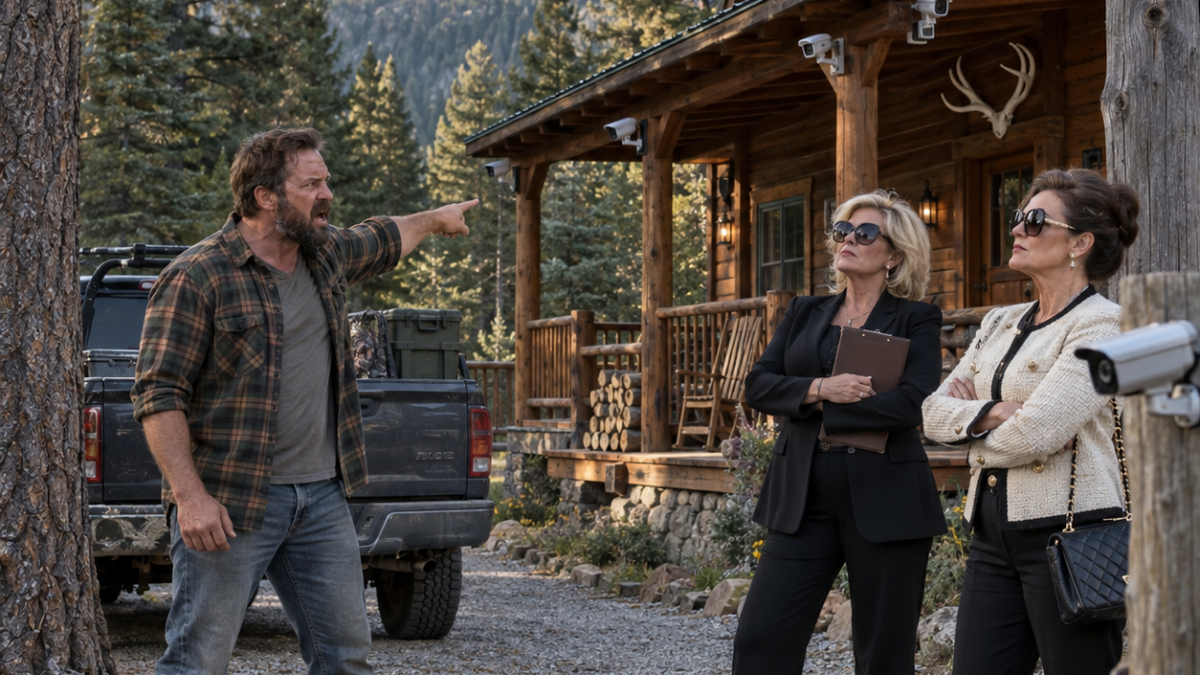
I had owned the abandoned hunting lodge for barely three months when I dug six inches into my own soil and found a professionally buried cable leading to a hidden camera aimed straight at the workshop where I spent most of my days alone.
When the HOA president arrived with two maintenance men and calmly informed me that the cameras were there “for community protection,” I handed her a copy of my deed proving my ten wooded acres had never belonged to her association—and she smiled as if that fact no longer mattered.
What unsettled me most wasn’t the camera I could see; it was the moment I followed the cable toward the pines and realized someone had spent serious time building a surveillance system on land they had no legal reason to enter.
My name is Jack Callahan.
I spent twenty-five years in the Army Signal Corps, most of them dealing with communications systems, secure networks, and equipment that was supposed to work when people’s lives depended on it.
When I retired, I wanted the opposite of that world.
Silence.
Trees.
A project that belonged to me.
The old lodge gave me all three.
It sat on ten neglected acres in North Carolina, surrounded by pines, kudzu, and enough rotten lumber to keep me busy for years. The stone fireplace was still solid. The hand-hewn beams were beautiful beneath decades of dust. The long gravel driveway disappeared into the woods before reaching the county road.
Most important, the title work was clear.
The property predated Whispering Pines Estates, the polished subdivision that had grown along my eastern boundary, and my deed explicitly stated that the lodge parcel was not subject to its homeowners association.
I paid cash.
For the first time in decades, no commanding officer, landlord, base housing office, or committee had anything to say about how I lived.
Then the letters started.
The first was taped to my front door.
**WELCOME TO WHISPERING PINES.**
It included reminders about approved exterior colors, trash cans, landscaping, and architectural review.
I tossed it into a drawer.
A week later came a fifty-dollar violation for “unapproved exterior renovation.”
I answered by certified mail with the relevant section of my deed.
The next week brought another fine.
Then another.
Primer color.
Construction materials.
My twenty-year-old Ford pickup.
Noise from power tools during the afternoon.
Each notice came from HOA president Karen Miller.
I kept replying with the same sentence:
“My property is not part of Whispering Pines Estates.”
Karen apparently considered repetition a challenge.
Then I found the camera.
It was mounted beneath the eave of my workshop, small enough to disappear in shadow, positioned so that anyone sitting at a monitor could watch my truck, my workshop door, and most of the gravel area where I unloaded supplies.
The cable disappeared into the soil.
I followed it.
That was when Karen’s white HOA van rolled onto the shoulder near my property.
She stepped out wearing a pastel-pink tracksuit and an expression that suggested I had inconvenienced her by discovering what she had installed.
Two maintenance men stayed near the van.
I held up the exposed cable.
“You want to explain this?”
Karen folded her arms.
“We installed security equipment for the benefit of the community.”
“On my building?”
“Your exterior activities affect the appearance and safety of adjacent homes.”
“My property isn’t in your HOA.”
“Everything visible from Whispering Pines is subject to community review.”
I actually laughed.
She didn’t.
“This camera is pointed at my private workshop.”
“It documents exterior compliance.”
“You trenched across fifty yards of my land.”
“Our architectural committee has broad authority.”
I took my deed from the folder I had brought outside.
“Show me where.”
She barely glanced at it.
“Military men always think paperwork solves everything.”
I looked at the two workers.
Neither met my eyes.
That told me something.
Karen pointed toward the lodge.
“You’ve already damaged HOA equipment by cutting the line.”
“I uncovered a cable installed on my land without permission.”
“You’ll be billed.”
“For your camera?”
“For vandalism.”
She turned toward the van.
I called after her.
“Karen.”
She stopped.
“If I find another camera on my land, I’m documenting it and calling the police.”
She looked over her shoulder.
“You should be careful about making threats.”
Then she left.
I spent the next four hours walking all ten acres.
At first I found nothing.
Then sunlight caught glass high in an oak tree.
A second camera.
Another was hidden inside a holly thicket facing my rear deck.
The fourth stopped me cold.
It was mounted near the far boundary.
But it wasn’t watching me.
Its lens pointed through the trees toward Bill and Mary Henderson’s backyard next door.
I stood beneath it for several seconds, staring through the branches.
Karen had told me the system existed because of my renovations.
Yet somebody had installed that camera long before I ever bought the lodge.
And suddenly I knew this had started long before I arrived.
PART 2
I left the fourth camera exactly where it was.
That surprised even me.
Twenty years earlier, I would have ripped every piece of hardware off every tree before sunset.
Age had taught me that anger destroys evidence faster than almost anything else.
So I photographed it instead.
Wide shot.
Location relative to my boundary marker.
Lens direction.
Cable route.
Mounting hardware.
Serial number where I could see it without touching anything.
Then I walked back to the lodge and made coffee.
It was nearly dark by then.
The old place looked different.
That bothered me more than the cameras.
When I bought the lodge, its isolation had felt protective. The woods were a curtain between me and the rest of the world. That evening, every gap between branches felt like a place where another lens could be hiding.
I stood at the workshop window with the lights off and stared toward Whispering Pines.
Beige houses glowed between the trees.
Porch lights.
Kitchen windows.
Ordinary suburban life.
Somewhere over there was Karen Miller.
Maybe she was eating dinner.
Maybe watching television.
Maybe looking at a screen that showed my empty workshop.
I shut the blinds.
Then immediately hated myself for doing it.
I had bought ten acres so I wouldn’t have to close blinds.
That night I slept badly.
At 1:14 a.m., a branch scraped the roof and woke me.
At 2:03, headlights turned onto the county road and my eyes opened again.
At 3:40, I gave up.
I sat at my kitchen table with the deed, survey, and every HOA letter arranged in front of me.
I made three lists.
What I knew.
What I suspected.
What I could prove.
That distinction mattered.
What I knew:
My deed excluded the property from Whispering Pines covenants.
Cameras had been physically installed on my land.
At least one faced the Henderson property.
Karen acknowledged the HOA installed “security equipment.”
Karen’s people had trenched cable through my soil.
What I suspected:
The cameras formed a larger network.
Karen was using them for enforcement.
Other residents might be under surveillance.
HOA money probably paid for the equipment.
What I could prove?
Not enough yet.
So the next morning I called an attorney.
His name was David Mercer.
I got his number through an old Army friend who had retired outside Raleigh.
David practiced civil litigation and represented small businesses, landowners, and the occasional homeowners association when boards got themselves into trouble.
That last part mattered.
I wanted someone who understood the machinery from both sides.
He answered his own phone.
“Mercer.”
“Jack Callahan.”
“Tom Hensley said you might call.”
“He warn you?”
“He said you were methodical.”
“That his polite way of saying difficult?”
“Usually.”
I explained the deed.
Fines.
Cameras.
Karen.
David interrupted only twice.
“Are the cameras physically on your property?”
“Yes.”
“Have you removed any?”
“One was disconnected while I traced the cable. I secured the device. Three others remain where I found them.”
“Good.”
“Why?”
“Because right now the facts are clean.”
He paused.
“Do not access their network.”
That caught me.
“I didn’t say I was going to.”
“You spent twenty-five years in signals.”
“Tom talks too much.”
“I am telling you now because I do not want a valid trespass and privacy case turned into an argument about what you did electronically afterward.”
I leaned back.
“Fair.”
“Document from your own property. Use public records. Use formal discovery if we sue. Let law enforcement obtain anything requiring process.”
“You always this fun?”
“I bill for fun.”
I liked him.
David asked me to send the deed, survey, photographs, fines, and notes from my confrontation with Karen.
Then he said something that stayed with me.
“Your strongest fact may not be the camera.”
“What is?”
“You aren’t in the HOA.”
“I know.”
“She either knows that or she doesn’t.”
“She’s seen the deed.”
“Then every additional fine after notice becomes more interesting.”
“What about the Henderson camera?”
“That may matter even more politically than legally, depending on placement and expectation of privacy.”
“Should I tell them?”
“Yes.”
“But don’t lead with panic. Tell them what you personally observed.”
So I walked to Bill Henderson’s house.
Bill answered after the second ring.
Late sixties.
Tall once, probably.
Now stooped slightly.
Gray hair.
Kind face that changed when I introduced myself.
“The lodge.”
“That’s me.”
He smiled.
“We’ve been watching the work from a distance. Place looks better already.”
“Thanks.”
His wife, Mary, appeared behind him.
She was carrying a dish towel.
“Invite him in, Bill.”
“I only need a minute.”
Bill noticed my expression.
“What’s wrong?”
“There’s a camera near the property line.”
He waited.
“It’s aimed at your backyard.”
His smile disappeared.
Mary came closer.
“What camera?”
I explained where it was.
Bill closed his eyes.
“Oh.”
That reaction told me they knew something.
“You’ve seen it?”
He stepped onto the porch and pulled the door mostly closed behind him.
“Karen told us it was watching the buffer.”
“What buffer?”
“The wooded strip.”
“Your deck isn’t a buffer.”
“No.”
“How long?”
“Maybe eight months.”
“Did you consent?”
Bill gave a tired laugh.
“Does anyone consent to Karen?”
Mary opened the door again.
“Bill.”
He looked back.
She said:
“Tell him.”
He sighed.
“We complained when they installed it.”
“What happened?”
“Two days later we received three violation notices.”
“For?”
“Trim color. Shed placement. An old satellite dish.”
“Were the violations valid?”
Bill thought about it.
“Technically? Some.”
That answer made me trust him more.
“Mary had painted the trim white.”
Mary crossed her arms.
“It was white.”
Bill smiled faintly.
“It was arctic white.”
“She wanted eggshell.”
I stared.
Mary said:
“Don’t laugh. It cost us two thousand dollars to repaint.”
“I’m not laughing.”
Bill looked toward the backyard.
“We learned.”
“Learned what?”
“Stop challenging her.”
That sentence hit me harder than I expected.
He was not weak.
He was tired.
There is a difference.
Twenty years in one house.
Fixed retirement income.
No appetite for attorneys.
Karen understood that.
I lowered my voice.
“I’m probably going to fight this.”
Bill looked at me.
“You’re not in the HOA.”
“No.”
“That won’t stop her.”
“I know.”
“What do you need from us?”
“Nothing yet.”
Mary said:
“If there’s a meeting, we’ll speak.”
Bill turned.
“Mary.”
“No.”
She looked at him.
“I’m tired too.”
Then to me:
“We never gave them permission to watch our backyard.”
That was my first ally.
My second came accidentally.
Four mornings later, I stopped at a coffee shop just outside Whispering Pines.
I had begun going there because renovating alone can make a man forget how normal conversation works.
I sat with black coffee and a newspaper I barely read.
At the next table two women were talking.
One sentence reached me.
“Another two hundred dollars because Ethan’s basketball hoop was out overnight.”
HOA.
I kept reading.
Then the second woman said:
“Karen’s gone insane since the lodge guy moved in.”
I folded the paper.
The woman facing me noticed.
“Sorry.”
“No problem.”
She looked again.
“You’re him, aren’t you?”
“Depends.”
“The lodge guy.”
“Unfortunately.”
Her friend laughed.
“I told you.”
Their names were Jessica and Sarah.
Jessica lived near the community playground.
Sarah lived one street over.
Both had children.
Both had fines.
Basketball hoop.
Bicycles.
Temporary school-campaign sign.
Trash cans.
Nothing catastrophic.
That was Karen’s genius.
She rarely did something worth a lawsuit by itself.
She made ordinary life exhausting.
I told them only what David had approved.
Cameras existed.
Some faced private residential areas.
The Hendersons had not consented.
My property was not part of the HOA.
Jessica’s face changed.
“There’s a camera at the playground.”
“I’ve seen one from the road.”
“They said that was security.”
“It may legitimately have a security purpose.”
Sarah leaned forward.
“That sounded lawyerly.”
“I have a lawyer now.”
“What aren’t you saying?”
“A lot.”
Jessica looked at me.
“Is that camera watching the kids?”
“I don’t know how it’s used.”
That was the truth.
“Then how do we find out?”
“Records.”
The HOA bylaws were publicly recorded.
I had already obtained a copy from the county.
Ten percent of members could petition for a special meeting.
Member financial records were available under association procedures and applicable law.
Jessica smiled slowly.
“Oh.”
Sarah understood too.
“We don’t need you to be a member.”
“No.”
“We need members.”
“Yes.”
The two women exchanged a look.
Sarah said:
“My husband is a lawyer.”
David Mercer later referred to that as “the moment your problem acquired too many lawyers.”
Sarah’s husband, David Park, was a corporate litigator.
Different David.
Same profession.
Different temperament.
Park was younger than Mercer, expensive-looking without trying, and initially suspicious of me.
Good.
He should have been.
We met at his dining table.
I brought copies.
Not original evidence.
Deed.
Surveys.
Camera photographs.
HOA letters.
David Park read silently.
Then asked:
“You personally traced these cameras to Karen?”
“No.”
“Good.”
He looked up.
“Why good?”
“Because if you tell me you illegally intercepted communications, this meeting gets shorter.”
I smiled.
“My lawyer already yelled at me.”
“Smart lawyer.”
“What I have is physical installation evidence and Karen’s admission that the HOA installed security equipment.”
“Much cleaner.”
Sarah sat beside him.
“What can members request?”
“A lot, but not literally everything.”
He turned to her.
“We do this correctly.”
Jessica said:
“Meaning?”
“No breaking into systems. No pretending private records are ours. No secret recording where unlawful. No public accusations we can’t support.”
I raised my coffee.
“I like him.”
David ignored me.
“We request contracts, invoices, board approvals, security policies, vendor records, meeting minutes, and expenditures.”
“What if they refuse?”
“Then refusal becomes part of the story.”
That became our plan.
Member records request.
Special meeting petition.
Private-property complaint.
No theatrics yet.
The response came fast.
Karen sent the entire neighborhood an email.
I know because Jessica forwarded it.
**COMMUNITY SECURITY UNDER ATTACK.**
Apparently I was an “outsider with a military background” attempting to “interfere with safety infrastructure.”
That phrase bothered me.
Military background.
As if service itself were threatening.
Karen wrote that recent vandalism of surveillance equipment demonstrated why enhanced monitoring was necessary.
The “vandalism” was the cable I had exposed while tracing an unauthorized camera on my building.
David Mercer laughed when he read it.
“Save that.”
“I save everything.”
“I know. Tom warned me.”
The fines against me increased.
Unapproved exterior windows.
Improper driveway surface.
Construction debris.
Mud on my truck.
Leaf accumulation near the road.
Every notice went into a black binder.
I labeled it:
WHISPERING PINES.
Not Karen.
Sarah Park asked why.
“Because this can’t become one woman in my head.”
She nodded.
That was advice from my own lawyer.
Keep institutions separate from personalities.
Good institutions survive bad leaders.
Bad institutions need repair.
The member-record request was partially answered.
That was the first real break.
Invoices showed the HOA had paid nearly eighteen thousand dollars over fourteen months to a vendor called Community Security Solutions LLC.
Security consultation.
Camera installation.
Network maintenance.
Monitoring services.
No detailed scope.
No competitive bids attached.
David Park searched state corporate records.
The company had been formed less than two years earlier.
Registered agent:
Karen Miller.
Business mailing address:
A post-office box.
Organizer:
Karen Miller.
Jessica stared at the printout.
“She’s paying herself?”
David raised a hand.
“Slow down.”
“It’s her company.”
“Yes.”
“With HOA money.”
“Yes.”
“That’s paying herself.”
“Possibly for services actually performed under a disclosed related-party contract.”
“Was it disclosed?”
“That’s the next question.”
It wasn’t.
At least not in the minutes produced.
No conflict disclosure.
No recorded recusal.
No membership explanation.
No formal monitoring policy.
The invoices were vague enough that the board could not easily establish what equipment had been installed where.
Then one invoice listed:
**Peripheral coverage expansion — Lodge/Henderson sector.**
I read it twice.
They had named us.
The old hunting lodge.
The Hendersons.
A “sector.”
David Mercer’s voice hardened when I called.
“That invoice matters.”
“Enough to sue?”
“We already have enough to sue.”
“I want the cameras gone.”
“We’ll ask.”
“I want the fines gone.”
“We’ll ask.”
“I want an order saying they stay off my land.”
“We’ll ask.”
“What about Karen paying herself?”
“That is primarily the HOA members’ problem unless it ties directly to your damages.”
“It does if her company installed the cameras.”
“Then it may.”
He paused.
“But Jack?”
“Yes?”
“Do not become the financial-crimes division.”
“I’m retired. I have time.”
“That is exactly what scares me.”
The special-meeting petition collected signatures faster than Karen expected.
Not because residents were brave.
At first, most weren’t.
Jessica called me one evening.
“We lost three.”
“Signatures?”
“They want their names off.”
“Why?”
“They got violations today.”
For bicycles.
Garden edging.
One had a shed that had been there nine years.
The message was obvious.
Fall back.
Karen’s emails grew harsher.
She called the petition divisive.
Then reckless.
Then financially dangerous.
She warned a special meeting could force the HOA to spend thousands on legal counsel.
That argument almost worked.
Fear of special assessments is the suburban equivalent of artillery.
David Park suggested a change in strategy.
“Stop making this about Jack.”
I looked at him.
“Thank you.”
He ignored me.
“This is now a member-governance issue.”
Jessica nodded.
“Camera contracts.”
“Related-party payments.”
Sarah added:
“Privacy.”
“Henderson consent.”
“Board approval.”
“Exactly.”
So I disappeared from the organizing.
Not literally.
I stopped being the face.
Jessica and Sarah spoke to residents.
Bill and Mary spoke quietly to older homeowners.
David Park drafted the meeting notice.
My job was evidence.
Lawfully obtained evidence.
That distinction became critical.
I hired an independent security consultant named Elena Ramirez.
Former network engineer.
Current licensed physical-security consultant.
She visited my property with David Mercer’s knowledge.
I showed her the cameras.
Cable trenches.
Mounts.
Power equipment where visible.
She did not access anything belonging to the HOA.
Instead, she documented physical topology from my land.
She identified equipment models.
Noted that several cameras appeared capable of remote pan, tilt, and zoom.
Confirmed at least three were installed inside my recorded boundary.
Confirmed one aimed predominantly at the Henderson private backyard.
She prepared a professional report.
Then David Mercer filed suit.
Limited.
Focused.
Trespass.
Unauthorized equipment installation.
Declaratory relief confirming my property’s exemption.
Removal of the cameras and cabling.
Damages from intrusion and restoration.
Invalidation of HOA fines against me.
Preservation of surveillance records.
That final request changed everything.
Because once litigation existed, evidence collection no longer depended on my curiosity.
It depended on subpoenas, discovery, and court process.
The HOA’s lawyers suddenly needed to answer basic questions.
Who authorized the system?
Who installed it?
Where were recordings stored?
Who had access?
Which homes were monitored?
How were surveillance images used?
What did Community Security Solutions actually provide?
For the first time, Karen stopped emailing me.
Silence.
It felt better than winning.
Then we learned why.
The preservation response identified a recorder located at 124 Magnolia Lane.
Karen’s house.
Not the clubhouse.
Not a professional security office.
Her house.
My attorney called.
“Sit down.”
“I am sitting.”
“Good.”
“The vendor’s sworn response says monitoring equipment was installed at the president’s residence for convenience.”
“For convenience.”
“Yes.”
“You’re kidding.”
“I rarely joke in billable increments.”
“Who had access?”
“Karen.”
“Anyone else?”
“Two installation contractors had maintenance credentials. Board members deny regular access.”
“What about recordings?”
“Retained thirty days unless flagged.”
My skin crawled.
“Flagged for what?”
“Compliance review.”
There it was.
Not security.
Compliance.
Discovery produced screenshots attached to violation files.
A delivery truck at my lodge.
My primer color.
My truck.
The Hendersons’ backyard.
Children’s bicycles.
A basketball hoop.
The cameras were not merely watching entrances for crime.
They were part of HOA enforcement.
Karen had turned surveillance into a fine generator.
The most damaging evidence wasn’t a technical log.
It was an email.
Karen to the management assistant:
**Saw Callahan unloading another stack of exterior lumber at 3:14. Issue unauthorized-material-storage notice.**
Timestamp on the email:
3:19.
Five minutes after the delivery.
Another:
**Hendersons have guests on rear deck after quiet-hours threshold. Save clip.**
Another:
**Jessica Moore’s children left bikes visible again. Document before she moves them.**
David Mercer forwarded those without commentary.
I called him.
“She was watching live.”
“Yes.”
“From her house.”
“That appears to be the testimony.”
“Kids?”
“Do not get ahead of the evidence.”
“You saw the bike email.”
“I did.”
I stood at my workshop door.
The hidden camera had once pointed exactly there.
For months I had imagined Karen sitting behind a screen.
I had been right.
That should have felt satisfying.
Instead it felt nauseating.
There is something about knowing a stranger watched you when you believed you were alone that changes the memory itself.
I started replaying ordinary moments.
Changing shirts after working.
Sitting on the tailgate drinking coffee.
Arguing on the phone.
Standing alone in the rain one morning because retirement had hit me harder than I admitted.
Did she see those?
The disclosed camera angles didn’t show inside the workshop.
That mattered.
But privacy isn’t only walls.
It is the reasonable belief that an empty stretch of your own land is actually empty.
I called my sister that night.
She lived in Ohio.
“Everything okay?”
“Yes.”
“You sound weird.”
“HOA thing.”
“The camera woman?”
I had told her pieces.
“Yeah.”
“What happened?”
“They were watching more than I thought.”
She was quiet.
Then:
“You going to be stupid?”
“What does that mean?”
“You know exactly what it means.”
She had known me since before rank, medals, or retirement.
“Are you going to turn this into a war because wars make sense to you?”
I sat on the porch.
“I’m handling it legally.”
“That wasn’t my question.”
The woods were dark.
Owls somewhere far off.
“Maybe.”
She sighed.
“Jack.”
“I bought this place to be alone.”
“Then be alone.”
“I’m trying.”
“No. You’re trying to defeat Karen.”
That irritated me because she was right.
My sister continued.
“Defeat her if you have to. Then stop.”
Simple.
Hard.
The neighborhood meeting was set for thirty days after the petition.
Karen fought the date.
Lost.
Fought the speaking rules.
Lost.
Claimed I could not speak because I was not a member.
David Park found the bylaw allowing invited presenters on matters affecting association liability.
Karen called that interpretation improper.
The membership voted in advance to allow me twenty minutes.
Then Karen escalated against the organizers.
Bill and Mary got a lawn-ornament citation.
Jessica got bicycles.
Sarah got another sign violation over a school fundraiser poster.
A retired couple got a warning because they had hosted a petition meeting.
David Mercer read the stack.
“This is useful.”
“They’re miserable.”
“I didn’t say good.”
He leaned back.
“But retaliation after a records demand and special-meeting petition tends to focus people.”
It did.
Residents who had been afraid started becoming angry.
Fear is powerful until somebody realizes everyone else is afraid too.
Then fear becomes solidarity.
A week before the meeting, another discovery packet arrived.
Community Security Solutions bank records.
Legally obtained.
The HOA paid the company.
The company paid expenses.
Some legitimate.
Camera equipment.
Cable.
Installation labor.
Storage drives.
Then checks to Karen labeled consulting fee.
Monthly.
Several thousand dollars total.
David Park was careful.
“That may be compensation for actual services.”
Jessica snapped:
“She never disclosed the company!”
“I agree.”
“Then what do you call it?”
“A serious conflict that needs independent investigation.”
“You lawyers ruin good words.”
“We preserve good cases.”
The board’s other two directors, Gary Wilson and Linda Page, gave depositions.
Gary looked terrified even on the transcript.
He claimed Karen told him Community Security Solutions was a professional outside vendor.
He said he did not know she owned it until litigation.
Linda said she signed purchase approvals because Karen brought them to meetings as bundled expenses.
Neither remembered a board vote authorizing cameras on my property.
Neither remembered approving a camera aimed at the Hendersons.
Neither claimed to have watched feeds.
That isolated Karen.
But I didn’t trust them automatically.
Passive board members can enable bad presidents simply by refusing to read.
The special-meeting night arrived.
I parked outside the Whispering Pines clubhouse at 6:10.
My hands were steady.
That surprised me.
Nearly a hundred residents came.
More stood along the walls.
Karen sat at the front table between Gary and Linda.
Navy suit.
Pearls.
Gavel.
If she was scared, she hid it well.
David Park sat with Sarah.
Jessica sat near the Hendersons.
My attorney, David Mercer, stood in the back.
We had agreed he would intervene only if necessary.
This was a community meeting.
Not a trial.
Karen opened with twenty minutes about unity.
Property values.
Safety.
Outside agitators.
Then she looked directly at me.
“Certain individuals have attempted to turn routine security measures into a campaign of fear.”
Routine.
I wrote the word on my pad.
David Park stood.
“Point of order.”
Karen rolled her eyes.
“What?”
“Petitioners have twenty minutes.”
“I’m aware.”
“You’re using it.”
Murmurs.
Karen’s mouth tightened.
“The chair is permitted introductory remarks.”
“Then please start the petitioners’ time now.”
She looked at the room.
Too many people were watching.
“Twenty minutes.”
I walked forward.
No military language.
No talk of war.
No jokes about dictators.
I started with the deed.
“This property is mine.”
Slide.
Recorded exclusion from Whispering Pines.
“This is not complicated.”
Then fines.
Exterior color.
Truck.
Driveway.
Leaves.
People laughed at leaves.
Karen did not.
Then camera one.
Workshop.
Camera two.
Driveway.
Camera three.
Rear deck.
Camera four.
Henderson property.
Bill stood.
“That is our backyard.”
Karen struck the gavel.
“Mr. Henderson—”
He turned toward the crowd.
“We did not consent.”
Mary stood beside him.
“We asked them to remove it.”
Someone shouted:
“What did they say?”
Bill answered:
“We got fined.”
The room changed.
I continued.
“This equipment was paid for by Whispering Pines homeowners.”
Slide.
Invoices.
“Installed through Community Security Solutions LLC.”
Slide.
State corporate registration.
Registered agent:
Karen Miller.
The room became loud.
Karen stood.
“This is a smear.”
David Park said:
“Was the ownership disclosed?”
“Yes.”
“Where?”
“In board records.”
Gary shook his head.
Small movement.
I saw it.
So did twenty other people.
Karen turned.
“Gary.”
He froze.
David Park asked:
“Mr. Wilson, were you aware before this lawsuit that Karen owned Community Security Solutions?”
Gary swallowed.
“No.”
The room erupted.
Karen slammed the gavel.
“You signed the invoices!”
“I thought it was an outside vendor!”
“You knew—”
Linda interrupted.
“I didn’t know either.”
Karen stared at both.
Her board had just stepped away from her publicly.
I advanced the slide.
“Discovery produced evidence showing that these cameras were used for more than security.”
The email appeared.
**Saw Callahan unloading another stack of exterior lumber at 3:14. Issue unauthorized-material-storage notice.**
Timestamp:
3:19.
Another.
Bicycles.
Another.
Henderson guests.
Jessica stood.
“You were watching our kids?”
Karen snapped:
“I was monitoring common areas.”
“From your house?”
“The system was housed there for efficiency.”
“Why were you zooming in on our driveway?”
Karen’s face changed.
“How do you know I zoomed?”
Silence.
She heard herself too late.
Jessica stared.
“You did.”
Karen grabbed the microphone.
“All camera operations were within authorized safety functions.”
David Mercer stepped forward.
“Ms. Miller, I strongly suggest you stop making factual representations about pending litigation without counsel.”
She glared.
“You don’t represent me.”
“No.”
“Then sit down.”
He smiled faintly.
“Gladly.”
And did.
I showed the consultant’s report.
Not secret interception.
Not hacking.
Physical installation analysis.
Camera capabilities.
Viewing angles.
Boundary maps.
Then the discovery response confirming recordings were stored at Karen’s residence.
People began shouting.
Karen shouted back.
That was when I stopped the presentation.
I turned off the projector.
Dark screen.
People quieted from surprise.
“I’m not asking you to believe me because I served in the Army.”
I looked around.
“I’m not asking you to hate Karen.”
She stared at me.
“I’m asking you to read your own records.”
I pointed toward David Park.
“Ask who approved the cameras.”
Toward Bill.
“Ask who consented.”
Toward Jessica.
“Ask how surveillance became enforcement.”
Then at Karen.
“And ask why a company owned by your president received association money without clear disclosure in the records provided to members.”
Karen spoke quietly.
“You think you’re better than us.”
That sentence came from somewhere deeper than the meeting.
I looked at her.
“No.”
“You bought that lodge and treated this neighborhood like something beneath you.”
There it was.
Not law.
Not safety.
Resentment.
“You refused to join anything. You ignored our welcome letter. You left equipment outside. You cut down brush. Your place looked abandoned for years, and suddenly you show up acting like nobody can tell you anything.”
“I’m not in your HOA.”
“You live next to us.”
“Yes.”
“What you do affects us.”
“Sometimes.”
She pointed.
“Exactly.”
“But that doesn’t make my land yours.”
Applause.
Karen’s eyes filled—not with tears yet, but anger close to grief.
“I spent ten years protecting this place.”
No one interrupted.
“I handled vandals at the pool. Teenagers breaking lights. Packages stolen from porches. People begged for cameras.”
Some residents nodded.
That mattered.
Security had not begun entirely as evil.
“Then people complained that enforcement was inconsistent.”
Her voice shook.
“So I created documentation.”
David Park asked:
“With cameras aimed at private yards?”
Karen ignored him.
“You want to know what happens when nobody enforces standards?”
She looked around.
“Property values fall. People stop caring. One ugly property becomes three. One abandoned truck becomes five.”
I understood her more clearly in that moment.
Karen did not think of herself as a voyeur.
She thought of herself as the person holding chaos back.
That belief had grown until every boundary looked like interference.
I said:
“Security cameras can protect people.”
She stared.
“But secret cameras on land you don’t control, used to issue fines and watched from your house, are not the same thing.”
Silence.
“You crossed the line.”
Bill said:
“Literally.”
A few people laughed.
Karen didn’t.
Then David Park made the motion.
Independent forensic audit.
Suspension of Community Security Solutions.
Immediate removal or disabling of cameras aimed at private property pending legal review.
Freeze on retaliatory fines.
Independent counsel.
The votes passed.
Not unanimously.
But overwhelmingly.
Then came the recall motion.
Karen objected that it wasn’t on the original agenda.
Maria, another homeowner who had joined late, produced the petition supplement.
Proper notice had been delivered.
David Park confirmed.
The membership voted to consider it.
Karen looked at Gary.
He wouldn’t meet her eyes.
“Coward,” she whispered.
He heard.
So did people near the table.
The recall itself took another hour.
Residents spoke.
Some defended her.
That was important.
A man named Robert said Karen had pushed the county for a dangerous intersection fix.
A woman named Denise said Karen helped organize meals when her husband had cancer.
Another homeowner credited her with forcing the developer to repair drainage.
Powerful people are rarely only one thing.
Then Bill Henderson stood.
“I believe every good thing they said.”
He looked at Karen.
“And I still want you removed.”
The room was quiet.
“Because helping somebody does not buy permission to watch them.”
Mary took his hand.
Jessica spoke next.
“My children do not exist to produce violation evidence.”
Sarah followed.
“I signed the petition because I don’t want my daughter growing up thinking a leader is someone you’re afraid to disagree with.”
Then Karen.
She stood without notes.
“I made mistakes.”
First admission.
“I should have disclosed the company more clearly.”
More clearly.
Not fully.
“I should have required written consent in some camera locations.”
Some.
“I was trying to protect Whispering Pines.”
She looked at me.
“And yes, I resented the lodge.”
Honest.
“It had sat empty for years. Then you arrived and acted like the community beside you did not exist.”
“I knew it existed.”
“You didn’t care.”
“I wanted privacy.”
She smiled sadly.
“To people like you, privacy means everyone else stays away.”
I thought about that.
“Yes.”
“That’s not a community.”
“No.”
I shook my head.
“But forced access isn’t community either.”
That was the last thing we said to each other that night.
The vote:
82 for removal.
11 against.
5 abstentions.
Karen stopped being president at 9:48 p.m.
No police handcuffs.
No dramatic arrest.
Real investigations move slower than applause.
Gary became temporary acting president because the bylaws required continuity.
He looked terrified.
David Park guided him through motions.
Secure financial records.
Change passwords.
Preserve surveillance data.
Engage independent counsel.
Hire licensed technicians to disable cameras where legally appropriate without destroying evidence.
Commission audit.
Notify insurer.
For the first time in months, everything felt boring.
Boring was beautiful.
Saturday morning, technicians arrived.
Professional crew.
No residents ripping cables out in celebration.
No evidence destroyed.
Every camera was cataloged.
Photographed.
Disconnected.
Units on my property were removed under agreement between counsel.
The holes and cable trenches would be restored at HOA expense subject to final settlement.
I stood beside Elena Ramirez as the workshop camera came down.
She handed it to the evidence custodian.
“That one started everything?”
“Yes.”
“Tiny thing.”
“They usually are.”
The camera aimed at the Hendersons came down next.
Mary watched from her deck.
When the technician lowered it, she started crying.
Bill put his arm around her.
I looked away.
Privacy returning should not feel like liberation.
But it did.
The audit took seven weeks.
Community Security Solutions had received just over forty thousand dollars from the HOA over two years.
Not all of it was stolen.
Important.
Equipment existed.
Contractors had been paid.
Storage hardware existed.
Some services had real value.
But investigators found unsupported consulting payments to Karen, personal expenses mixed into company accounts, conflicts never properly disclosed, and invoices that substantially overstated or duplicated services.
The HOA board turned the report over to law enforcement and their insurer.
My civil discovery already preserved relevant records.
Karen’s personal attorney issued a statement saying she denied criminal intent and had provided extensive unpaid services to the community for years.
That was plausible.
Unpaid volunteer leaders sometimes convince themselves they deserve compensation in ways governance documents do not allow.
Intent would be decided elsewhere.
The financial case became slower and more complicated than neighborhood rumor wanted.
People wanted a villain marched away.
Reality wanted accountants.
Bank records.
Interviews.
Contracts.
Emails.
Authorization.
Tax filings.
Months.
Meanwhile, my case settled.
The terms were simple.
Whispering Pines formally acknowledged my lodge property was not, and never had been, subject to association covenants.
All fines were voided.
The HOA paid restoration costs for trenches and equipment mounting.
My attorney fees were covered.
A permanent agreement prohibited association equipment or agents from entering my property without permission except genuine emergency circumstances recognized by law.
They issued a written apology.
Karen separately resolved the personal claims arising from her role.
I signed confidentiality provisions on some financial terms.
David Mercer handed me the final letter.
“You won.”
I looked at him.
“You told me lawyers hate that word.”
“We do.”
“Then why say it?”
“Because you look disappointed.”
“I’m not.”
“You are.”
I folded the letter.
“I thought it would feel different.”
“It always does.”
“I spent months waiting for this.”
“And now you have a lodge to finish.”
That evening I stood inside the workshop.
For the first time since finding the cable, the wall looked blank.
No camera.
No bracket.
I should have felt free.
Instead I looked toward the eave automatically.
Checking.
Habit.
I turned off the light.
Walked outside.
Stopped halfway to the lodge.
Then forced myself not to look back.
That was harder than court.
Whispering Pines reorganized.
Gary surprised everyone.
Without Karen, he stopped trembling.
He was not charismatic.
Good.
He liked agendas.
Minutes.
Insurance.
He hated conflict and referred almost every contested issue to written procedure.
People complained he was boring.
He considered that praise.
He refused to run for permanent president.
Jessica did.
She won.
Her first speech lasted ninety seconds.
“We need fewer rules, clearer rules, and no surprise cameras.”
Applause.
The covenants were reviewed.
Not destroyed.
Shortened.
Clarified.
Fines became a last resort after notice and appeal.
Security cameras remained at the pool entrance and clubhouse parking lot, but signage was posted, viewing access was restricted, retention schedules adopted, and private residential areas masked where necessary.
That mattered to me.
The lesson wasn’t cameras bad.
The lesson was power needs boundaries.
Bill and Mary put their old garden gnome back beneath the maple near their porch.
Karen had once cited it.
Nobody could remember why.
Bill called the event “Gnomecoming.”
I refused to attend something called Gnomecoming.
Mary sent me a plate of barbecue anyway.
Two weeks later, I found a small ceramic gnome on my workshop step wearing camouflage.
No note.
Bill denied involvement.
Badly.
The criminal investigation eventually resolved.
Karen did not get the theatrical ending everyone predicted.
No eighteen-month prison sentence announced at a packed HOA meeting.
No judge banishing her from every board in the state.
She entered negotiated pleas relating to financial misconduct and unauthorized use of association resources.
Restitution.
Probation.
Community service.
Restrictions on handling organizational funds.
Separate civil agreements required additional repayment.
The surveillance issues produced civil consequences and evidence restrictions more than the dramatic felony convictions neighborhood gossip had imagined.
Some residents were disappointed.
Jessica wasn’t.
“Did she lose power?”
“Yes.”
“Pay money back?”
“Yes.”
“Cameras gone?”
“Yes.”
“Your property safe?”
“Yes.”
“Then I’m good.”
She had a point.
Karen listed her house six months later.
I found out because Bill called.
“Sign’s up.”
“Okay.”
“That’s all?”
“What do you want me to do?”
“Drive by slowly.”
“No.”
“Wave.”
“No.”
“Wear camouflage.”
I hung up.
Two days before Karen moved, she came to the lodge.
Alone.
She stopped at the new no-trespassing sign.
Good start.
Then called my phone.
“This is Karen.”
“I know.”
“I’m at your driveway.”
“I can see you.”
Pause.
“Of course you can.”
I had installed my own cameras after all this.
Obvious ones.
On my property.
Marked.
Encrypted professionally.
Access limited to me.
David Mercer made fun of how many policies I wrote for one homeowner.
Old habits.
“What do you want?”
“To talk.”
I almost said no.
Then:
“Walk up.”
She came slowly.
No pastel tracksuit.
Jeans.
Sweater.
She looked smaller without a board table behind her.
We sat on the unfinished front steps.
For a while neither spoke.
Finally:
“I hated that place when you bought it.”
“The lodge?”
“Yes.”
“Why?”
“It was ugly.”
I laughed.
“You came all this way to tell me?”
“I’m serious.”
“So am I.”
She looked toward the stone chimney.
“When Whispering Pines was built, the developer tried to buy this parcel.”
“I know.”
“The old owner refused.”
“I know.”
“The property became this wild patch beside everything we were trying to make orderly.”
Everything we.
That phrase.
“I used to drive past and see broken shutters, weeds, old equipment.”
“And?”
“It felt like failure.”
“Whose?”
She looked at me.
“Ours.”
“The land wasn’t yours.”
“I know that now.”
“You knew it then.”
Her mouth tightened.
“I knew it legally.”
There it was.
“The neighborhood looked perfect except for the lodge.”
“So the cameras?”
“At first security.”
“At first.”
“We had thefts.”
“I believe you.”
“Then residents wanted enforcement documented.”
“And you used the system.”
“Yes.”
“For fines.”
“Yes.”
“From your house.”
Her eyes dropped.
“Yes.”
“Why my land?”
She took a long breath.
“Because I was sure you would become a problem.”
“I wasn’t even in the HOA.”
“That was the problem.”
I stared.
“You couldn’t control me.”
Her face tightened.
“Don’t make it sound—”
“Karen.”
She stopped.
“You couldn’t.”
“No.”
Honest.
Finally.
“You could do whatever you wanted over here.”
“Within the law.”
“You could paint the lodge purple.”
“I could.”
“Park an RV.”
“Probably.”
“Leave lumber outside.”
“Yes.”
“Build a metal roof.”
“If county rules allowed it.”
She shook her head.
“It drove me crazy.”
I almost smiled.
“I noticed.”
She looked toward Whispering Pines through the trees.
“I thought everybody there would start saying, ‘Why does Callahan get to do it?’”
“They weren’t on my deed either.”
“I know.”
“That’s how property works.”
“I know.”
We sat quietly.
Then she said:
“I should not have installed anything on your land.”
“No.”
“I should not have watched the Hendersons.”
“No.”
“I should have disclosed the company.”
“Yes.”
“I told myself I was doing more work than anyone else and that the consulting payments were fair.”
I said nothing.
“That isn’t the same as them being authorized.”
“No.”
She rubbed her hands.
“You must have loved exposing me.”
I thought carefully.
“Sometimes.”
She looked over.
“I did.”
“Then it stopped being fun.”
“When?”
“Mary Henderson cried when the camera came down.”
Karen looked away.
“I didn’t know she cared that much.”
“That’s the problem.”
“What?”
“You didn’t know what anything meant to people.”
She absorbed that.
“The gnome.”
“The backyard.”
“The bikes.”
“My workshop.”
I pointed at the lodge.
“To you they were compliance images.”
I tapped my chest.
“To us they were our lives.”
Karen’s eyes filled.
Not dramatic sobbing.
Just moisture she blinked away.
“I’m sorry.”
I believed she meant it.
That didn’t erase anything.
“I hear you.”
She laughed bitterly.
“That’s not forgiveness.”
“No.”
“Will you ever?”
“I don’t know.”
She nodded.
Fair.
Before leaving, she stood beside the driveway.
“Your lodge looks good.”
“Still ugly?”
“Less.”
“That’s basically a compliment from you.”
A small smile.
Then she walked back to her car.
I never saw her again.
The lodge took another year.
Windows.
Roof.
Deck.
Electrical.
Plumbing.
Floors.
The stone fireplace required a mason who spent three days complaining about how nobody builds fireplaces correctly anymore.
I told him it was built in 1954.
“That explains why it works.”
The workshop became my favorite space.
Not because of tools.
Because nothing looked at me from the eaves anymore.
I built cabinets.
Restored an old radio.
Fixed lawn equipment for Bill.
Helped Jessica’s husband repair a dining table.
My privacy slowly became less defensive.
That surprised me.
Before Karen, solitude meant freedom.
During Karen, solitude became fortification.
Afterward, I learned there is a difference between being private and being isolated.
Whispering Pines residents began waving when they saw my truck.
People left tomatoes.
Cookies.
Firewood.
Jessica invited me to cookouts.
I usually declined.
Then occasionally went.
On my terms.
Bill became a regular.
Every Thursday around four, he appeared with two beers.
No invitation.
He considered my deck public infrastructure.
One evening, a year after the meeting, we sat watching the sunset through the pines.
“You regret buying it?”
“No.”
“Even after all that?”
I looked at the lodge.
Stone cleaned.
Windows glowing.
Deck finished.
“No.”
Bill nodded.
“Mary says I ask stupid questions.”
“She’s right.”
He raised his bottle.
We drank.
Then he said:
“Know what she did yesterday?”
“Mary?”
“Jessica.”
“What?”
“Sent me a written camera policy.”
I laughed.
“You asked?”
“No.”
“She sends it annually.”
“Good.”
“Four pages.”
“Very good.”
“Jack, I’m seventy.”
“Privacy has no age limit.”
He groaned.
“You people created bureaucracy.”
“You wanted transparency.”
“I wanted Karen gone.”
“Be careful what you wish for.”
He laughed.
The civil settlement with the HOA fully closed another month later.
David Park came by with final documents.
He sat on my deck.
“You know what bothers me?”
“That you’re a corporate lawyer?”
“Besides that.”
“What?”
“You could have made this much worse.”
“For me?”
“For yourself.”
I understood.
“If you’d used your background to access systems you had no right to access, Karen would have made the entire case about you.”
“My lawyer said that on day one.”
“And he was right.”
“Don’t tell him.”
David smiled.
“What you did instead was force the system to expose itself through records.”
“That was slower.”
“It was stronger.”
I looked into the woods.
“Twenty-five years in the Signal Corps taught me systems fail at boundaries.”
He raised an eyebrow.
“Technical?”
“Human.”
“Explain.”
“Everybody thinks the interesting part is the equipment.”
I pointed toward where the camera had once been.
“It wasn’t.”
“What was?”
“Authority.”
I counted on my fingers.
“Who can install it.”
“Who can watch.”
“Why they watch.”
“What they do with what they see.”
“Who audits them.”
David nodded.
“That sounds expensive.”
“Everything sounds expensive to lawyers.”
A year after Karen left, I found the final junction box.
Not dramatic.
I was clearing ivy from an old pine near the northeast boundary.
My pruning hook struck plastic.
Small weatherproof box.
Inside:
Dead cable.
Nothing powered.
Nothing active.
Just leftover hardware the removal crew had missed.
For a second, seeing it brought back the first afternoon.
Severed cable in my hand.
Karen beside the white van.
“You’re being dramatic.”
“Community protection.”
“All exterior activity is subject to review.”
I stood there holding the box.
Then laughed.
Not because Karen was funny.
Because the object wasn’t frightening anymore.
I carried it to the workshop.
Set it on the bench.
Considered keeping it.
Evidence.
Souvenir.
Warning.
Then I threw it away.
That felt better.
The real closing moment came later.
October.
Cool evening.
I was sitting on the finished deck.
No guests.
No lawyers.
No HOA meeting.
A deer stepped from the trees.
Young buck.
He stopped near the edge of the clearing and looked directly at me.
I stayed still.
For months after discovering the cameras, being watched had meant something hostile.
Judgment.
Control.
Evidence.
A person somewhere deciding what my ordinary life meant.
The deer watched for maybe ten seconds.
Then lowered its head and continued toward the creek.
I smiled.
Behind the tree line, the lights of Whispering Pines came on one by one.
They no longer looked like an invading subdivision.
Just houses.
Bill and Mary were over there.
Jessica.
Sarah.
People I knew now.
Some friends.
Some merely neighbors.
Exactly as it should be.
My phone buzzed.
Jessica.
I opened the message.
**FYI: annual camera-policy review passed unanimously. Gary complained it was boring.**
I replied:
**Boring is good.**
She sent:
**You sound 90.**
I put the phone down.
Wind moved through the pines.
The old lodge creaked the way old timber always does after sunset.
For the first time since retirement, the silence did not feel empty.
It felt earned.
I had spent twenty-five years working in a world where information was power.
Karen believed that too.
She thought more information meant more control.
More cameras.
More records.
More violations.
More reasons to tell people how to live.
She missed the part my career had taught me most clearly.
Information without limits becomes vulnerability.
Power without oversight becomes weakness.
A system built to watch everyone eventually reveals the person sitting behind the monitor.
But none of that was what mattered as I sat on the deck.
What mattered was simpler.
The workshop door was open.
My truck sat under the trees.
The Hendersons’ backyard was invisible behind the pines, exactly as a backyard should be.
Children were laughing somewhere near the community pool.
No secret camera followed them.
No unseen person was making notes.
The hunting lodge was no longer abandoned.
And I was no longer rebuilding it because I needed to prove something to Karen Miller.
I was simply living there.
A few minutes later, the deer disappeared into the woods.
Nothing followed it.
Nothing recorded it.
Nothing needed to.
I leaned back in my chair while darkness settled over the ten acres I had bought for one reason above all others.
To finally have a place where being left alone did not mean being lonely.
[TITLE]
I Bought an Abandoned Hunting Lodge to Disappear Into the Woods—Then the HOA Wired My Property With Hidden Cameras
[FACEBOOK OPENING — 700–800 WORDS]
I had owned the abandoned hunting lodge for barely three months when I dug six inches into my own soil and found a professionally buried cable leading to a hidden camera aimed straight at the workshop where I spent most of my days alone.
When the HOA president arrived with two maintenance men and calmly informed me that the cameras were there “for community protection,” I handed her a copy of my deed proving my ten wooded acres had never belonged to her association—and she smiled as if that fact no longer mattered.
What unsettled me most wasn’t the camera I could see; it was the moment I followed the cable toward the pines and realized someone had spent serious time building a surveillance system on land they had no legal reason to enter.
My name is Jack Callahan.
I spent twenty-five years in the Army Signal Corps, most of them dealing with communications systems, secure networks, and equipment that was supposed to work when people’s lives depended on it.
When I retired, I wanted the opposite of that world.
Silence.
Trees.
A project that belonged to me.
The old lodge gave me all three.
It sat on ten neglected acres in North Carolina, surrounded by pines, kudzu, and enough rotten lumber to keep me busy for years. The stone fireplace was still solid. The hand-hewn beams were beautiful beneath decades of dust. The long gravel driveway disappeared into the woods before reaching the county road.
Most important, the title work was clear.
The property predated Whispering Pines Estates, the polished subdivision that had grown along my eastern boundary, and my deed explicitly stated that the lodge parcel was not subject to its homeowners association.
I paid cash.
For the first time in decades, no commanding officer, landlord, base housing office, or committee had anything to say about how I lived.
Then the letters started.
The first was taped to my front door.
WELCOME TO WHISPERING PINES.
It included reminders about approved exterior colors, trash cans, landscaping, and architectural review.
I tossed it into a drawer.
A week later came a fifty-dollar violation for “unapproved exterior renovation.”
I answered by certified mail with the relevant section of my deed.
The next week brought another fine.
Then another.
Primer color.
Construction materials.
My twenty-year-old Ford pickup.
Noise from power tools during the afternoon.
Each notice came from HOA president Karen Miller.
I kept replying with the same sentence:
“My property is not part of Whispering Pines Estates.”
Karen apparently considered repetition a challenge.
Then I found the camera.
It was mounted beneath the eave of my workshop, small enough to disappear in shadow, positioned so that anyone sitting at a monitor could watch my truck, my workshop door, and most of the gravel area where I unloaded supplies.
The cable disappeared into the soil.
I followed it.
That was when Karen’s white HOA van rolled onto the shoulder near my property.
She stepped out wearing a pastel-pink tracksuit and an expression that suggested I had inconvenienced her by discovering what she had installed.
Two maintenance men stayed near the van.
I held up the exposed cable.
“You want to explain this?”
Karen folded her arms.
“We installed security equipment for the benefit of the community.”
“On my building?”
“Your exterior activities affect the appearance and safety of adjacent homes.”
“My property isn’t in your HOA.”
“Everything visible from Whispering Pines is subject to community review.”
I actually laughed.
She didn’t.
“This camera is pointed at my private workshop.”
“It documents exterior compliance.”
“You trenched across fifty yards of my land.”
“Our architectural committee has broad authority.”
I took my deed from the folder I had brought outside.
“Show me where.”
She barely glanced at it.
“Military men always think paperwork solves everything.”
I looked at the two workers.
Neither met my eyes.
That told me something.
Karen pointed toward the lodge.
“You’ve already damaged HOA equipment by cutting the line.”
“I uncovered a cable installed on my land without permission.”
“You’ll be billed.”
“For your camera?”
“For vandalism.”
She turned toward the van.
I called after her.
“Karen.”
She stopped.
“If I find another camera on my land, I’m documenting it and calling the police.”
She looked over her shoulder.
“You should be careful about making threats.”
Then she left.
I spent the next four hours walking all ten acres.
At first I found nothing.
Then sunlight caught glass high in an oak tree.
A second camera.
Another was hidden inside a holly thicket facing my rear deck.
The fourth stopped me cold.
It was mounted near the far boundary.
But it wasn’t watching me.
Its lens pointed through the trees toward Bill and Mary Henderson’s backyard next door.
I stood beneath it for several seconds, staring through the branches.
Karen had told me the system existed because of my renovations.
Yet somebody had installed that camera long before I ever bought the lodge.
And suddenly I knew this had started long before I arrived.
[END OF FACEBOOK OPENING]
[FULL STORY CONTINUATION]
I left the fourth camera exactly where it was.
That surprised even me.
Twenty years earlier, I would have ripped every piece of hardware off every tree before sunset.
Age had taught me that anger destroys evidence faster than almost anything else.
So I photographed it instead.
Wide shot.
Location relative to my boundary marker.
Lens direction.
Cable route.
Mounting hardware.
Serial number where I could see it without touching anything.
Then I walked back to the lodge and made coffee.
It was nearly dark by then.
The old place looked different.
That bothered me more than the cameras.
When I bought the lodge, its isolation had felt protective. The woods were a curtain between me and the rest of the world. That evening, every gap between branches felt like a place where another lens could be hiding.
I stood at the workshop window with the lights off and stared toward Whispering Pines.
Beige houses glowed between the trees.
Porch lights.
Kitchen windows.
Ordinary suburban life.
Somewhere over there was Karen Miller.
Maybe she was eating dinner.
Maybe watching television.
Maybe looking at a screen that showed my empty workshop.
I shut the blinds.
Then immediately hated myself for doing it.
I had bought ten acres so I wouldn’t have to close blinds.
That night I slept badly.
At 1:14 a.m., a branch scraped the roof and woke me.
At 2:03, headlights turned onto the county road and my eyes opened again.
At 3:40, I gave up.
I sat at my kitchen table with the deed, survey, and every HOA letter arranged in front of me.
I made three lists.
What I knew.
What I suspected.
What I could prove.
That distinction mattered.
What I knew:
My deed excluded the property from Whispering Pines covenants.
Cameras had been physically installed on my land.
At least one faced the Henderson property.
Karen acknowledged the HOA installed “security equipment.”
Karen’s people had trenched cable through my soil.
What I suspected:
The cameras formed a larger network.
Karen was using them for enforcement.
Other residents might be under surveillance.
HOA money probably paid for the equipment.
What I could prove?
Not enough yet.
So the next morning I called an attorney.
His name was David Mercer.
I got his number through an old Army friend who had retired outside Raleigh.
David practiced civil litigation and represented small businesses, landowners, and the occasional homeowners association when boards got themselves into trouble.
That last part mattered.
I wanted someone who understood the machinery from both sides.
He answered his own phone.
“Mercer.”
“Jack Callahan.”
“Tom Hensley said you might call.”
“He warn you?”
“He said you were methodical.”
“That his polite way of saying difficult?”
“Usually.”
I explained the deed.
Fines.
Cameras.
Karen.
David interrupted only twice.
“Are the cameras physically on your property?”
“Yes.”
“Have you removed any?”
“One was disconnected while I traced the cable. I secured the device. Three others remain where I found them.”
“Good.”
“Why?”
“Because right now the facts are clean.”
He paused.
“Do not access their network.”
That caught me.
“I didn’t say I was going to.”
“You spent twenty-five years in signals.”
“Tom talks too much.”
“I am telling you now because I do not want a valid trespass and privacy case turned into an argument about what you did electronically afterward.”
I leaned back.
“Fair.”
“Document from your own property. Use public records. Use formal discovery if we sue. Let law enforcement obtain anything requiring process.”
“You always this fun?”
“I bill for fun.”
I liked him.
David asked me to send the deed, survey, photographs, fines, and notes from my confrontation with Karen.
Then he said something that stayed with me.
“Your strongest fact may not be the camera.”
“What is?”
“You aren’t in the HOA.”
“I know.”
“She either knows that or she doesn’t.”
“She’s seen the deed.”
“Then every additional fine after notice becomes more interesting.”
“What about the Henderson camera?”
“That may matter even more politically than legally, depending on placement and expectation of privacy.”
“Should I tell them?”
“Yes.”
“But don’t lead with panic. Tell them what you personally observed.”
So I walked to Bill Henderson’s house.
Bill answered after the second ring.
Late sixties.
Tall once, probably.
Now stooped slightly.
Gray hair.
Kind face that changed when I introduced myself.
“The lodge.”
“That’s me.”
He smiled.
“We’ve been watching the work from a distance. Place looks better already.”
“Thanks.”
His wife, Mary, appeared behind him.
She was carrying a dish towel.
“Invite him in, Bill.”
“I only need a minute.”
Bill noticed my expression.
“What’s wrong?”
“There’s a camera near the property line.”
He waited.
“It’s aimed at your backyard.”
His smile disappeared.
Mary came closer.
“What camera?”
I explained where it was.
Bill closed his eyes.
“Oh.”
That reaction told me they knew something.
“You’ve seen it?”
He stepped onto the porch and pulled the door mostly closed behind him.
“Karen told us it was watching the buffer.”
“What buffer?”
“The wooded strip.”
“Your deck isn’t a buffer.”
“No.”
“How long?”
“Maybe eight months.”
“Did you consent?”
Bill gave a tired laugh.
“Does anyone consent to Karen?”
Mary opened the door again.
“Bill.”
He looked back.
She said:
“Tell him.”
He sighed.
“We complained when they installed it.”
“What happened?”
“Two days later we received three violation notices.”
“For?”
“Trim color. Shed placement. An old satellite dish.”
“Were the violations valid?”
Bill thought about it.
“Technically? Some.”
That answer made me trust him more.
“Mary had painted the trim white.”
Mary crossed her arms.
“It was white.”
Bill smiled faintly.
“It was arctic white.”
“She wanted eggshell.”
I stared.
Mary said:
“Don’t laugh. It cost us two thousand dollars to repaint.”
“I’m not laughing.”
Bill looked toward the backyard.
“We learned.”
“Learned what?”
“Stop challenging her.”
That sentence hit me harder than I expected.
He was not weak.
He was tired.
There is a difference.
Twenty years in one house.
Fixed retirement income.
No appetite for attorneys.
Karen understood that.
I lowered my voice.
“I’m probably going to fight this.”
Bill looked at me.
“You’re not in the HOA.”
“No.”
“That won’t stop her.”
“I know.”
“What do you need from us?”
“Nothing yet.”
Mary said:
“If there’s a meeting, we’ll speak.”
Bill turned.
“Mary.”
“No.”
She looked at him.
“I’m tired too.”
Then to me:
“We never gave them permission to watch our backyard.”
That was my first ally.
My second came accidentally.
Four mornings later, I stopped at a coffee shop just outside Whispering Pines.
I had begun going there because renovating alone can make a man forget how normal conversation works.
I sat with black coffee and a newspaper I barely read.
At the next table two women were talking.
One sentence reached me.
“Another two hundred dollars because Ethan’s basketball hoop was out overnight.”
HOA.
I kept reading.
Then the second woman said:
“Karen’s gone insane since the lodge guy moved in.”
I folded the paper.
The woman facing me noticed.
“Sorry.”
“No problem.”
She looked again.
“You’re him, aren’t you?”
“Depends.”
“The lodge guy.”
“Unfortunately.”
Her friend laughed.
“I told you.”
Their names were Jessica and Sarah.
Jessica lived near the community playground.
Sarah lived one street over.
Both had children.
Both had fines.
Basketball hoop.
Bicycles.
Temporary school-campaign sign.
Trash cans.
Nothing catastrophic.
That was Karen’s genius.
She rarely did something worth a lawsuit by itself.
She made ordinary life exhausting.
I told them only what David had approved.
Cameras existed.
Some faced private residential areas.
The Hendersons had not consented.
My property was not part of the HOA.
Jessica’s face changed.
“There’s a camera at the playground.”
“I’ve seen one from the road.”
“They said that was security.”
“It may legitimately have a security purpose.”
Sarah leaned forward.
“That sounded lawyerly.”
“I have a lawyer now.”
“What aren’t you saying?”
“A lot.”
Jessica looked at me.
“Is that camera watching the kids?”
“I don’t know how it’s used.”
That was the truth.
“Then how do we find out?”
“Records.”
The HOA bylaws were publicly recorded.
I had already obtained a copy from the county.
Ten percent of members could petition for a special meeting.
Member financial records were available under association procedures and applicable law.
Jessica smiled slowly.
“Oh.”
Sarah understood too.
“We don’t need you to be a member.”
“No.”
“We need members.”
“Yes.”
The two women exchanged a look.
Sarah said:
“My husband is a lawyer.”
David Mercer later referred to that as “the moment your problem acquired too many lawyers.”
Sarah’s husband, David Park, was a corporate litigator.
Different David.
Same profession.
Different temperament.
Park was younger than Mercer, expensive-looking without trying, and initially suspicious of me.
Good.
He should have been.
We met at his dining table.
I brought copies.
Not original evidence.
Deed.
Surveys.
Camera photographs.
HOA letters.
David Park read silently.
Then asked:
“You personally traced these cameras to Karen?”
“No.”
“Good.”
He looked up.
“Why good?”
“Because if you tell me you illegally intercepted communications, this meeting gets shorter.”
I smiled.
“My lawyer already yelled at me.”
“Smart lawyer.”
“What I have is physical installation evidence and Karen’s admission that the HOA installed security equipment.”
“Much cleaner.”
Sarah sat beside him.
“What can members request?”
“A lot, but not literally everything.”
He turned to her.
“We do this correctly.”
Jessica said:
“Meaning?”
“No breaking into systems. No pretending private records are ours. No secret recording where unlawful. No public accusations we can’t support.”
I raised my coffee.
“I like him.”
David ignored me.
“We request contracts, invoices, board approvals, security policies, vendor records, meeting minutes, and expenditures.”
“What if they refuse?”
“Then refusal becomes part of the story.”
That became our plan.
Member records request.
Special meeting petition.
Private-property complaint.
No theatrics yet.
The response came fast.
Karen sent the entire neighborhood an email.
I know because Jessica forwarded it.
COMMUNITY SECURITY UNDER ATTACK.
Apparently I was an “outsider with a military background” attempting to “interfere with safety infrastructure.”
That phrase bothered me.
Military background.
As if service itself were threatening.
Karen wrote that recent vandalism of surveillance equipment demonstrated why enhanced monitoring was necessary.
The “vandalism” was the cable I had exposed while tracing an unauthorized camera on my building.
David Mercer laughed when he read it.
“Save that.”
“I save everything.”
“I know. Tom warned me.”
The fines against me increased.
Unapproved exterior windows.
Improper driveway surface.
Construction debris.
Mud on my truck.
Leaf accumulation near the road.
Every notice went into a black binder.
I labeled it:
WHISPERING PINES.
Not Karen.
Sarah Park asked why.
“Because this can’t become one woman in my head.”
She nodded.
That was advice from my own lawyer.
Keep institutions separate from personalities.
Good institutions survive bad leaders.
Bad institutions need repair.
The member-record request was partially answered.
That was the first real break.
Invoices showed the HOA had paid nearly eighteen thousand dollars over fourteen months to a vendor called Community Security Solutions LLC.
Security consultation.
Camera installation.
Network maintenance.
Monitoring services.
No detailed scope.
No competitive bids attached.
David Park searched state corporate records.
The company had been formed less than two years earlier.
Registered agent:
Karen Miller.
Business mailing address:
A post-office box.
Organizer:
Karen Miller.
Jessica stared at the printout.
“She’s paying herself?”
David raised a hand.
“Slow down.”
“It’s her company.”
“Yes.”
“With HOA money.”
“Yes.”
“That’s paying herself.”
“Possibly for services actually performed under a disclosed related-party contract.”
“Was it disclosed?”
“That’s the next question.”
It wasn’t.
At least not in the minutes produced.
No conflict disclosure.
No recorded recusal.
No membership explanation.
No formal monitoring policy.
The invoices were vague enough that the board could not easily establish what equipment had been installed where.
Then one invoice listed:
Peripheral coverage expansion — Lodge/Henderson sector.
I read it twice.
They had named us.
The old hunting lodge.
The Hendersons.
A “sector.”
David Mercer’s voice hardened when I called.
“That invoice matters.”
“Enough to sue?”
“We already have enough to sue.”
“I want the cameras gone.”
“We’ll ask.”
“I want the fines gone.”
“We’ll ask.”
“I want an order saying they stay off my land.”
“We’ll ask.”
“What about Karen paying herself?”
“That is primarily the HOA members’ problem unless it ties directly to your damages.”
“It does if her company installed the cameras.”
“Then it may.”
He paused.
“But Jack?”
“Yes?”
“Do not become the financial-crimes division.”
“I’m retired. I have time.”
“That is exactly what scares me.”
The special-meeting petition collected signatures faster than Karen expected.
Not because residents were brave.
At first, most weren’t.
Jessica called me one evening.
“We lost three.”
“Signatures?”
“They want their names off.”
“Why?”
“They got violations today.”
For bicycles.
Garden edging.
One had a shed that had been there nine years.
The message was obvious.
Fall back.
Karen’s emails grew harsher.
She called the petition divisive.
Then reckless.
Then financially dangerous.
She warned a special meeting could force the HOA to spend thousands on legal counsel.
That argument almost worked.
Fear of special assessments is the suburban equivalent of artillery.
David Park suggested a change in strategy.
“Stop making this about Jack.”
I looked at him.
“Thank you.”
He ignored me.
“This is now a member-governance issue.”
Jessica nodded.
“Camera contracts.”
“Related-party payments.”
Sarah added:
“Privacy.”
“Henderson consent.”
“Board approval.”
“Exactly.”
So I disappeared from the organizing.
Not literally.
I stopped being the face.
Jessica and Sarah spoke to residents.
Bill and Mary spoke quietly to older homeowners.
David Park drafted the meeting notice.
My job was evidence.
Lawfully obtained evidence.
That distinction became critical.
I hired an independent security consultant named Elena Ramirez.
Former network engineer.
Current licensed physical-security consultant.
She visited my property with David Mercer’s knowledge.
I showed her the cameras.
Cable trenches.
Mounts.
Power equipment where visible.
She did not access anything belonging to the HOA.
Instead, she documented physical topology from my land.
She identified equipment models.
Noted that several cameras appeared capable of remote pan, tilt, and zoom.
Confirmed at least three were installed inside my recorded boundary.
Confirmed one aimed predominantly at the Henderson private backyard.
She prepared a professional report.
Then David Mercer filed suit.
Limited.
Focused.
Trespass.
Unauthorized equipment installation.
Declaratory relief confirming my property’s exemption.
Removal of the cameras and cabling.
Damages from intrusion and restoration.
Invalidation of HOA fines against me.
Preservation of surveillance records.
That final request changed everything.
Because once litigation existed, evidence collection no longer depended on my curiosity.
It depended on subpoenas, discovery, and court process.
The HOA’s lawyers suddenly needed to answer basic questions.
Who authorized the system?
Who installed it?
Where were recordings stored?
Who had access?
Which homes were monitored?
How were surveillance images used?
What did Community Security Solutions actually provide?
For the first time, Karen stopped emailing me.
Silence.
It felt better than winning.
Then we learned why.
The preservation response identified a recorder located at 124 Magnolia Lane.
Karen’s house.
Not the clubhouse.
Not a professional security office.
Her house.
My attorney called.
“Sit down.”
“I am sitting.”
“Good.”
“The vendor’s sworn response says monitoring equipment was installed at the president’s residence for convenience.”
“For convenience.”
“Yes.”
“You’re kidding.”
“I rarely joke in billable increments.”
“Who had access?”
“Karen.”
“Anyone else?”
“Two installation contractors had maintenance credentials. Board members deny regular access.”
“What about recordings?”
“Retained thirty days unless flagged.”
My skin crawled.
“Flagged for what?”
“Compliance review.”
There it was.
Not security.
Compliance.
Discovery produced screenshots attached to violation files.
A delivery truck at my lodge.
My primer color.
My truck.
The Hendersons’ backyard.
Children’s bicycles.
A basketball hoop.
The cameras were not merely watching entrances for crime.
They were part of HOA enforcement.
Karen had turned surveillance into a fine generator.
The most damaging evidence wasn’t a technical log.
It was an email.
Karen to the management assistant:
Saw Callahan unloading another stack of exterior lumber at 3:14. Issue unauthorized-material-storage notice.
Timestamp on the email:
3:19.
Five minutes after the delivery.
Another:
Hendersons have guests on rear deck after quiet-hours threshold. Save clip.
Another:
Jessica Moore’s children left bikes visible again. Document before she moves them.
David Mercer forwarded those without commentary.
I called him.
“She was watching live.”
“Yes.”
“From her house.”
“That appears to be the testimony.”
“Kids?”
“Do not get ahead of the evidence.”
“You saw the bike email.”
“I did.”
I stood at my workshop door.
The hidden camera had once pointed exactly there.
For months I had imagined Karen sitting behind a screen.
I had been right.
That should have felt satisfying.
Instead it felt nauseating.
There is something about knowing a stranger watched you when you believed you were alone that changes the memory itself.
I started replaying ordinary moments.
Changing shirts after working.
Sitting on the tailgate drinking coffee.
Arguing on the phone.
Standing alone in the rain one morning because retirement had hit me harder than I admitted.
Did she see those?
The disclosed camera angles didn’t show inside the workshop.
That mattered.
But privacy isn’t only walls.
It is the reasonable belief that an empty stretch of your own land is actually empty.
I called my sister that night.
She lived in Ohio.
“Everything okay?”
“Yes.”
“You sound weird.”
“HOA thing.”
“The camera woman?”
I had told her pieces.
“Yeah.”
“What happened?”
“They were watching more than I thought.”
She was quiet.
Then:
“You going to be stupid?”
“What does that mean?”
“You know exactly what it means.”
She had known me since before rank, medals, or retirement.
“Are you going to turn this into a war because wars make sense to you?”
I sat on the porch.
“I’m handling it legally.”
“That wasn’t my question.”
The woods were dark.
Owls somewhere far off.
“Maybe.”
She sighed.
“Jack.”
“I bought this place to be alone.”
“Then be alone.”
“I’m trying.”
“No. You’re trying to defeat Karen.”
That irritated me because she was right.
My sister continued.
“Defeat her if you have to. Then stop.”
Simple.
Hard.
The neighborhood meeting was set for thirty days after the petition.
Karen fought the date.
Lost.
Fought the speaking rules.
Lost.
Claimed I could not speak because I was not a member.
David Park found the bylaw allowing invited presenters on matters affecting association liability.
Karen called that interpretation improper.
The membership voted in advance to allow me twenty minutes.
Then Karen escalated against the organizers.
Bill and Mary got a lawn-ornament citation.
Jessica got bicycles.
Sarah got another sign violation over a school fundraiser poster.
A retired couple got a warning because they had hosted a petition meeting.
David Mercer read the stack.
“This is useful.”
“They’re miserable.”
“I didn’t say good.”
He leaned back.
“But retaliation after a records demand and special-meeting petition tends to focus people.”
It did.
Residents who had been afraid started becoming angry.
Fear is powerful until somebody realizes everyone else is afraid too.
Then fear becomes solidarity.
A week before the meeting, another discovery packet arrived.
Community Security Solutions bank records.
Legally obtained.
The HOA paid the company.
The company paid expenses.
Some legitimate.
Camera equipment.
Cable.
Installation labor.
Storage drives.
Then checks to Karen labeled consulting fee.
Monthly.
Several thousand dollars total.
David Park was careful.
“That may be compensation for actual services.”
Jessica snapped:
“She never disclosed the company!”
“I agree.”
“Then what do you call it?”
“A serious conflict that needs independent investigation.”
“You lawyers ruin good words.”
“We preserve good cases.”
The board’s other two directors, Gary Wilson and Linda Page, gave depositions.
Gary looked terrified even on the transcript.
He claimed Karen told him Community Security Solutions was a professional outside vendor.
He said he did not know she owned it until litigation.
Linda said she signed purchase approvals because Karen brought them to meetings as bundled expenses.
Neither remembered a board vote authorizing cameras on my property.
Neither remembered approving a camera aimed at the Hendersons.
Neither claimed to have watched feeds.
That isolated Karen.
But I didn’t trust them automatically.
Passive board members can enable bad presidents simply by refusing to read.
The special-meeting night arrived.
I parked outside the Whispering Pines clubhouse at 6:10.
My hands were steady.
That surprised me.
Nearly a hundred residents came.
More stood along the walls.
Karen sat at the front table between Gary and Linda.
Navy suit.
Pearls.
Gavel.
If she was scared, she hid it well.
David Park sat with Sarah.
Jessica sat near the Hendersons.
My attorney, David Mercer, stood in the back.
We had agreed he would intervene only if necessary.
This was a community meeting.
Not a trial.
Karen opened with twenty minutes about unity.
Property values.
Safety.
Outside agitators.
Then she looked directly at me.
“Certain individuals have attempted to turn routine security measures into a campaign of fear.”
Routine.
I wrote the word on my pad.
David Park stood.
“Point of order.”
Karen rolled her eyes.
“What?”
“Petitioners have twenty minutes.”
“I’m aware.”
“You’re using it.”
Murmurs.
Karen’s mouth tightened.
“The chair is permitted introductory remarks.”
“Then please start the petitioners’ time now.”
She looked at the room.
Too many people were watching.
“Twenty minutes.”
I walked forward.
No military language.
No talk of war.
No jokes about dictators.
I started with the deed.
“This property is mine.”
Slide.
Recorded exclusion from Whispering Pines.
“This is not complicated.”
Then fines.
Exterior color.
Truck.
Driveway.
Leaves.
People laughed at leaves.
Karen did not.
Then camera one.
Workshop.
Camera two.
Driveway.
Camera three.
Rear deck.
Camera four.
Henderson property.
Bill stood.
“That is our backyard.”
Karen struck the gavel.
“Mr. Henderson—”
He turned toward the crowd.
“We did not consent.”
Mary stood beside him.
“We asked them to remove it.”
Someone shouted:
“What did they say?”
Bill answered:
“We got fined.”
The room changed.
I continued.
“This equipment was paid for by Whispering Pines homeowners.”
Slide.
Invoices.
“Installed through Community Security Solutions LLC.”
Slide.
State corporate registration.
Registered agent:
Karen Miller.
The room became loud.
Karen stood.
“This is a smear.”
David Park said:
“Was the ownership disclosed?”
“Yes.”
“Where?”
“In board records.”
Gary shook his head.
Small movement.
I saw it.
So did twenty other people.
Karen turned.
“Gary.”
He froze.
David Park asked:
“Mr. Wilson, were you aware before this lawsuit that Karen owned Community Security Solutions?”
Gary swallowed.
“No.”
The room erupted.
Karen slammed the gavel.
“You signed the invoices!”
“I thought it was an outside vendor!”
“You knew—”
Linda interrupted.
“I didn’t know either.”
Karen stared at both.
Her board had just stepped away from her publicly.
I advanced the slide.
“Discovery produced evidence showing that these cameras were used for more than security.”
The email appeared.
Saw Callahan unloading another stack of exterior lumber at 3:14. Issue unauthorized-material-storage notice.
Timestamp:
3:19.
Another.
Bicycles.
Another.
Henderson guests.
Jessica stood.
“You were watching our kids?”
Karen snapped:
“I was monitoring common areas.”
“From your house?”
“The system was housed there for efficiency.”
“Why were you zooming in on our driveway?”
Karen’s face changed.
“How do you know I zoomed?”
Silence.
She heard herself too late.
Jessica stared.
“You did.”
Karen grabbed the microphone.
“All camera operations were within authorized safety functions.”
David Mercer stepped forward.
“Ms. Miller, I strongly suggest you stop making factual representations about pending litigation without counsel.”
She glared.
“You don’t represent me.”
“No.”
“Then sit down.”
He smiled faintly.
“Gladly.”
And did.
I showed the consultant’s report.
Not secret interception.
Not hacking.
Physical installation analysis.
Camera capabilities.
Viewing angles.
Boundary maps.
Then the discovery response confirming recordings were stored at Karen’s residence.
People began shouting.
Karen shouted back.
That was when I stopped the presentation.
I turned off the projector.
Dark screen.
People quieted from surprise.
“I’m not asking you to believe me because I served in the Army.”
I looked around.
“I’m not asking you to hate Karen.”
She stared at me.
“I’m asking you to read your own records.”
I pointed toward David Park.
“Ask who approved the cameras.”
Toward Bill.
“Ask who consented.”
Toward Jessica.
“Ask how surveillance became enforcement.”
Then at Karen.
“And ask why a company owned by your president received association money without clear disclosure in the records provided to members.”
Karen spoke quietly.
“You think you’re better than us.”
That sentence came from somewhere deeper than the meeting.
I looked at her.
“No.”
“You bought that lodge and treated this neighborhood like something beneath you.”
There it was.
Not law.
Not safety.
Resentment.
“You refused to join anything. You ignored our welcome letter. You left equipment outside. You cut down brush. Your place looked abandoned for years, and suddenly you show up acting like nobody can tell you anything.”
“I’m not in your HOA.”
“You live next to us.”
“Yes.”
“What you do affects us.”
“Sometimes.”
She pointed.
“Exactly.”
“But that doesn’t make my land yours.”
Applause.
Karen’s eyes filled—not with tears yet, but anger close to grief.
“I spent ten years protecting this place.”
No one interrupted.
“I handled vandals at the pool. Teenagers breaking lights. Packages stolen from porches. People begged for cameras.”
Some residents nodded.
That mattered.
Security had not begun entirely as evil.
“Then people complained that enforcement was inconsistent.”
Her voice shook.
“So I created documentation.”
David Park asked:
“With cameras aimed at private yards?”
Karen ignored him.
“You want to know what happens when nobody enforces standards?”
She looked around.
“Property values fall. People stop caring. One ugly property becomes three. One abandoned truck becomes five.”
I understood her more clearly in that moment.
Karen did not think of herself as a voyeur.
She thought of herself as the person holding chaos back.
That belief had grown until every boundary looked like interference.
I said:
“Security cameras can protect people.”
She stared.
“But secret cameras on land you don’t control, used to issue fines and watched from your house, are not the same thing.”
Silence.
“You crossed the line.”
Bill said:
“Literally.”
A few people laughed.
Karen didn’t.
Then David Park made the motion.
Independent forensic audit.
Suspension of Community Security Solutions.
Immediate removal or disabling of cameras aimed at private property pending legal review.
Freeze on retaliatory fines.
Independent counsel.
The votes passed.
Not unanimously.
But overwhelmingly.
Then came the recall motion.
Karen objected that it wasn’t on the original agenda.
Maria, another homeowner who had joined late, produced the petition supplement.
Proper notice had been delivered.
David Park confirmed.
The membership voted to consider it.
Karen looked at Gary.
He wouldn’t meet her eyes.
“Coward,” she whispered.
He heard.
So did people near the table.
The recall itself took another hour.
Residents spoke.
Some defended her.
That was important.
A man named Robert said Karen had pushed the county for a dangerous intersection fix.
A woman named Denise said Karen helped organize meals when her husband had cancer.
Another homeowner credited her with forcing the developer to repair drainage.
Powerful people are rarely only one thing.
Then Bill Henderson stood.
“I believe every good thing they said.”
He looked at Karen.
“And I still want you removed.”
The room was quiet.
“Because helping somebody does not buy permission to watch them.”
Mary took his hand.
Jessica spoke next.
“My children do not exist to produce violation evidence.”
Sarah followed.
“I signed the petition because I don’t want my daughter growing up thinking a leader is someone you’re afraid to disagree with.”
Then Karen.
She stood without notes.
“I made mistakes.”
First admission.
“I should have disclosed the company more clearly.”
More clearly.
Not fully.
“I should have required written consent in some camera locations.”
Some.
“I was trying to protect Whispering Pines.”
She looked at me.
“And yes, I resented the lodge.”
Honest.
“It had sat empty for years. Then you arrived and acted like the community beside you did not exist.”
“I knew it existed.”
“You didn’t care.”
“I wanted privacy.”
She smiled sadly.
“To people like you, privacy means everyone else stays away.”
I thought about that.
“Yes.”
“That’s not a community.”
“No.”
I shook my head.
“But forced access isn’t community either.”
That was the last thing we said to each other that night.
The vote:
82 for removal.
11 against.
5 abstentions.
Karen stopped being president at 9:48 p.m.
No police handcuffs.
No dramatic arrest.
Real investigations move slower than applause.
Gary became temporary acting president because the bylaws required continuity.
He looked terrified.
David Park guided him through motions.
Secure financial records.
Change passwords.
Preserve surveillance data.
Engage independent counsel.
Hire licensed technicians to disable cameras where legally appropriate without destroying evidence.
Commission audit.
Notify insurer.
For the first time in months, everything felt boring.
Boring was beautiful.
Saturday morning, technicians arrived.
Professional crew.
No residents ripping cables out in celebration.
No evidence destroyed.
Every camera was cataloged.
Photographed.
Disconnected.
Units on my property were removed under agreement between counsel.
The holes and cable trenches would be restored at HOA expense subject to final settlement.
I stood beside Elena Ramirez as the workshop camera came down.
She handed it to the evidence custodian.
“That one started everything?”
“Yes.”
“Tiny thing.”
“They usually are.”
The camera aimed at the Hendersons came down next.
Mary watched from her deck.
When the technician lowered it, she started crying.
Bill put his arm around her.
I looked away.
Privacy returning should not feel like liberation.
But it did.
The audit took seven weeks.
Community Security Solutions had received just over forty thousand dollars from the HOA over two years.
Not all of it was stolen.
Important.
Equipment existed.
Contractors had been paid.
Storage hardware existed.
Some services had real value.
But investigators found unsupported consulting payments to Karen, personal expenses mixed into company accounts, conflicts never properly disclosed, and invoices that substantially overstated or duplicated services.
The HOA board turned the report over to law enforcement and their insurer.
My civil discovery already preserved relevant records.
Karen’s personal attorney issued a statement saying she denied criminal intent and had provided extensive unpaid services to the community for years.
That was plausible.
Unpaid volunteer leaders sometimes convince themselves they deserve compensation in ways governance documents do not allow.
Intent would be decided elsewhere.
The financial case became slower and more complicated than neighborhood rumor wanted.
People wanted a villain marched away.
Reality wanted accountants.
Bank records.
Interviews.
Contracts.
Emails.
Authorization.
Tax filings.
Months.
Meanwhile, my case settled.
The terms were simple.
Whispering Pines formally acknowledged my lodge property was not, and never had been, subject to association covenants.
All fines were voided.
The HOA paid restoration costs for trenches and equipment mounting.
My attorney fees were covered.
A permanent agreement prohibited association equipment or agents from entering my property without permission except genuine emergency circumstances recognized by law.
They issued a written apology.
Karen separately resolved the personal claims arising from her role.
I signed confidentiality provisions on some financial terms.
David Mercer handed me the final letter.
“You won.”
I looked at him.
“You told me lawyers hate that word.”
“We do.”
“Then why say it?”
“Because you look disappointed.”
“I’m not.”
“You are.”
I folded the letter.
“I thought it would feel different.”
“It always does.”
“I spent months waiting for this.”
“And now you have a lodge to finish.”
That evening I stood inside the workshop.
For the first time since finding the cable, the wall looked blank.
No camera.
No bracket.
I should have felt free.
Instead I looked toward the eave automatically.
Checking.
Habit.
I turned off the light.
Walked outside.
Stopped halfway to the lodge.
Then forced myself not to look back.
That was harder than court.
Whispering Pines reorganized.
Gary surprised everyone.
Without Karen, he stopped trembling.
He was not charismatic.
Good.
He liked agendas.
Minutes.
Insurance.
He hated conflict and referred almost every contested issue to written procedure.
People complained he was boring.
He considered that praise.
He refused to run for permanent president.
Jessica did.
She won.
Her first speech lasted ninety seconds.
“We need fewer rules, clearer rules, and no surprise cameras.”
Applause.
The covenants were reviewed.
Not destroyed.
Shortened.
Clarified.
Fines became a last resort after notice and appeal.
Security cameras remained at the pool entrance and clubhouse parking lot, but signage was posted, viewing access was restricted, retention schedules adopted, and private residential areas masked where necessary.
That mattered to me.
The lesson wasn’t cameras bad.
The lesson was power needs boundaries.
Bill and Mary put their old garden gnome back beneath the maple near their porch.
Karen had once cited it.
Nobody could remember why.
Bill called the event “Gnomecoming.”
I refused to attend something called Gnomecoming.
Mary sent me a plate of barbecue anyway.
Two weeks later, I found a small ceramic gnome on my workshop step wearing camouflage.
No note.
Bill denied involvement.
Badly.
The criminal investigation eventually resolved.
Karen did not get the theatrical ending everyone predicted.
No eighteen-month prison sentence announced at a packed HOA meeting.
No judge banishing her from every board in the state.
She entered negotiated pleas relating to financial misconduct and unauthorized use of association resources.
Restitution.
Probation.
Community service.
Restrictions on handling organizational funds.
Separate civil agreements required additional repayment.
The surveillance issues produced civil consequences and evidence restrictions more than the dramatic felony convictions neighborhood gossip had imagined.
Some residents were disappointed.
Jessica wasn’t.
“Did she lose power?”
“Yes.”
“Pay money back?”
“Yes.”
“Cameras gone?”
“Yes.”
“Your property safe?”
“Yes.”
“Then I’m good.”
She had a point.
Karen listed her house six months later.
I found out because Bill called.
“Sign’s up.”
“Okay.”
“That’s all?”
“What do you want me to do?”
“Drive by slowly.”
“No.”
“Wave.”
“No.”
“Wear camouflage.”
I hung up.
Two days before Karen moved, she came to the lodge.
Alone.
She stopped at the new no-trespassing sign.
Good start.
Then called my phone.
“This is Karen.”
“I know.”
“I’m at your driveway.”
“I can see you.”
Pause.
“Of course you can.”
I had installed my own cameras after all this.
Obvious ones.
On my property.
Marked.
Encrypted professionally.
Access limited to me.
David Mercer made fun of how many policies I wrote for one homeowner.
Old habits.
“What do you want?”
“To talk.”
I almost said no.
Then:
“Walk up.”
She came slowly.
No pastel tracksuit.
Jeans.
Sweater.
She looked smaller without a board table behind her.
We sat on the unfinished front steps.
For a while neither spoke.
Finally:
“I hated that place when you bought it.”
“The lodge?”
“Yes.”
“Why?”
“It was ugly.”
I laughed.
“You came all this way to tell me?”
“I’m serious.”
“So am I.”
She looked toward the stone chimney.
“When Whispering Pines was built, the developer tried to buy this parcel.”
“I know.”
“The old owner refused.”
“I know.”
“The property became this wild patch beside everything we were trying to make orderly.”
Everything we.
That phrase.
“I used to drive past and see broken shutters, weeds, old equipment.”
“And?”
“It felt like failure.”
“Whose?”
She looked at me.
“Ours.”
“The land wasn’t yours.”
“I know that now.”
“You knew it then.”
Her mouth tightened.
“I knew it legally.”
There it was.
“The neighborhood looked perfect except for the lodge.”
“So the cameras?”
“At first security.”
“At first.”
“We had thefts.”
“I believe you.”
“Then residents wanted enforcement documented.”
“And you used the system.”
“Yes.”
“For fines.”
“Yes.”
“From your house.”
Her eyes dropped.
“Yes.”
“Why my land?”
She took a long breath.
“Because I was sure you would become a problem.”
“I wasn’t even in the HOA.”
“That was the problem.”
I stared.
“You couldn’t control me.”
Her face tightened.
“Don’t make it sound—”
“Karen.”
She stopped.
“You couldn’t.”
“No.”
Honest.
Finally.
“You could do whatever you wanted over here.”
“Within the law.”
“You could paint the lodge purple.”
“I could.”
“Park an RV.”
“Probably.”
“Leave lumber outside.”
“Yes.”
“Build a metal roof.”
“If county rules allowed it.”
She shook her head.
“It drove me crazy.”
I almost smiled.
“I noticed.”
She looked toward Whispering Pines through the trees.
“I thought everybody there would start saying, ‘Why does Callahan get to do it?’”
“They weren’t on my deed either.”
“I know.”
“That’s how property works.”
“I know.”
We sat quietly.
Then she said:
“I should not have installed anything on your land.”
“No.”
“I should not have watched the Hendersons.”
“No.”
“I should have disclosed the company.”
“Yes.”
“I told myself I was doing more work than anyone else and that the consulting payments were fair.”
I said nothing.
“That isn’t the same as them being authorized.”
“No.”
She rubbed her hands.
“You must have loved exposing me.”
I thought carefully.
“Sometimes.”
She looked over.
“I did.”
“Then it stopped being fun.”
“When?”
“Mary Henderson cried when the camera came down.”
Karen looked away.
“I didn’t know she cared that much.”
“That’s the problem.”
“What?”
“You didn’t know what anything meant to people.”
She absorbed that.
“The gnome.”
“The backyard.”
“The bikes.”
“My workshop.”
I pointed at the lodge.
“To you they were compliance images.”
I tapped my chest.
“To us they were our lives.”
Karen’s eyes filled.
Not dramatic sobbing.
Just moisture she blinked away.
“I’m sorry.”
I believed she meant it.
That didn’t erase anything.
“I hear you.”
She laughed bitterly.
“That’s not forgiveness.”
“No.”
“Will you ever?”
“I don’t know.”
She nodded.
Fair.
Before leaving, she stood beside the driveway.
“Your lodge looks good.”
“Still ugly?”
“Less.”
“That’s basically a compliment from you.”
A small smile.
Then she walked back to her car.
I never saw her again.
For a while, I thought that conversation would be the final chapter.
It wasn’t.
The stranger thing about surviving a long conflict is that the fight can end long before your body believes it.
Three weeks after Karen moved, I woke at 4:12 in the morning convinced I had heard tires on the gravel.
I was out of bed before I understood what I was doing.
No shoes.
Flashlight in one hand.
Phone in the other.
I checked the camera app.
Nothing.
Front drive empty.
Workshop empty.
County road empty.
I stood in the dark kitchen listening.
A branch rubbed against the metal gutter.
That was all.
But my pulse took several minutes to settle.
The next morning Bill came over while I was replacing a porch board.
“You look terrible.”
“Thank you.”
“Sleep?”
“Some.”
He handed me coffee.
“Mary’s the same.”
I stopped working.
“What do you mean?”
“She closes the bedroom blinds before dark now.”
That surprised me.
Their camera had faced the backyard, not their bedroom.
“She knows that.”
“So do I.”
He sat on the porch step.
“Doesn’t matter.”
No.
It didn’t.
Privacy violations do something irrational to memory.
Once you discover one lens, your mind invents ten more.
Mary started asking herself whether the camera could see farther than they had been told.
Whether somebody had saved images.
Whether guests had been recorded.
Whether conversations on the deck had been audible.
Some questions had answers.
Some didn’t.
The uncertainty became its own damage.
I told Bill I was doing the same thing.
Checking.
Listening.
Looking toward the eaves.
He laughed without humor.
“Two old men afraid of a camera that isn’t there.”
“Not afraid.”
“Right.”
He took a sip.
“Vigilant.”
“That sounds better.”
“It sounds military.”
“Unfortunately.”
For several weeks, we made an unspoken habit of checking on each other.
Not surveillance.
Presence.
Bill would walk over.
I would stop by their porch.
Mary sometimes brought food.
She had decided retirement meant everyone within half a mile was underfed.
The relationship mattered because it was the exact opposite of what Karen had created.
She had watched people without being invited.
We showed up because we were.
There is a difference between observation and attention.
Karen never learned it.
The lodge restoration became my way back.
Before the cameras, I had loved the work.
During the dispute, every improvement became an argument.
New window?
Another violation letter.
Stack of cedar?
Camera evidence.
Gravel delivery?
Fine.
I had started associating construction with resistance.
So I deliberately slowed down.
One room at a time.
The great room first.
I pulled up damaged boards near the fireplace and found old newspaper underneath.
Local football scores.
A grocery advertisement.
Coffee, eighty-nine cents.
The previous owner had penciled measurements onto the underside of one plank.
Nothing important.
Exactly why I liked it.
For the first time in months, I spent an afternoon studying something that Karen could not possibly matter to.
I repaired the floor.
Sanded it.
Oiled it.
That evening sunlight came through the west windows and turned the old pine boards amber.
I sat on an overturned bucket looking at them.
No legal files.
No emails.
No evidence binders.
Just a floor.
It felt like recovery.
Jessica called a few days later.
“We need you at a board workshop.”
“No.”
“I haven’t told you why.”
“Still no.”
“Camera policy.”
“Definitely no.”
“You caused this.”
“I exposed it.”
“Same difference.”
“Not remotely.”
She laughed.
“Please.”
I went.
Only because Bill threatened to attend in a camouflage gnome shirt if I didn’t.
The meeting was at the clubhouse.
Walking inside again felt strange.
Same beige walls.
Same folding chairs.
Different atmosphere.
Jessica sat at the front without a gavel.
Gary handled minutes.
David Park attended as volunteer counsel for the policy discussion.
Elena Ramirez joined by video.
The new board proposed cameras only in limited common areas.
Pool entrance.
Clubhouse lot.
Mail kiosk.
No private residential targeting.
No audio.
Thirty-day retention unless connected to a documented incident.
Two authorized viewers.
Access logs.
Annual review.
Clear signs.
No footage for aesthetic fines.
I read the draft.
Then read it again.
Jessica watched.
“Well?”
“It’s reasonable.”
She smiled.
“I’m framing that.”
“Don’t.”
Mary Henderson raised her hand.
“What if somebody asks to see footage of themselves?”
Good question.
The room discussed it.
Another homeowner asked about police requests.
Another about teenagers damaging pool equipment.
Nobody shouted.
Nobody treated questions as disloyalty.
At one point Gary said:
“I don’t know.”
Then wrote the question down for counsel.
That impressed me more than any confident answer Karen had ever given.
A leader saying “I don’t know” can protect people better than a leader pretending certainty.
At the end, Jessica asked whether I wanted to join a permanent technology committee.
“No.”
“You didn’t even think.”
“I am not a member.”
“Technical adviser?”
“No.”
“Volunteer?”
“No.”
“Neighbor who occasionally gets free barbecue?”
I considered.
“That one has potential.”
They adopted the policy the following month.
Every resident received a copy.
Bill brought his to the lodge.
“Page six.”
“What?”
“Complaint process.”
“You read it?”
“Mary made me.”
“Good.”
He sat.
“I still hate cameras.”
“That’s okay.”
“Do you?”
“No.”
He looked surprised.
“I hate unaccountable cameras.”
“That sounds like a bumper sticker.”
“I hope not.”
Another part of the ending came from Gary.
About six months after the recall, he asked to meet me.
We sat at the coffee shop where I had first met Jessica and Sarah.
Gary looked healthier than he had during Karen’s presidency.
Still nervous.
But not hollow.
“I owe you an apology.”
“You didn’t put cameras on my land personally.”
“No.”
“You didn’t know about the company.”
“Not enough.”
He stirred coffee.
“I signed invoices.”
“You said you thought they were legitimate.”
“I did.”
“That matters.”
“I never asked who owned the company.”
That mattered too.
Gary looked out the window.
“Karen liked people who didn’t ask questions.”
“Most powerful people do.”
“She made you feel stupid if you slowed things down.”
I recognized the mechanism.
“She’d say, ‘We’ve already covered this, Gary.’ Or, ‘Do you trust me or not?’”
“Classic pressure.”
“I told myself volunteering was supposed to be easy.”
He gave a weak laugh.
“So I signed whatever she put in front of me.”
“Why tell me?”
“Because everybody thinks she fooled us.”
He shook his head.
“She didn’t exactly fool me.”
“What did she do?”
“She made not knowing comfortable.”
That was one of the smartest descriptions of enabling I ever heard.
Gary took responsibility without turning himself into Karen’s victim.
“I should have read.”
“Yes.”
“I should have asked.”
“Yes.”
“I’m sorry.”
“I accept that.”
He looked relieved.
Then I added:
“Don’t apologize to me only.”
“I know.”
He spent the next year helping reconstruct financial procedures.
Two signatures above set thresholds.
Vendor ownership disclosure.
Written bids.
Monthly statements.
Nothing glamorous.
But every boring safeguard was one less place another Karen could hide.
The legal case became a distant noise.
Occasional call.
Document.
Signature.
Then final closure.
David Mercer came to the lodge himself with the last paperwork.
I accused him of using me as an excuse to escape his office.
“Absolutely.”
We sat on the new deck.
He handed me a folder.
“Everything’s complete.”
“All of it?”
“Everything involving you.”
“What about Karen?”
“Her obligations are being supervised through the appropriate processes.”
“Translation?”
“Not your problem anymore.”
I liked that sentence.
Not your problem anymore.
For months, Karen had been the first thought behind every envelope.
Every vehicle slowing near the driveway.
Every digital alert.
Now a lawyer was giving me permission to make her somebody else’s administrative task.
I signed the last page.
David packed the documents.
Then he looked at the woods.
“This was worth fighting for.”
“The property?”
“The quiet.”
We sat there for a minute.
Then he said:
“Now stop checking your cameras every fifteen minutes.”
“I don’t.”
“You checked twice while I’ve been here.”
“Professional habit.”
“You’re retired.”
“Technical habit.”
“You’re terrible at peace.”
I smiled.
“Working on it.”
That became the actual work.
Not rebuilding windows.
Not replacing cable trenches.
Learning to stop monitoring a threat that no longer existed.
I made a rule.
No checking exterior cameras unless there was an alert or a specific reason.
Then I broke it.
So I changed the app settings.
No live-feed shortcut on my home screen.
No casual checking.
Security returned to what it should have been.
A tool.
Not a lifestyle.
Mary did something similar.
She reopened her curtains.
At first only during daytime.
Then evenings.
One summer night, Bill invited me to dinner.
We sat on the same back deck Karen’s camera had watched.
Mary served grilled chicken.
Jessica and her husband came.
Gary came.
Even David Park showed up late.
The children ran through the yard.
Nobody mentioned surveillance for almost an hour.
Then Mary raised her wineglass.
“I have an announcement.”
Bill groaned.
“She rehearsed this.”
Mary ignored him.
“I spent a year hating this deck.”
The children kept playing.
Adults quieted.
“I used to sit here every morning.”
She pointed toward the tree line.
“Coffee. Birds. Bill complaining about squirrels.”
“I do not complain.”
“You conduct a squirrel census.”
Everyone laughed.
Mary continued.
“After I learned how much Karen watched, I stopped sitting here.”
Her voice softened.
“I gave up my favorite place because I felt embarrassed being seen in it.”
That sentence hit me.
Not frightened.
Embarrassed.
As if being observed made ordinary behavior somehow guilty.
Mary looked around.
“Tonight is the first time I forgot.”
Bill reached for her hand.
She smiled.
“So I’m drinking to forgetting.”
We raised our glasses.
That became more important to me than the recall vote.
Justice was Karen being removed.
Healing was Mary forgetting to be afraid.
My sister visited that fall.
She walked into the lodge and immediately said:
“You finally own furniture.”
“Some.”
“Is that a couch?”
“I’ve heard good things.”
She walked through every room.
Ran her hand over the restored beams.
Stood at the stone fireplace.
“You did this?”
“Mostly.”
She looked at me.
“You’re different.”
“That sounds ominous.”
“No.”
She stepped onto the deck.
“Less… deployed.”
I knew what she meant.
For years, even after retirement, part of me stayed oriented toward systems.
Threats.
Weak points.
Redundancies.
Karen had activated all of it.
The lodge eventually taught me to deactivate it again.
Not lose it.
Control it.
That winter brought an ice storm.
Power failed across half the county.
Trees came down.
Whispering Pines lost electricity for almost eighteen hours.
My lodge had a generator.
Not because I was paranoid.
Because I lived in the woods.
By noon, Bill called.
“Mary’s cold.”
“Bring her.”
Then Jessica.
“Can we charge phones?”
“Yes.”
Then Gary.
“Community center generator won’t start.”
“Bring whoever needs warmth.”
By four in the afternoon, the lodge I bought to escape people held seventeen of them.
Kids sprawled on blankets near the fireplace.
Coffee everywhere.
Extension cords charging phones.
Mary asleep in a chair.
Bill arguing with Gary about generator maintenance.
Jessica’s son discovered an old Army field telephone I kept on a shelf and demanded a full explanation.
My sister would have laughed.
I stood in the kitchen looking at all those people inside the home I had once imagined as my private fortress.
David Park noticed.
“You okay?”
“I bought this place to be left alone.”
He looked at the room.
“Failed.”
“Spectacularly.”
But I wasn’t angry.
Because every person there had been invited.
That distinction still mattered.
Community without consent is control.
Community with consent is belonging.
The power came back shortly after midnight.
People gathered coats.
Blankets.
Sleeping children.
Mary hugged me.
Jessica promised to bring breakfast.
Gary said he would get the clubhouse generator serviced immediately.
By 1:00 a.m., the lodge was empty again.
I stood in the great room listening to the fire settle.
Silence.
Different from my first months there.
Not isolation.
Rest.
That night taught me something Karen never understood.
Privacy and community are not enemies.
A locked door can still open.
A boundary can still have a gate.
My ten acres did not need to become part of Whispering Pines for me to become part of the lives around it.
A year after the recall, Jessica invited me to the community barbecue.
“Mandatory.”
“For residents?”
“For grumpy lodge owners.”
“Not enforceable.”
“Come anyway.”
I did.
Bill had organized a table labeled, in handwritten cardboard:
GNOME REPARATIONS FUND.
It contained plastic lawn ornaments residents had donated to Mary.
Mary threatened divorce.
Kids swam in the pool.
The new security camera sat visibly above the gate.
A sign beneath it explained recording and retention.
I noticed it once.
Then forgot it.
That felt like victory.
Jessica introduced me to a new family.
“This is Jack.”
The husband shook my hand.
“The camera guy?”
I winced.
Jessica laughed.
“No. The lodge guy.”
Better.
Much better.
Eventually people stopped asking about Karen.
New residents arrived who had never known her.
Children grew.
Rules became ordinary paperwork instead of threats.
Community politics moved on to more normal catastrophes.
Pool furniture.
Storm drains.
Holiday decorations.
Someone wanted chickens.
That debate nearly destroyed civilization.
I stayed out of it.
Mostly.
The lodge took another year.
Windows.
Roof.
Deck.
Electrical.
Plumbing.
Floors.
The stone fireplace required a mason who spent three days complaining about how nobody builds fireplaces correctly anymore.
I told him it was built in 1954.
“That explains why it works.”
The workshop became my favorite space.
Not because of tools.
Because nothing looked at me from the eaves anymore.
I built cabinets.
Restored an old radio.
Fixed lawn equipment for Bill.
Helped Jessica’s husband repair a dining table.
My privacy slowly became less defensive.
That surprised me.
Before Karen, solitude meant freedom.
During Karen, solitude became fortification.
Afterward, I learned there is a difference between being private and being isolated.
Whispering Pines residents began waving when they saw my truck.
People left tomatoes.
Cookies.
Firewood.
Jessica invited me to cookouts.
I usually declined.
Then occasionally went.
On my terms.
Bill became a regular.
Every Thursday around four, he appeared with two beers.
No invitation.
He considered my deck public infrastructure.
One evening, a year after the meeting, we sat watching the sunset through the pines.
“You regret buying it?”
“No.”
“Even after all that?”
I looked at the lodge.
Stone cleaned.
Windows glowing.
Deck finished.
“No.”
Bill nodded.
“Mary says I ask stupid questions.”
“She’s right.”
He raised his bottle.
We drank.
Then he said:
“Know what she did yesterday?”
“Mary?”
“Jessica.”
“What?”
“Sent me a written camera policy.”
I laughed.
“You asked?”
“No.”
“She sends it annually.”
“Good.”
“Four pages.”
“Very good.”
“Jack, I’m seventy.”
“Privacy has no age limit.”
He groaned.
“You people created bureaucracy.”
“You wanted transparency.”
“I wanted Karen gone.”
“Be careful what you wish for.”
He laughed.
The civil settlement with the HOA fully closed another month later.
David Park came by with final documents.
He sat on my deck.
“You know what bothers me?”
“That you’re a corporate lawyer?”
“Besides that.”
“What?”
“You could have made this much worse.”
“For me?”
“For yourself.”
I understood.
“If you’d used your background to access systems you had no right to access, Karen would have made the entire case about you.”
“My lawyer said that on day one.”
“And he was right.”
“Don’t tell him.”
David smiled.
“What you did instead was force the system to expose itself through records.”
“That was slower.”
“It was stronger.”
I looked into the woods.
“Twenty-five years in the Signal Corps taught me systems fail at boundaries.”
He raised an eyebrow.
“Technical?”
“Human.”
“Explain.”
“Everybody thinks the interesting part is the equipment.”
I pointed toward where the camera had once been.
“It wasn’t.”
“What was?”
“Authority.”
I counted on my fingers.
“Who can install it.”
“Who can watch.”
“Why they watch.”
“What they do with what they see.”
“Who audits them.”
David nodded.
“That sounds expensive.”
“Everything sounds expensive to lawyers.”
A year after Karen left, I found the final junction box.
Not dramatic.
I was clearing ivy from an old pine near the northeast boundary.
My pruning hook struck plastic.
Small weatherproof box.
Inside:
Dead cable.
Nothing powered.
Nothing active.
Just leftover hardware the removal crew had missed.
For a second, seeing it brought back the first afternoon.
Severed cable in my hand.
Karen beside the white van.
“You’re being dramatic.”
“Community protection.”
“All exterior activity is subject to review.”
I stood there holding the box.
Then laughed.
Not because Karen was funny.
Because the object wasn’t frightening anymore.
I carried it to the workshop.
Set it on the bench.
Considered keeping it.
Evidence.
Souvenir.
Warning.
Then I threw it away.
That felt better.
The real closing moment came later.
October.
Cool evening.
I was sitting on the finished deck.
No guests.
No lawyers.
No HOA meeting.
A deer stepped from the trees.
Young buck.
He stopped near the edge of the clearing and looked directly at me.
I stayed still.
For months after discovering the cameras, being watched had meant something hostile.
Judgment.
Control.
Evidence.
A person somewhere deciding what my ordinary life meant.
The deer watched for maybe ten seconds.
Then lowered its head and continued toward the creek.
I smiled.
Behind the tree line, the lights of Whispering Pines came on one by one.
They no longer looked like an invading subdivision.
Just houses.
Bill and Mary were over there.
Jessica.
Sarah.
Gary.
People I knew now.
Some friends.
Some merely neighbors.
Exactly as it should be.
My phone buzzed.
Jessica.
I opened the message.
FYI: annual camera-policy review passed unanimously. Gary complained it was boring.
I replied:
Boring is good.
She sent:
You sound 90.
I put the phone down.
Wind moved through the pines.
The old lodge creaked the way old timber always does after sunset.
For the first time since retirement, the silence did not feel empty.
It felt earned.
I had spent twenty-five years working in a world where information was power.
Karen believed that too.
She thought more information meant more control.
More cameras.
More records.
More violations.
More reasons to tell people how to live.
She missed the part my career had taught me most clearly.
Information without limits becomes vulnerability.
Power without oversight becomes weakness.
A system built to watch everyone eventually reveals the person sitting behind the monitor.
But none of that was what mattered as I sat on the deck.
What mattered was simpler.
The workshop door was open.
My truck sat under the trees.
The Hendersons’ backyard was invisible behind the pines, exactly as a backyard should be.
Children were laughing somewhere near the community pool.
No secret camera followed them.
No unseen person was making notes.
The hunting lodge was no longer abandoned.
And I was no longer rebuilding it because I needed to prove something to Karen Miller.
I was simply living there.
A few minutes later, the deer disappeared into the woods.
Nothing followed it.
Nothing recorded it.
Nothing needed to.
I leaned back in my chair while darkness settled over the ten acres I had bought for one reason above all others.
To finally have a place where being left alone did not mean being lonely.
[END OF STORY]








