Hundreds Stepped Around the Pregnant Dog Outside the Supermarket—Then the Man Who Abandoned Her Came Back to Claim Her
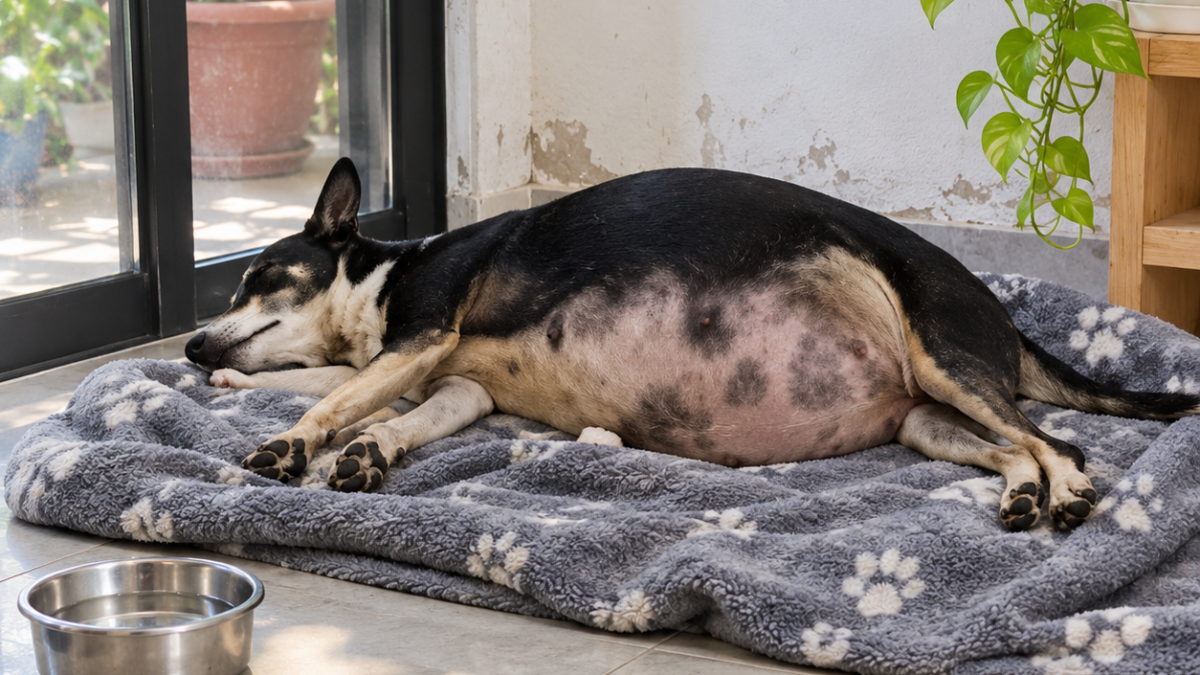
PART 2
I still remember the way Luisa looked at those doors.
I had lifted hundreds of frightened animals into rescue vans before, but this was different. She wasn’t fighting me because she feared where I was taking her. She was hesitating because something in her still seemed convinced she needed to stay.
“Come on, sweetheart,” I whispered. “Whoever you’re waiting for isn’t more important than what happens to you now.”
Of course, I had no idea whether that was true.
I didn’t know who had left her there.
I didn’t know whether she’d been abandoned deliberately, gotten lost or wandered away from someone searching desperately for her.
All I knew was that she was exhausted, extremely pregnant and lying where careless feet passed inches from her face.
Rachel supported her rear end while I lifted her chest.
Luisa groaned.
That sound made my stomach tighten.
“Contraction?” I asked.
Rachel watched her abdomen.
“Could be discomfort from the pressure. We need the ultrasound.”
The supermarket employee brought us a folded blanket.
A woman came out holding a bag of bread and stopped.
“Are you taking her?”
“Yes.”
“Oh, thank goodness.”
I looked at her.
“Have you seen her before?”
“Every day this week.”
“Did you call anyone?”
Her expression changed.
“I thought someone else had.”
That sentence followed me for a long time.
I thought someone else had.
Maybe that was how a heavily pregnant dog could lie in front of a building visited by hundreds of people every day and still be there a week later.
Everybody saw.
Everybody assumed somebody else would act.
We placed Luisa on blankets in the back of the rescue van.
Before I closed the door, she lifted her head and looked back toward the supermarket.
I sat beside her.
“You’re okay.”
The automatic doors opened.
Two men walked out carrying cases of soda.
Luisa watched them.
Then her head dropped.
I touched her ear.
“We’re going.”
The van pulled away.
She kept facing the rear windows until the supermarket disappeared.
## The Ultrasound
Dr. Patel was waiting for us.
He had worked with our rescue for years and rarely showed emotion when an animal came through the clinic doors because he knew panic didn’t help anyone.
But when he saw Luisa’s stomach, he raised both eyebrows.
“She didn’t walk here, did she?”
“No.”
“Good.”
We moved her carefully onto the examination table.
Luisa tolerated everything.
Temperature.
Heart rate.
Blood draw.
Abdominal examination.
She never snapped.
Never growled.
Whenever someone unfamiliar touched her, she looked toward me.
I kept my hand beneath her chin.
“You’re doing fine.”
The ultrasound room was dark except for the monitor.
Dr. Patel moved the probe slowly.
Images appeared.
Tiny shapes.
Movement.
Heartbeats.
Rachel leaned closer.
“How many?”
“Give me a minute.”
He counted.
Stopped.
Repositioned the probe.
Counted again.
Then he sighed.
“At least eight.”
“Eight?”
“Possibly nine. They’re crowded.”
I looked down at Luisa.
No wonder she could barely move.
“Are they okay?”
“So far, I’m seeing heartbeats.”
“So they’re healthy?”
“I didn’t say that.”
I hated when he did that.
“What does that mean?”
“It means right now I can tell you they’re alive. We don’t know how labor will go, whether they’re all positioned correctly or whether she’s strong enough after whatever she’s been through.”
“What has she been through?”
He looked at her body condition.
“She isn’t severely starved, but she’s thinner than I’d want for a dog carrying this many puppies. She’s dehydrated. Her paw pads are worn. She’s been walking a lot.”
Rachel asked, “How close?”
“To labor?”
“Yes.”
Dr. Patel looked at me.
“Could be tonight. Could be two days.”
My chest tightened.
“Can she go to foster?”
“Yes, but someone experienced needs to watch her constantly.”
I laughed without humor.
“You’re looking at her.”
He nodded.
“I assumed.”
That was how Luisa came home with me.
## The Room I Prepared
I turned my spare bedroom into a maternity room before we left the clinic.
Actually, Rachel did most of it while I drove.
She called another volunteer, Mia, who brought a large whelping box, waterproof pads, clean towels, heating supplies and more blankets than any dog could possibly need.
By the time I arrived, the room looked better prepared for birth than some human hospital rooms I’d seen.
Luisa walked inside slowly.
Then stopped.
No shopping carts.
No automatic doors.
No footsteps passing inches from her belly.
No strangers stepping around her.
Just a quiet room.
She smelled every corner.
Then she approached the whelping box.
I expected hesitation.
Instead, she climbed inside.
Circled twice.
Lay down.
And sighed.
A huge, deep sigh.
Mia looked at me.
“That might be the first time she’s relaxed in days.”
I sat beside the box.
Luisa stretched one paw toward me.
I touched it.
“You don’t have to watch the door anymore.”
She closed her eyes.
For almost three hours, she slept.
## What the Supermarket Employees Told Us
While Luisa rested, Rachel began calling people from the supermarket.
We weren’t trying to investigate a crime yet.
We were simply trying to understand where she had come from.
One employee remembered seeing her with a man several weeks earlier.
Another said the man occasionally tied her near the cart area while he shopped.
A cashier remembered giving her pieces of deli meat.
“She was always hungry,” the cashier said.
“Even before this week?” Rachel asked.
“Yeah.”
“What did the owner look like?”
“Tall. Baseball cap. Beard.”
“Name?”
“No idea.”
Then a security guard told us something more useful.
“I think he drives an old dark SUV.”
“Plate?”
“No.”
“Did you see Luisa arrive with him the last time?”
There was silence.
Then the guard said, “Maybe.”
“What does maybe mean?”
“I saw the dog near the parking lot late one evening. There was an SUV there.”
“With the man?”
“I couldn’t tell.”
“Do you have cameras?”
Another silence.
“Yes.”
Rachel called me immediately.
“Elena.”
I was sitting beside Luisa.
“What?”
“There may be surveillance footage.”
My eyes went toward the dog.
“Of what?”
“We don’t know yet.”
## The First Night
Luisa didn’t go into labor that night.
But none of us slept properly.
Every time she stood, I sat up.
Every time she panted, I checked the clock.
At 2:14 a.m., she walked to the bedroom door and scratched once.
I took her outside on a leash.
She relieved herself.
Then instead of turning toward the house, she pulled toward the street.
Not strongly.
Just enough for me to notice.
“Where are you going?”
She kept walking.
I followed a few yards.
Then she stopped at my driveway and looked down the road.
Waiting.
Again.
That was when I understood how deeply whatever had happened had affected her.
Luisa wasn’t simply used to a person.
She expected one.
She stood in the darkness for almost five minutes.
Finally I crouched beside her.
“He’s not here.”
She looked at me.
I didn’t know whether I was comforting her or myself.
“Come inside.”
This time, she followed me.
## Labor Begins
The next afternoon, Luisa stopped eating.
Dr. Patel had warned me.
“That’s often one of the signs.”
Then she began nesting.
She scratched at the bedding.
Turned.
Lay down.
Stood again.
Panted.
Looked at me.
At 4:37 p.m., the first strong contraction came.
I called Rachel.
“It’s happening.”
She arrived twelve minutes later.
Mia came shortly after.
Luisa was restless now.
Her whole body tightened with each contraction.
I sat inside the edge of the whelping box while she pressed against my leg.
“You’re not doing this alone.”
The first puppy came at 5:06.
Tiny.
Wet.
Dark brown with a white chest.
For one terrifying second, he didn’t move.
Then Luisa turned.
Her instincts took over.
She broke the sac.
Licked him.
Nudged him.
The puppy squeaked.
Every person in that room exhaled at once.
“Hello, little guy,” Mia whispered.
He found Luisa’s belly almost immediately.
The second puppy arrived twenty-three minutes later.
Black.
Female.
Loud.
The third was tan.
The fourth had white paws.
By the fifth puppy, Luisa looked exhausted.
I called Dr. Patel.
“She slowing down?”
“Yes.”
“Contractions still strong?”
“Not as much.”
“How long since the last puppy?”
“Forty minutes.”
“Watch closely. If it reaches two hours or she strains without producing, bring her in.”
I stared at the clock.
Forty-five minutes.
Fifty.
Luisa panted hard.
She looked at me.
I stroked her face.
“You can do this.”
The sixth puppy came at fifty-eight minutes.
Then the seventh.
Then another long pause.
The ultrasound had shown at least eight.
Possibly nine.
I began counting puppies over and over as if one might magically appear.
Seven.
Still seven.
Rachel pressed a hand lightly along Luisa’s abdomen.
“I can feel another one.”
My stomach dropped.
“Alive?”
“I don’t know.”
Luisa strained.
Nothing.
Again.
Nothing.
I called Patel.
“Bring her.”
## The Emergency Drive
We moved fast.
The seven newborn puppies went into a warmed carrier with Rachel.
I rode beside Luisa in the back.
Every bump in the road felt cruel.
She kept trying to turn toward the carrier.
“They’re right here.”
A puppy cried.
Luisa lifted her head despite her exhaustion.
“See? They’re here.”
The clinic staff met us at the door.
Imaging showed another puppy still inside.
Dr. Patel looked at me.
“We’re going to try medication first, but if there’s no response, we may need surgery.”
“Will she survive?”
“Elena.”
“Don’t give me doctor language. Will she survive?”
“I think she has a good chance, but anesthesia is never nothing, especially after labor.”
I looked at Luisa.
“Do whatever saves her.”
And then, because rescue medicine always comes with choices nobody wants to make, I added, “And the puppy if you can.”
## Number Eight
The medication worked.
Twenty-three minutes later, Luisa delivered one final puppy.
A tiny female.
Pale tan.
Weak.
Very weak.
Dr. Patel rubbed her.
A technician suctioned her airway.
No cry.
“Come on.”
Another rub.
Nothing.
My hands were shaking.
Then the puppy opened her mouth.
A tiny sound came out.
Barely more than a breath.
But it was enough.
“She’s breathing.”
I started crying.
Rachel laughed through tears.
“Eight.”
Eight living puppies.
Luisa lifted her head.
Dr. Patel placed the final puppy near her nose.
Luisa smelled her.
Then immediately began licking.
As if she had never doubted the little one would arrive.
## The Photograph
That night, I took the photograph that later spread everywhere.
I didn’t mean for it to become public.
I took it because I wanted to remember the moment.
Luisa lay curled in a clean whelping box.
Eight puppies lined her belly.
Brown.
Black.
Tan.
White markings scattered among them.
Their eyes were sealed shut.
Their paws were impossibly small.
Luisa looked exhausted.
But her face was different.
At the supermarket, she had always been watching something.
A doorway.
A person.
Footsteps.
Now she watched her puppies.
When one squeaked, her head turned.
When another crawled too far from the warmth of her body, she nudged him back.
When one struggled to find milk, she shifted slightly to make room.
I looked at Rachel.
“She seems different.”
“She has a job.”
“She had a job before.”
“What?”
“Waiting.”
Rachel became quiet.
Then she said, “Maybe she finally realized she doesn’t have to.”
I wanted to believe that.
## The Camera Footage
Two days later, the supermarket manager called us.
They had reviewed archived footage.
He sounded uncomfortable.
“I think you should come see this.”
Rachel and I went together.
The manager led us into a small office.
Security cameras covered the parking lot and entrances from several angles.
He pulled up footage from eleven days before we rescued Luisa.
“There.”
A dark SUV entered the lot at 9:42 p.m.
The supermarket was still open, but traffic was light.
The SUV parked near the far edge.
A man got out.
Tall.
Cap.
Beard.
Exactly as employees remembered.
Then the passenger-side rear door opened.
Luisa jumped out.
Her belly was already huge.
She followed the man toward the supermarket.
He did not enter.
Instead, he walked toward the doors, turned and pointed at the ground.
Luisa sat.
The man returned to the SUV.
I leaned closer to the screen.
“What is he doing?”
Nobody answered.
The SUV backed out.
Luisa stood.
She followed.
The man accelerated.
Luisa ran after the vehicle.
My stomach twisted.
The camera angle changed.
Luisa ran across the edge of the parking lot.
The SUV continued.
She stopped near the street.
Then ran back toward the supermarket.
The manager paused the footage.
Nobody spoke.
Finally Rachel whispered, “He left her.”
The manager nodded.
I felt sick.
“Play the next day.”
The footage showed Luisa near the entrance.
Then the next.
Still there.
Sometimes lying down.
Sometimes wandering into the store until employees guided her back out.
Sometimes eating food people left.
Sometimes watching cars.
For eleven days.
Eleven days pregnant.
Eleven days waiting.
The footage answered the question that had haunted me.
Why those doors?
Because that was where he had told her to stay.
## The Microchip
Luisa did have a microchip.
We had scanned her at the clinic, but the registration information was outdated.
It listed a disconnected phone number and an address across town.
Animal control followed up.
The registered owner had moved almost a year earlier.
But the name existed.
Marcus Hale.
The address matched the old neighborhood where several supermarket employees remembered seeing Luisa.
We had a name.
We also had a video.
## Luisa Was Changing
While animal control handled the legal side, Luisa focused on her puppies.
The first week was exhausting.
She barely left the whelping box.
We brought food to her.
Water.
She ate like an animal who had learned meals were temporary.
Fast.
Too fast.
I started dividing her food into smaller portions because she’d inhale everything and then search the bowl again.
The first time I picked it up after she finished, she watched my hand.
I recognized that look.
Fear.
Not aggression.
Fear that the food was gone.
I put another small handful down.
“There’s more.”
She ate.
Then looked at me again.
“There’s always going to be more now.”
I don’t know how many times I repeated that sentence over the next month.
Eventually, she stopped staring at the bowl after meals.
Eventually, she stopped following me into the kitchen every time I moved.
Eventually.
Healing often comes disguised as small habits disappearing.
## The Puppies Open Their Eyes
Around two weeks old, the puppies began opening their eyes.
One by one.
Cloudy blue-gray at first.
Then more alert.
They started seeing the world their mother had nearly been forced to introduce them to on supermarket concrete.
Instead, their first world was blankets.
Warmth.
Milk.
Human hands that touched gently.
Luisa remained protective, but never threatening.
If we lifted a puppy, she watched.
If the puppy cried, she came closer.
One afternoon, Mia held the smallest female—the last puppy born.
We had named her Sunny.
Sunny squeaked.
Luisa walked over and nudged Mia’s wrist.
“Okay,” Mia laughed. “Message received.”
She returned Sunny.
Luisa licked the puppy’s head twice.
Then looked at Mia.
Mia put both hands up.
“Yes, ma’am.”
That was the first time I laughed about anything connected to Luisa’s story.
## Marcus Calls
Three weeks after Luisa gave birth, my phone rang.
Unknown number.
I answered.
“Hello?”
A man’s voice said, “You have my dog.”
I knew immediately.
Not because I’d heard his voice before.
Because there was no question.
No introduction.
No concern.
Just ownership.
“Who is this?”
“Marcus.”
My body went cold.
“Marcus Hale?”
“Yes.”
I looked toward the living room.
Luisa was asleep behind the baby gate.
The puppies were sprawled beside her.
“How did you get my number?”
“Someone at the store gave me your rescue name.”
“That doesn’t answer the question.”
“I want my dog back.”
I almost laughed.
Not because it was funny.
Because the audacity was so complete I didn’t know what else to do.
“You left her in a supermarket parking lot.”
“No, I didn’t.”
“We have video.”
Silence.
Then, “She jumped out.”
“You got out with her.”
“She wouldn’t get back in.”
“You pointed at the ground and drove away.”
“You don’t know what you saw.”
“I saw an extremely pregnant dog chase your SUV.”
His tone hardened.
“She’s mine.”
“No.”
“Yes, she is.”
“Animal control has an open case.”
“Don’t care.”
“You should.”
Then he said the sentence that changed everything.
“I know those puppies are worth money.”
I gripped the phone.
“What?”
“Eight puppies. People will pay for them.”
There it was.
Not How is Luisa?
Not Did she survive labor?
Not Are my puppies healthy?
Money.
“You’re not getting any of them.”
He laughed.
“You can’t steal somebody’s dog.”
“You abandoned her.”
“I left her for an hour.”
“Eleven days.”
“I came back.”
“Not on camera.”
Another silence.
Then Marcus said, “You people posted her online, didn’t you?”
I hadn’t.
But someone at the clinic had shared a rescue update after getting approval from our director.
The post had spread.
Thousands of people had seen Luisa with her babies.
Marcus had found value only after other people did.
“You need to speak to animal control,” I said.
“I’ll speak to you.”
“No.”
“If you don’t return my property, I’ll come get it.”
Every hair on my arms rose.
“You just threatened to come to my home.”
“I said I’m getting my dog.”
I ended the call.
Then I called Officer James Carter.
## The Legal Hold
Animal control placed Luisa and the puppies under an official protective hold while the abandonment case was investigated.
That changed their status.
Marcus could not legally remove them.
I felt safer.
Not safe.
Safer.
Officer Carter came to my house that afternoon.
“Has he been here?”
“No.”
“Any more calls?”
“No.”
“Save the number. Screenshot everything.”
“I did.”
He crouched beside the baby gate.
Luisa stood.
For a second, she froze.
Men still made her uneasy.
James sat on the floor instead of approaching.
“Hey, Mama.”
Luisa watched him.
Then one of the puppies attacked his shoelace.
He laughed.
“Dangerous crowd.”
I smiled despite myself.
Then he looked serious.
“We found something else.”
“What?”
“Marcus has prior animal-control complaints.”
My stomach tightened.
“For what?”
“Dogs running loose. Lack of shelter. One welfare check.”
“Was Luisa involved?”
“Possibly.”
“What happened?”
“Nothing sufficient for charges then.”
I looked at her.
She had gone back to lying beside the puppies.
“He’s not taking her.”
James nodded.
“That’s what we’re trying to ensure.”
## The Night Someone Came to My House
At 1:18 a.m., Luisa began barking.
Not her normal warning bark.
A deep, explosive sound I had never heard from her.
I sat up in bed.
She barked again.
The puppies stirred in their pen.
I checked the security camera on my phone.
A person stood near my side gate.
My heart slammed.
The figure wore a hood.
He moved toward the latch.
I called 911.
Then I turned on every exterior light.
The person froze.
Luisa was barking continuously now.
The figure stepped backward.
Then ran.
By the time police arrived, he was gone.
They couldn’t prove it was Marcus.
The camera angle didn’t show the face clearly.
But the next morning, I received a message from the same number Marcus had called from.
**This could have been easy.**
I stared at those five words.
Then sent them to Officer Carter.
He called immediately.
“Do not respond.”
“I wasn’t going to.”
“We’re escalating this.”
“Can you arrest him?”
“Not from one text alone.”
“So I just wait until he comes back?”
“No.”
His voice hardened.
“You document. We investigate. And you let us handle him.”
I wanted something more immediate.
I wanted a locked door to feel like enough.
It didn’t.
That week, Luisa and the puppies were moved temporarily to a secure foster facility whose location wasn’t publicly listed.
I hated transporting her again.
When we loaded her into the van, she looked anxious.
I sat beside her.
“We’re not leaving you.”
Her head rested on my knee.
“You hear me? Not ever.”
## Marcus’s Version
When animal control interviewed Marcus, he told a completely different story.
He claimed Luisa had become difficult after getting pregnant.
He said she escaped from his yard.
When shown the supermarket video, he changed the story.
He claimed he had brought her there because someone was supposed to meet him and take her.
Who?
He couldn’t provide a name.
Phone number?
Deleted.
Messages?
Gone.
He claimed he returned later.
The cameras didn’t show it.
He said the puppies belonged to him because he had owned Luisa.
Officer Carter explained that abandonment, neglect and failure to provide veterinary care were under investigation and that his ownership claim was being challenged.
Marcus became angry.
Then he made another mistake.
He asked whether the rescue had “already sold” the puppies.
Officer Carter later told me that was the moment he stopped believing Marcus had any emotional interest in Luisa.
## The Puppies at Thirty Days
By thirty days, the maternity room had become chaos.
Tiny, adorable chaos.
The puppies no longer stayed tucked against Luisa.
They wandered.
Stumbled.
Bit each other’s ears.
Attacked blankets.
Escaped enclosures we thought were puppy-proof.
Sunny, the smallest, became the fastest.
A black male we called Bruno learned that humans brought food and began screaming whenever anyone entered the room.
A white-and-tan female named Daisy liked sleeping upside down.
Two brown brothers, Max and Theo, wrestled constantly.
Bella followed Luisa everywhere.
Rocky climbed on everything.
And Milo was the calm one.
Eight personalities.
Eight futures.
Luisa watched them with a patience I did not possess.
If two puppies fought too hard, she stepped between them.
If one cried, she checked.
If one wandered too far, she brought him back with a nudge.
She was finally eating enough to gain weight despite nursing.
Her coat began shining.
Her eyes changed.
That waiting expression disappeared.
She stopped checking every vehicle sound.
Stopped staring toward doors.
Stopped waking whenever a man spoke outside.
Not completely.
But enough for me to notice.
## The Woman Who Remembered Her
One evening, the rescue received a message from a woman named Dana.
She said she’d lived next door to Marcus the previous year.
I called.
“Did you know Luisa?”
“Yes.”
Her voice immediately softened.
“She used to come to my fence.”
“Why?”
“Food.”
My heart sank.
“Was Marcus feeding her?”
“Sometimes.”
“Did you report him?”
“I did once.”
“What happened?”
“By the time the officer came, there was food out and the yard had been cleaned.”
“Was she pregnant then?”
“No.”
“Did Marcus ever talk about breeding her?”
Dana became quiet.
“Yes.”
My hand tightened around the phone.
“What did he say?”
“That he could make money from puppies.”
There it was again.
Money.
Dana continued.
“He had a male dog for a while. Then it disappeared.”
“What happened to it?”
“I don’t know.”
“Did you ever see Marcus hurt Luisa?”
“No. I saw him yell. Kick at the fence. Throw things near her.”
“Near her or at her?”
“I couldn’t tell.”
Dana hesitated.
“He wasn’t attached to her.”
“How do you know?”
“You know when someone talks about a dog like she’s a lawn mower?”
Yes.
I did.
## The Decision
Animal control eventually moved to revoke Marcus’s ownership claim permanently.
The case did not become some dramatic murder trial.
There was no jury.
No packed courtroom.
Real animal welfare cases are often messier and less satisfying than people expect.
But evidence mattered.
The video mattered.
The eleven days mattered.
The outdated chip information mattered.
The lack of veterinary records mattered.
The witness statements mattered.
Marcus’s own calls mattered.
Especially the one where he spoke about the puppies as money.
At the hearing, Marcus appeared with an attorney.
I attended as the rescue representative.
He looked at me as if I had personally stolen something from him.
The hearing officer reviewed the evidence.
Then Marcus’s attorney said, “Mr. Hale never intended to relinquish ownership.”
Officer Carter responded, “Intent is difficult to reconcile with leaving a heavily pregnant dog in a commercial parking lot for eleven days.”
Marcus whispered something angrily.
His attorney touched his arm.
Then surveillance images were shown.
Luisa standing beside the SUV.
Marcus pointing.
Driving away.
Luisa running after him.
Stopping.
Returning to the doors.
The room went quiet.
I had seen the footage before.
It still hurt.
Marcus finally spoke.
“She always came back.”
The hearing officer looked at him.
“What?”
“She knew that store.”
“You left her there because you believed she would stay?”
“I was going through stuff.”
The officer stared at him.
“So you left a pregnant dog outside a supermarket.”
“It wasn’t like that.”
“Then tell me what it was like.”
Marcus had no answer.
## The Moment He Lost Her
The ruling came that afternoon.
Marcus’s claim to Luisa was denied.
Custody was formally transferred away from him pending final placement through the rescue.
The puppies were included under the rescue’s care.
He was cited and ordered to comply with penalties associated with abandonment and neglect findings, and restrictions were placed on his future animal ownership under local enforcement conditions.
It wasn’t prison.
It wasn’t cinematic vengeance.
But when the officer said Luisa would not be returned to him, Marcus finally understood what he had lost.
He stood abruptly.
“You can’t do that.”
The hearing officer didn’t raise his voice.
“We just did.”
“She belongs to me.”
“No.”
That one word echoed.
Marcus turned toward me.
“This is because of you.”
I looked at him.
“No.”
His face tightened.
“This is because you left her.”
He stepped closer.
An officer immediately moved between us.
Marcus pointed toward me.
“You made me look like some monster.”
I surprised myself by laughing.
Not loudly.
Just once.
“I didn’t put you on that camera.”
He stopped.
“You did that.”
That was the only revenge I needed in that room.
Not humiliation.
Not violence.
Not screaming.
Just the truth sitting where everyone could see it.
## Luisa at Sixty Days
By the time the puppies were around sixty days old, nobody would have recognized the dog from the supermarket.
Luisa had gained weight.
Her coat was glossy.
She ran.
Actually ran.
The first time she did it, I wasn’t prepared.
We had brought her to a secure fenced yard.
I unclipped the leash.
She stood still.
Then Sunny sprinted past.
Luisa followed.
Her ears flew backward.
Her mouth opened.
She ran in a wide circle.
The puppies chased.
I started laughing.
Rachel cried.
“Look at her.”
“I am.”
“No, really look.”
I did.
Luisa wasn’t watching a door.
She wasn’t waiting for footsteps.
She wasn’t lying on concrete while people stepped around her.
She was running.
## Eighty Days
At eighty days, the puppies were almost unrecognizable.
Those little creatures that had once crawled blindly against Luisa’s belly now raced across the floor on strong legs.
They crashed into each other.
Barked.
Chased balls.
Stole toys.
Fell asleep in ridiculous piles after exhausting themselves.
People who saw the early photographs couldn’t believe they were the same puppies.
But I could.
Because I remembered every sleepless night.
Every bottle supplement.
Every weigh-in.
Every nervous call to Dr. Patel.
Every time Luisa checked each puppy before resting.
The puppies grew because she had kept them safe long enough for us to help.
## Adoption Applications
We received hundreds.
Some were wonderful.
Some were horrifying.
One person wrote:
**I want the one most likely to look like the mother because the story went viral.**
Rejected.
Another wrote:
**Can I breed her later?**
Rejected immediately.
One family asked whether we would discount the fee if they took two.
Rejected for reasons unrelated to the question, but the tone didn’t help.
We wanted homes.
Not audiences.
Not people collecting a famous dog.
Not anyone looking for breeding stock.
Every applicant was screened carefully.
References.
Veterinary history.
Housing.
Plans.
Expectations.
One by one, matches appeared.
## Bruno
Bruno went to a family with three teenage boys.
I worried he might be overwhelmed.
I was wrong.
He loved chaos.
Within ten minutes, he had stolen a sock, knocked over a water bowl and fallen asleep on the youngest boy’s lap.
Perfect.
## Daisy
Daisy went to a nurse named Erin who worked nights.
During the interview, Erin said, “My house is quiet during the day.”
Daisy slept through most of the conversation.
I pointed at her.
“She approves.”
## Max and Theo
We tried not to adopt siblings together automatically because littermates sometimes struggle when overly dependent.
But Max and Theo ended up with two neighboring families who were close friends.
Separate homes.
Shared yard playdates.
Enough independence.
Enough connection.
It worked beautifully.
## Bella
Bella went to an older couple.
The husband walked with a cane.
Bella immediately sat beside him.
Didn’t jump.
Didn’t pull.
Just sat.
His wife cried before the paperwork began.
## Rocky
Rocky found the most energetic family imaginable.
Two runners.
A fenced acre.
Another young dog.
He needed it.
That dog could have powered a small city.
## Milo
Milo went to a quiet home with a woman who had recently lost her senior dog.
She sat on the floor during the meet-and-greet.
Milo climbed into her lap.
She whispered, “I think I’m done looking.”
So were we.
## Sunny
Sunny, the last puppy born, stayed longer.
Not because nobody wanted her.
Because I was picky.
Maybe too picky.
She had been the tiny one.
The puppy we thought might not breathe.
The one Luisa immediately cleaned after emergency delivery.
I wanted a perfect home.
Eventually, a school counselor named Rebecca applied.
She had an older, gentle dog.
A secure yard.
A veterinarian we’d worked with before.
During the home visit, Sunny curled beside Rebecca’s dog and fell asleep.
I looked at Rachel.
She nodded.
That was it.
Eight puppies.
Eight homes.
## But What About Luisa?
Everyone asked.
“Are you keeping her?”
“No.”
That was my answer for months.
“No.”
Then people looked at me the way Rachel had looked at me after the third week.
Disbelieving.
Luisa slept beside my bedroom door.
Waited outside the bathroom.
Followed me into the kitchen.
Sat beside me during paperwork.
If I left for more than an hour, she greeted me as if I’d returned from war.
Still, I insisted.
“She deserves someone who isn’t constantly bringing traumatized animals home.”
Rachel said, “She appears to disagree.”
“She needs stability.”
“She has stability.”
“I’m a foster.”
“Sure.”
Then an application arrived specifically for Luisa.
It was excellent.
A middle-aged couple.
No other pets.
Large yard.
Excellent veterinary references.
Home most of the day.
Everything looked right.
We arranged a meeting.
Luisa was polite.
She accepted treats.
She let them pet her.
The woman smiled.
“I love her.”
I smiled back.
“She’s special.”
They walked around the yard with her.
Luisa followed.
Calm.
No problem.
I told myself this was good.
This was what rescue was for.
Then the couple drove away to think about it.
Luisa stood at the fence.
Watching their car.
My chest tightened.
She stayed there after the vehicle disappeared.
I approached.
“Hey.”
She looked at me.
Then walked straight past me to the front door.
Inside, she went to my bedroom.
Lay beside the bed.
And fell asleep.
Rachel called that evening.
“How did it go?”
“Fine.”
“Fine?”
“They liked her.”
“And Luisa?”
“She liked them.”
Silence.
“Elena.”
“What?”
“You sound like you’re being sent to prison.”
I sighed.
“I don’t know.”
“Yes, you do.”
## The Supermarket Again
Before making any decision, I did something strange.
I took Luisa back to the supermarket.
Not because I wanted to traumatize her.
Because I needed to know.
It had been months.
I parked at the far end of the lot.
Luisa stepped out wearing a harness.
At first, she seemed normal.
Then she saw the automatic doors.
Her body stopped.
Everything stopped.
Tail.
Ears.
Breathing.
I crouched beside her.
“You remember?”
She stared.
People moved in and out.
Shopping carts rattled.
The doors opened.
Closed.
Opened again.
Luisa took one step forward.
Then another.
My heart started pounding.
Would she walk back to the place she’d waited?
She did.
She approached the entrance.
Stopped near the exact area where we’d found her.
I could barely breathe.
Then a man in a baseball cap walked out.
Luisa stiffened.
For one second, I thought she might pull toward him.
She didn’t.
She looked at him.
Then looked at me.
And walked back.
To me.
I dropped to my knees.
She pressed against my chest.
That settled it.
## I Adopted Luisa
The paperwork took six minutes.
The decision had taken months.
When Rachel signed as witness, she smiled.
“I’d like the record to show that I knew this approximately nine weeks ago.”
“Be quiet.”
“No.”
Luisa lay beneath the table.
Completely unaware that anything had changed.
Legally, she was mine.
Emotionally, I think I’d been hers since the day she refused to stop watching the supermarket doors.
## Marcus’s Last Attempt
I wish the story ended there.
It almost did.
Then Marcus filed a civil claim demanding compensation for Luisa and the puppies.
When our attorney told me, I laughed.
“You’re joking.”
“No.”
“He lost the custody decision.”
“He’s arguing financial loss.”
“For puppies he abandoned before they were born?”
“Yes.”
“How much?”
The number was absurd.
He estimated each puppy could have been sold for hundreds of dollars.
I felt rage in a way I hadn’t felt even when he called demanding Luisa back.
He still saw them as money.
Not lives.
Not babies that could have been born under strangers’ shoes.
Inventory.
Our attorney advised us not to panic.
“We have footage.”
“We have the abandonment ruling.”
“Yes.”
“We have his messages.”
“Yes.”
“So?”
“So we answer the claim.”
## The Civil Hearing
Marcus represented himself.
That turned out to be a mistake.
He came with printed advertisements showing prices for puppies of vaguely similar-looking dogs.
The judge asked, “Are these puppies of a documented breed?”
“No.”
“Were there breeding records?”
“No.”
“Was there a breeding contract?”
“No.”
“Did you provide prenatal veterinary care?”
Marcus hesitated.
“No.”
“Did you provide food and shelter during the eleven days the dog was at the supermarket?”
“I was trying to find her.”
Our attorney stood.
“We have security records from the store covering those eleven days.”
Marcus shifted.
The judge reviewed the prior finding.
Then asked him the question I had wanted someone to ask from the beginning.
“If these animals had financial value to you, why did you leave the pregnant mother in a parking lot?”
Marcus started explaining.
Stress.
Housing problems.
Money problems.
He needed time.
He intended to return.
Then our attorney played the surveillance clip.
Again.
Luisa chasing the SUV.
Again.
The vehicle leaving.
Again.
Her returning to the doors.
The judge watched without expression.
Then he looked at Marcus.
“You are asking this court to compensate you for profits you claim you lost from animals whose mother you abandoned.”
Marcus opened his mouth.
The judge continued.
“Claim denied.”
That was it.
Two words.
Claim denied.
Marcus gathered his papers.
For the first time, he didn’t look angry at me.
He looked defeated.
Not because I’d defeated him.
Because every story he’d tried to build had collided with evidence.
## The Real Revenge
People later asked if I felt good.
Yes.
But not for the reason they expected.
I didn’t celebrate Marcus losing money.
I didn’t want him humiliated.
I didn’t fantasize about his life collapsing.
The satisfaction came from knowing Luisa would never again be something he could sell, abandon and reclaim when convenient.
He wanted profit from eight puppies.
Instead, all eight went to carefully chosen homes.
He wanted Luisa returned as property.
Instead, she became family.
He wanted the court to recognize his financial interest.
Instead, the court recognized his abandonment.
That was enough.
## One Year Later
On the first anniversary of Luisa’s rescue, we organized a reunion.
Not publicly.
No cameras from news stations.
No viral event.
Just the families.
One by one, vehicles pulled into the fenced rescue field.
Bruno arrived first.
He had become enormous.
Then Daisy.
Max.
Theo.
Bella.
Rocky.
Milo.
Sunny.
Eight dogs.
All grown.
Luisa stood beside me.
At first, she didn’t seem to understand.
The dogs smelled one another.
Tails started moving.
Then Sunny approached Luisa.
She smelled her face.
Luisa froze.
Sunny moved closer.
Then Luisa licked her forehead.
Once.
My throat tightened.
Another dog came over.
Then another.
Within minutes, Luisa was surrounded.
The puppies she had once curled around in a whelping box were now adults bouncing around her.
I cried.
No attempt to hide it.
Rachel came beside me.
“Worth it?”
I laughed through tears.
“Every second.”
## The Employee Who First Called
The man who had called us from the supermarket came too.
His name was Kevin.
I hadn’t seen him since the rescue.
He stood at the edge of the field watching Luisa.
Eventually he approached.
“She looks different.”
“She is.”
He crouched.
Luisa sniffed him.
Kevin scratched behind her ears.
“I should’ve called sooner.”
I looked at him.
“You called.”
“After she’d already been there days.”
“Yes.”
He looked ashamed.
“I kept thinking somebody else would.”
I remembered the woman with grocery bags.
The employees.
The shoppers.
Hundreds of people stepping around her.
“Most people did.”
Kevin looked at Luisa.
“I don’t want to be that person anymore.”
A few months later, he began volunteering at weekend adoption events.
## The Eighty-Day Video
The rescue eventually created a short update using footage from the puppies at around eighty days.
I watched it only once.
Tiny bodies running.
Tumbling.
Barking.
Luisa lying nearby.
People online focused on how cute they were.
That’s understandable.
But I saw something else.
I saw the distance between the supermarket floor and that playroom.
I saw every pair of shoes that had stepped around Luisa.
Every automatic door opening behind her.
Every hour she had waited.
Every possibility that could have gone wrong.
One contraction too early.
One careless shopping cart.
One puppy born where no one noticed.
One complication without a veterinarian.
She and the puppies had come unbelievably close to becoming one more sad thing people saw and forgot.
## Luisa Learned Grocery Bags Meant Something Else
For months, grocery bags made her alert.
Whenever I returned from shopping, she came to the door immediately.
Not just because food smelled good.
She watched the bags.
Watched me unpack.
At first, I thought she associated them with the supermarket.
Eventually, something changed.
Grocery bags became boring.
Then exciting for normal dog reasons.
Chicken.
Cheese.
Treats.
One Saturday, I set a bag on the floor while putting things away.
Luisa stuck her entire head inside.
I laughed.
“Excuse me.”
She pulled out a package of rolls.
“Absolutely not.”
She ran.
I chased her through the kitchen.
For a dog once so exhausted that people nearly stepped on her without getting a reaction, Luisa had become extremely fast when stealing bread.
I never caught her before she ate half a roll.
I considered that progress.
## She Stopped Watching Doors
That was the biggest change.
When I first brought her home, Luisa always positioned herself where she could see an exit.
Bedroom door.
Front door.
Gate.
Even at the clinic.
She wanted visual control.
Maybe she feared someone leaving.
Maybe she feared missing the person she was waiting for.
I don’t know.
But about a year after adoption, I noticed something.
I was working in my office.
Luisa was asleep on the couch.
The front door was behind her.
Completely out of view.
She was lying on her back.
Belly exposed.
Legs ridiculous.
Deep asleep.
I stopped typing.
For anyone else, it would have looked ordinary.
For me, it was enormous.
She no longer needed to watch the door.
## Two Years Later
Luisa became a foster helper.
Not officially.
She never signed paperwork.
But whenever we brought home a frightened young dog, Luisa became calm.
She didn’t crowd them.
Didn’t force interaction.
She simply existed nearby.
One foster puppy hid beneath my dining table for almost an entire day.
Luisa lay six feet away.
Eventually, the puppy crawled out.
Moved closer.
Then fell asleep beside her.
I sat on the floor watching.
“You know something about waiting, don’t you?”
Luisa looked at me.
Then went back to sleep.
## Marcus
People sometimes ask what happened to Marcus.
Nothing dramatic.
He didn’t become homeless.
He didn’t lose everything.
He didn’t receive some movie-style punishment where every person he’d ever wronged appeared at once.
Real justice is usually less cinematic.
He paid penalties.
Lost his claim to Luisa and the puppies.
Lost his civil case.
Faced restrictions and scrutiny related to future animal ownership.
Most importantly, he never got Luisa back.
That matters more to me than any dramatic revenge fantasy.
He had once left her somewhere he assumed she’d remain until he decided what she was worth.
He never got to decide again.
## Five Years Later
Luisa is older now.
Her muzzle has started turning white.
She moves more slowly in the morning.
She still loves bread.
She still steals it if I make the mistake of leaving it within reach.
All eight of her puppies are alive.
I keep photographs of each one.
Bruno with his three boys.
Daisy asleep on Erin’s couch.
Max and Theo seeing each other through the fence between their homes.
Bella beside the older man with the cane.
Rocky halfway through another hiking trail.
Milo under a blanket.
Sunny curled beside Rebecca’s older dog.
They grew up.
Exactly as puppies are supposed to.
## The Last Reunion
On Luisa’s fifth rescue anniversary, all eight families came again.
This time, Luisa was slower.
The puppies weren’t puppies anymore.
Some had gray beginning around their faces too.
When they entered the field, there was less wild wrestling than the first reunion.
More sniffing.
More wandering.
But eventually Rocky started running.
Then Bruno.
Then Sunny.
One by one, the others followed.
Luisa watched.
She didn’t chase them immediately.
She stood beside me.
I knelt and placed one hand on her back.
“You did that.”
She looked at me.
Eight dogs crossed the field.
Healthy.
Strong.
Loved.
“You kept all of them alive.”
Luisa leaned against my leg.
For a moment, I remembered her in front of the supermarket.
The concrete.
The automatic doors.
The shoppers.
Her huge stomach.
Her tired eyes lifting whenever someone came outside.
I wondered how long she had believed Marcus would return.
How many times she’d heard footsteps and thought, Maybe this one.
How many cars had made her stand.
How many nights she slept near those doors because leaving meant accepting the possibility that he had truly left her.
Dogs don’t tell us those things.
Maybe that’s better.
Maybe not.
## The Woman With the Grocery Bags
At the reunion, someone approached me.
I didn’t recognize her at first.
She did.
“You were the woman who rescued Luisa.”
“Yes.”
She looked toward the field.
“I saw her at the store.”
I waited.
“I was there the day you came.”
Then I remembered.
Two grocery bags.
“Poor baby.”
And she had kept walking.
Her eyes filled with tears.
“I’ve thought about her for years.”
Luisa walked toward us.
The woman crouched.
“I didn’t help you.”
Luisa smelled her hand.
The woman began crying.
“I saw you and I didn’t help.”
I said quietly, “You can help the next one.”
She looked at me.
“The next one?”
“There is always another animal somebody assumes someone else will help.”
Luisa licked the woman’s fingers.
The woman laughed through tears.
That conversation meant more to me than Marcus losing in court.
Because cruelty isn’t the only thing that hurts animals.
Indifference does too.
Not dramatic cruelty.
Not intentional cruelty.
Just the quiet decision that someone else will handle it.
## What Luisa Changed
Before Luisa, I believed rescue was mostly about taking animals away from bad situations.
After Luisa, I understood that rescue often begins earlier.
At the moment somebody stops.
The supermarket had hundreds of customers.
Luisa was visible.
Not hidden in a ditch.
Not trapped in an abandoned building.
Not miles from people.
She was directly in front of the doors.
You couldn’t enter without seeing her.
And still she remained.
That fact bothered me for years.
Then I realized something.
The rescue wasn’t special because we cared more than everyone else.
We simply reached the moment where caring became action.
That’s the difference.
## The Door
Years after everything happened, I took Luisa to that supermarket one final time.
The store had been remodeled.
New signs.
Different carts.
Same automatic entrance.
We parked nearby.
Luisa stepped out.
She was older now.
Her face white around the muzzle.
We approached slowly.
She looked at the doors.
They opened.
People came out.
She watched them.
Then she sat.
My chest tightened.
For a terrible second, I thought I had made a mistake bringing her back.
Then Luisa turned her head.
Looked at me.
And wagged her tail.
I crouched.
“You ready?”
She stood.
We walked past the exact spot where she’d once lain.
Straight through the automatic doors.
Inside.
Together.
A young employee recognized her from an old photograph displayed in the staff break room.
“Is that Luisa?”
I smiled.
“Yes.”
He called another employee.
Then another.
Soon several people were smiling.
Someone brought her a dog-safe treat.
Luisa took it immediately.
Of course.
She had always known the supermarket contained food.
But this time she didn’t search the aisles.
She didn’t look for Marcus.
She didn’t hesitate at the entrance.
She ate her treat.
Drank some water.
Then headed back toward the doors.
Outside, she walked directly to my car.
No waiting.
No looking back.
I opened the passenger door.
She climbed in.
## The Thing I Finally Understood
For years, I thought the saddest image in Luisa’s story was her lying in front of the supermarket.
I was wrong.
The saddest part wasn’t that she was homeless.
It was that she didn’t know she had been abandoned.
There is something uniquely painful about waiting for someone who has already decided not to return.
Every opening door becomes hope.
Every stranger’s face becomes a possibility.
Every hour makes the truth harder to deny.
Luisa waited because loyalty is sometimes stronger than understanding.
But that isn’t where her story ended.
## Her Real Revenge
If you want to call anything revenge, call it this.
Marcus left a heavily pregnant dog beside a supermarket because she had become inconvenient.
Years later, Luisa had a home where inconvenience didn’t determine love.
He viewed eight unborn puppies as money.
Those eight dogs became family members in eight homes where nobody cared what they could be sold for.
He believed ownership meant he could leave Luisa and reclaim her whenever it benefited him.
A court told him he was wrong.
He believed she would keep waiting.
Eventually, she stopped.
That may be the most satisfying part of all.
Luisa stopped waiting for him.
She learned the sound of my car.
My footsteps.
My key in the door.
She stopped staring at strangers because she knew exactly who was coming home.
## The Ending I Wanted for Her
Tonight, Luisa is sleeping on a thick bed beside my couch.
Her back legs twitch in a dream.
A half-empty bowl of water sits nearby.
Her dinner bowl is in the kitchen.
There is more food.
There will be more tomorrow.
There will be more the day after that.
No one will make her search garbage.
No one will leave her near automatic doors.
No one will calculate what her puppies might sell for.
On the wall above my desk is the photograph from the night after they were born.
Luisa curled around eight newborn bodies.
Exhausted.
Protective.
Safe.
Beside it is another photograph.
Taken at the five-year reunion.
Eight adult dogs running across a field.
Luisa standing beside me.
Those two photographs contain the entire story.
In the first, she had no idea what would happen next.
In the second, we did.
They survived.
They grew.
They went home.
So did she.
Sometimes I think about the people who stepped around her.
Not with anger anymore.
Mostly with a question.
How many times do we walk past something because we assume someone else will stop?
Luisa didn’t need hundreds of people to save her.
She needed one person to call.
One van to arrive.
One veterinarian to stay ready.
One foster room.
One investigation.
One judge willing to look at evidence.
One group of families willing to love the lives she brought into the world.
That’s how stories change.
Not always with one giant heroic act.
Sometimes with enough people finally refusing to keep walking.
Luisa shifts in her bed.
Opens her eyes.
Looks at me.
I get up to refill my water.
She follows.
Of course she does.
I open the refrigerator.
Her ears rise.
“You already had dinner.”
Tail wag.
“No.”
More tail wagging.
I break off a tiny piece of chicken.
She takes it gently.
Then stands there waiting for another.
I laugh.
“There it is. The starving supermarket dog routine.”
She stares at me.
Completely shameless.
I give her one more piece.
Not because she needs it.
Because now I can.
Because there is food.
Because she is home.
Because nobody is counting how much she costs.
Because love, when it’s real, isn’t measured by whether an animal is convenient.
I sit back down.
Luisa returns to her bed.
She circles twice.
Lies down.
But before closing her eyes, she looks toward me.
Not the door.
Me.
And that is how I know the story is finished.
The dog who once spent day after day watching supermarket doors open for someone who never came back finally stopped waiting.
She found the person who did.
And this time, when she closed her eyes, she knew exactly where she would be when she woke up.
Home.
**THE END**








