HOA VOTED TO TURN MY PRIVATE AIRSTRIP INTO A COMMUNITY GARDEN—THEN ONE FAA LETTER MADE THEIR ENTIRE BOARD RESIGN
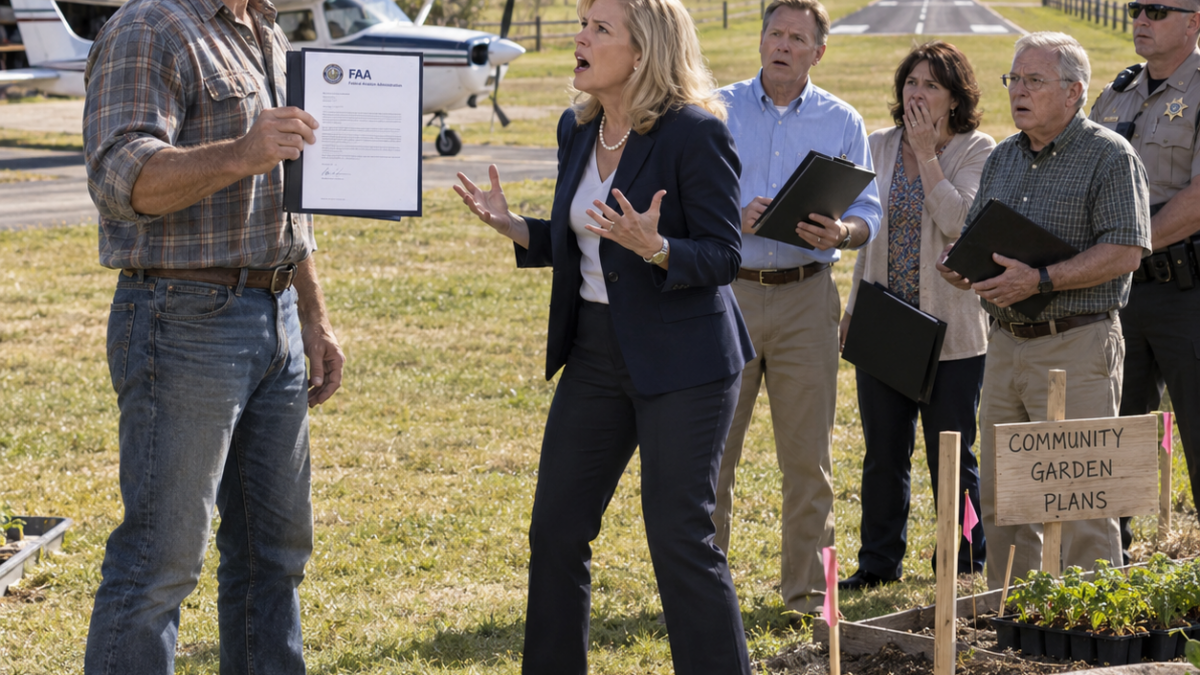
The HOA president stood at the edge of my runway and informed me that the private airstrip I had maintained for more than thirty years had just been “reassigned” as a community garden.
She already had the topsoil ordered, a rototiller scheduled for Monday morning, and a five-hundred-dollar fine in her hand because, according to her, my own grass runway no longer matched the neighborhood’s landscaping standards.
I could have laughed at how impossible her plan sounded, but when she told me what would happen to my airplane if I refused, I realized this woman was actually prepared to find out how far her authority could reach.
“Effective immediately,” Karen Peterson said, tapping her clipboard, “this area has been designated for the New Harmony Springs Organic Community Garden.”
I looked past her.
The late-afternoon sunlight stretched across the runway in long golden bands.
Half a mile of carefully maintained turf.
My turf.
Behind it stood the barn-style hangar I had built with friends from the Air Force nearly thirty years earlier. Inside sat my 1978 Cessna 172, polished, fueled, and ready for a medical flight scheduled later that week.
Karen called it a hobby airport.
To me, Miller Field had never been a hobby.
I had bought these twenty acres in 1988 while I was still flying C-130s for the Air Force. Back then there were no subdivisions, no decorative entrance monuments, no HOA board, and certainly no Karen.
Just farmland.
Pines.
Open sky.
I cleared the runway myself.
Graded it.
Seeded it.
Maintained every drainage ditch.
Registered the airfield.
Raised my son around it.
After retirement, I began volunteering for Angel Flight, using that same strip to carry patients who needed specialized medical care they could not easily reach by car.
Some of the most important flights of my life had started exactly where Karen was now standing.
She did not care.
“The board voted unanimously,” she continued.
Beside her stood Gary, the HOA vice president, who looked like he would rather be anywhere else, and another board member named Linda who kept staring at my hangar as though it personally offended her.
“Your runway is underutilized,” Karen said. “It is also visually inconsistent with the community’s master plan.”
“My property isn’t in your master plan.”
“It impacts our community.”
“That doesn’t make it yours.”
Her mouth tightened.
“Our bylaws were amended last month.”
She flipped a page.
“Section Seven, Article C. The architectural control committee may repurpose underutilized or nonconforming land for community betterment.”
I stared at her.
“Community land.”
She hesitated.
Then recovered.
“Land affecting the community.”
“That isn’t what you just read.”
Karen thrust a sheet toward me.
I did not take it.
“What’s that?”
“Your first fine.”
“For what?”
“Unauthorized landscaping and failure to maintain aesthetic harmony.”
I looked down at the runway.
The grass was trimmed more evenly than most lawns in Harmony Springs.
“How much?”
“Five hundred dollars.”
She smiled.
“It doubles every week until the violation is corrected.”
Gary shifted behind her.
I looked directly at him.
“Gary, do you believe your HOA owns my runway?”
He opened his mouth.
Karen answered for him.
“The board has spoken.”
That told me enough.
Then she delivered the sentence that changed my mood completely.
“The contractor arrives Monday at eight. We recommend you remove your aircraft before then.”
My voice went quiet.
“And if I don’t?”
Karen smiled again.
“We’ll have it moved.”
For a second, all I could hear was wind moving through the pines.
My Cessna was not merely an airplane.
My son Mark learned to fly in it.
I had carried frightened parents and sick children in it.
I had flown through grief in it after losing friends I served with.
That machine had given my retirement purpose when I suddenly had more silence than I knew what to do with.
Karen had just threatened to impound it because she wanted vegetables growing where airplanes landed.
I folded my arms.
“This runway is part of a federally registered private airfield.”
She laughed.
“We’re not intimidated by that.”
“You should at least understand it.”
“We understand perfectly.”
“No,” I said.
“You don’t.”
Her face hardened.
“Monday. Eight o’clock.”
She turned and began walking toward her golf cart.
Gary followed.
Linda followed.
I watched them disappear toward the rows of identical houses beyond my tree line.
Then I went into my office, opened the old property file I had kept since 1988, and placed my deed beside the federal airfield paperwork.
Forty-eight hours.
That was all they had given me.
And if Karen actually sent machinery onto that runway Monday morning, the next letter she received would not be coming from me.
PART 2
I called my son first.
Mark answered on the second ring.
“Hey, Dad.”
“You busy?”
“I’m a lawyer. I’m always pretending to be busy.”
“I need you.”
The humor disappeared.
“What happened?”
I looked through the window toward the runway.
“HOA voted to take Miller Field.”
Silence.
Then:
“Say that again.”
“They voted to turn the runway into a community garden.”
Another silence.
Longer.
“Your runway?”
“Yes.”
“The twenty acres that are specifically excluded from their covenants?”
“Yes.”
“The FAA-registered strip?”
“Yes.”
“Dad.”
“I know.”
“What exactly did they put in writing?”
I looked at the paper Karen had eventually dropped near my gate when I refused to take it.
“Fine notice. Board resolution. Monday deadline.”
“Do not touch anything.”
“I wasn’t planning to.”
“Don’t call Karen.”
“Wasn’t planning to.”
“Don’t threaten anybody.”
“Mark.”
“I know you.”
“I spent thirty-one years landing airplanes without killing anyone.”
“You also once chased a contractor off this property with a shovel.”
“He was stealing topsoil.”
“Dad.”
“I didn’t hit him.”
“That is not the defense you think it is.”
Despite everything, I smiled.
“Come over.”
“I’m leaving now.”
Mark arrived forty minutes later carrying his briefcase, laptop, and the expression he wore when somebody had done something legally foolish enough to offend him personally.
He was forty-one then.
Tall.
Calmer than I had been at his age.
His mother used to say he inherited my patience but her ability to know when I was wrong.
I missed her most when the two of us sat at the dining table arguing about strategy.
Mark read Karen’s resolution.
Then again.
He looked at the HOA fine.
Then at me.
“Where is their parcel map?”
I slid over a folder.
Mark unfolded the county plat.
Harmony Springs spread across more than a thousand acres.
My property sat against its western edge.
Separate parcel.
Separate deed.
Separate legal description.
The development wrapped around one side of me but never included me.
“Road agreement?”
I handed it over.
After the original developer failed, the HOA took responsibility for the private access road connecting the subdivision to the county road. Because I used a portion of that road, I contributed annually to maintenance.
Karen had apparently turned that narrow financial connection into a fantasy of ownership.
Mark read the agreement.
“This gives them absolutely nothing beyond road maintenance.”
“I know.”
“Did she ever claim otherwise before now?”
“Hangar paint.”
“What?”
“Two years ago she told me the hangar needed to be beige.”
Mark closed his eyes.
“What did you do?”
“Sent a lawyer letter.”
“Which lawyer?”
“Bradley.”
“Dad, Bradley does estate planning.”
“He knows how to write.”
Mark shook his head.
“What else?”
“Noise complaints.”
“Formal?”
“Three.”
“Resolved?”
“Yes.”
“How?”
“Preexisting lawful use. Daylight operations. No ordinance violations.”
Mark leaned back.
“So she has already been told more than once that your parcel is outside the HOA.”
“Yes.”
“And now she has put in writing that the board intends to physically alter your land.”
“Yes.”
His mouth tightened.
“Good.”
I stared at him.
“Good?”
“Legally.”
“I’m not interested in being legally delighted while somebody destroys my runway.”
“They won’t.”
“You sound sure.”
“I am.”
I looked toward the hangar.
“You remember your first solo?”
Mark smiled despite himself.
“Unfortunately.”
“You bounced the landing.”
“I did not bounce it.”
“You bounced twice.”
“It was gusty.”
“It was six knots.”
“You promised never to mention that again.”
“I’m old. Promises expire.”
He laughed.
That small moment loosened something in my chest.
Miller Field was not acreage to either of us.
It was history.
His mother, Anne, had hated flying.
Absolutely hated it.
But she came outside for every lesson when Mark was sixteen.
She sat on a folding chair beside the hangar with binoculars that she never learned to focus properly.
When he made his first solo takeoff, she grabbed my arm so hard her fingernails left marks.
“He’s too young.”
“He’s trained.”
“He’s a child.”
“He’s seventeen.”
“Exactly.”
Mark landed safely.
Mostly.
Anne cried.
I pretended not to.
Years later, cancer took her before retirement gave us the years we had planned.
After that, flying changed.
It was no longer just joy.
It was somewhere grief could breathe.
Then Angel Flight gave it purpose.
I began transporting patients.
Some were adults.
Some were children.
Some talked nonstop because they were terrified.
Others sat quietly staring through the window.
Every time the wheels left Miller Field, I felt the old sense of mission return.
Not military mission.
Human mission.
Get this person where they need to go.
Bring them home if you can.
That mattered.
Karen saw grass.
I saw all of that.
Mark pulled me back.
“We need a response tonight.”
“What are we saying?”
“Everything.”
We built the letter carefully.
Not angry.
Not theatrical.
Lawyers have a talent for making fury look like twelve-point Times New Roman.
First: property ownership.
Deed attached.
County plat attached.
Harmony Springs boundary highlighted.
Second: HOA authority.
My property had never been annexed.
Never subjected to CC&Rs.
Never voted in.
Never consented.
The shared-road agreement granted maintenance rights over one strip of pavement and nothing else.
Third: established use.
Miller Field predated Harmony Springs by decades.
The runway existed lawfully before the subdivision.
The hangar existed lawfully.
Flight operations existed lawfully.
Fourth: aviation status.
FAA identifier 5NC1.
Registered private-use landing area.
Mark was careful here.
“We don’t oversell federal authority,” he said.
“What do you mean?”
“Federal involvement does not magically turn your whole property into Fort Knox.”
“I know.”
“But aviation safety changes the stakes. If they deliberately dig up an active runway after notice, they create hazards and potentially interfere with regulated flight operations.”
“Exactly.”
“We state that precisely.”
He typed.
Finally: notice.
Any attempt to enter my parcel, damage the runway, move the aircraft, place soil, fencing, irrigation, equipment, or obstructions onto the operating surface would be treated as trespass and documented for appropriate authorities.
We demanded rescission of the HOA resolution.
Cancellation of the fine.
Written acknowledgment that the association possessed no authority over Miller Field.
Then Mark added:
“All members of the board are hereby placed on individual notice.”
I read it.
“You enjoy that sentence.”
“Very much.”
“Why?”
“Because boards hide behind the word ‘we.’”
He tapped the keyboard.
“I want Karen, Gary, Linda, and every other director to understand they are human beings making individual decisions, not some mystical entity called the HOA.”
By Sunday morning, every director had a copy.
Certified mail.
Email.
Property manager.
Registered agent.
Their counsel.
Then I called Dave Reynolds.
Dave and I had flown together decades earlier.
He eventually left the Air Force and later worked high enough inside the FAA that I stopped understanding exactly what his job title meant.
By retirement, he knew enough about aviation bureaucracy to make most pilots nervous.
He answered with:
“If this is about your annual inspection, I’m retired.”
“It isn’t.”
I explained.
There was a long pause.
Then an even longer whistle.
“They voted to plant tomatoes on a runway?”
“Organic tomatoes, apparently.”
“Ah. Federal regulations fear organic produce.”
“Helpful.”
“Sorry.”
I heard him moving papers.
“What’s the airfield identifier?”
“5NC1.”
“I remember.”
“You should.”
“You made me land there once after rain. Nearly lost my fillings.”
“You were fast.”
“Runway was wet.”
“Pilot error.”
“Thirty years and still annoying.”
Then his voice turned serious.
“Has anybody physically entered the runway?”
“No.”
“Threatened to?”
“Monday at eight.”
“You warned them?”
“Lawyer notice delivered.”
“Good.”
“What do I do?”
“Document.”
“I expected that.”
“Video everything.”
“I can.”
“Signs.”
“Private property?”
“Yes, plus airfield identification. Keep language factual.”
“Then?”
“Let them decide whether they’re stupid.”
I laughed once.
“You think they’ll come?”
“I’ve worked with local boards for forty years.”
“So yes.”
“Oh yes.”
He gave me contact information for the regional airport office and walked me through the language I should use if the HOA attempted physical alteration.
“Do not call this terrorism.”
“I wasn’t planning to.”
“Do not call it sabotage unless the facts support that.”
“Understood.”
“Do not lecture the contractor.”
“That might be difficult.”
“John.”
“Yes.”
“Facts.”
“Facts.”
“Your strongest position is that you look like the only adult in the story.”
That hurt slightly.
Sunday afternoon I installed security cameras.
One on the hangar.
One near the gate.
Two on posts covering the runway entrance and approach end.
I had avoided doing that for years.
I liked privacy.
Cameras made a place feel defended instead of lived in.
But I wanted evidence.
At sunset I walked the runway.
The grass was cool beneath my boots.
Every few hundred feet, I checked for ruts, debris, animal holes.
Old pilot habit.
I reached the far end and turned.
The hangar sat small against the trees.
Beyond it rose Harmony Springs.
Roofs.
Streetlights.
A water tower.
When the development first arrived, I worried the residents would complain about airplanes.
Most did not.
Children waved.
Adults stopped along the road sometimes to watch.
One family brought lawn chairs once when I flew an antique Stearman belonging to a friend.
Karen changed that.
Her genius, if one can call it that, was taking something people were mostly indifferent to and teaching them to see it as a threat.
Noise.
Danger.
Privilege.
Unsightly land.
She understood resentment.
What she did not understand was aviation.
Or deeds.
Or me.
Monday morning I woke at 5:30.
Old habits.
Coffee.
Weather.
Runway check.
No flight scheduled.
The security feed filled four windows on my laptop.
At 7:53, a truck appeared.
White diesel pickup.
Flatbed trailer.
Rototiller.
Big one.
The kind used to break agricultural soil.
I felt my pulse change.
Not panic.
Preparation.
At 8:00 exactly the truck stopped at the gate.
The driver climbed out.
Young.
Maybe thirty.
Baseball cap.
Work shirt.
He approached the sign.
PRIVATE PROPERTY.
PRIVATE AIRFIELD 5NC1.
NO UNAUTHORIZED ENTRY.
He read it.
Then looked through the gate.
Runway.
Wind sock.
Hangar.
Aircraft tail visible inside.
He went back to the truck.
Phone out.
Eight minutes later Karen arrived in her golf cart.
Gary beside her.
She got out already angry.
I could hear her before leaving the house.
“I don’t care what he put on the sign.”
The contractor said something.
Karen pointed toward the gate.
“He’s trying to intimidate you.”
I walked out.
“Morning.”
Gary looked down.
Karen did not.
“You’re obstructing an authorized community project.”
“I’m protecting private property.”
“You received the board resolution.”
“You received my cease-and-desist.”
Her eyes flashed.
“That letter is meaningless.”
I looked at Gary.
“You agree?”
He looked at Karen.
Then at me.
“We voted.”
“That wasn’t my question.”
Karen stepped between us.
“You will not divide this board.”
I turned toward the contractor.
“What’s your name?”
“Mike.”
“Mike, did they tell you this was private property?”
He glanced toward Karen.
“They said it was HOA common land.”
“It isn’t.”
“They said there was a dispute.”
“Did they tell you this is a registered private airfield?”
Mike looked toward the wind sock.
“No.”
Karen snapped:
“It’s irrelevant.”
Mike turned to her.
“You said it was an old abandoned strip.”
“It’s barely used.”
“That isn’t the same thing.”
I handed Mike a copy of the letter.
“You don’t have to believe me. Call your boss. Call your insurer. Call the number for my attorney.”
Karen stepped forward.
“He has no authority to interfere with our contractor.”
“It’s my land.”
“We have indemnified the company.”
Mike looked sharply at her.
“Indemnified?”
Karen nodded.
“The association assumes liability.”
Mike scratched his jaw.
“For property damage?”
“For the work.”
I said:
“Ask whether that indemnity covers knowingly entering private property after written notice.”
Karen rolled her eyes.
“Oh please.”
Mike looked at the sign again.
Then at the camera.
Its indicator light blinked.
I kept my voice calm.
“This is being recorded.”
He froze.
“I’m not threatening you. I’m protecting both of us.”
Karen said:
“Unload the machine.”
Mike did not move.
“Mike.”
He took one step backward.
“No.”
Karen stared.
“What did you say?”
“I’m not taking that machine through the gate.”
“You’re under contract.”
“My contract says community garden site preparation.”
“That is the site.”
“He says it’s an airfield.”
“He’s lying.”
Mike pointed.
“There’s a wind sock.”
Karen’s face reddened.
“Do you know who I am?”
Mike actually laughed.
“Ma’am, I know who’s paying the invoice.”
He looked at me.
“And I know I’m not risking my company because two people are arguing about who owns dirt.”
“Grass,” I corrected.
He smiled slightly.
“Sorry.”
Karen pointed toward him.
“If you leave, you’ll never work for this association again.”
“Okay.”
“You’re willing to throw away thousands of dollars?”
“I’m willing not to get sued.”
He climbed into the truck.
Karen followed.
“Mike!”
The engine started.
She slapped the side of the door.
He rolled down the window.
“You need to call your lawyer.”
Then he drove away.
The rototiller disappeared around the bend.
Gary looked like he might vomit.
Karen turned toward me.
Every ounce of embarrassment became rage.
“You think this means anything?”
“It means the runway survives Monday.”
“We will bury you in fines.”
“You don’t have jurisdiction.”
“We’ll lien the property.”
“You don’t have jurisdiction.”
“We’ll sue.”
“You’re welcome to try.”
“We’ll have the aircraft impounded.”
That one made me laugh.
Wrong move.
Karen became more furious.
“You find this funny?”
“No.”
I looked at the hangar.
“I find it exhausting.”
Her voice rose.
“You will regret humiliating me in front of that contractor.”
There it was.
Not community garden.
Not aesthetics.
Her.
“You humiliated yourself.”
Gary whispered:
“Karen.”
She spun.
“What?”
He nodded toward the cameras.
She looked.
For the first time, hesitation.
Then she recovered.
“I hope you recorded everything.”
“I did.”
“Good. Then everyone can see your threats.”
“I haven’t threatened anybody.”
“You threatened federal prosecution.”
“I explained risk to a contractor.”
She jabbed her finger toward me.
“This is not over.”
“No.”
I agreed.
“It isn’t.”
They left.
I stood beside the gate until the golf cart vanished.
Then I went inside.
Saved the footage twice.
Cloud backup.
External drive.
Then called Dave.
“They came.”
“No.”
“They came.”
“With equipment?”
“Rototiller.”
“Did it enter?”
“No.”
“Why?”
“Contractor refused.”
“Video?”
“Everything.”
Dave exhaled.
“Okay.”
“What?”
“You have an overt attempt.”
I sat down.
“Time?”
“Time.”
I filed the report.
No adjectives.
No rant.
HOA passed resolution to convert registered private-use landing area.
Property excluded from association.
Written notice delivered.
Contractor arrived with ground-disturbing machinery.
HOA president attempted to direct machinery onto active runway.
Contractor refused after being informed of property and aviation status.
Video attached.
Board documents attached.
Deed.
Plat.
Road agreement.
Cease-and-desist.
FAA registration information.
Submit.
Then I waited.
Government waiting is a special kind of time.
Pilots understand weather delays.
Veterans understand administrative delays.
Lawyers bill for delays.
Mark called twice a day.
“Anything?”
“No.”
“Anything?”
“No.”
Forty-three hours after filing, my phone showed BLOCKED CALLER.
I answered.
“John Miller.”
“Colonel Miller?”
“Yes.”
“My name is Frank Henderson. I’m with the FAA regional airports office.”
My back straightened automatically.
“Good morning.”
“We received your submission regarding Miller Field, identifier 5NC1.”
“Yes, sir.”
“I reviewed the supporting video.”
He paused.
“That is an unusual one.”
I almost laughed.
“You could say that.”
“I want to clarify several things.”
He asked dates.
Runway status.
Whether NOTAMs were involved.
Flight frequency.
Private-use designation.
Physical condition.
Whether any actual obstruction had been installed.
No.
Whether equipment had crossed the boundary.
No.
Whether I planned operations during the disputed period.
Yes.
Angel Flight mission later that week.
His tone changed slightly.
“Medical transport?”
“Volunteer.”
“I understand.”
He continued.
“We are issuing a formal inquiry to the association.”
“When?”
“Today.”
“What does that mean?”
“It means we are asking them to explain the basis and intent of their action and advising them that physical alteration or obstruction of an operating landing area raises serious safety concerns.”
“Will that stop them?”
“That depends on them.”
“Karen doesn’t respond well to warnings.”
“I gathered that from the video.”
I smiled.
Henderson continued.
“Do not engage in escalating conduct. Continue documenting. If anyone enters the runway with equipment, call local law enforcement for the property issue and contact my office immediately regarding the aviation safety concern.”
“Understood.”
“And Colonel?”
“Yes?”
“Do not operate if you believe the runway has been compromised.”
That mattered.
“Understood.”
The letter arrived at Karen’s house the next day.
I did not see it.
Half the neighborhood did.
By lunchtime my phone started filling with messages.
Not because I was in the HOA group.
I was not.
Because several residents had my number.
Karen called emergency meeting.
Federal interference.
Community sovereignty.
Garden project.
Bullying.
By evening, a forwarded email landed in Mark’s inbox.
He read it aloud over dinner.
“Dear residents, our community is facing an unprecedented effort by an outside federal agency and an individual property owner to override the democratically expressed wishes of Harmony Springs.”
I put down my fork.
“Democratically expressed wishes?”
Mark continued.
“The board remains committed to creating healthy shared spaces for our families despite intimidation tactics.”
“What families voted to take my land?”
“Apparently democracy has evolved.”
I stared toward the runway.
“You know what bothers me?”
“What?”
“Some people will believe this.”
“They might.”
“She’ll make it sound like rich old pilot versus children wanting tomatoes.”
Mark leaned back.
“Then show them the truth.”
“I’m not in their association.”
“You’re still their neighbor.”
The emergency meeting was Thursday.
I almost stayed home.
Mark insisted.
“If you aren’t there, she owns the room.”
“I hate rooms.”
“You commanded air crews.”
“Air crews have training.”
“These people have Facebook.”
“Exactly.”
The clubhouse parking lot overflowed.
Inside, maybe a hundred residents.
I recognized a few.
Most knew me only by sight.
The old pilot.
The airplane guy.
The strange property beside the subdivision.
Mark and I sat in the back.
Karen stood at the front.
She had printed the FAA letter.
Held it up dramatically.
“This,” she said, “is what happens when one individual uses federal connections to intimidate an entire community.”
Murmurs.
Some supportive.
She continued.
“Our residents voted for a community garden.”
Technically false.
The board voted.
But she moved quickly.
“A place where our children can learn about sustainability.”
A mother nodded.
“A place where seniors can participate in healthy outdoor activity.”
More agreement.
“A place where we can grow food together instead of staring at an unnecessary private runway used by one man.”
That one hurt more than it should have.
Not because she insulted me.
Because I saw heads turn.
One man.
One plane.
Twenty acres.
Her framing was effective.
Karen pointed toward the windows as though my runway were visible through them.
“For years our community has tolerated noise, risk, and visual blight.”
Mark whispered:
“She’s good.”
“I know.”
“If she had facts, she’d be dangerous.”
“She doesn’t need facts if nobody hears them.”
Karen raised the FAA letter.
“Now Washington bureaucrats tell us we cannot improve land affecting our community.”
Applause.
Not huge.
Enough.
Then she made a mistake.
“Questions?”
I stood.
She saw me.
Her face changed.
“Colonel Miller.”
“Karen.”
“This meeting is for Harmony Springs members.”
“Then stop discussing my property.”
Murmurs.
Mark stood beside me.
“I represent the property owner.”
That helped.
Karen’s attorney, seated near the front, looked over.
She reluctantly gestured.
“Three minutes.”
I walked forward carrying a large printed plat.
Mark carried an easel.
We unfolded it.
Red outline around Harmony Springs.
Blue outline around my parcel.
“This is the county plat.”
I pointed.
“Harmony Springs.”
Then:
“Miller Field.”
Separate.
Distinct.
“Twenty acres.”
I turned toward the residents.
“Your board did not vote to repurpose community land.”
Silence began to replace murmurs.
“They voted to enter land I own and plow an operating runway.”
Karen interrupted.
“It affects our common area.”
“Your bylaws don’t convert visibility into ownership.”
Someone laughed.
She glared.
I continued.
“I pay toward maintenance of the access road because I use it. That agreement does not place my acreage inside your association.”
A man near the front raised his hand.
“So you’re not actually an HOA member?”
“No.”
People looked at Karen.
She said:
“He is functionally connected.”
“Not legally.”
Mark called from behind me.
“Not remotely.”
Karen shot him a look.
I continued.
“This also isn’t simply about my desire to own an airplane.”
Karen smiled, sensing an opening.
I turned toward the crowd.
“Sarah McConnell?”
A woman in the middle stood slowly.
She had contacted me the day before after hearing about the meeting.
Her son Daniel had flown with me three times.
Daniel was seven.
Congenital heart condition.
Specialist hundreds of miles away.
Long car rides left him exhausted and in pain.
Sarah’s hands shook.
She hated speaking publicly.
I had told her she did not have to.
She insisted.
“My son has a heart condition.”
The room quieted.
“The hospital that treats him is about four hundred miles away.”
She swallowed.
“We cannot afford regular commercial flights.”
Karen shifted.
Sarah continued.
“Colonel Miller volunteers with Angel Flight.”
A woman near the front whispered something.
Sarah looked toward me.
“He flew Daniel there three times.”
Her voice cracked.
“For free.”
Silence.
“He picked us up at that runway.”
Now people were looking at Karen.
“Daniel used to spend almost seven hours in the car for some appointments. After surgery, that was terrible for him.”
She wiped her cheek.
“The first time Colonel Miller flew us, Daniel thought he was a real pilot.”
Laughter moved softly through the room.
I smiled.
Sarah did too.
“I had to explain that he was, in fact, a real pilot.”
More laughter.
Then she became serious.
“That runway may look like empty grass to some of you.”
She looked at Karen.
“It isn’t empty to us.”
I saw Karen preparing to interrupt.
Before she could, an older man stood.
“Since we’re talking about community benefit…”
Karen’s face tightened.
His name was Tom Benson.
I knew him from morning walks.
He held a violation notice.
“My grandkids’ swing set.”
Karen struck the gavel.
“This meeting is about the airstrip.”
Tom ignored her.
“One thousand dollars.”
Gasps.
“Because it was rustic brown.”
Someone shouted:
“What?”
Tom held the letter up.
“Apparently approved brown is different from rustic brown.”
Laughter.
Then anger.
A woman stood.
“You made me remove my rose garden.”
Another:
“You fined us for a basketball hoop the developer installed!”
A man near the wall:
“You threatened my wife over a flag!”
Karen hit the gavel.
“Order!”
Nobody cared.
Years of pressure found a crack.
I stepped backward.
Mark leaned toward me.
“You’re done.”
“What?”
“This isn’t your meeting anymore.”
He was right.
The room had turned.
Not because I had defeated Karen.
Because residents finally realized their private frustrations were shared.
People stood one after another.
Trash bins.
Garden edging.
Play equipment.
Paint colors.
Decorations.
Petty fines.
Threats.
Karen shouted for order.
The gavel became meaningless.
Finally the HOA attorney stood and requested adjournment.
Karen refused.
He whispered to her.
She slammed the meeting closed.
Residents stayed.
That was the moment her control truly began slipping.
But losing a room did not make Karen cautious.
It made her reckless.
Three days later, Mark received a copy of a letter from the HOA’s law firm.
It was addressed to me.
Heavy envelope.
Aggressive language.
Public nuisance.
Unauthorized aviation activity.
Interference with community governance.
Malicious reporting to a federal agency.
Demand for withdrawal of the FAA complaint.
Threat of litigation.
I read it twice.
Then looked at Mark.
“They want me to withdraw a safety complaint?”
“Yes.”
“Can they do that?”
“They can ask.”
“And sue if I don’t?”
“They can attempt something.”
He smiled.
“What?”
“You know what lawyers love?”
“Money.”
“Besides money.”
“More money?”
“Bad letters from opposing lawyers.”
He placed the document on his desk.
“This is excellent.”
“You have a strange definition of excellent.”
“They put retaliation in writing.”
The HOA attorney’s theory was strained.
My reporting to the FAA was supposedly designed to disrupt lawful association governance.
Mark stared at the sentence.
“This is almost generous.”
“To us?”
“To any future judge reading it.”
He called another lawyer he knew.
Then the HOA’s insurance situation came up.
“Board members usually have directors-and-officers coverage,” Mark explained.
“I know.”
“But carriers dislike intentional conduct, knowing violations, fraud, malice, actions outside authority.”
“You think they’re exposed personally?”
“I think they need to wonder.”
That was enough.
Our next notice named the association.
Karen.
Gary.
Linda.
The other directors.
Personally where appropriate.
Potential claims.
Trespass.
Attempted conversion.
Slander of title based on their public claims over my land.
Abuse of process.
Retaliatory conduct.
Interference with lawful airfield operations.
Legal fees.
Security expenses.
Damages.
And a warning that continued conduct after documented notice could materially affect insurance coverage.
Mark sent it by process server.
That part was his idea.
“Why not certified mail?”
“Because people ignore certified mail.”
“They don’t ignore process servers?”
“They remember a stranger standing on their porch handing them a document with their name in bold.”
He was right.
Gary called me that evening.
First direct call he had ever made.
“Colonel?”
“Gary.”
“I didn’t know.”
“Know what?”
“That the property was outside the HOA.”
I almost laughed.
“Gary, you stood on it.”
“I mean the legal details.”
“You voted.”
“Karen said counsel approved everything.”
“Did you read the deed?”
“No.”
“Plat?”
“No.”
“Road agreement?”
“No.”
“FAA documents?”
“No.”
Silence.
Then:
“I’m sorry.”
That disarmed me.
I had expected excuses.
“I appreciate that.”
“What happens now?”
“That depends on the board.”
“I have a family.”
“So do I.”
“I could lose my house.”
“I’m not trying to take your house.”
“The notice says personal damages.”
“The notice says what may happen if you keep participating.”
Another silence.
“What should I do?”
I answered carefully.
“I’m not your lawyer.”
“I know.”
“Then get one.”
He exhaled.
“Karen says backing down means we admit wrongdoing.”
“Sometimes admitting wrongdoing is called honesty.”
Gary hung up.
I wondered if he heard it.
The FAA response deadline approached.
Reasonable people would have used that time to retreat.
Karen used it to write.
Or more accurately, to drive her attorney into writing something catastrophically foolish.
The HOA’s official response argued that Harmony Springs had broad authority to regulate land visible from common areas.
They claimed aesthetic and public-safety powers.
They alleged Miller Field endangered neighborhood children.
They asserted the garden conversion served community welfare.
Most disastrously, they stated an intention to continue pursuing the project.
Mark obtained the response later.
He read one paragraph.
Stopped.
Read it again.
Then looked at me.
“Dad.”
“What?”
“They admitted it.”
“Admitted what?”
“Intent.”
He slid the letter across.
The association remained committed to conversion of the nonconforming landing area.
I stared.
“They called it nonconforming.”
“It isn’t even inside the association.”
“I know.”
“How did their lawyer sign this?”
“Poorly.”
The FAA’s next letter changed everything.
Not an inquiry.
Formal enforcement notice.
Proposed civil penalties.
Warnings regarding physical obstruction and aviation safety.
Dollar figures large enough to frighten anyone responsible for a reserve account.
The number that spread through Harmony Springs was eleven thousand dollars per day tied to continued violation allegations after notice.
Whether every resident understood the technical basis did not matter.
They understood one thing.
Their HOA might owe hundreds of thousands of dollars because Karen would not stop.
Copies went to directors.
Gary called Mark.
Linda hired personal counsel.
Another director stopped attending meetings.
The HOA’s insurance carrier requested documents.
Then the neighborhood social-media group exploded.
I did not see the posts directly.
Mark showed me screenshots.
WHO IS PAYING THIS?
ARE WE GETTING A SPECIAL ASSESSMENT?
WHY DID THE BOARD IGNORE THE DEED?
WHO APPROVED THE LAWYER?
CAN WE RECALL THEM?
Karen posted:
DO NOT PANIC. THIS IS A NEGOTIATION TACTIC.
That made everyone panic.
A resident calculated what a six-figure penalty might mean if divided across households.
The number spread.
Then doubled in rumor.
Then doubled again.
By dinner some people believed each homeowner owed fifty thousand dollars.
That was not true.
Fear rarely waits for accounting.
The next emergency meeting was called by residents.
Not Karen.
I did not want to attend.
Mark did.
“You should see this.”
“I’ve seen enough HOA meetings for one lifetime.”
“You’ve only seen two.”
“Exactly.”
We went.
The clubhouse doors barely closed.
Standing room.
Angry residents.
Board at front.
HOA lawyer looked sick.
Karen looked angry enough to burn oxygen.
The lawyer tried first.
“The FAA notice is preliminary.”
Shouts.
“Why is there a notice at all?”
“You told us this was legal!”
“Are you paying the fine?”
The lawyer raised both hands.
“There are appeal procedures.”
A man shouted:
“Appeal what? We don’t own his land!”
Applause.
Karen took the microphone.
Big mistake.
“This is federal overreach.”
Boos.
“We cannot allow bureaucrats to bully—”
“YOU DID THIS!”
The voice came from somewhere behind us.
Everyone turned.
A man I did not know stood near the wall.
“You did this, Karen. Not Washington. Not him.”
He pointed toward me.
“You voted to take somebody else’s property and now you want us to pay.”
Applause thundered.
Karen waited.
The room did not calm.
Gary stood.
He looked pale.
His hands shook.
“I need to make a statement.”
Karen turned.
“Sit down.”
He did not.
“I am resigning from the Harmony Springs board effective immediately.”
The room went quiet.
Karen stared.
“Gary.”
“I was told the garden project was legally authorized.”
“It was.”
Gary looked toward the attorney.
The attorney looked away.
“I was not shown Colonel Miller’s deed before the vote.”
Karen snapped:
“You had access to the packet.”
“No.”
“You voted.”
“I trusted you.”
That was the first honest sentence I heard from Gary all month.
“I should not have.”
He looked toward the residents.
“I’m sorry.”
Then toward me.
“I’m sorry.”
He stepped away from the table.
Karen grabbed his arm.
“Do not walk out.”
He pulled free.
“I have kids.”
“So does everyone.”
“No, Karen.”
His voice cracked.
“I’m not losing my house over your garden.”
He left.
Linda stood next.
“I also resign.”
Karen spun.
“What?”
“I didn’t vote to violate federal law.”
“You voted for the project.”
“You told us counsel cleared it.”
The attorney finally spoke.
“I advised caution.”
Karen glared.
“You said the HOA had authority.”
“I said the association had potential remedies regarding impacts from adjacent property. I did not advise physical entry and destruction.”
That distinction was doing a lot of work.
Linda gathered her purse.
“I’m done.”
She left.
Another director resigned.
Then another.
Four directors gone in less than five minutes.
Karen sat alone.
Not literally.
The attorney remained.
But politically, alone.
She grabbed the microphone.
“This board cannot conduct business without quorum.”
Tom Benson stood on a chair holding paper.
“We’re not asking the board.”
He raised the petition.
“Recall.”
Cheers.
“Our bylaws allow a member petition.”
Karen banged the gavel.
No sound came.
The gavel was not there.
Gary had taken the folder containing meeting materials when he left, and apparently the gavel with it.
Someone laughed.
Karen looked at the empty place where it should have been.
That small detail was brutal.
Tom continued.
“We need twenty-five percent.”
A line formed.
Not figuratively.
People physically lined up.
Within minutes there were enough signatures.
More kept coming.
Karen stood.
“This is mob rule.”
Sarah McConnell answered from the crowd.
“No. This is the community.”
Karen’s lawyer leaned toward her.
Whispered.
I watched her shoulders drop.
She looked around the room.
At the people.
At me.
At Mark.
Then she walked out through a side door.
Nobody followed.
For the first time since the fight began, I did not feel victorious.
I felt tired.
Deeply tired.
Mark noticed.
“You okay?”
“Yes.”
“You don’t look okay.”
“I’m thinking about Anne.”
His expression softened.
“Why?”
“She would hate all this.”
“She’d love the ending.”
“It isn’t over.”
“It will be.”
We left before the meeting ended.
I wanted air.
Real air.
Outside, the night was cold.
Stars over the clubhouse.
I looked toward my property beyond the trees.
“When you were little,” I told Mark, “your mother wanted to sell the plane.”
He laughed.
“No she didn’t.”
“She absolutely did.”
“Why?”
“You were three.”
“What did I do?”
“Nothing. She just realized airplanes crash.”
“Fair concern.”
“I told her driving was statistically—”
“Dad.”
“I know.”
“She stayed.”
“She stayed.”
I smiled.
“She never liked flying. But she liked what flying did to me.”
Mark put his hands in his pockets.
“What did it do?”
“Made the world feel bigger.”
We walked toward the car.
“That’s why I couldn’t let Karen take it.”
“I know.”
“No.”
I stopped.
“You think this was property law.”
“It was.”
“It was also the last place your mother and I still had plans.”
Mark looked at me.
I had never said that aloud.
“After retirement, we were going to fly west.”
“To California?”
“Eventually.”
“She hated flying.”
“She loved hotels.”
He laughed softly.
“She said she’d tolerate the plane if every third night had room service.”
“That sounds like Mom.”
“We never got to.”
Cancer.
He did not need me to say it.
“So when I look at Miller Field…”
My voice caught unexpectedly.
I cleared it.
“I see all the trips we didn’t take.”
Mark said nothing.
Then put a hand on my shoulder.
“Maybe take one.”
“With who?”
“Me.”
“You have court.”
“I have partners.”
“You hate turbulence.”
“I hate your turbulence.”
“Pilot error?”
“Exactly.”
That conversation mattered more than the board resignations.
The next weeks moved quickly.
Harmony Springs created an interim board.
Tom Benson became president.
His qualifications seemed to be common sense, a swing set, and the fact that nobody else wanted the job.
He called me.
“Colonel Miller?”
“John.”
“I’m not calling you John.”
“You just became HOA president, not my commanding officer.”
He laughed nervously.
“Fair.”
“What can I do?”
“Apologize.”
“You’re doing that now.”
“No. Officially.”
The interim board invited me to a meeting.
This time my name was on the agenda under:
FORMAL APOLOGY AND RESOLUTION OF MILLER FIELD DISPUTE.
I nearly framed that.
The board rescinded every resolution concerning my property.
Cancelled the $500 fine.
Formally acknowledged that my twenty acres were outside association jurisdiction.
Passed a rule requiring independent legal review before the HOA asserted authority over any nonmember parcel.
And adopted explicit recognition of Miller Field’s preexisting status.
Then Tom addressed the FAA.
Not emotionally.
Not defiantly.
He sent minutes.
Resignations.
New board roster.
Rescission.
Compliance plan.
A commitment that no person acting for Harmony Springs would enter, obstruct, alter, or otherwise interfere with the runway.
The response from Inspector Henderson was measured.
The FAA had gotten what it wanted most.
Safety.
Compliance.
No obstruction.
No continued threat.
The large proposed penalty did not vanish completely.
But much of it was suspended or reduced based on the change in leadership and cooperation.
The final amount hurt.
It did not destroy the association.
The interim board paid it from reserves.
No catastrophic special assessment.
Mandatory education on airport environs and aviation-safety obligations followed.
Tom later told me:
“I never imagined being HOA president would involve an FAA training module.”
“Life expands your horizons.”
“I hate you.”
“Join the club.”
Then came my legal claims.
Harmony Springs’ insurance carrier approached Mark.
They wanted settlement.
The evidence was ugly.
Board resolution.
Property documents.
Cease-and-desist.
Video of the rototiller attempt.
Threatening legal letter.
FAA correspondence.
Director resignations.
A trial would be expensive.
Unpredictable.
Embarrassing.
Mark came to my house.
“Numbers.”
“I don’t want numbers.”
“You always want numbers.”
“Not this time.”
He sat at the table.
“They’ll cover legal fees.”
“Good.”
“Security system.”
“Good.”
“Some damages.”
“How much?”
He told me.
It was more than I expected.
I looked toward the window.
Runway.
“What?”
Mark asked.
“I don’t need it.”
“That has never stopped anyone from accepting money.”
“I’m serious.”
“You were harassed.”
“I know.”
“They threatened your land.”
“I know.”
“You spent money defending yourself.”
“Cover that.”
“Dad.”
I thought about Sarah McConnell.
Daniel.
The other Angel Flight families.
“Have the damages portion made payable to Angel Flight.”
Mark stared.
“You don’t have to prove anything.”
“I’m not.”
“Then why?”
“Because Karen said the runway served one man.”
He smiled.
“Okay.”
The settlement closed.
Legal fees reimbursed.
Security costs reimbursed.
Modest damages donation to Angel Flight.
Claims against the association dismissed.
What about the former board personally?
That was harder.
Mark had arguments for keeping them in.
Especially Karen.
I imagined depositions.
Years.
Attorney letters.
Court dates.
Appeals.
Gary had apologized.
Linda had resigned.
Others admitted negligence.
Karen never did.
Part of me wanted consequence specifically for her.
Then I remembered what Dave said about looking like the adult.
More importantly, I remembered why I owned the airfield.
Freedom.
Not litigation.
“Drop the personal claims.”
Mark frowned.
“All?”
“Yes.”
“Even Karen?”
“Yes.”
“Why?”
“She lost the presidency.”
“Not enough.”
“She lost the board.”
“Not enough.”
“Her own neighbors recalled her.”
“Not enough.”
“She received federal enforcement letters at home.”
Mark paused.
“That part was probably unpleasant.”
“She spent weeks thinking she might lose everything.”
“She tried to take your land.”
“I know.”
“You’re allowed to be angry.”
“I am angry.”
“Then why let her off?”
I leaned back.
“Because revenge is expensive.”
He said nothing.
“I don’t mean money.”
He understood.
“I want to fly.”
So we dropped the personal claims.
Not because Karen deserved forgiveness.
Because I deserved an ending.
Harmony Springs changed.
Slowly.
The first sign was absurd.
Tom’s swing set.
The one in the wrong shade of rustic brown.
He brought it back.
His grandchildren played on it.
Nobody fined him.
Another family replanted flowers.
A basketball hoop returned.
The memorial rose garden was restored.
The HOA still existed.
Some rules remained.
Roads still needed maintenance.
Pool needed insurance.
Common landscaping needed contracts.
But the new board learned to distinguish maintenance from domination.
Residents learned something too.
Show up.
Read minutes.
Ask questions.
Volunteer.
Do not complain that an HOA is controlled by tyrants if every reasonable person refuses to attend meetings.
Tom repeated that often.
Usually after begging people to serve on committees.
The garden still happened.
Just not on my runway.
Harmony Springs owned an unused common parcel near the clubhouse.
Turns out nobody had considered it because Karen wanted my land specifically.
The interim board relocated the project.
Raised beds.
Compost area.
Tool shed.
Tomatoes.
Kale.
Herbs.
Kids painted signs.
I donated lumber for the beds.
Mark mocked me.
“You’re helping build the garden.”
“I was never against vegetables.”
“History will erase that nuance.”
“History can go to hell.”
One Saturday I drove my tractor over with cedar boards.
Tom stood by the garden.
“Colonel.”
“President.”
“I told you John.”
“I told you Tom.”
We shook hands.
He looked toward the wood.
“You really didn’t have to.”
“I know.”
“After everything…”
“The garden wasn’t the problem.”
He nodded.
“Karen was.”
“No.”
He looked surprised.
“Power without boundaries was.”
Tom considered.
“That sounds like something I should put in the bylaws.”
“Please don’t.”
A few weeks later, Sarah McConnell and Daniel came to the runway.
Daniel had another medical appointment.
He was stronger.
Still small.
Still fascinated by every switch in the cockpit.
He ran toward the Cessna.
“Colonel!”
“Captain Daniel.”
“I’m not a captain.”
“You’ve flown more missions than some lieutenants I knew.”
Sarah smiled.
Before we departed, Tom appeared with several families.
Kids.
Parents.
A few older residents.
“Hope this is okay,” he said.
“What?”
“They wanted to watch.”
For years, I preferred an empty runway.
Then Karen taught the neighborhood to resent it.
Now people came to understand it.
“Stay behind the marked area.”
Tom saluted.
“Yes, sir.”
“Don’t do that.”
He grinned.
Daniel climbed into the passenger seat.
Sarah sat behind.
I started the engine.
The Cessna shook gently.
Children covered their ears.
One laughed.
We taxied.
At the threshold I ran through the checklist.
Fuel.
Mixture.
Controls.
Instruments.
Runway clear.
Then throttle.
Acceleration.
Grass blurred.
Nose light.
Wheels lifted.
For one second the runway fell away.
Harmony Springs opened beneath us.
Roofs.
Roads.
Pool.
Garden.
Playground.
My property.
From the air, the argument looked ridiculous.
Lines people nearly destroyed one another over disappeared into landscape.
But legal lines matter precisely because physical earth does not announce them.
We climbed.
Daniel pointed.
“There’s my house!”
I looked.
Tiny rectangle.
“There.”
Sarah leaned toward the window.
“And the garden.”
Daniel laughed.
“It looks small.”
Everything looks small from altitude.
That may be why I spent my life flying.
Problems shrink.
Not disappear.
Shrink.
The flight went smoothly.
Specialist appointment.
Lunch near the hospital.
Return before sunset.
When we landed, the crowd was gone except Mark.
My son waited by the hangar.
“You missed a good one,” I said.
“I was working.”
“Terrible excuse.”
He helped Daniel out.
Then Sarah.
After they left, he stayed.
“Remember what you said?”
“When?”
“Outside the clubhouse.”
“That narrows nothing.”
“Trip west.”
I looked at him.
“I cleared a week.”
I laughed.
“You?”
“I’m capable of vacation.”
“You answer email during funerals.”
“I can change.”
“No evidence.”
He pulled an envelope from his jacket.
“What’s that?”
“Route.”
Inside were airport notes.
Colorado.
Utah.
Nevada.
California.
A slow trip west.
Exactly the kind Anne and I had once discussed.
I felt my throat tighten.
“You planned this?”
“Mostly.”
“You hate flying with me.”
“I hate admitting you’re better at it than I am.”
“You bounced your first landing.”
He groaned.
“I am cancelling.”
We flew the following month.
Miller Field at sunrise.
Mark right seat.
Two bags.
No schedule tighter than weather and fuel.
We crossed mountains.
Stopped at little airports.
Ate terrible diner breakfasts.
Argued over navigation even though GPS had made most of the argument pointless.
At a small field in Colorado, a storm held us overnight.
Mark ordered room service.
I looked at the tray.
“What?”
he asked.
“Your mother.”
His expression softened.
“Every third night?”
“Room service.”
We raised coffee cups.
“To Mom.”
“To Mom.”
I thought that trip would make me sad.
It did.
But not only sad.
Grief and gratitude can occupy the same cockpit.
That was new to me.
When we returned to Miller Field, Tom had installed a small wooden sign outside the community garden.
Not on my property.
He knew better.
HARMONY SPRINGS COMMUNITY GARDEN.
Under it, in smaller letters:
GROW WHERE YOU’RE PLANTED.
I laughed for five straight minutes.
Tom called.
“You saw it.”
“You are a terrible person.”
“Kids voted on the slogan.”
“Tell them they’re cruel.”
“They want to visit the hangar.”
“Saturday.”
The first official neighborhood airfield day happened accidentally.
Ten children.
Then twenty.
Parents.
I explained airplanes.
Runways.
Weather.
Why you never walk behind a propeller.
Why pilots inspect everything twice.
I let children sit in the Cessna with the engine off.
Daniel acted like an expert.
“This is the mixture.”
“Correct.”
“This is throttle.”
“Correct.”
“This makes it go down.”
He pointed at something unrelated.
“Absolutely not.”
The kids laughed.
One girl asked:
“Why does the government care about your runway?”
That was a surprisingly good question.
I explained as simply as I could.
“Because airplanes need safe places to take off and land.”
“Even little airplanes?”
“Especially little airplanes.”
“Why?”
“Big airports have lots of people protecting them. Small places depend more on the people using them.”
She nodded solemnly.
That was closer to the truth than some HOA lawyers had managed.
Eventually the anger around Karen faded.
Not completely.
Neighborhoods remember.
But memory changed shape.
She became less a villain and more a cautionary tale.
Gary moved away within a year.
Linda stayed but never joined another committee.
Two former directors apologized personally.
Karen remained for a while.
I saw her occasionally.
Mailbox.
Grocery store.
Walking.
She never spoke.
Neither did I.
One afternoon, maybe eighteen months after the fight, she stopped near the county road while I was mowing the runway.
I shut down the tractor.
She stood outside my gate.
Not entering.
At least she learned that.
“Colonel.”
“Karen.”
She looked thinner.
Older.
“Do you hate me?”
Not the question I expected.
I thought.
“No.”
Her face showed disbelief.
“You destroyed me.”
“I defended my land.”
“You turned everyone against me.”
“No.”
“You called the FAA.”
“Yes.”
“You sued us.”
“After you tried to plow the runway.”
She looked toward the hangar.
“I thought the garden was good for the neighborhood.”
“Maybe it was.”
That surprised her.
“The garden exists.”
She looked toward the houses.
“Not where I wanted it.”
“No.”
Silence.
Then she said:
“You always think you’re right.”
I almost laughed.
“Frequently.”
That nearly made her smile.
Nearly.
She looked at the runway.
“I didn’t understand what it was.”
“What?”
“The Angel Flight thing.”
I said nothing.
“I thought it was just your toy.”
“My airplane is absolutely also my toy.”
She glanced at me.
“But not only.”
“No.”
She nodded.
“I should go.”
“Probably.”
She turned.
Then stopped.
“I am sorry about threatening to move the plane.”
I studied her.
It was not a full apology.
Not for the land.
Not the lies.
Not the board.
But it was something.
“Thank you.”
She walked away.
I never told anyone.
Not even Mark for years.
Some moments do not need witnesses.
The airport remained.
Registered.
Maintained.
Quiet.
I gradually flew less.
Age does that.
Not because regulations forced me.
Because the body eventually becomes another machine requiring honest inspection.
My medical exams became more important.
Reflexes.
Vision.
Medication.
I promised Mark I would stop before someone else had to tell me.
“That will be the first time in recorded history,” he said.
“Respect your elders.”
“I respect aviation safety.”
“Traitor.”
Eventually, I sold the Cessna.
That was harder than fighting Karen.
A young pilot named Emily bought it.
Thirty-two.
Flight instructor.
Volunteer medical pilot.
I interviewed her like she was marrying into the family.
Mark finally said:
“Dad, she is purchasing an airplane.”
“Same thing.”
Emily knew its logs better than I expected.
She understood the care.
When she flew it away, I stood at the runway edge.
The Cessna climbed.
Turned.
Wings flashed.
Then disappeared.
I cried.
No point pretending otherwise.
The runway felt empty.
For the first time Karen’s phrase returned.
Underutilized land.
I hated myself for thinking it.
Then Emily called two weeks later.
“Colonel?”
“John.”
“I’m bringing the Cessna back Saturday.”
“Problem?”
“No.”
“What?”
“Medical flight.”
A boy needed transport.
She wanted to use Miller Field because it was closer to his family.
I laughed.
“Runway’s open.”
The Cessna returned.
Different pilot.
Same purpose.
That changed everything.
Miller Field did not have to belong only to my flying years.
It could outlive them.
I arranged an agreement allowing approved volunteer pilots to use the field with permission.
Angel Flight contacts appreciated it.
Tom’s board formally supported emergency and charitable access via the shared road.
Imagine that.
The HOA that once tried to turn the runway into a garden eventually helped keep access clear for medical flights.
That was real reform.
Not slogans.
Behavior.
Years later, Daniel McConnell visited again.
No longer seven.
Teenager.
Tall.
Healthy enough that I almost did not recognize him.
He stood by the hangar.
“You remember me?”
“Captain Daniel.”
He grinned.
“I knew you’d say that.”
He had something in his hand.
A student pilot logbook.
I stared.
“No.”
“Yes.”
“Your mother approved?”
“Eventually.”
“She hates me.”
“She says this is your fault.”
“Probably.”
Daniel had begun lessons at a regional airport.
He wanted to become a pilot.
Maybe professional.
Maybe not.
“I remember flying with you,” he said.
“You were little.”
“I remember the runway.”
He looked down the green strip.
“I remember thinking if a place like this existed, the world couldn’t be as scary as the hospital.”
That sentence stayed with me.
All the legal arguments.
Federal letters.
Board resignations.
Fines.
Insurance.
None mattered as much as that.
A runway made a sick child feel the world was larger than a hospital.
Karen wanted kale.
We found another place for kale.
The runway stayed.
Years after the original fight, Harmony Springs invited me to its annual community meeting.
I resisted.
Tom had long since stepped down.
New president named Rachel.
Competent.
Boring.
Ideal.
She insisted.
“We’re recognizing longtime community partners.”
“I am not in the community.”
“Legally, no.”
“Good.”
“Socially, yes.”
“Dangerous.”
I attended.
They gave certificates.
Volunteer garden coordinator.
Pool committee.
Road maintenance.
Then me.
Rachel read:
“For service to neighboring residents through charitable aviation, for cooperation in shared access planning, and for reminding this association that good neighbors respect boundaries.”
People applauded.
I accepted the plaque.
“Who wrote that last part?”
Tom shouted from the audience:
“Me!”
Of course.
I spoke briefly.
“I spent most of my adult life in organizations with rules.”
People laughed.
“Air Force has rules for everything.”
More laughter.
“Rules are not the enemy.”
The room quieted.
“Bad rules can be. Bad leadership can be. But mostly the problem is when people use rules to avoid judgment, humility, and common sense.”
I looked around.
“You need procedures.”
“Budgets.”
“Standards.”
“But none of those things replace the simple question: Do I actually have the right to tell another person what to do?”
Nobody laughed at that.
“If the answer is no, stop.”
I raised the plaque.
“And if the answer is unclear, maybe call a lawyer before ordering a rototiller.”
The room erupted.
Even Rachel laughed.
Afterward, I walked home instead of driving.
The road passed the garden.
Raised beds full.
Tomatoes.
Beans.
Sunflowers.
A little sign explaining compost.
Children watering plants.
Then the road curved toward my gate.
Beyond it:
Runway.
Two purposes.
No conflict.
That was what Karen had never seen.
Community did not require taking from one person to give to everyone else.
Often there was another solution.
Another parcel.
Another compromise.
Power makes people unimaginative.
It teaches them that if they can force something, forcing it is efficient.
But coercion creates costs no budget captures.
Resentment.
Fear.
Distrust.
Years to repair.
The original HOA fight became local folklore.
Details grew.
Somebody claimed federal marshals surrounded the clubhouse.
Never happened.
Another version had fighter jets buzzing the neighborhood.
Absolutely not.
One child told me Karen tried to bulldoze the plane.
No.
Reality was enough.
An HOA board voted to convert land it did not own.
They ignored written notice.
They sent machinery.
Contractor refused.
FAA became involved.
Board doubled down.
Legal and financial exposure became real.
Directors resigned.
Residents reclaimed their association.
That was dramatic enough.
I always corrected the myths when I heard them.
Mark accused me of ruining good stories.
“Truth is good enough.”
“You sound like a lawyer.”
“Insulting.”
“You raised one.”
“Regretfully.”
By then Mark had gray hair.
So did I.
Well, what remained.
Miller Field entered its fourth decade.
Grass.
Wind sock.
Hangar.
New maintenance.
Old memories.
Emily occasionally brought the Cessna back.
Daniel eventually earned his private pilot certificate.
The day he made his first landing at Miller Field as pilot in command, Sarah McConnell stood beside me.
Just like Anne had stood watching Mark.
She gripped my arm.
“He’s too young.”
“He’s twenty-one.”
“Exactly.”
I laughed so hard I nearly missed the landing.
Daniel touched down.
Slight bounce.
Then another.
I covered my mouth.
Sarah looked at me.
“What?”
“Nothing.”
When he taxied back, I said:
“Good landing.”
He stared.
“That wasn’t good.”
“You got reusable parts.”
He laughed.
Mark heard the story later.
“Did he bounce?”
“Twice.”
“That runway does that.”
“Pilot error.”
“You have been waiting thirty years to say that to someone else.”
Correct.
That evening, after everyone left, I sat on a chair near the hangar.
Sunset across the turf.
The runway no longer felt like something I had to defend.
That may have been the greatest gift of the ending.
For months after Karen, every approaching vehicle made me watch the gate.
Every official envelope made my stomach tighten.
I checked cameras constantly.
Conflict trains vigilance quickly and untrains it slowly.
Eventually I stopped.
One camera failed.
I did not immediately replace it.
Then another.
I kept only the basic security system.
The giant warning signs came down.
I replaced them with a simple one.
MILLER FIELD — PRIVATE USE — PERMISSION REQUIRED.
Enough.
A boundary does not need to shout when people respect it.
Mark once asked whether I regretted donating the settlement damages.
“No.”
“You could have bought another airplane.”
“I had one.”
“You could have upgraded avionics.”
“Then you’d complain I spend money.”
“I always complain.”
“Exactly.”
Angel Flight sent a letter thanking me.
The donation funded flights.
I kept that letter.
Not the FAA penalty letter.
Not the lawsuit notice.
That one.
Because that was the transformation I wanted.
Karen’s attempt to shut down the airfield became fuel for more patients to fly.
Spite converted into lift.
Engineers would appreciate the efficiency.
One winter, Tom visited.
He had retired from everything except giving opinions.
We stood in the hangar.
“Remember the garden?”
“How could I forget?”
“Best tomatoes in the county.”
“Congratulations.”
“You should admit Karen had one good idea.”
“Garden.”
“Yes.”
“Location was terrible.”
“Details.”
We laughed.
He became serious.
“You know, I hated her for a long time.”
“So did many people.”
“Do you?”
“No.”
“How?”
“I got busy.”
“With what?”
“Living.”
He stared at me.
“That simple?”
“No.”
“But that’s the answer.”
Hate requires maintenance.
Attention.
Rehearsal.
Regular watering.
Like a garden.
Stop watering it.
Eventually other things grow.
Karen moved away years later.
No dramatic exit.
House sold.
Moving truck.
Gone.
A new family arrived.
They had children.
One afternoon the father came to my gate.
“Mr. Miller?”
“Yes.”
“Sorry to bother you. My son loves planes.”
The boy hid behind him.
Maybe eight.
“Come Saturday.”
His eyes widened.
“Really?”
“Ten in the morning.”
Saturday, I opened the hangar.
Emily happened to be there with the Cessna.
The boy sat in the cockpit.
Touched nothing without permission.
Asked seventy questions.
Before leaving, he looked at the runway.
“My dad says people wanted to make this a garden.”
“Long time ago.”
“That was dumb.”
His father looked mortified.
I laughed.
“It was complicated.”
The boy shook his head.
“You can grow gardens anywhere.”
There it was.
Wisdom from an eight-year-old.
Not anywhere, technically.
But close enough.
The last major legal document concerning the dispute arrived almost six years after it started.
Not because litigation continued.
Because the new HOA and my estate attorney clarified future access and property boundaries in preparation for my long-term planning.
I did not want Mark inheriting ambiguity.
Everything recorded.
Road agreement.
Airfield recognition.
No HOA jurisdiction.
Emergency access procedures.
Clean.
Mark signed as witness.
“You planning to die?”
“Eventually.”
“Don’t.”
“Excellent legal advice.”
“What happens to the field?”
“You want it?”
He looked out.
“I don’t know.”
That answer pleased me.
“I don’t want you keeping land because you feel guilty.”
“What do you want?”
“Keep the option open.”
“For aviation?”
“For purpose.”
He understood.
Miller Field might remain.
Might change someday.
Private property does not mean frozen property.
What mattered was that change would come from the owner’s choice, lawful process, and respect—not a clipboard and a vote by strangers.
That distinction was the entire story.
On the thirtieth anniversary of the field’s registration, Harmony Springs organized a small celebration.
I objected.
Nobody listened.
Angel Flight volunteers came.
Former passengers.
Neighbors.
Mark.
Daniel.
Emily flew the old Cessna in.
Tom brought vegetables from the garden.
He placed tomatoes on a table under a sign:
PROOF WE FOUND SOMEWHERE ELSE.
I almost threw him off the property.
Children painted wooden airplanes.
Sarah McConnell stood beside her healthy adult son.
At sunset, Mark gave a toast.
He embarrassed me for twelve minutes.
Military career.
Fatherhood.
Angel Flight.
The HOA fight.
Then he said:
“My dad taught me that airfields are mostly about trust.”
I looked at him.
“That sounds made up.”
He ignored me.
“A pilot trusts the ground will be where it’s supposed to be.”
“Trusts the mechanic.”
“Trusts the weather report.”
“Trusts controllers.”
“Trusts people not to put a garden in the middle of the runway.”
Laughter.
He smiled.
“But the hardest trust for him has always been trusting other people to protect something he built.”
That got quieter.
“He fought because he thought he was protecting this place from everyone.”
Mark looked around.
“But the ending is that he doesn’t have to anymore.”
Neighbors.
Pilots.
Families.
Children.
The new HOA president.
Everyone there because they valued what Karen once called an unsightly dirt patch.
I looked away.
Mark finished.
“To Miller Field.”
Glasses lifted.
“To Miller Field.”
The sun dropped.
Runway lights—small portable markers I used only occasionally—glowed along the grass.
For the first time I saw the airstrip not as mine.
Not entirely.
Legally, yes.
Emotionally, it had accumulated other people.
Mark’s first solo.
Anne’s fear.
My Air Force friends building the hangar.
Angel Flight patients.
Daniel.
Emily.
Tom’s ridiculous tomatoes.
Even Karen, in a way.
She became part of its history by nearly destroying it.
Not every legacy is chosen.
That night, after everyone left, I walked to the runway threshold.
Cool grass.
Crickets.
Dark hangar.
Stars.
I thought about the afternoon Karen stood there with her clipboard.
“Effective immediately.”
Those words had sounded so final.
People love saying “effective immediately” when they want authority to feel larger than it is.
But ownership does not change because somebody announces it.
Law does not disappear because somebody votes against it.
History does not vanish because it becomes inconvenient.
And community benefit does not give a board moral permission to seize whatever looks useful.
The HOA did not resign because I shouted louder.
I barely shouted at all.
They resigned because consequences finally became personal.
Karen could talk about “we” while the risk was abstract.
We voted.
We decided.
We authorized.
Then federal letters arrived at individual homes.
Legal notices named individual directors.
Potential assessments affected individual families.
Suddenly “we” became:
I voted.
I signed.
I ignored.
I am responsible.
That is what accountability does.
It converts institutions back into people.
I never wanted every director ruined.
Gary made a foolish vote because he trusted a president he should have questioned.
Linda followed.
Others did not read.
Their mistake was serious.
But resignation, humiliation, legal fear, and reform were enough for me.
Karen was different.
She kept choosing escalation after every warning.
Deed.
Lawyer letter.
Contractor refusal.
Video.
FAA inquiry.
Community revolt.
Her own directors’ fear.
Every stage offered an exit.
She refused them all.
Some people think retreat is humiliation.
Good pilots know otherwise.
Abort a takeoff when something is wrong.
Go around when the approach is unstable.
Divert when weather closes in.
Return when instruments disagree.
Pride kills pilots.
It ruins leaders too.
Karen never learned to go around.
She kept forcing the approach until everyone else jumped out of the airplane.
That metaphor made Mark groan the first time I used it.
“Dad, HOA leadership is not aviation.”
“Everything is aviation if you’re annoying enough.”
“You have succeeded.”
The following spring, I found a package outside the hangar.
No return name I recognized.
Inside was a small wooden plaque.
Handmade.
Rough edges.
Amateur craftsmanship.
It read:
THANK YOU FOR KEEPING THE RUNWAY OPEN.
Below it were signatures.
Families.
Former patients.
Harmony Springs residents.
At the bottom:
Daniel McConnell.
I hung it in the hangar.
Not beside my military awards.
Those stayed inside.
The plaque went above the workbench.
Years later, when my hands began trembling more and my knees complained during preflight walks, that plaque still hung there.
Sometimes people ask what the FAA letter did.
They expect me to say it destroyed Karen.
It did not.
Karen destroyed Karen.
The letter simply removed the fantasy that she could act without consequence.
People ask if the fines bankrupted the HOA.
No.
The new board cooperated.
The government reduced the damage.
People ask whether the board members lost their homes.
No.
I dropped the personal claims.
People ask whether I ever drove a tractor through Karen’s yard.
No.
That would make a better revenge story.
It would make a worse life.
The best revenge was quieter.
My runway stayed.
Her resolution disappeared.
Medical flights continued.
The community garden grew somewhere legal.
Children learned about aviation.
The HOA became functional.
And every board member after Karen knew one sentence by heart:
The Miller property is not subject to Harmony Springs covenants.
Apparently they put it in orientation materials.
Tom showed me once.
WELCOME TO THE BOARD.
BUDGET.
FIDUCIARY DUTIES.
CONFLICTS.
JURISDICTIONAL LIMITS.
He pointed.
“Page fourteen.”
My property had its own paragraph.
“I’m immortal.”
“Unfortunately.”
By then, the story made me laugh.
That was the final stage.
First anger.
Then fear.
Then victory.
Then exhaustion.
Then perspective.
Then laughter.
A good ending is when something that once tightened your chest becomes something you can tell over coffee.
One Sunday morning, I sat on the porch overlooking Miller Field.
Mark arrived.
Older now.
Still carrying too much work.
He handed me coffee.
“Flight today?”
“No.”
“Why?”
“Wind.”
He checked.
“Eight knots.”
“I’m retired.”
“You were retired thirty years ago.”
“More retired.”
We sat.
The grass shimmered.
A small windsock moved lazily.
Harmony Springs roofs beyond the trees.
Community garden barely visible.
“Dad?”
“Yes?”
“You know you won, right?”
I looked at him.
“Long time ago.”
“No. I mean you act like the runway was the victory.”
“It was.”
“I don’t think so.”
“What was?”
He nodded toward the neighborhood.
“Those people used to think you were the problem.”
“Karen helped.”
“Now they protect the field.”
I said nothing.
“You used to say you wanted to be left alone.”
“I did.”
“Still?”
I watched a car slow on the access road.
A child inside pointed toward the hangar.
The parent waved.
I waved back.
“Mostly.”
Mark smiled.
“That’s growth.”
“Don’t ruin it.”
We sat quietly.
There are battles worth fighting because winning changes what you possess.
There are better battles because winning changes how people understand one another.
Karen tried to seize my airstrip for a garden.
I fought to keep my land.
That was the beginning.
The ending was a neighborhood learning that respecting a boundary did not make us less of a community.
It made community possible.
Nobody needs to own everything together.
Nobody needs the same priorities.
Some people want vegetable gardens.
Some want swing sets.
Some want rose bushes.
Some want quiet porches.
Some want a grass runway and an old Cessna pointing toward the horizon.
Harmony is not uniformity.
It is learning how to live beside differences without converting every difference into a violation.
Karen ran on “harmony through uniformity.”
The slogan sounded good.
It was poison.
Real harmony requires room.
Room for disagreement.
Room for individual ownership.
Room for someone else’s thing to exist even when you would choose differently.
Miller Field taught Harmony Springs that.
And Harmony Springs taught me something in return.
Privacy is not isolation.
Independence does not mean refusing every neighbor.
Boundaries can have gates.
Good ones.
The community garden eventually donated produce to a local food pantry.
Angel Flight continued using the field.
Tom occasionally left tomatoes at my door.
I complained every time.
A ritual.
“Vegetables from the enemy?”
“Eat them.”
“I’m a steak man.”
“Doctor says otherwise.”
“Traitor.”
One summer Daniel flew in alone.
Licensed.
Confident.
He taxied toward the hangar.
Shut down.
Climbed out.
“Colonel.”
“Captain.”
“I brought something.”
He handed me an envelope.
Inside was a photograph.
Seven-year-old Daniel sitting in my Cessna before one of his early medical flights.
Thin.
Nervous.
Hospital bracelet visible.
Beside it was a new photo.
Adult Daniel in pilot uniform.
“Got hired.”
“Where?”
Regional airline.
I looked up.
“You’re kidding.”
“No.”
My vision blurred.
He pretended not to notice.
“I wanted you to have that.”
I looked at both photographs.
“Your mother know?”
“She’s already posted it everywhere.”
“Of course.”
Daniel looked toward the runway.
“If this had become a garden…”
He stopped.
We both understood.
Maybe he would have found aviation somewhere else.
Maybe.
Lives are not that neat.
But one place had mattered.
One runway.
One free medical flight.
One old pilot who let a sick kid touch the controls.
Consequences move both directions.
Karen saw a garden.
She never imagined a future airline pilot.
Neither did I.
That is why humility matters.
We rarely understand everything a place means to somebody else.
Before changing it, maybe ask.
Before seizing it, definitely ask.
Daniel left that afternoon.
His airplane climbed from Miller Field.
Smooth rotation.
No bounce.
I watched until he disappeared.
Then looked toward the garden.
Tom happened to be walking along the access road.
He raised a tomato like a salute.
I raised one finger.
He laughed from fifty yards away.
The world had become normal enough for stupid jokes.
That was peace.
When people tell stories about revenge, they like symmetry.
You took my land, so I take yours.
You fined me, so I bankrupt you.
You humiliated me, so I humiliate you.
Life rarely becomes better through perfect symmetry.
Karen tried to turn my runway into something that served her idea of community.
My final response was not to destroy the community.
It was to insist they learn where their authority ended.
Then let them become better neighbors.
That satisfied me more than any courtroom judgment could have.
The board members resigned.
The FAA letter stopped the project.
The federal penalty scared the association into reality.
My legal notice protected the property.
Those were victories.
But the ending I keep is different.
A cloudless Saturday.
Families beside the runway.
Daniel pointing at the Cessna.
Tom handing me a bottle of water.
My son beside me.
The grass untouched.
The garden growing somewhere else.
Two ideas existing at once.
Nobody needing to lose.
I started the engine.
Taxied.
Turned into the wind.
For decades, the final seconds before takeoff had always felt the same.
The airplane vibrates.
Engine at power.
Instruments steady.
Runway ahead.
A moment where you are still completely attached to earth.
Then speed builds.
Controls come alive.
Weight shifts.
The ground releases you.
That morning, as Miller Field dropped beneath the wings, I saw Harmony Springs beyond the trees.
Not Karen’s kingdom.
Not my enemy.
Just homes.
Families.
Gardens.
Swing sets.
Roads.
People doing their best, sometimes badly, to live together.
The runway stretched below me like a green line pointing toward everything still possible.
Karen once stood on that line and told me it belonged to her board.
The FAA eventually told her otherwise.
The homeowners told her otherwise.
The deed had always said otherwise.
But the most important truth came years later.
The runway did not need to belong to everyone to matter to everyone.
It only needed to be respected.
I banked west.
The morning sun caught the wing.
Mark looked over from the right seat.
“Where to?”
I smiled.
“Anywhere we want.”
And for the first time since Karen brought that clipboard onto my land, the sky felt completely open again.








