HOA Voted to Condemn My Land While I Was Hospitalized—My Wife Brought a Lawyer
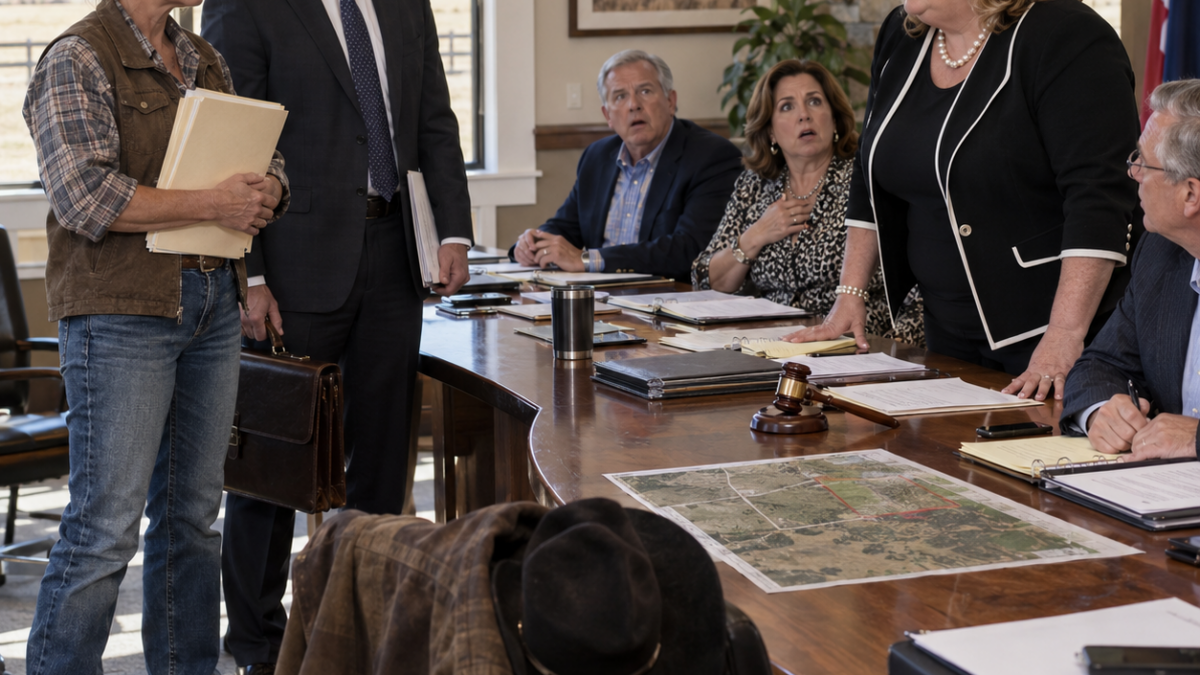
The HOA waited until I was lying in a hospital bed with my leg shattered in three places before they tried to take a quarter acre of my property.
My wife called me from the clubhouse, whispering so nobody would hear her, and told me the board was minutes away from voting to “condemn” the land for a community project.
I couldn’t stand, I couldn’t drive, and I couldn’t even leave the hospital—but the one thing they had not planned for was who Sarah would bring through that clubhouse door.
“Say that again.”
I held the phone against my ear while the heart monitor beside me kept its maddening rhythm.
Beep.
Beep.
Beep.
Sarah’s voice shook.
“Karen says our back lot is a blight. She says because your workshop hasn’t been completed, the board can condemn that section and force us to transfer it for their beautification project.”
For a moment, I forgot about the pain in my leg.
Three days earlier, a ladder had failed beneath me.
The fall shattered my left leg badly enough that surgeons had already operated twice, and now a post-op infection had me stuck under fluorescent hospital lights with tubes in my arm and a steel frame protecting what was left of my dignity.
I had spent twenty years in the Army Corps of Engineers.
I understood structural failure.
I understood bad timing.
And I understood an ambush when I saw one.
“When is the vote?”
“Tonight.”
“What?”
“They sent the meeting notice this afternoon.”
Of course they had.
Karen Henderson had been waiting for an opening.
She was president of the Willow Creek Estates HOA, chair of the architectural committee, unofficial ruler of every mailbox, hedge, fence, and flowerpot within half a mile.
From the day Sarah and I bought the largest lot at the end of the cul-de-sac, Karen had looked at our back quarter acre like it already belonged to her.
She wanted a community garden there.
Then a walking path.
Then a landscaped sitting area.
Every time I reminded her that the land was part of our deed, she smiled as if ownership were merely an administrative inconvenience.
Our last fight had been over the workshop.
I had submitted professional plans for a modest 400-square-foot building behind our pine trees.
Karen’s committee sat on the application for almost the full review period.
Then they rejected it.
Roof pitch.
Siding color.
Window placement.
I revised everything.
They rejected it again.
I revised it again.
Then the ladder broke.
While I was in surgery, the covered lumber behind our house suddenly became, according to Karen, an “abandoned construction nuisance.”
And now she was trying to use that label to get my land.
“Sarah.”
“I’m here.”
“Do not argue with them.”
“They’re sitting in there acting like this is already decided.”
“I know.”
“I swear, Jack, if she says one more thing about us neglecting the property—”
“Listen to me.”
She went quiet.
I lowered my voice.
“Call Marcus.”
There was a pause.
“Marcus Thorne?”
“Yes.”
“Right now?”
“Right now.”
Marcus and I had known each other since my military years.
He was a former JAG attorney, six-foot-four, calm to the point of unnerving, and one of the few men I knew who could make somebody regret a sentence before they finished saying it.
“Tell him emergency HOA meeting,” I said. “Property seizure. No proper notice. Hospitalized owner.”
Sarah inhaled slowly.
“What do you want me to do?”
“Meet him at the clubhouse.”
“Jack—”
“Let him talk.”
She understood immediately.
The tremor disappeared from her voice.
“All right.”
“And Sarah?”
“Yes?”
“Bring every letter Karen sent us about that workshop.”
The line went silent for half a second.
Then my wife said something that made me smile despite the pain.
“I’ll bring the whole damn box.”
Twenty minutes later, I was still staring at the ceiling when my phone buzzed.
A text from Sarah.
Marcus is here.
Then another.
We’re going in.
I pictured Karen behind that folding table, convinced she had finally found the moment when I was too weak to stop her.
I pictured my wife pushing open the clubhouse door.
And I realized something.
Karen had chosen the worst possible night to mistake my hospital bed for surrender.
PART 2
Sarah told me later that the room went silent before Marcus said a single word.
The Willow Creek clubhouse was nothing impressive.
Cheap beige walls.
Fluorescent lights.
A row of metal folding chairs.
A coffee machine in the corner that always smelled like something had been burning inside it since 1998.
At the front sat Karen Henderson, flanked by Gary and Bob, the two board members who rarely disagreed with her about anything.
Karen had a stack of papers in front of her.
Gary had his reading glasses halfway down his nose.
Bob was nodding along while Karen spoke about “community standards,” “protecting property values,” and “responsible stewardship.”
Sarah entered first.
She was carrying the cardboard file box from our office.
Marcus came in behind her.
He wore a dark suit and carried one leather briefcase.
Sarah said Karen stopped mid-sentence.
That alone must have been worth seeing.
Karen recovered first.
“This is a closed board session.”
Marcus closed the door behind him.
Sarah sat in the front row.
Marcus remained standing.
Karen pointed at him.
“Only homeowners are permitted.”
Marcus looked toward Sarah.
“Mrs. Jenkins is a homeowner.”
Then he looked back at Karen.
“And I’m her counsel.”
Gary immediately stopped pretending to read.
Bob’s hand went toward the collar of his shirt.
Karen leaned back.
“Counsel for what?”
Marcus set his briefcase on an empty chair.
“For whatever explanation you were about to provide for trying to seize part of my clients’ deeded property while Mr. Jenkins is hospitalized.”
Karen’s expression tightened.
“No one is seizing anything.”
Sarah opened the cardboard box.
Karen glanced at it.
Then away.
“This board is discussing remedies available under the covenants.”
Marcus nodded.
“Wonderful.”
That word, Sarah told me, somehow sounded more threatening than if he had shouted.
“Then before you vote,” Marcus continued, “let’s make sure everybody understands the procedural record.”
Karen folded her arms.
“We know our procedures.”
“I hope so.”
Marcus opened his briefcase.
He removed a copy of the meeting notice.
“What time was this sent?”
Gary looked at Karen.
Karen answered.
“This afternoon.”
“At 2:14 p.m.”
“So?”
Marcus glanced at the clock.
The meeting had started a little after six.
“Your bylaws require written notice for a special board meeting except in a genuine emergency.”
“This is an emergency.”
“What is the emergency?”
“The Jenkins property is deteriorating.”
Sarah laughed.
She couldn’t help it.
Karen glared at her.
Marcus remained calm.
“Mr. Jenkins has been hospitalized for less than a week.”
Karen said nothing.
“The materials on the property are covered.”
Nothing.
“The workshop application was still pending through your committee when he was injured.”
Nothing.
Marcus placed another page on the table.
“And you are proposing to act on ownership rights in land based on a violation notice delivered today.”
Karen’s face reddened.
“We have the authority to enforce the covenants.”
“Not like this.”
“You do not run this board.”
“No.”
Marcus looked at Gary.
Then Bob.
“Neither does one person sitting in the middle of it.”
The two men looked suddenly uncomfortable.
Karen snapped, “If you came here to intimidate us—”
“I came here because your process is defective.”
He lifted another document.
“And because any attempt to interfere with my clients’ title will be challenged immediately.”
Karen leaned forward.
“You’re exaggerating.”
Marcus’s voice lowered.
“Try me.”
Sarah said that was the moment Gary stopped looking at Karen and started looking at Marcus.
Not because Marcus was physically intimidating.
Although he was.
But because Gary had finally realized that this wasn’t one of those HOA arguments where the board sent a nasty letter and the homeowner complained at the mailbox for a week.
There was a lawyer in the room.
There was a hospitalized property owner.
There was a paper trail.
And there was land involved.
People behave differently when suddenly confronted with the possibility that their signatures may become exhibits.
Marcus continued.
“My clients have received no proper opportunity to cure the alleged violation.”
Karen interrupted.
“He’s had months.”
“He has been revising plans your committee repeatedly rejected.”
“Because they were noncompliant.”
“Then we can examine that record too.”
Her jaw tightened.
Marcus tapped the agenda.
“But tonight, the question is simpler. You do not have proper notice for the action you’re proposing. You do not have a lawful process for taking ownership of somebody’s backyard through a board vote. And if any board member signs anything purporting to transfer, condemn, encumber, or otherwise interfere with my clients’ title tonight, my office will respond accordingly.”
Bob cleared his throat.
“What does that mean exactly?”
Karen snapped toward him.
“Bob.”
“No,” he said quietly. “I’m asking.”
Marcus looked directly at him.
“It means you should not vote on something you do not fully understand.”
Gary shifted in his chair.
“I think perhaps we should postpone.”
Karen stared at him.
“We’ve already discussed this.”
“Yes.”
“Privately.”
Gary swallowed.
“I still think we should postpone.”
Something changed.
Not much.
Just a crack.
But sometimes structures fail because of cracks nobody thinks matter.
Karen slammed her folder closed.
“This meeting is adjourned.”
Marcus nodded.
“Good decision.”
She stood.
“This is not over.”
“No,” Sarah said.
For the first time that night, she spoke directly to Karen.
“It isn’t.”
Then she picked up the cardboard box.
Marcus picked up his briefcase.
They walked out.
Twenty minutes later, my phone rang.
“You still alive?” Sarah asked.
“Barely.”
“She looked like she swallowed a hornet.”
I laughed, then immediately regretted it when pain shot through my leg.
“Marcus there?”
“He just left.”
“What did he say?”
“That we stopped tonight’s vote.”
“Tonight’s.”
“Yeah.”
Sarah’s voice softened.
“Jack, I’m scared.”
That wiped away my satisfaction.
“About what?”
“Everything.”
“The house?”
“The house. Your leg. The bills. Karen. I don’t know. It feels like our life was normal five days ago.”
I stared at the IV line running into my arm.
“I know.”
“And I hate that she chose now.”
“So do I.”
“You can’t even come home.”
“I will.”
“When?”
“Soon.”
“You don’t know that.”
She was right.
Doctors were worried about infection.
Another surgery was possible.
Rehabilitation could take months.
There had been careful conversations about permanent nerve damage.
About a limp.
About whether I would ever have full strength again.
I had handled those conversations better than Sarah.
Not because I was braver.
Because I hadn’t yet allowed myself to imagine what losing mobility would mean.
Sarah had.
She had imagined all of it.
The house.
The stairs.
My workshop.
Our retirement plans.
The hiking trips we kept postponing.
Everything.
And while she was carrying that fear, Karen had tried to take advantage of it.
“Sarah.”
“Yeah?”
“We’re not losing the house.”
Silence.
“We’re not losing the land.”
Another pause.
“And whatever happens with my leg, we’re going to deal with that too.”
She sniffed.
“You always sound so sure.”
“I’m not.”
That surprised her.
“What?”
“I’m not sure.”
I closed my eyes.
“I’m scared too.”
Neither of us spoke for a moment.
Then Sarah said, “Okay.”
It was such a small word.
But it changed the conversation.
We didn’t need certainty.
We needed each other.
A week later, I came home in a wheelchair.
I hated it.
Not the house.
The chair.
I hated how every doorway suddenly had a measurement.
I hated how rugs became obstacles.
I hated needing Sarah to move things that I had carried myself my entire adult life.
Most of all, I hated the way people’s faces changed when they saw me.
Concern.
Sympathy.
Sometimes pity.
I could tolerate pain.
Pity made me furious.
Sarah understood.
She never said, “Let me do that because you can’t.”
She said, “Move over, you’re taking too long.”
It was perfect.
My study became our command center.
Sarah cleared the desk.
Laptop.
Scanner.
Printer.
Legal pads.
Three binders.
One whiteboard.
Marcus visited the second day.
He looked around.
“You look disturbingly happy.”
“I’m organizing.”
“That’s what concerns me.”
I pointed toward the whiteboard.
“First objective.”
Marcus read it.
RECORDS.
He smiled.
“Now we’re talking.”
We drafted a formal request for association records.
Meeting minutes.
Financial statements.
Vendor contracts.
Architectural-review logs.
Official correspondence.
Budgets.
Expense reports.
Everything the governing documents and applicable law entitled us to inspect.
Not because we expected to find a smoking gun.
Because Karen had made one thing clear.
She believed the association belonged to her.
People who believe that usually leave fingerprints.
The board waited until nearly the end of the response period.
Then, at 4:55 one afternoon, someone dropped a cardboard box on our porch.
No knock.
No note.
Just a box.
Sarah wheeled me to the front door.
“You’ve got to be kidding.”
The box was filled with loose paper.
Binders with missing labels.
Invoices mixed with newsletters.
Stapled packets upside down.
Duplicate pages.
A USB drive tossed near the bottom.
Sarah stared at the mess.
“They did this on purpose.”
“Probably.”
“They think this will stop you?”
“They don’t know me very well.”
She looked at the dining table.
Then at me.
“No.”
“No what?”
“We are not covering my dining table with five years of HOA garbage.”
Two hours later, the entire dining table was covered with five years of HOA garbage.
Sarah stood beside it holding a yellow highlighter.
“This is how marriages end.”
“Documentation?”
“You.”
For the first hour, nothing appeared unusual.
Landscaping.
Insurance.
Clubhouse repairs.
Pool maintenance.
Office supplies.
Then Sarah stopped.
“Jack.”
Her tone changed.
I rolled closer.
She handed me an invoice.
More than ten thousand dollars for a “community fountain and decorative landscape installation.”
I remembered the fountain.
Everyone did.
Karen had championed it as a beautification improvement.
Three stone bowls stacked above each other.
Water cascading into a rock bed.
It sat near the common area at the entrance to Karen’s street.
“What?” I asked.
Sarah tapped the address.
I pulled the subdivision plat up on my laptop.
Then zoomed in.
The so-called common landscaping area overlapped an easement at the edge of Karen’s own lot.
I stared at the screen.
Sarah stared too.
“She used HOA money to improve the area beside her house.”
“Maybe.”
“Jack.”
“I said maybe.”
She gave me a look.
“We document first.”
“Fine.”
She wrote FOUNTAIN across a sticky note.
Then added a question mark.
The next invoice was worse.
Five thousand dollars for emergency tree removal.
We checked the minutes.
No emergency discussion.
No storm damage.
No recorded vote.
But I remembered the tree.
A huge oak on the property beside Karen.
It had blocked afternoon sun from reaching part of her patio.
I remembered because she had complained about it at a neighborhood barbecue.
The tree had vanished weeks later.
Sarah examined the vendor.
Henderson Landscaping.
She froze.
“Karen’s last name is Henderson.”
“Could be coincidence.”
This time even I didn’t believe myself.
We searched business records available online.
Same family.
Her brother-in-law owned it.
Sarah sat back.
“Oh, that is bad.”
It got worse.
A clubhouse roofing contract had gone to a company owned by Gary’s son.
The amount was significantly higher than comparable bids recorded elsewhere in the files.
A holiday-light purchase came from a business connected to Bob’s wife.
Some transactions might have been legitimate.
Some might have been badly documented rather than intentionally improper.
Marcus warned us not to make accusations we could not prove.
So I built a spreadsheet.
Date.
Vendor.
Amount.
Purpose.
Approval.
Relationship.
Supporting records.
Questions.
Not “fraud.”
Not “theft.”
Questions.
The distinction mattered.
Then we opened the architectural-review files.
That was where my anger changed.
Financial irregularities were serious.
Selective cruelty was personal.
Homeowners close to Karen received approvals quickly.
Decks.
Sheds.
Pools.
Fences.
People who disagreed with her waited.
Then received strange objections.
I found an old file belonging to a family who had lived three houses away before moving.
They had requested permission for a children’s play structure.
Denied.
They changed the stain color.
Denied.
They adjusted placement.
Denied.
Final reason?
The play structure would interfere with “neighborhood sightlines.”
The nearest sightline belonged to Karen.
Sarah read the file.
“I remember them.”
“So do I.”
“They moved.”
“Yeah.”
“They had two little girls.”
I nodded.
We sat in silence.
A year earlier, I had assumed they wanted a bigger house.
Maybe they did.
Maybe this had only been one factor.
But now their file looked different.
We found Mr. Abernathy’s bird-feeder fines.
Five hundred dollars accumulated over multiple notices because Karen claimed birds created nuisance conditions.
Then we found approvals for nearly identical feeders on properties belonging to people friendly with the board.
Sarah placed both documents side by side.
“Same feeder.”
“Looks like it.”
“Same style.”
“Yep.”
“Same neighborhood.”
“Yep.”
“One gets fined.”
I nodded.
“One doesn’t.”
The USB drive was last.
Most of it contained boring correspondence.
Maintenance questions.
Meeting reminders.
Newsletter drafts.
Then I found a trash folder.
Files had been moved there but not erased.
I recovered them.
Sarah leaned over my shoulder.
The first email that mattered was from Karen to Gary regarding a fence request.
The wording was ugly.
Personal.
Not about design.
Not about compliance.
About sending a message.
Another email described how to categorize patio furniture as a common-area expense.
Then I opened one dated the day after my accident.
I stopped breathing for a second.
Sarah noticed.
“What?”
I clicked the message.
Karen to Gary and Bob.
The language was short.
Direct.
This was their opportunity.
With Jenkins temporarily out of the picture, she wanted to move ahead on the beautification plan involving my land before I could interfere.
Sarah’s hand went to my shoulder.
“She actually wrote it.”
I read the email again.
My leg began throbbing.
Not because anything had changed physically.
Because anger has its own pulse.
“This wasn’t spontaneous.”
“No.”
“She planned it.”
“Yes.”
Sarah sat beside me.
“You were lying in surgery.”
“I know.”
“She knew.”
“I know.”
I printed the email.
The printer made slow mechanical noises.
When the page came out, I placed it on the dining table.
For a while neither of us touched it.
Then Sarah whispered, “What now?”
I looked at the boxes.
The files.
The spreadsheet.
The email.
“Now we stop making this about us.”
She understood.
A fight between me and Karen could be dismissed as two stubborn people who disliked each other.
A documented pattern involving dozens of homeowners was something else.
My first call was to Dave Miller.
Dave lived two streets over.
Retired Marine Sergeant Major.
Sixty-four.
A man with shoulders like a refrigerator and the emotional delicacy of a cinder block.
Karen had been trying to make him shorten his flagpole for a year.
He had responded to every violation notice with the same handwritten sentence:
Respectfully disagree.
I rolled up his driveway while Sarah walked beside me.
Dave was in the garage cleaning golf clubs.
He looked at my chair.
“That ladder won.”
“Temporary victory.”
He grunted.
“Heard Karen tried something.”
“You got an hour?”
“For her?”
“For everyone.”
He put down the club.
“Come in.”
I showed him the files.
Not all of them.
Enough.
The fountain.
The vendor connections.
The approval patterns.
Then an email regarding his flagpole.
Karen had described it as excessive military display and suggested that the board make an example of him.
Dave read the email twice.
His jaw moved.
Then he put the paper down very carefully.
“What’s the plan, Major?”
That was Dave.
No speech.
No outrage.
Straight to mission.
“We need homeowners.”
“How many?”
“As many as we can get.”
“Starting with?”
“People she’s pushed hardest.”
He nodded.
“Give me names.”
We visited the Abernathys.
Mr. Abernathy answered the door.
His wife appeared behind him.
They were both hesitant.
“We don’t want trouble,” Mrs. Abernathy said.
“You already have trouble,” Dave replied.
I gave him a look.
He shrugged.
Subtlety was not his natural habitat.
I opened the binder.
I showed them the selective-enforcement records.
Then the email where Karen mocked Mr. Abernathy.
His wife read it.
Her hands stopped trembling.
She walked into the house.
A minute later, she returned carrying a shoebox.
Inside were years of notices.
Photographs.
Certified-mail receipts.
Handwritten notes.
“Take these.”
Mr. Abernathy looked at her.
“Carol?”
She turned toward him.
“I am done being afraid of that woman.”
That became the pattern.
One house at a time.
The Patels showed us fence denials.
Another couple showed us repeated warnings over a shed nearly identical to one approved elsewhere.
A single mother showed us fines for leaving trash bins visible several hours past collection.
A retired teacher showed us letters over the height of her flower boxes.
Not all complaints were equally serious.
Some were ordinary HOA friction.
But together, the selective patterns became harder to ignore.
Our first real strategy meeting happened in my garage.
Twelve homeowners.
Sarah kept notes.
Dave stood with his arms folded.
I sat beside a whiteboard.
At the top, I wrote one word.
RECALL.
Dave smiled.
“Now you’re speaking my language.”
The bylaws allowed homeowners to remove board members through a special membership vote.
To force that meeting, we needed signatures from twenty-five percent of the neighborhood.
Willow Creek had 110 homes.
“Twenty-eight signatures,” I said.
Dave looked around.
“We already have twelve.”
“We need more than twenty-eight.”
“Why?”
“Because barely meeting the threshold makes this look personal.”
I tapped the whiteboard.
“I don’t want a rebellion that wins by one vote.”
“What do you want?”
“A community that understands why it’s voting.”
That mattered to me.
I had spent years working around systems where authority was necessary.
Rules were necessary.
Command structures were necessary.
But legitimate authority depends on trust.
Karen had confused obedience with trust.
I didn’t want to replace her with another faction that simply hated the opposite people.
So we gathered evidence carefully.
We corrected each other when anger outran facts.
Marcus reviewed anything potentially defamatory.
Sarah kept asking one question.
“Can we prove that?”
If not, it stayed out.
Then Marcus suggested something I initially hated.
“You still need your workshop approval?”
“Yes.”
“You also need rehabilitation accommodations.”
I looked down at my leg.
Physical therapy had started.
Progress was slow.
I could move with crutches for short distances, but the slope in our backyard was dangerous.
My therapist had suggested aquatic therapy.
A small therapeutic pool would help.
So would a properly designed ramp from the house to the patio area.
Marcus leaned back.
“Submit it.”
“To Karen?”
“To the ARC.”
“She’ll deny it.”
“Maybe.”
“You want her to.”
“I want her to follow the law.”
I stared at him.
He smiled slightly.
“And if she refuses because she dislikes you, I want it documented.”
Sarah immediately understood.
We prepared the cleanest application of my life.
Architectural plans.
Drainage.
Landscaping.
Setbacks.
Construction schedule.
Medical letters.
A small therapy pool.
A safe access ramp.
Nothing extravagant.
Nothing visually disruptive.
The application explained the medical need and requested reasonable accommodation during my recovery.
We sent it certified.
Then waited.
Meanwhile, Dave collected signatures.
He was brilliant at it.
Not because he pressured people.
Because he listened.
At every door, he asked the same thing.
“How has the board treated you?”
People talked.
Then he showed evidence relevant to their experience.
Not everything.
Just enough.
We needed twenty-eight signatures.
We got thirty-two.
Then thirty-seven.
Then forty-two.
The neighborhood was waking up.
On day twenty-nine after submitting my application, an HOA envelope arrived.
Sarah brought it to my study.
“You want to open it?”
“No.”
She stared at me.
“You fought in Afghanistan.”
“Kandahar didn’t have Karen.”
She rolled her eyes and tore it open.
One page.
Denied.
Reason:
Not consistent with the aesthetic character of the community.
That was essentially it.
No meaningful response to the medical documentation.
No alternative.
No proposed modification.
No attempt at dialogue.
Sarah read it twice.
“You gave them letters from your surgeon.”
“I know.”
“And your therapist.”
“I know.”
“And drawings.”
“Yep.”
“And drainage.”
“Yep.”
“And she wrote ‘aesthetic character.’”
“Basically.”
Sarah slowly sat down.
“She really hates you.”
“I’m becoming aware.”
I called Marcus.
“She denied it.”
Silence.
Then:
“Send it.”
I emailed the letter.
Ten minutes later he called back.
His tone had changed.
“This is serious.”
“I figured.”
“I’m going to notify the association, management company, counsel, and insurer.”
“Immediately?”
“Yes.”
Marcus did not call it a guaranteed case.
He didn’t promise millions.
He didn’t make dramatic claims.
He explained that housing-discrimination and accommodation disputes depend on specific facts.
But the documented medical need, the complete application, the lack of meaningful engagement, and the surrounding evidence of personal hostility created substantial exposure.
Then he said something that mattered more.
“Do not treat this as revenge.”
“I’m not.”
“Good.”
“Sarah keeps reminding me.”
“She’s smarter than you.”
“I’m hanging up.”
Marcus sent a formal demand.
Reverse the denial.
Engage in the accommodation process.
Cease retaliatory conduct.
Preserve records.
He also notified the association’s liability carrier.
That got attention.
Within days, the insurance company’s attorney contacted him.
Karen still refused to reverse the decision.
According to what Marcus later told us, she insisted I was manipulating my injury to get something I had always wanted.
That accusation became important.
Not because it was dramatic.
Because she had said it after receiving medical documentation.
The insurer’s attorney apparently advised the board to resolve the issue.
Gary wanted to reconsider.
Bob did too.
Karen refused.
The deadline passed.
Marcus filed suit.
I didn’t feel triumphant when he told me.
I felt tired.
Sarah was beside me.
“So that’s it?”
“That’s the filing.”
“We’re really suing our HOA.”
“Yes.”
“Our own dues help pay their lawyer.”
“Potentially.”
“That’s insane.”
“It’s one reason settlement matters.”
She walked toward the window.
Outside, the unfinished workshop materials were still covered.
“You know what I hate?”
“What?”
“She did this while you were hurt.”
I said nothing.
“If you had been healthy, I think I could almost laugh about all of it.”
“Same.”
“But every time I look at that chair…”
She stopped.
I knew what she meant.
My wheelchair had become part of the fight.
I hated that.
I didn’t want my injury used as a prop.
I didn’t want sympathy votes.
I wanted the facts to matter whether I walked into the clubhouse or rolled.
I told Dave that at the next strategy meeting.
“No speeches about me being a wounded veteran.”
He frowned.
“It’s compelling.”
“No.”
“People care.”
“Then let them care about what actually happened.”
Sarah nodded.
“No hero worship.”
Dave sighed.
“You two take all the fun out of revolution.”
The annual HOA meeting was three weeks away.
Our recall petition had been formally submitted.
Enough signatures required the issue to be heard.
We built the presentation.
Not theatrical.
Chronological.
Financial questions.
Vendor relationships.
Selective approvals.
Resident testimony.
The email sent after my accident.
My medical-accommodation denial.
The lawsuit.
Nothing more.
Nothing we couldn’t support.
Sarah created a private homeowner group online so residents could review documents.
The response exploded.
People who had ignored HOA politics for years began reading.
They asked questions.
Good questions.
How much had been spent with related vendors?
Who approved the contracts?
Why were similar projects treated differently?
Why had the board tried to act on my land while I was hospitalized?
Why had the accommodation request been rejected without meaningful dialogue?
By the week of the annual meeting, Karen had lost the one thing that had protected her for years.
Isolation.
Everyone had thought they were the only one.
Now they were comparing notes.
The night of the meeting, the clubhouse was packed.
More than ninety homeowners attended.
Some stood along the walls.
Others crowded into the hallway.
Sarah pushed my chair through the front entrance.
I hated needing help.
She leaned down.
“If you complain about me pushing you, I’ll leave you beside the refreshments.”
“I can wheel myself.”
“Not through ninety angry homeowners.”
Dave appeared.
“Need a path?”
Sarah smiled.
“Please.”
Dave turned.
“Make a hole.”
The crowd parted.
“Subtle,” I said.
“I was a Marine.”
We took seats in front.
Karen sat behind the folding table.
Gary on one side.
Bob on the other.
All three looked exhausted.
Karen looked furious.
She struck the gavel.
“This meeting will come to order.”
Someone shouted, “What about the lawsuit?”
Another voice:
“What about the fountain?”
Karen hit the gavel again.
“We will follow the published agenda.”
Dave stood.
That quieted the room faster than the gavel.
“Madam President.”
Karen stared at him.
“A recall petition was properly submitted.”
“That item will be addressed later.”
Dave held up the bylaws.
“The membership can amend the agenda.”
Karen looked toward the association attorney.
The attorney whispered something.
She didn’t like what she heard.
Dave made the motion.
Maria Santos, a homeowner and paralegal who had joined our group, seconded it.
The membership voted.
The motion passed overwhelmingly.
For years, Karen had hidden behind rules.
Now the rules forced her to sit through the review of her own conduct.
Dave went first.
He projected the fountain invoice.
Then the landscaping vendor records.
He did not say Karen stole anything.
He asked questions.
Why had an association-funded project been concentrated beside property tied to the president?
Why had related-party contracts not been transparently disclosed?
Why did meeting records fail to show competitive review?
Then came the tree-removal invoice.
Then Gary’s family-connected roofing contract.
Then Bob’s wife’s business.
The room became restless.
Gary asked to speak.
Karen shook her head.
Dave continued.
Mr. Abernathy went next.
He stood slowly.
“My wife and I have lived here sixteen years.”
Carol held his arm.
“We’ve paid every assessment.”
He looked toward Karen.
“We’ve maintained our house.”
His hands trembled.
“We have one bird feeder.”
A few people laughed softly.
He didn’t.
“We were fined five hundred dollars.”
He held up copies.
“Then we learned the same type of feeder existed at homes whose owners were not fined.”
Karen leaned toward her microphone.
“Enforcement is based on complaints.”
Mr. Abernathy looked at her.
“Then why does your email call me senile?”
Silence.
Karen’s face changed.
Carol handed him the printed email.
He didn’t read it aloud.
He simply placed it on the table.
“I am not senile.”
His voice was quiet.
“And I’m not stupid.”
That hurt Karen more than shouting ever could.
Mrs. Patel spoke next.
Then another homeowner.
Then another.
Each story added something different.
Not every complaint was devastating.
It didn’t need to be.
The pattern was.
Eventually Dave looked toward me.
I felt Sarah’s hand on my shoulder.
“You ready?”
“No.”
“Good.”
I turned.
“What?”
“If you said yes, I’d worry.”
She wheeled me forward.
I transferred to the lectern using my crutches.
Slowly.
Painfully.
Nobody spoke.
I hated the attention.
But I stood.
Not because it made the moment more dramatic.
Because I needed to remind myself that I was recovering.
Karen watched.
I opened my folder.
“I’m not going to repeat everything you’ve already heard.”
My voice sounded steadier than I felt.
“I’m going to explain why Sarah received a phone call while I was hospitalized.”
I projected Karen’s email.
The one sent after my accident.
The sentence about using my absence to advance the beautification plan appeared on the screen.
The reaction was immediate.
Gasps.
Angry whispers.
Karen reached for her microphone.
“That message has been taken out of context.”
I looked at her.
“What context makes it appropriate?”
She opened her mouth.
Nothing came.
I continued.
“My wife was told this board intended to vote on taking action against our land while I was hospitalized.”
I looked toward the homeowners.
“Marcus stopped that meeting because the procedure was defective.”
Then I showed the documentation for my rehabilitation request.
Medical letters.
Plans.
Ramp.
Therapy pool.
I showed the denial.
Aesthetic incompatibility.
“This is now the subject of pending litigation.”
The room became very still.
“I’m not asking you tonight to decide that lawsuit.”
That mattered.
“That belongs in the legal process.”
I looked toward Gary and Bob.
“But I am asking you something else.”
I turned toward the crowd.
“Do you believe this board has exercised its authority carefully?”
Nobody answered aloud.
They didn’t need to.
“Do you believe people with personal connections received the same treatment as people who disagreed with leadership?”
Silence.
“Do you believe our dues were managed transparently?”
Someone said, “No.”
Another person repeated it.
Then another.
I raised my hand.
The room quieted.
“This isn’t about replacing one angry faction with another.”
I glanced at Dave.
He nodded.
“If you vote to remove this board tonight, the next board has to be more accountable than this one was.”
I turned toward Karen.
“No revenge enforcement.”
Her face hardened.
“No special treatment for our friends.”
Gary looked down.
“No secret vendor deals.”
Bob closed his eyes.
“And nobody should ever again believe that being sick, injured, elderly, busy, frightened, or unpopular makes their property easier to take.”
That was the only moment all night when my voice almost broke.
I thought about the hospital.
About fluorescent lights.
About Sarah whispering into the phone.
About how helpless I had felt.
I tightened my grip on the lectern.
Then I finished.
“The question is not whether you like Karen Henderson.”
I looked at the room.
“The question is whether you still trust her with this authority.”
I stepped away.
Sarah helped me sit.
The room remained quiet.
Then Karen stood.
“This has been a coordinated character assassination.”
Nobody interrupted.
“These people have spent weeks conspiring against me.”
She pointed toward Dave.
Toward Sarah.
Toward me.
“They manipulated documents.”
Marcus, seated near the side wall, immediately stood.
“Be careful.”
Karen looked at him.
He said nothing else.
He didn’t need to.
Karen turned toward the residents.
“I have given years of my life to this community.”
That was probably true.
“I have enforced standards nobody else was willing to enforce.”
Also possibly true.
“I have protected your property values.”
Maybe she believed that.
Then she made the mistake that ended whatever sympathy remained.
“And if some people here are too sensitive to accept discipline, perhaps they should not live in a governed community.”
The room changed.
People didn’t shout.
They just stopped listening.
The recall vote was conducted by paper ballot.
Observers from both sides watched the count.
Karen sat with her arms crossed.
Gary stared at the table.
Bob kept rubbing his forehead.
Sarah squeezed my hand.
Dave paced.
“Sit down,” Maria told him.
“I don’t sit during counts.”
“You’re making everyone nervous.”
“I’m nervous.”
“You’re terrifying when you’re nervous.”
Finally, the count was complete.
Ninety-eight votes favored removal.
Five opposed.
For several seconds nobody reacted.
Karen stared at the number.
Then applause began.
Not loud at first.
A few hands.
Then more.
It spread.
But it did not feel like celebration.
It felt like relief.
Karen stood.
She collected her purse.
Gary tried to speak to her.
She ignored him.
At the exit, she stopped.
Then turned toward me.
The room became quiet again.
“You wanted this.”
I shook my head.
“I wanted you to leave my land alone.”
“You destroyed my reputation.”
“No.”
Her eyes narrowed.
“You did that.”
She walked out.
The door closed behind her.
Gary stood next.
“I resign.”
Bob followed.
“Same.”
Dave muttered, “That was efficient.”
The meeting could not simply become mob rule.
Maria reminded everyone that vacancies had to be filled according to the bylaws.
So we followed them.
Temporary officers were nominated.
Dave became interim president despite complaining loudly that he had never volunteered.
Maria became secretary.
Ben Carter, an accountant who had quietly helped us review the financial records, became treasurer.
Their first votes were boring.
That was beautiful.
Authorize an independent audit.
Suspend disputed enforcement actions pending review.
Freeze nonessential related-party vendor payments.
Engage independent counsel.
Preserve all association records.
Then Dave looked toward me.
“One more.”
I groaned.
He smiled.
“Motion to direct the architectural committee to reconsider the Jenkins application under objective standards and in consultation with counsel.”
Maria seconded.
Passed.
No victory speech.
No cheering.
Just procedure.
Exactly how it should have been from the beginning.
The audit lasted weeks.
Some of our suspicions were confirmed.
Others were less dramatic than we feared.
That distinction mattered.
The fountain expenditure had indeed disproportionately benefited the area adjoining Karen’s property.
Vendor conflicts had not been adequately disclosed.
Several contracts lacked competitive documentation.
There were questionable discretionary expenses.
But the accountants refused to call everything fraud.
Sometimes poor governance is exactly that.
Poor governance.
Other matters were serious enough for lawyers to pursue reimbursement.
The new board published the findings.
Names.
Amounts.
Documents.
No rumors.
No whispered stories.
Transparency.
The disputed fines were reviewed individually.
Many were canceled.
Some legitimate ones remained.
Dave received a complaint about that.
“I thought we were wiping out all Karen’s fines.”
He shook his head.
“No.”
“But she was corrupt.”
“That doesn’t mean your broken-down truck can live on the sidewalk forever.”
I laughed when I heard that story.
The new board was imperfect.
Thank God.
Perfect leaders scare me.
Accountable ones are useful.
My legal case moved toward settlement.
The association’s insurer became heavily involved.
The new board had no interest in defending Karen’s personal vendetta.
They wanted the dispute resolved.
We reached an agreement.
My medically supported ramp was approved.
The therapy pool was approved subject to ordinary safety and construction requirements.
My legal expenses were addressed as part of the settlement.
The association adopted a formal accommodation-review procedure so future requests would not depend on whether the president liked the homeowner.
That mattered more to me than anything else.
Because someday another person would need a ramp.
Or a railing.
Or some modification they never expected to need.
And hopefully nobody would have to fight the war we fought.
Karen faced separate disputes relating to the association’s financial losses and her actions in office.
I did not follow every development.
At first, I wanted to.
I wanted updates.
Every letter.
Every demand.
Every dollar.
Then one morning I realized I was allowing her to occupy more space in my life after she was gone than she had while she lived three streets away.
So I stopped asking.
Months later, a FOR SALE sign appeared in her yard.
Someone texted me a photo.
I deleted it.
Sarah noticed.
“That’s growth.”
“Don’t sound so surprised.”
“I’m shocked.”
My physical recovery took longer than the HOA fight.
That was the part nobody saw.
Neighborhood victories happen in one evening.
Bodies recover one miserable inch at a time.
Physical therapy was brutal.
At first I could barely shift weight onto my left leg without seeing stars.
My therapist, Megan, had no sympathy.
“You want to walk normally again?”
“Yes.”
“Then stop negotiating with me.”
“I was an Army officer.”
“Congratulations.”
She pointed toward the parallel bars.
“Walk.”
I hated her.
She knew.
We got along beautifully.
The ramp construction began while I was still using crutches.
The strangest thing happened the first Saturday.
A truck pulled into our driveway.
Then another.
Then another.
I looked out the window.
Dave.
The Patels.
The Abernathys.
Ben.
Maria.
Families I barely knew a few months earlier.
Shovels.
Rakes.
Coolers.
Food.
Sarah opened the door.
“What is happening?”
Dave walked past her carrying gloves.
“Community beautification project.”
I nearly choked laughing.
“You planned that line.”
“All week.”
The contractor handled the structural work.
Nobody was allowed to interfere with the engineered ramp.
But the neighbors cleared garden beds.
Moved soil.
Planted shrubs.
Built Sarah the raised beds she had wanted for years.
Mrs. Abernathy planted herbs.
Mr. Abernathy installed a bird feeder beside them.
Dave looked at it.
“Reckless.”
Mr. Abernathy smiled.
“Fine me.”
For the first time since my accident, I laughed until my ribs hurt.
Sarah found me alone later that afternoon.
I was sitting on the patio.
The frame for the ramp stretched from the back door down toward the future therapy pool.
Beyond it, our quarter acre remained exactly where it had always been.
Ours.
Sarah sat beside me.
“You okay?”
“Yeah.”
“You’re crying.”
“Allergies.”
“To Dave?”
“Severe.”
She leaned against my shoulder.
People were working all around us.
The land Karen had wanted for a community garden had become something else entirely.
Not a public project.
Not an HOA monument.
A place where neighbors had chosen to show up voluntarily.
That distinction meant everything.
“You know what I keep thinking about?” Sarah asked.
“What?”
“That phone call.”
I knew exactly which one.
“I was standing outside the clubhouse,” she said. “And I thought I had to stop them myself.”
“You would have.”
“No.”
She shook her head.
“I was terrified.”
“So was I.”
“You didn’t sound terrified.”
“I was trying not to let my heart monitor expose me.”
She smiled.
Then grew serious again.
“I thought your accident had made us vulnerable.”
“It did.”
She looked at me.
I continued.
“That’s the part I had trouble accepting.”
My voice lowered.
“I had spent my entire adult life believing that if something threatened us, I would be the one standing between it and you.”
“You were.”
“I was in a hospital bed.”
“You still called Marcus.”
“That’s not the same.”
“It is to me.”
I looked at her.
She took my hand.
“You didn’t protect me by charging into the clubhouse.”
A small smile crossed her face.
“You protected me by trusting me to walk into it.”
That hit harder than I expected.
For years, I had thought strength meant being useful.
Carrying.
Fixing.
Building.
Defending.
Doing.
The injury stripped away most of those things temporarily.
I had felt smaller because Sarah had to push my wheelchair.
But she had never seen it that way.
We had always been a team.
My accident did not make me less her husband.
Her walking into that meeting did not make me less capable.
It simply meant that, for once, she carried the part I could not.
Six months after the recall, I walked from the kitchen to the patio without a cane.
Sarah noticed immediately.
She said nothing.
That was how I knew she had noticed.
I reached the door.
Down the ramp.
One step.
Another.
My gait was not perfect.
Probably never would be.
At the bottom, I stopped.
Sarah stood in the doorway behind me.
“You’re supposed to use the cane outdoors.”
“I’m three feet from the chair.”
“Megan will kill you.”
“Don’t tell Megan.”
“I texted her already.”
I turned.
“You did not.”
Her phone buzzed.
She looked at it.
“Megan says, and I quote, ‘Tell him I know where he lives.’”
“Traitor.”
Sarah laughed.
I lowered myself into the chair beside the therapy pool.
The water reflected morning light across the fence.
Her garden had exploded with color.
Tomatoes.
Lavender.
Rosemary.
Hydrangeas.
Sunflowers along the back edge.
Beyond them stood the corner where my workshop would eventually go.
The plans had been approved.
Not because the new board liked me.
Because they met the written standards.
That was exactly how I wanted it.
I began construction the following spring.
Slowly.
Correctly.
Every permit.
Every inspection.
Every approval.
Dave came by constantly.
Not to help.
To criticize.
“That wall looks crooked.”
“It’s perfectly plumb.”
“Marine eyeball says crooked.”
“Marine eyeball needs glasses.”
One afternoon, Mr. Abernathy arrived carrying a small wooden box.
“What’s that?”
“A present.”
Inside was a brass plaque.
I read it.
JENKINS WORKSHOP
CONSTRUCTION COMPLETED WITHOUT HOA CONDEMNATION
I laughed so hard I had to sit down.
Sarah refused to let me mount it outside.
“It’s petty.”
“It’s historically accurate.”
“It’s petty.”
“It’s engraved brass.”
“It’s going inside.”
So it hangs inside the workshop.
Right above my workbench.
A year after my accident, Willow Creek held its first community picnic under the new board.
No mandatory matching tablecloths.
No approved decoration committee.
No Karen.
People simply showed up.
Dave grilled burgers.
Maria brought enough food for forty people and insisted it was enough for twenty.
Ben posted the annual financial report on a folding table because apparently accountants cannot attend recreational events without bringing spreadsheets.
Mr. Abernathy hung a bird feeder from a tree beside the picnic area.
Nobody died.
The Patels’ fence looked completely normal.
The neighborhood did not collapse.
Property values did not evaporate.
Children survived exposure to differently colored flowerpots.
I sat beneath a shade canopy with my leg stretched out.
I still limped when tired.
Megan said that might improve.
Or it might not.
I had stopped caring as much.
Leo—our nephew who visited constantly and had adopted half the neighborhood as honorary grandparents—was tossing a football with Dave.
Sarah sat beside me.
“You realize something?”
“What?”
“Karen actually got her community garden.”
I frowned.
She pointed toward our yard.
Several neighbors had helped Sarah expand the beds until they covered a long strip near the back property line.
People traded tomatoes.
Herbs.
Peppers.
Flowers.
Mrs. Patel had contributed cucumber plants.
Mrs. Abernathy had planted basil.
Kids picked strawberries.
I laughed.
“That is not an HOA community garden.”
“No?”
“No.”
“What’s the difference?”
“Nobody voted to steal it.”
Sarah smiled.
“Fair.”
Later that evening, after everyone left, I walked alone toward the back of our property.
The workshop stood finished.
The garden stretched beside it.
The therapy pool was quiet.
The ramp that had once symbolized everything I feared about my injury had become so ordinary I barely noticed it.
I stopped at the boundary marker separating our land from the HOA common area.
A small metal pin in the ground.
Nothing dramatic.
No fence.
No sign.
Just a survey point.
That little piece of metal had nearly become the center of a war.
Karen wanted what lay on my side of it.
Not because she needed it.
Because she believed wanting something strongly enough gave her moral permission to take it.
That was the mistake behind almost everything she did.
She wanted prettier landscaping.
So rules became weapons.
She wanted certain neighbors punished.
So enforcement became personal.
She wanted control.
So disagreement became disloyalty.
She wanted our land.
So my hospital stay became an opportunity.
For a while, I had wanted something just as intensely.
Revenge.
I wanted her humiliated.
Exposed.
Ruined.
I wanted her to feel as helpless as I had felt under those hospital lights.
If I’m being truthful about the story, that desire existed.
But revenge is a terrible architect.
It knows how to demolish.
It rarely knows what to build afterward.
What finally satisfied me wasn’t Karen leaving Willow Creek.
It wasn’t the lawsuit.
It wasn’t the audit.
It wasn’t winning the recall vote ninety-eight to five.
It was standing there a year later and hearing laughter from the garden.
It was watching Mr. Abernathy fill his bird feeder without looking over his shoulder.
It was seeing the Patels’ fence and not caring what shade it was.
It was Sarah walking beside me instead of pushing my wheelchair.
It was knowing that the next injured homeowner who needed a ramp would have an actual process instead of begging one person for permission.
That was the revenge that lasted.
Not destroying Karen.
Building something better after her.
Two years after the accident, I received a letter forwarded through Marcus’s office.
No return address I recognized.
Inside was one handwritten page.
It was from Karen.
I almost threw it away.
Sarah told me to read it.
So I did.
Karen did not apologize elegantly.
She did not suddenly become a different person.
She wrote that she still believed some of the changes she had pursued were necessary.
She believed the neighborhood had needed stronger standards.
She believed people had judged her harshly.
Then came a sentence I read twice.
But I should not have gone after your land while you were in the hospital.
Sarah watched my face.
“Well?”
“She said she shouldn’t have done it.”
“That sounds like an apology.”
“Technically.”
“Jack.”
I handed her the letter.
She read the rest.
Karen wrote that losing the board position had cost her friendships.
The financial dispute had cost her money.
Moving had cost her the home she expected to retire in.
She did not blame me for all of it.
Not anymore.
She said that, looking back, the worst moment had not been the recall vote.
It was seeing her email projected on the clubhouse wall.
Her own words.
Her own plan.
She wrote that she had spent months telling herself we had twisted everything.
Then she finally admitted that no context could make that message look decent.
At the bottom, she wrote:
I thought power meant being the person who decided. I understand now that power meant being the person responsible for deciding correctly.
I sat with that sentence for a while.
Sarah folded the letter.
“You going to answer?”
“I don’t know.”
“What would you say?”
I looked toward the backyard.
The ramp.
The garden.
The workshop.
Our land.
“I’d tell her I hope she means it.”
Sarah nodded.
“So tell her.”
I did.
Nothing dramatic.
Three lines.
Thank you for writing.
I hope you’re doing well.
I hope both of us learned something worth keeping.
I never heard from her again.
And that was fine.
Some stories do not need friendship at the end.
Sometimes peace is enough.
Today, nearly three years after the night Sarah called me from outside the clubhouse, the scar on my leg runs from my knee almost halfway down my shin.
It aches when storms roll through.
I still limp slightly after long days.
My workshop smells like sawdust and machine oil.
Sarah’s garden has grown beyond anything she originally sketched.
Dave remains HOA president despite threatening to quit every February.
Maria still corrects him publicly when he misreads the bylaws.
Ben still puts financial spreadsheets on the picnic table.
The Abernathys still feed birds.
And whenever someone new moves into Willow Creek, they eventually hear the story.
Usually exaggerated.
According to one version, Marcus stormed into the clubhouse with three federal agents.
Not true.
Another says I participated in the recall meeting live from an ambulance.
Also not true.
Dave’s favorite version has me standing from my wheelchair during the final speech and walking toward Karen like some kind of suburban miracle.
Completely false.
I tell people the real story is less cinematic.
I was injured.
My wife was scared.
Our HOA president saw weakness and tried to exploit it.
My wife called a lawyer.
We asked for records.
The records exposed a pattern.
Neighbors compared experiences.
People organized.
We used the governing documents.
We went through the legal process.
The community voted.
Then we rebuilt.
That is the whole truth.
But sometimes the less cinematic truth means more.
Because I did not win by being stronger than Karen.
For months, physically, I wasn’t.
Sarah didn’t win because she shouted louder.
Marcus didn’t win because he scared everybody.
Dave didn’t win because he was a retired Marine.
The homeowners won because people who had been isolated finally started showing each other their paperwork.
Fear survives best when everyone believes they are alone.
The moment people compare notes, bad power starts losing oxygen.
Last summer, Sarah and I were sitting beside the therapy pool when she looked toward the workshop.
“You know what I want?”
I groaned.
“That sentence has cost me a lot of money.”
“A greenhouse.”
“No.”
“Small one.”
“No.”
“Behind the garden.”
“Absolutely not.”
She smiled.
“I already checked the architectural standards.”
I stared at her.
“And?”
“It complies.”
“Did you submit an application?”
“Yesterday.”
I narrowed my eyes.
“Who are you?”
She laughed.
Two weeks later, the approval arrived.
One page.
Clear conditions.
No games.
No delay.
No personal commentary.
Just an ordinary approval issued under ordinary rules.
Sarah handed it to me.
“Look at that.”
I read it.
Then read it again.
“What?”
“Nothing.”
“You’re smiling.”
“I’m not.”
“You are.”
I looked toward the garden where she planned to build.
Three years earlier, Karen had tried to take that same ground while I lay in a hospital bed.
Now my wife was planning a greenhouse there.
Not because we had defeated somebody.
Because the land was ours.
Because the process worked.
Because nobody was afraid to use it.
Sarah folded the approval letter.
“Want to help me build it?”
I looked at my leg.
Then at her.
“Yeah.”
“You sure?”
“I’m staying off ladders.”
She laughed so hard the neighbors heard her.
A month later, the greenhouse stood at the edge of the garden.
Nothing fancy.
Clear panels.
Cedar frame.
Automatic vents.
Sarah filled it with seedlings.
On the first cold morning of fall, I walked out there with two cups of coffee.
She was already inside arranging trays.
Sunlight turned the walls gold around her.
I handed her a cup.
She leaned against me.
We stood without talking.
Beyond the greenhouse was the property line.
Beyond that, Willow Creek.
Quiet houses.
Driveways.
Trees.
People beginning ordinary days.
No war.
No emergency meeting.
No certified letters.
No one trying to condemn anything.
Just home.
I thought about the man I had been in the hospital, staring at acoustic ceiling tiles while machines beeped beside me.
I had believed helplessness was the worst feeling in the world.
I was wrong.
The worst feeling is believing the people you love are helpless because you cannot stand beside them.
Sarah proved that night that love does not always need you standing.
Sometimes it needs trust.
She walked into that clubhouse carrying a box of papers and a lawyer behind her.
I stayed in a hospital bed.
And somehow we still stood together.
That is the part of the story I remember most.
Not Karen’s face.
Not the recall vote.
Not the lawsuit.
Not the money.
My wife’s voice changing over the phone when I told her to call Marcus.
Fear becoming resolve.
Two people realizing that weakness in one moment does not mean defeat.
The HOA tried to use the worst week of my life to take something from us.
Instead, they gave our neighborhood a reason to finally look at itself.
They wanted my quarter acre.
What they lost was something much bigger.
A culture of silence.
And what we gained was more than land.
We gained neighbors who stopped hiding their letters.
A board that understood authority comes with accountability.
A process that treated people consistently.
A garden my wife had dreamed about for years.
A workshop I thought I might never be able to build.
A ramp I once hated but eventually learned to appreciate.
And one small greenhouse glowing in the morning sun on the exact piece of property somebody once thought my hospital bed had made easy to steal.
I took Sarah’s hand.
She looked at me.
“What?”
“Nothing.”
“That’s twice today.”
I smiled.
“I’m just glad you brought the lawyer.”
She took a sip of coffee.
“Marcus helped.”
“Helped?”
She raised an eyebrow.
“I was the scary one.”
I looked at the woman who had walked into a room full of people trying to take our land while her husband lay connected to hospital machines.
Then I looked around at everything still standing because she had refused to be intimidated.
For once, I knew better than to argue.
“Yes,” I said.
“You absolutely were.”








