HOA Voted to Bulldoze My Private Access Road—Then the Contractor Learned What the Entire Neighborhood Used It For
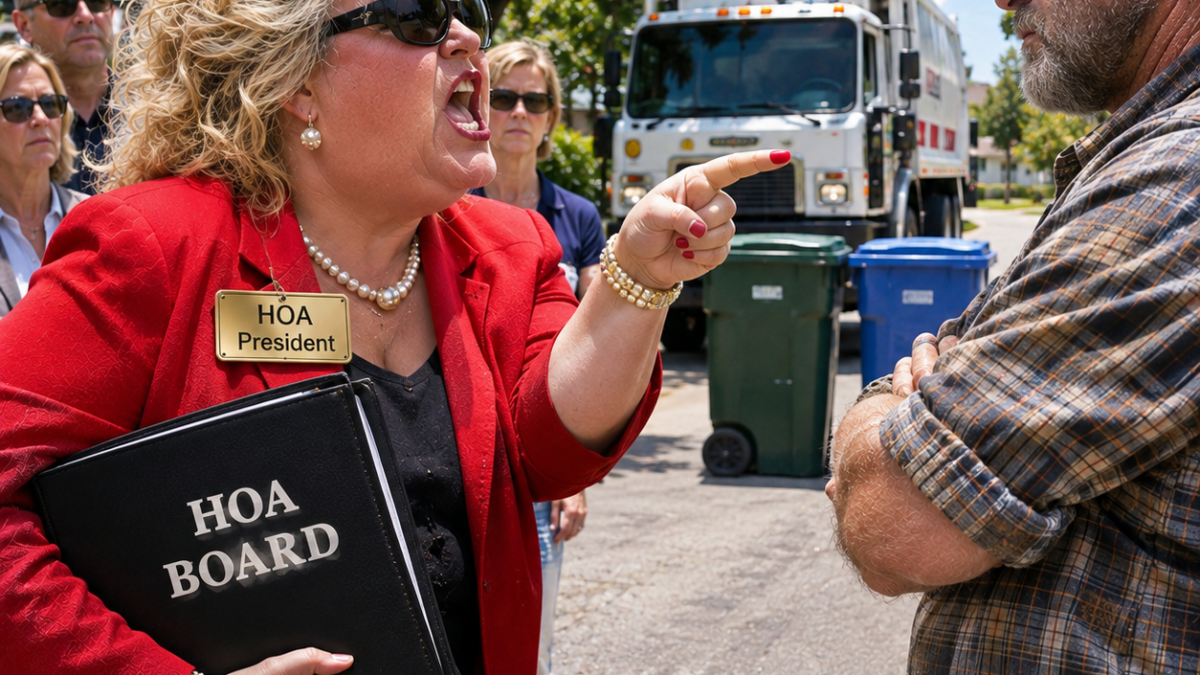
When Karen Peters arrived at the mouth of my gravel driveway with a Caterpillar D6 idling behind her and informed me that the HOA had voted to bulldoze the only legal road to my house, I knew the next few minutes would decide whether she finally understood the difference between a neighborhood rule and a recorded property right—or whether she was about to make an expensive mistake in front of a contractor who had no idea what he had been hired to destroy.
She had spent two years calling my road an eyesore, fining me fifty dollars a day for using it, turning neighbors against me, and insisting that a dozen beige houses somehow gave her the power to erase a fifty-foot-wide easement that had been surveyed, deeded, and recorded long before Oakwood Estates existed.
What Karen could not see from where she stood waving her paperwork was that the gravel beneath her bulldozer tracks was connected to far more than my front door, and one detail buried in the subdivision’s own infrastructure plans was about to force everyone involved to decide how much they trusted her version of the truth.
My name is Jack Reynolds, and I bought my ten acres more than a decade earlier from an old farmer named Hemlock, before anyone had poured the first foundation for Oakwood Estates.
The land was landlocked, so Mr. Hemlock granted me a permanent fifty-foot-wide access and utility easement running roughly a quarter mile along the northern edge of his farm to the old county road.
We did it correctly.
Survey.
Deed.
County recording.
Everything.
I built a brick ranch house far enough back that Sarah and I could sit on the porch without seeing another roof, then laid a simple gravel road along the easement.
For eight years, that road was just a road.
Then Mr. Hemlock died.
His children sold the surrounding two hundred acres to a developer, and the fields became curbs, streetlights, identical mailboxes, and houses painted in colors that all seemed to be different names for beige.
My land was never part of the subdivision.
I never joined the HOA.
At first, nobody cared.
Then Karen became president.
Her first letter complained about Sarah’s vegetable garden.
The second objected to the American flag on my porch.
The third targeted the road.
According to Karen, my gravel access violated Oakwood Estates rules governing paving, landscaping continuity, and “community visual harmony.”
I mailed her a copy of my deed and the recorded easement.
A week later, she mailed me a fifty-dollar-per-day fine.
That was when I understood I wasn’t dealing with a misunderstanding.
I was dealing with someone who believed repetition could turn authority she didn’t have into authority everyone else would eventually accept.
I warned her in writing that any attempt to lien my property would be unlawful because I wasn’t an HOA member.
The direct letters stopped.
The social pressure began.
Neighbors who had once waved started looking away.
Karen’s ally Bob approached me while I was trimming hedges and complained that my road kicked dust onto his SUV.
“Bob,” I told him, “that road was here before your house.”
He went red and walked away.
Not everyone supported her.
The Millers quietly told me most residents thought the campaign was ridiculous but were afraid of becoming Karen’s next target.
Mrs. Gable, an elderly widow on another original parcel outside the HOA, remembered the road from the 1970s.
“That right-of-way was there before any of these people knew this land existed,” she told me. “She has no more right to remove it than she has to paint my house beige.”
Then Karen called an emergency board meeting.
The agenda described my road as a “community property boundary infringement.”
Sarah came with me.
I carried the deed, easement, plat, and certified-mail receipts.
Karen refused to let me speak.
“You are not a member,” she said behind her little gavel. “Therefore you have no standing here.”
“This meeting is about my property.”
“This is a closed HOA proceeding.”
“I can prove the road is not yours.”
She banged the gavel.
“If you refuse to leave, I’ll have you removed for trespassing.”
So I walked out.
Two days later, the certified notice arrived.
The board had voted to bulldoze my road within the week.
Sarah read it at our kitchen table and went pale.
“Jack, that’s the only way to our house.”
“I know.”
“Can they really get a bulldozer here before we stop them?”
I looked at the deadline, then at the subdivision plans I had kept for years out of professional curiosity.
“A court might not move fast enough,” I said.
“So what do we do?”
I spread the plans across the table.
“We figure out what else depends on that road.”
PART 2:
I spent the next hour looking at lines most homeowners would never have cared about.
Road widths.
Curb radii.
Drainage easements.
Utility corridors.
Fire access.
Lot boundaries.
I had retired from the Army Corps of Engineers after twenty-five years, and I still had the bad habit of studying infrastructure plans for fun.
Sarah called it a disease.
That night, it became useful.
Oakwood Lane was the development’s main street.
Twenty-four feet wide from curb to curb, exactly what the county had allowed for residential access.
Nothing unusual there.
Then I noticed the corners.
The developer had squeezed every possible square foot into sellable lots, which meant some intersections had tight turning radii.
Decorative rolled curbs made them look clean and expensive.
Fine for sedans.
Fine for SUVs.
Probably fine for standard emergency engines.
But I kept staring at the plan because something in my memory had started moving.
A truck.
Big.
Green and white.
Every Tuesday morning.
I closed my eyes.
I had seen it dozens of times while drinking coffee on the porch.
The Oakwood Estates garbage truck came down the county road.
Then where?
Not through the subdivision entrance.
I pulled up satellite imagery.
There.
My gravel road.
The front-loading garbage truck used my easement to reach the six houses on the rear cul-de-sac.
Then it used the wide gravel shoulder near my property to turn around.
I sat back.
Sarah watched me.
“What?”
“The garbage truck.”
“What about it?”
“It uses our road.”
“I know.”
I looked at her.
“No. I mean it has to.”
She pulled out a chair.
“You’re sure?”
“Not yet.”
That was the difference between suspicion and leverage.
I needed someone else to say it.
—
The next morning I called Allied Waste Services.
The first person transferred me.
The second transferred me again.
Eventually I reached a route supervisor named Frank.
“I’m calling about truck seven-three-four on the Oakwood Estates route.”
Silence.
“Who is this?”
“My name is Jack Reynolds. I own the gravel road your front-loader uses to access the rear cul-de-sac.”
“Oh.”
That one syllable told me he knew exactly which road I meant.
“I’ve got a situation.”
“What kind?”
“The HOA has voted to bulldoze the road.”
Another silence.
Then:
“They’re doing what?”
“Removing it.”
“Why?”
“Aesthetic reasons.”
Frank exhaled.
“Sir, that’s our access.”
“That’s what I thought.”
“No, I mean that’s the only route our front-loader can safely use to service those rear houses.”
I sat straighter.
“The main entrance won’t work?”
“Not for that truck. Decorative median at the entrance, then tight corners. Driver would have to climb curbs or swing across landscaping. We’ve already told management that.”
“Documented?”
“I’d have to check.”
“Would you?”
“Why?”
“Because their bulldozer is supposed to be here within days.”
He swore quietly.
Then apologized.
“Look, Mr. Reynolds, if they destroy your road, we’re not going to risk a half-million-dollar truck and private-property damage trying to squeeze through those turns.”
“So what happens?”
“If access is blocked, service gets suspended until access is restored or the customer provides a safe alternative.”
“Could you put that in writing?”
Frank hesitated.
“Company letterhead?”
“Exactly.”
“You’re asking me to walk into an HOA fight.”
“I’m asking you to explain your route.”
That distinction seemed to help.
He sighed.
“Give me your email.”
Three hours later, I had the letter.
Sarah read it standing beside the kitchen counter.
Then slowly lowered the page.
“So if Karen destroys our road…”
“The back six houses lose their primary garbage pickup route.”
She looked at me.
“You’re enjoying this.”
“No.”
“You are.”
“Only slightly.”
“Jack.”
“I’m enjoying facts.”
“That sounds worse.”
—
One letter was leverage.
Two would be harder to ignore.
The fire marshal’s office answered on the second call.
I didn’t tell them I was trying to trap anybody.
I gave them road dimensions.
Intersection radii.
The location of the rear homes.
My fifty-foot easement.
Then asked about access for their largest apparatus.
A deputy chief listened.
“Standard engines can probably navigate Oakwood.”
“Probably?”
“Yes.”
“What about a ladder truck?”
Pause.
“Those rear turns would be tight.”
“How tight?”
“Potentially multi-point depending on parked cars.”
“Would my easement be better?”
“Fifty feet wide, straight approach, no curb?”
“Yes.”
“How much better?”
“Substantially.”
I explained the dispute.
His voice changed.
“The HOA plans to remove an existing access route?”
“Yes.”
“Is it designated emergency access?”
“Not formally.”
“Then I’m not going to call it required fire access without inspection.”
Fair.
“But?”
“But from what you’re describing, I would strongly recommend preserving it until the county reviews the situation.”
That was enough.
I asked for a written assessment for my records.
He agreed.
By the afternoon I had another letter.
Not as dramatic as the waste-company letter.
Better in another way.
It said my road provided superior access for large emergency apparatus to the back of Oakwood Estates and that its removal could increase response time under certain conditions.
Sarah placed both pages beside Karen’s demolition notice.
“That’s your answer?”
“Part of it.”
“What’s the other part?”
“A lawyer.”
She smiled.
“Good.”
I called one that evening.
—
My attorney, Daniel Brooks, spent less than ten minutes reading the deed before saying what I already knew.
“They can’t bulldoze this.”
“They voted.”
“That doesn’t grant them ownership.”
“The contractor is coming this week.”
Daniel leaned back.
“We can seek emergency injunctive relief.”
“How quickly?”
“I’ll file immediately.”
“But not guaranteed before the machine arrives.”
“No.”
That was the problem.
Courts move carefully.
Bulldozers don’t need much time.
Daniel drafted notice to the HOA’s counsel that night, warning them that entering the easement or disturbing the road would expose the association, directors, and contractor to claims for trespass and destruction of property.
I sent the notice.
Karen replied through management the next morning.
The demolition remained scheduled.
Sarah read the email.
“She knows you have a lawyer.”
“Yes.”
“And she’s still doing it?”
“Yes.”
“Why?”
I thought about the last two years.
“Because stopping now would mean admitting she was wrong.”
That might have been the entire conflict in one sentence.
—
The night before the demolition, I barely slept.
Not because I doubted the deed.
I doubted people.
Documents don’t physically stop machinery.
Somebody still has to choose not to turn the key.
Around two in the morning I went outside.
The road looked pale in the moonlight.
Quarter mile of gravel.
Nothing impressive.
No gate.
No monument.
No fancy landscaping.
Just a route between my house and the county road.
Sarah found me standing near the porch.
“You okay?”
“Fine.”
“Lie.”
I looked at her.
She folded her arms.
“What are you actually afraid of?”
I could have said liability.
Litigation.
Cost.
Instead I told her the truth.
“That they’ll damage it before anyone stops them.”
“We can rebuild.”
“I know.”
“But?”
I looked toward our house.
“That road is the first thing I built here.”
Sarah’s expression softened.
After the Army, we had moved onto raw land.
For months, the driveway was dirt.
I graded it.
Laid stone.
Packed it.
Built the house after access existed.
Every load of lumber had come over that road.
Every piece of furniture.
Every Christmas tree.
Every ambulance, fire engine, delivery truck, family car, and friend had only one way to reach us.
Karen called it an eyesore.
I saw the path into the life we had built.
Sarah took my hand.
“Then we protect it.”
Simple.
Exactly what I needed.
—
The bulldozer arrived at eight thirteen the next morning.
I know the time because I photographed it.
Yellow Caterpillar D6.
Low diesel rumble.
Behind it came a silver Lexus.
Karen.
Of course.
She stepped out wearing one of her floral muumuus and carrying the board resolution like a ceremonial decree.
The contractor climbed down.
Sunburned neck.
Work boots.
Name stitched on shirt:
**HENDERSON.**
Karen pointed at the road.
Then noticed me walking toward them.
Her smile widened.
“Mr. Reynolds.”
“Karen.”
“This unauthorized access easement, as you call it, is a direct violation of Covenant Seventeen-B. The board has voted for immediate and permanent removal.”
“You rehearsed that?”
Her smile vanished.
“This isn’t funny.”
“No.”
I looked at Henderson.
“It isn’t.”
Karen raised the resolution.
“You have had multiple opportunities to comply.”
“I’m not a member of your HOA.”
“We’ve been through that.”
“We have.”
“And the board has rejected your interpretation.”
Henderson glanced between us.
I almost felt sorry for him.
He had been hired to scrape gravel.
Nobody had told him he was arriving inside a property-rights dispute.
I walked closer but stayed well away from the machine.
“Mr. Henderson?”
“Yes, sir.”
“Before you start, I want you to see something.”
Karen stepped between us.
“You do not need to look at anything. We have a signed contract.”
Henderson frowned.
“Ma’am, I’m going to hear him out.”
“He’s stalling.”
“Maybe.”
He looked at me.
“What have you got?”
I handed him the deed.
Then county plat.
He studied both.
“This road’s on an easement?”
“Yes.”
“Recorded?”
“County book and page are highlighted.”
Karen waved her papers.
“The HOA has authority over community boundary features.”
I ignored her.
Henderson kept reading.
Then I handed him Daniel’s letter.
His eyebrows rose.
“You already have counsel?”
“Yes.”
Karen’s voice sharpened.
“He is trying to intimidate you.”
Henderson looked at her.
“No offense, ma’am, but lawyers intimidate me just fine on their own.”
Then I gave him Frank’s letter.
The waste company.
He read it once.
Then again.
“Is this real?”
“Yes.”
“They can’t get their main truck in any other way?”
“Not without risking their equipment and landscaping.”
Karen laughed.
“Ridiculous. They can use Oakwood Lane.”
I handed Henderson the fire-marshal assessment.
He read that one more slowly.
When he finished, he looked at the road.
Then toward Oakwood Estates.
Then at his bulldozer.
His expression changed completely.
“Fire department?”
“They haven’t designated this a required emergency route,” I said. “But they’ve said it’s the superior heavy-apparatus access and should remain until they review the situation.”
Karen crossed her arms.
“This is theater.”
Henderson handed the documents back to me.
“No, ma’am.”
He turned toward the machine.
Karen stepped after him.
“What are you doing?”
He climbed onto the track.
Reached inside the cab.
The Caterpillar engine died.
The sudden silence was enormous.
Birds.
Cicadas.
Karen breathing hard.
Henderson pulled out his phone.
“I’m calling my boss.”
“You have a contract!”
“Contract says remove a gravel path.”
“That’s what this is.”
He looked at her.
“Maybe. But I’m not taking out a recorded easement that your trash company and fire department are using until somebody with more insurance than me says it’s okay.”
Karen’s face darkened.
“The HOA will indemnify you.”
Henderson laughed once.
“That sentence is exactly why I’m calling my boss.”
—
For nearly an hour, nobody moved.
Henderson talked to his supervisor.
His supervisor apparently talked to counsel.
Karen paced along the edge of Oakwood Lane.
I stood on my gravel.
Sarah watched from near the house.
At one point Karen marched toward me.
“You did this deliberately.”
“I showed the contractor documents.”
“You went behind our backs to Allied Waste.”
“You were planning to destroy a road they use.”
“That is none of their concern.”
I stared at her.
“It’s literally their route.”
She lowered her voice.
“You enjoy embarrassing me.”
“No.”
“Yes, you do.”
I thought about answering.
Then decided not to.
Because that was another Karen habit.
Make the conflict personal enough that facts disappear.
Henderson finally returned.
“My boss says no.”
Karen spun.
“What?”
“We’re not touching it.”
“You can’t just refuse.”
“We can refuse unsafe or legally disputed work.”
“This is neither.”
He pointed toward the paperwork.
“Our lawyer says we need a court order confirming your right to remove it and written clearance on the access issue.”
Her voice climbed.
“You expect me to get permission from the garbage company to improve my own community?”
Henderson shook his head.
“Lady, I just move dirt.”
Then he climbed back into the machine.
The engine roared.
The bulldozer reversed.
Slowly.
Karen stood beside the road watching her grand solution back away from her.
I should have felt triumphant.
Mostly I felt relief.
Then the garbage truck arrived.
—
Tuesday.
Pickup day.
Green and white Allied Waste front-loader.
Gus at the wheel.
He slowed when he saw the bulldozer maneuvering near the entrance.
Then stopped.
His window lowered.
“Morning, Jack.”
“Morning.”
He looked at Karen.
“Something going on?”
Karen marched toward the cab.
“You are not authorized to use this road.”
Gus blinked.
“What?”
“This is a private community matter. You’ll need to use Oakwood Lane.”
He looked at me.
I shrugged.
“The HOA says they’re closing the road.”
Gus looked back at Karen.
“Ma’am, I’ve been running this route five years.”
“You will use the main entrance.”
“Can’t.”
“Of course you can.”
“Not safely.”
“I’ve seen trucks in there.”
“Not this truck.”
She pointed.
“You have a contractual obligation to collect our garbage.”
“Correct.”
“Then do your job.”
Gus looked tired.
Not angry.
Just tired in the way working people get when somebody who knows nothing about their job explains their job to them.
He picked up his radio.
“Dispatch, Gus. Oakwood route.”
Static.
“Yeah, I got the HOA president here saying the gravel access is closed.”
Pause.
“No, she won’t let me through.”
Pause.
“Yeah.”
He listened.
Then nodded.
“Copy.”
He set the radio down.
Karen looked almost pleased.
Gus leaned toward the window.
“Supervisor says we don’t risk the truck through the main entrance. If established access is blocked, service gets marked inaccessible.”
Karen stared.
“What does that mean?”
“It means I skip the houses I can’t safely reach.”
“You cannot do that.”
“Ma’am, I just did.”
He started the engine.
Karen stepped away.
The truck reversed.
Then disappeared back toward the county road.
Six houses on the rear loop still had full garbage bins sitting at the curb.
One belonged to Bob.
—
By Thursday, Bob called me.
Not Karen.
Me.
I answered while repairing a fence post.
“Jack.”
“Bob.”
“You know when the truck’s coming back?”
“No.”
“Come on.”
“I’m serious.”
“You talked to them.”
“Yes.”
“So call them.”
“Why?”
“Because the garbage smells.”
I leaned on the post.
“Bob, whose idea was it to close my road?”
Silence.
“I didn’t vote for the bulldozer.”
“You supported Karen.”
“That’s not the same.”
“You told me the road should be removed.”
“I said paved.”
“You called it an eyesore.”
“I was angry about the dust.”
“Then call your HOA president.”
He hung up.
Sarah, who had overheard half the conversation, came outside.
“You enjoyed that.”
“A little.”
“Jack.”
“A very little.”
She tried not to smile.
Failed.
—
Friday was brutally hot.
Trash that had been manageable on Tuesday became something else by Friday.
Food waste.
Diapers.
Packaging.
Yard clippings.
Flies.
One resident dragged the bins farther from her garage because the smell had started entering the house.
Another wrapped the lids with tape.
Bob called the management company repeatedly.
So did everyone else on the rear loop.
Karen blamed Allied Waste.
Allied Waste produced the route-access correspondence.
Management blamed the board.
The board blamed Karen privately and defended her publicly.
For the first time, her allies began experiencing the practical cost of her obsession.
That mattered.
People tolerate abstract unfairness longer than they tolerate a hot trash can beside their driveway.
—
I could have stopped there.
The bulldozer was gone.
My road remained.
Daniel believed we had enough evidence to seek declaratory relief and recover costs if necessary.
But Karen had already demonstrated she would keep escalating as long as the dispute stayed private.
I wanted daylight.
So I called Maria Sanchez.
She worked investigative consumer stories for the local television station and newspaper group.
I had seen her expose a contractor who took deposits from elderly homeowners and disappeared.
She answered her office line herself.
“Maria Sanchez.”
“My name is Jack Reynolds. I have an HOA story.”
She sighed.
“I get six of those a week.”
“This one involves a bulldozer, a deeded easement, blocked garbage service, and a fire-access concern.”
Pause.
“That’s slightly better.”
“I have documents.”
“How many?”
“A binder.”
“Of course you do.”
We met at a coffee shop.
—
Maria asked hard questions.
Good.
“Are you certain you’re not in the HOA?”
I showed her the title.
“Can the easement be terminated?”
I showed her the granting language.
“Did the board actually vote to destroy the road?”
Official notice.
“Did you provoke the garbage interruption?”
“No.”
“You called Allied Waste.”
“Yes.”
“Why?”
“Because I discovered they relied on my road.”
“Did you tell them to stop collection?”
“No.”
“Did you tell the driver not to use the road?”
“No. Karen did.”
“Witnesses?”
“Gus.”
“Fire department says this road is required?”
“No.”
She looked up sharply.
“No?”
“It says superior access for their largest apparatus and recommends preserving it pending review.”
Maria nodded.
“Thank you for not exaggerating that.”
“Facts are enough.”
That earned the first smile of the interview.
Then she asked about the HOA meeting.
I had recorded my own attempt to speak from the back of the room.
My voice.
Karen telling me I had no standing.
Karen threatening removal for trespassing.
Then, faintly, as I left:
**We need to vote on immediate removal of the encroachment.**
Maria replayed it.
“Can I use this?”
“Talk to Daniel first.”
“You already have a lawyer?”
“Yes.”
She smiled again.
“I’m beginning to understand you.”
—
For two days Maria interviewed people.
Frank at Allied Waste.
The deputy fire chief.
Mrs. Gable.
The Millers.
Even Bob, though he declined on-camera comment.
Karen agreed to be interviewed.
That surprised me.
It shouldn’t have.
Karen never avoided microphones when she believed she could control the story.
She stood outside the clubhouse.
Perfect hair.
Board pin.
She called my road an unauthorized eyesore.
Said the HOA had an obligation to enforce standards.
When Maria asked why Oakwood rules applied to a nonmember parcel with a recorded easement, Karen said:
“That is a matter of legal interpretation.”
When Maria asked whether the garbage truck used my road, Karen answered:
“Service providers have allowed themselves to become involved in a private governance matter.”
When Maria asked about emergency access, Karen said the fire department was being “overly cautious.”
That clip made the final segment.
—
Monday evening.
Six o’clock news.
Sarah and I watched from the kitchen.
The story opened on the garbage bins.
Not my road.
Trash.
Overflowing.
Flies.
Bob’s expensive SUV parked twenty feet from three bulging cans.
Then Maria’s voice:
**A two-year property dispute between an Oakwood Estates HOA president and a neighboring landowner has now disrupted garbage collection and raised questions about emergency access.**
Cut to me.
My easement.
County plat.
Allied Waste letter.
Fire assessment.
Karen’s interview.
Then the audio from the meeting.
Finally, the headline:
**HOA POWER PLAY LEAVES NEIGHBORHOOD IN A STINK**
Sarah looked at me.
“That’s brutal.”
“I didn’t write it.”
“You’re smiling.”
“Barely.”
Then my phone started vibrating.
—
The Oakwood community page exploded.
I didn’t have an account, but the Millers sent screenshots.
**Why were we never told the road was privately owned?**
**Why are our dues paying for a bulldozer against a nonmember?**
**My mother lives on the back loop. What happens if an emergency truck needs access?**
**Karen said this road was HOA property. Is that false?**
**Who authorized this?**
Then:
**SPECIAL MEETING. NOW.**
The people who had looked away from me started looking at Karen.
That was the shift.
—
The Millers knocked on our door that night.
Both of them.
Clipboard.
“We’re collecting signatures.”
“For what?”
“Vote of no confidence.”
Sarah invited them inside.
“How many do you need?”
“Twenty-five percent to force a special meeting.”
“How many do you have?”
Mr. Miller smiled.
“Seventy percent.”
I stared.
“In one evening?”
“People are angry.”
Mrs. Miller added:
“Not just about the trash.”
She opened a folder.
Violation notices.
Different families.
Fence color.
Kids’ bicycles.
Holiday decorations.
Mailbox paint.
Karen had accumulated enemies quietly.
My road simply gave them something large enough to organize around.
I understood that feeling.
It was similar to what I had seen in military organizations when a bad leader finally lost legitimacy.
For months, people complain privately.
Nothing moves.
Then one event makes everyone realize everyone else feels the same way.
Authority can collapse very quickly after that.
—
The professional management company sent an emergency email the next morning.
Special community meeting.
Service disruption.
Legal exposure.
Board governance.
Karen’s name wasn’t in the subject.
It didn’t need to be.
Daniel called.
“Are you going?”
“Yes.”
“Good.”
“Am I allowed to speak this time?”
“The management company’s counsel contacted me.”
“And?”
“They’ve been advised to let you.”
I smiled.
“Interesting.”
“They’re scared.”
“Of me?”
“Liability.”
That made more sense.
—
Before the meeting, Frank from Allied Waste called.
“Got good news.”
“What?”
“Management has authorized our truck to use your road again.”
“I never revoked permission.”
“I know.”
“We have that in writing?”
“Yep.”
“What changed?”
Frank laughed.
“The smell, apparently.”
Garbage pickup resumed that afternoon.
Gus drove past the house and lifted one hand from the wheel.
The back-loop bins disappeared into the truck.
Within hours, the most obvious evidence of Karen’s failure was gone.
The anger wasn’t.
—
The second Oakwood meeting felt nothing like the first.
Standing room only.
People who had barely attended an annual meeting were lining walls.
Mrs. Gable sat front row.
The Millers held their petition near the back.
Bob sat alone.
Karen sat with the board.
No smile.
A representative from the management company tried to open with discussion of waste-service logistics.
Someone shouted:
“We want to talk about Karen.”
Another:
“Why did she lie about the road?”
The manager looked helpless.
He consulted a man beside him.
Probably counsel.
Then:
“The floor will entertain a motion.”
Mr. Miller stood.
“I move for a vote of no confidence and immediate removal of Karen Peters as president.”
Seconded instantly.
Karen grabbed the microphone.
“This is outrageous.”
The manager raised both hands.
“Karen, please.”
“I have been protecting this community for two years.”
Someone yelled:
“From garbage pickup?”
Laughter.
Karen’s face flushed.
Then the manager said:
“Before the vote, counsel recommends allowing Mr. Reynolds to address the members.”
For the first time in two years, Karen could not stop me from speaking.
I walked to the front.
Placed the binder on the podium.
Opened it.
No theatrics.
No speech about tyranny.
Just chronology.
—
“I bought my property before Oakwood Estates existed.”
County plat on screen.
“I am not a member of this association.”
Deed.
“Old Man Hemlock granted this recorded access and utility easement when I purchased my land.”
Easement.
“I provided these documents to your president two years ago.”
Certified-mail receipt.
“I was fined anyway.”
Violation notice.
“I warned that a lien would be improper.”
Second certified receipt.
“Then your board held a meeting about bulldozing my road and refused to let me present the documents.”
Audio.
Karen’s voice filled the clubhouse.
**You are not a member. Therefore you have no standing to speak here.**
Then:
**If you do not leave, I will have you removed for trespassing.**
A few residents stared at the floor.
I continued.
“The board voted.”
Official notice.
“The contractor arrived.”
Photo of Caterpillar.
“He stopped after reviewing the recorded easement and these two letters.”
Allied Waste.
Fire marshal.
I held both up.
“The road is used by the large garbage truck because Oakwood Lane’s geometry does not safely accommodate it. The fire marshal’s office has also determined this route offers substantially better access for large apparatus to the rear homes.”
I looked around.
“I did not block your garbage truck.”
Several heads turned toward Karen.
“The driver arrived while the demolition contractor was still present. Karen personally told him he could not use the road.”
Gus had given Maria a statement.
I read the relevant portion.
Silence.
Then I closed the binder.
“That’s it.”
Someone near the wall said:
“What about the fifty-dollar fines?”
“I never paid them.”
“Could they lien you?”
“No.”
“Did she tell us your road belonged to the HOA?”
I looked at Karen.
“She can answer that.”
The room did.
—
Karen stood.
For a moment, I almost felt sorry for her.
She looked tired.
Cornered.
But instead of admitting error, she doubled down.
“My responsibility was to protect community standards.”
Mr. Miller interrupted.
“By bulldozing somebody else’s property?”
“That easement creates a visual and operational burden on Oakwood.”
Mrs. Gable spoke from the front.
“It was there first.”
Karen glared at her.
Mrs. Gable didn’t move.
“I remember Mr. Hemlock granting it.”
Karen pointed at me.
“This man has manipulated you.”
I stayed quiet.
“He contacted the media.”
“Yes,” I said.
“See?”
“I contacted a reporter after your contractor arrived with a bulldozer.”
“You humiliated this community.”
A woman near the back stood.
“No, Karen. You did.”
Applause.
Not everyone.
Enough.
Karen raised her voice.
“Do you really want to reward somebody who refuses to cooperate?”
Bob finally spoke.
“I want my garbage picked up.”
The room laughed.
Karen turned on him.
“You supported the road-removal resolution.”
Bob sank into his chair.
That was probably the exact moment she lost the last of her allies.
—
The vote happened by show of hands.
Nearly unanimous.
No confidence.
Removal as president.
Then a separate motion urging the remaining board to remove her from committee leadership pending review.
Passed.
Karen sat rigid.
For years she had weaponized votes.
Now one ended her reign.
She gathered her papers.
No dramatic outburst.
No screaming.
That would have been easier to hate.
Instead she looked stunned.
Smaller.
She walked out the side door.
The room remained silent until it closed.
Then everyone began talking at once.
—
Mr. Miller became acting president.
One of the first things he did was walk over to me.
“Jack.”
“Yeah?”
“I’m sorry.”
“You didn’t create this.”
“I stayed quiet.”
That was different.
He knew it.
“So did a lot of people.”
“That doesn’t make it right.”
“No.”
He nodded.
“We’re going to fix the record.”
He meant it.
—
Within a week, the new board passed a formal resolution acknowledging that my property was outside Oakwood Estates and that the recorded easement was a lawful private right-of-way beyond HOA enforcement authority.
A copy went into association records.
Another came to me by certified mail.
I laughed when I saw the envelope.
Sarah heard me from the other room.
“What?”
“More HOA mail.”
“Fine?”
“Apology.”
She came in.
Read it.
Then read it again.
The language was straightforward.
The board apologized for the harassment, improper fines, demolition attempt, and disruption caused by the previous administration.
It confirmed that the road would not be challenged by the HOA.
Sarah folded the letter carefully.
“Frame it?”
“No.”
“Burn it?”
“No.”
“What?”
“File it.”
She sighed.
“You are the least exciting retired officer I know.”
“Documentation is exciting.”
“No one thinks that.”
—
The garbage route returned to normal.
Every Tuesday morning, Gus used my road.
No speeches.
No argument.
Just work.
The first week after the meeting, several residents came outside when the truck arrived.
Not to protest.
To watch.
Gus later told me it felt like driving in a parade.
“I’m just collecting trash.”
“Apparently you became a symbol.”
“I hate symbols.”
“Me too.”
We got along.
—
Bob avoided me for two weeks.
Then one Saturday, I was checking the mailbox when he crossed the road.
No perfect-lawn swagger.
No lecture about aesthetics.
Just Bob.
He stopped a few feet away.
“Can I say something?”
“Sure.”
“I was an ass.”
I raised an eyebrow.
He looked down.
“I believed her.”
“You wanted the road gone too.”
“I know.”
“You complained about the dust.”
“I know.”
“Then your garbage didn’t get picked up.”
He grimaced.
“I know.”
I let him stand with it.
Finally he said:
“I guess I didn’t care whether she was right until it affected me.”
That was more honest than I expected.
“Probably.”
He looked up.
“You’re not going to make this easy, are you?”
“No.”
He laughed weakly.
“Fair.”
Then:
“I’m sorry.”
I held out my hand.
“No hard feelings.”
Not entirely true.
But true enough to move forward.
—
The road stayed gravel.
That became an issue at the first meeting under the new board.
Someone suggested Oakwood should pay to pave it as a gesture of goodwill.
I declined.
Karen had spent two years assuming prettier meant better.
I wasn’t going to let the apology repeat the same mistake.
The gravel worked.
It drained well.
Easy to repair.
Compatible with the property.
And it was mine.
The HOA didn’t need to improve it.
It needed to leave it alone.
Mr. Miller understood.
“That may be the shortest infrastructure discussion we ever have.”
“Congratulations.”
—
Mrs. Gable became a regular visitor.
She brought roses for Sarah.
Sometimes vegetables.
Once she sat on the porch and looked down the road.
“I knew Hemlock would haunt somebody if they touched that easement.”
I smiled.
“You knew him that well?”
“Oh, honey.”
She laughed.
“That man fought the county for six months over a drainage ditch.”
“Sounds familiar.”
“He’d have liked you.”
That meant more than I expected.
—
The Millers became actual friends.
Not secret allies.
There was a difference.
Before Karen fell, Mrs. Miller had delivered cookies and whispered.
Afterward, they came for dinner.
Their children cut across the edge of our property with permission to visit Mrs. Gable.
Sarah stopped worrying when she saw Oakwood kids near the road.
The development had felt hostile for so long that I’d forgotten most people living there were ordinary families.
Karen’s greatest success had been convincing me they were all part of her.
They weren’t.
They had simply been quiet.
—
The management company conducted its own review.
The demolition contract was canceled.
Legal invoices were reviewed.
Policies were rewritten to require legal verification before the HOA spent money enforcing rules against property whose membership status was disputed.
That sounded obvious.
Apparently obvious things become policies only after somebody proves they aren’t obvious enough.
The association also began documenting external access dependencies.
Garbage.
Emergency response.
Utility service.
The infrastructure plans I had studied alone at my drafting table became part of board orientation.
I found that satisfying.
Not because my name appeared anywhere.
Because nobody would be able to claim ignorance next time.
—
Karen resigned from the board completely within two weeks.
Less than a month after the recall, a real-estate sign appeared in her lawn.
Sarah noticed it first.
We were driving home from the grocery store.
She pointed.
“Oh.”
I looked.
**FOR SALE.**
Karen’s lawn was flawless.
Of course.
No weeds.
Perfect edges.
Flower beds symmetrical enough to measure.
The sign looked like the only unscheduled object on the property.
Sarah glanced at me.
“You happy?”
I thought about it.
“No.”
“Really?”
“I’m relieved.”
That was closer.
I had wanted Karen stopped.
I hadn’t needed her ruined.
Her leaving meant the fight could truly end.
That was enough.
—
She and her husband moved before summer ended.
I didn’t watch.
Didn’t photograph the truck.
Didn’t wait at the road.
Later, Mrs. Gable told me Karen had left early in the morning.
Fine.
Some endings are better when you don’t attend them.
—
Oakwood Estates changed slowly.
Not dramatically.
That was probably healthier.
Trash bins were still supposed to be brought in.
Lawns still had standards.
People still argued about parking.
No revolution.
Just less fear.
Homeowners asked questions.
Meeting minutes were published.
The board explained major decisions.
People learned that saying “Why?” did not automatically put a target on your house.
The Millers pushed for a resident-comment period at every meeting.
Passed.
Mrs. Gable joked that she wanted membership despite living outside the HOA just so she could use it.
I told her absolutely not.
She said she’d attend anyway.
She did.
—
The road became boring again.
That may sound anticlimactic.
It wasn’t.
After two years of notices, fines, gossip, votes, legal threats, and one Caterpillar D6, boring felt luxurious.
Every morning I drove down the gravel.
Every evening I came home the same way.
Rain washed small ruts.
I graded them.
Leaves collected.
I cleared them.
Nothing symbolic.
Just maintenance.
That’s what property is supposed to become after a dispute.
Normal again.
—
One afternoon Daniel called.
“The management company’s counsel contacted me.”
“Problem?”
“No.”
“They want a mutual release regarding the fines and enforcement history.”
“Meaning?”
“They formally waive any claims associated with the old notices, acknowledge no lien exists, and agree not to pursue enforcement over the easement.”
“What do they want?”
“Confirmation that you’re not pursuing damages related to the abandoned demolition effort.”
I thought about the lawyer bills.
Stress.
Media.
Then asked:
“Will they reimburse my reasonable legal costs?”
“I can ask.”
“Ask.”
They did.
Not every dollar.
Enough.
More importantly, the release was clean.
No admission that I had ever owed fines.
No ambiguity.
I signed.
That closed the paper war.
—
Sarah put the final documents in a box.
Not me.
I came into the office and found my binder missing.
“Where is it?”
“Closet.”
“Why?”
“I’m tired of looking at it.”
“What if I need—”
“You have scans.”
“But—”
“Jack.”
I stopped.
She softened.
“You protected the road.”
“I know.”
“You protected the house.”
“I know.”
“You won.”
I hated the word.
“Then stop standing guard over a battle that ended.”
That was harder than anything Karen had asked of me.
Because Sarah was right.
Again.
—
Retirement after a long military career had taught me that vigilance is a habit.
Not always a healthy one.
For years, responsibility meant looking for failure before failure arrived.
Road washouts.
Structural loads.
Supply bottlenecks.
Construction schedules.
Threats.
You don’t simply turn that off because somebody hands you retirement papers.
Karen gave that part of me a mission.
At first I almost welcomed it.
Something to solve.
A clear adversary.
A measurable objective.
Then I realized how much energy I had handed her.
Sarah noticed long before I did.
After the settlement, I stopped checking HOA emails every morning.
Then I stopped checking whether Karen’s former allies were staring at our property.
Eventually I drove down the road without thinking about Oakwood at all.
That was the real recovery.
—
The new family who bought Karen’s house introduced themselves at the mailbox.
David and Elise Harper.
Two kids.
Dog.
They had no idea about the full history.
David smiled awkwardly.
“We heard there was some HOA drama.”
I laughed.
“That’s one way to put it.”
He pointed toward the gravel road.
“Is that yours?”
“Yes.”
“Management said it’s a private easement we’re not supposed to interfere with.”
I nearly laughed again.
“Correct.”
“Garbage truck uses it?”
“Every Tuesday.”
He nodded.
“Seems useful.”
Two years of war reduced to two words.
Seems useful.
Perfect.
—
The first winter after Karen left, we had an ice storm.
Tree limbs down.
Power flickered.
At three in the morning, I heard diesel.
Fire engine.
Not ladder truck.
Standard engine.
A medical call at the rear cul-de-sac.
The driver came in through Oakwood Lane.
No problem.
Later, a larger utility vehicle used my easement because fallen branches blocked part of the main road.
Nobody asked permission in the middle of the emergency.
They didn’t need to.
I had already told the new board that legitimate emergency access was welcome.
The next morning Mr. Miller called.
“Thanks.”
“For what?”
“Road.”
“It’s still a road.”
“Apparently that’s a big deal around here.”
We both laughed.
—
That spring the board invited the fire department to review Oakwood access formally.
The result was practical.
Clear parking restrictions near tight corners.
Emergency-turning areas kept unobstructed.
My road identified as an alternative access corridor to be preserved through cooperation with me, not seized by the HOA.
That wording mattered.
Cooperation.
Not jurisdiction.
People often confuse those.
You can depend on something you do not own.
You can benefit from somebody else’s property without gaining authority over it.
You can ask without commanding.
Karen never learned those distinctions.
The new board did.
—
Allied Waste adjusted its contract language too.
Frank sent me a copy because he thought I’d appreciate it.
**Customer is responsible for maintaining safe and unobstructed access routes used by collection vehicles.**
Oakwood management had signed.
I called him.
“You realize I’m not the customer.”
“I know.”
“So technically they can’t maintain my road.”
“I know.”
“Then what does that clause accomplish?”
“Reminds them not to bulldoze it.”
Fair enough.
—
Gus remained on the route.
Every Tuesday.
Same truck for a while.
Then a newer one.
He still used the gravel entrance.
Sometimes he waved.
Sometimes he didn’t see me.
Normal.
Then came the Tuesday that became my favorite ending to the whole ridiculous affair.
It was about two months after the final HOA meeting.
Bright morning.
Coffee.
I sat on the front porch.
Sarah was inside.
Tomato plants near the road had grown high enough that Karen probably would have written a three-page violation notice.
I heard the front-loader before I saw it.
Hydraulic whine.
Diesel.
Gravel crunching under heavy tires.
Gus came around the curve.
He spotted me.
The truck slowed.
He leaned toward the window.
Big grin.
Then gave me a theatrical thumbs-up.
I raised my coffee.
He blasted the air horn.
One short, ridiculous salute.
The sound rolled across Oakwood Estates.
Dogs barked.
A porch light came on.
Somewhere, probably, somebody complained.
I laughed.
Gus kept driving.
Six houses waited at the far end.
Their bins would be empty in fifteen minutes.
Then he would turn around using the same gravel space Karen had once tried to erase.
Nothing heroic.
Garbage collection.
That was what made it perfect.
—
Years of military service taught me that the systems people overlook are usually the ones they notice only after those systems stop working.
Roads.
Drainage.
Fuel.
Waste.
Power.
Water.
Nobody celebrates access when access is available.
They complain when it isn’t.
Karen looked at my road and saw gravel.
Dust.
Nonconformity.
A scar across her idea of visual order.
She never asked what traveled over it.
She never asked why the developer had built around it instead of removing it.
She never checked the deed carefully enough to understand what “permanent easement” meant.
And she certainly never considered that Oakwood itself had quietly adapted to use the very thing she hated.
The garbage company had.
Emergency planners had.
Delivery drivers had.
Residents had.
Everyone except the woman trying to destroy it.
—
People later told the story as if I had deliberately trapped the neighborhood by withholding garbage access.
I didn’t.
That’s important.
I never closed the road.
Never put up a gate.
Never blocked Gus.
Never told Allied Waste to skip Oakwood.
Karen did that.
She told the driver he wasn’t permitted to use the route.
The consequences came from her own decision.
That was what made the outcome satisfying.
I didn’t need to retaliate.
I only needed to stop saving her from the practical result of what she wanted.
If the road was truly useless, as she had claimed, then losing it shouldn’t matter.
For three hot summer days, Oakwood learned exactly how useful it was.
Sometimes the cleanest argument is simply letting reality answer.
—
Bob and I eventually became cordial.
Not friends.
That’s okay.
One morning he stopped while I was spreading fresh gravel.
“Need a hand?”
I looked at him.
He looked embarrassed immediately.
“I know. Stupid question.”
“No.”
I handed him a rake.
“If you’re offering.”
He helped for forty minutes.
No discussion about Karen.
No apology repeated.
Just work.
At one point dust covered his shoes.
He looked down.
Then at me.
“Don’t say it.”
I laughed.
“I wasn’t going to.”
“You were thinking about my SUV.”
“Absolutely.”
He laughed too.
That was probably the moment I truly let the resentment go.
—
Mrs. Gable died several years later.
Peacefully.
Her niece sold the cottage.
Before the sale, she came over with a box of old papers Mrs. Gable had saved.
Inside was a photograph from the 1970s.
Old Man Hemlock.
Tractor.
Farm road.
The original right-of-way before I owned the property.
On the back, Mrs. Gable had written:
**Hemlock access road, summer 1976.**
I sat at the kitchen table staring at it.
Sarah touched my shoulder.
“She really did remember.”
“Yeah.”
The road looked rougher then.
Mostly dirt.
Grass in the center.
But unmistakable.
Same route.
Same trees.
Same gentle curve to the county road.
Long before Karen.
Long before Oakwood.
Long before I built my house.
That photograph became my favorite document.
Not the deed.
Not the Allied Waste letter.
Not the apology.
The photograph.
Because it reminded me that ownership papers protect rights, but places often carry their own history before anybody starts arguing over them.
—
I framed that one.
Sarah noticed.
“You wouldn’t frame the apology.”
“No.”
“But you framed an old dirt road.”
“Yes.”
She smiled.
“That actually makes sense.”
—
The tomato garden that started Karen’s first complaint kept growing every year.
Sarah expanded it.
Peppers.
Beans.
Basil.
Too many zucchini.
One summer the Harpers’ daughter came over and helped Sarah pick tomatoes.
Nobody cared that it sat near the road.
Nobody complained about agriculture.
Nobody measured anything.
The development still looked neat.
The world kept turning.
That’s the absurdity of control for control’s sake.
Once Karen was gone, almost none of the disasters she predicted occurred.
No collapse in property values.
No visual chaos.
No lawless invasion of gravel roads.
Oakwood remained Oakwood.
It just became less afraid.
—
Mr. Miller eventually stepped down as president.
A woman named Carol replaced him.
Then someone else after her.
The easement resolution remained.
That was how I knew the reform was real.
If protection depends on one friendly leader, it isn’t protection.
Records survived personalities.
Karen’s mistake had been believing her title made reality flexible.
The new board learned that good governance starts with accepting what is outside your authority.
Sometimes the most important sentence a leader can say is:
“That isn’t ours to control.”
—
Years later, one of the Oakwood kids asked me:
“Mr. Reynolds, why is your driveway gravel when all ours are paved?”
I looked down the road.
“Because I like it.”
“That’s it?”
“Pretty much.”
“My mom says the HOA tried to remove it.”
“Your mom talks too much.”
He laughed.
“Did they?”
“Yes.”
“Why?”
“They thought it looked bad.”
He studied the road for a second.
“It looks like a road.”
Exactly.
—
I never forgot the bulldozer.
Not because it frightened me once the contractor stopped.
Because it represented how close paperwork can come to becoming physical reality.
Karen’s letters were ridiculous.
Until a machine arrived.
Her fines were meaningless.
Until she persuaded a board to spend community money.
Her claim of jurisdiction was false.
But a contractor doesn’t automatically know that.
That is why documentation matters.
A deed sitting in a drawer isn’t magic.
You have to produce it.
Explain it.
Protect it.
The law can be powerful.
But it often works through ordinary people making cautious decisions.
Henderson could have ignored me.
He didn’t.
He read.
He called his boss.
His boss called counsel.
The machine stopped.
Sometimes justice begins with a contractor deciding he doesn’t want to lose his insurance.
—
I saw Henderson again once.
Years later.
Hardware store.
He recognized me first.
“You’re the road guy.”
“You’re the bulldozer guy.”
He laughed.
“Your HOA lady still around?”
“Long gone.”
“Good.”
“You ever think about that job?”
“All the time.”
“Really?”
He pointed at me.
“You ruined me.”
“What?”
“Now whenever somebody says, ‘It’s just a quick demolition,’ I ask for ownership documents.”
I smiled.
“Sorry.”
“No, you’re not.”
“No.”
Then he grew serious.
“You know, if you hadn’t been standing there…”
“I know.”
“I would’ve started at the county-road end.”
That sentence stayed with me.
He might have scraped hundreds of feet before anyone stopped him.
Utility lines ran in the same easement.
Our access could have disappeared.
The damage would have been repairable.
But unnecessary.
All because one person refused to admit she didn’t have authority.
—
The lesson wasn’t that HOAs are evil.
Oakwood still had one.
Needed one for shared property.
Pool.
Entrance landscaping.
Common drainage.
Contracts.
Budgets.
The problem was Karen confusing association governance with personal sovereignty.
The board could regulate what its declarations legally covered.
It could not vote itself new land.
A show of hands does not move a property boundary.
A covenant does not erase a deeded easement simply because somebody dislikes gravel.
That should be obvious.
It wasn’t.
So we made it obvious.
—
The media story faded.
Another scandal replaced us.
Then another.
Good.
I never wanted to be famous as “the road guy.”
The clip stayed online somewhere.
Occasionally somebody recognized my name.
“Are you that guy whose HOA lost garbage service?”
I’d say:
“Unfortunately.”
They usually laughed.
I did too.
Eventually.
—
Sarah once asked me whether I would handle anything differently.
We were on the porch.
Same view.
Older trees.
Older us.
I thought for a while.
“I’d hire Daniel sooner.”
“That’s it?”
“I’d talk to more neighbors sooner.”
She nodded.
“I wish you’d done that.”
“Why?”
“You spent almost a year assuming everyone in Oakwood hated us.”
“They acted like it.”
“They were scared.”
“I know that now.”
She took a sip of tea.
“You could’ve known it then.”
Again.
Right.
Always irritating.
Always useful.
—
Isolation had worked in Karen’s favor.
She told Oakwood I was the problem.
I saw Oakwood residents looking away and assumed they agreed.
They saw me quiet and probably assumed I wanted nothing to do with them.
Everyone became separated by fear and rumor.
Mrs. Miller’s cookies were the first crack.
Mrs. Gable’s memory widened it.
Then garbage made everybody talk.
Community is surprisingly fragile when people stop speaking directly.
It repairs the same way.
One conversation at a time.
—
The final paper from Karen’s era sits behind the easement deed in my property file.
Not her demolition notice.
Not the fines.
The new board’s resolution.
It states that Oakwood Estates recognizes the permanent recorded right-of-way and disclaims authority to obstruct, remove, or regulate it except through lawful agreements with the property owner.
Dry language.
Beautiful.
I hope nobody ever needs to read it.
That’s the purpose of good documentation.
You create it so future people don’t have to fight the same fight.
—
As for Karen, I heard bits and pieces after she moved.
Nothing dramatic.
No prison.
No grand courtroom scene.
No mysterious downfall.
She sold the house and left Oakwood.
That was the consequence supported by what I knew.
I didn’t investigate further.
There was a time I would have wanted updates.
Where she moved.
Whether the new neighborhood had an HOA.
Whether she ran for anything.
Then one day I realized I hadn’t thought about her in months.
That felt better than any revenge.
—
The road remains.
Still gravel.
Still wide.
Still curves gently toward the county road.
The original stone has been replenished many times.
Trees along the edge are larger.
The house is older.
So am I.
Allied Waste eventually changed contractors, then changed trucks.
The route still uses the easement because it remains practical.
Emergency vehicles know about it.
Deliveries use it.
Friends use it.
Sarah’s garden sits nearby.
Sometimes children from Oakwood walk with their parents along the edge and wave.
Nobody sees a war zone.
Good.
—
The morning Gus honked that air horn, I sat with coffee and watched the truck disappear toward the rear cul-de-sac.
The sound faded.
Birds returned.
A breeze moved through the oaks.
Sarah stepped onto the porch.
“What was that?”
“Gus.”
“Why is he honking?”
“Victory parade.”
She rolled her eyes.
“You’re ridiculous.”
“Probably.”
She sat beside me.
For a while we watched the road.
Then she said:
“You know what I like most?”
“What?”
“It looks exactly the same.”
I looked at the gravel.
She was right.
Two years of harassment.
Fines.
Threats.
Meetings.
A bulldozer.
Garbage.
News cameras.
Recall vote.
And the road looked exactly as it had before Karen decided it offended her.
That was the ending.
Not transformation.
Preservation.
Sometimes winning means the thing somebody tried to take from you simply remains where it was.
—
Karen had wanted the road removed because it didn’t fit her picture of Oakwood Estates.
But the road had never belonged in her picture.
It belonged to a different history.
Old Man Hemlock’s farm.
My deed.
My house.
My family.
It existed before the subdivision and, if maintained, would probably exist long after every HOA president who ever argued about it.
The irony was that Oakwood itself had quietly come to rely on the road.
Karen could not accept the visual reminder that there were things around her she did not control.
So she tried to erase it.
And in doing so, she revealed exactly why boundaries matter.
Her authority ended where my easement began.
The board vote could not change that.
The bulldozer could not change that.
Public pressure could not change that.
The only thing Karen’s campaign changed was whether the people around her were willing to keep pretending otherwise.
They weren’t.
Not after the garbage piled up.
Not after the fire-access questions.
Not after the documents became public.
Not after they realized their president had risked their own services to win a personal fight over gravel.
She wanted a perfectly controlled neighborhood.
Instead, she gave that neighborhood a reason to challenge her control.
She wanted my road erased.
Instead, the new board put its legitimacy into Oakwood’s permanent records.
She tried to isolate me.
Instead, Sarah and I finally became closer to the people living around us.
She tried to make my independence look selfish.
Then everyone discovered that the independent road was quietly helping their community every single week.
That was the part she never saw coming.
Not because it was secret.
Because she had never bothered to ask what the road was for.
—
A few summers later, I found myself standing near the county entrance with the old photograph Mrs. Gable had left behind.
1976.
Hemlock’s tractor.
Dirt track.
Open fields where Oakwood now stood.
I held the photo up against the view.
The world had changed around the road.
Houses where pasture used to be.
Streetlights.
Mailboxes.
Swimming pool.
Children.
Garbage trucks.
But the route itself followed almost the same line.
I thought about Old Man Hemlock signing the easement.
He could not have known any of this.
He only knew that landlocked property needed reliable access.
So he wrote it down.
Surveyed it.
Recorded it.
Simple foresight.
Decades later, that one responsible act protected my home from Karen’s vote.
Paper can outlive people.
So can good planning.
—
I folded the photograph back into my pocket.
From behind me came the sound of a diesel engine.
Garbage day.
The new truck turned off the county road.
Wide.
Easy.
Exactly the way Frank had described years earlier.
It rolled past.
The driver wasn’t Gus anymore.
Younger guy.
Didn’t know me.
Didn’t know Karen.
Didn’t know there had ever been a bulldozer.
He just drove the route.
That made me happier than Gus’s salute had.
Because it meant the conflict had finally become history.
The road no longer needed a defender standing beside it.
It was simply infrastructure doing its job.
I stepped onto the grass and let the truck pass.
The tires pressed into the gravel.
Dust lifted briefly in the sunlight.
Then settled again.
And my road—the road Karen once convinced an entire HOA to vote out of existence—remained exactly where it had always belonged.
[END OF STORY]








