HOA Tried to Seize My Creek With a 1987 Easement—My Attorney Found the One Sentence That Destroyed Their Case
PART 2
I leaned closer to the monitor.
The document was old enough that the scanned type looked soft around the edges.
June 15, 1987.
Whispering Pines Development Company.
Grant of Drainage Easement.
Thirty feet wide.
Following the natural watercourse across what would eventually become my parcel.
I could almost hear Karen’s voice.
**It’s ironclad.**
The clerk stood beside me.
Her name tag read **MARLENE**.
She’d been kind from the moment I explained why I was there.
Now she watched my expression change.
“Bad news?”
“Maybe.”
I kept reading.
Grantor.
Grantee.
Successors.
Access.
Inspection.
Maintenance.
Removal of obstructions.
The language looked exactly like the kind of thing an HOA president would wave around while telling a homeowner to surrender.
Then I reached paragraph four.
I stopped.
Read it again.
Then a third time.
The sentence was buried between renewal language and maintenance obligations.
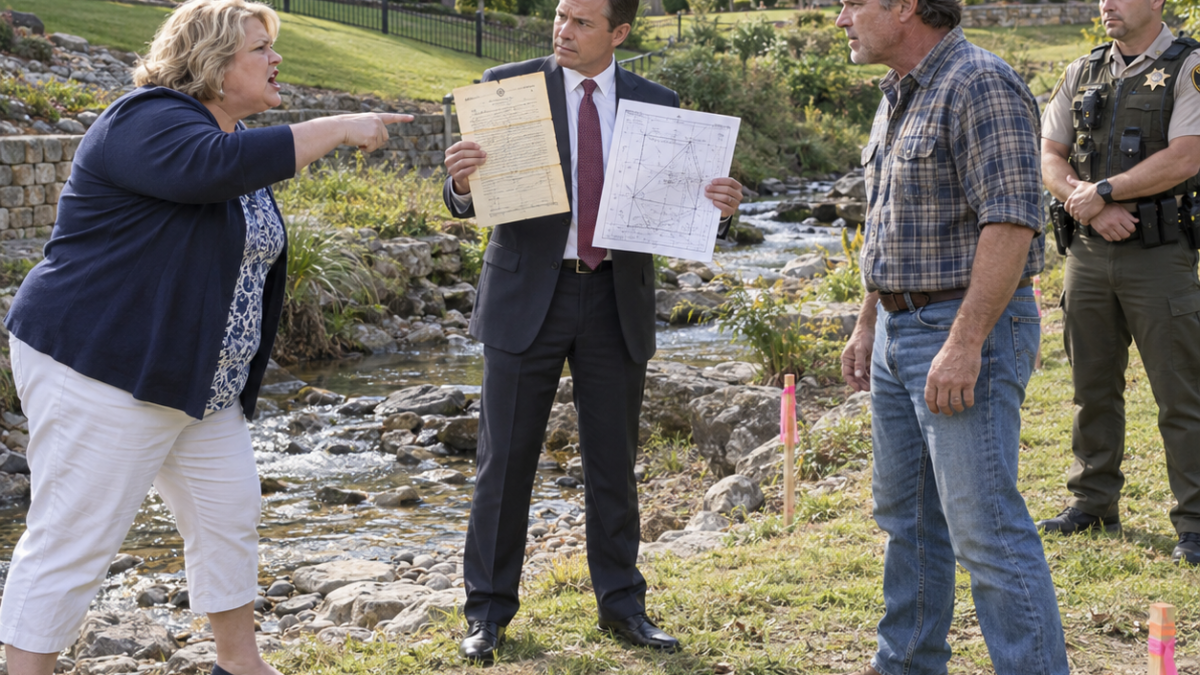
**This easement shall expire and be of no further force or effect thirty years from the date of recording unless renewed by written instrument recorded with the county.**
I looked at the filing date.
1987.
Thirty years.
2017.
My pulse slowed.
“Can you search for a renewal?”
Marlene nodded.
“Already thinking the same thing.”
Her fingers moved across the keyboard.
We searched by subdivision.
Developer.
Parcel.
Easement book and page.
HOA name.
Successor entities.
Nothing.
She searched again.
Still nothing.
“No renewal showing,” she said.
“Could it have been recorded incorrectly?”
“Possible.”
“Can we search adjoining parcels?”
She did.
Nothing.
I leaned back.
“So as far as county records show…”
She gave me the cautious smile of someone who knows better than to give legal advice.
“As far as county records show, I don’t see a recorded renewal.”
“And the document says it expires automatically.”
“That’s what it says.”
I stared at the screen.
For the first time since Karen had stood on my lawn, I felt my anger become useful.
Not hotter.
Colder.
Focused.
“Can I get a certified copy?”
“Absolutely.”
“Plat too.”
“Yep.”
“And a certified search showing no renewal, if your office provides one.”
She raised an eyebrow.
“You planning something?”
“No.”
Then I thought about Karen’s golf cart.
The $500 daily fine.
The backhoes.
The concrete.
I changed my answer.
“Yes.”
Marlene smiled.
“Good.”
I left carrying an envelope of certified records.
But I didn’t drive home.
I sat in my truck outside the courthouse for almost twenty minutes.
Because the obvious move was to call Karen immediately.
Tell her.
Watch her retreat.
Save the creek.
That would have solved my problem.
But there was another problem now.
Karen had issued a fine before confirming the legal right she claimed.
She had told me contractors were coming.
She had threatened a lien.
And if she was willing to do that to a man she’d known six months, how many homeowners had simply paid whatever she demanded?
My phone buzzed.
Sarah.
**Any news?**
I called her.
“Found it.”
“The easement?”
“Yeah.”
Silence.
“Jack?”
“It expired.”
“What?”
“Thirty-year sunset clause. Filed in 1987. No renewal.”
She exhaled.
I could hear emotion in it.
“Thank God.”
“Don’t celebrate yet.”
“Why not?”
“Because Karen doesn’t know.”
Another silence.
Then Sarah gave the response that reminded me why we’d stayed married through deployments, missed anniversaries, two overseas moves, and one unforgettable Christmas dinner eaten from paper plates in temporary housing.
“What are you planning?”
“I don’t know yet.”
“That’s not true.”
I smiled.
“Okay. I know a little.”
“Don’t do anything stupid.”
“I’m offended.”
“You once moved an entire aircraft maintenance schedule because a colonel annoyed you.”
“He was wrong.”
“Jack.”
“I’ll call a lawyer.”
“Good.”
“And Sarah?”
“Yeah?”
“Nobody is touching that creek.”
Her voice softened.
“I know.”
I drove home.
Karen had already moved to phase two.
At 10:14 that morning, every homeowner received an email.
**URGENT COMMUNITY SAFETY PROJECT — WHISPERING PINES CREEK FLOOD MITIGATION INITIATIVE**
I read it in my kitchen while Sarah looked over my shoulder.
Karen was good at one thing.
Narrative.
She described the creek as an “uncontrolled drainage corridor.”
She claimed years of unmanaged erosion had created “potential threats to downstream homes.”
She called the existing banks unsafe.
She claimed standing water created insect problems.
Standing water.
In a flowing creek.
Then came the financial part.
The board had approved a special assessment.
$2,000 per household.
One hundred fifty homes.
$300,000.
Sarah whispered:
“Three hundred thousand dollars?”
“Apparently concrete has gotten expensive.”
“Jack, that’s insane.”
The email continued.
Karen assured residents that an existing recorded easement gave the association unrestricted access.
She described “one affected homeowner” as initially resistant.
No name.
Didn’t need one.
Then came the sentence that turned the whole thing personal.
**The board will not allow one individual’s selfish obstruction to jeopardize the safety and property values of the wider community.**
Sarah stepped away from the screen.
“She called you selfish.”
“I can read.”
“You spent twenty-two years moving every time the Air Force told us.”
“I remember.”
“You missed Emily’s graduation because you were overseas.”
“Sarah.”
“Our Christmas boxes still have shipping labels from three countries, and this woman—”
I turned.
“Hey.”
Her face was red.
Not from embarrassment.
Anger.
I’d spent enough years being the angry one in our marriage to know what it looked like when Sarah finally reached her limit.
“Don’t let her make this personal for you.”
“It is personal.”
“I know.”
“No, Jack. She threatened the place we chose.”
That hit me harder than Karen’s email.
I walked over and wrapped my arms around her.
She pressed her forehead against my chest.
“I’m tired of people telling us where we can live, when we have to move, what gets sacrificed.”
I held her tighter.
“This isn’t the Air Force.”
“I know.”
“We’re not moving.”
“I know.”
“And she isn’t taking the creek.”
Sarah nodded.
Then she pulled away.
“So call the lawyer.”
I spent the next two hours researching.
I didn’t want a general real-estate attorney.
I wanted someone who understood easements, riparian rights, property encumbrances, HOA governance, and litigation.
One name appeared repeatedly.
Arthur Thompson.
Seventy-eight years old.
Semi-retired.
Forty-plus years practicing property and water law.
His website looked like it had been designed before smartphones.
No inspirational slogans.
No smiling lawyers standing in glass offices.
Just cases.
Landowners versus counties.
Ranchers versus utility districts.
Farmers versus developers.
Boundary disputes.
Easements.
Water access.
His biography ended with:
**Mr. Thompson continues to accept a limited number of matters involving significant property-rights questions.**
I called.
A woman answered.
“Thompson & Hart.”
“I’d like to speak with Mr. Thompson about an HOA trying to use an expired drainage easement to concrete-line a natural creek on my land.”
There was a pause.
“One moment.”
I expected voicemail.
Instead, a gravelly male voice came on.
“Say that again.”
I repeated it.
“Expired when?”
“Looks like 2017.”
“Recorded?”
“1987. Thirty-year automatic sunset unless renewed.”
“Renewed?”
“County search shows nothing.”
“What has the HOA done?”
“Fined me. Threatened daily fines and a lien. Signed a contractor, supposedly. Announced a $300,000 special assessment. Contractors start Monday.”
Silence.
Then:
“Do not tell them about the expiration.”
That surprised me.
“I wasn’t sure if I should.”
“You shouldn’t.”
“Why?”
“Because right now they’re merely wrong.”
His voice sharpened.
“Let’s find out how committed they are to being wrong.”
I smiled.
“Can you come tomorrow morning?”
“Yes.”
“Nine.”
“What should I bring?”
“Everything.”
“I have a binder.”
He grunted approvingly.
“Military?”
“Retired Air Force.”
“What field?”
“Civil engineering.”
Another pause.
“Bring two binders.”
His office sat on the second floor of a brick building downtown.
No receptionist behind polished marble.
No corporate art.
Wood floors.
Old books.
Framed maps.
Arthur Thompson stood when I entered.
He was tall despite age, with white hair, deeply lined skin, and a turquoise bolo tie.
His handshake was firm.
“You Davis?”
“Jack.”
“Arthur.”
He pointed toward a chair.
“Show me.”
I opened the binder.
Deed.
Survey.
Title report.
HOA declaration.
Karen’s violation.
Her email.
The special assessment.
County plat.
Certified easement.
No-renewal search.
Arthur read the easement twice.
Then pulled a magnifying lens from his desk.
“Thirty years.”
“Yes.”
He tapped the clause.
“Automatic expiration.”
“That’s how I read it.”
“It’s how English reads it.”
He continued.
“Developer successor language is broad.”
“Could the HOA claim implied renewal?”
“Claim anything they like.”
He leaned back.
“Winning is different.”
He asked questions.
Was the creek natural?
Yes.
Did I own both banks?
Yes.
Any prior HOA maintenance?
None that I knew of.
Any recorded notices after 1987?
None found.
Any history of HOA entering?
Not according to seller.
Any actual flooding?
Not on the property since we’d owned it.
Any hydrology report?
Karen claimed one.
Had she provided it?
No.
Arthur’s eyebrows rose.
“Request it.”
“Already planning to.”
“Request everything.”
He took out a yellow legal pad.
“Engineering study.”
He wrote.
“Hydrology analysis.”
Wrote.
“Competitive bids.”
Wrote.
“Board meeting minutes authorizing project.”
Wrote.
“Legal opinion supporting easement.”
Wrote.
“Contract with contractor.”
Wrote.
“Conflict disclosures.”
I frowned.
“Conflict?”
“Always ask.”
“Why?”
Arthur looked over his glasses.
“Because people this confident about spending other people’s money usually aren’t doing it for the joy of stormwater management.”
He slid the pad toward me.
“Send certified letters to every board member.”
“Why every one?”
“So later nobody says Karen kept them in the dark.”
“What about the expired easement?”
“We hold it.”
“For how long?”
“Until they commit.”
“You want them to actually bring equipment?”
“Onto your property? No.”
“Close?”
“Very.”
He smiled.
“Money changes people’s memory, Jack. Right now Karen can say this was a misunderstanding. She’ll claim she was relying on an old plat.”
Arthur tapped the assessment email.
“But if she signs contracts, collects assessments, withholds records, spends money, publicly attacks you, and mobilizes equipment while refusing to verify the legal basis?”
His smile disappeared.
“That’s a different case.”
“I don’t want Sarah’s creek damaged for a lawsuit.”
“It won’t be.”
“You can stop them?”
“Before they cross your line.”
“How?”
“Injunction.”
He sat back.
“Your job is simple. You remain calm. You don’t threaten anyone. Everything in writing. You pay legitimate dues. You dispute fines. You allow no trespass.”
“And Karen?”
“Let Karen be Karen.”
I understood.
Over the next week, she was.
My first certified request went to all five directors.
Karen Peterson.
Bob Jones.
Daniel Lee.
Margaret Finch.
Susan Williams.
It requested:
The engineering report.
Flood history.
Hydrology study.
Contractor bids.
Executed contract.
Board minutes.
Legal opinion regarding easement validity.
Environmental assessment.
Budget basis for the $300,000 assessment.
Conflict-of-interest disclosures.
I cited the HOA’s own records-inspection provision.
Ten business days.
On day two, Bob arrived in his golf cart.
I was replacing fence boards.
He stopped at the end of my drive.
“Jack.”
“Bob.”
He didn’t get out.
“You’re creating unnecessary problems.”
“How?”
“Paperwork.”
“Records request.”
“Karen says you’re harassing the board.”
“By requesting the documents supporting a $300,000 project?”
He looked uncomfortable.
“There’s a process.”
“I’m following it.”
“You need to accept that this project is happening.”
“Then providing the documents should be easy.”
His jaw shifted.
“Why are you being difficult?”
I set down the drill.
“Bob, I’m going to ask you something.”
“What?”
“Have you read the easement?”
“Of course.”
“The actual recorded instrument?”
“Karen has it.”
“That’s not what I asked.”
He looked away.
“I’ve seen the plat.”
“Have you read the easement?”
Silence.
I nodded.
“You might want to.”
“What is that supposed to mean?”
“It means you’re a board member authorizing hundreds of thousands of dollars based on a legal document you haven’t read.”
His face tightened.
“Don’t threaten me.”
“I’m not.”
“You military guys think you can intimidate people.”
I almost laughed.
Instead:
“Read the document, Bob.”
He drove off.
That afternoon, I added the conversation to my log.
Date.
Time.
Location.
Exact words as best I could remember.
Sarah came into my office.
“You really write down everything?”
“Everything that matters.”
She picked up the binder.
“How heavy is this?”
“Getting heavier.”
“Maybe that’ll be your weapon.”
“In court?”
“No. Just drop it on Karen’s foot.”
I laughed.
I needed that.
The board’s ten-day deadline passed.
Nothing.
Day eleven brought a letter.
Not documents.
A letter.
**Mr. Davis,**
**Your repeated demands impose an unreasonable administrative burden on volunteer board members. The project materials you seek include confidential work product, proprietary contractor information, and privileged legal analysis. The board has fully complied with all governing requirements. The project will proceed. Continued interference may result in additional enforcement action.**
Signed:
Karen Peterson, President.
Arthur read it over email.
Then called me.
“I love her.”
“You can have her.”
“No, no. Litigants like this keep old lawyers young.”
“They denied everything.”
“They admitted everything.”
I looked again.
“Explain.”
“They confirm documents exist.”
“Maybe.”
“They assert privilege over some and invented ‘proprietary’ status over others.”
“Okay.”
“They confirm the project will proceed despite your objections.”
“Yes.”
“And they threaten retaliation for asking for records.”
I smiled.
“That’s good?”
“It’s awful.”
Arthur paused.
“Which is excellent.”
The fines grew.
$500.
Then $1,000.
Then $2,500.
Then $7,500 total.
Failure to provide access.
Obstruction.
Continued noncompliance.
Unpaid fines.
Sarah started collecting the notices from the mailbox herself.
One afternoon she walked in waving the latest.
“Seven thousand five hundred dollars.”
“Frame it.”
“Jack.”
“I’m kidding.”
“They’re threatening a lien.”
“Arthur says don’t pay disputed fines.”
“I know.”
“You worried?”
“Of course I’m worried.”
She sat across from me.
“What if they actually record something against the house?”
“Arthur will respond.”
“What if this lasts years?”
I didn’t answer quickly enough.
Her eyes filled.
“That’s what scares me.”
I moved around the desk.
She took my hand.
“We spent our whole lives waiting for the next thing.”
Deployment.
Orders.
Retirement.
Illness.
Family crises.
“I thought this place meant we were done waiting.”
I crouched beside her.
“Look at me.”
She did.
“We’re keeping the house.”
“You can’t promise outcomes.”
“No.”
“The Air Force taught you that.”
“Yeah.”
“So don’t promise me victory.”
I squeezed her hand.
“I promise I won’t surrender because Karen sends paper.”
That she accepted.
The next morning, I started documenting the creek itself.
Not emotionally.
Technically.
If Karen claimed flood risk, I wanted data.
I installed a calibrated staff gauge.
Measured channel width.
Depth.
Cross-sectional area.
Bank height.
Flow velocity.
Vegetative stabilization.
I photographed exposed soils.
Tree roots.
Stone composition.
I recorded a heavy storm.
Rain fell hard for forty-five minutes.
The creek rose.
Six inches.
Then seven.
Still several feet below the top of the bank.
Within two hours, it dropped.
I prepared a report.
Not pretending to be an outside neutral consultant.
I clearly identified my background and my conflict.
**Prepared by property owner Jack Davis, retired Air Force Civil Engineering Officer.**
I included one conclusion:
A smooth concrete channel could increase downstream flow velocity.
That didn’t mean concrete channels were always bad.
It meant Karen’s claim that concrete automatically improved safety was simplistic.
I sent the report to Arthur.
He called.
“You miss work?”
“No.”
“You’re lying.”
“A little.”
“Good report.”
“Needs independent verification.”
“We’ll get it if necessary.”
Then Karen announced the contractor.
**All Pro Concrete Solutions.**
David Chen found me before I found him.
I was at the community mailbox.
He was forty-five, thin, glasses, quiet.
“Mr. Davis?”
“Jack.”
“David Chen.”
We shook hands.
“I posted under Fiscal Frank.”
I smiled.
“Subtle username.”
“My wife hates it.”
He glanced around.
“Can we talk?”
We met at a coffee shop outside the subdivision.
David placed a folder on the table.
“I’m a CPA.”
“Arthur is going to love you.”
“Arthur?”
“My attorney.”
David sat straighter.
“You have a lawyer?”
“Yes.”
“Good.”
He opened the folder.
“I looked at the special assessment numbers.”
“Three hundred thousand.”
“Right.”
“No bids provided.”
“That’s why I started checking the contractor.”
He handed me a business registration.
All Pro Concrete Solutions LLC.
Formed six months earlier.
Registered agent:
Bernard Schmidt.
“Who’s that?”
David turned another page.
Public wedding announcement.
A photograph.
Karen’s sister standing beside her husband.
Bernard Schmidt.
I stared.
“Brother-in-law.”
“Yes.”
“You sure?”
“Yes.”
“Does board policy require disclosure?”
David tapped a page.
“Conflict-of-interest policy adopted four years ago.”
I read.
Direct or indirect familial financial interests.
Mandatory disclosure.
Recusal recommended.
“Any disclosure?”
“Not in the minutes posted online.”
I sat back.
This was bigger now.
Not because a relative getting a contract automatically meant fraud.
Family businesses can legitimately win work.
But a newly formed company receiving a six-figure no-bid project from a relative’s HOA board?
That demanded transparency.
“Don’t post this yet,” I said.
David looked surprised.
“Why?”
“Verify everything.”
“I did.”
“Again.”
He smiled.
“Military?”
“Engineering.”
“Same disease.”
I showed him the expired easement.
His expression changed completely.
“This project has no legal foundation.”
“That’s how my lawyer reads it.”
“And they’re charging every homeowner $2,000.”
“Yes.”
“Jack, that’s…”
He stopped himself.
“Potentially serious.”
“Better.”
He nodded.
“Potentially serious.”
Mrs. Gable joined us next.
She’d lived in Whispering Pines from the beginning.
Retired botanist.
Seventy-four.
Sharp as broken glass.
She invited us to what she called a book club.
There was no book.
Six people sat around her dining table.
David.
Me.
Susan Hart, retired reporter.
Maria Alvarez, mother of three.
Mike Turner, general contractor.
Mrs. Gable.
I opened the binder.
For two hours, we reviewed everything.
When Maria saw the $2,000 assessment notice, she shook her head.
“My daughter takes dance.”
Nobody understood.
She explained.
“We don’t have two thousand dollars sitting around.”
Her husband worked nights.
She worked at a dental office.
“We were going to pull Emma from dance for the year and use the money.”
Her voice broke.
“Karen called this an emergency. I thought what choice do we have?”
David slid the contractor records toward her.
Maria read.
“Her brother-in-law?”
“Yes.”
She stared at me.
“And the easement?”
“Expired.”
“So my daughter was going to lose dance because Karen wants to give three hundred thousand dollars to her relative?”
“We don’t know why the contractor was selected.”
“I know what it looks like.”
Susan, the journalist, intervened.
“Then we say exactly that.”
She looked at all of us.
“Facts.”
She pointed around the table.
“Expired easement.”
Point.
“No bids disclosed.”
Point.
“Related contractor.”
Point.
“Records withheld.”
Point.
“Hydrology claims unsupported by documents.”
Point.
“We do not say theft.”
Point.
“We do not say fraud unless an auditor, court, or prosecutor establishes fraud.”
Maria exhaled.
Susan leaned toward her.
“Truth is strongest when you don’t decorate it.”
That sentence became our rule.
Mike examined the proposed design description.
“Concrete lining?”
“Supposedly.”
“Without hydraulic analysis?”
“None provided.”
“Without downstream impact study?”
“None provided.”
“Without environmental review?”
“None provided.”
He shook his head.
“This is contractor-first design.”
“What does that mean?” Maria asked.
“Means somebody decided what to build before proving what problem they were solving.”
Mrs. Gable smiled.
“Sounds like Karen.”
Mike looked at the All Pro registration.
“Six months old.”
“Yep.”
“Equipment?”
“Unknown.”
“Crews?”
“Unknown.”
“Bonding?”
“Unknown.”
“Insurance?”
“Unknown.”
“Experience?”
“Unknown.”
He whistled.
“I wouldn’t hire them to pour a mailbox footing.”
We left with assignments.
David would analyze finances.
Mike would assess project design and contractor credentials.
Susan would create a factual homeowner summary.
Maria would coordinate families.
Mrs. Gable would contact long-term residents.
I would remain Karen’s target.
That suited me.
Two days later, the equipment arrived.
7:31 a.m.
Flatbed.
Backhoe.
Dump truck.
Steel plates.
Crew.
Karen arrived in purple.
Bob beside her.
I stood on my deck drinking coffee.
Sarah joined me.
“Is this the part where I’m supposed to stay calm?”
“Yes.”
“I don’t like this plan.”
“I know.”
A worker unloaded the backhoe on HOA common land behind our property.
It began clearing brush.
Not my land.
Yet.
Trees fell.
Mud churned.
A twenty-foot access lane took shape.
Sarah gripped the railing.
“They’re destroying that woods.”
“HOA property.”
“That doesn’t make it okay.”
“No.”
“Can Arthur stop them?”
“Not until necessary.”
“Jack—”
I looked at her.
She was crying.
Not dramatically.
Quiet tears.
“This is supposed to be our peaceful place.”
I put down the coffee.
“I’m sorry.”
“You didn’t do it.”
“No. But I agreed to let it run.”
“For the case.”
“Yes.”
“Is winning worth watching this?”
That question followed me the rest of the day.
The backhoe worked until four.
I filmed.
Documented.
Measured their stopping point.
Three feet from my property line.
Day two, they laid steel plates.
Workers marked trees.
Karen stood with plans.
Bob took photographs.
Around noon, Karen saw me.
She raised her voice.
“Mr. Davis!”
I walked toward the property line.
Stopped on my side.
She stood on HOA land.
“Tomorrow we’ll need access.”
“No.”
“We’re past that.”
“No.”
“The easement grants access.”
“No.”
“The contractor will remove your bridge.”
“No.”
She smiled.
“You’re making this expensive.”
“For whom?”
“Eventually you.”
She held up a document.
“Every delay cost will be assessed against your account.”
“Send that in writing.”
Her smile disappeared.
“Excuse me?”
“Send it in writing.”
“I just told you.”
“I prefer documentation.”
Bob laughed.
“Everything’s a file with this guy.”
“Yes.”
Karen pointed toward the creek.
“Tomorrow morning, they cross.”
I looked at my watch.
2:17 p.m.
“Okay.”
She blinked.
Not the answer she’d expected.
“Okay?”
“You heard me.”
I walked away.
Sarah met me at the porch.
“You said okay?”
“Yep.”
“Why?”
“Because Arthur’s letter arrives at three.”
At 3:04, a courier stopped at Karen’s house.
At 3:19, my phone rang.
Unknown number.
I answered.
“Jack Davis?”
“Speaking.”
“This is Margaret Finch.”
Board member.
“Hello, Margaret.”
“What is this letter?”
“You’ll need to be more specific.”
“The attorney letter.”
“From Arthur Thompson?”
“Yes.”
“It means what it says.”
“Karen said the easement was valid.”
“You should ask Karen.”
“Did you know it expired?”
“I found out at the county records office.”
“When?”
“Before the project mobilized.”
Her voice sharpened.
“You let us spend money knowing?”
“No, Margaret. Your board spent money without verifying the document you’re relying on.”
Silence.
“We could be personally liable?”
“I’m not your lawyer.”
“Thompson says—”
“He represents me.”
She hung up.
Ten minutes later, Susan Williams called.
Then Daniel Lee.
I gave both the same answer.
Talk to independent counsel.
Read the easement.
Read Arthur’s letter.
At 4:50, Karen called.
First time ever.
“You’re unbelievable.”
“Good afternoon.”
“You knew.”
“Yes.”
“You set us up.”
“No.”
“You sat there and watched us mobilize equipment.”
“Yes.”
“You knew the easement was expired.”
“Yes.”
She nearly screamed.
“You malicious son of a—”
“Careful.”
Silence.
I continued.
“Arthur’s letter gives the board twenty-four hours to cancel the project and remove the equipment.”
“You think some washed-up country lawyer scares me?”
I almost laughed.
“Karen, you should probably search his name.”
“You can’t stop this project.”
“Then test that theory.”
“You think you’re going to bankrupt the association?”
“No.”
“That’s what your lawsuit threatens.”
“There isn’t a lawsuit yet.”
“You’re threatening punitive damages.”
“My attorney is warning what may happen if you trespass after formal notice.”
She breathed heavily.
“You humiliated me.”
“I haven’t spoken publicly about the expiration.”
“You told board members.”
“Arthur sent them legal notice.”
“Same thing.”
“No.”
“I am president.”
“I know.”
“I have authority.”
“Over HOA matters.”
“This is an HOA matter.”
“My creek is not HOA property.”
“The plat says it is.”
“The plat shows a former easement.”
Silence.
There it was.
The first time she had heard me say it directly.
Former.
“You’re wrong.”
“Read paragraph four.”
“I have.”
“Read it again.”
She hung up.
The twenty-four hours expired.
No cancellation.
No equipment removal.
At 9:05 the next morning, Arthur filed.
Temporary restraining order.
Injunction request.
Preservation of HOA funds.
No access.
No further project spending.
No contact except through counsel.
The judge granted emergency relief that afternoon.
I thought Karen would back down.
Instead, she scheduled a community meeting.
That’s when everything detonated.
The clubhouse held maybe eighty comfortably.
More than a hundred came.
People stood in the hallway.
Maria’s parent group filled the back rows.
Long-time homeowners sat with Mrs. Gable.
David carried spreadsheets.
Mike carried estimates.
Susan had copies of the easement.
Karen sat at the front.
Purple caftan.
Gavel.
Bob looked sick.
Margaret wouldn’t look at Karen.
Daniel kept checking his phone.
Susan Williams had an attorney sitting behind her.
Interesting.
Karen struck the gavel.
“This meeting will come to order.”
Someone shouted:
“Where’s our $2,000 going?”
Another:
“Show us the bids!”
Karen hit the gavel again.
“There will be no interruptions.”
A man laughed.
That was the beginning of the end.
People no longer feared her.
She rushed through minutes.
Treasurer.
Pool.
Landscaping.
Then:
“Creek mitigation.”
The room hardened.
Karen read from a prepared statement.
Flood danger.
Public safety.
Property values.
Legal easement.
One obstructionist homeowner.
I waited.
She finished.
“Questions related only to project logistics.”
I stood.
Her eyes locked onto me.
“No.”
The room reacted.
I stayed standing.
Karen pointed.
“You are currently in litigation against the association and will not use this meeting to prejudice homeowners.”
Arthur wasn’t present yet.
His instruction had been simple.
**Speak as homeowner. Facts only.**
I said:
“Article six provides homeowners an opportunity to address assessments.”
David held up a copy.
“He’s correct.”
Karen glared.
Then:
“Three minutes.”
I walked to the projector.
“Twenty.”
“Three.”
“Then I request ten under the assessment procedure.”
Whispers.
Margaret leaned toward Karen.
“Let him talk.”
Karen hissed something.
Margaret leaned back.
“Ten.”
I connected my laptop.
First slide.
The creek.
Not charts.
A photograph Sarah had taken at dawn.
Mist above water.
Sycamores reflected in the current.
“This is the drainage ditch you’ve been told needs beautification.”
Silence.
Second slide.
Flow measurements.
Storm response.
Bank heights.
“I am not claiming my own report is independent. I am showing you that I requested the board’s engineering analysis and received none.”
Third slide.
My certified letter.
Fourth.
Return receipts.
Fifth.
Karen’s denial.
Someone read aloud:
“Proprietary?”
Laughter.
I continued.
“The board collected no homeowner input before issuing a $300,000 special assessment.”
David stood next.
Karen protested.
Homeowners shouted her down.
David didn’t accuse.
He explained.
Assessment.
No disclosed competing bids.
Vendor registration.
Six-month-old company.
Registered agent Bernard Schmidt.
Then:
Public records connecting Schmidt to Karen’s family.
Gasps.
Karen stood.
“This is outrageous! Family relationship does not invalidate a legitimate contract!”
David nodded.
“Correct.”
That silenced her.
He continued.
“The issue is whether that relationship was disclosed and whether competitive bidding rules were followed.”
Perfect.
Mike spoke.
He explained concrete channels.
Velocity.
Maintenance.
Cracking.
Downstream energy.
Costs.
Then Maria stood.
No slides.
Just the assessment notice.
“My family budgeted this.”
Her voice shook.
“We believed it was mandatory emergency work.”
She looked at Karen.
“My daughter was going to stop dance lessons so we could pay.”
The room went silent.
“I want to know why nobody showed us the engineering report.”
Karen looked away.
Maria held up the paper.
“Two thousand dollars may not matter to everyone here.”
She swallowed.
“It matters to us.”
She sat.
Mrs. Gable stood next.
“I’ve lived here since 1989.”
Karen sighed.
Mrs. Gable snapped:
“Don’t sigh at me, Karen.”
The room erupted.
Mrs. Gable pointed.
“I remember this creek before your azaleas were planted.”
Laughter.
“It has carried stormwater for decades without your concrete.”
She looked around.
“My children caught crawdads there.”
She pointed at me.
“Jack and Sarah are the first owners in years who have cared for that bank properly.”
Karen hit the gavel.
“This is emotional nonsense.”
Big mistake.
Mrs. Gable became perfectly still.
“Yes.”
Her voice dropped.
“It is emotional.”
She looked directly at Karen.
“Because people are allowed to love where they live.”
Nothing moved.
Then she sat.
I returned to the projector.
Final slide.
Certified easement.
Karen went pale before I said anything.
I highlighted the filing date.
June 15, 1987.
Then paragraph four.
Thirty years.
Automatic expiration.
No renewal.
I let people read.
You could hear chairs creak.
Someone whispered:
“2017.”
I said:
“The easement expired in 2017.”
Chaos.
Questions.
Anger.
People stood.
Karen hammered the gavel.
“It’s a technicality!”
The entire room went quiet.
I looked at her.
“What did you say?”
Her face changed.
She knew.
Too late.
“It’s an old technical provision.”
I turned toward the homeowners.
“You were assessed $300,000 based on what the president just called a technicality.”
That was when the side door opened.
Arthur Thompson entered.
Tweed jacket.
Bolo tie.
Briefcase.
The room parted without anyone being asked.
He walked straight to the board table.
“Karen Peterson?”
She stared.
“Who are you?”
“Arthur Thompson.”
Her face changed again.
Apparently she had finally searched his name.
Arthur opened the briefcase.
Removed five packets.
“Margaret Finch.”
Packet.
“Daniel Lee.”
Packet.
“Susan Williams.”
Packet.
“Robert Jones.”
Packet.
“Karen Peterson.”
He placed the thickest one in front of her.
“I represent Jack and Sarah Davis.”
He turned toward the room.
“For clarity, I will not discuss confidential communications or make conclusions about criminal conduct.”
Susan the journalist smiled.
Arthur continued.
“But I can tell homeowners what has been filed publicly today.”
He held up the order.
“The county court issued temporary relief prohibiting further work on Mr. Davis’s land and further expenditure on this project pending hearing.”
People applauded.
Arthur raised one hand.
Silence returned.
“The order also requires preservation of relevant records.”
Karen finally found her voice.
“You had no right to freeze our operation.”
Arthur looked at her.
“Your operation was based on an easement that expired years ago.”
“Our attorney said—”
Arthur turned sharply.
“Wonderful.”
Karen stopped.
“Then produce the opinion.”
Silence.
Arthur waited.
“Your board refused Mr. Davis’s written request.”
Karen said:
“Privileged.”
“Then stop citing undisclosed legal advice as proof to homeowners.”
Bob leaned away from her.
Arthur continued.
“The court will review evidence.”
He looked at every director.
“And each director should obtain independent legal advice regarding duties owed to this association.”
Margaret whispered:
“I already have.”
Karen turned.
“What?”
Margaret stood.
“I resign.”
The room reacted.
Karen looked shocked.
Margaret continued.
“I asked you twice whether counsel had confirmed the easement.”
“Sit down.”
“No.”
“You approved the project!”
“Based on what you told us.”
“You voted.”
“Yes.”
Margaret’s voice broke.
“And I should have read it myself.”
She walked away from the board table.
Susan Williams stood next.
“I am also resigning.”
Karen slammed the gavel.
“You cannot abandon the association because one homeowner hired an ambulance chaser!”
Arthur smiled.
“Forty-three years.”
Karen blinked.
“Excuse me?”
“Forty-three years practicing law.”
He nodded toward himself.
“Never chased an ambulance.”
A laugh rolled through the room.
Arthur leaned toward her.
“Mostly chased people who assumed nobody would read paragraph four.”
The laughter became louder.
Karen’s face burned.
Daniel Lee stood.
“I want an emergency independent audit.”
Karen stared.
“Sit down.”
“I’m treasurer.”
“Then act like it!”
He did.
“I move for an independent audit.”
Bob whispered:
“Second.”
Karen turned toward him slowly.
“You?”
Bob looked terrified.
But nodded.
“Second.”
Power doesn’t always collapse loudly.
Sometimes it disappears in the smallest word.
Second.
Karen sat alone.
The homeowners voted to suspend the creek assessment.
Nearly unanimous.
Then David moved for a recall process.
Seconded.
Karen declared the meeting adjourned.
Nobody moved.
Association counsel—who had arrived twenty minutes earlier—stood.
“President Peterson, the recall petition can proceed under the bylaws.”
She stared at him.
“You work for me.”
He shook his head.
“I represent the association.”
That was the sentence that ended her presidency before any vote had been counted.
Karen gathered her papers.
One fell.
She ignored it.
Then she looked directly at me.
“You think you won?”
I didn’t answer.
“You destroyed this community over a creek.”
Sarah, seated beside Maria, stood.
“No.”
Every head turned.
Sarah rarely spoke in meetings.
She walked toward me.
“We protected our home.”
Karen looked at her.
Sarah continued.
“You were the one willing to tear apart the community to take it.”
Karen’s face tightened.
“You don’t understand what’s involved in leadership.”
Sarah smiled sadly.
“No.”
Then she took my hand.
“But I understand what home means.”
We left.
Not because the meeting was over.
Because our part was.
The legal fight continued.
Reality is rarely as clean as a clubhouse reveal.
There were hearings.
Responses.
Discovery.
Insurance lawyers.
Board counsel.
Contractor claims.
Accounting reviews.
Arthur warned us repeatedly:
“Don’t celebrate before paperwork stops moving.”
The temporary order remained.
No equipment crossed our boundary.
The backhoe disappeared within forty-eight hours.
The steel plates followed.
The muddy access road remained.
Every morning, Sarah looked at it.
“Scar.”
“Temporary.”
“Still ugly.”
“Yes.”
The creek kept flowing.
That mattered.
At the preliminary injunction hearing, Karen finally appeared with counsel.
Not the young association lawyer.
Personal counsel.
Arthur sat beside us.
The judge asked straightforward questions.
Was the easement renewed?
No recorded renewal found.
Why did the board rely on it?
Karen’s attorney argued the HOA believed successor rights continued.
The judge asked:
“Despite express expiration language?”
Silence.
The judge reviewed the project.
Asked for engineering report.
The board produced a three-page memo.
Not a hydrology study.
Not sealed engineering analysis.
A contractor proposal describing erosion concerns.
Arthur didn’t smile.
But I could feel him enjoying himself.
The judge asked:
“Who prepared this?”
“All Pro Concrete Solutions.”
“Engineering license?”
None shown.
“Hydrologist?”
None.
The judge looked over his glasses.
“This document is a sales proposal.”
Exactly.
The preliminary injunction was granted.
No creek project.
No access.
No fines based on easement obstruction.
Assessment collection halted.
The court authorized financial review.
Not because every accusation had been proven.
Because enough governance questions existed to justify scrutiny under the association’s own rules and the litigation.
Karen left without looking at us.
Outside, local news waited.
I hated that part.
Susan had contacted a reporter after the public records became available.
Camera.
Microphone.
“Mr. Davis, do you feel vindicated?”
Arthur whispered:
“Short.”
I said:
“I’m glad the creek is protected while the court reviews the dispute.”
“Do you believe the HOA president is corrupt?”
“No comment on anyone’s criminal intent.”
“Was this retaliation?”
“Our filings speak for themselves.”
“How much money are you seeking?”
Arthur stepped in.
“Thank you.”
We left.
Sarah squeezed my hand.
“You hated every second.”
“Yes.”
“Good.”
“Why good?”
“You were starting to enjoy the projector.”
I laughed.
“Maybe a little.”
The audit took months.
And this is where the story became uglier than the creek dispute.
Not everything people suspected was true.
Some expenses Karen’s critics called theft had legitimate explanations.
A landscaping invoice that looked inflated included storm cleanup.
A legal bill covered unrelated insurance work.
A pool contract had emergency repairs.
Those were cleared.
Important.
Facts mattered even when they disappointed people who wanted Karen guilty of everything.
But other issues were serious.
The contractor-selection process lacked documentation.
Family relationships had not been properly disclosed.
Several projects exceeded bid thresholds without recorded competitive bids.
Expense reimbursements lacked adequate receipts.
Fine revenue had been used through a discretionary compliance account with weak controls.
Some expenditures had no clear board authorization in minutes.
The receiver referred certain items to counsel and relevant authorities.
I never learned every private detail.
Nor did I need to.
The creek case was enough.
The association rescinded every fine against us.
$7,500 became zero.
Our attorney fees were addressed through settlement negotiations and applicable coverage.
The $2,000 special assessment was canceled.
All homeowners received notices.
Maria came to our house holding hers.
“Emma gets dance.”
Sarah hugged her.
That was one of my favorite victories.
No courtroom drama.
No cheering.
A little girl kept dance class.
Mrs. Gable became interim HOA president after the recall petition reached overwhelming support.
She hated the title.
“I wanted flowers, Jack.”
“You started a rebellion.”
“You started it.”
“Karen started it.”
“Fair.”
David became treasurer.
Mike joined the contract review committee.
Susan handled records transparency.
Maria joined homeowner communications.
I refused everything.
“Absolutely not.”
Mrs. Gable stood in my kitchen.
“You would be excellent on architectural review.”
“I would rather concrete my own creek.”
Sarah nearly spit out her tea.
Mrs. Gable narrowed her eyes.
“Too soon.”
“Much.”
The first reform meeting lasted four hours.
New bidding requirements.
Conflict disclosures.
Published contracts.
Accessible minutes.
Records-response deadlines.
Appeal procedures.
Limits on discretionary fines.
Then Mrs. Gable announced:
“We also need an environmental policy.”
I groaned.
She smiled.
“I’m appointing Sarah.”
Sarah looked delighted.
“Traitor.”
She kissed my cheek.
“Community service.”
“That’s how they get you.”
Life slowly became normal.
The muddy equipment path was restored.
Not immediately.
The contractor dispute complicated payment.
Eventually, through settlement funds and HOA reserves authorized under the new board, a legitimate landscaping company repaired the common area.
Mike supervised.
Native trees.
Grasses.
No ornamental nonsense.
Mrs. Gable insisted.
“If I see one Bradford pear, somebody’s getting recalled.”
Nobody tested her.
Then came the bridge.
The original cedar footbridge had survived.
Karen had threatened to tear it out.
I almost left it unchanged as a symbol.
Sarah had other ideas.
“It’s too narrow.”
“You built half of it.”
“I’ve learned.”
“For what?”
“Grandchildren.”
“We don’t have grandchildren.”
“Yet.”
“You know something?”
She smiled.
Three weeks later, our daughter Emily called.
Pregnant.
Sarah had known for four days and kept the secret because Emily wanted to tell me herself.
I cried.
I’m not ashamed.
For twenty-two years, I had built things designed to last.
Runways.
Drainage channels.
Foundations.
Utility systems.
But somehow the thought of a child crossing that little bridge made cedar boards feel more important than any military project I’d managed.
I rebuilt it.
Wider.
Handrails.
Steel brackets.
Rounded edges.
Sarah sanded every board.
We carved nothing into it.
No victory date.
No Karen joke.
No legal phrase.
Just a bridge.
The first time our granddaughter visited, she was still too young to walk.
I carried her across.
Sarah followed.
The creek moved beneath us.
Clear.
Alive.
No concrete.
No machinery.
No HOA signs.
I stopped halfway.
Emily laughed.
“Dad, what are you doing?”
“Showing her.”
“She’s six months old.”
“Early education.”
Sarah stood beside me.
“Your grandfather almost went to war over this water.”
Emily rolled her eyes.
“Almost?”
Sarah laughed.
“Good point.”
Years have a way of shrinking battles.
At the time, everything felt enormous.
The emails.
Fines.
Backhoe.
Court orders.
Meeting.
Audit.
News camera.
Now what I remember most are smaller things.
Sarah crying on the deck when equipment tore into the woods.
Maria saying dance mattered.
Mrs. Gable telling Karen people were allowed to love where they lived.
Margaret admitting she should have read the easement herself.
Bob saying “second.”
Arthur’s finger tapping paragraph four.
And the sound of water every night when I opened the bedroom window.
Karen eventually sold her house.
Not immediately.
For months, she remained in Whispering Pines.
No golf cart patrols.
No mass emails.
No clipboard.
She rarely appeared publicly.
One morning, I saw her at the mailbox hub.
We were alone.
I almost walked away.
She spoke first.
“Jack.”
I stopped.
“Karen.”
She looked tired.
Not defeated.
Just human.
There is a difference.
“I heard your daughter’s having a baby.”
“Already did.”
“Oh.”
She hesitated.
“Congratulations.”
“Thank you.”
I started to leave.
“Was it worth it?”
I turned.
“What?”
“Everything.”
She gestured toward the neighborhood.
“Lawsuits. Audit. News. People turning against each other.”
I considered my answer carefully.
“You mean protecting the creek?”
“You know what I mean.”
“No. I don’t.”
Her face tightened.
“Could you not have just come to me?”
“I did.”
“When?”
“The first day.”
“You argued.”
“I asked to see the easement.”
“You could have shown me the expiration before hiring Thompson.”
There it was.
The accusation she’d carried.
“You would have stopped?”
“Yes.”
“Would you have refunded the fine?”
She hesitated.
“Probably.”
“Canceled the assessment?”
“If necessary.”
“Explained to homeowners that the easement was dead?”
Silence.
“Disclosed Bernard’s relationship?”
Her jaw tightened.
“That contract was legitimate.”
“Maybe.”
“It was.”
“Then disclosure would have protected you.”
She looked away.
“Arthur wanted me to fail.”
“No.”
“He let us mobilize.”
“On HOA land.”
“He wanted maximum damage.”
“Arthur wanted a record.”
“Same thing.”
I stepped closer, not threatening.
“Karen, you keep describing consequences as something other people did to you.”
She stared.
“You fined me without reading the easement.”
“I read it.”
“Then you saw the expiration.”
Silence.
That silence answered a question I’d had for months.
“You knew?”
She looked toward the road.
“I thought the HOA’s successor status kept it alive.”
“Did counsel confirm that?”
“I believed it.”
“That’s not what I asked.”
Her eyes flashed.
“Do you enjoy this?”
“No.”
“Then stop interrogating me.”
“You’re the one who stopped me.”
She exhaled.
Long.
Tired.
“The developer always treated that creek as drainage.”
“Thirty years ago.”
“We’d talked about lining it for years.”
“That doesn’t create property rights.”
“I know that now.”
“You knew enough to refuse my records request.”
Her shoulders fell.
For the first time, I felt no anger.
None.
Just exhaustion.
“Why the concrete?”
She stared toward my property.
“The neighborhood flooded in 2004.”
“Not my creek.”
“Two streets did.”
“Different basin.”
“I know.”
“You knew?”
“Afterward.”
There it was again.
Fear turning into certainty.
“Then why?”
She looked at me.
“Because people expect the president to fix things.”
“They expect honesty.”
“They expect everything.”
Her voice rose.
“Pool breaks? Karen. Tree falls? Karen. Trash company misses a street? Karen. Somebody paints a door blue? Karen. Storm comes? Karen. Homeowners want low dues and perfect landscaping and instant repairs and no inconvenience.”
I said nothing.
She continued.
“Then when you solve something, nobody notices. When anything goes wrong, everyone knows your name.”
That part was probably true.
“And Bernard?”
She stiffened.
“He needed work.”
I waited.
“The company was legitimate.”
“Maybe.”
“He’d done concrete for years under someone else.”
“Then why no bids?”
“Because I trusted him.”
“There.”
She looked at me.
“That’s the problem.”
“What?”
“You trusted your own judgment more than the process.”
She almost laughed.
“You sound like Thompson.”
“That’s expensive company.”
No smile.
She looked toward the creek.
“I hated that bridge.”
“Why?”
“Because you built it without asking.”
“My deed didn’t require approval.”
“I know.”
“Then why care?”
She gave a small, bitter shrug.
“Because everybody else had to ask.”
That was the most honest thing she ever said to me.
Not safety.
Not flooding.
Not beautification.
Control.
I nodded.
“Thank you.”
“For what?”
“For finally saying it.”
She looked embarrassed.
Then angry at being embarrassed.
“I don’t owe you anything.”
“No.”
“You humiliated me.”
“Your actions became public.”
“Same result.”
“Not same cause.”
She picked up her mail.
“I’m moving.”
“I heard.”
“Colorado.”
“Family?”
“My son.”
“Good.”
She started away.
Then turned.
“I drove by the creek yesterday.”
I waited.
“The flowers look nice.”
“Sarah and Mrs. Gable planted them.”
“Of course she did.”
A pause.
“I’m glad you didn’t concrete it.”
Karen looked at me sharply.
“I never said I wanted concrete.”
I raised an eyebrow.
She almost smiled.
Then left.
That was our last real conversation.
Her house sold the following month.
No crowd watched.
No celebration.
She deserved consequences.
Not spectacle.
The new owners were a couple with twin boys.
The boys discovered the creek within a week.
Their mother knocked on our door, embarrassed.
“I’m sorry. They were looking for frogs.”
Sarah smiled.
“They can look.”
The mother’s shoulders relaxed.
“Really?”
“Stay on our path. Don’t climb the steep bank.”
“Of course.”
The boys came back every Saturday that summer.
Frogs.
Crawdads.
Dragonflies.
One afternoon, they found a salamander.
You would have thought they’d discovered a dinosaur.
I watched them from the bridge.
Sarah stood beside me.
“Karen called this a drainage ditch.”
“Technically, it drains.”
Sarah elbowed me.
“Don’t.”
“Sorry.”
She looked at the boys.
“Can you imagine concrete?”
I could.
That was the terrible thing.
I could still see the version that almost happened.
Gray channel.
No reeds.
No roots.
No minnows.
No muddy children’s shoes.
Fast water.
Hard edges.
Efficient.
Dead.
I put my arm around her.
“We would’ve stopped it.”
“You weren’t sure at first.”
“No.”
“Remember?”
“Unfortunately.”
“You said, ‘I don’t think they can.'”
“I was being accurate.”
“You scared me.”
“I know.”
She leaned into me.
“I’d rather you tell me when you’re not sure.”
“Always.”
That promise mattered more than the legal victory.
The case ended in settlement.
No dramatic final trial.
Arthur preferred certainty when it protected the land.
The HOA formally acknowledged the easement was expired and would not claim access rights under it.
Our fines were voided.
The assessment was canceled.
The association adopted the reforms.
The common area restoration was funded.
Certain financial claims involving former directors and vendors were resolved through separate proceedings, insurers, repayments, or other remedies.
Some matters remained confidential.
People invented stories anyway.
Karen stole millions.
False.
Bob fled the country.
False.
Bernard buried evidence.
Ridiculous.
I corrected people whenever I heard it.
“Facts were enough.”
Mrs. Gable once told me:
“You’re ruining a much better story.”
“Truth is better.”
“Not always.”
“Better for court.”
“That’s why nobody reads court transcripts for fun.”
Arthur eventually retired completely.
Before he did, Sarah and I took him to lunch.
He ordered steak.
Medium rare.
Whiskey.
At noon.
“Retirement,” he explained.
“You were semi-retired when I called.”
“Bad habit.”
Sarah asked:
“Why did you take our case?”
Arthur cut his steak.
“Creek.”
“Seriously?”
“Seriously.”
He looked at me.
“Most property disputes are money wearing a costume.”
He pointed his knife slightly.
“Boundary line, access road, tree, driveway. Underneath, somebody usually wants money or leverage.”
“And ours?”
“Yours was about home.”
He shrugged.
“Those are the only ones still interesting.”
I asked:
“Did you know we’d win?”
“No.”
Sarah smiled at me.
“Thank you.”
Arthur continued:
“I knew the easement expired.”
“Not the same thing.”
“Exactly.”
He drank.
“Law isn’t magic, Jack. Good facts lose sometimes. Bad facts win sometimes. Judges vary. Procedure matters. Evidence matters.”
He looked at me.
“What mattered was you didn’t give Karen the one thing she needed.”
“What?”
“An excuse to make you the villain.”
That stayed with me.
Because anger would have been easy.
When Karen stood on my lawn insulting me, I could have yelled.
When Bob threatened liens, I could have shoved a notice back into his hands.
When the backhoe cut through those woods, I could have blocked the machine.
When the meeting erupted, I could have insulted Karen in front of everyone.
Every one of those moments would have felt good for thirty seconds.
Then I would have spent months explaining them.
Instead, we had documents.
The easement.
The dates.
The letters.
The contracts.
The invoices.
The minutes.
Her words.
Our words.
A story that didn’t need exaggeration.
The creek became something else afterward.
Not physically.
Emotionally.
Before Karen, it had represented retirement.
Peace.
After Karen, it represented choice.
Sarah and I started inviting neighbors down twice a year for creek cleanup.
Not HOA mandated.
No committee.
Gloves.
Trash bags.
Coffee.
Kids collected plastic.
Adults cleared invasive vines.
Mrs. Gable taught everyone native plants.
David tracked expenses even though there weren’t any.
Accountant reflex.
Mike repaired the bridge handrail after a storm without asking.
“Invoice?” I joked.
“Three hundred thousand.”
“Seems reasonable.”
Maria’s daughter Emma eventually stopped dance.
Not because of Karen.
Because she discovered soccer.
Maria laughed when she told us.
“All that fight over dance, and she quits herself.”
“That’s the point,” Sarah said.
Maria looked confused.
Sarah smiled.
“She got to choose.”
That may be the entire story.
Choice.
Karen’s greatest mistake wasn’t reading an easement wrong.
It was believing her position allowed her to make choices for everyone else without giving them facts.
My creek.
Maria’s budget.
The board’s contracts.
The homeowners’ money.
She confused responsibility with ownership.
Good leadership doesn’t eliminate other people’s choices.
It protects the process that lets them make informed ones.
Mrs. Gable served one term as HOA president.
Only one.
“Why quit?” I asked.
“Because people have started calling me Karen.”
I laughed so hard I choked.
She pointed a finger.
“Not funny.”
“Little funny.”
“I told someone their birdbath violated setback rules.”
“Oh no.”
“I was correct.”
“That’s how it starts.”
She stared.
Then we both laughed.
David became president next.
His first meeting lasted fifty-one minutes.
A Whispering Pines record.
He emailed financial statements monthly.
Nobody read them.
That annoyed him.
“You fought for transparency.”
“People fought for access.”
“Same thing.”
“No.”
I pointed at the stack he carried.
“Freedom includes the right to ignore your beautiful spreadsheet.”
He looked offended.
Sarah laughed.
Years later, when our granddaughter was four, she stood on the bridge holding my hand.
The creek had risen after rain.
Not dangerously.
Just louder.
She pointed at the water.
“Grandpa, is this yours?”
I looked down.
Technically, property law could make that question complicated.
Land beneath.
Riparian rights.
Flowing water.
Public interests.
Environmental rules.
But she was four.
“The land is ours.”
“The water?”
“It keeps moving.”
“Where?”
“Downstream.”
“Then somebody else’s?”
“For a while.”
She thought.
“Then whose?”
“Everybody’s and nobody’s.”
She frowned.
“That’s silly.”
“Law gets like that.”
She crouched.
Picked up a smooth stone.
“Can I have this?”
“Yes.”
She threw it immediately.
Splash.
Sarah called from the bank:
“Great inheritance.”
I laughed.
Our granddaughter turned.
“Again!”
I handed her another stone.
Behind us stood the cedar bridge Karen had once ordered removed.
Ahead of us, the creek curved between wildflowers.
No concrete.
No HOA equipment.
No warning signs.
Just water going where gravity told it to go.
That afternoon, after everyone left, I went into my office.
The binder sat on the top shelf.
**WHISPERING PINES — CREEK**
Dust along the spine.
I pulled it down.
Heavier than I remembered.
First violation.
$500.
Karen’s handwriting.
Special assessment.
Certified mail.
Return receipts.
Arthur’s letters.
Photographs of the backhoe.
Court order.
Audit summaries.
Settlement.
Final acknowledgment.
I turned to the certified easement.
Paragraph four highlighted yellow.
Thirty years.
1987.
1988.
One sentence.
That sentence didn’t defeat Karen by itself.
This is important.
Documents don’t enforce themselves.
Rights don’t defend themselves.
Rules don’t automatically stop powerful people from ignoring them.
That sentence mattered because someone read it.
Then verified it.
Then preserved it.
Then hired someone who knew how to use it.
Then neighbors paid attention.
Then board members stopped blindly agreeing.
Then a court acted.
Truth is not a weapon you wave.
It’s a foundation you build on.
I closed the binder.
Sarah appeared in the doorway.
“Going nostalgic?”
“No.”
“Liar.”
I held up the old $500 notice.
“Remember this?”
She took it.
Read.
Smiled.
“‘Continued obstruction will result in daily penalties.'”
“Terrifying.”
“You were terrified.”
“I was concerned.”
“You were awake at two in the morning building a binder.”
“Standard concerned.”
She handed it back.
“I’m glad you did.”
“So am I.”
Then she looked out the office window toward the creek.
“But I’m more glad we don’t need it anymore.”
I returned the binder to the shelf.
We walked outside.
Evening.
Warm.
Cicadas in the pines.
The creek was low and clear.
Sarah sat on the bridge.
I sat beside her.
For twenty-two years, we’d talked beside engines.
In temporary apartments.
On military housing porches.
Across telephone delays.
In airport terminals.
In hospital waiting rooms.
Now we sat with nothing louder than moving water.
“This is what you wanted,” I said.
She looked at me.
“What?”
“Real moving water.”
She smiled.
“You remembered.”
“Of course.”
“You complained when I showed you the listing.”
“Five acres meant work.”
“You said the house needed everything.”
“It did.”
“You said the bridge was unnecessary.”
“It was.”
“You built it.”
“You asked.”
“Exactly.”
She rested her head on my shoulder.
A kingfisher flashed through the trees.
Same blue streak as that first week.
For years, I believed revenge meant making someone feel what they’d made you feel.
Fear for fear.
Humiliation for humiliation.
Loss for loss.
But by the time Karen left, I didn’t want her creek.
Didn’t want her money.
Didn’t want her house.
Didn’t want to watch her suffer.
I wanted exactly what I’d wanted before she arrived.
This.
Sarah.
Water.
Home.
That was the revenge she could never undo.
She tried to turn our creek into a symbol of her authority.
Instead, it became proof of its limits.
She tried to isolate me as the selfish homeowner blocking community safety.
Instead, her attack caused neighbors to compare documents and discover one another.
She tried to use a forgotten easement to control my property.
Instead, that same easement exposed how little attention the board had paid to the very rules it claimed to enforce.
And the old easement itself?
We eventually filed documentation clarifying its expiration in the county record so no future buyer, board, contractor, or ambitious HOA president could resurrect it.
Arthur insisted.
“Kill ghosts properly,” he said.
So we did.
Certified.
Recorded.
Permanent.
Sometimes I imagine the next owner of our house decades from now sitting in a closing office.
They’ll see the creek on the survey.
They’ll see the old 1987 easement reference.
Then they’ll see the recorded expiration confirmation.
Maybe they’ll wonder why someone went to so much trouble.
Maybe they’ll never know about Karen.
The golf cart.
The $7,500 fines.
The $300,000 assessment.
The backhoe sitting three feet from our line.
The packed clubhouse.
Arthur walking through the side door.
They won’t need to.
That’s another kind of victory.
The best battles leave something behind for people who never have to fight them.
A clearer title.
A stronger rule.
A transparent board.
A restored creek bank.
A bridge a child can cross without knowing anyone ever tried to tear it down.
That’s enough.
One autumn morning, many years after Karen’s first visit, I stood at the water with my granddaughter.
She was old enough now to skip stones properly.
Almost.
Her first stone sank.
Second skipped once.
Third twice.
She screamed.
“Grandpa! Two!”
“I saw.”
“What’s your record?”
“Seven.”
“No way.”
“Ask Grandma.”
Sarah called from the bridge:
“He’s lying. Five.”
“Betrayal.”
Our granddaughter laughed.
Then she pointed downstream.
“Did someone really try to put concrete here?”
Kids never believe old family stories.
“Yep.”
“Why?”
“Thought it would be better.”
She looked around.
At wildflowers.
Ferns.
Dragonflies.
A tiny frog sitting at the edge.
“That’s dumb.”
I laughed.
“Sometimes adults make complicated mistakes.”
“Did you stop them?”
“A lot of people did.”
“Grandma?”
“Especially Grandma.”
Sarah smiled.
“Correct answer.”
Our granddaughter held another stone.
“What happened to the lady?”
“She moved.”
“Was she mad?”
“Very.”
“Did you win?”
That question took me back.
Karen on my lawn.
Clipboard.
Smirk.
**This belongs to the community now.**
Arthur tapping paragraph four.
Mrs. Gable standing in the clubhouse.
Maria talking about her daughter.
Sarah saying:
**We protected our home.**
I looked at the creek.
“Yeah.”
Then I corrected myself.
“The creek won.”
My granddaughter rolled her eyes.
“That’s weird, Grandpa.”
Maybe.
But water understands something people often don’t.
You can channel it.
Block it.
Divert it.
Name it.
Draw lines around it.
Write rights to it in documents.
But eventually, water searches for the path that remains open.
Justice can be like that.
Slow.
Quiet.
Persistent.
It doesn’t always arrive dramatically.
Sometimes it sits forgotten in paragraph four of a document nobody bothered to read.
Sometimes it waits thirty years.
Sometimes it needs a county clerk to find it, an old attorney to recognize it, a community to believe it, and a homeowner stubborn enough not to step aside.
Karen arrived at my house believing an expired piece of paper gave her ownership over something we loved.
She told me the creek no longer belonged to us.
She threatened my home.
My money.
My reputation.
She brought equipment to my boundary and assumed fear would finish what her paperwork started.
She was wrong.
The easement had expired.
Her authority ended at my property line.
The $300,000 project died.
The fines disappeared.
The assessment was canceled.
The contractors left.
The old board fell apart.
And the creek?
It never stopped moving.
That is the part I love most.
Through every letter, threat, meeting, lawsuit, and argument, the water kept flowing as though none of us mattered.
Maybe it was reminding me of something.
Power feels permanent when you’re standing beneath it.
It isn’t.
Bullies feel enormous when you’re facing them alone.
They’re not.
And sometimes the difference between losing something precious and keeping it for the rest of your life is simply being willing to read one more page.
Karen tried to take my creek with an easement from 1987.
My attorney proved the document had expired years before she ever stepped onto my lawn.
But the most satisfying part wasn’t watching her lose her title.
It wasn’t watching the backhoe leave.
It wasn’t even seeing $7,500 in fines disappear.
It was sitting beside Sarah years later, listening to our granddaughter laugh as she skipped stones across water that was still wild, still clear, and still exactly where it belonged.
Karen wanted a concrete ditch.
What she left behind instead was a creek no HOA in Whispering Pines would ever dare claim again.








