HOA Threatened to Take My Home—Then the County Map Proved They Never Had Authority Over Me
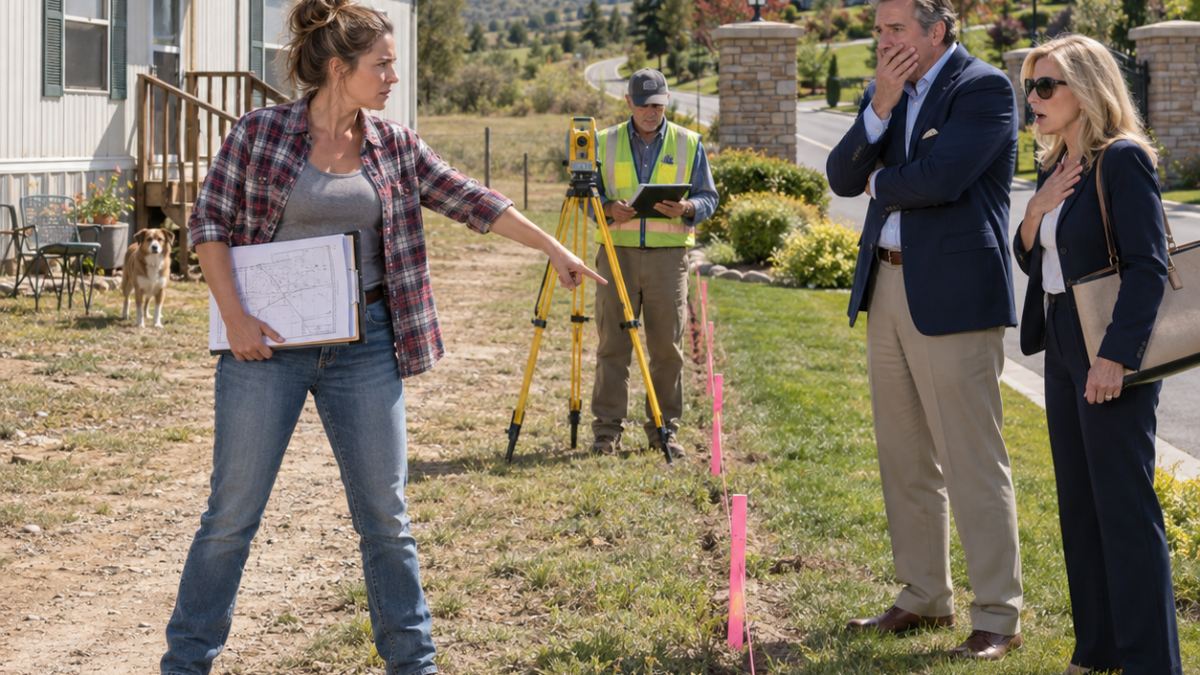
The woman standing at the edge of my driveway called my home an embarrassment, insulted the truck I had bought after my last Army tour, and handed me a bill for $3,000 like she was charging me for the privilege of existing.
My ten-year-old daughter stopped kicking her soccer ball the moment the HOA president smiled and warned that unpaid fines could eventually cost us our house.
And when I finally discovered what had been hiding underneath all those threats and violation notices, I realized the fight had never really been about my lawn, my truck, or even the money.
“This isn’t a charity ward, Mr. Davis.”
Karen Miller said it pleasantly.
That somehow made it worse.
She stood on the public sidewalk outside my house in a floral blouse, oversized sunglasses pushed onto her head, and a clipboard pressed against her chest.
I was kneeling near the driveway pulling dandelions.
Behind me, my daughter Lily had been practicing soccer against the garage door.
Thump.
Thump.
Thump.
Then Karen arrived.
“We have standards in Oakwood Estates,” she continued. “Your property is becoming inconsistent with the character of the neighborhood.”
I slowly stood.
“What exactly are you talking about?”
Her pen pointed toward my 2008 Ford Ranger.
“That vehicle.”
I stared at her.
“My truck?”
“It’s more than ten years old.”
“It still runs.”
“That isn’t the point.”
Apparently, in Karen’s world, reliability became offensive after a vehicle reached a certain birthday.
She looked down at her clipboard.
“Violation one. Aesthetic noncompliance.”
Her pen moved again.
“Violation two. Unapproved landscaping modification.”
“You mean Sarah’s vegetable garden?”
“It wasn’t approved.”
“You can’t even see it from the sidewalk.”
Karen smiled.
“We have eyes everywhere.”
The soccer ball stopped.
I glanced toward the garage.
Lily stood there holding it against her hip.
She was watching us.
Karen continued as though my daughter wasn’t there.
“And violation three concerns the overall condition of the property.”
I looked around.
Freshly cut grass.
Clean driveway.
Painted shutters.
A small American flag beside the porch.
“What condition?”
She tore three sheets from her clipboard.
“One thousand dollars each.”
For a second, I thought I had misheard her.
“Three thousand dollars?”
“Due immediately.”
“For a truck, a vegetable garden, and whatever imaginary problem you invented with my house?”
Her expression hardened.
“Careful, Mr. Davis.”
That was when Lily quietly stepped closer.
“Dad?”
I turned.
“It’s okay, sweetheart.”
But Karen apparently wasn’t finished.
“If these remain unpaid, additional penalties apply. Eventually the association may place a lien against the property.”
She paused.
Then she smiled.
“You’re a veteran, correct?”
Every muscle in my body went still.
“Yes.”
“It would be unfortunate for someone who served his country to lose his home because he couldn’t follow a few simple community standards.”
Lily heard every word.
That was the moment everything changed.
Not because Karen insulted my truck.
Not because she mocked our house.
Not because the number on those papers was ridiculous.
Because she deliberately looked toward my daughter before threatening the place where my child slept.
I walked down the driveway until only a few feet separated us.
My voice stayed quiet.
Years earlier, the Army had taught me that the calmer a man sounded under pressure, the more carefully people should listen.
“Karen, you’re standing on a public sidewalk.”
Her smile weakened.
“My truck is on private property. My yard is maintained. My wife’s garden is behind the house. And you just threatened my family’s home in front of my daughter.”
“I explained the consequences.”
“No.”
I looked at the papers in her hand.
“You tried to scare us.”
She dropped the notices onto the driveway.
“Pay them.”
Then she turned and walked away.
That evening Sarah sat at the kitchen table reading the notices over and over.
Her tea went cold between her hands.
“Mark,” she whispered, “what if they really can put a lien on the house?”
I didn’t answer immediately.
Because underneath my anger, I was afraid too.
This house wasn’t luxurious.
It was an aging ranch at the edge of the development that needed work when we bought it.
But after twelve years of deployments, temporary housing, and boxes we never completely unpacked, it was the first place Lily had ever called home without asking when we were leaving again.
Sarah reached across the table.
“Maybe we should just pay them.”
I looked toward the hallway where Lily had disappeared into her room.
Then I looked at the violation notices.
“No.”
“Mark—”
“If we pay this, she’ll come back.”
I opened my laptop.
“What are you doing?”
“Reading.”
I downloaded every page of the HOA covenants.
Ninety pages.
Rules.
Amendments.
Maps.
Legal descriptions.
For most of the night, nothing looked unusual.
Then somewhere after midnight, I noticed something that made me stop highlighting.
A reference.
Not to landscaping.
Not to vehicles.
To the legal boundary of Oakwood Estates.
I read the paragraph again.
Then once more.
And before Sarah woke the next morning, I knew exactly where I needed to go.
PART 2
The county records office opened at eight.
I was waiting outside at 7:42.
I hadn’t told Sarah exactly what I was looking for because I wasn’t sure myself.
All I knew was that the HOA’s founding documents kept using one phrase whenever they described the association’s authority:
Properties lying within the recorded boundaries of Oakwood Estates.
That sounded obvious.
Almost meaningless.
Of course an HOA governed properties inside the HOA.
But after months of dealing with Karen, I had learned something important about bureaucracies.
People talked about rules as though rules were power.
They weren’t.
Rules only had power when somebody had authority to enforce them.
And I suddenly wanted to know exactly where Karen’s authority began.
And where it ended.
The records office smelled like old paper, floor wax, and stale coffee.
A woman named Gloria sat behind the counter.
She was probably in her sixties, with silver-framed glasses hanging from a chain around her neck.
“What can I help you find?”
I slid my address across the counter.
“Everything.”
She raised one eyebrow.
“Everything?”
“Deeds. Surveys. Plats. Title history. Subdivision records. Anything involving Oakwood Estates.”
She studied me for a second.
“HOA trouble?”
“That obvious?”
“Third person this month.”
That got my attention.
She pointed toward a row of terminals.
“Recorded plats are digitized back to the early nineties. Older ones are in the archive. HOA incorporation filings are on microfilm.”
“I need the older ones.”
She smiled faintly.
“Of course you do.”
For the next several hours, I disappeared into paper.
The original Oakwood Estates subdivision had been recorded in 1978.
Plat Book 62.
Page 14.
I requested it.
Gloria disappeared through a door behind the counter and returned carrying a protective sleeve containing a large folded map.
She laid it carefully across a wide table.
“There you go.”
I bent over it.
The neighborhood I drove through every day suddenly looked different.
Not like streets and houses.
Like geometry.
Lines.
Numbers.
Parcels.
Easements.
Boundaries.
I found Oakwood Lane.
Then Chestnut Drive.
Then Poplar Court.
Finally Acorn Ridge.
My street.
I followed it with my finger.
My house was Lot 72.
I found the number.
And stopped.
I leaned closer.
Then I traced the subdivision boundary again.
Once.
Twice.
Three times.
“No way.”
Gloria looked over from her desk.
“Everything all right?”
I didn’t answer.
The thick boundary line defining Oakwood Estates ran behind the properties across the street from me.
It turned before reaching my side.
My lot sat outside it.
Completely outside it.
So did George Peterson’s house at the end of the street.
And the Wilsons’.
And two others.
I pulled my deed from the folder I had brought.
No reference to Oakwood Estates.
I pulled my closing documents.
Nothing.
My title policy.
Nothing requiring membership in the association.
I looked again at the plat.
Then at the HOA charter.
The charter said its authority applied to properties within the development recorded in Plat Book 62, Page 14.
My property wasn’t within it.
I felt something strange then.
Not excitement.
Not yet.
Anger.
Cold anger.
Because suddenly every letter Karen had sent took on a different meaning.
The grass-height fines.
The recycling-bin fines.
The garden complaint.
The truck.
The basketball hoop.
The flagpole.
The lien threat.
We had been paying dues for nearly two years.
Why?
Because someone told us we had to.
That was it.
Someone had sent an invoice.
We paid it.
Then another.
We paid that too.
Nobody had shown us a document proving membership.
Nobody had asked us to sign anything.
The realtor had casually referred to the neighborhood association during closing, and we had assumed our property was included.
Karen had taken that assumption and turned it into authority.
I photographed everything.
The plat.
The charter.
The deed.
Then I paid for certified copies.
Before leaving, I asked Gloria one question.
“Can property outside an HOA boundary become part of the association later?”
“It can sometimes be annexed,” she said. “Depends on the governing documents and state law. You’d normally expect recorded paperwork.”
“Can you find any annexation for Lot 72?”
She searched.
Nothing.
George’s lot?
Nothing.
The Wilson property?
Nothing.
None of the five houses on our side of Acorn Ridge had been annexed.
I drove home with the certified plat on the passenger seat.
For the first time in months, I wasn’t wondering what Karen would do next.
I was wondering what I was going to do to her.
Not physically.
Not recklessly.
I wanted something much more permanent.
I wanted every piece of power she had used against my family removed from her hands.
Sarah was in the kitchen when I walked in.
She saw my face.
“What happened?”
I laid the plat map across the table.
“Come here.”
She moved beside me.
I pointed.
“This is Oakwood Estates.”
“Okay.”
“This dark line is the official boundary.”
She followed it.
“And this is Acorn Ridge.”
I pointed at our lot.
Her forehead tightened.
“Mark…”
“Look where the line goes.”
She leaned closer.
Then she looked at me.
“We’re outside.”
I nodded.
“We’re outside.”
Her mouth opened slightly.
“So what does that mean?”
“It means I don’t think Karen has any authority over us.”
Sarah lowered herself into a chair.
For a moment she simply stared at the map.
Then tears filled her eyes.
I thought she was relieved.
She wasn’t.
She was furious.
“We paid them.”
“I know.”
“For two years.”
“I know.”
“She threatened Lily.”
“I know.”
“She threatened our house.”
Her voice cracked.
“All this time she might not even have had the right to send us a single letter?”
I sat across from her.
“That’s what we’re going to find out.”
The first lawyer I called wanted a $7,500 retainer just to review the case.
The second suggested we pay the HOA and “preserve community harmony.”
I ended that conversation quickly.
Then somebody in a veterans legal network gave me the name David Chen.
Former JAG.
Property litigation.
Homeowner association disputes.
His office sat above a coffee shop twenty minutes from downtown.
No marble lobby.
No receptionist wearing a headset.
No wall of meaningless awards.
Just shelves of law books, framed military photographs, and a coffeemaker that looked older than my truck.
David listened without interrupting.
I explained everything.
Then I placed Karen’s notices on his table.
The unopened appeal.
The lien threat.
Our deed.
The HOA charter.
Finally, the certified plat.
David moved the documents into neat rows.
He read the charter.
Then the plat.
Then my deed.
He checked the parcel identification.
Then he sat back.
“How long have you been paying this association?”
“Almost two years.”
“Did you sign a membership agreement?”
“No.”
“Annexation agreement?”
“No.”
“Declaration attached to your deed?”
“Not that I’ve found.”
He picked up the plat again.
“Because there isn’t one.”
I felt my pulse increase.
“So I’m right?”
“You appear to be.”
“Appear?”
“I don’t say definitely until I finish a title search myself.”
That answer made me trust him more.
He wasn’t promising victory.
He was verifying ammunition.
David ordered his own records search.
Two days later, he called me.
“Mark.”
“Yes?”
“You were right.”
I closed my eyes.
He continued.
“Your parcel was never part of Oakwood Estates. Neither were the four neighboring lots on your side of Acorn Ridge. I found no recorded annexation.”
“What about the lien threat?”
“If they file one knowing they have no covenant authority over your property, we have a serious problem.”
“For them?”
“For them.”
I heard papers moving on his desk.
“I want every payment you’ve made to this association.”
“I have bank records.”
“Good. Every fine.”
“Saved.”
“Every letter.”
“Saved.”
“Any recordings?”
“Not yet.”
“Start keeping your phone with you.”
I smiled.
“Now what?”
“Now we make sure they understand exactly how much trouble they are in.”
David’s first letter was twelve pages.
I read it twice.
It was devastating precisely because it wasn’t emotional.
Karen had spent months sending me letters full of words like violation, enforcement, delinquency, compliance, penalties.
David answered with dates.
Parcel numbers.
Book numbers.
Page numbers.
Recorded instruments.
Statutory references.
He stated that Lot 72 had never been subject to the Oakwood Estates declaration.
He demanded the immediate cancellation of every fine.
He demanded written confirmation that the HOA would cease claiming authority over my property.
He demanded reimbursement of dues previously collected.
And he warned them against recording any lien.
Then he added something I hadn’t expected.
The letter identified the other four properties outside the subdivision boundary.
David looked at me when I questioned it.
“If they collected money from you by mistake, that’s one problem.”
“And if they collected from everybody?”
“That becomes a pattern.”
I thought about George.
He had lived at the end of the street longer than anyone.
I walked to his house Saturday morning.
He was sitting in his garage repairing an old fishing reel.
“Morning, George.”
He looked up.
“Mark.”
I held up the folder.
“Can I show you something?”
His eyes narrowed.
“If this is about Karen, come inside the garage before somebody sees us.”
That told me everything.
I closed the garage door behind me.
George pulled out a folding chair.
“What did she do now?”
“How long have you been paying HOA dues?”
He gave me a strange look.
“Since sometime in the nineties.”
“Why?”
“What do you mean why?”
“Did you ever sign anything?”
He stopped turning the reel.
“I bought this place in 1980.”
“Was there an HOA then?”
“Across the street, sure.”
“What about this side?”
George stared at me.
I unfolded the plat map.
His face changed before I even explained it.
Old people who have lived somewhere forty years know maps differently.
He recognized the streets immediately.
I pointed to the boundary.
Then his lot.
He leaned close.
His hand trembled slightly.
“That line…”
“Stops across the street.”
He traced it.
“We’re outside.”
“Yes.”
George sat down.
For several seconds, the garage was completely silent.
Then he laughed.
Not happily.
It was one short, hollow sound.
“I knew it.”
“You knew?”
“I suspected something years ago.”
He looked toward the closed garage door.
“When my wife was alive, she used to say our original closing papers never mentioned Oakwood. But sometime around 1994 or ’95, the association started mailing us bills.”
“And you paid?”
“At first I didn’t.”
“What happened?”
“They threatened legal action.”
His jaw tightened.
“They kept sending certified letters. Said if I continued refusing they’d put a lien on the place. Mary was sick by then. Cancer.”
I said nothing.
George looked down at his hands.
“She couldn’t handle stress. Every envelope scared her. So I paid.”
“How much?”
“Over thirty years?”
He shook his head.
“I don’t know.”
He walked into the house.
Five minutes later, he returned carrying a cardboard shoebox.
He set it beside the plat.
Receipts.
Canceled checks.
Violation notices.
Special assessments.
Late fees.
Thirty years of fear stuffed into a box.
I picked up one notice.
Three hundred dollars because George’s mailbox had been the wrong shade of black.
Another.
Five hundred because his wife had installed a wooden bench beneath a maple tree without architectural approval.
Then I found one from nine years earlier.
SPECIAL ASSESSMENT — COMMUNITY BEAUTIFICATION.
$1,800.
“What did this pay for?”
George smiled bitterly.
“New entrance signs.”
I knew the signs.
Both were half a mile from George’s property.
Inside Oakwood Estates.
“How much money have they taken from you?”
He stared at that box.
“Enough that Mary and I canceled two vacations.”
My anger came back.
But this time it didn’t belong only to me.
“George, I have a lawyer.”
He looked up.
“And?”
“And I think you need to meet him.”
The Wilsons lived two houses away.
Matt and Rachel were younger than Sarah and me.
Two children.
Two jobs.
One minivan with a cracked rear bumper they kept saying they would replace when they could afford it.
Karen had fined them repeatedly over a plastic backyard playset.
Rachel went pale when I showed her the plat.
“She said we had to get permission.”
“You didn’t.”
“She said she could put a lien on the house.”
“She threatened us with the same thing.”
Matt pulled out his phone.
“I have emails.”
“How many?”
He scrolled.
“Forty-three.”
That evening, he forwarded every one to David.
Within a week, all five property owners outside the boundary had been identified.
One belonged to an investor living in Arizona.
Another to Brian and Michelle Carter, who had always seemed friendly with Karen.
When I showed Brian the map, he didn’t get angry.
He sat on his porch and stared at it.
Then he asked me to wait.
He came back carrying a folder from a filing cabinet.
Inside were years of assessment notices.
“I paid whatever they demanded,” he said.
“Why?”
His face twisted with embarrassment.
“Because I was scared.”
There was no judgment in me.
I understood exactly what Karen’s system was built to do.
Make every person believe they were alone.
Brian rubbed his forehead.
“Three years ago they hit us with almost nine thousand dollars in special assessments.”
“Nine thousand?”
“We refinanced part of the house.”
“For what improvements?”
“I don’t know.”
That sentence changed the investigation.
Until then, David had focused on unauthorized collections.
Now we wanted to know where the money went.
Sarah volunteered our garage for a meeting.
George arrived carrying his shoebox.
The Wilsons brought folders.
Brian brought assessment statements.
I spread the plat map across my workbench.
Five properties.
Five families.
Decades of payments.
The oldest records belonged to George.
He sat beside Lily’s bicycle looking angrier than I had ever seen him.
“I want my money back.”
Rachel Wilson nodded.
“I want them to stop.”
Brian stared at the map.
“I want to know where the assessments went.”
Sarah stood beside me.
“I want them to never do this to another family.”
I looked around the garage.
Months earlier, Karen had succeeded because she made each of us feel isolated.
Now her biggest mistake was visible.
She had bullied too many people.
And frightened people eventually talk.
David expanded the demand letter.
It went to Karen.
Every board member.
The HOA’s attorney.
And the association’s insurer.
Forty-eight hours later, the lien threat against my property remained active.
No refund.
No apology.
No acknowledgment.
Nothing.
Then we learned Karen had scheduled the monthly HOA meeting.
David called me.
“You should attend.”
“Am I allowed?”
“They’ve spent two years insisting you’re a member. It would be awkward for them to exclude you now.”
“Should you come?”
“No.”
That surprised me.
“Why?”
“Because Karen behaves differently when lawyers are present.”
I understood.
“You want her comfortable.”
“I want her honest.”
The clubhouse was packed more than usual that Thursday night.
Word had circulated that I was challenging the association.
People stared when Sarah and I entered.
George walked behind us.
The Wilsons came next.
We took seats in the first row.
Karen entered at seven sharp.
She wore navy slacks and a white blouse.
Her hair was perfectly arranged.
Her confidence had returned.
She placed a stack of papers on the podium.
David’s letter sat on top.
My phone was recording.
Karen tapped the microphone.
“Before we begin tonight’s agenda, I need to address misinformation being circulated by a small number of residents.”
I almost smiled.
There it was.
The opening.
She lifted David’s letter.
“Mr. Mark Davis has apparently decided that normal community standards do not apply to him.”
Several people turned toward me.
Karen continued.
“He has hired an attorney who claims that his property and certain others on Acorn Ridge somehow fall outside this association.”
Somebody laughed near the back.
Karen smiled.
“Exactly.”
She looked directly at me.
“This theory is absurd.”
I raised my hand.
“May I ask a question?”
“No.”
“Why?”
“This is not a debate.”
“You’re discussing my property.”
“You will have an opportunity during resident comments.”
“I’m not a resident of your association.”
Her expression changed.
Only slightly.
“Then perhaps you shouldn’t be here.”
A few people murmured.
I stayed seated.
“Which is it, Karen?”
She tightened her grip on the podium.
“Excuse me?”
“Am I a member when you want money, but not a member when I ask questions?”
The room went silent.
Someone whispered, “Good point.”
Karen’s cheeks reddened.
“Our counsel has reviewed this matter.”
That interested me.
“What did counsel say?”
“I am not required to disclose privileged legal advice.”
“Did your counsel review Plat Book 62, Page 14?”
A man in the second row turned toward another board member.
Karen raised her voice.
“The board has determined that the Davis property remains subject to Oakwood Estates.”
“Based on what recorded document?”
“Mr. Davis, sit down.”
I wasn’t standing.
That made several people laugh.
Karen realized her mistake.
Her face reddened further.
She struck the podium.
“I will not allow intimidation in this clubhouse.”
George leaned toward me.
“She really said that.”
I heard him.
So did half the room.
Karen held up David’s letter.
“These threats involving refunds, lawsuits, and personal liability are nothing more than an attempt to frighten volunteers who have spent years protecting your property values.”
A woman near the aisle raised her hand.
“Is his property outside the boundary?”
Karen ignored her.
The woman asked again.
“Karen, is it?”
“Our legal counsel has rejected that interpretation.”
“What interpretation?” the woman said. “A boundary is a boundary.”
Murmurs spread.
Karen’s control slipped another inch.
Then she made the mistake David had hoped she would make.
She looked directly at me.
“Let me be perfectly clear, Mr. Davis. Your balance remains due.”
I said nothing.
“The association will continue enforcement.”
Still nothing.
“If necessary, we will proceed with the lien.”
My heart beat faster.
“And foreclosure?”
Sarah’s fingers tightened around mine.
Karen smiled.
“If that becomes legally necessary.”
“Even after receiving the certified county plat?”
“Yes.”
“Even after my attorney notified you that my property has never been annexed into Oakwood Estates?”
“Yes.”
“Even after seeing my deed?”
“Yes.”
“You’re sure?”
She leaned toward the microphone.
“Absolutely.”
I stopped asking questions.
Because she had given me everything I needed.
After the meeting, Sarah and I sat in the truck without starting the engine.
She stared at the clubhouse.
“She knew.”
“Yes.”
“Maybe before she could claim it was a mistake.”
“Yes.”
“But now…”
“She just admitted she received the evidence.”
Sarah leaned back.
“What happens next?”
I looked at my phone.
“Now David gets the recording.”
By nine the next morning, he had it.
He listened twice.
Then called.
“Well.”
“That good?”
“For us?”
“Yes.”
“For Karen?”
A pause.
“No.”
David filed the quiet-title action three days later.
The purpose was simple.
We wanted a judge to declare that my property was not part of Oakwood Estates.
At the same time, he requested an injunction preventing the association from recording a lien until the court ruled.
The judge granted temporary protection almost immediately.
Karen could not touch my title.
When Sarah read the order, she cried.
Not dramatic sobbing.
Just tears she had been holding back for months.
I wrapped my arms around her.
“They can’t take it.”
She pressed her face against my chest.
“You promise?”
I held the court order in one hand.
“I don’t have to promise anymore.”
I handed it to her.
“A judge already did.”
For the first time since this began, our house felt like our house again.
But David wasn’t finished.
During discovery, he demanded financial records.
The HOA resisted.
Then delayed.
Then claimed older files had been lost.
David subpoenaed the bank.
That changed everything.
The association had collected thousands of dollars from outside-boundary homeowners.
But another problem emerged.
Special assessments had been deposited into the same operating accounts used for ordinary HOA expenses.
There were unexplained payments.
Reimbursements.
Consulting fees.
Vendor checks.
Some legitimate.
Others questionable.
One company caught David’s attention.
Miller Community Services.
Same last name as Karen.
The checks totaled more than $40,000 over several years.
“Who owns it?” I asked.
“We’re finding out.”
Two days later he called again.
“You sitting down?”
“Yes.”
“Karen’s brother.”
I closed my eyes.
“What service did the company provide?”
“That remains an excellent question.”
The invoices described community coordination, landscaping consultation, and administrative support.
Nobody we interviewed remembered seeing Karen’s brother performing any work.
That moved the situation beyond our property dispute.
David contacted the state attorney general’s consumer protection division.
He also sent records to the county district attorney.
I asked him whether Karen would be arrested.
“I don’t know.”
“You think she committed a crime?”
“I think investigators will decide that.”
He was careful about those words.
I appreciated it.
This wasn’t television.
We weren’t prosecutors.
We didn’t get to declare people criminals because we were angry.
We documented.
We submitted.
We waited.
Meanwhile, the quiet-title case moved quickly.
The HOA’s attorney filed a response claiming that my property had been treated as part of the community for decades and that previous owners had paid assessments without objection.
David read the argument to me.
I frowned.
“Does that matter?”
“It can matter in some legal contexts.”
My stomach tightened.
He held up a hand.
“But contractual obligations tied to recorded real-estate covenants generally require more than a tradition of sending bills.”
“So they’re arguing that because nobody stopped them before, they should be allowed to keep doing it?”
“That is an inelegant but accurate summary.”
The hearing was scheduled for a Tuesday morning.
Sarah insisted on coming.
So did George.
We arrived early.
Karen entered twenty minutes later with three board members.
She did not look at me.
Her attorney looked exhausted.
Judge Eleanor Vance entered at nine.
Everyone stood.
The hearing lasted less than an hour.
David introduced the deed.
The original plat.
The HOA charter.
The absence of annexation documents.
The association’s attorney argued historical participation and implied consent.
Judge Vance interrupted.
“Counsel, show me the recorded instrument binding Lot 72.”
The attorney shuffled his papers.
“Your Honor, the property has been treated—”
“That was not my question.”
Silence.
“Show me the instrument.”
“There does not appear to be a separate annexation instrument.”
“Does the original declaration include Lot 72?”
“No, Your Honor.”
“Does the recorded plat place Lot 72 within the subdivision boundary?”
Another pause.
“No.”
Judge Vance removed her glasses.
“Then what precisely are we doing here?”
I heard George exhale beside me.
The attorney tried again.
“Your Honor, there has been a decades-long course of conduct—”
“A course of conduct cannot move a recorded boundary line.”
Karen whispered something to him.
Judge Vance noticed.
“Ms. Miller, unless you have been admitted to practice law, I suggest allowing counsel to speak for the association.”
Karen went rigid.
The judge reviewed the documents for several minutes.
Then she ruled.
Lot 72 was outside Oakwood Estates.
The HOA had no covenant authority over it.
All fines against me were void.
The pending lien claim was invalid.
The association was permanently barred from asserting mandatory membership against my parcel absent a lawful future agreement.
Then Judge Vance looked toward the HOA table.
“I am especially troubled by evidence that the association continued threatening foreclosure after receiving certified documentation that its authority was disputed on substantial grounds.”
Karen stared straight ahead.
The judge ordered the HOA to pay my reasonable legal fees associated with the quiet-title action.
Sarah grabbed my hand.
I barely heard the rest.
Not because it didn’t matter.
Because one sentence kept repeating in my head.
They cannot take your home.
Outside the courthouse, George hugged me.
The old man wasn’t somebody who hugged people.
That made it hit harder.
“Mary should’ve lived to see this,” he whispered.
I knew who he meant.
His wife.
The woman who had spent years opening HOA envelopes while sick.
“I’m sorry,” I said.
George stepped back.
“No.”
He wiped his eyes.
“Don’t be sorry.”
He looked toward the courthouse.
“Finish it.”
So we did.
The quiet-title ruling changed everything.
Once a judge confirmed my property had never been under HOA authority, the neighboring owners moved forward with their own claims.
Their deeds and plats matched mine.
Within weeks, eight families from the outer edges of Oakwood Estates had contacted David.
Some had paid for five years.
Some ten.
George had paid for nearly thirty.
David filed an amended civil lawsuit seeking repayment of improperly collected dues, assessments, fines, and related damages.
The association’s insurance carrier became involved.
So did its accounting firm.
Then two board members resigned.
One contacted David privately.
Her name was Linda Shaw.
She had served as treasurer for eighteen months.
She requested a meeting.
David invited me only after Linda agreed.
She arrived looking terrified.
“I didn’t know about the boundary issue,” she said immediately.
David nodded.
“Tell us what you did know.”
Linda folded and unfolded her hands.
“Karen controlled almost everything.”
“Meaning?”
“Vendor selection. Enforcement lists. Legal referrals.”
“You were treasurer.”
“On paper.”
David leaned forward.
“Did you sign checks?”
“Yes.”
“For Miller Community Services?”
Linda looked down.
“Yes.”
“What services did the company provide?”
“I don’t know.”
“Then why did you sign?”
“Karen told me the board had approved them.”
“Did it?”
“I never saw a vote.”
“How much was paid?”
“I don’t know.”
“Approximately?”
She whispered, “More than fifty thousand.”
I felt my jaw tighten.
David remained calm.
“Why are you telling us this now?”
Linda finally looked at me.
“Because of what she said about taking his house.”
Her eyes filled.
“That scared me.”
She pointed toward me.
“I have a son in the Marines. When Karen stood in that meeting and talked about foreclosing after your attorney showed us the map…”
Her voice broke.
“I realized she would destroy anybody to stay in control.”
David slid a legal pad toward her.
“If you have documents, preserve them.”
“I do.”
“How many?”
Linda swallowed.
“A lot.”
Her records went to investigators.
Three weeks later, an investigator from the district attorney’s economic-crimes unit knocked on my door.
His name was Detective Aaron Miller.
No relation to Karen, he assured me.
He sat at our dining table.
The same table where Sarah had first stared at that $3,000 fine.
He asked about every interaction.
I gave him the notices.
Emails.
The returned appeal.
The lien threat.
Meeting recording.
Payment records.
He asked whether Karen had personally demanded money.
“Yes.”
“Did she represent that the association had legal authority over your property?”
“Repeatedly.”
“Did you tell her you disputed that?”
“Yes.”
“When?”
I gave him dates.
“Did she continue demanding payment?”
“Yes.”
He closed his notebook.
“I can’t discuss investigative details.”
“I understand.”
“But preserve everything.”
“I will.”
After he left, Lily came into the kitchen.
She was eleven by then.
This fight had lasted long enough for her to have another birthday.
“Was that police?”
“Investigator.”
“For Ms. Miller?”
“Yes.”
She looked worried.
“Is she going to jail?”
“I don’t know.”
Lily thought about that.
Then asked the question that mattered more.
“Can she still take our house?”
I crouched until we were eye level.
“No.”
“Ever?”
“No.”
Her shoulders dropped.
Then she hugged me.
I held my daughter in the middle of our kitchen and understood something that embarrassed me.
I had spent months telling myself I was fighting over principle.
Dignity.
Property rights.
Rules.
Justice.
All true.
But underneath every argument was something much simpler.
My daughter needed to believe home was safe.
After years of moving because of my military career, I had promised her we were finished leaving.
Karen had turned that promise into uncertainty.
That was the wound I couldn’t forgive easily.
Not the money.
The fear.
The civil case entered mediation.
The insurer wanted settlement.
David brought spreadsheets showing what every outside-boundary family had paid.
The numbers were staggering.
George alone had paid tens of thousands over the decades.
Some records were incomplete, so accountants reconstructed totals from checks, bank statements, and HOA ledgers.
The Wilsons had paid more than $6,000 in only a few years.
Brian’s family had paid nearly $20,000 including special assessments.
Our total was much smaller by comparison.
But when I saw everything combined, I finally understood the scale.
This wasn’t one aggressive HOA president picking on one veteran.
It was a system that survived because homeowners believed official-looking envelopes.
At mediation, Karen did not attend in person.
Her attorney did.
So did the insurer.
The HOA offered refunds without admitting wrongdoing.
David rejected the first number.
Then the second.
By late afternoon, the mediator came into our room again.
“They’ve increased the offer.”
David read it.
George watched his face.
“Well?”
David set the paper down.
“It covers one hundred percent of documented payments for the plaintiffs, interest, legal fees, and an additional damages amount.”
Rachel Wilson covered her mouth.
Brian whispered, “Jesus.”
George said nothing.
David looked at him.
“George?”
The old man stared out the window.
“How much of mine?”
“All documented payments we could establish.”
“And interest?”
“Yes.”
George nodded slowly.
“What about the missing years?”
“We negotiated an estimate based on the payment pattern.”
He turned.
“So they’re paying me for those too?”
“Yes.”
His eyes filled with tears.
George took off his glasses.
“My wife used to hide those notices from me.”
Nobody spoke.
“She knew I would get angry.”
He rubbed his face.
“I found them after she died. She had paid some out of her grocery account because she didn’t want us fighting.”
Rachel began crying.
George looked at David.
“Take the settlement.”
David nodded.
The other families agreed.
So did Sarah and I.
The settlement did more than reimburse money.
It required the HOA to issue written notices acknowledging that the outside parcels were not members.
Every fraudulent balance had to be erased.
Credit reporting, if any, had to be corrected.
Recorded liens had to be released.
The association also agreed to independent financial review as part of its restructuring.
The civil battle was effectively over.
The criminal investigation was not.
I found that out on a Tuesday afternoon.
Lily and I were in the front yard.
I was showing her how to oil her softball glove.
A dark county sedan turned onto Acorn Ridge.
Then another.
They stopped near Karen’s house.
No sirens.
No spectacle.
Detective Miller stepped out.
Another investigator joined him.
They walked toward Karen’s front door.
I stopped talking.
Lily followed my gaze.
“Dad?”
“Stay here.”
Karen opened the door.
Even from across the street, I recognized her familiar body language.
Chin high.
Shoulders stiff.
Annoyed before she even knew why somebody had come.
Detective Miller spoke.
Karen’s expression changed.
Confusion.
Then disbelief.
She shook her head.
He spoke again.
Karen looked toward my house.
Our eyes met.
For the first time since I had known her, there was no contempt in her face.
Only fear.
The investigators escorted her to the sedan.
Several neighbors stepped onto their porches.
Nobody cheered.
Neither did I.
Watching somebody lose control of the life they built is different when it happens in real time.
Even when they hurt you.
Especially when they hurt you.
Lily whispered, “Are they arresting her?”
“It looks like it.”
“Are you happy?”
That question stayed with me.
I looked at my daughter.
“I’m happy she can’t hurt us anymore.”
“That’s not what I asked.”
Kids do that.
Cut through all your carefully chosen adult words.
I watched Karen disappear into the back seat.
“No,” I said finally. “I don’t think watching somebody get arrested is supposed to make us happy.”
Lily considered that.
“Then what are you?”
“Relieved.”
That was the truth.
The district attorney later announced charges related to financial misconduct, fraudulent filings, and unauthorized collections.
I stayed careful about what I told neighbors.
Rumors traveled faster than facts.
People claimed Karen had stolen hundreds of thousands.
I never saw proof of that.
Others said every board member would be arrested.
That didn’t happen either.
Two former board members cooperated with investigators.
Another retained separate counsel.
Karen eventually accepted a plea agreement involving felony fraud connected to financial transactions and fraudulent collection conduct.
She received probation, substantial fines, restitution obligations, and restrictions preventing her from serving in fiduciary positions.
Some neighbors complained that she should have gone to prison.
George surprised everyone.
“I don’t care where she sleeps,” he said at a neighborhood meeting. “I care that she never gets to do this again.”
I agreed.
Revenge sounds satisfying when you’re angry.
But when justice actually comes, it usually looks less cinematic.
Documents.
Orders.
Refund checks.
Restrictions.
Audits.
A woman who once controlled every mailbox color in the neighborhood suddenly unable to sign another association check.
That was enough.
The remaining Oakwood board dissolved itself.
Residents inside the actual subdivision still needed an organization because they owned common roads, landscaped entrances, drainage areas, and the clubhouse.
So they formed an interim committee.
They invited the outside-boundary homeowners to the first meeting.
Not as HOA members.
As neighbors.
That distinction mattered.
The meeting took place in the community park instead of the clubhouse.
Somebody brought hamburgers.
Someone else brought potato salad.
Kids chased each other between picnic tables.
For years, Karen had convinced everyone that community meant obedience.
The afternoon after she was gone, I discovered community actually looked like George arguing with Brian about whether charcoal grills were superior to propane while Rachel’s kids sprayed Lily with a garden hose.
Nobody had a clipboard.
Nobody issued a citation.
Nobody measured the grass.
George was nominated to serve as one of the interim board advisers.
He nearly dropped his plate.
“Absolutely not.”
Everyone laughed.
Rachel called out, “That’s why we want you.”
“I’m seventy-eight.”
“Experience.”
“I hate HOAs.”
Brian raised his soda.
“Even better.”
George stared around at the group.
Then smiled.
“All right.”
He raised one finger.
“One condition.”
“What?”
“Any rule longer than a page gets thrown in the trash.”
More laughter.
They eventually compromised.
The new rules were longer than one page.
But not much longer.
Annual independent audits became mandatory.
Major expenditures required recorded votes.
Fines required notice, evidence, and appeal procedures.
Board financial records were available to members.
No board officer could approve payments to relatives without disclosure and independent review.
Most importantly, the boundary map was attached to the governing documents in plain language.
No family would ever again spend thirty years paying an association that didn’t govern their property.
As for our five houses, we remained independent.
We voluntarily contributed when neighborhood projects benefited us.
When storms knocked branches across the shared entrance road, we helped clear them.
When the park needed new picnic tables, Sarah donated money.
But there was a difference between contributing because we wanted to and paying because someone threatened our homes.
Choice changed everything.
A few months after the settlement, David called.
“Check your mailbox.”
“Why?”
“Just check.”
Inside was an envelope from his office.
I opened it at the kitchen counter.
A settlement check.
Sarah stood beside me.
Neither of us spoke for several seconds.
It represented reimbursed dues.
Fines.
Interest.
Damages.
Money we had once believed was gone forever.
“We could replace the truck,” Sarah said.
I looked through the kitchen window.
The old Ranger sat in the driveway.
Same faded paint.
Same dent near the rear bumper.
“Absolutely not.”
She laughed.
“You’re keeping it out of spite.”
“Sentimental value.”
“Spite.”
“Historical significance.”
She kissed my cheek.
“Spite.”
We used part of the money to rebuild our emergency savings.
Part went toward Lily’s future education.
And Sarah finally got the greenhouse she had wanted behind the garden.
No architectural application required.
The first thing she planted was tomatoes.
The second was sunflowers.
They grew taller than the fence.
George received his settlement shortly after.
One afternoon he knocked on our door holding a photograph.
It showed him and Mary when they were young.
Standing beside a lake.
He was skinny.
She wore enormous sunglasses.
“We were supposed to go back there for our thirtieth anniversary,” he said.
“What happened?”
“HOA assessment.”
He smiled faintly.
“So I’m going.”
“Back to the lake?”
“Yep.”
“Alone?”
He shook his head.
“My granddaughter.”
Two months later, he mailed us a postcard.
On the back, he had written only:
Mary would’ve liked this.
Sarah cried when she read it.
So did I.
The Wilsons used their settlement to pay down debt.
Brian and Michelle refinanced their home again—this time to undo the damage caused by the earlier special assessments.
Life became ordinary.
Beautifully ordinary.
Then one Saturday in October, a moving truck pulled up across the street.
Karen was selling her house.
I was in the yard digging a hole for a young oak tree.
Lily had chosen it.
“You said we’re staying forever,” she had told me.
“Trees are good for forever.”
So we bought one.
Karen’s house had a SOLD sign on the lawn.
Movers carried furniture down the front steps.
By afternoon, the place looked empty.
Then Karen appeared.
She carried a small box.
She stopped on the sidewalk.
And looked at me.
For months I had imagined that moment.
In some versions, I gave her a speech.
In others, I reminded her about the truck.
Or the garden.
Or the threat she made in front of my daughter.
I imagined asking whether my house still lowered property values.
I imagined saying something cruel enough to make her feel one fraction of what Sarah had felt sitting at our kitchen table.
But standing there with a shovel in my hand, I didn’t want any of it.
Because she looked different.
Not physically.
Smaller somehow.
When I first met her, authority had seemed to surround her.
Clipboard.
Board title.
Violation notices.
Lawyer letters.
Threats.
Now those things were gone.
She was just a woman standing beside a moving truck.
For a long moment neither of us spoke.
Then she said, “You destroyed my life.”
I rested both hands on the shovel.
“No.”
Her jaw tightened.
“You could’ve settled this quietly.”
“I tried.”
“You humiliated me.”
“You threatened to foreclose on my home after seeing evidence you had no authority over it.”
“You went to the media.”
“After you refused to stop.”
“You turned everyone against me.”
I shook my head.
“I didn’t make those decisions for you.”
She looked toward our house.
Sarah was visible through the front window.
Lily’s bicycle lay near the porch.
Karen’s voice dropped.
“I was trying to protect this neighborhood.”
“From what?”
She didn’t answer.
“My old truck?”
Silence.
“A vegetable garden?”
Nothing.
“George’s birdbath?”
Her face changed.
I stepped closer, but kept my voice calm.
“You know what the worst part was?”
She stared at me.
“It wasn’t the fines.”
I pointed toward my house.
“It was making my daughter afraid somebody could take her home.”
Karen looked away.
“That was unnecessary.”
“Yes.”
She looked back.
“You pushed me.”
“No, Karen.”
I shook my head.
“You had years before I ever moved here.”
That landed.
Because she knew it was true.
George had been paying before I arrived.
The outside parcels had been charged for decades.
My family didn’t create the problem.
We just became the family that finally opened the map.
Karen lifted the box against her chest.
“What do you want me to say?”
“Nothing.”
She seemed surprised.
“You don’t want an apology?”
“Would you mean it?”
Her mouth opened.
Closed.
“That’s what I thought.”
I turned back toward the hole.
Behind me, Karen said quietly, “I lost everything.”
I stopped.
For one second, anger tempted me to say something cruel.
Something like:
Now you know how it felt when you threatened me with the same thing.
But I remembered Lily’s question the day Karen was arrested.
Are you happy?
No.
I had never wanted Karen homeless.
I had wanted her powerless to hurt people.
Those were different things.
So I said, “Then build something better next time.”
She didn’t respond.
The moving truck drove away thirty minutes later.
I never saw Karen again.
Lily helped me lower the oak tree into the ground.
“Straight?”
I stepped back.
“A little toward you.”
She adjusted it.
“There?”
“Perfect.”
We filled the hole.
Sarah brought us lemonade.
The three of us stood in the yard looking at a tree that seemed impossibly small.
“You know,” Sarah said, “we’ll be old before that gives real shade.”
“That’s the point.”
She looked at me.
I smiled.
“We’ll be here long enough to see it.”
Years of moving had taught me that a house and a home were not the same thing.
A house was lumber.
Shingles.
Concrete.
Paperwork filed at a courthouse.
A home was where your kid marked her height against a kitchen doorway.
Where your wife planted vegetables she expected to harvest next season.
Where an old truck in the driveway could become a joke instead of evidence in somebody’s case against you.
Where neighbors could become friends because they had finally stopped being afraid of one another.
Karen believed community came from control.
She thought matching mailboxes created belonging.
She believed fear could produce order.
For a while, it did.
But fear has one fatal weakness.
The moment people stop experiencing it alone, it loses most of its power.
George had believed he was alone.
The Wilsons believed they were alone.
Brian believed he was alone.
Sarah and I believed we were alone.
Then we put our paperwork on the same table.
That was all it took.
A map.
A shoebox of receipts.
A few frightened neighbors willing to talk.
One lawyer willing to read the documents more carefully than the people abusing them.
And eventually, a judge willing to ask one simple question:
Where is your authority?
Karen never had an answer.
That question became the real ending of the story.
Not her arrest.
Not the settlement.
Not watching the moving truck carry away the remnants of her old life.
The ending came the first spring after everything was over.
I woke early on a Saturday.
No certified letters waited on the porch.
No violation notice was taped to the door.
No clipboard appeared at the sidewalk.
Sarah was already outside in the greenhouse.
Lily was kicking a soccer ball against the garage.
Thump.
Thump.
Thump.
The same sound I had heard the afternoon Karen first threatened us.
Only this time nobody interrupted it.
I made coffee and stepped onto the porch.
George drove past in a new pickup and honked.
The Wilson children rode bicycles behind their father.
Someone across the street had left a trash bin visible from the road.
Nobody cared.
My Ford Ranger still sat in the driveway.
Fifteen years old now.
Paint fading.
Engine reliable as ever.
I ran my hand across the hood.
Sarah called from the backyard.
“Mark!”
“What?”
“You need to see this!”
I walked around the house.
She was kneeling beside the garden.
The sunflowers were returning.
Tiny green shoots pushed through the soil.
Behind them stood the greenhouse.
Beyond that, the oak tree we had planted was covered in new leaves.
Sarah wrapped one arm around my waist.
“Looks like it survived the winter.”
I looked at the tree.
“So did we.”
Lily came running around the corner with the soccer ball under her arm.
“Dad, will you practice with me?”
“Five minutes.”
“You always say five minutes.”
“And?”
“It turns into an hour.”
“Then why are you complaining?”
She grinned.
I followed her toward the driveway.
At the property line, I stopped.
Years earlier, a dark line on an old county map had changed everything.
To Karen, boundaries had been inconvenient details.
To me, they became something else.
A reminder.
Power has boundaries.
Authority has boundaries.
Fear has boundaries.
And sometimes all it takes to defeat somebody who acts untouchable is to find the line they were never allowed to cross.
Lily dropped the ball.
“You ready?”
I stepped backward.
“Send it.”
She kicked.
The ball rolled across the driveway beside the old truck Karen once called an eyesore.
I trapped it with my foot and sent it back.
Lily laughed.
Sarah stood near the garden watching us.
And for once, there was nothing else happening.
No lawyers.
No investigators.
No hearings.
No threats.
Just my wife.
My daughter.
Our yard.
Our home.
The ordinary life we had wanted from the beginning.
The life someone had nearly convinced us we needed permission to live.
I looked at the oak tree moving gently in the morning wind.
Someday it would tower over that yard.
Someday Lily might bring her own children here and tell them why her father refused to replace an ancient pickup truck long after he could afford something newer.
Maybe she would tell them about George.
About the map.
About the woman with the clipboard.
But I hoped she remembered something else more clearly.
I hoped she remembered that fear entered our home and did not get to keep it.
That her mother was scared and still stood beside me.
That neighbors who had barely spoken became allies.
That an old man who had spent thirty years surrendering finally got something back.
And that when someone threatened our home, we did not answer with threats of our own.
We answered with facts.
Records.
Patience.
And the truth.
Karen once told me there were rules in Oakwood Estates.
She was right.
She had simply forgotten the most important one.
Before you order someone to obey your authority, you had better make absolutely certain you have authority over them in the first place.
She never did.
And that little piece of ground she tried so hard to control?
It was ours all along.
[END OF FIRST COMMENT / FULL STORY]








