HOA Ordered Me to Destroy My Beehives—Then Learned I Was the Agricultural Commissioner Who Wrote the Law They Broke
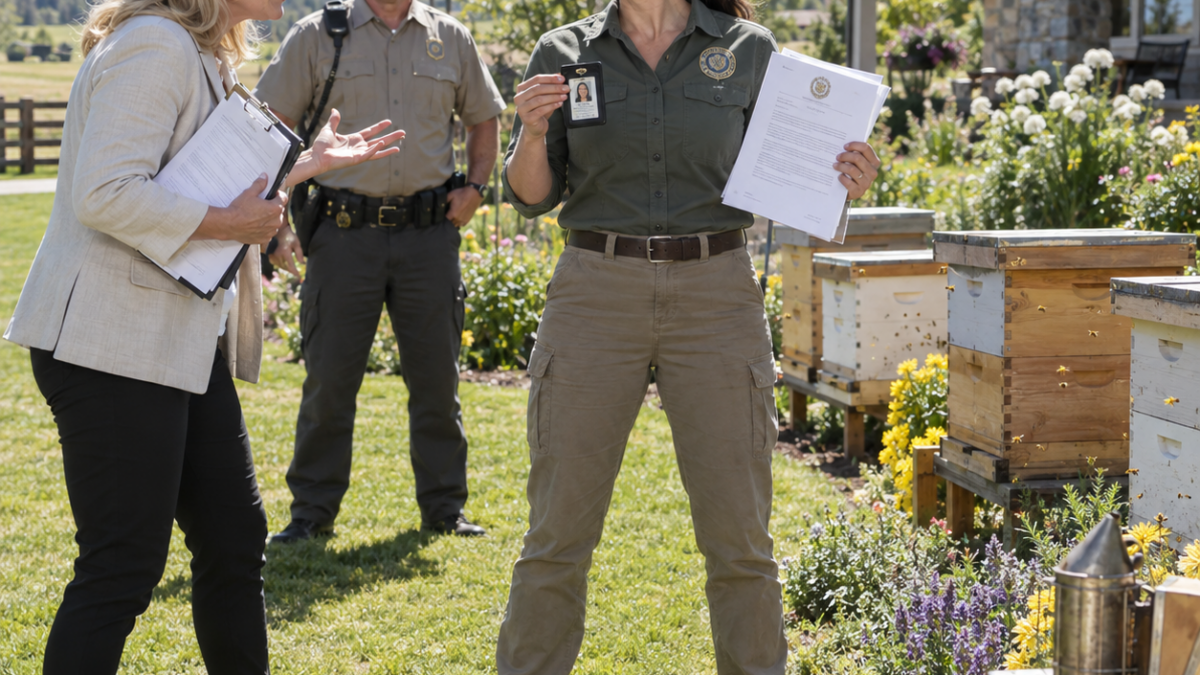
The HOA president stood at the edge of my yard, pointed at the four beehives my wife and I had cared for for years, and told me I had seven days to destroy them or she would start fining me $100 a day.
She called them “dangerous livestock,” threatened a lien against my home, and smiled like she had already won.
I almost told her exactly who she was arguing with—but something in the way she held that violation notice made me decide it would be far more useful to let her keep talking.
“Those buzzing menaces have to go, Jack.”
Karen Albright’s voice cut through the peaceful hum behind me.
I slowly straightened from the hive I had been inspecting and removed my gloves.
The late-afternoon sun was warm against my shoulders. Bees moved calmly between the white hive boxes and the lavender Sarah had planted along the fence.
Karen stood on the other side of my property line with her arms folded.
Beside her was Tim Harper, the newest HOA board member.
Tim looked as if he would rather have been anywhere else.
“Good afternoon, Karen.”
“Don’t ‘good afternoon’ me.”
She snapped her fingers toward Tim.
“Give him the notice.”
Tim stepped forward and held out a sheet of paper.
I took it.
CRESTWOOD HILLS HOMEOWNERS ASSOCIATION.
FORMAL VIOLATION NOTICE.
The accusation was almost impressive in its confidence.
**Bylaw 12.4 — Prohibition of Livestock.**
Fine: $500.
Remove the offending animals within seven days.
Failure to comply would trigger $100 daily penalties and possible collection action against my property.
I read it twice.
Then I looked at my bees.
Four ordinary Langstroth hives.
No aggressive colonies.
No swarming problem.
No neglected equipment.
Each hive sat exactly where it was supposed to sit, surrounded by flowers and supplied with fresh water.
“Karen,” I said, “bees aren’t livestock.”
She laughed.
“They’re animals.”
“That doesn’t make them livestock.”
“You keep them.”
“Yes.”
“You harvest honey.”
“Yes.”
“You sell honey.”
“Sometimes.”
She spread her hands triumphantly.
“Commercial animals. Livestock.”
Tim stared at the grass.
I folded the notice once.
Very carefully.
Karen mistook my silence for uncertainty.
“People are worried, Jack.”
“Which people?”
“Parents.”
“Names?”
Her lips tightened.
“That isn’t relevant.”
“It is if you’re claiming they complained.”
She took a step closer.
“What happens when somebody’s child gets stung?”
I glanced toward the house next door.
The family Karen was obviously trying to invoke had been in our backyard the previous weekend. Their daughter had watched me inspect a frame from ten feet away while Sarah explained how worker bees communicated.
They had gone home with a jar of honey.
Nobody had complained.
Karen was manufacturing fear.
She had done it before.
Five years earlier, when Sarah and I moved to Crestwood Hills, Karen had simply been the neighborhood busybody.
Then she became HOA president.
Suddenly mailbox colors mattered.
Holiday decorations had approved dates.
Trash cans became moral failures.
A work van visible for two hours could produce a warning.
Most of us had rolled our eyes and complied because fighting her seemed more exhausting than paying a small fine.
That was how Karen gained power.
Not because people respected her.
Because people wanted peace more than confrontation.
But she had chosen the wrong issue this time.
And she had chosen the wrong person.
I tucked the violation into my back pocket.
“I’ll respond formally.”
“You have seven days.”
“I read the notice.”
“I’m serious, Jack.”
“So am I.”
She studied my face.
I could tell she expected anger.
Instead, I smiled.
That unsettled her.
“You think this is funny?”
“No.”
“Then why are you smiling?”
I looked toward the hives.
Because four years earlier, before Karen had ever decided my bees were illegal, I had spent six months sitting with county attorneys, university entomologists, farmers, urban gardeners, and public-safety officials designing the exact legal framework governing backyard apiaries.
I knew every definition.
Every setback.
Every exemption.
Every enforcement mechanism.
And most importantly, I knew the provision determining what happened when an HOA rule tried to prohibit something the county had expressly protected.
But I didn’t tell Karen any of that.
Not yet.
Instead, I nodded toward Tim.
“You might want to keep a copy of everything the board sends me.”
Tim looked up sharply.
Karen frowned.
“Why would he need that?”
I put my gloves back on.
“Because before this is finished, somebody on your board is going to want a very accurate record of who approved what.”
For the first time that afternoon, Karen stopped smiling.
And that was when I knew she had no idea what she had just started.
PART 2
Karen stayed at the property line for another few seconds.
Maybe she was waiting for me to explain myself.
I didn’t.
The smoker beside me released one thin ribbon of white smoke. Bees moved in and out of the nearest hive entrance with the steady discipline that had always fascinated me.
Finally Karen turned.
“Seven days, Jack.”
I gave her a small nod.
“Enjoy your evening.”
Tim followed her reluctantly.
Ten yards away, he looked over his shoulder.
Our eyes met.
He looked frightened.
Not of me.
Of her.
That mattered.
I watched them disappear around the hedge before Sarah stepped onto the patio.
She had been standing near the kitchen door long enough to hear most of it.
She carried two glasses of iced tea.
She handed me one.
“Well?”
I pulled the violation notice from my pocket and gave it to her.
She read the first paragraph.
Her eyebrows rose.
“Livestock?”
“Apparently.”
She looked toward the nearest hive.
One bee landed on a lavender flower.
“That one does look suspicious.”
“Probably organized crime.”
“Definitely.”
She continued reading.
Her humor disappeared when she reached the section about daily fines and a possible lien.
“Jack.”
“I know.”
“She can’t actually do this, can she?”
“No.”
“You’re sure?”
I looked at my wife.
Sarah knew me well enough to recognize the difference between confidence and bravado.
“I’m sure.”
She studied me another second.
Then she smiled.
“Oh.”
“What?”
“That look.”
“What look?”
“The one you used to get when somebody in the Marines handed you a supply report that didn’t add up.”
I took a drink.
“I don’t have a look.”
“You absolutely have a look.”
“What does it look like?”
“Like somebody is about to regret creating paperwork.”
She knew me very well.
Before Crestwood Hills, before bees, before quiet mornings and farmers markets, I had spent twenty years in the United States Marine Corps.
Logistics.
It wasn’t glamorous.
Nobody made movies about the lieutenant colonel who made sure the right equipment arrived in the right place at the right time.
But logistics taught me something combat arms officers understood just as well.
A mission can fail long before anybody fires a shot.
Wrong fuel.
Wrong map.
Missing parts.
Bad assumptions.
Incomplete documentation.
I learned to think in systems.
Inputs.
Authority.
Responsibility.
Contingency.
Evidence.
When I retired, I wanted none of that.
I wanted a garden.
Sarah wanted fruit trees.
We found Crestwood Hills, a suburban development sitting just far enough outside the city that the lots were larger and the nights were quiet.
Our house backed onto a greenbelt.
Half an acre.
Enough space for tomatoes.
Peppers.
Blackberries.
A small greenhouse.
Then one spring Sarah suggested bees.
“You hate insects,” I told her.
“I hate mosquitoes.”
“Bees are insects.”
“So are butterflies. I’m not declaring war on biology.”
We started with one hive.
Then two.
I became fascinated.
A healthy colony was logistics on a scale so intricate that it made some military operations look primitive.
Workers allocated themselves according to age and need.
Nurses cared for brood.
Foragers mapped food.
Guard bees controlled access.
The queen maintained continuity without commanding individual workers.
Temperature was regulated collectively.
Food was stored against future scarcity.
Nothing was wasted.
Nothing happened because one bee wanted applause.
I found peace in that.
After years of moving resources through complicated human organizations, I liked standing quietly beside something that worked without ego.
Within three years, we had four hives.
We harvested more honey than we could eat, so we gave jars to neighbors and sold a small amount at the Saturday farmers market.
Meanwhile, my civilian career took an unexpected turn.
I had accepted a county planning job after retirement.
The agricultural commissioner retired two years later.
Several supervisors approached me about applying.
I laughed the first time.
“My agricultural experience is tomatoes and bees.”
One supervisor smiled.
“What we need is someone who can manage competing interests without starting a war.”
“Then you definitely called the wrong Marine.”
Apparently they disagreed.
After interviews, background review, and appointment hearings, I became the county agricultural commissioner.
It was not a ceremonial job.
Our county had changed rapidly.
Subdivisions were spreading into areas that had once been fields.
Residents still wanted vegetable gardens, chickens, rain barrels, composting systems, and backyard beehives.
Developers wanted predictable standards.
Public-health officials wanted safeguards.
HOAs wanted control.
Beekeeping became one of the most contentious issues.
Some associations banned hives outright.
Others classified bees as livestock despite having no definition supporting that interpretation.
At the same time, poorly managed hives genuinely could create problems.
Water-seeking bees around pools.
Bad hive placement near sidewalks.
Excessive colony numbers on tiny lots.
Abandoned equipment.
Swarming colonies without responsible management.
The answer wasn’t prohibition.
It was competent regulation.
So I drafted one.
County Ordinance 7.14B.
The Urban Agriculture and Apiary Act.
For six months, we worked on it.
I met with state-university entomologists.
Commercial beekeepers.
Backyard hobbyists.
Attorneys.
Neighborhood associations.
Public-health officials.
Planning staff.
Fire officials.
We argued over setbacks.
Hive density.
Water sources.
Flyway barriers.
Registration.
Nuisance enforcement.
I rewrote the definitions repeatedly because vague language was exactly how disputes began.
Livestock was specifically defined.
Cattle.
Horses.
Swine.
Sheep.
Goats.
Other traditional agricultural animals.
Apiaries received a separate definition.
Managed colonies of *Apis mellifera* maintained in movable-frame hives.
The ordinance allowed backyard beekeeping when the owner registered the apiary and followed management standards.
Hive entrances had required setbacks.
Lots could support only a limited number of colonies depending on size.
Water had to be supplied so bees wouldn’t congregate around neighboring pools.
Certain locations required barriers that forced bees upward before they crossed neighboring property.
Then came the provision that had consumed three separate legal meetings.
Preemption.
County counsel warned us that if we wanted meaningful uniformity, we needed explicit language addressing conflicting private restrictions.
We debated it.
Modified it.
Sent it back for review.
The final version was direct.
Responsible apiaries complying with the ordinance could not be prohibited through a conflicting HOA rule within the county’s jurisdiction.
That clause survived public hearing.
It survived legal review.
It passed unanimously.
I had been proud of it.
Not because my name appeared anywhere prominent.
Most residents had no idea who drafted ordinances.
I was proud because it balanced individual rights with legitimate neighborhood concerns.
Good law should be boring when it works.
You follow the rules.
Your neighbor understands the rules.
Government understands the rules.
Everybody gets on with life.
Karen was about to make it interesting.
That night I turned our dining room into a command post.
Sarah sat across from me with a calculator, although we weren’t calculating anything yet.
On my left:
Crestwood Hills covenants.
On my right:
A certified copy of Ordinance 7.14B.
In the center:
Karen’s violation notice.
Sarah read HOA Bylaw 12.4 aloud.
“No animals, livestock, or poultry shall be raised, bred, or kept on any lot except household pets…”
She stopped.
“This is what she’s using?”
“Yes.”
“She’s claiming bees are animals.”
“Technically insects are animals.”
“So does that mean butterflies violate the HOA?”
“If Karen finds out they don’t pay dues, probably.”
Sarah smiled.
Then she read the rest.
“…provided such animals are not maintained for commercial purposes.”
“She’ll argue because you sell honey.”
“Yes.”
“Does it matter?”
“Not under the county ordinance.”
I opened the certified copy.
“Here.”
Sarah followed my finger.
Separate definition for apiaries.
Then compliance standards.
Then preemption.
She read the clause twice.
“She really didn’t research this.”
“No.”
“Shouldn’t their lawyer know?”
“If she actually showed it to him.”
Sarah leaned back.
“What are you going to do?”
“Answer exactly once.”
“And then?”
“If they correct the mistake, nothing.”
She gave me a look.
“You believe Karen will correct the mistake?”
“No.”
“Then why answer?”
“Because later I want there to be no question that she was told.”
Sarah’s expression changed.
There was the accountant in her.
Documentation.
“I married a frightening man.”
“You married a boring man.”
“Same thing when organized correctly.”
I drafted the response myself.
No insults.
No threats.
No mention that I was agricultural commissioner until the signature block.
I acknowledged receipt of the violation.
I quoted Bylaw 12.4.
Then I cited the county ordinance.
I explained that apiaries were legally distinguished from livestock.
I included my registration number.
Four hives.
Half-acre parcel.
Hive setbacks compliant.
Water source compliant.
No nuisance findings.
No swarm complaints.
No public-path conflict.
Then the preemption clause.
My final paragraph requested three things.
Rescind the violation.
Cancel the $500 fine.
Confirm in writing that my compliant apiary would not be subjected to enforcement under the conflicting HOA rule.
Sarah read it.
“You’re being very polite.”
“That’s intentional.”
“Why?”
“Polite letters age better in court.”
She looked at the signature.
Jack Riley
County Agricultural Commissioner
“You think she’ll notice?”
“If she reads it.”
The next morning I mailed it certified with return receipt.
Then I waited.
Three days.
Five.
Seven.
On day ten, a thick envelope arrived.
Sarah found me opening it at the kitchen counter.
“Apology?”
“No.”
The letterhead belonged to an HOA attorney named Leonard Price.
His letter claimed the association retained independent authority to enforce private covenants.
It did not meaningfully address the ordinance’s preemption language.
It stated that my original fine had increased to $1,000.
Daily penalties would begin accruing.
I read the letter again.
Sarah watched my face.
“Is he right?”
“No.”
“Could the ordinance be interpreted differently?”
“Anything can be argued. But this isn’t a close question.”
“Then why would a lawyer send that?”
“Maybe Karen gave him incomplete information.”
“Or?”
“Maybe she found someone willing to bill by the hour.”
Sarah took the letter.
Her jaw tightened.
“She’s threatening our home because she doesn’t like bees.”
“It’s not about bees.”
“What is it about?”
“Whether saying no to Karen is allowed.”
That was the moment the dispute changed for me.
I had been prepared to correct an error.
Now I was looking at escalation after notice.
That meant intent mattered.
And intent could be documented.
I called David Chen.
David and I had roomed together during officer training.
He later became a Marine judge advocate before leaving active duty and building a private practice focused on real-estate and corporate disputes.
He answered on the second ring.
“Colonel Riley.”
“David.”
“Have you finally realized retirement is boring?”
“My HOA declared war on my bees.”
There was a pause.
“Say that again.”
Twenty minutes later, I had explained everything.
When I finished, David was silent.
Then he started laughing.
“You wrote the ordinance?”
“Yes.”
“They sent the agricultural commissioner a livestock violation for his registered apiary?”
“Yes.”
“And after you sent them the ordinance, they doubled the fine?”
“Yes.”
“Jack.”
“What?”
“I need you to understand how much joy this call has brought into an otherwise miserable Tuesday.”
“I’m glad somebody’s entertained.”
His tone changed.
“Now tell me everything you know about the board.”
I told him what most of the neighborhood knew.
Karen had become president three years earlier.
Fines increased.
Dues increased.
Meetings became less transparent.
Vendor decisions rarely received meaningful discussion.
David interrupted.
“Vendor decisions?”
“The entrance landscaping was redone last year.”
“Competitive bid?”
“No idea.”
“Who owns the company?”
“No idea.”
“Find out.”
“Why?”
“Because petty dictators usually have two appetites.”
“Control and?”
“Money.”
That evening I walked down to Art Morgan’s house.
Art was seventy-one and spent most afternoons in his garage rebuilding equipment nobody else would bother saving.
I found him bent over the engine of a lawn mower older than my son.
“Art.”
He looked up.
“Heard Queen Karen finally found your bees.”
“News travels.”
“Karen travels. Usually carrying paper.”
I leaned against the workbench.
“Tell me about the board.”
He wiped his hands on a rag.
“How much time do you have?”
“Enough.”
He started with ridiculous things.
A woman fined because a planter was six inches beyond an approved location.
A young couple cited because they temporarily stored moving boxes inside an open garage.
An argument over a basketball hoop.
Then his expression changed.
“You remember the Millers?”
“Corner of Briar Lane?”
“Their boy uses a wheelchair.”
I nodded.
“Karen cited the ramp.”
I stared at him.
“For what?”
“Color.”
I thought I had misheard.
“She fined a family over the color of a wheelchair ramp?”
“Tried to. Said it didn’t match approved exterior tones.”
“What happened?”
“Mr. Miller happens to be an attorney.”
Art grinned without humor.
“He educated her on disability law. She backed off.”
“Any apology?”
Art snorted.
“Karen?”
Then he told me about the Garcias.
Miguel and Elena Garcia had lost a daughter late in pregnancy.
They planted a Japanese maple in their front yard as a memorial.
Karen’s architectural committee ordered it removed because they had not obtained prior approval.
I had seen Elena crying one Saturday as Miguel dug around the tree.
At the time, I assumed they were moving it.
I suddenly understood.
“She made them remove that tree?”
Art nodded.
“Rules are rules.”
The phrase made me sick.
Then Art lowered his voice.
“You want something bigger?”
“I’m listening.”
“Follow the landscaping money.”
“What landscaping money?”
He pointed toward the subdivision entrance.
Stone pillars.
Rose beds.
New irrigation.
Decorative lighting.
“The company that does all that belongs to Karen’s brother-in-law.”
“You’re certain?”
“Green Thumb Landscapers. Owner’s name is Douglas Albright.”
Karen’s married surname.
“Could be coincidence.”
Art looked offended.
“I’m old, Jack. Not stupid.”
“I didn’t say you were.”
“No-bid contract. Three years running.”
“How do you know?”
“I used to serve on the budget committee before Karen eliminated it.”
I straightened.
“Eliminated?”
“She called it redundant.”
“How much are we paying?”
“More every year.”
“Services?”
“Worse.”
Art pointed toward the community pool.
“Cloudy half the summer.”
Then toward the playground.
“One swing has been broken since March.”
I thought about David’s two appetites.
Control.
Money.
The following morning, I called him.
“You were right.”
“I usually am. My wife finds it exhausting.”
I explained the landscaping connection.
David became quiet.
“Don’t accuse anyone of theft.”
“I wasn’t planning to.”
“Good. We investigate records.”
“Can we?”
“You’re a member of the HOA. State law gives you inspection rights for association records.”
“How much?”
“Enough.”
He drafted the demand.
Meeting minutes.
Vendor contracts.
Invoices.
Bank statements.
Credit-card statements.
Budget records.
Board resolutions.
Financial reports.
Three fiscal years.
The letter cited the state statutes governing association records and gave the management company the required response period.
David addressed copies to every board member personally.
Including Tim.
“Why Tim?” I asked.
“Because Karen needs to understand there is no magical entity called ‘the board’ protecting everyone from accountability.”
He tapped the page.
“Board members have duties. Sometimes reminding them changes behavior.”
We sent it certified.
Ten business days passed.
Nothing.
Day eleven brought an email from the management company.
They claimed fulfilling my request would require extensive staff research.
They demanded $2,500 in advance.
I forwarded it to David.
His reply came three minutes later.
**Perfect.**
I called.
“Why is illegal obstruction perfect?”
“Because they put it in writing.”
“Of course you’d say that.”
“I’m a lawyer. Bad decisions are inventory.”
His second letter was much shorter.
The law allowed reasonable copying costs.
Inspection itself did not justify a fabricated $2,500 research fee.
Any continued obstruction would lead to an action seeking access, fees, and any available remedies against responsible parties.
He gave them forty-eight hours.
Twenty-two hours later, Tim called me.
His voice trembled.
“Mr. Riley?”
“Tim.”
“The board has approved your records inspection.”
“Good.”
“You can come Friday.”
“Good.”
“No research fee.”
“Also good.”
He hesitated.
“Can you tell your attorney we’re cooperating?”
“I’ll tell him exactly what happens.”
Another pause.
“Mr. Riley?”
“Yes?”
“I didn’t know about the county ordinance when Karen told us to vote on your fine.”
There it was.
The first crack.
“Then you should start asking for documents before you vote.”
“I know.”
“Do you?”
“Yes, sir.”
“Good.”
Friday morning, Sarah came with me.
The management company put us in a windowless conference room containing five cardboard boxes.
The manager opened the door.
“Everything responsive to your request should be here.”
Sarah looked at the boxes.
Then at me.
“Should be?”
The manager did not smile.
“We have provided what was available.”
She left.
Sarah sat.
“You happy?”
“Very.”
“They’re trying to bury us.”
“Paper is only intimidating when nobody organizes it.”
She pulled out her laptop.
“Then marry an accountant.”
That weekend our dining room disappeared.
Sarah built a spreadsheet.
Vendor.
Date.
Amount.
Category.
Approval reference.
Invoice number.
Related minutes.
I sorted documents chronologically.
Within six hours, patterns emerged.
Green Thumb Landscapers had an evergreen contract.
No evidence of competitive bids.
Rates substantially higher than comparable vendors in neighboring developments.
Several “emergency” landscaping charges appeared without supporting documentation.
One invoice listed storm cleanup on a date our weather records showed no meaningful storm.
Another billed tree removal near Karen’s street.
Then came association credit-card records.
Restaurants.
Expensive restaurants.
Charges described as “board strategic planning.”
But no corresponding meetings appeared in official minutes.
A $1,247 purchase at a home décor store was labeled CLUBHOUSE REFURBISHMENT.
Sarah looked around the clubhouse through photographs we had taken.
“What did they refurbish?”
“No idea.”
“The furniture is older than our marriage.”
“That might be an exaggeration.”
“Barely.”
Then she found repeated purchases from the same store.
Smaller amounts.
$289.
$412.
$178.
No itemized receipts.
Sarah stared at the screen.
“We don’t know these are personal.”
“No.”
“We only know the documentation is bad.”
“Correct.”
She looked at me.
“You’re getting better at lawyer language.”
“I hate that.”
“Reasonable.”
We created two folders.
One labeled QUESTIONS.
One labeled EVIDENCE.
Nothing moved into EVIDENCE unless supported.
That distinction saved us later.
Meanwhile, Karen kept escalating.
She increased the apiary fines.
She mailed warnings.
She sent an email to neighbors warning of an “unregulated commercial bee operation.”
That phrase made me laugh.
I was literally the regulator.
Then she made the move I had expected.
She called county code enforcement.
Tuesday morning, a white county truck stopped outside my house.
I saw Karen’s blinds move three houses down.
A young code officer stepped out carrying a tablet.
Name tag:
MILLER.
I walked toward him.
“Officer Miller?”
“Yes, sir.”
“Jack Riley. I assume you’re here about the apiary.”
His eyebrows rose.
“That obvious?”
“Recently, yes.”
He checked his screen.
“We received a complaint alleging unlicensed commercial livestock activity and a potential neighborhood hazard.”
“Come see.”
I opened the side gate.
He followed me into the backyard.
The hives stood beneath morning sun.
Bees crossed the yard in clean flight paths above the flowers.
Miller studied them.
Then his tablet.
“Four colonies?”
“Four.”
“Property size?”
“Just over half an acre.”
“Registered?”
I handed him my apiary card.
He scanned it.
The county database loaded.
His expression changed.
REGISTERED APIARY.
ACTIVE.
COMPLIANT STATUS.
Then he looked at the name.
Then at me.
“You’re… Jack Riley?”
“Yes.”
“The agricultural commissioner?”
I pulled my county credentials from my wallet.
“Yes.”
Color moved into his face.
“Sir, I didn’t realize—”
“Doesn’t matter.”
“It kind of does.”
“No.”
I smiled.
“You received a complaint. Do the inspection.”
He looked relieved.
“All right.”
We started with hive placement.
The ordinance required a minimum distance from specific property boundaries based on entrance orientation.
Mine exceeded it.
I let Miller measure.
Fifteen feet.
Then twenty-five.
Water source.
Birdbath twelve feet away and kept filled.
Colony count.
Within limit.
Registration.
Current.
Flyway management.
Not legally required because of the greenbelt location, but I had planted sunflowers and fencing vegetation encouraging upward flight.
Equipment condition.
Excellent.
No evidence of disease.
No nuisance swarms.
No accumulation of abandoned boxes.
Miller photographed everything.
I didn’t lecture him.
I answered questions.
Halfway through, his embarrassment turned into amusement.
“You really did write this ordinance?”
“With a lot of people smarter than me.”
“But your office drafted it.”
“Yes.”
He shook his head.
“This is a first.”
“For both of us.”
When we finished, he entered notes into the tablet.
“No violation.”
“I assumed.”
“Actually…”
He tapped several fields.
“I’m closing the complaint as unfounded.”
“Thank you.”
“And I’m documenting that the operation is fully compliant.”
“Good.”
He hesitated.
“The complaint alleges facts that clearly aren’t accurate.”
I waited.
“Commercial livestock operation. Unregistered. No water source. Hives immediately against neighboring property. None of that is true.”
“No.”
“Do you know who complained?”
“I have a strong suspicion.”
He gave me the professional expression government employees use when they can neither confirm nor deny something obvious.
“I’m adding a note that repeated complaints containing materially false information may be reviewed as potential misuse of enforcement resources.”
That was better than anger.
It was documentation.
He shook my hand.
“Have a good day, Commissioner.”
“You too.”
As his truck pulled away, I looked at Karen’s house.
The blinds snapped shut.
Sarah came onto the patio.
“Well?”
“Perfect compliance.”
She held up two coffees.
“Shocking.”
“Absolutely.”
“What happens now?”
“We wait for Karen to make another mistake.”
She handed me a cup.
“She’s very dependable that way.”
Four days later, neon-pink flyers appeared throughout Crestwood Hills.
**EMERGENCY HOA MEETING**
**THE BEE MENACE IN OUR COMMUNITY**
I stood in our kitchen reading one.
Sarah read over my shoulder.
“She actually wrote ‘bee menace.’”
“Yes.”
“She sounds like the villain in a children’s cartoon.”
The flyer warned of swarms.
Stings.
Children at risk.
Falling property values.
“Commercial agricultural operations.”
Anonymous residents were allegedly “living in fear.”
Karen had made a strategic decision.
If she couldn’t win legally, she would try to win socially.
Turn neighbors against me.
Create enough panic that people stopped asking whether she was right.
I called Art.
He laughed for nearly a minute.
Then I called David.
He did not laugh.
“Do not retaliate emotionally.”
“I know.”
“Do not call her a liar in writing.”
“I know.”
“Do not mention the financial records unless you can attach documents.”
“I know.”
“God, you’re irritatingly coachable.”
“Marine Corps.”
“What are you planning?”
“A fact sheet.”
“Send me the draft first.”
The first sheet contained one page.
No commentary.
No insults.
COUNTY REQUIREMENTS FOR RESIDENTIAL APIARIES.
Then:
My registration status.
Hive count.
Inspection case number.
Official result:
COMPLAINT UNFOUNDED.
FULL COMPLIANCE.
The second page was more dangerous.
Not accusations.
Questions.
**Questions Crestwood Hills Members May Wish to Ask Their Board**
Who authorized the multi-year landscaping contract with Green Thumb Landscapers?
Were competitive bids solicited?
Was the board informed of the vendor’s family relationship to the HOA president?
Can the board provide receipts supporting clubhouse refurbishment charges?
Where are minutes documenting restaurant expenditures categorized as board meetings?
Why have dues increased while pool and playground maintenance declined?
David reviewed it.
His only edit was one word.
He changed “inflated landscaping prices” to “landscaping prices.”
“Why?”
“Because let homeowners decide whether they’re inflated.”
“They are.”
“I know.”
“But?”
“Facts first. Adjectives later.”
Sarah printed one hundred copies.
Art joined us.
We did not put them in mailboxes.
We knocked on doors.
The first neighbor opened cautiously.
“Jack.”
“Evening, Paul.”
“I got Karen’s flyer.”
“I figured.”
He looked past me toward Art.
“Are the bees dangerous?”
“Read this.”
I handed him the county inspection result.
He scanned it.
“You passed?”
“Everything.”
“She didn’t mention that.”
“No.”
Then the financial-questions sheet.
His eyebrows rose.
“What is this?”
“Questions supported by records the HOA produced.”
“Her brother-in-law has the landscaping contract?”
“The vendor is owned by a relative. The contract is in the records.”
Paul looked down the street.
“You think she’s stealing?”
“I didn’t say that.”
“But—”
“I’m saying the members deserve documentation.”
That answer mattered.
By the tenth house, people were telling us their own stories.
A woman cited for leaving a stroller visible on her porch.
A widower fined because his fence repair took three days longer than the architectural approval allowed.
The Millers.
I knocked personally.
Daniel Miller opened the door.
His son’s wheelchair ramp extended from the side entrance.
Painted gray.
Approved HOA gray.
Daniel recognized me.
“You’re Bee Guy.”
“Unfortunately.”
He laughed.
“I heard what Karen’s doing.”
Art leaned closer.
“We heard what she did to you.”
Daniel’s humor vanished.
“You mean the ramp.”
“Yes.”
His wife appeared behind him.
She looked at the fact sheet in my hand.
“What’s happening?”
I explained.
Daniel read the ordinance summary.
Then the inspection report.
Then the financial questions.
His attorney’s eyes changed.
“Where did you get the contracts?”
“Statutory inspection request.”
“You have counsel?”
“David Chen.”
Daniel whistled.
“I know that name.”
“Is that good?”
“For you.”
His wife touched the ramp railing.
“She made us repaint this while our son was recovering from surgery.”
There was no anger in her voice.
That made it worse.
“He couldn’t even use the front steps anymore, and she stood right there telling us the original wood color would damage neighborhood consistency.”
Daniel handed the papers back.
“We’ll be at the meeting.”
“Keep them.”
“We’ll bring friends.”
At the Garcias’ house, Elena opened the door.
When I mentioned the Japanese maple, she froze.
“How do you know about that?”
“Art told me.”
She looked embarrassed.
“It was just a tree.”
“No.”
I shook my head.
“It wasn’t.”
Her eyes filled.
“Our daughter’s name was Lucia.”
“I’m sorry.”
“Miguel planted it the week after we came home from the hospital.”
She looked toward the empty patch in the front yard.
“Karen gave us ten days.”
I didn’t know what to say.
Sometimes any response sounds inadequate.
Elena looked down at the HOA meeting notice.
“Are you fighting her?”
“I’m asking questions.”
“That’s not what I asked.”
I thought about it.
“Yes.”
“Good.”
She took the papers.
“We’ll come.”
By the night of the emergency meeting, the clubhouse parking lot was full.
Cars lined both sides of the street.
Inside, every chair was occupied.
People stood along the walls.
Karen sat at the front table.
Tim sat at the far end.
He looked pale.
The other three board members avoided eye contact with the crowd.
Karen looked magnificent.
That is the only word for it.
Red blazer.
Perfect hair.
Large binder.
Wooden gavel.
She looked like someone arriving for a coronation.
Then she noticed the papers.
My papers.
Dozens of residents were holding them.
Her expression shifted for half a second.
Then the mask returned.
Bang.
Gavel.
“This emergency meeting of the Crestwood Hills Homeowners Association will come to order.”
The room quieted.
“We are here because one resident has placed personal profit and selfish interests above the safety of our community.”
Every face turned toward me.
I remained seated beside Sarah.
Karen continued.
“Despite repeated attempts at reasonable resolution, Mr. Jack Riley continues operating an illegal commercial livestock enterprise in his backyard.”
A man behind me whispered, “Livestock?”
Someone else muttered, “Did she read the sheet?”
Karen raised her voice.
“Honeybees can sting. They can swarm. They pose particular dangers to children, pets, and residents with allergies.”
That statement, isolated from context, was true.
Bees could sting.
So could wasps.
Dogs could bite.
Cars could crash.
The question was risk management.
Karen was not interested in that.
She wanted fear.
“We cannot wait for tragedy before acting.”
She held up my violation notice.
“Mr. Riley has refused to follow rules every homeowner agreed to when purchasing here.”
Sarah squeezed my hand.
Karen continued.
“Tonight I will ask the membership to support the board in taking all necessary enforcement action, including escalating fines, legal proceedings, and if necessary a lien against the property.”
A low murmur spread.
She mistook it for support.
“And I want to emphasize that nobody is above the rules.”
That was my cue.
I stood.
Karen immediately frowned.
“You’ll have an opportunity during member comment.”
“I’m asking for clarification.”
“You can wait.”
“Are you telling the membership the county has already inspected my apiary?”
Silence.
Karen’s mouth tightened.
“This meeting concerns HOA enforcement.”
“That wasn’t my question.”
“Sit down.”
A voice from the left side of the room called out.
“Answer him.”
Another:
“Did the county inspect?”
Karen struck the gavel.
“Order.”
Daniel Miller stood near the wall.
“As a member, I’d also like the answer.”
Karen looked around.
She had lost control of the first minute.
I held up the county report.
“The county inspected my property four days ago.”
Murmurs.
“The complaint was closed as unfounded.”
Louder murmurs.
“My apiary was found fully compliant.”
Someone clapped once.
Karen’s face reddened.
“The county does not control our private covenants.”
I turned toward her.
“County Ordinance 7.14B contains an explicit preemption provision governing conflicting HOA restrictions on compliant apiaries.”
“That is your interpretation.”
“No.”
I held up the ordinance.
“That is the text.”
Karen waved dismissively.
“You’re not an attorney.”
“No.”
Then I paused.
“But I am the county agricultural commissioner.”
The room went completely still.
Karen stared at me.
I continued.
“And I was the lead drafter of Ordinance 7.14B.”
Somebody in the back actually laughed.
Not mockingly at me.
In disbelief.
Karen looked toward Tim.
Tim lowered his eyes.
I saw Sarah cover the beginning of a smile.
Karen recovered.
“That creates an obvious conflict of interest.”
“No.”
I kept my voice calm.
“I did not inspect my property. Officer Miller from code enforcement conducted an independent inspection under the same standards applied to any resident.”
I held up the report.
“The result is here.”
A woman called out.
“Read it.”
I did.
Registered apiary.
Required setbacks satisfied.
Water source present.
Hive number within limit.
No nuisance condition.
No code violation.
Complaint unfounded.
I stopped there.
I did not read the enforcement note about potentially harassing repeat complaints.
Not yet.
Karen crossed her arms.
“The HOA still has independent authority.”
“That issue was addressed in the ordinance before it became law.”
“You wrote a law to protect yourself.”
I almost smiled.
“The ordinance passed before I owned four hives.”
That earned laughter.
Karen slammed the gavel.
“This is exactly the arrogance I’m talking about.”
I looked at the residents.
“Then don’t take my word for anything.”
I placed the ordinance on the table.
“Read it.”
Then I held up the financial-question sheet.
“And while we’re reading documents, perhaps we should discuss these.”
Karen’s face changed.
There it was.
Fear.
Not anger.
Fear.
I nodded toward Sarah.
She connected our laptop to the projector.
The clubhouse wall lit up behind the board.
First slide.
GREEN THUMB LANDSCAPERS.
The vendor agreement.
I turned to the membership.
“I requested association financial records under state law after concerns were raised about governance.”
Karen jumped up.
“This is completely outside the agenda.”
Daniel Miller spoke immediately.
“The agenda says community safety and governance.”
Several people agreed.
I continued.
“This contract provides recurring landscaping services to Crestwood Hills.”
I highlighted the owner line.
Douglas Albright.
“Can the board explain the relationship between this vendor and the HOA president?”
Nobody spoke.
Then Art answered from the back.
“Brother-in-law.”
The room erupted.
Karen hit the gavel.
“Quiet!”
I raised a hand.
“I am not accusing anyone of stealing money.”
That calmed the room slightly.
“I am asking whether competitive bids were obtained.”
Tim looked at Karen.
She stared straight ahead.
I turned toward the board.
“Were they?”
The treasurer finally spoke.
“I don’t remember.”
“You signed the contract.”
“I sign dozens of things.”
Sarah whispered beside me, “That was not a good answer.”
She was right.
Next slide.
Landscaping invoices.
Amounts.
Dates.
Repeated emergency charges.
“Can the board provide documentation supporting these emergency services?”
No response.
Next slide.
HOA credit-card statement.
Restaurant expenditures.
“Can the board identify the official meetings associated with these charges?”
Karen stood.
“They were working dinners.”
“Then where are the minutes?”
“We are not required to minute every conversation.”
“Correct.”
I nodded.
“But members are entitled to understand why association funds paid for them.”
Next slide.
Home décor store.
$1,247.
CLUBHOUSE REFURBISHMENT.
I looked around the room.
“The clubhouse does not appear to have been refurbished.”
People started shouting.
“Where did the money go?”
“Show the receipts!”
“How much have you spent?”
“Why did our dues increase?”
Karen struck the gavel repeatedly.
Nobody listened.
The sound disappeared beneath years of suppressed frustration.
Art stood.
His voice boomed over the crowd.
“I move for an independent forensic audit.”
Cheers.
He raised his hand.
“And I move for a vote of no confidence in Karen Albright.”
The room exploded.
Karen’s face became almost purple.
“You cannot make formal motions during an improperly hijacked emergency session!”
Daniel answered.
“Then call a properly noticed one.”
“I will not have this board intimidated by a mob!”
Elena Garcia stood.
She was holding a photograph.
I couldn’t see it clearly from where I stood.
Then she walked forward.
The room quieted.
She placed the photograph on the board table.
It showed a small Japanese maple.
Karen looked down.
Elena’s voice trembled.
“That was my daughter’s tree.”
Karen’s expression hardened.
“This is not relevant.”
The room inhaled as one.
Elena did not raise her voice.
“You made us dig it out.”
“You failed to obtain approval.”
“Our daughter died.”
Karen looked uncomfortable.
“I was sorry about your personal circumstances, but exceptions—”
“Her name was Lucia.”
Karen stopped.
Elena continued.
“You never once said her name.”
Her husband stood behind her.
“You came to our house with a violation notice while my wife was still grieving.”
Karen looked around.
Nobody was with her anymore.
Then Mrs. Miller rolled her son’s wheelchair forward.
Her hand rested on the ramp-compliance notice she had brought.
“You threatened us over his wheelchair ramp.”
Karen shook her head.
“That was resolved.”
“Because my husband threatened legal action.”
“It was a misunderstanding.”
“No.”
Mrs. Miller’s voice was flat.
“You understood exactly what the ramp was.”
The stories started coming.
One after another.
Trash cans.
Planters.
Work vehicles.
Fence repairs.
Holiday lights.
Medical equipment.
Gardens.
Karen had believed each conflict disappeared when the homeowner complied.
She had never understood that resentment accumulates.
Quietly.
Like pressure behind a dam.
The bees had not created the anger.
They merely showed everyone where the crack was.
Tim suddenly stood.
Everyone turned.
He looked terrified.
“I need to say something.”
Karen snapped.
“Sit down.”
Tim didn’t.
“I voted for the bee violation.”
The room quieted.
“I voted because Karen told us counsel had reviewed everything.”
Karen glared.
“Tim.”
“She said Mr. Riley was knowingly violating county rules.”
“Stop talking.”
“I didn’t see the ordinance.”
“Tim!”
His voice shook.
“But I signed the fine.”
I watched him.
This was costing him something.
Shame usually does.
“I should have asked questions.”
Nobody shouted.
Tim looked toward me.
“I’m sorry.”
I nodded once.
“Then ask them now.”
He turned toward Karen.
“Did you tell the attorney Mr. Riley was the agricultural commissioner?”
Karen stared at him.
“His employment was irrelevant.”
“Did you send the attorney the county ordinance?”
Her silence answered.
Tim swallowed.
“Did you?”
“I sent counsel the relevant HOA provisions.”
The room erupted again.
Tim sat down.
He looked sick.
Art raised both hands.
“We need a formal special meeting. We need an audit. We need every contract preserved.”
Daniel added, “And nobody destroys a single email.”
That line changed the board members’ faces.
The treasurer whispered something to Tim.
Karen grabbed her purse.
“This meeting has become abusive.”
A man near the door laughed.
“You called it!”
She pointed at me.
“You did this.”
I looked at her.
“No.”
She expected more.
I gave her nothing.
Karen pushed through the crowd and left.
Nobody stopped her.
Outside, her car started hard enough that we heard the tires chirp.
The remaining board members sat at the table like survivors of a shipwreck.
Tim approached me after most residents had left.
Two other directors came with him.
“Jack.”
“Yes?”
“What do we do?”
I looked at the three of them.
“You stop asking me that.”
He blinked.
“You’re board members.”
“We were following Karen.”
“That’s the problem.”
The older director beside him nodded slowly.
“What would you recommend?”
“Call counsel.”
“Our counsel?”
“Independent counsel.”
That distinction landed.
“Preserve every record. Freeze nonessential discretionary spending. Commission an independent forensic audit. Review every contract for conflicts.”
Tim nodded.
“And Karen?”
“That’s your decision.”
Art spoke from behind me.
“No.”
We turned.
“That’s going to be the membership’s decision.”
The next twenty-four hours were chaos.
An emergency board session was called.
Karen attended with her own attorney.
By the end of the meeting, she had been removed as president pending a membership process and financial review.
She remained technically a director for the moment, but her authority was gone.
The apiary fine was suspended.
All daily penalties stopped.
The association hired an outside accounting firm.
Then Karen retaliated.
Two days later, a courier came to my door.
Thick envelope.
Sarah signed for it.
“Legal?”
“Yes.”
“Good legal or bad legal?”
“There is no good envelope this thick.”
The letter came from a lawyer named Preston Gable.
It accused me of defamation.
Libel.
Slander.
Interference.
Intentional reputational harm.
It demanded a written retraction.
A public apology.
Removal of all distributed materials.
It threatened damages “potentially exceeding seven figures.”
Sarah read it.
“Seven figures?”
“Apparently I’m very influential.”
“You should start charging speaking fees.”
I scanned the letter and sent it to David.
He called fifteen minutes later.
“Do not respond.”
“I wasn’t going to.”
“I’m going to enjoy this.”
“Try to remain professional.”
“Don’t take joy away from me.”
His response went out that afternoon.
Truth and documented fact were defenses to defamation claims.
My presentation had relied on association records, public law, and an official inspection.
Where questions had remained unanswered, I had framed them as questions.
Then David turned the letter around.
He warned that a baseless retaliatory lawsuit arising from protected member participation could trigger the state’s anti-SLAPP procedures where applicable.
He warned that discovery would broaden.
Bank records.
Emails.
Vendor communications.
Receipts.
Family financial relationships.
Every assertion Karen made could become subject to sworn testimony.
Then the last paragraph.
If Karen genuinely wished to put the facts in court, we would cooperate fully with lawful discovery and provide relevant documentation to any appropriate investigative authority.
David did not need to threaten wildly.
The truth was enough.
The following morning, Karen’s attorney emailed him.
He had withdrawn from representation.
Sarah read the message over my shoulder.
“That was fast.”
“Maybe Karen didn’t tell him everything.”
“People should really stop doing that.”
The forensic accountant started work.
That was when the situation became bigger than Karen’s presidency.
The accountant requested original receipts.
Vendor bids.
Approval records.
Electronic files.
Bank statements.
Credit-card details.
Green Thumb Landscapers’ invoices received particular attention.
Some charges had legitimate work behind them.
Others had weak documentation.
A few lacked meaningful support.
The accountant also identified reimbursement requests connected to Karen.
Mileage.
Meals.
Decor.
Meeting expenses.
Not all were improper.
Some clearly were ordinary association expenses.
That mattered.
I did not want a witch hunt.
I had spent too much time watching Karen turn suspicion into guilt.
If we were going to replace her style of governance, we had to behave differently.
Evidence first.
Conclusions second.
The audit took weeks.
During that time, Karen remained in the neighborhood.
I saw her occasionally.
She no longer marched across lawns.
She drove directly into her garage.
Her blinds stayed closed.
One Saturday morning, I was inspecting the hives when she appeared at the fence.
Alone.
No clipboard.
No board member.
No violation notice.
“Jack.”
I removed my veil.
“Karen.”
She looked tired.
For the first time since I had known her, she looked older than her anger.
“You’re happy now?”
“No.”
“You’ve destroyed my reputation.”
“I presented records.”
“You turned everyone against me.”
“I didn’t fine Mrs. Gable.”
“That was the other community.”
I paused, realizing she meant another HOA dispute she had heard about.
Then she corrected herself.
“You know what I mean. The Garcias. The Millers. Everybody drags out every grievance and suddenly I’m some monster.”
“You gave them the grievances.”
“I enforced rules.”
“You enforced them without judgment.”
“That was my job.”
“No.”
I shook my head.
“Your job was governance.”
She laughed bitterly.
“Easy for you to say. People want rules until the rules apply to them.”
“Sometimes.”
“You think Art will do better?”
“I hope so.”
“He won’t. They’ll complain about him too.”
“Probably.”
“So what was the point?”
I looked toward the hives.
A worker landed at the entrance carrying bright yellow pollen.
“The point is that power should survive questions.”
She stared at me.
“That sounds like something you practiced saying.”
“It isn’t.”
“I was trying to protect this neighborhood.”
“From my bees?”
“From decline.”
She looked toward the houses.
“Standards slip a little at a time. One person paints something ugly. Another parks a trailer. Someone starts keeping animals. Property values drop. People stop caring.”
“And your solution was to make people afraid of you.”
“My solution was consistency.”
“Then why was your brother-in-law getting no-bid contracts?”
Her face hardened.
“There it is.”
“It’s a fair question.”
“You think I stole money.”
“I think the accountant should determine what happened.”
“You already convicted me.”
“No.”
That surprised her.
“If I had convicted you, I’d be telling people you stole money. I haven’t.”
“You sent the records around.”
“I asked questions.”
“You knew what people would think.”
“Yes.”
“Then don’t pretend you’re innocent.”
I considered that.
She wasn’t entirely wrong.
I had known public scrutiny would damage her.
I wanted it to.
That was part of the counterattack.
But there was a difference between wanting accountability and inventing guilt.
“I wanted people to look.”
I nodded.
“I won’t apologize for that.”
Karen crossed her arms.
“You enjoyed humiliating me.”
I thought about the clubhouse.
The projector.
The gasps.
The moment her authority collapsed.
There had been satisfaction.
I would have been lying to deny it.
“Part of me did.”
She seemed surprised again.
“But the part that matters wanted you stopped.”
She looked at the hives.
“You could have just gotten rid of them.”
There it was.
After everything, she still believed surrender would have been the reasonable choice.
I smiled sadly.
“No, Karen.”
“Why not?”
“Because you had no right to demand it.”
She walked away.
I never had another private conversation with her.
The preliminary audit report arrived two weeks later.
Sarah and I were at the dining table when Art called.
His voice was unusually quiet.
“You should come to the clubhouse.”
“What happened?”
“The accountants finished phase one.”
“Bad?”
“Come.”
The interim board sat around the conference table.
Daniel Miller was present as volunteer counsel for the membership review committee.
The forensic accountant, a woman named Rebecca Sloan, had a stack of binders.
She was the opposite of dramatic.
Gray suit.
Glasses.
Measured voice.
Exactly the kind of person you wanted explaining missing money.
She began.
“We identified approximately forty-two thousand dollars in expenditures over three fiscal years that require correction, reimbursement, further documentation, or board determination.”
Nobody spoke.
She raised a hand.
“That does not mean forty-two thousand dollars was stolen.”
I respected her immediately.
“It includes waste, unsupported reimbursement, excessive vendor pricing linked to inadequate procurement procedures, unverified expenditures, and transactions involving potential conflicts.”
She walked us through the categories.
Landscaping.
The contract rates were substantially above alternatives.
The relationship had not been properly disclosed in minutes.
Some emergency invoices lacked support.
HOA credit cards.
Several restaurant charges lacked records showing a legitimate association purpose.
Home décor charges could not all be matched to clubhouse property.
Reimbursements.
Some mileage and supply claims were inconsistent.
Then the most troubling item.
Two reimbursements for landscaping materials appeared to overlap with Green Thumb invoices covering similar materials during the same periods.
Not proof of theft.
Enough for investigation.
Daniel asked, “What do you recommend?”
“Immediate contract suspension. Recovery demands where appropriate. New procurement controls. Preserve records. Consult legal counsel concerning referral.”
Art looked at me.
I shook my head slightly.
This was not my decision.
He understood.
The board voted.
Green Thumb’s contract was suspended.
Competitive bidding became mandatory above a threshold.
Dual approval was required for reimbursements.
Association credit-card use was restricted.
Then came the question nobody wanted to ask.
Law enforcement.
Daniel spoke carefully.
“Some irregularities could be civil. Some could warrant external review.”
Art leaned back.
“I don’t want revenge.”
Neither did I.
Not anymore.
Rebecca closed one binder.
“Referral isn’t conviction.”
That sentence decided it.
The board provided the audit materials to the appropriate public-integrity investigators.
I separately submitted the documents David believed relevant, including the records-obstruction correspondence and the retaliation threats.
Then we stepped back.
The neighborhood did not need a public execution.
It needed functioning institutions.
Karen put her house on the market three weeks later.
The sign appeared on a Monday morning.
By Wednesday, half the neighborhood knew.
By Friday, rumors had become ridiculous.
Karen was fleeing the country.
Karen had millions hidden offshore.
Karen was about to be arrested.
Karen had secretly owned Green Thumb.
None of those things were supported.
I told everyone who asked the same thing.
“Wait for facts.”
Art laughed.
“You’ve become very boring.”
“Good governance usually is.”
Karen’s house sold quickly.
The moving truck arrived before sunrise on a Thursday.
I knew because I was already awake.
Beekeepers wake early whether they intend to or not.
From my backyard I could hear the truck doors closing.
I did not go watch.
Sarah joined me on the patio wearing her robe.
“You know she’s leaving.”
“Yes.”
“Do you want to see?”
“No.”
“You sure?”
I thought about it.
Then looked at the nearest hive.
“No.”
Sarah slipped her hand into mine.
“That’s probably healthy.”
“Don’t get used to it.”
By seven-thirty, Karen was gone.
No dramatic confrontation.
No screaming neighbors.
No final speech.
Just a moving truck disappearing down Crestwood Drive.
The investigation continued after she left.
Months later, the county district attorney’s public-integrity unit confirmed that financial issues from the association had been referred for further action.
The process moved slowly.
Much slower than neighborhood rumor wanted.
Some questionable expenditures were ultimately treated as civil reimbursement matters.
Others remained under investigation.
The important thing for us was simpler.
The money controls changed.
The governance changed.
The fear changed.
Art became interim president.
He hated every second.
At his first formal meeting, he sat in Karen’s old seat.
He stared at the gavel.
Then pushed it away.
“I’m not using that stupid thing.”
The room laughed.
First agenda item:
My apiary.
Art read the motion.
“All fines, penalties, notices, and threatened enforcement associated with Mr. Riley’s registered apiary are hereby rescinded with prejudice.”
Tim seconded it.
Vote:
Unanimous.
People applauded.
I didn’t.
I just sat beside Sarah and exhaled.
I had not realized how much tension remained in my body until that moment.
Art continued.
“Second item. Proposed bylaw amendment.”
He read it.
Where county or state law specifically governed an activity, Crestwood Hills rules would be interpreted consistently with that superior authority.
No selective improvisation.
No board-created definitions invented to expand power.
Daniel Miller had helped draft the language.
The membership approved it overwhelmingly.
Then came financial reforms.
Competitive bidding.
Conflict disclosures.
Expense documentation.
Public financial summaries.
Independent annual review.
Member access procedures.
No $2,500 invented research fees.
Tim volunteered for the finance committee.
I asked him why.
“So I learn what I should’ve known before.”
That was good enough for me.
The neighborhood began changing in ways nobody could legislate.
People stayed after meetings.
They talked.
Not about violations.
About projects.
The playground was first.
For two years, the board had delayed repairs while money flowed toward decorative entrance landscaping.
One Saturday, nearly thirty residents showed up.
Art brought tools.
I brought lumber.
Daniel brought coffee.
The Garcias brought breakfast burritos.
Parents sanded benches.
Teenagers spread new wood chips.
We replaced broken swing hardware.
Repainted metal.
Fixed a loose railing.
Nobody submitted an architectural request.
Then the Garcias replanted Lucia’s tree.
Elena called Sarah first.
“We’re doing it Sunday.”
“Need help?”
There was a pause.
“Yes.”
We arrived at ten.
Miguel had chosen another Japanese maple.
Small.
Deep red leaves.
The hole was already marked.
Art brought a shovel.
Tim brought mulch.
The Millers came with their son.
Other neighbors joined quietly.
Nobody made speeches.
That felt right.
Miguel dug the first section.
Then handed me the shovel.
I dug.
Then Art.
Then Daniel.
Then Tim.
Finally Elena placed the root ball into the earth.
Sarah knelt beside her and adjusted it gently.
When the tree stood upright, Elena pressed soil around the base with both hands.
Tears rolled down her cheeks.
She didn’t wipe them away.
“She would be eight,” she said.
No one responded.
There was nothing to say.
We finished planting.
Miguel poured water slowly around the roots.
A bee landed briefly on one red leaf.
Elena saw it.
She laughed through her tears.
“Is that one of yours?”
“Could be.”
“Then she approves.”
That moment did more for me than watching Karen leave.
Maybe that was the difference between revenge and repair.
Revenge removes something.
Repair puts something back.
The Millers repainted their wheelchair ramp next.
Bright blue.
Not approved gray.
Not beige.
Blue.
Daniel invited Art to inspect it.
Art stood at the curb.
“Horrible.”
Mrs. Miller smiled.
“Violation?”
“Absolutely.”
Their son laughed.
Art continued.
“Penalty is one cheeseburger at the next cookout.”
“Done.”
Nobody filed anything.
My bees became neighborhood celebrities.
Which was ironic.
The creatures Karen had described as a menace became the safest topic in Crestwood Hills.
Parents started asking questions.
Why don’t they attack?
What happens in winter?
How do they find flowers?
Does every bee make honey?
Sarah suggested an educational afternoon.
I resisted.
“I spend all week explaining agriculture.”
“You love explaining bees.”
“That is different.”
“How?”
“I don’t know.”
She won.
On a warm Saturday in May, forty people came to our backyard.
I set up an observation hive behind glass.
Children watched workers move across comb.
I showed them capped honey.
Brood cells.
Pollen.
I pointed out the queen.
A little girl asked, “Is she the boss?”
“No.”
“Then why is she called queen?”
“Humans named her.”
“What does she do?”
“Mostly lays eggs.”
The girl considered this.
“That sounds tiring.”
“It is.”
Another child asked why bees didn’t constantly fight.
I almost laughed.
“Because a colony only survives when individual bees do what helps the whole system.”
Art, standing behind the group, said loudly, “You hear that, board members?”
Everyone laughed.
Even Tim.
I let a few children wear veils.
Nobody handled open frames without close supervision.
Nobody got stung.
When the afternoon ended, the parents lingered.
One neighbor asked whether I would mentor him through starting a single hive the following spring.
Then another.
I agreed.
Within a year, Crestwood Hills had three registered backyard apiaries.
All compliant.
All boring.
Exactly as law should be.
The audit eventually quantified more than $40,000 in waste, unsupported expenses, overpayments, and disputed transactions linked to the prior administration.
Some funds were recovered through repayments and insurance.
The association terminated unfavorable contracts.
Legal expenses were controlled.
Dues stabilized.
Then, for the first time in years, they actually dropped.
Only by a modest amount.
Nobody cared.
At the annual meeting, Art announced the reduction.
The room applauded louder than when my fines were canceled.
He looked at me afterward.
“See? Money beats principle.”
“Always has.”
“I thought Marines were idealists.”
“Who told you that?”
Sarah overheard.
“Jack is an idealist. He just hides it under spreadsheets.”
“I married an accountant. I had no choice.”
Years of tension gradually became jokes.
That was healing too.
The legal matter involving Karen moved more slowly.
There were investigative referrals.
Civil recovery discussions.
Questions involving vendor relationships and reimbursement records.
The criminal process, where applicable, depended on proof beyond neighborhood suspicions.
I learned not to expect cinematic justice.
Real accountability is administrative.
Interviews.
Subpoenas.
Bank records.
Lawyers.
Months of silence.
Then another letter.
What mattered most to me was that Karen could no longer use association authority against residents.
That power was gone.
One evening, almost a year after the first violation notice, I found the original paper in a file drawer.
$500.
Seven days.
Remove offending animals.
I carried it outside.
Sarah was sitting near the lavender with iced tea.
“What’s that?”
I handed it to her.
She read the top.
“Oh.”
“Remember?”
“How could I forget?”
She turned the paper over.
“You keeping it?”
“Thought about framing it.”
“That would be petty.”
“Yes.”
“I support it.”
I laughed.
She looked toward the hives.
The late sun turned the boxes golden.
Workers entered and left in steady streams.
“You know what’s strange?” she said.
“What?”
“Karen thought these were the dangerous thing.”
I sat beside her.
“People fear things they don’t understand.”
“She understood power pretty well.”
“Yes.”
“And still lost it.”
I thought about that.
“No.”
“What?”
“She understood control.”
Sarah looked at me.
“That isn’t the same thing as power?”
“No.”
“What’s the difference?”
I watched a bee disappear into lavender.
“Control depends on other people being afraid to resist you.”
“And power?”
“Real power survives questions.”
Sarah smiled.
“That one you definitely practiced.”
“I did not.”
Months passed.
Spring became summer.
Lucia’s Japanese maple grew.
The Miller ramp faded slightly under the sun.
The playground stayed busy.
Art complained weekly about being president and was reelected anyway.
Tim became obsessive about meeting minutes.
Every vote had documentation.
Every contract had a disclosure form.
Every expense had a receipt.
Once, he called me at eight on a Saturday morning.
“Jack.”
“What happened?”
“We’re buying folding chairs.”
I waited.
“And?”
“Do we need three bids?”
“For folding chairs?”
“Policy says purchases above five hundred dollars.”
“How many chairs are you buying?”
“Forty.”
“Then follow the policy.”
He groaned.
“This is your fault.”
“Good morning, Tim.”
I hung up.
Sarah was laughing so hard she spilled coffee.
That autumn, the county held its annual agriculture fair.
My office maintained a booth about pollinators.
I normally avoided turning work events into personal stories.
But someone in communications had heard about Crestwood Hills.
They wanted a panel on urban agriculture and neighborhood conflict.
I resisted.
Then Elena Garcia volunteered to speak.
That changed my mind.
The panel included me.
An entomologist.
A city planner.
A neighborhood association representative.
And Elena.
Her topic was not bees.
It was governance.
She told the audience about Lucia’s tree.
No names.
No public humiliation.
Just what happens when rules are applied without humanity.
“When my daughter died,” Elena said, “I didn’t need special treatment forever. I needed somebody to look at our situation and remember that regulations are supposed to serve human beings.”
The room was silent.
She continued.
“A community can have standards without losing compassion.”
I looked at her and thought about the first time I saw that empty patch of yard.
Afterward, an older man approached me.
“You’re the bee commissioner?”
“I’ve been called worse.”
He laughed.
“I live in another HOA.”
“My condolences.”
“They want to ban my vegetable garden.”
“That may depend on your local rules.”
“I was hoping you’d destroy them.”
“No.”
His face fell.
I smiled.
“I can help you read the law.”
That difference mattered.
I had learned something from Karen too.
Having authority does not make every use of authority wise.
I could have used my position as agricultural commissioner to make the dispute personal from the first afternoon.
I could have called code enforcement before Karen did.
I could have publicly embarrassed her with my title.
I could have tried to intimidate the board.
Instead, the strongest thing I did was let the process work.
Notice.
Response.
Documentation.
Inspection.
Records.
Questions.
Audit.
That did more damage to abuse than shouting ever could.
On the anniversary of the night Karen tried to hold her emergency “bee menace” meeting, Art invited the neighborhood to a cookout at the clubhouse.
He hung a handwritten sign near the food table.
**NO LIVESTOCK ALLOWED. BEES EXEMPT.**
I looked at him.
“Very professional.”
“I’m president.”
“Temporarily.”
“Keep talking and I’ll fine you.”
“For what?”
“Insufficient appreciation.”
Daniel Miller walked past with a plate.
“Not enforceable.”
Art sighed.
“This board is impossible.”
Near sunset, Miguel and Elena arrived.
Elena carried a branch.
For one terrified second, I thought something had happened to Lucia’s tree.
Then I saw it was a small pruning.
Red leaves.
Healthy.
She handed it to Sarah.
“For your kitchen.”
Sarah hugged her.
Miguel looked at me.
“Tree’s doing well.”
“I saw.”
“Couple bees on it this morning.”
“Probably ours.”
“I told Elena you trained them.”
“Obviously.”
He smiled.
There had been a time when I associated Karen’s defeat with winning.
Now I understood that the most satisfying ending was not what happened to her.
It was what happened to everyone else.
Elena had her tree.
The Millers had their blue ramp.
Children had a repaired playground.
Neighbors had financial records they could inspect without being treated like enemies.
Board members asked questions before signing documents.
And my bees?
My bees did what they had always done.
They worked.
They pollinated.
They made honey.
They remained completely indifferent to human drama.
Late that evening, Sarah and I walked home.
The air smelled like grass and charcoal.
She took my hand.
“You got your quiet retirement eventually.”
“I’m still agricultural commissioner.”
“Details.”
“And Art calls me every other day.”
“Block him.”
“He knows where I live.”
“Good point.”
We reached our backyard.
The hives were dark except for the last bees returning.
Sarah went inside and came back with two glasses of iced tea.
She added a spoonful of honey to mine.
I tasted it.
She watched me.
“Well?”
“Well what?”
“Does it taste different?”
I knew exactly what she wanted.
“Possibly.”
She elbowed me.
“Say it.”
I looked at the four hives.
At the lavender.
At the greenbelt beyond the fence.
At the house we had chosen because we wanted peace.
“Fine.”
I lifted the glass.
“It tastes like victory.”
Sarah smiled.
“Thought so.”
But after she went inside, I stayed outside a little longer.
I thought about the original violation notice.
Karen had believed victory meant making me remove the hives.
At first, I had believed victory meant proving her wrong.
Then I believed it meant removing her from power.
Later I believed it meant exposing the financial failures.
Each of those things mattered.
None was the whole answer.
Victory was Tim learning to question authority before signing his name.
It was Art hating the presidency because he understood it was work rather than status.
It was Elena planting Lucia’s tree again.
It was the Millers painting their ramp whatever color made their son smile.
It was thirty neighbors showing up to repair a playground instead of waiting for somebody to issue a work order.
It was an HOA meeting where homeowners disagreed without being frightened.
It was three new beekeepers calling me because curiosity had replaced fear.
And yes, it was also knowing that the woman who stood on my property line threatening me with daily fines had learned that a clipboard did not outrank the law.
I never needed to scream at Karen.
I never threatened her home.
I never touched her property.
I never invented accusations.
I simply kept every letter.
Requested every record.
Read every rule.
Checked every number.
Asked questions she had counted on nobody asking.
People like Karen often look powerful because everyone around them behaves as though resistance is dangerous.
But that kind of power is fragile.
It depends on silence.
The first documented question weakens it.
The second invites another.
Then somebody else stands.
Then somebody says, “That happened to me too.”
Before long, the person who seemed untouchable discovers that authority borrowed from frightened people can be taken back by informed ones.
That was what happened in Crestwood Hills.
Not a revolution.
Not a war.
Just neighbors remembering the HOA belonged to them.
The next spring, I opened the strongest hive during the first warm week of March.
Sarah stood several feet away.
The colony had survived winter beautifully.
Fresh brood.
Stored honey.
New pollen arriving.
The queen was laying strongly.
I returned the frame.
Closed the box.
And stood for a moment listening.
Thousands of bees.
Thousands of tiny lives.
No speeches.
No ego.
No president.
No gavel.
Just a functioning community in which every part mattered because the whole could not survive otherwise.
Sarah stepped beside me.
“You’re doing that thing.”
“What thing?”
“Thinking something philosophical about bees.”
“I am not.”
“You absolutely are.”
I put an arm around her.
“Maybe.”
“What is it this time?”
I looked toward our neighborhood.
Children were playing near the repaired playground.
The Garcias’ maple was visible beyond one roofline.
Art’s truck was parked half on his grass, a violation Karen once would have documented immediately.
Nobody cared.
I smiled.
“A healthy community doesn’t need everybody to look the same.”
Sarah waited.
“It needs everybody to understand they belong.”
She leaned against me.
“That’s annoyingly good.”
“Thank you.”
“You definitely practiced it.”
I laughed.
A bee passed between us and landed in the lavender.
One year earlier, Karen had called that bee livestock.
A menace.
A threat to property values.
She had believed eliminating something she didn’t control would strengthen the neighborhood.
Instead, her attempt to ban four quiet beehives exposed everything already weakening it.
The fear.
The secrecy.
The unchecked spending.
The conflicts of interest.
The people who had been hurt and told themselves fighting back wasn’t worth it.
She picked the bees because she thought they were small.
She thought I was one retired man with an odd hobby.
She thought a $500 fine would make me surrender before the daily penalties started.
She thought nobody would read the law.
She thought nobody would inspect the finances.
She thought nobody would ask where the money went.
She thought wrong.
I never needed to destroy Karen Albright.
I only needed to open the records and let the truth breathe.
The rest happened on its own.
And every summer after that, when Sarah and I opened a fresh jar of honey from those four hives, I remembered the violation notice that nearly started a lien against our home.
I remembered Karen standing beside Tim with that triumphant smile.
I remembered how certain she had been.
Then I would look across the fence at Crestwood Hills—the colorful mailboxes, Lucia’s maple, the blue wheelchair ramp, the repaired playground, the neighbors talking in driveways again—and I would think about what survived.
Not Karen’s presidency.
Not her threats.
Not her invented “bee menace.”
The bees survived.
The gardens survived.
The families survived.
And the community did something better than survive.
It learned.
That was the revenge I never could have planned.
She tried to use the rules to make our neighborhood smaller, quieter, more obedient, and more afraid.
Instead, she forced us to learn exactly where her authority ended.
She tried to turn my bees into a symbol of danger.
They became a symbol of resilience.
She tried to isolate me.
She introduced neighbors who had spent years suffering alone.
And she tried to prove that nobody was above her rules.
In the end, all she proved was that nobody—not a homeowner, not a board member, and certainly not an HOA president—was above the law.
I took one last look at the hive before heading inside.
The sun was sinking.
The bees were returning home.
Sarah held the door open for me.
“Dinner.”
“Coming.”
I picked up the smoker and followed her.
Behind me, the garden hummed quietly.
Exactly the way it had before Karen arrived with her clipboard.
Only now the quiet meant something different.
It wasn’t the silence of people afraid to challenge someone.
It was peace.
Real peace.
The kind that comes after people finally learn that protecting a community and controlling one are not the same thing.
And the four little white boxes Karen ordered me to remove?
They stayed exactly where they had always been.
Right beside the lavender.
Legal.
Registered.
Protected.
And full of honey.








