HOA Karen Ordered My Grape Arbor Torn Down—Then Her $150 Gala Lost the Wine Growing on It
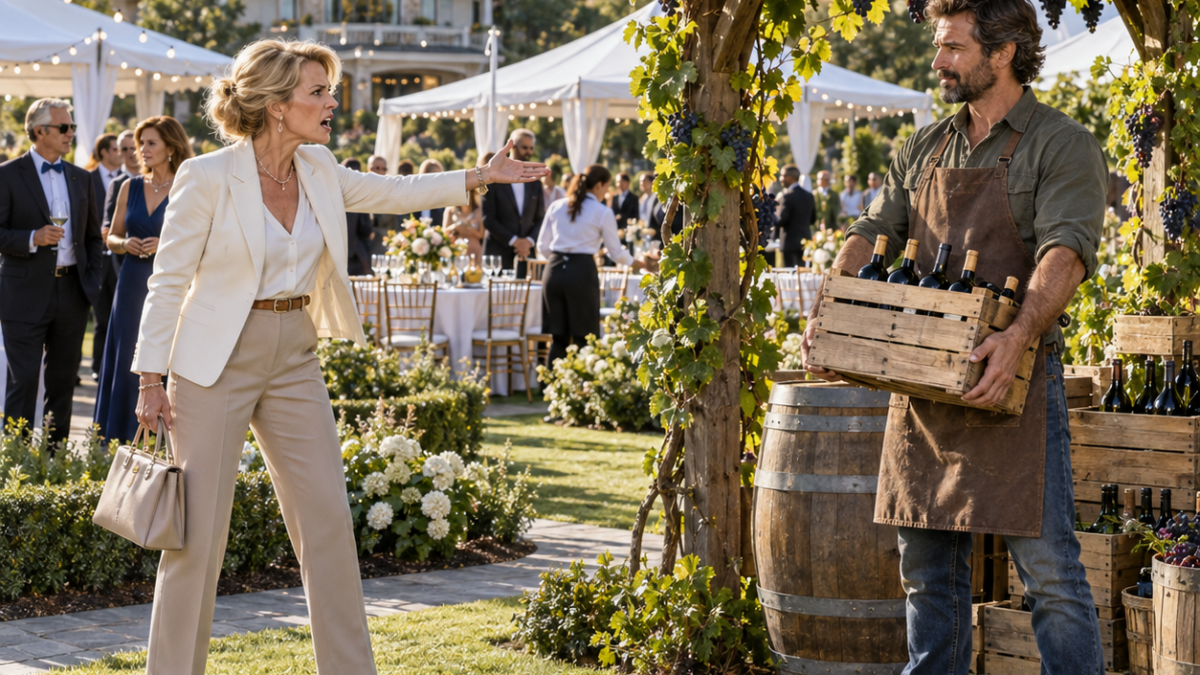
PART 2
Catherine Miller.
I stared at the name for several seconds.
Then I got up from the table and walked to the kitchen drawer where I kept the Sterling Creek neighborhood directory.
I hadn’t opened the thing in years.
Most of the numbers were outdated.
Some of the residents had moved.
A few had died.
But Karen’s entry was still there.
JOHNSON, KAREN AND ROBERT.
Under emergency contact:
CATHERINE MILLER — SISTER.
I sat back down.
The house was silent.
Too silent.
For three nights, I had been looking for an administrative weakness.
A grandfather clause.
A missed vote.
A procedural error.
Something that would save Elena’s arbor.
Now I was looking at something entirely different.
K Squared Solutions LLC had received twelve thousand dollars a year from the gala for three consecutive years.
Thirty-six thousand dollars.
The payments began almost exactly when Karen took over the gala committee.
There was no detailed scope of work in the financial package.
No itemized invoice.
No competitive bids.
Just:
EVENT MANAGEMENT AND CONSULTING — $12,000.
Same number.
Every year.
I opened the board minutes.
Year one.
Approval of gala vendor.
Karen made the motion.
Bob seconded it.
Cheryl voted yes.
No mention that the vendor belonged to Karen’s sister.
No disclosure.
No recusal.
Nothing.
I leaned back in Elena’s old dining chair.
“This can’t be this obvious,” I said aloud.
The empty room offered no answer.
That was when I called Mrs. Gable.
Not because she was my closest friend.
She wasn’t.
But before retirement, she’d worked as a bookkeeper for an accounting firm for nearly thirty years.
She answered on the third ring.
“Marcus?”
“Sorry to call late.”
“It’s eight-thirty.”
“For retired people, that’s midnight.”
She laughed.
“What happened?”
“I need you to look at something.”
Her tone changed.
“Bring it.”
Twenty minutes later, I was sitting at her kitchen table.
Mrs. Gable wore reading glasses on a chain around her neck and had the kind of calm face that made people underestimate how quickly she understood numbers.
I slid the gala statements across the table.
She read.
Then the K Squared registration.
Then the directory page.
Her expression never changed.
That worried me.
“Well?”
She took off her glasses.
“Have you accused anyone of anything?”
“No.”
“Good.”
“Why?”
“Because right now you have a conflict of interest.”
“That’s enough, isn’t it?”
“Enough for serious questions.”
“Fraud?”
She shook her head.
“Don’t outrun the evidence.”
I liked her immediately.
“You sound like Elena.”
“I’ll take that as a compliment.”
“It is.”
Mrs. Gable turned back to the papers.
“The problem isn’t simply that Karen’s sister got the contract.”
She tapped the meeting minutes.
“The problem is there appears to be no disclosure.”
Another tap.
“No competitive process.”
Another.
“And the fee is extraordinary relative to the size of the event.”
“How extraordinary?”
She pulled a calculator from a drawer.
“Two hundred tickets at one hundred fifty dollars.”
“Thirty thousand.”
“Correct.”
She keyed numbers.
“Twelve thousand is forty percent of gross ticket revenue.”
I had already calculated it.
Hearing her say it made it uglier.
She continued.
“Before food.”
“Before rentals.”
“Before decorations.”
“Before everything.”
She looked up.
“What exactly does this company do?”
“That’s what I want to know.”
“Then find out.”
“How?”
“Invoices.”
“I have the financial statements.”
“I didn’t say statements.”
She slid them back.
“I said invoices.”
That became the next objective.
But I didn’t go straight after the money.
Not yet.
First, I needed to know whether Karen’s behavior toward me was isolated.
It wasn’t.
Dave McAllister lived two streets over.
Former Marine.
Retired mechanic.
Owned a restored 1970 Chevy C10 that looked cleaner than most operating rooms.
When I pulled into his driveway, an orange violation sticker was still stuck to the driver’s window.
“What happened?”
He held up a socket wrench.
“Apparently I’m ruining civilization.”
“What did you do?”
“Changed an alternator.”
I waited.
He pointed toward the truck.
“Karen says an inoperative vehicle can’t stay visible for more than forty-eight hours.”
“Was it inoperative?”
“For one day.”
“Fine?”
“Two hundred.”
I showed him my arbor notice.
He read it.
Then looked toward my house, two streets away.
“The grape thing?”
“The grape thing.”
“That woman’s lost her mind.”
“She may have lost something else too.”
I showed him the gala payment.
His eyebrows rose.
“Her sister?”
“Yes.”
“Does anyone else know?”
“Mrs. Gable.”
Dave leaned against his truck.
“What are you going to do?”
“First?”
“Yes.”
“Nothing stupid.”
He laughed.
“That’s disappointing.”
“I need documentation.”
“Then what?”
“Then she can explain it.”
Dave’s expression changed.
“You think she’ll explain?”
“No.”
“Good.”
“Why is that good?”
“Because if Karen ever starts explaining anything, we’ll be here until Christmas.”
Over the next week, Dave quietly talked to neighbors.
He didn’t lead with corruption.
That would’ve turned into gossip.
He started with violations.
People talked.
A lot.
A young couple had been ordered to repaint their front door because their shade of blue didn’t appear on a palette last revised in the late nineties.
The Millers had been fined over a basketball hoop.
Mr. Chen had received notices because a rose bush extended beyond an approved garden border.
Another family was warned because their trash cans remained visible until six-thirty on pickup day instead of five.
Mrs. Gable showed me her own notice.
Bird feeder.
“Nuisance wildlife.”
The feeder had been built by her late husband.
She touched the paper with two fingers.
“I paid the first fine.”
“How much?”
“One hundred.”
“Why?”
“Because I was tired.”
That answer stayed with me.
Not scared.
Not guilty.
Tired.
That’s the business model of petty authority.
Make resistance more exhausting than obedience.
I began building files.
Not because I planned some grand revolution.
At least that’s what I told myself.
But logistics officers don’t collect twenty-two affidavits accidentally.
A month earlier, I had wanted to prune grapes.
Now my dining room contained folders labeled:
ARBOR.
BYLAWS.
FINANCIALS.
VIOLATIONS.
GALA.
K SQUARED.
Elena would have laughed at me.
Or worried.
Probably both.
One night I found an old photograph beneath the files.
She and I were standing under the arbor before the vines had fully covered it.
Elena wore gardening gloves and a straw hat too big for her head.
I was holding a bottle from our first successful batch.
The wine had been terrible.
Too sweet.
Cloudy.
We drank it anyway.
On the back, in Elena’s handwriting:
**Vintage One. Barely drinkable. Marriage survived.**
I sat there longer than I meant to.
Then I closed the folders.
For the first time since Karen’s notice arrived, I asked myself a question I had avoided.
Was I protecting Elena’s memory?
Or using Elena’s memory to justify a fight I wanted?
The distinction mattered.
I could hear what she would have said.
Marcus, save the arbor.
Don’t burn down the neighborhood doing it.
The next morning, I made an appointment with Sarah Evans.
Attorney.
Property and contract law.
Forty-something.
Direct.
No theatrical nonsense.
I brought the arbor approval, CC&Rs, financial records, meeting minutes, vendor registration, and five resident statements.
Sarah read everything.
When she finished, she looked at me over the top of her glasses.
“First thing.”
“What?”
“Stop calling this fraud.”
“I haven’t.”
“Good.”
She tapped the K Squared folder.
“Because right now you have an undisclosed related-party transaction that may violate your governing documents.”
“Not fraud?”
“Maybe.”
“But not proven.”
“Exactly.”
She pointed at me with her pen.
“Facts first.”
“You and Mrs. Gable would get along.”
“I already like her.”
“What about the arbor?”
She compared the old approval to Article Eleven.
“Much stronger.”
“How strong?”
“If these documents are complete, I would be very comfortable telling the board to withdraw the violation.”
“Can they reinterpret the standard?”
“Not around a clause this explicit.”
She read it aloud.
Any structure, improvement, or landscaping element previously approved in writing by the architectural committee or board would remain grandfathered against later aesthetic changes.
Sarah looked up.
“Your arbor has written approval.”
“Yes.”
“Signed.”
“Yes.”
“Stamped.”
“Yes.”
“Ten years of open existence.”
“Yes.”
“Property record lists it as an improvement.”
“Yes.”
She closed the file.
“Then Karen is picking the wrong hill.”
“I was hoping you’d say that.”
“I didn’t say she’ll behave rationally.”
“That part I already knew.”
Sarah drafted a formal response.
No threats.
No insults.
No mention of K Squared.
She wanted the arbor dispute cleanly separated from the financial questions.
Withdrawal of notice.
Cancellation of fines.
Written acknowledgment of grandfathered status.
Ten business days.
The letter went certified mail.
Karen did not respond.
Instead, six days later, I received an email from Brenda, the HOA secretary.
Subject:
**URGENT — 2023 GALA WINE ORDER**
I read it twice.
They wanted twenty cases.
Same as usual.
The message praised Rosewood Rosé.
Called it the “signature beverage of Sterling Creek.”
Mentioned promotional materials had already been printed.
The gala was six weeks away.
I almost laughed.
Then I remembered Elena.
Our wine had become part of the gala because Mr. Henderson believed something made locally could make the neighborhood feel less manufactured.
Elena would have liked that.
What she would not have liked was allowing people to threaten her arbor while expecting its fruit on demand.
I waited one day.
Then I replied.
Dear Brenda,
Thank you for the note and for your kind words about Rosewood Rosé.
Unfortunately, I will not be able to provide wine for this year’s gala.
As you may be aware, the HOA has formally declared the grape arbor supporting my vines to be a prohibited agricultural structure and has ordered its removal. Because the board has deemed the arbor and related activity noncompliant, I have suspended the portion of my winemaking activity associated with supplying HOA events until the dispute is resolved.
I cannot reasonably be expected to provide the association with a product produced by the very structure the association is ordering me to destroy.
I wish you luck arranging an alternative supplier.
Marcus Thorne.
I sent it.
Fifty-three minutes later, Brenda called.
“Marcus.”
“Morning.”
“What did you do?”
“I answered your email.”
“You can’t pull the wine.”
“I just did.”
“We’ve already sold tickets.”
“Then you should buy wine.”
“Do you know what commercial wine costs for two hundred people?”
“Yes.”
“You’ve put us in an impossible position.”
“No.”
I walked outside toward the arbor.
“You put yourselves in a purchasing position.”
“Karen is going to lose her mind.”
“That sounds like a board governance issue.”
“Please.”
Her voice softened.
“Marcus, people expect Rosewood.”
I ran my hand along one of the old posts Elena and I had set together.
“I know.”
“So give us the wine.”
“Withdraw the violation.”
Silence.
“I can’t do that.”
“Then I can’t supply your gala.”
“That’s blackmail.”
“No.”
I stayed calm.
“Blackmail would be me demanding something I’m not entitled to in exchange for silence or property. I’m telling you I won’t voluntarily supply wine to an organization threatening the vines producing it.”
Brenda went quiet.
Then:
“That actually sounds worse when you say it.”
“For the board?”
“Yes.”
“Probably.”
She hung up.
Karen called seven minutes later.
No greeting.
“How dare you.”
I held the phone away from my ear.
“Good morning.”
“You are holding a community event hostage.”
“You ordered my grape arbor removed.”
“The arbor and the wine are separate issues.”
“How?”
“They just are.”
“That isn’t an answer.”
“You’ve supplied wine for years.”
“Voluntarily.”
“We built our gala around your product.”
“Without a contract.”
“Because we trusted you.”
That almost made me laugh.
“You’re fining me fifty dollars a day.”
“For a violation.”
“You expect the violation to pour rosé.”
Her breathing changed.
“Listen to me carefully, Marcus.”
I waited.
“If you embarrass this board at the gala, you will regret it.”
There it was.
Not persuasion.
Not compromise.
Threat.
“What exactly does that mean?”
A pause.
Then she seemed to realize the problem.
“It means enforcement will continue.”
“Put that in writing.”
She hung up.
I emailed Sarah Evans immediately.
She replied with six words.
**Good. Do not call her back.**
Two days later, I heard a diesel engine outside my house.
Not a pickup.
Heavier.
I looked through the front window.
Flatbed.
Wood chipper.
Two workers.
Then Karen arrived in a black SUV.
No warning.
No court order.
No contractor notice.
Nothing.
She stepped onto my lawn with Bob, another board member, walking behind her.
The workers unloaded chainsaws.
For a moment, I simply stared.
I had spent twenty-five years coordinating equipment.
You learn what machinery means when it shows up.
That chipper wasn’t theater.
They intended to dismantle my arbor.
I grabbed my phone.
Then stopped.
Old Marcus wanted to storm outside.
Army voice.
Command presence.
Make everyone understand instantly.
Elena’s Marcus took a breath.
Documentation first.
I started recording.
Then walked out carrying coffee.
Karen met me at the side gate.
“Move.”
“No.”
“You had thirty days.”
“My attorney disputed your notice before the deadline.”
“The board rejected her interpretation.”
“When?”
“At our executive session.”
“Where is the written decision?”
“You’ll receive it.”
“Where is the court order?”
Her jaw tightened.
“We don’t need one.”
The two workers looked at each other.
I spoke to them.
“Gentlemen, this is private property. You do not have permission to enter.”
One put down his chainsaw.
Karen snapped:
“You work for us.”
The man said:
“Ma’am, you told us this was approved removal.”
“It is.”
I held up my phone.
“It is disputed, and you’re being recorded.”
Both men stepped backward.
Smart men.
Karen pointed toward the arbor.
“The covenants allow self-help remedies.”
Sarah Evans had anticipated that argument.
“Not where ownership of the structure is clear, the violation is disputed, and you’ve been formally notified that the structure is grandfathered.”
“You are not a lawyer.”
“No.”
I unlocked my phone.
“Which is why I’m calling someone with a badge instead.”
Karen’s face changed.
“Don’t be ridiculous.”
I dialed the sheriff’s non-emergency line.
Because no one was being attacked.
No immediate violence.
I explained.
Private-property dispute.
People with chainsaws refusing to leave.
Dispatcher sent a deputy.
While we waited, Dave appeared across the street.
Then Mrs. Gable.
Then the Millers.
Curtains moved up and down the block.
Sterling Creek had discovered free entertainment.
The deputy arrived twelve minutes later.
Calm.
Mustache.
Mid-forties.
He listened to Karen first.
She talked for almost five minutes.
CC&Rs.
Board authority.
Remedy provisions.
Noncompliance.
Her title.
The deputy finally said:
“Okay.”
Then looked at me.
“Your side?”
I handed him a folder.
Property survey.
Approval letter.
Violation notice.
Sarah’s response.
He read.
Karen interrupted.
“That old approval no longer controls.”
The deputy raised a hand.
“Ma’am.”
She stopped.
He read the signature.
Date.
HOA stamp.
Then looked toward the arbor.
“This structure?”
“Yes.”
“Same one?”
“Yes.”
“No additions?”
“None beyond routine vine supports.”
He turned to Karen.
“Do you have a court order?”
“No, because—”
“Then I’m not deciding your HOA dispute.”
She opened her mouth.
He continued.
“But the property owner has told you and these workers to leave.”
“The covenants—”
“Can be argued in court.”
His voice remained neutral.
“Right now, this is private land. You don’t have a warrant or court order allowing you to destroy anything.”
Karen pointed at me.
“He’s in violation.”
“Maybe.”
The word stunned her.
“Maybe?”
“I’m not an HOA judge.”
He gestured toward the street.
“You need to take this through civil process.”
The contractor foreman started loading the chainsaws before Karen answered.
She spun toward him.
“Stop.”
He shook his head.
“No, ma’am.”
“I hired you.”
“You hired me to remove an authorized structure.”
“It is authorized!”
The deputy looked at him.
“Sir, leaving is the correct choice.”
He nodded.
Ten minutes later, the truck was gone.
Karen remained.
She stood at the edge of my driveway with both hands clenched.
“You’ve made a terrible mistake.”
I looked at the arbor behind me.
“No.”
“I think this is the first smart thing I’ve done all month.”
She walked away.
The next morning, the entire neighborhood received an email.
**EMERGENCY HOA MEETING — GALA CRISIS AND RESIDENT HOSTILITY**
Resident hostility.
That would be me.
Karen’s message claimed that an unnamed homeowner had “weaponized a private compliance dispute” to threaten Sterling Creek’s signature fundraiser.
It warned the gala might require a special assessment.
It said legal expenses were increasing because of “uncooperative conduct.”
Dave forwarded it with one line:
**She really wants this meeting.**
Mrs. Gable replied:
**Then we should help her have it.**
Sarah Evans was less amused.
“Don’t turn this into amateur prosecution.”
“We won’t.”
“Don’t call K Squared a shell company.”
“We won’t.”
“Don’t call Karen a thief.”
“Not unless someone with charging authority does first.”
“Marcus.”
“I’m listening.”
“Present documents.”
“That’s the plan.”
“And let people reach conclusions.”
“Understood.”
The emergency meeting filled the community center.
Standing room only.
Karen wore red.
Not metaphorically.
Bright red blazer.
She sat at the head table between Bob and Cheryl.
Brenda sat slightly behind them with a laptop.
She wouldn’t look at me.
I took a chair in the back beside Dave and Mrs. Gable.
Karen began with the gala.
Tradition.
Community spirit.
Fundraising.
Then she talked about me.
Not by name.
At first.
“One resident has chosen to withdraw a promised contribution in retaliation for lawful covenant enforcement.”
Murmurs.
Some people looked at me.
A few looked angry.
Good.
I wanted them listening.
She continued.
“The board has been forced to obtain legal advice and secure replacement wine at significant cost.”
Then came the proposal.
Fifty-dollar special assessment.
Per household.
The room exploded.
There are few things more effective at awakening passive citizens than unexpected charges.
“What?”
“Why?”
“For wine?”
“Are you serious?”
Karen banged the gavel.
“Order.”
Mrs. Gable stood.
No microphone.
Didn’t need one.
“Before anyone votes on an assessment, the resident being blamed deserves to speak.”
Karen shook her head.
“Not on the agenda.”
Dave stood.
“Open meeting.”
“Sit down.”
“Bylaw Three-Four allows homeowner comment.”
Karen glared.
Cheryl opened a binder.
Read.
Then whispered to Karen.
Her face tightened.
“Five minutes.”
I walked to the podium carrying one folder.
No stack of binders.
No dramatic display.
First document.
Violation notice.
“This is why I withdrew the wine.”
I held it up.
“The board ordered me to remove the grape arbor that produces it.”
Voices rose.
I lifted the old approval.
“This is the written authorization for that arbor.”
Then Article Eleven.
“This is the grandfather clause.”
Karen interrupted.
“That’s your interpretation.”
Sarah Evans was sitting near the side wall.
She didn’t move.
I looked at Karen.
“Then why did you send contractors with chainsaws before a court resolved the dispute?”
Murmurs intensified.
Karen’s face hardened.
“That is a mischaracterization.”
Dave stood.
“I watched the wood chipper leave.”
Laughter.
Not friendly.
I continued.
“I’m not asking anyone to choose sides on my arbor tonight.”
That surprised them.
“I’m explaining why there is no Rosewood Rosé.”
I held up Karen’s notice.
“You cannot order me to destroy the source of a product and simultaneously demand twenty cases of the product.”
A man near the front said:
“That’s fair.”
Karen snapped:
“This meeting is about gala logistics.”
Mrs. Gable stood.
“Then let’s discuss gala finances.”
Silence.
Karen’s eyes moved toward her.
Mrs. Gable held up the budget.
“Thirty thousand dollars in approximate ticket revenue.”
Karen’s hand tightened around the gavel.
“Catering.”
A slide appeared on the projector.
Dave had connected my laptop earlier with permission from the community-center manager.
“Rentals.”
Next line.
“Decorations.”
Next.
“Event management and consulting.”
Twelve thousand dollars.
The room quieted.
People read.
Mrs. Gable spoke.
“Forty percent of gross ticket revenue.”
Karen leaned toward her microphone.
“This is proprietary vendor information.”
“No.”
Mrs. Gable’s voice was soft.
“It’s homeowner money.”
Someone clapped.
Then another.
She continued.
“K Squared Solutions LLC received this fee for each of the last three years.”
Karen said:
“They provide valuable professional services.”
“What services?”
“Event planning.”
“Itemized invoice?”
“They’re a flat-fee consultant.”
“Competitive bids?”
Karen looked at Cheryl.
Then Bob.
Neither answered.
Mrs. Gable nodded toward me.
I changed the slide.
State business registration.
K SQUARED SOLUTIONS LLC.
Registered agent:
Catherine Miller.
Karen went completely still.
I did not say anything for several seconds.
People read.
Nobody understood yet.
Then I held up the old directory.
“Catherine Miller is listed in Sterling Creek records as Karen Johnson’s sister.”
The first gasp came from somewhere near the front.
Then:
“What?”
“Her sister?”
“Is that true?”
Karen grabbed the microphone.
“Yes, Catherine is my sister.”
Noise stopped.
“At least she’s admitting it,” someone said.
Karen continued.
“There is nothing illegal about hiring a qualified relative.”
Mrs. Gable answered.
“Not necessarily.”
Karen looked toward her.
“But our bylaws require disclosure and competitive review for contracts above five thousand dollars.”
She lifted meeting minutes.
“I can find neither.”
Bob suddenly leaned toward Karen.
“You said management approved it.”
Every head turned.
Karen stared at him.
“Bob.”
“You told us.”
“Not now.”
He sat back.
That tiny exchange did more damage than anything I’d presented.
Karen tried to recover.
“K Squared saved this association enormous administrative burden.”
“Show us the work.”
Mrs. Gable’s voice stayed calm.
“Deliverables.”
Karen said nothing.
“Planning documents.”
Nothing.
“Vendor reports.”
Nothing.
Mrs. Gable looked around the room.
“I’m not accusing anyone of a crime.”
Good.
Exactly what Sarah had instructed.
“I am saying homeowners deserve an independent review before paying another special assessment.”
Applause.
Karen struck the gavel.
“This is a coordinated attack.”
Dave stood.
“My truck got fined two hundred dollars while your sister got twelve grand.”
Laughter and shouting.
Mrs. Gable lifted her hands.
“Please.”
They listened to her.
Not Karen.
That was the real transfer of power.
Mrs. Gable said:
“Marcus has evidence about his arbor.”
She pointed at Dave.
“Dave has his violation.”
Then herself.
“I have mine.”
She looked around.
“If anyone else has received questionable enforcement, stand.”
At first, three people.
Then seven.
Then fifteen.
Then more than twenty.
Karen stared.
The Miller family talked about the basketball hoop.
The young couple discussed the blue door.
Mr. Chen brought the rose bush notice.
A woman near the aisle had been fined because children’s bicycles remained visible after sunset.
An older man said Karen threatened him over a flagpole installed twenty years earlier.
The room changed.
My issue stopped being special.
It became one piece in a pattern.
Karen tried to interrupt.
“No board can function if every resident believes rules are optional.”
That was the strongest thing she said all night.
And for a moment, it worked.
Because she wasn’t entirely wrong.
Communities need rules.
Shared property needs budgets.
Noise disputes need mechanisms.
Pools need maintenance.
Roads need repairs.
Mrs. Gable understood that.
“So let’s have rules,” she said.
“Rules applied consistently.”
Applause.
“Rules adopted transparently.”
More.
“Rules that the board itself follows.”
The room erupted.
Karen’s face fell.
Then Sarah Evans stood.
She introduced herself.
Not as prosecutor.
Not as neighborhood savior.
As my attorney.
“I want to be very precise.”
The room settled.
“No one here should conclude from tonight’s presentation that a crime has been proven.”
Karen looked almost relieved.
Sarah continued.
“However, the combination of an undisclosed related-party transaction, missing competitive bids, unexplained vendor fees, and documented concerns about enforcement warrants an independent financial review.”
Karen’s relief vanished.
Sarah lifted a folder.
“This afternoon, several homeowners authorized my office to transmit a formal request for records preservation and review to the appropriate state office.”
People murmured.
“We have not accused anyone of embezzlement.”
She looked directly at Karen.
“We have asked professionals with authority and access to determine what happened.”
That sentence changed the atmosphere from angry neighborhood meeting to something far more serious.
Karen knew it too.
She looked toward the side door.
Then Bob spoke.
“I want it on record that I was never told K Squared belonged to Karen’s sister.”
Karen whipped around.
“That’s a lie.”
Bob flinched.
Then Cheryl said:
“I wasn’t told either.”
Karen stared at both.
“You voted for it.”
“We voted based on what you represented.”
“We all approved the budget.”
“Without disclosure.”
The alliance broke in public.
Karen stood.
“You’re cowards.”
Bob pushed his chair backward.
“No.”
He looked exhausted.
“We trusted you.”
That was worse.
A woman in the audience stood.
“Motion for no confidence.”
Someone seconded.
Karen slammed the gavel.
“Out of order.”
Mrs. Gable had the bylaws open already.
“Article Three, Section Seven.”
Karen pointed.
“This is an emergency meeting about the gala.”
“And we have a quorum.”
Dave began counting.
More than half the association was present either in person or by validated proxy.
The motion was procedurally available.
Sarah whispered to me:
“Stay out of it.”
I nodded.
This wasn’t my vote to manufacture.
If homeowners wanted Karen removed, it had to be theirs.
Mrs. Gable read the motion.
Removal of Karen Johnson from the presidency and board pending financial review.
Second motion:
Removal of the remaining directors who had approved undisclosed related-party contracts, subject to immediate election of an interim board.
Bob looked stunned.
Cheryl began crying.
I felt a flicker of sympathy for her.
Not Karen.
But Cheryl.
She had been weak.
Maybe negligent.
That wasn’t identical to being corrupt.
Before the vote, she stood.
“I resign.”
Silence.
“I should have asked more questions.”
She wiped her face.
“I didn’t.”
Then she walked away from the table and sat in the audience.
Bob followed thirty seconds later.
Karen remained alone behind the long beige table.
The gavel in front of her.
Red blazer.
Binder.
No allies.
She looked toward me.
“You did this.”
I stayed seated.
Mrs. Gable answered for me.
“No.”
Karen looked at her.
“You did.”
The vote was overwhelming.
Not unanimous.
About a dozen residents voted against removal or abstained.
I was glad.
Unanimous votes make good movies.
Real communities contain disagreement.
But Karen lost by a margin too large to challenge.
When the count was announced, she didn’t scream immediately.
She sat very still.
Then she looked at the people who had spent years avoiding eye contact with her.
Finally:
“You’re going to destroy this neighborhood.”
Arthurian declarations sound less convincing when your microphone has just been switched off by the building manager.
Karen grabbed her binder.
A reporter from Channel 8, whom Sarah had tipped about a public meeting involving potential HOA self-dealing, approached from the back.
“Ms. Johnson, can you comment on the related-party contract?”
Karen froze.
That was the first moment she noticed the camera.
“Get that away from me.”
“Did you disclose that K Squared was owned by your sister?”
“No comment.”
“Why was the company paid thirty-six thousand dollars without competitive bids?”
“No comment.”
She pushed through the door.
It slammed behind her.
The room didn’t cheer immediately.
Mrs. Gable stood at the front.
“Everyone sit down.”
Remarkably, they did.
“We still have an HOA.”
People groaned.
She waited.
“And unless one of you wants the pool to become a swamp, we need an interim board.”
That got a laugh.
Dave was elected.
Mrs. Gable became treasurer.
A retired accountant named Paul Myers agreed to serve as temporary president.
I was nominated.
I declined.
“Why?” Dave asked.
“I grow grapes.”
“You started all this.”
“Exactly why you shouldn’t let me run anything.”
People laughed.
I meant it.
That night, after everyone left, I walked home alone.
No victory music.
No fist in the air.
Just crickets.
When I reached my backyard, the arbor was dark.
I turned on the string lights Elena had installed years earlier.
Warm bulbs came alive beneath the vines.
I sat at the table.
For the first time in weeks, I didn’t open a folder.
Didn’t check email.
Didn’t calculate anything.
I poured the last glass from a bottle of Rosewood Rosé I’d opened two nights earlier.
Then I raised it toward Elena’s empty chair.
“You would’ve hated tonight.”
Wind moved the leaves.
I smiled.
“You would’ve also enjoyed it.”
I took a sip.
The wine was cooler than the air.
Dry.
Strawberry at the front.
A little mineral note from the soil.
Best vintage I’d made.
And for some reason, that made me cry.
Not because we’d beaten Karen.
Because Elena never tasted this batch.
Victory has a strange way of exposing the person you wish could see it.
I sat beneath her arbor until midnight.
The next morning began the part nobody enjoys.
Cleanup.
The interim board froze all extraordinary spending.
Sarah Evans arranged for independent counsel.
Mrs. Gable insisted on an outside forensic accountant.
All vendor relationships were reviewed.
Records were preserved.
K Squared’s contract was suspended.
The gala was postponed.
Not canceled.
Postponed.
That distinction mattered to people far more than I expected.
Sterling Creek apparently cared deeply about catered shrimp.
The audit took six weeks.
Rumors took six minutes.
I spent most of that period telling people the same thing.
“Wait for the report.”
Someone would say:
“They stole a hundred thousand.”
“Wait.”
“K Squared doesn’t exist.”
“It exists.”
“Karen bought a boat.”
“No evidence.”
“Her sister fled the state.”
“She lives forty minutes away.”
“Marcus, you’re ruining the fun.”
“Good.”
The actual report was bad enough without fiction.
K Squared had been paid thirty-six thousand dollars over three years.
Some legitimate event-planning work had been performed.
That mattered.
Catherine had booked caterers.
Coordinated rentals.
Handled printed invitations.
She hadn’t done nothing.
But the audit found the fees grossly above comparable proposals, with no bidding and no disclosure of the family relationship.
Then other contracts emerged.
Landscaping.
Printing.
Pool service.
Several went to businesses connected socially or financially to Karen and Catherine.
Some were merely poor governance.
Some contained unsupported charges.
Certain reimbursements couldn’t be reconciled with receipts.
The total amount flagged for potential recovery climbed into six figures.
The final report used careful language.
Questionable.
Unsupported.
Undisclosed.
Potentially improper.
Requiring further investigation.
It went to the state attorney general’s office and local law enforcement.
That process moved slowly.
As it should.
Neighbors wanted instant handcuffs.
Real investigations require bank records.
Interviews.
Subpoenas.
Intent.
Proof.
Karen and Catherine hired lawyers.
Karen’s house went up for sale before charges were filed.
She and her husband moved within a month.
Some residents called that running.
Maybe it was.
Maybe her husband simply wanted out of a neighborhood where everybody knew his wife’s financial records.
I didn’t ask.
I had more important work.
The new board withdrew my arbor violation.
Not merely canceled the fine.
They issued a formal written determination.
The arbor was grandfathered.
Permanent.
Protected under Article Eleven.
When Paul handed me the letter, I read it twice.
Then folded it.
“That’s it?”
He smiled.
“That’s it.”
“No hearing?”
“No.”
“No appeal?”
“No.”
“No chainsaw?”
“Marcus.”
“I’m adjusting.”
He laughed.
The cancellation should have been enough.
But Mrs. Gable insisted on one more thing.
Refunds.
The board reviewed the previous eighteen months of fines.
Some stood.
A resident genuinely blocking a fire lane still owed money.
Someone running an unapproved commercial auto-repair operation from a garage still had to stop.
Noise violations based on repeated late-night parties remained.
Fair rules were not the enemy.
Arbitrary rules were.
But dozens of Karen-era penalties were reversed.
Mrs. Gable received her bird-feeder money back.
She stood in my kitchen holding the check.
“One hundred dollars.”
“Going to frame it?”
“No.”
“What will you buy?”
She smiled.
“Birdseed.”
Dave’s two hundred came back too.
He used it to buy chrome parts for the C10.
“Responsible financial decision.”
“Absolutely.”
The blue door stayed blue.
The basketball hoop stayed.
Mr. Chen’s rose bush continued committing whatever botanical crimes it had always committed.
Then there was the gala.
At the first new-board meeting, Paul raised it carefully.
“We already sold one hundred forty-three tickets.”
“At one hundred fifty dollars?”
“Yes.”
“Refund them.”
“We are.”
“What then?”
Mrs. Gable smiled.
“We want to start over.”
“How?”
“No luxury event.”
Dave leaned forward.
“Barbecue.”
Mrs. Gable added:
“Twenty dollars.”
“Per ticket?”
“Enough to cover food.”
“Dessert potluck.”
“Kids included.”
“No dress code.”
“No consultant.”
I looked at Dave.
“You’ve been thinking about this.”
“All week.”
Then everyone looked at me.
I knew what was coming.
“No.”
Dave grinned.
“I haven’t asked yet.”
“You’re going to.”
Mrs. Gable said:
“Twenty cases.”
“No.”
“Fifteen.”
“No.”
“Twelve.”
“You negotiate like a hostage taker.”
She folded her hands.
“Marcus, we’d like Rosewood back.”
I looked through the window toward the arbor.
The vines were heavy with clusters now.
Harvest approaching.
For weeks, I had refused to supply the gala because the board couldn’t demand fruit from a structure it wanted destroyed.
That board was gone.
This one had protected the arbor.
Refunded homeowners.
Opened the books.
Turned the gala from a status event into a neighborhood gathering.
Elena had wanted people under those vines.
People around the table.
Wine shared.
Not guarded.
“You’re not paying me.”
Dave blinked.
“What?”
“The wine is my contribution.”
Mrs. Gable shook her head.
“No.”
“Yes.”
“Marcus—”
“I mean it.”
“We can pay.”
“I know.”
“Then let us.”
“No.”
She studied me.
“Why?”
I looked at Elena’s original sketch hanging in a frame near the dining room.
“Because this time I actually want to give it.”
That ended the argument.
Harvest began three weeks later.
Dave helped.
Badly.
He cut the wrong cluster twice.
I threatened to revoke his clippers.
Mrs. Gable supervised from a lawn chair.
She claimed accounting prevented manual labor.
The Millers brought their children.
Mr. Chen brought plastic crates.
Even Cheryl came.
That surprised me.
She stood near the gate holding a pie.
“I didn’t know if I should.”
“Come in.”
Her eyes moved toward the arbor.
“I voted for your violation.”
“I know.”
“I believed Karen when she said Mr. Henderson’s approvals were invalid.”
“I know.”
“I should have read the rules.”
“Yes.”
She flinched.
I didn’t soften it.
Accountability without honesty is just politeness.
Then I said:
“But you resigned when you understood.”
She nodded.
“Too late.”
“Late isn’t the same as never.”
She looked at me.
“Are we okay?”
“No.”
Her eyes dropped.
“Not yet.”
Then I took the pie.
“But you can help us get there.”
She cried.
Quietly.
I pretended not to notice.
People deserve the dignity of recovering without an audience.
We harvested until sunset.
Buckets of grapes.
Hands sticky with juice.
Children running between rows.
Dave complaining that grape work violated Marine labor standards.
For the first time since Elena died, the arbor felt crowded in the way she’d intended.
I stood beneath it watching everyone.
And suddenly remembered her exact words.
We’ll make our own wine and grow old drinking it right here.
I hadn’t gotten the second half.
Not with her.
But standing there, I understood the dream had been larger than two people.
It was a place where life happened.
That was why Karen’s threat hurt so much.
She hadn’t threatened lumber.
She threatened continuity.
The ferment took weeks.
Pressing.
Racking.
Waiting.
Winemaking punishes impatience.
Maybe that’s why I loved it.
You cannot bully grapes into becoming wine faster.
Karen would have hated that.
The new gala happened on a warm Saturday in September.
Nobody called it a gala anymore.
The banner said:
**STERLING CREEK COMMUNITY NIGHT**
Twenty dollars.
Children free.
Long picnic tables.
Barbecue.
Potluck desserts.
String lights.
Local high-school jazz quartet.
Dave parked his C10 near the entrance because he claimed it was now “culturally protected.”
Mrs. Gable brought three bird-shaped cookies and dared anyone to fine her.
Rosewood Rosé sat in tubs of ice.
No velvet rope.
No printed tasting notes.
No consultant.
People poured reasonable amounts and then ignored my advice about reasonable amounts.
At seven, Paul tapped a glass.
“I promise no speeches.”
Applause.
“This isn’t a speech.”
More laughter.
He held up a refund summary.
“The old ticket money has been returned.”
Cheers.
“The current event has covered its own costs.”
More.
“And because several residents donated food, music, and beverages, we expect a small surplus that will go toward the playground.”
He looked at me.
“Especially thanks to Marcus.”
I shook my head.
He continued anyway.
“And the grape arbor that apparently nearly ended civilization.”
The crowd laughed.
I raised my glass.
That was enough.
No speech.
Later, Mrs. Gable found me standing near the edge of the lawn.
She clinked her glass against mine.
“Better.”
“Much.”
She tasted the wine.
“This is good.”
“You sound surprised.”
“I’ve always preferred bourbon.”
“Why are we friends?”
“Shared enemies.”
“Former enemies.”
She smiled.
“Even better.”
We watched kids chase each other beneath string lights.
Dave was explaining something about carburetors to a man desperately trying to escape.
Cheryl sat with the Millers.
Paul carried trash bags.
No one was directing him.
Mrs. Gable said:
“You should have been president.”
“No.”
“You’d have been good.”
“That’s exactly why people who enjoy strategy should be kept away from ceremonial gavels.”
She laughed.
Then she looked toward my backyard, visible through trees.
“Do you ever think about taking the arbor down now?”
I turned.
“What?”
“Not because of the HOA.”
She smiled.
“It’s old.”
I stared at her.
“Leave my property.”
She laughed hard enough to spill wine.
The criminal investigation continued through winter.
I was interviewed once.
Sarah Evans attended.
I provided records.
Nothing more.
The K Squared arrangement was only one piece.
Investigators traced payments.
Reviewed reimbursement claims.
Interviewed board members.
Catherine cooperated partially.
Karen did not.
Eventually charges were filed involving misuse of association funds and fraudulent transactions.
The headlines were ugly.
I didn’t celebrate them.
That surprised Dave.
“You’re telling me you don’t enjoy this at all?”
We were standing in my garage bottling the next vintage.
“Enjoy what?”
“She tried to mulch your dead wife’s arbor.”
I stopped.
“Don’t phrase it like that.”
“You know what I mean.”
“Yes.”
“And now she gets consequences.”
“Good.”
“But no satisfaction?”
I pushed a cork into a bottle.
“Some.”
“Thank you.”
“But prison isn’t wine.”
“What does that mean?”
“I don’t know.”
“Very philosophical.”
“I mean I enjoy what we built more than what she lost.”
Dave considered it.
“So you’re becoming emotionally healthy.”
“Don’t spread that around.”
Karen eventually entered a plea agreement.
Catherine did too.
Restitution became part of the court process.
Not every dollar came back immediately.
Some never did.
Insurance covered certain losses.
Reserve funds covered others.
The association tightened spending for two years.
That meant postponing a decorative fountain Karen had once planned.
Nobody mourned it.
Term limits passed.
Related-party transactions required full written disclosure and independent review.
Contracts above a threshold required competitive bids.
Budgets went online.
Minutes were published.
Violation appeals could no longer be heard solely by the same people issuing the violation.
Those reforms mattered more than any sentencing headline.
Power rarely disappears.
It gets redistributed.
Good governance means making abuse harder for the next person, not merely punishing the last one.
That idea came from Mrs. Gable.
She became board president the following year after Paul stepped down.
At seventy-four.
Her first official statement:
“I do not want this job.”
That convinced everyone she was qualified.
She served two years.
Never more.
When residents asked her to run again, she pointed to the new term-limit provision.
“We wrote this for a reason.”
“But you’re good.”
“That’s how it starts.”
People laughed.
She didn’t.
Dave joined the facilities committee.
Within six months, every broken pool chair had been repaired to military specifications.
He claimed none of this made him HOA people.
I called him Commissioner.
He hated that.
Cheryl eventually returned to a committee too.
Quietly.
No leadership position.
She rebuilt trust by doing boring work.
Mailings.
Minutes.
Pool passes.
The kind of tasks Karen had always delegated while she made speeches.
One evening, about a year after the whole thing began, Cheryl came by my house.
She carried a box.
“What is it?”
“Records.”
My stomach tightened.
“I thought we were done with records.”
“These aren’t legal.”
Inside were old gala photographs.
Years of them.
Elena appeared in three.
I froze.
I’d forgotten she attended the first gala after we started the arbor.
There she was.
Hair longer.
Alive.
Holding a plastic cup.
Laughing at something off camera.
Another photograph showed the two of us standing together.
The arbor wasn’t visible.
But the bottle in my hand had one of our handwritten early labels.
ROSEWOOD — EXPERIMENT #4.
Elena had crossed out EXPERIMENT and written:
**MIRACLE.**
I sat down.
Cheryl said:
“I found these cleaning the clubhouse office.”
“Thank you.”
“I almost threw the box away.”
“Thank you for not.”
She stood awkwardly.
“I’ll let you—”
“Stay.”
I pulled out another chair.
We went through the photographs together.
Old neighbors.
People who moved.
Children now grown.
Mr. Henderson, the former president.
And Elena.
For years, I had thought of the arbor as the physical thing connecting me to her.
Those photographs reminded me memory isn’t stored in one place.
Not in wood.
Not vines.
Not wine.
People carry pieces.
Communities do too.
The thought made Karen’s threat feel both more painful and less powerful.
Yes, she could have destroyed the arbor.
That would have hurt.
Deeply.
But she could not have destroyed Elena.
I wish I’d understood that sooner.
I might have slept more.
The arbor needed repairs the following spring.
Real repairs.
One of the main crossbeams had begun rotting.
I discovered it during pruning.
For ten minutes I stared at the soft wood.
Then laughed.
After all that, nature was going to do what Karen couldn’t.
I called Dave.
He came over.
Poked the beam.
“Bad.”
“I know.”
“Replacement.”
“I know.”
“Probably two.”
“I know.”
“You going to cry?”
“Leave.”
We spent two weekends replacing structural members without changing the original design.
I kept a section of the old beam.
Sarah Evans would probably have told me that was legally unnecessary.
I didn’t care.
Elena and I had bolted that one in place together.
I cut a twelve-inch piece.
Sanded it.
Put it on a shelf in the garage beside our first corkscrew.
Sentimental?
Absolutely.
By then I had stopped denying it.
The new vine growth covered the replacement wood within a season.
That’s what vines do.
They wrap themselves around whatever is strong enough to hold them.
There was something comforting about that.
Five years passed.
Rosewood Rosé improved.
Then became slightly worse one year because I got arrogant about harvest timing.
Mrs. Gable told me honesty required admitting it.
I banned her from tastings for twelve minutes.
Sterling Creek’s community night became annual.
Tickets remained inexpensive.
Some years I donated wine.
Some years I charged enough to cover materials.
Nobody assumed.
Nobody demanded.
That distinction meant everything.
One year, drought reduced the crop.
I supplied eight cases instead of twenty.
The board bought the rest elsewhere.
No drama.
No emergency meeting.
No special assessment.
Imagine that.
Another year, I decided not to make rosé at all.
I tried a red blend.
Dave called it “aggressively mediocre.”
He was correct.
Life became ordinary.
Wonderful, messy ordinary.
Then one October afternoon, I received a letter.
No HOA logo.
Handwritten address.
Return name:
Karen Johnson.
I stood at the mailbox longer than necessary.
Part of me wanted to throw it away.
Instead, I carried it to the arbor.
Sat where Elena used to sit.
Opened it.
Marcus,
You probably do not want to hear from me.
I would understand that.
I have spent a lot of time thinking about Sterling Creek.
I told myself I was improving the neighborhood.
I told myself rules created value and that people who resisted me were selfish.
I also told myself that paying Catherine was justified because she did work and because outside planners would have cost more.
Those explanations became easier every time I repeated them.
Eventually I stopped asking whether they were true.
What I did to you was wrong.
I knew the arbor had been approved before I sent the removal crew.
I believed if I backed down publicly, I would lose authority.
Instead, refusing to back down is what made me lose it.
I am sorry for what I did to your home and for using something connected to your wife as leverage.
I do not expect forgiveness.
Karen.
I read the sentence about Elena three times.
I felt anger first.
Sharp.
Fresh.
Then something else.
Relief.
Not because she apologized.
Because she finally understood what she had touched.
I didn’t answer that day.
Or the next.
A week later, I wrote:
Karen,
I received your letter.
The arbor is still standing.
The neighborhood is doing well.
I hope you use what happened to build something better wherever you are.
Marcus.
I almost added:
I forgive you.
I didn’t.
Forgiveness wasn’t a sentence I needed to manufacture.
Maybe I had.
Maybe not completely.
Healing doesn’t require perfect vocabulary.
I mailed the letter.
That was the last time Karen entered my life.
Mrs. Gable died seven years after the gala fight.
Stroke.
Sudden.
Her funeral overflowed into the church hallway.
Sterling Creek residents filled three rows.
Dave and I sat together.
Her daughter spoke about how much the HOA work had meant to her mother after retirement.
I whispered:
“She would’ve hated that being in the eulogy.”
Dave whispered back:
“She would’ve corrected the budget figures.”
We both laughed quietly.
At the reception, Mrs. Gable’s daughter found me.
“Mom left you something.”
“Please don’t say accounting records.”
She laughed.
A small envelope.
Inside was the original one-hundred-dollar bird-feeder refund check.
Uncashed.
I stared.
“She never deposited it?”
“No.”
“She said she got more value framing it.”
I turned the check over.
Mrs. Gable had written:
**THE MOST PROFITABLE $100 I EVER LOST.**
I still have it.
Framed.
In the wine room.
Dave grew older too.
So did I.
One day his perfect Chevy C10 finally refused to start in his driveway.
He called me.
“You need to come witness history.”
I walked over.
He stood beside the truck.
Hood open.
Violation-orange sticker taped inside the windshield.
The original one Karen had placed years earlier.
He’d saved it.
“You sentimental fool.”
“Historical artifact.”
“That’s my line.”
He handed me a wrench.
We fixed the fuel pump.
Slowly.
Our knees complained.
Our hands weren’t as strong as before.
But the truck started.
Dave revved it.
“Still noncompliant.”
“Absolutely.”
By then, nobody at Sterling Creek remembered the exact wording of Karen’s rules.
New families moved in.
Old families left.
Children who once bounced basketballs became adults with children.
The arbor became one of those neighborhood landmarks people used for directions.
“Marcus’s grape place.”
“The wine house.”
“The arbor corner.”
One afternoon, a young couple new to Sterling Creek came by during pruning.
The woman pointed at the arbor.
“Is this the one?”
“The one what?”
“Our realtor told us there was some HOA war over grapes.”
I sighed.
“Realtors need hobbies.”
Her husband laughed.
“Did the HOA really try to tear it down?”
“Yes.”
“Because it was ugly?”
“Essentially.”
He looked up through the leaves.
“This?”
“Yes.”
“That’s insane.”
“It seemed less obvious to certain people at the time.”
The woman smiled.
“Our closing packet says existing approved structures are permanently protected.”
I nodded.
“Good clause.”
“You had something to do with that?”
“Indirectly.”
They left carrying a bottle of Rosewood.
I didn’t charge them.
Later, I sat under the arbor.
That conversation stayed with me.
They had no idea who Karen was.
No idea what K Squared meant.
No idea why their closing packet contained such explicit conflict-of-interest disclosure requirements.
They only knew the protections.
That was enough.
Maybe the best reforms become boring over time.
People don’t need to remember the fire if the fire code remains.
The arbor outlived the conflict.
It also outlived more important things.
Eventually, I stopped making twenty cases.
Then ten.
My hands developed arthritis.
Pruning took longer.
Harvest required help.
One year, I seriously considered removing half the vines.
Not the structure.
Just simplifying.
The thought no longer felt like betrayal.
That surprised me.
Elena had wanted me to grow old there.
Growing old meant change.
One evening I brought her old sketch outside.
The paper was fragile.
The pencil faded.
I spread it on the table.
Her arches.
Her notes.
A little drawing of a wine bottle.
And near the bottom:
**ROOM FOR FRIENDS.**
I’d forgotten those words.
I looked around.
The table beneath the arbor had been replaced twice.
The chairs didn’t match.
Mrs. Gable had sat there.
Dave.
Cheryl.
Paul.
Neighbors.
Children.
Lawyers.
Even a sheriff’s deputy once stopped by off duty after hearing the story and accepted lemonade because he was working.
Room for friends.
That had been the design all along.
The vines were never the whole point.
That autumn, Sterling Creek held community night beside the clubhouse.
I brought only six cases.
A younger couple from the neighborhood had started making hard cider and supplied the rest.
Ten years earlier, old Marcus might have viewed that as competition.
Old men become wise mostly because they get too tired for pointless jealousy.
Their cider was excellent.
I told them.
They looked relieved.
At sunset, Dave handed me a plastic cup of Rosewood.
“You’re drinking your own supply.”
“I’ve earned it.”
“Remember the hundred-fifty-dollar tickets?”
“Unfortunately.”
“Remember Karen calling you déclassé?”
“Unfortunately.”
He lifted his cup.
“To agricultural eyesores.”
I touched mine to his.
“To overgrown hobbies.”
Music played.
Children ran through the grass.
No reporter.
No gavel.
No special assessment.
Nobody knew they were standing inside the happy ending.
That’s usually how happy endings work.
They look ordinary from the inside.
The following spring, I had a small brass plaque made.
Not for me.
Not for the HOA.
For Elena.
I screwed it to the inside of one arbor post where most people wouldn’t notice it.
It read:
**ELENA THORNE
SHE DREW THE ARCHES.
THE REST OF US JUST LEARNED TO SIT BENEATH THEM.**
I didn’t announce it.
Didn’t invite anyone.
Didn’t post it.
One afternoon Dave noticed.
He read it.
Said nothing.
Then squeezed my shoulder and walked away.
That was enough.
The last bottle from the vintage that started the Karen fight remained in my cellar for years.
I couldn’t bring myself to open it.
Rosewood Rosé wasn’t designed for aging that long.
I knew that.
Keeping it was irrational.
So was grief.
On what would have been Elena’s seventieth birthday, I finally carried the bottle outside.
The cork came out clean.
Good sign.
The wine had darkened.
Less bright pink.
More copper.
I poured one glass.
Smelled it.
Still alive.
Different.
But alive.
I sat beneath the vines.
Evening light moved across the flagstone.
I remembered Elena with dirt on her knees, arguing that the left arch needed to be wider.
I remembered our terrible first wine.
Her diagnosis.
Hospital rooms.
The first gala.
Karen’s finger pointing at the arbor.
The chipper.
Mrs. Gable’s spreadsheet.
Dave’s truck.
The emergency meeting.
All of it felt impossibly far away.
I tasted the wine.
Older.
Softer.
Not as crisp.
Some flavors gone.
Others deeper.
I laughed.
“Of course.”
Age had changed it.
Not ruined it.
The arbor creaked slightly in the breeze.
New wood beside old wood.
Young vines wrapped around trunks planted with Elena.
Nothing remained exactly as it began.
That didn’t make it less ours.
I poured a little more.
Then I raised the glass toward her plaque.
“You were right.”
Leaves moved overhead.
No answer.
I smiled.
“We got old under it.”
Not the way we’d planned.
But I had.
And I hadn’t done it alone.
For years, I thought the most satisfying part of the story was Karen needing wine from the arbor she wanted destroyed.
It was poetic.
Almost too perfect.
The $150 gala depending on the “agricultural eyesore.”
Her own notice becoming the reason I withdrew the wine.
Her emergency meeting becoming the stage where the related-party payments were exposed.
Her attempt to control one homeowner opening financial records that eventually exposed her entire administration.
That was satisfying.
But it wasn’t the ending.
The ending was Mrs. Gable buying birdseed with freedom instead of fear.
Dave leaving his truck in his own driveway.
Cheryl learning that admitting failure didn’t end her life.
A new couple reading better bylaws without knowing why they existed.
Twenty-dollar community nights.
Children eating barbecue beneath cheap string lights.
Six cases instead of twenty because nobody was entitled to my work.
A younger neighbor’s cider sharing the table beside my rosé.
And one old man sitting under vines his wife planted, drinking wine that had changed with age.
Karen wanted the grape arbor gone because it didn’t fit her picture of Sterling Creek.
She saw weathered beams.
Gnarled vines.
Agriculture.
Imperfection.
What she couldn’t see was what Elena had built into it.
Patience.
Memory.
Hospitality.
Room for friends.
Those things turned out to be much harder to remove than wood.
Eventually, every Karen-era document went into storage.
The violation notice.
Attorney letters.
Budget printouts.
K Squared registration.
Audit.
Board minutes.
I kept Elena’s original arbor approval.
Not because I expected another fight.
Because her signature was beside mine on the application.
One rainy afternoon, I opened that old folder.
Her handwriting jumped out at me.
At the bottom of the architectural sketch, beneath dimensions and measurements, she’d added a note to Mr. Henderson:
**We promise it will be beautiful when the vines grow in.**
I sat there smiling.
She had been right.
Not because the arbor looked perfect.
Some posts leaned slightly now.
Birds nested near one corner.
Leaves dropped onto the patio faster than I could sweep them.
A vine had escaped its wire and wrapped itself around a string-light cable.
It was beautiful because life had happened there.
Love.
Loss.
Anger.
Friendship.
Wine.
Arguments.
Reconciliation.
Years.
I closed the folder.
Walked outside.
The late sun filtered through the leaves exactly the way it had on the afternoon Karen first arrived with her binder.
The same flagstones.
Same arches.
Different man.
I poured myself half a glass of Rosewood.
Then sat beneath Elena’s vines.
No gala ticket.
No board approval.
No consultant fee.
No threat.
Just the quiet sound of leaves moving overhead.
And for the first time in a long time, the wine didn’t taste like victory.
It tasted like home.
[END OF STORY]








