HOA Karen Ordered My Daughter’s Sheep Seized—Then the 4-H Leader Pulled Out Karen’s Own Signature
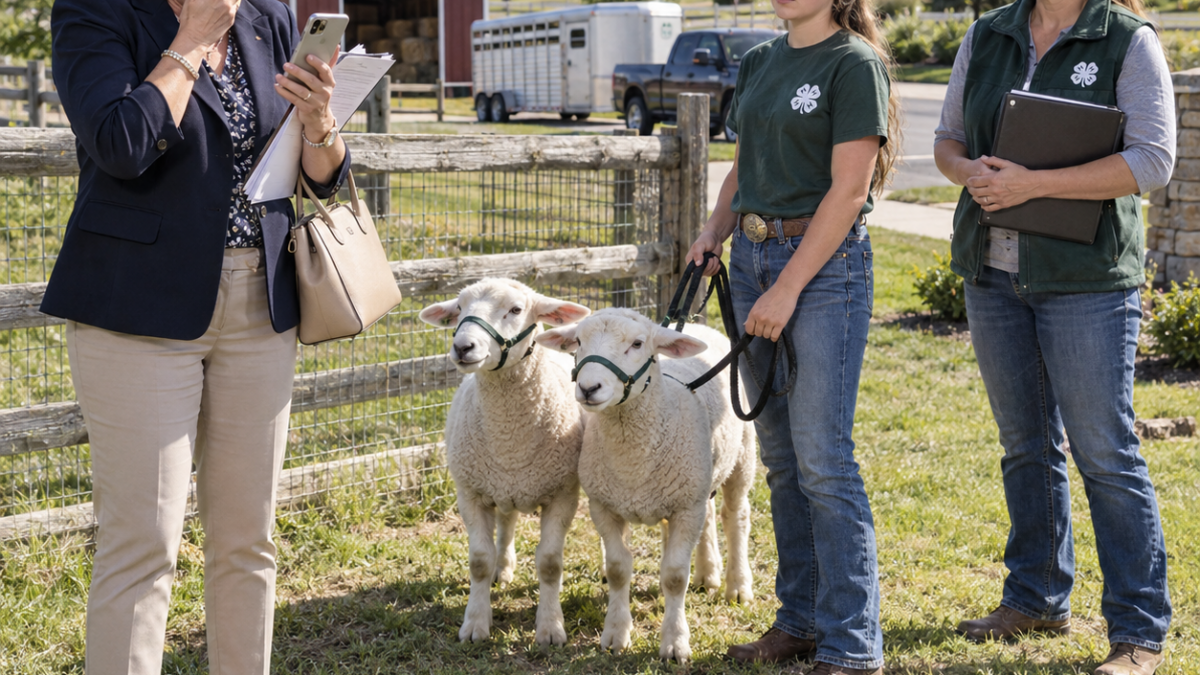
Karen Miller gave me forty-eight hours to remove two sheep from my own land, or she promised to have them hauled away while my ten-year-old daughter watched.
She stood outside my fence with a clipboard, a $500-a-day threat, and the confidence of someone who believed an HOA rulebook gave her more authority than the county.
What she didn’t know was that the two animals quietly chewing grass behind me were connected to a part of her life she had never bothered to ask about.
“Article Seven, Section Four,” Karen said, tapping the clipboard against the top rail of my fence. “No livestock, Mr. Thompson. Forty-eight hours.”
Behind me, Agnes and Bertha kept grazing.
Two Suffolk sheep.
Black faces. Thick white wool. Zero interest in suburban politics.
I looked from them to Karen.
“And after forty-eight hours?”
“The association begins fines at five hundred dollars per day.”
She smiled.
“If you still refuse to comply, we’ll arrange impoundment.”
That word changed the temperature.
Impoundment.
These weren’t livestock I had bought on a whim.
They belonged to my daughter Lily’s 4-H project.
For three months, she had gotten up before school to feed them, refill their water, clean their bedding, and learn how to handle them for the county fair.
She had named Agnes after my grandmother.
Bertha was named because, according to Lily, “she looks like a Bertha.”
They were part of the first stable life my daughter had known after twenty years of military moves.
And Karen was threatening to take them.
I kept both hands resting on the fence.
“Did you receive the packet I sent after your first notice?”
Karen gave a sharp little sniff.
“I received your excuses.”
“Those weren’t excuses. That was my deed, the county zoning map, and the agricultural-use documentation.”
“I know what you sent.”
“Then you know this property is AG-1.”
Her expression hardened.
“Our covenants prohibit livestock.”
“This property was agricultural before Whispering Pines existed.”
“You joined the HOA when you purchased it.”
“Yes.”
“So you agreed to the rules.”
“Not rules that erase grandfathered land use.”
Karen’s smile disappeared.
For twenty years in the Marines, I had dealt with people who confused rank with infallibility. I knew the type.
The more uncertain they became, the louder they got.
Karen lifted her chin.
“Your interpretation is irrelevant.”
“That isn’t my interpretation. It’s county zoning.”
“I’m not standing here to debate.”
“Neither am I.”
That answer seemed to bother her.
Maybe she had expected me to yell.
Instead, I just looked at her.
My wife, Sarah, had once told me my calm face made unreasonable people nervous because they couldn’t tell whether I was angry or amused.
At that moment, I was both.
Karen pointed toward Agnes and Bertha.
“Those animals will be gone in forty-eight hours.”
I felt something cold settle into place inside me.
Not rage.
Focus.
“I wouldn’t send anyone through that gate without checking your authority first.”
Her eyes narrowed.
“Is that a threat?”
“No.”
I glanced at the pasture.
“It’s advice.”
Karen turned sharply and marched toward the golf cart she had parked beside the road.
Before climbing in, she called back over her shoulder.
“You people always think the rules don’t apply to you.”
Then she drove away.
I stayed at the fence until the electric whine of the cart disappeared.
A moment later, Lily came running from the barn carrying a red feed scoop.
“Dad?”
She had heard enough.
Children always do.
“Is she taking Agnes?”
Her voice was small.
I turned.
Lily was standing beside Bertha, one hand buried in the sheep’s wool.
Behind her, Sarah had come out onto the porch.
I walked across the pasture and crouched beside my daughter.
“No one is taking your sheep.”
“But she said—”
“I know what she said.”
“What if she comes back with a truck?”
I looked toward the gate.
Then at the animals.
Then at my daughter.
“She’s going to have to prove she has the right.”
Lily’s eyes were already wet.
“And if she doesn’t?”
I stood slowly.
“Then Karen Miller is going to discover that threatening someone is a lot easier than explaining that threat to people with actual authority.”
That evening, after Lily went to bed, I opened the county records, pulled the HOA bylaws from a kitchen drawer, and placed an empty binder on the table.
Sarah watched me write one word across the front.
HOA.
She sighed.
“I know that look.”
“What look?”
“The one that means somebody has made a terrible mistake.”
I opened the binder.
“No.”
I slid Karen’s violation notice into the first sleeve.
“She’s still making it.”
PART 2
By nine o’clock that night, our dining room no longer looked like a place where a family ate dinner.
It looked like an operations center.
Laptop open.
County zoning map on the screen.
Property deed beside it.
HOA covenants spread across the table.
A yellow legal pad filled with dates and notes.
Sarah stood in the doorway holding two mugs of coffee.
“You’ve been retired six years,” she said.
“I’m aware.”
“You’re color-coding.”
“I also own highlighters.”
“That wasn’t the point.”
She placed one mug beside me.
I leaned back.
“Come look at this.”
Sarah sat.
I turned the laptop toward her.
Our five-acre property sat at the far western edge of Whispering Pines, a subdivision built over what had once been hundreds of acres of farmland.
Most of the old parcels had been carved into neat quarter-acre lots.
Ours had survived because the Thompson family, who owned it before us, refused to sell until the final phase of development.
By the time they did, the developer wanted the acreage included within the community boundary.
But the county wouldn’t erase its agricultural designation.
That mattered.
I had known it mattered when we bought the place.
After twenty years of moving whenever the Marine Corps told us to move, I wanted a home where nobody could suddenly decide we had thirty days to pack.
Sarah wanted a garden.
I wanted room.
Lily wanted animals.
The first time she saw the pasture, she ran into the middle of it and spun in circles.
“This is ours?”
That memory was one of the reasons Karen’s threat made me so angry.
Before closing on the property, I had hired an attorney to review everything.
The deed.
The zoning.
The HOA documents.
The agricultural exemption.
He had explained it in simple language.
The HOA could regulate many residential issues attached to our membership.
Exterior appearance of the house.
Certain fencing provisions.
Road access.
Common amenities.
But it could not use private covenants to magically extinguish the property’s protected pre-existing agricultural use.
That was why I had felt comfortable letting Lily join the livestock program.
I tapped the screen.
“AG-1.”
Sarah nodded.
“I remember.”
“County designation predates the HOA.”
“I remember that too.”
“And the attorney confirmed it.”
“I was sitting there.”
“So Karen’s wrong.”
Sarah wrapped both hands around her coffee.
“Being wrong doesn’t seem to bother her.”
That was exactly the problem.
The first violation notice had arrived the previous week.
UNAUTHORIZED LIVESTOCK.
I had answered politely.
No accusations.
No insults.
I attached the deed, the zoning classification, and a note explaining that the sheep were lawful agricultural use on a grandfathered parcel.
Karen’s response that afternoon made one thing clear.
This wasn’t a misunderstanding.
She had seen the documents.
She simply believed the HOA’s authority was whatever she said it was.
I started typing.
Sarah read over my shoulder.
“Who’s this one going to?”
“Entire board. Management company. Certified mail.”
“You already wrote them.”
“I wrote Karen.”
“And now?”
“Now everyone gets a copy.”
I drafted the letter carefully.
No emotion.
No sarcasm.
I identified the parcel.
Quoted the relevant covenant.
Attached the county zoning map.
Attached the deed.
Included the agricultural-use records.
Then I requested written confirmation that the violation had been withdrawn.
At the bottom I added one sentence.
Please also confirm that no HOA representative, contractor, or agent will enter the property or attempt to remove livestock without lawful authorization.
Sarah read it.
“That’s very polite.”
“I’m a polite man.”
She gave me a long look.
“You smiled while typing the last paragraph.”
“That proves nothing.”
The next morning, I sent everything certified mail.
Then I waited.
Forty-eight hours passed.
No truck.
No Karen.
No fine.
For almost a week, I thought somebody on the board had finally read the documents and talked sense into her.
Then the email came.
The management company was called Prestige Community Management.
The name sounded expensive.
Their email sounded automated.
Dear Mr. Thompson,
The board has reviewed your correspondence and maintains its position that livestock located on your property constitutes a violation of the governing documents.
A fine of $500 has been assessed.
Additional fines of $100 per day will accrue until the violation is cured.
I read it twice.
Sarah stood behind me.
“They completely ignored the zoning?”
“Yes.”
“Did they answer anything you sent?”
“No.”
She rubbed her forehead.
“How much can they make this?”
“As much as they want on paper.”
“That isn’t comforting.”
“I know.”
She walked toward the window.
Agnes and Bertha were under the shade tree.
Lily sat cross-legged near them with a notebook.
Her 4-H project book.
She recorded feed amounts, weight changes, grooming, health observations, and training.
Every day.
No one made her.
That was why I loved the program.
It wasn’t about winning ribbons.
It taught children that caring for something living meant showing up when you didn’t feel like it.
Rain.
Cold.
School morning.
Saturday.
You showed up.
Sarah looked back at me.
“She’s scared.”
“I know.”
“She asked me last night whether Karen could put us in jail.”
My jaw tightened.
“What did you tell her?”
“That grown-ups sometimes threaten things they aren’t allowed to do.”
“Good answer.”
“She asked how we know which grown-up is telling the truth.”
That question followed me for the rest of the evening.
Children assume adults understand the rules.
Then they discover many adults are simply louder.
I added the email to the binder.
The next day another notice arrived.
Then another.
By the second week, the alleged balance had crossed two thousand dollars.
I didn’t pay.
But I also didn’t ignore anything.
Every envelope got scanned.
Every email printed.
Every conversation logged.
One afternoon, I saw Karen standing on the sidewalk nearly two hundred feet from the pasture.
She held her phone up toward the sheep.
I waved.
She lowered it immediately.
Then raised it again.
I waved harder.
Her expression could have curdled milk.
She drove away in her golf cart.
That evening Lily asked, “Why does she keep taking pictures?”
“Because she thinks pictures will prove you have sheep.”
Lily looked at Agnes.
“We do have sheep.”
“I know.”
“That seems like an easy investigation.”
I laughed for the first time in days.
“Very efficient.”
Then Wednesday came.
Wednesday was 4-H night.
Lily had almost refused to go.
“What if Karen does something while we’re gone?”
“The sheep will be fine.”
“What if she comes here?”
“She won’t.”
“How do you know?”
I didn’t.
But fathers sometimes have to lend certainty to their children until they can produce some of their own.
“Because she knows I’m watching.”
That seemed to help.
The Northwood County 4-H meetings were held in the elementary school gymnasium.
Kids brought poster boards, model rockets, rabbit-care notebooks, gardening samples, robotics projects, and occasionally levels of noise that should have required hearing protection.
Lily loved it.
Normally, by the time we walked through the doors, she was gone.
That night she stayed close to me.
Mrs. Helen Gable ran the local chapter.
She was in her early sixties, practical, warm, and terrifyingly efficient.
If Helen told twenty children to sit, twenty children sat.
She clapped twice.
“Everybody settle down.”
The room quieted.
“We have county fair deadlines tonight, so listen carefully. Before that, I want to recognize our volunteer outreach team.”
I was only half paying attention.
Then Helen said a name.
“Karen Miller.”
I froze.
A few parents clapped.
I turned toward the front.
There, beside the folding table, stood a poster.
VOLUNTEER SPOTLIGHT.
Karen Miller.
Her photograph smiled at me from the board.
Pearls.
Perfect hair.
Friendly expression.
Beneath it:
HELPING OUR KIDS GROW.
For several seconds, I honestly thought there had to be another Karen Miller.
Then Helen continued.
“Karen has helped secure sponsors for this year’s county fair program and has handled much of our community partnership paperwork. We’re lucky to have her.”
I stared at the photograph.
Lily tugged my sleeve.
“Dad?”
“Yeah?”
“That’s her.”
“I know.”
“The sheep lady.”
“I know.”
“She works here?”
Apparently.
I sat through the rest of the announcement without hearing much.
The irony was so complete that it felt almost fictional.
Karen Miller, HOA president, was threatening to seize my daughter’s 4-H sheep.
Karen Miller, 4-H volunteer, was being praised for supporting youth agriculture.
Two versions of the same woman existed ten minutes apart.
And apparently neither version knew what the other was doing.
After the meeting, Lily showed Helen photographs of Agnes and Bertha.
I walked over.
“Helen, can I ask something?”
“Of course.”
“I want to make sure Lily’s project paperwork is complete. Since the animals are kept on our property, is there any host-site form?”
Helen’s face brightened.
“Yes. Actually there is.”
She dug through a binder.
“Most parents forget this.”
She handed me two pages.
NORTHWOOD COUNTY 4-H AGRICULTURAL PROJECT HOST AGREEMENT.
I read it carefully.
It identified our property as the official host location for Lily’s livestock project.
It listed the animals.
Agnes.
Bertha.
It documented that the landowner approved their presence.
There was also a signature line for a 4-H volunteer lead.
I pointed.
“Who signs this?”
“Normally I can.”
She paused.
“Actually, Karen has been handling most of the partnership forms this quarter.”
I looked at Helen.
“Karen Miller?”
“Yes.”
I kept my expression neutral.
“She’s organized.”
“I’ve noticed.”
Helen smiled.
“If you leave it with me, I’ll put it in her folder.”
I almost laughed.
Instead, I said, “Perfect.”
On the drive home, Lily was quiet.
Then she asked, “Does Karen know Agnes and Bertha are 4-H sheep?”
“I don’t think so.”
“But she volunteers there.”
“Yes.”
“Isn’t that weird?”
“Extremely.”
“Are you going to tell her?”
I watched the road.
“Not yet.”
“Why?”
“Because sometimes people only believe facts after they’ve committed themselves to ignoring them.”
Lily stared at me.
“I don’t know what that means.”
“It means Dad has paperwork.”
“Oh.”
She nodded.
“That’s bad for Karen.”
Sarah laughed from the passenger seat.
The fines kept coming.
Twenty-four hundred.
Twenty-eight hundred.
Three thousand.
Then Karen started appearing more often.
Golf cart.
Phone.
Clipboard.
Never on our property.
Always close enough to be noticed.
I kept documenting.
Meanwhile, I started talking to neighbors.
Not because I wanted to organize a rebellion.
At least not initially.
I simply wanted to understand whether Karen behaved this way with everyone.
The first person to answer that question was George Maxwell.
George lived two houses down.
Late seventies.
Retired Army combat engineer.
Widower.
He had the posture of a man whose knees hurt but whose pride refused to admit it.
One afternoon I found him staring at an empty patch of mulch beside his porch.
“Lose something?” I asked.
“My wife.”
I stopped.
George looked at me.
“Twenty-eight years ago I bought her a ridiculous garden gnome at a roadside stand. Ugly thing. Red hat. Blue pants.”
He pointed to the mulch.
“She kept it right there.”
“What happened?”
“Karen.”
Of course.
“Aesthetically inappropriate lawn ornament.”
“How much?”
“Two hundred.”
“You paid?”
“Eventually.”
George went into his house and returned with a folder.
“I kept everything.”
I smiled.
“I like you already.”
His wife Helen had died four years earlier.
The gnome was one of the small things she had loved.
George hadn’t cared about the object itself when she was alive.
After she died, it became part of the house.
Karen didn’t know that.
Maybe she wouldn’t have cared.
The Rodriguez family had another story.
Their teenage son played basketball.
The HOA allowed portable hoops but required them to be stored after use.
One evening the boy forgot.
Fifty-dollar daily penalty.
Three days.
Meanwhile, a former board member’s hoop sat permanently beside his driveway.
No notice.
A young couple had painted their front door blue.
Approved color.
Karen insisted it was “too saturated.”
They repainted.
Another family got warned because Christmas lights remained up two days after the arbitrary seasonal deadline.
One by one, the pattern appeared.
It wasn’t that every rule was unreasonable.
It was that enforcement seemed to depend on who you were.
New resident?
Easy target.
Elderly?
Easy target.
Someone Karen disliked?
Immediate notice.
Friend?
Conversation.
Board ally?
Silence.
George came to our house one evening carrying his folder.
Carlos and Maria Rodriguez came too.
I put my HOA binder on the table.
George looked at the label.
“Mine says Dictator.”
Sarah brought coffee.
“I prefer yours.”
We spent two hours comparing paperwork.
“What do you want to do?” Carlos asked.
“Use the bylaws.”
George laughed.
“That’s what she uses.”
“Exactly.”
I had printed them.
The bylaws gave homeowners the right to appeal fines.
They allowed members to speak at meetings.
They provided a process for calling special meetings.
And, with enough signatures, removing directors.
Karen had spent years using one half of the rulebook.
Apparently nobody had shown her the other half.
The next board meeting had only a dozen residents.
Karen sat in the middle.
Barry, the treasurer, on one side.
Brenda, secretary, on the other.
George went first.
He stood with his folder.
“George Maxwell, 214 Willow Creek Lane.”
Karen looked bored.
“What is your issue?”
“My gnome.”
Someone laughed.
Karen’s expression tightened.
“That matter was resolved.”
“No. I removed the gnome because you threatened another fine. I am appealing the underlying violation.”
“You missed the appeal deadline.”
George opened the bylaws.
“Section 9.3 does not list the deadline you just mentioned.”
Barry looked down.
Brenda started flipping pages.
Karen’s cheeks colored.
“The architectural standards authorize the board to remove visually inappropriate decorations.”
“Define inappropriate.”
“It is determined by the board.”
“Where?”
“The standards.”
“Page?”
Silence.
George held up the photograph.
“My wife gave me this gnome. It stood there twenty years without a complaint.”
Karen sighed.
“Sentiment does not override community aesthetics.”
That sentence killed her.
I saw it happen.
George’s face changed.
The room changed.
Even Barry looked uncomfortable.
Carlos stood.
“My son’s basketball hoop received three fines.”
Karen struck the gavel.
“You are out of order.”
“The bylaws allow new business.”
Brenda quietly said, “He’s right.”
Karen glared at her.
Carlos continued.
He showed photographs.
His son’s hoop.
Former board member’s hoop.
Same street.
Same rule.
Different enforcement.
Maria showed notices from five families.
Then another resident stood.
Then another.
Karen kept banging the gavel.
“Order.”
Nobody was shouting.
That was the problem.
They were presenting evidence.
Dates.
Photographs.
Fine amounts.
Karen couldn’t call that chaos.
She couldn’t call it emotion.
She could only call it inconvenient.
I never mentioned my sheep.
Not once.
Karen noticed.
After the meeting, she intercepted me near the door.
“You think you’re clever.”
“I didn’t speak.”
“That little performance was yours.”
“George can read.”
“You’re encouraging people to undermine this board.”
“No.”
I opened the clubhouse door.
“I’m encouraging people to attend meetings.”
“That amounts to the same thing.”
There it was.
Karen didn’t want participation.
She wanted compliance.
Two weeks later, the certified letter arrived.
Law firm.
Heavy paper.
Formal language.
Remove livestock.
Pay accumulated fines.
More than four thousand dollars now.
Failure to comply could result in lien action.
Sarah read it at the kitchen table.
“This feels different.”
“It is.”
“How?”
“She finally involved someone whose license matters.”
I called Ben Carter.
Ben was a former military JAG attorney I knew through a veterans housing nonprofit.
His office occupied the second floor of an old brick warehouse downtown.
No polished marble.
No decorative fountain.
Just books, legal pads, and coffee strong enough to strip paint.
He read Karen’s law-firm letter.
Then my deed.
Then county records.
Then the HOA correspondence.
His expression changed gradually.
Interest.
Disbelief.
Amusement.
Finally anger.
“They never checked the zoning?”
“I sent it twice.”
“They have this?”
“Yes.”
He tapped the deed.
“And they still threatened a lien?”
“Yes.”
Ben leaned back.
“That is very aggressive.”
“I noticed.”
“More importantly, it’s reckless.”
I opened the binder to another section.
“One more thing.”
I showed him Lily’s 4-H paperwork.
He read it.
“Registered youth livestock project.”
“Yes.”
“And Karen Miller volunteers for the same club?”
“Yes.”
Ben stared at me.
“You couldn’t invent this.”
“There’s more.”
“The volunteer signature.”
“She’s supposed to sign it.”
Ben slowly lowered the document.
“You’re telling me the HOA president trying to remove these sheep is also about to personally approve the same sheep as part of your daughter’s 4-H host agreement?”
“That is the current situation.”
Ben stood and walked to the window.
Then he started laughing.
Not loudly.
The kind of laugh a lawyer makes when someone has voluntarily constructed an exhibit against themselves.
“Do not rescue this woman from herself.”
“I wasn’t planning to.”
Ben drafted a formal response.
He disputed every fine.
Demanded preservation of records.
Warned against any lien.
Put the board and management company on notice that unauthorized entry or seizure would be challenged immediately.
He also raised selective enforcement.
We did not mention Karen’s 4-H role.
Not yet.
Three days later, Helen Gable called.
“Mark?”
“Yes?”
“I have Lily’s host form.”
My pulse changed.
“All signed?”
“Yes. Karen completed it yesterday.”
I closed my eyes.
“What did she say?”
Helen laughed.
“She said she loves seeing new families getting involved.”
“Did she read the property address?”
“I assume so.”
“And Lily’s name?”
“It’s on the first line.”
“And Agnes and Bertha?”
“Yes.”
“Thank you.”
“Is something wrong?”
I almost told her.
Then stopped.
“Not yet.”
That answer lasted less than a week.
The next notice appeared on the clubhouse board.
George texted me a photograph.
DUE TO ONGOING NONCOMPLIANCE AT 312 PIONEER ROAD, THE ASSOCIATION HAS CONTRACTED A PRIVATE ANIMAL REMOVAL SERVICE.
Unauthorized livestock would be impounded in seventy-two hours.
Lily saw the picture over my shoulder.
“She’s taking them.”
“No.”
“Dad, it says—”
“I can read.”
“She’s taking them!”
Her voice broke.
Sarah came into the room.
Lily was crying now.
Not dramatic tears.
Fear.
Real fear.
She ran outside.
I followed.
She went directly to Agnes and wrapped both arms around the sheep’s neck.
Agnes stood patiently.
Lily buried her face in the wool.
“You can’t let her take them.”
I knelt.
“I won’t.”
“You said that before.”
“I know.”
“But she keeps getting worse.”
That sentence hurt because it was true.
My strategy had depended on Karen escalating.
Intellectually, that made sense.
Emotionally, my daughter was living inside the escalation.
I sat beside her in the grass.
“Listen to me.”
She looked at me.
“This ends now.”
“How?”
“Because Karen finally wrote down exactly what she intends to do.”
“Why is that good?”
“Because people with real authority can act on something concrete.”
That afternoon, I made three calls.
First, county sheriff.
I explained the threat.
Sent the deed.
Zoning.
HOA notice.
Attorney correspondence.
Second, county planning and zoning.
Frank Evans answered.
I summarized the situation.
He interrupted only once.
“Your parcel is 312 Pioneer?”
“Yes.”
Keyboard sounds.
“AG-1.”
“Yes.”
“Grandfathered.”
“Yes.”
“I have the history.”
“Then you understand.”
“I understand that an HOA contractor has no authority to enter your agricultural property and seize lawful livestock.”
“Exactly.”
“When?”
“Saturday. Ten a.m.”
“I’ll be there.”
Third call.
Helen Gable.
This time I told her everything.
The first violation.
The fines.
The impound threat.
The law-firm letter.
Silence.
Long silence.
Finally:
“She is doing this to Lily?”
“Yes.”
“To Agnes and Bertha?”
“Yes.”
“The same Agnes and Bertha on the form Karen signed?”
“Yes.”
Helen’s voice turned cold.
“Send me every document.”
Saturday arrived bright and still.
I moved Agnes and Bertha into the back pasture.
Not to hide them.
To keep the confrontation near the gate.
Sarah and Lily stayed inside.
I set a camera in the front window.
At 9:52, George appeared on his porch.
At 9:56, Carlos Rodriguez came outside pretending to check his mailbox.
At 9:59, I stood on my porch with coffee.
At 10:03, the truck arrived.
Large flatbed.
Metal rails.
Portable ramp.
Private nuisance animal service lettering on the door.
My stomach tightened.
This wasn’t theoretical anymore.
A white SUV pulled in behind it.
Karen stepped out.
Navy pantsuit.
Clipboard.
Victory on her face.
The truck driver began lowering his ramp.
Karen walked toward my gate.
“Mr. Thompson.”
I took a sip of coffee.
“This is your final opportunity to cooperate.”
I said nothing.
Her voice rose.
“The association has authorized removal.”
Still nothing.
She hated silence.
“You were warned.”
I looked at the truck driver.
He avoided my eyes.
Karen pointed toward the gate.
“Open it.”
“No.”
“Then we will.”
“You should think very carefully before doing that.”
She laughed.
“More threats.”
“No.”
I glanced down the road.
“Advice.”
A sheriff’s cruiser turned onto the street.
Then another.
Karen looked.
Her smile faded.
A county sedan came behind them.
Then Helen’s car.
George stood straighter on his porch.
Carlos stopped pretending to check mail.
The cruisers stopped near the flatbed.
Deputy James Miller stepped out.
No relation to Karen.
He walked toward us.
Frank Evans climbed from the county car carrying a folder.
Helen got out of hers.
She was holding one sheet of paper.
I knew exactly which one.
The truck driver stopped lowering the ramp.
Deputy Miller looked at Karen.
“Ma’am, are you Karen Miller?”
“Yes.”
“President of the Whispering Pines HOA?”
“Yes.”
She regained some confidence.
“This man is in violation of—”
The deputy raised a hand.
“We received documentation indicating you intend to direct a private contractor to enter this property and remove livestock.”
“That’s correct.”
She pointed to me.
“He has refused lawful HOA orders for weeks.”
Frank Evans stepped forward.
“Mr. Thompson has not refused a lawful county order.”
Karen turned.
“And you are?”
“Frank Evans. Northwood County Planning and Zoning.”
Her face changed.
Just slightly.
Evans opened his folder.
“Parcel 312 Pioneer Road is zoned AG-1. Agricultural use predates the Whispering Pines development. The livestock currently housed here is lawful under county zoning.”
Karen tightened her grip on the clipboard.
“Our covenants prohibit sheep.”
“Your covenants do not give you authority to send a contractor onto private property and seize lawful animals.”
“Our attorney—”
“Your attorney can contact the county.”
The truck driver looked from Karen to the deputy.
“Nobody told me there was a zoning dispute.”
Karen snapped, “There isn’t.”
Evans looked at him.
“There absolutely is.”
The driver released the chain.
“I was told these animals were abandoned nuisance livestock.”
My eyebrows rose.
Karen’s head whipped around.
“That’s not what I said.”
“That is what the work order says.”
The driver pulled a folded paper from his cab.
Deputy Miller took it.
Karen’s face went pale.
“May I see that?”
“No, ma’am.”
The deputy read.
Then looked toward me.
“Mr. Thompson, these animals belong to you?”
“They’re my daughter’s registered 4-H project animals. We host them here.”
Helen stepped forward.
“More accurately, they are enrolled through the Northwood County 4-H livestock program.”
Karen turned.
“Helen?”
For the first time that morning, real panic crossed her face.
“Helen, what are you doing here?”
Helen walked directly toward her.
“What am I doing here?”
“Helen, this is HOA business.”
“No.”
Helen held up the paper.
“This is 4-H business.”
Karen stared at it.
I watched recognition arrive.
The host agreement.
Her own signature.
Helen unfolded it slowly.
“Northwood County 4-H Agricultural Project Host Agreement.”
She read my address.
Lily’s name.
Agnes.
Bertha.
Then she pointed to the bottom.
“Karen Miller. Volunteer Outreach Lead.”
Karen’s mouth opened.
Nothing came out.
Helen continued.
“You signed this four days ago.”
“I sign dozens of forms.”
“You personally approved the Thompson property as a host site.”
“I didn’t realize—”
“That’s the problem.”
Helen’s voice rose.
“You didn’t realize whose child you were hurting because you never bothered to ask.”
Neighbors were coming outside now.
Phones appeared.
Windows opened.
George walked closer.
Maria and Carlos came across the street.
Karen looked around.
Her two worlds had collided in the middle of Pioneer Road.
HOA Karen.
4-H Karen.
One wanted the sheep removed.
The other had officially approved them.
Helen’s hands shook.
Not from fear.
Anger.
“You stood in our gym and talked about supporting children.”
Karen swallowed.
“I do support children.”
“Then why has Lily spent weeks afraid someone was going to take her animals?”
Karen glanced toward our house.
For the first time, I think she realized Lily was inside.
Helen continued.
“She gets up every morning to care for these sheep.”
“I didn’t know.”
“You signed her form.”
“I didn’t read every detail.”
The words came out before Karen could stop them.
Helen stared.
“You signed an official youth program document without reading it?”
Karen looked trapped.
Anything she said made something worse.
The truck driver quietly started raising his ramp.
Karen heard the hydraulics.
“Where are you going?”
He climbed into the cab.
“Anywhere that isn’t here.”
Deputy Miller nodded toward him.
“Good decision.”
The truck pulled away.
Karen stood alone beside her SUV.
No contractor.
No sheep.
No authority.
Then a black sedan arrived.
Ben Carter stepped out.
Dark suit.
Leather folder.
Perfect timing.
He walked toward us.
“Karen Miller?”
She looked at him.
“Yes?”
He handed her an envelope.
“You’ve been served.”
Everything became silent.
Even the neighbors stopped whispering.
Ben turned toward me.
“Mark.”
I nodded.
Then he addressed Karen.
“This filing seeks immediate declaratory and injunctive relief concerning the HOA’s attempted enforcement against Mr. Thompson’s lawful agricultural use, along with damages and fees associated with the board’s conduct.”
Karen stared at the envelope.
Ben continued.
“The attempted removal today will be documented and added to the record.”
“You planned this.”
She looked at me.
I stepped off the porch.
“No.”
“You set me up.”
“I sent you my zoning paperwork before any of this happened.”
“You knew about the 4-H form.”
“Yes.”
“You deliberately let me sign it.”
“It had Lily’s name on it.”
Karen flinched.
“And our address.”
Silence.
“And the sheep’s names.”
Silence.
“I didn’t make you sign anything.”
“You humiliated me.”
“No, Karen.”
I looked toward the gate.
“You came here with a livestock truck.”
George laughed once.
Karen turned toward him.
Then the other neighbors.
Faces she had fined.
Warned.
Lectured.
Ignored.
For years, she had seen them one at a time.
That morning she saw them as a community.
Her face collapsed.
Not into tears.
Something flatter.
Defeat.
She climbed into her SUV.
Helen called after her.
“Karen.”
She stopped.
“You’re suspended from all 4-H volunteer duties effective immediately pending review.”
Karen closed her eyes.
That hurt more than the lawsuit.
I could see it.
Because the HOA presidency gave her power.
The 4-H role gave her admiration.
Losing authority was one thing.
Losing the identity she used to convince herself she was a good person was another.
She drove away.
The road stayed quiet for several seconds.
Then George said, “So are we still doing anything about my gnome?”
Everyone laughed.
Even Deputy Miller.
Inside the house, Lily was standing at the window.
Sarah opened the door.
Lily ran outside.
She didn’t come to me.
She went straight to the pasture.
“Agnes!”
The sheep lifted her head.
Lily squeezed through the gate.
Bertha trotted toward her.
Watching my daughter drop to her knees and wrap her arms around those animals took every ounce of anger I had been carrying and turned it into something else.
Relief.
I had spent weeks treating the dispute like a campaign.
Strategy.
Evidence.
Timing.
But Lily had never seen strategy.
She had only seen adults threatening something she loved.
I walked into the pasture.
She looked up.
“They’re staying?”
“They’re staying.”
“Forever?”
“Until you sell them, age out, or decide Dad needs more expensive hobbies.”
She laughed through tears.
Sarah came beside me.
“You were right.”
“About?”
“She made a terrible mistake.”
I watched Agnes chew the cuff of Lily’s jacket.
“She made several.”
The story spread through Whispering Pines before lunchtime.
Not because Ben contacted reporters.
Not because I posted anything.
Because neighborhoods are faster than newspapers.
By evening, everyone knew.
Karen had tried to seize a child’s 4-H sheep.
Karen volunteered for the same 4-H club.
Karen had signed the project authorization herself.
Sheriff deputies had shown up.
County zoning had shown up.
Attorney had shown up.
Truck had left empty.
The next morning, George knocked on my door.
He had a clipboard.
I stared at it.
“Too soon.”
He smiled.
“Recall petition.”
“How many signatures?”
“Need ten percent.”
“How many do you have?”
“Forty-three percent.”
“When did you start?”
“Breakfast.”
By dinner, they had crossed sixty percent.
An emergency homeowners meeting was scheduled for the following Saturday.
The clubhouse was packed.
More than a hundred residents.
Karen didn’t attend.
Her chair sat empty.
Barry and Brenda did.
They looked as though they had been summoned to their own sentencing.
George spoke first.
No theatrics.
No insults.
He presented documents.
His gnome violation.
Rodriguez basketball fines.
Door-paint dispute.
My zoning correspondence.
The board’s ignored notices.
The threatened impoundment.
Then residents lined up.
A woman described being fined because her trash bin remained visible while her husband was hospitalized.
An elderly couple described warning letters about weeds that turned out to be flowering ground cover approved by the original landscaping plan.
A single mother described receiving three notices because her teenage son’s work truck was parked overnight while he saved money for college.
Then Brenda stood.
“I have something to say.”
The room quieted.
She looked toward the empty chair.
“I should have questioned more.”
Barry stared at the table.
Brenda continued.
“Karen often told us issues had been reviewed by management or counsel. Sometimes I voted without reading the underlying homeowner correspondence.”
Someone muttered.
Brenda nodded.
“You’re right to be angry.”
She removed her board badge.
“I resign.”
Barry resigned ten minutes later.
The room erupted.
George became interim president almost by accident.
He didn’t want the job.
That was one reason people trusted him.
Maria Rodriguez joined the board.
A retired accountant named Denise Harper filled the third seat.
Their first motion suspended all outstanding discretionary fines pending review.
Their second required full board access to every homeowner appeal.
Their third terminated the animal-removal action formally.
Their fourth removed Karen’s ability to act on behalf of the association.
George looked at me.
“Anything else?”
I raised my hand.
“Yes.”
He sighed.
“What?”
“Put your gnome back.”
The room laughed.
Three days later, George’s red-hatted gnome returned to its patch of mulch.
Someone placed a tiny sign beside it.
WELCOME HOME.
George removed the sign because temporary yard signage technically violated a rule.
“Can’t have anarchy,” he told me.
The lawsuit moved faster after the board changed.
No one wanted years of litigation.
The new HOA leadership wasn’t interested in defending Karen’s decisions.
The insurer pushed for mediation.
The management company suddenly became extremely cooperative.
Records opened.
Emails appeared.
One message from Karen to Prestige described me as:
“Former military, likely accustomed to getting his way through intimidation.”
Ben read that aloud.
Then looked at me.
“That’s almost impressive.”
Another message instructed management to keep fines running even while my zoning documentation was “being considered.”
Another showed she knew the board’s attorney had asked for more information about the agricultural exemption.
She had ordered enforcement to continue anyway.
That changed things.
Not because it proved every legal claim automatically.
But it undermined the story that Karen had simply misunderstood.
She had been warned.
She continued.
The settlement ultimately covered legal expenses, improper fines, and documented damages.
My balance went to zero.
George got his two hundred back.
Carlos and Maria were reimbursed.
Several other residents received refunds.
The HOA agreed to rewrite its enforcement process.
Agricultural parcels received explicit recognition.
No major fine without hearing rights.
No contractor entering private property without confirmed legal authority.
No one-person enforcement decisions.
Conflict-of-interest disclosure.
Independent review for disputed penalties.
Karen herself entered a separate agreement barring her from serving on the board again.
Her 4-H volunteer review also concluded.
Helen called me afterward.
“We removed her.”
I was quiet.
“You all right?” she asked.
“Yes.”
“You don’t sound happy.”
“I’m glad Lily won’t have to deal with her.”
“That’s not the same.”
“No.”
Helen sighed.
“I knew Karen for eight years.”
“I’m sorry.”
“She did good work here.”
“I believe that.”
“That almost makes it worse.”
I understood.
People are easier to hate when they are completely bad.
Most aren’t.
Karen had raised money.
Found sponsors.
Helped with events.
Then somewhere else, with a clipboard and authority, she had become cruel.
Both things could be true.
Lily didn’t care about philosophical contradictions.
She cared about the fair.
County fair morning began at 4:45 a.m.
I know because Lily woke us at 4:30.
“Dad.”
I opened one eye.
“What?”
“We’re late.”
“It’s dark.”
“Exactly.”
“That is not evidence.”
By six, Agnes and Bertha were loaded.
Lily wore jeans, boots, white 4-H shirt.
Hair pulled back.
Nervous enough to reorganize the grooming box four times.
At the fairgrounds, animals bleated from every direction.
Parents hauled feed.
Kids ran with brushes.
Volunteers shouted stall numbers.
Normal chaos.
Beautiful chaos.
Helen met us at the livestock barn.
“You ready?”
Lily nodded.
“No.”
Helen smiled.
“Perfect.”
During showmanship, Lily entered the ring with Agnes.
I stood beside Sarah at the rail.
Months of tension seemed to disappear when that gate closed.
Inside the ring, nobody cared about Karen.
Nobody cared about fines.
Nobody cared about HOA politics.
The judge watched Lily position Agnes.
Checked handling.
Asked questions.
“What do you feed her?”
Lily answered.
“How often do you trim hooves?”
Answered.
“What signs would make you concerned about illness?”
Answered.
“What did this project teach you?”
Lily paused.
I leaned closer.
Her answer was quiet.
“Responsibility.”
The judge nodded.
“Anything else?”
She thought.
Then:
“That sometimes adults can be wrong, but you still have to do your part right.”
Sarah grabbed my hand.
The judge smiled.
“That’s a good answer.”
Lily won blue.
Not champion.
Not grand champion.
Blue ribbon.
To her, it might as well have been Olympic gold.
She ran out of the ring.
“Dad!”
“I saw.”
“Blue!”
“I can see that.”
“She did so good!”
“You did good.”
“Agnes did most of it.”
“Agnes ate somebody’s shoelace ten minutes ago.”
“That wasn’t during judging.”
Fair point.
George arrived around noon carrying lemonade.
Carlos and Maria came later.
Even Deputy Miller stopped by with his family.
Agnes and Bertha became celebrities.
People wanted photographs.
Someone joked that Bertha needed legal representation before interviews.
Ben sent a text.
TELL MY CLIENTS I EXPECT TEN PERCENT OF ALL APPEARANCE FEES.
I showed Lily.
She replied:
TELL HIM BERTHA ONLY PAYS IN HAY.
Months passed.
Whispering Pines changed.
Not dramatically.
That was the beauty.
The biggest sign of improvement was how boring the HOA became.
Meetings discussed drainage.
Pool maintenance.
Insurance.
Streetlights.
Actual community issues.
The blue front door stayed blue.
Basketball hoops occasionally remained outside overnight.
Christmas lights lingered into January.
No civilization collapsed.
George’s gnome developed seasonal outfits.
That might have been an abuse of freedom.
We tolerated it.
Then one afternoon, Karen’s FOR SALE sign appeared.
Lily saw it first.
“Is she moving?”
“Looks like it.”
“Because of us?”
“I don’t know.”
A week later, I saw Karen beside her driveway.
Boxes.
Moving truck.
No clipboard.
I considered turning around.
Instead, I walked over.
She noticed me.
Neither of us spoke for a moment.
Finally:
“Come to gloat?”
“No.”
“I would.”
“I know.”
Her mouth tightened.
She looked toward my property.
“I lost everything because of those sheep.”
“No.”
Her eyes hardened.
“You still think you’re the hero.”
“I don’t think this was about heroes.”
“You destroyed my reputation.”
“You drove a livestock-removal truck to my house.”
“You made sure everyone was watching.”
“You posted the notice publicly.”
That stopped her.
She looked away.
I continued quietly.
“I gave you the zoning paperwork before the first fine.”
She said nothing.
“I gave it to the board.”
Nothing.
“My attorney gave it to your attorney.”
Nothing.
“You kept going.”
Her shoulders dropped.
“You embarrassed me at that meeting.”
“I never mentioned the sheep at the meeting.”
“I knew you were behind it.”
“George’s wife gave him that gnome.”
Karen closed her eyes briefly.
“I didn’t know that.”
“You didn’t ask.”
She looked older than when I had first met her.
Not physically older by years.
Just tired.
“I thought rules had to be enforced equally.”
“Then why weren’t they?”
Her eyes opened.
“That isn’t fair.”
“Exactly.”
For several seconds, neither of us spoke.
Then she said something unexpected.
“I really did care about 4-H.”
“I know.”
“You think I was pretending.”
“No.”
That surprised her.
“I think you were different there.”
She looked toward the moving truck.
“At 4-H, you helped people.”
“And at the HOA?”
“You controlled them.”
She flinched.
“I thought control kept standards from slipping.”
“Maybe at first.”
She stared at the road.
“My husband used to say I didn’t know when to stop.”
I didn’t answer.
She laughed bitterly.
“I suppose he was right.”
“Probably.”
She almost smiled.
Then she looked toward our pasture.
“Did Lily win?”
“Blue ribbon.”
For the first time in months, Karen’s face softened.
“Good.”
I waited.
She added:
“She worked hard.”
“She did.”
Karen nodded.
“I saw her project notes once.”
“When?”
“When I signed the form.”
That surprised me.
“You did read it.”
“Some of it.”
“Then why?”
Her eyes filled.
Not dramatically.
Just enough to shine.
“I didn’t connect the address until Helen showed me the paper.”
I believed her.
That didn’t excuse anything.
But I believed it.
She had processed dozens of forms.
Signed Lily’s.
Then put on the HOA-president version of herself and attacked a property address instead of seeing the child attached to it.
That might have been the saddest part.
Bureaucracy had allowed her to stop seeing people.
“I hope wherever you go,” I said, “you leave the clipboard packed.”
She laughed once.
A real laugh.
“Go home, Mark.”
“I’m going.”
As I turned away, she called after me.
“I’m sorry.”
I stopped.
She didn’t specify.
She didn’t need to.
I nodded.
Then kept walking.
Karen moved the next morning.
We never saw her again.
The family who bought the house had two young children.
Within three weeks, they installed a swing set.
George texted me a picture.
POSSIBLE VIOLATION.
I replied:
DON’T START.
He sent a photograph of the gnome.
The following spring, Lily decided to continue with 4-H.
This time she wanted to breed one of the sheep.
I stared at her.
“No.”
“Dad.”
“No babies.”
“But—”
“I survived one sheep lawsuit.”
“That wasn’t the sheep’s fault.”
“You sound like Ben.”
Sarah sided with Lily.
I lost.
Bertha eventually had twins.
Lily named them Liberty and Justice.
I accused her of being dramatic.
She said she had earned it.
The names stuck.
A year after the confrontation, Whispering Pines hosted its first neighborhood farm day on our property.
George’s idea.
Children came to learn about livestock care.
County extension brought displays.
4-H set up an information table.
Helen gave a talk.
The Rodriguezes ran food.
Ben came for free barbecue and insisted that counted as community legal outreach.
I caught him feeding Bertha.
“You realize she owes you money.”
“Attorney-client privilege.”
Near sunset, I stood by the fence while children took turns brushing the lambs.
George joined me.
His gnome was temporarily wearing a tiny cowboy hat for the event.
I decided not to ask why.
“You know,” he said, “I hated that sheep smell when you moved in.”
“I appreciate your honesty.”
“Now I’d miss it.”
“Still appreciate your honesty.”
He watched Lily teaching a younger girl how to hold a brush.
“Those animals changed this place.”
“No.”
I shook my head.
“They just gave everyone a reason to stop being quiet.”
George nodded.
“That sounds better.”
Helen walked toward us carrying a framed certificate.
“What’s that?”
“For Lily.”
She called my daughter over.
Northwood County 4-H recognized Lily for youth leadership and perseverance.
Lily read it.
Her cheeks turned red.
“I didn’t do anything.”
Helen crouched beside her.
“Yes, you did.”
“I just took care of sheep.”
“That’s what leadership usually looks like before people start putting fancy words around it.”
Lily hugged her.
I had to look away.
The original reason Sarah and I bought those five acres was simple.
We wanted somewhere Lily could grow roots.
For most of her childhood, home had been temporary.
Different base.
Different school.
Different house.
Different bedroom.
I had promised her retirement would be different.
Then Karen arrived threatening the first thing Lily had truly made her own.
That was why the fight mattered.
Not because I needed to beat an HOA president.
Not because I enjoyed watching Karen confronted by the sheriff, county zoning, Helen, and Ben.
I’ll admit I didn’t hate that part.
But revenge wasn’t the best moment.
The best moment came one quiet autumn evening.
No officials.
No attorneys.
No board meetings.
No paperwork.
Lily sat on the pasture fence.
She was twelve now.
Longer legs.
Older face.
Agnes moved slowly through the grass.
Bertha was beside her.
Liberty and Justice followed.
I brought Lily hot chocolate.
She took it.
“Remember when I thought Karen was going to steal them?”
“Yes.”
“I was really scared.”
“I know.”
“You were too.”
I looked at her.
“What makes you think that?”
“You organized the binder twice.”
Fair.
She sipped her drink.
“Dad?”
“Yeah?”
“Were you trying to get revenge?”
I thought about Karen.
About the moving truck.
About the empty HOA chair.
About Helen holding up the signed 4-H agreement.
About George’s gnome returning.
About fines erased.
About neighbors finally speaking.
“At first?”
“Yes.”
“A little.”
“What changed?”
I watched Agnes lower her head to graze.
“I realized winning wasn’t making Karen hurt.”
“What was it?”
“You not being scared in your own home.”
Lily thought about that.
Then she smiled.
“So we won.”
“Yeah.”
“We really won.”
I looked across Whispering Pines.
George’s porch light glowed.
A basketball bounced somewhere down the street.
Someone’s front door was a very bright shade of blue.
A swing set rose behind Karen’s old house.
No violation notices.
No golf cart.
No clipboard.
Just a neighborhood.
“Yes,” I said.
“We really did.”
Years later, people still told the story.
Naturally, it grew.
According to some versions, Karen arrived with six trucks.
She didn’t.
According to others, the sheriff arrested her in the street.
He didn’t.
Someone claimed Bertha charged the HOA president.
Definitely didn’t happen.
Bertha would have sold us out for crackers.
The truth was less dramatic and more important.
Karen arrived believing nobody could stop her.
Then people showed up who had actually read the rules.
That was all.
County zoning.
Sheriff’s office.
4-H.
Attorney.
Neighbors.
Paperwork.
She had built her authority on everyone else assuming resistance was too difficult.
Once we stopped assuming that, her kingdom disappeared remarkably fast.
Agnes lived to an old age.
When she died, Lily was seventeen.
We buried her beneath the maple tree at the far end of the pasture.
Lily placed the old blue ribbon beside her for a moment before changing her mind.
“I want to keep it.”
“You should.”
She tucked it into her jacket.
Bertha stood nearby.
Older.
Gray around the muzzle.
For a long time, Lily said nothing.
Then:
“She started everything.”
“No.”
I put an arm around my daughter.
“Karen started everything.”
Lily laughed through tears.
“That’s true.”
After high school, Lily studied animal science.
I can’t claim the sheep were entirely responsible.
But they mattered.
Her 4-H experience mattered.
The fight mattered.
Years after Karen left, Lily came home from college for Thanksgiving.
George was still alive.
Still stubborn.
Still displaying the gnome.
The gnome now had a small Marine Corps cap.
I told him this was unauthorized impersonation.
He told me to file a complaint.
We ate dinner together.
Afterward, Lily walked out to the pasture.
Bertha had passed the previous winter.
The field felt strangely large without them.
Lily stood beside the old shelter.
“You going to get more sheep?” she asked.
“No.”
“Why?”
“I’m retired.”
“Again?”
“Yes.”
“Mom said you were looking at goats.”
“Your mother is unreliable.”
Sarah shouted from the porch.
“I heard that.”
Lily laughed.
Then she noticed something beside the fence.
A small metal plaque.
I had installed it that year.
Nothing official.
Nothing dramatic.
It read:
AGNES & BERTHA
4-H PROJECT SHEEP
THEY TAUGHT A NEIGHBORHOOD TO SPEAK UP
Lily touched the plaque.
Her eyes filled.
“You did this?”
“George paid for half.”
“Why?”
“Because he says the gnome refused.”
She laughed.
Then hugged me.
That plaque remains beside the fence.
People occasionally ask about it.
New families don’t know the story.
So sometimes I tell them.
I tell them about a ten-year-old girl.
Two sheep.
One HOA president.
A grandfathered piece of farmland.
Thousands of dollars in fines that never should have existed.
A garden gnome.
A basketball hoop.
A blue door.
A 4-H form.
A signature.
And a Saturday morning when one woman arrived expecting to take animals and instead discovered that the law, the county, the club she volunteered for, and the neighborhood she had intimidated were all standing on the other side.
But I always finish the story the same way.
I tell them Karen wasn’t defeated by me.
That gives me too much credit.
She was defeated by her own certainty.
She never checked the zoning because she was certain.
She ignored my paperwork because she was certain.
She escalated the fines because she was certain.
She hired the truck because she was certain.
She signed Lily’s 4-H agreement without connecting it to the family she was attacking because she was certain.
And certainty without curiosity is dangerous.
Especially when someone has power.
The HOA still exists.
I still pay dues.
I still attend meetings occasionally.
I don’t hate HOAs.
That surprises people.
Rules can be useful.
Common areas need maintenance.
Roads cost money.
Pools need insurance.
Neighbors occasionally need boundaries.
The problem was never rules.
It was a person who believed being in charge made her right.
George served one year as interim president.
Then he quit.
“Too many emails,” he said.
Maria Rodriguez took over.
Her first speech lasted eleven seconds.
“We will enforce clear rules fairly, explain our decisions, and leave people alone whenever possible.”
Best HOA speech I ever heard.
Years later, when George died, his daughter asked me to help clean out the house.
We found Helen’s garden gnome wrapped carefully in a towel inside a storage bin.
Apparently George had brought it indoors during storms.
His daughter held it.
“Dad wanted you to have this.”
I stared at her.
“No.”
She laughed.
“He specifically said you’d say that.”
“I have standards.”
“He said if you refused, I should put it in your yard after dark.”
“That sounds like George.”
So the gnome came home with me.
Sarah placed it beside the porch.
I objected.
No one cared.
For the first time in my life, I voluntarily owned a garden gnome.
It wore George’s tiny Army engineer pin on its red hat.
One afternoon, I was sitting outside when a little boy from Karen’s old house stopped beside it.
“Why do you have that?”
“Long story.”
“Is it special?”
“Very.”
“What does it do?”
“Mostly violates architectural standards.”
He looked confused.
I smiled.
“Ask your parents.”
The boy ran home.
I looked toward the old pasture.
The grass moved in the wind.
No sheep anymore.
No Karen.
No conflict.
Just five acres of land we once bought because our daughter needed somewhere permanent.
That was what we had protected.
Not livestock.
Not pride.
Home.
And home, I eventually learned, isn’t defined by a deed alone.
It’s the place where your child stops asking how long you’ll be staying.
The place where neighbors become friends.
The place where an old widower feels safe putting his wife’s ridiculous garden gnome back in the yard.
The place where a family can paint a door blue.
The place where a kid can leave a basketball hoop out after dark without wondering whether an envelope will appear the next morning.
The place where two sheep can chew grass without becoming evidence in somebody else’s campaign for control.
Karen thought victory meant removing Agnes and Bertha.
My version of victory looked very different.
It looked like Lily standing in a fair ring holding a blue ribbon.
It looked like Helen defending a child.
It looked like George’s gnome coming home.
It looked like fines erased.
It looked like neighbors filling the clubhouse instead of avoiding it.
It looked like a swing set behind Karen’s old house.
And, years later, it looked like a tiny red-hatted gnome beside my porch, leaning slightly to one side, violating absolutely nothing that mattered.
Sometimes people ask whether I ever heard from Karen again.
I didn’t.
I hope she found somewhere quieter.
I hope she learned something.
Maybe she didn’t.
That part stopped mattering.
Because the most satisfying revenge wasn’t watching her leave.
It was watching everyone else stay.
Stay in their homes.
Stay in the neighborhood.
Stay involved.
Stay unafraid.
Karen wanted uniformity.
What she left behind was something better.
Community.
And every time I look toward the pasture where Agnes and Bertha once grazed, I remember the afternoon Karen stood outside my fence and gave me forty-eight hours.
She thought the clock was running on my sheep.
It wasn’t.
It was running on her authority.
She just didn’t know it yet.
By the time those seventy-two hours ended weeks later, she arrived with a livestock truck, a clipboard, and absolute certainty.
She drove away with none of them.
The sheep stayed.
My daughter stayed.
The farm stayed.
The neighborhood changed.
And Karen Miller finally learned the lesson she had spent years teaching everyone else:
Rules apply to the person holding the clipboard too.
[END OF FULL STORY]








