HOA Karen Demolished Our Rescue Boat Barn—72 Hours Later, the Flood Came for Her Street
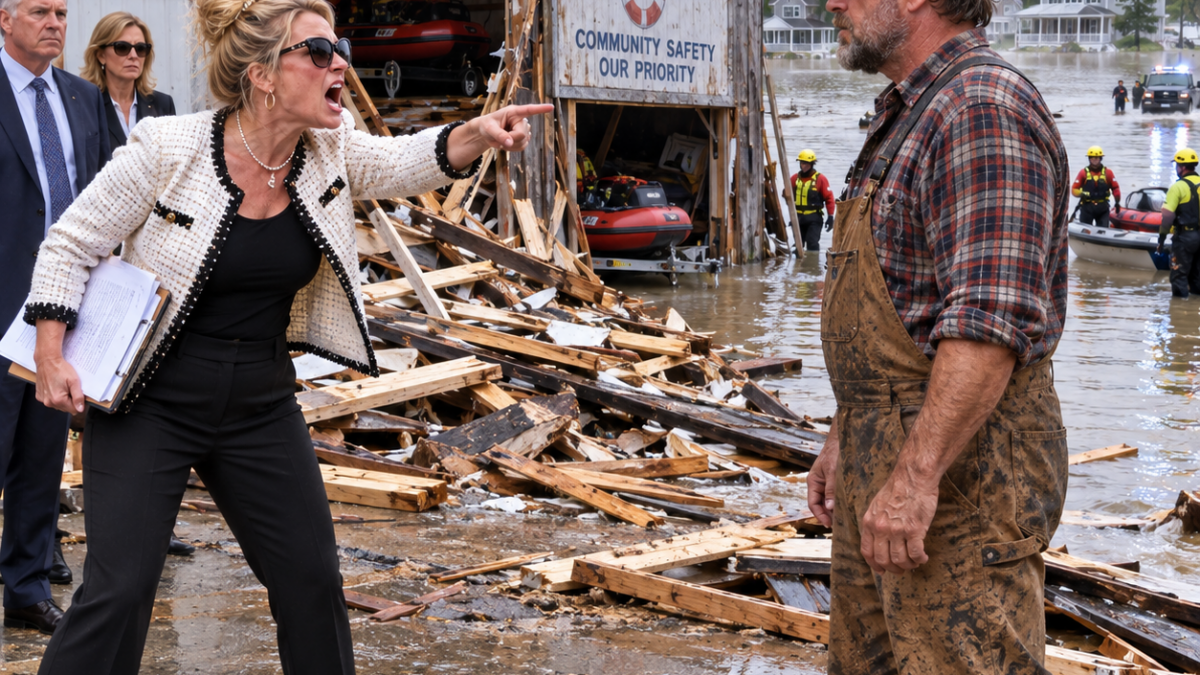
Karen stood beside the wreckage of our rescue boathouse and told me the HOA had every right to destroy it because the building offended community standards.
Buried beneath the splintered rafters were the boats, motors, radios, medical kits, and swift-water gear our volunteers had spent ten years buying so we could reach families when ordinary roads disappeared beneath floodwater.
What she didn’t understand was that the weather alert flashing across my phone had just transformed her petty demolition order into something far more dangerous than an HOA dispute.
The excavator was still idling when I arrived.
Diesel fumes hung in the humid air.
Fresh pine, pulverized concrete, and wet insulation covered the ground where Lakeside Volunteer Rescue’s boathouse had stood that morning.
I stopped beside my truck.
For several seconds, I couldn’t move.
The roof had collapsed inward.
One Zodiac lay folded beneath a wall panel.
Our larger inflatable boat was almost completely buried.
A brand-new ninety-horsepower Yamaha motor—paid for through bake sales, local donations, and one full year of fundraising—stuck sideways from the debris with its propeller bent like soft aluminum.
Life jackets.
Helmets.
Throw bags.
Medical kits.
Radio equipment.
Ten years of work.
Gone.
And beside it all stood Karen Stevenson, president of the Lakeside HOA.
Clipboard in hand.
Floral dress.
Perfectly satisfied expression.
“You were given ample notice, Mr. Riley.”
I turned toward her.
“Notice?”
“The structure was never properly approved under Section C, Paragraph Four.”
I looked behind her at the excavator operator.
He wouldn’t meet my eyes.
“Karen, this building was approved ten years ago.”
“By a previous board.”
“With a written lease.”
“The present board determined that arrangement no longer complied with community standards.”
My hands curled.
I forced them open.
Twenty years in the Army Corps of Engineers had taught me that anger makes bad decisions fast.
Karen wanted anger.
She wanted me shouting.
Threatening.
Anything she could write into another violation notice.
So I gave her calm.
“Where did you send the demolition notice?”
“The mailing address on file.”
“The PO box I closed three years ago?”
“That is not my responsibility.”
“You know my house is forty yards from the clubhouse.”
“You have an obligation to maintain current contact information.”
I stared at her.
Then my phone vibrated again.
**HURRICANE WATCH.**
The National Weather Service had upgraded the forecast that morning.
Heavy rainfall.
Dangerous flash flooding.
Potential major river flooding within seventy-two hours.
I turned the screen toward Karen.
“Do you know what this is?”
She barely looked.
“A weather alert.”
“A hurricane watch.”
“That doesn’t change the bylaws.”
I pointed toward the wreckage.
“Those boats are part of the county emergency-response plan.”
Her expression shifted.
Only slightly.
“You just destroyed the only volunteer water-rescue fleet based on this lake.”
“We removed an unauthorized structure.”
“You crushed two rescue boats.”
“That equipment should not have been stored on common property.”
“It was stored there under a one-dollar annual lease approved by the HOA.”
Karen stiffened.
“We found no valid current authorization.”
“Because you didn’t look.”
“I will not be spoken to like this.”
I stepped closer to the wreckage.
Not to her.
“Three floods.”
She frowned.
“What?”
“That’s how many major floods this team has worked.”
I pointed toward what remained of the larger Zodiac.
“We pulled seventeen people out during the 2014 flood.”
Another pile.
“That rack held equipment the county helped pay for.”
Then toward the crushed motor.
“That engine was purchased with donations from people in this neighborhood.”
Karen crossed her arms.
“The HOA cannot make exceptions simply because residents believe their hobbies are important.”
Hobby.
I felt something inside me go cold.
Ten years earlier, I had watched an elderly man sit on the roof of his truck while floodwater climbed toward his chest.
I had carried a terrified little girl through waist-deep current after her parents became trapped on their porch.
I had spent nights searching black water for people whose names I never forgot.
Karen called that a hobby.
I took out my phone.
Photographed the excavator.
The wreckage.
Karen.
The demolition company logo.
Then I said:
“Don’t touch another thing.”
She laughed.
“Are you threatening me?”
“No.”
I took another photograph.
“I’m documenting you.”
For the first time, she stopped smiling.
Behind us, thunder rolled somewhere beyond the lake.
The sky was still blue.
But the western horizon had begun turning the color of old steel.
Karen looked toward the clouds.
Then back at me.
“The bylaws are the bylaws, storm or no storm.”
I nodded slowly.
“All right.”
I turned toward the wreckage.
Because while Karen still thought she had demolished an illegal shed, I already knew what had to happen next.
First, I had to save whatever rescue equipment remained.
Then I had to prepare the neighborhood for the water.
And after that, I was going to make certain every official who mattered understood exactly who had destroyed the county’s rescue boats seventy-two hours before a hurricane.
PART 2
Gus arrived twenty-three minutes later.
He climbed out of his old work truck, shut the door, and stopped.
That was all.
No profanity.
No questions.
No dramatic reaction.
He just stood beside me looking at what remained of the building we had constructed together ten years earlier.
Gus Palmer had spent twenty-four years in the Navy Seabees before starting a small construction company.
He was six-foot-four, built like a refrigerator, and usually capable of finding humor in almost anything.
Not that afternoon.
He walked through the wreckage carefully.
Lifted one twisted sheet of roofing.
Saw the crushed bow of our main rescue boat.
Then lowered the metal again.
“Damn.”
I nodded.
He looked at me.
“Who?”
I pointed toward the street Karen had driven down ten minutes earlier.
“Board order.”
“Karen?”
“Yes.”
“Does she know about the storm?”
“I told her.”
“And?”
“Bylaws are bylaws.”
Gus closed his eyes.
“Of course they are.”
He rubbed both hands over his face.
Then he looked at the sky.
“All right, skipper.”
I had not been his skipper.
He knew that.
But former military men have an irritating habit of assigning unofficial ranks to each other in retirement.
“What’s the mission?”
That question brought me back.
Not revenge.
Not yet.
Mission.
“Salvage.”
He nodded.
“Then storm prep.”
“Exactly.”
“I’ll call the guys.”
Within an hour, twelve volunteers were at the site.
Retired firefighters.
Veterans.
A paramedic.
Two fishermen who knew the lake better than anyone.
A younger former Marine named Dave Corbin who had joined us after we pulled his family’s dog from a flooded house years earlier.
We worked without much conversation.
The excavator had crushed inward from the roofline.
That meant some storage compartments near the exterior walls survived.
Barely.
We used pry bars and saws to open pockets safely.
The first Pelican case came out intact.
Radios.
Dry.
The second contained medical supplies.
Also dry.
A GPS unit.
Two waterproof flashlights.
Three helmets.
A damaged throw bag.
Not enough.
But not nothing.
Then we reached the boats.
The smaller Zodiac had a tear along the starboard tube.
Patchable, maybe.
The floor showed stress.
Not ideal.
The larger boat was finished.
A rafter had punched directly through the hull.
Gus climbed into the debris around the Yamaha motor.
He looked at me.
“Don’t get hopeful.”
“I’m not.”
He exposed the lower unit.
Bent prop.
Cracked casing.
Control linkage damaged.
“That one’s not running.”
“We have the twenty-five?”
“In my shed.”
“Condition?”
“It ran last month.”
“Bring it.”
The rescue fleet had once consisted of two purpose-built inflatable boats, six motors of varying sizes, portable pumps, medical gear, radios, ropes, flotation equipment, night-vision optics, and enough spare equipment to put multiple crews on water simultaneously.
By sunset, we had:
One damaged Zodiac.
One older twenty-five-horsepower motor.
Six usable life jackets.
Four helmets.
Two working radios.
Several medical kits.
GPS.
Three throw bags.
And a few waterproof lights.
Gus stared at the pile.
“Hell of a fleet.”
“We’ve worked with less.”
“When?”
I looked at him.
He sighed.
“Right.”
Never.
We moved everything into my garage.
My wife, Linda, had been carrying coffee and sandwiches to the volunteers for hours.
When the last truck pulled away, she found me sitting on an overturned bucket.
“You need to eat.”
“Later.”
“Jack.”
“I said later.”
She stood there.
I immediately regretted my tone.
“Sorry.”
“I know.”
She sat beside me.
For a minute, we just listened to insects near the lake.
Then she said:
“You’re angry.”
“That obvious?”
“You alphabetized the salvage list.”
I almost laughed.
“What does that mean?”
“You only become obsessively organized when you’re furious.”
She was right.
My spreadsheet already contained every destroyed asset.
Purchase date.
Funding source.
Replacement cost.
Serial number where available.
Whether the item was owned by our nonprofit, donated by the county, or purchased through a grant.
The preliminary loss was over eighty thousand dollars.
And that didn’t include the building.
Linda rested her hand on my arm.
“Don’t let Karen decide who you become.”
“I’m not.”
“You’re planning something.”
“I’m documenting something.”
“Same look.”
I stared toward the dark lake.
“Ten years, Linda.”
“I know.”
“We built that because county crews couldn’t reach this side fast enough.”
“I remember.”
The first flood after we moved there had changed everything.
A week of rain.
Upstream dam problems.
River surge.
Our lake spilling over docks and roads.
The county had emergency boats, but they were working everywhere at once.
Our neighborhood waited.
I had owned a fourteen-foot fishing boat.
Nothing special.
But a boat floats when roads don’t.
For two straight days, I ferried people.
An elderly couple.
A family with two children.
Prescription medication.
Dog food.
A deputy who needed transport across a washed-out road.
There was no coordination.
No staging.
No roster.
No dedicated radio frequencies.
It bothered me.
Not because anyone had failed.
Because the system needed capacity.
So I built some.
The first rescue boat came from my savings.
Gus helped.
Then others.
The previous HOA president, Tom Whitaker, understood immediately.
He gave us a ten-year lease on the unused ground beside the boat ramp.
One dollar per year.
Formal vote.
Recorded minutes.
Our nonprofit paid insurance.
We built the boathouse.
We trained.
County officials incorporated us into their emergency plan.
No one became rich.
No one drew salaries.
We did it because water doesn’t care how expensive your house is.
Then Karen became president.
At first, she asked for paperwork.
Inventory.
Insurance.
Training certificates.
I supplied everything.
Then noise complaints.
Engine tests.
Parking.
Antenna height.
She asked whether rescue boats damaged the “visual tranquility” of the waterfront.
I thought she was annoying.
I didn’t realize she was building justification.
That failure bothered me almost as much as the demolition.
I had spent a career recognizing patterns.
And I had missed hers.
Linda squeezed my shoulder.
“What happens now?”
“Tomorrow, county records.”
“Then?”
“Sheriff.”
“And Karen?”
“Nothing.”
She looked surprised.
“Nothing?”
“Not directly.”
“Why?”
“Because I’m done arguing with her.”
That morning, I reached the courthouse when it opened.
The clerk remembered me from property filings.
“Back again?”
“Need HOA records.”
“That sounds healthy.”
“Historic minutes.”
She led me to archived association documents filed during early development years.
There it was.
Meeting date.
Vote.
Unanimous approval.
**Resolution granting Lakeside Volunteer Rescue use of community parcel adjacent to boat ramp for construction and operation of emergency-response facility.**
Ten-year lease.
One dollar annually.
Renewable.
Liability insurance requirement.
Public-safety purpose.
No clause allowing the board to demolish improvements without notice.
I paid for certified copies.
Then found subsequent minutes showing the HOA had praised our work after the 2014 flood.
Another resolution thanked us.
Another approved additional radio equipment.
Another acknowledged county integration.
Karen could claim she didn’t like the building.
She could not plausibly claim she didn’t know what it was.
The sheriff’s office came next.
Deputy at front desk.
Young.
Tired.
I explained.
HOA demolition.
Emergency equipment.
Hurricane watch.
He gave me the sympathetic expression police reserve for disputes they suspect will become civil lawsuits.
“Mr. Riley, this may be primarily civil.”
“I understand.”
“Property dispute between nonprofit and association.”
“I understand.”
“What would you like?”
“A report.”
“For?”
“Destruction of property.”
He looked at the preliminary inventory.
His eyes paused.
“Eighty thousand?”
“Equipment alone.”
“What kind of equipment?”
“Swift-water rescue.”
That got more attention.
“You guys Lakeside Volunteer?”
“Yes.”
“My supervisor knows you.”
“Good.”
I placed the hurricane warning on the counter.
“The demolition occurred after this watch was issued.”
His expression changed.
“You’re saying your rescue equipment is unavailable with a hurricane coming?”
“Most of it.”
He picked up the phone.
“Give me a minute.”
The report took an hour.
Case number.
Statement.
Photographs copied.
Equipment inventory.
Certified lease resolution.
I left with nothing dramatic.
No sirens.
No promise of arrests.
Just a number on paper.
That was enough.
Official record.
The HOA announced an emergency meeting that afternoon.
Linda read the email from her phone.
“Removal of unauthorized lakeside structure.”
I laughed once.
“What?”
“She’s still calling it unauthorized.”
“Are you going?”
“Yes.”
“Please don’t get arrested.”
“That would complicate the spreadsheet.”
She didn’t laugh.
The clubhouse overflowed.
People stood along walls.
Others watched through the open doors.
The hurricane had acquired a name.
Isabella.
Projected path had shifted inland.
Rainfall forecasts worsened.
Twenty inches in some areas.
Everyone knew.
That changed the mood.
Karen sat at the front beside Carol Ames and Bob Harlan, her two loyal board members.
Carol looked determined.
Bob looked like he wanted to be somewhere else.
Karen struck the gavel.
“The meeting will come to order.”
Nobody talked.
She began with a prepared statement.
Insurance liability.
Unauthorized structure.
Environmental concerns.
Failure to comply with architectural standards.
She referred to our boathouse repeatedly as “the shed.”
Never Lakeside Volunteer Rescue.
Never county emergency partner.
Never boats.
She told the room the demolition protected homeowners from liability.
Then she said:
“The board regrets that certain individuals have chosen to politicize a routine enforcement matter.”
That almost got me.
Almost.
Linda sat two rows behind and touched my shoulder.
Reminder.
Stay calm.
Karen continued.
“When homeowners purchase property in a covenant-controlled community, they agree that no individual stands above the rules.”
She looked directly at me.
Then she made the mistake.
“Questions?”
I stood.
“I don’t have a question.”
Her mouth tightened.
“Then sit down.”
“I have a point of order.”
“You are not a director.”
“Your bylaws adopt Robert’s Rules for member meetings.”
A few heads turned.
Karen’s eyes narrowed.
“Members may raise points concerning procedure and material misstatement of the matter under consideration.”
That language wasn’t perfect parliamentary law, but the governing documents did provide member rights to challenge factual summaries.
Karen glanced toward Bob.
Bob stared at the table.
“Fine.”
She snapped.
“Make your point.”
I carried thirty copies of the old resolution.
Passed them through the room.
Then handed one to each director.
Karen didn’t take hers.
I placed it down.
“Ten years ago, this association voted unanimously to lease that land to Lakeside Volunteer Rescue.”
Murmur.
“The lease was one dollar per year.”
More murmurs.
“For construction and operation of an emergency-response facility.”
Karen interrupted.
“That was a prior board.”
“The document doesn’t say approval ends when a president changes.”
Several people laughed.
Karen flushed.
I continued.
“The rescue organization is a registered nonprofit.”
I held up photographs.
“Two boats were destroyed.”
Another photo.
“Motors.”
Another.
“Life jackets.”
“Medical gear.”
“Communications equipment.”
“Swift-water rescue supplies.”
The room was silent.
“Much of that equipment was purchased with donations from the people sitting here.”
Someone behind me said:
“That’s our boat?”
“Yes.”
I pointed to the larger wrecked Zodiac.
“Rotary Club helped fund it.”
Another resident:
“What about the county grant?”
I held up the destroyed motor photo.
“Partly paid for that.”
Karen hit the gavel.
“This is becoming disorderly.”
I looked at her.
“Then let me finish.”
She stared.
I continued.
“National Weather Service issued the first hurricane watch six hours before demolition.”
The room changed.
“You knew that?” someone asked Karen.
She ignored them.
I held up the printed alert.
“Forecast now predicts severe flooding.”
Then looked around.
“Lakeside Volunteer Rescue is part of the county emergency-response plan.”
I paused.
“Yesterday morning we had two primary rescue boats.”
I pointed toward the photographs.
“Tonight we have one damaged inflatable and an old twenty-five-horse motor.”
Nobody moved.
“This wasn’t my shed.”
My voice broke slightly on that word.
I steadied it.
“This was your emergency equipment.”
Then Arthur Bennett stood.
Arthur lived three streets inland.
Retired attorney.
Quiet man.
Rarely attended meetings.
Karen always seemed irritated by him because people listened when he spoke.
“Madam President?”
“What?”
“Did the board consult legal counsel before demolishing a facility dedicated to emergency response?”
Karen’s confidence flickered.
“We consulted management.”
“That wasn’t my question.”
“We acted under the covenants.”
Arthur adjusted his glasses.
“I strongly suggest you obtain independent counsel immediately.”
Carol spoke.
“Are you threatening the board?”
“No.”
Arthur looked at her.
“I’m warning you.”
He turned toward the residents.
“State law provides enhanced protection for property and facilities dedicated to public emergency use. The precise criminal implications depend on knowledge and intent, and those are matters for prosecutors—not this meeting.”
That was more careful than the dramatic version people repeated later.
Then Arthur faced Karen.
“But if you knowingly destroyed recognized emergency-response equipment immediately before a declared emergency, you may have created a problem far beyond HOA enforcement.”
The room erupted.
“Declared emergency?”
The governor had issued one that afternoon.
Phones appeared.
People checked.
Someone shouted:
“It’s true!”
Another:
“You destroyed boats yesterday!”
Another:
“My house floods!”
Karen hammered the gavel.
“Order!”
Nobody cared.
Bob leaned toward Karen.
I could hear enough.
“You told me it was storage.”
She hissed something back.
He moved away from her.
That mattered.
Karen eventually shouted:
“This meeting is adjourned!”
She left through the side door.
Carol followed.
Bob remained seated.
For a long moment.
Then he looked at me.
“I didn’t know the boats were inside.”
My anger surged.
“You voted?”
“Yes.”
“On what?”
“Removal of an unapproved structure.”
“You never asked what the structure did?”
He looked down.
“No.”
“That’s going to be hard to explain.”
Arthur found me near the door.
“You have counsel?”
“Not yet.”
“You do now.”
“You’re retired.”
“Which is why I’m bored.”
He handed me a card.
“Call tomorrow.”
“I’m not looking for revenge.”
“Good.”
His expression sharpened.
“Look for accountability. It holds up better.”
Karen’s next letter arrived before sunrise.
Cease and desist.
Defamation.
Five-thousand-dollar assessment for demolition cost.
One hundred dollars per day for failure to remove debris.
Lien threat.
I scanned everything.
Sent it to Arthur.
His reply:
**Predictable. Preserve. Do not respond tonight. Storm first.**
Correct.
The storm came faster.
Wind by afternoon.
Steady rain.
Then sheets.
Lake level rose.
County issued evacuation orders for river-bottom communities.
Lakeside wasn’t initially included.
Our homes sat higher.
People relaxed.
I didn’t.
Water doesn’t follow neighborhood marketing brochures.
Our lake received runoff from miles of watershed.
Upstream river gauges climbed.
I called the rescue team into my garage.
Twelve men and women.
Wet jackets.
Radios.
Exhaustion already visible.
On the concrete floor sat what remained of our fleet.
One patched Zodiac.
Twenty-five-horse motor.
Gus’s two construction-company jon boats were on trailers outside.
Not designed for swift water.
Better than nothing.
I looked at everyone.
“We are compromised.”
Nobody argued.
“But we are not finished.”
Gus nodded.
“We have training.”
“Exactly.”
I assigned crews.
Radio channel.
Medical kits.
Fuel.
Boat priorities.
Nobody worked alone.
No hero behavior.
No entering water beyond capability.
If conditions exceeded our equipment, we waited for county resources.
That last rule hurt.
But dead rescuers save nobody.
Gus raised one hand.
“My crews use jon boats for bridge inspections.”
“I know.”
“They’re ugly.”
“Yes.”
“Slow.”
“Yes.”
“But they float.”
“Bring them.”
He grinned.
“Thought so.”
Around four that afternoon, the first call came directly to my cell.
Elderly couple on Lakeshore Bend.
Access road underwater.
Wife diabetic.
Insulin supply running low.
County dispatcher confirmed official crews were delayed.
We launched.
My driveway had become shallow water by then.
The Zodiac floated where my truck usually parked.
Gus drove.
I navigated.
Dave handled bow watch.
Debris everywhere.
Branches.
Trash containers.
Dock sections.
Propane tank.
The small motor struggled against current.
Every minute reminded me what ninety horsepower would have meant.
We reached the house.
Water at porch height.
Elderly man waving from upper steps.
His wife cried when she saw us.
“You came.”
“Of course.”
We secured them.
Medication.
Small bag.
Life jackets.
On the return route, Dave pointed.
“Window!”
House near Birch Court.
Second floor.
White bedsheet.
Family of four.
Two children.
We stopped.
Capacity became an issue.
The Zodiac was not rated for everyone plus gear in those conditions.
I radioed Gus’s jon boat.
Twenty minutes.
The family waited upstairs.
Twenty minutes feels like hours when water moves.
Eventually Gus arrived.
We split passengers.
Got everyone to the clubhouse.
That became our shelter.
Then another call.
Then another.
Nine hours disappeared.
Rescue.
Refuel.
Radio.
Launch.
Return.
Coffee.
Repeat.
County resources were overwhelmed.
Downtown flooded.
Bridge approaches failed.
River communities had people trapped on roofs.
We were not the county’s only rescue asset, despite what Karen’s destruction made it feel like.
But on our lake, for long stretches, we were the closest boats available.
And we were painfully slow.
At midnight, we had performed eleven evacuations.
At one, seventeen.
At two-thirty, a jon boat lost its prop after striking submerged debris.
Down to two boats.
Then the emergency channel cracked.
Female voice.
Panicked.
“My basement is flooded.”
Static.
“The water’s coming upstairs.”
Dispatcher:
“Address?”
“1212 Crestview.”
Everyone on our radio went silent.
Karen’s house.
Dave’s voice came through.
“No way.”
“Radio discipline.”
“Sorry.”
Dispatcher repeated.
Resident trapped at 1212 Crestview.
No immediate county boat available.
Water entering main level.
Gus asked:
“Skipper?”
I knew what he meant.
Not tactical.
Moral.
Karen destroyed our fleet.
Now she needed it.
Part of me wanted to make her wait.
Not die.
Never that.
But wait long enough to understand.
Then I heard myself think it.
And hated it.
Rescue is not a courtroom.
People do not earn rescue.
They need it.
That was the principle.
Still, we had higher-priority calls.
Three families with children.
One mobility-impaired resident.
I radioed:
“Crestview goes in triage order.”
Dave answered:
“Understood.”
“No commentary.”
“Understood.”
“Same treatment as anyone.”
Gus:
“Copy.”
That decision later became part of every news story.
People called it noble.
It didn’t feel noble.
It felt necessary.
If we chose who deserved help based on whether we liked them, we would become something else entirely.
Two hours later, the other priority calls cleared.
Crestview water still rising.
We headed there.
Street disappeared beneath brown water.
Karen’s landscaped slope had become a channel.
Shrubs ripped out.
Mailbox leaning.
Water at porch height.
Her exterior lights were dead.
Flashlight moved behind upstairs windows.
We approached carefully.
“Karen!”
No response.
“Lakeside Volunteer Rescue!”
Door opened.
She stood there.
Blanket around her shoulders.
Bare feet.
Hair soaked.
Face pale.
For a moment neither of us spoke.
Then she looked at the side of the Zodiac.
**LAKESIDE VOLUNTEER RESCUE**
The lettering was scratched but readable.
Her eyes went from the name to me.
Then to the patched seam where the hull had been repaired.
She knew.
No speech required.
I held up a life jacket.
“Put this on.”
She didn’t move.
“Karen.”
Her lips trembled.
“I destroyed these.”
“Put the jacket on.”
She obeyed.
She waded through porch water.
Gus steadied the boat.
She climbed in.
No one said anything about the HOA.
No sarcasm.
No judgment.
No victory.
I asked:
“Anyone else inside?”
“No.”
“Medication?”
“No.”
“Pets?”
Her face changed.
“My cat.”
“Where?”
“Upstairs.”
Dave looked at me.
I nodded.
He went inside with proper tether and returned three minutes later carrying a terrified orange cat in a pillowcase Karen provided.
She cried when she saw it.
“Thank you.”
First thank-you I had ever heard from her.
We motored toward the clubhouse.
Water slapped the bow.
Karen sat hunched near the front, cat pressed against her chest.
Halfway there, she said:
“Jack.”
I looked over.
“I didn’t know.”
“What?”
“That the equipment was…”
She stopped.
“Important?”
Her face collapsed.
I regretted the word immediately.
She nodded.
“I thought you were using the building to pressure the board.”
“No.”
“I thought Tom had let you take over common land.”
“No.”
“I thought—”
“That’s the problem.”
She looked at me.
“You thought a lot.”
Silence.
“Didn’t verify much.”
She lowered her eyes.
That was the entire conversation.
At the clubhouse, volunteers helped Karen out.
People recognized her.
Nobody cheered.
Nobody jeered.
Mrs. Gable handed her a blanket.
That act embarrassed me more than Karen’s apology could have.
Mrs. Gable was one of the people Karen had fined repeatedly over rose bushes.
And she gave Karen a blanket.
That was community.
Not rules.
Not power.
A blanket to somebody you dislike because they are cold.
We went back out.
By dawn, thirty-one people had been transported by our volunteers.
Several pets.
Medication.
A child with asthma.
One man with a leg injury.
No fatalities on our immediate lake.
We were lucky.
Exhausted.
Lucky.
When the water finally stopped rising, I fell asleep sitting upright in a folding chair.
Three hours later, Detective Luis Garcia woke me.
“Jack Riley?”
I opened my eyes.
For a second I didn’t know where I was.
Then the smell of wet clothes and coffee returned.
“Yes.”
“District attorney investigator.”
I stood.
“Arthur call you?”
“He contacted the office.”
Garcia looked around.
“You’re operating from here?”
“For now.”
He nodded toward the wet rescue gear.
“You were out all night?”
“Yes.”
He didn’t comment.
“Need a formal interview.”
“Now?”
“When you’re able.”
I looked at the volunteers.
“Give me twenty minutes.”
We spoke in my kitchen later.
He recorded.
Timeline.
Lease.
Nonprofit registration.
County emergency-plan integration.
Prior board recognition.
Karen’s requests.
Insurance documents.
Notice issue.
Demolition.
Hurricane watch.
My direct statement to Karen.
Her response.
“Exact words?”
“As close as I can remember: ‘The bylaws are the bylaws, storm or no storm.’”
He wrote.
“Anybody hear it?”
“Excavator operator.”
“Name?”
“On invoice.”
“Anyone else?”
“One neighbor may have.”
Garcia nodded.
Then asked:
“Did Ms. Stevenson know rescue equipment was stored inside?”
“Yes.”
“How can you establish that?”
“Prior inventory requests from her.”
I produced them.
One letter explicitly required:
**Current list of boats, motors, emergency equipment and stored materials within lakeside structure.**
Garcia read it twice.
“That helps.”
Another:
**Proof of insurance covering rescue operations and equipment storage at common-area boathouse.**
Another.
Noise complaint about motor testing.
Garcia stacked them.
“So she knew there were boats.”
“Yes.”
“Knew it was used by rescue organization.”
“Yes.”
“Knew storm watch had been issued?”
“I told her face-to-face after demolition. Whether she knew before authorizing it, I can’t prove yet.”
Important distinction.
He nodded.
“Good answer.”
“I don’t want anything exaggerated.”
“That makes two of us.”
He inspected the wreckage.
Photographed.
Collected copies.
Interviewed volunteers.
Excavator company.
Former HOA president Tom.
County emergency coordinator.
Things accelerated.
The demolition contractor told investigators Karen had described the building as an abandoned unauthorized storage shed.
No mention of emergency equipment.
The foreman claimed he noticed boats only after the roof came down.
By then damage was done.
Their contract contained a warranty from the HOA stating it had authority to remove the structure and contents.
Karen had signed.
Bob and Carol were interviewed.
Arthur told me later that Bob’s version was devastating.
Karen had pushed the demolition.
She had characterized the rescue organization as “a hobby club exploiting old board favoritism.”
Bob said he never reviewed the lease.
Never saw the current asset inventory.
Despite having access.
He voted anyway.
Cowardice isn’t innocence.
But it mattered legally.
The news story hit that evening.
Local reporter Ben Walker stood in front of the wreckage while hurricane footage filled half the screen.
**HOA DEMOLISHES VOLUNTEER RESCUE FACILITY DAYS BEFORE FLOOD**
The report included:
Lease records.
Destroyed equipment.
County emergency coordinator confirming we were part of local response planning.
Footage of volunteers working in the flood.
Then Karen.
A short phone statement recorded before the worst flooding:
“The association has a duty to enforce covenants. No individual organization is above community standards.”
Ben ended with footage of our patched Zodiac evacuating families.
He did not initially mention that we rescued Karen.
I appreciated that.
Arthur did too.
“We don’t weaponize the rescue.”
“Agreed.”
But witnesses talked.
By morning the story spread anyway.
HOA president rescued by organization whose equipment she destroyed.
It became a headline.
Too neat.
Too dramatic.
True.
Karen disappeared from public view.
Her house remained damaged.
She stayed with a friend outside the county.
Meanwhile, the community worked.
Mud removal.
Drywall.
Furniture.
Generators.
Meals.
People who hadn’t spoken in years carried ruined couches together.
Gus used his skid loader to clear debris.
Dave repaired pumps.
Mrs. Gable ran food distribution from the clubhouse.
Even Carol, one of Karen’s board allies, showed up with bottled water.
I didn’t turn her away.
Three days after the storm, sheriff’s vehicles pulled up near Karen’s house.
I was helping Gus move a waterlogged generator.
Detective Garcia stepped out.
Two deputies followed.
Karen had returned.
People noticed.
Work slowed.
Garcia knocked.
Several minutes.
Door opened.
Conversation.
Then Karen came outside.
Not handcuffed immediately.
Garcia spoke to her near the porch.
She cried.
One deputy waited.
Eventually she was taken into custody.
By the time the car pulled away, maybe fifteen neighbors had gathered.
One person clapped.
Then another.
I didn’t.
Mrs. Gable stood beside me.
“Should I feel bad?”
“For what?”
“Feeling relieved.”
“No.”
She looked toward the patrol car.
“I don’t want her destroyed.”
“Neither do I.”
“I just want her stopped.”
“Yes.”
That was the difference.
The district attorney announced charges the next afternoon.
The exact legal theory was more complicated than the neighborhood rumors suggested.
Property destruction.
Interference with emergency-response assets.
Potential misuse of association authority.
Other financial allegations under investigation.
The prosecutor emphasized that charges were allegations until resolved in court.
Good.
Truth didn’t need embellishment.
The HOA imploded anyway.
Bob resigned.
Carol resigned.
Management company terminated its relationship pending review.
Association counsel withdrew from representing Karen personally due to conflicts.
Arthur helped residents call an emergency membership meeting.
The clubhouse was still functioning as a recovery center, so the meeting took place in the county middle-school gym.
Hundreds attended.
No Karen.
No old board.
Arthur stood at a microphone.
“I have spent thirty-eight years practicing law.”
He looked around.
“I have learned that when institutions fail, people often rush to replace one personality with another.”
Pause.
“Do not do that.”
Good start.
“We need temporary governance focused on three things.”
He held up fingers.
“Recovery.”
“Financial review.”
“Fair election.”
Nothing about revenge.
Nothing about purging enemies.
He was elected interim president anyway.
He looked annoyed.
First motion:
Formal apology to Lakeside Volunteer Rescue.
Unanimous.
Second:
Commit HOA reserve funds, subject to lawful authority and insurance recovery, toward restitution for damage caused by board action.
Unanimous.
Third:
Independent audit.
Unanimous.
Fourth:
Suspend discretionary covenant enforcement during storm recovery except immediate safety matters.
The loudest applause of the night.
Afterward, Arthur found me.
“Happy?”
“No.”
“Why?”
“We still don’t have boats.”
He smiled.
“Check your phone.”
I had forty-three missed notifications.
A fundraiser.
Reporter Ben had helped a local foundation create it.
Goal:
$100,000.
Current total:
$127,000.
I stared.
“What?”
“Refresh.”
$131,400.
“You knew?”
“Since lunch.”
“Arthur.”
“People want to help.”
Within a week:
More than $200,000.
A marine dealer offered two rescue inflatables at cost.
Another donated an outboard.
Local manufacturer donated life jackets.
County commissioners approved emergency funds.
Gus’s company donated labor.
Electrical contractor volunteered wiring.
Concrete company donated slab work.
People brought food for crews.
Teenagers painted.
Retired tradesmen appeared carrying tools.
The old boathouse had taken three months of weekends.
The replacement took six weeks.
Not because it was simpler.
Because half the county showed up.
We expanded.
Three bays.
Elevated electrical system.
Flood-resistant storage.
Radio room.
Medical storage.
Backup generator above projected flood level.
Equipment racks.
Training area.
A proper command center.
County emergency management added formal signage.
No ambiguity.
No one could ever again call it an abandoned shed.
Sarah—my adult daughter, home during construction—walked through one afternoon.
“Dad.”
“What?”
“This is ridiculous.”
“Good ridiculous?”
“Three times the building you had.”
“Twice.”
“Three.”
“Two-point-four.”
She laughed.
“Army engineer.”
“Numbers matter.”
Then she stopped near a wall where volunteers had saved one old timber from the demolished boathouse.
It was cracked.
Weathered.
We planned to mount it inside.
“What’s this?”
“Memory.”
She touched it.
“You angry when you look at it?”
“Less.”
“Good.”
She smiled.
“Mom says you’re getting civilized.”
“Your mother exaggerates.”
The legal case continued.
Slowly.
Not headline speed.
Real speed.
Document production.
Motions.
Interviews.
Financial review.
Investigators discovered Karen had used HOA counsel aggressively against multiple residents and authorized questionable expenditures from reserves.
Some of those actions were permitted but poorly governed.
Others raised serious issues.
Important distinction.
Not every disliked expense was corruption.
Not every harsh legal letter was criminal.
Arthur insisted we stay accurate.
“People lose credibility when they turn a strong case into a fantasy.”
He was right.
Six months after the flood, Karen entered a plea agreement.
She admitted criminal responsibility for intentionally authorizing destruction of property used by the recognized volunteer emergency organization despite lacking clear authority to do so.
Related lesser charges were resolved as part of the agreement.
She received a significant custodial sentence under the final order, with eligibility for release later under state rules, plus restitution obligations.
The court also barred her from serving in association fiduciary positions during supervision.
I attended sentencing.
Not because I wanted to watch her suffer.
Because our team had been permitted to submit a victim-impact statement.
I wrote it myself.
Arthur edited out three adjectives.
“Unnecessary.”
“They are accurate.”
“Still unnecessary.”
Fine.
When the judge asked if I wished to speak, I stood.
Karen sat with her attorney.
Smaller than I remembered.
No floral dress.
No clipboard.
I looked at the judge.
“Your Honor, the equipment destroyed that day was replaceable.”
Karen looked up.
“The boats were replaceable.”
“The motors were replaceable.”
“Even the building was replaceable.”
I paused.
“What was not replaceable was response time during the flood.”
The room stayed silent.
“Our volunteers still performed more than thirty rescues.”
I swallowed.
“But we did them with damaged, borrowed, and unsuitable boats.”
“We had to choose which calls came first because we could not deploy enough crews.”
I looked at Karen.
“One of the people we eventually evacuated was Ms. Stevenson.”
Her eyes dropped.
“I do not say that to humiliate her.”
Then back to the judge.
“I say it because emergency systems exist for everyone.”
“Even the person who damages them.”
I paused again.
“Our team does not want vengeance.”
“We want the court to understand that a decision made from arrogance on a dry afternoon became a public-safety problem when the water rose.”
Then I sat.
Karen spoke later.
She apologized.
Not perfectly.
Not dramatically.
No movie transformation.
She said she believed she was enforcing the association’s authority.
She admitted she had ignored warnings.
Admitted she had not verified the lease status sufficiently.
Admitted she should never have authorized demolition.
Then she turned toward me.
“I am sorry.”
I nodded.
That was all.
Forgiveness is not the same as erasing consequences.
The court imposed sentence.
I left.
Outside, Ben the reporter waited.
“Comment?”
“One.”
Camera came up.
“What?”
“We’re rebuilding.”
“That’s it?”
“That’s the story.”
It became the quote they used.
Not Karen going to prison.
Not HOA tyranny.
**WE’RE REBUILDING.**
Good.
Because six months later, the new Lakeside Volunteer Rescue Center opened.
The entire county seemed to attend.
Sheriff.
Fire crews.
County commissioners.
Rotary Club.
Families we had rescued.
Kids climbing on display boats while adults constantly told them not to touch anything.
Gus wore a suit.
Badly.
I stared.
“What happened to you?”
“Wife.”
“Understood.”
Arthur wore one naturally.
Mrs. Gable brought roses.
Dave had framed the bent propeller from our destroyed Yamaha.
“What is that?”
“Art.”
“It’s scrap metal.”
“History.”
We mounted it in the training room.
Below it:
**FLOOD OF ISABELLA
REMEMBER THE COST OF BEING UNPREPARED**
No mention of Karen.
Deliberate.
Sarah noticed.
“You left her name off.”
“Yes.”
“Why?”
“Because this building isn’t hers.”
She smiled.
The ceremony began.
Arthur spoke first.
Briefly.
Bless him.
County emergency director next.
Then the sheriff.
Then a state official.
Everyone loves microphones.
Finally they called me.
I had prepared nothing.
Linda knew.
She whispered:
“You’re impossible.”
I walked up.
Looked at the crowd.
Behind them stood the lake.
Calm.
Blue.
Hard to believe the same water had filled houses a year earlier.
“I’m supposed to say something inspirational.”
Laughter.
“I don’t have much.”
More laughter.
“So I’ll tell you what I learned.”
I looked toward the new building.
“A rescue boat is just rubber, aluminum, fuel, rope, and machinery.”
“A boathouse is wood, steel, concrete.”
“Those things matter.”
“But they are not a rescue team.”
I pointed toward Gus.
“People are.”
Toward Dave.
“Training is.”
Toward the county officials.
“Coordination is.”
Toward the residents.
“Trust is.”
I paused.
“When the old building was destroyed, I thought ten years of work disappeared in one afternoon.”
I looked at the crowd.
“I was wrong.”
“The work was standing right here.”
Quiet.
“Some of you donated ten dollars.”
“Some gave thousands.”
“Some brought hammers.”
“Some brought food.”
“Some pulled soaked drywall out of houses while your own homes were damaged.”
“Some loaned us boats.”
“Some simply showed up.”
I looked toward the old salvaged timber mounted near the door.
“A building can be demolished.”
“A community is harder.”
That was enough.
I stepped away.
They unveiled the plaque.
**LAKESIDE VOLUNTEER RESCUE CENTER**
**BUILT BY THE COMMUNITY IT SERVES**
Underneath, smaller:
**In honor of all volunteers and neighbors who answered when the water rose.**
That line got me.
I turned away for a second.
Gus noticed.
“Dust?”
“Wind.”
“Inside?”
“Shut up.”
He laughed.
Life settled afterward.
The HOA still existed.
That surprises people.
They assume a satisfying ending requires dissolving it.
We didn’t.
Shared roads still needed maintenance.
Boat ramp.
Clubhouse.
Insurance.
Landscaping.
Storm drains.
Rules weren’t the enemy.
Unaccountable authority was.
The new board amended procedures.
No demolition of community improvements without a formal hearing, legal review, direct notice to all affected organizations, and member approval above a defined threshold.
Emergency facilities received explicit protection.
Financial records went online.
Vendor contracts above a certain value required multiple bids.
Legal actions involving liens required independent review.
Members had meaningful appeal rights.
Board meetings were recorded.
Arthur served one year.
Then resigned.
Everyone protested.
He refused.
“I am seventy-three years old and have discovered fishing.”
“Liar,” I told him.
“I plan to discover it.”
Bob—the quiet former board member—came to see me one afternoon.
I almost didn’t let him in.
He stood on the porch holding a folder.
“What?”
“I owe you an apology.”
“You already testified.”
“That’s not the same.”
He looked toward the rescue center.
“I voted for demolition.”
“Yes.”
“I believed Karen.”
“You chose not to check.”
He nodded.
“That’s what I came to say.”
He handed me the folder.
Inside were copies of board emails.
He had provided them to investigators months earlier.
“I should have spoken sooner.”
“Yes.”
He looked surprised at the blunt answer.
I wasn’t interested in making guilt comfortable.
Then I added:
“But you eventually did.”
He swallowed.
“Does that matter?”
“Yes.”
“Enough?”
“That’s not for me to decide.”
He nodded.
“I’m sorry, Jack.”
“I know.”
We shook hands.
Not friendship.
Not yet.
But something less poisonous than resentment.
Carol apologized publicly at a membership meeting.
Some accepted.
Some didn’t.
Both were legitimate.
Communities don’t heal on command.
Neither do people.
Mrs. Gable eventually became head of the landscaping committee.
The irony delighted everyone.
Her first policy?
“No rulers.”
Not literally.
She still cared about overgrown common areas.
But she banned inspectors from measuring private lawns unless a real complaint existed.
Her roses extended slightly over the sidewalk.
Nobody measured them.
Gus and I continued training.
New volunteers joined.
Younger people.
A nurse.
An electrician.
College students home summers.
We bought a high-water rescue truck with donations left after reconstruction.
The county provided upgraded radios.
Three rescue boats.
Spare motors stored separately.
Redundancy.
Engineers love redundancy.
Never again would all primary assets sit beneath one roof.
I should have designed it that way originally.
That lesson belonged to me.
Karen destroyed the building.
But resilience planning was my responsibility.
So we changed.
Boat One at rescue center.
Boat Two in hardened county storage.
Boat Three at Gus’s yard during storm season.
Fuel split.
Radios duplicated.
Medical caches separated.
No single failure could cripple us again.
Linda watched me update the emergency plan.
“You’re enjoying this.”
“No.”
“Jack.”
“Maybe.”
She smiled.
“You finally found a way to retire while still writing operational manuals.”
“Public safety.”
“Disease.”
Fair.
Two years later, another tropical system approached.
Much weaker.
Still heavy rain.
For the first time, the new rescue center activated.
No panic.
County coordination call.
Equipment checks.
Volunteer roster.
Boats fueled.
Truck staged.
Weather station online.
Arthur stopped by carrying coffee.
“You miss the old shed?”
“No.”
“Liar.”
I looked around.
The new facility was objectively better.
But memory isn’t objective.
“I miss building it.”
“That’s different.”
“Yes.”
He leaned against the wall.
“You ever think about her?”
Karen.
“Rarely.”
“Really?”
“Yes.”
“Good.”
“Why?”
“Because consequences are supposed to end behavior, not create permanent residents in your head.”
That sounded like something a lawyer invents after retirement.
Still true.
The storm passed with minor flooding.
Three calls.
No rescues needed.
We spent most of the night drinking terrible coffee.
At two in the morning, Dave looked around.
“So this is success?”
“What?”
“Being prepared for nothing?”
I smiled.
“Best kind.”
He raised his cup.
“To boring.”
“To boring.”
Years passed.
The old story became local legend.
As legends do, it grew.
People claimed Karen drove the excavator herself.
False.
Claimed we rescued her from the roof.
False.
Claimed she screamed apologies while floating down the street.
Definitely false.
Reality was quieter.
She stood in a flooded doorway.
Put on a life jacket.
Held her cat.
Sat silently in our boat.
That silence was more powerful than anything invented.
One day, a new volunteer asked:
“Did you want to leave her?”
I looked at him.
He was nineteen.
Young enough to believe morality arrives as certainty.
“Yes.”
His eyes widened.
“But you didn’t.”
“No.”
“Why?”
“Because wanting something and doing it are different.”
He thought.
“What if someone worse needed rescue?”
“Same rule.”
“Anyone?”
“Anyone.”
“Even if they caused it?”
“If rescuing them doesn’t put others at greater risk and triage permits it, yes.”
He frowned.
“That seems unfair.”
“Rescue isn’t sentencing.”
That became a phrase in training.
**RESCUE ISN’T SENTENCING.**
Gus wanted it printed on shirts.
I refused.
Sarah bought one anyway.
The first anniversary of the new center became a community preparedness day.
Children learned weather radio use.
Families practiced evacuation plans.
Fire department demonstrated pumps.
We fitted life jackets.
County emergency management handed out flood-zone maps.
Mrs. Gable ran the bake-sale table.
Someone joked that we had turned trauma into bureaucracy.
I considered it a compliment.
Good emergency systems are organized memory.
They turn previous pain into future procedure.
That was what the whole experience became.
Not a story about revenge.
A memory converted into safeguards.
One afternoon, Linda and I walked past the original demolition site.
Nothing remained.
The new building sat farther back on higher ground.
The old slab had been removed.
Grass.
A few wildflowers.
She stopped.
“Right here?”
“Yes.”
“Feels smaller.”
“It was.”
“You remember what Karen said?”
“Every word.”
She looked at me.
“You sure you rarely think about her?”
“I remember the event.”
“Difference?”
“Yes.”
She waited.
“I don’t imagine arguments anymore.”
That was true.
For months after the flood, I replayed the confrontation.
Invented better responses.
Sharper ones.
More satisfying.
Eventually I stopped.
Nothing I could have said would beat what reality said.
She destroyed rescue equipment.
Then needed rescue.
No speech improves that symmetry.
But the symmetry wasn’t the important part.
The important part was that we went.
We rescued her.
Because our values had to be stronger than our anger.
Otherwise the boathouse wasn’t the only thing she would have destroyed.
The county later recognized the team formally.
Not with a dramatic medal.
An emergency-service partnership agreement.
Funding line.
Training standards.
Insurance arrangement.
Operational protocols.
That mattered more.
We were no longer dependent on the goodwill of whoever won a low-turnout HOA election.
The land beneath the rescue center transferred into a permanent emergency-use easement administered jointly with the county.
Arthur drafted it.
“Can Karen Two destroy us?”
I asked.
“No.”
“Karen Two?”
“The next one.”
He pointed to the document.
“Not without fighting county government, emergency management, the nonprofit, and recorded property rights.”
“Good.”
“Redundancy.”
I smiled.
“You’ve learned.”
“I charge by the hour.”
“You’re pro bono.”
“Technicality.”
The county also changed its emergency plan.
More decentralized boats.
Pre-storm staging.
Formal volunteer integration.
Backup fuel.
Multiple launch points.
The flood exposed county weaknesses too.
Nobody pretended otherwise.
That mattered.
It would have been easy to blame every delayed rescue on Karen.
Not true.
Even with our full fleet, a twenty-inch rainfall event would have overwhelmed resources.
Road failures.
Communications problems.
Official crews stretched countywide.
Our destroyed boats made things worse.
They did not create the hurricane.
Accuracy mattered because truth was strong enough without exaggeration.
I came to appreciate that more every year.
The most satisfying justice is often less dramatic than the stories people tell afterward.
Karen was punished.
Yes.
But the deeper justice was structural.
No future board could repeat her act easily.
Residents learned to attend meetings.
Emergency assets became protected.
County coordination improved.
Equipment was replaced.
Volunteers trained.
Neighbors trusted each other.
Karen lost power.
The community gained competence.
That is a better exchange than simple revenge.
One summer, I saw Bob at the hardware store.
He was holding two cans of paint.
“Approved color?”
I asked.
He looked horrified.
Then laughed.
“Don’t start.”
We talked in the aisle for twenty minutes.
His wife had been sick.
His son moved back home.
Life.
Ordinary things.
At the end he said:
“I still think about that vote.”
“I know.”
“I should’ve stopped it.”
“Yes.”
“Do you forgive me?”
Direct.
I appreciated that.
“I stopped being angry.”
“That’s not an answer.”
“No.”
I thought.
“I forgive you.”
He nodded.
“Thank you.”
“But you should still remember.”
“I will.”
Forgiveness without memory creates repeat mistakes.
Memory without forgiveness creates prisons.
Balance.
Harder than any bylaw.
Karen eventually completed her sentence and supervision.
I heard through others.
She did not return to Lakeside.
Good.
Not because I wanted exile.
Because both she and the community needed distance.
Someone asked if I would accept an apology if she ever wrote.
“Yes.”
“Would you answer?”
“Probably.”
“What would you say?”
“I don’t know.”
That letter never came.
It didn’t need to.
Closure is dangerous when you make it dependent on someone else.
The last piece of the old boathouse remained the bent Yamaha propeller mounted inside the new center.
Young volunteers always ask about it.
We tell the story.
Not the viral version.
The useful version.
A community asset existed.
Governance failed.
Documentation mattered.
Redundancy mattered.
Triage mattered.
Professionalism mattered.
People mattered more.
Then I point toward the equipment bays.
“What do you see?”
“Boats.”
“How many?”
“Three.”
“Where’s the fourth backup?”
They learn quickly.
“County warehouse.”
“Spare radios?”
“Locker B and county cache.”
“Fuel?”
“Split locations.”
“Why?”
“No single point of failure.”
Exactly.
That is what disaster teaches engineers.
Break something once.
Design so it cannot break the same way twice.
The fifteenth anniversary of Lakeside Volunteer Rescue came quietly.
No governor.
No TV cameras.
Just volunteers and families.
Gus grilled.
Dave brought his kids.
Arthur fell asleep in a lawn chair.
Mrs. Gable—older now, slower—sat near the roses planted beside the new center.
Someone brought photographs.
Original construction.
First boat.
2014 flood.
Hurricane Isabella.
Demolition.
Rebuild.
There was one photo I had never seen.
Me standing in front of the wreckage.
Karen several feet behind.
Excavator in frame.
My face looked different.
Not angry.
Empty.
Sarah stood beside me when I found it.
“Dad.”
“Yeah.”
“You look old.”
“Thank you.”
“I mean then.”
“Also thank you.”
She pointed at Karen.
“She looks happy.”
“For about fifteen minutes.”
Sarah laughed.
Then became serious.
“Would you change anything?”
Interesting.
“I’d store the boats separately.”
“Engineer answer.”
“Yes.”
“Anything else?”
I studied the photo.
“I would have taken her paperwork requests more seriously.”
“Before demolition?”
“Yes.”
“You think you could’ve stopped it?”
“Maybe.”
“Then you blame yourself?”
“No.”
I looked at her.
“I learned the difference between responsibility and blame.”
She waited.
“Her decision was hers.”
“My responsibility was improving the system afterward.”
Sarah nodded.
“That sounds annoyingly healthy.”
“Age.”
She smiled.
“Mom says stubbornness.”
Also fair.
At sunset, we gathered near the lake.
No ceremony planned.
Gus lifted his drink.
“I got one thing.”
Everyone groaned.
“Short.”
He looked offended.
“I can be short.”
“You cannot.”
He raised the cup.
“To the building Karen knocked down.”
Silence.
“And the people she couldn’t.”
That was short.
And perfect.
We drank.
Across the lake, evening lights came on.
Some houses had changed owners.
Some flood victims rebuilt.
Some moved.
Karen’s old house belonged to a family I barely knew.
Children’s bicycles leaned near the garage.
Different landscaping.
No evidence of who once lived there.
That pleased me.
Places outlast people.
Institutions can too, if rebuilt correctly.
The rescue center lights reflected across the water.
Three boats inside.
Ready.
Storm maps on wall.
Radios charged.
Medical kits sealed.
Volunteers trained.
That was the ending.
Not handcuffs.
Not court.
Not humiliation.
Readiness.
A year after Karen demolished our boathouse, we were stronger than before.
Five years later, stronger again.
The water taught us humility.
Karen taught us vigilance.
Neighbors taught us what community actually meant.
And every time the weather radio crackles during storm season, I walk through the equipment bays myself.
Boat One.
Boat Two.
Boat Three.
Motors.
Fuel.
Radios.
Ropes.
Medical kits.
Everything documented.
Everything ready.
Then I look at the bent propeller on the wall.
The last ugly piece of the disaster Karen created.
It reminds me that arrogance can destroy something in an afternoon.
But rebuilding?
Rebuilding takes patience.
Hands.
Money.
Trust.
Forgiveness.
Procedure.
People willing to show up after the cameras leave.
That is why I no longer tell this as a revenge story.
Karen demolished the barn that held our rescue boats.
Then the water rose.
Yes.
And when the water came for her house, the team she tried to erase still went to get her.
Not because she deserved special treatment.
Not because we had forgotten what she did.
Because that was who we were.
She had a rulebook.
We had a mission.
The rulebook nearly destroyed the fleet.
The mission survived.
And in the end, that made all the difference.
Years later, people still asked me which part of the story felt like the real victory.
Most expected me to say the courtroom.
Some expected me to say the morning Karen was taken away.
A few wanted to hear that the best moment was seeing her sitting silently in our patched Zodiac after the same flood she had made harder for us to fight.
But none of those moments were the one I remembered most.
The moment I remember happened on an ordinary Saturday morning almost three years after Hurricane Isabella.
The lake was calm.
The sky was bright blue.
No sirens.
No rain.
No cameras.
I was standing outside the new Lakeside Volunteer Rescue Center with a mug of coffee when a pickup truck rolled into the gravel lot.
A young man climbed out with a little boy beside him.
I recognized the man immediately.
His name was Daniel Brooks.
During the flood, Gus and I had evacuated Daniel, his wife, and their two children from the second floor of their home after the first floor disappeared beneath nearly five feet of water.
His son had been four years old then.
Now he was seven.
The boy jumped down from the truck holding something wrapped in an old towel.
“Mr. Jack!”
I put down my coffee.
“What have you got there?”
He carried it toward me with both hands.
When he unfolded the towel, I saw a small wooden rescue boat.
Handmade.
Crooked.
Painted bright orange.
The letters on the side were uneven:
LVR
I looked at Daniel.
“He made it himself.”
The boy corrected him.
“Dad cut the wood.”
“I did the hard parts,” Daniel admitted.
The boy held the boat toward me.
“This is for your building.”
I swallowed.
“For us?”
He nodded.
“Because you came when our road turned into a river.”
There are moments when a man who has spent his entire life solving problems discovers there is absolutely nothing useful to say.
That was one of them.
I took the little boat carefully.
“Thank you.”
He looked past me toward the open rescue bays.
“Can I see the real boats?”
I smiled.
“Absolutely.”
That wooden boat still sits in our radio room.
Not behind glass.
Not locked away.
Just on a shelf above the dispatch desk.
Whenever someone asks why we keep it there, I tell them:
“That’s what we’re protecting.”
Not equipment.
Not buildings.
People.
Families who expect someone to come when ordinary roads disappear.
By then, Lakeside had changed almost beyond recognition.
The temporary board Arthur helped establish eventually gave way to a permanent one chosen in the most heavily attended election the neighborhood had ever held.
More than eighty percent of homeowners voted.
Before Karen, the HOA was lucky to get twenty.
Arthur refused to run for president.
Naturally, everyone nominated him anyway.
Naturally, he refused again.
“You people apparently misunderstand the word retired.”
Instead, the residents elected Susan Mercer, a former elementary-school principal who had lived near the lake for eighteen years.
Susan’s first promise was simple.
“No surprises.”
Budgets would be posted.
Contracts would be reviewed openly.
Homeowners would receive real notice.
Emergency facilities would be protected.
Major enforcement actions required more than one person’s interpretation.
Board members had to disclose personal or financial relationships with vendors.
And no president could authorize demolition of any structure without documented legal authority and an opportunity for affected parties to respond.
It was boring.
Beautifully boring.
Within two years, HOA meeting attendance dropped again.
At first Susan worried.
Arthur laughed.
“That means people trust you enough to stay home.”
He was right.
Nobody should need to attend every monthly meeting because they’re afraid their mailbox might disappear before breakfast.
Mrs. Gable became famous for something other than being bullied over her roses.
She started a neighborhood garden club.
Her first project was planting a strip of native flowers beside the rescue center.
Milkweed.
Coneflowers.
Black-eyed Susans.
She called it the High Water Garden because the planting bed marked the highest point the flood had reached.
Every spring, monarch butterflies covered it.
She once caught me staring at the flowers.
“You know,” she said, “Karen would have hated this.”
“Too wild?”
“Not approved.”
We both laughed.
Then she became quiet.
“I spent a long time angry at her.”
“So did I.”
“I don’t anymore.”
I looked at her.
“Why?”
Mrs. Gable touched one of the coneflowers.
“Because anger is heavy, Jack.”
Then she smiled.
“And I’m too old to carry things I don’t need.”
I remembered that.
Gus eventually stepped away from active boat operations.
His knees finally made a decision the rest of him refused to make.
We held a retirement dinner for him inside the rescue center.
He hated every second.
There were photographs.
Speeches.
A cake shaped like a rescue boat that looked more like a yellow bathtub.
When it was my turn to speak, I held up the bent propeller we had saved from the demolished boathouse.
“You remember this?”
Gus rolled his eyes.
“I remember spending four hours trying to dig it out.”
“You remember what you asked me that day?”
He shrugged.
“I say a lot of brilliant things.”
“You looked at the wreckage and asked, ‘What’s the mission?’”
The room quieted.
I looked at him.
“That question saved us.”
He shook his head.
“No, skipper.”
He pointed around the room.
“The answer did.”
Gus retired from boats.
He did not retire from the rescue center.
Every Tuesday morning, he still showed up to inspect equipment nobody had asked him to inspect.
He claimed he was “just visiting.”
Nobody believed him.
Dave eventually became operations chief.
The former Marine who once waited for me to decide whether Karen deserved rescue became the man training new volunteers in impartial emergency response.
During every new-member class, he told them:
“You don’t ask whether someone deserves rescue.”
“You ask whether you can rescue them safely.”
That rule became part of our culture.
Years after the flood, a photograph arrived in the mail.
No return address I recognized.
Inside was a simple note.
It was from Karen.
I stared at her handwriting for several minutes before reading it.
She did not excuse what she had done.
She did not blame the board.
She did not blame the contractor.
She wrote that prison and court supervision had given her more time than she wanted to think about the difference between enforcing rules and using rules to control people.
She wrote that she remembered every second of the rescue.
The life jacket.
The cat.
The silence.
Then one sentence stopped me.
You saved me when I had given you every reason to hate me, and I have never been able to forget that.
At the bottom she wrote:
I am sorry for what I destroyed. I know some things cannot be undone. I hope what you rebuilt lasts longer than the damage I caused.
Linda read it after me.
“What are you going to do?”
“I don’t know.”
“You don’t have to answer.”
“I know.”
For two days, the letter sat on my desk.
Then I wrote back.
Only a few paragraphs.
I told her the rescue center was thriving.
I told her the community had rebuilt.
I told her Gus was still impossible.
I told her the orange cat had become part of local legend.
Then I wrote:
I accept your apology. What happened mattered, and the consequences mattered too. But I don’t want either of us spending the rest of our lives standing beside that wreckage.
I mailed it.
That was the last contact we ever had.
I never needed another.
Forgiveness did not change the past.
It simply stopped the past from demanding attention every day.
The best part of the ending came through Sarah.
My daughter had watched the entire story from a distance while building her own career.
A few years after the flood, she moved back to the county with her husband.
Then one Sunday afternoon, she arrived at our house carrying a baby boy.
My first grandson.
Ethan.
When he was four, I took him to the rescue center.
He immediately climbed onto everything he was told not to climb.
Gus loved him.
Of course.
One afternoon, Ethan pointed at the bent propeller mounted on the wall.
“What happened?”
I looked at Sarah.
She smiled.
“Tell him.”
So I did.
Not the whole story.
Four-year-olds do not need HOA governance history.
I told him there was once an old rescue building.
Someone made a bad decision and knocked it down.
Then a storm came.
“What did you do?”
“We used what we had.”
“Did you save people?”
“Yes.”
“Did you save the bad lady?”
Sarah covered a laugh.
I frowned at her.
“Yes.”
“Why?”
I knelt beside him.
“Because she needed help.”
Ethan thought about that with the seriousness only children can manage.
Then he said:
“That was nice.”
Simple.
The entire moral reduced to three words.
That was nice.
Maybe adults complicate things unnecessarily.
One year, on the anniversary of Isabella, the county installed a permanent flood marker near the rescue center.
It showed the waterline from the storm.
Next to it, they placed a second marker.
Lower.
The height reached during another storm five years later.
That second flood was serious.
But the response was completely different.
County boats were staged early.
Our three rescue boats were ready.
High-water truck fueled.
Shelter opened before roads closed.
Residents evacuated low areas voluntarily because they trusted warnings.
We performed eight rescues.
No deaths.
No major delays.
No chaos.
When morning came, I stood beside that flood marker drinking coffee.
Dave joined me.
“Remember Isabella?”
“Unfortunately.”
“You realize this is what we wanted?”
“What?”
He pointed around.
Quiet radios.
Prepared crews.
People already safe.
“Nothing dramatic happening.”
I smiled.
“Boring.”
“Exactly.”
We bumped coffee cups.
That was success.
Not heroic footage.
Not headlines.
A storm arrives and preparedness makes it uninteresting.
Eventually, I stepped down as director of Lakeside Volunteer Rescue.
That announcement went badly.
“No,” Gus said.
“I wasn’t asking.”
“No.”
“I’m seventy.”
“Barely.”
“Gus.”
“Fine. Seventy is the new fifty.”
“My knees disagree.”
Dave became director.
I stayed on as adviser.
Which meant, according to Linda, I retired from retirement.
At the handover ceremony, Dave gave me a framed photograph.
It showed the rescue center at sunset.
Three boats visible through the open bays.
Volunteers standing outside.
Across the bottom was a sentence:
THE MISSION SURVIVED THE BUILDING.
I hung it over my grandfather’s old desk.
Years earlier, I had believed Karen’s greatest punishment would be losing power.
Then I thought it might be facing court.
Later, I thought perhaps needing rescue from the very people she hurt was the perfect justice.
I was wrong every time.
Her punishment was part of the story.
It just wasn’t the ending.
The ending was a seven-year-old giving us a wooden boat because he remembered who came for his family.
The ending was Mrs. Gable planting flowers beside a building no board could casually destroy.
The ending was Gus teaching young volunteers after his knees quit.
The ending was a former enemy writing an apology without asking for anything.
The ending was my grandson learning that you rescue someone because they need help, not because they deserve your approval.
And the ending was this:
Every hurricane season, the doors of Lakeside Volunteer Rescue open before the first heavy rain.
The boats are fueled.
The radios are charged.
The medical bags are checked.
The high-water truck is staged.
People know where to go.
Nobody argues about whether the building matches community aesthetics.
Nobody asks whether emergency equipment lowers property values.
The community understands now.
One evening, Linda and I walked down to the rescue center after sunset.
Dave had just finished a training drill.
The younger volunteers were cleaning boats.
Someone laughed inside.
The High Water Garden moved gently in the breeze.
I stopped near the old flood marker.
Linda slipped her arm through mine.
“You proud?”
“Yes.”
“Of winning?”
I looked at her.
“No.”
“Of what?”
I watched the lights inside the building.
“Of what came after.”
She leaned against me.
That was the answer.
Karen once stood beside a pile of wreckage and believed she had proven her authority.
For a few hours, maybe she had.
But authority built on fear disappears the moment people stop being afraid.
What lasted was different.
Service.
Trust.
Preparation.
The willingness to answer a call at three in the morning for someone you might not even like.
The belief that protecting a community means more than enforcing its rules.
The old boathouse was gone.
The floodwater was gone.
The court cases were finished.
Karen was gone.
Even most of the scars on the neighborhood had faded.
But the rescue center still stood on higher ground beside the lake.
Inside it were three boats, four spare motors, enough life jackets for an entire evacuation wave, medical supplies, radios, generators, and a small crooked wooden boat made by a child whose family once waited upstairs for us to arrive.
Sometimes, late in the evening, I still walk through those bays alone.
I check the equipment out of habit.
Then I stand by the open door and listen to the lake.
Quiet water.
Frogs.
Wind through the pines.
Normal sounds.
The kind you appreciate after hearing water crash through houses.
And every time, I think the same thing.
Karen demolished a building.
She almost crippled a rescue team.
But she could not destroy its purpose.
The storm proved that.
The community proved it again afterward.
And in the end, the thing she tried hardest to erase became stronger than it had ever been.
That is the kind of ending I can live with.
Not revenge.
Restoration.
Not humiliation.
Healing.
Not one person losing everything.
A whole community finally understanding what was worth protecting.
And whenever the next storm comes, whenever the lake rises and the roads disappear, the lights at Lakeside Volunteer Rescue will already be on.
Someone will be there.
A boat will be ready.
And nobody will be left behind.








