HOA Called My Grandfather’s 1923 Tractor “Junk” and Had It Towed—Then It Sold for $95,000
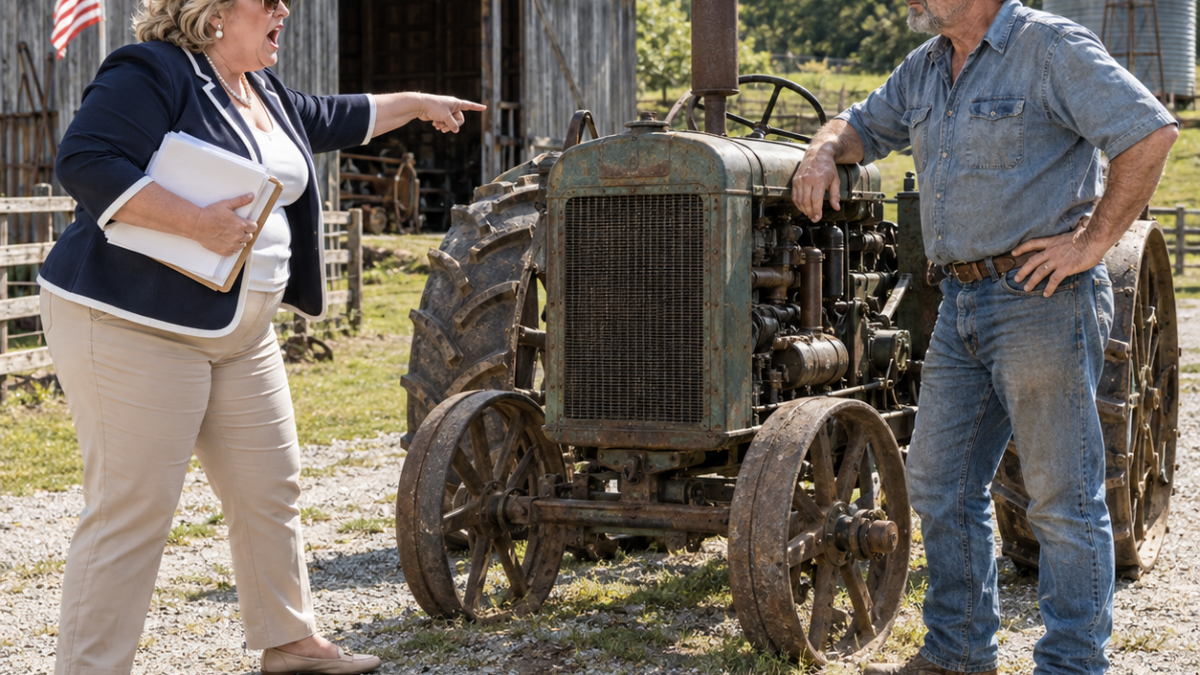
PART 2
I didn’t sleep much that night.
Not because I was afraid Karen would send someone over before sunrise.
Because once I started reading the Oak Meadows covenants, I realized something far more useful than anger.
Karen wasn’t nearly as careful as she believed she was.
The rule she had quoted existed.
Article Four.
Section Three.
Paragraph B.
No unlicensed, inoperable, abandoned, or junk motor vehicles may be stored in open view.
If I stopped there, Karen had an argument.
A bad one, in my opinion, because Grandpa’s Fordson was agricultural machinery rather than an abandoned sedan balanced on concrete blocks.
But it was enough for her to create trouble.
So I kept reading.
That was a habit the Army drilled into me.
Never stop at the paragraph someone wants you to read.
Read the next one.
Then the definitions.
Then the exceptions.
Then the procedural section.
Rules are rarely dangerous because they are complicated.
They are dangerous because most people become tired before reaching the part that protects them.
Around midnight, I found Article Six.
Architectural Control.
That section covered exterior modifications, landscaping, structures, decorative items, and visual features.
Five pages in, under Section Five, paragraph D, I found language addressing objects of artistic, cultural, or historical significance.
Those items could be exempted from ordinary restrictions after submission to the Architectural Review Committee.
I leaned back in my chair.
There it was.
Not victory.
An opening.
And openings are enough.
The next morning, I drove into town and bought a new binder.
The good kind.
Heavy cover.
Clear front sleeve.
Tabbed dividers.
If Karen wanted bureaucracy, I was going to give her bureaucracy.
I titled the first page:
PROPOSAL FOR CURATED DISPLAY OF A HISTORICALLY SIGNIFICANT AGRICULTURAL ARTIFACT
That alone made me smile.
Then I spent most of the morning documenting the tractor.
1923 Fordson Model F.
Family-owned.
Used on the Callahan farm in Nebraska.
Original engine block.
Original iron wheels.
Original steering assembly.
Family photographs from the 1930s.
Grandpa standing beside it in work overalls.
A photograph of my father as a boy sitting on the fender.
A picture of me at maybe six years old with one hand on the steering wheel.
I included a short history of the Fordson.
I did not embellish.
I didn’t need to.
Machines like that helped mechanize American agriculture at a time when many farms were moving away from horses.
To a collector, an original survivor had historical significance whether Karen liked rust or not.
I added pictures of similar tractors displayed in agricultural museums.
Then I requested a formal hearing before the Architectural Review Committee.
According to the bylaws, that committee had three members.
Decisions required a majority.
The HOA president happened to chair it.
But the president was not the committee.
That difference would matter.
I hand-delivered the packet to the official HOA drop box.
I photographed myself placing it inside.
Date.
Time.
Location.
Everything.
Then I waited.
The forty-eight-hour deadline expired the following afternoon.
No tow truck appeared.
Instead, an email arrived.
FROM: KAREN THORNE
SUBJECT: FORDSON VIOLATION
I opened it.
Mr. Callahan,
The Architectural Review Committee has reviewed your submission and determined that the item in question is a vehicle, not a historical display. Your request is denied.
You have twenty-four additional hours to remove the nuisance before daily fines begin.
Karen Thorne
President
Oak Meadows Homeowners Association
I read it twice.
Then laughed.
Not because the denial surprised me.
Because she had written:
The Architectural Review Committee has reviewed your submission.
There had been no meeting.
I knew that because Mr. Henderson, the man who had been watering flowers across the street, happened to be one of the other two committee members.
I had learned that earlier that morning.
He was outside collecting his newspaper when I walked by.
“Morning, Jack.”
“Morning.”
He glanced toward the Fordson.
“She still after you?”
“She denied my architectural application.”
His eyebrows rose.
“What application?”
Exactly.
“You’re on the committee, right?”
“Unfortunately.”
“You review anything involving my tractor?”
“No.”
“Have you attended an ARC meeting since yesterday?”
He stared at me.
Then slowly shook his head.
“No.”
“Thank you.”
I started to walk away.
“Jack.”
I turned.
Mr. Henderson leaned closer.
“You didn’t hear this from me.”
“I’m listening.”
“Karen doesn’t really hold committee meetings unless somebody makes a fuss. She decides things, then sends us copies later.”
“Does the bylaw allow that?”
He gave me a tired smile.
“You already know the answer.”
I did.
The committee had three members.
A majority vote was required.
Karen had just created a written record claiming a review had occurred when one member knew nothing about it.
That afternoon I started another binder.
On the spine, as a joke to myself, I wrote:
OPERATION RUSTY JUSTICE.
By the end of the month, it stopped being funny.
Karen began assessing one hundred dollars per day.
The first notice arrived Monday.
The second Tuesday.
Then Wednesday.
Each envelope went into the binder.
I numbered them.
Photographed them.
Logged delivery dates.
Meanwhile, I did something Karen probably never expected.
I started talking to my neighbors.
Oak Meadows looked peaceful from the outside.
Fresh mulch.
Clean sidewalks.
New SUVs.
Little decorative flags near mailboxes.
But once people realized I had been targeted by Karen, stories came out everywhere.
Mr. Henderson had been fined because his birdbath was two inches taller than the approved guideline.
Two inches.
He also received a written warning because his garden hose was “improperly coiled.”
David Miller, next door, had been forced to remove his ten-year-old son’s basketball hoop.
Karen claimed it encouraged “loitering.”
“Loitering?” I asked.
David nodded bitterly.
“My kid was shooting baskets.”
Maria Flores lived three houses farther down.
She grew tomatoes.
Beautiful tomatoes.
Her backyard plants were tied to wooden stakes.
Karen cited the stakes as “unsightly agricultural implements.”
Maria showed me the notice.
“You know what the funniest part is?” she asked.
“What?”
“She buys tomatoes from me every summer.”
I stared at her.
Maria shrugged.
“Not anymore.”
Then there were the Patels.
Their violation?
A welcome mat.
It had a cartoon dog and the words HOPE YOU LIKE DOG HAIR.
Karen classified it as “excessively whimsical.”
I thought David was joking when he told me.
He wasn’t.
The more I listened, the more I realized this wasn’t really about appearance.
It was control.
Karen had discovered that most people would rather pay fifty dollars than fight.
Then one hundred.
Then two hundred.
Once that habit formed, she could turn personal preference into policy.
The tractor was simply the first thing on my property important enough that I refused.
A week into the fines, I called Dave Riley.
Dave and I had served together years earlier.
We were both engineers, but he had eventually gone through an Army legal program.
By retirement, he had become a civilian attorney specializing in property disputes and contracts.
He answered with the same voice I remembered.
“Jack Callahan. Either somebody died or you broke something.”
“Nobody died.”
“So you broke something.”
“Not yet.”
“That word concerns me.”
“I have an HOA problem.”
There was silence.
Then laughter.
“After combat engineering, this is what finally gets you?”
“Apparently.”
I explained everything.
The tractor.
Karen.
The forty-eight-hour order.
The historical exemption.
My application.
Her fake committee review.
The fines.
Dave stopped laughing.
“Send me the bylaws.”
I did.
He called back an hour later.
“Jack.”
“Yeah?”
“She screwed up.”
“I know.”
“No, I mean she really screwed up.”
He walked me through it.
The HOA had procedures.
Karen had skipped them.
If her denial was invalid, the fines resting on that denial could also be challenged.
More importantly, if she moved or damaged the tractor while the dispute was active, the case became much bigger than an HOA fine.
“How valuable is the Fordson?” he asked.
“Sentimentally?”
“No. In dollars.”
“I don’t know.”
“Find out.”
“I’m not selling it.”
“Doesn’t matter.”
He paused.
“Jack, right now she thinks she’s threatening a rusty yard ornament. I want her to know exactly what she’s threatening.”
That was smart.
“Certified appraisal?”
“Certified appraisal.”
“And Dave?”
“Yeah?”
“She threatened to tow it.”
“Then get cameras.”
The next day I installed a motion-activated security camera in my workshop window.
The camera faced the tractor, driveway, and front portion of the yard.
It uploaded video to cloud storage.
No memory card to remove.
No footage to lose.
Everything off-site.
Then I started looking for antique farm-equipment appraisers.
That was how I found Arthur Vance.
Arthur lived three hours away and had spent decades buying, restoring, judging, and appraising vintage farm machinery.
When I sent photographs, he called me.
“Where did you get this?”
“Family farm.”
“How long has it been in the family?”
“Since my grandfather.”
“Original engine?”
“As far as I know.”
“Wheels?”
“Yes.”
“Magneto still there?”
“Yes.”
He went quiet.
“I’d like to see it.”
Arthur arrived Friday morning.
He was in his late sixties, wore worn boots, and carried a flashlight, magnifying glass, and notebook.
The second he saw the tractor, his face changed.
Not dramatically.
But enough.
He walked around it once.
Then again.
“Don’t restore this yet.”
That surprised me.
“Why?”
“People ruin history trying to make it shiny.”
He crouched beside the engine.
“This is honest.”
“Honest?”
“Original wear. Original hardware. Original surfaces. You start replacing everything and suddenly it’s a replica wearing an old serial number.”
I watched him examine the tractor for nearly two hours.
He checked casting marks.
Fasteners.
Engine numbers.
Wheel condition.
Steering assembly.
He inspected photographs of my grandfather.
Then he stood beneath the oak, wiping his hands on a rag.
“What did you think it was worth?”
“Maybe ten thousand?”
He smiled.
“Try again.”
“Twenty?”
“In this condition, with documented family provenance, I’d put a conservative range somewhere around twenty-five to thirty-five.”
I stared at him.
“Thousand?”
Arthur laughed.
“Yes, Jack. Thousand.”
He looked back at the tractor.
“And that’s conservative. Collector markets are strange. The right buyer might do something stupid.”
I thought of Karen.
“She called it scrap.”
Arthur turned toward the manicured neighborhood.
“People pay a lot of money to live around things with no history.”
He nodded at the Fordson.
“Then they get offended when history looks old.”
Before leaving, he promised a formal report.
When it arrived six days later, his final number was even higher.
Forty thousand dollars.
Unrestored.
As-is.
I called Dave.
“Forty.”
“Forty what?”
“Grand.”
Silence.
Then:
“Oh, Karen.”
I could hear his smile through the phone.
We prepared a certified letter.
It included the appraisal.
The disputed-review evidence.
A copy of the bylaws.
A formal demand that the fines stop until the ARC process was properly completed.
And one critical paragraph:
The association was now on express notice that the tractor was a documented, appraised asset valued at approximately $40,000.
Any unauthorized seizure, relocation, alteration, or damage would be pursued through every legal remedy available.
I sent it certified.
Return receipt.
Karen signed for it personally.
Two days later, the fines stopped.
No email.
No apology.
Nothing.
For two weeks, Oak Meadows went strangely quiet.
I almost allowed myself to believe she had spoken with a lawyer and finally understood the danger.
Dave didn’t.
“She’s either backing down,” he said, “or getting angry enough to do something incredibly useful to us.”
“Useful?”
“For litigation.”
I didn’t like that prediction.
But he was right.
During that quiet period, something else happened.
Arthur introduced me to a collector-auction specialist named Julian Croft.
Julian worked for a national auction house dealing in antique machinery, transportation artifacts, industrial collectibles, and pieces of Americana.
I called only because Dave suggested establishing wider market evidence.
Julian became excited within five minutes.
“You have single-family provenance?”
“Yes.”
“Photographs?”
“Several generations.”
“Original mechanical components?”
“Mostly.”
“And it hasn’t been cosmetically over-restored?”
“No.”
“Jack, collectors love survivors.”
I looked at Grandpa’s photograph sitting on my desk.
“I planned to restore it.”
“Maybe someday somebody will. But you might want to consider selling it as found.”
“No.”
The answer came too quickly.
Julian did not push.
“Fair enough. I’ll send you recent comparables.”
That night, I sat in my workshop beside the tractor.
The bare bulb above us threw long shadows.
I placed one hand on the metal hood.
Cold.
Rough.
Familiar.
Selling the Fordson felt wrong.
Grandpa had asked me to get it running again.
Not sell it.
But what had he really asked?
Preserve a machine?
Or preserve what it represented?
Hard work.
Independence.
A refusal to waste something valuable because other people couldn’t see its worth.
I thought about Sarah too.
My wife had always teased me because I could become emotionally attached to bolts, tools, engines, even old lumber.
“You don’t collect objects,” she once told me. “You collect stories.”
She had been right.
The tractor was a story.
Maybe restoring it privately wasn’t the only way to honor that story.
Maybe letting the world see what it was mattered too.
But I still wasn’t ready.
Then Karen made the decision easier.
Tuesday morning.
9:17.
I was in my office on a video call with Dave when my computer chimed.
MOTION DETECTED — WORKSHOP ZONE.
I clicked the alert.
A flatbed tow truck was backing down my driveway.
For a second, my brain refused to process what I was seeing.
Then two men got out.
One pulled heavy chains from a side compartment.
The other lowered the truck bed.
And behind them walked Karen Thorne.
Neon-yellow safety vest.
Clipboard.
Blue tracksuit underneath.
I leaned toward the screen.
“Dave.”
“What?”
“She’s here.”
“Who?”
“Karen.”
“With?”
“A tow truck.”
Dave stopped breathing for a second.
“Camera recording?”
“Yes.”
“Cloud?”
“Yes.”
“Do not go outside.”
“What?”
“You heard me.”
“They’re touching the tractor.”
“Jack.”
His voice changed.
Military voice.
The one we used when somebody needed to stop acting emotionally and follow procedure.
“Do not confront them. Call the sheriff non-emergency line if necessary. But do not give her any argument that you threatened workers or interfered physically.”
I stared at the monitor.
Karen pointed toward Grandpa’s tractor.
One worker walked over.
“Dave.”
“I know.”
“She signed the appraisal notice.”
“I know.”
“She knows it’s worth forty thousand.”
“I know.”
My hands were shaking.
Not with fear.
Rage.
One worker wrapped a chain around the front axle.
The other connected a winch hook.
Karen stood back with folded arms.
The cable tightened.
Nothing happened.
Grandpa’s Fordson had been resting on iron wheels in soft ground.
The machine resisted.
The tow operator adjusted the cable.
Then pulled harder.
The tractor shifted.
A deep groove appeared in my lawn.
The front end twisted slightly.
Then came a sound I will never forget.
Crack.
Even through the camera microphone it was sharp.
Dry.
Final.
I leaned closer.
A section of the original wooden steering wheel had splintered where the chain had pressed against it.
For a moment, everything inside me went white.
I stood.
“Jack.”
Dave’s voice came through the speaker.
“Sit down.”
“They broke it.”
“I know.”
“They broke Grandpa’s steering wheel.”
“And the camera saw it.”
“That doesn’t fix it.”
“No.”
His voice softened.
“It doesn’t.”
I wanted to go outside.
I wanted to grab the chain.
I wanted to ask Karen whether destroying a century-old piece of a dead man’s history made the neighborhood prettier.
Instead, I sat down.
Sometimes discipline feels heroic.
Sometimes discipline feels like cowardice.
That morning, it felt like being chained to the chair while somebody dragged my past away.
The tow operators repositioned the cable.
This time the tractor moved.
Its iron wheels tore parallel trenches through the yard.
They dragged it onto the flatbed.
As the engine block passed the side rail, metal scraped metal.
Another gouge.
Karen never flinched.
Once the tractor was secured, a worker handed her paperwork.
She signed.
Then handed him an envelope.
Payment.
Authorization.
Evidence.
The truck pulled away.
Karen watched it go.
Then walked to my front door and taped a notice to the glass.
She looked directly toward the house.
For one strange second I wondered whether she knew I was watching.
Then she turned and left.
I remained inside for ten minutes.
Dave stayed on the call.
Neither of us spoke much.
Finally, I walked outside.
The space beneath the oak was empty.
That hurt more than I expected.
Ruts ran from the tree to the driveway.
Splintered wood from the steering wheel lay in the grass.
I picked up one piece.
It fit in the center of my palm.
Then I walked to the front door.
Karen’s notice read:
NUISANCE ABATEMENT COMPLETED.
The association had removed the prohibited junk vehicle.
A $500 removal fee would be assessed.
Failure to pay could result in a lien.
I stared at it.
Then started laughing.
Not because it was funny.
Because sometimes human arrogance becomes so complete that your mind has no other response.
She had received a certified appraisal.
She had signed for a legal warning.
She had been told the ARC decision was disputed.
Then she personally hired men to enter my property, damage a $40,000 antique, remove it without consent, and hand me a bill for the privilege.
I called Dave.
“She left me a five-hundred-dollar charge.”
There was silence.
Then he said:
“I almost admire the commitment.”
“To what?”
“Self-destruction.”
The next forty-eight hours moved quickly.
We identified the tow company from the truck video.
A few calls led to an impound yard on the industrial side of town.
Dave contacted the owner.
His first response was predictable.
“We were hired by the HOA.”
Dave emailed the appraisal.
Then the consignment discussions.
Then the certified notice Karen had signed.
Then a still image of the broken steering wheel.
The owner called back fifteen minutes later.
“Mr. Riley, we’re moving it inside.”
Smart man.
The Fordson was placed under cover.
Nobody touched it again.
Then Dave drafted the complaint.
I had imagined legal revenge would feel exciting.
It didn’t.
Sitting in his office while he read the claims felt heavy.
Conversion.
Unauthorized exercise of control over personal property.
Trespass to chattels.
Property damage.
Breach of fiduciary duty.
Improper enforcement.
Potential tortious interference if an auction transaction was affected.
Legal fees.
Possible punitive damages depending on what the court allowed.
The defendants would include Oak Meadows.
And Karen personally.
When he said that, I looked up.
“Personally?”
“Yes.”
“She was acting as president.”
“Board protection has limits. Insurance has limits too. Intentional misconduct is different from an honest board mistake.”
He tapped the certified receipt.
“She knew the value.”
Then Karen’s email.
“She knew the dispute.”
Then Sarah Miller’s written statement confirming the ARC never met.
“She knew she had bypassed procedure.”
Then the video still showing her directing the tow.
“And she participated personally.”
Dave leaned back.
“The association can argue about interpretation. Karen has a harder problem.”
We filed.
A process server delivered papers to the HOA.
Then Karen.
News moved quickly in Oak Meadows.
David Miller texted me.
YOU REALLY SUED THEM?
I answered:
Yes.
Three dots appeared.
Then:
Good.
Maria wrote:
ABOUT TIME.
Mr. Henderson called instead.
“You all right?”
“I’m fine.”
“You don’t sound fine.”
I looked through the workshop window at the empty patch beneath the oak.
“They took Grandpa’s tractor.”
“Temporary.”
I didn’t answer.
Mr. Henderson continued.
“You know, Jack, I’ve watched that woman bully people for five years.”
“I know.”
“Nobody ever made her stop.”
“That’s not why I’m doing this.”
“I know.”
He paused.
“That’s why maybe you will.”
The HOA called an emergency board meeting.
For once, Karen actually convened the board.
The other directors were Gerald Perkins, an accountant, and Brenda Lowell, a retired teacher.
Neither had paid much attention to the day-to-day enforcement decisions.
That was part of the problem.
Karen liked passive board members.
Passive board members liked having someone else do the work.
Everyone benefited until the lawsuits arrived.
Sarah Miller later told me what happened.
Gerald had printed the complaint.
He went claim by claim.
Karen reportedly dismissed everything.
“He’s bluffing.”
Gerald disagreed.
“He has video.”
“So?”
“He has certified mail proving you were told it was worth forty thousand dollars.”
“It wasn’t worth that.”
“A certified appraiser says otherwise.”
“He found somebody to inflate it.”
Gerald pointed to the ARC section.
“What meeting did we hold?”
Karen became angry.
“That isn’t relevant.”
“It’s the foundation of the fines.”
“I’m president.”
“That isn’t what I asked.”
Brenda finally joined in.
“Karen, did Sarah and Henderson vote on his application?”
Karen slammed the binder shut.
“I made the appropriate determination.”
Gerald reportedly sat back and whispered:
“Oh God.”
Then the insurance company entered the story.
Oak Meadows carried liability coverage.
Like most associations, the board had assumed that meant every legal mistake would simply become the insurer’s problem.
It did not work that way.
The carrier reviewed my documentation.
Appraisal.
Certified receipt.
ARC records.
Sarah’s statement.
Security video.
Tow invoice.
Karen’s signed authorization.
The insurer sent what Dave called a reservation-of-rights letter.
Translation:
We may defend some of this.
We may not pay all of it.
Especially if intentional misconduct is proven.
For the first time, Karen faced the possibility that the shield she had used for years—the HOA itself—might not cover her personally.
Her behavior changed.
Not toward me.
She still refused contact.
But the neighborhood noticed she stopped driving around checking mailboxes.
The Compliance Queen suddenly stayed indoors.
I still had another decision to make.
The auction.
Julian called after hearing what happened.
“What condition is the tractor in?”
“Damaged.”
“How badly?”
“Steering wheel spoke broken. Some scraping.”
“Repairable?”
“Arthur thinks so.”
There was a pause.
“Jack, this story changes things.”
“I’m not interested in exploiting Grandpa.”
“I understand.”
“No, I mean it.”
“I know.”
His voice became more serious.
“I’m not suggesting we make a circus out of him. But provenance isn’t only where an object came from. It’s what happened to it.”
I knew where he was going.
“The tractor was nearly discarded as junk by people who didn’t understand what it was,” he said. “Collectors care about that.”
I looked at Grandpa’s old photograph.
“What do you think it could bring?”
“I don’t know anymore.”
“That’s not an answer.”
“It’s the truthful one.”
He paused.
“But with the attention this case is getting? More than before.”
I had not realized the case was getting attention.
Not yet.
That changed when a local reporter called.
Jessica Chang.
Regional television.
She had received the lawsuit from a source.
Possibly somebody in Oak Meadows.
Possibly the courthouse.
She wanted an interview.
My first instinct was no.
Dave’s was different.
“Do it.”
“You hate media.”
“I hate clients talking to media without preparation.”
“Different?”
“Very.”
He helped me decide what I could safely say.
Facts.
No insults.
No speculation.
No threats.
I agreed.
Jessica interviewed me on my front lawn.
Behind me, the tow-truck ruts were still visible.
She asked about my military service.
Sarah.
Retirement.
Grandpa.
Then the Fordson.
I showed her the old photographs.
One showed Grandpa standing beside the tractor as a young man.
Jessica stared at it.
“That’s the same machine?”
“Yes.”
“And the HOA called it junk?”
“Yes.”
“Did they know about the appraisal?”
I showed her the return receipt.
Karen’s signature.
Jessica looked at her cameraman.
Then back at me.
“They knew.”
“They were notified.”
“And they towed it anyway.”
“Yes.”
“Can we show the video?”
Dave allowed a short excerpt.
The tow truck.
The chain.
Karen in her safety vest.
The tractor being dragged away.
Then came the moment that changed the public story.
Jessica asked Karen for comment.
Karen accepted.
I still don’t understand why.
Maybe because people who have controlled small rooms for too long begin believing they can control every room.
She stood outside her house in front of a perfectly clipped hedge.
Jessica asked whether she regretted ordering the Fordson removed.
Karen said:
“No.”
Then:
“The bylaws are clear. Mr. Callahan was storing an inoperable piece of junk in public view. I have a responsibility to preserve community standards.”
Jessica asked:
“What about the $40,000 certified appraisal?”
Karen smiled.
“Anybody can get a piece of paper.”
Then Jessica asked whether, knowing everything she knew now, Karen would make the same decision again.
That was her chance.
All she needed to say was:
We are reviewing the matter.
Or:
I cannot comment because of litigation.
Instead:
“I would do it again.”
That sentence aired at six o’clock.
By eight, Oak Meadows had a problem far larger than my lawsuit.
The news clip spread.
Vintage machinery forums found it.
Military communities shared it.
Collectors shared photographs of their own restored tractors.
People who had never heard of a Fordson Model F suddenly knew what Karen had called one.
The association’s public phone number became useless.
Emails poured in.
Some were supportive of me.
Some were simply angry at HOAs in general.
A few were cruel enough that I asked people publicly not to harass residents.
Most Oak Meadows homeowners had nothing to do with Karen’s decision.
I refused to let them become collateral damage.
But politically, inside the association, Karen was finished.
Gerald called another board meeting.
This one had a specific agenda.
Confidence in the president.
Karen reportedly entered carrying three binders.
She left without them.
Gerald spoke first.
“Karen, the association is facing substantial liability.”
She interrupted.
“It is frivolous.”
“Our insurer does not think so.”
“They’re protecting themselves.”
“They’re protecting themselves from us.”
Brenda spoke next.
“You made the ARC decision without us.”
“I had authority.”
“No.”
“You approved my leadership for years.”
Brenda’s eyes filled.
“That doesn’t make this right.”
Karen turned to Gerald.
“You’re going to side with that man after everything I’ve done for Oak Meadows?”
Gerald answered:
“I’m siding with the financial survival of three hundred homeowners.”
The vote was two to one.
Karen Thorne was removed as president.
The news reached me through David before the meeting had even ended.
His text said:
SHE’S OUT.
I sat in my workshop.
The space beneath the oak was still empty.
I should have felt triumphant.
Instead, I thought:
Good.
Then I went back to sorting Grandpa’s old tools.
There was still the auction.
By then, I had decided.
I called Julian.
“Sell it.”
“You’re certain?”
“No.”
“That’s fair.”
“I want the story handled respectfully.”
“It will be.”
“And I want Grandpa’s name in the catalog.”
“Absolutely.”
The Fordson was transported from the impound yard to a conservation shop associated with the auction house.
Not restored.
Conserved.
That difference mattered.
They repaired the steering wheel using period-appropriate wood.
The gouge was stabilized but not erased.
Arthur argued strongly against over-restoration.
“Leave the scars,” he said.
“Even the tow damage?”
“Especially that.”
I frowned.
“Why?”
“Because now it’s part of the tractor’s history.”
That took me time to accept.
But he was right.
Machines, like people, do not become more authentic by pretending nothing ever happened to them.
The auction house cataloged the Fordson as Lot 147.
1923 Fordson Model F.
Original Callahan family provenance.
Nebraska agricultural history.
Documented multigenerational ownership.
They included the old photograph of Grandpa.
And one sentence about the recent legal dispute.
Nothing sensational.
Enough.
Then national collector publications picked it up.
By auction day, there were bidders registered from several states.
I did not attend in person.
I watched from home.
Dave called.
“You ready?”
“No.”
“Excellent.”
The livestream began.
Furniture.
Signs.
Vintage gasoline pumps.
Engines.
A restored delivery truck.
Then Lot 147 approached.
My stomach tightened.
I could see the Fordson beneath auction lights.
It looked smaller than it had under Grandpa’s oak.
Maybe because memory had always made it enormous.
The auctioneer introduced it.
He talked about originality.
Family provenance.
Historical agricultural significance.
Then he mentioned the unusual modern chapter in its life.
Bidding opened at twenty thousand.
My chest tightened.
Twenty-five.
Thirty.
Thirty-five.
Arthur’s first estimate disappeared in under a minute.
Forty.
Forty-five.
Fifty.
Dave whistled through the phone.
“Jack.”
“I know.”
Fifty-five.
Sixty.
The auctioneer barely slowed.
Sixty-five.
A bidder representing a museum joined at seventy.
Another bidder on the phone answered seventy-five.
Eighty.
I stood up from my chair without realizing it.
Dave laughed.
“Sit down before you fall down.”
Eighty-five.
The room on the livestream murmured.
The museum representative hesitated.
Then lowered his paddle.
“Eighty-five thousand once…”
Silence.
“Eighty-five twice…”
A man wearing a cowboy hat near the back lifted his paddle.
“Ninety.”
The auctioneer almost grinned.
“Ninety thousand.”
Dave yelled something I won’t repeat.
The phone bidder returned.
Ninety-five.
The cowboy-hat bidder considered.
Then smiled.
He tipped his hat toward the phone clerk.
Done.
The auctioneer raised the gavel.
“Ninety-five thousand dollars once.”
My hands went cold.
“Twice.”
I looked at Grandpa’s photograph on my desk.
“Sold.”
The gavel fell.
Ninety-five thousand dollars.
For the “pile of rust.”
I should have shouted.
Instead, I sat down.
Dave was talking.
I barely heard him.
My eyes filled.
Not because of the money.
Because somewhere between Karen’s violation notice and that auction hammer, Grandpa’s tractor had become something bigger than either of us imagined.
The world had looked at it.
And recognized what Karen couldn’t.
Value does not always arrive polished.
Sometimes value looks weathered.
Greasy.
Faded.
Forgotten.
Sometimes it sits beneath an oak tree until somebody with a clipboard decides it should disappear.
I picked up Grandpa’s photograph.
“You were right,” I whispered.
Good bones.
The next morning, Gerald called Dave.
The HOA wanted to settle.
Immediately.
The $95,000 auction result changed everything.
Now there was no debate about whether my tractor had meaningful market value.
A real buyer had paid real money.
Karen’s decision to call it valueless junk looked worse with every zero.
Settlement discussions lasted several weeks.
Despite what angry neighbors wanted, I did not demand that every Oak Meadows homeowner be financially punished for Karen’s conduct.
The association had liability.
But most residents never authorized the tow.
Some had actively opposed Karen.
So Dave structured the resolution carefully.
The HOA voided every fine associated with the tractor.
The five-hundred-dollar towing charge disappeared.
The association covered my legal expenses.
It paid for full restoration of my lawn.
It contributed to costs associated with the damage and disruption caused by the unauthorized tow.
The association issued a formal written apology acknowledging procedural failures and improper entry onto my property.
Karen separately resolved the personal claims against her.
The precise amount remained confidential.
What mattered to me was that she personally bore consequences rather than allowing every cost to disappear into association insurance and homeowner dues.
The settlement also required something more important than money.
Oak Meadows had to rewrite its enforcement procedures.
No president could unilaterally claim a committee had acted.
Written votes.
Recorded meetings.
Appeal rights.
Notice periods.
Conflict-of-interest rules.
Independent legal review before seizures, liens, or removal of significant private property.
Sarah Miller joined the reorganized Architectural Review Committee.
Mr. Henderson stayed too.
One of their first acts was rejecting the concept of “excessively whimsical” welcome mats.
Maria celebrated by buying the Patels a new one.
It said:
WELCOME. SOME ASSEMBLY REQUIRED.
Nobody fined them.
Karen stopped appearing around the neighborhood.
Her house went up for sale months later.
I heard she and her husband moved.
I never asked where.
By then, I was tired of thinking about her.
That surprised people.
They expected revenge to taste sweeter.
It did, briefly.
Watching her authority disappear felt satisfying.
Watching the auction cross $95,000 felt satisfying.
Reading the HOA apology felt satisfying.
But anger is expensive fuel.
It burns hot.
Then leaves nothing useful behind.
Grandpa taught me not to waste good fuel.
So I decided to do something with the money.
Not all of it.
Some went into retirement savings.
Some covered practical things.
But a portion became the Joseph Callahan Memorial Community Garden.
The idea came from Maria.
We were standing near the common area one evening.
It was a useless strip of HOA land nobody enjoyed.
Grass.
Sprinklers.
Nothing else.
Maria looked at it and said:
“You know what Karen would hate?”
I laughed.
“Dangerous opening.”
“Tomatoes.”
I looked at her.
She pointed toward the field.
“A lot of tomatoes.”
That was how it started.
I brought the proposal to the new board.
Raised beds.
Irrigation.
Tool shed.
Composting station.
Small seating area.
Plots for families.
One section for children.
One for residents who couldn’t maintain their own gardens.
The old board would have needed eighteen forms and three soil studies.
Gerald approved it after an actual vote.
Construction took six weekends.
David brought lumber.
Mr. Henderson helped install irrigation.
The Patels painted plot markers.
Sarah organized volunteers.
Maria became unofficial commander of vegetables.
Nobody argued.
You did not argue with Maria about tomatoes.
By spring, the beds were full.
Tomatoes.
Peppers.
Herbs.
Beans.
Flowers.
Zucchini so large Mr. Henderson began giving them away to anyone who slowed down near his house.
Kids who had once been told basketball encouraged loitering now ran around the garden carrying watering cans.
One Saturday, I saw David’s son—the boy who lost the hoop—teaching a smaller child how to tie a tomato vine.
That did something to me.
Sarah used to say I collected stories.
Now I had traded one old machine for dozens of new stories growing in raised beds.
Grandpa would have understood that.
He spent his life using machines to make things grow.
Maybe this was restoration after all.
Several months later, I received a letter from the man who bought the Fordson.
His name was Thomas Wade.
He owned a large agricultural-history collection in Kansas.
He enclosed photographs.
The tractor sat in a restored barn among early engines, plows, trucks, and farm equipment.
A small placard stood beside it.
CALLAHAN FAMILY FORDSON
1923 MODEL F
NEBRASKA
Below that was a copy of Grandpa’s photograph.
Thomas wrote:
Mr. Callahan,
I wanted you to know I did not purchase your grandfather’s tractor to hide it in a private warehouse.
My collection is opened several weekends each year to school groups and agricultural-history organizations.
The tractor will remain largely as your family preserved it.
We repaired only what was necessary.
I hope you can visit someday.
I read that paragraph three times.
Then I cried.
Quietly.
I hadn’t cried when the gavel fell at ninety-five thousand.
I cried then.
Because selling had always felt like breaking my promise.
But Grandpa had said:
Don’t let her just rust away.
He never said:
Keep her where only you can see her.
A month later, I visited Kansas.
Thomas met me outside the barn.
He was the man in the cowboy hat.
The ninety-thousand-dollar bidder.
Not the winner.
He had lost to the phone bidder—or so I thought.
Turns out the telephone bid had been placed by an agent working for him because Thomas had registered two bidding options before deciding to bid personally.
He laughed when I figured it out.
“I wanted that tractor.”
“Apparently.”
We walked into the barn.
There she was.
Grandpa’s Fordson.
Still faded.
Still scarred.
Still unmistakably ours.
I approached slowly.
Thomas said nothing.
I placed my hand on the hood.
For one second, I was five years old again.
Pop.
Pop.
Pop.
Grandpa’s arm around me.
Nebraska dirt beneath iron wheels.
“Want to hear something?” Thomas asked.
I turned.
He smiled.
“We got her running.”
I couldn’t speak.
He walked around the tractor.
Checked fuel.
Adjusted something near the magneto.
Then began the starting procedure.
The engine coughed.
Stopped.
He tried again.
Another cough.
Then—
Pop.
Pop.
Pop.
I closed my eyes.
A hundred memories hit me at once.
Grandpa laughing.
My father shouting over engine noise.
A field under July sun.
Grease beneath my fingernails.
Sarah teasing me because every machine had “a personality.”
The promise.
Get her running again, Jack.
I opened my eyes.
The Fordson was vibrating gently beneath my hand.
Running.
Thomas had fulfilled the promise I thought I had abandoned.
I stepped away because my knees had gone weak.
Thomas shut the engine down.
For a while, neither of us said anything.
Finally, he asked:
“You okay?”
I laughed through tears.
“Yeah.”
I looked at the tractor.
“More than okay.”
On the flight home, I thought about Karen.
Not with anger.
With something closer to disbelief.
She had looked at that machine and seen trash.
Her entire worldview depended on surfaces.
Shiny good.
Rust bad.
Uniform good.
Different bad.
Compliant good.
Independent bad.
But my grandfather’s Fordson taught the neighborhood exactly the opposite.
What looks worn may be valuable.
What looks old may carry history.
What refuses to fit may be worth protecting.
And what one person dismisses as junk may be treasured by somebody who actually understands it.
The garden flourished that summer.
We placed a small sign near the entrance.
JOSEPH CALLAHAN MEMORIAL COMMUNITY GARDEN
Underneath, someone—probably Maria—added:
GOOD THINGS GROW HERE.
I left it.
One evening, I found Mr. Henderson pulling weeds.
He leaned on his hoe.
“You know something, Jack?”
“What?”
“I thought that old tractor was ugly too.”
I stared at him.
He grinned.
“Not ninety-five-thousand-dollars ugly.”
I laughed.
“Thanks.”
“But I never wanted it removed.”
“That improves your position.”
He looked around the garden.
Kids were watering plants.
David and Sarah Miller were arguing cheerfully about peppers.
Maria was giving unsolicited tomato advice.
“You didn’t just win,” Henderson said.
“I didn’t do this alone.”
“No.”
He nodded.
“That’s why it worked.”
I thought about that.
Karen’s power had depended on everyone remaining separate.
One violation at a time.
One homeowner at a time.
One private frustration at a time.
My tractor changed that because everyone watched what happened.
They watched me use the rules instead of fear them.
They watched Karen violate those same rules.
Then they watched the consequences arrive.
After that, people started speaking.
Not shouting.
Speaking.
Asking.
Requesting minutes.
Reading budgets.
Showing up at meetings.
Volunteering.
Voting.
It turned out an HOA president only looks all-powerful when nobody else wants to participate.
Gerald eventually became a decent interim president.
I never expected that.
He was still cautious.
Still liked spreadsheets more than humans.
But caution was useful after Karen.
Every major decision went through formal votes.
Financial reports were public.
Architectural denials required written reasons.
Owners could appeal.
Board members rotated.
No president got their own little kingdom.
At the first annual meeting after Karen left, turnout tripled.
Someone nominated me for president.
I declined before they finished the sentence.
Dave laughed when I told him.
“Why?”
“I already served twenty years in one bureaucracy.”
“You’d be good.”
“That sounds like punishment.”
“What if nobody else wants the job?”
“Then I’ll nominate Maria.”
Maria, sitting two chairs away, pointed a fork at me.
“Do that and I’ll plant tomatoes in your bedroom.”
She was elected to the garden committee instead.
A more dangerous position.
Years later, people in Oak Meadows still occasionally call it the Tractor War.
I hate that name.
It makes the whole thing sound amusing.
Some parts were.
Karen in a neon safety vest ordering a tow truck around like a field marshal certainly became funny with distance.
But the broken steering wheel wasn’t funny.
Watching Grandpa’s tractor disappear down the street wasn’t funny.
Standing beneath an empty oak tree wasn’t funny.
Real conflicts have costs even when you win.
That was why the ending mattered.
If the story had ended with Karen losing power and me receiving money, it would have remained a revenge story.
I wanted something better.
The garden became that.
The tractor running again in Kansas became that.
Neighbors talking to one another became that.
Even Gerald becoming a competent HOA president became that.
The best revenge wasn’t making Karen miserable forever.
It was building a neighborhood that no longer needed someone like Karen to tell it what community meant.
One September evening, I sat beneath the oak beside my workshop.
The place where the Fordson had once rested was covered in grass again.
No ruts.
No tow damage.
No violation sign.
Just shade.
I had placed a small iron bench there.
On the bench beside me sat Grandpa’s photograph.
The same one from the auction catalog.
Young man.
Work clothes.
One hand resting proudly against his tractor.
I wondered what he would think of everything that happened.
The ninety-five thousand dollars.
Television cameras.
Lawyers.
HOA meetings.
Community garden.
His Fordson now teaching schoolchildren in Kansas.
I could almost hear him.
You made a hell of a fuss over an old tractor.
He probably would have said exactly that.
Then he would have wanted to know whether the new owner checked the magneto.
I smiled.
The truth was, Grandpa never cared about expensive things.
He cared about useful things.
There is a difference.
A tool’s worth came from what it helped you build.
By that standard, the Fordson’s greatest work happened long after it stopped plowing Nebraska fields.
It exposed an abusive system.
It forced people to participate.
It paid for a garden.
It reconnected me with neighbors at a time when grief had made isolation feel safer.
It preserved Grandpa’s story for people who had never met him.
That old tractor kept working.
Just differently.
A few weeks later, the community garden held its harvest dinner.
Tables stretched between the raised beds.
Tomatoes appeared in everything.
Salads.
Sauces.
Sandwiches.
Someone even made tomato jam.
I decided Maria had crossed a line there.
David’s son was older now.
He had another basketball hoop in his driveway.
This one had been approved.
Properly.
At some point during dinner, Maria clinked a spoon against her glass.
Everyone looked over.
“I have an announcement.”
I groaned.
“That tone worries me.”
She ignored me.
“The garden committee voted.”
“Should I leave?”
“No.”
She pointed toward the central shed.
A tarp covered something attached to the wall.
Mr. Henderson pulled it away.
There was a metal plaque.
It showed the silhouette of an old tractor.
Below it:
THE FORDSON BED
A row of tomatoes grew beneath it.
I stared at Maria.
“You named a tomato bed after my tractor?”
“Not just any tomatoes.”
She handed me one.
Large.
Deep red.
Perfect.
“Grandpa Joe tomatoes.”
“That is not a variety.”
“It is now.”
Everyone laughed.
I held the tomato.
For some reason, I thought about Karen saying agricultural implements were unsightly.
Then about Grandpa crossing Nebraska dirt on that Fordson.
Then about Sarah.
She would have loved all of this.
Especially the absurdity.
I looked around at the people eating together.
This was what I had wanted after retirement without knowing how to ask for it.
Not isolation.
Peace.
Those are different too.
Isolation means nobody bothers you.
Peace means the people around you don’t need to become enemies.
For years after combat and after Sarah died, I thought solitude would fix me.
The workshop.
The tractor.
Quiet.
Maybe I needed those things.
But eventually, that tractor pulled me somewhere else.
Into arguments.
Court papers.
Television cameras.
Meetings.
Gardens.
Neighbors.
Life.
Strange machine.
I took a bite of Maria’s tomato.
“Not bad.”
Her eyes widened.
“Not bad?”
Mr. Henderson whispered:
“Run.”
I laughed harder than I had in years.
That night, after everyone left, I stayed behind in the garden.
Porch lights glowed around Oak Meadows.
Some yards were perfect.
Some weren’t.
A basketball sat near the curb.
A garden hose lay uncoiled beside Henderson’s house.
Maria’s tomato stakes were visible above her fence.
And nobody cared.
The neighborhood had not collapsed.
Property values had not vanished.
Chaos had not consumed us.
People had simply learned the difference between standards and control.
I walked home slowly.
Beneath the oak, I stopped at the bench.
The workshop door stood open.
My restoration tools still hung on the wall.
For a long time after selling the Fordson, I had avoided starting another major project.
Nothing felt important enough.
Eventually, Thomas sent me an old photograph of the running tractor in Kansas.
A group of children stood around it.
One boy had his hand on the iron wheel.
Underneath, Thomas wrote:
Another generation asking questions.
That sentence finally gave me permission.
I bought another old tractor.
Nothing rare.
Nothing worth ninety-five thousand dollars.
A battered 1950s machine from a local farm.
It barely ran.
The paint was terrible.
It leaked oil.
The seat looked dangerous.
David saw it arrive on the trailer.
He walked across the street.
“Oh no.”
“What?”
“Karen is going to sense a disturbance in the universe.”
We both laughed.
This tractor went directly inside the workshop.
Not because I was afraid of the HOA.
Because I had learned enough about weather to know old equipment deserved a roof.
I spent two winters rebuilding it.
Sometimes Henderson helped.
Sometimes David.
Sometimes his son.
When the engine finally started, six people were standing around the workshop.
Pop.
Pop.
Not the same sound.
But close enough.
I thought of Grandpa.
Some promises are fulfilled exactly as intended.
Others change shape.
I never personally restored the 1923 Fordson.
Someone else did what was necessary.
But I protected it long enough to reach a place where it could keep telling its story.
Maybe that counted.
I think Grandpa would say it did.
Today, Oak Meadows still has an HOA.
People sometimes ask whether we abolished it.
No.
We didn’t.
Common areas still need maintenance.
Roadside landscaping still costs money.
Budgets still exist.
Rules still exist.
But there is a difference between structure and domination.
The new board learned that.
Residents learned that.
I learned it too.
Karen treated authority like ownership.
She thought becoming president meant the neighborhood belonged to her.
The truth was the opposite.
Leadership meant the neighborhood had temporarily trusted her with responsibility.
She confused responsibility with control.
That confusion cost her everything she valued about the position.
Whenever somebody new moves into Oak Meadows, eventually they hear the tractor story.
Usually from Henderson.
His version improves with age.
According to him, the Fordson was worth one hundred thousand dollars, three television networks came to town, six lawyers were involved, and Karen personally tried to drive the tow truck.
None of that is true.
I correct him.
He tells people I have no imagination.
But I always make sure they understand the important parts.
Karen had the tractor removed after being notified of its value and after bypassing the association’s own review process.
The tow damaged it.
The incident was documented.
The dispute became public.
The tractor later sold at auction for ninety-five thousand dollars.
Those facts are enough.
The rest is what they meant.
My grandfather spent his life teaching me that the worth of something cannot always be measured by appearance.
A worn tool may be the strongest one.
A quiet man may know how to fight.
A frightened neighborhood may only need one person to say no first.
And a rusty tractor sitting beneath an oak tree may be carrying a century of history that no rulebook has the authority to erase.
Karen demanded I remove Grandpa’s Fordson because she thought it embarrassed the neighborhood.
Instead, her decision made the tractor famous.
She tried to use the HOA to prove it was worthless.
A collector wrote a $95,000 check proving otherwise.
She tried to isolate me.
Instead, neighbors began talking to one another.
She tried to protect her authority.
Instead, her own board removed her.
She tried to get rid of something old.
Instead, she created something new.
A community garden.
A more accountable HOA.
A place where children now grow vegetables beneath a plaque shaped like the tractor she once called junk.
Sometimes I still miss seeing the Fordson beneath my oak.
There are evenings when sunset hits the grass a certain way and my mind puts it back there.
Gray hood.
Iron wheels.
Rust.
Grandpa’s hand resting on the steering wheel.
Then I remember the photograph from Kansas.
Children gathered around it.
The engine running.
History still working.
And the empty place beneath my oak no longer feels empty.
It feels like proof that letting something go does not always mean losing it.
Sometimes it means giving it a larger life.
Karen saw an old tractor.
I saw my grandfather.
Collectors saw history.
My neighbors eventually saw something else.
A line worth defending.
That may be why the number $95,000 never became the most important part of the story for me.
The important number was one.
One tractor.
One refusal.
One neighbor willing to tell another neighbor what had happened.
One committee member willing to admit there had never been a vote.
One camera recording when somebody crossed the line.
One board member finally saying, “I can’t support this anymore.”
Big changes often begin that small.
Grandpa knew that too.
One seed.
One field.
One machine.
One season at a time.
That was how he built a life.
And in a strange way, almost a century later, his old Fordson helped me rebuild mine.
Sometimes I still miss seeing the Fordson beneath my oak.
There are evenings when the sun drops low enough to throw a long shadow from the workshop across that patch of grass, and for half a second my mind puts the tractor back where it used to sit.
Faded gray hood.
Iron wheels.
Rust around the bolts.
Grandpa Joe leaning one elbow against the engine as if he had only stepped away for lunch.
Then the light changes.
The illusion disappears.
And I see the empty space again.
For a long time, that emptiness bothered me more than I admitted.
People congratulated me because the tractor sold for $95,000.
They talked about the lawsuit.
Karen losing the presidency.
The apology.
The settlement.
The rewritten HOA procedures.
From the outside, it looked like I had won every part of the fight.
But victory can still leave an empty place behind.
I had spent years imagining myself restoring Grandpa’s Fordson.
I imagined the first time the engine would cough back to life.
I imagined sitting in the seat where he once held me on his lap.
I imagined driving it slowly across my property and hearing that familiar rhythm again.
Pop.
Pop.
Pop.
Instead, somebody else got that moment.
For a while, I wondered whether selling it had been a mistake.
Then Thomas Wade sent me another photograph from Kansas.
The Fordson was sitting outside his agricultural-history barn on a bright Saturday morning.
A group of elementary-school children surrounded it.
One little boy stood on a wooden platform beside the rear wheel, staring into the engine compartment while a volunteer explained how early tractors changed farming.
Another child had both hands wrapped around the edge of the iron wheel.
Thomas had written one sentence beneath the photograph.
Your grandfather’s tractor is still teaching people how work used to be done.
I sat at my kitchen table holding that photograph for a long time.
That was when I finally understood.
I had not broken my promise.
I had only misunderstood it.
Grandpa never asked me to keep the tractor hidden.
He never told me it had to belong to me forever.
He said, “Don’t let her just rust away.”
She wasn’t.
She was alive in the only way an old machine could be alive.
Running.
Being seen.
Being remembered.
Telling a story.
And strangely enough, she was still working.
Just not in a field anymore.
The Fordson had already done more than Grandpa could ever have imagined.
It had broken the fear that had settled over Oak Meadows.
Before Karen targeted me, every neighbor thought their problem was theirs alone.
Mr. Henderson believed his birdbath fine was too small to fight.
Maria believed arguing over tomato stakes would only bring more trouble.
David Miller believed losing his son’s basketball hoop was easier than becoming Karen’s next target.
The Patels paid for an “excessively whimsical” welcome mat because fighting over twenty-five dollars felt ridiculous.
That was how Karen stayed powerful.
Not because the HOA rules made her powerful.
Because she convinced everyone resistance was more exhausting than surrender.
Then she chose the wrong tractor.
By the time she sent that tow truck into my driveway, people were already watching.
And when the video showed her standing in a neon safety vest while men chained up a piece of my family’s history, something shifted in the neighborhood.
It stopped being Jack Callahan versus Karen Thorne.
People recognized the pattern.
They saw their rose bushes.
Their basketball hoops.
Their tomatoes.
Their mailboxes.
Their own small humiliations reflected in what she had done to me.
Once that happened, Karen’s authority collapsed quickly.
Not because I destroyed it.
Because everyone finally stopped supplying it.
That lesson changed Oak Meadows more than any settlement check.
Years later, board meetings were almost boring.
I considered that a success.
Budgets were discussed.
Landscaping contracts were reviewed.
People argued about pool hours and snow removal.
Sometimes meetings ran too long because Gerald Perkins loved spreadsheets and believed every spreadsheet deserved a speech.
But homeowners spoke openly.
Votes were recorded.
Nobody was punished for disagreeing.
When a rule affected someone’s property, they were allowed to question it without being treated like an enemy.
That was all most people had wanted from the beginning.
Fairness.
A chance to be heard.
The Joseph Callahan Memorial Community Garden became the clearest symbol of that change.
Maria’s tomatoes grew so aggressively that by the second summer she had recruited children to deliver baskets to older residents.
Mr. Henderson specialized in zucchini, although “specialized” mostly meant growing vegetables large enough to qualify as defensive weapons.
David’s son, the boy Karen once accused of encouraging loitering by owning a basketball hoop, helped build a small composting station.
The Patels planted herbs around their plot.
And near the center sat the bed named after Grandpa’s Fordson.
Someone eventually replaced the simple tractor-shaped plaque with a better one.
It read:
THE FORDSON BED
FROM OLD IRON, SOMETHING NEW GREW
I pretended that line was too sentimental.
I secretly loved it.
Every fall, Oak Meadows held a harvest dinner around the garden.
No matching tablecloths.
No approved centerpiece colors.
No architectural committee inspecting pumpkins.
People brought folding chairs from home.
Kids ran between the raised beds.
Someone always played music a little too loudly.
Maria always complained that someone had ruined one of her recipes.
Mr. Henderson always denied responsibility.
And every year, sometime after sunset, I would look around and think about how close none of this had come to existing.
If I had moved the Fordson when Karen gave me forty-eight hours, maybe she would have remained president for years.
Maybe Henderson would still be measuring his birdbath.
Maybe Maria would still be hiding tomato stakes.
Maybe David’s son would have grown up believing adults with clipboards automatically deserved obedience.
One small surrender would not have destroyed the neighborhood.
But it would have taught Karen that she could demand the next one.
That was what Grandpa understood better than I did.
There are moments when a person has to decide whether keeping the peace is actually preserving peace or simply postponing the next conflict.
He had been a farmer through years when every harvest mattered.
He knew that neglect grows just as surely as anything you plant deliberately.
Ignore a broken fence and cattle eventually escape.
Ignore rot in a barn beam and eventually the roof comes down.
Ignore somebody abusing authority and eventually they forget authority ever had limits.
You fix problems when they are still fixable.
The Fordson forced us to do that.
I still visit Thomas in Kansas occasionally.
The first time after the auction was emotional.
The second time was easier.
By the third, I could stand beside the tractor without feeling like I had abandoned something.
Thomas never polished it into showroom perfection.
The gray remained faded.
The old scratches remained.
Even the mark from Karen’s tow truck was still visible if you knew where to look.
I once asked why he never repaired that particular scar.
He ran a finger across it.
“Because this belongs to the story now.”
I understood.
Grandpa’s tractor had scars from fields.
Repairs.
Weather.
Work.
Then one final scar from a woman who thought old things only had value if they looked new.
Removing every mark would have made the tractor prettier.
It would also have made it less honest.
The same could be said about Oak Meadows.
We never pretended Karen hadn’t happened.
Her name appeared in old meeting minutes.
The lawsuit remained public record.
People remembered.
Not because they wanted to live in bitterness.
Because forgetting how power was abused would make repeating it easier.
Even Gerald, who became a much better interim president than anyone expected, kept one framed sentence inside the HOA office.
It wasn’t from the bylaws.
It wasn’t from the settlement.
It simply read:
NO POSITION IS MORE IMPORTANT THAN THE PEOPLE WHO TRUSTED YOU WITH IT.
I asked him where he got it.
He admitted he wrote it himself.
“Pretty good for an accountant,” I told him.
He told me to get out of his office.
We became friends.
As for Karen, I never saw her again.
For a while, neighbors brought me rumors.
Where she moved.
What she was doing.
Whether she still complained about us.
Eventually, I asked them to stop.
Her story had already ended in my life.
I didn’t need updates.
I didn’t need her miserable.
That was another thing I learned.
Revenge can get you through the first part of a fight.
It can give you energy when somebody hurts something you love.
But revenge cannot be the thing you build afterward.
If I had used the settlement money only to celebrate Karen’s downfall, she would still have controlled part of my life.
Instead, Grandpa’s name went on a garden.
Children learned to grow food.
Neighbors who once barely spoke began sharing tools.
That felt better than any punishment.
One evening, years after the whole thing began, I sat beneath the oak with Grandpa’s photograph beside me.
The workshop door was open.
Inside sat another old tractor I had been restoring.
Nothing rare.
Nothing especially valuable.
Just an honest machine that needed work.
The sun was disappearing behind the houses.
I could hear kids laughing near the garden.
Somewhere down the street, a basketball hit pavement.
Bounce.
Bounce.
Bounce.
Nobody complained.
I picked up Grandpa’s photograph.
“You caused quite a mess,” I told him.
Then I laughed.
If he had been sitting beside me, he probably would have blamed me.
And he would have been right.
But I think he would have understood what happened afterward.
His Fordson spent nearly a hundred years doing what good tools do.
It helped people build something.
First, it helped build a farm.
Then it helped build a family.
And finally, when a woman called it worthless and tried to drag it away, it helped build a community.
Karen saw a pile of rust.
The auction saw $95,000.
I saw my grandfather.
But in the end, the real value of that tractor was something no appraiser could ever put into a report.
It reminded a neighborhood that old things can still matter.
That quiet people can still fight.
That rules belong to everyone, not just the person holding the clipboard.
And that sometimes the thing somebody tries hardest to remove becomes the very thing that leaves the deepest mark.
The space beneath my oak is empty now.
But it no longer feels like something is missing.
When I look at it, I see where the Fordson used to stand.
Then I look toward the garden Grandpa’s legacy helped create.
And I realize the old tractor never really left Oak Meadows.
It just changed what it was pulling.
Instead of a plow, it pulled people together.
Instead of turning Nebraska soil, it turned over years of fear.
And instead of planting crops, it planted something I needed more than I knew when I first retired.
A reason to belong again.
Grandpa asked me not to let his tractor rust away.
I kept my promise.
Just not in the way either of us could have imagined.
[FULL STORY END]








