HOA Banned My “Loud Toy” From the Sky—Then Learned It Was Mapping a FEDERAL Pipeline
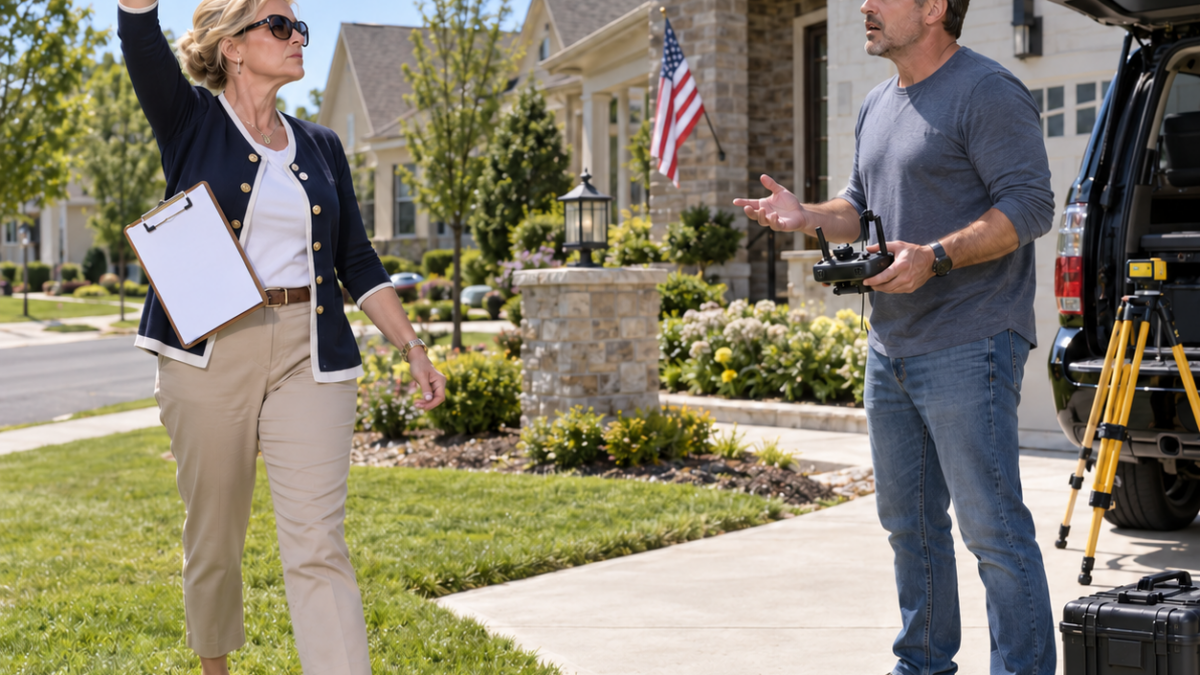
PART 2
The drone Karen locked inside her garage wasn’t photographing swimming pools.
It wasn’t checking backyards.
It wasn’t spying on anyone.
It was mapping a federally regulated interstate pipeline.
And Karen Whitfield had just physically stopped the inspection.
That pipeline ran beneath an easement along the rear edge of Oak Creek, beyond the privacy fences and ornamental trees most residents believed marked the end of the important part of their property.
Most people never thought about it.
They shouldn’t have needed to.
That was the point.
Good infrastructure is invisible when it works.
You turn on a light.
You fill your car.
You heat your house.
You drive across a bridge.
You never think about the inspections, calculations, maintenance crews, engineers, surveyors, regulators, and technicians whose entire job is to make sure ordinary life remains boring.
My company was one of those invisible pieces.
After fifteen years in Army Aviation logistics, I had left the service and started a small geospatial surveying company.
There were five of us.
That mattered.
We weren’t some national corporation with twelve floors of lawyers.
We had two trucks, a rented workshop near the regional airport, specialized computers, several commercial drones, and five families whose paychecks depended on the work coming in.
Sarah handled some of the accounting during tax season.
I still did field work because sitting behind a desk all day made me restless.
The aircraft Karen had taken was one of our most expensive units.
It carried a LiDAR sensor capable of building extremely precise three-dimensional terrain models.
The pipeline operator had hired us to survey a long section of its right-of-way.
The engineers wanted updated elevation data.
They were looking for changes.
Ground movement.
Drainage patterns.
Unauthorized construction.
Vegetation problems.
Anything that might indicate conditions around the buried line had changed.
A one-inch difference might mean nothing.
Or it might be the first visible sign of soil movement that should be investigated before it became something much worse.
That was why the work mattered.
And there was another reason Karen’s timing could not have been worse.
We were operating inside a narrow survey window.
Weather mattered.
Ground conditions mattered.
Vegetation mattered.
Access mattered.
Contract deadlines definitely mattered.
Every day of delay was costing my company money.
By the time Karen grabbed that drone, I had already rearranged two other jobs to keep our pipeline work on schedule.
That night I stood at the kitchen counter while Sarah watched the security footage on my laptop.
Karen entered the frame at 4:37 p.m.
She crossed the street.
Walked onto our lawn.
Ignored me warning her to stay away.
Reached upward.
Grabbed the drone.
Damaged it.
Then carried it home.
Sarah watched without speaking.
I replayed it from the driveway camera.
Then the garage camera.
Then the front porch angle.
Sarah finally leaned back.
“She really took it.”
“She really did.”
“And she knows the cameras are there.”
“She’s complained about one of them twice.”
Sarah stared at the screen.
“So she knew she was being recorded?”
“I’d say that’s a fair assumption.”
Sarah rubbed her forehead.
“What do you do now?”
I reached for my phone.
“Document first.”
“You already have four videos.”
“Five.”
“Five?”
“The doorbell camera caught part of it.”
Despite everything, she gave me a tired smile.
“Of course it did.”
I pulled the original equipment invoice from a digital folder.
Aircraft.
Sensor.
Accessories.
Replacement value.
Maintenance records.
FAA registration.
Pilot certificate.
Flight authorization.
Contract documents.
Survey coordinates.
Pipeline operator correspondence.
Then I opened the battered black binder I had started after Karen’s first threat.
Sarah looked at it.
“You’re adding a section, aren’t you?”
“Yes.”
“What are you calling it?”
I took a marker.
On a fresh divider I wrote:
AIRCRAFT SEIZURE.
Sarah read it.
“That sounds less dramatic than theft.”
“I’m trying to stay calm.”
“Are you?”
“No.”
That made her laugh once.
A small exhausted laugh.
Then her expression fell.
“What if she damaged it badly?”
“She did.”
“How badly?”
“I won’t know until we get it back.”
“And the contract?”
“Already late.”
She leaned against the counter.
For the first time that evening, I saw what I had been trying not to see.
Fear.
Not fear of Karen.
Fear of what this could do to us.
My company paid five employees.
Those five employees had rent, mortgages, children, medical bills, car payments.
A bureaucratic fight with an HOA might sound ridiculous from the outside.
But ridiculous things can still ruin real businesses.
“What if they drag this out?” Sarah asked.
I knew what she meant.
HOA lawyer.
Civil court.
Hearings.
Letters.
Delays.
Thousands of dollars spent proving something that should never have needed proving.
“I don’t think they can drag this one out,” I said.
“You don’t know that.”
“No.”
She looked at me.
“What are you going to do?”
I answered carefully.
“Give Karen one last opportunity to return the aircraft.”
Sarah’s eyebrows rose.
“After that?”
“After that, it stops being a neighborhood argument.”
I sent Karen an email.
Short.
Professional.
No insults.
No threats.
I stated that she had entered my property and removed a registered commercial aircraft belonging to my company.
I demanded its immediate return.
I told her the aircraft was involved in contracted infrastructure inspection work.
I warned her not to operate, dismantle, alter, destroy, conceal, or dispose of any part of it.
I gave her until 8:00 p.m.
At 7:14, she responded.
Her answer was four paragraphs long.
She claimed the drone had been confiscated under HOA authority.
She accused me of violating resident privacy.
She claimed the aircraft would remain “secured” until the board completed an investigation.
Then she demanded that I provide all recorded imagery from flights over Oak Creek.
I read the message twice.
Sarah watched my face.
“Well?”
I turned the laptop toward her.
She read it.
Then she looked at me.
“That’s bad.”
“For her?”
“Yes.”
“Extremely.”
At 7:41, another email appeared.
This one went to the entire neighborhood.
Subject:
AERIAL PRIVACY MATTER RESOLVED.
Karen proudly announced that HOA leadership had “taken possession of the unauthorized surveillance device” and that Oak Creek residents could again enjoy their homes without aerial intrusion.
She told eighty households what she had done.
In writing.
Sarah stared at the email.
Then at me.
“She just confessed.”
“Pretty much.”
“To everyone.”
“Yes.”
“And she thinks this helps her?”
“Yes.”
Sarah closed her eyes.
“Call the police.”
So I did.
The county officer who answered the non-emergency line initially sounded like he expected a neighbor dispute.
I couldn’t blame him.
People call police over property lines, barking dogs, parking spaces, basketball hoops, leaves, sprinklers, fence colors.
I kept it simple.
“My neighbor entered my property and took commercial equipment worth approximately fifteen thousand dollars.”
His tone changed.
“What kind of equipment?”
“A registered unmanned aircraft and LiDAR sensor.”
There was a pause.
“She took a drone?”
“Yes.”
“Where is it now?”
“Inside her garage.”
“Do you know that for certain?”
“I watched her carry it inside. I have multiple camera angles.”
“Was she given permission to take it?”
“No.”
“Did you ask for it back?”
“Yes.”
“And?”
“She refused in writing.”
Another pause.
Then the officer asked the question that changed the entire rhythm of the call.
“You said registered aircraft?”
“Yes.”
“With the FAA?”
“Yes.”
He sighed quietly.
“All right. Send me the footage.”
The first officer came to my house that evening.
He watched the cleanest camera angle twice.
On the first viewing he said nothing.
On the second he paused the recording when Karen was holding the damaged drone against her chest.
“That’s her?”
“Karen Whitfield.”
“She lives across the street?”
“Yes.”
“And she’s HOA president?”
“Yes.”
“She thinks that lets her take this?”
“That appears to be her position.”
He glanced at me.
“Did you touch her at any point?”
“No.”
“Threaten her?”
“No.”
“Try to physically take it back?”
“No.”
“Good.”
He resumed the video.
When Karen crossed the street and disappeared into her garage, the officer leaned back.
“Can you show me the email where she admits having it?”
I did.
Then the neighborhood-wide message.
Then her handwritten threat from three weeks earlier.
He read the sentence twice.
If I see that thing again, I’ll make sure it comes down.
“Did she shoot at it?”
“No.”
“Did anyone?”
“No.”
“All right.”
He photographed the letter.
I gave him copies.
The officer left with enough material to open a formal report.
But the county police were only the first call.
The next morning I contacted the pipeline operator.
My project manager, Mark Ellison, answered on the second ring.
“How bad is the aircraft?”
“I don’t know.”
“What do you mean you don’t know?”
“I don’t have it.”
Silence.
“What?”
“The HOA president seized it yesterday.”
Another silence.
Longer this time.
“Say that again.”
“The Oak Creek HOA president walked onto my driveway while the aircraft was landing and physically grabbed it.”
“You’re joking.”
“I wish I were.”
“She took our survey drone?”
“My survey drone. Your survey data.”
“Where is it?”
“Her garage.”
I heard his chair move.
“Why?”
“She says it was violating HOA airspace.”
Mark said nothing for almost five seconds.
Then:
“HOA airspace.”
“Yes.”
“Is that a thing?”
“No.”
“I didn’t think so.”
I explained the police report.
The damage.
The written refusal to return the aircraft.
Mark’s tone changed from disbelief to the flat seriousness people use when a funny story has stopped being funny.
“Send me everything.”
“I will.”
“Flight logs too.”
“You’ll have them in ten minutes.”
“We have to notify our compliance people.”
“I assumed.”
“And legal.”
“I assumed that too.”
“Possibly the regulator.”
“I know.”
Mark exhaled.
“This is unbelievable.”
“It was more unbelievable in person.”
Before noon, three different people from the pipeline company had contacted me.
By one o’clock, the FAA complaint had been filed.
I want to be clear about something because reality is often less theatrical than people expect.
Federal agencies do not operate like action movies.
Nobody arrived in a black helicopter.
No tactical team rappelled onto Karen’s roof.
Federal enforcement is usually quieter than that.
Forms.
Case numbers.
Evidence requests.
Emails.
Certified notices.
Investigators who speak calmly while asking very specific questions.
That calm can be far more frightening than shouting.
By Friday afternoon, Karen’s decision had started moving through systems she couldn’t control.
The county had the theft report.
The FAA had the aircraft information.
The pipeline company had notified its legal and compliance personnel.
My insurance carrier knew.
My attorney knew.
And Karen?
Karen was still sending HOA violation notices.
Saturday morning, I found another envelope taped to my front door.
SECOND OFFENSE: UNAUTHORIZED UAV OPERATION.
Fine: $1,000.
I stood there staring at it.
Sarah came up behind me.
“What now?”
I handed it to her.
She read the notice.
Then she laughed.
Not because anything was funny.
It was the kind of laugh a person makes when reality has become too absurd for any other reaction.
“She still thinks she’s winning.”
“Yes.”
“Should we tell her?”
“No.”
“Why not?”
“Because I already did.”
That was the part that finally changed something inside me.
Up until then, I had wanted resolution.
Return the equipment.
Cancel the illegal fines.
Finish the survey.
Go back to work.
But Karen had been given information.
She had been warned.
She had been offered an exit.
She had deliberately rejected all of it.
I was done protecting her from consequences.
Monday morning, a detective called me.
He wanted another statement.
I drove to the county office with the binder.
The detective was named Alvarez.
Mid-forties.
Quiet voice.
No wasted movements.
He flipped through my documents.
“Military?”
“Army Aviation.”
“That explains this.”
He tapped the binder.
“I’ve never received a neighborhood theft complaint with appendices before.”
“I like records.”
“I can see that.”
He examined the purchase invoice.
“Fifteen thousand?”
“Approximately. Depending on repairs.”
“And the sensor alone?”
“About three thousand.”
He looked at the still frame of Karen holding the drone.
“She injured herself?”
“Hit the sensor against her wrist.”
“Medical treatment?”
“I don’t know.”
“Did you instruct her not to touch it?”
“Repeatedly.”
He made a note.
“What was the aircraft doing immediately before she took it?”
“Returning from a pipeline easement survey.”
“What kind of pipeline?”
“Interstate hazardous liquid line.”
His pen stopped.
He looked up.
“Regulated?”
“Yes.”
“Federally?”
“Yes.”
“And she knew?”
“I told her in writing that the operation was commercial infrastructure survey work. Whether she bothered understanding it is another question.”
He leaned back.
“That may complicate things.”
“For me?”
“For everybody.”
Two days later, police contacted Karen.
I wasn’t present.
I know what happened from the report and from what later came out through the case.
She was told to return the aircraft.
She refused.
That decision changed everything.
If she had opened her garage, handed the drone back, apologized, hired a lawyer, and stopped talking, she might have contained the damage.
Instead she informed the officer that the drone was HOA evidence.
She said the covenants gave the board authority to retain property used in violations.
The officer told her the HOA could not simply seize private property.
Karen disagreed.
He explained that the owner had reported the aircraft stolen.
Karen disagreed with that too.
He told her returning the equipment immediately would be wise.
She refused.
Then she apparently said a sentence so perfectly Karen that when Alvarez later quoted it to me, I almost didn’t believe him.
She said:
“If Mr. Bishop doesn’t like our rules, he should move.”
Alvarez stared at me after repeating it.
“Does that sound like her?”
“Exactly like her.”
He shook his head.
“Some people make investigations easier.”
While the criminal investigation moved forward, my attorney began examining the civil side.
Her name was Rebecca Shaw.
Rebecca had represented my company twice before on contract matters.
She had the kind of personality that made loud people lower their voices without understanding why.
She sat across from me in her office while reviewing Karen’s correspondence.
“She’s using association authority in every document,” Rebecca said.
“Yes.”
“That’s important.”
“Why?”
“Because now we have two questions. What is Karen personally responsible for, and what exposure did she create for the association by pretending she was acting officially?”
“I don’t want my neighbors paying for this.”
“I know.”
“Most of them didn’t do anything.”
“That doesn’t mean the association has no exposure.”
She tapped Karen’s neighborhood-wide email.
“She used the association account.”
“Yes.”
“She cited a board resolution.”
“Yes.”
“She described herself as acting for the community.”
“Yes.”
“And the board approved the ban?”
“Three members.”
Rebecca nodded.
“Then every homeowner needs to understand what their board has done.”
That sentence bothered me.
I hadn’t thought much about the neighbors.
Not because I didn’t care.
Because I was focused on survival.
Repair costs.
Lost flight time.
Contract penalties.
Legal expenses.
My employees.
But the HOA wasn’t Karen’s private corporation.
It belonged, financially at least, to all of us.
If the association had created liability, the money would come from somewhere.
Dues.
Special assessments.
Insurance.
Or litigation.
“What does the insurance cover?” I asked.
“That depends on the policy.”
“What if Karen intentionally took the aircraft?”
Rebecca gave me a look.
“You have video.”
“I know.”
“And an email.”
“Yes.”
“And a written refusal to return it.”
“Yes.”
She leaned back.
“I would be surprised if the insurer happily paid for intentional criminal conduct.”
“So the homeowners could get stuck with legal expenses?”
“They could.”
I pictured Dale.
The Kaufmans.
Carol Hendricks.
Dozens of families who probably believed the drone dispute was nothing more than Karen keeping the neighborhood quiet.
Rebecca saw my expression.
“People deserve to know their financial risk.”
“I don’t want to start a riot.”
“Then don’t.”
“What do I do?”
“Tell the truth.”
That was all.
Tell the truth.
So I prepared a packet.
Not propaganda.
Not insults.
Documents.
Karen’s new bylaw.
Her handwritten threat.
The video still showing her holding the aircraft.
The community-wide email where she admitted taking it.
A summary of the equipment value.
A short statement from my attorney explaining potential insurance and association exposure.
I gave the packet to three people.
Dale was first.
He came to my house after work and stood on the porch in his reflective company jacket.
“I heard the cops are involved.”
“They are.”
“Is she actually keeping your drone?”
“Yes.”
“She nuts?”
“I’m not qualified to answer that.”
Dale smiled.
Then stopped.
“What happens to the HOA?”
“I don’t know yet.”
He looked toward Karen’s house.
“She did the same thing to me, you know.”
“The truck?”
“You remember.”
“I remember.”
“She couldn’t ban it. So she made everything else miserable.”
“I know.”
Dale lowered his voice.
“My wife kept telling me to fight. But after work, after fourteen hours on the road, I just didn’t have anything left.”
“You don’t have to explain.”
He stared at the papers.
“I hated myself for giving in.”
“You shouldn’t.”
“I know. Still did.”
He looked at me.
“Don’t give in.”
I didn’t.
The second packet went to Carol Hendricks.
Carol had supported Karen from the beginning.
She believed rules protected property values.
She believed enforcement kept neighborhoods from declining.
She wasn’t cruel.
That mattered.
It would have been easy to turn everyone who supported Karen into villains.
They weren’t.
Some were afraid.
Some trusted the board.
Some had spent their life savings buying a house and believed strict rules protected that investment.
Carol read the attorney’s page on my porch.
Her hands slowly lowered.
“Could our dues go up?”
“I don’t know.”
“But it’s possible?”
“Yes.”
“The insurance might not cover her?”
“You should ask the board and insurer directly.”
Carol swallowed.
“I voted for her.”
I said nothing.
“Twice.”
Still nothing.
“I thought she was protecting us.”
“I know.”
Carol looked across the street toward Karen’s house.
“Did she really walk onto your property?”
I pointed at the still image.
Carol studied it.
“She told everyone you flew at her.”
My jaw tightened.
“What?”
“She said the drone came down aggressively and she had to protect herself.”
I almost spoke too quickly.
Then training took over.
“Would you be willing to put that in writing?”
Carol looked at me.
“I guess.”
“Only if you’re comfortable.”
“She said it at coffee Friday morning.”
“Who heard her?”
“At least six people.”
That became another page in the binder.
By Sunday, Oak Creek was talking about nothing else.
People who had ignored me now wanted explanations.
People who had defended Karen wanted to see the video.
The Kaufmans came by together.
Mr. Kaufman had supported nearly every enforcement proposal Karen introduced.
He stood on my walkway staring at the paused security image.
“She told us the aircraft nearly struck her.”
“It didn’t.”
“Can we see the whole video?”
I pressed play.
They watched.
Karen approached.
I warned her away.
She grabbed the aircraft.
She carried it home.
Mrs. Kaufman’s mouth opened slightly.
“That’s not what she told us.”
“No.”
Mr. Kaufman watched again.
Then he looked at me.
“What is that drone worth?”
“About fifteen thousand with the sensor.”
His face changed.
“Fifteen?”
“Yes.”
“And she damaged it?”
“Yes.”
“What is she doing?”
“I’ve been asking myself that for weeks.”
The monthly HOA meeting was nine days away.
Normally, maybe twelve residents attended.
That month, everyone planned to go.
Karen seemed unaware of the shift.
She circulated a meeting agenda.
Landscaping.
Pool maintenance.
Mailbox painting.
Spring social.
Then, near the bottom:
UAV ENFORCEMENT UPDATE.
Sarah showed me the agenda on her phone.
“She’s going to defend it.”
“Yes.”
“In front of everyone.”
“Yes.”
“Are you going?”
“Absolutely.”
She looked worried.
“Promise me something.”
“What?”
“No speeches.”
I smiled.
“You think I’m going to give a speech?”
“I think you’ve been practicing one in your head for three weeks.”
She knew me too well.
“I won’t.”
“Let the paperwork speak.”
“It usually does.”
The week before the meeting brought the first major financial shock.
Oak Creek’s insurance broker contacted the board requesting information about the incident.
I only learned because Carol forwarded the board email chain to me after Karen accidentally included a distribution list that reached several committee volunteers.
Karen’s message was furious.
She accused me of trying to sabotage the HOA’s insurance.
The broker’s reply was far more interesting.
They wanted copies of the video.
The police report.
The new drone bylaw.
The board minutes approving it.
All correspondence with me.
The aircraft valuation.
Any notice of potential claims.
Karen initially refused to provide some of it, arguing that the dispute was “internal association enforcement.”
The broker responded that failure to cooperate could affect coverage.
That sentence traveled through Oak Creek faster than any rumor ever had.
By Tuesday night, people weren’t asking whether Karen had gone too far.
They were asking what her actions might cost them.
There is a harsh truth about communities.
Morality can divide people for years.
Money can unite them by dinner.
Carol called me.
“They’re talking about a special assessment.”
“Who?”
“Everyone.”
“There is no assessment yet.”
“I know, but people are scared.”
“What is Karen saying?”
“That insurance will handle everything.”
“That’s not guaranteed.”
“She says you’re lying.”
“About what?”
“All of it.”
I leaned against the workbench in my shop.
“Carol, don’t take my word for anything. Ask for the policy. Ask the insurer. Ask the board attorney.”
“I did.”
“And?”
She was silent.
“Carol?”
“The attorney won’t answer us.”
That told me more than an answer would have.
The next morning, Alvarez called.
“We got the aircraft.”
I sat upright.
“What?”
“We recovered it.”
“How?”
“Search warrant.”
I didn’t say anything.
“You there?”
“Yes.”
“You’ll be able to retrieve it after evidence processing. Probably tomorrow.”
“What condition?”
“Looks damaged. One rotor assembly. Sensor mount. Possibly frame damage.”
“Anything missing?”
“Not that I can tell.”
I closed my eyes.
For almost two weeks, my aircraft had been locked thirty yards away inside a garage I could see from my own kitchen.
Now it was coming home.
“What happened with Karen?”
“She was cooperative during the warrant.”
The way he said it told me there was more.
“Meaning?”
“She complained the entire time.”
I laughed despite myself.
“She wasn’t arrested?”
“Not today.”
“When?”
“I don’t discuss charging timelines.”
“Fair enough.”
Then Alvarez added:
“But I’d attend your HOA meeting Thursday.”
I went still.
“Why?”
“Just a suggestion.”
The call ended.
I stared at the phone.
Sarah looked up from the couch.
“What?”
“Alvarez told me to attend Thursday’s meeting.”
“You were already going.”
“I know.”
“Why would he say that?”
“I don’t know.”
But I had a feeling.
Thursday night, I arrived twenty minutes early.
The clubhouse parking lot was already full.
Cars lined both sides of the street.
People were walking in from blocks away.
I had never seen Oak Creek gather for anything like it.
Not elections.
Not Christmas.
Not even the year a storm knocked out power for two days.
The clubhouse itself was painfully ordinary.
Beige walls.
Fluorescent lights.
Folding chairs.
Cheap curtains.
A long table at the front where Karen and the other board members sat.
Behind them stood an American flag and a framed photograph of the neighborhood entrance.
Karen wore a navy blazer.
Her hair was perfectly arranged.
A stack of papers sat in front of her.
She looked like she always did.
Controlled.
Prepared.
Certain.
The only difference was the faint bruise still visible near her wrist where the sensor had struck her.
She saw me enter.
Our eyes met.
She looked away first.
I took a place near the back.
Dale stood beside me.
“You bring the binder?”
I lifted it slightly.
He grinned.
“Good man.”
Carol sat near the center aisle.
The Kaufmans were three rows ahead.
Every seat filled.
People stood along the walls.
Karen tapped the gavel.
“Good evening, everyone. I’m pleased to see such strong community participation.”
Someone behind me whispered:
“Oh, she has no idea.”
I heard Sarah trying not to laugh.
Karen started with landscaping.
Nobody cared.
Then pool maintenance.
Nobody cared.
She spoke for twelve minutes about resurfacing options while seventy people waited like a storm behind glass.
Finally Carol stood.
“Karen.”
The gavel tapped.
“Questions will be held until—”
“I have one now.”
Karen frowned.
“Carol, please follow meeting procedure.”
Carol’s voice trembled.
“I voted for you.”
The room changed.
Karen stopped moving.
Carol continued.
“I supported you every time people said you were too strict.”
“Carol—”
“I defended you.”
Karen looked around.
“This is not on the agenda.”
“Yes, it is.”
Carol held up the printed agenda.
“UAV enforcement update.”
A murmur moved through the room.
Karen straightened.
“Fine. We’ll address it now.”
She rearranged her papers.
“The board acted lawfully to protect resident privacy after repeated violations by one homeowner who believed association rules did not apply to him.”
Several heads turned toward me.
I stayed silent.
Karen continued.
“The device in question entered private residential airspace despite written warnings.”
Dale said loudly:
“Private residential airspace?”
Karen’s jaw tightened.
“The association’s legal position is—”
“What legal position?”
Dale stood.
“You made me park my truck two miles away even though the covenants said I could park it at home. Now you stole his drone and we’re supposed to pay for it?”
Applause broke out.
Karen hammered the gavel.
“Order!”
Nobody listened.
Carol held up her hand.
“Is the insurance covering this?”
Karen hesitated.
That hesitation destroyed whatever authority she had left.
Carol saw it.
Everyone saw it.
“Karen?”
“The insurance matter is being reviewed.”
“Why?”
“Because claims require review.”
“Did they deny coverage?”
“No final determination has been made.”
“Did they warn that intentional conduct may not be covered?”
Karen’s face flushed.
“This is confidential association business.”
A man near the wall shouted:
“It’s our money!”
Another voice:
“How much is the claim?”
Someone else:
“Is the FAA involved?”
That word changed the room.
FAA.
Karen’s eyes flicked toward me.
She stood.
“This is exactly what Mr. Bishop wanted.”
I felt Sarah’s hand lightly touch my arm.
No speeches.
I stayed still.
Karen pointed directly at me.
“He has escalated a simple neighborhood privacy dispute into a campaign against this association.”
Every head turned.
“He refuses to respect rules that everyone else follows. He insists on flying surveillance equipment above your homes. He contacted police. Federal authorities. Insurance companies. He is trying to frighten you.”
I raised one hand.
Karen snapped:
“You do not have the floor.”
I lowered it.
Carol turned around.
“Let him speak.”
People agreed.
Karen slammed the gavel.
“I said no.”
That was when Dale laughed.
Not a cruel laugh.
A tired one.
“Still doing it, Karen.”
Her eyes went to him.
“What?”
“Still thinking the gavel makes you right.”
Silence.
Dale pointed toward me.
“You know the difference between him and you?”
Karen said nothing.
“He warned you.”
Then Carol spoke.
“He didn’t take anything from you, Karen.”
Karen’s expression hardened.
“You don’t understand the legal issues.”
Carol looked at her for a long time.
Then she said:
“I understand the video.”
Silence.
“We all saw you walk onto his property.”
Karen’s face went pale.
“We saw you grab the aircraft.”
A whisper moved through the crowd.
“We saw you carry it home.”
Carol’s voice steadied.
“And then you emailed all of us bragging about it.”
Karen reached for the gavel.
Carol didn’t stop.
“You told me you were protecting us.”
The gavel came down.
“Carol—”
“You told all of us.”
Again.
“Order.”
“And now our insurance is questioning coverage because of something you did with your own hands.”
“Order!”
Carol’s voice broke.
“My husband and I are retired, Karen.”
The room went completely still.
“We can’t afford another special assessment.”
Karen froze.
Carol’s eyes filled.
“You were supposed to protect our homes.”
That sentence hurt Karen more than every accusation before it.
Because Carol had believed in her.
You could see it.
Karen’s shoulders changed.
For half a second, she looked smaller.
Not innocent.
Not remorseful.
Just suddenly aware that the people she considered her base were no longer behind her.
Then fear became anger.
She pointed at me.
“This is his fault.”
That was the exact moment the clubhouse doors opened.
Two county officers entered.
Detective Alvarez walked behind them.
And with him was a man I had never seen before carrying a thin federal case folder.
The room fell silent.
Not gradually.
Instantly.
Karen still had one finger extended toward me.
Alvarez walked down the center aisle.
The officers followed.
The man with the folder stopped near the rear and watched.
Karen lowered her hand.
“Detective.”
“Mrs. Whitfield.”
“You cannot interrupt an association meeting.”
Alvarez’s expression didn’t change.
“Karen Whitfield?”
She stared at him.
“You know who I am.”
“I need you to confirm your name.”
Someone behind me whispered:
“Oh, God.”
Karen’s mouth opened.
Closed.
Then:
“Karen Louise Whitfield.”
Alvarez nodded.
One officer stepped forward.
“Mrs. Whitfield, turn around and place your hands behind your back.”
Her face emptied.
“What?”
“You’re under arrest.”
The gavel slipped in her hand.
“For what?”
“Felony theft and criminal damage charges related to the aircraft taken from Mr. Bishop’s property.”
The room remained perfectly still.
Karen looked toward the other board members.
Neither moved.
“You can’t arrest me here.”
Alvarez said:
“Mrs. Whitfield, turn around.”
“This is HOA business.”
“No, ma’am.”
“The board authorized enforcement.”
“That’s something you can discuss with your attorney.”
“You don’t understand.”
“Turn around.”
Karen looked at me.
I will remember that look for the rest of my life.
Not hatred.
Not exactly.
Disbelief.
She still believed I was supposed to stop this.
As if because I was her neighbor, because our houses faced each other, because this fight had begun with HOA paperwork, I somehow had the authority to call everyone off.
I didn’t.
And if I had, I wouldn’t have.
She had been given every opportunity.
Return the drone.
Withdraw the threat.
Talk to a lawyer.
Stop escalating.
She had refused them all.
The officer reached for her wrist.
Karen instinctively pulled the gavel closer.
For one surreal second she stood there gripping that little wooden symbol of authority while a county officer waited to handcuff her.
Then he gently took it from her hand.
Set it on the table.
The sound was tiny.
Wood touching wood.
But in that room, it sounded enormous.
Karen turned.
The cuffs closed.
Carol covered her mouth.
Mrs. Kaufman began crying.
Dale stared straight ahead.
One of the board members quietly moved his chair farther away from Karen’s empty seat.
Alvarez read her rights.
Karen’s face turned red.
“You’re making a mistake.”
Nobody answered.
“This is a civil matter.”
Still nothing.
“The association has authority.”
Alvarez finished reading.
Then the federal investigator stepped forward.
“Mrs. Whitfield.”
She looked at him.
“My name is Daniel Reese. I’m participating in an investigation concerning interference with a registered aircraft conducting infrastructure survey operations.”
Karen blinked.
“What?”
“The aircraft you took was conducting contracted work related to a regulated interstate pipeline right-of-way.”
The words landed one at a time.
Registered aircraft.
Infrastructure survey.
Interstate pipeline.
I watched Karen process them.
For the first time since this began, she did not have an answer ready.
Reese continued.
“You’ll receive separate correspondence regarding the federal matter.”
Karen’s lips moved.
Nothing came out.
Then she turned toward me.
“You never told me.”
I almost laughed.
Instead I answered quietly.
“Yes, Karen. I did.”
She shook her head.
“No.”
“I told you at your house.”
“You said surveying.”
“I sent it certified.”
She stared.
“I told you in writing that the flights were licensed commercial infrastructure work.”
Her eyes widened slightly.
I kept my voice level.
“You didn’t read past the part where you thought you were in charge.”
Nobody in that clubhouse made a sound.
The officers walked Karen down the center aisle.
Past Carol.
Past the Kaufmans.
Past Dale.
Past Sarah and me.
She did not look at anyone.
The doors opened.
Then closed.
And the woman who had walked into that room believing she still controlled Oak Creek left it in handcuffs.
For several seconds, nobody moved.
Then someone asked:
“What happens now?”
One of the remaining board members looked completely lost.
He stared at Karen’s empty chair.
“I guess…”
His voice failed.
Dale said:
“I nominate literally anybody else.”
A few people laughed.
It was nervous laughter, but we needed it.
The meeting dissolved after that.
No landscaping vote.
No pool resurfacing.
No spring social.
Just clusters of neighbors standing under fluorescent lights trying to understand how a fight about a drone had ended with their HOA president being arrested.
Outside, people gathered around me.
I hated that.
I didn’t feel victorious.
I felt exhausted.
Carol approached first.
“I’m sorry.”
“You don’t owe me an apology.”
“I defended her.”
“You thought you were protecting your neighborhood.”
She looked toward the police cars.
“So did she.”
That stopped me.
Because Carol was right.
That was what made Karen dangerous.
If she had known she was abusing power, maybe shame could have reached her.
But Karen had spent years convincing herself that control was service.
Punishment was protection.
Obedience was community.
And every time someone surrendered rather than fight her, she took it as proof that she had been correct.
Dale joined us.
“Different president next month?”
Carol managed a weak smile.
“Tomorrow if I get a vote.”
Dale looked at me.
“You running?”
“Absolutely not.”
“Smartest decision you’ve made.”
Sarah laughed.
Two officers escorted Karen back home later that evening so the last evidence issues could be completed.
My aircraft had already been removed under warrant and processed.
The next afternoon I went to retrieve it.
Seeing it hurt more than I expected.
One rotor arm was damaged.
The sensor housing was cracked.
The landing assembly was twisted.
Scratches ran along the body where it had apparently been set on the concrete floor.
I ran my fingers over the side.
Mark from the pipeline company stood beside me.
“She did all that grabbing it?”
“Most of it.”
He shook his head.
“Over noise.”
“Over control.”
“That too.”
The sensor had to go to a specialist facility.
The aircraft frame required inspection.
We had a backup drone, but it didn’t carry the same sensor package.
I leased replacement equipment at terrible short-notice rates so we could finish the contract.
That meant borrowing money.
It meant long days.
It meant my employees working weekends.
Nobody complained.
On the first morning we returned to the easement, my senior technician, Luis, put his hand on the borrowed aircraft.
“This one HOA-proof?”
“Nothing is Karen-proof.”
He smiled.
“Too soon?”
“Not remotely.”
We launched outside Oak Creek.
The aircraft rose smoothly.
For three hours, it mapped the pipeline corridor without interruption.
I watched it move across the monitor and felt something unclench in my chest.
Work.
Just work.
The thing I had been trying to do from the beginning.
A week later, the engineering team found something in the data.
Not a catastrophe.
Not an active leak.
Nothing dramatic.
But enough to prove why the survey mattered.
A subtle change in ground elevation appeared near a drainage crossing several miles beyond Oak Creek.
Less than two inches in places.
Easy to miss from the ground.
The engineering team flagged it.
An inspection crew went out.
Water had been moving through the soil differently after heavy seasonal rain.
Additional maintenance was ordered.
Mark called me.
“That’s why we do the flights.”
“I know.”
“Imagine explaining to regulators that we missed it because an HOA president didn’t like the sound.”
“Please don’t make me imagine that.”
He laughed.
Then his tone softened.
“You did the right thing.”
“I did my job.”
“Same thing sometimes.”
The criminal case against Karen took months.
Real courts do not move at television speed.
There were hearings.
Filings.
Continuances.
Lawyers.
Negotiations.
Evidence requests.
During that time, Karen was released pending proceedings and moved temporarily to stay with her sister.
She never returned to an HOA meeting.
The board removed her from the presidency immediately.
At the next formal election, Oak Creek voted in three new directors.
The vote was almost unanimous.
The drone ban was repealed.
Then the new board did something I never expected.
They asked me to attend a rules committee meeting.
I nearly declined.
Sarah made me go.
“Why?”
“Because if you don’t, they’ll write another stupid rule.”
Fair point.
The new president was Carol.
That surprised everyone, including Carol.
She opened the meeting by placing Karen’s old binder on the table.
The famous binder filled with photographs, measurements, violation histories, and notes.
Carol stared at it.
Then she looked around the room.
“I think we need fewer of these.”
Dale, who had joined the committee, said:
“I vote we launch it into the sun.”
Carol smiled.
“We’re not launching anything anywhere after what happened.”
Everyone laughed.
Then she became serious.
“We still need rules.”
I nodded.
“Of course.”
“But we need to stop acting like the HOA is a government.”
“That would be a good start.”
Carol looked embarrassed.
“I really believed some of this.”
“I know.”
“How did you know?”
“Because good people can support bad systems when the system tells them it’s protecting something they care about.”
She looked at me for a long moment.
“Is that what you think happened?”
“With you?”
“Yes.”
“Mostly.”
“And Karen?”
I hesitated.
“No.”
Carol looked down.
“What was different?”
“Karen stopped caring what the rules were for.”
That was the distinction.
Rules can protect people.
They can establish expectations.
They can prevent one neighbor from turning his yard into a junkyard or another from blasting music at three in the morning.
But Karen had stopped using rules as tools.
She used them as proof of rank.
If Karen wanted something, she found a rule.
If no rule existed, she wrote one.
If the law contradicted her, she decided the law must be wrong.
That mindset had finally met something larger than itself.
The insurance issue turned ugly.
Oak Creek’s carrier refused to cover portions of the claim arising directly from Karen’s intentional conduct.
There were legal expenses.
The association had to retain separate counsel.
Premiums increased dramatically.
The possibility of a special assessment became real.
I hated that.
I told Rebecca I wanted the civil claim structured as much as legally possible against Karen personally rather than innocent homeowners.
“That may limit recovery,” she warned.
“I understand.”
“You suffered real damages.”
“I know.”
“Equipment damage. Lease expenses. Lost work. Contract penalties. Legal costs.”
“I know.”
“You don’t have to protect people who elected her.”
“They didn’t grab my aircraft.”
Rebecca studied me.
“Some of them enabled her.”
“Maybe.”
“And that has consequences.”
“Yes.”
“But?”
“But I’m not trying to make Carol sell her house because Karen lost her mind.”
Rebecca nodded once.
“All right.”
The final civil settlement was complicated and confidential in parts, but the practical result was simple.
Karen paid.
A lot.
The association paid some legal costs and saw its premiums rise, but we avoided the worst-case scenario of a devastating community-wide assessment.
Karen could not avoid personal responsibility.
Her criminal case made that impossible.
The damaged equipment.
Business losses.
Restitution.
Legal costs.
Other penalties.
By the time everything was added together, the amount attached to her decisions was well above fifty thousand dollars.
It destroyed the financial life she had spent years claiming she was protecting.
Her attorney tried to argue that she believed she possessed authority to confiscate the aircraft.
That may have helped explain her state of mind.
It did not erase the video.
It did not erase the warnings.
It did not erase the police telling her to return the property.
And, most damaging of all, it did not erase her refusal.
Again and again, that refusal came back.
A prosecutor can understand a reckless moment.
A judge can understand anger.
People do stupid things in seconds.
But Karen had been given time to think.
Hours.
Then days.
She had been told she was wrong.
She had access to attorneys.
She had access to the internet.
She had access to the board.
She could have returned the aircraft.
Instead she continued claiming ownership over something that was never hers.
That converted one terrible decision into a series of deliberate decisions.
By sentencing, Karen looked different.
I attended because Rebecca recommended it.
Sarah came with me.
Karen sat at the defense table wearing a plain gray jacket.
No HOA badge.
No clipboard.
No gavel.
No stack of violation notices.
Just a woman nearing retirement age who had gambled almost everything she owned on the belief that nobody would ever force her to admit she was wrong.
Her attorney spoke first.
He described her community service.
Her age.
Her lack of prior criminal history.
The stress surrounding the dispute.
He described her as someone who had exercised terrible judgment while attempting, however misguidedly, to protect her neighbors.
I didn’t disagree with all of it.
That surprised me.
Karen was not born a villain.
She had probably spent most of her life as an ordinary person.
Maybe she had been a good mother.
A reliable coworker.
A loyal friend.
People are complicated.
Consequences do not require us to pretend otherwise.
Then the prosecutor played the footage.
Karen crossing my lawn.
My voice telling her not to touch the aircraft.
Karen grabbing it.
The break.
The drone in her hands.
My request:
“Give it back.”
Her answer:
“No.”
The courtroom became very quiet.
Next came her email.
AERIAL PRIVACY MATTER RESOLVED.
Then my certified letter.
Then the police contact.
Then her refusal to return the drone after being clearly informed that I had reported it stolen.
The prosecutor ended with one point.
This was not a mistake that lasted thirty seconds.
It was a decision Karen reaffirmed repeatedly.
The judge looked at her.
“Mrs. Whitfield, do you have anything you wish to say?”
Karen stood.
For a few seconds, I thought she might apologize.
I wanted her to.
Not because it would undo anything.
Because some part of me still wanted proof that the last year had reached her.
She turned slightly.
Our eyes met.
Then she faced the judge.
“I was trying to protect my neighborhood.”
My heart sank.
The judge waited.
Karen continued.
“I had residents complaining about the drone. I believed the board had a duty to act.”
The judge said:
“Did your duty require you to physically seize property from another resident?”
Karen swallowed.
“I believed the device was violating privacy.”
“That wasn’t my question.”
Silence.
“Did anyone advise you to return the aircraft?”
Karen’s attorney shifted in his chair.
“Yes.”
“Police?”
“Yes.”
“Your own counsel?”
Karen hesitated.
“Yes.”
“And did you return it?”
“No.”
“Why?”
There it was.
The question that had sat at the center of everything.
Karen looked toward the table.
Then she answered:
“Because I still believed I was right.”
The judge leaned back.
For the first time, Karen seemed to hear herself.
The courtroom remained quiet.
The judge’s voice softened.
“Mrs. Whitfield, being convinced you are right does not grant you authority over other people’s property.”
Karen stared down.
“The law provides mechanisms for disputes. You had civil remedies available. You had law enforcement available. You had counsel available. Instead, after being specifically warned, you chose self-help, damaged valuable property, retained it after demand for return, and continued retaining it after police intervention.”
Karen’s shoulders sagged.
“You were offered opportunities to reduce the harm.”
Nothing.
“You rejected them.”
I don’t remember every word that followed.
I remember the outcome.
Felony conviction.
Restitution.
Jail time.
Real jail time.
Not years.
Months.
But enough.
Enough that Karen left the courtroom through a door Sarah and I did not.
Outside, Sarah and I stood beside the courthouse steps.
Neither of us spoke for a while.
Finally she said:
“You okay?”
“I don’t know.”
“Not what you expected?”
“No.”
“You wanted to feel good?”
“I thought I would.”
She slipped her hand into mine.
“What do you feel?”
I watched traffic pass on the street.
“Sad.”
“For her?”
“For everybody.”
Sarah leaned against my shoulder.
“She did this.”
“I know.”
“You gave her chances.”
“I know.”
“You didn’t put her in jail.”
“I know.”
But knowledge and emotion are different things.
For months, I had imagined justice as a door opening.
Fresh air.
Relief.
Instead justice felt like standing in the wreckage after a storm.
Necessary cleanup.
A safer future.
But wreckage all the same.
Karen eventually sold her house.
I watched the FOR SALE sign appear one Monday morning.
She was still serving her sentence.
A relative came to clear the property.
Boxes went out.
Furniture disappeared.
The garden ornaments vanished.
A moving truck arrived.
The house Karen had spent years insisting everyone else help her “protect” became an empty building waiting for strangers.
I expected some satisfaction.
Instead I remembered the first time Sarah and I moved into Oak Creek.
Karen had brought us a lemon cake.
I had forgotten that until then.
She had stood on our porch smiling, welcoming us to the neighborhood.
No clipboard.
No measuring tape.
No warning letter.
Just a cake in a glass dish.
What happens to a person between a welcome cake and handcuffs?
Maybe nothing dramatic.
That may be the frightening answer.
Maybe it happens one tiny permission at a time.
Someone obeys when you threaten them.
You learn threats work.
Someone pays a ridiculous fine rather than arguing.
You learn pressure works.
A neighbor removes a legal work truck because you made his life unbearable.
You learn persistence beats fairness.
You win an election with almost no turnout.
You decide silence means support.
You write a rule.
People follow it.
You write another.
People follow that too.
Eventually nobody around you remembers where the line is.
Including you.
Then one day you reach into the sky and grab an aircraft because some part of you genuinely believes the world will rearrange itself around your authority.
Until it doesn’t.
Months after Karen’s house sold, a young family moved in.
A couple named Jeremy and Rachel.
Two kids.
A golden retriever that immediately became obsessed with escaping their backyard.
The first week they lived there, Jeremy knocked on my door.
“I have kind of a strange question.”
“Go ahead.”
“The realtor told us there was some… HOA drama involving the previous owner.”
Sarah, standing behind me, made a choking sound.
I tried not to smile.
“That is one way to describe it.”
Jeremy looked nervous.
“Should we be worried?”
“About the HOA?”
“Yeah.”
I looked across the street toward Carol’s house.
Dale’s truck sat openly in his driveway two homes down.
A basketball hoop stood near another garage.
Three garbage cans were visible at 12:17 p.m.
Civilization had somehow survived.
“No,” I said. “You’re fine.”
He relaxed.
“Good.”
Then his son ran into the driveway holding a small toy quadcopter.
I stared at it.
Jeremy followed my eyes.
“Oh.”
His face changed.
“Is that allowed?”
I laughed so hard Sarah had to step inside.
“What?”
Jeremy asked.
“Nothing.”
I wiped my eyes.
“Let him fly it.”
“You sure?”
“Absolutely.”
That afternoon, the little drone buzzed above Karen Whitfield’s former backyard while a ten-year-old boy chased it across the grass.
Nobody called an emergency meeting.
Nobody wrote a violation.
Nobody claimed the sky.
Oak Creek survived.
More than survived.
It became better.
Carol changed how meetings worked.
Board votes were posted clearly.
Rules were reviewed by counsel before adoption.
Homeowners had time to comment.
The board stopped using violation enforcement as a hobby.
Warnings replaced fines for small mistakes.
Appeals became meaningful.
Dale parked his truck at home.
The Kaufmans stayed involved, but in a healthier way.
They organized neighborhood cleanup days instead of enforcement campaigns.
Carol once joked that we had replaced “governance by binoculars” with “governance by conversation.”
I liked that.
People began standing in driveways talking again.
Not whispering about violations.
Talking.
Kids left bicycles near sidewalks.
Neighbors borrowed tools.
Someone hosted a block party.
Sarah made potato salad.
Dale grilled enough hamburgers for fifty people.
Carol brought folding tables.
At sunset, I stood near the curb looking down the street.
For years, Oak Creek had been visually perfect.
Lawns straight.
Bins hidden.
Vehicles approved.
Everything controlled.
And it had felt tense.
Now there were kids running across grass.
A dog barking.
Music coming from somebody’s open garage.
A work truck in a driveway.
A recycling container visible from the street.
And somehow the neighborhood felt more valuable than it ever had before.
Dale appeared beside me holding a paper plate.
“You thinking deep thoughts?”
“No.”
“Liar.”
I smiled.
He nodded toward his truck.
“Every time I park that thing there, I get a little happy.”
“You may need therapy.”
“This is my therapy.”
We stood there.
After a minute, he said:
“You know what bothered me most?”
“What?”
“I knew I was right.”
“About the truck?”
“Yeah.”
He stared down the street.
“But I gave in anyway.”
“You were tired.”
“I know.”
“I mean it, Dale. There’s no shame in choosing peace.”
“Maybe.”
He looked at me.
“But every time somebody chooses peace with a bully, the bully learns bullying works.”
I couldn’t argue with that.
He took a bite of hamburger.
“Still glad you didn’t give in?”
“Yes.”
“Even after all the money?”
“Yes.”
“Lawyers?”
“Yes.”
“Federal investigators?”
“Yes.”
“Your wife almost killing you for staying up until two in the morning?”
Sarah called from behind us:
“I heard that.”
Dale nearly dropped his plate.
I laughed.
“Especially that.”
The repaired drone came home not long after.
New rotor assembly.
Rebuilt sensor.
Frame inspected.
Firmware updated.
Fresh calibration.
The technician who returned it handed me a packet of test results thick enough to make me proud.
I took the aircraft to the workshop.
Luis gathered the team around.
“Moment of truth?”
“Moment of expensive truth.”
We powered it on.
Systems green.
Sensor connected.
GPS lock.
Motors armed.
I carried it outside.
The late afternoon was clear.
Almost no wind.
The same kind of light as the day Karen had grabbed it.
For a moment, I hesitated.
Luis noticed.
“You good?”
“Yeah.”
“You sure?”
I looked at the drone.
Then at the sky.
“Let’s fly.”
The motors rose.
The aircraft lifted.
Ten feet.
Twenty.
Fifty.
It climbed smoothly until the damaged weeks and repair invoices and court hearings seemed very far away.
I watched it move across the blue.
Not because I needed data that day.
Because I needed to see it flying again.
Sarah arrived while we were landing.
She stood beside me.
“Same one?”
“Same one.”
“Looks good.”
“Better than good.”
The aircraft descended toward the pad.
For the briefest second, I remembered Karen running across the street.
Hands raised.
Certain.
Then the drone touched down gently.
Motors quiet.
Nothing happened.
No shouting.
No footsteps.
No confiscation.
Just a machine completing a legal flight.
I crouched and rested my hand on the frame.
Sarah smiled.
“You’re emotional about a drone.”
“I am not.”
“You absolutely are.”
“Dust.”
“There’s no dust.”
“LiDAR-related eye irritation.”
“That’s not a thing.”
“It could be.”
She laughed.
A year after the arrest, the pipeline operator renewed our contract.
Then expanded it.
Our company grew from five employees to eight.
We bought another sensor.
Then another aircraft.
Luis became operations manager.
I finally stopped doing every field job myself.
One afternoon Mark called.
“I have a weird request.”
“I’ve had enough weird requests from you.”
“This one’s good.”
“What?”
“We’re presenting at a regional infrastructure safety conference.”
“Congratulations.”
“We want to include your Oak Creek incident.”
I groaned.
“Why?”
“Interference risk.”
“Mark.”
“Listen.”
“No names.”
“Of course.”
“No HOA jokes.”
Silence.
“Mark.”
“Fine. Minimal HOA jokes.”
“What’s the point?”
“The point is people think operational risks are always technical. Weather. Batteries. GPS. Equipment. Sometimes the risk is a person with authority they don’t understand.”
That line stayed with me.
A person with authority they don’t understand.
Karen had not caused the problem because she had zero authority.
HOAs do have authority.
That was precisely why the story mattered.
She had enough authority to hurt people.
Not enough authority to do what she did.
And she could no longer distinguish the two.
There is a dangerous point where legitimate power becomes imagined power.
Where “I can enforce this covenant” becomes “I control your property.”
Where “I can issue a fine” becomes “I can seize your equipment.”
Where “I lead the HOA” becomes “I decide what flies in the sky.”
Karen crossed that point slowly.
The rest of us noticed too late.
I agreed to speak at the conference.
I did not mention Karen’s name.
I showed one still image.
A person holding a damaged drone.
Then I showed the terrain model from the pipeline survey.
Colored elevation data.
Contours.
Drainage.
The flagged ground movement near the crossing.
I told the room:
“The person who interrupted this flight believed she was stopping a nuisance.”
Then I pointed at the terrain model.
“She was actually interrupting the collection of data engineers use to identify risk.”
Nobody laughed.
That was important to me.
The story had become funny in Oak Creek.
The gavel.
The emails.
The absurd claim about controlling the sky.
But underneath it was something serious.
People who do safety work spend their careers looking for small warning signs.
Hairline cracks.
Pressure variations.
Shifting soil.
Loose connections.
Tiny errors.
The whole discipline is built around respecting things that look insignificant before they become large.
Communities have warning signs too.
Dale walking two miles because one person made parking at home unbearable had been a warning sign.
People hiding trash cans in panic had been a warning sign.
Residents refusing to speak at meetings had been a warning sign.
Board elections with almost no participation had been a warning sign.
Karen photographing neighbors every morning had been a warning sign.
We ignored all of them because none looked catastrophic.
Then she grabbed an aircraft.
That was the rupture.
But the pressure had been building for years.
After my presentation, an engineer approached me.
“My HOA is nothing like that.”
“Good.”
He smiled.
“Although our president did threaten to tow my daughter’s car last week.”
I raised an eyebrow.
“Legal parking?”
“Yes.”
“Maybe go to the next meeting.”
He laughed.
“I think I will.”
That, more than Karen’s sentence, felt like the useful ending.
Not revenge.
Not jail.
Not financial ruin.
People paying attention earlier.
People asking questions.
People showing up before somebody has enough unchecked confidence to mistake a neighborhood board for a sovereign government.
I never saw Karen again after sentencing.
I heard she moved to another part of the state after her release.
Someone once asked if I searched her name online.
I didn’t.
I had no interest in following her.
Her chapter in my life ended when the aircraft came home.
Everything after that belonged to courts, regulators, insurance companies, and Karen herself.
I had work.
I had Sarah.
I had employees.
I had a neighborhood learning how to be neighbors again.
That was enough.
Sometimes people ask me whether I feel sorry for her.
The answer is complicated.
I feel sorry for the woman who brought Sarah and me lemon cake six years earlier.
I feel sorry for the version of Karen who probably believed public service meant helping people.
I feel sorry that somewhere along the way she confused being obeyed with being respected.
But I do not feel sorry that she faced consequences.
Compassion without accountability is just permission with better manners.
Karen had been given permission for too long.
Not official permission.
Social permission.
Every person who sighed and paid a ridiculous fine.
Every resident who muttered privately and remained silent publicly.
Every board member who voted yes because challenging Karen was exhausting.
Every homeowner who skipped elections because “the HOA stuff” seemed boring.
Every one of us helped build the little stage she eventually stood on.
I include myself.
For years I watched what she did to people like Dale.
I thought:
Not my fight.
Then one day it was.
That is usually how these things work.
I once asked Carol whether she regretted becoming president.
We were standing near the mailbox cluster while she tried to remove a notice someone had taped crookedly.
“Every Wednesday,” she said.
“Why Wednesday?”
“That’s when the complaint emails peak.”
“You could resign.”
“My husband says that.”
“Smart man.”
She smiled.
Then she grew serious.
“I’m afraid if all the reasonable people quit, another Karen takes over.”
“Reasonable people hate these jobs.”
“That’s the problem.”
She finally removed the tape.
“Karen loved it.”
Exactly.
Power attracts different people for different reasons.
Some want to help.
Some want to build.
Some want status.
Some simply enjoy knowing they can make another person move a trash can.
The safeguards matter more than the personality.
Clear limits.
Transparent votes.
Appeals.
Participation.
Legal review.
Neighbors willing to say no.
Oak Creek learned all of that for a price.
A high one.
But we learned.
One summer evening, almost two years after the whole thing began, I was in my driveway loading equipment for an early job.
Across the street, Jeremy’s son was flying that little toy drone again.
He was better now.
The aircraft zipped between two trees, climbed, spun, and came back.
Jeremy stood nearby.
“Keep it over the yard!”
His son yelled:
“I am!”
The drone drifted slightly over the street.
Jeremy looked at me.
“Are we in violation?”
I pretended to inspect the sky.
“Severe violation.”
His face fell for half a second.
Then he saw me smiling.
“You’re terrible.”
“Five-hundred-dollar fine.”
“Can I appeal?”
“Denied.”
“What if I bring cookies?”
“Chocolate chip?”
“Yes.”
“Case dismissed.”
His son laughed.
The tiny drone buzzed overhead.
Then something strange happened.
Carol came walking around the corner.
For one second, all three of us looked at her.
Then at the drone.
Carol stopped.
Put her hands on her hips.
Jeremy’s face went pale.
She looked up.
Then she yelled:
“Needs more altitude!”
The boy grinned.
The drone climbed.
Carol kept walking.
Jeremy stared after her.
“That would not have happened with the old president, would it?”
“No.”
“Not even close?”
“Not even remotely.”
He nodded.
“Good neighborhood.”
I looked around.
Dale’s truck.
Carol walking her dog.
Kids on bicycles.
Jeremy’s son flying.
Sarah visible through our kitchen window.
“Yeah,” I said.
“It is now.”
That night, after the equipment was loaded, I sat on the front steps with Sarah.
The sun disappeared behind the rooftops.
Oak Creek settled into evening.
Sprinklers clicked on.
A garage door closed.
Somewhere a television played through an open window.
Normal sounds.
Good sounds.
Sarah rested her head against my shoulder.
“Do you ever think about the first day?”
“With Karen?”
“Yes.”
“All the time.”
“What part?”
I thought about it.
Not the arrest.
Not court.
Not the settlement.
Not the federal investigator.
The porch.
Karen standing in her doorway.
Me trying to explain.
Her saying:
This is my neighborhood. I decide what flies over it.
“That sentence,” I said.
“What sentence?”
“The one about deciding what flies.”
Sarah remembered.
“Oh.”
“She really believed it.”
“Yes.”
“That’s the part I still can’t get over.”
Sarah looked up at the darkening sky.
“People believe strange things when nobody challenges them.”
I nodded.
A commercial airplane blinked far above us.
White light.
Then red.
Moving quietly across the evening.
Sarah pointed.
“Think the HOA approved that?”
“Probably a violation.”
“We should call an emergency meeting.”
“Immediately.”
She laughed.
Then we sat there watching the aircraft disappear into the distance.
I used to think the lesson of what happened with Karen was simple.
Know your rights.
Document everything.
Do not let bullies intimidate you.
Those are good lessons.
But they are not the lesson I carried away.
The real lesson was about limits.
Every form of authority needs them.
Not because every leader is bad.
Because ordinary people are ordinary people.
We get comfortable.
We rationalize.
We become certain.
Give someone a little authority and enough applause, and eventually they may forget where it ends.
Karen did.
She convinced herself an HOA bylaw could control the sky.
Then she convinced herself she could seize an aircraft.
Then she convinced herself police were wrong.
Then lawyers.
Then regulators.
Then an entire courtroom.
She kept moving the border of reality until reality finally stopped moving.
And when it stopped, she hit it hard.
People sometimes describe her downfall as revenge.
Maybe from the outside it looked that way.
The neighbor she bullied fought back.
The HOA president lost everything.
Police walked into her own meeting.
Federal investigators became involved.
Her supporters abandoned her.
Her house was sold.
Her power disappeared.
It has all the pieces of revenge.
But that isn’t how I remember it.
I remember offering her the first off-ramp.
Then another.
Then another.
I remember begging her not to touch the aircraft.
I remember asking for it back.
I remember putting everything in writing.
I remember police telling her to return it.
I remember every opportunity she had to make the consequences smaller.
She rejected them.
So I did not destroy Karen Whitfield.
I simply stopped standing between her and the consequences of her own decisions.
There is a difference.
A big one.
Revenge is when you create pain because someone hurt you.
Accountability is when you stop absorbing the pain their behavior creates.
For years, Oak Creek had absorbed Karen.
Dale absorbed her.
Carol absorbed her.
The Kaufmans enabled her because they thought control meant safety.
The board absorbed her.
Eventually I refused.
The moment I refused, all the consequences that had been redirected into everyone else’s lives finally flowed back toward the person creating them.
That was why it seemed sudden.
It wasn’t.
The debt had been accumulating for years.
The drone simply delivered the bill.
And that is why, whenever I see that aircraft rise from a launch pad now, I feel something beyond pride.
I remember the broken rotor lying beside my shoe.
I remember Karen carrying the drone across the street.
I remember Sarah asking whether fighting was worth it.
I remember Carol standing in that clubhouse with tears in her eyes.
I remember the gavel leaving Karen’s hand.
I remember the first peaceful landing after the repairs.
And every time the drone returns safely to the ground, I think about the simplest truth Karen could have learned for free:
Having authority over something does not mean you own everything around it.
An HOA can manage common property.
It can enforce lawful covenants.
It can collect dues.
It can set reasonable community standards.
But a clipboard does not make you a police officer.
A board vote does not make you a legislature.
A fine does not make you a judge.
And a neighborhood boundary does not extend upward forever into the sky.
Karen Whitfield learned that difference after losing her position, her savings, her house, and months of her freedom.
Oak Creek learned it too.
The rest of us were lucky enough to learn it while we still had something left to protect.
As for the pipeline survey Karen tried to stop?
We finished it.
The engineers received their data.
The drainage problem was investigated.
The maintenance was done.
The contract closed.
My employees got paid.
My company grew.
Life continued.
That is the ending I care about most.
Not Karen in handcuffs.
Not the courtroom.
Not the money.
The work got done.
People kept their jobs.
A neighborhood changed.
A dangerous little culture of silence ended.
Dale came home from work and parked in his own driveway.
Carol learned that leadership sometimes means telling people no, including yourself.
The Kaufmans discovered property values are not protected by making neighbors afraid of one another.
Sarah got her husband back from a three-month relationship with a black evidence binder.
And I got my aircraft back into the sky.
The same sky Karen once told me belonged to her.
It never did.
It belonged to no HOA president.
No gavel.
No board.
No angry neighbor.
She had only been allowed to believe otherwise for too long.
And on the afternoon she reached up with both hands and tried to pull that sky down into her little kingdom, reality finally answered.
Not loudly.
Not angrily.
Just permanently.
The aircraft flew again.
Karen’s kingdom didn’t.








