His Owner Made Money Racing Him for Years—Then Dumped Him to Di3 When He Got Old. Ramoncito’s Comeback Was the Best Revenge
PART 2
I barely slept.
Every hour, I woke and checked whether Ramoncito was still breathing.
The first time, he was.
The second time, too.
At three in the morning, I placed my hand against his chest.
Slow rise.
Slow fall.
I whispered, “Still here.”
His eye opened.
Just one.
Then closed again.
At five, he drank water.
Not much.
But on his own.
At six-thirty, he lifted his head when I opened the container of food.
That was new.
I spooned a little onto a plate.
“Want to try?”
He sniffed.
Licked.
Then ate two bites.
Three.
Four.
I stopped him before he could take more.
Refeeding a severely starved animal too quickly could be dangerous.
Ramoncito disagreed.
He stared at the plate.
“I know.”
He tried to lift his head higher.
“No.”
Another stare.
“I didn’t make the rules.”
He lowered his chin onto the blanket.
For the first time, I saw something in his face that wasn’t exhaustion.
Annoyance.
I smiled.
“Good.”
If he had enough energy to be offended, maybe he had enough energy to fight.
—
At eight in the morning, I called the clinic.
The veterinarian answered.
“How is he?”
“Alive.”
A pause.
“Eating?”
“A little.”
“Drinking?”
“Yes.”
“Any vomiting?”
“No.”
“Diarrhea?”
“No.”
I could hear the surprise in his voice.
“Bring him back.”
I wrapped Ramoncito in the blanket and carried him out.
At the clinic, the vet checked his temperature.
Heart.
Gums.
Hydration.
Weight.
“He’s still critical.”
“I know.”
“But…”
I waited.
“But he looks slightly more responsive.”
“That’s good.”
“Yes.”
“So what do we do?”
“Exactly what you’re doing.”
That answer irritated me.
I wanted something dramatic.
A treatment.
An injection.
A miracle.
Instead, the plan was painfully ordinary.
Small meals.
Fluids.
Wound care.
Rest.
Help him stand briefly if he wanted.
Don’t force him.
Don’t let him exhaust himself.
Watch for infection.
Watch for vomiting.
Watch everything.
“That’s it?”
The vet looked at me.
“Sometimes care is the treatment.”
I remembered that sentence.
Because for weeks afterward, care was almost all we had.
—
Ramoncito’s days became repetitive.
Breakfast.
Rest.
Wound cleaning.
A little water.
Rest.
Another meal.
Try standing.
Rest.
Medication.
Another meal.
More rest.
I spent most of the day on the floor beside him.
People asked why.
“What are you doing all day?”
“Watching a dog sleep.”
That sounded ridiculous.
It wasn’t.
I watched his breathing.
I watched whether he shifted position.
I checked whether his wounds were dry.
I listened for stomach sounds.
I counted bites.
I tracked water.
I wrote down when he urinated.
If he tried to stand, I helped.
If he didn’t, I left him alone.
The first few days, standing lasted only seconds.
I would slide one arm beneath his chest and another under his abdomen.
“Ready?”
Ramoncito never looked ready.
Still, sometimes he pushed.
His paws would find the floor.
For a moment, I felt his weight transfer through all four legs.
Then the shaking began.
Not mild trembling.
His entire body shook.
His muscles simply had nothing left.
“Okay.”
I lowered him.
He would lie there breathing hard as if he had just run miles.
That crushed me.
This dog had once raced.
Now standing beside a couch exhausted him.
—
I learned more about his past in pieces.
A man who recognized Ramoncito’s name told me he’d seen him race years earlier.
“He was fast.”
“How fast?”
“Fast enough people bet on him.”
My stomach turned.
“Was he treated well?”
The man gave me a look that answered before words did.
“He was treated like a racing dog.”
“What does that mean?”
“It means as long as he ran, people cared whether he was healthy enough to run.”
“That’s not what I asked.”
He looked down.
“No.”
I didn’t push.
I didn’t need every detail.
The pattern was clear.
Ramoncito had been valuable because of what his body could produce.
Speed.
Money.
Wins.
Then age took those things away.
The cruelty wasn’t that he got old.
Every dog gets old if they’re lucky.
The cruelty was that someone had apparently decided old meant worthless.
—
On the fifth day, Ramoncito ate an entire small meal.
I nearly cried.
He looked up from the bowl.
“That’s it?”
He licked the plate.
“No more yet.”
He licked it again.
“You’re going to make yourself sick.”
He stared at me.
I laughed.
“All right. You can insult me later.”
That evening, he tried to stand without waiting for me.
His front legs pushed first.
His back legs followed slowly.
He rose halfway.
Collapsed.
I rushed over.
“You okay?”
Ramoncito lay on his side.
Then, incredibly, his tail moved.
Once.
I froze.
“Was that a wag?”
Nothing.
“Ramoncito.”
Another small movement.
I put both hands over my mouth.
His tail had barely moved three inches.
I reacted like he’d won a championship.
Maybe he had.
His first victory belonged to him.
Not a crowd.
Not a gambler.
Not an owner counting money.
Just a tired old dog on a blanket deciding he was glad I was there.
—
By the second week, his appetite became the center of his day.
I had to divide his food into several meals.
The moment he heard the container open, his head came up.
“Hungry?”
Of course.
He began gaining weight.
Slowly.
A few ounces.
Then a pound.
His ribs were still visible, but the hollows between them weren’t as deep.
The wounds along his legs developed healthy tissue.
The worst sore began closing from the edges.
The veterinarian looked at his chart.
“He’s surprising me.”
I smiled.
“I’ll tell him.”
“Don’t get overconfident.”
“I won’t.”
“I mean it.”
“I know.”
“He’s old. He’s been through severe malnutrition. Recovery can reverse quickly.”
“I know.”
But inside, I was already imagining things.
A walk.
Grass.
Sun.
A bed outside.
Maybe even a little run.
Then I stopped myself.
One day at a time.
Ramoncito didn’t need me turning recovery into another race.
He had been raced enough.
—
That became one of the most important lessons of caring for him.
I had to stop measuring him by speed.
It sounds obvious.
It wasn’t.
His whole past had been built around performance.
How fast?
How far?
How long?
Could he win?
Could he keep earning?
Without realizing it, I almost did the same thing in recovery.
How soon can he stand?
How soon can he walk?
How soon can he gain five pounds?
How soon can he become the dog I want him to become?
Then one afternoon, Ramoncito refused to stand.
I tried once.
“Come on.”
He stayed down.
“Just a little.”
Nothing.
I reached beneath his chest.
He turned his head away.
That stopped me.
I sat down.
“Okay.”
He looked back.
“You don’t have to.”
I moved my hands away.
Ramoncito relaxed.
That was the moment I understood.
His body belonged to him now.
If he wanted to rest, he rested.
If he wanted to try, I helped.
No more forcing his legs to perform.
Not even for recovery.
Especially not for recovery.
—
The next morning, he tried on his own.
I was preparing food when I heard his nails scrape against the floor.
I turned.
Ramoncito was standing.
Barely.
No hands under him.
No sling.
No support.
His legs shook violently.
I didn’t move toward him immediately.
I was afraid touching him would break the moment.
“Hey.”
His head lifted.
One second.
Two.
Three.
Then he sat down heavily.
I laughed.
“You did that because I stopped asking, didn’t you?”
Ramoncito looked toward the food.
“Of course.”
Breakfast.
Always breakfast.
—
Week three brought sunlight.
For the first time, I carried him outside and laid his blanket beneath a tree.
The day was warm.
Not hot.
Ramoncito lifted his nose.
He smelled the air.
Birds.
Grass.
Soil.
Other dogs somewhere nearby.
His entire face changed.
It was subtle.
But there.
Alert.
Curious.
Alive.
I sat beside him.
“You like this?”
He put his head down.
Within five minutes, he was asleep.
That became one of his favorite things.
Sleeping outside.
Maybe because outdoors had once meant work.
Training.
Racing.
Heat.
Pressure.
Now outside meant nothing was expected.
He could simply lie in the grass and let the wind move across his coat.
Sometimes I watched him sleep and wondered whether that was the first real retirement he’d ever had.
—
People began donating food.
Medication.
Bandages.
A soft orthopedic bed.
One woman brought a large bag of high-quality senior dog food.
“This is expensive,” I said.
“So is neglect,” she answered.
I didn’t know what to say to that.
She was right.
Ramoncito’s care cost more than I expected.
Bloodwork.
Veterinary visits.
Medication.
Food.
Supplements.
Wound dressings.
Transport.
I never added it all up.
People sometimes asked.
“How much have you spent?”
I honestly didn’t know.
And I stopped wanting to know.
Because Ramoncito had spent years making money for someone else.
The idea that he might finally cost somebody something felt almost appropriate.
For once, resources flowed toward him.
Not away from him.
—
A month after rescue, he took his first real walk.
Calling it a walk is generous.
We went to the end of the driveway.
Ramoncito wore a soft harness.
I held a towel beneath his abdomen in case his back legs failed.
He stepped forward.
Slowly.
One paw.
Then another.
His hips swayed.
I stayed beside him.
“Easy.”
He moved another foot.
Stopped.
Rested.
Then again.
We reached the gate.
Maybe twenty yards.
It took nearly ten minutes.
I knelt beside him.
“That’s enough.”
He looked past the gate.
Toward the street.
The old instinct?
I don’t know.
Maybe he just smelled something interesting.
Either way, I smiled.
“Another day.”
I carried him back.
He slept for three hours afterward.
—
When we returned to the clinic, the veterinarian watched him walk down the hallway.
Slow.
Unsteady.
But walking.
The doctor looked at me.
“That’s not the dog you brought in.”
“No.”
He crouched beside Ramoncito.
“Do you remember me?”
Ramoncito sniffed his hand.
Then tried to find treats.
“Apparently.”
The vet smiled.
“He’s gaining muscle.”
“How much more?”
“Don’t make this about a target.”
I laughed.
“Everyone keeps telling me that.”
“Because you keep asking.”
Fair.
He checked Ramoncito’s wounds.
“Most are closing.”
“Good.”
“Weight is improving.”
“Good.”
“Bloodwork is much better.”
That one hit hardest.
“Really?”
“Yes.”
I looked down.
Ramoncito was sitting beside my leg.
A month earlier, I’d been told he might not survive one more day.
Now his bloodwork was improving.
I scratched behind his ear.
“You heard that?”
He leaned into my hand.
—
The park came next.
Not a crowded one.
A quiet neighborhood park with a wide path and plenty of grass.
The first time, I carried him from the car to a bench.
He sat beside me.
A young dog ran past chasing a ball.
Ramoncito watched.
His ears lifted.
The young dog sprinted.
Turned.
Sprint again.
For a second, I wondered what Ramoncito saw.
Did he remember racing?
Did running mean joy to him?
Or pressure?
Fear?
Was it possible to give running back to him as something good?
I didn’t know.
So I didn’t force anything.
I put his harness on.
“Want to walk?”
Ramoncito stood.
That was answer enough.
We moved slowly.
Ten yards.
Rest.
Twenty.
Rest.
He smelled everything.
Trees.
Benches.
Grass.
A discarded cup.
A bush another dog had clearly found fascinating.
His world had become larger than the corner beside my couch.
I almost cried watching him sniff a tree.
Funny what becomes beautiful when you’ve seen someone almost die.
—
Weeks became months.
Ramoncito kept gaining weight.
His hips slowly filled out.
His coat became softer.
The sores closed.
One left a scar.
Another stayed hairless.
I didn’t care.
Those weren’t ugly places.
They were evidence.
He had been hurt.
Then he healed.
There is nothing shameful about proof of survival.
His walks became longer.
At first, five minutes.
Then ten.
Then twenty with rest.
Sometimes he would stop in the middle of the park and simply lie down.
I would sit beside him.
People passed.
Some recognized him.
“Is that the racing dog?”
“He used to race.”
“He still does?”
“No.”
That answer always felt good.
No.
Nobody raced Ramoncito anymore.
—
One afternoon, an older man stopped near us.
He stared at Ramoncito for a long time.
“I know that dog.”
My body tightened.
“How?”
“He used to belong to someone I know.”
I stood.
Ramoncito remained lying in the grass.
“Who?”
The man gave a name.
I knew it immediately.
The former owner.
“What do you know about what happened to him?”
The man looked uncomfortable.
“He got old.”
“I can see that.”
“He couldn’t compete anymore.”
“So?”
The man shrugged.
“So they stopped keeping him.”
That casual sentence made my hands cold.
“Stopped keeping him?”
“I don’t know the details.”
“He was almost dead when we found him.”
“I heard.”
I stepped closer.
“Did his owner know?”
The man didn’t answer.
“That’s not complicated.”
He looked away.
“Probably.”
Probably.
I wanted anger to become something physical.
Something I could throw.
Instead, I looked down at Ramoncito.
He had fallen asleep.
He didn’t know his past was standing six feet away in someone else’s mouth.
The man said, “He looks better.”
I laughed once.
“That’s an interesting way to put it.”
He left.
I sat down beside Ramoncito.
For several minutes, I was furious.
Then Ramoncito woke.
He pushed his nose against my knee.
That pulled me back.
His past did not get to own the rest of the afternoon.
—
I did report the abandonment through the proper channels.
I provided veterinary records.
Photographs.
Dates.
Everything I had.
What happened legally moved slowly and never felt dramatic enough for the anger involved.
That’s often how real accountability works.
Paperwork.
Statements.
Proof.
No cinematic confrontation.
No perfect moment where someone admits they were cruel.
But something important did happen.
The former owner did not get Ramoncito back.
That mattered more than anything.
He was no longer property that could be reclaimed because somebody suddenly saw attention around him.
Ramoncito was safe.
Permanent ownership would eventually become mine.
The person who had used him for years lost the only thing that still mattered.
Control.
—
I learned that before Ramoncito was abandoned, people had made a lot of money from his running.
Not fortunes.
But enough.
Enough to feed him.
Enough to provide medical care.
Enough to let an old dog retire with dignity.
They simply hadn’t.
That knowledge changed how I looked at every meal I gave him.
Some days, I prepared chicken and rice when his stomach was sensitive.
Other days, high-calorie recovery food.
Later, proper senior meals.
Ramoncito would sit near the kitchen, waiting.
“You know,” I’d say, “you spent years earning your own dinner.”
His ears lifted.
“Now you don’t have to earn anything.”
I set the bowl down.
“You just get to eat.”
That became another kind of revenge.
—
Around the third month, something happened in the park.
Ramoncito had been walking beside me.
Slowly.
Then a squirrel crossed the path.
Everything changed.
His head snapped up.
The squirrel stopped.
Ramoncito stopped.
I said, “Don’t.”
The squirrel ran.
Ramoncito moved.
Not walked.
Ran.
Three strides.
Maybe four.
Not fast.
Not graceful.
But unmistakably running.
I nearly dropped the leash.
“Ramoncito!”
He stopped.
Turned.
Looked at me.
For a second, I saw the dog he had been years earlier.
But there was one difference.
Nobody had told him to run.
Nobody had trained him.
Nobody was betting.
Nobody was holding a timer.
He ran because he wanted the squirrel.
I laughed so hard I had to sit down.
“You ridiculous old man.”
Ramoncito came back.
Tail moving.
He looked pleased.
I realized I was crying.
A stranger walking past asked, “Are you okay?”
I nodded.
“He ran.”
The person looked at Ramoncito.
Then at me.
“Okay.”
They had no idea.
Ramoncito did.
Maybe.
I hugged him anyway.
—
After that, I became careful not to push.
The temptation was there.
Could he run again tomorrow?
Could I film it?
Could I show everyone?
Wouldn’t that be a perfect transformation?
Then I remembered.
No more races.
Even recovery didn’t get to turn him back into a performance.
If Ramoncito ran, he ran.
If he walked, he walked.
If he slept in the grass, he slept.
His body had spent enough years answering to other people’s expectations.
—
His favorite place became a patch of lawn beneath a tree at the edge of the park.
Every visit, he’d walk toward it.
Circle once.
Lie down.
Then sleep.
People sometimes laughed.
“You brought him to the park to sleep?”
“Yes.”
He earned it.
—
Six months after rescue, I signed the adoption papers.
I had known it was coming.
Everyone did.
The rescue coordinator slid the form across the table.
“Name?”
“Ramoncito.”
“Keeping it?”
“Yes.”
It was his.
“Owner?”
I hesitated.
That word felt wrong.
Then I wrote my name.
Maybe guardian would have felt better.
But paperwork has limited imagination.
“Address.”
I filled it out.
“Emergency contact.”
Done.
Then the coordinator smiled.
“That’s it.”
I looked down at the page.
“That’s it?”
“Officially.”
Ramoncito was asleep beside my chair.
I nudged him gently.
“Hey.”
One eye opened.
“You’re adopted.”
He closed it again.
I laughed.
“You’re overwhelmed.”
The coordinator smiled.
“He already knew.”
Maybe he did.
Home had begun long before paperwork.
It began with a blanket beside the couch.
—
That night, I moved Ramoncito’s bed.
Not far.
From the little recovery corner into my bedroom.
He followed slowly.
Then looked at the bed.
Then at mine.
“No.”
He kept looking.
“You have your own.”
Nothing.
“Ramoncito.”
He put one paw onto my mattress.
“You’re too old for this.”
Another paw.
I helped him up.
“Fine.”
He immediately fell asleep.
His official first night as my dog was spent taking half my bed.
Perfect.
—
The transformation continued.
Not dramatically.
Naturally.
His body filled out until his ribs were no longer visible.
His coat became shiny.
He developed opinions.
Strong ones.
Breakfast should happen early.
Walks should happen when weather was good.
Rain was unacceptable.
Chicken was superior to nearly everything.
His outdoor naps should not be interrupted.
He disliked one neighbor’s motorcycle.
He liked children who moved slowly.
He hated baths.
He tolerated the veterinarian because treats existed.
In other words, Ramoncito stopped being “the dying racing dog.”
He became a dog.
Just a dog.
That was a bigger victory than people realized.
—
One year after I carried him home, I took him back to the same clinic.
The veterinarian came into the lobby.
Stopped.
Then smiled.
“No.”
I laughed.
“Yes.”
He crouched.
Ramoncito walked toward him.
Walked.
No support.
No towel under his abdomen.
No shaking.
The vet ran his hands over Ramoncito’s sides.
“Look at you.”
Ramoncito searched his pockets.
“Still only cares about food.”
“That’s healthy.”
We put him on the scale.
The vet stared at the number.
Then at the original record.
“He was less than half this weight.”
“I know.”
“I really didn’t think he’d make it.”
“I know.”
He looked at me.
“You were right to take him home.”
I shook my head.
“No.”
“What?”
“Ramoncito was right to stay alive.”
The vet smiled.
“Fair.”
—
After the appointment, we went to the park.
Ramoncito knew where we were.
He pulled slightly toward the path.
“Slow down.”
He ignored me.
We passed the bench.
The tree.
The patch where he usually slept.
Then, for no reason I could see, he started moving faster.
Walk.
Fast walk.
Then a little run.
I loosened the leash.
“Go.”
Ramoncito ran.
Not like a racing dog.
Not like a young dog.
Not like the dog he used to be.
Like himself.
His stride was uneven.
His old injuries showed.
His age showed.
I didn’t care.
He crossed the grass with his ears back and tail moving.
For maybe fifteen seconds, he looked completely free.
Then he stopped.
Panting.
I walked over.
“That enough?”
He looked toward the tree.
“Of course.”
We went to his sleeping spot.
He collapsed in the grass.
I sat beside him.
And that’s when the full weight of his story hit me.
The first time people cheered Ramoncito running, they were probably watching money.
The last time?
There was only me.
No race.
No bets.
No finish line.
No owner demanding another performance.
Just an old dog who felt good enough to run because he wanted to.
That was the only race that mattered.
And nobody won anything from it except him.
—
News about Ramoncito’s recovery traveled farther than I expected.
People sent messages.
Some had rescued old dogs.
Some had dogs discarded after breeding.
Some had retired racing dogs.
One message stayed with me.
A woman wrote:
“They make money from their strongest years and throw them away when their bodies finally ask for rest. Thank you for showing that old animals still have a life after usefulness.”
Usefulness.
I hated that word.
Not because she was wrong.
Because she had identified exactly what had happened.
Some people only value animals while they produce something.
Speed.
Puppies.
Work.
Entertainment.
Money.
Then age arrives and exposes what the relationship always was.
Transaction.
Ramoncito deserved better.
So did every animal.
—
Sometimes I imagined his former owner seeing one of the videos of him running through the park.
What would he think?
Would he recognize him?
Would he regret it?
Would he feel embarrassed?
Would he only think, “I didn’t know he could recover”?
That last possibility made me angriest.
Because Ramoncito’s right to live never depended on whether he could recover.
Even if he’d stayed weak.
Even if he’d never run.
Even if I’d had to carry him forever.
Abandoning him still would have been wrong.
The comeback wasn’t what made him worth saving.
He was worth saving when he couldn’t stand.
That distinction mattered.
—
The best revenge wasn’t proving the former owner had misjudged Ramoncito’s physical potential.
It was proving that value had never been about speed.
Ramoncito could have spent every remaining year asleep under that tree and still deserved a home.
But life had a sense of poetry.
Because he did run again.
And when he did, every step belonged to him.
—
One afternoon, almost eighteen months after rescue, we passed a fenced field where dogs were running.
Ramoncito stopped.
Watched.
One younger dog sprinted along the fence.
Ramoncito moved beside it.
The young dog sped up.
Ramoncito tried.
For five seconds, the two ran parallel.
Then Ramoncito slowed.
The other dog turned around and came back.
They touched noses through the fence.
I laughed.
“You know you’re retired, right?”
Ramoncito wagged.
Retired.
That word felt beautiful.
He had finally earned a title every working animal deserves.
Retired.
Not discarded.
Not useless.
Retired.
—
As Ramoncito grew older, I adjusted everything.
Shorter walks.
Softer bed.
Joint supplements.
More frequent checkups.
A small ramp for the car.
He hated the ramp.
Of course.
He would stand beside it, look at me, then try to climb into the car himself.
“Why?”
He ignored me.
“You used to let me carry you everywhere.”
That was true.
But maybe independence had become precious.
I let him try.
If he needed help, I helped.
If not, I didn’t.
We developed a quiet agreement.
I was there.
He decided when to use me.
—
One winter morning, he woke stiff.
Couldn’t get up immediately.
My heart panicked before my brain did.
I knelt beside him.
“Ramoncito?”
He looked at me.
I supported his chest.
He stood slowly.
His back legs shook.
For one terrible second, I was back on the first night.
The blanket.
The bones.
The fear.
Then he took a step.
Another.
Walked toward breakfast.
I laughed at myself.
Age.
Not disaster.
We visited the vet anyway.
Arthritis.
Predictable.
Manageable.
Medication.
Warmth.
Gentle movement.
Ramoncito’s body was aging again.
This time, nobody abandoned him for it.
That became one of the deepest satisfactions of his life.
He was allowed to get old.
Fully.
Slowly.
Messily.
With dignity.
—
There are people who talk about rescue like the goal is always transformation.
Before.
After.
Sick.
Healthy.
Thin.
Strong.
Can’t walk.
Runs.
Those stories are powerful.
Ramoncito had one.
But the part that mattered most came afterward.
He stayed.
Years.
Not as a symbol.
As a dog.
He got muddy.
He stole food.
He snored.
He woke me early.
He had good days.
Bad days.
Expensive days.
Boring days.
That is what rescue is supposed to lead to.
Not an inspiring clip.
A life.
—
One day, a man approached us at the park.
I recognized him.
The same man who had told me about Ramoncito’s racing past.
He crouched.
“Old boy looks good.”
Ramoncito sniffed him.
The man looked at me.
“His old owner heard he’s still alive.”
My body tensed.
“What did he say?”
The man hesitated.
“He said he didn’t think Ramoncito would last.”
I stared at him.
“That’s all?”
“He asked if you still have him.”
“Yes.”
“He asked if you’re making money off the story.”
I laughed.
Not because it was funny.
Because it was so perfectly revealing.
Of course.
Money.
Even now.
“That’s what he asked?”
The man nodded.
I looked down at Ramoncito.
Then back.
“Tell him something for me.”
The man waited.
“Ramoncito doesn’t earn anything anymore.”
I paused.
“He doesn’t have to.”
The man nodded slowly.
I continued.
“And he’s not for sale.”
That was the closest thing I ever had to a confrontation.
It was enough.
—
I never wanted Ramoncito’s old owner in our life.
No dramatic meeting.
No forced apology.
No scene where Ramoncito chooses me over him.
Animals aren’t props for human revenge.
Ramoncito didn’t owe anyone a performance.
Not even that one.
The door stayed closed.
The past stayed outside.
That was protection.
And sometimes protection is the most satisfying revenge.
—
The years gave Ramoncito white fur across almost his entire face.
His sprint became a trot.
Then his trot became a quick walk.
He still loved the park.
Still loved outdoor naps.
When he was tired, he’d lie down without embarrassment.
No one yelled.
No one pulled him.
No one expected more.
I’d sit beside him until he was ready.
Sometimes twenty minutes.
Sometimes an hour.
Once, I had somewhere important to be.
Ramoncito lay beneath the tree.
I checked the time.
“Come on.”
Nothing.
“Ramoncito.”
He closed his eyes.
I sighed.
Then canceled what I was doing.
I sat down.
“You win.”
He fell asleep.
Maybe that was revenge too.
A dog who had once been forced to run now had the power to make a human stop.
—
On one of those afternoons, I thought about the first night again.
The vet had said he might not see morning.
If he had died that night, would taking him home still have mattered?
Yes.
Absolutely.
That realization surprised me.
For a long time, I had defined the rescue by his comeback.
The weight gain.
The healed wounds.
The running.
But if all I’d given him was one safe night?
One warm blanket?
Food?
A hand beside him?
That still would have mattered.
His survival made the story happier.
It didn’t make the original act of care more meaningful.
The care mattered before we knew the outcome.
—
Ramoncito taught me that hope should never become a demand.
I hoped he’d stand.
He did.
I hoped he’d walk.
He did.
I hoped he’d run.
He surprised us.
But if he hadn’t, he still would’ve been Ramoncito.
Still worthy.
Still loved.
That became the message I carried into every rescue after him.
Don’t make recovery the price of compassion.
—
When Ramoncito reached an age where running wasn’t realistic anymore, people sometimes asked whether I missed seeing him race through the park.
No.
Not really.
I had already seen the run I needed to see.
That day after the squirrel.
The one-year anniversary.
The field beside the younger dog.
Those moments were enough.
Now I liked watching him walk slowly.
Stopping at every tree.
Taking his time.
There was something almost rebellious about it.
For years, speed had defined him.
Now he moved at exactly the pace he wanted.
No stopwatch.
No finish line.
No prize.
Freedom can be very slow.
—
His favorite outdoor sleeping place remained under the same tree.
Eventually, I started bringing a blanket.
One afternoon, a little girl approached.
“Is he sick?”
“No.”
“Why is he sleeping?”
“He likes sleeping here.”
She crouched.
“Can I pet him?”
“Let him smell your hand.”
She did.
Ramoncito opened his eyes.
Sniffed.
Then rested his head again.
The girl stroked his ear.
“He’s old.”
“Yes.”
“How old?”
“Old enough.”
She thought about that.
Then said, “Old dogs are soft.”
I laughed.
“Yes.”
She sat beside us for several minutes.
Then her mother called.
Before leaving, the girl whispered to Ramoncito:
“Have a good nap.”
I watched her run away.
Ramoncito slept.
That was his retirement.
Children wishing him good naps.
Exactly right.
—
The former owner faded from the story.
I stopped asking about him.
Stopped wondering.
Anger has a useful phase.
Then it starts renting space.
Ramoncito deserved that space more.
So I filled it with other things.
His medication schedule.
His walks.
His food.
Photographs.
Ordinary life.
The person who abandoned him eventually became one sentence:
The man who didn’t understand what he had.
That was enough.
—
Years after the rescue, I found an old photograph from the clinic.
Ramoncito lying on the examination table.
Bones visible.
Eyes dull.
I placed it beside a photo from the park.
Running.
Mouth open.
Ears back.
Body stronger.
The contrast was almost impossible.
People called it miraculous.
Maybe.
But I knew what sat between those photographs.
Meals.
Hundreds.
Bandage changes.
Vet bills.
Lifting him.
Waiting.
Cleaning wounds.
Helping him stand.
Letting him rest.
Medication.
Fear.
Hope.
Routine.
Love, if you want the shortest word.
Miracles often look ordinary while they’re happening.
—
Eventually, Ramoncito’s body began telling us it was tired in a different way.
Not starvation.
Not neglect.
Age.
Real age.
The kind he’d finally been allowed to reach.
His back legs weakened.
His hearing faded.
His eyes clouded slightly.
He slept more.
But he still ate.
Still liked the park.
Still leaned his body against my leg.
Still wanted to be outside.
We changed the walks.
Ten minutes.
Then five.
Then simply drive to the park and lie under the tree.
I would spread the blanket.
Ramoncito would settle.
We didn’t need to go anywhere.
He had spent enough life going.
—
One evening, the veterinarian sat with me after an exam.
“He’s slowing down.”
“I know.”
“Pain is controlled.”
“Good.”
“Quality of life is still decent.”
I nodded.
“Tell me when it isn’t.”
The vet looked at me.
“You’ll know before I do.”
I hated that.
But he was right.
—
Ramoncito gave me several more good months.
Then one morning he didn’t want breakfast.
That was different.
Ramoncito always wanted breakfast.
I offered chicken.
Nothing.
Water.
A little.
He tried to stand.
His legs failed.
I helped him.
This time, he leaned against me instead of pushing forward.
I knew.
Not completely.
But enough.
At the clinic, bloodwork showed organ changes.
Age.
Damage.
History.
Everything catching up.
The vet explained options.
Hospitalization.
Aggressive support.
Maybe days.
Maybe weeks.
I looked at Ramoncito.
He was resting with his head on my foot.
I remembered our first night.
How I had refused to let him die in a cage.
I asked the same question years later.
“Can I take him home?”
The vet nodded.
“Yes.”
—
I made his corner again.
Same place beside the couch.
New blankets.
Softer now.
I carried him outside one final time before sunset.
We went to the tree.
I laid the blanket on the grass.
Ramoncito settled.
The evening was warm.
He lifted his nose.
Smelled the air.
Just like the first time.
I sat beside him.
“You remember this place?”
His eyes closed.
I talked anyway.
“You slept here when you were getting stronger.”
His breathing was slow.
“You ran over there.”
I pointed toward the path.
“You scared me half to death chasing that squirrel.”
His ear moved.
I laughed softly.
“Yeah. You remember the squirrel.”
Maybe he did.
Maybe not.
It didn’t matter.
I put my hand on his side.
“You spent so much of your life running.”
I swallowed.
“You don’t have to anymore.”
Ramoncito opened his eyes.
Looked at me.
Then rested his head against my leg.
—
The next morning, we knew.
There was no dramatic crisis.
No panic.
His body simply said enough.
The veterinarian came to the house.
I was grateful for that.
Ramoncito lay on his blanket.
Outside light coming through the window.
I kept one hand against his chest.
The vet asked whether I was ready.
“No.”
A small, sad smile.
“I know.”
I looked down.
Ramoncito was peaceful.
That mattered more.
“Okay.”
I whispered into his ear.
“You don’t have to win anything.”
My voice broke.
“You already did.”
He left quietly.
No track.
No crowd.
No finish line.
Just home.
—
For several days, the house felt wrong.
Too quiet.
The bowl remained where it had always been.
I couldn’t move it.
The leash hung by the door.
I kept looking toward his bed.
Grief makes fools of routines.
Your brain keeps expecting someone who isn’t coming.
One afternoon, I drove to the park alone.
I sat beneath his tree.
At first, that hurt too much.
Then I remembered him running.
Not racing.
Running.
There is a difference.
I smiled.
—
People often ask whether Ramoncito got revenge on the person who abandoned him.
Yes.
Just not the kind people expect.
He didn’t bite anyone.
Nobody dragged his former owner through the street.
There was no dramatic courtroom scene where everyone applauded.
His revenge was bigger.
They used his body until it was old.
He got years where his body belonged only to him.
They made him run for money.
He ran through a park for joy.
They decided he wasn’t worth feeding.
He spent the rest of his life knowing exactly when breakfast was late.
They left him because he couldn’t perform.
He found a family that loved him even when all he could do was sleep.
They saw an aging racing dog whose value was gone.
I saw Ramoncito.
That was their loss.
Not his.
—
And if his former owner ever heard the full story, I hope he understood one thing.
Ramoncito did become valuable again.
Not because he could race.
Not because people watched his transformation.
Not because his story became known.
He became valuable in the only way he should have been from the beginning.
As family.
No odds.
No bets.
No earnings.
No conditions.
Just family.
—
I keep two photographs of him.
The first is painful.
Ramoncito on the day he arrived.
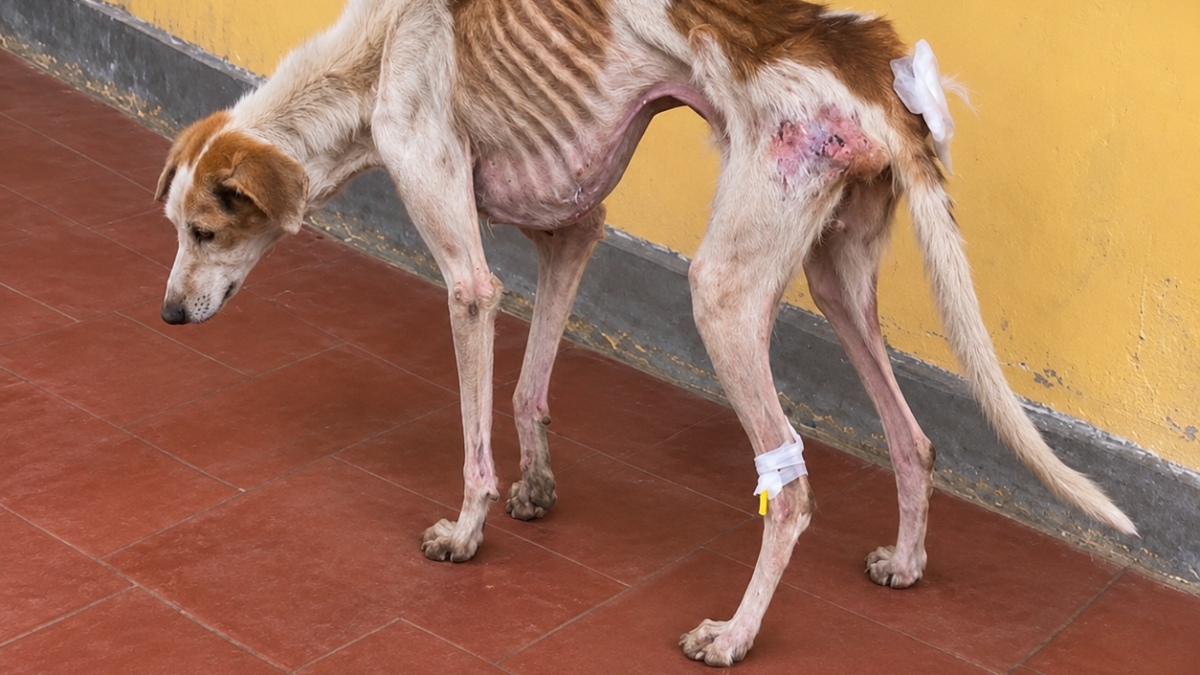
Thin enough that you could count nearly every rib.
Too weak to stand without someone holding him.
Eyes exhausted.
The second was taken in the park.
He’s running toward me.
Not very fast.
He was already old.
But his ears are back.
His mouth is open.
And every part of his body looks alive.
Between those photographs is the whole story.
Not a miracle.
A decision.
Someone discarded him.
Someone else said no.
No, you don’t get to decide his life is over.
No, old does not mean worthless.
No, weak does not mean finished.
No, a body that can no longer earn money is not disposable.
—
Sometimes I think about the day the veterinarian said:
“He may not last another day.”
Technically, he was right.
Ramoncito might not have.
But he did.
One more day.
Then another.
Then another.
Days became weeks.
Weeks became months.
Months became years.
And the dog who had been thrown away because he was no longer fast enough got something better than another race.
He got time.
Time to heal.
Time to eat.
Time to sleep outside.
Time to become annoying about breakfast.
Time to run when he chose.
Time to grow even older.
Time to be loved without earning it.
That was everything.
—
If I could go back to that first night, when I sat on the floor beside him thinking we might have only hours, I wouldn’t tell myself:
Don’t worry. He’s going to run again.
Because running was never the most important thing.
I’d say:
He’s going to trust you.
He’s going to eat until you have to tell him no.
He’s going to sleep in your bed.
He’s going to learn the park.
He’s going to discover that nobody gets angry when he needs to rest.
He’s going to grow old enough for arthritis medication.
He’s going to become family.
And one day, when his legs finally stop carrying him for good, it won’t be because somebody discarded him.
It will be because they carried him as far as they could.
Then you’ll carry him the rest of the way.
—
That is the ending Ramoncito deserved.
Not victory at a racetrack.
Not applause.
Not money.
A home.
A person beside him.
A place under a tree.
And the freedom to stop running whenever he wanted.
The first half of his life taught him that his worth depended on his legs.
The second half proved that it never had.
And if you ask me what I remember most, it isn’t the moment he ran through the park.
It isn’t even the day he stood without help.
It’s that first night.
Ramoncito lying on the blanket.
Too weak to do anything.
No speed.
No strength.
No performance left to give.
And still completely worth saving.
Everything after that was just proof.
For years, Ramoncito had run because someone else wanted him to.
Every time his legs carried him across a finish line, somebody made money. Every time he won, somebody praised his speed, fed him just enough, and prepared him for the next race.
But age eventually catches every body.
Ramoncito slowed down.
His legs weren’t as explosive as they had once been. His breathing took longer to settle. The races became harder, and the victories stopped coming.
And when he was no longer useful to the person who had profited from him, he was simply abandoned.
By the time I met him, there was almost nothing left of the powerful dog he must once have been.
Someone had found him lying weak and filthy, barely able to lift his head. They carried him to the veterinary clinic because he couldn’t make it through the doors on his own.
I arrived shortly afterward.
The moment I saw him, I stopped.
His ribs were so visible they looked sharp beneath his skin. His hips had collapsed inward, and there were open sores on his legs and sides where his thin body had spent too much time pressed against hard ground.
His coat was dirty and dull.
His eyes were worse.
They weren’t frightened.
They weren’t angry.
They just looked tired.
The kind of tired that made me wonder whether he had already stopped expecting anything from people.
I crouched beside him.
“Hey, old man.”
One ear moved slightly.
That was all.
The veterinarian examined him carefully.
His gums.
His heart.
His abdomen.
His temperature.
Then came the scale.
The vet stared at the number for several seconds before writing it down.
“How bad is it?” I asked.
He didn’t answer immediately.
That silence frightened me.
“Very bad.”
“Can you give him medicine?”
“We can treat his wounds. We can give fluids. We can manage pain carefully.”
“What about something to make him stronger?”
The vet shook his head.
“There isn’t an injection that fixes starvation.”
“Then feed him.”
“We will. Slowly.”
I hated every answer.
There had to be something more dramatic.
Some medicine.
Some procedure.
Some way to undo what had been done to him.
The vet finally looked directly at me.
“You need to understand how fragile he is.”
“I understand.”
“No, I don’t think you do.”
I went quiet.
“He may not survive another day.”
I looked at Ramoncito.
He was watching us.
Barely.
But he was watching.
I knelt lower.
“Did you hear that?”
His eyes shifted toward me.
“They’re talking about tomorrow like you’re not part of the conversation.”
The vet didn’t argue.
We gave Ramoncito fluids and cleaned his wounds.
He tolerated everything without resistance.
That worried me.
A dog with energy usually protests something.
A needle.
A bandage.
Being repositioned.
Ramoncito simply let us do whatever we wanted.
When food was offered, he sniffed it.
Nothing.
Then he licked once.
Stopped.
Tried again.
Three bites.
Maybe four.
Then his head sank.
“That’s enough,” the vet said.
“It doesn’t look like enough.”
“For his body, right now, it is.”
When it was time to decide what happened next, I asked the question I’d already been thinking about.
“If he really only has one night, can I take him home?”
The veterinarian studied me.
“Yes.”
I nodded.
“Then he’s coming with me.”
I wrapped Ramoncito in a blanket and carried him out.
He was frighteningly light.
A dog his size should have felt solid in my arms.
He didn’t.
He felt like bones wrapped in fur.
At home, I made him a bed beside the couch.
Blankets.
Towels.
Water.
A low bowl.
Medication.
Everything within reach.
I placed him down carefully.
For a few minutes, he didn’t move.
Then he tried to stand.
I saw his front legs push.
His back legs followed.
His entire body trembled.
I moved immediately and slid one arm underneath him.
“Easy.”
For one second, he was standing.
Then two.
His legs began shaking harder.
I lowered him back onto the blanket.
“That’s enough.”
He rested his head against my wrist.
And I stayed on the floor beside him.
That night, I didn’t really sleep.
Every hour, I woke and touched his chest.
Breathing.
Still breathing.
At three in the morning, he opened one eye when I checked.
“Sorry.”
His eye closed again.
At five, he drank a little water.
At six-thirty, I opened a small container of food.
His head lifted.
That was the first thing that made me smile.
“You heard that?”
His nose moved.
I placed a small amount on a plate.
He ate slowly.
One bite.
Another.
Then another.
I stopped him before he could overdo it.
He looked at the plate.
Then at me.
“I know.”
He looked back at the food.
“No.”
That was the first sign of personality I saw.
Annoyance.
I laughed.
“If you’re mad at me, you’re still in this.”
That morning, we returned to the clinic.
The veterinarian looked genuinely surprised.
“He’s still critical.”
“But?”
“But more responsive.”
I smiled.
“What now?”
“Small meals. Fluids. Wound care. Rest.”
“That’s it?”
“That’s a lot.”
I wanted a miracle.
Instead, I got a routine.
And for the next several weeks, routine became our whole world.
Ramoncito ate four, sometimes five small meals a day.
At first, I measured every bite.
He had been starved so badly that even feeding him required patience.
Too much, too quickly, could hurt him.
He didn’t understand that.
The moment his appetite returned, he acted as though I was personally responsible for the existence of hunger.
He would stare at the empty bowl.
“Don’t look at me like that.”
The stare continued.
“You just ate.”
Nothing.
“I have instructions.”
His ears lifted.
I started laughing.
“You don’t care about instructions.”
No.
He definitely didn’t.
His appetite came back before his strength did.
Standing remained difficult.
Every day, when he seemed ready, I helped him up.
One hand beneath his chest.
Another beneath his abdomen.
“Ready?”
He would push.
His paws found the floor.
His muscles tightened.
For a few seconds, he would remain upright.
Then the shaking started.
I could feel the weakness move through him.
I always lowered him before he collapsed.
At first, he lasted three or four seconds.
Then six.
Then ten.
Afterward, he breathed as if he’d just run another race.
That was the cruelest part for me.
This dog had once been known for speed.
Now standing beside a couch was an endurance event.
But Ramoncito didn’t seem ashamed.
That was something humans added to suffering.
He only knew whether he was tired.
If he was tired, he rested.
I had to learn from him.
During the second week, I made a mistake.
I became impatient.
Not with him.
With progress.
I wanted proof that everything we were doing mattered.
I helped him up.
He stood for a few seconds.
Then began to weaken.
“Come on, buddy. A little longer.”
He turned his head away.
I adjusted my grip.
“Just a few more seconds.”
He stopped trying.
His body simply relaxed into my hands.
I froze.
Then lowered him.
He lay on the blanket, exhausted.
I sat beside him.
“I’m sorry.”
He looked at me.
That moment changed the way I cared for him.
Ramoncito had spent enough of his life being asked to perform.
I was not going to turn recovery into another race.
From then on, I stopped deciding when he needed to prove something.
If he wanted to try to stand, I helped.
If he wanted to sleep, he slept.
If he managed five seconds one day and only two the next, that was fine.
His body belonged to him now.
That mattered more than any timeline.
As the weeks passed, the wounds began to close.
Healthy tissue formed along the edges.
The smell of infection disappeared.
His coat slowly improved.
The hollows around his hips became less severe.
Then one afternoon, something small happened.
I brought him food.
Normally, he waited for me to help him up.
That day, before I reached him, Ramoncito pushed with his front legs.
His rear legs followed.
He stood.
Alone.
I stopped moving.
His body shook.
One second.
Two.
Three.
Four.
Then he sat down heavily.
I stared at him.
“You did that.”
Ramoncito looked at the bowl.
Of course he did.
It wasn’t bravery.
It was breakfast.
I laughed.
“You’ll do anything for food, won’t you?”
He ate.
I sat beside him smiling like an idiot.
A few days later, I carried him outside.
The weather was warm, and I laid a blanket beneath a tree.
The moment fresh air touched him, he lifted his nose.
For the first time, I saw real curiosity.
Birds.
Grass.
Wind.
Other dogs somewhere in the distance.
He smelled everything.
Then he lowered his head and fell asleep.
I sat there watching him.
Maybe outdoor life had once meant something very different to Ramoncito.
Training.
Racing.
Pressure.
Noise.
Expectations.
Now it meant sleeping under a tree while nobody asked him for anything.
That became his favorite place.
We went outside almost every afternoon.
Some days he slept for hours.
I let him.
The food and veterinary care were expensive.
More expensive than I’d expected.
There were medications.
Blood tests.
Bandages.
Special food.
Supplements.
Follow-up appointments.
But every time I thought about the cost, another thought followed.
Ramoncito had spent years making money for someone else.
For once, money was being spent on him.
Not because he could produce anything.
Not because he could win.
Simply because he was alive.
That felt right.
About a month after I brought him home, we tried his first walk.
I put a soft harness around him and used a folded towel beneath his abdomen for support.
We made it to the end of the driveway.
Twenty yards, maybe.
It took almost ten minutes.
Ramoncito stopped several times.
I waited.
At the gate, he looked down the street.
“Not today.”
He stayed there.
“Another time.”
He looked back at me.
Then his legs weakened.
I carried him home.
He slept for three hours.
I didn’t care that we’d only gone twenty yards.
We had gone twenty yards.
The veterinary clinic became another place where we could measure change.
At one appointment, the veterinarian watched Ramoncito walk down the hallway.
Slowly.
Unsteadily.
But under his own power.
The same man who had once told me Ramoncito might not survive a day looked genuinely moved.
“That is not the dog you carried in.”
“No.”
The vet ran his hands along Ramoncito’s ribs.
“Weight is much better.”
“Bloodwork?”
“Also much better.”
I let out a breath I hadn’t realized I was holding.
“And the wounds?”
“Almost healed.”
I crouched beside Ramoncito.
“You hear that?”
He was searching the vet’s pocket for treats.
The vet laughed.
“That’s a very healthy behavior.”
The park came next.
At first, I only wanted him to experience somewhere new.
I carried him from the car to a bench.
A young dog ran past after a tennis ball.
Ramoncito’s ears lifted.
He watched.
The dog sprinted back.
Then again.
I wondered what running meant to Ramoncito.
Did he remember races?
Did his body associate speed with pressure?
Was running something he had ever been allowed to enjoy?
I didn’t know.
So I didn’t ask anything from him.
I clipped on his leash.
“Want to walk?”
He stood.
We moved at his pace.
Ten yards.
Stop.
Sniff a tree.
Another ten.
Rest.
He investigated every smell as though he’d never had time to notice anything before.
Maybe he hadn’t.
His world had once been about getting from one point to another as fast as possible.
Now he could spend three minutes smelling a bush.
I loved watching him waste time.
It felt like freedom.
Weeks became months.
Ramoncito gained more weight.
His coat became soft.
His face changed.
The exhaustion disappeared.
His eyes became brighter.
He developed preferences.
Chicken was better than almost everything.
Rain was unacceptable.
Outdoor naps were sacred.
Breakfast should happen early.
He disliked one particular neighbor’s motorcycle.
He tolerated baths only because he had no choice.
In other words, he stopped being “the starving old racing dog.”
He became Ramoncito.
One afternoon at the park, a squirrel ran across the path.
Ramoncito saw it.
His head lifted.
I felt the leash tighten.
“Don’t.”
The squirrel stopped.
Ramoncito stared.
The squirrel ran.
So did Ramoncito.
Three strides.
Maybe four.
I almost dropped the leash.
“Ramoncito!”
He stopped and turned.
I was laughing.
And crying.
At the same time.
He had run.
Not fast.
Not far.
But he had run.
And no one had ordered him to.
No crowd.
No money.
No race.
No stopwatch.
No finish line.
He had run because he wanted to chase a squirrel.
I went to him and put both hands around his face.
“You did that for yourself.”
Ramoncito licked my wrist.
That moment changed something in me.
I had spent months wondering whether he would ever become the dog he’d once been.
Suddenly, I didn’t want that anymore.
I didn’t want the old racing dog back.
I wanted this dog.
The one who ran badly after squirrels.
The one who slept in grass.
The one who demanded food.
The one who could stop whenever he wanted.
Not long after that, the question of legal ownership was finally settled.
The person who had abandoned him would not be getting him back.
I remember sitting across from the rescue coordinator with paperwork in front of me.
“Name?”
“Ramoncito.”
“Keeping it?”
“Yes.”
“Owner?”
I paused.
It was just a box on a form.
Still, I hated the word slightly.
Then I wrote my name.
The coordinator smiled.
“That’s it.”
“That’s it?”
“He’s yours.”
I looked down.
Ramoncito was asleep near my chair.
I nudged his shoulder.
“Hey.”
One eye opened.
“You officially live with me.”
The eye closed.
The coordinator laughed.
“He seems moved.”
“He’s processing.”
Home had actually begun long before the paperwork.
The first night beside the couch.
The first meal.
The first time he leaned into my hand.
The first afternoon under the tree.
The document only made official what Ramoncito had apparently already decided.
That night, I moved his bed into my bedroom.
He looked at his bed.
Then mine.
“No.”
He looked again.
“You have your own.”
One paw went onto my mattress.
I stared at him.
“You can barely climb.”
Another paw.
I helped him up.
He immediately stretched across half the bed.
“Great.”
He fell asleep.
And that was his first official night as family.
A year after his rescue, I took Ramoncito back to the clinic.
The veterinarian walked into the waiting room, saw him, and stopped.
“No.”
I smiled.
“Yes.”
Ramoncito walked toward him.
No sling.
No towel beneath his hips.
No one holding him.
The vet crouched.
“Look at you.”
Ramoncito immediately searched him for treats.
We put him on the scale.
The vet compared the number with his original chart.
“He was less than half this weight.”
“I know.”
He looked at Ramoncito.
“I honestly didn’t think he would survive.”
“I know.”
Then he looked at me.
“You saved him.”
I shook my head.
“We helped him.”
Ramoncito wagged his tail.
“He did the rest.”
After the appointment, we went to the park.
Ramoncito moved down the path faster than usual.
His favorite tree was ahead.
I expected him to stop there.
Instead, he kept moving.
Fast walk.
Then a trot.
Then, suddenly, he ran.
I loosened the leash.
“Go.”
He ran across the grass.
Not like a racing dog.
His stride wasn’t perfect.
His age showed.
His old injuries showed.
He was slower than almost any young dog in that park.
But none of that mattered.
For fifteen seconds, Ramoncito ran exactly as fast as he wanted to.
Then he stopped.
Panting.
I walked over.
“You done?”
He looked toward the tree.
I laughed.
“Of course.”
We went to his favorite patch of grass.
He lay down.
I sat beside him.
And I realized that this was the only race I ever wanted to see him run.
One where stopping didn’t mean losing.
One where no human made money.
One where nobody demanded another lap.
One where the reward was simply that he felt good enough to move.
Later, I heard that Ramoncito’s former owner knew he was still alive.
Apparently he had asked whether the attention around Ramoncito’s recovery was making anyone money.
When I heard that, I wasn’t even surprised.
Money.
Still.
After everything.
A man who knew the former owner asked whether I wanted him to pass along a message.
I thought for a moment.
“Yes.”
“What?”
“Tell him Ramoncito doesn’t earn anything anymore.”
The man waited.
“And?”
“And he doesn’t have to.”
That was all.
I didn’t need a confrontation.
I didn’t need Ramoncito dragged into some scene where humans argued over him.
He had performed enough for people.
Even revenge didn’t get to turn him into a prop.
His former owner had already lost the thing he cared about most.
Control.
Ramoncito’s life no longer belonged to him.
Years passed.
Ramoncito grew older.
Really older.
Not abandoned-because-he-was-old older.
Loved-through-being-old older.
His muzzle turned white.
His walks shortened.
His sprint became a trot.
Then the trot became a quick walk.
Then one day, walking itself became slower.
And nobody got angry.
Nobody decided he wasn’t worth feeding.
Nobody left him because arthritis made him inconvenient.
We adjusted.
Softer bed.
Joint medication.
Shorter walks.
A ramp for the car.
More outdoor naps.
He was finally allowed to age without fear.
Sometimes we’d go to the park and not walk at all.
I’d spread his blanket beneath the tree.
Ramoncito would lie down.
I would sit beside him.
That was the whole trip.
A dog who had once spent his strongest years being pushed to run now had the freedom to make a human drive across town so he could sleep in a different patch of grass.
I loved that.
Eventually, his body began slowing in a different way.
One morning, he didn’t want breakfast.
That scared me.
Ramoncito always wanted breakfast.
I offered chicken.
Nothing.
I brought water.
A little.
He tried to stand.
His legs folded.
I supported him.
This time, he leaned into me.
At the clinic, the bloodwork told us what his body already had.
Age.
Organ decline.
The accumulated cost of a long life and a hard beginning.
The veterinarian explained the options.
Hospitalization.
More aggressive treatment.
Maybe a little more time.
I looked at Ramoncito.
His head rested on my foot.
I remembered years earlier, when I had asked whether I could take him home because I didn’t want his last night to happen in a clinic.
I asked the same question again.
“Can I take him home?”
The vet nodded.
“Yes.”
So I did.
I made a bed beside the couch.
Exactly where his first one had been.
Better blankets this time.
Ramoncito lay there peacefully.
That evening, I carried him to the park.
To the tree.
I put his blanket on the grass.
He settled down.
The wind moved across his white face.
I sat beside him.
“You remember this?”
His eyes were half closed.
“This is where you discovered sleeping could be an activity.”
One ear moved.
I smiled.
“And over there is where you tried to kill a squirrel.”
His breathing remained slow.
“You weren’t very good at it.”
I put a hand against his side.
“You ran enough, Ramoncito.”
My throat tightened.
“You don’t have to run anymore.”
He opened his eyes.
Looked at me.
Then rested his head against my leg.
The next morning, we knew it was time.
The veterinarian came to the house.
Ramoncito stayed on his blanket.
No fear.
No clinic cage.
No race.
No stranger demanding one more performance.
Just home.
The vet asked whether I was ready.
“No.”
He nodded.
Nobody ever is.
I leaned close to Ramoncito’s ear.
“You don’t have to win anything.”
My voice broke.
“You already did.”
He left quietly with my hand on him.
For days afterward, the house felt wrong.
His bowl remained in the kitchen.
His leash stayed by the door.
I kept looking at the bed beside the couch.
Then one afternoon, I went to the park alone.
I sat beneath his tree.
At first, all I could remember was the last day.
Then another memory came.
Ramoncito running after the squirrel.
Slow.
Awkward.
Free.
I smiled.
People sometimes ask whether Ramoncito ever got revenge on the person who used him and discarded him.
He did.
Just not in the way people imagine.
They made money from his legs.
Ramoncito eventually ran for nothing.
They valued him only while he could perform.
Ramoncito found people who loved him while he slept.
They threw him away because he became old.
Ramoncito got even older.
Comfortably.
Safely.
With medication when he hurt.
Food when he was hungry.
A warm bed every night.
They decided his usefulness had ended.
Ramoncito learned he never needed to be useful in the first place.
That was the revenge.
The person who abandoned him missed everything.
The first real meal.
The first tail wag.
The first time he stood alone.
The first twenty-yard walk.
The first nap beneath the tree.
The squirrel.
The park.
The adoption.
The bed he stole.
The years of ordinary mornings.
All of it.
They got his speed.
I got Ramoncito.
There is no comparison.
I still keep two photographs.
In the first, Ramoncito is lying at the clinic.
You can count his ribs.
His eyes look empty.
He can’t stand without help.
In the second photograph, he’s running across the park.
His mouth is open.
His ears are back.
His body isn’t young.
He isn’t perfectly strong.
But he looks happy.
People see those photographs and say the second one proves he was worth saving.
I disagree.
He was worth saving in the first one.
When he couldn’t stand.
When he couldn’t run.
When he had nothing left to give anybody.
That is the whole point.
Recovery didn’t create his value.
Love simply recognized it.
The veterinarian once said Ramoncito might not survive another day.
He did.
Then he survived another.
And another.
Days became weeks.
Weeks became months.
Months became years.
The dog who had spent his life racing eventually received the one prize nobody had ever given him before.
Time.
Time to heal.
Time to eat.
Time to sleep outside.
Time to be stubborn.
Time to be slow.
Time to grow old.
Time to belong somewhere.
And when that time finally ended, he didn’t leave this world abandoned.
He left from home.
With someone beside him.
No finish line could have given him anything better.








