HOA Karen Charged 47 Families to Swim in My Dead Wife’s Pool — So I Bought the Land Behind Her Mansion and Filled It With Hogs
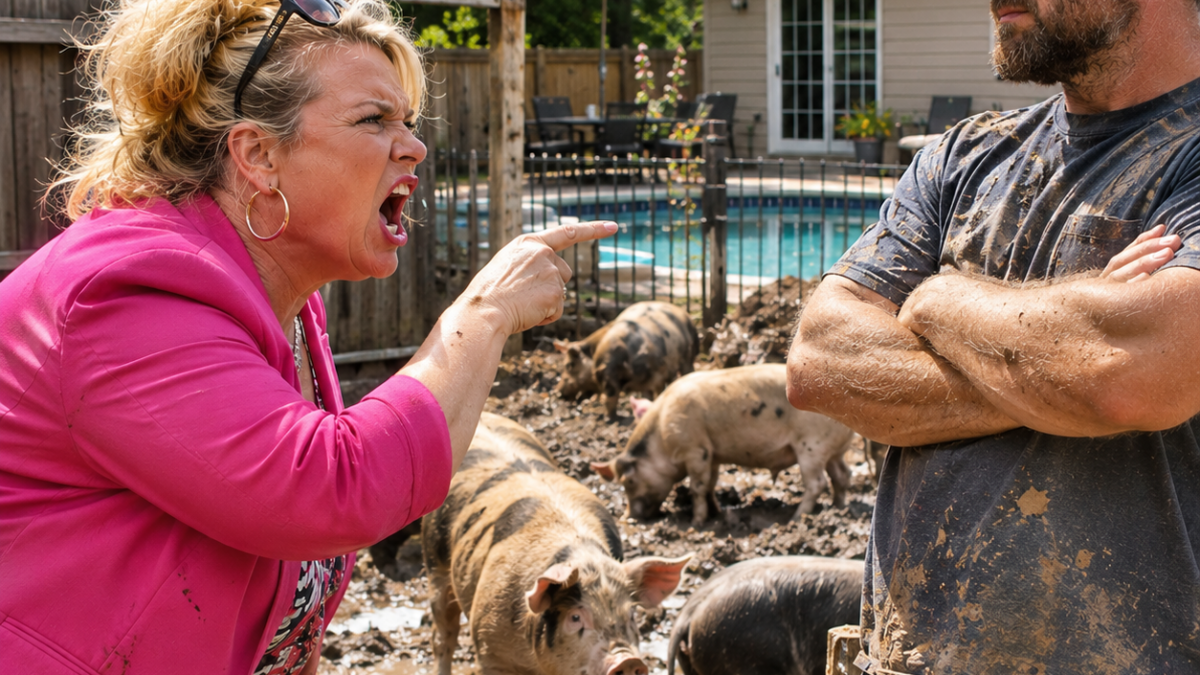
part 2
Cypress Bend Estates sits in Collin County, Texas.
One hundred forty-two houses.
Good schools.
Nice streets.
Homes in the four-hundred-fifty-thousand to seven-hundred-thousand-dollar range.
It was the kind of neighborhood where people cared deeply about landscaping, resale value, fence stain, mailbox design, and whether somebody left a trash container visible for twelve minutes longer than the rules allowed.
The western edge of the development bordered agricultural land.
Cattle ranches.
Hay fields.
Scrub.
Open county acreage stretching toward the horizon.
That detail would matter later.
At the time, all I cared about was raising Lily and working.
Shelby Caldwell had been HOA president for nine years.
Tall.
Platinum-blonde.
Beautiful in the kind of polished, practiced way that looked expensive because it was.
White sundresses in spring.
Linen blazers when the weather cooled.
Designer athletic clothes even if she was only checking the mailbox.
She drove a white Cadillac Escalade with custom plates.
She also had around twelve thousand social-media followers, mostly local people who seemed to either admire her or fear becoming one of her posts.
Shelby had a way of using charm strategically.
Head tilted slightly when she wanted something.
Touch on the arm when she wanted you to lower your guard.
“Sweetie” when she was about to make your day worse.
Her husband, Dwight, had developed Cypress Bend.
That created a dangerous combination.
He had built the neighborhood.
She ran the HOA.
And somewhere along the way, Shelby stopped seeing a distinction between managing the subdivision and owning everything inside it.
She first came to my house on a Saturday morning.
I was sealing the limestone deck around Sarah’s pool.
Lily was inside doing homework.
I heard heels clicking on the driveway.
Then smelled Shelby’s perfume before I saw her.
Floral.
Strong.
She came through the side path carrying her leather portfolio.
“Garrett, hi.”
She touched my arm.
“The pool looks absolutely gorgeous.”
“Thanks.”
I kept brushing sealer.
“So, I hate to do this.”
That sentence usually means somebody does not hate what comes next.
She opened the portfolio.
“CC&R Section 7.4B.”
I stood.
“What about it?”
“Recreational water features exceeding four hundred square feet are subject to community access provisions.”
I stared at her.
“No.”
Her smile tightened.
“It’s written right here.”
“I know that clause.”
“Then you understand.”
“It was written for the planned community pool on Lot 88.”
Shelby tilted her head.
“The covenant says recreational water features.”
“On common-area property.”
“Garrett, sweetie—”
“Don’t.”
Her brows lifted.
“The community has rights too.”
“Not to my backyard.”
She looked toward the pool.
“Think of the children.”
“I am. One of them lives here.”
She sighed.
“I know this is emotional for you.”
That annoyed me.
Then she said the thing that changed the conversation.
“I’m sure Sarah would have wanted neighborhood children to enjoy it.”
My hand tightened around the brush.
There are moments when anger arrives hot.
This wasn’t one of them.
Mine came cold.
I looked directly at Shelby.
“You didn’t know my wife.”
Her smile flickered.
“I didn’t mean—”
“Then don’t tell me what she would have wanted.”
For the first time, she looked uncomfortable.
Only for a second.
Then the professional smile returned.
“We’ll revisit this when you’ve had time to process it.”
“There’s nothing to process.”
She closed the portfolio.
“We’ll talk soon.”
I watched her leave.
I should have understood that she had never considered my answer final.
Four days later, I came home from a job site in Frisco.
Long day.
Concrete dust on my boots.
Diesel smell in my truck.
I pulled into the driveway around five.
Everything looked normal.
Then I opened the side gate.
Splashing.
Laughter.
Music.
I stopped.
Eight strangers were in my backyard.
Two children jumped from the deep end.
A man I had never seen stood at my grill cooking hamburgers.
My grill.
My propane.
My utensils.
A woman floated through Sarah’s pool on a pink inflatable flamingo.
Wet footprints covered the limestone.
Someone had thrown Lily’s towel over the back of a chair and put a beach bag in its place.
Then I saw the teenage boy.
Maybe sixteen.
Hot dog in one hand.
He was sitting on Sarah’s memorial stone.
For several seconds, I honestly couldn’t move.
It wasn’t just that they were trespassing.
It was how comfortable they were.
They behaved like they belonged.
Then Shelby appeared beneath the pavilion.
White sundress.
Clipboard.
Smile.
“Garrett, hi.”
“What are these people doing here?”
She glanced around as though I had asked why there was water in the pool.
“Community swim.”
“Get them out.”
She lifted the clipboard.
“We established a schedule.”
“You what?”
“Tuesdays and Thursdays, two to six. Saturdays all day.”
I actually laughed.
Not because it was funny.
Because it was too absurd to process normally.
“You made a schedule for my backyard?”
“People need predictability.”
“Get them out.”
“Garrett.”
“No.”
She lowered her voice.
“Sweetie, this adjustment period is going to be difficult if you make it difficult.”
“This isn’t an adjustment.”
I pointed toward the gate.
“Everybody leaves.”
The father at the grill had stopped cooking.
People were listening now.
Shelby’s face changed.
The smile vanished for maybe half a second.
Underneath it was something cold.
Then it returned.
“I’d hate to have to issue a violation.”
“For what?”
“Restricting community access.”
“My backyard?”
“Two hundred dollars per day.”
I stared at her.
“You’re threatening to fine me because I won’t let strangers swim at my house?”
“It adds up.”
Then she patted my arm.
That touch almost did it.
I pulled away.
Shelby turned toward the waterfall.
Somebody lifted a phone.
She smiled for a photograph.
Behind her, water flowed over stone I had shaped with my own hands.
I looked toward the second-floor windows.
Lily’s curtain moved.
That was why I didn’t lose control.
I didn’t want Shelby filming me throwing people out and turning it into evidence that the grieving pool contractor was unstable.
So I waited.
At six, everyone left.
I cleaned.
Empty juice box in the deep end.
Ketchup on the waterfall stone.
Crumpled paper plate behind a planter.
One of Lily’s pool noodles torn.
Then I walked toward Sarah’s memorial.
The corner was cracked.
Three inches.
A thin fracture through the carved word ENDLESS.
I crouched.
Ran my thumb along it.
“Dad?”
Lily’s voice came from the upstairs window.
I looked up.
“Yeah?”
“Who were those people?”
“Neighbors.”
“Why were they in Mom’s pool?”
I opened my mouth.
Nothing useful came out.
The next morning, I went to Home Depot.
Heavy industrial padlock.
Keyed deadbolt.
Reinforcement plates.
Long bolts.
I installed them myself.
Drilled deep into the cedar gate posts.
Tested the lock three times.
Then again.
Thursday, certified mail arrived.
NOTICE OF VIOLATION
Two hundred dollars per day.
Retroactive.
Six hundred dollars already owed.
Failure to comply within thirty days could lead to an HOA lien.
Signed:
Shelby Caldwell, President
I stood at the kitchen counter reading it.
Then I went to the cabinet where I kept closing documents and association papers.
I pulled out the CC&Rs.
Ninety-four pages.
Made coffee.
Sat down.
Read everything.
By eleven that night, I reached Section 7.4B.
Shelby had quoted the opening correctly.
But she omitted the key phrase.
Recreational water features exceeding four hundred square feet on common-area lots…
Common-area lots.
My house was Lot 47.
Private residential.
Appendix C identified the planned recreational parcel.
Lot 88.
I pulled the subdivision plat.
There it was.
Lot 88 had been reserved for the community pool Dwight Caldwell’s development company had promised when Cypress Bend was marketed.
But that pool was never built.
Lot 88 had ended up as a drainage area.
Cattails.
Weeds.
Frogs.
Shelby had taken language written for a pool her husband never delivered and applied it to mine.
I kept reading.
HOA enforcement procedures.
Written notice.
Opportunity to contest.
Hearing rights.
Procedural requirements before fines and liens.
Shelby had skipped every meaningful step.
I highlighted the pages.
Made copies.
Started a folder.
I still thought this could become a lawyer’s letter and end.
Then I checked my Ring footage Monday morning.
Sunday.
2:14 p.m.
A white work van parked at my house.
A man in coveralls stepped out carrying bolt cutters.
Behind him:
Shelby.
White Escalade.
Starbucks cup.
Phone in hand.
The locksmith walked to my gate.
Cut the industrial padlock.
Forty seconds.
Cut the keyed deadbolt.
Another minute.
Threw both pieces into my grass.
Shelby barely watched.
Then he installed an HOA keyed lock.
Shelby handed him a check.
They drove away.
I replayed the video.
Again.
Again.
What bothered me wasn’t only the act.
It was the comfort.
Shelby treated breaking onto my property like scheduling lawn maintenance.
By Wednesday, green-and-white signs appeared zip-tied to my cedar fence.
CYPRESS BEND COMMUNITY POOL
HOURS: 8:00 A.M. – 8:00 P.M.
Rules below.
At the bottom:
MANAGED BY CYPRESS BEND HOA — PRESIDENT SHELBY CALDWELL
My name was nowhere.
The next letter came from Caldwell and Associates, Dwight’s business attorney.
It threatened judicial foreclosure if I continued interfering with access to a designated community amenity.
Foreclosure.
I read that word several times.
They were threatening the house now.
The house where Sarah had planted rosemary beside the kitchen window.
Where Lily’s height marks were still penciled on a doorframe starting at age three.
Where I had brought Sarah home after treatments.
Where I had held her hand the night she asked me to build the pool.
That evening, I drove to Shelby’s house.
Six thousand two hundred square feet.
White Austin stone.
Circular driveway.
Perfect lawn.
Professional landscaping.
Angel-shaped fountain in front.
I rang the doorbell.
Three-note chime.
Shelby opened wearing a silk robe with a glass of rosé in one hand.
“Garrett.”
“Take down the signs.”
She leaned against the doorframe.
“Excuse me?”
“Reverse the fines. Remove your lock. Stay out of my backyard.”
She sipped her wine.
“Or what?”
“I hire a lawyer.”
“Sweetie.”
There it was again.
“Garrett, don’t make this ugly.”
“You already made it ugly.”
“You need to understand something.”
She gestured behind herself.
“Dwight built this neighborhood.”
“That doesn’t make my property yours.”
“I run the association.”
“You don’t run my house.”
She smiled.
“You know I always get what I want.”
The door closed.
The deadbolt turned.
I stood on the porch hearing the angel fountain.
“She’s not going to stop.”
I turned.
An older man stood near the property line walking a beagle.
White hair.
Straight-backed.
He introduced himself as Harold Briggs.
Retired Air Force.
One of Cypress Bend’s original homeowners.
“You know her?” I asked.
Harold gave a dry laugh.
“Everybody knows Shelby.”
“She’s threatening foreclosure.”
“That’s her favorite word.”
“She does this to other people?”
“Not the pool part.”
He scratched the beagle’s ears.
“But fines? Threats? Selective enforcement? Board intimidation? Nine years.”
“Why does nobody stop her?”
“Three board members vote however she tells them.”
“And everyone else?”
“Scared.”
“Of her?”
“Of what she can make expensive.”
That was more accurate.
Harold started walking.
Then stopped.
“Nobody fights her.”
He looked back at me.
“But if somebody ever does, I’ll clap first.”
That night, I started the binder.
Waterproof cover.
Tabs.
Every violation notice.
Every photograph.
Ring footage.
CC&R pages.
Plat maps.
Screenshots.
Letters.
Images of the cut locks.
The crack in Sarah’s stone.
Signs on my fence.
I didn’t have a complete plan.
But evidence comes before plans.
Three weeks later, Shelby made the mistake that changed everything.
A letter went to forty-seven Cypress Bend households.
COMMUNITY POOL ASSESSMENT
Eighty-five dollars per month.
Immediate.
Harold brought me his copy.
“She’s charging us to use your pool.”
“How many families?”
“Forty-seven.”
I did the math.
About four thousand dollars monthly.
Nearly forty-eight thousand dollars annually.
“For how long?”
“People say she started collecting some version of it months ago.”
“Who approved it?”
Harold laughed.
“You’re still assuming she asks.”
I started digging.
Eventually, with help from homeowners and records, Wade later confirmed what I suspected.
The money was not flowing through the normal HOA operating account.
It was being routed into an account controlled personally by Shelby Caldwell.
No meaningful public accounting.
No transparent board vote.
No documentation explaining the use.
My private memorial had become a business.
Then the lien appeared.
I had called my bank to refinance.
Rates had improved.
If I could lower the mortgage payment, the savings would go to Lily’s college account.
The loan officer called back.
“Mr. Sullivan, we found an issue.”
“What issue?”
“A lien.”
“What kind?”
“HOA assessment lien.”
I sat down.
“Amount?”
“Twelve thousand four hundred.”
For a few seconds, I couldn’t speak.
“When was it filed?”
“About eight weeks ago.”
I had never received a proper hearing.
Never had a meaningful chance to challenge it before filing.
The lien was already affecting my financial life.
My refinance stopped.
My credit took a hit.
And underneath the legal language was the real threat.
If I allowed this to continue long enough, Shelby and the HOA could keep increasing pressure against my home.
I walked through the kitchen.
My eyes stopped at Lily’s height marks.
Age four.
Age six.
Age nine.
Sarah had written some.
I had written others.
Tiny pencil lines.
Dates.
Initials.
You don’t understand how much a doorway can mean until somebody threatens the house around it.
Friday, a new flyer appeared.
CYPRESS BEND SUMMER SPLASH
Saturday.
One to six.
Food.
Drinks.
Music.
A photograph of Sarah’s pool covered the front.
It was labeled:
CYPRESS BEND COMMUNITY POOL
I was home when the party happened.
Thirty people.
Then more.
Catering tables on my deck.
Portable bar.
Champagne.
Music.
Professional photographer.
Designer swimwear.
Men leaning against the fence.
Women posing beside the waterfall.
Shelby stood in the center.
White one-piece swimsuit.
Gold jewelry.
Hair perfect.
She posed on the diving board.
Then at the waterfall.
Then beside Sarah’s memorial.
I watched from the upstairs bedroom window.
The photographer said something.
Shelby shifted.
She placed one hand directly on the memorial stone.
Smile.
Click.
I saw the photograph appear online less than fifteen minutes later.
#CypressBendLife
#CommunityPoolVibes
#SummerInTexas
Location:
Cypress Bend Community Pool & Lounge
Lounge.
Sarah’s memorial was now a lounge.
I stayed upstairs because I couldn’t trust what I would do if I walked outside.
Monday afternoon, Lily came through the front door around 3:40.
Backpack hanging from one shoulder.
Eyes red.
Face blotchy.
“Lily?”
She dropped the bag.
“What happened?”
She shook her head.
“Baby.”
“Kids found the pictures.”
My stomach tightened.
“What pictures?”
“The party.”
She wiped her face.
“They showed everybody.”
I stepped closer.
“What did they say?”
Her voice cracked.
“That’s your dead mom’s pool.”
She looked toward the backyard.
“They’re swimming there, Dad.”
“I know.”
“They’re laughing.”
“I know.”
“Why are you letting them?”
That cut deeper than anything Shelby had done.
“I’m not.”
“It looks like you are.”
She went upstairs.
Door closed.
Then I heard her crying.
Quiet.
Muffled.
Trying not to let me hear.
I sat on the hallway floor outside her room.
Back against the wall.
I stayed there a long time.
That night, after two, I went outside.
Purple.
Blue.
Purple.
Blue.
Lily’s northern lights moved beneath the water.
I knelt beside Sarah’s memorial.
Ran my thumb across the crack.
The fracture cut through the word ENDLESS.
“I promised you.”
My voice sounded strange in the empty yard.
“I know I promised.”
Water moved.
The waterfall kept running.
“I’m done being polite.”
I went inside.
Opened the laptop.
And started looking at property records.
That was how I met Wade Pennington.
Old-school Texas attorney.
Office in McKinney above a brick storefront.
Silver hair.
Worn boots.
Bolo tie.
His desk looked like paperwork had been reproducing there without supervision.
I put my binder in front of him.
He read.
For twenty minutes, he didn’t speak.
He flipped pages.
Watched the Ring footage.
Read the lien.
Checked the assessment records.
Looked at the original plat.
Finally, he closed the binder.
“She put her name on all of this?”
“Yes.”
“The fee collections?”
“Yes.”
“Personal account?”
“Yes.”
“No proper vote?”
“Nothing I can find.”
He leaned back.
“She’s either incredibly stupid or incredibly comfortable.”
“Both?”
“That would be my guess.”
Wade walked through everything.
The pool belonged to Lot 47.
Private residential.
The covenant language referred to common-area facilities.
Lot 88 had been intended for the neighborhood pool.
Dwight never built it.
The lien was vulnerable because of the process Shelby had used.
And the money trail created an entirely different problem for her.
Then Wade stopped.
He unfolded the subdivision map.
Tapped a small parcel.
Lot 14B.
Two point three acres.
Directly behind Shelby’s property.
Fifteen feet from her rear fence.
“What do you know about that?”
“Empty field.”
“Still zoned agricultural.”
I looked at him.
“How?”
“Dwight never finished rezoning it.”
“Inside the development?”
“Adjacent to it. Developed around it.”
“Why would he leave it?”
“Save money. Save paperwork. Thought he’d clean it up later.”
Wade opened a listing.
Lot 14B.
$67,000.
Then looked at me.
“What do you know about hogs?”
I stared.
“I build pools.”
“Do hogs smell?”
“Yes.”
He smiled.
“There you go.”
I laughed.
Then realized he wasn’t completely joking.
Wade explained the agricultural-use framework reflected in the source.
The parcel permitted legitimate livestock use.
It sat outside HOA jurisdiction.
If operated legally under county requirements, Shelby could complain, but she couldn’t simply order it removed because she disliked it.
Her own husband’s shortcut had created the opening.
I drove home thinking.
Then I looked at Sarah’s life-insurance account.
That money was for Lily.
I had protected it fiercely.
When my furnace failed, I used credit.
When my truck needed a transmission, I delayed replacing it.
When medical bills arrived months after Sarah died, I paid from work income.
I wouldn’t touch Sarah’s final gift.
Now Lot 14B cost sixty-seven thousand dollars.
I sat at the kitchen table.
Looked at the photograph of Lily beside the newly filled pool.
Blue water.
Sarah’s tile.
Big smile.
Was I about to use college money for revenge?
That question bothered me.
But this wasn’t only revenge.
The house had a lien.
Shelby had converted my property into income.
She had threatened foreclosure.
She had taken control of the gate.
She had made Lily ashamed of the place built for her mother.
If I won the legal case, I could restore the account.
That was the plan.
I whispered:
“Sarah, forgive me.”
Tuesday morning, I made the offer.
Cash.
$67,000.
Eleven-day close.
No inspection contingency.
Seller accepted.
I owned Lot 14B before Shelby had any idea I was looking at it.
That mattered.
Wade filed complaints and prepared legal action concerning the money, the lien, and Shelby’s unauthorized use of my property.
I submitted agricultural applications.
Livestock.
Water.
Land-use documentation.
All public record.
All legal within the story’s framework.
Then I started building.
Saturday morning.
Six o’clock.
August in North Texas.
Temperature climbing before sunrise had fully cleared the horizon.
I set posts.
Pressure-treated lumber.
Hog wire.
Concrete footings.
Shade structures.
Drainage.
Mud wallows.
Feed storage.
Everything measured.
Everything documented.
Receipts filed.
Photographs taken.
Because I knew Shelby would challenge every inch.
Then I installed eight cameras.
Night vision.
Motion detection.
Cloud backup.
Four on the pens.
Two on the access road.
Two covering the fence line nearest Shelby.
Next, I called a livestock breeder near Waxahachie.
Thirty Duroc-cross feeder hogs.
Eighty to one hundred twenty pounds at delivery.
About forty-five hundred dollars.
Then I called reporter Darla Owens.
Sent evidence.
The lien.
Plat.
Pool-assessment money trail.
Shelby’s social-media posts.
Lock footage.
Records Wade had collected.
Darla called.
“Garrett.”
“Yes?”
“Is everything documented?”
“Yes.”
“Bank records?”
“Yes.”
“Property maps?”
“Yes.”
“Video?”
“Yes.”
“And you’re building a hog operation behind the HOA president’s house?”
“Legal livestock operation.”
Silence.
Then laughter.
“This might be the most Texas thing I’ve seen all year.”
“Can you hold the story?”
“How long?”
“Until I call.”
“Why?”
“Because she hasn’t made her last mistake yet.”
I didn’t know how right I was.
Shelby checked permit filings regularly.
Six days after my agricultural filing became visible, she found it.
Harold called after the emergency HOA meeting.
“She lost her mind.”
“What happened?”
“He’s putting pigs back there!”
Harold did a terrible Shelby impression.
I laughed despite myself.
“Then what?”
“Chuck told her Lot 14B isn’t inside HOA jurisdiction.”
“And?”
“She said, ‘Then make it our boundary.’”
I closed my eyes.
“She said that?”
“Word for word.”
“What did you say?”
“I explained that annexing land because you dislike the owner is generally frowned upon.”
Shelby tried everything.
First, emergency livestock ban.
The HOA passed it.
Wade responded immediately.
The rule applied only to HOA-controlled residential parcels.
Lot 14B wasn’t one.
Second, Dwight used his old development contacts to request an emergency permit review.
County planning reviewed my paperwork.
Everything compliant.
Challenge denied.
Third, injunction.
Shelby’s attorney claimed the hog operation would cause irreparable harm.
Judge rejected it under the agricultural land-use framework Wade raised.
Fourth, nuisance action.
Dismissed.
Four attacks.
Four failures.
Each one cost Shelby legal fees.
Then her realtor called.
“We’re prepared to offer one hundred twenty thousand for Lot 14B.”
“No.”
Two days later:
“One hundred fifty.”
“No.”
Then:
“Two hundred thousand dollars.”
Triple my purchase price.
I let the offer sit for a day.
The realtor called again.
“Mr. Sullivan, this is an extraordinary premium.”
“I understand.”
“Why would you decline?”
“I like the neighborhood.”
She didn’t appreciate that answer.
Shelby eventually learned I had closed on the parcel before the permits appeared.
Before construction.
Before she knew.
According to Harold, she screamed:
“He planned this!”
Then:
“That pool boy planned this!”
Pool boy.
Even then.
That’s how she saw me.
Fine.
The livestock trailer arrived at 7:14 on Thursday morning.
I remember because I had been standing there since six.
Coffee cold in my hand.
Sun rising copper over North Texas.
The driver backed down the access road.
Dropped the gate.
Thirty hogs came down the ramp like angry footballs.
Squealing.
Pushing.
Snorting.
Hooves churning dust.
One red sow stopped at the bottom and stared at me.
“Welcome home.”
By Saturday, Shelby understood.
Thirty hogs in August create an atmosphere.
Let’s leave it at that.
Heat intensified the manure smell.
Wind often carried it east.
Shelby’s house sat east.
Outdoor kitchen.
Jacuzzi.
Rose garden.
Expensive patio.
All directly in the prevailing path.
She called code enforcement.
Inspector came.
Checked permits.
Pen spacing.
Drainage.
Waste procedures.
Everything compliant.
No citation.
Health department came.
Same result.
County officials came.
Same result.
Shelby eventually called anyone she thought might have power over me.
Nobody gave her the answer she wanted.
Then she posted a video.
Inside the Escalade.
Mascara streaked.
Voice shaking.
She called the hog operation “agricultural terrorism.”
Said I was deliberately destroying property values.
Said she was being persecuted.
The video went viral.
Hundreds of thousands of views.
The comments turned against her almost immediately.
People found the pool story.
Photos.
Assessments.
My memorial.
Someone wrote:
Maybe don’t steal somebody’s pool and they won’t buy pigs.
Thousands of likes.
Another:
This man understood the assignment.
Shelby deleted comments.
More appeared.
But the hogs were not the climax.
Nine days after arrival, at 2:17 in the morning, my phone alerted.
Fence camera.
I opened the feed.
Two men.
Dark clothing.
Bolt cutters.
They approached the east side.
Cut four sections of hog wire.
Fast.
Professional.
Left a large opening.
Then drove away in a white pickup.
The camera caught the plate.
Faces.
One man was Shelby’s regular landscaper.
I saved the footage.
Cloud copy.
Local copy.
Sent Wade a duplicate.
Before dawn, three hogs found the opening.
They crossed the fifteen-foot buffer.
Then found a weak place in Shelby’s decorative fence.
On the other side:
Paradise.
Roses.
Landscaping.
And an infinity pool.
At approximately 5:40 a.m., one large Duroc sow entered the water.
Hogs are good swimmers.
Shelby learned that at 5:45.
My security camera caught her coming outside in silk pajamas.
Bare feet.
Hair flattened from sleep.
No makeup.
She stopped.
One hog paddling in the pool.
Two others destroying what remained of her roses.
Mud across the expensive tile.
Hoofprints.
Manure.
Shelby screamed.
The hog did not care.
That part of the video was funny.
The important part was earlier.
Men cutting my fence.
That showed how the hogs escaped.
I didn’t release them.
Somebody sabotaged the enclosure.
Wade watched the footage.
His response was simple.
“Don’t post anything.”
“I won’t.”
“Give it to law enforcement.”
“Already copied.”
“Darla?”
“Now?”
“Now.”
Darla’s newsroom began preparing.
Meanwhile, Harold started knocking on doors.
Seventy-eight homeowners signed a demand for an emergency HOA meeting.
Thursday.
Seven p.m.
At six-thirty, the community center was full.
More than one hundred thirty residents packed inside.
People against walls.
Doorways crowded.
Air-conditioning losing the battle.
WFAA camera crew in the center aisle.
County deputy near the rear.
Shelby arrived at 7:03.
Three minutes late.
For nine years, she had apparently never been late to an HOA meeting.
That night, she looked different.
Plain ponytail.
Minimal makeup.
Jeans.
Blazer.
Hands not quite steady.
And beneath the perfume:
A faint livestock odor.
Chuck, Dennis, and Paul sat at the board table.
Nobody made eye contact with her.
I sat third row.
Wade handed me the flash drive.
Harold nodded.
I walked to the podium.
I didn’t shout.
I did what I do when presenting a pool proposal.
Clear.
Measured.
One detail at a time.
Slide one.
Original subdivision plat.
“Lot 47.”
My property.
Private residential.
Next.
Section 7.4B.
Common-area recreational water provision.
Next.
Lot 88.
The community pool parcel.
Photograph.
No pool.
Cattails.
Drainage.
Next.
Assessment records.
Forty-seven households.
Eighty-five dollars monthly.
$47,940 collected over the documented period.
Personal account controlled by Shelby Caldwell.
The room erupted in murmurs.
Shelby leaned toward her microphone.
“That is not an accurate characterization.”
I continued.
Next.
My lien.
$12,400.
Process problems.
Next.
Ring footage.
August 14.
Locksmith approaches my private gate.
Cuts my locks.
Shelby visible beside the Escalade.
People began talking louder.
Someone yelled:
“That’s trespassing!”
Next.
Instagram.
Shelby posing at my pool.
At Sarah’s memorial.
Paid community event.
Next.
Lot 14B.
Agricultural zoning.
Never rezoned by Dwight’s development operation.
Next.
My legal permit records.
Then the final video.
2:17 a.m.
Two men.
Bolt cutters.
Four sections of fence.
One man identified as Shelby’s landscaping contractor.
White pickup.
License plate.
The room became silent.
I let the footage end.
Chuck spoke first.
“I never voted for a pool assessment.”
Shelby turned.
“Chuck.”
He shook his head.
“No. I didn’t.”
Dennis looked toward the audience.
“She told us the authority already existed.”
Shelby’s voice sharpened.
“Because it did.”
Dennis said:
“We never verified it.”
Paul stared down.
Shelby stood.
“This is all being taken out of context.”
I looked at her.
“Which part?”
She ignored me.
She addressed the room.
“I built standards in this neighborhood. I protected all of your investments for nine years.”
A woman near the front shouted:
“With our money?”
Shelby raised her hands.
“Please.”
Another homeowner:
“You charged me to use his backyard?”
Shelby:
“The amenity designation was legally supported at the time.”
Harold stood.
Slowly.
Bad knee.
American flag cap.
“Without you,” he said, “we’d still have our money.”
The room quieted.
“And Garrett would still have his pool.”
Shelby stared at him.
“You don’t understand what leadership requires.”
Harold laughed.
“I spent thirty years in uniform.”
Then, calmly:
“Sit down.”
Shelby sat.
The removal vote came.
Ninety-four to three.
Nine years of control ended in less than five minutes.
Then the deputy stepped forward.
The shift in Shelby’s face was immediate.
Wade had told me law enforcement might move that evening if the evidence and warrants aligned.
Still, watching it happen felt unreal.
The deputy spoke quietly.
Shelby looked toward the door.
“Dwight?”
Nobody answered.
Her husband was not there.
His attorney had apparently advised him to distance himself because his development company was facing separate scrutiny.
The handcuffs clicked.
Two small sounds.
Shelby’s face went pale.
The deputy guided her toward the aisle.
She passed close to me.
I could have stayed silent.
Probably should have.
Instead, I said quietly:
“You told me you always get what you want.”
She stopped.
The deputy kept one hand at her arm.
I continued.
“That pool was never yours to take.”
Her eyes burned.
I didn’t mention Sarah.
I didn’t need to.
Shelby looked toward the screen where the photograph of the memorial still sat frozen.
Then the deputy moved her forward.
Harold began clapping.
One person joined.
Then another.
The entire room rose into applause.
I didn’t.
I sat.
Because the part I cared about wasn’t Shelby leaving.
It was what came next.
The lien came off my property within seventy-two hours.
My credit corrected.
The refinance issue cleared.
Forty-seven families received refunds.
The civil matter eventually settled for $185,000.
After legal fees, I restored Lily’s college money.
Every dollar I had used to purchase Lot 14B.
Plus interest.
The day I transferred it back, I printed the account statement.
Lily sat at the kitchen table.
“What’s this?”
“Your college account.”
She looked.
Then at me.
“You took money out?”
“For the land.”
“The pig land?”
“Yes.”
Her eyes widened.
“Dad!”
“I put it back.”
“You used Mom’s life-insurance money for pigs?”
“When you say it that way, it sounds irresponsible.”
“It was irresponsible.”
“Technically.”
She kept staring.
Then slowly smiled.
“Mom would’ve laughed.”
“At me?”
“At the whole thing.”
She looked toward the backyard.
“Especially the pool pig.”
I laughed.
That was the first time in years the three of us—me, Lily, and Sarah’s memory—felt connected by something funny instead of something tragic.
Shelby entered a no-contest plea in January.
Two years probation.
Restitution.
Two hundred hours community service.
Dwight’s development company faced fines.
Rezoning problems had to be corrected at his expense.
His license came under review.
Months later, Harold told me Dwight had filed for divorce.
I didn’t ask questions.
By then, I wanted the Caldwells to become somebody else’s story.
But Cypress Bend still had a problem.
One hundred forty-two homes.
Children.
Families.
And no community pool.
Because the pool they had been promised had never been built.
Lot 88 remained empty.
I went to the newly elected board.
Five members.
Chosen by residents.
Public meeting.
Open budget.
I placed the plat on the table.
“We should build it.”
The new president stared.
“You mean the community pool?”
“Yes.”
“After everything?”
“Especially after everything.”
“Why?”
I thought about Sarah.
Then answered.
“Because Shelby wasn’t wrong about one thing.”
Everyone looked uncomfortable.
“The kids would enjoy one.”
A board member smiled.
I continued.
“She was wrong about how you get it.”
We planned.
This time properly.
Architect.
Permits.
Engineering.
Competitive bids.
Transparent costs.
Public minutes.
Every invoice accessible to homeowners.
I volunteered design work.
The settlement helped fund construction.
The neighborhood funded the rest legitimately.
And I refused to name it after myself.
Opening day, a brushed aluminum sign sat on Texas limestone.
THE SARAH SULLIVAN COMMUNITY POOL
FOR EVERYONE
BUILT WITH LOVE
When Lily saw the sign, she stopped walking.
“Dad.”
“Yeah?”
“You didn’t tell me.”
“I wanted you to see it finished.”
Her eyes filled.
“Mom would hate having her name this big.”
“She would.”
Then Lily laughed through the tears.
“She’d secretly love it.”
“Yes.”
Sixty children hit the pool that day.
Cannonballs.
Marco Polo.
Shrieking.
Running despite lifeguards repeatedly telling them not to.
Sunscreen smell.
Fresh concrete.
Chlorine.
Wet towels everywhere.
Harold sat nearby with a Dr Pepper.
American flag cap tipped back.
He watched.
“Worth it?”
I looked at Lily.
She stood with a group of younger kids showing them the underwater lights.
“Yeah.”
Harold nodded.
“Even the pigs?”
“Especially the pigs, apparently.”
We created something else.
The Sarah Sullivan Memorial Scholarship.
$2,500 each year.
For a graduating senior studying art or education.
Sarah taught third-grade art for eleven years.
She believed kids should draw before adults taught them what drawings were supposed to look like.
The first recipient planned to become an elementary-school art teacher.
When I handed her the certificate, she asked:
“Was Sarah a teacher?”
“Best one I knew.”
“I wish I could’ve met her.”
I looked toward Lily in the audience.
“So do I.”
The hog operation changed too.
I didn’t need thirty animals forever.
The point had been made.
I scaled down to eight.
Then partnered with Collin County 4-H.
Children came on weekends.
Feeding schedules.
Basic animal husbandry.
Veterinary care.
Cleaning.
Handling.
Responsibility.
Lily became one of the best volunteers.
I watched her kneel beside a feeder pig explaining something to an eight-year-old boy.
Patient.
Gentle.
No embarrassment.
No anger.
She reminded me of Sarah so strongly that sometimes I had to look away.
Shelby listed her house.
$680,000.
It stayed on the market nine months.
The hog smell had been hard on the property.
Her pool needed work.
The rose garden was gone.
Eventually it sold for $510,000.
She moved away.
Her social-media account disappeared.
The white Escalade disappeared.
The neighborhood became quiet.
Not literally.
Kids are never quiet.
But politically.
No constant threats.
No selective fines.
No fear that a letter in your mailbox could ruin your month.
The new board was boring.
I loved them for it.
Budgets were public.
Votes were recorded.
Rules applied evenly.
Nobody touched your arm while threatening foreclosure.
Some Saturday afternoons, after 4-H ended and the community pool closed, I went back to my original pool.
Sarah’s pool.
The private one.
The gate lock belonged to me.
No HOA signs.
No strangers unless I invited them.
The memorial stone remained at the shallow end.
I repaired the cracked edge.
But I left the thin scar through the word ENDLESS.
At first, I thought about replacing the whole stone.
Then I realized something.
The crack belonged there now.
Not because Shelby deserved a place in Sarah’s memorial.
She didn’t.
But because the stone had survived.
So had Lily.
So had I.
One evening, Lily sat on the warm deck with homework spread around her.
Feet in the water.
The waterfall ran.
Cobalt tile caught the last sunlight.
Then the underwater lights came on.
Purple.
Blue.
Purple.
Blue.
I floated near the deep end.
“Dad?”
“Yeah?”
“Mom would’ve loved the new community pool.”
“I think so.”
“And the scholarship.”
“Definitely.”
“And the pigs.”
I opened one eye.
“Your mother had standards.”
“She married you.”
“That was unnecessary.”
Lily smiled.
Then watched the lights.
“You remember when you installed those?”
“You fell asleep here.”
“No, I didn’t.”
“You absolutely did.”
“Mom said they looked like the northern lights.”
“She did.”
Lily moved her toes through the water.
Then her expression became serious.
“Were you scared?”
“Of what?”
“When Shelby put the lien on the house.”
I stopped floating.
“Yes.”
She looked surprised.
“You didn’t look scared.”
“That was intentional.”
“How scared?”
“Very.”
“Why didn’t you tell me?”
“You had already lost your mom.”
She looked down.
“I didn’t want you to feel like you might lose the house too.”
“But we almost could have?”
“If I did nothing long enough, she could’ve created a much bigger problem.”
Lily swallowed.
“So the pigs were really about the house?”
“Partly.”
“The pool?”
“Partly.”
“Mom?”
“Yes.”
“Me?”
I looked at her.
“Mostly.”
She stared.
Then slid into the shallow end and walked toward me.
“You know what I remember most?”
“What?”
“The Instagram pictures.”
My chest tightened.
“I’m sorry.”
“I remember thinking everybody was taking something from Mom.”
I nodded.
“And you couldn’t stop them.”
That hurt.
Lily continued.
“But then you did.”
I shook my head.
“We did.”
“No.”
She smiled faintly.
“You did.”
I looked toward Sarah’s stone.
“No, baby.”
“Your mom started it.”
Lily followed my eyes.
For a while, neither of us spoke.
The waterfall filled the silence.
Grief changes as you get older.
At first it is physical.
A hole in the chest.
A weight.
Then it becomes memory.
Then eventually, if you’re lucky, it becomes something you can carry without bleeding every time you touch it.
For years, I thought protecting Sarah meant preserving everything exactly as it had been.
Her chair.
Her coffee mug.
Her garden.
The memorial stone.
The pool.
I thought any change was another loss.
But what happened with Shelby taught me that legacy isn’t preservation.
It’s continuation.
Sarah’s name now lived at a community pool where children laughed.
On a scholarship certificate.
In Lily’s patience with 4-H kids.
In blue tiles.
In the way I still shaped waterfalls like the creek where I proposed.
The first scholarship recipient, Maya Peterson, wanted to become an art teacher.
At the ceremony, she hugged me unexpectedly.
Afterward, Lily and I walked through the parking lot.
“She would’ve cried,” Lily said.
“Your mom cried at dog-food commercials.”
“She did not.”
“She absolutely did.”
“Only the sad ones.”
“They were all sad to her.”
We laughed.
It felt good.
Not disrespectful.
Good.
For a long time, I thought laughter about Sarah meant we had stopped taking her absence seriously.
Now I understood it meant the memory was becoming whole again.
Not only hospitals.
Not only cancer.
Not only death.
The ridiculous things too.
Her hatred of cilantro.
Her inability to parallel park.
The way she sang wrong lyrics confidently.
The way she had once dropped an entire birthday cake because she tripped over a garden hose, then blamed the hose for “aggressive placement.”
Those memories came back.
Not because Shelby helped us.
I will never give her that much credit.
But fighting for the pool forced Lily and me to stop treating Sarah’s memory like fragile glass.
Harold Briggs remained part of our lives.
One Saturday, he came by Lot 14B while I repaired fencing.
His beagle had gotten old and slow.
Harold wasn’t moving much faster.
He leaned against a post.
“You keeping the hogs?”
“Eight.”
“Thought you’d sell.”
“I like the land.”
He looked toward Shelby’s former house.
A new family lived there now.
Good people.
They never complained.
“Did you tell them?” I asked.
“About what?”
“The history.”
Harold grinned.
“They asked why people laugh every time somebody mentions hogs.”
“And?”
“I told them democracy sometimes smells terrible.”
I laughed so hard I had to set the drill down.
Then Harold became serious.
“You did good.”
“I got angry.”
“Everybody gets angry.”
“I bought pigs.”
“That part was inspired.”
“I used Lily’s college money.”
“Put it back.”
“I went after Shelby.”
Harold shook his head.
“No.”
“What?”
“You showed everyone what she was doing.”
He looked toward Cypress Bend.
“She’d been running people for nine years.”
“Why did everyone let her?”
Harold thought.
“Fear.”
“Of fines?”
“Fines. Liens. Lawyers.”
He scratched the beagle behind the ears.
“And convenience.”
“What do you mean?”
“Fighting costs.”
That stayed with me.
Because revenge stories usually skip the price.
Lot 14B cost money.
Attorney fees.
Time.
Lost sleep.
Stress.
The lien hurt my credit.
Lily got humiliated at school.
Sarah’s pool was damaged.
I spent months angry.
Winning didn’t erase those things.
But doing nothing would have cost something worse.
If I had surrendered, Lily would have learned that ownership only matters until somebody more aggressive says otherwise.
That rules only protect people willing to enforce them.
That grief makes you easy to exploit.
That a person with letterhead can turn theft into policy if everybody is afraid enough.
I couldn’t teach her that.
So I fought.
Not with fists.
Not by screaming.
With records.
Deeds.
Bank statements.
Cameras.
Permits.
And yes.
Hogs.
People still ask me about the hog that ended up in Shelby’s infinity pool.
That is the part they love.
“Did that really happen?”
“Yes.”
“Did you let them out?”
No.
Never.
I built the pens correctly.
Somebody cut the fence.
My cameras proved it.
The animals simply discovered an opportunity.
One hog found water.
Two found roses.
Consequences have strange timing sometimes.
But that wasn’t the moment I remember most.
The moment I remember is Lily standing in the hallway.
Backpack on the floor.
Eyes red.
Saying:
“They’re laughing, Dad.”
Everything after that began there.
Because suddenly it wasn’t about an HOA clause.
It was about what my daughter would remember from the years after losing her mother.
Would she remember that people took the thing Sarah asked me to build?
Or would she remember that her father protected it?
Years later, the community pool became normal.
Kids who never knew the story swam there.
They didn’t know Shelby.
Didn’t know Lot 14B.
Didn’t know the lien.
They only knew the sign:
THE SARAH SULLIVAN COMMUNITY POOL
That was exactly how I wanted it.
Legacies shouldn’t require enemies to make sense.
The scholarship grew too.
Local businesses contributed.
An art-supply store donated materials.
The school district added recognition at graduation.
Every spring, I read applications.
Lily helped.
One year, a student wrote about teaching art to children with disabilities.
Another wanted to study elementary education because her third-grade teacher had saved her life during a terrible home situation.
Each essay reminded me that Sarah’s work had never been about recognition.
She taught third grade because she loved the exact age when children are old enough to understand instructions and young enough to ignore them creatively.
Lot 14B became less revenge and more education.
Eight hogs.
4-H.
Kids.
Mud.
Feeding.
Responsibility.
One afternoon, Lily stood beside a group of children explaining why animals need clean water even if they look perfectly happy drinking mud.
A little girl asked:
“Do pigs like swimming?”
Lily looked at me.
I looked away.
She smiled.
“Some of them really do.”
That story would never disappear completely.
Neither would Shelby.
But she became smaller over time.
At first, she occupied every thought.
What would she do next?
What letter?
What complaint?
What lawsuit?
After she moved, weeks passed without me thinking about her.
Then months.
That was peace.
Real peace is surprisingly boring.
Work.
Dinner.
Homework.
Equipment maintenance.
4-H.
Swimming.
Grass.
Bills.
Normal life.
No cameras at board meetings.
No lawyers.
No late-night permit research.
Normal life was what I wanted.
One Sunday evening, Lily and I walked from the community pool toward home.
Sun low.
Lot 14B in the distance.
The eight hogs moved near the shade structure.
Lily stopped.
“Do they have names?”
“No.”
“You’re lying.”
“I do not name livestock.”
She pointed at a red sow.
“That one is Shelby.”
“No.”
“Yes.”
“No.”
“Too late.”
I stared at the hog.
The hog stared back.
Then snorted.
Lily burst out laughing.
For a second, the sound was Sarah.
Same rhythm.
Same little breath at the end.
I stopped walking.
Lily noticed.
“What?”
“Nothing.”
“You’re doing the smile.”
“What smile?”
“The sad one.”
“I don’t have a sad smile.”
“You do.”
I looked toward the sunset.
“Sometimes you sound exactly like her.”
Lily became quiet.
“Is that okay?”
“Best thing in the world.”
She slipped her arm through mine.
We walked home that way.
That night, I turned on the waterfall.
Purple.
Blue.
Purple.
Blue.
Sarah’s memorial glowed at the shallow end.
The repaired crack still visible.
OUR ENDLESS SUMMER
I lowered myself into the water.
Warm.
Quiet.
Lily sat at the edge.
A textbook beside her.
Somewhere beyond the fence, one hog grunted.
She started laughing again.
“What?”
“You hear that?”
“Yes.”
“Mom says hi.”
I splashed water at her.
She screamed.
Then jumped in.
For twenty minutes, there was no Shelby.
No lien.
No attorney.
No grief.
No dead wife.
No frightened daughter.
Just a father and his kid swimming in a pool built from a promise.
Later, Lily climbed out.
Wrapped herself in a towel.
“Dad?”
“Yeah?”
“Thank you.”
“For what?”
She looked around.
“This.”
I glanced at the tile.
Waterfall.
Memorial.
Lights.
“Your mom’s idea.”
“I know.”
She smiled.
Then went inside.
I stayed.
Floated on my back.
Stars appeared above the live oaks.
The water held me.
Purple became blue beneath my body.
I thought about Sarah’s last request.
Build her the pool.
For years, I thought I understood what she meant.
Concrete.
Stone.
Water.
Something beautiful for Lily.
But maybe Sarah had been asking me for more without either of us knowing it.
Build Lily somewhere safe.
Build her a memory stronger than the illness.
Build something that keeps love in the world after one person is gone.
Shelby almost destroyed that.
Almost.
Instead, she forced me to protect it.
And somehow, while protecting it, the promise grew.
One private pool became two.
One memorial became a scholarship.
One fight became a lesson for an entire neighborhood.
One agricultural parcel became a place where children learned to care for animals.
Sarah’s money came back.
Sarah’s name moved forward.
Lily grew stronger.
And the original pool remained ours.
People can hide greed behind rules.
They can call private property “community property” often enough that others start believing them.
They can use fear, paperwork, fines, committees, and threats to make ordinary people surrender rather than fight.
But eventually, records matter.
Ownership matters.
Evidence matters.
Boundaries matter.
And occasionally, agricultural zoning matters more than anybody expected.
The community has its pool now.
I have mine.
The scholarship carries Sarah’s name.
Lily’s college account is whole.
Lot 14B still has eight hogs.
Harold still complains that my fencing is over-engineered.
The new HOA board still sends me boring financial statements I’m delighted not to read.
And some evenings, when the wind crosses the agricultural lot, I can smell hay and livestock under the chlorine and fresh-cut grass.
I don’t mind it.
To me, it smells like a boundary that finally held.
Like a neighborhood learning the difference between leadership and control.
Like my daughter laughing again.
Like a promise kept.
And when the underwater lights shift from purple to blue, I still look toward Sarah’s stone.
Not because I think she is there.
I know better.
But because love can remain in things people build for each other.
In pools.
In scholarships.
In children.
In ridiculous hog stories.
In the courage to say, “This is mine, and you don’t get to take it.”
And every time Lily dives into that water, I know exactly what Sarah would say.
Make it beautiful.
I think we did.








