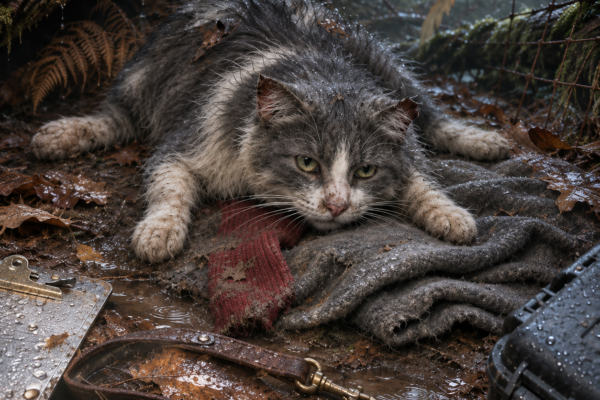
They Paid to Turn My Cattle Road Into a Private Walking Trail—Then Their Range Rovers Started Sinking Into the Mud My Grandfather Had Warned About for 60 Years.
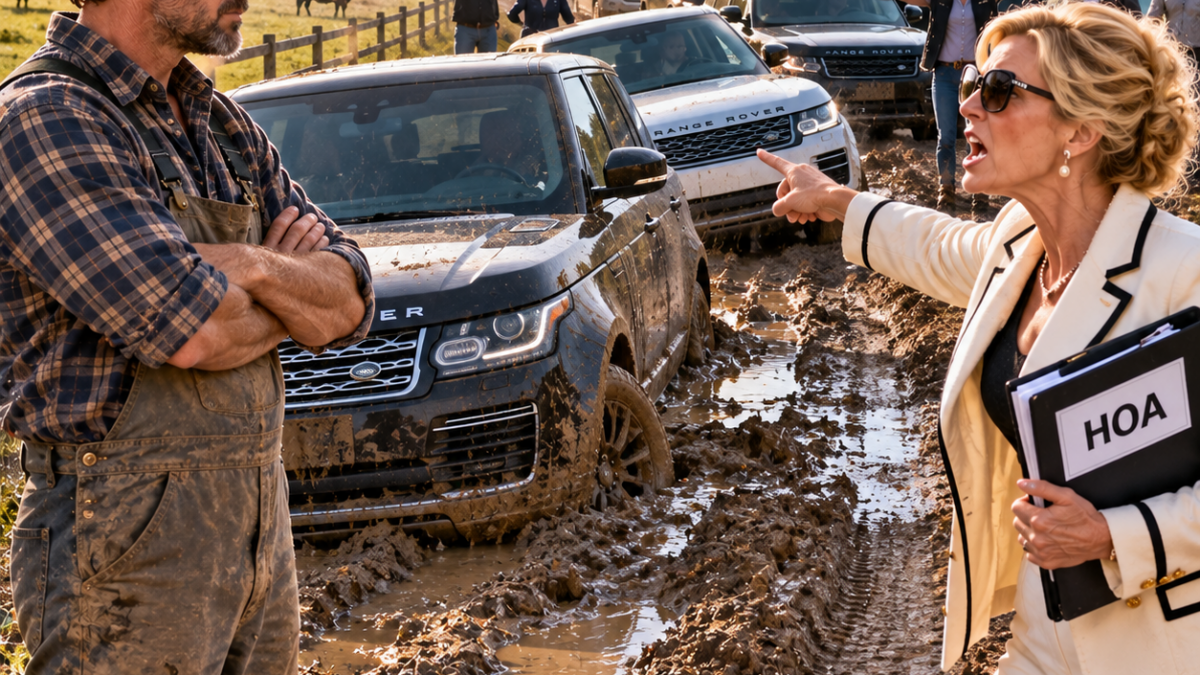
PART2:
Just gravel, dirt, grass, cattle tracks, and a few places where the road got narrow enough that two pickups could not comfortably pass.
To my family, it was as much part of the farm as the barn.
Then, about four years before the Range Rover incident, everything around us started changing.
A developer bought a large piece of property across the ridge.
At first there were survey flags.
Then machines.
Trees disappeared.
Roads appeared.
Utilities went in.
Within a couple of years, seventy-eight houses stood where cattle had grazed.
The development was called Cedar Hollow Estates.
I remember the first time I saw the stone entrance sign.
CEDAR HOLLOW ESTATES.
Gold letters.
Landscaping around it.
Little lights aimed upward so you could still admire the name after dark.
The houses were nice.
I have no problem admitting that.
Big windows.
Stone fireplaces.
Clean siding.
Three-car garages.
Landscaped yards.
Some had views toward the river that were probably worth more than my original farmhouse.
The developer added walking paths through parts of the subdivision.
Benches.
Small gathering areas.
Everything designed to make residents feel as though they had escaped into rural Kentucky without requiring them to experience too much rural Kentucky.
PART3:
They wanted the sunsets.
They wanted deer in the distance.
They wanted the river.
They wanted quiet.
What they did not necessarily want were tractors moving at six in the morning, cattle smells drifting in the wrong direction, flies, muddy roads, or any reminder that the landscape they had purchased a view of was still being used to produce something.
Most residents were fine.
That needs to be said.
Some waved when I passed.
A couple stopped to ask about the cattle.
One man bought eggs from a nearby farm every weekend.
Another helped me move a fallen branch once.
My problem was never seventy-eight houses.
My problem was Linda Carver.
Linda was elected president of the Cedar Hollow HOA.
The first time we met, I was repairing fence near the cattle pens.
I heard footsteps on gravel.
Looked up.
There she came in white sneakers.
Bright white.
The kind of white you only wear around livestock if you have absolutely no idea what livestock can do to shoes.
She carried a folder against her chest.
“Mr. Mercer?”
“Caleb.”
“I’m Linda Carver.”
“I know.”
She smiled.
“I’m president of the Cedar Hollow Homeowners Association.”
“I know that too.”
That smile weakened a little.
“I was hoping we could discuss the road.”
I leaned the fencing pliers against a post.
“What about it?”
“It runs directly along our western edge.”
“Yes.”
“Several residents have asked whether they can use it for walking.”
“No.”
I didn’t say it to be rude.
It just wasn’t complicated.
Linda blinked.
“I don’t think I explained fully.”
“You did.”
“It would only be pedestrian use.”
“No.”
“Morning and evening.”
“No.”
“No bicycles.”
“No.”
She stared.
“May I ask why?”
“Yes.”
She waited.
I pointed at road.
“Cattle.”
She looked at empty stretch.
“There aren’t cattle on it now.”
“Not right now.”
“The road is wide.”
“In some places.”
“It appears perfectly safe.”
“For people who understand farm.”
That offended her.
“Our residents are adults.”
“Some.”
Her mouth tightened.
“We have children too.”
“Another reason.”
She opened folder.
Inside was a color rendering.
Walking trail.
My cattle road had been digitally transformed.
Benches.
Decorative signs.
Flowering native grasses.
People in athletic clothes.
One woman pushing stroller.
My grandfather would have laughed himself sick.
Linda held it toward me.
“This is what we’re envisioning.”
I stared.
“You put benches on my cattle lane.”
“Conceptually.”
“That’s where we swing hay wagons.”
“The benches could be offset.”
“Into pasture?”
“We can discuss location.”
“No.”
She closed folder.
“Mr. Mercer, Cedar Hollow is willing to pay.”
That got my attention.
Not because I wanted deal.
Because people who start with vision board and end with money often have bigger plan.
“How much?”
“We’ve allocated ten thousand annually for access.”
I almost laughed.
“For how many residents?”
“Seventy-eight homes.”
“Guests?”
“Reasonable guest use.”
“Events?”
“Possibly wellness walks.”
“Wellness walks.”
She heard tone.
“You don’t need to mock.”
“I’m not.”
I probably was.
She said:
“The road isn’t being used constantly.”
“You don’t know.”
“We can see it.”
“You can see part.”
“Residents have been observing.”
That bothered me more.
I said:
“This road moves cattle, feed trucks, tractors, trailers, veterinary vehicles, and me. It floods. It muds. Cows don’t recognize pedestrian right-of-way. Bulls don’t read HOA newsletters.”
“We can create a schedule.”
“No.”
She looked at me like I was refusing to let neighbor borrow cup of sugar.
“Mr. Mercer, there are community benefits to cooperation.”
“So cooperate with somebody else.”
She left angry.
That should have been end.
It wasn’t.
Two weeks later I received certified letter.
Not from lawyer.
From Cedar Hollow HOA.
Proposal for “shared recreational access.”
$15,000 annually.
Liability insurance.
HOA responsible for signage.
Residents limited to 6 a.m. through 9 a.m. and 5 p.m. through sunset.
No motorized vehicles.
No dogs off leash.
No interference with agricultural operations.
I read carefully.
Then handed it to my attorney, Nathan Cole.
Nathan was fifty-two, wore cowboy boots with suits, and had represented farm families long enough that he distrusted any document containing phrase “shared amenity.”
He read.
“Don’t.”
“I wasn’t planning.”
“Good.”
Then:
“They really want it.”
“Yes.”
“Why?”
“Views.”
He shook head.
“There are public roads.”
“Not river view.”
“There’s county park.”
“Too far.”
“Rich people walking makes strange law.”
I laughed.
We rejected.
Linda called.
“Can we negotiate?”
“No.”
She increased offer.
$25,000.
Then $30,000.
Then something changed.
A developer representative called me.
Cedar Hollow’s original developer still controlled eight unsold premium lots near western ridge.
Those lots had been marketed with phrase:
DIRECT ACCESS TO SCENIC RIVER WALKING CORRIDOR — SUBJECT TO FINAL AGREEMENT.
My road.
They had been selling future access they did not have.
There it was.
I told developer:
“You should probably stop.”
He sounded embarrassed.
“We believed HOA negotiations were progressing.”
“They weren’t.”
“Would you entertain temporary license?”
“No.”
“What if compensation substantial?”
“No.”
“What if we improve road?”
That almost made me laugh.
“Improve how?”
“Gravel. Drainage. Surface.”
“Who designs?”
“Our contractor.”
“No.”
“Why?”
“Because road works for cattle.”
“It can work better.”
“For what?”
“Shared use.”
There it was again.
Everyone assumed improvement meant suburbanizing.
But farm roads are systems.
Grade.
Crown.
Drainage.
Soil.
Traffic weight.
Season.
You can’t just pour pretty limestone over clay and call it upgraded.
Especially not our lower section.
The black hole.
My grandfather named it.
Roughly three hundred feet where old creek channel crossed under road long before any Mercer bought land.
Topsoil had been replaced by generations of gravel.
Under that sat soft alluvial clay.
In dry weather, fine.
After moderate rain, soft.
After sustained rain, ugly.
When river rose and groundwater followed, road looked normal on top while base lost strength beneath.
Loaded tractors could sink.
My father once buried a grain truck to differential.
It took two tractors and a dozer to pull out.
We learned.
During wet periods, we used upper bypass trail.
Cedar Hollow people did not know bypass existed.
Because it ran inside fence.
The public-looking gravel road simply stopped being useful for heavy traffic sometimes.
That’s normal farm knowledge.
Not sabotage.
Not defect in need of HOA repair.
Just land.
Then Cedar Hollow made mistake.
They started using road anyway.
At first one jogger.
Then two.
They came through old gap near boundary where developer fence hadn’t been completed.
I stopped them.
“Private property.”
They apologized.
Next week three more.
One said:
“Linda said access agreement basically done.”
“No.”
He looked embarrassed.
I called Linda.
“You’re sending people onto road.”
“No.”
“They said you authorized.”
“I told residents negotiations ongoing.”
“You told them they could walk?”
“Informally, perhaps.”
“Stop.”
“You don’t need to be hostile.”
“If someone gets hurt, who gets sued?”
“We have insurance.”
“On access you don’t have?”
Silence.
“Stop.”
For month, it stopped.
Then Cedar Hollow’s annual election came.
Linda campaigned on “Securing River Trail Access.”
Won.
Now it became political promise.
I understood then why she wouldn’t let go.
She had tied leadership to my dirt road.
That is dangerous thing to do.
Not because road mattered.
Because once people publicly promise outcome controlled by someone else, compromise feels like humiliation.
Linda returned with better offer.
$50,000 annual license.
HOA would assume liability.
Trail hours.
Emergency closure rights retained by me.
Agricultural priority.
No permanent fixtures unless approved.
At first I still said no.
Nathan said:
“Fifty grand for letting them walk on dirt?”
“It’s not walking.”
“No?”
“It’s headaches.”
“Probably.”
He read revised insurance.
“They’re taking substantial risk.”
“People sue anyway.”
“They always do.”
I looked at numbers.
Farm margins had been rough.
Diesel.
Feed.
Fence.
Veterinary bills.
Fifty thousand mattered.
I won’t pretend otherwise.
My daughter Emily wanted expand cattle handling pens.
My son Jacob needed replace aging tractor.
Money could help.
But I didn’t like it.
Then developer offered additional one-time $40,000 toward road maintenance if I granted three-year access.
Ninety thousand first year.
I began reconsider.
Not because Linda won.
Because farm business is business.
We negotiated hard.
The final agreement was seventeen pages.
Nathan made it ugly on purpose.
Temporary revocable license.
Not easement.
No ownership interest.
No public access.
Pedestrian use only.
No vehicles except emergency response or with written permission.
No bicycles.
No golf carts.
No HOA maintenance crews without notice.
Farm operations supersede.
I could close road at any time due to cattle movement, weather, mud, repairs, flooding, veterinary activity, hunting, equipment, or “any agricultural reason determined solely by landowner.”
Residents assumed all ordinary risks associated with unimproved agricultural road, including uneven gravel, mud, standing water, livestock waste, wildlife, insects, falling limbs, agricultural equipment, and changing surface conditions.
Linda complained about word mud.
I insisted.
Nathan added:
Road is not engineered, constructed, represented, or maintained as a pedestrian recreational trail.
Good.
Then another clause:
Motor vehicles belonging to licensee, members, guests, contractors, or invitees enter only with landowner’s prior written authorization and at operator’s sole risk. Landowner makes no representation regarding load-bearing capacity of road surface under wet conditions.
I loved that clause later.
At signing, Linda joked:
“You make it sound like we’re crossing wilderness.”
I said:
“You’re crossing farm.”
She smiled.
“You really think people will sink?”
“People walking? Boots maybe.”
“Vehicles?”
“If they violate agreement.”
She rolled eyes.
“We aren’t bringing vehicles.”
“Then don’t worry.”
She signed.
HOA counsel signed.
Developer signed separate contribution.
I signed.
Access started April.
Honestly?
It worked for a while.
Residents loved it.
Morning walkers.
Couples.
Retired people.
A few teenagers.
Most respected.
They stayed road.
They waved.
When cattle moved, I closed gate with sign.
FARM OPERATIONS — TRAIL CLOSED.
No arguments initially.
Someone started social-media page:
Cedar Hollow River Walk
Photos.
Sunrise.
Wildflowers.
Cows behind fence.
My ugly farm road suddenly looked aspirational.
One photo had caption:
Our private country trail.
That annoyed me.
Not theirs.
But license allowed use.
Let it go.
Then little changes.
A resident put bench near oak without permission.
I removed.
Linda called.
“It was donated.”
“Not approved.”
“It wasn’t harming.”
“It’s inside turning radius.”
“Could have moved two feet.”
“No permanent objects.”
She sighed.
“Fine.”
Then dog waste bags dispenser.
Removed.
Decorative trail marker.
Removed.
Painted rock saying:
CEDAR HOLLOW MILE 1
Removed.
Linda accused:
“You’re intentionally making it less welcoming.”
“It is cattle road.”
“You accepted money.”
“For access, not ownership.”
That line became recurring.
Then vehicles.
First, landscaping golf cart.
HOA contractor said Linda approved.
I said she couldn’t.
Sent back.
Then utility UTV carrying water for “trail hydration station.”
Sent back.
Then one Sunday, I found Mercedes SUV at scenic overlook.
Woman taking photos.
“Ma’am, vehicles prohibited.”
“Linda said residents could drive elderly parents down.”
“No.”
“She said accommodations.”
“Tell Linda to call.”
Woman angry but left.
I called Linda.
“You authorized cars.”
“Exceptional mobility circumstances.”
“You don’t have that authority.”
“We have elderly residents.”
“Then ask.”
“Do I need ask every time?”
“Yes.”
“That’s unreasonable.”
“It’s contract.”
She began pushing amendment.
Vehicle access limited to “low-speed resident transportation.”
Golf carts.
SUVs in dry conditions.
I said no.
She pushed.
No.
Then summer dried.
Road hard as concrete.
Residents saw farm trucks use.
They increasingly believed vehicle restriction arbitrary.
That’s what happens when hazard invisible.
“If your truck can drive, why not ours?”
Because I know road.
Because truck tires.
Because four-wheel drive does not repeal soil mechanics.
Because when wet, I don’t use same sections either.
But dry July made warnings sound theatrical.
Linda sent email:
Given extended dry conditions, HOA requests temporary vehicle allowance for members requiring accessibility accommodation.
I approved case-by-case.
Three elderly residents.
Golf cart.
One Subaru.
Specific dates.
Then approvals became screenshots.
People forwarded.
Someone cropped conditions.
Then rumor:
“Vehicles allowed now.”
I shut it.
Mass email through Linda:
No general vehicle access. Existing contract unchanged.
She resented.
Fall came.
Rain.
Road softened.
I closed trail for five days.
Linda protested.
“Walking surface looks fine.”
“Base isn’t.”
“People can decide.”
“No.”
“We pay.”
“License gives closure.”
She sent residents email accusing farm of “overly conservative closure practices.”
Nathan said:
“Save.”
I did.
Winter.
Access quiet.
Then next spring, HOA proposed a charity sunrise walk.
Big event.
One hundred people.
Coffee station.
Photographer.
Local realtor sponsor.
I said yes with conditions.
No vehicles past gate except one approved utility cart.
Parking at Cedar Hollow clubhouse.
Walk in.
Linda agreed.
Then forecast.
Three days of heavy rain expected immediately before event.
I emailed:
Road likely closed.
She called.
“You cannot cancel.”
“I can.”
“We have sponsors.”
“Not my problem.”
“We already paid additional event fee.”
“Refund if closed.”
“This is becoming pattern.”
“Rain is pattern.”
She laughed.
“You exaggerate that mud.”
I looked out window.
“Linda, have you ever driven that road after three inches?”
“No.”
“Then don’t.”
“The top is gravel.”
“That’s not how roads work.”
“I’ve driven SUVs through worse.”
“Not my road.”
She became sharp.
“Caleb, residents are tired of being treated like children.”
“Then adults can read contract.”
Silence.
She said:
“We’re proceeding unless you formally close.”
“I will inspect Friday.”
Event Saturday dawn.
Rain fell Tuesday.
Wednesday.
Thursday night hard.
River rose.
Not flood stage.
Enough groundwater.
Friday morning I drove road.
Upper mile manageable.
Black hole bad.
I stopped before.
Walked.
Boot sank four inches.
Pushed probing rod.
Soft.
I marked gate:
ROAD CLOSED — SATURATED CONDITIONS — NO ACCESS
Emailed Linda and board.
Trail closed until further notice.
Event canceled from farm access.
Refund offered.
She responded:
Surface inspection by HOA representatives does not indicate unsafe pedestrian conditions. We object to arbitrary closure and intend to exercise paid access rights.
I forwarded Nathan.
He replied:
Do not engage. Contract is clear.
Then Linda did something I still don’t fully understand.
Maybe anger.
Maybe event pressure.
Maybe she believed road dry enough.
Maybe she wanted public confrontation.
She sent residents message:
HOA counsel has confirmed our contractual access remains valid. The association will conduct a limited inspection tomorrow morning. Participants should meet at western gate at 6:30.
Counsel had not confirmed that.
I learned later.
He had said:
Do not enter if landowner has invoked weather closure.
Linda left that part out.
Saturday.
5:50 a.m.
I was awake.
Farmers and spite both wake early.
Rain stopped overnight.
Fog.
Road surface looked pretty decent.
That was danger.
Crust.
Underneath pudding.
At 6:12, motion camera pinged.
I had cameras at equipment areas, not to spy trail.
I opened.
Range Rover at gate.
Then another.
BMW X5.
Mercedes GLS.
Two Jeeps.
Porsche Cayenne.
Pickup.
Nine vehicles total.
Linda in first Range Rover.
My closure sign moved aside.
Not destroyed.
Placed fence.
I called her.
She didn’t answer.
Called again.
No.
I called sheriff nonemergency.
“I have unauthorized vehicles entering private farm road during closure. No confrontation yet.”
Deputy:
“Any threats?”
“No.”
“Property damage?”
“Not yet.”
“Units limited.”
“Understood.”
I took my farm truck, but not road toward them.
Used upper bypass.
Came out near cattle pens overlooking black-hole stretch.
My son Jacob met me.
Thirty-one.
He had received camera alert.
“What are they doing?”
“Being expensive.”
He looked at convoy.
“Should we stop?”
“Too late safely.”
Narrow road.
If I drove toward them, we’d create blockage.
Better let them reach wider gravel turnout before black hole.
I called Linda.
She finally answered.
“Caleb.”
“You’re violating contract.”
“We’re inspecting.”
“With nine vehicles.”
“These are board and resident representatives.”
“Turn around at north turnout.”
“The road is fine.”
“No.”
“We’ve driven almost mile.”
“The bad section ahead.”
“You always say that.”
“Linda.”
I slowed voice.
“Turn around.”
She laughed.
Not cruel maybe.
Dismissive.
“You farmers love scaring people with mud.”
Jacob heard through speaker.
He shook head.
I said:
“This is your last warning.”
“Don’t threaten.”
“I’m not. Turn around.”
She hung up.
I documented time.
Nathan later appreciated.
Convoy reached first slight dip.
Road still firm enough.
Then long straight toward black hole.
From distance, you could not see softness.
Gravel looked pale gray.
A few shallow puddles.
Grass on edges green.
Linda accelerated slightly.
Range Rover entered.
Front tires passed first fifty feet.
Then road surface flexed.
I have seen it before.
Subtle.
Tire sinks an inch.
Then three.
Driver adds throttle.
Worst thing.
Rear tires spin.
Break crust.
Vehicle drops.
Range Rover lurched left.
Front driver wheel buried nearly hub.
Rear right spun.
Mud sprayed.
She stopped.
Second vehicle, another Range Rover, followed too close.
Braked.
Its front wheels slid to soft shoulder.
One dropped.
Third BMW tried reverse.
Rear tires spun.
The gravel beneath cracked like frosting.
It sank.
Jacob whispered:
“Oh, no.”
Not sympathetic.
More amazed.
Fourth vehicle tried turn around.
Mercedes.
Two-point turn became six-point.
Its outside wheels went off compacted center.
Soft clay.
Down.
Now road blocked both directions.
The Porsche driver apparently believed speed solved mud.
He moved around BMW on grass edge.
Got twenty yards.
Then all four tires dropped deep enough that doors nearly brushed mud splash.
Engine revved.
Wheels polished holes.
I put hand over face.
Jacob:
“That’s painful.”
“For whom?”
“Machine.”
Behind them, Jeeps stopped.
Smartest.
Pickup stopped.
Smart.
Nobody else moved.
Linda got out.
White boots.
Not same sneakers from first meeting, but close.
She stepped onto road.
Boot sank nearly ankle.
She stared.
I wish I could say I didn’t enjoy that.
I’m human.
Phone rang.
Linda.
“What did you do?”
There it was.
I answered:
“Nothing.”
“This road is collapsing.”
“Yes.”
“You sabotaged it.”
“No.”
“You knew.”
“Yes.”
“You set us up!”
“Linda, I emailed closure.”
“You intentionally left road unsafe.”
“It is farm road.”
She was breathing hard.
“Our vehicles are stuck.”
“I can see.”
“We need tow.”
“Do not call ordinary wrecker into black hole.”
“Why?”
“Because you’ll bury wrecker.”
“What do we do?”
I looked at Jacob.
He grinned.
I stopped him with look.
“Turn vehicles off. Everyone stay on road center or inside. Do not walk into pasture. I’ll come down on tractor from upper side.”
“You’re going to pull us?”
“Maybe.”
“Maybe?”
“I need assess.”
“Caleb!”
“You ignored closure and drove nine cars into saturated road. I am trying to keep it from becoming twelve.”
She hung up.
I called sheriff and updated no threat, stranded vehicles.
No law emergency.
Good.
Then I called neighbor farmer with tracked skid steer.
I took articulated tractor with flotation tires, not regular.
Jacob brought recovery straps.
Important:
No chains snapping.
No amateurs standing near tension lines.
We approached from upper bypass into firm side.
Residents had exited vehicles.
Phones out.
One man in vest shouted:
“This is ridiculous!”
Jacob muttered:
“He’s right, just wrong target.”
I told group:
“Stay behind fence line.”
Linda walked toward me.
Mud on boots.
Hair less perfect.
“You need fix this.”
“No.”
Her mouth opened.
“I’ll help recover people and vehicles if safe.”
“You are responsible.”
“No.”
“This road was represented as accessible.”
“Not during closure.”
“You accepted money.”
“Contract says closure for weather.”
“You knew this would happen.”
“Yes.”
That nearly made her explode.
“Then why didn’t you block gate physically?”
“I posted closure and notified HOA president.”
“You should have locked it.”
“Your residents have pedestrian gate key under license.”
“You left access possible.”
I stared.
“Linda, locked door isn’t what makes trespass wrong.”
She looked at vehicles.
“What’s damage?”
“Don’t know.”
First Range Rover sunk to axles now because weight settling.
BMW tilted.
Mercedes deeper.
Porsche worst.
Jacob walked surface with pole.
“Dad, don’t bring tractor past marker.”
“Agreed.”
We couldn’t pull from front safely.
Need winch from firm ground.
Neighbor brought tracked loader.
Set recovery point.
One vehicle at time.
It took seven hours.
Seven.
Range Rover first.
Tow strap.
Slow.
No spinning.
Mud suction made ugly noise.
When vehicle came free, front bumper undertray partly tore loose.
Owner yelled.
I said:
“Stop vehicle on gravel.”
Second Range Rover easier.
BMW harder because angled.
Mercedes required boards and loader reposition.
Porsche?
Porsche sat so deep one wheel seemed missing.
We dug around tires.
Built temporary mat.
Pulled.
Mud covered side to windows.
Owner looked like attending funeral.
Jeep drivers reversed carefully before reaching bad section.
Pickup too.
Three vehicles never got stuck.
Six did.
Four significant underbody/trim damage.
None total loss.
No injuries.
One ego mass casualty.
At noon local tow company finally accessed from firm end for road transport after vehicles extracted.
By then half Cedar Hollow had heard.
Videos everywhere.
One caption:
THE TRAIL ATE LINDA’S RANGE ROVER
I did not post.
Wish I could say Jacob didn’t.
He claims he “liked” only.
Nathan called at 1:00.
“Tell me you have everything documented.”
“Yes.”
“Did you move closure sign?”
“No.”
“They did?”
Camera showed HOA treasurer moved it aside at Linda’s direction.
“Good.”
“Why good?”
“You know why.”
I did.
Insurance claims began Monday.
Range Rover owner demanded farm liability carrier.
I forwarded contract.
Carrier denied initial liability pending review.
HOA insurer received.
The signed risk clause became centerpiece.
Linda called emergency board meeting.
I wasn’t member.
Didn’t attend.
Mark Denson, Cedar Hollow resident who had always been friendly, called afterward.
“You need know.”
“What?”
“She says you deliberately degraded road.”
I laughed.
“She what?”
“Claims you stopped maintaining section after license started.”
“That section has sixty years history.”
“I know.”
“She wants legal action.”
“Fine.”
“Also, people are mad.”
“At me?”
“Half you. Half her.”
“Normal.”
Then county got involved indirectly because residents complained road unsafe as “recreational facility.”
County inspector visited.
I showed deed.
Private agricultural road.
No public dedication.
Temporary license.
No trail construction permit because no structural trail improvements.
Inspector walked black hole.
Boot sank.
He said:
“I see.”
I almost offered towel.
He concluded no county code requiring me to maintain private agricultural road to passenger-vehicle standard.
Obviously.
Then HOA attorney called Nathan.
He sounded tired.
Apparently Linda had told board counsel approved inspection convoy.
He had not.
That became board problem.
Discovery later showed email from counsel Friday:
The license permits landowner to close access due to weather in sole discretion. I do not recommend entry while closure notice is active. Vehicle access is prohibited absent written permission.
Linda replied:
We disagree that he can use closure rights arbitrarily.
Attorney:
Disagreement should be addressed through contract procedure, not self-help access.
Clear.
She led convoy anyway.
Why?
That’s question I still ask.
The Range Rover incident was not instant legal revenge.
Nothing that neat.
Insurance.
Demand letters.
Experts.
Soil tests.
Road-maintenance records.
Photos from decades.
Weather records.
Agreement interpretation.
One vehicle owner sued HOA and me.
Another threatened.
Two settled with own comprehensive insurance.
Porsche owner filed small civil action for deductible and underbody damage.
Nathan smiled when served.
Not because cruelty.
Because contract.
Plaintiff testified he never read access agreement.
Nathan asked:
“Were you informed road was closed?”
“I saw sign.”
“Did you move sign?”
“No.”
“Who did?”
“Someone ahead.”
“Did you continue?”
“Yes.”
“Why?”
“HOA president said it was safe.”
Judge asked:
“Did Mr. Mercer say it was safe?”
“No.”
“Did any document from Mr. Mercer say safe?”
“No.”
Case dismissed against me.
HOA settled separately.
Then developer got nervous.
Remember premium lots?
Walking-trail access had boosted sales.
License was revocable after material breach.
Driving nine vehicles despite closure?
Material breach.
Nathan sent notice.
Thirty-day suspension of all recreational access pending breach cure.
Cedar Hollow exploded.
Now walkers punished because Linda.
Residents demanded answers.
Board meeting packed.
This time I attended by invitation.
Linda sat front.
No white shoes.
Smart.
Vice president, Howard Price, opened.
“Mr. Mercer has suspended access under Section Nine.”
Residents yelled.
“Why?”
Howard:
“Unauthorized vehicle entry.”
A woman:
“Whose vehicles?”
Silence.
Everyone knew.
Then Linda:
“We conducted a legitimate safety inspection due to Mr. Mercer’s arbitrary closure.”
I raised hand.
Howard let me speak.
“Did you have written vehicle authorization?”
Linda:
“This isn’t deposition.”
“No.”
“Caleb—”
“Did you?”
She looked away.
“No.”
“Was trail closed?”
“You claim.”
I handed email printout.
“Sent 9:14 Friday. Received.”
Howard read.
Residents murmured.
I continued:
“Your counsel advised not enter.”
Linda stared.
“Privileged.”
Her attorney, standing side wall, visibly winced.
I didn’t quote advice content? The email had been forwarded to me later by board after dispute, but at that moment we actually didn’t have it yet. To keep chronology accurate, I used only my closure email in meeting.
I said:
“You ignored closure.”
She answered:
“Because road appeared safe.”
A resident shouted:
“Then why six cars stuck?”
Linda said:
“Because he failed maintenance.”
I almost smiled.
“Road wasn’t contracted as all-weather vehicle road.”
Howard looked at agreement.
“That’s true.”
Linda snapped:
“You’re taking his side?”
“No. I’m reading.”
That’s when board began turning.
Not because mud.
Because contracts.
Board members realized their president created uninsured-ish exposure despite written terms.
One Range Rover damage estimate $14,000.
Porsche nearly $22,000.
BMW $8,500.
Mercedes $11,000.
Others less.
Claims.
Legal fees.
Residents didn’t want assessment.
Howard asked:
“What restores trail?”
“Board acknowledges breach, adopts access controls, and reimburses farm for recovery equipment and road restoration.”
Linda laughed.
“Road restoration? It was already mud.”
“Your vehicles rutted it three feet deep.”
She stopped.
Our recovery created work too.
I calculated actual:
Additional stone.
Geotextile in limited segment? Careful—we didn’t want change function.
Grader.
Excavator.
Labor.
$9,860.
I did not gouge.
Sent invoices.
Board voted 4-1 to negotiate.
Linda voted no.
Access restored six weeks later under amended agreement.
And here was irony.
The residents who paid for pretty walking trail got stricter rules because their president drove SUVs where vehicles prohibited.
New terms:
Physical lock preventing vehicles.
Pedestrian side gate only.
Emergency and farm keys.
No HOA vehicles.
No events during weather closure.
Closure sign automatically enforceable.
Violation by resident can suspend that household access.
Repeated association breach terminates license.
No benches.
No “trail branding.”
And the sentence Linda hated:
The route shall be referred to in all association communications as the Mercer Agricultural Access Road, not a community trail.
She objected.
I insisted.
Names matter.
Trail suggests maintained recreational facility.
Road means road.
Board accepted.
Linda lost presidency three months later.
Not directly because mud.
Because residents discovered she had ignored attorney advice, moved forward with unauthorized vehicle inspection, and misrepresented legal position.
At recall vote, 51 households voted remove.
17 retain.
10 abstain or absent.
Howard became interim.
Linda remained homeowner.
That was awkward.
But civil.
Mostly.
She sent me certified letter accusing me of “weaponizing soil conditions.”
I framed phrase mentally.
Nathan responded:
“Soil existed prior to client.”
Best lawyer sentence ever.
No lawsuit from HOA ultimately.
Their insurer and vehicle owners resolved most claims.
HOA covered deductibles for four owners because board president directed convoy while acting in official capacity.
That cost community.
Residents were furious.
Linda personally did not reimburse all.
Governance decisions have shared cost.
That’s why oversight.
The road recovered.
We graded.
Added stone selectively.
Did not pave.
Black hole remained.
You cannot economically make every farm road suburban without changing drainage and spending absurdly.
Not needed.
Pedestrians returned.
Funny thing:
After incident, they respected closures.
Rain forecast?
People asked.
Gate locked?
Nobody moved sign.
They wore boots.
Some even enjoyed mud.
Mark Denson bought calf-high rubber boots.
Sent photo:
Cedar Hollow formalwear.
I laughed.
Relationships improved.
Without Linda leading every interaction, residents and I talked normally.
One woman apologized.
“I thought you were just being difficult.”
“I was sometimes.”
She smiled.
“But mud thing?”
“No.”
“You really warned.”
“Yes.”
“We thought Range Rovers could handle.”
“Range Rover can handle plenty with right tires, driver, ground.”
“Hers had street tires.”
“I noticed.”
Luxury doesn’t mean magical.
Four-wheel drive helps distribute propulsion.
It does not increase soil bearing capacity.
That became neighborhood lesson.
Jacob made sign for barn:
AWD ≠ FLOATATION
I kept.
The road’s black-hole section became famous locally.
People wanted photographs.
I discouraged.
Not tourist attraction.
One YouTube guy asked permission to test off-road truck.
No.
A dealership offered sponsor event.
Absolutely no.
Mud is funny until someone flips vehicle, tears field, or destroys road.
I wasn’t interested in turning farm into stunt park.
Linda claimed I was hiding proof.
I ignored.
Then drought came next year.
Road hard.
New residents questioned.
“That’s the dangerous section?”
“Yes.”
“Looks fine.”
“Today.”
People struggle with conditional risk.
Floodplain looks safe until flood.
Bridge looks strong until overloaded.
Clay looks solid until saturated.
Engineering is partly respecting states you cannot see from one sunny inspection.
That is what Linda never understood.
She thought appearance was evidence.
Road looks pretty.
Therefore safe.
I warned.
She saw exaggeration.
Then rain revealed structure.
Same with contracts.
Looks like HOA pays $50,000.
Therefore owns trail.
No.
Underlying terms matter.
Surface and base.
Same principle.
Two years after incident, Cedar Hollow asked whether we would renew license.
Three-year term nearly done.
I considered ending.
Farm had grown.
More cattle.
Walking traffic sometimes inconvenient.
But residents had become good neighbors.
They paid.
Respected closures.
Kids liked seeing calves from distance.
One retired nurse called once because she saw cow limping.
Useful.
We renewed.
Lower fee.
Why lower?
Because developer no longer subsidized and I wasn’t trying extract maximum.
$35,000 annual.
Covers insurance increase, administration, inconvenience, some road maintenance.
Reasonable.
Added educational signage at entrance:
WORKING FARM. PRIVATE AGRICULTURAL ROAD. CONDITIONS CHANGE WITH WEATHER. LIVESTOCK AND EQUIPMENT HAVE PRIORITY.
Not decorative.
Functional.
A resident named Susan designed it.
Nice.
No gold letters.
Linda moved away eventually.
Eighteen months after recall.
I saw moving truck.
Did not celebrate.
She had made bad choices.
Didn’t need lifelong enemy.
At final encounter, she stopped near fence.
“Caleb.”
“Linda.”
She looked older.
“Road still swallowing cars?”
“Only when people drive where they’re told not to.”
She almost smiled.
Almost.
Then:
“You enjoyed it.”
I knew what she meant.
Watching SUVs sink.
I considered lying.
“A little.”
She nodded.
“I knew.”
“But I didn’t cause it.”
“I know that now.”
That surprised me.
She looked toward road.
“I thought you were protecting control.”
“I was protecting function.”
“Same thing sometimes.”
“Not always.”
She sighed.
“Cedar Hollow would’ve had better trail if you’d let us improve it.”
“Maybe.”
She frowned.
“You admit?”
“Could build all-weather trail separate from farm road.”
“That’s what I wanted.”
“No. You wanted my road because cheap and already there.”
She looked away.
True.
Then:
“I should have listened.”
There.
No grand apology.
Enough.
“You should have.”
She nodded.
“Goodbye, Caleb.”
“Take care.”
She left.
My grandfather would never have understood any of it.
HOA.
Annual license.
Liability insurance.
Range Rover.
But he would understand mud.
I found old photograph of him standing beside grain truck buried on same section.
Black-and-white.
Truck axle deep.
Grandpa hands on hips.
Two tractors behind.
On back, my grandmother wrote:
BEN SAYS ROAD IS FINE.
Apparently stubbornness hereditary.
I enlarged photo.
Hung office.
When Cedar Hollow board visited renewal, I showed.
Howard laughed.
“That same spot?”
“Within fifty feet.”
“So you’ve known since 1968?”
“Before me.”
He shook head.
“Linda’s lawyer could’ve used that.”
“For what?”
“To say dangerous.”
“I said dangerous.”
“Exactly.”
We laughed.
No conflict.
The event changed farm management too.
I added locked bollards preventing unauthorized vehicles from pedestrian license gate.
Not because obligation.
Because people make mistakes.
Good design assumes somebody eventually ignores sign.
Physical controls reduce chance.
That’s engineering.
People asked why didn’t do before incident.
Fair.
Because agreement said no vehicles and I assumed adults comply.
Design learned.
Trust plus barrier better.
I also added weather monitor and simple status page:
GREEN — pedestrian access open.
YELLOW — muddy, boots recommended.
RED — closed.
Residents check.
No debate.
Data.
Rainfall.
Soil observation.
Not vote.
Howard said:
“You automated Linda out.”
I laughed.
“Automated all of us out.”
Better.
A board should not decide whether clay saturated.
Reality decides.
One wet spring, trail stayed red nine days.
No complaint.
Progress.
Cedar Hollow eventually built its own paved internal walking loop extension.
Beautiful.
Benches.
Lighting.
Drainage.
Exactly what they should have built.
Our road remained optional rustic route.
Residents could have both.
It cost them more than borrowing mine.
But now no confusion.
Their trail.
My road.
Shared by license.
Boundaries improve relationships.
People think boundaries create hostility.
Often opposite.
When everyone knows what is yours, mine, and shared, less resentment.
Linda blurred.
“Private walking trail.”
No.
That phrase caused half trouble.
The road never stopped being cattle road.
Even when walkers used.
One morning a new resident yelled because cow manure on route.
I stared.
“You’re kidding.”
“People walk here.”
“Yes.”
“There should be cleanup.”
“From cattle road?”
He realized.
“Oh.”
We both laughed.
No fine.
No lawsuit.
Just context.
My daughter Emily took over more farm management as I aged.
She is less patient than me.
Maybe good.
At renewal she told HOA:
“Don’t call Dad every time branch falls. Move around it unless large.”
They loved her.
Jacob expanded equipment business.
Farm remains family.
I am not retired exactly.
Farmers fake retirement.
I stop doing hardest work but continue telling everyone how.
At sixty-eight, I drove road after four inches rain.
Stopped at black hole.
Got out.
Didn’t drive.
Some lessons survive ego.
I thought of Range Rovers.
First one dropping.
Linda calling:
“What did you do?”
Nothing.
That’s answer.
I did nothing to them.
I didn’t dig pit.
Didn’t remove gravel.
Didn’t flood.
Didn’t loosen soil.
Didn’t hide closure.
Didn’t lure.
The land did what land does.
Warnings aren’t curses.
They’re information.
Ignoring warning doesn’t transform consequence into trap.
That became story’s core to me.
Sometimes people are so used to managed environments that they assume every hazard has manager.
Mud?
Someone failed.
Tree falls?
Someone liable.
Road soft?
Someone sabotaged.
But working land retains conditions no board can vote away.
Rain.
Clay.
River.
Livestock.
Gravity.
You negotiate behavior around them.
Not their existence.
Cedar Hollow learned.
I did too.
I learned suburban residents weren’t idiots.
They just had different experience.
Most adapted immediately once shown.
It was Linda who converted ignorance into certainty.
Difference.
Not knowing is harmless until pride prevents learning.
One resident, Dr. Patel, became obsessed with soil after.
Cardiologist.
He asked questions.
Clay content.
Drainage.
Compaction.
I showed him.
He said:
“So road has decent surface but weak subgrade after saturation.”
“Yes.”
“Why not install geotextile and undercut?”
“Money and use.”
“How much?”
“To fully improve stretch for regular passenger vehicles? Maybe significant depending design, drainage.”
“HOA could pay.”
“If they want.”
He brought idea board.
They priced.
$180,000 plus ongoing drainage work.
Board declined.
Suddenly $35,000 access license seemed affordable.
Economics educates.
They wanted amenity without capital cost.
Again.
Not evil.
Normal.
But recognize trade.
One anniversary, Mark organized joke “Range Rover Memorial Walk.”
I banned name officially.
They held anyway unofficial.
No vehicles.
People wore white boots.
I admit funny.
At black hole edge they put temporary sign:
HERE LIES CONFIDENCE
Removed same day.
No litter.
I laughed.
Healing is when you can joke without reopening fight.
My granddaughter asked story.
She was eight.
“Did cars sink?”
“Yes.”
“Like quicksand?”
“No.”
“Did people sink?”
“Boots.”
“Did cows sink?”
“Sometimes.”
“Why don’t cows use road?”
“They do when conditions right.”
She considered.
“Are cows smarter than cars?”
“Cows don’t choose route.”
“Are they smarter than Mrs. Linda?”
My daughter glared.
I said:
“We don’t compare.”
Granddaughter whispered:
“I think yes.”
Family diplomacy.
The original signed assumption-of-risk agreement is still in file.
Nathan retired.
At farewell he gave me copy framed.
Highlighted clause:
NO REPRESENTATION REGARDING LOAD-BEARING CAPACITY UNDER WET CONDITIONS.
Below he wrote:
I WARNED YOU NOT TO LET RICH PEOPLE WALK.
He had not exactly.
I hung in shop.
When new attorney saw, she laughed.
She reviewed renewed agreement.
Added even clearer language.
Law grows from absurdity.
Somewhere every contract clause has story.
“Do not drive luxury SUVs into saturated cattle lane” is now implied.
Maybe someday explicit.
I hope not.
Cedar Hollow houses appreciated.
Farm still there.
No one had to lose.
That’s another piece.
Initial fear was development would consume us.
It didn’t.
We coexisted.
They wanted rural view.
They eventually learned view came with rural function.
We wanted farm autonomy.
We accepted compensated pedestrian use where manageable.
Not purity.
Practical.
Conflict arose when use tried becoming control.
Once corrected, neighbor relationship worked.
That’s often answer.
Not total victory.
Clear terms.
Years later, developer asked whether I’d sell riverbottom for Phase Two.
“No.”
He said:
“Had to ask.”
“Correct.”
He left.
No campaign.
No HOA pressure.
Growth.
My old truck has mud permanently in wheel wells.
Range Rover owners probably clean theirs more often.
One of them, named Charles Wynn, became friend eventually.
His was first vehicle sunk.
We met at trail months later.
He said:
“I was furious with you.”
“I know.”
“I thought you’d intentionally softened road.”
“How?”
“No idea.”
“Exactly.”
He laughed.
“I didn’t know anything about clay.”
“Most don’t need.”
“My insurance adjuster explained.”
“Expensive lesson.”
“Very.”
Then:
“Linda told us you had opened vehicle access for inspection.”
“She didn’t have authority.”
“I know now.”
He looked embarrassed.
“I should have read.”
“People trust presidents.”
“Shouldn’t.”
“Sometimes should.”
He looked.
“That’s not useful.”
“Life isn’t.”
We became fishing acquaintances.
Not close.
Good neighbor.
He traded Range Rover eventually.
Bought another.
Same brand.
I teased.
He said:
“Car wasn’t problem.”
Correct.
Driver decision.
That’s maturity.
The Porsche owner never forgave me.
Fine.
Not everyone needs.
He moved.
Some stories don’t reconcile all characters.
At county farm bureau meeting, I told road story during risk-management talk.
Farmers laughed hard.
One old man said:
“You should’ve charged by tow.”
“I did not tow commercially.”
“Opportunity missed.”
Another said:
“Should’ve left ’em.”
“No.”
That mattered.
Once people were stuck, I helped.
Why?
Because boundary enforcement isn’t vengeance.
They were on my land wrongfully.
Could still get hurt.
Cars could damage road more.
Helping was practical and decent.
I did not say:
You ignored me, suffer.
I said:
Turn engines off.
Stand safe.
We’ll get you out.
Then legal consequences later.
That’s difference between enjoying irony and becoming cruel.
Linda expected maybe smug.
I was smug internally.
Externally recovery.
Good enough.
A television producer once contacted me.
Wanted reenactment.
“Can we stage luxury SUVs getting stuck?”
“No.”
“We’d pay.”
“No.”
“On same road?”
“Absolutely no.”
He sounded disappointed.
I said:
“You are asking me to intentionally recreate dangerous condition with vehicles.”
“When you phrase it that way—”
“Yes.”
No show.
Probably better.
Internet versions invented details anyway.
“Twelve Range Rovers swallowed whole.”
Six stuck.
“HOA paved farmer’s road without permission.”
No.
“Farmer removed drainage overnight.”
No.
“Sinkhole opened.”
No.
It was mud.
Mud needs no conspiracy.
I sometimes think that’s why story appeals.
People expect secret trap.
Then actual antagonist geology.
Linda’s arrogance just delivered cars.
No villain necessary in soil.
The black hole has since improved somewhat from maintenance.
Still soft.
We added side drainage upstream after erosion.
Not to accommodate Cedar Hollow.
Farm needed.
Could Range Rover cross today after same rain?
Maybe.
Depends.
I’m not testing.
That’s wisdom.
At seventy, I walk less road.
Golf cart.
Farm UTV.
Yes, vehicle.
Residents joke:
“Rules for thee.”
I remind:
Owner agricultural use.
They laugh.
One morning Linda’s replacement, Howard, rode with me to inspect fallen tree.
He asked:
“Would you ever sell road easement to HOA permanently?”
“No.”
“Why?”
“Temporary license keeps purpose clear.”
“If future owner ends?”
“Then it ends.”
“Residents won’t like.”
“Then build own.”
He nodded.
“Fair.”
Long-term property rights matter.
I don’t want to burden children with permanent recreational easement they didn’t choose.
License renews while mutually useful.
Good.
Cedar Hollow understood.
No lawsuits.
No annexed amenity.
Just contract.
If I were to summarize everything in one line:
They paid for permission and slowly convinced themselves they had purchased entitlement.
That’s human.
We all do.
Subscription becomes ownership in mind.
Familiarity becomes right.
Thirty morning walks and road feels ours.
Then closure sign feels theft.
But legal and practical boundaries remain.
The Range Rovers exposed gap between feeling and document.
That same gap causes many land disputes.
Fence moved over years.
Driveway used casually.
Trail.
Dock.
Parking.
People forget permission has owner.
Then one generation later, conflict.
That’s why writing matters.
Nathan’s seventeen ugly pages saved years.
Linda had signed risk.
Vehicle prohibition.
Closure.
Agricultural priority.
No ambiguity.
Without it?
Much worse.
Handshake would have been disaster.
My grandfather did handshakes.
Different world.
Even then, disputes.
He once lost hay field access because neighbor died and son denied oral agreement.
Dad taught me.
Write.
So I write.
Farm agreements.
Grazing.
Hunting.
Access.
Walking trail.
Even family.
Especially family.
Paper protects relationships by remembering when humans don’t.
The morning of convoy, Linda remembered version benefiting her.
Paper remembered different.
The land remembered too.
That combination beat confidence.
At annual Cedar Hollow meeting five years later, they invited me to speak about renewal.
I said three sentences.
“The road is a working agricultural road.”
“Access depends on weather and farming.”
“If gate says closed, it’s closed.”
Howard asked:
“Any questions?”
Resident raised:
“What if surface looks dry?”
Entire room laughed.
Good.
Lesson institutionalized.
I didn’t need answer.
Then someone asked:
“Can we install bench?”
“No.”
More laughter.
Community traditions.
I returned farm.
Cows.
Mud.
No gold signs.
Sometimes development lights glow ridge at night.
Pretty.
I don’t resent.
Those homes contain people.
Jobs.
Families.
Problems.
Farm not morally superior.
Just older use.
Both can exist if neither pretends other decorative.
Cedar Hollow wanted scenic country.
Eventually learned country is not curated.
That was their education.
Mine was learning newcomers can become neighbors if given chance after conflict.
Linda left.
Cedar Hollow stayed.
Don’t confuse leader with community.
Same in HOAs, farms, governments, families.
One person loud can make seventy-eight homes look hostile.
They weren’t.
Most just followed information from president.
When evidence changed, they changed.
Good.
I wish Linda had sooner.
But she did eventually say:
I should have listened.
That’s something.
I don’t need more.
This spring, rain came heavy.
Three inches overnight.
Status red.
Trail locked.
At 6:20 camera showed Mark walking up to gate.
He read sign.
Looked down road.
Took photo.
Turned around.
No call.
No complaint.
Later text:
Black hole hungry today?
I replied:
Always.
He sent cow emoji.
That’s coexistence.
My grandfather’s sixty-year-old warning passed into neighborhood folklore.
But now people understand it isn’t supernatural.
Clay.
Water.
Load.
Simple.
And that’s how I prefer ending.
Not luxury cars ruined.
Not Karen—well, Linda—humiliated.
Not rich people punished by farm.
Those are cheap endings.
Better one:
A boundary became understood.
The road kept doing job.
Residents kept walking when safe.
Farm got compensation.
HOA learned contract.
Nobody got hurt.
And every time rain starts, seventy-eight households now know enough to leave the Range Rovers in their garages.
If they forget, there is one final sign at pedestrian gate.
Emily made it.
Black letters on plain white metal.
No decorative stone.
No gold lighting.
It says:
THIS IS A CATTLE ROAD, NOT A PROMISE.
IF IT LOOKS WET, BELIEVE THE FARMER.
Underneath, in smaller letters Jacob added without asking me:
THE MUD HAS BETTER LAWYERS THAN YOU DO.
I should remove that.
I haven’t.