They Mocked the Nurse’s Amputated Arm in the Naval ER—Then the Admiral Recognized the Rescue Swimmer Who Had Saved Six Men in a Storm
PART3:
“Old injury.”
“Dominant?”
“Was.”
He nodded.
No cruelty then.
Only curiosity.
The comments came later.
When Kit took longer opening a sterile package:
“You need help?”
When she adjusted a difficult splint:
“Maybe somebody with full dexterity should handle that.”
When she volunteered to assist with trauma procedures:
“I’ll use Connor.”
When Priya objected once:
“She’s certified.”
Graves answered:
“So are a lot of people I wouldn’t let work on me.”
Nobody laughed.
He did not need laughter.
The hierarchy was enough.
Kit had been at Naval Medical Center eight months.
Eight months of moving quietly.
Doing medication reconciliation.
Starting lines with her left hand.
Charting.
Watching.
Helping.
Never explaining.
Her badge simply said:
K. DOYLE, RN.
No service insignia.
No rescue-swimmer wings.
No commendation.
No photograph of a cutter fighting through thirty-foot seas.
No mention of the sealed personnel record sitting in an archive almost nobody in that hospital could access.
She preferred it that way.
Kit had spent enough years being looked at for what she had done.
Then enough years being looked at for what she had lost.
The nurse identity was easier.
Nurses disappeared into function.
If they were good, the patient remembered relief rather than biography.
That suited her.
There was another reason.
The first year after losing her arm had taught Kit that admiration could hurt almost as badly as pity.
People meant well.
They called her brave.
Hero.
Incredible.
Inspirational.
They wanted photographs.
Interviews.
Ceremonies.
They wanted her to stand beneath lights and explain what it felt like to lose part of herself in the dark ocean while trying to keep another person alive.
Kit had no language for that then.
She barely knew how to button jeans.
She could not sleep more than forty minutes without waking.
Certain sounds made her nauseated.
Helicopter rotors.
Metal striking metal.
Wind against windows.
The smell of diesel fuel near cold water.
At rehabilitation, she relearned ordinary things.
Tie shoes.
Open jars.
Wash hair.
Slice food.
Type.
Hold a pen without gripping too tightly.
Trust the prosthetic socket.
Trust her balance.
Trust herself when strangers stared.
The prosthetic came almost a year later.
Not cosmetic.
Functional.
Matte black.
Built for grip.
Torque.
Cold-weather performance.
Water resistance.
A specialized device created after months of fitting and adaptation because the government program responsible for her rehabilitation believed Kit Doyle might eventually do far more than open doors.
She had hated it at first.
It felt mechanical.
Foreign.
Heavy.
Then useful.
Over time, useful mattered more than natural.
She learned to operate it so fluidly that people who worked beside her forgot sometimes.
Until they saw it.
Then everything changed again.
That was why the sleeve stayed long.
Not shame exactly.
Control.
Kit wanted to decide when the room learned something about her.
Dr. Graves had decided for her several times anyway.
That morning his comment came after a routine chart review.
Kit had documented a patient’s neurovascular status after splinting.
Graves questioned whether she could adequately assess capillary refill and distal sensation using the prosthetic.
Kit explained she used her left hand for skin assessment.
He asked why she had not asked another nurse.
She answered:
“Because I’m capable.”
That sentence was apparently enough.
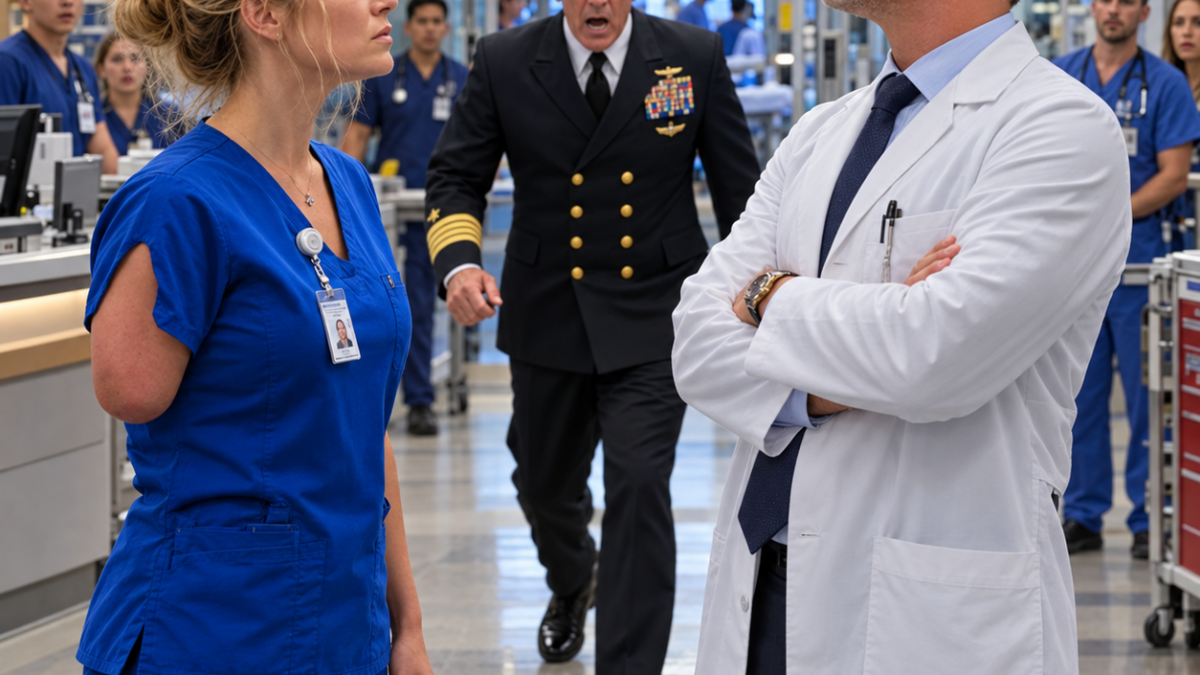
Graves crossed his arms.
“I do not trust broken hands to save real lives.”
Now Kit stood at her station and pretended it had not landed.
Priya approached.
“You want me to say something?”
“No.”
“That was unacceptable.”
“I know.”
“He has been doing this for months.”
“I know.”
“You could report him.”
“I know.”
Priya lowered her voice.
“So why don’t you?”
Kit looked at the chart in front of her.
Because she had spent four years trying not to turn every room into a hearing about Kit Doyle.
Because complaints meant explaining.
Because explaining meant questions.
Because questions eventually found the North Atlantic.
Because once people knew, they stopped treating her like a nurse and started treating her like a monument.
Instead she said:
“I’m tired.”
Priya watched.
“You’re allowed to be tired and angry.”
“I’m mostly hungry.”
That got the smallest smile.
“Lunch?”
“In twenty.”
“You said that an hour ago.”
“Then ten.”
Priya walked away.
Kit kept charting.
At 9:40, the main doors opened.
Rear Admiral Thomas Anderson entered.
People straightened instinctively.
Not dramatically.
Just enough.
Four gold stripes.
Service dress.
Silver stars.
Sixty-one years old.
Tall.
Gray at temples.
He had spent more than thirty years moving through hospitals, ships, aviation facilities, and commands where people learned quickly that rank entered a room before personality did.
Anderson disliked that effect.
Could not prevent it.
He was not there for Kit.
He was supposed to attend a fleet medical-readiness briefing two floors up.
The route through the ER happened to be shorter.
Graves stepped forward immediately.
“Admiral.”
“Doctor.”
“Good to see you.”
Anderson nodded.
His eyes moved across the department.
Habit.
He noticed exits.
Capacity.
Staffing.
Beds.
Who looked calm.
Who looked overwhelmed.
His gaze touched Kit’s covered right arm for maybe half a second.
No recognition.
He continued.
Kit exhaled only after the far doors closed.
Priya noticed.
“You know him?”
“No.”
“Then why did you stop breathing?”
“I didn’t.”
“You absolutely did.”
Kit ignored her.
Three minutes later the radio exploded to life.
“Cardiac arrest inbound.”
The charge nurse grabbed handset.
“Age?”
“Twenty-six.”
“Active duty.”
“Severe anaphylaxis.”
“Airway compromised.”
“ETA two.”
The ER transformed.
Not chaos.
Preparation.
Bay Two cleared.
Crash cart.
Airway equipment.
Suction.
Monitor.
Medication.
Kit moved automatically.
This was the part of medicine she understood best.
Not because nursing school.
Because emergencies speak a language older than credentials.
What matters now?
What fails next?
What can wait?
What cannot?
The ambulance doors opened.
Petty Officer Second Class Daniel Reyes came through gray.
Not pale.
Gray.
His lips had turned blue.
One corpsman was performing compressions intermittently because the rhythm kept deteriorating.
Another held an airway mask that was barely moving his chest.
“Twenty-six-year-old male!”
“Possible food allergy!”
“Rapid onset facial and airway swelling!”
“Epinephrine times two!”
“Unable to intubate!”
“Pressure dropping!”
Graves took control.
“Move him over.”
Reyes transferred.
Monitor leads.
Pulse ox.
Blood pressure.
A resident attempted direct visualization.
“Nothing.”
“What do you mean nothing?”
“Edema.”
“Use smaller tube.”
Second attempt.
Failed.
Oxygen saturation dropped.
Sixty-two.
Then fifty-eight.
Kit stood at Reyes’s shoulder.
She saw the neck.
Swelling.
No effective air movement.
She heard Graves order another blade.
He was following training.
Correctly.
But seconds were disappearing.
The resident’s hands shook.
Kit saw it before everyone else.
Not incompetence.
Threshold.
The moment a procedure stops being a technical problem and becomes a time problem.
She had lived inside that threshold before.
Cold ocean.
Black water.
Rotor wash.
A man trapped beneath twisted steel while everyone above yelled that the aircraft could not hold position much longer.
You learn what seconds weigh.
Reyes’s saturation fell.
Priya held suction.
Frozen.
Graves called:
“Surgical airway tray!”
The tray came.
Nobody opened it quickly enough.
Kit stepped forward.
She did not decide.
Her body decided first.
Left hand took the scalpel tray.
Right prosthetic rose.
“Move.”
Not loud.
Not angry.
Certain.
Graves turned.
“What?”
“Move.”
Something in her voice made him obey before pride caught up.
Kit’s sleeve slid backward.
Black prosthetic exposed.
She palpated the landmarks using her left fingers.
Stabilized.
Positioned.
The world narrowed.
Not North Atlantic.
Not Graves.
Not eight months.
Reyes.
Airway.
Now.
Incision.
Opening.
Tube.
One pass.
Air moved.
Reyes’s chest rose.
A violent, beautiful rise.
Then another.
The monitor tone changed.
Saturation stopped falling.
The resident nearest Kit whispered:
“Jesus.”
Priya started ventilation.
Color did not return instantly.
But there was air.
That meant possibility.
Kit stepped backward.
Her sleeve had ridden almost to elbow.
The prosthetic was fully visible.
Matte black under trauma-bay lights.
A resident stared.
“Whoa.”
Nobody corrected him.
Graves looked at timer.
Then Kit.
“That was thirteen seconds.”
He sounded almost offended by the number.
Kit did not answer.
Her hand shook once.
Not fear.
Aftershock.
Then steady.
Down the hallway, Admiral Anderson had reached the stairwell when the emergency call came across the radio.
He had spent too many years around casualties to ignore certain phrases.
Airway compromised.
Unable to intubate.
Active duty.
He turned around.
By the time he reached Bay Two, Reyes was ventilating.
He would later say he noticed the prosthetic before he noticed Kit’s face.
The shape.
Grip mechanism.
Socket geometry.
Black field housing.
Anderson stopped.
The last time he had seen that device was not on a person.
It had been in an approval packet.
Photographs.
Specifications.
Medical assessment.
Restricted personnel file.
A young Coast Guard rescue swimmer whose case had crossed Navy medical channels because the rehabilitation program required capabilities beyond conventional prosthetics.
There had been only one.
Anderson entered.
Graves straightened automatically.
“Admiral.”
Anderson ignored him.
Walked directly to Kit.
She saw him.
For the first time that morning, fear entered her face.
Not battlefield fear.
Recognition fear.
Anderson stopped three feet away.
“Where did you get that unit?”
The bay went still.
Kit pulled her sleeve partially down.
Too late.
“Command-issued.”
“Service?”
She hesitated.
“Coast Guard.”
Anderson closed his eyes.
Only one second.
Then opened.
“There is exactly one rescue swimmer I know of who received that configuration after a North Atlantic casualty operation.”
Kit said nothing.
Anderson continued.
“Her medical file was sealed four years ago.”
Graves looked between them.
“What operation?”
Nobody answered immediately.
Anderson’s attention remained on Kit.
“I signed the interservice rehabilitation authorization myself.”
Kit’s face changed.
She remembered a signature.
Pages.
A name.
Thomas Anderson.
At the time, Rear Admiral Anderson had served on the joint medical readiness board reviewing advanced prosthetic rehabilitation for injured operational personnel.
She had never met him.
Only the signature.
She said quietly:
“You were on the board.”
“Yes.”
Graves stepped closer.
“What exactly are we talking about?”
Kit looked at him.
For eight months he had looked at her arm as limitation.
Now the room wanted a biography.
Her old instinct said:
Leave.
Say nothing.
Let them wonder.
Then she looked at Reyes.
Chest rising because she had acted.
Maybe silence had stopped being protection.
Maybe it had become permission for other people to invent her.
She set the scalpel tray down.
“Four years ago, I was an aviation survival technician.”
One resident frowned.
Anderson supplied:
“Rescue swimmer.”
Kit nodded.
“Our cutter was working a fishing-trawler casualty during a nor’easter.”
Her voice remained level.
“The trawler had rolled and broken partially apart.”
“Six crew were in the water.”
Priya slowly lowered the suction catheter.
Kit continued.
“We recovered five.”
“One at a time.”
“Some by basket.”
“Some direct assist.”
“Sea state kept getting worse.”
The memory arrived not as images first.
Sound.
Wind.
Aircraft.
Metal groaning.
Her team yelling through headsets.
Water striking her face hard enough to make breathing hurt.
“The sixth man was trapped.”
She said.
“His leg was pinned under collapsed equipment.”
“The helicopter couldn’t hold a stable enough position for a standard hoist.”
“So I went in on the harness line.”
Graves looked at her prosthetic.
Kit saw.
“Yes.”
She said.
“This happened there.”
No drama.
Just fact.
“A section of the trawler came loose in the swell.”
“It crushed and severed my right arm below the elbow.”
Priya inhaled.
Kit looked at the floor for the first time.
“I didn’t know immediately.”
That part had always sounded unbelievable to people.
Shock.
Cold.
Adrenaline.
Dark water.
There was no clean moment where she thought:
My arm is gone.
Only pressure.
Pain.
Then absence.
But the man beneath the winch housing was still alive.
“So I kept hold of him.”
Her voice thinned.
“Why?”
Graves asked before thinking.
Kit looked up.
“Because he was still there.”
Nobody moved.
She continued.
“We got him loose.”
“Wave took both of us under.”
“I came up with him.”
“The crew got us into the hoist.”
She swallowed.
“He made it.”
Graves asked:
“And you?”
Kit almost smiled.
“I woke up later.”
“In a hospital.”
“Half my arm missing.”
“Medical discharge paperwork started before I could feed myself.”
Silence.
Anderson stepped closer.
“The casualty report understated what she did.”
Kit’s eyes sharpened.
“Admiral.”
He understood.
Do not make this ceremony.
He adjusted.
“The official report is accurate enough.”
Kit appreciated that.
But Graves had not finished processing.
“You never told anyone?”
“No.”
“Why?”
“I told you I was a nurse.”
“That was true.”
Graves glanced toward prosthetic.
“But your background—”
“Wasn’t required for this job.”
“You were a rescue swimmer.”
“I’m a nurse.”
“You performed a cricothyrotomy in thirteen seconds.”
Kit’s eyes went hard.
“And?”
Graves looked genuinely confused.
“And most emergency nurses don’t—”
“I trained for trauma.”
“Before nursing.”
“During nursing.”
“After.”
“Does it matter which uniform taught which skill?”
He opened mouth.
Closed.
Kit stepped closer.
“You said my hands couldn’t be trusted.”
Graves’s face flushed.
“My hands just saved your patient.”
No anger.
That made it worse.
Facts do not need volume.
Anderson turned toward Graves.
“Doctor.”
Graves straightened.
“Yes, Admiral.”
“Do you know what the rescue-swimmer pipeline demands?”
Graves did not answer.
“Do you know what it means to enter freezing water under rotor wash while a vessel is breaking apart?”
“No, sir.”
“Do you know what it requires to physically control a panicked casualty who outweighs you while both of you are being pushed beneath moving water?”
“No.”
“Then perhaps avoid deciding competence from a sleeve.”
Graves looked down.
Anderson’s voice remained quiet.
That was the part people remembered.
No shouting.
No humiliation.
He did not become another Graves.
He simply exposed error.
“Every person in this bay watched Nurse Doyle recognize a failing airway and act under pressure.”
He said.
“You can debate titles later.”
“The patient is alive now.”
“That is the relevant metric.”
Then he looked around.
“Remember it.”
No applause.
Kit would have hated applause.
Work resumed.
Reyes needed stabilization.
ICU consult.
Labs.
Documentation.
The room returned to medicine.
But nobody looked at Kit the same way.
That bothered her too.
Respect could become another spotlight.
Priya noticed.
“You okay?”
“No.”
“Do you want me to cover?”
“No.”
“That was not rhetorical.”
Kit took a breath.
“I need five minutes.”
Priya nodded.
“Take ten.”
Kit walked toward supply corridor.
She made it behind the linen room door before her body betrayed her.
Hands shaking.
Left biological.
Right mechanical.
Breathing too fast.
She leaned against shelves.
Closed eyes.
And the ER disappeared.
Water.
Black.
The sixth wave.
Something hitting her.
The strange sight of her own glove no longer attached where expected.
A man screaming.
Harness pulling.
Then sky.
Rotor wash.
Thirty, forty feet above ocean.
She opened eyes.
Hospital.
White shelves.
Blankets.
No water.
“No.”
She whispered.
“Not now.”
Someone knocked softly.
Priya.
“I’m not coming in.”
Good.
“Just standing here.”
Kit breathed.
“That’s annoying.”
“I’m gifted.”
After a minute Priya said:
“I knew you had a story.”
Kit laughed once despite herself.
“Everyone has a story.”
“Yours has helicopters.”
“Apparently.”
“Do you want me to tell people to stop staring?”
“Yes.”
“Done.”
“And Priya?”
“Yes?”
“Don’t call me a hero.”
Pause.
“Okay.”
“Seriously.”
“I won’t.”
“Thank you.”
“Can I call Graves an asshole?”
Kit almost laughed again.
“No.”
“Unreasonable workplace.”
Kit came out five minutes later.
Her sleeve remained pushed halfway up.
Not intentionally.
She simply forgot.
Reyes was transferred upstairs two hours later.
He woke later that afternoon.
His first question, according to the recovery nurse, was:
“Who cut my neck?”
The nurse told him.
“Doyle.”
He asked to see her.
Kit went.
Reyes looked terrible.
Swollen.
Hoarse.
Tired.
But alive.
He lifted one hand.
Kit approached.
He stared briefly at prosthetic.
Not rudely.
Curious.
“You did that?”
“Yes.”
“With that?”
Kit raised eyebrow.
“With both.”
He smiled painfully.
“Sorry.”
“Everyone thinks prosthetic does magic by itself.”
He laughed and immediately regretted it.
“Ow.”
“Don’t laugh.”
“You made joke.”
“Poor judgment.”
Reyes reached.
Not for her left hand.
For the prosthetic.
He wrapped fingers around matte-black palm.
“Thank you.”
Kit looked at their hands.
One warm.
One mechanical.
Both real enough.
“You’re welcome.”
He squeezed.
Then released.
As Kit turned, Reyes said:
“Ma’am?”
She looked.
“Who were you?”
Kit understood the question.
Before nursing.
Before sleeve.
Before hospital.
She answered:
“Someone else.”
Then softer:
“Same person, I guess.”
Word spread.
Of course it did.
Hospitals are terrible places for secrets.
By noon, half the surgical floor knew.
By two, someone in radiology claimed Kit had rescued twenty sailors from a submarine.
By three, an intern told Priya Kit had lost her arm fighting pirates.
Priya responded:
“It was a sea monster.”
The intern stared.
Priya walked away.
That slowed nothing.
The hospital administrator, Ellen Brooks, arrived shortly after lunch.
Fifty-seven.
Former Navy nurse.
Excellent at institutional calm.
She sat with Kit in a conference room.
No Graves.
No Admiral.
Just them.
“I understand Dr. Graves has made comments over several months.”
Kit looked at ceiling.
“Who told?”
“Several people.”
“Today or before?”
“Today made people willing to describe before.”
Of course.
People often recognize pattern once a dramatic event validates discomfort.
Brooks slid a form forward.
“You have right to file formal complaint.”
Kit looked.
“I don’t need him fired.”
“This is not about choosing punishment in advance.”
“He was wrong.”
“Yes.”
“He was cruel sometimes.”
“Yes.”
“He also runs a good emergency department.”
Brooks leaned back.
“People can be excellent clinicians and harmful supervisors.”
Kit met her eyes.
That sentence landed.
“You don’t have to protect hospital from embarrassment.”
Brooks continued.
“That is my problem.”
“What do you want?”
Kit asked.
“The truth.”
So Kit gave it.
Dates.
Approximate comments.
Witnesses.
When Graves passed her over.
When he questioned competence.
The “broken hands” statement.
Brooks wrote everything.
Then:
“Anything else?”
Kit thought.
“Yes.”
“Do not turn me into an inspirational poster.”
Brooks actually smiled.
“Noted.”
“I’m serious.”
“So am I.”
“I don’t want articles.”
“We cannot control outside interest.”
“Control what you can.”
“Fair.”
Kit stood.
Brooks said:
“For what it’s worth, the hospital owes you more than one afternoon of respect because an admiral recognized you.”
Kit paused.
Brooks continued.
“You were qualified yesterday.”
“You were qualified when nobody knew.”
That was the first thing anyone said that day that made Kit’s throat close.
She nodded.
Left.
Anderson delayed his readiness briefing.
He requested private meeting with Kit before departing.
They met in an empty office near administrative wing.
He closed door.
Kit remained standing.
Anderson said:
“You can sit.”
“I prefer standing.”
“All right.”
For several seconds he studied her.
Not prosthetic.
Face.
“You look different from the file photograph.”
“I hope so.”
“You were twenty-eight.”
“I was angrier.”
“You had reason.”
“I still do.”
He nodded.
Then:
“I’m sorry I exposed your history.”
“You recognized equipment.”
“Yes.”
“I could’ve denied.”
“You didn’t.”
“No.”
He leaned back.
“Why nursing?”
She had been asked before.
Her standard answer:
Wanted to stay in medicine.
Today she gave real one.
“When I woke after surgery, everybody kept talking about what I couldn’t do.”
“Operational duty.”
“Swimming.”
“Helicopter work.”
“Line handling.”
“Rescue.”
“All true.”
She flexed prosthetic fingers.
“But nobody asked what I could become next.”
“So you chose nursing.”
“I chose something where being useful mattered.”
“Does it?”
“Most days.”
Anderson nodded toward ER.
“Today seems one.”
She smiled faintly.
He became serious.
“There are wounded personnel leaving service every month with similar problem.”
“Not necessarily medically.”
“Identity.”
“Competence.”
“Being treated like what they lost is the first fact about them.”
Kit said nothing.
Anderson:
“If you could change something, what?”
She thought he meant hospital.
Then saw larger question.
“There should be transition training.”
“For medicine?”
“For anything.”
“People learn prosthetic use clinically.”
“Occupational therapy.”
“Basic function.”
“But not professional re-entry.”
She began speaking faster.
This subject had lived in her head for years.
“How do you sterile-glove around a terminal device?”
“How do you position trays?”
“What tools work?”
“What procedures need adaptation?”
“How do you teach supervisors not to assume?”
“How does a medic with limited ankle movement work a trauma bay?”
“How does a corpsman with partial hand function handle airway equipment?”
“How does somebody with one arm do CPR safely in a team?”
Anderson listened.
Kit realized she was designing.
She stopped.
“Sorry.”
“Why?”
“I’m ranting.”
“No.”
“You’re describing a program.”
She looked.
Anderson continued.
“If Navy supported pilot?”
Silence.
Kit laughed softly.
“You’re serious.”
“Yes.”
“I’m nurse.”
“You were a rescue swimmer.”
“That is not administration.”
“You understand both sides better than most administrators.”
“That may be indictment.”
“It is.”
She sat.
Finally.
“What would I need?”
Anderson smiled.
“There she is.”
“Who?”
“The woman from the file.”
“I hated that file.”
“I know.”
“How?”
“You wrote comments in margins.”
Kit covered face.
“I forgot.”
“You were very specific about adaptive-equipment procurement.”
“I was medicated.”
“That does not make language less memorable.”
She laughed.
For the first time all day, freely.
Anderson said:
“Write concept.”
“I’ll get it reviewed.”
“Not promise.”
“Good.”
“I distrust promises from admirals.”
“You should.”
Before he left, Anderson stopped.
“Doyle.”
“Yes?”
“The mission.”
Her posture changed.
He chose words carefully.
“You are allowed to be proud of it.”
Kit looked away.
“I know.”
“Do you?”
“No.”
“Then maybe someday.”
He left.
Graves waited until end of shift.
Kit was at locker room.
Jacket over one shoulder.
No sleeve hiding prosthetic now.
Not statement.
Too tired.
He approached without white coat.
That made him look smaller.
More human.
“Doyle.”
She stopped.
“I owe you apology.”
“Yes.”
He almost smiled, but didn’t.
“I expected that answer.”
“Then why ask?”
“I didn’t ask.”
Fair.
He inhaled.
“I was wrong.”
“Yes.”
“I said things that were inappropriate.”
“Yes.”
“I undermined your competence.”
“Yes.”
He rubbed forehead.
“You’re going to make me work for this.”
“No.”
“I’m making you say what happened without softening.”
He looked at her.
“Eight months.”
“Yes.”
“I had eight months to ask one decent question.”
“You didn’t need to ask.”
He frowned.
“What?”
“You didn’t need my history to treat me decently.”
That hit harder.
Kit continued.
“If I had never been rescue swimmer, your comments would still be wrong.”
“If I lost my arm in a car accident, still wrong.”
“If I had been born without one, still wrong.”
“You respect me now because Admiral told you I’m impressive.”
“What about before?”
Graves looked down.
There was no defense.
Finally:
“You’re right.”
“I know.”
Another silence.
Then Kit softened half an inch.
“What matters is rounds tomorrow.”
He looked.
“If you tell department some heroic story and everyone claps, you learned nothing.”
“What should I say?”
“The truth.”
“Which part?”
“That you treated a colleague like visible disability was evidence of incompetence.”
“That you were wrong before today proved anything.”
“That you expect better from yourself and everyone else.”
Graves nodded slowly.
“I can do that.”
“Good.”
He stepped aside.
Kit started walking.
Then he said:
“For what it’s worth…”
She stopped.
“I’ve spent my career trying to be smartest person in every room.”
“Yes.”
“That worked.”
“Until it didn’t.”
“Today I realized I’ve used it as excuse not to learn who people are.”
Kit looked at him.
“Most people do.”
“That’s not excuse.”
“No.”
“It’s just common.”
She put jacket on.
“Sleep, Doctor.”
“You look terrible.”
He laughed.
“I feel terrible.”
“Useful beginning.”
The next morning at rounds, Graves did exactly what she asked.
No Admiral.
No Brooks.
No ceremony.
He stood before residents, nurses, corpsmen.
“I made a statement yesterday about Nurse Doyle’s prosthetic.”
People went still.
“It was discriminatory.”
“It was clinically unsupported.”
“It undermined a member of this department based on appearance rather than performance.”
He swallowed.
“I have made similar remarks before.”
“That was unacceptable.”
“No one here should require extraordinary heroism from a disabled colleague before offering ordinary professional respect.”
Kit stood at back.
That sentence surprised her.
Maybe he had learned.
Graves continued:
“If you hear me do it again, correct me.”
Then rounds.
That was it.
No applause.
Good.
Behavior changed slowly.
Graves began asking Kit to assist because she was good, not because she was symbolic.
At first that created another problem.
He overcorrected.
Called her for everything.
Kit finally said:
“You don’t need prove you’re enlightened.”
He looked mortified.
“What?”
“Stop treating me like diversity assignment.”
Priya laughed so hard she had to leave.
Graves rubbed his face.
“Where is middle?”
“Normal.”
“Define.”
“No.”
“You’ll figure out.”
He did.
Reyes returned six weeks later.
Not patient.
Visitor.
He brought coffee.
A terrible navy-blue mug reading:
13 SECONDS.
Kit stared.
“Absolutely not.”
“You have to take it.”
“No.”
“I had it made.”
“That makes it worse.”
He placed on desk.
Priya stole immediately.
For months it sat nurses’ station holding pens.
Eventually people forgot origin.
Kit liked that.
The program Anderson promised did not materialize by Friday.
Of course not.
Nothing real in military medicine moves by Friday just because an admiral says so.
But Anderson’s signature arrived Friday.
So did sponsor.
Eleven weeks later, a pilot launched.
Six participants.
Two Army veterans.
One former Navy corpsman.
One Marine medic.
One Air Force technician.
One Coast Guard boat crew member.
Different injuries.
Above-knee prosthetic.
Partial hand.
Spinal injury.
Severe burn contracture.
One person with traumatic vision loss in one eye.
One with nerve damage that made fine motor work unpredictable.
Kit designed practical sessions.
Not inspirational speeches.
Equipment.
Positioning.
Workflow.
Adaptive sterile technique.
Team communication.
Fatigue management.
Emergency simulation.
How to tell supervisors:
I can do this.
I need to do it this way.
How supervisors should respond:
Show me safe method.
Not:
You look different, so no.
Graves volunteered to teach one session.
Kit said no initially.
Then changed mind.
She gave him topic:
Implicit assumptions in high-pressure clinical supervision.
He stared.
“You enjoy this.”
“A little.”
He prepared harder than any lecture he had given.
During session he began:
“I am here because I failed at this.”
No excuses.
Students listened.
One participant, former corpsman named Leah Briggs, had lost three fingers.
She asked:
“What made you change?”
Graves glanced at Kit.
Then answered correctly.
“Being publicly wrong got my attention.”
“But being wrong before anyone knew her history was the actual problem.”
Kit said nothing.
Good.
The pilot expanded.
Not because viral hero story.
Outcomes.
Participants returned to clinical and technical roles.
Supervisors requested training.
Adaptive equipment vendors collaborated.
Hospital created accessibility review.
Brooks made sure none of it became charity language.
“Capability integration.”
She insisted.
Kit hated title.
Kept it.
Local reporters eventually learned enough of story to request interviews.
Kit declined twice.
Third time, a reporter asked not about mission.
About program.
She agreed.
First question:
“How did losing your arm make you stronger?”
Kit stared.
“No.”
Reporter blinked.
“I’m sorry?”
“It didn’t.”
Silence.
“Losing my arm made a lot of things harder.”
“Training made me better.”
“People helped.”
“I adapted.”
“Do not make injury into gift.”
The reporter changed approach.
That quote ran.
People responded.
Other amputees wrote.
Burn survivors.
Veterans.
Civilians.
Not because Kit had conquered disability.
Because she refused to romanticize.
She said:
“You don’t need catastrophe to justify your value afterward.”
That became program philosophy.
Years earlier Kit had believed usefulness was the only proof she deserved to stay in world.
That belief took longer to undo than rehabilitation.
The North Atlantic mission haunted her not simply because she lost arm.
Because everyone survived.
That sounds strange.
Had the sixth man died, grief might have been obvious.
Because he lived, people said:
Worth it.
You saved him.
As if survival created clean equation.
One arm traded for one life.
Heroic balance.
Kit sometimes hated that.
She was glad he lived.
She would still have liked her arm.
Both.
Therapy eventually taught her not every loss needs noble math.
Reyes, the sailor whose airway she opened, unknowingly helped.
Months after discharge, he invited Kit to daughter’s birthday.
She almost declined.
He said:
“My wife says if the woman who saved me doesn’t eat cake, I’m dead anyway.”
She went.
There, nobody asked North Atlantic.
Reyes introduced:
“This is Kit.”
Not hero.
Not nurse who saved.
Just Kit.
His three-year-old daughter saw prosthetic and asked:
“Robot hand?”
“Yes.”
“Can it pinch?”
“Yes.”
“Can it tickle?”
Kit paused.
Then demonstrated poorly.
Child screamed laughing.
That afternoon stayed with her more than Admiral recognition.
Normalcy.
The thing she wanted.
Anderson visited the program twice a year.
Never surprised her.
He learned.
On first visit, he watched Kit teach a participant with below-elbow prosthetic how to stabilize a difficult airway setup.
Afterward:
“You built something good.”
“We built.”
“You know what I mean.”
“Yes.”
He looked at her sleeve.
Short sleeve now.
“When did that happen?”
“What?”
“You stopped covering.”
Kit looked.
She had not noticed.
“About six months ago?”
“Why?”
“Phoenix? Wait this is Naval Medical Center likely unspecified. Hot weather.”
He smiled.
“Convenient.”
She understood question.
“Got tired.”
“Of hiding?”
“Of fabric.”
He nodded.
Did not force meaning.
Good.
Dr. Graves changed too, but not into saint.
He remained demanding.
Impatient.
Sometimes arrogant.
Kit preferred honest transformation.
People do not replace personalities overnight.
But he stopped humiliation.
He listened more.
He began asking residents to explain reasoning rather than cutting them off.
When new nurse with tremor joined, Graves asked occupational health for actual functional assessment instead of making assumptions.
Kit noticed.
Said nothing.
One afternoon he caught her watching.
“What?”
“Nothing.”
“That’s ominous.”
“You’re improving.”
He put hand to chest.
“Highest praise.”
“Don’t ruin.”
Priya eventually transferred to pediatric ER.
Before leaving, she gave Kit a gift.
A framed piece of cobalt-blue fabric.
Cut from one of Kit’s old long sleeves.
Under glass.
Tiny label:
RETIRED FROM ACTIVE SERVICE.
Kit laughed until she cried.
She hung it in program office.
Years passed.
The North Atlantic crew occasionally resurfaced.
One of men Kit rescued, Samuel Ortega, wrote letter after seeing program article.
He had spent years unsure whether contacting her would reopen trauma.
The letter was five pages.
He described his children.
Fishing business.
Marriage.
He wrote:
I have never known how to thank you without making it sound like your injury was price I was entitled to have you pay.
Kit read that sentence again and again.
She finally wrote back:
You were never the price.
Neither was I.
We both survived a terrible day.
Live well.
They met once.
No cameras.
No ceremony.
He cried.
She did.
Then talked about weather.
That helped.
Four years after ER incident, Kit became clinical director of Adaptive Trauma Skills Program.
She still worked shifts.
Not as many.
She insisted.
Administrators wanted desk.
She said:
“If I stop treating patients, I become the kind of person who creates policies for rooms I no longer understand.”
Brooks approved.
Anderson retired.
At ceremony, Kit attended.
He saw her in audience.
Later:
“You know, technically I recognized you.”
“Yes.”
“So I deserve credit.”
“For what?”
“Program.”
“No.”
“Small plaque?”
“No.”
“Parking spot?”
“You’re retired.”
He laughed.
Before leaving, he handed sealed envelope.
Inside was copy of original prosthetic authorization.
His signature.
Kit stared.
“You had this?”
“Legal copy.”
“I thought sealed.”
“This is authorized personal release.”
She looked at young photograph.
Twenty-eight.
Hospital gown.
Angry.
Right sleeve empty.
Eyes daring camera to pity.
At bottom:
Recommended advanced functional prosthesis to maximize potential future occupational reintegration.
Future occupational reintegration.
She laughed softly.
“They had no idea.”
“No.”
Anderson smiled.
“Neither did you.”
She framed that too.
Not because Admiral.
Because future existed on paper before she believed it.
At forty, Kit gave a lecture to first-year residents.
No dramatic entrance.
She stood with slides.
One slide contained no text.
Just photograph of two hands.
One biological.
One prosthetic.
She asked:
“Which one do you trust?”
Residents hesitated.
“That hesitation is point.”
Then:
“You cannot answer from image.”
“Competence is task-specific.”
“Training-specific.”
“Context-specific.”
“You assess.”
“You observe.”
“You verify.”
“You do not invent.”
She never told Graves story in those lectures by name.
Sometimes he sat back.
Older.
Now department chair? Better maybe senior attending.
He knew.
At end one year, a resident asked:
“Did someone really tell you your hand couldn’t save lives?”
Kit looked toward Graves.
He raised both hands.
“I deserve this.”
Everyone laughed.
Kit said:
“Yes.”
“And?”
“I proved him wrong?”
The resident smiled.
Kit shook head.
“No.”
“That’s not lesson.”
She pointed to prosthetic.
“I was already competent before emergency made it dramatic.”
“That is lesson.”
The room quieted.
People love proof scenes.
Thirteen seconds.
Monitor rises.
Admiral recognizes.
Hero revealed.
Those moments satisfy because arrogance is corrected visibly.
But Kit eventually understood the more important injustice happened before.
Why did she have to save a dying sailor in thirteen seconds to earn what every ordinary colleague should receive on day one?
Why did an Admiral’s recognition matter more than nursing license?
Why did legendary past suddenly make prosthetic respectable?
She used those questions.
The program expanded beyond veterans.
Civilian clinicians.
EMS.
Technicians.
Students.
Not everyone had heroic backstory.
Good.
A pharmacy technician born without left hand joined.
No combat.
No storm.
No medal.
Excellent technician.
A respiratory therapist with cerebral palsy.
A medical student with lower-leg prosthesis after motorcycle crash.
A nurse with severe burn contractures from childhood accident.
Kit made sure their stories did not need dramatic origin.
“You do not have to be inspirational.”
She told first class every semester.
“You have to be safe, trained, and competent.”
“That’s enough.”
Some cried hearing enough.
The ER where everything began changed physically too.
New monitors.
New floors.
Graves grayer.
Priya gone.
Reyes eventually stationed elsewhere.
But Bay Two remained.
Every time Kit passed, she remembered.
Not ocean.
Thirteen seconds.
And something else.
The moment after.
Her sleeve up.
Everyone staring.
Admiral entering.
For years she had considered that the day secret was taken from her.
Later she reframed.
Not entirely taken.
She chose to answer.
Could have walked.
She told.
That distinction helped.
Visibility was complicated.
Hiding had protected her.
Then hiding had begun costing.
Neither stage wrong.
Survivors are often told to stop hiding as though privacy is cowardice.
Kit disagreed.
Sometimes hiding is recovery.
Sometimes it becomes prison.
Only person inside knows when.
Her sleeve came down for four years.
Then one day it didn’t.
No universal timeline.
That was another thing her program taught supervisors.
Do not demand disclosure as price of accommodation.
Ask function.
Need.
Safety.
Not biography.
You do not need someone’s worst day to decide whether they deserve respect.
Dr. Graves eventually apologized again.
Ten years after first.
They were leaving retirement dinner for Brooks.
He stopped outside.
“Doyle.”
“Yes?”
“I’ve been thinking.”
“Dangerous.”
“About that day.”
“Which?”
He stared.
“You know.”
“I enjoy making you specify.”
He sighed.
“I still hate that the thing people remember is Admiral recognizing you.”
Kit looked.
“Why?”
“Because I should have known better without Admiral.”
She smiled.
“Finally.”
“It took ten years?”
“You’re slow.”
He laughed.
Then serious.
“I’m sorry.”
“I know.”
“No.”
“For needing proof.”
Kit considered.
Then nodded.
“Accepted.”
That was enough.
Graves retired two years later.
At his final rounds he told department:
“The most embarrassing mistake of my career did not involve diagnosis.”
“It involved believing observation and assumption were same thing.”
Kit was not there.
She heard later.
Good.
Lessons do not require audience who taught them.
Rear Admiral Anderson died several years after retirement.
Natural causes.
His family invited Kit to memorial.
She attended in dark suit.
No uniform.
At reception, his son handed small box.
“My dad wanted you to have this.”
Inside:
old brass challenge coin.
Joint Medical Readiness Command.
On back Anderson had engraved:
USE WHAT REMAINS. BUILD WHAT DOESN’T.
Kit sat in car afterward and cried.
Not because sadness alone.
Because that had been trajectory.
Lose.
Adapt.
Build.
But she would later scratch out “what remains” mentally.
She was not remainder.
Neither were students.
They were whole people with altered bodies.
Language evolves.
Program motto eventually became:
CAPABILITY IS NOT A SILHOUETTE.
Priya hated.
Texted:
Sounds like Defense Department made perfume ad.
Kit replied:
Better suggestion?
Priya:
DON’T BE AN ASSHOLE.
Kit advocated unsuccessfully.
At fifty, Kit still worked occasional trauma shifts.
The prosthetic had been replaced twice.
Newer models.
Lighter.
More intuitive grip.
She kept original matte-black unit in office case.
Students asked.
“That one?”
“Yes.”
“The famous one?”
“No.”
“The old one.”
It had scratches.
Salt damage sealed.
Socket modifications.
A tiny faded mark from ER tray.
She could not remember exactly.
One afternoon a young veteran named Mason Cole visited program.
Twenty-three.
Recent below-elbow amputation.
Angry.
Would not look at anyone.
His mother did most talking.
Kit recognized.
Not herself exactly.
No one needs become someone else.
But posture.
Sleeve.
He kept left? right? Let’s say right injured, jacket sleeve pinned.
Kit sat across.
Did not show prosthetic dramatically.
It was visible anyway.
Mason stared.
“You’re the rescue swimmer.”
“No.”
His mother blinked.
Kit continued.
“I was.”
“Now I’m Kit.”
He looked annoyed.
“Everybody says you went back to medicine and built this place.”
“Yes.”
“So what?”
“Exactly.”
That surprised him.
“They keep showing me people who climbed mountains.”
“Ran marathons.”
“Went back to war.”
“I don’t want any of that.”
“Then don’t.”
His mother inhaled.
Kit ignored.
“What do you want?”
“I want to make breakfast without dropping things.”
“Good.”
“Drive.”
“Good.”
“Go back to school without everyone staring.”
“Harder.”
He looked.
“Can you fix that?”
“No.”
At least honest.
“But we can work on what you control.”
That was the program.
No legendary hero required.
No miracle.
Breakfast.
Driving.
School.
Work.
Life.
The story of Kit Doyle became famous enough that online versions exaggerated.
Some said she had lost whole arm.
It was below elbow.
Some said Navy SEAL.
Wrong.
Coast Guard rescue swimmer.
Some said Admiral saluted.
He did not.
Some said Graves was fired.
He was not.
Some said Kit performed impossible surgery nobody else could.
She performed a lifesaving emergency airway using training and judgment under pressure.
Truth was strong enough.
Kit insisted.
“Do not improve my life for clicks.”
Priya said:
“You’re fighting internet.”
“I know.”
“Good luck.”
Still, the core remained.
A doctor mocked visible disability.
A sailor stopped breathing.
Kit acted.
An admiral recognized her.
Her hidden history surfaced.
Then, more importantly, institutions changed.
That last part is where stories usually end too early.
Revelation feels like justice.
But revelation without change is spectacle.
Kit cared about change.
Hospital policy.
Training.
Supervisor education.
Adaptive equipment.
Professional re-entry.
Records.
Opportunities.
Respect before heroism.
Those were victories.
No cameras.
At the program’s fifteenth anniversary, Brooks, now retired, attended.
Graves attended.
Priya flew in.
Reyes arrived with wife and daughter, now teenager.
Anderson’s son came.
Samuel Ortega, the sixth fisherman, declined because travel difficult but sent letter.
Kit stood before room.
People expected speech.
She hated speeches.
She looked at all of them.
Then at first cohort photograph.
Six students.
She said:
“When this began, people kept calling it wounded-warrior program.”
“I hated that.”
Some laughed.
“I still do.”
More.
“Because wounded is something that happened.”
“It is not job title.”
“Hero is something other people call you.”
“It is not job title either.”
“The job is whatever you choose next.”
She paused.
“That’s what this place was supposed to protect.”
Not applause immediately.
Then yes.
She tolerated.
Later Graves found her near photograph.
“You finally like applause?”
“No.”
“Progress slow.”
“Very.”
Reyes came holding old blue mug.
13 SECONDS.
Kit stared.
“You stole that.”
“Priya mailed.”
Priya yelled across room:
“Evidence redistribution!”
Kit laughed.
Reyes’s daughter asked:
“Is thirteen seconds really exact?”
Graves answered.
“Yes.”
“You timed?”
“Yes.”
“What would have happened if longer?”
Room quieted.
Kit said:
“Maybe nothing different.”
“Maybe something.”
“We don’t know.”
Then:
“Medicine isn’t movie.”
“People don’t survive because clock likes round numbers.”
The girl nodded.
Reyes touched neck scar.
Small now.
He said:
“I’m glad she was fast.”
Kit smiled.
“So am I.”
At home that night, Kit placed mug beside original prosthetic.
Two artifacts from day everyone remembered.
She looked at sleeve hanging in closet.
Short sleeves mostly now.
One old cobalt scrub top remained.
Long right sleeve.
She ran fingers over fabric.
Did not hate.
That sleeve had protected her when she needed.
Then she no longer did.
She donated nothing that night.
Not every symbol needs disposal.
Keeping something does not mean trapped by it.
She understood that better with age.
The North Atlantic still visited dreams occasionally.
Less.
When it did, she no longer woke convinced she was underwater.
Sometimes she even remembered what came after wave.
Not hospital.
The sixth man breathing in rescue basket.
That had been lost under injury for years.
Trauma selects frames.
Recovery sometimes restores sequence.
Wave.
Impact.
Pain.
Water.
Harness.
Crew hands.
Basket.
Breathing.
Both survived.
Not bargain.
Not price.
Sequence.
One winter, Kit stood on beach for first time in years.
Not mission site.
Virginia coast.
Cold.
Gray.
She wore jacket.
Prosthetic uncovered.
Waves ordinary.
She had avoided ocean after injury except controlled therapy.
Now walked ankle-deep? With cold maybe just shoreline.
She stopped where foam reached boots.
Her body tensed.
Then relaxed slowly.
No helicopter.
No trapped man.
No command.
She stayed ten minutes.
Then left.
No dramatic plunge.
Good.
Healing does not need cinematic reenactment.
At sixty? We can keep not overextend. Let’s end around mature career rather than death.
The ER story eventually became required orientation case at Naval Medical Center.
Not names initially.
Scenario:
Experienced clinician with limb difference.
Supervisor makes unsupported assumption.
Emergency reveals high competence.
Discussion asks:
What went wrong before emergency?
That was Kit’s insistence.
Not:
What made her heroic?
Not:
How did she overcome?
The right question:
Why did system require extraordinary event before people revised bias?
That question changed conversations.
One new resident answered:
“Because people use visible disability as shortcut for risk.”
Exactly.
Another:
“Because hierarchy amplifies attending’s assumptions.”
Exactly.
Another:
“Because nobody challenged him.”
Priya would have liked.
Exactly.
The case ended with:
How should team intervene earlier?
That was future.
Kit did not need another rescue.
She wanted fewer people needing dramatic rescue of their own reputation.
That is the part Admiral Anderson understood perhaps before anyone else.
Recognition was useful.
But not enough.
When he asked:
“What do you need?”
He did not say:
Come back to Coast Guard.
Wear uniform.
Relive old identity.
He asked future.
Kit answered.
Program.
That was more respectful than medal.
Years later she told his son:
“Your father was first senior officer who asked what I wanted next instead of what I had been.”
His son cried.
Kit almost apologized.
Did not.
Some truths can sit.
If you stood in Naval Medical Center ER years after, you would not know.
Graves retired.
Kit mostly administrative/training.
New staff.
New paint.
Bay Two upgraded.
No plaque saying legendary hero worked here.
Kit refused plaque.
Good.
Hospitals should remember procedures, not worship stories.
But one thing changed.
On orientation wall, beneath accessibility policy, a sentence:
COMPETENCE MUST BE ASSESSED, NOT ASSUMED FROM APPEARANCE.
No name.
That was her legacy in that hallway.
Better than photograph.
The morning Graves mocked her began like hundreds of others.
Coffee.
Charts.
Monitor noise.
A sleeve.
A cruel sentence.
Nobody knew history.
That is the point.
Nobody should have needed to.
Kit Doyle was qualified before sailor Reyes stopped breathing.
Qualified before Admiral Anderson turned around.
Qualified before anyone knew North Atlantic.
The fact that she had once gone into freezing water after six strangers made her extraordinary.
It did not create her right to ordinary respect.
That right was already there.
Graves learned.
Hospital learned.
Kit learned something too.
Hiding had protected her.
But she no longer had to shrink so others would not make story.
Her prosthetic was not warning.
Not medal.
Not symbol.
It was a hand.
Different hand.
Useful hand.
The same matte-black device Dr. Graves distrusted opened a dying sailor’s airway in thirteen seconds.
The same device Rear Admiral Anderson recognized had once belonged to a woman who refused to release a drowning fisherman after the ocean took part of her body.
And years later, when wounded veterans sat across from Kit Doyle wondering whether the useful part of their lives had ended, she never told them they needed to become heroes.
She told them something harder.
“You don’t have to prove you’re worth keeping.”
Then she taught them the work.
Because that was the lesson hidden beneath every medal, every scar, every title, and every second that counted that morning.
Kit Doyle had never been broken.
People had simply been looking at the wrong thing.








