The HOA Poisoned My Private Lake to Stop Me From Fishing—Then They Learned Their Entire Neighborhood’s Water Supply Came From the Same Lake
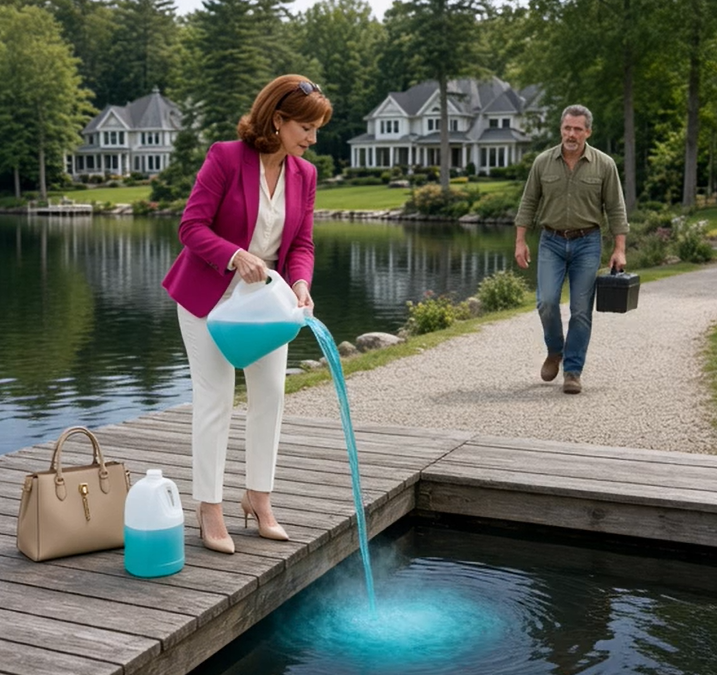
PART2:
For the previous nine years I had installed residential and commercial solar systems around Pine Ridge, North Carolina.
I trusted a voltage meter more than a meeting.
Preferred fixing a broken pump to discussing why it had broken.
Believed most people could avoid half their trouble by respecting property lines and telling the truth.
The twelve acres behind me had belonged to my family since 1952.
My grandfather, Elijah Reed, bought them after coming home from military service with more determination than money.
Back then the whole area was tobacco fields, pine woods, and red-clay roads that turned to soup after rain.
He cleared the first driveway with two cousins.
Dug the first drainage ditch with a shovel.
Built a small house overlooking the spring-fed basin that later became our lake.
The lake existed in smaller form before he bought the property.
A limestone spring bubbled from beneath the western slope and fed a marshy basin crossed by two narrow tributaries.
Granddad worked with the county, obtained the permits required at the time, built a legal earthen dam, and shaped the basin into something deep enough for irrigation and fish.
My father grew up swimming there.
I learned to fish there.
Sandra and I held our wedding reception under the white oaks above the eastern bank because we could not afford a hotel ballroom and did not want one anyway.
When our son, Daniel, was six, I taught him to cast from the same dock where my grandfather taught me.
When my father died, we scattered part of his ashes beneath the cypress near the inlet because he had asked us to put him somewhere he could still hear frogs in spring.
The property was not just real estate.
It was a family archive written in water, wood grain, fence posts, and memory.
For most of my childhood, the nearest neighbor was far enough away that you needed a truck to visit.
Then the developers arrived.
Fifteen years before the morning I found Big Bertha dead, a regional development company bought nearly six hundred acres surrounding us.
They built Willow Creek Estates.
Stone-front houses.
Curving streets.
Decorative ponds.
Walking trails.
Community pool.
Clubhouse.
Identical bronze mailboxes because somebody apparently believed individuality lowered property values.
The development eventually grew to 847 homes.
Most residents were good people.
Teachers.
Dentists.
Nurses.
Engineers.
Small-business owners.
Retired military families.
People raising kids and paying mortgages and trying to keep fescue alive through July.
The original developer offered to buy my property three times.
The first offer was generous.
The second was ridiculous.
The third included a presentation showing how my lake could become the centerpiece of a private country club.
Glass clubhouse.
Boardwalk.
Kayak rentals.
Fishing piers.
The brochure called it an “exclusive water amenity.”
I told them no.
The acquisition manager finally asked why I would turn down enough money to retire twice.
I looked across the dock my grandfather built.
“Because some things stop belonging to you alone once enough dead people trusted you to keep them.”
He did not understand.
I did not expect him to.
For years, Willow Creek and I coexisted peacefully.
Joggers waved when they passed the public road beside my southern fence.
Kids sometimes asked if they could fish.
If they came with an adult, wore life jackets, and picked up trash, I usually said yes Saturday mornings.
Then Vivian Blackwater moved in.
Vivian was forty-seven.
Real-estate attorney.
White Lexus.
Tailored clothes even at neighborhood cookouts.
A voice so polished it made ordinary conversation sound like testimony.
She had a phrase for everything.
A fence was a “visual boundary issue.”
A barking dog was a “quality-of-life disruption.”
A basketball hoop was an “inconsistent streetscape element.”
If a sentence could be made three words longer and twice as intimidating, Vivian considered that an improvement.
Within six months, she became HOA president.
The previous president, George Ellis, was a retired accountant who thought his job was keeping the pool open, negotiating lawn contracts, and preventing people from setting fireworks off beside the clubhouse.
Vivian believed governance was destiny.
Her first major project was called the Community Enhancement Initiative.
The letter talked about protecting property values.
Harmonizing architectural appearance.
Maintaining standards expected of a premier residential environment.
What it meant in practice was that residents began receiving violation notices for things nobody had cared about before.
A family on Hawthorne Lane got fined because children’s bicycles were visible from the street for two afternoons.
Mr. Bell, a seventy-eight-year-old widower, received three letters about native wildflowers because Vivian considered them weeds.
A young couple was warned that a backyard vegetable trellis could be seen from a walking trail.
Then Vivian noticed me.
Her house sat on the ridge overlooking the northern side of my lake.
She had paid extra for what the listing called a protected water view.
The water did not belong to Willow Creek.
It never had.
The first time we spoke, I was cleaning a bass at the outdoor sink beside my shed.
Vivian stood at the fence in white walking shoes and sunglasses large enough to qualify as protective equipment.
“Mr. Reed?”
I rinsed the fillet knife.
“That’s me.”
“I’m Vivian Blackwater.”
“I know.”
She seemed disappointed I did not ask who she was.
“I’m president of Willow Creek.”
“I know that too.”
Her eyes moved toward the fish.
“Do you fish frequently?”
“Depends what you mean by frequently.”
“How often?”
“When I want fish.”
She ignored the answer.
“Some residents have expressed concerns.”
“About what?”
“The visual impact.”
I thought I misheard.
“The fish?”
“The activity.”
I looked around.
My shed.
My dock.
My lake.
My land.
“What activity?”
“Fishing.”
There it was.
“People bought lake-view homes.”
She said.
“They don’t necessarily expect to see cleaning stations, tackle equipment, or dead wildlife.”
I looked at the bass.
Then at Vivian.
“Dead wildlife?”
“The fish.”
“You know fish is food, right?”
Her jaw tightened.
“I’m not here to debate dietary choices.”
That almost made me laugh.
“What are you here to do?”
“To ask if you would consider limiting visible fishing activity during peak community hours.”
I leaned against sink.
“Peak community hours.”
“Weekends.”
“Evenings.”
“Holiday periods.”
“So mornings?”
“Weekday mornings would be less disruptive.”
I stared.
“You’re asking me to schedule fishing on my own lake around when your neighbors might see me.”
She smiled professionally.
“I’m asking for cooperation.”
“No.”
The smile weakened.
“Mr. Reed.”
“No.”
“You haven’t heard—”
“I heard.”
I pointed toward the fence.
“Your property ends there.”
Then toward dock.
“Mine continues there.”
“Your HOA does not govern my land.”
“I am not suggesting it does.”
“Good.”
“I’m suggesting courtesy.”
“Courtesy goes both ways.”
“What does that mean?”
“It means you don’t walk up to a stranger’s fence and tell him when he may fish on land his family owned before your subdivision existed.”
Vivian’s cheeks changed color.
Barely.
“I see.”
“Good.”
She turned.
Then stopped.
“One more thing.”
I waited.
“We have received reports that residents’ children occasionally access the lake.”
“With permission.”
“That creates potential liability.”
“For me.”
“And perhaps the association.”
“No.”
“You’re certain?”
“Yes.”
She gave a thin smile.
“We’ll see.”
That should have told me what was coming.
Within two weeks I received a certified letter from Willow Creek HOA.
Not addressed as a neighborly request.
FORMAL NOTICE OF NUISANCE IMPACT.
It cited fish-cleaning odor.
Visible tackle storage.
Unauthorized recreational activity.
Potential mosquito breeding.
Potential downstream water-quality impact.
I read it twice.
Then gave it to Sandra.
She got halfway through and laughed.
“She knows we aren’t in the HOA?”
“She’s a lawyer.”
“That wasn’t my question.”
“I think knowing and accepting may be different.”
The letter requested I meet with the HOA to discuss “voluntary mitigation.”
I declined.
Second letter.
Then third.
Finally Vivian showed up with two board members.
One was George Ellis, former president.
He looked embarrassed before she spoke.
The other was Malcolm Price, a dentist who clearly wanted to be anywhere else.
Vivian stood at my porch.
“We would like to resolve this without escalation.”
“Escalation into what?”
“County environmental review.”
I smiled.
That bothered her.
“Go ahead.”
“Excuse me?”
“Call the county.”
“We believe runoff from your property may impact Willow Creek.”
“The lake drains south.”
“Partially.”
“You have maps?”
“Preliminary maps.”
“Bring final ones.”
George cleared throat.
“Marcus.”
We knew each other casually.
He had fished once with his grandson.
“I think what Vivian is trying to say—”
“I know what she’s saying.”
Vivian interrupted.
“We’d like a no-fishing buffer during community events.”
“No.”
“And removal of visible fish-cleaning equipment.”
“No.”
“And perhaps discussion of an HOA recreational easement along the north bank.”
There.
The real ask.
I looked at George.
He looked down.
“Recreational easement.”
Vivian said:
“Residents have historically enjoyed visual access to the lake.”
“Visual access is called looking.”
She ignored me.
“A formal shoreline path could increase property values and reduce unauthorized entry by creating managed access.”
“You want a trail on my land.”
“An easement.”
“No.”
“We would compensate.”
“No.”
“How much would—”
“No.”
She stared.
Something cold entered her face.
“You’re very attached to saying that word.”
“So were my grandfather and father.”
“What does that mean?”
“They said no too.”
“To developers?”
“Yes.”
“This isn’t 1952.”
“No.”
I looked across her shoulder toward identical homes.
“It sure isn’t.”
After that, things changed.
Complaint to county about mosquitoes.
County inspector came.
Found nothing unusual.
Anonymous complaint about septic discharge.
Health department tested.
Clean.
Report about “illegal dam modifications.”
County records showed legal permits.
Complaint alleging public fishing business without commercial zoning.
Ridiculous.
Resolved.
Each time, I suspected Vivian.
Could not prove.
Then the signs appeared.
PRIVATE WATER — NO TRESPASSING.
I installed them after catching three Willow Creek teenagers fishing without permission.
Vivian sent me an email accusing me of creating an “unwelcoming visual condition along the community perimeter.”
I printed it.
Put it in a folder.
Sandra labeled the folder:
VIVIAN’S VERY IMPORTANT OPINIONS.
By June, the folder was two inches thick.
Then came the boardwalk proposal.
Willow Creek newsletter included rendering of “North Shore Greenway Concept.”
Beautiful drawing.
Families walking.
Benches.
Native plants.
Small fishing overlook.
Only problem:
half the proposed trail was on my land.
I attended the next HOA meeting.
Vivian looked genuinely surprised.
The clubhouse held maybe eighty residents.
I waited during public comment.
Then placed enlarged county parcel map on easel.
“This green line is HOA property.”
I said.
“This black line is mine.”
I pointed.
“The proposed path crosses onto my property for approximately six hundred forty feet.”
Vivian responded:
“The rendering is conceptual.”
“Then concept stays off my land.”
A few people laughed.
She ignored.
“We are exploring historic access rights.”
“There aren’t any.”
“That is your interpretation.”
“It is my deed.”
“We have counsel reviewing.”
I looked at her.
“You are counsel.”
Murmur.
Vivian smiled.
“The association retains separate counsel.”
George Ellis raised hand from audience.
“I was president seven years.”
“Never heard of any lake access.”
Another resident:
“Neither did I.”
Vivian moved agenda.
The proposal disappeared from newsletter.
But she did not forget.
Two weeks later, she filed a petition with county to classify my lake as a community nuisance due to “unmanaged recreational activity and potential aquatic overpopulation.”
That phrase almost impressed me.
Aquatic overpopulation.
Fish.
She wanted government to call fish a nuisance because I would not let her build a walkway.
County environmental officer, Dana Kim, came out.
Mid-forties.
Practical.
Mud boots.
No patience for theatrics.
She sampled water.
Reviewed dam.
Looked at fish population.
“Looks healthy.”
She said.
“Any algae bloom?”
“Not serious.”
“Chemical treatments?”
“No.”
“Herbicides?”
“No.”
“Fertilizer?”
“Not in lake.”
“Septic?”
“No.”
She looked toward Willow Creek ridge.
“HOA says residents report odor.”
“I clean fish maybe twice a week.”
“Compost?”
“Freezer waste pickup.”
She nodded.
“Not an environmental nuisance.”
Report closed.
Three days later Vivian called.
Not emailed.
Called.
“I think we should talk privately.”
“That hasn’t gone well.”
“You are making this harder than necessary.”
“I’m fishing, Vivian.”
“This affects eight hundred families.”
“No.”
“It affects you.”
“You are being shortsighted.”
“So explain long view.”
She paused.
“Your property is an island inside a planned community.”
“It’s twelve acres.”
“It disrupts continuity.”
“That sounds like developer problem.”
“It affects values.”
“Then they should’ve bought it when I said no.”
“You could still sell.”
There it was again.
“To whom?”
“The HOA could facilitate acquisition.”
“No.”
“Marcus.”
“No.”
“You haven’t heard number.”
“I don’t care.”
She exhaled.
“This lake could benefit everybody.”
“It already benefits everybody who looks at it.”
“You know what I mean.”
“Yes.”
“You want control.”
Silence.
Then:
“I want responsible management.”
I laughed.
“That means control with nicer wording.”
She hung up.
A week later, every fish in my lake started dying.
Standing knee-deep with Big Bertha in my hands, I thought first:
Runoff.
Accident.
Maybe fertilizer spill upstream.
I forced myself to think like electrician instead of angry landowner.
Find fault.
Isolate.
Document.
Do not touch more than necessary.
I carried Bertha onto dock using gloves.
Photographed.
Time stamp.
Water color.
Dead fish.
Shoreline.
I filled three clean glass jars from separate points.
One by dock.
One by spring inlet.
One by southern spillway.
Labeled.
Then walked western bank toward spring.
Water coming from limestone was clear.
Where it entered lake, the blue-green tint began several yards outward.
That told me something.
Contamination did not originate spring.
I walked north shoreline.
Near property boundary, reeds were flattened.
Fresh tire tracks.
Not my ATV.
Narrow commercial utility tires.
The tracks entered from maintenance trail owned by Willow Creek HOA.
My pulse changed.
I photographed.
Then saw a white plastic cap near mud.
Small.
Threaded.
Chemical container cap perhaps.
Did not touch barehanded.
Bagged with gloves.
At 6:41 a.m., I called Dana Kim.
“Dana.”
“Marcus?”
“My lake is dying.”
She was there by 8:05.
State environmental response arrived before nine.
By then more than three hundred fish floated.
Dana took samples.
Technician used meters.
No one told me exact cause immediately.
Good professionals do not guess.
At 9:30 a Willow Creek utility truck arrived at north boundary.
Two men got out.
Stopped when they saw state vehicles.
One tried leaving.
Dana called:
“Sir.”
They froze.
I recognized one.
HOA maintenance supervisor, Carl Benson.
Nice enough guy.
Fixed pool pumps.
Drove snowplow during rare winter storms.
Carl looked like he might throw up.
“What happened?”
Dana asked.
He stared at water.
“Jesus.”
“Do you know anything about lake treatment?”
“No.”
Too fast.
Dana heard.
“So no chemicals were applied from HOA property?”
Carl’s eyes moved toward me.
Then state officer.
“I’d need to talk to Ms. Blackwater.”
My rage clarified.
“Why?”
Carl swallowed.
“Because…”
He stopped.
A second employee, younger, whispered:
“Carl.”
Carl closed eyes.
“Because she hired contractor.”
Everything went silent inside me.
“What contractor?”
Carl said:
“Aquatic Management Southeast.”
“For what?”
“Weeds.”
“There are no HOA weeds in my lake.”
“I told her.”
“Who?”
“Vivian.”
“What did she say?”
Carl looked at Dana.
“I should probably get counsel.”
Smartest thing he said.
At 10:17, Vivian arrived.
White Lexus.
White blouse.
Hair perfect.
She walked toward scene.
Saw dead fish.
Her face changed for maybe half second.
Then attorney returned.
“What is happening?”
Dana introduced herself.
Vivian glanced at me.
“I’m aware of Mr. Reed.”
Dana asked:
“Did Willow Creek HOA authorize treatment of water on Mr. Reed’s property?”
Vivian folded arms.
“We authorized vegetation control along community-facing shoreline.”
“Whose shoreline?”
“Adjacent to association property.”
“That wasn’t question.”
Vivian’s lips tightened.
“The water body affects Willow Creek.”
“Do you have permission from owner?”
“We believe association has riparian interests.”
I laughed.
Dana looked at me.
“Please.”
I shut up.
Dana:
“Do you possess deeded access?”
“Our counsel has been reviewing historical—”
“Do you have written permission to apply chemicals?”
Vivian said:
“The product is EPA-approved.”
Dana’s expression sharpened.
“That is also not what I asked.”
Vivian tried another angle.
“There was excessive aquatic growth near the northern edge.”
“No.”
I said.
She turned.
“You are not a biologist.”
“No.”
“But Dana is.”
Dana did not smile.
“We’ll test.”
Vivian said:
“Good.”
Then looked at fish.
“If there was a fish kill, perhaps Mr. Reed’s stocking density—”
That was when I stepped toward her.
Dana moved between us.
Not touching.
Just presence.
“Marcus.”
I stopped.
Vivian watched.
A faint satisfaction.
She wanted angry man.
I did not give her more.
I said:
“My grandfather put that lake there before your subdivision existed.”
She replied:
“Your sentiment doesn’t exempt you from environmental responsibility.”
I almost admired nerve.
Dana said:
“Everybody needs to leave sampling area.”
Vivian did.
Before entering Lexus, she told me:
“You should be careful making accusations without evidence.”
I looked toward camera mounted under my shed roof.
Vivian followed my eyes.
Her expression changed again.
I had installed cameras six years earlier after equipment theft.
One covered dock.
One driveway.
One north shoreline.
I had forgotten the north camera was still pointed at trail.
Vivian had too.
I spent next hour pulling footage.
2:14 a.m.
Commercial pickup entered HOA maintenance trail.
White utility trailer.
Logo visible:
AQUATIC MANAGEMENT SOUTHEAST.
Two men.
Headlamps.
Hose.
Tank.
They accessed shoreline through HOA side.
2:41.
Carl arrived.
Not working.
He spoke with contractor.
2:47.
Black SUV.
Not Vivian’s Lexus.
Willow Creek HOA board vehicle used for inspections.
Driver stepped out.
Vivian.
Even at infrared resolution, unmistakable posture.
She remained seventeen minutes.
At one point she pointed toward my dock.
Contractor shifted hose.
3:06.
She left.
Contractor continued.
4:12.
Truck gone.
6:03.
I appeared on camera walking toward dying lake.
I copied everything.
Three drives.
One to lawyer.
One to Dana.
One in safe.
My attorney, Rachel Kim, was not related to Dana despite same surname.
She had handled property issues for me before.
Sharp.
Patient.
Had one habit I loved:
when angry, she got quieter.
I showed footage.
She watched twice.
Then:
“Do not contact HOA.”
“Wasn’t planning.”
“Do not post.”
“No.”
“Do not talk to residents.”
“Why?”
“Because they are about to become witnesses and maybe victims.”
That word caught me.
“Victims?”
She looked at lab notification Dana emailed.
“Did you know Willow Creek has its own community water system?”
“Yes.”
“Do you know where it gets source water?”
“Wells.”
“Two primary.”
“Yes.”
“Anything else?”
I shrugged.
“No.”
Rachel opened county GIS.
Utility layers.
Then scanned.
Her eyebrows rose.
“Marcus.”
“What?”
“Your grandfather’s name.”
I leaned over.
A recorded instrument from 1968.
ELIJAH REED.
COUNTY WATER COOPERATIVE EASEMENT AND RAW WATER AGREEMENT.
I stared.
“What the hell is that?”
Rachel clicked.
Old scanned pages.
Faded typewriter text.
She read.
Then looked at me.
“Your lake has been supplying Willow Creek’s predecessor system for decades.”
“No.”
“Not potable water directly.”
She pointed.
“Raw water withdrawal rights.”
“What?”
“The old Pine Ridge Water Cooperative had permission to draw from your reservoir during peak demand and drought conditions.”
I remembered pipe near southern bank.
Buried.
Always assumed irrigation legacy.
Rachel continued.
“When development happened, Willow Creek Utility Company acquired cooperative infrastructure.”
“The agreement transferred.”
“Look.”
Recorded amendment.
Developer.
My father’s signature.
I had been thirty-one then.
Working union jobs out of state.
Dad handled land.
“Why didn’t I know?”
“Probably because it costs you nothing.”
She read.
“Utility allowed limited intake from lake after treatment.”
“In exchange, utility maintains dam spillway support and pays annual easement fee.”
I blinked.
“Annual fee?”
Rachel looked.
“You never see a check?”
“Sandra handles property account.”
I called.
“Hey.”
“I’m at grocery.”
“Do we get money from Willow Creek Utility?”
Pause.
“Yes.”
“How much?”
“Eight hundred and forty dollars a year.”
“For what?”
“Some old water agreement your dad set up.”
I closed eyes.
“Why didn’t you ever mention?”
“You sign taxes every year.”
“I thought it was easement rent.”
“It is.”
“Water easement.”
“Apparently.”
She heard something.
“Marcus, what happened?”
I told.
Silence.
Then:
“Oh.”
Rachel leaned closer to document.
“Worse.”
“What?”
“The lake isn’t just backup raw supply.”
She pulled hydrogeology report from development approval.
Willow Creek’s two shallow community wells sat downstream in same limestone aquifer.
The spring feeding my lake and the wells drew from connected groundwater system.
Not identical pipe.
But hydraulically connected enough that contamination triggered regulatory concern.
Rachel whispered:
“Vivian may have contaminated the source-water protection zone for 847 houses.”
My anger vanished.
Replaced by something heavier.
“Kids drink that.”
“Maybe contaminated water hasn’t reached wells.”
“Maybe.”
“We need utility notified now.”
She called Dana.
Dana had already made connection.
State drinking-water division en route.
By noon Willow Creek Utility shut down both community wells as precaution.
Emergency interconnect with county opened.
Pressure dropped.
Residents received:
DO NOT USE FOR DRINKING OR COOKING UNTIL FURTHER NOTICE.
Then:
BOIL/DO-NOT-CONSUME clarification due possible chemical contamination.
Bottled water stations.
Clubhouse parking lot.
Fire department.
Local news.
And that was when Vivian’s plan collapsed.
At 12:43, Willow Creek HOA emailed residents.
SUBJECT: IMPORTANT COMMUNITY WATER UPDATE.
The message blamed:
“an apparent contamination event originating from the private Reed water body adjacent to Willow Creek.”
I read it.
Rachel read over shoulder.
Her face went blank.
“She just put that in writing.”
“Yes.”
“She is blaming you.”
“Yes.”
“Good.”
I looked.
“Good?”
“She is committing to a theory before discovery.”
Twenty minutes later I received text from George Ellis.
Marcus, I need to talk. This is not what board approved.
Then Malcolm Price.
Please call me. I was not aware any chemical treatment was authorized.
Then twelve residents.
Then forty.
I answered none.
Rachel’s instruction.
At 2:00, local television showed aerial footage.
Dead fish.
My dock.
Bottled water lines.
Reporter outside Willow Creek entrance.
HOA PRESIDENT SAYS PRIVATE LAKE CONTAMINATION UNDER INVESTIGATION.
Vivian stood behind microphones.
Perfect blouse.
Concerned expression.
“We share residents’ frustration.”
“We have repeatedly raised concerns regarding private lake management.”
“Our priority is public safety.”
Then a reporter asked:
“Did HOA contractors apply aquatic chemicals to the lake overnight?”
Vivian paused.
Only one second.
“No authorized action by the association would ever involve improper application.”
Careful lawyer answer.
Not no.
Rachel smiled without humor.
“She’s good.”
“Is she lying?”
“She’s avoiding.”
Then reporter:
“Was an aquatic management contractor hired by Willow Creek HOA?”
Vivian said:
“I cannot comment on active vendor relationships.”
Too late.
By 4:00 contractor surrendered work order to state investigators.
Rachel obtained copy later through discovery.
WILLOW CREEK ESTATES HOA.
Client contact:
Vivian Blackwater.
Scope:
“Targeted aquatic vegetation suppression and fish-habitat discouragement along northern shoreline.”
Fish-habitat discouragement.
I read phrase four times.
“What does that mean?”
Rachel:
“It means somebody wanted fewer fish.”
Vendor notes said client expressed concern about “ongoing fishing activity visible from residences” and requested treatment sufficient to “reduce shoreline attraction.”
Contractor claimed Vivian told them HOA had authority over water.
They admitted treatment was applied beyond labeled shoreline concentration because Vivian requested “whole north basin coverage.”
Did chemical cause fish kill?
Lab results said yes.
Not some movie poison.
A legal aquatic herbicide and algaecide combination.
Lawful product when used correctly.
Wrong place.
Wrong authority.
Excessive concentration.
Low dissolved oxygen worsened die-off.
The contractor carried liability.
So did client.
My lake became an environmental incident.
State prohibited fishing and contact.
Water utility remained offline.
County emergency interconnect could only supply about sixty percent of peak summer demand.
Willow Creek imposed mandatory conservation.
No lawn watering.
No pool filling.
No car washing.
Pressure reductions.
At the community pool, closure.
Within forty-eight hours, people were furious.
Not at me.
At first some were.
Vivian’s email did damage.
Residents posted:
REED’S POLLUTED POND SHUTS DOWN WATER.
WHY DOES ONE MAN CONTROL OUR SUPPLY?
FORCE COUNTY TO TAKE LAKE.
Then footage leaked.
Not from me.
State public-record process moved fast enough, or contractor employee talked.
A local station aired still image of Vivian beside treatment truck at 2:47 a.m.
Headline changed.
HOA PRESIDENT PRESENT DURING CHEMICAL APPLICATION TO PRIVATE LAKE.
The neighborhood Facebook group caught fire.
George Ellis called again.
I answered this time because Rachel approved.
“Marcus.”
He sounded old.
“I’m sorry.”
“For what part?”
“I voted for vendor.”
I went quiet.
“What?”
“Not lake treatment.”
He rushed.
“Vivian brought motion under maintenance.”
“North drainage vegetation management.”
“She said invasive weeds near trail.”
“Approved $4,800.”
“Did board know location?”
“No.”
“Did you read proposal?”
“I read summary.”
“That’s not proposal.”
“I know.”
“Why approve?”
He sighed.
“Because she had counsel’s note.”
“What note?”
“Her own.”
I laughed bitterly.
“She wrote legal opinion to board?”
“Yes.”
“Conflict?”
“I know.”
He sounded sick.
“She said the HOA possessed implied riparian maintenance rights because our parcel touched northern shoreline.”
“Your parcel doesn’t touch water.”
“Trail parcel comes close.”
“Survey says six feet short at narrowest.”
“I know now.”
I sat porch.
Dead lake visible.
“George.”
“Yes.”
“Did anybody on board ask why a midnight contractor needed to treat weeds?”
Silence.
“We didn’t know midnight.”
“Work order?”
“Executive authority.”
Of course.
“How many board members?”
“Seven.”
“Who knew full scope?”
“Vivian.”
“Maybe treasurer.”
“Who?”
“Lydia Shaw.”
“Call her.”
“I did.”
“And?”
“She says Vivian told her treatment was required by county.”
My anger returned.
County had literally inspected and rejected nuisance complaint.
Rachel later subpoenaed emails.
That was where Vivian’s strategy became clear.
It was not spontaneous.
Three months of messages.
To contractor:
Need visual reduction in angling habitat.
To HOA attorney—an outside firm:
Can association establish nuisance if lake becomes unsuitable for recreational use?
Attorney replied:
Do not intentionally alter private property. Association has no recorded water rights other than utility agreement held by separate utility company.
Vivian responded:
Understood.
A week later:
If owner’s fishing activity decreases due to aquatic management, that would be incidental.
Attorney:
Again, do not authorize work on Reed parcel or water body without written permission.
Then Vivian stopped emailing lawyer.
She texted treasurer instead.
“Vendor can handle north edge.”
“They do this all time.”
“Don’t overlawyer it.”
And one text that ended career:
“If fish stop congregating near his dock he’ll eventually get bored with the little fishing show.”
Rachel printed.
Placed face down.
“That’s intent.”
I stared.
“She poisoned lake because she didn’t want to watch me fish.”
“Technically, she commissioned unauthorized chemical treatment knowing it could affect fish habitat.”
“I like poisoned better.”
“In court, use mine.”
Then came water agreement.
Willow Creek Utility was separate corporation.
Not HOA.
But historically developer-owned.
Current manager, Samuel Cortez, met me.
He looked exhausted.
“Mr. Reed.”
“Marcus.”
“Marcus.”
He placed engineering binders.
“Our intake has been inactive six years except testing.”
“So why shut wells?”
“Because contamination plume risk.”
“Same aquifer.”
“Yes.”
“Does HOA know?”
“They should.”
“Why?”
“Utility disclosure in every homeowner packet.”
I laughed.
“Nobody reads those.”
Samuel did not.
“Was Vivian notified?”
“She signed annual source-protection acknowledgment as HOA president.”
Rachel looked up.
“What acknowledgment?”
Samuel pulled page.
Vivian Blackwater signature.
Bold statement:
PRIMARY COMMUNITY WELLS AND EMERGENCY RAW-WATER INTAKE ARE HYDROLOGICALLY ASSOCIATED WITH REED SPRING RESERVOIR.
Protect against contamination.
No unauthorized chemical application within protection zone.
Date:
March 14.
Four months earlier.
I sat back.
“She knew.”
Samuel nodded.
“She knew enough.”
That changed everything.
Vivian later claimed she believed approved aquatic products posed no threat to potable water.
Maybe true.
But warning existed.
She had ignored.
State environmental agency issued notice of violation against HOA and contractor.
County sheriff opened trespass/property damage investigation.
Department of Agriculture reviewed chemical application.
Drinking-water regulators demanded remediation and monitoring.
My civil attorney drafted claims:
Trespass.
Conversion.
Nuisance.
Negligence.
Property damage.
Environmental remediation.
Loss of use.
Fishery destruction.
Emotional loss did not have legal category for Big Bertha.
I asked.
Rachel stared.
“I’m serious.”
“I know.”
“Can we put her value?”
“We can put fishery restoration value.”
“Bertha specifically?”
“No.”
“Law is stupid.”
“Frequently.”
Sandra put dead Bertha in freezer.
I asked why.
“For evidence.”
Rachel later confirmed smart.
State biologist used specimen tissue.
Sandra reminded me daily she had saved case by putting eight-pound bass next to frozen peas.
Within a week, HOA called emergency meeting.
Clubhouse could not hold everyone.
They rented middle-school auditorium.
Rachel told me not to speak unless necessary.
We sat center.
Sandra beside.
Daniel drove home from Charlotte.
He was thirty now.
Engineer.
He had not seen lake since fish kill.
When he did, he stood dock twenty minutes.
No words.
At meeting, 600 residents showed.
Vivian sat stage.
Board.
Outside counsel.
Utility manager.
State liaison.
Police present for crowd control.
She opened.
“I know emotions are high.”
Someone yelled:
“YOU POISONED OUR WATER!”
Applause and shouting.
Vivian banged gavel.
“This meeting will remain orderly.”
A woman shouted:
“My baby drinks formula!”
Another:
“We spent four hundred dollars on bottled water!”
Another:
“My restaurant closed!”
Vivian tried.
“The association relied on licensed contractor—”
George Ellis interrupted from same table.
“No.”
The room changed.
Vivian turned.
George leaned microphone.
“The board did not authorize treatment of Reed Lake.”
Applause.
He continued.
“We authorized vegetation management on HOA drainage areas.”
Vivian whispered:
“George.”
“No.”
He looked toward crowd.
“I failed to read supporting documents carefully.”
“That’s on me.”
“But I was not told contractor would enter private property.”
Malcolm Price joined.
“Neither was I.”
Another board member.
“Nor me.”
Vivian’s face hardened.
“This is privileged board discussion.”
George:
“Not anymore.”
Residents erupted.
Then Samuel Cortez presented water map.
Projected giant.
My lake center.
Spring.
Aquifer flow arrows.
Well A.
Well B.
Emergency intake.
Samuel explained.
When he said 847 homes’ private system depended on same source zone, people turned toward Vivian.
She tried:
“The products were licensed for aquatic use.”
Samuel answered:
“They were not approved by our source-water protection plan within this zone without notification.”
“Was HOA aware of zone?”
“Yes.”
“Who?”
He projected annual acknowledgment.
Vivian’s signature twenty feet high.
The room went silent.
Someone near back said:
“Oh, damn.”
Even Rachel smiled.
Then Rachel whispered:
“Now.”
I stood.
Not planned speech.
I walked microphone.
Vivian stared.
I looked at residents first.
“Most of you never did anything to me.”
Quiet.
“Some of your kids fished my dock.”
“A lot of you waved.”
“I don’t blame 847 families for what one board president did.”
That mattered.
People listened.
“I’m angry.”
“I’m angry my fish are dead.”
“I’m angry my family lake is closed.”
“I’m angry chemical crews crossed my property at two in morning.”
“But I’m not going to shut off water rights.”
Murmur.
Vivian looked surprised.
I continued.
“Some folks online said I should terminate old agreement and let Willow Creek figure it out.”
“You have kids.”
“Grandparents.”
“People with medical equipment.”
“Restaurants.”
“You didn’t poison my lake.”
One man shouted:
“THANK YOU.”
I raised hand.
“However.”
Quiet again.
“Every agreement has obligations.”
Rachel had coached exact.
“Utility rights remain subject to compliance, remediation, and indemnification.”
I looked at board.
“I expect every dollar of cleanup, fishery restoration, legal expense, testing, and property damage to be paid by people responsible.”
Applause.
“And I expect HOA to stay off my land permanently unless invited or required by recorded utility easement.”
Louder applause.
Vivian leaned microphone.
“Mr. Reed is using this incident to leverage—”
A woman front row stood.
“Stop talking.”
Simple.
The auditorium erupted.
Vivian stopped.
Not because gavel.
Because no audience remained.
Petition to remove her circulated before meeting ended.
HOA bylaws required sixty percent.
They got seventy-four percent signatures in forty-eight hours.
Special recall.
Vivian fought.
Claimed procedural deficiencies.
Threatened litigation.
Sent twelve-page memo.
Residents hired independent counsel.
Recall vote:
681 eligible ballots cast.
612 remove.
She was out.
But legal consequences kept moving.
Her malpractice insurer? She was real-estate attorney, acting HOA president, not as counsel formally. State bar received complaint regarding conflict and misrepresentation. I don’t know all discipline details immediately.
Criminal charges were complicated.
Unauthorized chemical application.
Trespass.
Property damage.
Environmental violations.
Prosecutor eventually charged criminal damage and conspiracy/trespass-related misdemeanor/felony counts depending valuation.
I care less about dramatic handcuffs than outcome.
Vivian was not hauled from mansion in pajamas.
Real law is slower.
She hired excellent lawyer.
Contractor blamed her.
She blamed contractor.
Treasurer blamed summaries.
Everybody blamed somebody.
Discovery cut through.
Camera.
Texts.
Invoices.
Signatures.
County inspection she knew had found no nuisance.
Attorney warning not to enter private property.
Source-water acknowledgment.
The case was not about whether she hated fishing.
It became whether she knowingly authorized unauthorized work on property she did not control and ignored known water-protection restrictions.
Yes.
Civil mediation happened nine months later.
By then lake recovery had begun.
State directed aeration.
Monitoring.
Sediment testing.
Fish removal.
Restocking plan delayed.
Some species returned naturally from tributaries.
Not Big Bertha.
That still hurt.
Herbicide residues fell below concern faster than worst fears.
Groundwater wells remained closed six weeks.
County emergency supply and temporary interconnects cost hundreds of thousands.
HOA insurance denied part based on intentional unauthorized acts.
Association faced assessment.
Residents panicked.
I did something Rachel thought was insane at first.
I offered settlement structure that pursued Vivian and contractor personally/through insurance before homeowners.
“Why?”
Rachel asked.
“Because Mrs. Patel on Hawthorne Lane didn’t dump chemicals.”
“You’re not obligated.”
“I know.”
“HOA is legal entity.”
“I know.”
“You could collect.”
“I know.”
She stared.
“Fine.”
Then smiled faintly.
“You’re annoying client.”
We sued all responsible parties.
Contractor’s insurer paid substantial portion.
Vivian’s umbrella coverage contributed after fight over exclusions.
HOA paid deductible and remediation reserve.
Special assessment still happened.
But lower.
Residents appreciated.
More importantly, settlement imposed governance changes.
Independent environmental review.
No single officer authority for contractors accessing external property.
Conflict disclosures.
Mandatory legal review.
Recorded maps attached to contracts.
Board meeting transparency.
Utility protection zone training.
I insisted one more.
“No association communication may describe Reed Lake as community amenity.”
Rachel stared when I dictated.
“That is petty.”
“Yes.”
“Legally unnecessary.”
“Yes.”
She typed anyway.
Settlement stated:
Reed Lake is privately owned.
No recreational, shoreline, fishing, or access rights exist for Willow Creek Estates HOA except specifically recorded utility easement held by separate utility entity.
Beautiful sentence.
I framed it.
Sandra hung above my workbench.
Vivian sold house eleven months after recall.
Not forced by me.
People invented stories.
Bank seized.
Bar disbarred.
Ran away.
No.
Reality less cinematic.
She sold for $918,000.
Moved to Raleigh.
State bar issued public reprimand tied to conflict and misleading conduct? Let’s keep grounded fictional internal: in our story, disciplinary panel censured her for misuse of legal authority in HOA representations.
Criminal case ended in plea.
Restitution.
Probation.
Community service.
No prison.
Some neighbors complained.
I did not.
I wanted lake fixed more than Vivian caged.
She paid.
Publicly.
Financially.
Professionally.
Most importantly, she lost control she valued.
One year after fish kill, we held first restocking.
State biologist.
Kids.
Bluegill.
Bass fingerlings.
Channel catfish.
Not too many.
Balanced.
Daniel came.
Sandra.
George Ellis.
Even some Willow Creek families.
I almost refused community.
Then remembered lake had always been shared informally.
Vivian’s mistake was confusing generosity with entitlement.
I would not let her turn me into man who locked everything forever.
So Saturdays returned.
Permission required.
Life jackets.
Trash rules.
No HOA trail.
No clubhouse.
Just families asking.
The first kid to catch bass was eight-year-old girl named Nora.
She screamed.
Fish maybe twelve inches.
You would think marlin.
I helped unhook.
She asked:
“Is this Big Bertha?”
I laughed.
“No.”
“Who’s Big Bertha?”
Her father looked embarrassed.
“She heard story.”
I knelt.
“Bertha was an old bass.”
“Did she die?”
“Yes.”
“Because bad lady?”
Children ask efficient questions.
I said:
“Because adults made a bad decision.”
Her father looked grateful.
Nora released fish.
Watched it disappear.
“Maybe this one gets big.”
“Maybe.”
She smiled.
That evening I sat dock.
Sandra beside.
Water smelled right again.
Mineral.
Mud.
Summer vegetation.
No chemical bite.
Her shoulder against mine.
“You miss fish.”
“She was magnificent.”
“You fed her worms.”
“She appreciated.”
“She was a fish.”
“Cold.”
Sandra smiled.
Then:
“Your granddad knew about water agreement.”
“Obviously.”
“Why didn’t he tell you?”
“I bet he did.”
“What?”
“When I was sixteen.”
She laughed.
“Then you definitely didn’t listen.”
Fair.
I found Granddad’s old metal document box in attic later.
Insurance papers.
Dam permits.
Tax plats.
Water agreement carbon copy.
On margin, his handwriting:
Never let subdivision own spring. Water can be shared. Land stays ours.
He had written “subdivision” before Willow Creek existed.
Maybe he meant future development generally.
Underneath:
If they need water, help. If they want lake, say no.
I sat attic floor twenty minutes.
That was him.
Practical.
Generous.
Stubborn.
Same lesson I had almost learned backward.
Water can be shared.
Land stays ours.
There is difference between access and ownership.
Between cooperation and surrender.
Between neighbor and authority.
Vivian never understood.
She looked at lake and saw underutilized asset.
View premium.
Amenity.
Recreational opportunity.
Governance problem.
I saw Bertha.
My father’s ashes.
My son’s first fish.
Sandra in white dress beneath oak.
Granddad’s hands setting stones.
Two realities.
Only one had deed.
After case, Willow Creek elected George president again temporarily.
He did not want.
Residents begged.
First meeting:
“I’ll serve six months.”
He lasted year.
He removed half Vivian’s ridiculous rules.
Bicycles.
Wildflowers.
Vegetable trellis.
Kids cheered.
Mr. Bell planted twice as many natives.
George came fishing once.
He sat dock quietly.
Caught nothing.
After hour:
“I owe you.”
“No.”
“I voted.”
“For weeds.”
“I should’ve asked.”
“Yes.”
He nodded.
“I stopped asking because Vivian sounded certain.”
I looked at him.
“That happens.”
“She was lawyer.”
“So?”
“You always this irritating?”
“Mostly.”
He laughed.
Then serious.
“How do we keep next person from doing same?”
“Don’t make president king.”
He nodded.
“Anything else?”
“Read attachments.”
He groaned.
“Fair.”
We caught two crappie before sunset.
Years passed.
Willow Creek eventually transitioned from private utility to county-managed water interconnect.
My old raw-water agreement remained technically but emergency-only.
County offered buyout of easement.
I declined first.
Then negotiated.
Not because sentimental.
Because terms.
They paid fair value for permanent protection zone but relinquished physical intake pipe and narrowed access.
Recorded:
No entry without notice except life-threatening emergency.
No recreational rights.
No shoreline rights.
No chemical application.
No landscape management.
Sandra called it “the Vivian clause.”
County attorney did not laugh.
I did.
The old intake was decommissioned.
Wells deepened and redesigned.
Subdivision became less dependent on my spring.
Good.
Neighbors should not depend on one private lake if avoidable.
That was another lesson.
Systems need redundancy.
I wanted Willow Creek independent.
People thought revenge would be controlling their water.
No.
Real freedom meant neither side could control other.
Daniel eventually brought my granddaughter fishing.
Her name was Grace.
Five.
Pink life jacket.
Could not cast.
Would not stop talking.
I showed her worm.
She screamed.
Then insisted on hooking herself.
Family continuity.
She caught bluegill.
Called it “Bertha.”
I did not correct.
We released.
Grace asked:
“Why is there big camera by trees?”
I looked.
The north shoreline camera.
Still there.
Newer model now.
“Because once somebody did something stupid.”
“Did camera stop them?”
“No.”
“Then why?”
“It helped prove.”
“Prove what?”
“Truth.”
She nodded as though obvious.
Children again.
I sometimes replayed footage.
Not often.
2:47 a.m.
Vivian stepping from black SUV.
Pointing.
If not camera?
Contractor still likely records.
Carl.
Lab.
Evidence.
But narrative would be harder.
She would say accidental runoff.
Unauthorized contractor.
Miscommunication.
Maybe insurance.
Maybe residents doubt.
Video collapsed deniability.
Documentation matters.
As electrician I knew:
Never assume.
Measure.
Record.
Voltage doesn’t care confidence.
Neither does property law.
Neither does camera.
That principle saved me more than anger.
The morning lake died, I wanted drive to Vivian’s house.
I knew where.
I could have stood lawn.
Yelled.
Maybe done something stupid.
Instead I photographed.
Sampled.
Called Dana.
Bagged cap.
Pulled footage.
That sequence won.
Not rage.
Evidence.
Vivian’s biggest mistake was not poisoning water.
Morally, yes.
Strategically, biggest mistake was believing confidence outranked documents.
She assumed because HOA surrounded me, my property had become functionally theirs.
She assumed residents seeing lake meant residents had rights.
She assumed “environmental management” language could turn trespass into governance.
She assumed an old man’s lake had no sophisticated paperwork.
She assumed nobody read source-water agreements.
Ironically, she had signed one.
That is my favorite part.
Not because gotcha.
Because it captures her problem.
She treated documents as tools for controlling others.
Not obligations controlling her.
A contract is both.
A rule is both.
Law is both.
If you use it only outward, eventually it turns.
There were residents who defended Vivian even after evidence.
Not many.
But some.
They said:
“She was trying to improve community.”
“The contractor made mistake.”
“Marcus is exploiting technicalities.”
I invited one man to lake.
He came.
His name Darren.
Software sales.
He stood dock.
Saw photographs of dead fish.
Not bodies; I had images.
He said:
“I didn’t realize scale.”
“That’s why you ask.”
He looked embarrassed.
“I thought it was algae treatment.”
“It was treatment.”
“But unauthorized and excessive.”
“Yes.”
“Do you think she meant fish to die?”
I considered.
“No.”
Darren surprised.
“Really?”
“I think she meant fishing to become unpleasant.”
“Maybe reduce fish near shore.”
“I don’t know she intended mass kill.”
“Does that matter?”
“Yes.”
He looked.
“Why?”
“Because truth matters even when worse version helps me.”
He was quiet.
Vivian’s intent was bad enough.
No need invent.
That lesson came from Granddad too.
“Don’t gild a lie.”
He used to say.
“If truth is strong, leave it alone.”
So I do.
Vivian did not pour poison herself.
She hired licensed contractor.
Product was legal.
She probably expected nuisance treatment, not ecological collapse.
But she knew lake was mine.
She had been warned not to enter.
She knew source protection.
She concealed scope from board.
She wanted fish habitat reduced because my fishing annoyed her.
Those facts were enough.
No cartoon villain required.
I occasionally wonder what she thought morning she saw dead fish.
Did she panic?
Did she regret?
Did she immediately calculate defense?
Probably all.
People can be arrogant and scared simultaneously.
She wrote me one letter after settlement.
Not email.
Paper.
No lawyer letterhead.
Marcus,
What occurred at your property exceeded anything I intended. I believed the contractor would conduct a lawful shoreline treatment and I accepted assurances I should have independently verified. I also allowed a personal dispute over land use to affect my judgment. For that, I am sorry.
I was wrong to characterize your use of your property as a community problem simply because I disliked it. I was also wrong to allow my position with the association to become leverage in that disagreement.
I do not expect forgiveness.
Vivian.
Sandra read.
“What do you think?”
“Lawyer wrote?”
“No.”
“How know?”
“Short sentences.”
Sandra laughed.
“Are you forgiving?”
I looked lake.
“I don’t know.”
“You have to decide?”
“No.”
Exactly.
Apology does not create deadline.
I never responded.
Not revenge.
No need.
Some chapters end without reply.
Five years after incident, Big Bertha’s descendants—if any—would be impossible to know.
But bass returned.
One morning I saw shadow under dock.
Large.
Maybe five pounds.
I tossed worm.
Fish rose.
Took.
I laughed aloud.
Sandra from porch:
“Bertha Two?”
“No.”
“Good.”
“Her name’s Vivian.”
Sandra stared.
Then laughed so hard she had to sit down.
I never actually called fish that again.
Okay.
Maybe twice.
By then Willow Creek had new board culture.
Meetings online.
Budgets published.
Contracts attached.
Residents could inspect.
Not utopia.
They argued about roof colors and pickleball noise.
Human civilization continued.
But no president could authorize more than $2,500 without second signature.
External property work required survey confirmation.
Environmental treatments required licensed review and utility notification.
Boring safeguards.
Best kind.
I tell people when they hear story:
Don’t focus on dramatic reveal that HOA depended on lake.
That made headline.
Real reason I won was simpler.
I knew my boundary.
Kept records.
Did not react before documenting.
Called professionals.
Let facts move.
And the community eventually distinguished one person’s abuse of authority from entire neighborhood.
That last part mattered.
After contamination, I could have become exactly what Vivian said.
Hostile landowner.
Fence everything.
No kids.
No neighbors.
No access.
I was tempted.
Then Saturday after reopening, five families waited at gate.
Not assuming.
Waiting.
One boy held tackle box.
His mother said:
“Mr. Reed, would it be okay?”
That question restored something.
Permission.
Respect.
“Yes.”
I said.
“Life jackets.”
They nodded.
“No trash.”
“Yes, sir.”
“Catch and release bass.”
“Okay.”
“Catfish you can keep.”
The boy grinned.
Lake became alive again not just biologically.
Socially.
On my terms.
Freely given.
That is what Vivian never grasped.
You can get more from neighbors by asking than demanding.
Authority is expensive substitute for relationship.
The old dock needed replacement two years later.
Rot.
Daniel wanted composite boards.
I objected.
“Granddad built wood.”
“Granddad also used asbestos brake pads.”
Fair.
We compromised cedar.
While removing last plank, found initials carved underside.
E.R.
My grandfather.
I traced.
Then Daniel carved D.R. discreetly.
I added M.R.
Grace wanted G.R.
Sandra protested vandalism.
We carved anyway.
Four generations.
Then I looked water.
The lake had nearly been turned into amenity on brochure.
Then nuisance on legal complaint.
Then contamination site.
Then utility vulnerability.
Then evidence.
To me, always lake.
That persistence mattered.
Institutions name things based on function.
People name based on love.
Both have uses.
But never confuse one for whole.
When my father said scatter ashes by cypress, he never mentioned water agreement.
When Granddad signed agreement, he likely thought helping neighbors get water made sense.
He could not imagine Vivian.
Could not imagine 847 homes.
Could not imagine HOA newsletters.
Yet his handwritten margin outlasted all:
Water can be shared. Land stays ours.
That sentence became family rule.
Daniel knows.
Grace will.
Maybe someday developers offer again.
Price will be bigger.
Maybe family sells.
I am not pretending land must remain forever to honor dead.
Circumstances change.
What matters is decision belongs to owners, not people who stare from ridge and decide your inheritance would be more useful under their control.
A few months after settlement, I saw Vivian one last time.
Grocery store.
Produce.
No white Lexus context.
No board.
Just woman choosing avocados.
She saw me.
Frozen.
I nodded.
She nodded.
That was all.
No confrontation.
No speech.
She looked older.
Probably I did too.
We passed.
I liked that ending.
Real battles do not always need final monologue.
Documents had spoken.
Water had spoken.
847 households without normal supply for six weeks had spoken.
Votes had spoken.
The rest was quiet.
That night I walked to dock.
Summer frogs.
Clean smell.
Bass ripples.
I thought of first morning.
Chemical blue-green surface.
Fish bellies.
Bertha.
I had been angriest holding her.
Not because she was valuable.
Because she represented continuity.
Then gone because somebody considered my life inconvenient to view.
That is a particular kind of violation.
Not just property.
Contempt.
Your routines are ugly.
Your history is underused.
Your boundaries obstruct our plan.
Your no is negotiable.
The entire fight reduced to that.
Vivian heard no and treated it as opening bid.
I meant no.
A year later, one reporter asked:
“What advice would you give homeowners dealing with aggressive HOA?”
I hate advice questions.
Every jurisdiction different.
Every deed.
Every covenant.
Every state.
So I said:
“Read what you signed.”
“Read what they signed.”
“Know where line is.”
“Put camera on it.”
Reporter laughed.
I didn’t.
“And don’t threaten.”
“Document.”
“Threats feel good for ten minutes.”
“Paper lasts.”
That became quote online.
Fine.
People sent HOA stories.
Some ridiculous.
Some sad.
Some involved legitimate rules homeowners ignored.
I did not become anti-HOA crusader.
Rules can help neighborhoods.
Pools need budgets.
Storm drains need maintenance.
Shared property needs governance.
Problem is when governance forgets where it ends.
A homeowners association is not government.
It is not kingdom.
It cannot annex your land through tone of voice.
That is what Vivian tried.
And the irony was perfect.
She wanted my lake controlled because she thought private ownership inconvenienced community.
Then she damaged it and discovered community’s own infrastructure depended on the thing she treated like obstacle.
Interdependence did not give her ownership.
It gave her responsibility.
That distinction cost her.
It taught everybody else.
Today, if you drive through Willow Creek, north ridge still overlooks my property.
No trail.
No HOA benches.
No fishing overlook.
Just houses behind fences.
My land below.
Lake.
Dock.
Cypress.
On Saturday mornings sometimes children stand at gate with parents.
They ask.
Usually I say yes.
Sometimes no.
Weather.
Work.
Spawning season.
My choice.
One small sign hangs near north boundary now.
Not angry.
No HOA language.
PRIVATE PROPERTY
PLEASE ASK BEFORE ENTERING
Under it, someone—probably Daniel—added smaller:
FISH DON’T READ HOA RULES.
Sandra denies involvement.
I don’t believe her.
The bank clock across road was replaced years ago.
No longer shows temperature.
But every July when heat climbs over one hundred, I remember that morning.
Not because heat caused.
Because light.
Pink sunrise over dead fish.
Chemical smell.
Bertha in hands.
I remember thinking something had ended.
I was wrong.
Something did.
My willingness to tolerate Vivian’s games.
But lake did not end.
Neither family.
Neither community.
They changed.
The first bass over seven pounds showed up six years after kill.
State biologist tagged during survey.
Seven pounds, three ounces.
Female.
Healthy.
He asked if I wanted name.
I said no.
Then went home and told Sandra:
“Bertha’s back.”
Sandra rolled eyes.
Of course.
Some things return.
Not same.
Never same.
Enough.
And every time I see fish break surface beneath dock, I think about the strangest part of entire story.
Vivian wanted me to stop fishing because she thought seeing it lowered her community.
She spent HOA money trying to make lake less useful to me.
In doing so, she nearly made it useless to everyone—including herself.
That is what happens when people confuse control with stewardship.
Stewardship asks:
What depends on this?
Control asks:
Why isn’t this mine?
My grandfather understood difference.
He shared water.
Kept land.
Vivian saw boundary and took it personally.
The boundary won.
Not because fence was taller.
Because deed was clear.
Camera worked.
Lab tested.
Residents finally asked questions.
And because underneath seventy years of family memories sat one old agreement she had signed around without ever understanding.
She thought she had poisoned my fishing hole.
What she had actually done was contaminate part of the source system feeding 847 homes—including her own.
The lake recovered.
The fish returned.
The water ran clear again.
Vivian left.
And I still fish whenever I damn well please.








