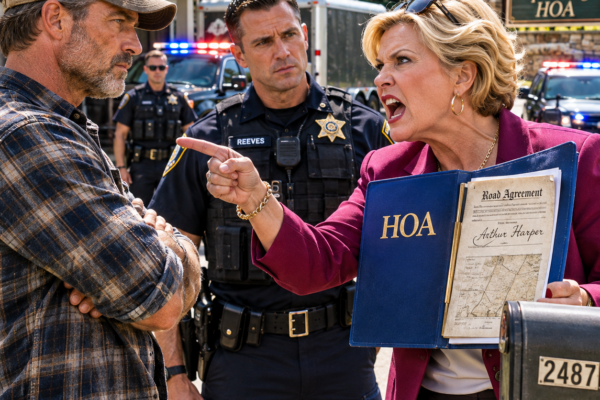
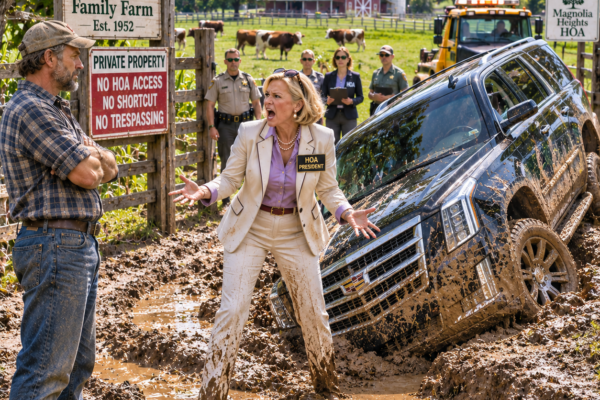
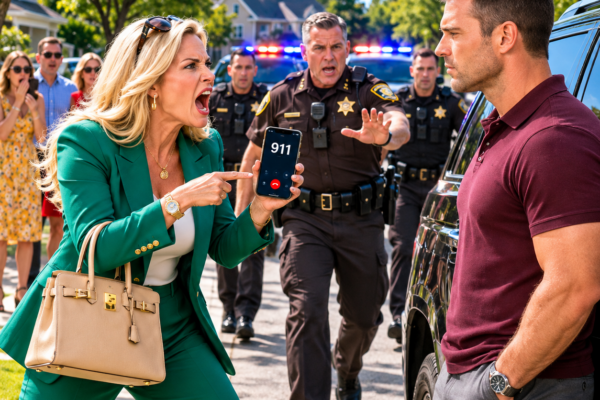
“SIGN IT OR LEAVE, DANIEL! PINE HOLLOW ALREADY VOTED TO BRING THIS LAND INTO THE COMMUNITY, AND IF YOU KEEP FIGHTING US, WE’LL TAKE CONTROL OF THE ROAD, THE SHORELINE, AND EVERYTHING YOU’RE BLOCKING!”
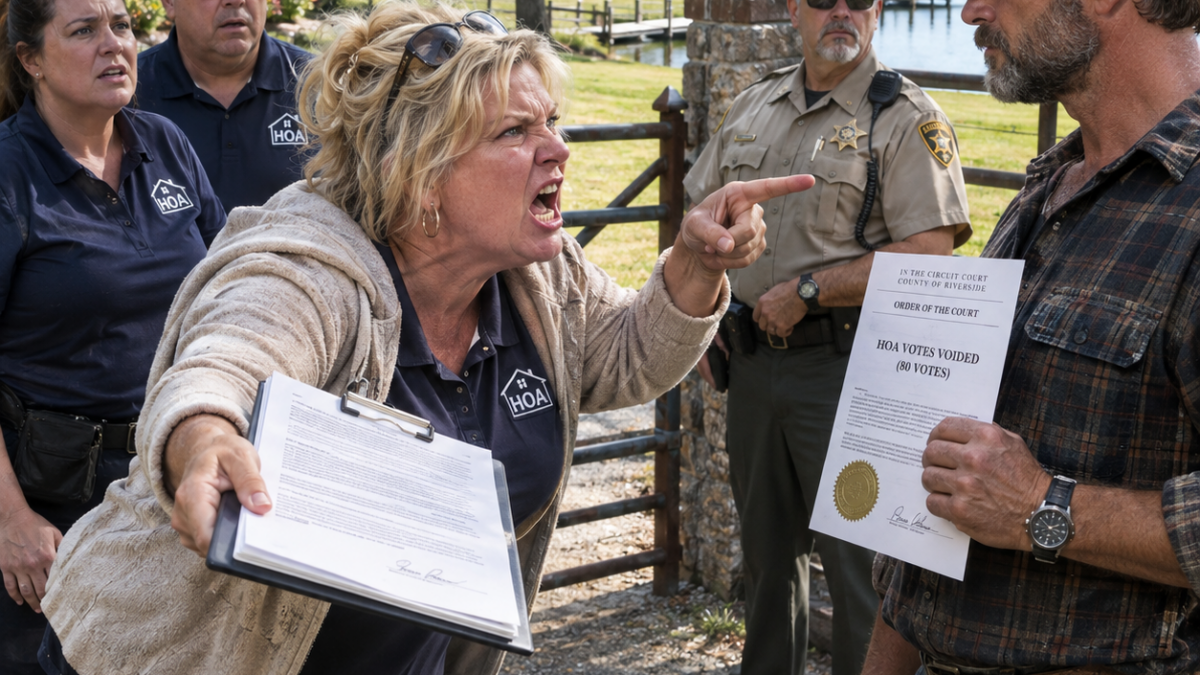
“SIGN IT OR LEAVE, DANIEL! PINE HOLLOW ALREADY VOTED TO BRING THIS LAND INTO THE COMMUNITY, AND IF YOU KEEP FIGHTING US, WE’LL TAKE CONTROL OF THE ROAD, THE SHORELINE, AND EVERYTHING YOU’RE BLOCKING!” HOA president Brenda Whitmore snapped at my farm gate while holding an annexation agreement that would have handed her HOA control over property my family had owned for generations.
I told her no, even after her husband Steven raised his offer to more than a million dollars, because my 58-acre farm was never part of Pine Hollow—and the “landslide” vote Brenda kept waving around depended on 80 proxy ballots she refused to let her own board members inspect.
Then the judge asked Brenda whether she seriously expected the court to believe that 80 different homeowners had personally authorized her to vote for them, struck every one of those proxies from the record, and watched her face change when a county investigator walked through the courtroom doors carrying two evidence boxes and said, “Your Honor, we believe these 80 votes are only the beginning.”
My name is Daniel Lawson.
I own fifty-eight acres on the western shore of Lake Marston in Tennessee.
My grandfather bought the first thirty acres in 1968.
My father spent years adding neighboring pieces when farmers retired or moved away.
By the time the place came to me, the property included pasture, woods, a small apple orchard, two barns, a private boat ramp, almost half a mile of shoreline, and the farmhouse where I grew up.
Nothing about the place was luxurious.
That was part of why I loved it.
The farmhouse needed paint every few years.
One barn leaned slightly east.
My dock creaked near the end.
Lawson Lane turned muddy after heavy rain.
But every part of the property carried a memory.
Dad taught me to drive a tractor there.
Grandpa taught me to fish from the old dock.
My mother planted the apple trees with me when I was eleven.
Pine Hollow Estates came much later.
It began with around forty houses roughly twenty years ago and expanded in phases.
By the time Brenda Whitmore entered my life, Pine Hollow had nearly two hundred homes.
Clubhouse.
Pool.
Tennis courts.
Private lake access.
Landscaped entrances.
And an HOA that seemed to invent a new rule every time somebody bought the wrong mailbox.
My farm was never part of Pine Hollow.
Different deed.
Different parcel numbers.
Different road.
No HOA covenants.
No dues.
No shared ownership.
For years, that distinction caused no problem.
Frank Miller bought eggs from me.
PART2:
Susan Parker brought her grandchildren to see the horses.
Robert Jenkins helped me remove fallen trees after storms.
Several residents occasionally asked permission to fish from the edge of my property when Pine Hollow’s small community dock became crowded.
I usually said yes.
That was how I was raised.
If helping a neighbor does not hurt you, help them.
Then Brenda Whitmore became HOA president.
I first met her at my farm gate.
Silver SUV.
Pine Hollow board sticker.
Thick folder.
She stepped out like we had a scheduled business meeting.
“Daniel Lawson?”
“That’s me.”
“I’m Brenda Whitmore, Pine Hollow HOA president.”
“I know.”
She smiled.
“Wonderful. Then this should be easy.”
That sentence should have warned me.
She opened the folder and showed me a glossy planning map.
Pine Hollow in green.
My farm in yellow.
A thick blue line running through my shoreline.
“What is this?”
“Lake-access expansion.”
“For Pine Hollow?”
“Yes.”
“On my property?”
She did not laugh.
Brenda explained Pine Hollow had grown faster than originally expected.
The community dock was too small.
The HOA wanted walking trails.
A larger boat launch.
Picnic areas.
Kayak storage.
A waterfront pavilion.
All perfectly reasonable ideas.
All located on land Pine Hollow did not own.
I pointed toward a proposed walking trail.
“That runs behind my barn.”
“Community trail.”
“Same problem.”
“It would improve the shoreline.”
“My shoreline.”
Brenda sighed.
“Daniel, your property is surrounded by Pine Hollow on two sides. From a planning perspective, this makes sense.”
“From an ownership perspective, it doesn’t.”
She closed the folder.
Then she told me why she had really come.
The HOA wanted me to join Pine Hollow voluntarily.
All fifty-eight acres.
Not just the lakefront.
My entire farm.
If I signed, Pine Hollow covenants would extend over the land.
In return I would get clubhouse access.
Pool access.
Security patrol.
Trash service.
Neighborhood amenities.
I already had trash service.
Did not need the pool.
And I definitely did not need an HOA telling me whether my barn was the correct shade of red.
“No.”
She kept smiling.
“Think about it.”
“I have.”
“This is a significant decision.”
“Yes.”
“Then you shouldn’t decide in five minutes.”
“I decided before you arrived.”
That ended the smile.
Two weeks later:
PINE HOLLOW COMMUNITY INTEGRATION PROPOSAL.
Offer:
$75,000.
If I signed permanent annexation paperwork.
That got my attention.
Not because I wanted the money.
Because nobody pays seventy-five thousand dollars to give a farmer access to a swimming pool.
I called Rebecca Hayes.
She had handled my father’s estate and several property matters for our family.
Rebecca read the offer twice.
“Why do they want the farm?”
“Lake access.”
“All fifty-eight acres?”
“Apparently.”
She looked at the map.
“No.”
“What?”
“There’s something else.”
She pointed toward Lawson Lane.
My private farm road connected the county highway to my house, barns, boat ramp and western pasture.
Pine Hollow had only one main entrance on the east.
A second emergency route had been discussed for years because wildfires and storms sometimes threatened the primary road.
If Pine Hollow controlled my farm, Lawson Lane could become that second route.
Road access.
Lake access.
More development land.
Suddenly seventy-five thousand dollars looked less generous.
Rebecca sent a polite rejection.
No annexation.
No easement.
No negotiation unless I chose to reopen it.
For a month, nothing.
Then:
HOA VIOLATION NOTICE.
My barn roof was supposedly noncompliant.
I called Frank.
“Is Brenda joking?”
“I thought you weren’t in Pine Hollow.”
“I’m not.”
“Then she can’t fine you.”
“Exactly.”
A week later:
LIVESTOCK VIOLATION.
Pine Hollow apparently prohibited farm animals.
I had six horses and eleven cattle.
Then:
COMMERCIAL ACTIVITY VIOLATION.
I sold hay and eggs.
Rebecca sent one letter.
Mr. Lawson is not a member of Pine Hollow Estates. Please stop sending enforcement notices.
The notices stopped.
Then signs appeared near Pine Hollow’s boundary.
FUTURE PINE HOLLOW WEST.
Arrow pointing toward my farm.
I stared at one for almost a minute.
Frank called.
“You need to see something.”
He brought me to the clubhouse and showed me Brenda’s planning packet.
PINE HOLLOW WEST EXPANSION.
Phase One:
Western Emergency Road.
Phase Two:
Lakefront Recreation Area.
Phase Three:
Forty-two luxury cottage lots.
“Where do those lots go?”
Frank looked at me.
He did not need to answer.
My farm.
Pasture divided into building lots.
Farmhouse turned into “historic community lodge.”
Boat ramp becoming “West Marina.”
Barn becoming event storage.
My family cemetery did not appear at all.
That made me angrier than any violation notice.
Someone had taken my home and turned it into boxes on a sales map.
Frank looked ashamed.
“The board was told you were negotiating.”
“I said no.”
“Brenda said you were considering annexation.”
“I considered it for about three seconds.”
“I voted to fund some preliminary studies.”
“You thought I agreed.”
“Yes.”
“That matters.”
Frank had acted on bad information.
I did not need another enemy.
I needed facts.
The first internal records showed Brenda had already spent around $110,000 on surveys, traffic studies, lake planning, engineering and legal work connected to Pine Hollow West.
All before I signed anything.
Then Rebecca found the bigger connection.
Whitmore Residential Group owned almost two hundred acres west of my farm.
Owner:
Steven Whitmore.
Brenda’s husband.
My farm sat between Pine Hollow and Steven’s undeveloped property.
If they controlled my land, Pine Hollow could gain western access while Steven’s property became dramatically more valuable.
County records showed Steven had already filed a concept for another 120 homes.
PINE HOLLOW RESERVE.
Future access listed:
Through Pine Hollow community lands.
My farm.
I called Brenda.
“I saw the Reserve application.”
Silence.
“You weren’t supposed to receive internal development paperwork.”
“It’s public county paperwork.”
“It’s conceptual.”
“It uses my road.”
“Potentially.”
“My shoreline.”
“Potentially.”
“My farm.”
Brenda sighed.
“Daniel, eventually this area will develop. You can work with us or spend years fighting what is going to happen anyway.”
That told me everything.
She did not see the farm as mine.
She saw it as land waiting for the right paperwork.
She invited me to a board meeting.
Rebecca came with me.
Around eighty homeowners.
Brenda presented Pine Hollow West like I had already agreed.
Emergency entrance.
Expanded waterfront.
Higher property values.
New trails.
Future cottages.
Most questions were normal.
Would the emergency road improve wildfire evacuation?
Possibly.
Would more shoreline reduce crowding?
Probably.
Then a woman asked:
“Does Mr. Lawson actually want to sell?”
Everyone looked at me.
I stood.
“No.”
The room went quiet.
Brenda cut in.
“Daniel is still reviewing options.”
“No, I’m not.”
She stared.
“I told Brenda no months ago. My lawyer told Pine Hollow no in writing. I am not selling the farm. I am not joining Pine Hollow. I am not giving away Lawson Lane.”
Frank’s expression changed.
Not at me.
At Brenda.
Then she introduced another idea.
Pine Hollow, she said, could approve a “Western Community Integration Plan” through a special community vote.
Rebecca leaned toward me.
“That does not transfer your land.”
Brenda said Pine Hollow controlled voting interests attached to undeveloped parcels and common areas and could pursue an expansion petition with enough support.
I raised my hand.
“You cannot vote my farm into your HOA.”
She smiled.
“The process is more complicated.”
Rebecca stood.
“Then show us the legal authority.”
Even Pine Hollow’s attorney looked uncomfortable.
He said it required review.
Two weeks later:
Special vote notice.
Should Pine Hollow Estates approve the Western Community Integration Plan and authorize the board to pursue inclusion of adjacent lakefront property?
Adjacent lakefront property.
Mine.
I was not allowed to vote.
I was not a member.
Yet Pine Hollow was deciding whether to authorize spending and legal action aimed directly at my land.
Brenda campaigned hard.
Property values.
Fire safety.
Better lake access.
New amenities.
All desirable.
On somebody else’s property.
I sent homeowners one letter.
No insults.
No accusations.
Only facts.
My farm is not for sale.
I have not agreed to annexation.
Any plan showing my road, shoreline or pasture as HOA property has not been approved by me.
Brenda accused me of spreading fear.
Then announced she already had eighty proxy votes in favor.
Eighty.
Frank became suspicious.
Pine Hollow rarely collected anything close to that many proxies.
He asked to inspect them.
Brenda refused.
“Ballot security.”
Saturday vote.
I stayed home.
That evening Frank called.
“We lost.”
“What was the count?”
“123 yes. 41 no.”
“That’s huge.”
“Eighty yes votes were proxies.”
Exactly eighty.
Without them:
43 yes.
41 no.
Then Frank said:
“I know some names on the proxy list.”
“So?”
“Three are dead.”
I stopped moving.
That did not automatically mean fraud.
Maybe estates still held voting rights.
Maybe records were stale.
Rebecca reminded us not to jump ahead.
Then:
Two listed homeowners had already sold.
One lived in assisted care.
Another property belonged to a bank after foreclosure.
The board finally forced production of the proxy copies.
At first:
Normal-looking.
Name.
Address.
Signature.
Authorization giving Brenda the power to vote.
Every one supporting Western Integration.
Rebecca noticed the patterns.
Same printer marks.
Same date style.
Same blue ink.
Not proof.
Then she saw Susan Parker’s proxy.
I called Susan.
“Did you give Brenda your vote?”
“What vote?”
“The Western proxy.”
“No.”
“You’re sure?”
“I voted in person against it.”
Her in-person ballot existed.
So did a proxy supposedly authorizing Brenda to vote yes.
One person.
Two votes.
Robert Jenkins:
Same.
Jennifer Collins:
Same.
Multiple duplicates.
Brenda refused to cancel the result.
Called them clerical errors.
Then she came to my farm.
Steven.
Two board members.
A notary.
Brenda handed me a folder.
“Annexation and development agreement.”
I did not open it.
“The community voted.”
“That does not make my land yours.”
“It authorizes us to move forward.”
Steven stepped in.
Offer:
$900,000 for twenty-four acres.
Road.
Lakefront.
First cottage phase.
“No.”
$1.2 million.
“No.”
Brenda’s face hardened.
She pointed to the agreement.
“Sign it or leave.”
I actually laughed.
“Leave what?”
“The western tract.”
“My farm?”
“The community approved inclusion.”
“You cannot vote me out of my own property.”
Then she threatened to challenge my road rights, shoreline use, agricultural zoning and farm operations if I refused.
Rebecca was listening on speakerphone.
“End the conversation.”
I did.
Brenda left the folder hanging from my gate.
Next morning:
Orange survey stakes along Lawson Lane.
My land.
Survey crew work order:
PINE HOLLOW WEST — PRE-ANNEXATION ROAD SURVEY.
Client:
Whitmore Residential Group.
Steven’s company.
Rebecca filed for an emergency injunction.
Pine Hollow filed its own petition.
Historical emergency access.
Maintenance use.
Shoreline management.
And attached the special vote as proof of overwhelming community support.
Now those eighty proxies were evidence in a court case aimed at my property.
Rebecca subpoenaed everything.
Original proxies.
Election records.
Ballots.
Ownership lists.
Emails.
Computer logs.
No more internal excuses.
A week later, Frank showed up after dark carrying a spreadsheet.
Homeowner emergency contact list.
Names.
Addresses.
Emails.
Phone numbers.
And signature samples from older HOA forms.
Fence approvals.
Pool waivers.
Boat registrations.
Architectural applications.
“Who exported this?”
“Brenda.”
“When?”
“Three days before the proxies were created.”
Still not proof.
Then the computer audit.
Folder:
WEST VOTE.
Eighty PDF files.
Generated within forty-seven minutes.
Same computer.
Same printer.
Same evening.
Brenda had told everyone the proxies arrived by mail, email and hand delivery.
Then the draft template:
INSERT SIGNATURE IMAGE HERE.
Court hearing was two days away.
Brenda hired a personal attorney.
Steven hired another.
Pine Hollow counsel continued representing the HOA.
Their interests were splitting.
Then county workers arrived near my northern shoreline.
Temporary clearing permit.
Emergency western evacuation route across Lawson Lane.
Landowner consent:
Daniel Lawson.
My signature.
I had never signed it.
Rebecca compared the signature to an old county septic permit.
Pixel-for-pixel copy.
Witness line:
Brenda Whitmore.
County suspended the permit immediately.
By the next morning, our injunction hearing had become something much bigger.
Courtroom packed.
Brenda across from me.
Steven behind her.
Frank and Pine Hollow residents in the gallery.
The judge began with access.
Then Rebecca raised the special vote.
Brenda’s attorney relied on it.
The judge asked:
“Where are the original eighty proxy forms?”
Copies only.
Brenda claimed the originals had been misplaced during an office move.
The judge’s expression changed.
Rebecca introduced the digital records.
Eighty forms.
Forty-seven minutes.
Same device.
Same printer.
Signature images inserted electronically.
Then Susan testified.
She never signed her proxy.
Robert:
Same.
Jennifer:
Same.
Families of deceased homeowners:
No authorization.
The judge stopped the testimony.
Held up the election sheet.
Looked directly at Brenda.
“Mrs. Whitmore, are you asking me to believe that eighty separate property owners personally authorized you to vote on their behalf?”
“Yes, Your Honor.”
He looked at the records.
Then said:
“No.”
All eighty proxies struck pending investigation.
The supposed landslide disappeared.
Brenda went pale.
Rebecca remained standing.
“One more matter, Your Honor.”
Courtroom doors opened.
County investigator Thomas Reed entered carrying two evidence boxes.
First box:
Pine Hollow property records.
Second:
Laptop seized that morning.
“We found additional voting information.”
“How many names?”
Thomas pulled out a spreadsheet.
More than two hundred.
Not eighty.
Two hundred-plus.
Rows.
Dates.
Vote types.
Signature sources.
Notes.
The eighty Western proxies appeared inside it.
Every one marked:
WEST READY.
Most were marked ready before Pine Hollow announced the vote.
The judge immediately froze the Western Integration Plan.
No annexation petition.
No road work.
No lake project.
No development agreement.
No action based on the disputed vote.
Then Thomas displayed another document.
A newer map of my farm.
Farmhouse gone.
Barns gone.
Cemetery marked:
RELOCATION.
Across the top:
PHASE ONE ACQUISITION AFTER VOTE CONTROL CONFIRMED.
The proxies were not merely about one election.
Investigators believed someone had created a system for controlling HOA votes long before Brenda stood at my gate telling me to sign or leave.
Thomas was careful.
He did not say Brenda personally forged every form.
He said the records showed a system existed.
That distinction mattered.
Nobody had the right to skip evidence because the story looked obvious.
The judge froze Brenda’s access to election files.
Major votes from the previous three years faced independent review.
Homeowners panicked.
Dues.
Pool renovation.
Security.
Dock rules.
Assessments.
Judge reminded everyone that suspicious records did not automatically invalidate every decision.
Each issue had to be reviewed separately.
Outside court, reporters waited.
I said nothing.
Rebecca advised against turning an unfinished investigation into entertainment.
Frank gave one short statement.
The HOA would cooperate.
Residents would receive verified information.
Brenda and Steven left separately.
Back at the farm, Lawson Lane looked unchanged.
Cattle.
Fence.
Lake.
I stood near the dock.
“What happens now?”
Rebecca leaned against the fence.
“We slow down.”
“That sounds terrible.”
“It usually is.”
The eighty proxies were gone.
But every other property issue still required proof.
Old access.
Emergency safety.
Potential shoreline agreements.
Real problems did not disappear because Brenda manipulated a vote.
Without the suspicious proxies, valid votes had been:
43 yes.
41 no.
Some homeowners genuinely supported Pine Hollow West.
That did not make them thieves.
They wanted fire safety.
Lake amenities.
More access.
The conflict began when my refusal stopped being respected.
Then investigators found more documents using my signature.
Shoreline management agreement.
Supposedly gave Pine Hollow control over nearly nine hundred feet of my lakefront.
Never signed.
Same copied septic signature.
Another:
Livestock relocation authorization.
According to that one, I had agreed months earlier to remove cattle during Western Road construction.
Months before Brenda first asked me to annex.
The project had been moving before her “proposal” ever reached my gate.
Dad called from Florida.
“Your mother would have chased Brenda with a broom.”
I laughed.
Then Dad became serious.
“Don’t let this make you mean.”
“You think I’m being mean?”
“No. That’s why I’m saying it now.”
He reminded me of something Grandpa believed.
A locked gate is not hatred.
No is not cruelty.
But anger can become its own trap if you start needing someone else to suffer before you feel whole.
“Protect the farm,” Dad said. “Just don’t become somebody who needs Brenda hurt.”
I carried that with me.
Pine Hollow began repairing itself.
Full homeowner meeting.
Independent attorney.
Independent accountant.
Independent election company.
No Brenda.
No Steven.
Vote one:
Audit all major HOA votes from the previous three years.
142 yes.
9 no.
No proxies.
Vote two:
Remove Brenda from remaining board authority during investigation.
Overwhelming.
Vote three:
Suspend Pine Hollow West and Reserve spending.
Passed.
Then something important happened.
Residents voted on whether Pine Hollow still needed a second emergency route someday.
Most said yes.
That surprised me.
Then I understood.
Wildfire risk was real.
Brenda had abused the issue.
That did not make the underlying safety concern fake.
I stood.
“If the county believes you genuinely need a second emergency exit, I’ll talk.”
Everyone looked at me.
Frank blinked.
“You will?”
“Talk.”
I pointed to the southern ridge.
“Not a development road. Not daily traffic. Not Steven’s subdivision. A gated emergency route. Fire and evacuation only. County controlled.”
Susan started clapping.
I hated that.
I was not giving away the farm.
I was separating safety from the scheme built around it.
County fire marshal later found a possible route needing about four acres of easement along the southern edge.
No everyday Pine Hollow traffic.
No development access.
No lake project.
County control.
That sounded reasonable.
I agreed to keep discussing it.
Then came the formal election audit.
All eighty Western proxies invalid.
At least thirty-one homeowners denied signing.
Twelve had already voted in person.
Five did not own property on election day.
Three were dead.
Nine signatures matched older HOA records exactly.
Twenty others remained under investigation.
Judge did not need every single proxy proven forged in the same way.
The block was too unreliable to count.
Western Community Integration vote:
VOID.
Not corrected.
Not postponed.
Void.
That should have ended the property pressure.
Steven simply changed strategies.
He claimed an old logging road crossing my western pasture historically served the land he owned beyond my farm.
This claim was different.
Potentially real.
A 1974 deed referenced a shared timber route.
Rebecca took it seriously.
So did I.
Nobody gets to ignore real property rights because someone else previously used fake documents.
The court allowed survey inspection.
No widening.
No utilities.
No subdivision traffic.
Old records showed several landowners around Lake Marston once belonged to a timber cooperative.
Temporary shared logging routes.
Most rights ended in 1982.
One surviving clause:
Existing crossings could continue for agricultural and forestry use by mutual consent.
Mutual consent.
Not residential subdivision traffic.
Then Steven produced a 1991 agreement.
Dad’s signature.
This time:
Real.
Dad confirmed it.
Land-management access.
Forestry.
Inspection.
Emergency use.
He had forgotten about it.
That made me nervous.
Then Rebecca traced the title chain.
The parcel that originally benefited from Dad’s agreement was split years later.
The smaller northern parcel retained the relevant access language.
Steven owned the southern remainder.
Different parcel.
The man who owned the northern tract was retired teacher David Walker.
He had no development plans and already used another road.
Rebecca asked whether he wanted to release the old interior access.
“Yes, if I keep forestry access somewhere else.”
We negotiated.
I granted David a narrow northern forestry route.
He formally released the old crossing through the center of my farm.
Recorded.
Signed.
Clear.
Steven’s strongest legitimate argument weakened badly.
The court later ruled the old 1991 agreement could not be transformed into an entrance for his 120-home subdivision.
Then Pine Hollow’s financial audit found another issue.
More than $620,000 paid to Whitmore Residential Group over three years.
Western Planning.
Emergency Access Studies.
Shoreline Integration.
Reserve Development Coordination.
Some spending approved.
Some not.
About $270,000 linked to legitimate engineering and emergency planning.
Another $350,000 lacked complete authorization.
One invoice:
$48,000 — Western shoreline acquisition coordination.
No shoreline acquired.
Another:
$31,500 — cemetery transition planning.
My cemetery.
Pine Hollow residents had been billed to plan moving my family graves before anybody owned the land.
That one stayed with me.
Then Steven came to my gate.
Alone.
No Brenda.
No lawyer.
“What do you want?”
“A deal.”
“No.”
“You haven’t heard the number.”
“No.”
“Three million.”
“No.”
“Four.”
“No.”
He laughed.
“Daniel, this is dirt.”
“It’s my dirt.”
“Five million.”
I was tempted.
Of course I was.
Five million dollars is real money.
But I imagined Lawson Lane full of construction vehicles.
Streetlights.
Traffic.
One hundred twenty homes.
Then more.
Farm divided.
Lake crowded.
Cemetery bordered by utilities.
“No.”
His face hardened.
“You’re going to lose the access case.”
“Then let the judge decide.”
“You could walk away rich.”
“I’m already where I want to be.”
That answer made him angrier than an insult.
Then utility flags appeared beyond the court-approved survey corridor.
Sewer markings.
A contractor arrived.
Client:
PINE HOLLOW RESERVE UTILITY DISTRICT.
New company.
Manager:
Steven Whitmore.
Work order claimed a utility easement across my farm.
Signed:
Daniel Lawson.
My signature again.
But not copied from the septic permit.
Different.
Fresh.
Rebecca studied it.
“Have you ever signed like this?”
“Yes.”
“Where?”
I remembered.
Pine Hollow clubhouse visitor book.
When Frank first invited me inside months earlier, I had signed at the front desk.
Name.
Time.
Signature.
Frank raced to the clubhouse.
Visitor book gone.
Receptionist said Brenda removed it before losing office access.
The fake utility easement crossed my pasture.
Then through my family cemetery.
I stared at the map.
Grandparents.
Two uncles.
My mother.
All buried there.
Then Frank called.
“Get to the cemetery.”
“What happened?”
“I’m already here.”
I heard machinery.
“Excavator.”
When Rebecca and I arrived, part of the cemetery fence had been removed.
Excavator inside.
Bucket less than twenty feet from my mother’s grave.
The supervisor raised both hands.
“We stopped.”
“Why are you here?”
“We were told the graves were being relocated.”
Rebecca took the work packet.
Pine Hollow Reserve Utility District.
West Sewer Main.
Cemetery relocation corridor.
Permit packet looked official.
County authorization.
Funeral-services approval.
Landowner consent.
Thomas Reed checked the permit number.
“It’s real.”
My stomach dropped.
Then he continued.
“For another cemetery.”
Someone had copied a legitimate relocation permit and changed the parcel.
The cemetery crew backed away.
Sheriff came.
Nobody touched the graves.
Thank God.
Then Rebecca found the supposed relocation agreement.
My signature.
Brenda listed as witness.
Frank appeared carrying a black binder from Brenda’s old office.
Maps.
Road.
Marina.
Cottages.
Sewer.
My cemetery.
Across it, written in red:
REMOVE BEFORE FINAL SITE PLAN.
Below:
FAMILY REMAINS TO BE TRANSFERRED TO COUNTY MEMORIAL GROUNDS AFTER ACQUISITION.
My hands shook.
Then investigators searched Brenda’s locked cabinet.
Visitor book.
Blank easement forms.
Signature scans.
Vote templates.
Eleven completed property agreements.
My farm was not the only target.
A surrounding-property map marked eleven neighboring parcels.
Beside each:
Owner.
Signature source.
Notes.
How much pressure the owner might take before selling.
Next to mine:
WILL NOT SELL — FORCE THROUGH ACCESS, VOTE AND UTILITIES.
Another parcel marked green:
Already acquired.
Owner:
Susan Grant.
Frank went pale.
“She never sold.”
County record said Susan transferred her lake house to Whitmore Land Holdings the previous day.
Problem:
Susan had been living in memory care for eight months.
That opened an entirely new investigation.
We did not assume fraud immediately.
Maybe her power of attorney approved it.
Maybe family chose to sell.
Facts first.
Her niece Laura Bennett held financial power of attorney.
Laura had never approved any sale.
Deed claimed Susan personally signed it for $310,000.
Her recent medical records showed severe memory decline.
Then the notary.
Karen Douglas.
Worked for a title company used by Steven’s development business.
Karen said she visited Susan personally.
Memory-care visitor logs showed no visit.
Then she changed her explanation.
Maybe staff let her in without logging.
Possible.
Nobody could produce the original deed.
Susan’s recent signatures had a visible tremor.
The deed signature looked smooth.
Older.
Laura remembered an old shoreline-access form Susan signed years earlier.
The signatures looked almost identical.
Court placed an immediate fraud notice on the deed and blocked Whitmore Land Holdings from selling, mortgaging or altering Susan’s property.
For once:
Something stopped before equipment arrived.
The broader Pine Hollow audit also brought some good news.
Most ordinary HOA decisions were legitimate.
Pool repairs.
Security.
Landscaping.
Holiday budgets.
Real ballots.
The suspicious activity clustered around:
Western expansion.
Lake access.
Special assessments.
Whitmore contracts.
That distinction mattered.
Pine Hollow itself was not fake.
Residents had not spent years living under completely fraudulent governance.
A smaller network of decisions had been manipulated.
Frank told homeowners:
“If a vote is valid, we keep it. If it isn’t, we redo it.”
Some people wanted every Brenda-era decision erased.
Frank refused.
That was wise.
Justice is not deleting reality.
It is correcting what evidence proves wrong.
The map from Brenda’s computer made the pattern clearer.
Some owners were marked:
Interested.
Offer pending.
Too expensive.
Normal business.
Others:
Widow.
Family distant.
Tax pressure.
Signature on file.
May fold after enforcement.
Mine:
Will not sell.
Force through access, vote and utilities.
Susan:
POA risk. Secure before niece involved.
Laura cried when she read that.
I remembered Dad’s warning.
Protect the farm.
Do not need Brenda’s suffering in order to feel whole.
That became harder.
The court issued stronger protections.
Nobody connected to Pine Hollow Reserve Utility District, Whitmore Residential Group or Brenda could enter my property without written permission or court approval.
Surveying required notice.
County permits involving my parcel carried fraud alerts.
Contractors were told to verify authority directly with Rebecca or me.
It felt absurd.
It also finally let me sleep.
Then the county completed the emergency-road study.
Pine Hollow genuinely needed another evacuation option.
Not enough to steal Lawson Lane.
Enough to justify action.
Four acres along my southern boundary.
County-controlled gate.
Emergency vehicles.
Official drills.
Evacuation only.
No everyday HOA traffic.
No Steven development.
No utility corridor unless separately negotiated.
I agreed.
County paid fair market value for the easement.
Frank shook his head.
“Brenda spent hundreds of thousands trying to force something you were willing to discuss.”
“Not the same thing.”
“I know.”
That was the point.
Safety?
I would help.
Take fifty-eight acres?
No.
The real emergency easement became better than Brenda’s plan.
Less traffic.
Less construction.
No lakefront destruction.
No fight over Lawson Lane.
“Why didn’t we do this first?” Frank asked.
“Because nobody asked.”
Then Susan Grant’s deed investigation finished.
Steven’s server contained:
Draft.
Unsigned final.
Signed final.
Her signature image came from the old shoreline form.
Document examiner confirmed copying.
Karen’s notary seal had been inserted without proper in-person notarization records.
Court voided the transfer.
Susan’s house remained hers.
Laura strengthened her estate protections.
One of the best outcomes in the entire case.
Susan never had to understand every ugly detail.
She simply stayed the owner of the home she loved.
The eleven-parcel investigation showed not every Whitmore deal was illegal.
Some owners accepted normal offers.
Signed with their own lawyers.
Received money.
Moved away.
No problem.
The trouble came when somebody said no.
That pattern became undeniable.
Then the old Pine Hollow voting system unraveled further.
Suspicious proxies had appeared before.
Twenty-seven in a vote approving a $350,000 Western Planning Fund.
Thirty-four in a shoreline-expansion study vote.
Forty-one in a vote authorizing Pine Hollow to negotiate directly with Whitmore Residential Group without competitive bidding.
Not always the same people.
Same database.
Then investigators found:
VOTE TARGET.
Expected support.
Expected opposition.
Required proxy margin.
Brenda had calculated the number she needed before the Western vote.
Eighty would not simply produce victory.
It would create a landslide.
Why did the size matter?
Because Steven’s financing records contained a bank note:
Western access plan dependent on HOA supermajority support and adjacent land control.
The fake votes had financial value.
A close neighborhood debate could be turned into something that looked inevitable.
Then Steven made his final offer.
Eight million dollars.
Permanent road corridor.
Utility easement.
Twenty acres of lakefront.
Eight million.
Rebecca looked at me.
“You can say yes.”
“I know.”
Dad told me the same.
Nobody pressured me.
For two nights, I barely slept.
Eight million could change my life.
Buy another farm.
Retire.
Travel.
Help family.
Invest.
Then I walked down to the cemetery before sunrise.
Mom.
Grandpa.
Apple orchard beyond the graves.
Lake below.
I knew.
“No.”
Not because the farm was necessarily worth more than eight million.
Maybe yes.
Maybe no.
Because I did not want to sell.
That was enough.
Steven did not reply.
For six days:
Silence.
Then Thomas Reed drove into my yard before breakfast.
“We have a problem at the lake.”
“What?”
“Water level.”
Lake Marston had dropped almost nine inches overnight.
No drought.
No scheduled dam release.
No public break.
I drove to the dock.
Mud appeared along shoreline that had been underwater the day before.
Pine Hollow residents gathered around their marina.
Fish moved strangely in the shallows.
Then Dad pointed west.
A current.
Lake water pulling toward Steven’s property.
We followed it by boat.
Fresh machinery tracks.
A channel had been cut through the bank.
Water poured from Lake Marston into a massive excavated basin on Pine Hollow Reserve land.
Steven’s development plans had shown a private lake someday.
No final diversion permit.
No completed dam approval.
No finished emergency spillway.
Yet somebody had opened Lake Marston into it.
State water crews arrived.
One engineer looked at the basin wall.
“That berm isn’t finished.”
Millions of gallons pressing against an incomplete earthen structure above a valley sloping toward Pine Hollow.
Evacuation alerts went out.
Then:
Crack.
Line across the berm.
Mud sliding.
A small stream broke through.
Then wider.
The unfinished private lake started failing.
Pine Hollow homes sat below.
Frank called from the neighborhood.
“People are moving.”
“How many houses?”
“About thirty.”
“Get everybody uphill.”
“Already doing it.”
That was Frank now.
No speeches.
No pretending.
He moved people.
Fire department blocked streets.
Deputies went door to door.
Residents helped elderly neighbors.
Parents grabbed children, pets and medicine.
Twelve minutes later:
Water reached Pine Hollow.
Stormwater channel overflowed.
Three backyards underwater.
Detached garage flooded.
Two parked cars damaged.
But nobody trapped.
Nobody injured.
That mattered most.
State crews blocked the illegal Lake Marston diversion.
Pressure dropped.
The berm did not completely collapse.
By evening:
Water receding.
People shaken.
Safe.
Investigators found the reason Steven had rushed the private lake.
His lender was coming for an inspection.
Road access had collapsed.
The HOA vote had collapsed.
My farm was unavailable.
The old logging-road claim was dying.
He needed visible progress.
A beautiful private lake looked like progress.
So he created one before the permits were finished.
Again:
Build first.
Make it real.
Force everybody else to deal with it later.
This time the strategy put thirty families at risk.
State shut down all earthwork on Pine Hollow Reserve.
County suspended development applications.
Lender froze the remaining loan.
The private lake became evidence.
Then criminal cases began catching up.
Brenda was arrested first.
Not for being rude.
Not for telling me “sign it or leave.”
Not because she wanted an HOA expansion.
Those things were not crimes.
Charges came from evidence involving false voting documents, copied signatures, fraudulent property agreements and misuse of HOA authority.
Steven was arrested separately later.
His case included forged easements, construction documents, financial records, illegal water diversion and questionable property transactions tied to his companies.
Karen Douglas also faced consequences over improper use of her notary seal.
None of them received some instant theatrical sentence.
Months.
Lawyers.
Hearings.
Challenges.
Civil actions.
Restitution.
Some charges changed.
Some combined.
That is how real cases work.
Pine Hollow residents struggled with Brenda’s fall.
Some remembered good things she had done.
Storm cleanup.
Helping families.
Playground improvements.
Charity events.
Those things were true.
They did not erase what came later.
Frank said:
“She wasn’t always like this.”
“I believe you.”
He looked surprised.
“Really?”
“Yes.”
Good people can become convinced they deserve control.
One shortcut.
Then another.
Then success.
Then fewer questions.
Eventually rules start feeling like something meant for other people.
Steven’s motive appeared more direct.
Development.
Roads.
Land.
Water.
Money.
Brenda wanted Pine Hollow to grow and believed she could control that growth.
Steven wanted his land to become profitable.
My farm solved both problems.
That was why one word became so dangerous.
No.
The court eventually reviewed all eighty Western proxies.
Every one excluded.
Not because all eighty were proven forged in exactly the same way.
Some:
Homeowner had already voted.
Some:
Owner no longer owned property.
Some:
Deceased.
Some:
Owners denied authorization.
Some:
Signatures copied.
Some:
Forms invalid.
Together:
Unreliable.
Western Community Integration Vote:
Officially failed.
No landslide.
No mandate.
No power to tell me the community had already decided what happened to my farm.
Inside Pine Hollow, “eighty votes” became a warning.
Somebody tried rushing a board decision.
A resident would ask:
“We already have eighty votes?”
At first nobody laughed.
Eventually they did.
One by one, false documents tied to my farm disappeared.
Emergency road consent:
Void.
Shoreline management agreement:
Void.
Livestock relocation form:
Void.
Utility easement:
Void.
Cemetery relocation agreement:
Void.
The title report became simple again.
Daniel Lawson.
Fifty-eight acres.
Private road.
Private shoreline.
Farm use.
Family cemetery.
No Pine Hollow control.
No Whitmore utility easement.
No Western Development Road.
Rebecca handed me the report.
“Frame this too.”
“How many legal documents do you expect me to hang in the barn?”
“As many as necessary.”
I framed it.
Of course I did.
Pine Hollow itself also faced consequences.
Residents had paid some of Brenda and Steven’s bills.
The HOA name appeared on permits.
Certain studies had real board approval.
Insurance paid part of the damage.
Other costs became civil claims against Brenda, Steven, Whitmore companies and professionals who failed to verify authority.
The neighborhood did not escape every dollar.
It should not have.
Oversight failed.
People trusted too easily.
But ordinary homeowners were not forced to pay for every dollar the Whitmores caused.
That distinction prevented a devastating special assessment.
Settlement money eventually came back to the HOA.
Not all.
Enough.
I was happy.
I never wanted Pine Hollow destroyed.
I wanted Pine Hollow out of my farm.
Those are different goals.
The county emergency route was completed under the four-acre easement I voluntarily granted.
Locked.
Fire department.
Official drills.
Evacuation.
No everyday neighborhood traffic.
No development.
No Steven.
County-controlled gate.
It gave families the safety improvement they actually needed.
And proved the simplest truth in the whole story.
I had never been against helping.
I had been against being forced.
My cemetery received stronger recorded protection too.
Future farm owners would know exactly where it sat.
No development plan could casually erase it.
No utility map could call it empty ground.
Dad stood beside Mom’s grave after the new declaration was recorded.
“She would’ve approved.”
“The legal filing?”
He smiled.
“You being stubborn.”
Probably.
Steven’s illegal private lake was regraded.
The failed berm removed.
Part eventually became a smaller stormwater pond under county supervision.
No secret diversion from Lake Marston.
No rushed fill.
No private marina tied to my shoreline.
Pine Hollow Reserve collapsed in its original form.
Whitmore Residential Group later entered financial restructuring.
Some land sold.
Two years later, another developer bought most of the western tract.
His name was James Turner.
He came to see me.
Map in hand.
“We are not asking for Lawson Lane.”
“Good start.”
“We plan to access from County Road 18.”
“More expensive?”
“Yes.”
“Legal?”
“Yes.”
“What do you need from me?”
“Nothing.”
Best development meeting of my life.
His project became smaller.
About eighty homes.
Own road.
Own access.
No private lake.
No marina on my shoreline.
No cemetery issue.
The world continued.
Turns out development does not collapse simply because somebody respects a boundary.
Pine Hollow rewrote its election rules.
No bulk proxies controlled by one person.
Direct verification.
Independent digital voting.
Deceased-owner records updated.
Ownership checked before major elections.
Related-party contracts disclosed.
Large spending independently reviewed.
Access to signature records logged.
Nobody could export the full signature database without a trace.
And any project involving outside property required verified written permission before design money could be spent.
For six months they jokingly called it the Lawson Rule.
I complained until they changed it.
Brenda’s legal case eventually ended through a negotiated resolution with serious consequences, restitution requirements and restrictions tied to conduct investigators could prove.
Steven’s took longer.
More companies.
More contracts.
More environmental issues.
His penalties were heavier.
I stopped attending hearings eventually.
The farm was safe.
Susan’s house was safe.
Pine Hollow had new leadership.
The rest belonged to courts.
That felt healthier.
Revenge keeps you attached to the person who harmed you.
Boundaries let you go home.
I chose home.
Almost two years after Brenda first appeared at my gate, I received a handwritten letter.
From her.
No attorney letterhead.
No demand.
An apology.
Not perfect.
There were explanations.
Steven pushed too hard.
Development seemed inevitable.
Pine Hollow needed another road.
She believed resistance would disappear once people saw the benefits.
Then one sentence:
I stopped treating your no as an answer.
That was the entire story.
Everything else grew from that.
I did not reply.
Not because I wanted Brenda to suffer.
Because I did not need anything else from her.
An apology can matter without becoming a new relationship.
The farm became boring again.
Beautifully boring.
Cattle.
Apples in September.
Boats on Lake Marston.
Mud after rain.
Fence repairs.
Hay.
The east-leaning barn still leans.
I never fixed that.
One Sunday Pine Hollow invited me to a community picnic.
I went.
No annexation papers.
No development presentation.
No proxy table.
Just food.
Kids.
Music.
Fire department demonstration using the new emergency gate.
Frank handed me a plate.
“Technically, you’re standing on HOA property.”
“I’ll leave immediately.”
He laughed.
“Sign this first.”
I stared at him.
He laughed harder.
Two years earlier, that joke would not have been funny.
Now it was.
That meant the danger was actually gone.
Susan Parker asked whether residents could still buy apples from me in the fall.
“Of course.”
“You sure that doesn’t create ownership rights?”
“Buy two bags and you get the cemetery.”
Frank nearly dropped his plate.
That was healing.
Not forgetting.
Not pretending.
Being able to laugh when you no longer need to be afraid.
The court order voiding the eighty proxy votes hangs in my barn office beside my clean title report.
Not because I enjoy seeing Brenda lose.
Because it reminds me how powerful false certainty can look before somebody checks it.
Eighty votes sounded overwhelming.
Official.
Final.
Brenda used that number to tell Pine Hollow that the community had spoken.
Used it to pressure county officials.
Used it to pressure me.
Used it when she stood at my gate and said:
“Sign it or leave.”
But the votes were only powerful while nobody asked where they came from.
Once the judge asked, everything changed.
That became the lesson.
When an HOA, developer, company or neighbor speaks too confidently about property rights:
Ask for the deed.
Ask for the easement.
Ask for the vote.
Ask for the original signature.
Ask who owns the road.
Ask who approved the permit.
Good systems survive questions.
Bad systems often become angry when somebody starts asking them.
I learned something else too.
My father’s generosity had created complications because he let neighbors use parts of the farm.
That did not mean helping people was wrong.
Susan Grant once allowed shoreline access because she trusted her neighbors.
That did not make her foolish.
I granted the county an emergency easement because Pine Hollow families needed a second safe exit.
That did not mean I gave them fifty-eight acres.
Generosity was never the problem.
Treating generosity like ownership was.
So I still help.
Susan’s grandchildren still come see the horses.
Frank still buys eggs.
Residents sometimes ask to fish along my shoreline.
If conditions are safe, I usually say yes.
The answer did not become no to everything.
It simply became my answer to give.
That difference is everything.
Lake Marston recovered after Steven’s illegal diversion.
The current disappeared.
Water levels returned.
State monitoring improved.
My farm remained fifty-eight acres.
Same Lawson Lane.
Same shoreline.
Same apple orchard.
Same cemetery.
Same dock.
No forty-two cottage lots.
No West Marina.
No community lodge.
No Pine Hollow Reserve Road.
No HOA covenants.
Home.
People still ask whether I regret refusing Steven’s eight million dollars.
Sometimes.
I’m human.
Eight million dollars is eight million dollars.
Then I walk down Lawson Lane in the evening.
Past the orchard.
Past the barn.
Past the cemetery.
Toward the lake.
I watch the sun fall behind the western trees and imagine construction traffic moving where my cattle stand.
Then I stop wondering.
I did not keep the farm because money has no value.
I kept it because ownership includes the right to decide what value means to you.
Brenda never understood that.
Steven understood value only as a number.
The judge understood something simpler.
A vote cannot take property the voters do not own.
A fake signature cannot create real consent.
A copied name cannot create permission.
And eighty questionable proxies do not become legitimate simply because somebody stacks them high enough.
Brenda Whitmore once stood at my gate, held out an annexation agreement, and told me:
“Sign it or leave.”
I did neither.
I stayed.
The judge voided her eighty votes.
The false agreements collapsed.
The development road disappeared.
The cemetery remained untouched.
And Pine Hollow ultimately became safer, more honest, and better protected than it had been before the entire fight began.
In the end, nobody needed to steal my lake farm to improve the community.
They only needed to learn the one thing Brenda stopped respecting.
Sometimes no really does mean no.