She Slept in Row 10—Then the Cabin Speaker Asked, “Any Combat Pilots Onboard?
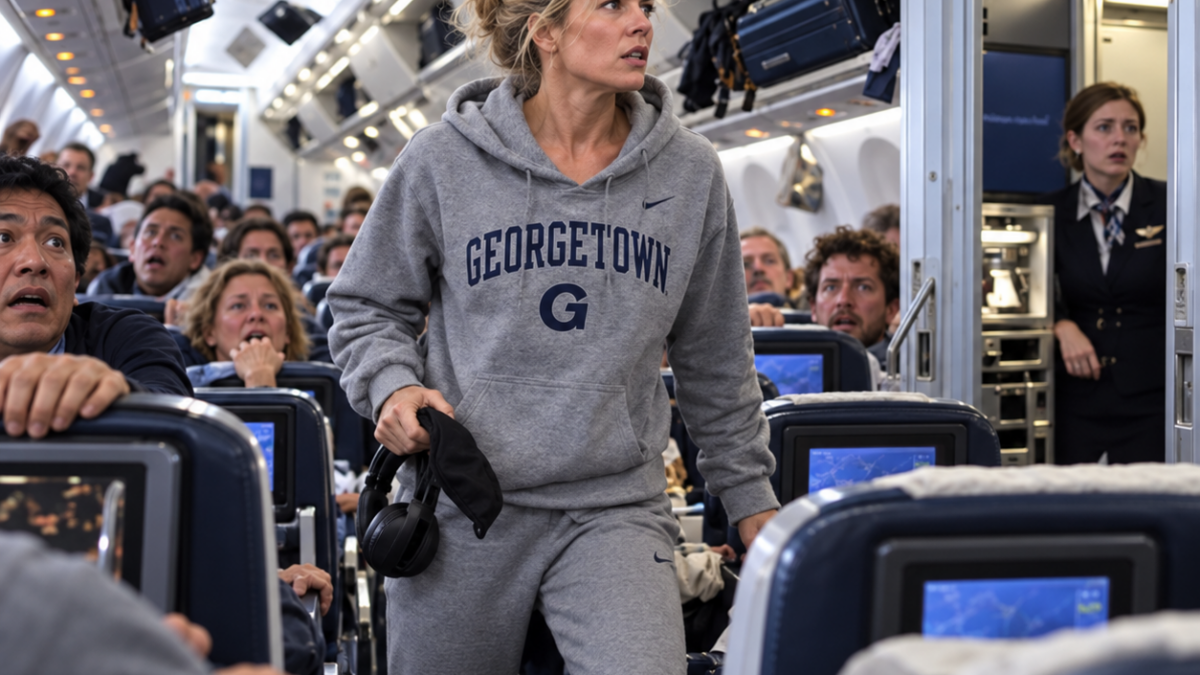
She Slept in Row 10—Then the Cabin Speaker Asked, “Any Combat Pilots Onboard?
For three hours, the exhausted woman in seat 10A slept beneath a gray college hoodie while 312 passengers crossed the Atlantic, and nobody around her knew she had spent the previous nine months flying F-15 Strike Eagles in military exercises over Europe.
Then something exploded outside the Boeing 777, the aircraft dropped violently, both cockpit pilots became critically injured, and the cabin speakers cracked open with a desperate request no passenger ever expects to hear: “If there are any military combat pilots onboard, identify yourself now.”
Major Sarah Collins took off her sleep mask, stood up in sweatpants, and walked toward a cockpit that was freezing, damaged, losing fuel, and descending over the North Atlantic—knowing that if she could not teach herself to fly three hundred tons of dying airliner in the next few minutes, her seven-year-old daughter would be waiting at JFK for a mother who was never coming home.
At 35,000 feet, Major Sarah Collins was finally asleep.
Not military sleep.
Not the shallow kind where one part of your mind remains awake listening for a radio call, a door, a generator changing pitch, or boots approaching a hallway.
Real sleep.
Heavy.
Uncontrolled.
The kind exhaustion steals from you rather than asks permission to enter.
She had been awake almost twenty hours before boarding Global Airlines Flight 802 from London Heathrow to New York.
Nine months at RAF Lakenheath had ended less than a day earlier.
Nine months of joint NATO exercises.
Alert rotations.
Briefings before dawn.
Mock combat over the North Sea.
Debriefs that lasted longer than missions.
Maintenance delays.
Weather holds.
Night flights.
The exhausting cycle of pulling G-forces hard enough to narrow vision and then sitting in fluorescent rooms pretending your body had not just been treated like something strapped to a centrifuge.
Sarah had accumulated a little over two thousand military flight hours.
Enough to stop romanticizing most of it.
People who had never flown fighters imagined speed.
Freedom.
Adrenaline.
The sound of afterburners tearing open the sky.
Sarah remembered paperwork.
Neck pain.
Sweat trapped beneath a helmet.
The metallic taste after a hard engagement.
The strange fatigue that came after your body had spent forty minutes convinced it might need to survive something violent.
She loved flying.
That was different from believing it was glamorous.
By the time she boarded Flight 802, she wanted only one thing.
Her daughter.
Chloe was seven.
Missing two front teeth.
Obsessed with horses despite never having been near one larger than a carousel pony.
She had called Sarah from New York the night before.
“Are you really coming tomorrow?”
PART2:
“I’m really coming tomorrow.”
“Promise?”
“Promise.”
“No Air Force changing its mind?”
“No Air Force changing its mind.”
“You always say that.”
Sarah had closed her eyes.
Because children remember disappointments more clearly than adults remember excuses.
“Chloe.”
“Yeah?”
“When you wake up tomorrow, I’ll already be over the ocean.”
There had been a pause.
Then:
“Can I wear the pink coat to the airport?”
“The one that makes you look like a marshmallow?”
“Yes.”
“Absolutely.”
Chloe giggled.
That sound had stayed with Sarah while she packed.
It was the sound she carried through Heathrow.
Through security.
Through the lounge.
Through boarding.
Seat 10A.
Bulkhead.
Premium economy.
Window.
Perfect.
She stuffed her heavy combat boots into the overhead compartment and changed into gray sweatpants before boarding.
Oversized faded college hoodie.
Hair pulled loosely back.
No makeup.
No rank.
No flight suit.
No one looking at her would have guessed Major Collins spent her working life operating a fighter designed to cross the sky faster than most people could imagine.
That was exactly what she wanted.
The man beside her introduced himself as Arthur Benton.
Mid-fifties.
Corporate executive.
Perfect navy blazer.
Wedding ring.
Laptop open before boarding doors closed.
He had already complained about seat power, Wi-Fi, boarding delays, and the temperature.
Sarah nodded politely.
Put on noise-canceling headphones.
Pulled a black sleep mask over her eyes.
Arthur stopped trying to talk.
Flight 802 climbed west.
The Boeing 777-300ER leveled high above the Atlantic.
Cabin lights dimmed blue.
Dinner trays disappeared.
Window shades closed.
People settled into the anonymous intimacy of long-haul flight.
Children slept sideways.
Business travelers watched movies.
Somebody several rows back snored.
Flight attendants moved quietly through aisles.
Outside, the North Atlantic was black beneath them.
Three hours passed.
Then the airplane made a sound Sarah had never heard from a commercial cabin.
A deep crack.
Not thunder.
Not turbulence.
Not a cart falling.
A structural concussion that traveled through the floor beneath her feet.
Sarah opened her eyes beneath the sleep mask before the rest of her body moved.
Half a second later, Flight 802 slammed right.
Passengers screamed.
Seat belts snapped tight against hips.
Arthur’s laptop launched sideways and struck the armrest.
Overhead compartments burst open.
A hard-shell suitcase fell into aisle.
Another struck Arthur’s shoulder.
“Jesus!”
The aircraft banked harder.
Thirty degrees.
Then more.
Loose objects slid.
A champagne glass from business class shattered somewhere ahead.
The cabin lights flickered.
Went dark.
Emergency lighting came on harsh white.
Sarah ripped her sleep mask away.
Her headphones dropped around her neck.
The Boeing shuddered.
Not ordinary turbulence.
A rhythmic vibration.
Deep.
Mechanical.
Wrong.
Sarah’s brain changed state instantly.
Sleep vanished.
She smelled ozone.
Burned insulation.
Then something sharper beneath it.
Fuel.
Her stomach tightened.
The floor angle increased.
A young flight attendant near the bulkhead grabbed a galley handle with both hands.
Her name tag said JESSICA.
She looked terrified.
Sarah stared toward the right side of the aircraft.
The vibration intensified.
Then the airplane dropped.
People screamed louder.
A woman shouted for God.
A child began wailing.
Arthur grabbed Sarah’s forearm.
“We’re going down.”
Sarah ignored him.
Her eyes tracked cabin.
No oxygen masks yet.
Pressure change in ears, but not enough for full deployment—or system had not triggered.
Cold air began creeping in from forward cabin.
Something had happened near the front.
Then came the chime.
The public-address system clicked.
Static.
Breathing.
Not the measured voice of a captain.
A man.
Panicked.
“Ladies and gentlemen…”
A pause.
The aircraft shook again.
“Please remain seated.”
No one did emotionally.
“If there are any pilots onboard—”
Sarah’s eyes lifted.
“Any military-trained pilots…”
Another burst of static.
“Specifically combat pilots…”
Arthur stopped breathing beside her.
“Please ring your call bell immediately.”
Silence lasted perhaps one second.
Then panic exploded.
People began looking around.
Calling.
Crying.
Someone several rows behind shouted:
“I’m a private pilot!”
Another voice:
“I fly Cessnas!”
Jessica’s hands shook so hard she nearly dropped the interphone.
Then the PA voice came again.
“I repeat—any military combat pilot onboard, identify yourself immediately. We have a severe emergency on the flight deck.”
Arthur slowly turned toward Sarah.
He did not know.
But maybe something about her face had changed.
She did not press call button.
There was no time.
Sarah unbuckled.
Arthur grabbed her sleeve.
“What are you doing?”
“Let go.”
“What?”
“Let go of me.”
He released instantly.
Sarah stood.
The floor tilted beneath her.
She braced against seatbacks.
Jessica saw her.
“Ma’am, sit down!”
Sarah grabbed the bulkhead.
“Jessica.”
“How do you know—”
“Your badge.”
Another violent roll threw them sideways.
Sarah caught Jessica’s shoulders.
“Look at me.”
Jessica’s eyes locked.
“I’m a major in the United States Air Force.”
The flight attendant stared.
“I fly F-15s.”
Jessica’s mouth opened.
“Take me to the cockpit.”
Everything about Sarah changed when she said it.
Not louder.
Not dramatic.
The voice simply stopped carrying uncertainty.
Jessica nodded.
“Yes.”
She pulled herself along galley.
Sarah followed.
Behind them, Arthur sat frozen.
The woman who had slept beside him for three hours was gone.
The walk from row 10 to the cockpit lasted seconds.
It felt longer.
The airplane was in a steep slip.
Sarah could feel it through her feet.
The body told her what instruments would later confirm.
Unequal thrust.
Damaged control.
Something pulling hard right.
Jessica reached reinforced cockpit door.
Entered code.
The lock released.
She pushed.
Cold exploded outward.
The cockpit was chaos.
The left windshield had not disappeared completely.
It had shattered into a white spiderweb.
At the center, a hole no larger than a fist allowed outside air to scream through.
At altitude, that small opening was enough to turn cockpit into freezer.
Captain Robert Henderson was slumped forward.
Blood across forehead.
Partially frozen along one cheek.
His harness still fastened.
His hands no longer on controls.
First Officer Mark Jenkins sat right seat.
Conscious.
Barely.
His left arm hung wrong.
Shoulder or upper arm injured.
Oxygen mask covered face.
One hand fought control column.
Warning lights filled panels.
Red.
Amber.
Master caution.
Master warning.
Messages scrolling faster than Sarah could process.
The aircraft rolled again.
Jenkins groaned.
“Help.”
Sarah did not ask permission.
“Jessica!”
“Yes!”
“Get captain out.”
“What?”
“Now.”
Together they unfastened Henderson.
He was heavy.
Dead weight becomes different physics.
Jessica grabbed beneath arms.
Sarah pulled from center.
The Boeing shuddered.
They dragged captain backward onto floor behind cockpit.
Blood smeared.
Sarah checked quickly.
Pulse.
Breathing.
Alive.
“Get him oxygen.”
“Yes.”
“Warm him.”
Jessica nodded.
“Do not let passengers enter here.”
Sarah climbed into left seat.
Captain’s seat.
She strapped in.
Emergency oxygen mask.
Tightened.
Then looked right.
“Mark.”
Jenkins barely turned.
“Mark, look at me.”
His eyes focused.
For one second.
“Do you have aircraft?”
He shook head.
“Right engine…”
Breath.
“Gone.”
“Uncontained failure.”
“Hydraulics…”
His speech broke.
“Bleeding.”
“What about controls?”
“Roll…”
His grip loosened.
“I can’t…”
Sarah reached control column.
“Mark.”
His head fell back.
Unconscious.
Sarah was alone.
A fighter pilot.
In a Boeing 777.
Those two facts sounded related only to people who had never sat in either cockpit.
An F-15 reacts like a nervous animal.
Precise.
Violent.
Immediate.
A pilot thinks, and aircraft almost seems to move before muscles finish command.
A widebody airliner is different.
Heavy.
Stable.
Designed around systems, automation, redundancy, procedure, and crews trained specifically for that machine.
Sarah knew flight.
Aerodynamics.
Energy.
Emergency thinking.
She did not know every Boeing system.
That terrified her more than she let herself admit.
She put both hands on controls.
The column felt wrong.
Heavy.
The aircraft wanted right.
She looked primary flight display.
Altitude already below twenty thousand.
Descending.
Bank right.
Airspeed high enough to live.
Not enough margin to waste.
Sarah pressed left rudder.
More.
Control response sluggish.
Hydraulics damaged.
She brought left thrust up slightly.
The surviving engine answered.
The yaw worsened.
“Okay.”
She spoke into oxygen mask.
“Okay, big girl.”
The words were for her.
“Tell me what you’ve got.”
Radio.
She reached.
“Mayday, mayday, mayday.”
Static.
“Global 802 Heavy.”
“We have an uncontained right-engine failure, cockpit damage, flight crew incapacitated.”
She swallowed.
“This is United States Air Force Major Sarah Collins operating the aircraft.”
“Request immediate emergency vectors.”
Three seconds.
Nothing.
Three seconds is an eternity when descending.
Then:
“Global 802 Heavy, Shannon Oceanic Control.”
Irish accent.
Calm.
Thank God.
“We read your mayday.”
“Radar indicates rapid descent.”
“Say status.”
Sarah shifted pressure on controls.
“Right engine failed.”
“Partial hydraulics.”
“Severe roll tendency.”
“Captain unconscious.”
“First officer unconscious.”
“Fuel system appears compromised.”
“I need nearest suitable runway.”
The controller paused.
“Global 802, standby.”
Sarah stared ahead.
The cracked windshield had become white blur.
Ice forming around damage.
She glanced fuel.
Something wrong.
The numbers were changing too fast.
A leak.
Engine failure had damaged wing or lines.
Fuel bleeding away.
Controller returned.
“Global 802, nearest diversion options limited.”
He offered routes.
Distances.
Sarah did quick energy math.
The kind fighter pilots live by.
Altitude.
Distance.
Fuel.
Drag.
Descent.
None looked comfortable.
“I’m losing fuel.”
“Say again?”
“Fuel leak.”
She checked.
“Significant.”
Another warning.
Sarah looked left engine.
Still running.
But fuel and drag meant normal profile was impossible.
She reduced power.
The 777 sank faster.
Behind cockpit, passengers could feel engines change.
Screaming rose.
Sarah blocked it.
Not because she did not care.
Because she cared too much.
Three hundred twelve people.
If she let them become faces, there would be too many.
She needed them to be weight.
Energy.
Runway requirement.
Mass.
Numbers.
For now.
Humanity later.
“Shannon.”
“Go ahead, 802.”
“I need best reachable runway based on current glide potential.”
“Global 802, Keflavik available but weather severe.”
“How severe?”
A pause.
“Snow squall.”
“Visibility below one kilometer.”
“Winds northerly forty knots, gusting sixty.”
Sarah closed eyes for fraction.
Crosswind.
Icy runway.
Damaged controls.
Single engine.
Fuel leak.
Of course.
“What runway?”
Controller answered.
Sarah pictured geometry.
Then:
“Tell Keflavik to prepare everything.”
“Fire.”
“Medical.”
“Longest runway.”
“And keep every light on.”
“Global 802, understood.”
Sarah reduced thrust farther.
The cabin changed.
When a large airliner loses engine noise, silence is not peaceful.
It feels unnatural.
A machine that size should roar.
Now there was wind.
Rattling.
Screaming from damaged cockpit.
Sarah pitched for glide.
The Boeing descended.
Her arms began burning.
No fighter maneuver had ever required this kind of sustained control force.
Muscle against damaged systems.
She adjusted.
Cross-controlled slightly to counter asymmetric drag.
The airplane did not like it.
Metal groaned.
Sarah remembered another cockpit.
Afghanistan.
Her Strike Eagle damaged.
One control surface compromised after hostile fire.
Warning tones.
A mountain ridge filling canopy.
She had used rudder and stick against each other, ugly and inefficient, keeping aircraft flying long enough to escape terrain.
Her instructor years earlier had called it “making physics negotiate.”
Now she needed three hundred tons to negotiate.
She held.
The fuel leak continued.
Altitude dropped.
Keflavik still distant.
Sarah calculated.
Then recalculated.
No miracle number appeared.
“Shannon.”
“Global 802.”
“I may arrive with little or no useful thrust.”
“Understood.”
“I’m going to maximize glide.”
The controller’s voice remained steady.
“Roger.”
In cabin, Jessica had strapped Captain Henderson onto galley floor as securely as possible.
A passenger who identified himself as physician helped.
The captain’s breathing continued.
First officer remained cockpit right seat, unconscious but harnessed.
Arthur Benton sat in 10B, his crushed laptop under shoes.
He stared toward cockpit door.
Nobody around him knew what was happening.
Flight attendant moved aisle shouting instructions.
Seat belts.
Brace.
Remain seated.
A little girl across aisle asked her mother:
“Who went up there?”
Her mother had no answer.
Arthur did.
“The woman next to me.”
He said it quietly.
“What?”
Arthur looked at row 10A.
Empty.
“She was asleep.”
That seemed impossible now.
In cockpit, Sarah saw ocean through breaks in cloud.
Black.
Huge.
Indifferent.
Her daughter appeared uninvited in mind.
Pink coat.
Missing teeth.
Sarah forced image away.
Not now.
She could not think:
I have to live for Chloe.
Too emotional.
Instead:
Airspeed.
Altitude.
Heading.
Energy.
Wind.
Runway.
She would get back to Chloe through numbers.
An alarm sounded.
Stabilizer.
The control column changed pressure unexpectedly.
Nose began moving wrong direction.
Sarah saw trim wheel motion.
“Stop.”
Automatic system was trying to correct using compromised information.
She fought.
The aircraft fought harder.
Her shoulders screamed.
“No.”
One hand left column for switches.
She disabled automatic trim intervention.
The wheel stopped.
Now she had even less assistance.
Good.
At least the enemy was honest.
Wind.
Drag.
Gravity.
She could work with those.
Automation misreading reality could kill them.
Altitude fell through ten thousand.
She descended into weather.
Cloud swallowed everything.
Turbulence slammed airframe.
The first giant gust hit left side.
Sarah’s head snapped against seat.
She grunted.
Held.
A second gust.
Airspeed fluctuated.
She corrected.
No overcontrol.
That is how pilots die in damaged aircraft.
Chasing every movement.
Let machine move.
Correct trend.
Sarah breathed.
“Easy.”
Another gust.
“Easy.”
The 777 groaned.
Snow started striking damaged windshield.
The temperature inside cockpit was brutal.
Sarah’s fingertips numb despite adrenaline.
Sweat beneath hoodie.
Cold on face.
Absurd combination.
Keflavik Tower came on frequency.
“Global 802 Heavy, radar contact.”
Sarah almost laughed from relief.
“How far?”
“Twenty-two miles.”
“Field conditions?”
“Runway plowed but contaminated.”
“Crosswind remains severe.”
“Emergency services staged.”
Sarah scanned systems.
Landing gear.
Hydraulics.
She needed gear later.
Flaps?
Partial function uncertain.
Every configuration change risked something not returning.
She kept aircraft clean longer.
Ten miles.
Five thousand feet.
The runway environment remained invisible.
Snow.
Gray.
Nothing.
“Global 802, you are left of final.”
Sarah corrected.
Crosswind shoved.
She crabbed.
“Three miles.”
No lights.
Then a flicker.
Rabbit lights.
Gone.
Back.
Sarah’s heart slammed.
“There.”
She whispered.
She had runway.
Not centered.
But runway existed.
“Global 802, cleared to land.”
As if she might choose somewhere else.
Sarah reached landing gear lever.
Pulled.
Lowered.
Hydraulic pumps groaned.
Indicator:
nose green.
Left main green.
Right main red.
Her stomach dropped.
“No.”
She recycled? Too little time.
Alternative extension.
She knew general concept.
Emergency gravity/mechanical release.
Different location than fighter.
She searched labels.
Seconds.
“Two miles.”
Sarah found guarded panel.
Activated.
A heavy mechanical sound.
Right gear changed.
Red.
Then amber.
Not locked.
“Come on.”
She could feel aircraft drag increasing.
Sink accelerated.
Right main hung but not fully locked.
If it folded on contact, catastrophe.
Altitude shrinking.
Sarah thought not in words but forces.
Why not lock?
Side load.
Wind.
Maybe strut hanging against mechanism.
Could aerodynamic change seat it?
In fighter training, aggressive slip sometimes freed stuck hardware.
A 777 was not F-15.
Trying fighter movement this low in heavy damaged airliner was insanity.
Not trying meant landing on uncertain gear.
Sarah looked at altimeter.
Looked runway.
Looked gear light.
“Hold together.”
At a few hundred feet, she deliberately changed yaw.
Not wildly.
Enough.
A strong cross-control input loaded aircraft sideways.
Passengers screamed.
Bags fell from already damaged overhead bins.
Sarah held.
Wind struck belly and gear from different angle.
She heard nothing at first.
Then a metallic clunk through airframe.
Indicator changed.
Right main green.
Sarah almost sobbed.
No time.
Now airplane was misaligned.
Runway under them.
Crosswind.
Sideways crab.
She needed straighten just before touchdown.
Too early and wind pushed them off.
Too late and landing gear took lateral load it might not survive.
Fighter pilots call many things timing problems.
This was timing problem with hundreds of lives.
Fifty feet.
Automated voice called.
Sarah’s hands tightened.
Forty.
She kicked rudder.
Opposite correction.
Aileron.
The nose came.
Slowly.
Heavy.
Thirty.
Runway lights stretched.
Twenty.
She pulled.
Not much.
Enough.
Ten.
Impact.
The left main hit first.
Hard.
Then right.
The entire aircraft slammed.
Sarah’s teeth snapped together.
Tires shrieked.
One or more blew.
The Boeing skidded.
But stayed upright.
“We’re down.”
Sarah breathed.
Then louder:
“We’re down.”
No celebration.
Still moving too fast.
Speed brakes.
Brakes.
No asymmetric reverse that might worsen yaw.
The runway was slick.
Brakes vibrated.
Anti-skid hunted.
The nose drifted.
Sarah corrected.
She could see end lights.
Too close.
Speed still high.
“Stop.”
She pushed harder.
“Come on.”
One hundred knots.
Less.
Aircraft shuddered.
Runway end came.
Snow.
Lights.
Dark beyond.
Seventy.
Fifty.
Brakes burning.
Sarah smelled heat.
Then the 777 lurched.
Slowed.
Almost sideways.
Then stopped.
The nose was less than fifty feet from red runway-end lights.
For several seconds Sarah did not move.
The wind screamed through damaged windshield.
Her hands remained frozen around control column.
She had to tell fingers to release.
One.
Then another.
Her whole body began shaking.
Not fear before.
After.
Always after.
She shut down what remained.
Fuel cutoff.
Electrical where necessary.
Fire precautions.
Then removed oxygen mask.
The cold air cut her lungs.
First Officer Jenkins was still breathing.
She looked back.
Jessica knelt near captain.
His head wrapped.
Alive.
The cockpit door opened.
Sarah stepped into cabin.
Three hundred twelve passengers were silent.
That shocked her more than screaming.
Emergency floor lights glowed.
Oxygen masks now hung in places.
Luggage everywhere.
Some people bleeding from minor impacts.
Others gripping hands.
Nobody moved.
Jessica looked up.
“Are we…”
Her voice failed.
“Are we on the ground?”
Sarah leaned against galley wall.
Every muscle trembling.
“Yeah.”
She managed a smile.
“We’re on the ground.”
Arthur stood slowly.
He stared at her.
At sweatpants.
Gray hoodie.
Disheveled hair.
The woman who had slept beside him.
He tried to speak.
Nothing.
Then from somewhere farther back, one person clapped.
Slow.
Another joined.
Then another.
Within seconds, the cabin erupted.
Not elegant applause.
People crying.
Cheering.
Sobbing.
Holding strangers.
Sarah hated it.
And needed it.
She covered face for second.
Then remembered evacuation.
“Stay seated!”
Her voice cut through.
“We are not done until rescue crews say we’re done.”
The applause stopped.
Training returned.
Fire crews surrounded aircraft.
Rescue vehicles flashed through blowing snow.
Foam near overheated gear.
Paramedics entered.
A man in heavy cold-weather gear shouted toward cockpit:
“Who was flying?”
Jessica pointed.
Sarah sat in jump seat holding a paper cup of water.
It shook so violently water spilled.
“I was.”
The paramedic stared.
“You?”
Sarah nodded.
He looked at cockpit.
At pilots.
At her hoodie.
Then shook head.
“Lady…”
He seemed to abandon whatever sentence he planned.
“Okay.”
It was the first sensible thing anyone had said.
Sarah laughed.
Then started crying.
Quietly.
Not because frightened now.
Because she had landed.
Because Chloe existed again.
The rest became process.
Statements.
Medical checks.
Crew debrief.
Passenger interviews.
Airline representatives.
Military calls.
Investigators.
Sarah repeated sequence until words stopped sounding real.
Explosion.
Right engine.
Cockpit damage.
Captain incapacitated.
First officer injured.
Fuel leak.
Manual control.
Landing.
Again.
Again.
Again.
At some point someone handed her borrowed winter coat.
Another officer brought coffee.
She did not drink.
Arthur found her in terminal holding room.
His shoulder bruised from falling suitcase.
He stood awkwardly.
“Major Collins.”
Sarah looked.
“Sarah.”
“Sarah.”
He sat.
“I owe you an apology.”
“For what?”
“I spent three hours complaining about Wi-Fi.”
She stared.
Then laughed for first genuine time since landing.
Arthur smiled.
“I thought that might sound stupid.”
“It does.”
“I also woke you once asking if you wanted charger.”
“I remember.”
“I had no idea.”
“That was point.”
He nodded.
Then looked down.
“I have two sons.”
Sarah waited.
“I kept thinking about them while we were going down.”
“Good reason.”
“What were you thinking?”
Sarah knew expected answer.
My daughter.
Love.
Home.
She said:
“Airspeed.”
Arthur blinked.
“What?”
“Airspeed.”
“Altitude.”
“Bank.”
“Fuel.”
“Distance.”
He nodded slowly.
“Your daughter came later?”
Sarah looked away.
“Yes.”
That answer stayed with him.
Twenty-four hours later, she boarded military transport to New York.
The airline offered private jet.
She declined.
Military needed move her anyway.
She slept none of flight.
Every vibration woke her.
Every change in engine pitch made shoulders tighten.
That annoyed her.
Combat pilots are not supposed to be afraid of airplanes.
An irrational belief.
Training does not remove nervous system.
She knew that intellectually.
Body had not received memo.
At JFK, sliding doors opened.
Crowds.
Cameras had somehow found story already.
Phones raised.
Reporters beyond barriers.
Sarah saw none.
She saw pink.
A child in ridiculous puffy coat near baggage claim.
Holding Aunt Megan’s hand.
Chloe saw her.
For half second her face froze.
Then:
“Mommy!”
Sarah dropped duffel.
Went to knees.
Chloe ran.
Hit her hard enough to almost knock her over.
Sarah wrapped both arms.
Buried face in daughter’s hair.
Strawberry shampoo.
Exactly.
That smell broke her more completely than crashing an airplane ever could.
She cried into Chloe’s coat.
Not dignified.
Not military.
Not controlled.
Chloe pulled back.
“Why are you crying?”
Sarah laughed through tears.
“Because I’m happy.”
“You’re squeezing me.”
“I know.”
“Too hard.”
“I know.”
“Mom.”
Sarah loosened.
A little.
Chloe touched face.
“Aunt Megan said your plane broke.”
Sarah glanced at sister.
Megan shrugged apologetically.
“Your plane broke?”
“Yes.”
“Did you fix it?”
Sarah started laughing again.
“No.”
“Not exactly.”
Chloe considered.
“Did you fly it?”
“Yes.”
“Was it a fighter jet?”
“No.”
“It was huge.”
Chloe’s eyes widened.
“Cool.”
Adults had spent twenty-four hours using words like catastrophic.
Heroic.
Unprecedented.
Chloe landed on cool.
Sarah preferred that.
News cameras waited.
She ignored.
The first official statement came later.
Investigation.
Crew survival.
Passenger injuries mostly minor to moderate despite violent event.
Captain Henderson recovered.
First Officer Jenkins required surgery for shoulder and arm injuries but survived.
Both eventually contacted Sarah.
Henderson said:
“You sat in my seat.”
Sarah replied:
“You weren’t using it.”
He laughed despite stitches.
Jenkins was more emotional.
“I remember you asking if I had jet.”
“You said no.”
“I don’t remember after.”
“Probably for best.”
Then he said:
“Thank you.”
Sarah had no clever answer.
“You’re welcome.”
That was enough.
The press turned her into something she barely recognized.
“ROW 10 HERO.”
“FIGHTER PILOT SAVES 312.”
“THE WOMAN WHO LANDED THE IMPOSSIBLE FLIGHT.”
She disliked all of them.
First, because no event that complex belongs to one person.
Jessica had protected captain.
Controllers vectored.
Emergency crews staged.
Flight attendants kept cabin controlled.
Airframe held together.
Maintenance design redundancies bought time.
Weather broke just enough to show runway lights.
Hundreds of things mattered.
Second, because people kept saying fearless.
Sarah had been terrified.
Not continuously.
There had not been time.
But yes.
Terrified.
At the moment right gear stayed amber, she had felt cold certainty:
We may die.
Then she acted anyway.
That is not absence of fear.
That is profession.
Three days later, Chloe found Sarah watching footage on television.
Animated reconstruction.
A digital Boeing sliding through snow.
Dramatic music.
Chloe climbed onto couch.
“Is that your plane?”
“Yes.”
“Did it really do that?”
“Kind of.”
“You look mad.”
“I hate television graphics.”
“Why?”
“They make everything look cooler.”
Chloe leaned against her.
“Was it scary?”
Sarah stared screen.
“Yes.”
Chloe went quiet.
“Did you think you’d die?”
Children ask directly where adults circle.
Sarah turned off television.
“Yes.”
“What did you do?”
“Kept flying.”
Chloe looked at hands.
Then:
“Were you thinking about me?”
Sarah could have lied sweetly.
“Yes every second.”
Instead:
“Not while I was landing.”
Chloe frowned.
Sarah touched cheek.
“I needed my whole brain for airplane.”
“So you forgot me?”
“No.”
“You were why I needed to finish.”
“But I couldn’t think about you and do job at same time.”
Chloe considered.
Then nodded.
“That makes sense.”
It did to seven-year-old.
Adults struggled more.
Months later, Sarah testified to review board.
They asked why she did not respond using call button.
“No time.”
Why she assumed cockpit control without commercial type rating.
“Both pilots were incapacitated.”
Why she chose aggressive control inputs in final approach.
“Because right main landing gear was not indicating locked and time available was measured in seconds.”
Why she did not attempt alternative diversion.
“Energy state did not support it.”
Every answer simple.
Then investigator asked:
“Major, what made you believe you could land aircraft?”
Sarah paused.
“I didn’t.”
The room became still.
“I believed somebody had to try.”
That quote went everywhere.
She hated that too.
Because it sounded inspiring.
Truth was uglier.
When no perfect option exists, professionals choose least impossible.
Sarah did not believe.
She calculated.
Acted.
Adjusted.
Repeated.
Military eventually decorated her.
Airline honored.
Passengers invited.
Sarah accepted ceremony because refusing would make bigger story.
Chloe sat front row in pink coat though weather warm because she had decided it was lucky.
Sarah received citation.
Applause.
Then went home and made macaroni.
That mattered more.
Arthur Benton sent Christmas card every year afterward.
First:
Wi-Fi was excellent. Flight otherwise disappointing.
Sarah laughed so hard she kept it.
Second:
Still not complaining on airplanes.
Third:
Okay, one complaint. Pretzels terrible.
They became friends in odd distant way.
Jessica left airline six months after accident.
Not because trauma alone.
She had already considered nursing school.
The crash accelerated.
Sarah attended graduation years later.
Jessica hugged.
“You yelled at me.”
“You were frozen.”
“You terrified me.”
“You opened cockpit.”
“I still hear your voice.”
“Sorry.”
“No.”
Jessica smiled.
“Thank you.”
Captain Henderson returned to flying after recovery but never that exact route.
First Officer Jenkins took longer.
Sarah did too.
That surprised everyone.
She could fly an F-15 after incident?
Technically yes.
Emotionally not immediately.
The first time she strapped into Strike Eagle again, cockpit felt small.
Too small.
She heard phantom crack.
Smelled fuel that was not there.
Her breathing changed.
Crew chief noticed.
“Major?”
“I’m good.”
Lie.
She sat ten minutes.
Then shut down.
Climbed out.
Command did not punish.
Flight surgeon recommended time.
Sarah hated every second.
She had survived war, emergency landing, training.
And now an intact aircraft on clear day had defeated her.
That is how trauma humiliates.
Not logical.
Six weeks.
Simulator.
Therapy.
Gradual exposure.
She returned.
First flight uneventful.
When wheels touched base runway, Sarah cried inside oxygen mask.
Nobody saw.
Good.
She later talked openly with pilots about it.
That may have mattered more than landing Flight 802.
Because military aviation culture respects competence so much people sometimes hide anything that looks like fracture.
Sarah told younger pilots:
“You can perform perfectly and still be injured by performance.”
“You can save everyone and still need help.”
Those lines did not go viral.
They should have.
She became instructor eventually.
Not because accident retired her from combat immediately.
Because she discovered teaching felt useful.
Energy management.
Emergency decision-making.
Loss of automation.
Cross-platform thinking.
But she also taught humility:
“Your fighter experience does not make you airline pilot.”
Flight 802 had been survival circumstance.
Not proof skills transfer cleanly.
What transferred were principles.
Airmanship.
Energy.
Control.
Prioritization.
Stress management.
The rest was improvisation and luck.
She repeated that whenever journalists called it “fighter pilot lands airliner.”
Airline pilots deserved their expertise too.
Captain Henderson once told her:
“You know everybody wants us to be offended.”
“Why?”
“Because you landed our airplane.”
Sarah laughed.
“Your airplane tried to kill me.”
“Fair.”
He became guest speaker in one class.
Standing beside Sarah:
“She saved us.”
Then:
“And none of you should watch story and believe a fighter pilot can simply replace a 777 crew.”
Students laughed.
“Airliners are systems environments.”
“Different training.”
“Different procedures.”
“Different emergencies.”
Sarah added:
“But lift still lift.”
Henderson:
“Unfortunately.”
Chloe grew.
At ten, she decided mothers flying combat jets was normal.
At twelve, she became embarrassed by strangers recognizing Sarah.
At fourteen, she found old Row 10 articles online.
“Mom.”
“What?”
“You look terrible in this picture.”
Sarah stared.
Borrowed coat.
Exhausted eyes.
Hair wild.
“Thank you.”
“I’m serious.”
“I had a day.”
Chloe scrolled.
“Did they really say you broke laws of aerodynamics?”
“Yes.”
“That’s stupid.”
“Extremely.”
“Physics doesn’t care who you are.”
Sarah smiled.
“My child.”
Chloe kept reading.
Then became quiet.
“You almost died.”
Sarah watched.
This understanding was different from age seven.
“Yes.”
“You never really told me.”
“You were little.”
“I’m not now.”
No.
Sarah sat beside.
Told story.
Not media version.
Fear.
Cold.
First officer unconscious.
Landing gear light.
Runway end.
Hands shaking afterward.
Chloe listened.
At end:
“Why didn’t you think about me?”
Sarah recognized wound.
“I did.”
“You said you didn’t.”
“Not while doing final landing.”
“Why?”
“Because loving you enough meant not thinking about losing you.”
Chloe’s eyes filled.
Sarah continued:
“If I had let myself imagine you waiting at JFK, I might have frozen.”
“So I put you somewhere safe in my head.”
“Then flew.”
Chloe cried.
Sarah did too.
“That sounds horrible.”
“It was.”
“Would you do it again?”
“If needed.”
“No.”
“If needed.”
Chloe hated answer.
Years later understood.
Sarah kept seat 10A boarding pass.
Not displayed.
Inside flight log.
The aircraft itself was eventually repaired? Depending damage possibly written off. Source doesn’t say. Better not invent too much. Maybe decommissioned after investigation. Could say airframe became subject to long investigation and didn’t return to service quickly; not relevant.
She never bought lucky charms.
Never believed seat 10 special.
But every time assigned row 10 later, she laughed.
Once a gate agent recognized her.
“Major Collins?”
“Yes.”
“I can upgrade you.”
“No.”
“Are you sure?”
Sarah looked at boarding pass.
10A.
“Absolutely.”
She sat.
Put headphones on.
Did not sleep.
Not that flight.
Eventually yes.
The first time she truly slept over Atlantic again happened almost four years later.
She woke naturally.
No explosion.
No alarms.
Just breakfast cart.
She sat still.
Realized.
Then smiled.
Recovery sometimes looks boring.
That is how you know it is good.
Major Collins eventually retired from active-duty flying.
No dramatic final mission.
A training sortie.
Clear weather.
Routine landing.
Her squadron sprayed water arch? Maybe not. She taxied in, climbed down, hugged maintainers.
Chloe was there.
Now older.
No pink coat.
Sarah touched aircraft skin.
Years of life.
Then walked away.
Not because she no longer loved flying.
Because chapters end.
She joined aviation safety work and emergency training.
The story followed.
People always asked same:
“What did you feel when PA asked for combat pilot?”
Annoyed answers developed.
“Sleepy.”
“Seriously?”
“Seriously.”
Then:
“I felt responsible.”
“Why you?”
“Because I was there.”
That was her philosophy.
Heroism, in her view, was label applied after.
In moment, there was only:
Who can help?
Who knows something?
Who moves?
On Flight 802, answer happened to be woman in 10A.
She had not boarded as savior.
She boarded as tired mother trying to get home.
That distinction mattered.
The most emotional moment was not landing.
Not applause.
Not medals.
Not press.
It was baggage claim.
Pink coat.
“Mommy!”
Because until then mission had not really ended.
Aircraft stopped.
Passengers alive.
But Sarah’s promise had been:
When you wake tomorrow, I’ll be over ocean.
And then:
I’m coming home.
Everything between row 10 and JFK was merely how hard that promise became to keep.
Years after accident, Sarah and Chloe flew together to London.
Chloe chose seat 10A for mother as joke.
Sarah looked at ticket.
“No.”
“Yes.”
“Absolutely not.”
“You’re scared?”
“Of your sense of humor.”
They boarded.
The plane climbed.
Smooth.
At cruise Chloe fell asleep first.
Sarah watched daughter.
Then window.
Atlantic below.
Black and endless.
She thought about that night.
But memory no longer grabbed throat.
Just existed.
A fact.
She pulled blanket over Chloe.
Then reclined.
Closed eyes.
For a moment she heard old PA in memory.
Any military combat pilots onboard?
Then nothing.
Engine hum.
Cabin ventilation.
Normal.
Sarah slept.
And somewhere over ocean, row 10 was just row 10 again.
That may have been the greatest landing of all.
Because the woman who had once fought a crippled Boeing through a blizzard did eventually make it home in every sense that mattered.
Not only to New York.
To her daughter.
To flying.
To sleep.
To herself.
People would always remember the combat pilot who stood up when the cabin asked for help.
Sarah remembered something smaller.
A little girl in a pink coat running across JFK.
That was why she had stood up.
Not because she believed she was fearless.
Not because she knew she could save everyone.
Because 312 people had somebody waiting.
Parents.
Children.
Spouses.
Friends.
Lives continuing beyond an airport gate.
Sarah knew what it meant to be the person somebody waited for.
So when the speaker asked whether any combat pilots were onboard, she did not raise her hand.
She simply unbuckled.
Took off her sleep mask.
And walked forward.
Because sometimes the difference between an ordinary passenger and the person everyone needs is only one sentence spoken at exactly the wrong moment:
“Is there anyone onboard who knows what to do?”
And on Flight 802, in seat 10A, there was.








