HOA Karen Bulldozed 30 Acres of My Crops for a $15M Mall—Then Learned Every Dollar She Spent Was Owed to Me
HOA Karen Bulldozed 30 Acres of My Crops for a $15M Mall—Then Learned Every Dollar She Spent Was Owed to Me.
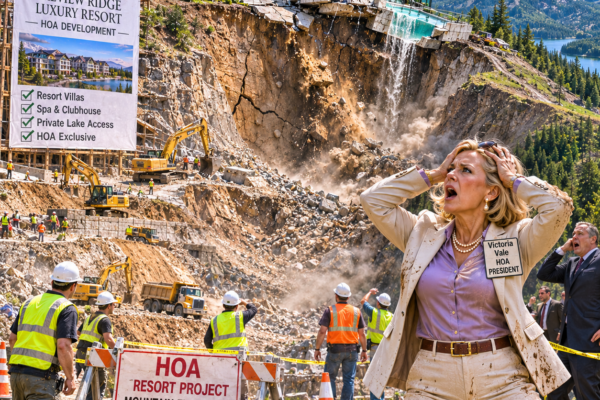
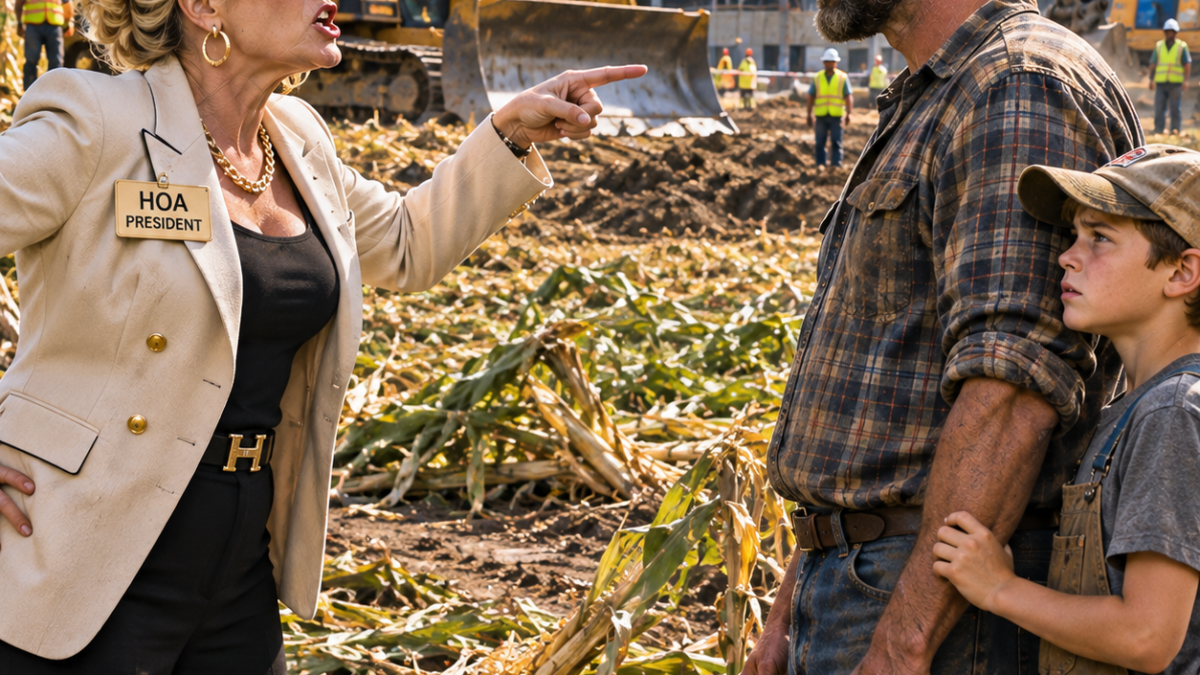
When I came home from an agricultural engineering conference and found two Caterpillar bulldozers grinding thirty acres of my father’s standing corn into Tennessee red clay, HOA president Brenda Whitfield stood on a plywood board in designer shoes, waved the blueprints for a $15 million shopping mall at me, and said, “Your father is dead, Garrett—his pathetic cornfield was scraped off the earth this morning.”
I didn’t swing at anyone, block a machine, or even raise my voice; I pulled out my phone, recorded everything, and that night opened an old filing cabinet in my father’s workshop where I found a 2008 USDA conservation easement permanently banning commercial development on all eighty-five acres and requiring violators to restore the farmland and pay for the destruction they caused.
Brenda’s husband had already poured millions into the mall, and when his lawyer warned them to stop, Brenda ordered construction to continue—so every foundation, steel beam, parking slab, fraudulent survey, forged complaint, destroyed camera, and additional dollar they spent only increased the claim that would eventually force Meridian Development to pay my family nearly fifteen million dollars for bulldozing land they never had the right to touch.
My name is Garrett Callaway.
My family has farmed eighty-five acres of Tennessee dirt since 1961.
If you are picturing wide black soil and endless flat rows like something from Iowa, that is not my place.
Our farm sits in Williamson County, about forty minutes south of Nashville, in a low valley between two wooded ridges.
The dirt is red.
Heavy.
Stubborn.
Clay-rich enough that after a summer rain it sticks to your boots until each foot feels five pounds heavier.
On early July mornings, mist collects between the ridges and settles over the crops so thick you can taste the moisture before you can see the sun.
My father, Earl Callaway, used to say that land had a language.
I was nine the first time he tried to teach it to me.
He crouched between two rows, pushed his fingers into the earth, scooped up a handful, and held it beneath his nose like a man evaluating expensive bourbon.
I laughed at him.
He looked at me.
“What?”
“You’re smelling dirt.”
“Yes.”
“Why?”
“Because dirt tells you everything, Garrett.”
I laughed harder.
He ignored me.
“Too wet, it smells one way.”
He rubbed the clay between his fingers.
“Too dry, another.”
He broke apart a small clod.
“Healthy soil has life in it.”
Then he handed the dirt to me.
“You just have to learn its language.”
At nine years old, I thought my father had finally gone strange from spending too much time alone with tractors.
At forty-two, I realized he had been teaching me the most important thing he knew.
Pay attention.
Land tells you when something is wrong.
People do too.
You just have to stop talking long enough to notice.
My grandfather had bought the first part of the farm in 1961.
My father added acreage over time until the property reached eighty-five acres.
Corn.
Soybeans.
A little hay.
Occasional vegetables near the house because my mother believed no one who owned that much dirt had an excuse to buy tomatoes at the store.
Three generations of Callaways worked those fields.
My grandfather farmed with equipment that seemed ancient even when I was a kid.
My father upgraded slowly.
Never because something was fashionable.
Only because it worked better.
He used to tell salesmen:
PART2:
“If the old one starts every morning, your new one needs a better argument than paint.”
I went to college.
Agricultural engineering.
The plan, according to everyone except me, was that I would leave.
Get a job with a major company.
Design irrigation systems.
Maybe move to Memphis.
Maybe farther.
I never seriously considered it.
There was no dramatic decision.
I graduated.
Came home.
My father left breakfast on the table the morning after I arrived.
Two eggs.
Biscuits.
Coffee.
Then he slid a notebook toward me.
“South field needs drainage work.”
That was my job interview.
I passed.
I married.
Had a son.
His name is Tucker.
Twelve years old when this happened.
Brown hair that refuses to stay combed.
Hands already rougher than most middle-school boys because every morning before school he insisted on checking irrigation lines with me.
I never forced him.
Actually, I spent half my time telling him to sleep another thirty minutes.
He refused.
The tractor was his favorite machine in the world.
Still is.
On Saturdays he rode beside me whenever work allowed.
When corn started forming, he counted ears like treasure.
“Dad.”
“Yeah?”
“This one has two.”
“Most do.”
“This one’s better.”
“How?”
“It has bigger ones.”
“You have developed an advanced scientific classification system.”
He knew sarcasm by then.
“Whatever.”
My father adored him.
Then Dad got sick.
Three years before the bulldozers.
Cancer.
It moved fast enough that the farm changed from a place with three generations working it to a place with only two before any of us were emotionally prepared.
Near the end, Dad made me promise one thing.
Not to care for Tucker.
He knew I would.
Not to keep machinery running.
He had trained me for that since childhood.
Not even to stay on the farm.
He knew that too.
He grabbed my wrist from the hospital bed.
His grip was weaker than I had ever felt it.
But his eyes were still Earl Callaway.
Clear.
Serious.
“Don’t ever let them pave this dirt, son.”
I tried to lighten it.
“Who’s paving it?”
“I’m serious.”
“So am I.”
“Not for any price.”
I nodded.
“Okay.”
“Say it.”
“I won’t let them pave it.”
“Not any of it.”
“Not any of it.”
He let go.
That was the last promise I made him.
At the time, I thought he was speaking emotionally.
Developers had been moving through Williamson County for years.
Old farmland disappearing into subdivisions.
Warehouses.
Retail centers.
You would drive a road you had known your whole life and one year there would be soybeans beside you, then the next there would be a stone entrance sign and four hundred beige houses with names like Preserve at Something.
Dad hated it.
Not because he hated people.
Because developers talked about dirt like it was empty until concrete arrived.
I assumed that was what he meant.
Keep the land.
Farm it.
Do not cash out.
I did not know he had already done something far more permanent.
Stonebridge Crossing appeared ten years before the conflict.
A developer bought roughly three hundred acres east of us.
Former farmland.
Then suddenly:
Four hundred houses.
Clubhouse.
Pool.
Walking trails.
Three-car garages.
Decorative ponds.
An HOA.
The entrance sign was enormous.
Natural stone veneer.
Perfect landscaping.
LIVE BEAUTIFULLY.
That was what it said.
Every time I passed it in a truck with dried manure on the tires, the sign seemed to be making a personal comment.
For years, Stonebridge and our farm existed beside one another with only normal tension.
People moved near agricultural land and then discovered farms made noises.
Tractors start early.
Cows smell like cows.
Corn grows tall.
Dust moves.
Harvest equipment uses roads.
Most residents adjusted.
Some actually liked it.
Kids would stop by the fence.
Parents bought sweet corn when I sold extra.
Then Brenda Whitfield became HOA president.
I remember the first time I saw her.
White Cadillac Escalade rolling down our dirt road.
Dust behind it.
She stopped near equipment shed.
Stepped out wearing cream blazer over yoga pants, a designer belt, sunglasses large enough to cover half her face, and platinum hair that did not move even though the wind was strong enough to bend the tops of my corn.
She looked across my field like somebody evaluating a problem at a property showing.
“Mr. Callaway?”
“Garrett’s fine.”
“Brenda Whitfield.”
“I know.”
That bothered her slightly.
“President of Stonebridge Crossing HOA.”
“Congratulations.”
She missed sarcasm or ignored it.
“I wanted to speak with you about the situation.”
I looked around.
“What situation?”
She lowered sunglasses.
“Your farm.”
I thought maybe she had a drainage question.
Instead:
“The smell.”
“What smell?”
“The manure.”
“We fertilize.”
“The tractors.”
“We use tractors.”
“The dust.”
“It’s dirt.”
She tightened her mouth.
“Frankly, families paying half a million dollars for homes do not expect to look out their kitchen windows and see unmanaged agricultural land.”
I looked behind me.
Rows straight.
Fields maintained.
Grass cut around structures.
“Unmanaged?”
“The visual impact.”
“The farm was here before the houses.”
“Things change.”
“Corn doesn’t care.”
Her smile vanished.
“Everyone has a price, Mr. Callaway.”
“Even farmers.”
I looked at her.
“Maybe.”
Then:
“But you haven’t found mine.”
She returned to Escalade.
A week later, I received three HOA violation notices.
Noise violation:
Running agricultural machinery before 9:00 a.m.
Odor violation:
Application of manure and organic fertilizer.
Visual obstruction:
Corn exceeding recommended height and interfering with community sightlines.
I read the third one twice.
My corn was too tall.
On my land.
Outside Stonebridge.
I laughed.
Tucker asked why.
I showed him.
He read slowly.
“Can they tell corn how tall to grow?”
“No.”
“Then why’d they write it?”
“Good question.”
Here is the legal principle that mattered inside the story:
Stonebridge’s recorded HOA documents covered Stonebridge property.
Not my farm.
My family’s land existed decades before the subdivision.
We had never annexed into it.
Never signed its covenants.
Never paid HOA dues.
Brenda’s violation notices carried no authority over my acreage.
I could have thrown them away.
Instead, I scanned all three.
Saved PDFs.
Printed copies.
Created a folder.
Dad had always kept records.
Receipts.
Deeds.
Service manuals.
Tax documents.
He once told me:
“Memory gets foggy when money gets involved.”
So I documented.
Brenda escalated.
Heavy cream stationery.
Gold Stonebridge letterhead.
Cease agricultural operations within thirty days or face legal action for creating an environmental hazard.
Return address:
HOA clubhouse.
Signed by a real attorney named Preston Hargrove.
He had apparently started his legal career hoping to work entertainment law.
Somewhere along the way he became a man threatening farmers over corn.
I checked.
Real law license.
Real attorney.
Ridiculous demand.
I sat beneath the old oak by equipment shed reading it.
A blue jay landed above me.
Then dropped something directly onto the letter.
I stared at the white streak.
Tucker came around corner.
“What happened?”
“Legal opinion.”
“What?”
“Nothing.”
I still kept the letter.
Bagged it.
The bird contribution was not legally useful, but emotionally satisfying.
I began asking questions.
Hank Jessup lived a mile north.
Sixty-eight.
Former tobacco farmer.
Permanently sunburned.
Walked bowlegged from decades climbing equipment.
He had sold forty acres to Stonebridge four years earlier.
When I asked about Brenda, he looked away.
“She sent me letters.”
“Like these?”
I showed him.
He read.
“Pretty much.”
“Then?”
“More.”
“What kind?”
“Noise.”
“Smell.”
“Water.”
“Health department came after somebody complained about livestock.”
He rubbed hands together.
“I never proved it was her.”
“You think it was.”
He gave me a look.
“Garrett.”
Fair.
“Why’d you sell?”
He stared toward what used to be his farm.
Now rooftops.
“I got tired.”
That answer stayed.
Not bought.
Not convinced.
Tired.
“They paid fair?”
Hank laughed without humor.
“One-ten.”
I knew what his land had been worth.
“At least four times that.”
“Probably more.”
He leaned forward.
“Don’t be me.”
I started counting.
Hank not alone.
Brenda had targeted four other farmers over previous six years.
Same pattern.
Official letters.
Complaints.
Code visits.
Environmental scare language.
Pressure.
Low offers.
Three sold.
One moved.
Then I understood Brenda wasn’t irritated by my corn.
She wanted my land.
But I still did not know why.
Her next move was a “Community Health and Wellness Forum.”
I heard about it from hardware-store cashier who lived in Stonebridge.
I went.
No invitation.
Nobody stopped me.
Clubhouse smelled like vanilla candles.
Brenda stood in white dress beside projector.
Slide:
PROTECTING OUR FAMILIES FROM AGRICULTURAL TOXINS.
Stock photographs.
Wilted crops.
Children wearing masks.
Graphs without sources.
A giant red headline:
YOUR CHILDREN ARE AT RISK.
I sat back row.
Photographed every slide.
Took notes.
She cited pesticide data without naming study.
Talked groundwater.
Air quality.
Development standards.
At no point did she mention that I had been farming organically for eight years.
Two days later I sent certified letter to entire Stonebridge board.
Not just Brenda.
Attached:
1961 property plat.
University of Tennessee Extension letter explaining my production methods.
Records showing no synthetic pesticide use.
A polite warning about publishing false health claims.
Brenda tore the letter in half in front of secretary.
Secretary later told me.
According to her:
“I don’t read letters from dirt farmers.”
That sentence turned out to matter less legally than emotionally.
But it told me her strategy.
Brenda did not want facts.
She wanted pressure.
Then county showed up.
My irrigation system needed upgrades.
Old aluminum sections had started failing.
I spent months planning replacement with PVC.
Middle of work, inspector arrived carrying stop-work order.
Groundwater contamination complaint.
Signed petition from forty-seven Stonebridge residents.
My pump stopped.
The silence was wrong.
I had heard that pump every summer for three decades.
Without it, field sounded hollow.
July heat was brutal.
Corn needed water.
Ten days without irrigation could destroy crop.
I obtained petition.
Picked five names.
Knocked on doors that evening.
Four said they had never signed.
The fifth, Donna, kindergarten teacher, stared at signature.
“That isn’t mine.”
“You sure?”
She laughed.
“I’ve been writing my name forty years.”
She signed real signature on separate sheet.
Not close.
I documented.
Names.
Addresses.
Dates.
Photographs.
Other residents eventually confirmed.
The petition contained forged signatures.
That changed tone entirely.
Someone had used homeowners’ names on government complaint.
I made three copies.
One for me.
One off-site.
One intended for counsel if needed.
Brenda went public.
Williamson County Herald ran article.
LOCAL FARM RAISES CONTAMINATION CONCERNS.
Photograph:
Brenda beside creek.
Perfect sunlight.
White linen.
Designer scarf.
Expression of grave concern.
No scientist quoted.
No county expert.
No test results.
I hired Nashville lab.
Twelve creek samples.
Three wells.
Clean.
Not marginally.
Clean.
I sent report to county environmental office.
Included signature evidence.
Also editor.
Short note:
You may want to test the water before publishing another story based on one person’s claims.
Forty-eight hours later stop order pulled.
I restarted irrigation.
Corn survived.
Barely.
Outer rows yellowed.
Soil cracked.
I thought maybe Brenda had finally pushed too far.
Wrong.
Discovery later produced phone call.
Brenda to her husband Dale.
“Fine.”
Then:
“We’ll do this the expensive way.”
I did not hear it then.
I learned it months later.
The Agricultural Engineering Conference in Knoxville had been on my calendar most of year.
Three days.
Soil conservation.
Drone crop monitoring.
Irrigation controllers.
Tucker stayed with Hank.
First afternoon, I sat in panel about cover-crop rotation.
Phone vibrated.
Tucker.
I stepped into hallway.
“Hey, buddy.”
“Dad.”
His voice changed my body instantly.
Thin.
Tight.
“What happened?”
“There are machines in the field.”
“What machines?”
“Big ones.”
“How big?”
“Like bulldozers.”
My stomach dropped.
“Who?”
“There’s that lady.”
“Brenda?”
“Yeah.”
“Where are you?”
“By Hank’s truck.”
“Stay with Hank.”
“Dad—”
“Do not go near the machines.”
I reached truck in ninety seconds.
Knoxville to Williamson County should have taken close to three hours.
I made it in around two and a half.
That drive is blur.
Hands.
Traffic.
Phone calls.
I called Hank.
He described excavators.
Bulldozers.
Crews.
I called sheriff before arriving.
Then road turned.
I saw field.
Even before I reached driveway, I knew.
Thirty acres.
Gone.
Silver Queen corn.
Rows my father had helped map.
Some healthiest crop we had grown.
Not harvested.
Not damaged.
Erased.
Two Caterpillar D8 bulldozers scraped soil.
Dump truck half-filled with crushed stalks and dirt.
Workers in hard hats moved across bare ground.
The smell hit.
Broken vegetation has a sweet smell.
Mixed with diesel and churned soil, it became something sick.
My boots crunched on dry corn.
That sound stayed.
Healthy corn whispers when wind moves through.
Dad called it field breathing.
Nothing breathed.
Brenda stood near destruction on plywood board laid over dirt so her shoes stayed clean.
Cream blazer.
Red belt.
Sunglasses on hair.
Rolled blueprint.
Iced latte.
She pointed toward grading crew.
I walked up.
“What are you doing?”
She kept looking at plans.
“Brenda.”
Sip.
Then she looked.
“Garrett.”
“What are you doing on my land?”
She smiled.
“Your land?”
“Yes.”
“Sweetie.”
I hated that word instantly.
“This stopped being your land when development plan was approved.”
My hands went cold.
“What?”
“You should have taken the check.”
“What check?”
She unrolled blueprint.
STONEBRIDGE CROSSING — PHASE III
MERIDIAN MALL
$15 MILLION RETAIL CENTER.
Meridian Development Group.
Dale’s company.
Her husband.
Then permit.
County stamp.
Signed.
Survey attached.
I read boundary.
Wrong.
My property line shifted two hundred feet west.
Thirty acres disappeared from my parcel on new map.
I looked at Brenda.
“Where did you get this survey?”
“It’s approved.”
“That’s not what I asked.”
“Doesn’t matter.”
“My father’s field was here this morning.”
She shrugged.
“Your father is dead.”
Everything inside me stopped.
Then:
“And his cornfield got scraped off the earth this morning like the eyesore it always was.”
Tucker stood near truck behind me.
I prayed he could not hear.
Brenda looked across bulldozed ground.
“Thirty acres.”
“You should be thanking me.”
“Stop the machines.”
“For what?”
“This is my land.”
“Stop them.”
She laughed.
“For a dirt farmer?”
Then:
“I don’t stop for peasants, sweetheart.”
“I bulldoze them.”
She lifted plan.
“Fifteen million dollars is going right where your sad little crops used to be.”
I wanted to do something physical.
Not hit her.
I have never hit a woman.
But pull permit.
Stand in front of bulldozer.
Grab blueprint.
Something.
Instead, Dad’s voice came into my head.
Keep records.
I pulled out phone.
Hit record.
Panned slowly.
Bulldozers.
Workers.
Dump truck.
Destroyed rows.
Brenda.
Permit.
Fraudulent boundary survey.
Then called 911.
Deputy Wade Prescott arrived around twenty minutes later.
Took statement.
Photographed.
Brenda declined comment after speaking to attorney.
Construction did not fully cease.
That enraged me.
But Prescott was not land-use judge.
He documented.
I called USDA intending to report possible federal issue, then stopped.
I wasn’t sure.
Dad had mentioned conservation programs years earlier.
Nothing specific.
I refused to make claim I could not prove.
That night, after Tucker slept, I went to workshop.
Dad’s workshop.
Oil.
Sawdust.
Old steel.
There was olive-green filing cabinet behind bench.
Label in Dad’s handwriting:
LAND DOCS — DO NOT THROW AWAY.
I had seen it hundreds of times.
Never opened.
Deed was elsewhere.
Taxes in house.
I assumed old receipts.
I opened drawer.
Folders by year.
USDA Natural Resources Conservation Service.
I sat down before opening.
Something in me already knew.
Document:
AGRICULTURAL CONSERVATION EASEMENT PROGRAM DEED OF EASEMENT.
My father, Earl Callaway.
All eighty-five acres.
October 2008.
Co-signed.
Recorded with Williamson County Register of Deeds.
Filed federally.
Permanent agricultural conservation easement.
No commercial development.
No industrial development.
No residential subdivision.
Agricultural production in perpetuity.
Enforcement and restoration provisions.
I read it three times.
Then checked county records online.
There.
Instrument number.
Book.
Page.
Recorded.
Public.
Permanent.
Dad had never told me.
He had made me promise:
Don’t let them pave the dirt.
What he did not say was that he had already made paving it legally forbidden.
I sat on workshop floor holding paper.
For first time since he died, thinking of him did not hurt first.
I laughed.
Then cried.
Then laughed again.
“Dad.”
That was all.
The easement meant Meridian’s new survey had another problem beyond stolen boundary.
It omitted a recorded federal conservation interest.
Every construction decision sat on top of documents available to anyone doing competent title work.
I called Tucker.
He came sleepy.
Sat on workbench.
I showed him.
Legal language slowed him down.
He moved lips while reading.
Finally:
“So Grandpa saved farm?”
“Yes.”
He looked toward dark field.
“Then why are they building?”
“Because they either didn’t check or didn’t care.”
“Can they keep it?”
“No.”
I hoped.
“Grandpa was smart.”
“Smarter than all of us.”
Next morning, attorney.
Clay Thornton.
Franklin.
Office above barber shop.
Land-use law.
Conservation easements.
Developer disputes.
Thin.
Serious.
He read easement twice.
Then looked at me.
“How much have they spent?”
“About four-point-two million in site prep from project records.”
“They’re still working?”
“Yes.”
Clay leaned back.
For first time, he almost smiled.
“Mr. Callaway.”
“Yes?”
“They haven’t built a mall.”
He tapped easement.
“They’re building your damages claim.”
We built strategy.
Formal notice.
Federal conservation enforcement.
Civil claims.
Restoration.
Crop losses.
Fraudulent survey referral.
Clay made one thing absolutely clear:
“Do not interfere with construction yourself.”
I stared.
“They’re destroying my land.”
“I know.”
“Every day.”
“I know.”
“Then why not stop them?”
“We are going to try.”
“But if they continue after formal notice, they cannot later claim ignorance.”
That felt wrong emotionally.
Dad’s dirt being destroyed while lawyer told me to document.
But law often feels slow precisely when harm is fast.
I bought four trail cameras.
Mounted around site.
Then programmed DJI Phantom drone.
Automated survey route every forty-eight hours.
Timestamped.
Aerial evidence.
Physical evidence folder:
1961 plat.
HOA violations.
Fake health claims.
Forged signatures.
Water tests.
Stop-work order.
Fraudulent development survey.
Federal easement.
Photographs of crops before destruction.
After.
Three copies.
Hank agreed to testify.
Then Glenn Tate.
Dwight Sumner.
Former farmers.
Same story.
Pressure.
Complaints.
Low offers.
Sold land.
Brenda’s pattern.
Clay sent preservation letter to Meridian.
Formal.
Clear.
Property under permanent federal agricultural conservation easement.
Construction violates restrictions.
Cease.
Preserve documents.
Any continued expenditures would be included in damages and enforcement record.
Dale called Brenda.
We learned later.
“We need to stop construction.”
Brenda was reportedly at spa in Brentwood.
Green clay mask on her face.
Didn’t open eyes.
“Stop?”
“We’ve poured four million in.”
“We stop now, we lose everything.”
Dale apparently tried explaining.
Brenda answered:
“Keep building.”
“His little farmer lawyer can’t touch us.”
The counter kept climbing.
$4.2 million.
$4.5.
$5.
I watched drone footage.
Each frame hurt.
More grading.
Then footings.
Then concrete.
My lawyer called it evidence.
I called it watching my father’s field disappear in slow motion.
Brenda attacked other directions.
HOA nuisance lawsuit.
My farm supposedly diminished property values.
Air quality.
Children.
Public nuisance.
HOA still had no jurisdiction.
The complaint somehow omitted fact that its president’s husband was actively building a mall on land the complaint accused me of misusing agriculturally.
Then buyout.
Man in navy suit.
My kitchen.
Tucker making cornbread.
Cashier’s check.
$200,000.
Eighty-five acres worth around $2.8 million even before development dispute.
He pushed check toward me.
“This is generous.”
I looked.
“More money than a man in your position sees in a decade.”
That phrase.
Your position.
Brenda had recruited people who spoke same language.
I slid it back.
He frowned.
“You’re making a mistake.”
“The only mistake is yours.”
He left.
Tucker looked at check as it disappeared into briefcase.
“That was a lot of money.”
“Yes.”
“Why didn’t you take it?”
“Because it’s not enough.”
“For the farm?”
“Not even close.”
Then property-tax attack.
Petition to revoke agricultural exemption.
Potential increase from roughly four thousand to thirty-two thousand per year.
Designed to create financial choke.
Three HOA board members signed.
Clay researched.
Two worked for Meridian Development.
Conflict obvious.
HOA decisions serving employer.
He filed governance complaint.
Motion against nuisance suit.
Then Brenda tried annexation.
Emergency HOA meeting.
Proposal:
Expand Stonebridge boundary to include my eighty-five acres.
She needed two-thirds.
I attended.
Back row.
She spoke twenty minutes.
Community vision.
Responsible growth.
Property values.
Never said Meridian Mall.
Never said husband.
Never said conservation easement.
Vote:
58%.
Not enough.
Needed 67.
Her jaw tightened.
Outside, she found me beside truck.
Five feet away.
Parking-lot lights caught hair.
“You think this is over?”
I said nothing.
“I will bury you in that little cornfield.”
Silence.
“I will make sure no bank lends to you.”
“No store buys your crop.”
“No neighbor looks at you without pity.”
I got in truck.
Seat belt.
Drove.
No response.
Folder beside me three inches thick.
Behind, I heard her heels.
Then phone.
She made a blow-dry appointment.
That detail appeared later and somehow remained funniest thing in entire case.
Construction accelerated.
By October:
$8.7 million.
Foundations.
Steel.
Parking area.
From porch, I could see mall skeleton where Dad’s corn had moved in wind.
Drone flew.
Every forty-eight hours.
Click.
Click.
Click.
More money.
More evidence.
Then Dale made mistake that destroyed whatever protection he had left.
Waffle House.
County surveyor Ronnie Scaggs.
Sixty-one.
Twenty-three years in county service.
Dale met him in booth.
Titans talk.
Coffee.
Then manila envelope.
$25,000 cash.
Request:
Alter county plat.
Move Callaway boundary two hundred feet west.
Make fraudulent survey become official.
Ronnie looked at cash.
Looked at Dale.
Stood.
Left coffee.
Drove to district attorney.
No negotiation.
That is integrity.
Sometimes it is that simple.
Someone offers money.
You say no.
Then tell truth.
Three nights later, someone came onto my land at 2:00 a.m.
Dark clothes.
Crowbar.
Trail camera captured.
One by one:
Smash.
Rip.
Break.
Throw into ditch.
Three cameras destroyed.
What intruder did not know:
After months of harassment, I had installed backups.
One inside abandoned bluebird nesting box in oak.
Another concealed in utility junction housing.
Both captured face.
HOA board member.
Meridian employee.
Same conflict-of-interest group.
I watched footage next morning.
Tucker beside me.
“Why would he do that?”
“Because he thought cameras were evidence.”
“They were.”
“They still are.”
We sent footage to Deputy Prescott.
Criminal destruction.
Trespass.
Evidence tampering concerns.
Deputy watched.
Then looked at me.
“These people really don’t learn.”
No.
They did not.
USDA NRCS team arrived.
Three people.
Two days.
Measurements.
Core samples.
Photos.
Interviews.
Their finding:
Clear violation of recorded agricultural conservation easement.
Not subtle.
Thirty acres disturbed.
Concrete.
Steel.
Construction.
Clay updated claims.
$8.7 million in construction costs.
$2.1 million crop/infrastructure losses.
Restoration estimate around $1.4 million.
Potential multipliers and federal remedies under source case theory.
The number grew.
Brenda received federal subpoena at nail salon.
Process server found her with hand under UV dryer.
She reportedly said:
“Do you know who I am?”
Apparently federal court did.
It served her anyway.
That night, I made spaghetti.
Tucker did science project.
Vinegar volcano.
We did not discuss federal subpoenas.
Some nights, best legal strategy is remembering you are father.
That mattered.
Conflict was consuming every room.
I refused to let Brenda live at dinner table.
Two weeks later Clay called.
“It’s time.”
County Board of Commissioners special session.
Tuesday.
“Bring Tucker.”
Room held eighty.
One hundred forty showed.
Hallway overflow.
Burnt coffee.
Fluorescent lights.
Brenda arrived late.
Red blazer.
Cream blouse.
Chanel bag.
Heels.
Dale sat back in gray suit looking sick.
Clay spoke forty-five minutes.
Never raised voice.
First:
Original 1961 plat.
Fraudulent boundary survey.
Side by side.
True line.
Shifted line.
Two hundred feet.
Murmurs.
Second:
2008 conservation easement.
USDA.
Recorded.
Permanent agriculture.
No commercial development.
Third:
Permits based on survey that omitted easement.
Fourth:
Drone footage.
Ninety seconds.
Twelve weeks compressed.
Corn disappearing.
Dirt scraped.
Footings.
Concrete.
Steel.
Parking.
Nobody spoke.
Fifth:
Trail-camera footage.
Board member smashing cameras.
Face visible.
His chair in room was empty.
People looked anyway.
Sixth:
Brenda’s subpoenaed email.
Three weeks before bulldozers.
Clay read.
“Just build it.”
Pause.
“The farmer won’t fight.”
Room went silent.
My fingers closed around chair arm.
That sentence hurt differently.
Not farmers.
The farmer.
Me.
She had looked at everything my family was and decided fatigue would do the job.
Like Hank.
Like others.
She was almost right.
Then USDA representative stepped up.
Flat voice.
No drama.
Easement valid.
Recorded.
Federally protected.
Development violated it.
Findings forwarded to U.S. Attorney’s Office.
County attorney spoke.
Development permits revoked immediately.
Construction cease by court order.
Then Clay gave number.
“My client’s current claim stands at $15.2 million.”
Someone gasped.
He broke it down according to source case calculation.
Construction sunk into protected land.
Crop and infrastructure losses.
Restoration.
Damages.
Then:
“Every dollar Meridian spent after being warned strengthened this claim.”
He turned slightly toward commissioners.
“They didn’t build a mall.”
“They wrote Mr. Callaway a settlement check.”
Dale stood.
Clay looked at him.
“Mr. Whitfield, I suggest you consult criminal counsel before making any statement.”
Dale sat.
Bribery report already with DA.
Brenda opened mouth.
Nothing.
For eight years she had run Stonebridge through certainty.
Letters.
Meetings.
Threats.
Votes.
Complaints.
Now she had no sentence.
Board called emergency vote.
Remove Brenda as president.
Unanimous.
She walked out.
Outside, one heel caught crack.
Snapped.
She stumbled.
Photographer captured.
Next morning front page.
HOA PRESIDENT REMOVED AFTER $15 MILLION FRAUD EXPOSED.
Tucker stood beside me in parking lot during meeting aftermath.
We did not celebrate.
That is important.
Thirty acres were still dead.
No legal victory made crushed corn stand back up.
No settlement gave me back the first crop Tucker had helped count.
No court could remove image of bulldozers from my head.
Tucker asked:
“Did we win?”
I looked toward truck.
Then him.
“Not yet.”
Four months later, Meridian settled.
$14.8 million.
Even now the number sounds unreal.
Fourteen point eight million dollars.
Not a lottery.
Not gift.
Settlement in a conflict where developer faced federal conservation enforcement, restoration obligations, claims over destruction and expenditures, criminal investigation connected to project, and investor panic.
Dale Whitfield was indicted.
Bribery of public official.
Conspiracy connected to fraudulent property scheme.
Falsification issues.
Plea agreement.
Eighteen months federal facility under source story.
Permanent bar from real-estate development role in Tennessee.
Brenda faced civil suit from Stonebridge homeowners.
Hundreds of residents discovered HOA dues had funded legal actions serving Whitfields’ development interests.
That case continued.
The farm needed restoration.
Money did not mean I walked away.
I would have violated Dad’s promise if I took settlement and sold.
Rain fell morning restoration began.
Different crew.
Legitimate.
Four thousand cubic yards topsoil.
Fresh.
Dark.
Rich.
Spread across scarred earth.
New irrigation.
Drainage.
Soil remediation.
For months, construction site had smelled like diesel and broken vegetation.
Now it smelled like wet soil again.
I stood at field edge.
Tucker beside me.
Neither spoke.
Eventually:
“Smells better.”
“Yeah.”
“Like Grandpa?”
I looked at him.
“A little.”
We restored all eighty-five acres to agricultural production.
Conservation easement remained.
Permanent.
No mall.
No subdivision.
No warehouse.
Food.
As long as sun and rain allowed.
I put settlement money to work.
Not designer truck.
Not bigger house.
Not retirement.
Callaway Agricultural Heritage Trust.
Legal support.
Financial help.
Family farmers facing development pressure.
HOA intimidation.
Forced buyouts.
Clay serves pro bono counsel.
Hank Jessup joined advisory board.
So did Glenn Tate.
Dwight Sumner.
Men who had lost land or nearly lost it to same pressure.
Hank once said:
“Wish this existed five years earlier.”
I answered:
“That’s why it exists now.”
We created Earl Callaway Memorial Scholarship.
Full-ride Agricultural Science scholarship for one Williamson County senior every year.
Dad never went to college.
He had wanted me to.
Wanted Tucker to have choices.
Now somebody else’s kid would too.
Stonebridge elected new HOA board.
Financial records published.
Old resolutions against farms rescinded.
Vendor conflicts reviewed.
Along boundary, residents planted native Tennessee wildflowers.
Not wall.
Bridge.
I was skeptical.
Then spring came.
Purple coneflower.
Black-eyed Susan.
Bee balm.
Pollinators everywhere.
It looked good.
I admitted nothing to Tucker.
He noticed.
“You like flowers.”
“They’re functional.”
“Sure.”
Last Saturday before the first new corn crop fully established, Tucker and I walked field at sunrise.
Tiny green shoots through red dirt.
Fragile.
Stubborn.
He knelt.
Touched one.
Exactly the way Dad used to touch soil.
Gentle.
Respectful.
“Think Grandpa can see this?”
Mist rolled over ridge.
Air tasted like rain.
Mockingbird in trees.
I looked across restored rows.
“I think he planned it, kid.”
That is the part people like.
The emotional ending.
Green corn.
Grandfather.
Legacy.
But I need to tell you what happened in the months between settlement announcement and that sunrise, because money does not automatically return land.
Restoration was engineering.
Testing.
Grading.
Removing foreign materials.
Assessing compaction.
Replacing topsoil.
Rebuilding drainage.
The mall foundations had altered water movement.
Heavy equipment compacted soil.
Concrete had to be removed.
Steel hauled.
Subgrade ripped.
Organic content restored.
You do not simply scrape concrete away and plant corn next morning.
Soil remembers damage too.
I worked with NRCS personnel and independent agronomists.
Dad’s old phrase became literal.
Dirt tells you everything.
Compaction tests.
pH.
Infiltration.
Organic matter.
Microbial activity.
Water movement.
Every number told story of violence.
Then recovery.
The first time we ran irrigation across restored field, Tucker stood beside pump.
Same low hum I had missed during stop-work order months earlier.
He smiled.
“Sounds normal.”
It did.
That sound nearly made me cry.
I turned away and pretended to check pressure.
Tucker knew.
Did not call me out.
Good kid.
Hank’s story haunted me most after dust settled.
He sold forty acres for $110,000.
Below value.
Not because he wanted out.
Because harassment exhausted him.
People love to say:
Why didn’t he fight?
Fight with what?
Lawyer fees.
Time.
Health.
Evidence.
Energy.
A sixty-eight-year-old farmer may be sitting on valuable land and still have limited cash.
Development pressure works by making resistance expensive.
The Callaway Trust’s first case involved a widow with twenty-seven acres near county road expansion.
She received repeated offers.
Then code complaints.
Then rumors.
We paid for independent appraisal and attorney consultation.
She eventually chose to sell.
At fair market value.
That mattered.
Victory is not always keeping land forever.
Victory can be choosing instead of being cornered.
Dad chose conservation.
Hank had choice stolen by pressure.
I wanted others to have real choices.
That became more important than punishing Brenda.
I thought about her a lot at first.
Too much.
Every Escalade made me look.
Every cream blazer in a grocery store.
I had dreams of bulldozers.
In dream, I reached field and could not get close.
Corn disappeared faster than I ran.
Therapy helped.
Yes.
Farmer.
Engineer.
Army family values.
Whatever stereotype you want.
I went.
Because waking at two a.m. angry is not toughness.
It is bad sleep.
Tucker needed father who could discuss science project without seeing construction permits behind his eyes.
I learned.
The recording of Brenda on plywood became widely circulated during litigation.
People loved the line.
“I don’t stop for peasants. I bulldoze them.”
It sounded fictional even though that was how she behaved in source story.
People made memes.
I hated them.
Because behind sentence was crushed crop.
My father.
Tucker watching.
The internet turns pain into punchline quickly.
I stopped reading comments.
Clay told me:
“Good.”
“Why?”
“Nothing useful happens below local-news comment section.”
Fair.
I kept original video private except legal/public record needs.
The photograph of Brenda with broken heel became symbol.
Again, funny to outsiders.
Not really important.
A broken shoe did not restore farm.
Records did.
That is what I tell people.
She did not lose because heel snapped.
She lost because county records existed.
Because Dad recorded easement.
Because signatures were forged badly enough residents could prove.
Because survey was false.
Because email said “the farmer won’t fight.”
Because Dale tried bribing surveyor who chose integrity.
Because camera backups existed.
Because I paid for independent water tests.
Because Clay sent preservation letter.
Because Brenda ordered construction to continue after notice.
Records.
Receipts.
Witnesses.
Patience.
That is not exciting advice.
It works better than yelling.
There were moments when I almost stopped being patient.
After field destruction, I sat inside truck at 1:00 a.m. staring toward work lights.
Meridian had night crew.
Every flash of welding looked like insult.
I imagined driving tractor through fence.
Destroying equipment.
Blocking access.
Would have felt good for ten minutes.
Then Brenda’s lawyer would have pictures of unstable farmer vandalizing permitted construction.
So I did nothing.
Not nothing.
Documented.
Drone.
Cameras.
Attorney.
Complaints.
Evidence is action even when it feels passive.
That distinction saved me.
When Brenda petitioned tax assessor, I wanted to confront board members who worked Meridian.
Instead Clay pulled employment records.
Conflict documented.
When annexation vote failed at 58%, I wanted to stand up and tell residents about mall.
Clay told me wait.
Discovery would make it stronger.
I hated waiting.
Then Brenda’s emails arrived.
“Just build it.”
“The farmer won’t fight.”
Better than anything I could have said.
People reveal intent when they believe target lacks leverage.
If you interrupt too early, they learn caution.
That was Clay’s strategy.
Once we had easement and preservation notice, their decision to continue spending became part of story.
I did not enjoy watching millions turn into steel on Dad’s dirt.
But each new invoice made ignorance harder to claim.
They had been told.
They chose.
That word matters.
Choice.
Brenda had choice at every stage.
After first violation letters.
Stop.
After water tests.
Stop.
After forged signatures exposed.
Stop.
After preservation letter.
Stop.
After easement proof.
Stop.
After criminal questions.
Stop.
She did opposite.
Accelerated.
Arrogance made legal problem expensive.
Dale’s role exposed something else.
Stonebridge HOA had not merely become overzealous neighborhood association.
Its leadership had conflicts with development company.
Two board members employed by Meridian.
President married to Meridian partner.
HOA pressure on farms benefited private development interests.
Residents eventually understood their dues had supported actions that may have increased Whitfields’ business value.
They were furious.
At first, I did not trust new board.
Reasonable.
They invited me to first meeting.
I declined.
Then second.
Declined.
Third, Tucker said:
“Are you going to hate everyone there forever?”
I looked at him.
“Who said I hate everyone?”
“You always say ‘those people.’”
Children are mirrors with no tact.
I went.
New president, woman named Janice Miller, opened:
“Mr. Callaway, before anything else, we owe you an apology.”
I immediately tensed.
Group apologies can feel like public-relations strategy.
She continued:
“We let the board operate without oversight.”
“We accepted claims about your farm without checking.”
“Some residents signed things.”
“Some names were forged.”
“Some of us repeated rumors.”
“We are correcting what we can.”
No demand that I forgive.
Good.
Then she handed financial audit.
Transparent.
Meridian-related payments highlighted.
Legal spending.
Consultant fees.
They were investigating themselves.
That earned respect.
I said:
“Thank you.”
Not:
Everything fine.
Not:
Forget it.
Just thank you.
Repair starts small.
Native wildflowers came from that meeting.
A homeowner suggested privacy fence.
I hated idea.
Fence would turn farm into thing neighborhood should not see.
Another suggested nothing.
Then an elementary science teacher said:
“What if we plant pollinator strip?”
Native species.
Benefit crops.
Benefit neighborhood.
Not hiding.
Bridge.
I agreed.
That became one of best outcomes.
Bees do not care about HOA politics.
Tucker helped choose plants.
He became annoying expert.
“That one isn’t native.”
“It is.”
“To west Tennessee.”
“We’re middle Tennessee.”
“Exactly.”
Twelve years old.
Already unbearable.
Proud of him.
Earl Callaway Scholarship’s first recipient was girl named Madison Reyes.
Her parents did not farm.
Her grandfather did.
She wanted soil science.
At ceremony, she said:
“I didn’t know agriculture had engineers.”
I laughed.
She thought farmers just planted.
Exactly what people thought of my dad.
Dirt farmer.
Peasant.
Then one document he recorded years earlier defeated million-dollar development.
Knowledge and farming were never opposites.
Dad knew soil better than plenty of PhDs.
I had degree.
He had lived data.
That is why scholarship focuses agricultural science but also honors practical farming.
Students spend summer day on working farm.
Not mine every year.
Different ones.
Learn irrigation.
Soil sampling.
Equipment safety.
Markets.
Land law.
Yes, land law.
Because knowing how to grow crop is not enough if somebody can pressure you off dirt.
That lesson belongs in agricultural education now.
Clay teaches session.
He calls it:
“How Not to Accidentally Sell Your Family Farm.”
Students laugh.
Then pay attention.
Hank tells his story.
$110,000.
The room gets quiet.
“Don’t be me,” he says.
Same words he gave me.
Now they help somebody else.
Hank never got his original farm back.
That remains sad.
Meridian homes sit there.
You cannot reverse everything.
But he joined trust.
Helps others.
Sometimes repair means preventing repetition.
I asked him once if that feels enough.
“No.”
He answered immediately.
Then:
“But it’s something.”
Honest.
I respect.
Glenn Tate and Dwight Sumner had similar grief.
One moved back to county after case.
Not farming full-time.
Helps trust with outreach.
These men are not inspirational mascots.
They are people who lost property.
Angry.
Complicated.
Sometimes bitter.
Useful.
Community should make room for anger without requiring it to become identity.
I learned from them.
After Dale went federal, people asked if I felt satisfaction.
Yes.
I would be lying otherwise.
He offered cash to alter public records.
That is not misunderstanding.
Consequences fit.
But I did not visit sentencing.
Clay did not need me.
I spent that day repairing planter gearbox.
Better use of time.
Brenda’s civil case with homeowners dragged.
I heard updates.
Stopped asking.
At some point, accountability belonged to others.
My job was farm.
That was important.
Conflict can become addictive.
You begin checking for next development.
Next filing.
Next failure.
Then one morning you realize enemy still controls attention.
I stopped.
Turned phone notifications off except Clay and family.
Drone returned to crop monitoring instead of litigation.
That felt huge.
Same machine.
Different purpose.
During case, drone photographed destruction.
After, plant health.
Irrigation stress.
Pest patterns.
Technology reclaimed.
Tucker liked flying manual.
He was better than I expected.
Almost hit barn once.
Claims he did not.
Video exists.
Dad would have laughed.
There are things settlement money cannot fix.
Thirty acres of Dad’s original row layout disappeared.
We restored grading close.
Not exact.
Some old drainage features lost.
One oak near south field had roots damaged by grading.
It died following year.
That tree hurt.
Dad used to park beneath it.
We removed.
Tucker asked:
“Can we plant another?”
“Yes.”
“What kind?”
“Same.”
We planted young oak.
It will not shade me fully for years.
Maybe Tucker.
That is farming.
You plant for someone later.
Conservation easement is same idea.
Dad signed when I did not know I needed it.
Maybe Tucker protects when I am gone.
Legacy is delayed action.
Brenda understood only immediate value.
$15 million mall.
Property tax.
Retail.
Development margin.
Dad understood century.
Food.
Soil.
Family.
Neither perspective automatically evil.
Development is necessary somewhere.
People need homes.
Stores.
Jobs.
But not every field.
Not through fraud.
Not against recorded restrictions.
Planning means deciding where.
Consent matters.
Law matters.
That nuance gets lost in viral retellings.
It becomes:
Farmer good.
Mall bad.
Not exactly.
Meridian could have built lawful retail elsewhere.
Could have negotiated other land.
Could have honored easement.
Could have walked away after preservation letter.
They chose fraud.
That is wrong.
The mall itself was not villain.
Process was.
I tell Tucker because one day he may become engineer working development.
I do not want him thinking construction people are enemy.
I am engineer.
The issue is ethics.
If survey says boundary, respect.
If title shows easement, respect.
If owner says no, legal rights matter.
If regulation protects farmland, follow.
Engineering without ethics is just efficient damage.
Dad never phrased that.
He would have said:
“Don’t build stupid.”
Same lesson.
The fraudulent survey fascinated me professionally.
Two hundred feet.
Enough to erase thirty acres.
On paper, lines look clean.
On ground, that lie meant bulldozers.
Maps are power.
People assume surveys objective.
Usually.
But somebody created false one.
That is why licensed professionals carry responsibility.
Ronnie Scaggs refusing bribe may have saved future owners beyond me.
If he had taken $25,000 and altered county plat, litigation still could uncover, but harm deeper.
He did not.
Sometimes institutions survive because one person says no.
I sent Ronnie a thank-you letter.
He called.
“You didn’t owe me.”
“I know.”
“I just did job.”
“I know.”
“That all?”
“Yes.”
He paused.
“Your dad raised you annoying.”
“Probably.”
We became friends enough to exchange Christmas cards.
The Waffle House waitress sent him free coffee for a year after story went local.
He hated attention.
Good man.
Deputy Prescott too.
He never made himself hero.
Documented.
Took reports seriously.
Watched camera footage.
That matters when dispute involves connected people.
Dale golfed with county officials.
Brenda knew influential neighbors.
Prescott did not care.
Evidence.
Same with USDA team.
Federal employees do not make viral speeches.
They measure.
Core samples.
Photographs.
Forms.
Then one sentence:
Clear violation.
That sentence moved millions.
Competence is underrated drama.
The preservation letter was one page that changed everything too.
Dale knew then.
Brenda knew.
Continued.
Later insurance lawyers argued.
Investors argued.
But notice date mattered.
Before:
Maybe negligence.
After:
Willful choice became easier to frame.
Dates matter.
I became obsessive.
Calendar.
Email archive.
Construction cost estimates.
Drone flights every other day.
Clay joked I was best unpaid paralegal he had.
I said:
“I bill engineers higher.”
He never paid.
I still like him.
Clay also prevented me from believing source-story legal claims were automatically simple in real world.
Every easement has language.
Every remedy depends statutes, contracts, facts.
He kept saying:
“We argue what your document says.”
That is good advice.
Do not learn law from headline.
Read instrument.
Mine was unusually strong.
Permanent.
Recorded.
Federal involvement.
Specific restrictions.
Enforcement.
That changed case.
Another farmer may have agricultural zoning but no easement.
Different.
I mention because after story spread, people called trust saying:
“My HOA can’t touch me because I’m a farm.”
Maybe.
Maybe not.
We review.
Sometimes property lies inside HOA because owner joined decades earlier.
Sometimes deed restrictions real.
Sometimes county code applies even if HOA does not.
Facts.
No slogans.
Dad would approve.
The $14.8 million settlement also became misunderstood.
People thought every dollar went into my checking account for spending.
No.
Legal fees.
Restoration.
Taxes.
Trust funding.
Future farm costs.
Claims.
Settlement structures.
Money is not magic pile.
Still life-changing.
I became financially secure in way farming rarely allows.
That created discomfort.
My wealth came from destruction of field.
I talked to therapist about guilt.
She asked:
“Did you cause destruction?”
“No.”
“Did you ask them to continue after notice?”
“No.”
“Did you fabricate easement?”
“No.”
“Then compensation is not theft.”
Intellectually obvious.
Emotion slower.
I decided money needed purpose.
Restore.
Protect others.
Educate.
Provide Tucker future.
Some invested conservatively.
Dad would have insisted.
He hated debt.
I paid off farm equipment.
Not flashy.
Practical.
Bought newer tractor eventually.
Tucker wanted giant.
I refused.
“We don’t need it.”
“But we can afford.”
“Worst sentence in agriculture.”
He groaned.
Money did not change rule.
Need before want.
Mostly.
I did buy one unnecessary thing.
New coffee maker.
Dad’s percolator had become weapon.
Tucker says betrayal.
Maybe.
The old one stays workshop.
Conservation easement means farm cannot be developed commercially.
That lowers some speculative value.
Fine.
Dad chose.
I honor.
Land’s value to us is production and continuity.
Not mall price.
People ask:
“Would you ever sell?”
Maybe.
To farmer under easement.
Not development.
Easement follows anyway.
The promise was not “never transfer ownership.”
It was “never let them pave.”
Important distinction.
Maybe Tucker wants it.
Maybe not.
I will not chain him emotionally.
Parents sometimes turn legacy into burden.
I want him choose.
The easement already protects dirt.
He can decide his life.
Dad gave me same freedom mostly.
He wanted farm continue but sent me to college.
If Tucker becomes musician, I will survive.
Badly.
But survive.
For now he wants agricultural engineering.
At twelve, that mostly means drones and tractors.
We will see.
The first full harvest after restoration was emotional.
Corn not perfect.
Soil still recovering.
Yield lower.
We expected.
Tucker climbed into combine.
Dad used to let me same age.
He looked over rows.
“Ready?”
“No.”
I smiled.
“Good.”
Harvest starts anyway.
Machine moved.
Corn fed in.
For months field had been litigation exhibit.
Now crop again.
That mattered more than settlement.
Bins filled.
Dust.
Noise.
Routine.
Normal work restored identity.
I had become plaintiff.
Victim.
Farmer fighting HOA.
None titles I wanted.
Harvest made me Garrett Callaway again.
Agricultural engineer.
Dad.
Farmer.
That is why ordinary work heals.
People think victory is check.
Sometimes victory is doing old job without lawyers on phone.
I still keep the fraudulent survey.
Framed?
No.
Absolutely not.
Clay suggested for office joke.
I keep in file.
Dad’s conservation easement copy is framed, though.
Not whole document.
First page with signature.
Earl Callaway.
Tucker asked:
“Why frame paperwork?”
“Because your grandpa won a fight before it started.”
Technically not fully true.
But emotionally.
He created line.
I honored.
That is enough.
The Stonebridge sign still says LIVE BEAUTIFULLY.
They considered replacing after scandal.
I voted—informally—keep.
Why?
“It’s funny.”
Janice laughed.
Now wildflowers grow near it.
Farm visible beyond.
Maybe beauty includes corn.
People learn.
New residents often do not know whole story.
Good.
Neighborhood should not remain scandal museum.
But orientation materials now include agricultural-neighboring-property disclosure.
Farm operations.
Noise.
Odor.
Dust.
Seasonal machinery.
Residents acknowledge before purchase.
That single change would have prevented many petty complaints.
If you buy next to farm, farm happens.
Simple.
Stonebridge also established conflict-of-interest policy.
Board members disclose employer ties.
Legal counsel independent from developer.
Financials published.
Again:
Boring governance.
Good.
Brenda’s era was exciting.
Bad.
I became friendly with some Stonebridge families.
Not all.
You do not need every neighbor as friend.
Donna, kindergarten teacher whose signature was forged, brings class for farm tour each fall.
Kids climb hay wagon.
Learn corn.
Soil.
Water.
One year a student asked:
“Is this where mall was?”
Donna looked horrified.
I answered:
“Almost.”
“Why isn’t it?”
“Because this land is protected for farming.”
“Forever?”
“That’s the plan.”
Kid looked at corn.
“Good.”
Maybe.
We cannot know forever.
But law says in perpetuity.
Big word.
I teach.
Tucker now helps tours.
He tells nine-year-olds:
“Dirt tells you everything.”
First time I heard him say it, I turned.
Dad’s sentence.
Through me.
Now him.
That nearly undid me.
I walked away pretending to check hose.
Again.
Apparently my emotional defense is irrigation inspection.
Works.
The Earl Callaway Scholarship recipient visited Dad’s grave before starting college.
I did not ask.
She chose.
Left small jar of soil.
Her idea.
I cried when I heard.
Legacy travels weird ways.
Dad never met her.
His decision protected land.
Land dispute created settlement.
Settlement created scholarship.
Scholarship changed her education.
Cause and effect beyond intention.
We rarely know what choices produce.
That makes me more careful now.
Brenda’s choices also propagated.
One fake complaint led to exposure.
One preservation letter ignored led to larger claim.
One bribe attempt led criminal case.
One camera smashed revealed board member.
Actions echo.
Good or bad.
Arrogance has compounding interest.
So does preparation.
I tell farmers at trust meetings:
“Document before crisis.”
Not after.
Survey updated.
Deeds accessible.
Easements copies.
Photograph conditions.
Know county maps.
Back up records off-site.
Dad’s filing cabinet saved us because he stored original.
What if workshop burned?
Federal recording still existed.
But finding quickly mattered.
We digitized everything now.
Cloud.
Bank safe deposit.
Attorney.
Tucker complains I am obsessive.
Correct.
Farmers insure tractors worth $200,000 but sometimes cannot locate deed restriction.
Crazy.
Paper can be worth more than machinery.
My father knew.
“LAND DOCS DO NOT THROW AWAY.”
The label remains on cabinet.
I replaced drawers?
No.
Olive green.
Ugly.
Stays.
There is one more thing about promise.
“Don’t ever let them pave this dirt.”
For months I felt I had failed because Brenda did pave part.
Parking slab existed.
Foundations.
Concrete.
I kept hearing Dad.
Promise broken.
Therapist said:
“You stopped permanent development.”
“But they paved.”
“And removed.”
“But I let them keep building after lawyer told me not to interfere.”
“Did you control them?”
“No.”
“Then promise means what?”
I had to redefine.
Protect outcome, not prevent every temporary harm.
I could not teleport from Knoxville.
I could not stand in front of bulldozer safely.
I used law.
Restored.
Dad would understand.
Probably.
He would still curse me for being at conference.
Then admit unfair.
I know him.
The mall never opened.
Some steel reused elsewhere.
Concrete crushed and recycled where possible.
I insisted materials not simply dumped.
Engineering brain.
If destruction happened, salvage.
Parking lot aggregate became base material for county project, not on conservation land.
There is strange satisfaction.
Mall fragments under ordinary road somewhere.
Farm green.
Brenda once wanted people driving to retail center.
Now its concrete supports road away from us.
Fine.
I never spoke to Brenda after board meeting.
Not once.
Some stories demand final confrontation.
Mine did not.
She had said enough.
I did not need apology.
Would I accept sincere one?
Maybe.
Not relevant.
Accountability happened through systems.
Her homeowners sued.
Board removed.
Reputation.
Civil consequences.
I focused on my farm.
There is freedom in not needing person who harmed you to understand.
For a while I wanted her to walk field after restoration.
See corn.
Know she failed.
Then realized corn does not need audience.
Neither do I.
Tucker said:
“Do you think she knows?”
“About what?”
“That Grandpa saved it.”
“Probably.”
“Good.”
Children need some satisfaction.
Adults too.
I let him have.
The most valuable thing I gained was not money.
That sounds fake after fourteen-point-eight million.
Money mattered.
It protected us.
Allowed restoration.
Trust.
Scholarship.
Security.
But the deeper thing was proof Dad’s instincts still held.
He saw development coming.
Signed easement in 2008.
Maybe not because he predicted Brenda.
Because he understood pressure.
Land near Nashville was becoming too valuable.
He removed temptation from future generations too.
Including me.
If some developer offered me $20 million after bad harvest, easement says no commercial development.
Dad limited my freedom.
I am grateful.
Sometimes preserving values requires binding yourself before future weakness.
That is what he did.
Elijah in previous story wrote discrimination clause.
Dad wrote conservation future.
Different men.
Same wisdom:
Do not rely only on good intentions.
Write it down.
Make it survive you.
That is maybe biggest lesson across all property stories.
Memory dies.
Paper records remain.
Promises become enforceable when recorded correctly.
Dad said:
Don’t let them pave.
Then recorded easement.
That is why his promise had teeth.
The first time the new corn reached knee height, I walked alone at dawn.
Not with Tucker.
I needed quiet.
Mist low.
Red dirt damp.
Plants green.
I knelt.
Picked soil.
Smelled.
Dad.
Not literally.
Memory.
Healthy earth has smell.
Fungal life.
Organic matter.
Moisture.
Science explains.
Memory interprets.
Both true.
“Dirt tells you everything.”
This dirt said:
Damaged.
Then:
Recovering.
Now:
Alive.
I put soil down.
Walked rows.
No construction noise.
No steel.
No diesel except tractor waiting.
Mockingbird.
Pump.
Wind through leaves.
Field breathing again.
That is sound I wanted.
No settlement check can make it.
You have to grow.
The Callaway Trust eventually helped prevent two forced below-market sales.
One family chose conservation easement after counseling.
Another negotiated development buffer and retained core acreage.
No single answer.
Protect choice.
Clay keeps telling me trust needs more lawyers.
I say it needs fewer legal problems.
He says not how world works.
Probably right.
Tucker attends meetings sometimes.
He likes snacks.
He hears adults talk liens, easements, appraisals.
Maybe too much.
But I want him literate.
Land is not protected by affection alone.
You need records.
Taxes.
Insurance.
Succession.
Estate plans.
Dad’s generation often avoided discussing.
We won’t.
Naomi? No, different story. Here Tucker.
I have will.
Trust.
Conservation docs.
He knows where.
When I die, no olive cabinet mystery.
He may roll eyes now.
One day grateful.
I hope far away.
The Heritage Trust office has framed quote from Dad:
DIRT TELLS YOU EVERYTHING. YOU JUST HAVE TO LEARN ITS LANGUAGE.
Under it:
SO DO DEEDS.
Clay added second line.
I hated.
Then left.
Visitors laugh.
Good.
Farming requires humor.
So does surviving HOAs.
Stonebridge residents now buy corn from roadside stand Tucker runs in summer.
He prices too low.
I tell him.
He says community discount.
I tell him margins matter.
He says we have $14 million.
I glare.
“We do not run business like that.”
He grins.
“Worth trying.”
Teenager soon.
God help me.
Hank sits by stand sometimes.
Customers know him.
One woman apologized for living on his former farm.
He said:
“You didn’t take it.”
That line stayed.
He sold under pressure.
But homeowners who bought later did not cause.
Do not inherit guilt automatically.
Brenda exploited them too.
Important.
In the end, Stonebridge was not enemy.
Bad actors were.
Systems they captured.
Residents who stayed silent had responsibility to learn, but many corrected.
I do not want Tucker growing up thinking suburban people are villains.
Some are teachers.
Nurses.
Mechanics.
Families.
They wanted homes.
Fine.
We need farmland and housing.
Planning is balance.
Corruption breaks balance.
That is the mature conclusion.
Less viral.
More true.
I still dislike the giant sign.
Can’t win everything.
The 30 acres Brenda bulldozed are now best documented part of property.
We monitor soil annually.
Carbon.
Organic matter.
Infiltration.
Compaction.
Yields.
The recovery data became useful enough University of Tennessee students visited.
Researchers studied restoration after heavy construction disturbance.
Something good from harm.
Again, not worth harm.
But use what remains.
Dad would approve.
He hated waste.
Even suffering should