PART 2: They Tied an Elderly Dog Inside Garbage Bags and Threw Her Away—Then She Saw Someone Open Them
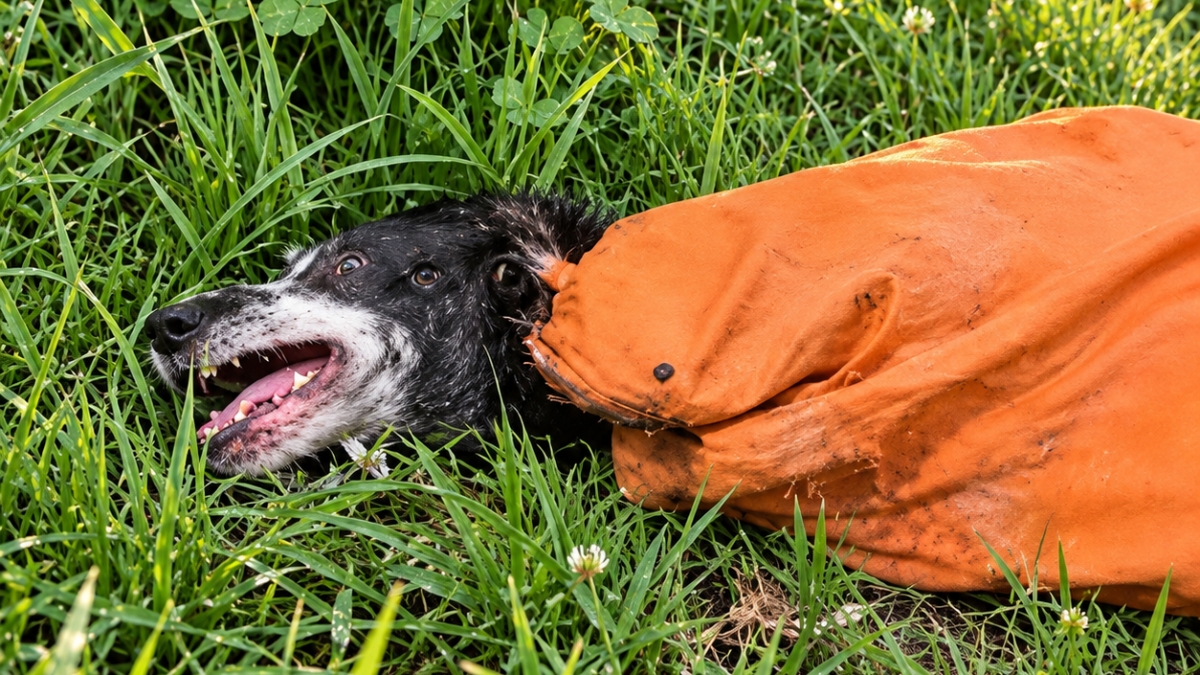
PART 2
I enlarged the photograph.
The bowl was stainless steel.
The blanket was pink, patterned with faded white bones.
The garbage bags were the same heavy-duty black plastic as the two torn open in the grass.
Officer Martin Hale walked over while I was still looking.
“What do you have?”
Teresa handed him the phone.
He studied the image.
“You took this?”
“Yes.”
“When?”
“Right before she drove away.”
He zoomed in on the license plate.
Clear enough to read.
“Good.”
Daniel pointed at the torn bags.
“She tied the dog inside those.”
Officer Hale’s face tightened, but his voice stayed neutral.
“I need both of you to walk me through exactly what you saw from the beginning.”
While he interviewed them, I stayed with the dog.
She had no collar.
No tag.
No visible wounds.
I offered water.
At first she ignored it.
Then she drank.
Slowly.
I noticed her paws were clean.
That detail bothered me.
If she had been living outside, roaming, or abandoned for days, I expected dirt, worn nails, something.
Instead, she looked like a dog who had been indoors shortly before this.
Her coat was dull but brushed.
Her nails were a little long, not neglected for years.
Someone had been caring for her at least enough to maintain appearances.
Which made the bags harder to understand.
I slipped a lead gently around her neck.
She allowed it without resistance.
“Come on.”
She stood.
Her hind legs were stiff.
Old-dog stiffness.
Arthritis, probably.
She walked beside me to my SUV with no hesitation once Teresa came too.
That was another thing I remember.
Milagros did not fight us.
She did not panic when strangers loaded her into another car.
She simply went where we guided her.
As if she had stopped believing her choices mattered.
At our rescue clinic, Dr. Maya Greene examined her.
I expected bad news.
Cancer.
Organ failure.
A terminal condition somebody had decided not to treat.
Something that might explain—never excuse, but explain—why a person had reached the point of throwing away an old dog.
Instead, the exam became stranger.
Her heart sounded good.
Lungs clear.
Mild arthritis.
Early dental disease.
A few benign skin growths common in older dogs.
Bloodwork was surprisingly normal for her age.
“She’s old,” Dr. Greene said, “but she’s not dying.”
“How old?”
“Ten, maybe eleven. Possibly twelve.”
“Anything that would make somebody think euthanasia was necessary?”
“Not from what I’m seeing.”
I looked through the doorway.
The dog lay on a towel with her head facing the wall.
“No cancer?”
“Not that we know of.”
“Kidney failure?”
“No.”
“Severe pain?”
“Mild to moderate joint discomfort. Manageable.”
“Dementia?”
“Too early to say. She’s shut down right now.”
I folded my arms.
“So physically, she’s okay.”
“For a senior dog? Better than okay.”
I looked at the old dog again.
Dr. Greene followed my gaze.
“She’s emotionally overwhelmed.”
That was an understatement.
When we offered food, she ate only after everyone stepped away.
If someone entered too quickly, she lowered her head.
She didn’t wag.
Didn’t explore.
Didn’t smell corners.
Didn’t even seem interested in the other dogs barking from farther down the hall.
She existed quietly.
That first evening, I took her home because our kennels were full and I didn’t want her spending the night alone in a medical room.
I named her Milagros on the drive.
The Spanish word for miracles.
Maybe it was sentimental.
I didn’t care.
When we reached my house, I prepared a bed in the living room.
Blanket.
Water.
Small bowl of warm chicken and rice.
She stepped inside.
Looked around.
Ate a little.
Then walked back toward the open patio door.
I assumed she needed to relieve herself.
She went into the yard.
I followed.
Milagros walked to the farthest corner near the fence.
Then curled herself tightly beside a shrub.
“Hey.”
She closed her eyes.
“It’s cold.”
Nothing.
I brought the bed outside.
She moved away from it.
I tried a blanket.
She stood and walked farther.
Finally I sat several feet away.
“You want to sleep outside?”
Her ears shifted.
“Fine.”
I stayed.
For almost an hour.
She slept curled in the dirt.
Not because she preferred the yard.
At least that wasn’t how it felt.
She seemed to be removing herself.
Making herself small.
Staying out of the way.
At midnight, the temperature dropped.
I carried another blanket out and placed it nearby without touching her.
“I’m going inside.”
She opened one eye.
“The door stays open.”
I left the patio door cracked.
At 2:17 a.m., I woke on the couch and found Milagros standing just inside.
She had crossed the threshold by herself.
I didn’t move.
She walked toward the living room.
Stopped at the bed.
Smelled it.
Then lay beside it on the floor.
I almost laughed.
“Close enough.”
That was our first night.
The police identified the woman by the license plate the next day.
Her name was Claudia Reyes.
Fifty-seven years old.
No prior animal cruelty record.
Milagros—or rather, **Luna**, according to Claudia—had been registered to her for almost eleven years.
That hurt in a new way.
This had not been an unwanted stray she had possessed for a week.
Milagros had spent nearly her entire life with that woman.
Officer Hale called me.
“We interviewed her.”
I sat down.
“And?”
“She says she wasn’t trying to kill the dog.”
I looked at the wall.
“She tied her inside two garbage bags.”
“That’s what the witnesses say.”
“What does Claudia say?”
“That she was transporting her.”
I laughed.
It came out sharp.
“In knotted garbage bags?”
“She says the dog had been having accidents in the car.”
I rubbed my forehead.
“So she put an elderly dog in two bags and threw her into grass?”
“She disputes the word ‘threw.’”
“Of course she does.”
“She says she placed the bags down and intended to come back.”
“For what?”
Hale paused.
“She says she was overwhelmed.”
“That’s not an answer.”
“No.”
“What about trying to take Milagros back?”
“She admits that.”
“Why?”
“She says when she saw strangers opening the bags, she realized the situation looked bad.”
I stared at the phone.
“She realized it looked bad.”
“Those were close to her words.”
Not that it was bad.
That it looked bad.
There is a difference.
“What happens now?”
“We need to determine whether charges fit the evidence. The prosecutor will review the witness statements, photographs, veterinary findings, and anything else we collect.”
“What about ownership?”
“She signed nothing yet.”
My stomach tightened.
“You’re telling me she could ask for the dog back?”
“She already has.”
I stood so fast the chair moved.
“No.”
“Claire.”
“No.”
“Listen to me.”
“She put her inside garbage bags.”
“I know.”
“I am not handing her back.”
“You are not the legal decision-maker.”
That sentence infuriated me because it was true.
Hale continued.
“Right now Luna is on a temporary protective hold. Keep caring for her. Document everything.”
“What if Claudia comes here?”
“Call us.”
“Do not let her take the dog.”
“I wasn’t planning to.”
“Good.”
Then he added:
“And Claire?”
“What?”
“Do not contact her.”
I almost told him I wouldn’t.
Then I remembered the previous case where I ignored similar advice.
“Fine.”
I meant it this time.
For three days.
On the fourth, Claudia contacted me.
Not by phone.
She came to my house.
I was in the backyard with Milagros when someone knocked at the front door.
Three sharp knocks.
Then two more.
My dog, Maple, barked.
Milagros froze.
Not startled.
Frozen.
I looked through the side window.
Claudia stood on the porch.
I knew her from Teresa’s photograph.
My hand went directly to my phone.
I called Officer Hale while moving both dogs into the back room.
“She’s here.”
“Do not open the door.”
“I’m not.”
“Patrol is on the way.”
Claudia knocked again.
“Claire?”
I stopped.
How did she know my name?
“Claire, I know you’re home.”
I said nothing.
“Please. I just want to talk.”
Milagros stood behind me.
Her head lowered.
Claudia knocked softer this time.
“Luna?”
Milagros’s ears lifted.
That hurt.
Of course she knew the voice.
Eleven years do not disappear because of one terrible day.
“Luna, baby?”
Milagros walked toward the hallway.
I blocked gently with my body.
Not because I wanted to manipulate her.
Because I didn’t know what Claudia intended.
The knocking stopped.
Then came a sound I didn’t expect.
Crying.
“I made a mistake.”
I stood in the hallway, silent.
“I didn’t know what to do.”
More crying.
“I need her back.”
Milagros’s tail did not wag.
But her ears stayed forward.
That mattered too.
I wanted Claudia to be easy to hate.
A cartoon.
A woman who never loved her dog.
But dogs complicate hatred.
Milagros recognized her voice.
Some part of their history had been real.
That did not excuse what happened.
It made it harder.
Police arrived six minutes later.
Claudia was still on the porch.
I watched through the window as Officer Hale approached.
She spoke with her hands.
Pointed toward my house.
Wiped her face.
Then looked directly at the window.
For a second, our eyes met.
She didn’t look angry.
She looked desperate.
Hale escorted her back to her car.
Before leaving, he came to the door.
I opened it after confirming Claudia was gone.
“What did she want?”
“The dog.”
“I know.”
“She says you’re poisoning Luna against her.”
I laughed despite myself.
“That’s not how dogs work.”
“I told her she’s prohibited from contacting you while the investigation is open.”
“Thank you.”
He looked past me.
Milagros was standing near the living room wall.
“She react to Claudia?”
“She knew her voice.”
He nodded.
“That may come up later.”
“What does that mean?”
“If ownership becomes contested, her attorney may argue attachment.”
“My veterinarian says she’s emotionally devastated.”
“And her attorney may say separation caused that.”
I stared at him.
“Are you serious?”
“I’m telling you what arguments exist.”
I hated law.
Law has an irritating habit of refusing to organize people into clean categories.
We documented everything.
Milagros’s intake exam.
Her behavior.
The outdoor sleeping.
Her flinching.
Her appetite.
Her interactions with people.
Slowly, she changed.
The first tail wag happened on day six.
Not for me.
For chicken.
I accepted that.
I brought a small piece into the living room.
Milagros smelled it.
Her tail moved once.
I froze.
“Was that a wag?”
Maple stared.
Milagros took the chicken.
Another wag.
I laughed.
“You are a deeply transactional woman.”
She chewed.
The next breakthrough came with the bed.
For more than a week, Milagros slept beside it.
Never on it.
Then one morning, I came downstairs and found her lying with only her front half on the cushion.
Back legs on the floor.
“Compromise?”
She looked at me.
“Take your time.”
Two nights later, all four paws were on the bed.
By the third week, she slept there regularly.
But if I moved too suddenly toward her collar, she flinched.
If I carried a black trash bag through the kitchen, she left the room.
I noticed that by accident.
I was changing the garbage liner.
The bag snapped open.
Milagros stood.
Walked backward.
Then disappeared into the hallway.
I stopped.
The black plastic hung from my hand.
My stomach twisted.
“Okay.”
I folded the bag.
Put it away.
For months afterward, we used white kitchen bags.
Maybe that was ridiculous.
Maybe not.
I had no interest in testing whether trauma could be “gotten over” for my convenience.
Meanwhile, the investigation deepened.
Daniel and Teresa had more than photographs.
Daniel’s car had a dash camera.
It normally faced forward.
Because of where their vehicle was parked, the camera captured part of the grassy area through the windshield.
The footage wasn’t perfect.
But it showed Claudia’s car entering.
Showed her walking around to the rear passenger door.
Showed her carrying two black bags.
Then tossing them into the grass.
The bags moved after she walked away.
Teresa ran into frame.
Daniel followed.
Then Claudia came back.
No audio from outside.
But the movement was clear.
She reached toward the dog.
Daniel stepped between them.
Teresa held up her phone.
Claudia stopped.
The footage damaged her first explanation badly.
She had not “placed the bags down.”
She threw them.
More importantly, investigators found no indication she intended to return until witnesses intervened.
The prosecutor authorized charges under local animal cruelty and abandonment statutes.
Claudia hired an attorney.
Then her attorney sent our rescue a letter demanding Luna’s return.
The argument was straightforward.
Claudia admitted poor judgment.
She denied intending to kill the dog.
She claimed extreme emotional distress after losing her housing.
That was the first time we heard about the apartment.
Officer Hale later confirmed part of it.
Claudia’s landlord had sold the duplex where she lived.
She had thirty days to leave.
Her new apartment prohibited dogs.
She had called one shelter.
They were full.
She called another.
There was a surrender waitlist.
According to her, panic built.
She had no family willing to take Luna.
No money for boarding.
No time.
I read the summary twice.
Then sat in my kitchen.
For the first time since the rescue, I felt something other than pure anger.
Not forgiveness.
Context.
There is a difference.
Housing crises are real.
Shelters are full.
Older dogs can be difficult to place.
People panic.
But none of those facts tied garbage bags.
I kept coming back to that.
There were other options.
A vet.
Animal control.
Emergency surrender.
Leaving her safely outside a shelter with a note would still have been abandonment, but not suffocation.
Calling police.
Calling another rescue.
Asking strangers.
Posting online.
Anything.
Claudia’s attorney argued that the bags were loose enough for air.
Daniel disagreed.
He had untied both.
Teresa said Milagros had been panting heavily.
Dr. Greene explained that a senior dog enclosed in plastic faced obvious risks from heat, panic, restricted ventilation, and inability to escape.
Then investigators found another piece of evidence.
Claudia’s phone.
She voluntarily gave police access to specific messages because she believed they would support her claim that she was overwhelmed and trying to rehome Luna.
Some did.
She had texted a cousin:
**Can you take Luna? New place won’t allow pets.**
Cousin:
**No. My landlord is worse than yours.**
A friend:
**Shelter says waitlist. What am I supposed to do?**
Those messages made her look desperate.
Then there was one from the morning of the abandonment.
Claudia to a coworker:
**I’m done. I can’t keep dragging this old dog around.**
Coworker:
**Please don’t do anything stupid. Bring her to work. We’ll figure something out.**
Claudia:
**Too late.**
The timestamp was seventeen minutes before Daniel and Teresa saw her car.
That message changed the case.
Not because it spelled out a plan.
But because it contradicted the idea that Claudia intended to return.
Her coworker, Marlene, agreed to testify.
Marlene had offered help.
Claudia knew it.
She simply did not take it.
When I heard that, my sympathy narrowed again.
Desperation can explain a bad decision.
It does not erase alternatives you refused to use.
The temporary custody hearing came first.
Claudia wanted Milagros returned while the criminal case proceeded.
I attended with our rescue attorney, Susan, Dr. Greene, Officer Hale, and the witnesses.
Claudia sat across the room.
When Milagros’s name was called, Claudia started crying.
Not theatrically.
Quietly.
That was worse somehow.
Her attorney emphasized eleven years of ownership.
He showed photographs.
Luna as a puppy.
Luna in a Christmas sweater.
Luna sleeping on a couch.
Luna beside Claudia after what looked like knee surgery years earlier.
Claudia had cared for her before.
That was undeniable.
Our attorney did not try to erase that history.
She focused on the present risk.
Then Teresa testified.
She described the bags.
The movement.
The knots.
Claudia returning.
“What did Ms. Reyes say when she returned?” our attorney asked.
“She said, ‘Give me my dog.’”
“Did she ask whether the dog was breathing?”
Teresa paused.
“No.”
“Did she ask whether Luna was injured?”
“No.”
“What was she concerned about?”
“She asked whether I took a picture of her plate.”
Claudia looked down.
Daniel testified next.
Then the dashcam played.
I watched the bags hit the grass.
Even though I knew Milagros survived, my hands shook.
Claudia turned away from the monitor.
Her attorney argued that the video had no audio and could not prove intent to kill.
Correct.
Then Dr. Greene testified.
“Was Luna critically ill when examined?”
“No.”
“Terminal?”
“No.”
“Suffering from an untreatable condition?”
“No.”
“Could her age alone justify emergency disposal?”
“Absolutely not.”
“What was her physical condition?”
“Typical senior changes. Mild arthritis. Dental disease. Otherwise surprisingly stable.”
“What concerned you most?”
“Behavior.”
“Explain.”
“Withdrawal. Hypervigilance. Reduced engagement. Fear responses.”
Claudia’s attorney stood for cross-examination.
“Doctor, can you diagnose emotional trauma from one examination?”
“No.”
“Could Luna’s behavior have been caused by separation from her longtime owner?”
“Yes.”
That hurt.
“Could an unfamiliar environment contribute?”
“Yes.”
“So your observations do not prove my client abused Luna for years.”
“No. I never said they did.”
That distinction mattered.
We had no evidence Claudia mistreated Milagros throughout her life.
Only evidence of what happened that day.
The hearing did not need more.
The judge kept the protective hold in place.
Milagros would remain with us while the criminal matter proceeded.
Claudia cried harder after the ruling.
I felt relief.
And something uglier.
Satisfaction.
Then I looked at her photographs on the evidence table.
Milagros as a puppy beside her.
I realized this was not a simple story of a bad person losing a dog.
It was a story about one terrible decision large enough to erase a right built across eleven years.
That is what consequences sometimes are.
Not proof that every year before was fake.
Proof that one act can still matter.
Milagros continued healing.
Month two brought play.
I almost missed the first attempt.
Maple dropped a rope toy near her.
Milagros looked at it.
Maple pawed.
Milagros turned away.
Maple pawed again.
Then Milagros grabbed the rope.
Weakly.
Maple pulled.
Milagros held.
I stood in the kitchen doorway.
“No.”
They tugged.
Milagros’s tail moved.
Maple pulled harder.
Milagros growled.
Play growl.
Then she let go and followed Maple across the room.
I grabbed my phone.
Too late.
The moment was gone.
I didn’t need the video.
By the end of that week, she was doing it every day.
She learned the kitchen schedule.
Learned where treats were kept.
Learned my neighbor Janet always carried biscuits.
Learned that the couch was technically forbidden to dogs and therefore highly desirable.
The first time I found her there, she froze.
I pointed.
“Really?”
Milagros lowered her head.
I saw the old reaction immediately.
Expected punishment.
My anger dissolved.
I sat beside her instead.
“That was a joke.”
Her eyes lifted.
“You can be on the couch.”
She stayed.
The next day, she occupied my spot.
Healing can become inconvenient.
That is how you know it is working.
The criminal case took almost six months.
Claudia ultimately rejected an early plea because it required relinquishing all ownership claims and a multi-year restriction on animal possession.
She still wanted Milagros back.
That surprised everyone.
Her attorney framed it as evidence of love.
The prosecutor framed it as refusal to accept responsibility.
I didn’t know which was truer.
Maybe both.
Then Claudia made another mistake.
She contacted Marlene, the coworker.
Not threateningly.
She asked her to “remember things correctly.”
Marlene saved the messages.
One read:
**I never said I was going to hurt Luna. Tell them I was just upset.**
Marlene replied:
**I already told them what you said.**
Claudia:
**If you cared about me, you’d stop helping them take my dog.**
Marlene:
**If you cared about Luna, you would’ve brought her to work like I told you.**
That exchange became evidence.
The prosecutor did not need to twist it.
Claudia’s own friend had offered an alternative.
She had refused.
The trial began in early spring.
By then Milagros looked different.
Her coat shone.
She had gained a few healthy pounds.
Her eyes were brighter.
She greeted visitors.
She slept indoors.
Always indoors.
The first night she chose my bedroom, I woke at 3:00 a.m. and found her bed empty.
I panicked.
Then I heard snoring.
Milagros was on the floor beside my bed.
I smiled in the dark.
“You know there’s a bed six feet away.”
She kept snoring.
I fell asleep with one hand resting near her shoulder.
In court, Teresa testified first.
Then Daniel.
Claudia’s attorney tried to suggest they had misunderstood.
“You saw my client place the bags in the grass.”
“Throw,” Daniel said.
“Mr. Warren, please answer the question.”
“You used the wrong verb.”
A few heads turned.
The judge instructed him to answer narrowly.
Daniel did.
Then the dashcam played.
The verb stopped mattering.
Everyone could see the motion.
Claudia swung the bags away from her body and released them into the grass.
Her attorney tried to frame it as urgency.
The jury watched again.
Then came the return.
Teresa opening the bag.
Daniel kneeling.
Claudia running back.
The prosecutor paused the image as Claudia reached toward them.
“What happened here?”
Teresa answered.
“She tried to take Luna.”
“Why did you refuse?”
“Because she had just thrown her away.”
The prosecutor asked:
“Did Ms. Reyes say she wanted to take Luna to a veterinarian?”
“No.”
“Home?”
“No.”
“What did she say?”
“She asked if I had called police.”
The room became still.
Marlene testified later.
She looked miserable.
I believed her.
She had worked with Claudia for years.
They had shared lunches.
Birthdays.
Family problems.
Now she sat under oath while Claudia stared at the table.
The prosecutor displayed the texts.
**Bring her to work. We’ll figure something out.**
Then:
**Too late.**
“What did you understand ‘too late’ to mean?” the prosecutor asked.
Marlene swallowed.
“At the time? I didn’t know.”
“And later?”
“I saw the news story.”
Claudia’s attorney objected.
The judge limited the answer.
Marlene’s voice shook.
“I wish I had called her.”
The prosecutor softened.
“Why?”
“I thought she was just venting.”
She looked toward Claudia.
“We all vent.”
Claudia began crying.
Marlene did too.
That scene stayed with me.
People wanted revenge stories with clean villains.
Real life rarely cooperates.
Marlene loved her friend.
Milagros had probably loved Claudia too.
Love did not undo what happened.
Then Claudia testified.
Her attorney asked about the housing crisis.
Claudia explained.
Lost lease.
Rent increase.
No-pet apartment.
Shelters full.
Savings gone after medical bills.
No family willing to help.
Luna’s incontinence worsening.
Her own anxiety.
Sleeping poorly.
Feeling trapped.
I listened.
Some of it made sense.
Then her attorney asked:
“Did you intend for Luna to die?”
“No.”
“Why the bags?”
Claudia covered her face briefly.
“She had messed in the car.”
“So?”
“I had no carrier.”
“You tied them?”
She hesitated.
“Yes.”
“Why?”
“I wasn’t thinking.”
“Why did you leave her?”
Her voice broke.
“I just wanted one problem to stop.”
That was the most honest thing she said.
Not **I wanted her dead.**
Not some villainous speech.
One problem to stop.
The prosecutor stood for cross-examination.
“You owned Luna eleven years?”
“Yes.”
“Loved her?”
“Yes.”
“Fed her?”
“Yes.”
“Took her to veterinarians?”
“Yes.”
“Put her inside two garbage bags?”
Claudia closed her eyes.
“Yes.”
“Tied them?”
“Yes.”
“Put her into the grass?”
“Yes.”
“Returned to your car?”
“Yes.”
“Started to leave?”
“I was upset.”
“That wasn’t my question.”
“Yes.”
The prosecutor stepped closer.
“Your friend offered to take Luna to work that morning.”
“For the day.”
“She said, ‘We’ll figure something out.’”
“She couldn’t keep her.”
“But Luna could have been alive and safe while you figured it out.”
Claudia’s mouth tightened.
“Yes.”
“You called one shelter.”
“Yes.”
“Two?”
“I don’t remember.”
“Animal control?”
“No.”
“Your veterinarian?”
“No.”
“Senior-dog rescues?”
“No.”
“Online rehoming groups?”
“No.”
“Boarding facilities?”
“I couldn’t afford one.”
“Did you ask?”
“No.”
“Did you tell the couple who rescued Luna that you needed help?”
“No.”
“What did you ask them?”
Claudia’s hands tightened.
“I wanted my dog.”
“Because you regretted leaving her?”
“Yes.”
The prosecutor waited.
Then displayed Teresa’s photograph of Claudia standing beside the car.
“Or because Ms. Warren told you she photographed your license plate?”
Claudia looked toward Teresa.
“I realized what I’d done.”
“When?”
Silence.
“When they opened the bags?”
“Yes.”
“Or when you realized they could identify you?”
Claudia’s attorney objected.
The judge sustained.
The prosecutor changed direction.
“You said the bags were for cleanliness.”
“Yes.”
“Why two?”
“The first was thin.”
The prosecutor lifted one of the preserved bags in an evidence sleeve.
“Heavy-duty contractor bag. Correct?”
Claudia said nothing.
“Ms. Reyes?”
“Yes.”
“Why tie the inner bag?”
“I don’t know.”
“Why tie the outer bag?”
“I panicked.”
“So the dog could not leave the bag on her own.”
Claudia began crying again.
“No.”
That one word landed harder than anything else.
No.
Milagros could not leave.
Whatever Claudia’s intention, the dog had no escape.
The jury deliberated most of the afternoon.
When they returned, I stopped breathing.
Guilty on the primary cruelty count.
Guilty on abandonment.
One lesser charge did not result in conviction.
Claudia bent forward.
Her attorney put a hand on her back.
Teresa grabbed Daniel’s hand.
I expected relief.
I felt it.
But not joy.
Milagros was at home sleeping on my couch.
The verdict did not make her safer than she had been that morning.
It made the record truthful.
That mattered.
At sentencing, the judge reviewed Claudia’s lack of prior record and her housing crisis.
He also reviewed the bags.
The witness intervention.
The available alternatives.
The sentence included probation, fines, mandatory counseling, community service, restitution for part of Milagros’s care, and a multi-year prohibition on owning or possessing animals.
The judge told Claudia:
“You were overwhelmed. The court accepts that.”
She looked up.
“But being overwhelmed does not grant permission to make another living creature helpless.”
Claudia began crying.
The judge continued.
“Your dog depended on you precisely because she could not solve your housing crisis herself.”
That sentence stayed with me.
Milagros could not call shelters.
Could not read leases.
Could not find a foster.
Could not understand rent.
Her entire world was whatever a human decided.
For eleven years that had been Claudia.
Then one afternoon, it became strangers in a parking lot.
After sentencing, Claudia asked through her attorney if she could see Milagros one final time.
My first answer was no.
Immediate.
Emotional.
No.
Susan asked me to think.
“Why?”
“Because this is not only about you.”
“She threw her away.”
“I know.”
“What good does seeing her do?”
“Maybe none.”
“Then no.”
Susan looked at me.
“You’re angry.”
“Obviously.”
“Milagros isn’t.”
I hated that.
We spoke with Dr. Greene and a behaviorist.
Would a controlled meeting harm Milagros?
Possibly stressful.
Probably manageable.
Could it provide something useful?
No one could promise.
Dogs do not need closure ceremonies because humans do.
Ultimately, I agreed to a short meeting at a neutral outdoor space near the rescue.
Two officers were present.
Claudia arrived alone.
Milagros was on leash with me.
The moment Claudia stepped through the gate, Milagros stopped.
Her ears lifted.
Claudia covered her mouth.
“Luna.”
Milagros stared.
Then her tail moved.
Once.
Twice.
I almost lost my composure.
Dogs can be brutally generous.
Claudia crouched.
“Baby.”
Milagros walked forward.
Slowly.
No fear.
No huge excitement.
She smelled Claudia’s hands.
Claudia cried.
“I’m sorry.”
Milagros leaned slightly into her.
For eleven years, that body had known those hands.
You cannot prosecute memory out of a dog.
Claudia stroked her face.
“You’re okay.”
Milagros stood quietly.
“I’m so sorry.”
I looked away.
Part of me wanted Milagros to reject her.
That would have felt like justice.
She didn’t.
She accepted the touch.
Then after less than a minute, Milagros turned.
Walked back toward me.
And sat beside my leg.
Claudia’s face collapsed.
That moment was worse than rejection.
Because Milagros remembered her.
Loved some part of her history.
And still chose the person standing in front of her now.
Claudia did not ask again to take her.
She handed me something.
A faded pink blanket with white bones.
The one visible in Teresa’s first photograph.
“She’s had this since she was a puppy.”
I looked at it.
“Why didn’t you put it in the bags with her?”
The question escaped before I could stop it.
Claudia flinched.
“I don’t know.”
I regretted asking.
Not because it was unfair.
Because nothing useful could come from it.
She wiped her face.
“Can she keep it?”
I looked at Milagros.
“Yes.”
Claudia stood.
“Her birthday is August twelfth.”
I nodded.
“She likes turkey better than chicken.”
“I know.”
A tiny sad smile.
“Of course you do.”
Then she left.
Milagros watched her for several seconds.
No pulling.
No whining.
When the gate closed, she looked up at me.
“Ready?”
Tail wag.
We went home.
The pink blanket became hers again.
At first I worried it would trigger something.
It didn’t.
Milagros smelled it for a long time.
Then lay on it.
That night, she slept inside.
Completely relaxed.
I think that was when I decided she was never leaving my house.
Technically, I had been fostering.
Susan had been waiting for me to admit the obvious.
She brought adoption papers the following week.
“You realize we have senior-dog applicants.”
“No.”
“You didn’t let me finish.”
“No.”
“One has a fenced yard.”
“No.”
“A retired couple—”
“She’s staying.”
Susan smiled.
“Then sign.”
I signed.
Milagros became officially mine.
Maple became her closest friend.
At first Maple had treated her like a fragile guest.
Once Milagros recovered, she became bossy.
She stole Maple’s bed.
Pushed ahead at meal times.
Barked at squirrels.
Discovered an irrational hatred of the mail carrier’s truck.
The dog who once did not wag began wagging at almost everything.
Breakfast.
Walks.
Janet.
Turkey.
The sound of my car keys.
The couch.
Especially the couch.
Her arthritis was managed with medication.
Her dental disease was treated.
She gained healthy weight.
Her bloodwork remained stable.
Dr. Greene examined her six months after rescue.
“She looks younger.”
“She acts younger.”
“How’s sleeping?”
“Inside.”
“Always?”
I smiled.
“Always.”
That felt like the biggest victory.
Not court.
Not conviction.
Sleeping inside.
Because on the first night, Milagros had chosen dirt beside a fence.
Months later, she slept upside down on my sofa with her legs against the cushions like she owned the mortgage.
Maybe healing is measurable after all.
A year passed.
Then two.
Milagros aged.
Her face became whiter.
Her hearing softened.
She developed cataracts.
Arthritis worsened.
Still, she loved walks.
Short ones.
Mostly sniffing.
A ten-minute route could take thirty because Milagros believed every leaf required investigation.
I learned patience.
Or surrendered.
Same result.
Teresa and Daniel visited every year near the rescue anniversary.
The first time they came to my house, Milagros recognized them immediately.
Teresa knelt.
“Look at you.”
Milagros pushed her head beneath her hand.
Daniel brought turkey.
I accused him of bribery.
He admitted it.
We kept the torn bags as evidence until the case concluded.
Then Officer Hale called.
“They can be released.”
“Throw them away.”
He paused.
“You sure?”
“Yes.”
I wanted nothing from them.
No memorial.
No artifact.
No symbol.
The pink blanket stayed.
The bags did not.
One spring, I saw Claudia again.
By accident.
At a pharmacy.
I recognized her before she recognized me.
She looked older.
Tired.
I almost turned away.
Then she saw me.
For a few seconds, neither spoke.
Finally:
“How is she?”
“Old.”
Claudia gave a small laugh.
“She was old then.”
“She’s older.”
“Health?”
“Pretty good.”
“Still afraid?”
I knew what she meant.
“Not much.”
She looked down.
“I think about her every day.”
I had no response.
She continued.
“I don’t expect you to tell me anything.”
“You asked.”
“I know.”
She gripped a prescription bag.
“Can I see a picture?”
I hesitated.
Then opened my phone.
Milagros asleep on the couch.
Pink blanket beneath her.
Claudia saw it.
Her eyes filled immediately.
“You kept that.”
“She likes it.”
Claudia touched the edge of my phone but not the screen.
“She used to drag it everywhere.”
I almost smiled.
“She still does.”
For one minute, anger disappeared.
Not forgiveness.
Not friendship.
Just shared knowledge of a dog.
Then Claudia said:
“I wish I could take that day back.”
“I know.”
“You do?”
“I believe you.”
She looked surprised.
I continued.
“Believing you regret it doesn’t make it unhappen.”
Her face tightened.
“I know.”
“That’s the part people don’t understand about regret.”
She nodded slowly.
Then stepped back.
“Tell her…”
She stopped.
“What?”
“Nothing.”
She shook her head.
“She has what she needs.”
Then she walked away.
I stood there longer than necessary.
For years, I had imagined revenge as Claudia suffering.
Losing the dog.
Losing money.
Public shame.
Court.
Restrictions.
But standing in that pharmacy, none of it felt satisfying.
The most powerful consequence was quieter.
She loved Milagros.
Too late, perhaps.
But loved her.
And she had to live knowing that the dog was happy somewhere else because another person had taken responsibility when she failed.
I wouldn’t have traded places with her.
Milagros reached fourteen.
Then possibly fifteen.
We could never be perfectly sure of her age because old records conflicted.
Her world became smaller.
House.
Yard.
Short walk.
Car ride.
Vet.
Janet’s porch.
That was enough.
Maple died first.
Cancer.
Milagros searched for her.
Walked from bed to bed.
Smelled the yard.
Waited by the door.
For three days, she ate less.
I placed Maple’s collar beside her bed.
Milagros smelled it and lay down.
I slept on the couch nearby.
“Just us now.”
Her tail moved.
She became more attached after that.
Followed me room to room.
Slept beside my bed.
If I closed a door, she waited outside.
I worried about separation anxiety.
Dr. Greene shook her head.
“She’s old.”
“That’s your diagnosis?”
“My diagnosis is she likes knowing where you are.”
Fair.
At fifteen, kidney values began changing.
Early disease.
We adjusted diet.
Medication.
Water availability.
More frequent tests.
She remained happy.
Then heart disease appeared.
Manageable.
For another year.
The dog somebody once threw away because she had become inconvenient required more care with age.
Exactly what people fear with senior animals.
Pills.
Appointments.
Accidents.
Night waking.
Special food.
I would be lying if I said it was always easy.
It wasn’t.
One winter night, Milagros had diarrhea across my living room at 3:00 a.m.
I cleaned for an hour.
She stood in the hallway with her head low.
That posture.
Shame.
I stopped cleaning.
Walked over.
“Hey.”
She looked away.
“No.”
I touched her cheek.
“You don’t get thrown away for making a mess.”
Her eyes lifted.
I don’t know what she understood.
Maybe only my tone.
I finished cleaning.
Then brought her back to bed.
That moment stayed with me more than court.
Because now I understood one of the possible pressures Claudia had described.
Old dogs do become difficult.
They do have accidents.
They do cost money.
They wake you.
They need medication.
They slow you down.
And none of that changes the agreement.
Not an agreement written anywhere.
The older one.
The one made when you bring an animal home and allow it to organize its life around you.
Milagros had fulfilled her side for more than a decade.
She had trusted.
Our job was to stay worthy of it.
Her final year was gentle.
She turned gray almost everywhere.
Her eyes clouded.
Hearing became poor enough that I began tapping the floor before approaching from behind.
She still smelled turkey from three rooms away.
Some systems never fail.
Teresa visited on her last birthday.
August twelfth.
Claudia had been right about the date.
We gave Milagros a small plate of turkey.
Daniel lit one candle and immediately blew it out because flames near dog noses made him nervous.
Milagros ate the turkey before we finished laughing.
Teresa hugged her.
“You were in a garbage bag when I met you.”
I winced.
“Birthday speech needs work.”
Teresa laughed through tears.
Milagros licked her wrist.
Later that afternoon, she slept on the pink blanket in the sunlight.
I took a photograph.
It became my favorite.
Not because she looked young.
She looked ancient.
White face.
Cloudy eyes.
Knobby joints.
But completely relaxed.
There is something beautiful about an old animal sleeping deeply.
Trust made visible.
Several months later, she stopped wanting walks.
Then meals became smaller.
Dr. Greene adjusted medication.
Bloodwork showed kidney disease progressing.
Heart disease too.
We managed both.
Eventually there were more bad mornings.
Then one day Milagros refused turkey.
I knew.
I still tried again.
Because denial is persistent.
“Turkey.”
She smelled it.
Turned away.
My throat closed.
I called Dr. Greene.
She came to the house that afternoon.
Examined Milagros on her bed.
Listened to her heart.
Touched her abdomen.
Watched her breathe.
I sat beside them.
“Can we fix this?”
Dr. Greene didn’t answer immediately.
“That depends on what you mean by fix.”
I hated that sentence.
“You know what I mean.”
“I do.”
She sat back.
“We could hospitalize her. Fluids. More testing. Adjust medication.”
“Would it make her well?”
“No.”
“Comfortable?”
“Maybe temporarily.”
“How temporarily?”
“I can’t tell you.”
Milagros lay with her head on my foot.
I remembered Dr. Greene’s first exam.
Old but healthy.
Not dying.
Years.
We had gotten years.
More than I had ever expected.
“Is she hurting?”
“Not severely right now.”
“Scared?”
“No.”
“What would you do?”
Dr. Greene looked at me.
“Today may be one of the kindest days you could choose.”
I cried.
Quietly at first.
Then not quietly.
Milagros lifted her head.
Even exhausted, she reacted to my distress.
That made the decision clearer.
She had spent enough of her life carrying human problems she did not understand.
Housing.
Fear.
Panic.
Court.
My grief would not become another burden.
“Today.”
Dr. Greene nodded.
I called Teresa and Daniel.
They came.
Janet came.
No crowd beyond that.
Milagros lay on the pink blanket in the living room.
The same blanket from Claudia.
I had considered changing it.
Then decided no.
That blanket contained eleven years too.
Not just betrayal.
Puppyhood.
Home.
Familiar smell.
History is complicated.
Milagros rested her head in my lap.
Teresa sat by her shoulder.
Daniel near her paws.
Janet cried before she entered the room.
Dr. Greene prepared the sedative.
Before giving it, I offered one final piece of turkey.
Milagros smelled it.
I expected her to refuse.
She licked it.
Then slowly took the piece.
Everyone laughed through tears.
“Of course,” Daniel whispered.
Milagros swallowed.
Tail.
One tiny wag.
I bent over her.
“Good girl.”
The sedative entered.
Her body relaxed.
Her breathing became slow.
I stroked the gray fur between her eyes.
“You can sleep inside.”
My voice broke.
“Okay?”
Teresa covered her mouth.
“No more hiding outside.”
Milagros’s eyes closed.
I kept talking.
“No bags.”
Another breath.
“No parking lots.”
Her head became heavier.
“No one throwing you away.”
Dr. Greene waited until I nodded.
The final medication went in.
Milagros breathed once.
Again.
Then she was still.
Her head remained in my lap.
The room stayed quiet.
I did not feel the dramatic peace people describe.
I felt devastated.
But beneath it was something solid.
She had not died alone.
Not in plastic.
Not frightened.
Not wondering what she had done wrong.
She died old.
Warm.
Full of turkey.
On a blanket that smelled like her entire life.
With people touching her gently.
I kept part of her ashes.
Teresa and Daniel asked for a small amount.
They placed them beneath a tree near the parking lot where they had found her.
At first I didn’t like the idea.
Then Teresa explained.
“Not where the bags were.”
“Where?”
“Closer to where we opened them.”
That changed it.
The place where she was discarded and the place where she was rescued were only a few feet apart.
Sometimes geography is like that.
One terrible act.
One good one.
Almost the same patch of grass.
They placed a small stone.
No mention of garbage bags.
Just:
**MILAGROS**
**SHE WAS FOUND ALIVE.**
At home, I kept the pink blanket.
For months it stayed folded on the couch.
Then one day a new foster arrived.
Twelve-year-old beagle.
Owner hospitalized.
Dog confused.
Couldn’t settle.
He walked circles for an hour.
Then smelled Milagros’s blanket.
Lay down.
Slept.
I almost took it away.
Instead I left it.
Milagros did not need it anymore.
Someone else did.
Years later, people still tell her story.
Usually the most shocking part.
Two garbage bags.
An old dog.
A woman driving away.
The couple opening them.
Those details are unforgettable.
But when I remember Milagros, I rarely see the bags anymore.
I see the first night.
An old dog curled outside because she apparently believed she should not take up space inside my home.
Then I see the same dog years later.
On my couch.
Across two cushions.
Snoring.
Pink blanket under her.
One paw hanging off the edge.
Completely unconcerned about whether she was allowed to be there.
That was the transformation.
Not that she became younger.
She didn’t.
Not that she forgot Claudia.
I don’t think she did.
Not that the legal system erased what happened.
It couldn’t.
Milagros simply learned that one person’s worst decision did not have to become the final definition of her life.
She learned that doors could stay open.
Bowls would be filled again.
Mess could be cleaned.
Old age could be accommodated.
A person leaving the room could come back.
And a bed inside a house could actually belong to her.
Sometimes I still pass that commercial strip.
The businesses have changed.
The grass is cut differently.
The parking spaces were repainted.
There is nothing there that would tell a stranger what happened.
Once, I pulled over.
Not on the rescue anniversary.
No ceremony.
I walked to the edge of the grass.
The tree Daniel and Teresa chose had grown.
Milagros’s stone sat beneath it.
I crouched.
Touched the top.
Cars moved behind me.
Somebody pushed a shopping cart across the lot.
Ordinary sounds.
I thought about the bags moving.
About Teresa hearing scratching.
About Daniel ripping through plastic.
About a dog who could not save herself from what a human decided.
Then I thought about her final years.
Couch.
Turkey.
Maple.
Janet’s biscuits.
Sleeping inside.
I stood.
Before I left, I looked once toward the patch of grass where the bags had landed.
Then toward the tree.
Only a few yards.
That was all.
A few yards between being thrown away and being found.
A few seconds between somebody driving off and somebody else running toward her.
Milagros never knew how close those two endings were.
She only knew which one became hers.
The weeks after the court case finally ended were the quietest we had known since Milagros came into my life.
There were no more calls from attorneys. No officers asking for updated photographs. No hearings on the calendar. No one wanted copies of veterinary records or statements about what happened in the parking lot.
For the first time, Milagros was not evidence.
She was simply a dog.
That sounds like such a small thing until you have watched an animal spend months being discussed as property, a victim, a witness to human failure, a subject in a criminal case.
I wanted her world to become boring.
Breakfast at seven.
Medication hidden in turkey.
A slow walk around the block.
A nap near the sliding door where the sun reached the rug around noon.
Another nap on the couch because apparently one nap was not enough for a dog her age.
Dinner.
A final trip into the yard.
Then sleep inside.
Always inside.
At first, she still woke whenever I moved at night.
I would roll over, and I could hear her nails shift against the floor beside the bed.
If I went to the bathroom, she followed.
If I went to the kitchen for water, she came too.
Not because she wanted anything.
She just needed to know where I was.
One night, maybe two months after the case closed, I woke at 3:00 a.m. and realized the room was completely quiet.
For a second, panic went through me.
“Milagros?”
Nothing.
I reached for the lamp.
Her bed beside mine was empty.
I got up and found her in the living room.
On the couch.
On her back.
All four paws slightly raised.
Snoring so loudly that I stood there laughing in the dark.
She hadn’t followed me.
She hadn’t checked where I was.
She had chosen comfort over vigilance.
That mattered more to me than the court ruling ever had.
The next morning, I told Susan.
“She slept in another room.”
Susan stared at me.
“That is your exciting update?”
“Yes.”
“She’s a dog.”
“I know.”
“A dog slept on a couch.”
“Yes.”
Susan smiled.
“Then I’m happy for both of you.”
Milagros became more playful as the months passed.
Not puppy playful.
She was too old for that.
But old dogs have their own kind of joy.
She liked carrying a stuffed rabbit from room to room and leaving it in inconvenient places.
She learned that if she stood in front of the pantry long enough, I would eventually question whether she had already received a treat.
She had.
She always had.
But she understood human doubt better than I wanted to admit.
She also became protective of the pink blanket Claudia had returned.
If Maple lay on it, Milagros would stand nearby and stare.
Not growl.
Not bark.
Just stare.
Maple usually moved.
“Psychological warfare,” I told her.
Milagros wagged.
That blanket became part of her new life without erasing the old one.
I thought about replacing it several times.
I never did.
Some things do not have to be pure to be worth keeping.
The blanket had known Claudia’s house. It had probably covered Milagros when she was young. It had followed her through years I would never know about.
Then it had come back at the end of the case, carried by the same woman who had betrayed her.
That contradiction bothered me less as time passed.
People want stories to separate neatly into before and after.
Good person.
Bad person.
Safe place.
Dangerous place.
Love.
Betrayal.
Milagros’s life did not divide itself that cleanly.
Claudia had loved her at some point. Maybe for many years.
She had also failed her in the worst way at the worst moment.
Both things could be true.
I learned to live with that because Milagros already had.
She never asked me to hate anyone.
She asked for dinner.
Years passed.
Her hearing faded first.
I noticed because she stopped meeting me at the door when I came home.
At first I worried she was sick.
Then one afternoon I came in quietly and found her asleep on the couch.
I stood three feet away.
“Milagros?”
Nothing.
I clapped once.
Her eyes opened.
She startled, then wagged.
The vet confirmed age-related hearing loss.
So I adjusted.
I began tapping the floor before approaching her from behind. I flicked the hallway light before opening the back door at night. If she was sleeping deeply, I touched the cushion near her rather than touching her body first.
Then came arthritis.
Pills in the morning.
Joint supplements with dinner.
More rugs when hardwood became slippery.
A small ramp for the two steps leading to the yard.
The first ramp I bought was too narrow.
Milagros stood at the top and looked at it with complete contempt.
“You know this cost eighty dollars?”
She looked away.
“You’re not even going to try?”
Nothing.
I returned it.
The second one was wider and covered with rough outdoor carpet.
She used it immediately.
“Of course.”
Tail wag.
Senior dogs will teach you humility if you let them.
They also teach you that care is not glamorous.
It is cleaning accidents at midnight.
Cutting pills in half.
Replacing washable pads.
Lifting a sleepy old dog because her hips hurt on cold mornings.
Canceling plans because she has diarrhea.
Standing in a grocery aisle reading the label on turkey because one kind works better for hiding medication.
None of those things make good rescue photographs.
They are still rescue.
Maybe the most important kind.
One winter, Milagros developed a habit of waking around 2:30 every morning.
She would stand beside my bed.
Not bark.
Just stare.
Somehow a dog staring at you has weight.
I always woke.
“Outside?”
She would turn toward the hallway.
We went out.
She wandered slowly through the yard.
Sometimes she relieved herself.
Sometimes she simply stood beneath the porch light and smelled the cold air.
Then we went back inside.
For three weeks this happened almost every night.
I was exhausted.
One morning Susan found me asleep with my forehead against my desk.
“Bad night?”
“2:23.”
“Again?”
“Again.”
“Vet?”
“Tomorrow.”
The veterinarian found nothing alarming.
Older dogs change sleep patterns.
Pain becomes worse at night.
Bladder capacity changes.
Cognitive decline can begin subtly.
We adjusted her medication schedule, added a night-light, and moved her bed closer to mine.
The nighttime trips became less frequent.
I remember feeling relieved.
Then guilty for feeling relieved.
Dr. Greene noticed.
“You’re allowed to be tired.”
“I know.”
“No, you don’t.”
I looked at her.
“Caring for an old animal is work,” she said. “Loving the animal doesn’t make the work disappear.”
I nodded.
“Being frustrated at three in the morning doesn’t mean you’re abandoning her.”
That sentence hit the fear I had never admitted.
Whenever care became difficult, Claudia’s story hovered somewhere behind me.
I never wanted irritation to become resentment.
Dr. Greene seemed to understand.
“You are not her.”
“I know.”
“And you’re not required to enjoy every part of this.”
That helped.
I stopped treating exhaustion like moral failure.
Somehow, that made me more patient.
Milagros aged with dignity because nobody required her to remain convenient.
When she had accidents, I cleaned them.
When she became picky, we worked with the vet.
When stairs became difficult, we removed the need.
When her hearing faded, we changed how we communicated.
When she slowed down, the walks slowed too.
There was never a morning when I decided she had become too much.
There were only new versions of normal.
Teresa and Daniel continued visiting.
They came near her birthday every year carrying turkey and some ridiculous toy Milagros usually ignored.
One year Daniel bought a rubber chicken that screamed when squeezed.
Milagros hated it.
Maple loved it.
For two months, I heard that chicken every day.
“I blame you,” I told Daniel.
He looked proud.
Then Maple died.
Cancer took her quickly.
One week she was tired.
Two weeks later we were talking about quality of life.
Milagros remained beside Maple’s bed on the final day.
Afterward, she searched.
That was the hardest part.
She walked into the bedroom.
Smelled Maple’s blanket.
Returned to the hallway.
Waited near the back door.
At dinner, she stared toward Maple’s empty bowl.
I sat on the kitchen floor.
“She’s not coming back.”
Milagros looked at me.
I cried.
She leaned against my shoulder.
For years, I had believed I was the one comforting her.
That night, I wasn’t sure.
After Maple died, Milagros became my shadow again.
Not with the frightened urgency of her first months.
This was different.
Age.
Habit.
Grief.
She simply preferred knowing I was near.
If I worked at the kitchen table, she slept beneath it.
If I watched television, she took the cushion beside mine.
If I showered, she waited outside the bathroom.
I talked to her constantly despite her poor hearing.
“We need groceries.”
Nothing.
“You’re out of turkey.”
One eye opened.
“So you heard that?”
Tail wag.
Suspicious.
Her appetite remained strong until almost the end.
When her kidney values began changing, she was somewhere around fifteen.
Maybe older.
Dr. Greene showed me the bloodwork.
“Early kidney disease.”
“How early?”
“Manageable.”
“Fixable?”
“No.”
I hated that word.
Manageable is the language of aging.
At some point, you stop asking for cures.
You ask for time that still feels good.
We changed her food.
Added medication.
Encouraged hydration.
For more than a year she did surprisingly well.
Then mild heart disease joined the list.
More pills.
More monitoring.
I bought one of those weekly medication organizers meant for people.
Monday through Sunday.
Morning.
Evening.
I wrote MILAGROS across the top.
Susan saw it.
“Your dog has a better medication system than I do.”
“That sounds like your problem.”
Every pill came hidden in turkey.
Eventually Milagros appeared whenever I opened the organizer.
“Drug addict.”
Tail wag.
She had no concern for reputation.
Then one afternoon, a letter arrived through the rescue.
It was from Claudia.
I almost did not open it.
The letter was short.
She had finished probation and counseling. She was living with her sister. She did not own another animal.
She said she still dreamed about Luna.
She called her Luna.
That felt appropriate.
At the end she wrote:
I know I don’t have the right to ask for anything. I only want to know if she is alive.
I sat at the kitchen table for a long time.
Milagros was asleep nearby.
Old.
Safe.
Alive.
I could have ignored the letter.
Nobody would have blamed me.
Instead, I took a photograph of Milagros asleep in sunlight on the pink blanket.
I printed it.
On the back, I wrote:
She is old. She is comfortable. She is loved.
Nothing else.
No address.
No invitation.
I mailed it through the rescue.
Three weeks later another envelope came.
No letter.
Only a photograph.
Milagros as a puppy.
Tiny body.
Tan ears too large for her head.
Sitting beside a much younger Claudia on a porch.
I stared at it until my eyes filled.
There she was before any of us.
Before the garbage bags.
Before the court.
Before the name Milagros.
Luna.
A puppy somebody had once chosen.
I put the photograph with her veterinary records.
Not displayed.
Not hidden.
Her history belonged to her even when parts of it hurt.
The final winter was harder.
Her kidneys worsened.
She lost weight.
Her hips weakened.
The heart medication helped, but she tired quickly.
One morning she slipped while drinking.
I caught her before she hit the floor.
Immediately, her head lowered.
The same ashamed posture I had seen after accidents.
“Hey.”
She looked away.
“No.”
I held her face gently.
“You do not apologize for getting old.”
She leaned into my hands.
We added more rugs.
Then a support harness.
She hated it for two days.
On the third, she realized it helped her walk without slipping.
After that, she waited patiently while I clipped it on.
Our walks shrank.
Half the block.
Then only the mailbox.
Then the front yard.
I mourned every shrinking circle.
Milagros didn’t seem to.
She could spend five minutes smelling one patch of grass and appear perfectly satisfied.
Eventually, I began learning from her.
One evening, I drove her past the commercial strip where Teresa and Daniel had found her.
Years earlier, they had placed a small stone beneath a young tree close to the place where they opened the bags.
It wasn’t a grave.
It was a rescue marker.
MILAGROS
SHE WAS FOUND ALIVE.
I helped Milagros out of the car using her harness.
She walked slowly toward the tree.
Smelled the ground.
Looked around with cloudy eyes.
I wondered whether she remembered.
Nothing dramatic happened.
No trembling.
No sudden fear.
She simply sniffed around.
Then urinated beside the stone.
I laughed.
“Appropriate.”
We stayed for five minutes.
Then she turned toward the car.
That was all.
And I was grateful.
Her life did not require some dramatic confrontation with the place where it almost ended.
She had already left it behind.
The real decline happened quickly.
One week she was demanding turkey.
The next she began leaving food.
Then she refused breakfast completely.
I warmed it.
Added broth.
Changed bowls.
Offered chicken.
Nothing.
Finally, turkey.
She smelled it.
Turned her head away.
I sat on the kitchen floor.
That was when I knew.
Dr. Greene came that afternoon.
She listened to Milagros’s heart.
Checked her gums.
Touched her abdomen.
Looked at the most recent bloodwork.
Then she sat beside me.
“We can hospitalize her.”
“For what?”
“Fluids. Medication adjustment. More tests.”
“Would she come home better?”
“Maybe temporarily.”
“Would she feel better there?”
Dr. Greene hesitated.
“Probably not at first.”
Milagros hated clinics now.
Not because of some dramatic trauma.
She was simply old.
She hated the slippery floors, unfamiliar smells, separation from home.
I asked the only question that mattered.
“Is there a realistic path back to good days?”
Dr. Greene looked at Milagros.
“Maybe one or two.”
My face folded.
She waited.
Then said quietly, “You don’t have to take every possible day just because it exists.”
That sentence gave me permission I did not want.
I called Teresa.
Daniel.
Janet.
Susan.
Not for a ceremony.
Just goodbye.
They came at different times so the house stayed quiet.
Teresa sat beside Milagros.
“Remember me?”
Milagros lifted her head.
Her tail moved once.
Teresa laughed through tears.
“You stubborn old thing.”
Daniel rubbed one of Milagros’s paws.
“I still think about opening those bags.”
His voice cracked.
“What if we had driven away thirty seconds earlier?”
“No.”
I said it more sharply than I meant to.
He looked at me.
“We don’t do that.”
He nodded.
“You opened them. That’s the version we keep.”
Janet brought a biscuit.
Milagros smelled it but did not eat.
Janet placed it beside the bed.
“For later.”
There wasn’t going to be later.
We both knew.
I left it there anyway.
That night Milagros slept beside my bed.
Around 2:30 a.m., I woke.
That old familiar hour.
She was awake.
Looking at me.
I slid onto the floor.
“Outside?”
She didn’t move.
Her heart beat quickly beneath my hand.
Breathing shallow.
I sat beside her until morning.
At sunrise, the room turned gold.
Milagros finally slept.
I didn’t.
Dr. Greene arrived late that morning.
I moved Milagros into the living room.
Pink blanket beneath her.
Sunlight near the window.
The couch beside us.
Everything familiar.
Before we began, Teresa called.
“Put me on speaker.”
Her voice filled the room.
“Hey, girl.”
Milagros’s ear moved.
“I love you.”
Daniel shouted in the background, “Best trash-bag escape artist ever.”
I laughed despite everything.
“You are still terrible at speeches.”
Teresa laughed too.
When the call ended, Dr. Greene prepared the sedative.
I offered Milagros one final piece of turkey.
For several seconds she only smelled it.
Then she opened her mouth.
Took it.
Chewed slowly.
Swallowed.
I started crying harder.
“Of course.”
Her tail moved.
Barely.
Dr. Greene waited until I nodded.
The sedative went in.
Milagros relaxed against me.
I rubbed between her eyes.
“You can sleep.”
Her breathing slowed.
“You’re inside.”
Another breath.
“You’re home.”
Her body softened.
“No bags.”
My voice broke.
“No parking lot.”
I touched the pink blanket.
“No one leaving.”
Dr. Greene rested one hand on my shoulder.
Milagros’s eyes were closed.
Not frightened.
Only tired.
I bent closer.
“You take up all the space you want.”
Then Dr. Greene gave the final medication.
Milagros breathed in.
Out.
Once more.
And stopped.
I kept talking anyway.
I told her she had been good.
Difficult.
Expensive.
Bossy.
Loved.
I told her Maple was waiting somewhere if such things exist.
I told her Claudia had sent a photograph of her as a puppy.
I told her Teresa and Daniel still thought about her.
I apologized for every night I had been impatient at 2:30 in the morning.
I told her she never had to sleep outside again.
Eventually, there was nothing left to say.
After Milagros was cremated, I kept most of her ashes at home.
Teresa and Daniel asked for a small amount.
We placed them beneath the tree beside the rescue marker.
This time there was no old dog standing beside us.
That absence felt enormous.
Daniel dug the small hole.
Teresa poured the ashes.
We covered them quietly.
Then Teresa touched the stone.
“She was found alive.”
I nodded.
“That’s what matters.”
At home, the pink blanket remained on the couch.
For weeks, I could not wash it.
It still smelled faintly like Milagros.
Then one rainy afternoon, a new foster arrived.
A twelve-year-old beagle whose owner had been hospitalized.
He was confused and frightened.
He paced the living room for nearly an hour.
Wouldn’t lie down.
Wouldn’t settle.
Then he found Milagros’s blanket.
He smelled it.
Turned twice.
Lay down.
Within minutes, he was asleep.
I stood in the doorway crying.
Not because I thought Milagros had somehow sent him.
I did not need magic.
The blanket was soft.
Warm.
It smelled like another dog.
It made him feel safe.
That was enough.
I left it there.
The next morning he was still sleeping on it.
I made coffee and sat nearby.
For the first time since Milagros died, the living room did not feel completely empty.
Years later, I still pass that commercial strip sometimes.
The businesses have changed.
The parking spaces have been repainted.
The tree is larger.
Most people walking across that lot have no idea an elderly dog once lay trapped inside two tied garbage bags only a few yards from where they park their cars.
The stone remains.
MILAGROS
SHE WAS FOUND ALIVE.
Whenever I stop there, I never stand where Claudia left the bags.
I stand where Teresa opened them.
That distinction matters to me.
One spot marks abandonment.
The other marks interruption.
Milagros’s story could have ended in the grass.
It didn’t.
Because two people noticed movement.
Because Daniel tore through plastic.
Because Teresa called for help.
Because a veterinarian said an old dog still had plenty of life left.
Because a court eventually decided that panic was not permission to make another living creature helpless.
Because a house kept its door open long enough for Milagros to walk inside on her own.
I used to think the rescue happened the moment those garbage bags were opened.
Now I know that was only the beginning.
Rescue was every ordinary day that came afterward.
Every bowl filled.
Every pill hidden in turkey.
Every accident cleaned without anger.
Every midnight trip into the yard.
Every ridiculous toy.
Every slow walk.
Every time she chose the couch instead of the corner.
Every time she stopped following me because she trusted I would return.
Every year she grew older in a home where old age was never treated like a reason to disappear.
That was the future someone almost took away from her.
Not one dramatic day.
Thousands of ordinary ones.
And those ordinary days became Milagros’s real life.
Not the garbage bags.
Not the parking lot.
Not the trial.
A faded pink blanket.
Turkey hidden around medicine.
Maple sleeping beside her.
Sunlight across the couch.
Cloudy eyes.
Slow walks to the mailbox.
A wide ramp leading into the yard.
My hand on her back at two in the morning.
And finally, after all those years, sleep in the one place she had once been too frightened to believe belonged to her.
Inside.
Home.
[END OF STORY]








