PART 2: They Dumped a Two-Month-Old Kitten to Die—But the Tiny Survivor Led Us Back to the People Who Did It
PART 2:
I stared at the screen long enough for Linda to notice.
“What?”
I didn’t answer.
The name on the caller-identification database was **Marissa Caldwell**.
I knew it because three weeks earlier, a woman by that name had contacted our rescue asking whether we had any young kittens available for adoption.
She had sent us two messages.
The first said she wanted a kitten for her daughter’s birthday.
The second came after we explained that all animals required an application, veterinary references, and an adoption contract.
She never completed the application.
At the time, I had forgotten about her.
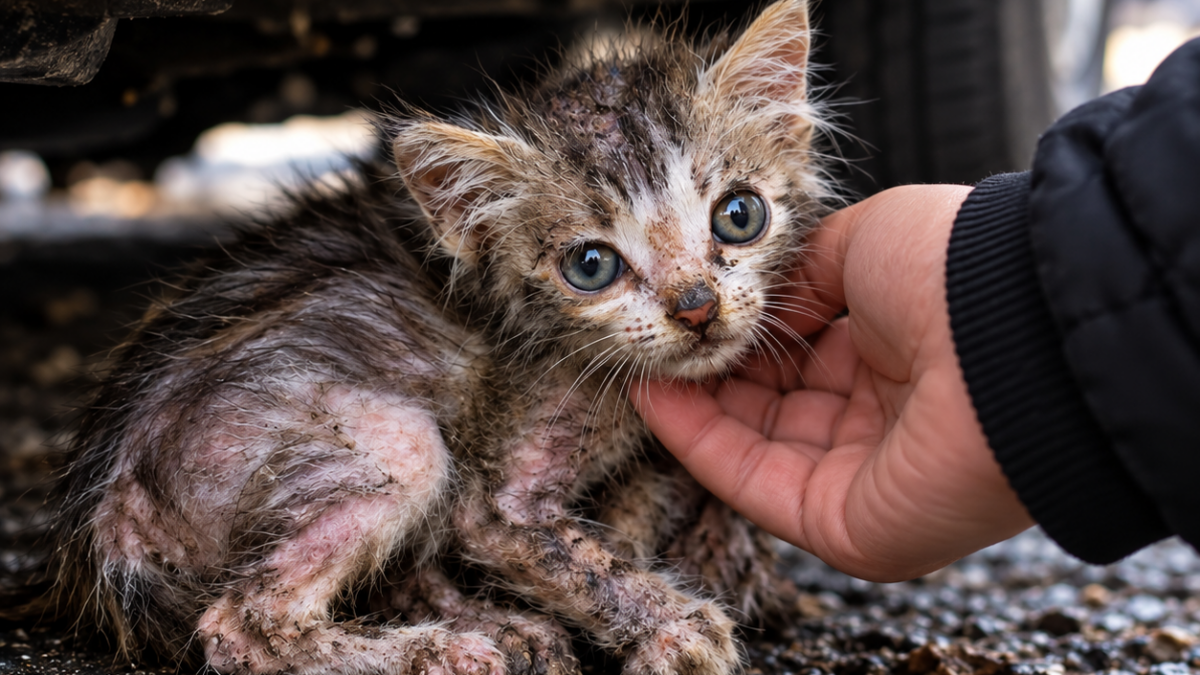
Now I was standing in an alley holding a kitten who appeared to have been starved, neglected, and discarded, and Marissa Caldwell’s phone number was hanging from her neck.
Linda saw my face.
“You know them?”
“I know the name.”
“How?”
“I need to check something.”
I opened our rescue inbox.
There it was.
**Marissa Caldwell.**
Her profile photo showed a smiling blond woman beside a man and two children.
I clicked the conversation.
*Hi! Looking for a tiny kitten, preferably female. It’s a surprise for my daughter.*
Our adoption coordinator had replied politely.
Marissa asked whether we could “skip all the paperwork” because she had owned cats before.
We said no.
She never answered again.
I looked at the kitten.
“Okay.”
Linda whispered, “What are you thinking?”
“I’m thinking we get her to the hospital before we do anything else.”
“You’re not calling that number?”
“Not yet.”
I closed the carrier.
“If somebody dumped her, I don’t want to warn them before we know what we have.”
—
Dr. Emily Hart met me at the veterinary hospital.
She took one look inside the carrier and stopped.
“How old?”
“Maybe ten weeks.”
“That’s not ten-week size.”
“I know.”
We moved the kitten into an exam room.
The first challenge was the collar.
It had cut deeply enough into the swollen skin that removing it without hurting her was almost impossible.
Dr. Hart used small bandage scissors while I held the kitten wrapped in a towel.
“Easy.”
The kitten tried to pull away.
“I know, baby.”
The scissors slid beneath the fabric.
Snip.
The collar fell onto the table.
A red groove circled the kitten’s neck.
Dr. Hart’s jaw tightened.
“This didn’t happen in three days.”
“How long?”
“Hard to say. But the collar hasn’t been adjusted while she grew.”
I placed it in a plastic evidence bag.
Dr. Hart looked at me.
“You’re thinking cruelty case?”
“I don’t know yet.”
“You bagged the collar.”
“I’m thinking we may need to know.”
She nodded.
Then came the weight.
One pound, eleven ounces.
Dr. Hart stared at the scale.
“She should be significantly heavier.”
“Malnutrition?”
“Severe.”
She carefully examined the kitten’s front legs.
Both wrists bowed outward.
I asked the question I was afraid of.
“Permanent?”
“Maybe not.”
“What caused it?”
“Poor nutrition during growth is high on the list. Vitamin and mineral imbalance can cause developmental bone problems. We need X-rays.”
She inspected the skin.
“Mange is likely, but I’ll scrape it.”
“Contagious?”
“Depends on the type. Keep her isolated until we know.”
The kitten began licking the examination table.
Not herself.
The metal.
Dr. Hart watched.
“She’s searching for food.”
“I fed her a little outside.”
“How much?”
“Not much.”
“Good.”
She looked at the kitten’s gums.
“Pale.”
My stomach tightened.
“Anemia?”
“Probably.”
The list grew.
Malnutrition.
Possible anemia.
Mange.
Skin infection.
Deformed legs.
Dehydration.
Parasites were almost guaranteed.
And the kitten was ten weeks old.
Ten weeks.
I kept thinking about that.
At ten weeks, kittens should be climbing things they shouldn’t, attacking shoelaces, chasing shadows, and launching themselves sideways across rooms for reasons known only to kittens.
This one barely had enough strength to stand.
Dr. Hart drew blood.
The kitten didn’t fight.
That worried me more than fighting would have.
Afterward, I held her against my chest.
She was trembling again.
Then, very slowly, I heard something.
A purr.
Weak.
Uneven.
Almost silent.
I looked down.
“You’re purring?”
Dr. Hart paused.
The kitten pressed her face into the towel.
The purr continued.
Dr. Hart gave a sad little smile.
“They’re remarkable, aren’t they?”
“Sometimes too remarkable.”
“What do you mean?”
“They keep trusting us when they really shouldn’t.”
—
We called her **Mia**.
Not because the name had any special meaning.
Because when the receptionist asked what to put on the chart, I needed an answer.
“Mia.”
The kitten lifted her head.
The receptionist smiled.
“Guess she approves.”
Mia spent the first afternoon on warmed fluids and tiny measured meals.
Her bloodwork confirmed anemia, severe malnutrition, and infection.
The skin scraping confirmed sarcoptic mange.
The X-rays showed early nutritional bone disease.
Dr. Hart studied the images beside me.
“Her bones are weak, but I’m not seeing fractures.”
“So the legs can straighten?”
“Possibly. She’s young. That’s in her favor.”
“Anything else?”
“Her body has been using whatever resources it has just to stay alive.”
I looked through the window.
Mia was sleeping beneath a warming blanket.
“What would another week outside have done?”
Dr. Hart didn’t answer immediately.
Then she said, “You probably wouldn’t have found a living kitten.”
—
Once Mia was stable, I contacted Animal Control Officer Aaron Walsh.
I had worked with him before.
He was calm, thorough, and irritatingly committed to evidence.
Which was exactly what we needed.
I handed him copies of the photographs.
The collar.
The tag.
The veterinary intake report.
Then I showed him Marissa Caldwell’s old rescue messages.
He read them twice.
“This number matches?”
“Exactly.”
“Could be an old number.”
“It could.”
“Could be an old collar.”
“Also possible.”
“Could have been stolen.”
“Yes.”
Walsh looked at me.
“You’re doing better.”
“At what?”
“Not jumping to conclusions.”
“I’m learning.”
He smiled.
“Slowly.”
I ignored him.
“What can you do?”
“Run the phone number. Check licensing records. Search prior calls at the address. Talk to the property owner where she was found. See if there are cameras.”
“There’s an abandoned tire shop.”
“Any active businesses nearby?”
“Gas station across the intersection. Storage facility beside it.”
Walsh stood.
“Then we start there.”
“Should I call Marissa?”
“No.”
That answer came immediately.
“Why?”
“Because if she dumped the kitten, I don’t want her cleaning up anything else.”
I nodded.
That was exactly why I had waited.
—
The first good news came that evening.
Mia ate on her own.
Not a full meal.
But enough.
I sat outside her isolation enclosure wearing gloves and a disposable gown.
She crouched over the small plate like someone might steal it.
Every few bites, she looked up at me.
“You can keep going.”
She lowered her face again.
When the plate was empty, she licked it until nothing remained.
Then she searched the towel.
I wanted to give her more.
Dr. Hart stopped me.
“Small amounts.”
“I know.”
“She’ll get another meal in two hours.”
“She doesn’t know that.”
“No.”
I looked at Mia.
That was the problem with hunger after neglect.
Her body might be in a safe room.
Her mind was still under the car.
Still believing every meal could be the last.
—
The next morning, Officer Walsh called.
“You were right not to call.”
I stood up.
“What did you find?”
“The storage facility has a camera facing the alley.”
My heart accelerated.
“Did it catch anything?”
“Possibly.”
“What does possibly mean?”
“The manager is exporting footage now.”
“Can I see it?”
“Not yet.”
“Aaron.”
“If it becomes evidence, we preserve chain of custody.”
“I know.”
“So stop asking me to let you do things you know I can’t let you do.”
I paced the hospital hallway.
“What time?”
“Two nights before Linda first saw the kitten.”
“You found something.”
He paused.
“I found a vehicle.”
“What vehicle?”
“Silver SUV.”
“License plate?”
“Working on it.”
“Person?”
“The footage is poor.”
“Male? Female?”
“Stop.”
I closed my eyes.
“You enjoy this.”
“No. I enjoy not ruining cases.”
He hung up.
I hated him for about eleven minutes.
—
Mia’s recovery began with tiny things.
On day two, she stood long enough to eat.
On day three, she walked six steps without collapsing.
Her legs still bowed outward.
Her feet looked too large for her thin limbs.
But she moved.
Then she discovered the fleece mouse.
I had placed it in her enclosure without expecting anything.
For an hour, she ignored it.
Then I saw her paw shift.
Tap.
The mouse rolled two inches.
Mia stared at it.
Another tap.
I leaned closer.
“You know what that is?”
She swatted again.
This time harder.
The mouse rolled against the wall.
Mia tried to pounce.
Her front legs folded.
She fell sideways.
I gasped.
She immediately sat up.
Then attacked the mouse again.
I started laughing.
Dr. Hart looked through the doorway.
“What?”
“She played.”
“Mia?”
“Yes.”
We stood there like two people who had never seen a kitten play before.
Mia grabbed the mouse in both paws and tried to bite its ear.
Dr. Hart smiled.
“That’s a very good sign.”
It was.
For the first time, Mia was spending energy on something that had nothing to do with surviving.
—
Two days later, Walsh came to the hospital.
He brought a tablet.
“We identified the SUV.”
“Marissa?”
“Registered to her husband. Jason Caldwell.”
My stomach tightened.
“Show me.”
He hesitated.
Then rotated the tablet.
The footage was grainy.
Time stamp: 11:43 p.m.
A silver SUV entered the alley.
Stopped.
The passenger door opened.
A figure stepped out.
Female, probably.
She carried something.
At first the image was too dark.
Then she moved beneath a security light.
A small carrier.
My hand went cold.
The woman opened the carrier.
Bent down.
Something small dropped or crawled onto the pavement.
Then she stood.
The tiny shape tried to follow her.
The woman pushed it away with one foot.
Not a kick.
A shove.
Enough to make the kitten tumble.
I stopped breathing.
She got into the SUV.
The vehicle drove away.
The kitten ran three steps after it.
Then stopped.
I covered my mouth.
Walsh paused the video.
“You okay?”
“No.”
He waited.
I forced myself to look again.
“What about her face?”
“Another camera caught the SUV entering from the main road.”
“Does it show her?”
“Better.”
He changed clips.
The woman stepped out.
Turned toward the light.
Even grainy, I recognized the face from the social media photo.
Marissa Caldwell.
I stared at Walsh.
“That’s her.”
“We believe so.”
“She dumped Mia.”
“It appears she abandoned a kitten matching Mia’s description.”
“Aaron.”
“Yes.”
“You just watched the same video I did.”
“I did.”
“Then say it.”
He looked at me.
“We still prove it properly.”
I hated that answer.
But I understood it.
“What now?”
“We interview her.”
—
Marissa answered the door herself.
I was not there.
Walsh told me about the interview afterward, and later portions became part of the public case file.
At first, she denied owning a kitten.
Then Walsh showed her a photograph of the collar.
She said it belonged to a kitten they had given away.
“To whom?”
She couldn’t remember.
“When?”
A month earlier.
“Name?”
She didn’t know.
“Phone number?”
She didn’t have it.
Then Walsh showed her a still image of the SUV.
Her story changed.
She admitted driving into the alley.
She claimed she had been meeting someone who wanted the kitten.
“Where is that person?”
She didn’t know.
“What was their name?”
She couldn’t remember.
“Why did the surveillance footage show no other vehicle arriving?”
Silence.
Then she said something that made even Walsh’s voice change when he repeated it to me.
She said, “It was sick anyway.”
I stared at him.
“That’s what she said?”
“Yes.”
“Exactly?”
“Exactly.”
I looked through the glass toward Mia.
She was attacking the fleece mouse.
“Did she say why she didn’t take her to a vet?”
“Money.”
“Why not a shelter?”
“She said she thought shelters were full.”
“Our rescue?”
“She admitted contacting you.”
“Then why didn’t she contact us again?”
Walsh closed his notebook.
“She didn’t want to answer questions about the kitten’s condition.”
There it was.
Not ignorance.
Avoidance.
She knew enough to understand somebody would ask.
So she chose a dark alley instead.
—
But the story was not finished.
Because Marissa Caldwell claimed the kitten had not originally belonged to her.
She said her daughter had brought Mia home from a neighbor.
Walsh checked.
No neighbor had given them a kitten.
Then she said a friend had left the kitten with them temporarily.
No friend could be identified.
Finally, her husband, Jason, contradicted her.
He told investigators they had bought Mia from an online classified listing six weeks earlier.
Cash.
No veterinary records.
No vaccination record.
No contract.
A kitten obtained because their nine-year-old daughter begged for one.
At first, Jason said, Mia looked healthy.
Then she started scratching.
Her hair began falling out.
She developed diarrhea.
She stopped gaining weight.
Her legs began bending.
I remember Walsh listing those details while I stood in the hospital pharmacy area.
“And they watched all that?”
“Yes.”
“Did they take her anywhere?”
“No.”
“Nothing?”
“They bought flea shampoo.”
“For a ten-week-old kitten with mange and bone disease?”
“Yes.”
“Did they even know what mange was?”
“Apparently they searched skin disease online.”
“So they knew she needed treatment.”
“They knew she was ill.”
“What did Jason say about dumping her?”
“He says he told Marissa to take the kitten to a shelter.”
“Do you believe him?”
“Her phone records show she called two shelters that afternoon.”
That surprised me.
“What happened?”
“One was closed. The other told her intake was by appointment and offered an appointment two days later.”
I stared at him.
“Two days.”
“Yes.”
“She had an appointment?”
“She was offered one.”
“And instead she drove to an alley that night?”
“Yes.”
I sat down.
That detail somehow made it worse.
She had not been trapped.
She had not exhausted every option.
She had been inconvenienced.
Two more days of responsibility had felt like too much.
So she chose the place where she thought no one would see.
—
We found out later that Mia had lived in the Caldwell house for thirty-seven days.
There were photographs.
Dozens of them.
Their daughter had posted some to a private family account.
The first showed a fluffy kitten.
Small.
Orange-and-white.
Bright-eyed.
Healthy-looking.
Mia.
She was sitting inside a pink basket with a ribbon tied loosely around her neck.
The caption read:
**Best birthday surprise ever!**
In another, Mia slept beside the little girl’s pillow.
Another showed her sitting on a windowsill.
Then the photographs changed.
Less fur.
Smaller body.
No more bedroom.
Mia appeared in the laundry room.
Then in a plastic crate.
Then the pictures stopped.
That timeline became crucial.
It showed the deterioration.
And it proved something else.
Mia had not been found sick and taken in temporarily.
She had been purchased healthy enough to look normal in family photographs.
Then she became sick under their care.
And when she stopped being the cute birthday kitten they wanted, she disappeared.
—
I struggled with one part of the case.
Their daughter.
Her name was Lily.
Nine years old.
Mia had been her birthday gift.
Walsh told me Lily cried throughout the child-welfare interview.
She said she had begged her mother to take Mia to a doctor.
Her parents told her veterinary care was “too expensive for a cat.”
When Mia began losing hair, Marissa stopped allowing her in Lily’s bedroom.
Then Mia was moved into the laundry room because Marissa worried about the mange spreading.
Lily tried sneaking food to her.
Jason caught her once and told her not to “make the kitten dependent.”
I had to ask Walsh to repeat that.
“What does that even mean?”
“I don’t know.”
“She was ten weeks old.”
“I know.”
“She was supposed to be dependent.”
“I know.”
The night Mia disappeared, Lily was told the kitten had gone to “a farm.”
That old lie.
A farm.
A home in the country.
A friend.
Anything except the truth.
But children notice more than adults expect.
Lily asked why Mia’s carrier was still in the garage the next morning.
Marissa said the new family had their own.
Lily did not believe her.
—
The first time Lily saw Mia again came months later.
But before that, Mia had to survive.
And survival was not smooth.
At two weeks, her anemia improved.
At three weeks, the mange began responding to treatment.
Tiny patches of fur appeared on her face.
At four weeks, she gained nearly a pound.
But her legs worried us.
The nutritional damage was significant.
Dr. Hart consulted an orthopedic specialist.
We drove Mia to a larger veterinary center.
I sat in the exam room while Dr. Samuel Briggs manipulated her front legs gently.
Mia immediately tried to bite his pen.
He smiled.
“Personality seems intact.”
“Extremely.”
He reviewed the images.
“The growth plates are still active.”
“Good?”
“Very good.”
“Will she need surgery?”
“Not necessarily.”
I leaned forward.
“What does necessarily mean?”
“It means we give nutrition, supplements only where medically indicated, controlled exercise, and time. Young animals can remodel surprisingly well.”
“How straight can they become?”
He pointed to the X-ray.
“I’m less concerned about making her legs photograph-perfect and more concerned about function.”
“So she could walk normally?”
“I think she has a strong chance.”
“Run?”
“Yes.”
“Jump?”
He smiled.
“She’s a cat. Keeping her from jumping may eventually become your bigger problem.”
I looked down.
Mia was chewing the corner of my appointment folder.
“You hear that?”
She ignored me.
—
The rescue posted one carefully worded update about Mia.
We did not mention the Caldwell family.
We did not discuss the investigation.
We simply showed a photograph from intake beside a current photograph.
The response was overwhelming.
Donations covered most of her medical expenses.
People mailed toys.
Blankets.
Food.
One woman sent a tiny handmade sweater.
I put it on Mia once.
She walked backward until she fell into her water bowl.
The sweater was retired immediately.
“Ungrateful,” I told her.
She attacked my shoelace.
By six weeks, Mia had transformed from a nearly motionless animal into chaos with whiskers.
She climbed the inside of her enclosure.
She attacked gloved hands.
She stole gauze.
She knocked a plastic medicine cup onto the floor and spent fifteen minutes chasing it.
One morning I opened her cage and she launched herself directly onto my chest.
“Excuse me?”
She climbed my shoulder.
Dr. Hart walked in.
“Oh, look. She’s dying.”
“Very funny.”
Mia bit my ponytail.
“She’s vicious.”
“She weighs three pounds.”
“She has criminal intent.”
Dr. Hart scratched beneath Mia’s chin.
Mia purred.
“Clearly she likes professionals.”
I stared at her.
“Traitor.”
—
Then came the setback.
Mia developed a respiratory infection.
At first it was sneezing.
Then congestion.
Then she stopped eating.
With a healthy adult cat, that might have been manageable.
For Mia, still recovering from severe malnutrition, it terrified me.
Dr. Hart admitted her overnight.
I stayed until the hospital closed to nonstaff.
“She was doing so well.”
“She still is.”
“She stopped eating.”
“For twelve hours.”
“That matters.”
“Yes. Which is why she’s here.”
I watched Mia breathing through her mouth.
“Can she handle another illness?”
Dr. Hart looked at me.
“She has handled everything so far.”
“That’s not an answer.”
“No one can give you the answer you want.”
“What answer do I want?”
“That she’s guaranteed a happy ending.”
I didn’t speak.
Dr. Hart softened.
“I think she’ll recover.”
“You think.”
“Yes.”
That word again.
The word rescuers live on.
Not know.
Think.
Hope.
Try.
—
Mia spent three nights hospitalized.
On the second night, her fever peaked.
I sat in the staff room pretending to answer emails.
Mostly I stared at the clock.
At 1:17 a.m., a technician opened the door.
“She ate.”
I stood so fast the chair rolled backward.
“How much?”
“A tablespoon.”
“On her own?”
“Mostly. We warmed it.”
I followed her to isolation.
Mia was sitting upright.
Congested.
Miserable.
Alive.
There was food on her nose.
I laughed.
“Look at you.”
She gave me a raspy meow.
“That sounded terrible.”
Another meow.
“Still terrible.”
Her paw reached through the kennel bars.
I touched it with one finger.
She curled her toes around me.
The next morning, her fever dropped.
Two days later she came home to foster with me.
That was supposed to be temporary.
I had said the same thing about animals before.
Sometimes it was even true.
—
The first night at my house, Mia discovered carpet.
She spent five minutes walking in exaggerated steps as though the floor had become unstable.
Then she discovered my couch.
Then curtains.
Then gravity.
I heard a crash from the living room and found her hanging halfway up a curtain with absolutely no plan for what came next.
“Mia.”
She looked down.
“No.”
Her rear feet climbed higher.
“That is the opposite of no.”
I removed her.
Thirty seconds later, she tried again.
The kitten who had once been too weak to stand now had to be prevented from scaling fabric six feet off the ground.
I sent Dr. Briggs a picture.
His reply:
**I warned you.**
—
But at night, she changed.
The first few nights, Mia did not sleep openly.
She crawled beneath furniture.
Under my bed.
Behind the sofa.
Inside a cardboard box.
If I approached too quickly, she flattened herself.
The alley was still inside her somewhere.
So I stopped pulling her out.
I placed blankets near her hiding spots.
Food nearby.
Water.
Then I waited.
On the fourth night, I woke to pressure on my ankle.
Mia was sleeping against my foot.
The moment I moved, she woke.
Her eyes widened.
She almost ran.
I stayed still.
“It’s okay.”
She watched me.
Then slowly lowered her head again.
That became our first night sleeping in the same bed.
At some point before dawn, she climbed onto my chest.
I woke with her nose inches from mine.
“You’re very invasive.”
She purred.
Then she fell asleep.
—
The criminal case moved forward while Mia healed.
Marissa was charged with animal abandonment and neglect.
Jason faced a lesser neglect charge based on the documented failure to obtain care while Mia lived in the household.
Their attorney tried to frame the case as a financial hardship story.
I understood why.
Financial hardship is real.
Veterinary care is expensive.
People make painful decisions every day.
But this case had a problem for the defense.
The shelters.
The phone records.
The offered appointment.
The surveillance footage.
And their own online shopping history.
Investigators obtained records showing that during the same period they claimed they could not afford veterinary care, the family spent hundreds of dollars on nonessential purchases.
That did not mean they had unlimited money.
It did mean the simple statement “we had no options” became much harder to defend.
More importantly, surrender had been free.
They had been offered it.
Marissa simply did not want to wait.
—
Then something happened I never expected.
Jason contacted our rescue.
Not through an attorney.
Directly.
His email arrived at 11:32 p.m.
**I want to explain what really happened.**
I forwarded it to Officer Walsh without replying.
He called the next morning.
“Good.”
“You sound happy.”
“I like evidence people voluntarily create.”
“What does he want?”
“To blame his wife.”
“Of course.”
“He claims she made all decisions about the kitten.”
“Does that match Lily’s statement?”
“Not completely.”
“He told Lily not to feed Mia.”
“Yes.”
“He knew she was sick.”
“Yes.”
“So?”
“So people sometimes confess to their part while trying to minimize it.”
I understood.
Jason eventually agreed to a recorded interview with investigators.
He said he had wanted the kitten gone once the mange appeared because he feared his children would catch it.
He admitted refusing a veterinary estimate.
He admitted arguing with Marissa when she wanted to spend money.
He admitted saying, “It’s cheaper to get another kitten.”
When Walsh told me that sentence, I felt something inside me go still.
“Say that again.”
“You heard me.”
“It’s cheaper to get another kitten.”
“Yes.”
I looked at Mia.
She was asleep upside down on my couch.
One paw over her eyes.
As if a life were interchangeable.
As if she were a broken appliance.
Walsh continued.
“Jason claims he told Marissa to surrender her, not dump her.”
“Do you believe that?”
“The phone calls to shelters support at least part of it.”
“So she made the final decision.”
“The evidence suggests she drove.”
I sat down.
“Does that make him less responsible?”
“That’s for the court.”
“I’m asking you.”
He paused.
“Morally?”
“Yes.”
“No.”
—
The court process took months.
Mia used the time better than any of us.
Her fur returned.
First along her face.
Then her shoulders.
Then her back.
She turned out to be beautiful.
Orange patches over white.
A pale orange tail.
Amber eyes.
And an expression that constantly suggested I was disappointing her.
Her front legs gradually improved.
They never became perfectly straight.
But they became strong.
At five months old, she could run.
At six months, she could jump onto the couch.
At seven, she discovered the top of my refrigerator.
I still do not know how.
One morning I walked into the kitchen and found her staring down at me from above the cabinets.
“How?”
She meowed.
“You have defective legs.”
She meowed louder.
“I have X-rays proving it.”
She knocked a plastic bag onto my head.
Recovery had clearly made her arrogant.
—
Lily’s grandmother contacted us through Officer Walsh.
Lily wanted to know if Mia was alive.
Because Lily was a child and part of an active case, we handled everything carefully.
I sent one photograph through the appropriate channel.
Mia sitting in sunlight.
Healthy.
Furry.
Alert.
A week later, an envelope arrived at the rescue.
Inside was a drawing.
A child had drawn an orange-and-white cat beneath a huge yellow sun.
At the bottom were the words:
**I’m sorry I couldn’t save you. I’m happy somebody did. Love, Lily.**
I read it twice.
Then I put it in a folder.
That drawing would eventually matter more than I expected.
—
Marissa’s attorney initially sought dismissal of the abandonment charge.
He argued that she had intended for someone to find the kitten.
The prosecutor’s response was simple.
At 11:43 at night.
Behind a closed tire shop.
In temperatures approaching freezing.
Without food.
Without water.
Without shelter.
With a sick kitten unable to walk normally.
Intent to have her “found” was difficult to reconcile with the location.
The motion failed.
Then they tried another strategy.
They claimed Mia had already been close to death when the family acquired her.
The birthday photographs destroyed that argument.
The prosecutor placed them beside the intake images.
Healthy-looking kitten.
Thirty-seven days.
Near collapse.
The timeline became impossible to explain away.
—
I was subpoenaed.
So was Dr. Hart.
So was the manager of the storage facility.
Walsh.
A shelter employee who had spoken to Marissa.
The online seller who originally sold the kitten was located too.
That opened another ugly door.
The seller was backyard breeding cats without veterinary care.
Several kittens from the same litter had become sick.
One had died.
Another required treatment.
Animal control opened a separate investigation.
For the first time, I saw the larger chain.
Mia had not fallen through one crack.
She had moved through a whole system of human convenience.
Someone bred kittens carelessly.
Someone sold them too young.
Someone bought one without thinking beyond the birthday surprise.
Someone delayed treatment.
Someone decided she was no longer worth the cost.
Then someone drove her into the dark and left.
At every stage, one responsible decision could have changed her life.
Nobody made it.
Until Linda stopped beside a car.
—
The day before trial, the prosecution offered Marissa a plea agreement.
She refused.
Her attorney believed he could persuade the judge that she had panicked under financial pressure.
Jason accepted a plea to neglect and agreed to testify truthfully about the household circumstances.
That decision destroyed his marriage.
According to Walsh, Marissa called him a coward.
Jason replied, “You’re the one on camera.”
When I heard that, I felt no satisfaction.
Only exhaustion.
This was no longer about exposing cartoon villains.
It was about seeing exactly how ordinary selfishness could become cruelty.
People defending themselves.
Blaming each other.
Protecting reputations.
Meanwhile, Mia had nearly died because two adults found responsibility inconvenient.
—
The courtroom was fuller than I expected.
Animal rescue volunteers sat near the back.
I wished they hadn’t come.
I didn’t want it to become a spectacle.
But the case had circulated locally after public records revealed the abandonment charge.
Marissa sat beside her attorney.
She looked smaller than in her social media photographs.
Nervous.
Her hands stayed clasped.
For one second, I remembered the surveillance footage.
The carrier.
The pavement.
The tiny animal trying to follow.
My anger returned.
Then the judge entered.
And emotion had to become evidence.
—
The storage manager testified first.
He authenticated the footage.
Then the video played.
Nobody spoke.
The SUV entered.
Marissa stepped out.
Carrier in hand.
Mia appeared on the pavement.
Even on a courtroom screen, she looked tiny.
She tried to follow.
Marissa pushed her away with her foot.
The SUV left.
Mia took those few steps after it.
Then stopped.
A sound came from somewhere behind me.
Someone crying.
I kept my eyes on the screen.
The prosecutor paused on the frame of Mia standing alone.
“What was the temperature that night?”
The manager didn’t know.
A weather record later established it.
Thirty-eight degrees and falling.
The prosecutor asked, “Was the tire business open?”
“No.”
“Storage office?”
“No.”
“Did customers normally enter that alley at midnight?”
“No.”
“Was there food or water placed beside the kitten?”
“Not that I saw.”
“No further questions.”
Marissa’s attorney stood.
“You cannot know what my client believed, correct?”
“No.”
“You cannot know whether she expected another person to arrive shortly afterward.”
“No.”
“You cannot know whether someone had agreed to take the animal.”
“No.”
The attorney nodded.
Then the prosecutor asked one redirect question.
“Did anyone arrive for the kitten during the next six hours captured by your security system?”
“No.”
That was all.
—
Dr. Hart testified about Mia’s condition.
She used medical language.
Not dramatic language.
Severe malnutrition.
Anemia.
Sarcoptic mange.
Secondary bacterial infection.
Developmental bone disease consistent with inadequate nutrition.
Dehydration.
She explained what each meant.
The prosecutor asked, “Was Mia suffering?”
“Yes.”
“Would that suffering have been obvious to a reasonable observer?”
Dr. Hart looked at the jury.
“Yes.”
“Why?”
“Visible hair loss. Severe thinness. difficulty standing and walking. Skin lesions. Lethargy.”
“Could those signs reasonably be mistaken for a healthy kitten?”
“No.”
“Could treatment have helped?”
“Yes.”
“Was she beyond help when rescued?”
“No.”
“How do you know?”
Dr. Hart smiled slightly.
“Because she recovered.”
The defense attorney challenged everything.
He asked whether the bone deformities could be congenital.
Possible.
Whether mange could progress rapidly.
Possible.
Whether the kitten could have had medical problems before purchase.
Possible.
Then he asked, “So you cannot say my client caused every medical problem this kitten had.”
“No.”
He looked satisfied.
Dr. Hart continued.
“But I can say that failure to obtain care allowed treatable problems to become severe.”
His expression changed.
“Doctor, please answer only the question asked.”
“I did.”
I loved her a little for that.
—
Jason testified.
It was uncomfortable.
He admitted arguing against veterinary treatment.
He admitted telling Marissa the kitten was not worth “hundreds of dollars.”
He admitted he wanted Mia removed from the house.
The prosecutor asked, “Did you tell your wife to dump her behind a tire shop?”
“No.”
“What did you tell her?”
“Take her to a shelter.”
“Did you know a shelter offered an appointment?”
“Not until later.”
“Would you have allowed the kitten to remain in your house for two more days?”
Jason hesitated.
That hesitation mattered.
“I don’t know.”
The prosecutor waited.
He finally said, “Probably not.”
“So when you say ‘take her to a shelter,’ what did that actually mean?”
“My wife was supposed to deal with it.”
There it was.
The philosophy of the entire disaster.
Somebody else was supposed to deal with it.
—
Then I testified.
I described finding Mia.
I described her weight.
The collar.
The tag.
The phone number.
The way she ate.
The way she could barely move.
The prosecutor showed the intake photograph.
I had seen it hundreds of times.
It still hurt.
“What did you initially believe her age to be?”
“Ten to twelve weeks.”
“Did her size make estimating age difficult?”
“Yes. She was severely underdeveloped.”
“Did she attempt to escape when you approached?”
“Not really.”
“Why not?”
“I can’t know what she was thinking.”
“What did you observe?”
“She flattened herself to the ground. She was too weak to run far.”
The prosecutor held up the collar bag.
“Is this the item you removed?”
“Yes.”
“With assistance from the veterinarian?”
“Yes.”
“Was the tag attached at the time you found her?”
“Yes.”
Then came the question I knew the defense would use.
“You operate an animal rescue?”
“Yes.”
“You are passionate about animal welfare?”
“Yes.”
“You were angry when you saw Mia.”
“Yes.”
“So you may have interpreted the situation emotionally.”
“I was emotional.”
The attorney nodded.
“Thank you.”
“I wasn’t finished.”
He looked at me.
The judge said, “The witness may complete the answer.”
I continued.
“Being emotional didn’t change her weight. It didn’t create the mange. It didn’t bend her legs. It didn’t put the defendant’s phone number around her neck. And it didn’t create the surveillance video.”
The courtroom went quiet.
The defense attorney stared at me.
“No further questions.”
—
Marissa took the stand.
That surprised everyone.
Her attorney began gently.
“Why did you purchase Mia?”
“For my daughter.”
“Did you intend to harm her?”
“No.”
“Did you love animals?”
“Yes.”
“Did you understand how sick Mia was?”
“Not at first.”
“What happened?”
“She started losing hair. Then she had diarrhea. She smelled bad.”
“Were you worried about your children?”
“Yes.”
“Did you have money for veterinary care?”
“No.”
“Did you try to contact shelters?”
“Yes.”
“Did you intend Mia to die in that alley?”
Marissa started crying.
“No.”
“Why did you leave her there?”
She wiped her face.
“I panicked.”
Her attorney let the answer hang.
For a moment, I understood the strategy.
Not cruelty.
Panic.
A bad decision by an overwhelmed mother.
Then the prosecutor stood.
“Mrs. Caldwell, you called County Animal Services at 2:14 p.m. the day you abandoned Mia?”
“Yes.”
“They offered you an intake appointment?”
“Yes.”
“For when?”
“Two days later.”
“So you had somewhere to take her.”
“Not that night.”
“You also had a house that night.”
Marissa looked down.
“The kitten had mange.”
“Was she contained?”
“Yes.”
“In the laundry room?”
“Yes.”
“So why could she not remain contained for forty-eight more hours?”
“My husband wanted her gone.”
The prosecutor glanced at Jason.
“Your husband is not the person on the surveillance video, is he?”
“No.”
“You drove the SUV?”
“Yes.”
“You opened the carrier?”
“Yes.”
“You placed Mia on the ground?”
“Yes.”
“You pushed her away when she tried to follow you?”
Marissa’s face crumpled.
“I didn’t kick her.”
“I didn’t ask whether you kicked her.”
Silence.
“Did you use your foot to push her away?”
“Yes.”
“Why?”
“She was trying to get back in.”
The prosecutor paused.
The whole courtroom seemed to shrink around that sentence.
“She was trying to get back into your vehicle?”
“Yes.”
“Because?”
“I don’t know.”
“You had owned her for more than a month?”
“Yes.”
“She lived in your home?”
“Yes.”
“She slept in your daughter’s room initially?”
“Yes.”
“She knew you?”
“Yes.”
“So when you drove away, you knew she was attempting to follow the person who had cared for her.”
Marissa cried.
“Yes.”
The prosecutor’s voice remained even.
“Did you leave food?”
“No.”
“Water?”
“No.”
“A blanket?”
“No.”
“A box?”
“No.”
“Did you contact anyone the following morning to ask whether she had been found?”
“No.”
“Why not?”
Marissa didn’t answer.
“Mrs. Caldwell?”
“I was scared.”
“Of what?”
“That I’d get in trouble.”
That was the moment.
Not the surveillance footage.
Not the veterinary testimony.
That answer.
She had known enough to fear consequences.
But fear for Mia had not made her return.
—
The verdict came the next afternoon.
Guilty.
Animal abandonment.
Animal neglect.
The judge did not send Marissa to prison.
Some people online later complained about that.
I understood the anger.
But the sentence had consequences.
Probation.
A substantial fine.
Mandatory community service.
A prohibition on owning or possessing animals during probation.
Required animal-welfare education.
Restitution toward documented veterinary costs.
The judge also allowed the conviction to remain public.
Jason’s plea carried similar animal-ownership restrictions and financial penalties.
And the backyard breeder who originally sold Mia?
That case expanded.
Animal control found eleven cats on the property.
Several were sick.
None were properly vaccinated.
The breeding operation was shut down.
The animals were transferred to licensed rescues.
For the first time, the consequences did not stop at the people who dumped one kitten.
They reached backward through the chain that had treated her life like merchandise.
That was the closest thing to revenge I wanted.
Not violence.
Not suffering.
Doors closing.
Records becoming public.
Animals being removed.
People losing the right to repeat what they had done.
And the very kitten they had treated as disposable becoming the evidence that exposed them.
—
But the most important moment happened after the case.
Lily was allowed to visit Mia.
The arrangement was made carefully through her grandmother.
I almost said no.
Not because I blamed Lily.
Because I didn’t know what the meeting might do to either of them.
Then I looked at the drawing in my folder.
The cat beneath the yellow sun.
**I’m sorry I couldn’t save you.**
I said yes.
—
Lily arrived holding her grandmother’s hand.
She looked smaller than I expected.
Mia was in my living room batting a bottle cap across the floor.
When the door opened, she stopped.
Lily saw her.
For several seconds, the child couldn’t speak.
“That’s her?”
I nodded.
“That’s Mia.”
Lily covered her mouth.
Mia watched from across the room.
Lily crouched.
She did not approach.
“Hi, Mimi.”
The nickname changed everything.
Mia’s ears lifted.
I looked at her.
Lily whispered it again.
“Mimi.”
Mia took one step.
Then another.
Lily began crying.
“She remembers.”
I wasn’t sure that was true.
Maybe Mia remembered the voice.
Maybe the nickname.
Maybe the scent.
Maybe she was simply curious.
But she walked toward Lily.
The little girl kept both hands in her lap.
Mia reached her.
Sniffed one knee.
Then climbed onto her legs.
Lily made a sound somewhere between a laugh and a sob.
“Oh my God.”
Mia pressed her forehead against the girl’s chest.
Lily wrapped her arms around her.
“I’m sorry.”
Mia purred.
Loudly.
The strongest purr I had ever heard from her.
Lily buried her face in the orange fur.
“I tried to tell them.”
Her grandmother cried behind her.
I sat on the couch and let them have the moment.
After a while, Lily looked at Mia’s legs.
“They’re still a little crooked.”
“Yes.”
“Does it hurt?”
“No.”
“She can run?”
I smiled.
“Unfortunately.”
Lily laughed.
“Can she jump?”
“Also unfortunately.”
As if summoned by the insult, Mia jumped from Lily’s lap onto the back of the couch.
Lily laughed harder.
For the next hour, she played with the kitten she had believed might be dead.
Before leaving, she handed me something.
A photograph.
Mia as a tiny healthy kitten asleep against Lily’s neck.
“Can you keep this with her?”
I looked at the picture.
“Absolutely.”
Lily touched Mia one last time.
“You got a better mom now.”
My throat tightened.
I didn’t correct her.
—
Adoption applications for Mia began arriving as soon as she was medically cleared.
Dozens.
Then hundreds after her story became public.
People wanted the famous survivor kitten.
That made me uncomfortable.
Mia wasn’t a symbol.
She was a cat.
A ridiculous, demanding, curtain-climbing cat who stole pieces of chicken and slept with one paw over her eyes.
I rejected anyone who seemed more interested in her story than her needs.
One person said, “She would get so many followers on Instagram.”
No.
Another wanted to take her to public events.
No.
Another asked whether her crooked legs made her “look special enough” for videos.
Absolutely not.
Then came an application from an older woman named Claire.
She lived alone.
Retired school librarian.
One previous cat, who had lived to nineteen.
Excellent veterinary records.
Quiet home.
No children.
No dogs.
She wrote only three sentences about Mia’s history.
**I don’t need to own the story of what happened to her. I want to give her a boring life. Warm windows, good food, medical care, and someone home most of the day. She has had enough excitement.**
I read that paragraph four times.
Then I hated Claire immediately.
Because she was perfect.
—
“You’re keeping her,” Dr. Hart said.
“I am evaluating options.”
“You’ve had her six months.”
“She had medical needs.”
“She sleeps in your bed.”
“Medical supervision.”
“She steals your pillow.”
“Temperature regulation.”
Dr. Hart stared at me.
“You’re pathetic.”
“I’m being responsible.”
“What’s wrong with Claire?”
“Nothing.”
“Then?”
I looked at Mia.
She was lying in a patch of sunlight in the clinic window.
“She deserves the best home.”
“Yes.”
“What if that’s not mine?”
Dr. Hart softened.
“Then you place her.”
“And if it is?”
“Then stop hiding behind rescue policy.”
I hated how familiar this conversation felt.
There is a particular weakness among rescuers.
We tell ourselves attachment is dangerous.
Sometimes it is.
If every foster stays, there is no room for the next animal.
But sometimes “I have to let go” becomes as automatic as “I have to keep them.”
Neither is automatically correct.
The animal decides the question.
Not pride.
Not guilt.
Not the desire to prove you can say goodbye.
So I went home and watched Mia.
She slept in my window.
Followed me into the kitchen.
Attacked my socks.
Screamed outside the bathroom door because I had committed the unforgivable crime of closing it.
That night, she crawled beneath the blanket and curled against my ribs.
I barely slept.
The next morning, I called Claire.
“I think I need to tell you something.”
“You’re keeping her.”
I blinked.
“How did you know?”
Claire laughed.
“Honey, I adopted rescue cats for forty years. I know a foster failure when I hear one.”
“I’m sorry.”
“Don’t be.”
“You would’ve been an excellent home.”
“I already am.”
“What?”
“I met another cat at your rescue yesterday.”
I sat up.
“You did?”
“A twelve-year-old black cat nobody seems interested in.”
I knew exactly who she meant.
Mr. Felix.
Arthritis.
Kidney disease.
Grumpy expression.
Zero applications.
Claire continued.
“I think he’d appreciate a boring librarian.”
I smiled.
“He absolutely would.”
“So keep your orange criminal.”
Mia chose that exact moment to knock a pen off the desk.
Claire heard it.
“Was that her?”
“Yes.”
“I withdraw my application with confidence.”
—
I signed Mia’s adoption papers that afternoon.
Under distinguishing features, the form asked for identifying marks.
I wrote:
**Slightly bowed front legs. Orange patches. Permanent belief that all food belongs to her.**
Rachel crossed out the last part.
“That is not medically identifying.”
“It’s extremely identifying.”
She handed the form back.
“Sign.”
I did.
No dramatic ceremony.
No crowd.
Just a signature.
Mia was asleep in her carrier.
When I brought her home, I opened the door.
She walked out.
Stretched.
Went directly to the kitchen.
Then screamed at me because dinner was nine minutes late.
The abandoned kitten had officially become my problem.
It was one of the happiest problems I had ever had.
—
A year after I found her, Linda visited.
She was the woman who had stopped beside the abandoned car.
The woman who could have kept walking.
Mia had not seen her since the rescue day.
Linda sat on my couch.
“That’s really her?”
“That’s her.”
Mia approached cautiously.
Linda’s eyes filled.
“She had almost no hair.”
“I remember.”
“Those legs.”
“I remember.”
“I thought she was dying.”
“So did I.”
Mia jumped onto the couch.
Linda held out a hand.
Mia sniffed it.
Then sat beside her.
Linda started crying.
“I almost didn’t stop.”
I looked at her.
“What?”
“I was late for work.”
She laughed through tears.
“I saw something move under the car and thought, not today.”
Mia rubbed against her arm.
Linda stroked her back.
“Then I drove maybe fifty feet.”
“What happened?”
“I turned around.”
I looked at Mia.
Fifty feet.
That was the distance between her life and whatever would have happened if Linda had kept driving.
People like to imagine rescue requires extraordinary courage.
Sometimes it requires turning the car around.
Stopping.
Looking.
Making one phone call.
Refusing to believe that someone else will handle it.
—
Mia continued improving.
At eighteen months, the orthopedic specialist discharged her from routine follow-up.
Her legs remained slightly bowed but functional.
She could run.
Jump.
Climb.
Cause property damage.
Her mange never returned.
Her coat became thick and soft.
She grew to a healthy eight pounds.
Not large.
Never large.
But strong.
Her favorite sleeping place became the top of my couch.
Her second favorite was my clean laundry.
Only clean laundry.
Dirty laundry apparently lacked the required level of disrespect.
She learned to open one kitchen cabinet.
I installed a child lock.
She learned to scream at the cabinet instead.
We compromised.
—
Two years after the court case, I received a letter.
No return address I recognized.
Inside was a single page from Marissa.
I considered throwing it away.
Then I read it.
She did not ask for forgiveness.
That mattered.
She wrote that the conviction had followed her in ways she had not expected.
Friends learned what happened.
Parents at Lily’s school talked.
The family separated.
Her children were angry.
She lost the right to own animals during probation.
But the line that caught me was this:
**For a long time I thought the worst thing that happened to me was being caught. It took me much longer to understand that the worst thing was that I was capable of driving away.**
I read that sentence twice.
She continued.
She had completed her required animal-welfare classes.
She had begun volunteering—not with animals, because her probation restrictions made that inappropriate, but at a food pantry.
She said she had learned something about how easily people excuse cruelty when another living thing becomes inconvenient.
She ended with:
**You do not owe me a response. Please just tell Lily someday, if she ever asks, that none of this was her fault.**
I folded the letter.
I did not answer.
But I kept it.
Not because Marissa deserved a place in Mia’s life.
She didn’t.
Because accountability without understanding can become nothing more than fear of punishment.
If she had genuinely understood what she did, maybe another living thing would never suffer because of her again.
That was enough.
—
Lily grew older.
Every birthday, she sent Mia a card through her grandmother.
Sometimes a toy.
Sometimes a drawing.
When she turned thirteen, the card said:
**I want to be a veterinarian someday.**
I showed it to Dr. Hart.
She smiled.
“Good.”
“You think she’ll do it?”
“If she survives chemistry.”
“Cruel.”
“Accurate.”
Years later, Lily volunteered with a licensed shelter after she was old enough.
Not ours.
Her grandmother told me she chose a different organization because she didn’t want anyone thinking she expected special treatment.
I respected that.
At sixteen, she sent one photograph.
She was sitting on the floor beside a terrified shelter cat.
The caption said:
**I remembered how you waited for Mia to come to you instead of grabbing her. It worked.**
I saved the picture.
Sometimes consequences travel farther than punishment.
Sometimes one rescued kitten teaches a frightened child what kind of adult she wants to become.
—
Mia never cared about any of that.
She cared about breakfast.
Sunlight.
Cardboard boxes.
The sound of a treat jar.
And my complete failure to understand that every chair in the house belonged to her.
When she was four, I bought a new couch.
She scratched it within three hours.
I stared at the damage.
“Mia.”
She looked at me.
“That cost more than every piece of furniture you’ve destroyed combined.”
She began washing one paw.
“You are not listening.”
Wash.
“Mia.”
Other paw.
I bought another scratching post.
She used it once.
Then returned to the couch.
Some survivors become inspirational symbols.
Mine became a vandal.
I was thrilled.
—
One winter morning, snow began falling.
Mia sat in the window watching it.
She had never shown much interest in going outside.
I think the months of indoor safety had erased any curiosity about the other side of the glass.
I sat beside her.
Snow gathered along the sill outside.
For some reason, I remembered the morning I found her.
Cold pavement.
Almost no fur.
A body that barely weighed anything.
The alley.
The carrier.
The tag.
I picked her up.
Mia protested immediately.
“You’re fine.”
She climbed onto my shoulder.
I walked to the hallway where I kept a small wooden box.
Inside were a few things from her case.
The first collar.
The tiny metal tag.
A copy of Lily’s drawing.
The intake photograph.
I rarely opened it.
That morning, I did.
Mia in the photo barely looked like a cat.
Her ears too large for her skull.
Skin exposed.
Eyes enormous.
Legs twisted beneath her.
I looked at the animal on my shoulder.
Full coat.
Warm body.
Annoyed expression.
“You know that’s you?”
Mia bit a strand of my hair.
“I’ll take that as no.”
I returned the photograph to the box.
Then I picked up the collar.
It was impossibly small.
The fabric still showed where Dr. Hart’s scissors had cut it.
The tag still carried the phone number that had led us back to the people who abandoned her.
For a long time, I had thought of that tag as evidence.
Proof.
The thread that unraveled a lie.
Now it felt different.
It was the last thing connecting Mia to the life someone decided was disposable.
I placed it back in the box.
Closed the lid.
And put it away.
—
That afternoon, Linda sent me a message.
**Do you remember what day today is?**
I checked the calendar.
Of course.
The anniversary.
Five years since the alley.
Five years since a woman saw a small face beneath an abandoned car and turned around.
I took a photograph of Mia in the window.
She was sitting in sunlight with one front paw slightly turned outward.
Still crooked.
Still strong.
I sent it to Linda.
She replied:
**Best thing I ever turned around for.**
I looked at Mia.
“Apparently you’re important.”
She yawned.
“Try to remain humble.”
She jumped from the window onto my desk and stepped directly across my keyboard.
Clearly humility remained unlikely.
—
The last time I saw Lily in person, she was seventeen.
She came to our rescue with her grandmother.
By then, she was applying to colleges.
Biology programs.
Pre-veterinary tracks.
Mia was seven.
Older.
A little rounder.
Still orange.
Still opinionated.
Lily sat on my living-room floor.
“Mimi.”
Mia came from the hallway.
Not running.
Not immediately.
She was older too.
But when Lily spoke again, Mia approached.
Lily smiled.
“Hi, girl.”
Mia climbed into her lap.
Lily’s eyes filled.
“She always does this.”
“She likes you.”
“Do you think she remembers me?”
I sat across from them.
“I think animals remember more than we understand.”
“That’s not really an answer.”
“No.”
She laughed.
“Dr. Hart says veterinarians do that when they don’t know something.”
“She’s corrupting you already.”
Lily stroked Mia’s back.
Then she said, “I used to think about the night Mom took her away.”
I stayed quiet.
“I heard the carrier.”
Her hand stopped moving.
“I came downstairs. Mom said she was taking Mimi somewhere safe.”
Lily swallowed.
“I asked if I could say goodbye.”
“What did she say?”
“No.”
Mia’s purr filled the room.
“I watched from the window.”
Lily’s voice became thinner.
“I saw the car leave.”
She looked at me.
“For years I thought if I had screamed louder, maybe she would have stopped.”
I leaned forward.
“Lily.”
“I know. Everyone tells me it wasn’t my fault.”
“It wasn’t.”
“I know that in my head.”
She looked down at Mia.
“But sometimes I still feel like I let her go.”
Mia rolled onto her back in Lily’s lap.
Completely relaxed.
I smiled.
“She doesn’t look like she’s holding a grudge.”
Lily laughed through tears.
“No.”
Then I went to the hallway.
Opened the wooden box.
Removed her childhood drawing.
The orange-and-white cat beneath the huge yellow sun.
I carried it back.
“Remember this?”
Lily stared.
“You kept it?”
“Of course.”
She touched the paper.
The crayons had faded slightly.
The words remained.
**I’m sorry I couldn’t save you.**
I handed it to her.
“You were nine.”
She nodded.
“You weren’t supposed to save her.”
Lily looked at me.
“That was the adults’ job.”
Her eyes filled again.
“And some adults failed.”
“Yes.”
“But you didn’t.”
“I made a phone call.”
“You cared.”
Mia stretched in her lap.
I pointed at the drawing.
“You did too.”
Lily read her own words.
Then, slowly, she smiled.
“Can I change something?”
“What?”
I handed her a pen.
She crossed out one sentence.
Not completely.
Just one line through it.
Then beneath it she wrote:
**I’m glad you were saved.**
She handed the page back.
I looked at it.
That was better.
Much better.
—
Mia is older now.
The slight bend in her legs has become more noticeable with age, so we monitor her joints.
She gets supplements.
Regular bloodwork.
Annual examinations.
She complains about all of them.
She still hates carriers.
Understandably.
But she no longer freezes when I bring one out.
She knows she comes home afterward.
That distinction took years.
The first few veterinary trips, she screamed.
Later, she complained.
Now she mostly insults me from behind the carrier door.
Progress comes in strange forms.
—
Sometimes people ask me which part of Mia’s story makes me angriest.
The breeder?
The untreated disease?
The family refusing care?
The midnight drive?
The moment Marissa pushed Mia away when she tried to climb back into the car?
For years, I would have chosen that last one.
Then my answer changed.
The worst part was how many chances there were to stop.
Buy responsibly.
Take her to a veterinarian.
Ask for help.
Keep the shelter appointment.
Call a rescue.
Tell the truth.
Leave food and water.
Return the next morning.
Any one of those decisions could have prevented what we found beneath that car.
Cruelty is sometimes one terrible act.
More often, it is a chain of smaller choices in which everyone convinces themselves the next person can deal with the consequences.
Mia survived because one stranger finally refused to keep driving.
—
On the anniversary of her rescue, I still make her a ridiculous dinner.
Nothing unhealthy.
Dr. Hart would complain.
Usually a little chicken mixed into her regular food.
Mia screams while I prepare it.
She has never developed patience.
I put the bowl down.
She eats.
Then she walks away before I can make the moment emotional.
That is probably appropriate.
Mia does not live inside her rescue story.
I do.
She lives in the present.
A warm house.
A full bowl.
A window.
A person she can yell at.
That is the victory.
Not that people know what happened to her.
Not that the people responsible faced consequences.
Not even that the case helped shut down an irresponsible breeding operation.
Those things matter.
But the real victory is that Mia became ordinary.
She became a cat instead of a cruelty case.
—
One evening, many years after I first crawled onto frozen pavement to reach her, I came home carrying groceries.
Mia was asleep on the couch.
She lifted her head.
Her face had begun showing little signs of age.
Not much.
Just enough that I noticed.
“Hey, old lady.”
She stared at me.
“I know. Rude.”
I carried the bags into the kitchen.
One contained chicken.
The instant the package rustled, Mia appeared.
Apparently age had not affected her hearing.
“No.”
She sat.
“No chicken.”
Meow.
“You already ate.”
Louder meow.
“We have discussed manipulation.”
She placed one slightly crooked paw on my foot.
I looked down.
That paw.
Years ago, it had barely supported her.
It had bent outward from malnutrition.
It had scraped against cold pavement while she tried to crawl toward food.
Now it was pressed confidently against my shoe because dinner negotiations had become unsatisfactory.
I laughed.
“Fine.”
I tore off the tiniest cooked piece from what I had prepared earlier.
Mia ate it.
Then walked away as though she had won a major legal battle.
Maybe she had.
I put the groceries away.
Outside, rain began tapping against the windows.
Mia climbed onto her favorite cushion.
I sat beside her.
She stepped onto my lap, circled twice, and settled.
Her body was warm.
Heavy now.
Not heavy in the way veterinarians complain about.
Heavy in the way a healthy animal should feel when you remember the day she weighed almost nothing.
I ran my hand along her back.
Fur beneath my fingers.
Soft.
Thick.
The first time I touched her, there had barely been any.
Mia began purring.
A strong, steady vibration.
No fear.
No freezing pavement.
No abandoned alley.
No car driving away.
Just that sound.
I looked toward the wooden box in the hallway.
Inside it remained the tiny collar that had once led us back to the people who threw her away.
For years, I had kept it because it represented evidence.
Then justice.
Eventually it represented something else.
A finished chapter.
Mia shifted against me.
Her crooked paw stretched across my wrist.
I thought about the woman who pushed her from a car because she had become inconvenient.
The breeder who sold her like merchandise.
The adults who argued over the cost of keeping her alive.
They had all made the same mistake.
They had looked at a sick, damaged little kitten and decided her value had disappeared.
Years later, that kitten was still here.
She had outlasted the alley.
The starvation.
The mange.
The infection.
The court case.
The people who had decided she was disposable.
And the most satisfying consequence of all was one none of them could undo.
Mia had received the life they almost took from her.
A long one.
A safe one.
An ordinary one.
I scratched beneath her chin.
Her eyes closed.
“Ready for bed?”
Mia didn’t move.
I stood anyway.
She immediately complained.
“You have four working legs.”
Another complaint.
“Mostly working.”
I picked her up.
She settled against my chest.
I carried her down the hallway.
Halfway to the bedroom, Mia began purring again.
Years earlier, I had carried her in almost the same position from underneath an abandoned car, terrified that she might stop breathing before we reached the hospital.
Back then she weighed almost nothing.
Now she was warm and solid in my arms.
I opened the bedroom door.
Mia jumped down before I could place her on the bed.
She climbed onto my pillow.
Of course she did.
“That’s mine.”
She closed her eyes.
I turned off the light.
Rain continued against the window.
Mia’s purr filled the darkness.
And the kitten someone had driven into an empty alley to disappear slept exactly where she had always deserved to be—
safe,
wanted,
and home.
[END OF STORY]








