PART 2: They Adopted Canelo as a Healthy Puppy—Six Years Later, I Found Him Waiting Alone in Their Yard
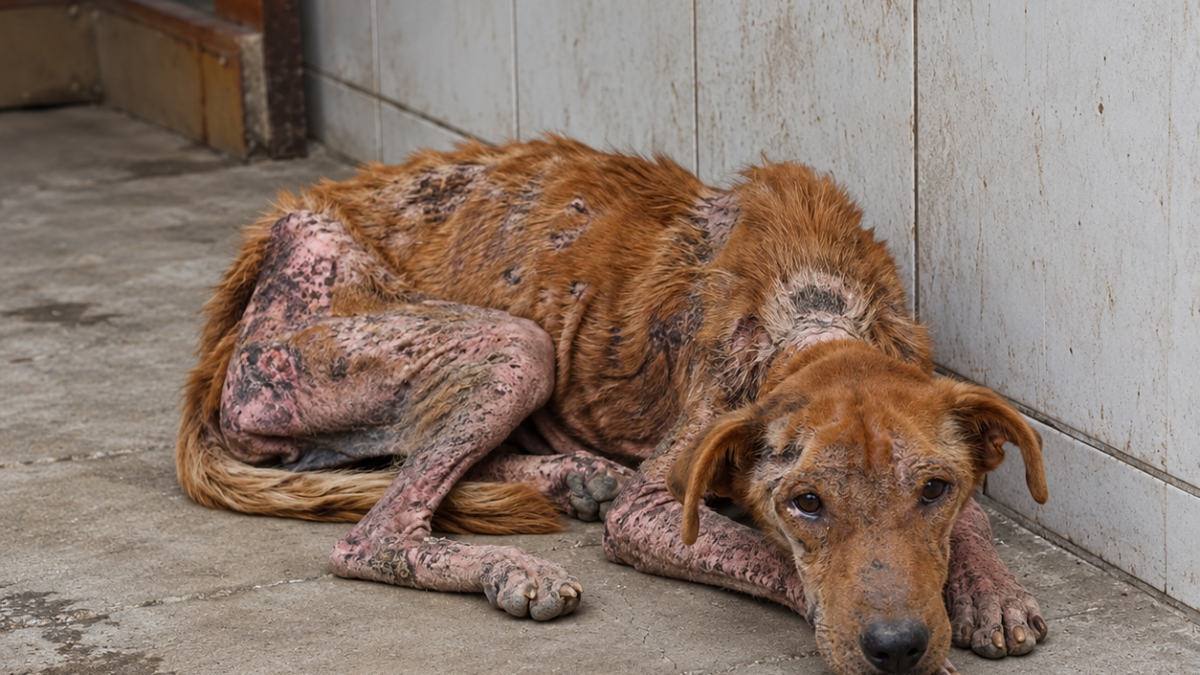
PART 2
“He was adopted,” the man said.
I straightened.
“From where?”
“I don’t remember.”
“You adopted him?”
“My wife did.”
The answer sounded simple, but his body didn’t.
His arms were crossed too tightly.
His eyes kept drifting toward the back door.
He seemed less like someone remembering an old detail and more like someone measuring every word before it left his mouth.
Rachel returned with a clipboard.
“Full legal name?”
He gave it.
“Phone number?”
He rattled one off.
“Address?”
He gestured around him.
“You’re standing in it.”
Rachel didn’t react.
She had worked rescue long enough to know that irritation was sometimes embarrassment, sometimes defensiveness, and sometimes an attempt to make us hurry.
“Current veterinary clinic?”
The man shook his head.
“None.”
“Previous clinic?”
“My wife handled that.”
I looked at him.
“Where is your wife?”
“At work.”
“Can you call her?”
His eyes snapped toward me.
“Why?”
“Because we need Canelo’s medical history.”
“You’re taking him. Why do you need to know all that?”
“Because he’s sick.”
“I already told you that.”
“And I’m asking how long.”
“I don’t know.”
I heard Rachel’s pen stop moving.
The man noticed.
“What?”
Rachel looked up.
“Nothing. I just need accurate information.”
“I’m giving you accurate information.”
“Then when was the last time he saw a veterinarian?”
“I said I don’t know.”
Canelo shifted on the concrete behind me.
The sound was faint, claws scraping against the ground.
Every time the man’s voice rose, Canelo looked toward him.
That was what made the conversation so difficult.
The dog still cared.
The dog still recognized him as someone important.
The dog had no idea we were discussing the fact that the person he trusted couldn’t—or wouldn’t—remember when he last received medical care.
I lowered my voice.
“Just sign the surrender.”
The man took the clipboard.
His hand moved quickly.
No hesitation.
No request for time.
No question about whether Canelo might come back.
He signed his name and pushed the clipboard toward Rachel.
“There.”
I studied his face.
“You understand this transfers ownership to the rescue.”
“Yes.”
“You won’t be able to demand him back later.”
“I understand.”
“You’re sure?”
He let out a frustrated breath.
“Lady, look at him.”
I did.
That sentence stayed with me for a long time.
Look at him.
As if Canelo’s condition were evidence that letting him go was logical.
As if the dog had arrived at that condition independently.
As if what was lying against the wall had nothing to do with the people standing ten feet away.
I turned from the man.
“All right. Let’s move him.”
Rachel brought a large blanket from the van.
Canelo watched us with tired suspicion as we approached from both sides.
“I’m going under his shoulders,” I said.
“I’ve got the hips.”
“Easy.”
We slid the blanket beneath him.
Even that made him whimper.
The sound was so soft I almost missed it.
Rachel froze.
“I’m sorry, sweetheart.”
Canelo turned his face toward her hand.
He didn’t snap.
He didn’t resist.
He just looked exhausted.
“One, two, three.”
We lifted.
His body felt frighteningly light.
His legs hung over the blanket.
As we carried him toward the gate, Canelo twisted his head backward toward the house.
The back door opened.
A woman stood there with a purse still hanging from one shoulder.
“What are you doing?”
The man sighed.
“They’re taking Canelo.”
Her face emptied.
“What?”
She hurried down the steps.
“Wait. Wait.”
Canelo heard her.
His tail moved.
Not much.
But enough.
His entire body strained toward her.
Rachel and I lowered the blanket slightly so he wouldn’t fall.
The woman stopped three feet away.
Her hand flew to her mouth.
“Oh my God.”
The words came out like a breath.
Canelo’s tail moved again.
“Canelo?”
He tried to stand inside the blanket.
I put one hand gently against his chest.
“Easy.”
The woman came closer.
“What happened to him?”
The man stared at her.
“What do you mean, what happened?”
She looked at him.
“You said he was getting better.”
“He’s obviously not getting better.”
“You told me the medicine was working.”
I turned toward him.
“What medicine?”
He looked at me, then at his wife.
“I meant the shampoo.”
“You told me the vet prescribed it,” she said.
He rubbed his forehead.
“Melissa, not now.”
Her expression changed.
“Did you take him?”
“Take him where?”
“To the vet.”
Silence.
She dropped her purse.
It landed beside her shoe.
“You said you took him.”
“I said I handled it.”
“No. You told me Dr. Harris said the skin infection could spread to the kids.”
“I said it might.”
“You said he told you that.”
“Melissa—”
“Did you even call him?”
The man looked away.
That was answer enough.
Melissa stepped backward as if he had physically shoved her.
“You lied to me.”
He scoffed.
“He’s a dog.”
Her face hardened.
“He is our dog.”
“Not anymore.”
Canelo was still staring at her.
She crouched.
“Oh, baby.”
Her hand moved toward his face.
I caught her wrist lightly.
“Please be careful. His skin is very painful.”
She looked at me.
“Is he going to die?”
“I don’t know.”
Her eyes filled.
“What do you mean you don’t know?”
“I mean he’s severely underweight, dehydrated, and his skin is badly infected. We need to get him to the hospital.”
“I want to come.”
Her husband gave a humorless laugh.
“Seriously?”
She spun toward him.
“Yes, seriously.”
“You’re going to leave work again over this?”
“I just got home.”
“And now you’re going back out?”
She stared at him.
Then something in her expression shifted.
“You knew they were coming.”
He didn’t answer.
“You called them?”
“No.”
“Then who did?”
From outside the gate, the neighbor spoke.
“I did.”
Everyone turned.
The woman stood rigidly on the sidewalk.
Melissa looked at her.
“You?”
“Yes.”
“Why didn’t you talk to me?”
“I tried.”
“When?”
“Three times.”
“That’s not true.”
“I knocked on your door. I left a note. I texted the number I had for you.”
Melissa blinked.
“I never got a text.”
Her husband muttered, “This is ridiculous.”
The neighbor stared directly at him.
“I watched that dog get thinner every week.”
“You should’ve minded your own business.”
“I did, until your dog couldn’t stand.”
The man took one step toward the gate.
I moved between them.
“Enough.”
He pointed at the neighbor.
“She has been harassing us for months.”
The neighbor laughed once.
“If asking why a dying dog is sleeping outside counts as harassment, fine.”
Melissa looked from one person to another.
Her face had gone pale.
“I didn’t know.”
The neighbor’s expression softened for only a second.
“You didn’t want to know.”
That sentence landed hard.
Melissa lowered her eyes.
I looked at Rachel.
“We need to go.”
Melissa picked up her purse.
“I’m coming.”
“No,” her husband said.
She turned.
“What?”
“You’re not going anywhere.”
“I’m going with my dog.”
“You signed him over,” he said, pointing toward me. “He’s not your dog anymore.”
Her eyes widened.
“You signed without me?”
“He’s in my name too.”
“You had no right.”
“He was dying out here!”
“And whose fault is that?”
The question came out louder than anything else she had said.
Even Canelo flinched.
Melissa saw it.
Her anger collapsed immediately.
She crouched beside the blanket again.
“I’m sorry, baby.”
I looked at her.
“We have to leave now.”
She nodded.
“Can I follow you?”
“Not into treatment. You can give us medical history by phone.”
“Please.”
“I’ll call you.”
She closed her eyes.
Then she leaned toward Canelo.
“I’m sorry.”
His nose moved toward her.
She touched the side of his face with two fingers.
He licked them.
Melissa covered her mouth.
I couldn’t watch anymore.
We lifted him.
As we crossed through the gate, Canelo turned his head toward the house again.
He kept looking backward even after we reached the van.
I opened the rear doors.
We placed him carefully on a padded stretcher.
Rachel climbed in beside him.
Before I closed the doors, I looked toward the house.
Melissa was crying.
Her husband had already gone inside.
The neighbor stood at the gate with both hands wrapped around the metal bars.
“Please help him,” she said.
“We will.”
I closed the van.
For the first five minutes of the drive, Canelo stared through the rear window.
Then the house disappeared.
His head sank onto the blanket.
And he stopped looking back.
Dr. Patel was waiting when we arrived.
He had worked with our rescue for almost nine years and had seen animals come through his clinic after car accidents, starvation, hoarding cases, illegal breeding operations, and cruelty investigations.
He did not shock easily.
When we carried Canelo into the exam room, he stopped halfway through pulling on his gloves.
“How long has he been like this?”
“We don’t know.”
He looked at me.
“That’s the answer they gave you?”
“Yes.”
Dr. Patel exhaled through his nose.
“Get his temperature first. Then weight. Carefully.”
One of the technicians slid the scale beneath Canelo.
The number appeared.
I stared at it.
“That can’t be right.”
“It is,” Jasmine said quietly.
Canelo should have weighed somewhere around sixty-five pounds.
He weighed thirty-seven.
Dr. Patel pressed two fingers against his gums.
“Pale.”
He checked his hydration.
“Significantly dehydrated.”
He ran his hands along Canelo’s spine.
The dog trembled.
“Painful?”
Canelo tensed.
“Yes.”
Dr. Patel bent closer to the skin along his neck.
The smell was stronger inside the warm exam room.
Infection.
Yeast.
Old skin.
Something sour beneath all of it.
“We need bloodwork, skin scrapings, fecal testing, urinalysis. Start fluids. Small meals only. No free feeding.”
“Why?”
“Refeeding complications. His body has adapted to inadequate nutrition. If we overload him, we can cause more problems.”
I looked at Canelo.
Even food had to be treated like medicine now.
Dr. Patel continued his examination.
Canelo had pressure sores over his hips.
His nails had curled enough to alter the way he walked.
There were thickened areas around his elbows from lying on hard surfaces.
Several patches of skin were actively infected.
His lymph nodes were enlarged.
When Dr. Patel reached his abdomen, Canelo flinched hard.
“Easy.”
He palpated again.
“Could be discomfort from malnutrition. Could be something else.”
I heard myself ask, “Is he going to make it?”
Dr. Patel didn’t answer immediately.
I appreciated him for that.
He never gave false reassurance.
“He’s compromised,” he said. “Very compromised.”
“But?”
“But he’s alert. He’s responsive. His heart sounds reasonably strong. I’m not seeing immediate neurological signs. If his organs haven’t been damaged too badly, we have options.”
“What do you think started this?”
“The skin?”
“All of it.”
He straightened.
“Could be multiple things. Severe demodectic mange. Chronic bacterial infection. Hypothyroidism. Allergies. Parasites. Poor nutrition. Probably a combination.”
“Can you tell how long?”
“Not precisely.”
He looked at the thickened skin.
“But chronic changes like these don’t appear in a weekend.”
I felt my jaw tighten.
“How long?”
“Months. Potentially much longer.”
Rachel stood near the sink.
“What would proper treatment have looked like early?”
“That depends on the cause.”
“Could it have prevented this?”
Dr. Patel’s eyes moved toward Canelo.
“Almost certainly.”
The room went quiet.
Canelo lifted his head.
He looked from Dr. Patel to me.
Then he lowered it again.
The first night was the worst.
Canelo was admitted to an isolation area until contagious causes could be ruled out.
He received IV fluids, antibiotics for the secondary infection, pain medication, nutritional support, and medicated treatment for his skin.
I stayed until nearly midnight.
At some point Jasmine walked in carrying coffee.
“You planning to sleep here?”
“No.”
She handed me the cup.
“That sounded convincing.”
I accepted it.
Canelo was lying on several folded blankets.
The fluorescent lights had been dimmed.
His IV line ran from one front leg to a pump beside the kennel.
“You know,” Jasmine said, “you’re allowed to go home.”
“I know.”
“He’ll still be here in the morning.”
“That’s what I’m hoping.”
She leaned against the counter.
“He likes you.”
“He barely knows me.”
“Sometimes that’s enough.”
Canelo opened his eyes when I shifted in the chair.
I moved closer.
“Hey.”
His tail did not move.
He looked tired.
I slipped my hand through the kennel door.
His nose touched my fingers.
Then his eyes closed again.
I sat there for another hour.
Around eleven thirty, Dr. Patel walked through on his final round.
“You’re still here.”
“So is he.”
“He’s stable.”
“For now.”
“For now is what we have.”
I nodded.
He checked the IV pump.
“Go home.”
I looked at Canelo.
“I don’t want him waking up alone.”
Dr. Patel gave me a look.
“He spent months alone. One night in a staffed hospital is not abandonment.”
I knew he was right.
Knowing didn’t help.
I stood.
Before leaving, I whispered through the kennel door.
“I’ll be back.”
Canelo’s eyes opened.
For a moment I wondered if the words meant anything to him.
Then I thought about how many times he must have watched people go through a door.
How many times he had waited.
I went home anyway.
At 5:42 the next morning, my phone rang.
I grabbed it before the second ring.
“Hello?”
“It’s Jasmine.”
I sat up.
“What happened?”
“He’s okay.”
My heart kept pounding.
“Do not start a phone call like that.”
She laughed softly.
“Sorry. I thought you’d want to know he ate.”
I closed my eyes.
“How much?”
“About half the small meal we offered.”
“That’s good?”
“That’s very good.”
I lay back against the pillow.
“Anything else?”
“He stood by himself.”
I sat up again.
“For how long?”
“Maybe twenty seconds.”
“That counts.”
“I thought you’d say that.”
“Did he fall?”
“No. Sat down.”
“Good.”
“He also tried to eat my pen.”
I smiled for the first time since we found him.
“That feels promising.”
“Go back to sleep.”
“Not happening.”
By seven thirty, I was at the hospital.
Canelo was awake.
When I entered the treatment area, his head lifted.
I walked closer.
“Morning.”
His tail tapped the blanket.
Once.
I stopped.
Jasmine grinned from behind me.
“You saw that?”
“Do it again.”
“Excuse me?”
“Walk out and let me come back in.”
She laughed.
“You’re ridiculous.”
I stepped away, waited three seconds, then returned.
“Hey, Canelo.”
His tail moved again.
Twice this time.
I crouched beside him.
“That’s what I thought.”
For most dogs, a wagging tail would have meant nothing remarkable.
For Canelo, it felt like a door opening.
The test results started coming in that afternoon.
Dr. Patel called me into his office.
“We found demodex mites.”
“Mange.”
“Demodectic mange. Severe.”
“Contagious?”
“Generally not in the way people think of mange. Most healthy dogs keep these mites under control naturally. When the immune system is compromised, they can explode in number.”
“So why was his immune system compromised?”
“That’s the next part.”
He turned the monitor toward me.
“His thyroid values are very low.”
“Hypothyroidism?”
“That’s my leading diagnosis. We’re running confirmation testing.”
I stared at the screen.
“Treatable?”
“Yes.”
“How treatable?”
“Daily medication, monitoring, and dose adjustment when necessary.”
“That’s it?”
“For the thyroid component.”
He pointed toward another set of results.
“He also has significant skin infection, anemia, malnutrition, intestinal parasites, and dehydration. None of that is ‘that’s it.’ But the underlying endocrine issue may explain a lot.”
I leaned back.
“So if someone had taken him in when his hair started falling out…”
“I can’t tell you exactly what would have happened.”
“But?”
“But hypothyroidism is routinely managed.”
Something hot moved through my chest.
“How much does the medication cost?”
“Depends on dose and pharmacy.”
“Expensive?”
“Usually manageable.”
I looked out through the glass wall toward treatment.
Canelo was sleeping.
All those months.
All those nights outside.
All that itching, pain, weakness.
And a major piece of what was happening to him could be treated with a pill.
Dr. Patel watched my face.
“Don’t simplify it too much.”
“I’m trying not to.”
“Even with appropriate thyroid treatment, his skin problems might have required significant care.”
“I know.”
“But?”
“But they didn’t even try.”
“We don’t know that yet.”
I looked at him.
“You sound like an attorney.”
“I sound like a veterinarian who wants you to separate what we can prove from what you feel.”
I hated when he was right.
He continued.
“Get the old records.”
“I’m working on it.”
“That will tell us more.”
My phone buzzed.
Melissa.
I looked at the screen.
“Maybe sooner than expected.”
I answered outside.
“Hello?”
“Is he alive?”
“Yes.”
A breath broke on the other end.
“Is he okay?”
“No.”
Silence.
Then she said, “I mean—is he going to be okay?”
“We don’t know yet.”
“What did they find?”
I walked farther from the clinic entrance.
“Mange. Severe infection. Parasites. Malnutrition. Probable hypothyroidism.”
“What’s that?”
“His thyroid isn’t producing enough hormone.”
“Can they fix it?”
“Manage it.”
“How?”
“Medication.”
Another silence.
“Expensive?”
I stopped walking.
“Why?”
“I’m asking.”
“No, Melissa. Why does the cost matter to you now?”
“It matters because—”
“Because what?”
Her voice dropped.
“Because my husband kept saying treatment would cost thousands.”
I closed my eyes.
“Who told him that?”
“He said the vet did.”
“Which vet?”
“Dr. Harris.”
“The one you mentioned yesterday?”
“Yes.”
“Did you ever speak to Dr. Harris yourself?”
“A few times.”
“About Canelo?”
“Yes.”
“When?”
She hesitated.
“Years ago.”
“Melissa, I need the complete truth.”
“I’m trying.”
“No. You’re giving me pieces.”
Her breathing changed.
I could tell she was crying before she spoke again.
“When Canelo first started scratching, I took him in.”
“How long ago?”
“Maybe three years.”
“What did they say?”
“They thought allergies or mites. They wanted tests.”
“Did you authorize them?”
“Some.”
“Which ones?”
“I don’t remember.”
“Do you have records?”
“No.”
“Can you authorize the clinic to release them?”
“Yes.”
“Today.”
“Yes.”
I leaned against my car.
“What happened after that visit?”
“He got medicine. He improved.”
“For how long?”
“A few months.”
“Then?”
“It came back.”
“Did you return?”
“Yes.”
“Did they recommend more testing?”
She went silent.
“Melissa.”
“Yes.”
“Did you do it?”
“No.”
“Why?”
“Money.”
Her answer came so quietly I almost didn’t hear it.
“We had bills. My husband’s hours got cut. Our youngest needed dental work. The car transmission went out.”
I listened.
Those things were believable.
I had met families who loved their animals and genuinely could not afford complicated veterinary care.
But there were always more questions.
“Did you ask the clinic about payment plans?”
“I don’t remember.”
“Low-cost options?”
“Maybe.”
“Rescue surrender?”
Silence.
“Melissa?”
“I don’t remember.”
That pause told me she remembered something.
I didn’t push yet.
“What happened next?”
“Canelo got worse.”
“How much worse?”
“He lost hair. He smelled bad. He slept more.”
“And you did nothing?”
“That’s not fair.”
My hand tightened around the phone.
“Then tell me what you did.”
“We bought special shampoo. Changed his food. Tried vitamins.”
“Was any of that prescribed?”
“No.”
“Did you call the vet?”
“My husband said he did.”
“Did you hear the call?”
“No.”
“Did you see medication?”
“No.”
“Did you see a receipt?”
“No.”
The pattern was becoming clear.
“When did he start sleeping outside?”
“About a year ago.”
“A year?”
“Not every night at first.”
“Why was he put outside?”
“My husband said the smell was getting into the furniture.”
I stared across the parking lot.
“And you agreed?”
“No.”
“But Canelo stayed outside.”
Her voice cracked.
“I brought him in when I could.”
“When your husband wasn’t home?”
“Yes.”
“What happened when he came home?”
“He’d put him back out.”
“And you let him.”
“Stop saying it like that.”
“How should I say it?”
“I loved that dog.”
I looked through the clinic window.
Canelo was sleeping beneath a warming blanket.
“I believe you did.”
She started crying.
That answer surprised her.
“Then why are you talking to me like I’m some monster?”
“Because loving an animal and protecting it are not the same thing.”
She didn’t respond.
I continued more quietly.
“I don’t need you to convince me that you loved him. I need accurate medical history so we can keep him alive.”
“I’ll call the clinic.”
“Please do.”
Before hanging up, she whispered, “Does he hate me?”
I looked at Canelo.
“No.”
That was the truth.
And I think it hurt her more than if I had said yes.
The veterinary records arrived before lunch the next day.
There were twenty-three pages.
I sat in the conference room with Rachel and Dr. Patel.
The first visit was almost exactly as Melissa described.
Canelo had been three years old.
Healthy weight.
Alert.
Friendly.
He had developed hair loss along his flanks and neck, recurrent itching, and a skin infection.
The veterinarian recommended skin scrapings, bloodwork, parasite screening, and medication.
Some diagnostics were authorized.
Others were declined.
A month later, Canelo improved.
Eight months after that, he returned.
The notes were worse.
Hair loss had spread.
He had gained then lost weight.
He appeared lethargic.
The veterinarian recommended thyroid testing and additional diagnostics.
Declined.
Medication was dispensed for the skin infection.
Then I saw a note.
I read it twice.
Owner expresses financial concern. Discussed CareCredit, staged diagnostics, local low-cost resources, and surrender to rescue if long-term treatment cannot be pursued.
Rachel leaned closer.
“They were offered surrender.”
“Yes.”
Dr. Patel continued scrolling.
Another note appeared eleven months later.
Client called requesting refill. Advised patient must be rechecked before further medication. Client declined appointment.
Then nothing.
No additional visits.
No medication refills.
No examination.
No follow-up.
For nearly two years.
I sat back.
“Melissa told me she didn’t remember surrender being discussed.”
Rachel’s mouth tightened.
“She remembered.”
The final page contained a scanned consent form.
The person who had declined the testing was not Melissa.
It was her husband.
I pointed.
“Look at the signature.”
Rachel nodded.
“That explains part of it.”
“Not enough.”
“No.”
I called Melissa.
She answered immediately.
“I was about to call you.”
“I have the records.”
She went silent.
“The clinic documented discussing rescue surrender.”
“I know.”
“You said you didn’t remember.”
“I lied.”
The admission came quickly this time.
“Why?”
“I was ashamed.”
“What happened?”
“I wanted to surrender him.”
I looked at Rachel.
She was watching me.
“And your husband?”
“He refused.”
“Why?”
“He said Canelo was part of the family.”
I almost laughed.
Nothing about it was funny.
“He said surrendering him would embarrass us.”
“Embarrass you?”
“He knew people at the rescue. He thought they’d judge us for not paying.”
“So instead he stopped treating the dog.”
“I kept thinking he would change his mind.”
“For two years?”
“I know.”
Her voice broke.
“I know how it sounds.”
“No. I don’t think you do.”
“I was scared of him.”
That stopped me.
I sat straighter.
“Scared how?”
She didn’t answer.
“Melissa?”
“He never hit me.”
I waited.
“He controlled the money. He checked everything I spent. If I used a card without telling him, he’d lose it. He’d yell for hours. Sometimes he’d take my keys.”
Rachel’s expression changed.
This was no longer as simple as it had looked from the yard.
“Did he threaten you?”
“Not exactly.”
“That’s not an answer.”
“He’d say if I left, I’d never see the kids.”
I rubbed my forehead.
“Did anyone know?”
“No.”
“Why are you telling me?”
“Because I need you to understand.”
“I understand you were in a difficult situation.”
“But you still blame me.”
“Yes.”
She inhaled sharply.
I continued before she could speak.
“Being afraid explains why someone freezes. It doesn’t erase what happened to Canelo. Both things can be true.”
She was quiet for a long time.
Then she said, “I know.”
That answer sounded different.
Not defensive.
Not angry.
Tired.
“I should’ve done something sooner.”
“Yes.”
“I should’ve taken him and left.”
“Yes.”
“I didn’t.”
“No.”
She started crying.
I didn’t rescue her from the silence.
Eventually she asked, “Can I see him?”
“Not yet.”
“When?”
“When the medical team believes it won’t compromise his recovery.”
“Will you tell me?”
“Yes.”
“Thank you.”
Before hanging up, she said, “There’s something else.”
“What?”
“My husband called me after you left.”
“And?”
“He said if animal control contacts us, I should say Canelo got sick suddenly.”
I looked at Rachel.
“Did you agree?”
“No.”
“Do you have that in writing?”
“No. He said it in person.”
“Did anyone else hear it?”
“My daughter.”
“How old is she?”
“Sixteen.”
“Don’t involve her unless investigators ask.”
“I won’t.”
I paused.
“Melissa?”
“Yes?”
“If he pressures you to lie, document it.”
“All right.”
“And if you feel unsafe, this is bigger than Canelo. Contact someone you trust.”
She was silent.
Then she whispered, “I’m starting to understand that.”
Canelo’s first week became a negotiation with his body.
Some mornings he ate.
Some mornings he turned his face away.
Sometimes he stood when I entered.
Other times he barely opened his eyes.
Every improvement came with a setback.
On day four, he developed diarrhea.
On day five, his temperature climbed.
Dr. Patel adjusted his antibiotics and ordered repeat bloodwork.
I stood outside the lab area while he reviewed the results.
“Secondary bacterial infection is still significant.”
“Is he septic?”
“No.”
“Close?”
“Not currently.”
I exhaled.
“His white count is elevated, but kidney values are stable. Liver values are mildly abnormal, likely from malnutrition and systemic stress.”
“So?”
“So we continue.”
“How long?”
“As long as he needs.”
That became our answer for everything.
How long until he could go home?
As long as he needed.
How long until his skin stopped hurting?
As long as he needed.
How long before he trusted a bed, a doorway, a full bowl, a person leaving the room?
There was no lab test for that.
On the seventh day, Canelo walked voluntarily.
Not because someone lifted him.
Not because food was placed directly in front of him.
He stood, took three unsteady steps, and walked toward Jasmine.
She had been cleaning the kennel beside his.
When she saw him moving, she froze.
“Are you doing this?”
Canelo took another step.
His rear legs trembled.
I moved closer but didn’t touch him.
“Come on, buddy.”
He looked at me.
Then Jasmine.
Then the bowl in her hand.
She laughed.
“Oh, now I understand.”
“It’s not love.”
“It’s chicken.”
“He has priorities.”
She crouched.
Canelo walked four more steps.
By the time he reached her, everyone in treatment had noticed.
A receptionist leaned through the doorway.
One of the technicians whispered, “Go, Canelo.”
He reached Jasmine.
She offered him a tiny piece of chicken.
He took it carefully.
Then he looked at the bowl.
Everyone laughed.
The sound startled him.
His ears went back.
I crouched.
“You’re okay.”
His tail moved.
Once.
Then twice.
That tiny movement made the room go quiet.
Jasmine wiped one eye with the back of her wrist.
“Don’t.”
“I’m not doing anything.”
“You’re crying.”
“No, I have allergies.”
“In October?”
“Very aggressive allergies.”
Canelo took another piece of chicken.
For the first time, I saw appetite rather than mere survival.
The neighbor who had reported him called me that afternoon.
Her name was Teresa.
“How is he?”
“Improving.”
“Really?”
“Yes.”
She started crying immediately.
“I’m sorry.”
“You don’t have to apologize.”
“I’ve been expecting the worst.”
“So were we.”
“Can I help?”
“You already did.”
“No. I mean now.”
I thought about it.
“Do you have photos of him from before?”
“I might.”
“Anything that shows his condition over time could help animal control.”
“I have videos too.”
“How many?”
“A lot.”
“Why?”
She went quiet.
“Because I knew one day someone would ask why I didn’t do more.”
I leaned back.
“You reported him.”
“Eventually.”
“What stopped you?”
“Melissa.”
“What about her?”
“She kept telling me they were treating him.”
“That her husband had taken him to the vet?”
“Yes.”
“And you believed her?”
“At first.”
“What changed?”
Teresa exhaled.
“One night about four months ago, Canelo was crying.”
My stomach tightened.
“What kind of crying?”
“Whining. Scratching at the door. It was cold.”
“Did they let him in?”
“No.”
“What did you do?”
“I went over.”
“And?”
“Her husband told me to get off his property.”
“Was Melissa there?”
“She came to the window.”
“What did she do?”
“Nothing.”
Teresa’s voice hardened.
“She just stood there.”
I thought about Melissa telling me she had been afraid.
Again, two truths could exist.
“I started taking pictures after that.”
“Send everything.”
“I will.”
An hour later, more than eighty photos and videos arrived.
I viewed them alone.
That was a mistake.
The first images showed Canelo months earlier.
He was thin but standing.
His coat was patchy.
Then, week by week, he changed.
More hair disappeared.
His body narrowed.
His posture lowered.
In one video, he paced along the back door and scratched once.
The door never opened.
In another, rain hit the yard while Canelo lay beneath a cheap plastic table because it was the only cover available.
The worst clip was only seventeen seconds long.
It had been recorded six weeks before we found him.
Canelo stood at the gate when Teresa approached.
His tail wagged weakly.
Then a man’s voice shouted from inside the house.
“Get away from the fence.”
Canelo immediately lowered his head and walked back toward the wall.
I watched it twice.
Then I stopped.
I couldn’t watch it a third time.
Animal control investigator Daniel Reeves came to the hospital two days later.
He was methodical, quiet, and almost impossible to read.
He took photographs.
He interviewed Dr. Patel.
He reviewed the records.
Then he sat across from me.
“Walk me through the surrender.”
I did.
“Exact words if you remember them.”
I repeated the husband’s comments as closely as I could.
When I reached the part about Dr. Harris allegedly telling them Canelo’s condition might spread to the children, Reeves paused.
“Did he state that directly?”
“The wife said he told her that.”
“But you did not hear him admit saying it?”
“No.”
“Good distinction.”
He wrote something down.
I understood then why Dr. Patel had warned me about separating proof from emotion.
Reeves asked, “Did the husband show concern for the animal?”
“Define concern.”
“Ask about prognosis. Request updates. Express distress.”
“No.”
“Did the wife?”
“Yes.”
“Anything else?”
“She said he asked her to claim Canelo became sick suddenly.”
“Firsthand?”
“She told me.”
He nodded.
“We’ll interview her.”
“Will there be charges?”
“Possibly.”
“That’s vague.”
“It’s supposed to be.”
I leaned back.
“What do you need?”
“Evidence of duration, access to care, knowledge of the condition, and failure to act.”
“We have records.”
“Yes.”
“Photos.”
“Yes.”
“A witness.”
“Yes.”
“Then what’s missing?”
“Intent isn’t required for every neglect violation, but context matters.”
I felt irritation rise.
“The dog weighed thirty-seven pounds.”
“I know.”
“He could barely stand.”
“I know.”
“He had been offered surrender.”
“I know.”
Reeves closed his notebook.
“You want me to be angry.”
“No. I want you to do something.”
“Those are different jobs.”
I held his stare.
Then he said, “We’re doing something.”
His voice was calm.
“Slow doesn’t mean nothing is happening.”
I looked through the treatment room window.
Canelo was sleeping.
“He didn’t have time for slow.”
Reeves followed my gaze.
“No. He didn’t.”
Ten days after rescue, Canelo had his first bath.
Calling it a bath made it sound simple.
It took nearly an hour.
The medicated water had to stay on his skin for a prescribed amount of time.
Every movement had to be gentle.
His open areas could not be scrubbed.
Jasmine and I worked together.
At first Canelo trembled so badly that his teeth clicked.
“It’s okay,” I said.
He tried to climb out.
His legs slipped.
I caught him beneath the chest.
“No, no. I’ve got you.”
Jasmine adjusted the water temperature.
“Too warm?”
“No. Fear.”
We slowed everything down.
I kept one hand on his shoulder.
Jasmine spoke continuously.
“Good boy. That’s it. Nothing bad is happening.”
Eventually the shaking eased.
When we wrapped him in towels afterward, something strange happened.
Canelo leaned into the fabric.
Then into my arms.
He closed his eyes.
Jasmine smiled.
“He likes towels.”
“No. He likes being warm.”
She brought another towel from the dryer.
The second it touched his back, Canelo sighed.
A full-body sigh.
I looked at Jasmine.
“We’re buying a towel warmer.”
“For the hospital?”
“For him.”
“That seems reasonable.”
From that day forward, warm towels became Canelo’s favorite thing.
Even months later, the sound of the dryer door opening could bring him running.
His coat did not return quickly.
For weeks, his skin remained the visible record of what had happened.
But other things changed first.
His posture improved.
He began sleeping stretched out instead of curled tightly.
He started choosing where to lie.
That mattered more than I expected.
At first he always pressed himself into corners.
Against walls.
Under tables.
Beside cabinets.
Anywhere his back was protected.
Then one afternoon, I found him sleeping in the middle of the treatment room.
People walked around him.
Doors opened.
Phones rang.
Nobody bothered him.
He slept through all of it.
I stood there longer than necessary.
Rachel came beside me.
“What?”
“Look where he’s sleeping.”
She stared.
Then she understood.
“In the middle.”
“Yeah.”
Canelo opened one eye, saw us staring, and went back to sleep.
Rachel smiled.
“That might be the first normal thing he’s done.”
Melissa visited in the third week.
Dr. Patel approved fifteen minutes.
I insisted on being present.
So did Rachel.
When Melissa walked in, Canelo was lying on a thick bed wearing a soft recovery shirt.
She stopped.
“Oh.”
That one sound held everything.
Relief.
Shame.
Shock.
Canelo lifted his head.
Melissa whispered, “Hi, baby.”
He stood.
His legs were steadier now.
He stared at her for three seconds.
Then his tail began moving.
Melissa covered her mouth.
“No.”
Canelo walked toward her.
Slowly.
But without hesitation.
She sank to her knees.
“Oh, Canelo.”
He pressed his nose against her hand.
She began sobbing.
“I’m sorry.”
Canelo leaned toward her.
She touched the side of his neck.
“I’m so sorry.”
I watched his tail.
He was happy.
That was the part that hurt.
He didn’t punish her.
He didn’t turn away.
He didn’t understand our categories of guilt.
He recognized someone he had loved.
Melissa buried her face against his shoulder.
For several seconds, none of us spoke.
Finally she sat back.
“Look at you.”
Canelo licked her chin.
She laughed through tears.
“You still remember me.”
Of course he did.
After ten minutes, I told her we needed to end the visit.
She nodded.
Then she looked at me.
“Can I ask you something?”
“Yes.”
“When he’s better… can I have him back?”
The room changed.
Rachel looked at me.
I had known the question was coming.
“No.”
Melissa closed her eyes.
“I figured.”
“You surrendered him.”
“My husband did.”
“You were present.”
“I didn’t sign.”
“You also didn’t stop us.”
“I was in shock.”
“You asked us to save him.”
“I know.”
“And that’s what we’re doing.”
She stood.
“I could do better.”
“Maybe.”
“Then why won’t you let me prove it?”
I looked at Canelo.
He had returned to his bed.
“Because he already spent years waiting for someone in that house to prove it.”
Her face tightened.
“I didn’t do this to him.”
“You participated by not stopping it.”
“I told you why.”
“Yes.”
“You know what my husband is like.”
“I know what you told me.”
She crossed her arms.
“So you think I’m just as bad as him.”
“No.”
“Sounds like it.”
“I think this isn’t about ranking guilt.”
Her eyes filled again.
“You think I don’t deserve him.”
“I think Canelo deserves a home where his safety doesn’t depend on whether somebody else is angry about money.”
She looked away.
That sentence landed.
After a long pause, she whispered, “I’m leaving him.”
“Your husband?”
“Yes.”
I said nothing.
“I took the kids to my sister’s yesterday.”
“Are you safe?”
“Yes.”
“Good.”
She wiped her face.
“I should’ve done it sooner.”
“Yes.”
“I hate that you keep saying yes.”
“I’m not going to lie to make this easier.”
She nodded.
“I know.”
Before she left, she crouched beside Canelo one final time.
“Be good.”
His tail moved.
She smiled weakly.
“He never was.”
Then she walked out.
Canelo watched the door for almost a minute.
But he didn’t follow.
His first real setback came two days later.
I arrived in the morning and immediately knew something was wrong.
Canelo was lying on his side.
Breakfast untouched.
Jasmine stood near the kennel.
“He vomited twice.”
My stomach dropped.
“Temperature?”
“103.7.”
“Where’s Patel?”
“Coming.”
Within minutes, Canelo was on the exam table.
Bloodwork.
X-rays.
Ultrasound.
The entire rhythm of the hospital changed.
I stood against the wall.
Dr. Patel studied the images.
“What?”
“I don’t like his abdomen.”
“What does that mean?”
“There’s inflammation.”
“Obstruction?”
“Not obvious.”
“Tumor?”
“Stop.”
“I’m asking.”
“You’re jumping.”
He ordered additional tests.
Hours passed.
Canelo became weaker.
At one point he turned his head toward me and rested it against my arm.
I remember thinking, Not now.
You do not get to leave now.
Not after learning what a warm towel feels like.
Not after taking chicken from Jasmine.
Not after your tail started moving again.
Dr. Patel eventually came into the room.
“Pancreatitis.”
I stared at him.
“Why?”
“Could be stress. Could be dietary sensitivity. Could be unrelated. His system has been through hell.”
“Can you treat it?”
“Yes.”
“Will he survive it?”
“I think so.”
“You think?”
“I think so.”
For two days, Canelo barely ate.
He received fluids and medication.
I sat beside him.
Sometimes he looked at me.
Sometimes he didn’t.
On the third morning, Jasmine entered carrying a tiny bowl.
“Chicken.”
“He refused it yesterday.”
“This is new chicken.”
“That’s not medically different.”
“It knows what it did.”
She held a piece beneath Canelo’s nose.
His nostrils moved.
Nothing.
“Come on,” she whispered.
He turned away.
Jasmine’s shoulders dropped.
Then, ten seconds later, Canelo looked back.
He took the chicken.
Jasmine froze.
“Did you see that?”
“Yes.”
She offered another piece.
He ate it.
Then another.
I laughed.
Jasmine started crying.
“Your allergies?”
“Shut up.”
By the end of the day, Canelo had eaten half a meal.
The fever came down.
The next morning he stood.
Recovery began again.
At the end of the fourth week, Dr. Patel said the words I had been waiting for.
“He can leave the hospital.”
I smiled.
“Good.”
“Medical foster only.”
“Obviously.”
“Strict medication schedule.”
“I know.”
“Small meals.”
“I know.”
“Skin treatment.”
“I know.”
“Recheck in one week.”
“I know.”
He looked at me.
“You’re going to ignore one instruction.”
“Which?”
“The one where I tell you not to get attached.”
“That’s not a medical instruction.”
“It should be.”
Rachel had already guessed what was happening.
“So he’s going home with you.”
“Temporarily.”
She laughed.
“Of course.”
“I foster.”
“You fail at fostering.”
“I have successfully placed dozens of dogs.”
“And how many slept beside your couch before you drove them home?”
“That is irrelevant.”
She held up Canelo’s stuffed duck.
He had acquired it three days earlier from a donation bin and refused to surrender it.
“What about this?”
“He needs enrichment.”
“He carries it to his water bowl.”
“Emotional enrichment.”
Rachel handed me the duck.
“Temporary.”
“Yes.”
Canelo wagged.
“Both of you stop looking at me.”
My house confused him.
The first thing he did when we entered was freeze.
He stood on the kitchen tile staring toward the back door.
I unclipped the leash.
“You’re okay.”
He didn’t move.
I walked toward the living room.
“Come on.”
Nothing.
I crouched.
“Canelo.”
His eyes moved toward me.
Then back toward the door.
I realized he didn’t know whether he was allowed farther inside.
I returned to him.
“You live in the whole house.”
He couldn’t understand the words.
So I showed him.
I walked slowly from room to room.
Kitchen.
Living room.
Hallway.
Bedroom door.
Back again.
Canelo followed four feet behind me.
At the living room rug, he stopped.
He put one paw on it.
Pulled it back.
Tried again.
The softness seemed strange beneath his feet.
Finally he stepped onto it.
Then stood completely still.
I sat on the couch.
His bed was beside me.
A thick orthopedic mattress with a washable cover.
Canelo looked at the bed.
Then lay on the floor.
I moved the bed closer.
He stood.
Moved three feet away.
Lay on the floor again.
“All right.”
I left it.
Ten minutes later, when I went to the kitchen, he followed.
When I returned, he followed.
Bathroom.
Followed.
Laundry room.
Followed.
By evening, I had acquired a silent reddish shadow.
At dinner, I prepared his measured food and placed the bowl down.
Canelo approached.
Then stopped.
He looked at me.
“Eat.”
Nothing.
I stepped backward.
He ate quickly.
Too quickly.
Then he searched the floor.
I resisted the urge to give more.
He needed controlled meals.
When I picked up the empty bowl, he looked worried.
“You get another one later.”
His ears moved.
“I know that means nothing to you.”
That night, I put his bed beside my bedroom door.
He refused it.
At one in the morning, I woke and found him standing in the hallway.
Thunder rumbled far away.
Canelo trembled.
I got out of bed.
“It’s okay.”
He backed toward the kitchen.
Another thunderclap.
He flinched.
I sat on the floor.
“Come here.”
For almost a minute he did nothing.
Then he walked toward me.
He pressed his chest against mine.
I wrapped my arms around him.
His skin was still thin beneath his recovering coat.
His heart hammered.
“You’re inside,” I whispered.
Another boom rolled over the house.
“You stay inside.”
I slept on the living-room floor with him that night.
By morning, his stuffed duck was resting against my shoulder.
Living with Canelo revealed habits no medical chart could explain.
He panicked when a food bowl was removed.
The first few days, even after eating, he followed me if I carried the bowl to the sink.
So I started showing him where it went.
“See? Washing.”
Then I put it back in the same spot.
He watched every movement.
After a week, he stopped following me.
He hated closed back doors.
If I stepped outside without him, he would stand at the glass.
Not bark.
Not scratch.
Just stare.
So I began taking him with me whenever possible.
At first he stayed within a few feet of the house.
The yard was grass, not concrete.
He walked carefully.
Smelled everything.
One afternoon he discovered a patch of sun.
He lowered himself into it.
Rolled onto his side.
Then onto his back.
I had never seen him do that.
He lay there, belly exposed, legs crooked, completely vulnerable.
I sat on the porch and watched.
That was the first day I believed he understood he was safe.
Not permanently.
Not completely.
But enough to sleep with his stomach facing the sky.
The animal control investigation continued.
Investigator Reeves called me two weeks after Canelo came home.
“We interviewed both owners.”
“And?”
“Their accounts differ.”
“I’m shocked.”
He ignored that.
“The husband says Canelo’s decline accelerated within the last two months.”
“False.”
“We have Teresa’s photographs.”
“Good.”
“He says he believed the skin condition was untreatable.”
“Also false.”
“We have veterinary records.”
“Good.”
“He says finances prevented additional treatment.”
“That part might be true.”
“Yes.”
“But they were offered surrender.”
“Yes.”
“Will that matter?”
“It matters.”
I sat at my kitchen table.
Canelo was asleep beneath it.
“What about Melissa?”
“She is cooperating.”
“Did she tell you about him asking her to lie?”
“Yes.”
“Do you believe her?”
“That’s not a question I answer casually.”
“Reeves.”
He exhaled.
“Parts of her account are corroborated.”
“By whom?”
“I can’t discuss all witness statements.”
“Her daughter?”
Silence.
“Fine.”
He continued.
“We’re referring the case.”
“For charges?”
“For prosecutorial review.”
My hand tightened around the phone.
“What does that mean?”
“It means someone will decide whether the evidence supports criminal charges, civil violations, or both.”
“How long?”
“I don’t know.”
Canelo shifted beneath the table.
I looked down.
“Slow again.”
“Yes.”
“I hate slow.”
“I know.”
At six weeks, Canelo grew hair.
Not enough for anyone else to celebrate.
Enough for us.
Jasmine noticed first.
She was checking his skin during a recheck.
“Wait.”
“What?”
“Look.”
I leaned closer.
Along his shoulder were tiny reddish hairs.
I touched them.
Soft.
“Is that—”
“Yes.”
Rachel walked into the room.
“What?”
“Hair.”
She stared.
“Are you serious?”
“Look.”
Three adults crowded around a dog’s shoulder like archaeologists discovering buried treasure.
Canelo looked from one face to another.
Then his tail started wagging.
Dr. Patel entered.
“What is happening?”
“Hair.”
He glanced down.
“Yes. Dogs have it.”
“You have no joy.”
“I’m a doctor.”
“You are a deeply disappointing man.”
He smiled.
“Thyroid values are improving too.”
I straightened.
“How much?”
“Significantly.”
“Weight?”
“Forty-seven pounds.”
Ten pounds gained.
I looked at Canelo.
His body was changing.
Not quickly enough to erase what had happened.
But steadily.
His personality arrived in pieces.
First came food theft.
I left a piece of toast too close to the edge of the counter.
Turned around.
Gone.
Canelo stood three feet away chewing suspiciously fast.
“Did you take my toast?”
His eyes widened.
“Canelo.”
He swallowed.
Then looked toward the empty counter as if equally concerned about the missing toast.
I laughed.
That became the first time I heard him bark.
One sharp sound.
He startled himself.
Then barked again.
Within weeks, he learned exactly where cheese was stored.
The refrigerator drawer made a specific plastic sound.
Canelo could be asleep in another room.
The second I opened it, he appeared.
“You have hypothyroidism, not supernatural hearing.”
He sat.
“Absolutely not.”
He lifted one paw.
I stared at him.
“Who taught you that?”
The paw remained raised.
I gave him a tiny piece.
That was my mistake.
From then on, cheese required negotiation.
One Saturday my niece Emma visited.
She was nine.
I warned her before she entered.
“He’s friendly, but move slowly.”
“Can I pet him?”
“If he comes to you.”
She sat on the floor.
Canelo watched from the hallway.
Emma held out her hand.
She didn’t call him.
Didn’t chase him.
Didn’t stare.
After a minute, he walked closer.
He smelled her fingers.
Then her sleeve.
Then, without warning, he lowered himself and placed his head in her lap.
Emma looked up at me.
Her eyes were enormous.
“Can I move?”
“No.”
“For how long?”
“Possibly forever.”
She smiled and began stroking his ear.
Canelo closed his eyes.
Twenty minutes later, he was asleep.
Emma whispered, “Did people really leave him outside?”
“Yes.”
“Why?”
I looked at her.
There was no answer simple enough for a child.
“They made bad choices.”
“Didn’t they love him?”
“I think some of them did.”
She frowned.
“But if you love somebody, you take care of them.”
I looked at Canelo.
“Yes.”
She said it more clearly than most adults.
Melissa called occasionally.
At first I dreaded those calls.
Then they changed.
She stopped asking when she could have Canelo back.
Instead she asked, “How much does he weigh?”
“Is his hair growing?”
“Does he still hate baths?”
The answer to the last one was absolutely.
One evening she said, “Can I send you something?”
“What?”
“Pictures.”
“Of Canelo?”
“Yes. From when he was little.”
A few minutes later, my phone filled with images.
Canelo as a puppy sleeping beneath a Christmas tree.
Canelo beside a little girl in pajamas.
Canelo standing in a lake.
Canelo wearing a ridiculous birthday hat.
Canelo asleep on a couch with his feet in the air.
I stared at them for a long time.
The dog in those photographs looked nothing like the animal we had carried from the yard.
Not because his fur was different.
Because he belonged.
He was inside.
Included.
Touched.
Wanted.
One photo hurt more than the others.
Canelo was lying on a bed beside Melissa’s husband.
The man had one hand resting on Canelo’s chest.
Both were asleep.
I enlarged the image.
It was difficult to reconcile that man with the one who had stood in the backyard saying, He’s a dog.
People rarely begin at their worst.
That disturbed me more than if he had always been cruel.
At some point, Canelo had trusted him for a reason.
At some point, maybe he had deserved that trust.
Then something had changed.
Money.
Control.
Resentment.
Convenience.
Maybe all of it.
Neglect had not begun with a dramatic decision to destroy Canelo.
It had begun with a smaller decision.
Not today.
Then another.
Next week.
Then another.
We can’t afford it.
Then another.
He’s fine outside.
Eventually the unacceptable became normal.
A month later, Melissa asked to visit again.
I hesitated.
Canelo was doing well.
He had finally stopped reacting to every car door outside.
I worried seeing her might reopen something.
Dr. Patel disagreed.
“Dogs don’t process reunion the way you’re imagining.”
“You don’t know that.”
“I know you’re projecting.”
“That’s rude.”
“It’s accurate.”
“What if he becomes anxious afterward?”
“Then you manage it.”
I stared at him.
He added, “But if you don’t want her there because you’re angry, say that.”
I hated him again.
The visit happened at a park instead of the hospital.
Neutral ground.
Melissa arrived alone.
Canelo saw her from thirty feet away.
He stopped.
His tail lifted.
Then he ran.
Not fast like a healthy young dog.
But faster than I had ever seen him move.
Melissa dropped to her knees.
He reached her and nearly knocked her backward.
She laughed and cried at the same time.
“Look at you!”
Canelo licked her face.
She wrapped both arms around his neck.
I stood several feet away.
For ten minutes, I felt like an intruder.
Then Canelo looked back at me.
I didn’t call him.
He stared for a second.
Then walked toward me.
Melissa watched.
Canelo stopped beside my leg.
I scratched behind his ear.
She smiled.
“He checks where you are.”
“Usually.”
“He used to do that with me.”
I didn’t know what to say.
She sat on a bench.
“I moved into an apartment.”
“With your kids?”
“Yes.”
“Your husband?”
“Still at the house.”
“Divorce?”
She nodded.
“Filed.”
I sat at the opposite end.
Canelo lowered himself between us.
“He’s furious,” she said.
“I imagine.”
“He says all of this happened because I embarrassed him.”
“All of what?”
“The investigation. Me leaving. People knowing about Canelo.”
“Not because Canelo nearly died.”
“No.”
She stared across the park.
“That’s when I finally stopped making excuses.”
I looked at her.
She continued.
“I kept thinking if I explained things the right way, he’d become the person he used to be.”
Her hand rested on the bench.
“Then I realized I had been doing the same thing with Canelo.”
“What do you mean?”
“I kept remembering the healthy dog instead of looking at the sick one.”
Her eyes filled.
“I was living beside what was actually happening and choosing an older version because it hurt less.”
Canelo lifted his head.
Melissa touched his ear.
“I’m sorry.”
This time she wasn’t speaking to me.
When the visit ended, she hugged him.
Then she stood and handed me a small paper bag.
“What’s this?”
“His collar.”
I looked inside.
A faded red collar.
Tiny now.
Puppy-sized.
“I kept it all these years.”
She swallowed.
“You should have it.”
I looked at Canelo.
“Why me?”
“Because he’s going to end up yours.”
I laughed once.
“He’s a foster.”
Melissa gave me the first genuinely amused expression I had ever seen from her.
“Sure.”
The legal case finally moved.
Reeves called one afternoon.
“The prosecutor approved charges.”
I stopped walking.
“What kind?”
“Misdemeanor animal neglect under the county ordinance and state statute. There may also be civil ownership restrictions.”
“Both of them?”
He paused.
“The husband is the primary defendant.”
“And Melissa?”
“Her level of cooperation and the evidence concerning household control were considered.”
“So nothing?”
“She may face civil consequences. I can’t discuss negotiations before they’re finalized.”
I wasn’t sure how I felt.
Part of me wanted everyone who had failed Canelo to carry the same formal consequence.
But the facts weren’t equal.
Melissa had failed him.
She had also eventually cooperated.
Her husband had actively blocked treatment, misrepresented veterinary advice, and attempted to create a false timeline.
The difference mattered.
“What happens now?”
“Arraignment.”
“Will I testify?”
“Possibly.”
“Dr. Patel?”
“Likely.”
“Teresa?”
“Probably.”
I looked down at Canelo.
He was sniffing a fallen leaf.
“Will he have to go anywhere?”
“No.”
“Good.”
That mattered most.
The hearing occurred seven months after rescue.
By then, Canelo looked like a different dog.
Sixty-two pounds.
Mostly full coat.
Clear eyes.
Strong legs.
I did not bring him.
There was no reason.
He had already spent enough of his life inside somebody else’s conflict.
The courtroom was small.
Melissa sat on one side with an attorney.
Her husband sat with his lawyer near the front.
When he saw me, his face tightened.
I looked away.
Teresa testified first.
She described the decline.
The photographs were admitted.
Image after image appeared on a screen.
Canelo at the fence.
Canelo with patchy fur.
Canelo thinner.
Canelo curled against the wall.
Canelo in the rain.
The husband stared straight ahead.
Then Dr. Patel testified.
The prosecutor asked, “Could Canelo’s condition have developed within two months?”
“Not the total condition documented at intake.”
“Why?”
“Chronic skin thickening, longstanding infection, severe muscle wasting, pressure sores, overgrown nails, and the degree of malnutrition indicate a much longer process.”
“Was the underlying hypothyroidism treatable?”
“Yes.”
“Was the mange treatable?”
“Yes.”
“Were the secondary infections treatable?”
“Yes.”
“Would earlier care have reduced suffering?”
“In my medical opinion, substantially.”
The defense attorney stood.
“Doctor, you cannot say with certainty that treatment three years earlier would have prevented every problem Canelo later developed.”
“No.”
“So the owners may have faced ongoing medical expenses regardless.”
“Yes.”
“And veterinary care can be costly.”
“Yes.”
“So financial limitations can make comprehensive treatment difficult.”
“Yes.”
The attorney nodded as if he had scored something.
Then Dr. Patel added, “Financial limitations do not explain withholding all care while an animal deteriorates to the point of near collapse.”
The attorney paused.
“Doctor—”
“You asked about comprehensive treatment. I’m answering that distinction.”
The courtroom became very quiet.
I almost smiled.
I testified after lunch.
The prosecutor asked me to describe the day we found Canelo.
I did.
The dirty bowl.
The bare concrete.
His inability to stand.
The way he watched the door.
Then she asked, “Did the defendant express concern for Canelo’s prognosis?”
“No.”
“Did he request medical updates?”
“No.”
“Did he hesitate before surrendering ownership?”
“No.”
The defense attorney approached.
“You’re an animal rescue volunteer?”
“Yes.”
“So you encounter neglected animals regularly.”
“Yes.”
“You have strong emotional reactions to these situations.”
“I’m human.”
A few people shifted.
He continued.
“Would it be fair to say you had already formed a negative opinion of my client before speaking to him?”
“I formed an opinion of the dog’s condition.”
“That wasn’t my question.”
“I formed an opinion of the situation before I formed one about him.”
“When did you form one about him?”
“When his answers stopped matching the veterinary records.”
The attorney paused.
He changed direction.
“You testified that his wife appeared distressed.”
“Yes.”
“And she claimed my client controlled the finances.”
“Yes.”
“You didn’t personally witness that.”
“No.”
“So you cannot testify that he prevented her from seeking veterinary care.”
“Correct.”
“You also cannot testify that he intentionally caused Canelo to become ill.”
“Correct.”
He looked toward the judge.
“No further questions.”
I returned to my seat.
My hands were shaking.
Not from fear.
From restraint.
Court did not care how angry I was.
It cared what could be proved.
That was harder than I expected.
Then came the veterinary records.
The prosecutor placed the scanned recommendation on the screen.
Discussed rescue surrender as alternative if treatment cannot be pursued.
She asked the clinic manager to identify the note.
Then the signed decline form appeared.
The husband’s signature.
The prosecutor turned toward him.
“You were offered an alternative to leaving the dog untreated?”
His lawyer stood.
“Objection.”
“Sustained.”
She rephrased.
“Does the record reflect that surrender was discussed with the person who signed this form?”
The clinic manager answered.
“Yes.”
“And who signed?”
She read his name.
The husband looked down.
That was the first time all day I saw his confidence change.
Not disappear.
Just crack.
The case did not end with a dramatic verdict that afternoon.
There was a negotiated plea weeks later.
He pleaded guilty to animal neglect.
The sentence included fines, probation, mandatory compliance checks, and restrictions on owning animals during the probation period.
Some people thought it was too little.
Maybe they were right.
There was no sentence that could return the months Canelo spent pressed against a wall.
But there was a public record.
There were consequences.
And there was one condition I cared about more than any fine.
He could not reclaim Canelo.
Not ever.
Melissa was not criminally charged.
She accepted civil restrictions and completed counseling and animal-care education as part of the case resolution.
When she called me afterward, she didn’t celebrate.
Neither did I.
“I heard,” she said.
“Yes.”
“Do you think it was enough?”
“No.”
She was silent.
“Neither do I.”
“But it’s done.”
“For him?”
“For Canelo.”
She exhaled.
“Good.”
Before hanging up, she asked, “Can I still get pictures sometimes?”
I looked across the room.
Canelo was upside down on the couch.
“Yes.”
“Thank you.”
By then, the rescue had begun discussing adoption.
I avoided the conversation.
Rachel did not.
“You know his foster period is over.”
“He still has thyroid checks.”
“He will always have thyroid checks.”
“He has skin monitoring.”
“Also lifelong.”
“He has dietary requirements.”
Rachel stared at me.
“Are you describing medical needs or reasons nobody else can possibly care for him?”
I crossed my arms.
“He needs stability.”
“Yes.”
“Routine.”
“Yes.”
“Someone who understands his triggers.”
“Yes.”
“Someone who knows his medication schedule.”
“Yes.”
Rachel smiled.
“Sounds like you.”
“That isn’t the point.”
“What is the point?”
“The point is fostering exists because we’re supposed to save one dog and make room for another.”
“True.”
“If I keep every dog—”
“You don’t.”
“I could.”
“You won’t.”
I looked toward Canelo.
He was lying beneath my desk.
Rachel followed my gaze.
“How would you feel if I told you an approved family was coming tomorrow?”
“Fine.”
She raised one eyebrow.
“Completely fine.”
“I can call them.”
“Which family?”
She grinned.
“There it is.”
“I’m asking professionally.”
“Of course.”
“Who?”
“A retired couple with a fenced yard. No other pets. Veterinary references. Experience with thyroid disease.”
My stomach tightened.
“That sounds good.”
“It does.”
“When are they coming?”
“They’re not.”
I stared at her.
“You made them up.”
“Yes.”
“That’s manipulative.”
“Effective.”
I looked at Canelo again.
Rachel’s voice softened.
“Your job is not to prove you can let him go.”
“That’s what fostering is.”
“No. Fostering is giving a dog what he needs until the right permanent home exists.”
I knew what she was about to say.
I didn’t want her to say it.
She did anyway.
“What if the right home is already his?”
That night, I tried to imagine somebody else’s house.
Somebody else learning that Canelo liked his medication hidden in cream cheese.
Somebody else knowing thunderstorms meant sleeping near him.
Somebody else discovering that he would steal toast but ignore bacon if you told him “leave it” once.
Somebody else keeping the red puppy collar in a drawer.
I hated every version of it.
That should have been enough.
But I still hesitated.
Not because I didn’t love him.
Because I knew love alone had failed him before.
I didn’t want to make a promise based only on emotion.
So I took out a legal pad.
Financial cost.
Medication.
Annual testing.
Emergency fund.
Boarding considerations.
Travel.
Future foster capacity.
Possible recurrence of skin disease.
Age-related care.
I made columns.
Numbers.
Practical questions.
Then I realized Canelo was sitting beside my chair.
Watching.
“What?”
His tail moved.
“I am making a responsible decision.”
He placed one paw on my knee.
“That is not helping.”
The paw stayed.
I looked at the adoption form on my desk.
At the top was a blank line.
Adopter name.
I picked up the pen.
Canelo yawned.
I wrote mine.
His adoption became official four months and twelve days after he left the hospital, and a little more than five months after we first carried him through the gate.
Rachel insisted on pictures.
Jasmine insisted on bringing his stuffed duck.
Dr. Patel signed as witness.
Canelo wore a blue collar.
The old red puppy collar was too small, but I attached its tag to a keepsake box at home.
We stood outside the clinic.
Rachel held up her phone.
“Ready?”
“No.”
“Canelo?”
He looked toward her.
“Perfect.”
She took the picture.
His tail was moving so fast it blurred.
Jasmine started crying.
Dr. Patel sighed.
“Again?”
“Allergies.”
“Those are remarkably persistent.”
Canelo tried to grab the pen from his hand.
Dr. Patel pulled it away.
“No.”
Canelo sat.
Raised one paw.
Everybody laughed.
“That,” Dr. Patel said, “is manipulation.”
“I prefer intelligence.”
“He stole three tongue depressors last week.”
“Evidence?”
“We have video.”
Canelo barked.
The photograph Rachel took at that exact moment became my favorite.
Not because it was perfect.
Because his mouth was open.
His eyes were bright.
His body was solid.
He looked loud.
Alive.
Annoyingly, gloriously alive.
The first anniversary of his rescue arrived almost without warning.
I realized it because Teresa sent me the original photograph.
Canelo against the wall.
I had not looked at it in months.
For a long time, I couldn’t.
The difference was difficult to process.
The dog beside me on the couch had a thick reddish coat.
His ribs were hidden beneath healthy muscle.
His ears still drooped.
His eyes were clear.
The scars remained if you knew where to look.
A patch on his hip never grew back completely.
A thin line near his neck stayed visible.
But those were details now.
Not his identity.
Teresa wrote one sentence beneath the photo.
I still can’t believe this is the same dog.
I looked down at Canelo.
He was sleeping with his head on my foot.
Neither could I.
A week later, I had another rescue call near his old neighborhood.
I drove the same road.
Passed the same convenience store.
The same stop sign.
Then the same street.
I told myself I would keep going.
I slowed anyway.
The house appeared.
The yard looked smaller than I remembered.
Same fence.
Same concrete.
Same wall.
No dog.
I pulled over half a block away.
I did not get out.
I sat behind the wheel.
For several minutes, I remembered details I had tried to forget.
The ant-filled bowl.
The smell of infection.
His legs collapsing.
His tail moving when the back door opened.
The way he looked backward when we carried him away.
I used to think that was the saddest thing about him.
That he kept expecting his people to come back.
Later I understood something harder.
Canelo’s trust had survived long after the people responsible for it stopped deserving it.
That could have destroyed him.
Instead, somehow, it became the thing that let him begin again.
Not because dogs forgive in some magical, sentimental way.
Not because suffering makes them noble.
Canelo had fear.
He had habits built by neglect.
He panicked at closed doors.
He guarded the sight of his food bowl.
Thunder terrified him.
For months, he woke if I left a room.
Healing did not erase what happened.
It gave him new evidence.
The bowl comes back.
The door opens.
The person returns.
The medicine helps.
The hand touching you is gentle.
The house is yours too.
Trust did not return in one emotional moment.
It was rebuilt through repetition.
I pulled away from the curb.
I did not look back.
That evening, my key had barely entered the front door when I heard him.
Nails on hardwood.
Fast.
Then faster.
The door opened.
Canelo appeared from the hallway carrying his stuffed duck.
He dropped it halfway to me.
His whole body wagged.
“Hey.”
He pushed into my legs.
I crouched.
“There you are.”
He licked my chin.
I laughed and tried to push him back.
“You have terrible manners.”
His tail hit the wall.
I picked up the stuffed duck.
“One day this thing is going in the trash.”
Canelo stared at me.
“I’m kidding.”
His expression did not change.
“Mostly.”
I walked toward the kitchen.
The refrigerator opened.
Canelo appeared instantly beside me.
“No.”
He sat.
“No cheese.”
One paw rose.
“Absolutely not.”
The paw stayed.
I gave him a tiny piece.
Some battles were not worth fighting.
After dinner, I opened the back door.
Canelo ran into the yard.
He crossed the grass in long, easy strides.
Not the stumbling steps from the hospital.
Not the cautious movements of his first weeks home.
He ran to the far fence, smelled something, then raced back.
Halfway across the yard he stopped.
Turned.
Checked where I was.
“I’m right here.”
His tail lifted.
Then he ran again.
Later, after dark, I sat on the porch.
Canelo lay beside me.
His head rested across my shoe.
Cars passed somewhere beyond the houses.
A door slammed in the distance.
He didn’t move.
A year earlier, every sound from a doorway had made him lift his head.
Wait.
Hope.
Search.
Now he stayed where he was.
After a while I stood.
“Come on.”
Canelo rose immediately.
We went inside together.
I closed the door behind us.
He didn’t look back.
Two years after Canelo’s rescue, he had become the dog everybody at our organization used to introduce nervous foster animals to calm companionship.
That surprised me.
The dog who had once trembled at nearly every sound had become steady.
Not fearless.
Steady.
There was a difference.
One evening Rachel brought over a terrified young dog named Piper.
Piper had been removed from a hoarding property.
She would not walk through doorways.
She flattened herself to the floor anytime a person approached.
I watched her from the kitchen.
“This is too much for her.”
Rachel shook her head.
“Give her time.”
Canelo stood across the room.
He did not approach.
He didn’t stare.
He just lay down.
Piper watched him.
Ten minutes passed.
Then twenty.
Eventually Canelo rolled onto one hip.
Piper lifted her head.
Canelo yawned.
Piper took one step.
Then another.
By the end of the hour, she was lying six feet away from him.
Rachel whispered, “Look at that.”
“I see it.”
Canelo did nothing extraordinary.
That was exactly why it worked.
He simply existed in the room as proof that nothing bad was happening.
Three days later, Piper followed him through the doorway.
I stood in the hall trying not to cry.
Rachel caught me.
“Allergies?”
“Severe.”
Canelo looked back at Piper.
She hesitated.
He took another step.
She followed.
Sometimes healing looked like running across grass.
Sometimes it looked like helping another frightened animal discover that a doorway could lead somewhere safe.
Melissa saw him again that spring.
She had completed her divorce.
Her children came with her.
Her oldest daughter, Sarah, was seventeen by then.
The moment she saw Canelo, she stopped walking.
He stared at her.
She whispered his name.
Canelo ran.
Sarah dropped to her knees.
He crashed into her.
She wrapped both arms around him and began sobbing.
“I’m sorry.”
Canelo licked her face.
Sarah cried harder.
“I wanted to help you.”
Melissa stood behind her.
Her hand covered her mouth.
The younger child, Ben, knelt beside them.
Canelo moved between both kids.
For several minutes, I stayed back.
Then Sarah looked at me.
“Thank you.”
“You don’t have to thank me.”
“Yes, I do.”
She scratched Canelo’s chest.
“My dad told us he was going to die anyway.”
Melissa closed her eyes.
I looked at Sarah.
“How long did he say that?”
“Months.”
“Did you believe him?”
“At first.”
Her voice shook.
“Then I started looking things up.”
“What things?”
“Skin disease. Thyroid problems.”
Melissa stared at her daughter.
Sarah continued.
“I told Mom it didn’t make sense.”
“I remember,” Melissa said softly.
Sarah looked down.
“I should’ve called somebody.”
“You were a kid.”
“I was sixteen.”
“You were still a kid.”
She shook her head.
“I knew something was wrong.”
Canelo leaned against her.
I crouched.
“Listen to me. Adults were responsible for him. Not you.”
She wiped her face.
“Does he remember?”
“Yes.”
“Everything?”
“I don’t know.”
She touched one scar near his shoulder.
“Maybe that’s better.”
I didn’t answer.
The visit lasted an hour.
When they left, Sarah hugged Canelo again.
He watched their car leave.
Then he came back to me.
No panic.
No pacing.
No waiting at the gate.
Just a look.
Then he picked up his duck.
We went inside.
His thyroid medication became routine.
Morning pill.
Evening pill.
Bloodwork twice a year.
Occasional skin flare.
Nothing dramatic.
Nothing compared to where he had started.
At one checkup, Dr. Patel looked at his chart.
“Sixty-six pounds.”
“Too much?”
“Maybe one pound.”
I stared at him.
“After everything this dog went through, you’re fat-shaming him?”
“I am medically observing him.”
Canelo sat beside the treat jar.
Dr. Patel looked at him.
“And I know why.”
“He deserves treats.”
“He deserves knees that still work at twelve.”
I crossed my arms.
“Fine.”
Dr. Patel handed Canelo half a treat.
“Traitor.”
Canelo ate it.
Then stared at the jar.
“See?”
“Self-control is a process.”
Dr. Patel smiled.
“So is yours.”
Years passed.
Canelo’s muzzle began turning gray.
He slowed slightly.
The stuffed duck was replaced twice with identical ones because the original eventually fell apart.
He somehow knew the difference.
The first replacement was unacceptable for three days.
Then he carried it everywhere.
Thunderstorms still bothered him, but not enough to make him panic.
When the first rumble came, he would find me.
That was all.
No trembling.
No desperate search for corners.
Just me.
Sometimes he pressed against my leg until the storm passed.
Sometimes he slept through it.
Doors stopped mattering.
Food bowls stopped mattering.
I could wash his bowl without him following.
I could step outside without him standing at the glass.
I could leave for work knowing he would sleep instead of waiting against the door all day.
Those might sound like small things.
They were not.
They were proof.
One October evening, years after I first saw him beside that wall, I returned home later than usual.
The house was dark.
I unlocked the door.
For one second, there was silence.
Then I heard his nails.
Slow now.
Not the wild sprint of his younger years.
Click.
Click.
Click.
Canelo appeared from the hallway.
Gray around the face.
Still bright-eyed.
Still carrying that ridiculous duck.
“There you are.”
His tail began moving.
I crouched.
He walked into my arms.
I buried my face against his neck.
His coat was thick.
Warm.
Soft.
I could no longer feel the sharp bones that had once frightened me.
Behind him, his food bowl waited in the kitchen.
His bed sat beside the couch.
A folded towel was still warm in the dryer because I had turned it on before leaving that morning.
His medication rested in the cabinet.
Ordinary things.
That was the life I had wanted for him.
Not dramatic rescue forever.
Not constant reminders of suffering.
Ordinary safety.
Dinner at the same time.
Medicine every day.
A favorite toy.
A warm floor.
A person returning through the door.
I stood.
“Hungry?”
Canelo’s ears lifted.
Of course he was.
He turned toward the kitchen.
Halfway there, he stopped and looked back.
He still did that.
Every day.
Even after all those years.
He always checked.
I smiled.
“I’m coming.”
Canelo waited until I reached him.
Then we walked the rest of the way together.
Years earlier, I had carried him out of a yard while he twisted his body to look back at the people who had left him there.
For a long time, that image was the one I remembered whenever I thought of his rescue.
Eventually another image replaced it.
Canelo standing in my hallway.
Older.
Healthy.
Safe.
Looking over his shoulder not because he was afraid I had abandoned him, but because somewhere along the way he had learned something he once had every reason to doubt.
When he looked back, I would still be there.
[END OF STORY]








