PART 2: My Father Said, “If the Puppy Dies, We’ll Get Another”—Then I Learned What He Did Before Dawn
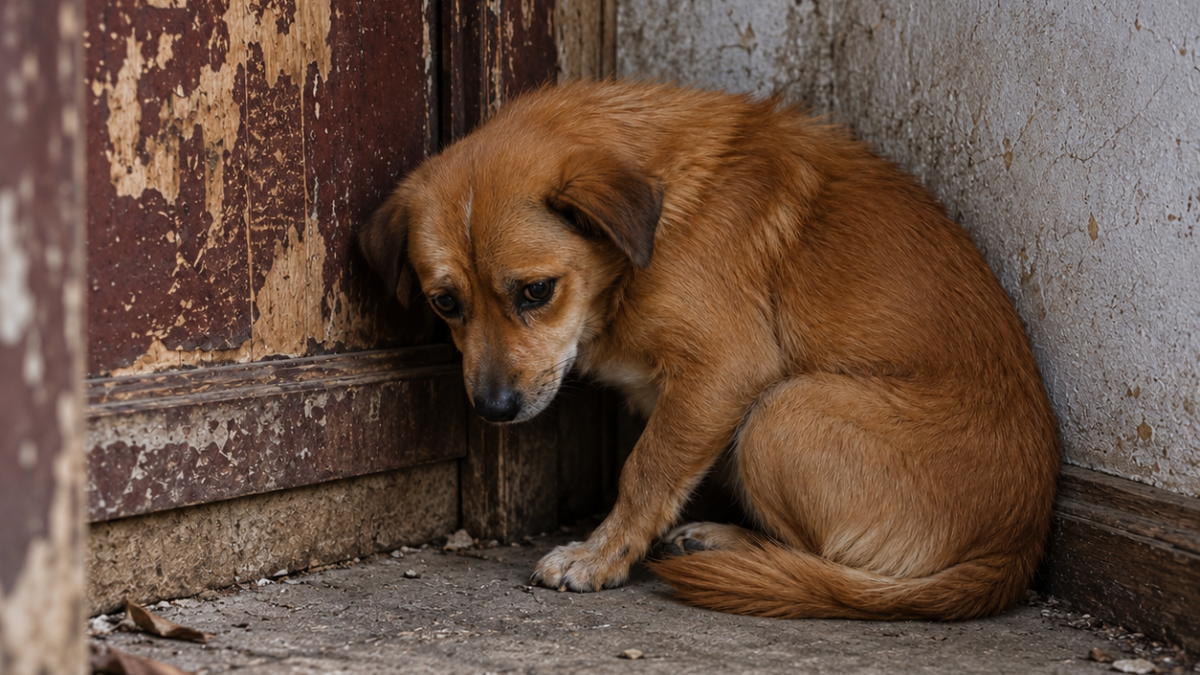
PART 2
My hands were shaking so badly that Mrs. Novak had to hold the phone herself.
The video began at 5:11 a.m.
Her driveway filled most of the frame, but our house was visible across the street.
For several seconds, nothing happened.
Then our front door opened.
Dad came outside.
He was wearing his dark work jacket and those same heavy boots Bim feared.
Something was wrapped in the old brown blanket from the storage room.
At first, all I could see was the blanket hanging from his arms.
Then a small reddish head appeared.
“Bim.”
I reached for the phone.
Mrs. Novak held it steady.
Dad crossed our driveway carrying him.
Bim wasn’t fighting.
He wasn’t even lifting his head.
His front paw hung over Dad’s arm.
Dad opened the passenger door of his truck, placed Bim inside, then went around to the driver’s side.
At 5:13, the truck backed out.
The recording ended.
I looked at Mrs. Novak.
“Where did he take him?”
“I don’t know.”
“He was sick.”
“I know.”
“He couldn’t even stand.”
“I know, honey.”
I snatched my hands away.
“Don’t call me honey. We have to find him.”
She blinked.
I had never spoken to an adult like that.
But she didn’t scold me.
She only nodded.
“You’re right.”
She took out her phone again.
“Who can we call?”
“My aunt.”
I knew Lena’s number by memory.
She answered on the fourth ring, her voice thick with sleep.
“Artyom?”
“Dad took Bim.”
Silence.
“What?”
“He took him somewhere.”
“Slow down.”
“He was sick and Dad wouldn’t take him to the vet and now he’s gone.”
I started crying so hard the words broke apart.
Mrs. Novak took the phone.
“This is Evelyn Novak, Artyom’s neighbor. I think you need to come here.”
Whatever she said next was quiet.
I stood on the porch staring at our empty driveway.
Dad had taken Bim.
That part was no longer a question.
The only question was where.
Aunt Lena arrived twenty-three minutes later.
She had thrown a winter coat over sweatpants and hadn’t even brushed her hair.
The second she saw me, she pulled me against her.
“Where is he?”
I pushed away.
“Bim’s missing.”
“I mean your father.”
“I don’t know.”
Mrs. Novak showed her the footage.
Lena watched it once.
Then again.
On the second viewing, she paused when Dad opened the truck door.
Her jaw tightened.
“Did he say anything last night?”
I told her.
Everything.
Bim’s breathing.
Dad refusing the vet.
The sentence about getting another dog.
Lena went completely still.
“He said that?”
I nodded.
She looked toward our house.
“I’m calling him.”
Dad answered after several attempts.
Lena put the phone on speaker.
“Where are you?”
“At work.”
“Where’s Bim?”
A pause.
“Why?”
I leaned toward the phone.
“Dad!”
His voice changed.
“Artyom? Why aren’t you home?”
“Where’s Bim?”
“Go home.”
“Tell me where he is!”
“Lena, get him out of this conversation.”
She tightened her hand around the phone.
“No. You’re going to answer him.”
Dad exhaled sharply.
“The dog ran off.”
Mrs. Novak and I looked at each other.
Lena’s voice became very quiet.
“Try again.”
“What?”
“We have video of you carrying him into your truck at five this morning.”
The silence on the other end lasted three seconds.
Maybe four.
Then Dad said, “I took him somewhere.”
“Where?”
“To someone who can deal with him.”
“Who?”
“Why does it matter?”
I screamed before Lena could stop me.
“Because he’s mine!”
Dad snapped, “He is not yours. You are eight years old.”
“You hurt him!”
“Enough.”
Lena stepped away from me.
“Viktor, where is the dog?”
“I dropped him off.”
“At a shelter?”
“Yes.”
“Which one?”
Another pause.
Dad muttered something.
“What?” Lena said.
“I said I don’t remember the name.”
She actually laughed.
There was nothing amused in it.
“You drove somewhere before dawn with a dying dog, handed him to a shelter, and don’t remember where?”
“He wasn’t dying.”
“Then where is he?”
“I have to work.”
The call ended.
I stared at the phone.
Lena immediately called back.
He declined.
Again.
Declined.
Then his phone went off.
Mrs. Novak said, “We should call animal control.”
Lena nodded.
I grabbed her sleeve.
“First the shelters.”
We called every shelter within twenty miles.
Then thirty.
Then forty.
Nobody had Bim.
No reddish puppy.
No dog matching his description.
No early-morning surrender from my father.
Lena wrote names on the back of an envelope.
Eleven shelters.
Seven veterinary clinics.
Two emergency hospitals.
Nothing.
At 8:46 a.m., an animal control officer came to Mrs. Novak’s house.
His name was Officer Reed.
He crouched so we were almost at eye level.
“I need you to tell me exactly what happened last night.”
Adults had been telling me to calm down all morning.
Officer Reed didn’t.
He gave me time.
I told him about Bim being sick.
The fear.
The kicks.
Dad refusing the veterinarian.
I almost left out the worst parts.
Not because I wanted to protect Dad.
Because saying them aloud made me feel ashamed.
As if I had helped them happen.
Officer Reed noticed.
“What else?”
I stared at the floor.
“Sometimes Dad kicked him.”
“How often?”
“I don’t know.”
“Once?”
I shook my head.
“More?”
I nodded.
“Did anyone else see?”
“Sometimes my aunt.”
Lena looked sharply at me.
“I never saw him kick Bim.”
“You saw him shove him.”
Her face fell.
She remembered.
A birthday dinner two months earlier.
Bim had jumped against Dad’s leg.
Dad had knocked him sideways with his boot.
At the time Lena had yelled, “Viktor!”
Dad claimed he had only moved the dog away.
We had all let the argument die.
Now it felt different.
Officer Reed wrote something.
“Did your father ever threaten to get rid of Bim?”
“Yes.”
“How?”
“He said he’d take him away if I didn’t keep him quiet.”
“When?”
“A lot.”
Lena suddenly reached for her phone.
“Wait.”
She scrolled through her messages.
Her face changed.
“What?”
She held the screen toward Officer Reed.
A text from Dad.
Sent at 10:47 the night before.
I had never seen it.
Lena read it aloud.
Your nephew needs to learn that crying doesn’t make me spend money I don’t have. I’m done with that dog. Tomorrow it won’t be my problem.
Officer Reed looked at her.
“You didn’t see this?”
“My phone was on silent. I went to bed early.”
He asked her to forward it.
Then he turned toward Mrs. Novak.
“Can I get the original doorbell file?”
She nodded.
While he copied it, I sat on the edge of the couch.
My socks were still wet from the snow.
Lena brought me dry ones.
I didn’t put them on.
At 9:18, Officer Reed’s radio crackled.
The words meant nothing to me at first.
Then I heard:
“Possible injured dog located off County Route 16 near the old water maintenance road.”
Officer Reed looked at me.
“What color?”
The radio answered.
“Small-to-medium juvenile. Reddish coat.”
I was already standing.
“Take me.”
Lena grabbed my shoulder.
“Artyom.”
“Take me!”
Officer Reed raised a hand.
“We don’t know if it’s Bim.”
“It is.”
“You can’t know that.”
“I know.”
He looked at Lena.
“I’ll head there. You follow, but stay in your car until I tell you.”
We left immediately.
The drive took seventeen minutes.
It felt like an hour.
County Route 16 ran past warehouses and frozen fields before turning toward an old municipal water facility.
A sanitation truck had pulled onto the shoulder.
A man in reflective work clothes stood near a drainage ditch.
Officer Reed’s vehicle was already there.
Lena parked behind it.
I reached for the door.
She locked it.
“Aunt Lena!”
“Wait.”
“No!”
“Artyom, if it’s him—”
“It’s him.”
Her face tightened.
“If he’s badly hurt, you need to let them help him first.”
I slammed both hands against my knees.
Officer Reed walked down into the ditch.
The sanitation worker pointed.
I could see the brown blanket.
My blanket.
Then a reddish ear.
“Bim!”
I unlocked the door before Lena could stop me.
I ran.
“Artyom!”
Snow broke beneath my shoes.
Officer Reed turned.
“Stay back!”
Bim was lying against a concrete drainage pipe.
The blanket had partly slipped away from him.
His fur was wet.
His eyes were open but unfocused.
He tried to lift his head when he heard me.
Nothing happened.
I fell to my knees.
“Bim.”
Officer Reed caught me before I touched him.
“Careful.”
“He knows me.”
“I know.”
“Let me go.”
“His injuries may be serious.”
Bim made a sound.
Barely more than air.
I crawled closer.
“Hey.”
His eyes shifted.
His tail moved once.
Just once.
That tiny movement destroyed me.
“I found you.”
I touched the side of his face.
It was cold.
“I’m sorry.”
Lena knelt behind me.
“Oh, God.”
Officer Reed called for the animal ambulance.
The sanitation worker took off his own jacket and placed it over the blanket.
“I saw something near the culvert,” he said. “Thought it was trash.”
I looked at him.
“How long was he here?”
“I don’t know, kid.”
He looked toward the road.
“Couldn’t have been too long. Snow started around four.”
Officer Reed pointed at tire impressions near the shoulder.
The tracks entered the maintenance road, stopped near the ditch, then turned around.
He photographed them.
I understood enough.
Dad hadn’t taken Bim to a shelter.
He had brought him here.
Left him.
And driven away.
The emergency veterinary clinic was eleven miles away.
I rode with Lena behind the animal control vehicle.
They would not let me hold Bim during transport.
I hated them for it.
For about fifteen minutes.
Then Dr. Hannah Patel explained why.
“He’s having trouble oxygenating. We need him on oxygen immediately.”
The staff took him through swinging doors.
I tried to follow.
A technician stopped me.
“We’ll come get you.”
“He gets scared.”
“We know.”
“He doesn’t like men in boots.”
The technician looked down at her shoes.
Soft sneakers.
“I’ll tell everyone.”
I sat in the waiting room with Lena.
Officer Reed remained for the intake because it was now an animal cruelty investigation.
Cruelty.
I had never attached that word to my father.
Dad was angry.
Dad was mean.
Dad hated the dog.
Cruelty sounded like something done by people on television.
Not the person who made your breakfast.
Not the man whose last name you carried.
Not your father.
Dr. Patel returned forty minutes later.
She sat across from us.
“Bim is alive.”
I nodded too quickly.
“Okay.”
“He is very sick.”
“What’s wrong?”
“We’re seeing severe pneumonia, dehydration, fever, and significant weakness.”
“Can you fix it?”
“We’re treating him.”
“That’s not what I asked.”
Lena put a hand on mine.
Dr. Patel didn’t dodge the question.
“I don’t know yet.”
My eyes burned.
She continued gently.
“His oxygen level is low. He’s getting supplemental oxygen, IV fluids, antibiotics, and medication to keep him comfortable.”
“Can I see him?”
“In a little while.”
Officer Reed asked, “Anything that suggests trauma?”
Dr. Patel glanced at me.
He noticed.
“So there is?”
“We took radiographs because of the history you provided.”
She lowered her voice.
“There are signs of older injuries.”
I stared at her.
“What injuries?”
“Two ribs appear to have healed from previous fractures.”
Lena covered her mouth.
Dr. Patel added, “There is also an older injury near the pelvis. I can’t tell you exactly how it happened.”
Officer Reed wrote it down.
“But?”
“But the pattern is concerning given what has been reported.”
My fingers curled into fists.
I remembered Bim yelping after Dad kicked him from the table.
I remembered other nights.
Other sounds.
Other times Bim limped for a day and Dad said puppies were dramatic.
I whispered, “I should’ve told someone.”
Lena turned toward me.
“You were eight.”
“I am eight.”
Her face broke.
She pulled me against her.
For the first time that day, I let myself cry like a child.
Not like someone searching.
Not like someone arguing with police.
Just a kid.
“I should’ve stopped him.”
Lena held the back of my head.
“You tried every day.”
“But he got hurt.”
“That was your father’s choice.”
“I promised Bim.”
“What?”
“I told him I’d protect him.”
She held me tighter.
“Then stay here.”
I looked at her.
“You protect him now by staying.”
So I stayed.
For six hours.
At 4:30 p.m., they let me into the oxygen ward.
Bim was inside a clear enclosure with a tube running into one leg.
His breathing was still too fast.
I sat on the floor outside.
He opened his eyes.
“Hi.”
His ear twitched.
“I’m not leaving.”
I told him stupid things.
What homework I hated.
How Mrs. Novak had given me terrible oatmeal.
How Aunt Lena had driven through a red light and pretended she hadn’t.
Lena protested from behind me.
“I did not.”
“You did.”
“It was yellow.”
Officer Reed, standing nearby, said, “It was red.”
For half a second, everyone smiled.
Even me.
Then the clinic door opened.
Dad walked in.
My whole body locked.
He was still wearing the boots.
Bim heard them before he saw him.
Scrape.
Step.
Step.
Inside the oxygen enclosure, Bim’s head jerked up.
His body began trembling.
Dr. Patel saw it.
So did Officer Reed.
Dad pointed toward me.
“There you are.”
Lena stepped between us.
“Don’t.”
Dad looked past her at Bim.
“What is all this?”
Dr. Patel said, “Are you the owner?”
“He’s my dog.”
I shouted, “No, he’s not!”
Dad ignored me.
“I want him discharged.”
Dr. Patel stared at him.
“He cannot be discharged.”
“I’ll take him somewhere else.”
Officer Reed moved closer.
“You’re not taking the dog anywhere.”
Dad finally noticed him.
“Who are you?”
“Animal control investigator Daniel Reed.”
Dad’s jaw tightened.
“For what?”
Officer Reed didn’t answer immediately.
Dad looked at Lena.
“You called animal control on me?”
“They found Bim in a drainage ditch.”
Dad’s eyes shifted.
Only for a second.
But I saw it.
“He ran off.”
Officer Reed said, “Interesting.”
“What?”
“Because this morning you told your sister you dropped him at a shelter.”
Dad looked at him.
“I misspoke.”
“You also said you didn’t remember which shelter.”
“I was at work. I was distracted.”
Officer Reed pulled out his phone.
“Would you like to explain why your vehicle appears on a municipal traffic camera entering Water Maintenance Road at 5:36 this morning?”
Dad said nothing.
I had never seen him speechless.
Officer Reed continued.
“And why tire tracks matching your truck were photographed beside the ditch where the dog was found?”
Dad looked at me.
That was what hurt most.
Not fear.
Not shame.
Anger.
As if I had done this to him.
“You told them.”
My voice came out small.
“You left him.”
“I was trying to deal with a problem.”
“He was sick!”
“He was a dog!”
The entire hallway went quiet.
Dr. Patel froze.
Lena’s face turned white.
Officer Reed stared at my father.
Dad realized too late how loud he had been.
He lowered his voice.
“I couldn’t afford thousands of dollars for a sick animal.”
Dr. Patel said, “You didn’t bring him here to ask.”
“That’s not your business.”
“No.”
She looked toward Bim trembling inside the enclosure.
“But his condition is.”
Dad pointed at the oxygen cage.
“I didn’t make him sick.”
Officer Reed answered.
“That is not the only issue.”
Dad scoffed.
“What, you’re arresting people for getting rid of dogs now?”
Officer Reed’s expression hardened.
“We’re investigating someone who knowingly abandoned a critically ill animal in freezing conditions.”
Dad looked around.
Then at me again.
“Get your coat.”
I didn’t move.
“Artyom.”
“No.”
His face changed.
“What did you say?”
I was terrified.
My knees were shaking.
But for once Bim was behind glass where Dad couldn’t reach him.
Officer Reed was beside me.
Aunt Lena was between us.
So I said it again.
“No.”
Dad stepped forward.
Officer Reed moved once.
That was enough.
“Sir, stop.”
Dad stopped.
“You don’t get to tell me how to talk to my son.”
“Right now I’m telling you where to stand.”
Dad laughed without humor.
“This is insane.”
Lena took my hand.
“He’s coming with me.”
Dad snapped, “No, he isn’t.”
“Yes.”
“You have no authority.”
Officer Reed said, “This isn’t the place to resolve custody.”
Dad stared at him.
“You’re damn right it isn’t.”
Then he looked at Lena.
“You take him, I’ll call the police.”
She nodded.
“Do it.”
Dad stormed out.
The boots faded down the hallway.
Inside the enclosure, Bim’s trembling slowly stopped.
I watched the door long after Dad disappeared.
That was the first moment I understood something I would spend years learning fully.
Bim and I were afraid of the same person.
That night I went home with Aunt Lena.
Technically, it was supposed to be temporary.
My father had not been arrested.
Animal cruelty cases do not become dramatic courtroom victories overnight.
Police took a report.
Animal control documented Bim’s injuries.
Dr. Patel photographed everything.
A family services caseworker named Monica came to Lena’s apartment the following afternoon.
She asked me questions I hated.
Did Dad hit me?
No.
Had he threatened me?
Sometimes.
Had I seen him hurt animals?
Yes.
Did I feel safe going home?
I stared at my shoes.
She waited.
Finally I said, “Without Bim?”
Her expression changed.
“What do you mean?”
“If Bim isn’t there, Dad won’t be angry.”
Monica leaned forward.
“That wasn’t my question.”
I understood.
I whispered, “No.”
That one word started another investigation.
Dad called me nine times that evening.
Lena wouldn’t force me to answer.
On the tenth call, I did.
“Hi.”
His voice was calm.
Too calm.
“Are you done with this?”
I looked at Lena.
She shook her head slightly, but I continued.
“With what?”
“The performance.”
“I’m not performing.”
“You’ve embarrassed me.”
My throat tightened.
“Bim almost died.”
“So now you destroy your family over a dog?”
“You left him in the snow.”
“I was overwhelmed.”
“You lied.”
“I was trying to avoid exactly this.”
“What?”
“Drama.”
I almost laughed.
Eight-year-old me didn’t have the words for manipulation.
Adult me does.
Back then, all I knew was that somehow every sentence ended with me feeling guilty.
Dad lowered his voice.
“Come home tomorrow.”
“Bim can’t come home.”
“Good.”
I stopped breathing.
He continued.
“This whole house has been peaceful without him.”
I ended the call.
Dad immediately called Lena.
She answered in the kitchen.
I heard everything.
“You put him up to this.”
“No.”
“You always hated me.”
“I don’t hate you.”
“You’ve been waiting for an excuse to turn my son against me.”
“Viktor, you abandoned his sick dog in a ditch.”
“I panicked.”
“You wrapped him in a blanket, drove eleven miles, turned onto a maintenance road, carried him down a slope, and left him behind a drainage pipe.”
Silence.
“That is a very organized panic.”
Dad’s voice became low.
“Careful, Lena.”
“With what?”
“He is my son.”
“And he is terrified of you.”
“He told you that?”
“He didn’t have to.”
Dad hung up.
Lena stood at the sink for a long time.
Then she locked both doors.
Bim survived the first night.
Then the second.
On day three, his oxygen numbers improved enough for the staff to reduce support.
On day four, he ate two bites of chicken.
I treated those two bites like a national holiday.
Dr. Patel laughed.
“Don’t get too excited.”
“Too late.”
On day five, Bim stood.
His legs shook.
He made it three seconds.
Then sat down heavily.
I cheered anyway.
He looked at me as if I were embarrassing him.
By day seven, he could leave the oxygen enclosure for short periods.
That was when we discovered another problem.
A male veterinary technician named Marcus entered wearing heavy winter work boots.
Bim flattened against the wall.
Not crouched.
Flattened.
He urinated beneath himself.
Marcus stopped immediately.
“Oh.”
I knew.
“Take the boots off.”
He looked at me.
“What?”
“Please.”
Without arguing, Marcus stepped outside.
A minute later he returned in hospital shoe covers over his socks.
He sat on the floor ten feet away.
Didn’t look at Bim.
Didn’t reach.
Nothing.
The next day he did the same.
Then the next.
On the fourth day Bim sniffed his hand.
Marcus didn’t move.
“There you go,” he whispered.
By the end of the second week, Bim let Marcus scratch his neck.
Watching that taught me something.
Fear could be learned slowly.
Trust could be learned slowly too.
The criminal investigation moved at a different speed.
Slow.
Frustrating.
Adult speed.
Officer Reed came to Lena’s apartment with updates.
The traffic camera footage showed Dad’s truck entering the maintenance road.
Mrs. Novak’s camera showed him leaving with Bim.
The sanitation worker had found Bim at 8:31.
Dr. Patel documented hypothermia on arrival in addition to pneumonia and dehydration.
The two healed rib fractures were harder.
No one could prove exactly when or how they happened.
Dad’s attorney seized on that immediately.
Yes, he got an attorney.
I learned because a letter arrived telling Lena not to “interfere with Viktor’s parental rights” and demanding my return home.
Lena read it twice.
Then called a family law attorney.
Her name was Sarah Klein.
She came to the apartment carrying a legal pad and wearing sneakers.
I liked her immediately because Bim, who had just come home from the hospital as a temporary medical foster, liked her too.
He sniffed her shoes.
Then slept beside them.
Sarah looked at the papers.
“Your brother is petitioning for an emergency return?”
Lena nodded.
“He says I’m keeping Artyom without authority.”
“Technically?”
“I have temporary placement approval from family services.”
“That helps.”
“Can he take him back?”
Sarah looked toward me.
“I’m not going to discuss possibilities as if Artyom isn’t sitting here.”
Dad never did that.
Adults often do.
Sarah turned toward me.
“What do you want?”
“To stay with Aunt Lena.”
“Why?”
I looked at Bim.
“Because he can stay too.”
She waited.
“And?”
My throat tightened.
“Because Dad gets mad.”
“Does he scare you?”
“Yes.”
That became part of the custody filing.
Dad responded by becoming nicer.
Not to me directly.
To everyone else.
He told relatives Lena had stolen me.
He said she had always resented him.
He claimed Bim had gotten sick because I was irresponsible.
That one reached me through my cousin.
I cried for an hour.
Maybe I had missed something.
Maybe I had fed him wrong.
Maybe pneumonia was because I let him stay outside too long.
Dr. Patel ended that thought during Bim’s checkup.
“Stop.”
I looked at her.
“What?”
“You’re doing that thing again.”
“What thing?”
“Trying to turn an adult’s choice into your responsibility.”
I stared at the floor.
She touched Bim’s back.
“Puppies get sick.”
“But if I had noticed earlier—”
“You did notice.”
I remembered begging.
“You asked for help.”
I nodded.
“You were refused.”
She let the silence sit.
Then she said, “That matters.”
The family court hearing happened five weeks after Bim was found.
Dad wore a suit.
I had never seen him in one except at funerals.
His attorney described him as a hardworking single father under financial pressure.
That was partly true.
Dad worked long hours.
Bills were real.
Money was tight sometimes.
But Aunt Lena’s attorney never argued that poverty made him cruel.
She argued that control did.
Dad could have surrendered Bim to a rescue.
Called animal control.
Asked Lena for money.
Asked a clinic about payment options.
Done nothing and let me keep caring for him overnight.
He had choices.
He chose the ditch.
Dad testified that he had intended to leave Bim near the maintenance facility because “someone would find him quickly.”
Sarah asked, “At five-thirty in the morning?”
“Yes.”
“In January?”
“Yes.”
“Behind a drainage pipe?”
Dad shifted.
“I didn’t put him behind anything.”
Sarah slid a photograph toward him.
“Animal control documented paw disturbances and blanket fibers behind the pipe.”
His jaw tightened.
“I don’t know how he moved after I left.”
“So he was alive.”
Dad looked at her.
“What?”
“You previously told Officer Reed you believed he was nearly dead and that euthanasia was inevitable.”
His attorney stood.
“Objection.”
The judge allowed Sarah to rephrase.
She did.
“You knew Bim was alive when you left him?”
Dad hesitated.
“Yes.”
I was sitting beside Monica, the family services worker.
She put one hand over mine.
Dad looked toward me.
For a second, our eyes met.
I wanted him to say sorry.
That was the terrible part.
Even then.
After everything.
Some part of me still wanted him to look at me and say, I was wrong.
Instead, he looked angry.
Sarah produced the message he had sent Lena.
Tomorrow it won’t be my problem.
Dad said it was taken out of context.
Then Mrs. Novak’s footage played.
Then the traffic footage.
Then Dr. Patel testified about Bim’s condition.
The judge did not decide the criminal case.
That was separate.
But she did decide where I would stay while the investigation continued.
Aunt Lena.
Dad got supervised visitation.
When the judge said it, he closed his eyes.
I expected relief.
Instead, I felt sick.
He was still my father.
I had just watched a judge tell him he couldn’t be alone with me.
Nothing about that feels like winning when you are eight.
Outside the courthouse, Dad caught sight of me.
A court officer was nearby.
He stopped several feet away.
“This is what you wanted?”
I shook my head.
“What did you want, then?”
“Bim to be okay.”
His face hardened.
“All of this over that animal.”
Lena started toward us.
I answered before she arrived.
“No.”
Dad frowned.
“All of this because of what you did.”
For once he had nothing to say.
That was the first time I remember seeing power leave his face.
Not anger.
Power.
They are different.
Bim improved through spring.
His pneumonia cleared.
He gained weight.
His coat became glossy again.
The limp from his older pelvic injury became barely noticeable.
But fear stayed longer.
Keys in the front door made him run.
Male voices made him alert.
Boots were the worst.
For months I wore sneakers even in snow.
One Saturday Marcus came to Lena’s house.
He brought the same heavy boots that had frightened Bim at the clinic.
He placed them near the front door.
Then he sat on the floor in socks.
Bim stared at them from the hallway.
Marcus tossed a treat.
Not toward himself.
Toward the boots.
Bim refused.
We tried again a week later.
Then again.
Eventually Bim ate a treat three feet from them.
Then one foot.
Then beside them.
It took almost four months before he sniffed a boot voluntarily.
I laughed.
Marcus said, “Don’t make a big deal.”
“Why?”
“Because he’s deciding they’re boring.”
So we made boots boring.
Not dangerous.
Not meaningful.
Just shoes.
That summer, Bim slept beside Lena’s gardening boots.
I took a picture.
I still have it.
Dad’s criminal case came up in August.
By then I was nine.
The prosecutor charged him with animal cruelty and abandonment.
I didn’t understand all the legal language.
I understood the photographs.
I understood Mrs. Novak’s video.
I understood Dad’s message.
I understood Bim hiding under my bed.
Dad’s lawyer tried to negotiate the case down.
The prosecutor offered a plea with probation, restitution for veterinary costs, mandatory counseling, community service, and a prohibition on owning animals during probation.
Dad refused.
He said pleading guilty would make him look like a monster.
So the case moved toward trial.
That decision turned out to matter.
Because during pretrial discovery, something else surfaced.
Officer Reed had obtained records from a gas station on County Route 16.
Dad had stopped there after leaving the maintenance road.
He bought coffee.
The security camera showed him walking inside at 5:48 a.m.
Calm.
No panic.
No attempt to call a shelter.
No emergency.
He bought coffee, stood in line, and drove to work.
Sarah showed the clip to Lena before the criminal trial.
I saw part of it accidentally.
Dad was laughing at something the cashier said.
Fourteen minutes earlier, he had left my sick dog in freezing weather.
That image changed something in me.
Until then, I had tried to imagine Dad as confused.
Angry.
Overwhelmed.
Poor.
Desperate.
Anything that would make the story hurt less.
The gas-station video took those excuses away.
He had been calm enough to buy coffee.
At trial, the prosecutor used it late.
That was the smartest part.
Dad testified first that he had panicked.
He said he was under financial stress.
He said Bim had become aggressive.
That was a lie.
Not once had Bim bitten anyone.
The prosecutor asked, “Aggressive toward whom?”
“Me.”
“Any bite reports?”
“No.”
“Medical treatment?”
“No.”
“Photographs?”
“No.”
Dad looked toward the jury.
“He growled.”
I almost stood up.
Bim had growled at him once.
After being kicked.
The prosecutor asked Dr. Patel about fear responses.
She explained that abused animals may growl defensively when approached by a person they associate with pain.
Dad’s attorney objected to the word abused.
The judge instructed the jury to rely on evidence.
Then came the footage.
Mrs. Novak’s camera.
The traffic camera.
The ditch photographs.
My aunt’s text message.
The gas station.
Dad’s attorney tried to argue that buying coffee did not prove lack of panic.
True.
It didn’t.
But the prosecutor didn’t need it to.
She asked one final question.
“Mr. Sokolov, at any point between leaving the dog at 5:38 a.m. and beginning work at 6:30, did you call an animal shelter, veterinary hospital, police department, rescue organization, or animal control?”
Dad looked at the jury.
“No.”
“Why not?”
He swallowed.
“I figured somebody would find him.”
The prosecutor nodded.
“Somebody.”
Then she sat down.
I remember that word.
Somebody.
Dad had spent months insisting he had not wanted Bim to die.
Maybe he hadn’t.
Maybe he simply hadn’t cared enough whether Bim lived.
For me, that distinction stopped mattering.
The jury convicted him on abandonment and one count of animal cruelty.
The judge did not send him to prison for years.
Real courtrooms are rarely as dramatic as stories make them.
He received a suspended jail sentence conditioned on compliance, two years of supervised probation, restitution for Bim’s veterinary expenses, mandatory anger-management counseling, community service, and a prohibition on owning or residing with animals during probation.
The judge also ordered him to have no contact with Bim.
When she said that, Dad actually laughed once.
“Now the dog has a restraining order?”
The judge looked over her glasses.
“No, Mr. Sokolov.”
The courtroom went quiet.
“You do.”
Dad stopped smiling.
That was the closest thing to revenge I ever needed.
His own behavior had built the case.
His message.
His lie about the shelter.
His route.
His decision not to call anyone.
His insistence on taking the case to trial.
Nobody had to invent anything.
We simply stopped protecting him from the consequences of what he had already done.
Family court took longer.
Dad attended counseling inconsistently.
He missed two supervised visits.
At another, he spent most of the hour asking me whether Lena had “brainwashed” me.
The supervisor ended the visit early.
Afterward, I sat in Lena’s car.
She didn’t start the engine.
“You okay?”
“No.”
“Want to talk?”
“No.”
We sat there anyway.
Five minutes passed.
Then I asked, “Why doesn’t he say sorry?”
Lena looked through the windshield.
“I don’t know.”
“He says everyone ruined his life.”
“I know.”
“Did we?”
She turned toward me.
“No.”
“Then why does he believe that?”
She thought before answering.
“Because admitting he did it himself would hurt more.”
At nine, I understood very little about pride.
At twenty-eight, I think Lena was right.
Dad did eventually say sorry.
But not the way I had imagined.
It happened a year and a half after Bim’s rescue.
I was ten.
We were at a supervised visit.
Dad looked older.
He had lost weight.
His work had cut his hours after the conviction became known.
Some friends stopped calling him.
Others defended him.
His life had narrowed.
He stared at the table.
“I shouldn’t have left the dog there.”
I waited.
He didn’t look at me.
“I was angry.”
I waited.
“I was tired of being responsible for everything.”
I knew that sentence.
He had said versions of it my whole life.
I asked, “Are you sorry Bim got hurt?”
He rubbed both hands over his face.
“Yes.”
“Or are you sorry you got in trouble?”
His head lifted.
For a second I saw the old anger.
Then it passed.
“I don’t know.”
That was the most honest thing he had ever told me.
I nodded.
The visit ended twenty minutes later.
I didn’t forgive him that day.
I didn’t hate him either.
I was simply tired.
Aunt Lena eventually became my permanent guardian.
Dad retained limited supervised contact for several years.
When I got older, I chose whether to see him.
Sometimes I did.
Sometimes I didn’t.
We never became one of those families where a final apology magically repairs everything.
There was too much missing.
Too many moments.
Too much fear.
But he did one thing that mattered.
He never owned another animal.
Even after probation ended.
I learned years later from a cousin that somebody once offered him a puppy.
Dad refused.
He said, “I’m not good with dogs.”
It wasn’t redemption.
It was awareness.
Sometimes that is the most you get.
Bim, on the other hand, got almost everything.
He got Aunt Lena’s backyard.
He got his own bed, which he ignored because he preferred mine.
He got Marcus visiting every few weeks.
He got Mrs. Novak sneaking him chicken despite being repeatedly told not to.
He got birthdays.
He got beach trips.
He got muddy paws.
He got old.
That last one mattered most.
For years, every time Bim slept deeply, I remembered that winter morning when I thought I had lost him.
So I loved watching him age.
Gray fur around the muzzle.
Slower walks.
Stiffer hips.
A preference for sleeping rather than chasing balls.
People complain that dogs don’t live long enough.
They don’t.
But I never looked at Bim’s gray face and wished it away.
Every gray hair was time my father had almost taken from him.
When I was sixteen, I got my first job at a grocery store.
My first paycheck wasn’t large.
I used part of it to buy Bim an orthopedic bed.
He sniffed it once.
Then slept on the floor beside it.
Lena laughed until she cried.
“That was eighty dollars.”
“I know.”
“He doesn’t care.”
“I know.”
The next morning I found him on it.
I took another picture.
When I was eighteen, I left for college forty minutes away.
I came home nearly every weekend.
Not for Lena.
At least that’s what I told her.
Bim always heard my car before she did.
He would stand at the window.
By then he moved slowly, but when I opened the door his entire back end still wagged.
I would kneel.
“Hey, buddy.”
He pressed his forehead against my chest.
That became our greeting.
No barking.
No jumping.
Just that.
At twenty, I changed my major.
I had entered college thinking I wanted to study business because it sounded practical.
Then I started volunteering at an animal shelter.
The first time an eight-year-old boy came in crying because his family couldn’t afford treatment for an injured dog, I had to leave the room for five minutes.
I understood too much.
But his mother had come for help.
That mattered.
She hadn’t abandoned the dog.
She hadn’t pretended the problem didn’t exist.
Our shelter connected her with a veterinary assistance fund.
The dog lived.
I went back to school the next semester and switched into social work.
Not veterinary medicine.
People always assumed Bim would make me become a vet.
He didn’t.
He made me want to work with kids who believed adult anger was their responsibility.
Kids who thought keeping quiet could keep a household safe.
Kids who loved someone they were also afraid of.
I understood that contradiction.
You can love a parent and still need protection from them.
You can miss someone and still not want to live with them.
You can wish they would change while finally accepting you cannot change them yourself.
Bim taught me that before I had words for it.
He was fourteen when his kidneys started failing.
Dr. Patel was still practicing.
When she walked into the examination room and saw him, she stopped.
“No.”
I smiled.
“Yes.”
“That cannot be Bim.”
He lifted his gray head.
His ears were still too large for his face.
Dr. Patel crouched.
“You were supposed to be dead thirteen years ago.”
My throat tightened.
Bim licked her wrist.
She examined him.
Bloodwork.
Urine.
Blood pressure.
We started medication and a kidney diet.
He hated the food.
Of course he did.
Lena said, “He survived Viktor and pneumonia. He’s not letting prescription kibble defeat him.”
We mixed in approved toppers.
Bim negotiated every meal like a union representative.
He did well for another year.
Then the bad days began outnumbering the good ones.
He stopped wanting long walks.
Then short ones.
One morning he stood at the back door and couldn’t make his legs move.
I carried him outside.
He leaned against me while he relieved himself.
Afterward, I sat in the grass with him.
I was twenty-two.
For a moment, I was eight again.
Holding a reddish puppy.
Promising things I couldn’t control.
Dr. Patel came to Lena’s house two days later.
Bim was on his orthopedic bed.
The eighty-dollar one.
It had lasted longer than expected.
So had he.
Mrs. Novak came over.
Marcus drove from another city.
Lena sat beside me.
Bim’s head rested across my work boots.
That detail nearly broke me.
I had started wearing heavy boots for my field placement that winter.
Years earlier, the sound of boots sent Bim under a bed.
Now he slept with his face on mine.
I looked at Dr. Patel.
“Is he hurting?”
“Some.”
“Can we fix it?”
She didn’t give me false hope.
“No.”
I nodded.
I had always imagined I would know exactly what to do because I had spent my whole life determined never to fail Bim again.
It was still impossible.
“What if I wait?”
Dr. Patel sat beside me.
“You can.”
“Would that be for him?”
I looked at her.
She didn’t answer.
She didn’t need to.
I put both hands around Bim’s face.
His eyes opened.
Still brown.
Still trusting.
“Hey.”
His tail tapped the bed once.
I laughed through tears.
“You always do that.”
Lena put her hand on my shoulder.
I whispered, “I promised I’d protect you.”
This time the promise meant something different.
Protection wasn’t always keeping someone alive.
Sometimes it was refusing to make them stay because you were afraid to let them go.
I leaned down.
“You’re safe.”
Bim exhaled.
Dr. Patel gave the medication.
His body relaxed.
His head became heavier on my boots.
I kept my hand against his chest until I could no longer feel the heartbeat.
No drainage ditch.
No snow.
No fear.
Home.
After everyone left, I sat beside the empty bed until dark.
Lena brought me coffee.
I didn’t drink it.
She sat beside me.
“Fourteen years.”
I nodded.
“Fourteen.”
She smiled through tears.
“Stubborn dog.”
“The best.”
Weeks later I found the old doorbell video on a hard drive.
Mrs. Novak had given Lena a copy for the court case.
I almost deleted it.
Instead, I watched.
Dad carrying Bim.
The blanket.
The truck.
The timestamp.
5:11 a.m.
For years that video had represented the worst thing my father had done.
Watching it as an adult felt different.
I noticed something I had never noticed at eight.
Bim’s head lifted slightly just before Dad put him in the truck.
He was alive.
Weak.
Terrified.
But alive.
And because he was alive, the story continued.
Mrs. Novak woke up.
Her camera recorded.
A sanitation worker looked twice at what he thought was trash.
Officer Reed answered his radio.
Dr. Patel stayed late.
Marcus took off his boots.
Lena opened her home.
A judge listened.
A jury believed the evidence.
And an eight-year-old boy finally learned that protecting someone does not always mean being strong enough to stop the harm yourself.
Sometimes it means telling the truth after the harm has happened.
I work with children now.
Some arrive angry.
Some silent.
Some defend parents who have frightened them for years.
I never tell them what they should feel.
Feelings are complicated.
Safety is simpler.
You can love somebody and still deserve to be safe from them.
There is a framed photograph on the shelf in my office.
Bim is sleeping beside a pair of heavy brown boots.
Children sometimes ask about him.
“Was that your dog?”
“Yes.”
“Why is he sleeping on your shoes?”
I usually smile.
“Because it took him a long time to learn they couldn’t hurt him.”
Most kids accept that answer.
A few understand more than I intended.
One boy stared at the picture for almost a minute.
Then he said, “He looks safe.”
I looked at Bim’s gray muzzle resting across the leather.
“Yes.”
He was.
My father once told me that if Bim died, we could simply get another dog.
He was wrong in more ways than he understood.
There was never another Bim.
There could never be.
But that wasn’t because Bim was perfect.
He chewed two remote controls.
Stole food.
Hated baths.
Snored louder every year.
He was irreplaceable because a life is not interchangeable simply because it belongs to an animal.
Bim’s life had a before.
An after.
Fear.
Recovery.
People he trusted.
Places he loved.
Fourteen years of mornings my father had decided were worth less than the inconvenience of a veterinary bill.
The court punished Dad for abandoning Bim.
Life did something more permanent.
It made him watch the son he tried to control grow into someone who no longer accepted his definition of what mattered.
I never took revenge on my father.
I didn’t need to.
His own choices took away the things he thought belonged automatically to him.
My obedience.
My silence.
His authority.
The right to keep animals.
For a time, even the right to see me without supervision.
And the dog he dismissed as replaceable became one of the reasons I built the life I have now.
The last time I saw Dad was several years after Bim died.
We met at a diner.
He was older.
Quieter.
He asked about work.
I told him.
He stared into his coffee.
“You help kids like you?”
The question surprised me.
“Sometimes.”
He nodded.
A long silence.
Then he said, “I was hard on you.”
I almost laughed at how small those words were.
Instead I said, “Yes.”
He rubbed his thumb along the coffee cup.
“And the dog.”
I waited.
“I was cruel to him.”
It was the first time he used the word.
Not stressed.
Not overwhelmed.
Not angry.
Cruel.
I looked out the window.
Cars moved through the parking lot.
Some part of me had waited twenty years for that sentence.
When it finally came, it didn’t repair anything.
But it mattered.
“I know.”
Dad nodded.
“Do you hate me?”
I thought carefully.
“No.”
He looked surprised.
“I hated being afraid of you.”
His eyes dropped.
“That’s different.”
We finished our coffee.
We did not hug.
There was no dramatic reconciliation.
He walked to his car.
I walked to mine.
That was enough.
That evening I went home and opened the box where I keep Bim’s collar.
Red nylon.
Scratched metal tag.
BIM.
The phone number on it hasn’t been mine in years.
I set the collar beside the framed photograph of him sleeping on my boots.
For a while I stood there.
Then I turned off the light.
The boots in that photograph no longer looked threatening to me.
They were just boots.
And Bim, old and gray and completely unafraid, had his head resting across them as if they had never meant anything else.
That is how I remember him now.
Not sick.
Not trembling beneath my childhood bed.
Not abandoned beside a frozen drainage pipe.
Safe enough to sleep.
[END OF STORY]








