PART 2: I Inherited an Abandoned Ranch—HOA Threatened a Forced Sale After Oil Find, Unaware I’m the Judge
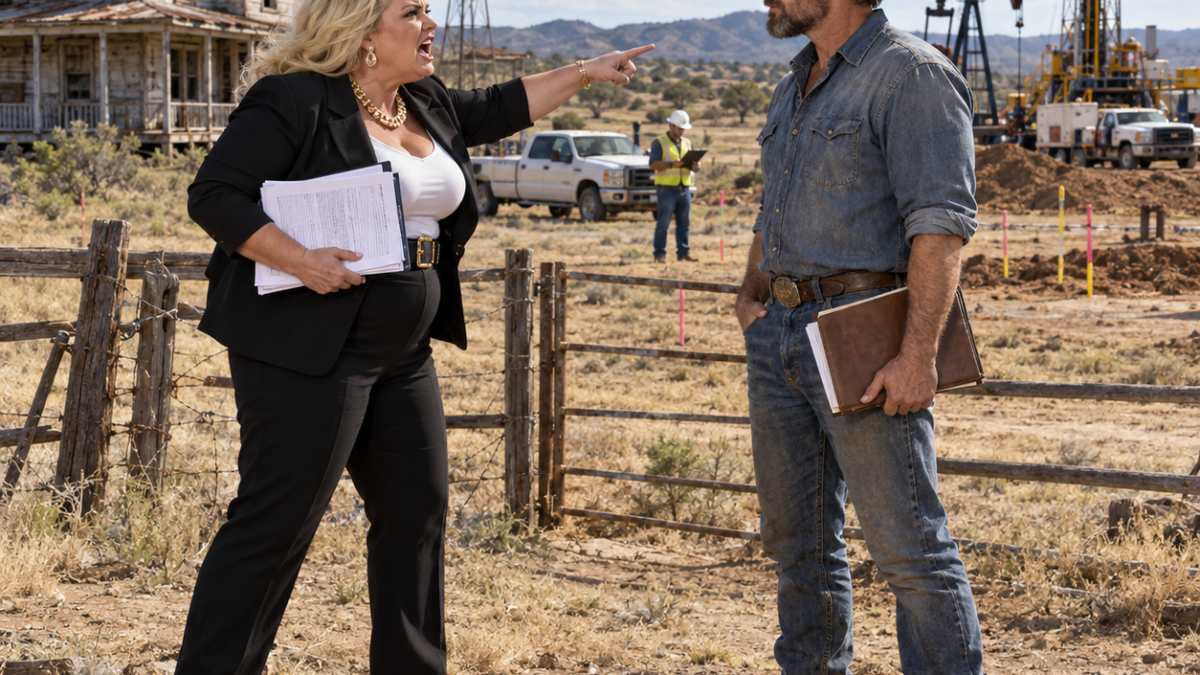
The HOA gave me thirty days to pay $127,450 or watch strangers auction off the West Texas ranch my grandparents had owned since 1952.
They assumed I was an absentee granddaughter who would panic when lawyers started using words like lien, foreclosure, and forced sale.
What they did not know was that before I answered them, I intended to find out why an organization created sixty-six years after my family bought the land suddenly wanted it badly enough to threaten everything.
The certified envelope arrived at my Austin office on a Thursday afternoon.
RIDGECREST ESTATES HOMEOWNERS ASSOCIATION.
Midland County, Texas.
I had never heard the name.
Inside were four pages of legal language written to make an ordinary property owner feel as if the argument had already been decided.
NOTICE OF FORCED SALE.
Property: 4200 Ranch Road 118.
Violations included overgrown vegetation, unapproved structures, unpaid assessments, failure to maintain association standards, and accumulated penalties.
Total balance:
$127,450.
Deadline:
Thirty days.
Remedy if unpaid:
Public auction.
I read the notice three times.
Not because I misunderstood it.
Because I understood exactly what they were trying to do.
My grandparents, Ernesto and Maria Reyes, bought those 640 acres in 1952, when most of that part of West Texas was scrub, mesquite, cattle fencing, and horizon.
They built the ranch house themselves.
Grandpa drilled the well in 1958.
Grandma planted pecan trees that took years before they gave enough shade to matter.
I spent summers there learning to ride, mend fence, fix pumps, and drink coffee far too young because Grandpa insisted milk ruined it.
They never joined an HOA.
Never asked to join one.
Never paid dues to one.
And until that letter appeared on my desk, nobody had ever suggested they were required to.
I called the number on the letterhead.
A woman answered.
“Ridgecrest Estates.”
“This is Victoria Reyes. I received a forced-sale notice regarding Ranch Road 118.”
She transferred me immediately.
No questions.
A man came onto the line.
Smooth voice.
Practiced patience.
“Ms. Reyes. Larry Rivera. President of Ridgecrest Estates. I assume you’re calling about the ranch.”
“I am.”
“How can I help?”
“You can explain how an HOA formed in 2018 believes it has authority over land my family bought in 1952.”
Silence.
Not confusion.
Calculation.
“These matters can be complex.”
“They don’t sound complex.”
“I strongly recommend consulting counsel.”
“I’m asking you.”
“Our community boundaries were legally expanded.”
“With my grandparents’ consent?”
Another pause.
“We’ve found that most owners prefer resolving these situations quickly rather than prolonging them.”
The word prolonging landed exactly the way he intended.
I had heard versions of that sentence for years.
Pay.
Settle.
Sign.
Stop asking questions.
I said, “Send me the instrument that gives your association jurisdiction over the ranch.”
“That information has already been reviewed by counsel.”
“That isn’t what I asked.”
“Ms. Reyes, the thirty-day deadline remains in effect.”
Then he ended the call.
I did not call back.
That night I opened a satellite map.
Ridgecrest Estates had grown around my grandparents’ ranch on three sides.
Rows of nearly identical houses stopped at our old fence line.
But the association boundary did something strange.
Instead of following the subdivision, it bent inward around the Reyes ranch, wrapped the entire 640 acres, then bent back outward while leaving another undeveloped parcel untouched.
It did not look like community planning.
It looked like somebody had drawn a circle around what they wanted.
I booked a flight to Midland the next morning.
By sunset, I was standing beside the ranch gate for the first time in three years.
The windmill was still there.
The adobe house still stood.
The porch sagged where Grandma used to drink coffee at dawn.
And planted several feet inside my family’s fence was a bright orange sign:
PROPERTY SUBJECT TO HOA ENFORCEMENT ACTION.
They had entered our land to put it there.
I pulled it from the ground.
Then I saw the fresh tire tracks near the old eastern pasture.
Heavy trucks.
Not cattle equipment.
Not HOA maintenance.
Something else.
That evening, an old family friend named Rosa Martinez told me why I needed to stop looking at the $127,450.
“They don’t want your house, mija,” she said quietly.
“They don’t even want your land.”
I looked at her.
Rosa leaned across the table.
“They want what your grandfather refused to sell.”
And for the first time, I realized the forced-sale notice might not be about HOA violations at all.
PART 2
Rosa Martinez had known my grandmother for more than forty years.
When I was a child, I remembered her as the woman who brought tamales every Christmas and argued with Grandpa about whether mesquite made better firewood than oak.
Now she lived in a small apartment on the far edge of Midland, in a building designed for people whose lives had become smaller than they once expected.
Her walls were covered with photographs.
Cattle.
Children.
Fence lines.
Sunsets.
A ranch house I recognized even though I had never visited it.
Rosa followed my eyes.
“That was ours.”
“Was?”
Her mouth tightened.
“My husband’s parents bought it in 1948.”
“How much land?”
“Eighty acres.”
She smiled faintly.
“Nothing by West Texas standards.”
“Still a ranch.”
“It was everything.”
She poured coffee.
I slid Ridgecrest’s forced-sale notice across the table.
She barely looked at it.
“They did the same thing to me.”
I stopped.
“What?”
“Two years ago.”
“How much did they claim you owed?”
“Eighty-nine thousand.”
“In what?”
“Fines. Assessments. Late charges. Legal costs. Things I had never seen before.”
“Did you receive notices?”
“After it was too late.”
“How?”
“They mailed most of them to an old address.”
“Did you challenge them?”
“With what money?”
Her question was not bitter.
That made it worse.
“My husband was dead. I was living on Social Security. A lawyer wanted ten thousand just to start.”
“What happened?”
“They sold the ranch.”
The room felt smaller.
“For how much?”
“One hundred twenty thousand dollars.”
I stared at her.
“Eighty acres?”
“Yes.”
“Who bought it?”
“A company.”
“What company?”
“I don’t remember.”
“Did the HOA buy it?”
“No.”
“Larry Rivera?”
“Not in his name.”
She looked toward the photographs.
“Six months later, drilling trucks started showing up.”
The silence changed.
I leaned forward.
“Drilling?”
Rosa nodded.
“Oil.”
I didn’t speak.
Everyone who grows up anywhere near Midland understands oil the way coastal people understand hurricanes.
It is part of the landscape even when you never touch the industry.
Pipelines.
Pump jacks.
Lease roads.
Mineral deeds.
Royalty checks.
Entire family fortunes made or lost depending on who owned what beneath the dirt.
Rosa lowered her voice.
“Your grandfather knew people wanted the minerals under your ranch.”
“Who?”
“Larry.”
“When?”
“Before Ernesto died.”
I felt something cold move through me.
“What did Grandpa tell you?”
“That Rivera offered to buy the mineral rights.”
“How much?”
“I don’t know.”
“And Grandpa said no.”
Rosa almost smiled.
“You knew your grandfather.”
Yes.
I did.
Grandpa believed selling mineral rights was like selling the foundation under your house and trusting the buyer not to shake the walls.
“He never sold?”
“Never.”
Rosa reached across the table.
“Victoria, listen to me.”
I did.
“Larry doesn’t care about weeds.”
She tapped the violation notice.
“He doesn’t care about your barn roof.”
Another tap.
“He doesn’t care if the porch paint is peeling.”
Her finger stopped on the words FORCED SALE.
“He wants that.”
“The auction.”
“The transfer.”
“Why?”
“Because once he controls the dirt, he gets close enough to control what is underneath it.”
I drove back to the ranch after dark.
The house smelled stale from years of being closed.
I opened windows.
The West Texas night came through them warm and dry.
I carried my laptop onto Grandma’s porch.
There was enough signal if I put my phone near the western window and used it as a hotspot.
I searched drilling permits.
Geological surveys.
Mineral records.
Company registrations.
Parcel maps.
The first thing I found was an exploration permit filed in 2022.
Coordinates overlapped properties near Ridgecrest.
Including ours.
Applicant:
Rivera Energy LLC.
I opened the company record.
Formed January 2022.
Registered agent address:
The same office suite used by Ridgecrest Estates HOA.
I stared at the screen.
Same address.
Same building.
Not proof.
A connection.
Connections become useful only after they form patterns.
So I kept going.
By two in the morning, I had enough to know I wasn’t sleeping.
The next morning, I was at the Midland County Clerk’s office before the doors opened.
I spent five hours pulling public records.
Ridgecrest Estates had been incorporated in 2018.
Its original boundaries covered the subdivision Larry Rivera developed.
Nothing surprising.
Then I found a 2019 amendment.
ADJACENT PROPERTY COMMUNITY-STANDARDS EXPANSION.
The title sounded harmless.
The map was not.
Someone had expanded Ridgecrest’s claimed enforcement boundary beyond the subdivision itself.
It reached outward toward older ranch parcels.
Ours.
Rosa’s.
Several others.
The line did not follow roads.
Did not follow utility districts.
Did not follow natural drainage.
It followed property boundaries.
Selective ones.
I made copies.
Then I searched Rivera Energy.
The company ownership record was clearer than I expected.
Sole member:
Lawrence J. Rivera.
Larry.
The same man threatening to auction my ranch was also the owner of an oil company holding exploration interests around the same properties.
I found private geological filings referenced in Railroad Commission records.
A 2021 subsurface study mapped formations under the western side of our ranch.
Potential recoverable hydrocarbon value was estimated in a range broad enough to make any courtroom expert qualify every sentence.
But even the conservative figures were enormous.
Millions.
Potentially twelve to eighteen million dollars depending on recovery rates, lease economics, and market conditions.
I sat alone at a county terminal looking at numbers my grandparents had probably never imagined.
Grandma reused aluminum foil.
Grandpa repaired boots instead of replacing them.
They fought over whether to run the air conditioner before June.
And beneath the land they guarded like treasure was potentially an actual fortune.
Then I searched prior forced sales.
Rosa Martinez.
2022.
Sale price:
$120,000.
Buyer:
Permian Holdings LLC.
Ortega property.
2023.
One hundred twenty acres.
Sale price:
$180,000.
Buyer:
Permian Holdings LLC.
I opened the company registration.
Registered agent address:
Same network.
Rivera-connected.
I sat back.
There it was.
Method.
Take an old ranch.
Claim HOA authority.
Accumulate large fines.
Send notices the owner could not respond to properly.
Force auction.
Shell company buys cheap.
Oil company arrives later.
That was not proof of criminal conduct by itself.
But it was enough to stop calling my case a misunderstanding.
I started writing names.
Rosa Martinez.
Ortega family.
Henderson family.
Reyes ranch.
Then one question:
How many?
By late afternoon, I had another.
Why these parcels?
I compared the boundary amendment to the geological map.
The overlap was almost perfect.
Every older ranch Ridgecrest had pulled into its claimed “community standards” zone sat within or beside mapped oil prospects.
I thought about Larry’s voice on the phone.
Most owners prefer to resolve these situations quickly rather than prolonging them.
He had said it because he had probably watched it work.
I left the clerk’s office carrying three folders.
My grandfather once told me the easiest way to move cattle was not to push the entire herd.
“You close every direction except the one you want.”
That was what Larry had built.
Fines.
Deadlines.
Legal threats.
Association votes.
Forced sales.
Every direction closed except surrender.
He had just made one mistake.
He had used it on someone who knew what legal pressure looked like from the other side.
I still had not told anyone at Ridgecrest what I did for a living.
That was deliberate.
My title was not going to become evidence.
If their claim failed, I wanted it to fail because it was unlawful, not because they feared me.
I searched for property attorneys in Midland.
Elena Vasquez appeared first.
HOA disputes.
Mineral-title litigation.
Real property.
I called.
Her office occupied the second floor of an old industrial building near downtown.
She was younger than I expected.
Late thirties.
Dark hair tied back.
No wasted words.
She listened while I explained the forced-sale notice.
The 1952 deed.
The 2018 incorporation.
The 2019 boundary amendment.
Rivera Energy.
Permian Holdings.
Rosa.
When I finished, Elena leaned back.
“You’re not the first.”
“I suspected that.”
“You’re not the third either.”
That surprised me.
She stood and walked to a whiteboard.
Three names were written in red.
MARTINEZ.
ORTEGA.
HENDERSON.
Arrows connected them to dates and LLC names.
Elena pointed to Rosa.
“Eighty acres. Forced sale. Rivera-connected buyer.”
Then Ortega.
“One hundred twenty acres. Same pattern.”
Then Henderson.
“Two hundred acres. Foreclosure pending.”
“How many total?”
“That I can document? Those three and you.”
“That you can document.”
“Yes.”
“You think there are more.”
“I think people who lose land quietly do not always hire lawyers afterward.”
I looked at the board.
“What is the legal foundation of Ridgecrest’s claim?”
“That is their problem.”
“How?”
“They can put your parcel inside any colored boundary they want.”
She returned to her desk.
“A map does not create a restrictive covenant.”
“Exactly.”
“Your grandparents never signed annexation.”
“No.”
“Never accepted Ridgecrest covenants.”
“No.”
“Nothing in chain of title.”
“Not that I found.”
“We’ll verify.”
I nodded.
Elena studied me.
“You understand this better than most clients.”
“I’ve spent time around law.”
“What kind?”
“Enough to know I want independent counsel handling this.”
That made her eyes narrow.
Not suspicious.
Curious.
“What do you do?”
“Later.”
She held my gaze.
“Fair.”
Then she pulled a file from beneath another.
“I have someone inside Ridgecrest.”
“Board?”
“Yes.”
“Who?”
“Kyle Parker.”
I recognized the name from filings.
“He has been saving internal records for almost a year.”
“Why?”
“Because he believes Larry is using the association to acquire property.”
“Will he testify?”
“He has not committed.”
“Will he meet me?”
Elena checked her watch.
“Tonight.”
The diner was twenty miles outside Midland.
Faded red sign.
Cracked asphalt.
Truckers at the counter.
Kyle arrived at eight exactly.
He wore a baseball cap pulled low and a jacket despite the heat.
He sat across from me.
“You’re Victoria Reyes.”
“Yes.”
“Elena says you’re serious.”
“Yes.”
He looked toward the front door.
“If Larry learns I’m talking to you, I may lose more than a board seat.”
“I understand.”
“No, you don’t.”
His voice shook slightly.
“Larry’s family has been in oil for three generations. He knows lenders. Contractors. County people. Business owners.”
“Has he threatened you?”
“Not directly.”
“Indirectly?”
Kyle laughed without humor.
“He doesn’t need to.”
He reached into his coat.
A flash drive landed between us.
“I thought I was joining an HOA board.”
“What changed?”
“I started reading.”
I said nothing.
“There are meeting minutes on there. Internal emails. Financial approvals. Draft maps.”
“What maps?”
“The 2019 expansion.”
He looked at me.
“Larry marked the parcels.”
“By name?”
“By code.”
“What code?”
“Prospect ranking.”
My pulse changed.
“Oil?”
Kyle nodded.
“Every ranch Ridgecrest pulled into the expansion matched a geological target.”
“You’re sure?”
“I saw the original draft.”
“Who prepared it?”
“Larry.”
“What did the board see?”
“A cleaned version.”
“How many members knew?”
“Some knew pieces.”
“All?”
“No.”
“You?”
“I knew too late.”
I watched him.
“Why stay?”
His shoulders dropped.
“Cowardice.”
“That’s not the only possible answer.”
“It’s mine.”
He rubbed his hands together.
“I told myself I could gather evidence.”
“And did you?”
“That drive is the evidence.”
“Why now?”
“Rosa Martinez.”
His voice cracked slightly.
“I watched her lose eighty acres.”
I remembered Rosa’s apartment.
Photos of a ranch she could no longer enter.
Kyle continued.
“I voted against enforcement afterward. Larry isolated me. Started holding meetings without proper notice.”
“Will you testify?”
He took a long time.
“If that is the only way.”
I nodded.
“I won’t promise you it won’t be.”
“That’s what Elena said.”
He almost smiled.
As he stood to leave, Kyle stopped.
“Larry knows you pulled county records.”
“How?”
“Someone told him.”
“Do you know who?”
“No.”
He leaned closer.
“He’s asking questions about you.”
“Let him.”
“He thinks you’re dangerous.”
“He doesn’t know anything about me.”
“He knows you didn’t pay.”
That was probably enough.
Kyle left.
I sat there another ten minutes before touching the flash drive.
Back at the ranch, I made three copies.
One for Elena.
One encrypted.
One stored offsite.
Then I opened it.
The first folder held board emails.
I read until sunrise.
Larry’s language was careful.
Rarely direct.
But patterns speak.
TARGET PARCEL A-4.
High enforcement exposure.
Absentee ownership.
TARGET B-2.
Widow.
Low legal resistance.
TARGET C-7.
Mineral prospect favorable.
I stopped.
There it was.
Not “community standards.”
Not “appearance.”
Not “safety.”
Mineral prospect favorable.
Another thread discussed assessment amounts.
The phrase LIKELY COLLECTION FAILURE appeared beside Rosa’s name.
Another email from Larry asked counsel how quickly an auction could proceed once delinquency exceeded internal thresholds.
I printed everything.
By nine, I called Elena.
“You need to see this.”
She answered after reading the first few pages.
“Do not contact Larry.”
“I wasn’t planning to.”
“Do not contact any board member except through me.”
“All right.”
“We need a title report.”
“Already ordered.”
“Good.”
“We need certified HOA records.”
“Requested.”
“Good.”
“And Victoria?”
“Yes?”
“Whatever you do for a living, now would be an excellent time to tell me.”
I looked out toward Grandpa’s pasture.
“I’m a federal district court judge.”
Silence.
Then:
“Say that again.”
“I sit in the Western District.”
Longer silence.
“Elena?”
“I’m here.”
“I didn’t hide it because I planned to use it.”
“I understand why you hid it.”
“I want you running every legal move.”
“Yes.”
“I will not contact anyone through official channels.”
“Yes.”
“I will not touch any case arising from this.”
“Obviously.”
“And if anything becomes federal—”
“You recuse.”
“Immediately.”
Elena exhaled.
“Does Larry know?”
“No.”
“Keep it that way.”
“That was already the plan.”
She laughed once.
“I have represented some unusual property owners.”
“I’m sorry.”
“No, you’re not.”
“No.”
The next three days were disciplined.
No dramatic confrontation.
No surprise press conference.
No threatening Larry with my position.
We attacked the claim like any other property case.
First: written demand for proof of jurisdiction.
Show the covenant.
Show annexation.
Show consent.
Show notice.
Show itemized fines.
Second: title company search.
Third: administrative complaint concerning Ridgecrest’s enforcement practices.
Fourth: emergency membership meeting request.
Fifth: preservation letters directing Ridgecrest and affiliated companies not to destroy emails, maps, invoices, auction records, mineral evaluations, or board files.
Elena handled the legal signatures.
I stayed a client.
Five days later, Ridgecrest answered through a Houston law firm.
That told me more than their letter.
YOUR CLAIMS ARE WITHOUT MERIT.
RIDGECREST MAINTAINS FULL ENFORCEMENT AUTHORITY.
FAILURE TO PAY WITHIN FOURTEEN DAYS WILL RESULT IN FORECLOSURE.
The deadline had shrunk.
Thirty days became fourteen.
Elena read it.
“They’re accelerating.”
“They’re frightened.”
“Yes.”
“What happens next?”
“They attack you.”
She was right.
Two days later, an anonymous email went to Ridgecrest residents.
THE TRUTH ABOUT THE RANCH ROAD OWNER.
It described me as absent.
Neglectful.
A person who had abandoned family property and returned only to interfere with neighborhood governance.
It asked why someone who “doesn’t live here, doesn’t contribute here, and doesn’t respect our community” should dictate Ridgecrest’s future.
No provably false statement.
Just facts arranged to create a lie.
I had seen that technique hundreds of times.
The best propaganda rarely invents everything.
It selects.
I told Elena not to respond publicly.
“Nothing?”
“Nothing.”
“They’re shaping opinion.”
“Let them.”
“Why?”
“Because Larry thinks the meeting will be about whether people like me.”
“And?”
“I’m bringing documents.”
That afternoon, Deputy Wayne Bell arrived at the ranch.
Elena had mentioned him.
He grew up near my grandparents’ property.
Late forties.
Solid build.
Few words.
He stood on the porch.
“Judge Reyes?”
I stiffened.
“Elena told you.”
“She told me enough.”
“Then Victoria is fine.”
He nodded.
“Your grandparents knew my mother.”
I remembered his last name.
“Teresa Bell?”
He smiled.
“Yes.”
“She helped Grandma with canning.”
“And your grandmother paid her more than she asked because my father was sick.”
I invited him inside.
We sat at Grandma’s kitchen table.
Wayne took coffee.
“I’ve watched Rivera for a while.”
“Officially?”
“No.”
“Meaning?”
“Forced HOA sales are civil.”
“I know.”
“But three families lost ranches in two years.”
“All bought by Rivera-connected entities.”
“Yes.”
“Did the sheriff’s office investigate?”
“No criminal predicate.”
“Yet.”
Wayne nodded.
“Yet.”
He reached inside his jacket.
Pulled out a worn envelope.
“My mother kept this.”
I recognized Grandpa’s handwriting before Wayne gave it to me.
VICTORIA.
My hands went cold.
“Where did she get this?”
“Your grandmother.”
“When?”
“2019.”
I opened it carefully.
The letter was dated November.
Grandpa wrote that Larry Rivera had visited the ranch.
Offered $200,000 for mineral rights.
Grandpa refused.
Larry told him the land would not remain valuable to the family much longer.
Grandpa asked what that meant.
Larry smiled.
According to Grandpa:
“One way or another, Mr. Reyes, this land will change hands.”
Below that Grandpa wrote:
I do not trust him.
If you ever read this, do not sell to that man.
Do not believe anything he tells you we owed.
I read it twice.
Then again.
For most of my professional life, I had trained myself to separate evidence from emotion.
That letter destroyed the separation.
It was Grandpa’s handwriting.
His caution.
His anger.
His attempt to reach me after death.
I put the paper flat on the table.
Wayne waited.
“When did he die?” he asked.
“2021.”
“And your grandmother?”
“Nine months before.”
“Were HOA fines issued while they were alive?”
“I don’t know yet.”
“Elena might.”
She did.
Kyle’s files showed internal account creation beginning shortly after both grandparents died.
Absentee owner.
Low contact probability.
Enforcement opportunity.
I stared at the phrase.
They had waited until the people most likely to fight were gone.
That changed something in me.
Not my strategy.
My resolve.
The emergency meeting was approved for Thursday evening.
Kyle and two other directors voted to allow it.
Larry opposed.
The community center filled before seven.
Almost one hundred residents.
Metal chairs.
Fluorescent lights.
Larry sat at the board table.
Pressed shirt.
Controlled smile.
Kyle sat several seats away.
Elena was beside me.
Wayne stood near the back.
Larry called the meeting to order.
“We are here to discuss a continuing enforcement matter involving a property owner who has repeatedly refused to comply with community standards.”
There it was.
The frame.
He continued.
“Despite multiple attempts at reasonable resolution, Ms. Reyes has chosen confrontation.”
Some residents looked toward me.
I stood.
Larry smiled.
“The floor is yours.”
“Thank you.”
I walked to the projector.
“My grandparents, Ernesto and Maria Reyes, purchased 640 acres on Ranch Road 118 in 1952.”
First slide.
The deed.
County stamp.
Legal description.
No covenants.
No HOA.
“Ridgecrest Estates was created in 2018.”
Second slide.
Articles.
A few people shifted.
“That is sixty-six years later.”
Third slide.
2019 expansion map.
“This map is the basis for your claimed jurisdiction.”
Larry interrupted.
“It was properly filed.”
“Filing a map doesn’t make my grandparents parties to your covenants.”
“Our counsel disagrees.”
“Then produce their signature.”
Silence.
I looked directly at him.
“Do you have a signed annexation agreement?”
“These matters—”
“Yes or no.”
His jaw tightened.
“Our position is that—”
“So no.”
Murmurs.
I changed slides.
Title-company report.
“No covenant in chain of title. No annexation. No declaration binding the Reyes ranch to Ridgecrest.”
Larry leaned toward his microphone.
“Our lawyers will address that in court.”
“They may.”
Next slide.
Geological map.
Colored subsurface formation lines crossed our ranch.
The room became quieter.
“The HOA says this dispute is about grass, fences, and assessments.”
Next slide.
Rivera Energy LLC.
Ownership record.
Lawrence J. Rivera.
“Mr. Rivera owns this company.”
A woman in the third row raised her hand.
“Larry?”
He didn’t answer.
She stood.
“Do you own it?”
Larry exhaled.
“My private business affairs are separate from my board service.”
I clicked again.
Exploration permit.
Coordinates.
“Rivera Energy has pursued exploration interests covering the same area containing ranches Ridgecrest targeted for enforcement.”
The room broke into whispers.
Larry raised his voice.
“This is intentionally misleading.”
Elena stood.
“My name is Elena Vasquez. I represent Ms. Reyes and other affected owners.”
She walked forward.
“Rosa Martinez lost eighty acres in 2022 after Ridgecrest claimed $89,000 in fines.”
Slide.
Auction result.
Buyer.
Permian Holdings.
Next slide.
Company connection.
“Within months, drilling activity began.”
Another.
“The Ortega family lost one hundred twenty acres in 2023.”
Auction.
Same corporate network.
Drilling.
A man near the front said, “Are you saying Larry bought them?”
Elena answered carefully.
“We’re saying corporate records connect the purchasers to entities associated with Mr. Rivera’s business network.”
Larry slammed his palm lightly on the table.
“That is defamatory.”
Kyle stood.
That was the moment everything changed.
His hands trembled.
His voice didn’t.
“I’m on the board.”
Everyone looked at him.
“I’ve been on it three years.”
Larry turned.
“Kyle, sit down.”
“No.”
“Kyle.”
“No.”
The word echoed.
“I’ve seen the emails.”
Larry went pale.
“I’ve seen the original boundary map.”
Kyle walked toward the projector.
“The ranches were selected because of geological prospects.”
People started talking at once.
Larry shouted, “That is false.”
Kyle faced him.
“You wrote the codes yourself.”
“Kyle, you are violating board confidentiality.”
“I watched Rosa Martinez lose her property.”
“Sit down.”
“I watched us assess fines against ranches we knew had never joined Ridgecrest.”
“Kyle—”
“I’m done.”
The room erupted.
Questions.
Shouting.
Someone demanded Larry resign.
Another demanded financial records.
A third asked whether their dues had paid legal costs related to the ranch seizures.
Larry stood.
“This is a coordinated attack.”
Nobody quieted.
He grabbed the microphone.
“I have given years to this community.”
A man near the back shouted:
“Did you know the ranches weren’t members?”
Larry froze.
The man repeated it.
“Yes or no?”
Larry’s hesitation lasted perhaps two seconds.
It was enough.
I stepped forward.
“One more document.”
The room quieted.
Grandpa’s letter appeared on screen.
I read only the relevant section.
Larry Rivera offered $200,000 for mineral rights.
Grandpa refused.
Larry said:
One way or another, this land will change hands.
When I finished, Larry looked at me differently.
For the first time, I think he understood that I had not simply discovered a property dispute.
I had reconstructed him.
He said, “Anyone could have written that.”
“My grandfather did.”
“You cannot prove what conversation occurred.”
“You’re right.”
That surprised him.
“The letter proves what Grandpa recorded. Other evidence will establish what weight it gets.”
I paused.
“And now I should disclose something I deliberately did not use when this began.”
Elena looked at me.
She knew.
Larry did not.
“My name is Victoria Reyes.”
I faced the residents, not him.
“For the past eight years, I have served as a United States district judge in the Western District of Texas.”
The room went silent.
Not quiet.
Silent.
Larry stared.
Kyle sat down slowly.
Someone whispered, “Oh my God.”
I continued.
“I did not identify myself earlier because my office gives me no special property rights.”
Larry’s face changed.
“I am not entitled to keep this ranch because I am a judge.”
I pointed toward the deed.
“I am entitled to keep it because Ridgecrest has no recorded authority over it.”
Then the title report.
“The law has to protect Rosa Martinez when she cannot afford a lawyer just as surely as it protects me.”
Larry tried to speak.
I didn’t let him interrupt.
“And because the documents we found indicate potential conduct beyond an HOA dispute, my counsel transmitted a formal evidentiary package to appropriate law-enforcement authorities yesterday.”
The color drained from his face.
I did not say the word dramatically.
I didn’t need to.
“Any matter involving me personally will be handled with full judicial recusal.”
Wayne remained near the back.
He did not block Larry.
He did not arrest anyone.
That would have made a satisfying scene.
It would also have been nonsense.
What happened was more realistic.
Larry sat down.
For the first time all evening, he had nothing to say.
The residents did.
The meeting continued for nearly two hours.
The board voted to suspend all enforcement against disputed legacy ranch parcels pending independent legal review.
Four directors voted yes.
Larry voted no.
The forced-sale date on my ranch was halted by agreement through counsel two days later.
Elena filed for declaratory relief anyway.
We were not trusting another board promise.
Within six weeks, a state district court confirmed what the title company had already found.
No Ridgecrest covenant burdened the Reyes ranch.
No valid annexation existed.
The $127,450 was void.
No lien.
No sale.
No debt.
I should have felt finished.
I didn’t.
Because Rosa was still living in an apartment.
The Ortegas still did not have their land.
The Hendersons were still being threatened.
And every document Kyle provided suggested the same mechanism had been used repeatedly.
The investigation widened.
I removed myself from everything that could conceivably enter federal court.
I filed the required disclosures.
I had no communication with investigators beyond what counsel and ethics procedure permitted.
That part mattered.
Being angry did not allow me to become careless.
Months later, federal prosecutors brought charges against Larry Rivera and several associated entities involving mail and wire fraud schemes tied to property acquisition.
The counts were narrower than residents wanted.
That is normal.
Criminal cases are not morality plays.
Prosecutors charge what they believe they can prove beyond a reasonable doubt.
Kyle testified.
Corporate records testified.
Bank transfers testified.
Auction documents testified.
Internal emails testified.
So did Larry’s own words.
He eventually entered a plea agreement on multiple counts.
I had nothing to do with sentencing.
Nothing.
The case went to another judge outside any connection to me.
Larry received a substantial federal prison term.
Some people expected me to celebrate.
I didn’t.
Prison did not rebuild Rosa’s ranch.
It did not return the years she spent believing she had been too weak to fight.
It did not erase the humiliation of families being told they had failed community standards when the community had never legally owned authority over them.
The civil cases mattered more to me.
Rosa’s forced sale was challenged.
Elena found defects not only in Ridgecrest’s jurisdiction claim but in notice procedures and the sale process itself.
Months later, a state court voided the transaction.
When Elena called me, I was in Austin.
“Victoria.”
“What happened?”
“Rosa gets it back.”
I stood.
“What?”
“The sale is void.”
I sat back down.
“Say that again.”
“Rosa gets her ranch back.”
I covered my mouth.
That was the first moment I cried.
Not when I saved our 640 acres.
Not when Larry learned I was a judge.
Not when Ridgecrest’s fines disappeared.
Rosa.
Because she had been the person Larry’s machine was designed for.
Older.
Widowed.
Limited money.
No institutional power.
She was proof the law mattered only if it could reach people like her.
I drove to Midland the next weekend.
Rosa was waiting at the gate of her ranch.
The land looked rough.
Drilling activity had scarred part of it.
There were service tracks across a section where cattle once grazed.
The old house needed repairs.
Rosa stood beside me.
“It isn’t the same.”
“No.”
“They damaged it.”
“Yes.”
“Part of me thought I would feel happier.”
I understood.
“You have it back.”
“I do.”
She touched the fence post.
“My husband set this.”
Then she started crying.
I held her.
Neither of us said anything.
The Ortegas reached a financial settlement large enough to recover land interests and rebuild their position.
The Henderson foreclosure died before auction.
Other owners came forward.
Some cases succeeded.
Some settled.
Some were too complicated to unwind completely.
That is also reality.
Justice rarely arrives in matching boxes.
But Ridgecrest’s old enforcement system collapsed.
Residents removed the remaining board leadership connected to Larry.
New elections were held.
The bylaws were amended.
Mandatory legal review before any foreclosure.
Open financial records.
Recorded votes.
Conflict-of-interest disclosures.
No expansion of enforcement boundaries without express property-owner consent and title confirmation.
Kyle refused a board seat.
“They asked me twice,” he told me.
“You should consider it.”
“No.”
“Why?”
“I spent three years watching what power did to that room.”
“Not everyone becomes Larry.”
“I know.”
“So?”
He smiled.
“I want to coach my daughter’s soccer team.”
“Fair.”
“And sleep.”
“Also fair.”
Elena’s practice changed after the cases.
She became the attorney people called when an HOA boundary did not make sense.
When an old ranch suddenly received new assessments.
When someone discovered a shell company behind a forced sale.
I once asked whether she regretted taking my case.
“Constantly.”
“That sounds sincere.”
“It is.”
“Anything else?”
She smiled.
“Best case of my career.”
Deputy Wayne Bell returned Grandpa’s original letter after it had been properly copied and preserved.
I carried it back to the ranch.
By late October, contractors had repaired the barn roof.
Rebuilt sections of fence.
Reset the corral gate.
Repaired Grandma’s porch.
I had the windmill serviced.
The first afternoon it started turning again, I stood beneath it far longer than necessary.
Metal creaked.
Blades rotated.
The sound carried across the pasture.
Exactly like childhood.
I had the orange HOA violation sign in the barn.
I almost threw it away.
Instead, I kept it.
Not as a trophy.
As evidence of how quickly neglect can be converted into vulnerability.
That part was mine.
I had not caused Larry’s scheme.
But I had stayed away too long.
Three years.
Month after month telling myself I would visit next month.
The ranch had looked abandoned because, emotionally, I had been avoiding it.
My grandparents died nine months apart.
Every room contained them.
Grandpa’s boots.
Grandma’s chipped blue mug.
A jacket still hanging behind a door.
I convinced myself I was busy.
Court.
Travel.
Opinions.
Dockets.
The truth was simpler.
Going back hurt.
Larry saw absence and interpreted it as weakness.
He was wrong.
But I stopped giving anyone that opportunity.
I began spending regular weekends at the ranch.
Not because I planned to retire there immediately.
Because land you inherit should not become a photograph you own.
One Saturday, Elena arrived carrying a thick geological report.
“Official numbers.”
“I’m afraid to ask.”
“You should be.”
We sat on the porch.
She opened it.
There were productive formations beneath portions of the ranch.
Potential value varied wildly with energy prices, drilling costs, lease structures, technology, and how much oil could actually be recovered.
But yes.
Larry had not been chasing fantasy.
There could be many millions of dollars below us.
“Are you going to lease it?” Elena asked.
“No.”
“Ever?”
“I don’t know.”
“That is a judge’s answer.”
“It’s an honest answer.”
“Same thing?”
“Absolutely not.”
She laughed.
We looked over the pasture.
My grandparents had spent seventy years treating the ranch as land.
Larry saw it as inventory.
That difference mattered.
I could lease mineral rights tomorrow and potentially become far wealthier than I already was.
But for the first time, I understood why Grandpa refused.
Money changes what land means.
Roads appear.
Pads appear.
Pipelines.
Trucks.
Noise.
Lights.
Some families want that bargain.
There is nothing wrong with it.
Property rights include the right to develop.
They also include the right not to.
Grandpa’s choice had been not to.
For now, mine was the same.
The strangest conversation happened months later at a grocery store in Midland.
A Ridgecrest resident approached me.
Woman in her sixties.
I recognized her from the emergency meeting.
“Judge Reyes?”
“Victoria.”
She nodded.
“I believed Larry.”
“I know.”
“I thought you were trying to hurt us.”
“I know.”
“He told us ranch owners were refusing to contribute to roads and infrastructure.”
“That was part of the story.”
“I repeated it.”
I waited.
She looked embarrassed.
“I told people you were using your position to avoid rules.”
“You didn’t know my position.”
“After the meeting.”
“Ah.”
She looked down.
“I wanted to apologize.”
“You can.”
“I’m sorry.”
“Thank you.”
She seemed surprised.
“That’s it?”
“What else should happen?”
“I don’t know.”
“Neither do I.”
She smiled nervously.
Then said something I remembered.
“I think some of us liked believing him because his story made everything simple.”
I understood that.
One villain.
Absentee ranchers.
Community progress.
Modern homes.
Old properties refusing to adapt.
Simple.
Reality was messier.
Some Ridgecrest residents were good people.
The subdivision genuinely needed rules.
Shared roads cost money.
Storm drainage cost money.
Common landscaping cost money.
The HOA itself was not the evil.
Larry’s use of it was.
That distinction mattered because the easiest lesson would have been:
HOA bad.
That wasn’t what happened.
Power without transparency was the problem.
A board that stopped asking questions.
Residents who accepted legal language because it sounded official.
A president with undisclosed financial interests.
Shell companies.
Fines targeted toward owners least likely to fight.
Procedures designed to create exhaustion.
That was the machine.
And machines require more than one part.
One evening Rosa came to our ranch carrying a casserole.
“You know I cannot eat all this,” I told her.
“It isn’t for you.”
“Then why did you bring it?”
“For the contractors.”
That was Rosa.
She walked onto the porch.
The windmill turned behind us.
“You fixed it.”
“Most of it.”
“Your abuelo would complain.”
“About what?”
“You paid someone.”
I laughed.
“Absolutely.”
“He would say, ‘Why pay a man for something you can do badly yourself?’”
“That sounds right.”
Rosa sat.
“Did you know your grandfather turned Larry down twice?”
“I knew about 2019.”
“Earlier too.”
“When?”
“Maybe 2017.”
“What happened?”
“Someone came about mineral leasing.”
“Larry?”
“I don’t know if he came personally that time.”
“What did Grandpa say?”
Rosa smiled.
“Your grandfather said, ‘When I’m dead, ask Victoria. Then she can tell you no.’”
I looked across the pasture.
“That sounds like him.”
“He trusted you.”
The words landed harder than she intended.
“I wasn’t here enough.”
“No.”
Rosa did not comfort people by lying.
“I know.”
“He knew too.”
“That isn’t better.”
“He also knew why.”
I looked at her.
“Grief makes cowards of us sometimes, mija.”
I started to answer.
She raised a hand.
“That isn’t an insult.”
“I know.”
“You came back.”
“Yes.”
“That is the part the dead would care about.”
We sat until sunset.
A few weeks later, I found Grandpa’s old ledger in a cabinet beneath his workbench.
Not financial accounts.
Ranch notes.
Rainfall.
Fence repairs.
Cattle purchases.
Windmill maintenance.
Under 2019 he had written:
Rivera came again.
No.
Then beneath it:
If they want the dirt this bad, the dirt is worth more than they’re saying.
I laughed.
Even dying, Grandpa had understood motive.
Near the back of the ledger, there was a line I had never heard him say aloud.
Land isn’t valuable because somebody offers money.
Land is valuable because somebody refuses.
I copied that sentence.
It sits framed in my Austin chambers now.
No explanation.
Most people assume it is about eminent domain or property law.
It is about Grandpa.
I never put Larry’s name there.
He does not deserve wall space.
The federal case ended without me ever entering the courtroom.
That was important.
When people learned I was a judge, some expected a dramatic scene where Larry suddenly realized he had threatened the wrong woman and I personally destroyed him.
That is not how a lawful system should work.
The minute my personal interests became part of the matter, my judicial power became irrelevant.
More than irrelevant.
Dangerous.
I recused.
Others investigated.
Other lawyers argued.
Other judges ruled.
That is why the outcome mattered.
If the Reyes ranch had been protected only because its owner happened to sit on a federal bench, Larry’s system would still have been stronger than Rosa.
Stronger than the Ortegas.
Stronger than every ordinary owner he chose next.
Instead, chain of title defeated him.
Corporate records defeated him.
Kyle’s emails defeated him.
Auction files defeated him.
His conflicts defeated him.
The law worked because documents did not change based on my job title.
That is the only kind of victory worth trusting.
A year after the first forced-sale notice arrived, Ridgecrest held another annual meeting.
I did not attend.
I was invited.
The new president sent a polite email.
They were adopting the final transparency amendments.
Residents wanted me present.
I declined.
The association did not need me as a symbol.
It needed boring rules.
Recorded votes.
Audits.
Conflict disclosures.
Clear jurisdiction.
Boring governance is underrated.
Drama is what happens when boring safeguards fail.
Kyle sent me a photograph afterward.
A simple whiteboard.
Vote results.
Approved.
Beside it he wrote:
Nobody yelled.
I replied:
Progress.
Rosa rebuilt her porch too.
The Ortegas started running cattle again on part of their recovered property.
The Henderson family stopped checking the mailbox with dread.
Elena added two paralegals.
Wayne kept being Wayne.
Quiet.
Steady.
Unimpressed.
And I returned to my ranch whenever I could.
One October evening, I sat where Grandma used to sit.
Grandpa’s letter was folded in my hands.
The paper had softened from being read too often.
Don’t ever sell to that man.
I looked toward the eastern pasture.
Somewhere thousands of feet beneath it sat oil Larry had treated as destiny.
He thought because it was valuable, he would eventually own it.
That belief probably felt reasonable after Rosa.
After Ortega.
After every owner who could not afford the fight.
He mistook successful predation for legal authority.
A common error.
The oil stayed underground.
The ranch stayed quiet.
I did not feel poor.
The stars came out thick across the West Texas sky.
No city glow.
No subdivision lights where I was facing.
Just darkness and the sound of windmill blades moving slowly.
I thought about my grandparents arriving in 1952.
Young.
Broke.
Probably terrified.
Six hundred forty acres of stubborn earth.
A house that did not exist yet.
A well not yet drilled.
Fences not yet built.
They had no idea their granddaughter would become a judge.
No idea houses would eventually surround them.
No idea millions of dollars might sit beneath their cattle pasture.
No idea another man would build an entire system trying to take what they created.
They only knew the dirt was theirs.
That had been enough.
I held Grandpa’s letter against my knee.
“You were right,” I said.
Wind moved through the dry grass.
The ranch was not abandoned anymore.
The barn stood straight.
The fence was repaired.
The windmill turned.
The porch no longer sagged.
Rosa had her place back.
Larry’s forced-sale notice sat in an evidence box instead of on my desk.
And the $127,450 debt that had once looked like a legal threat had become what it always was.
A number invented by people betting that fear would arrive before questions.
They had chosen the wrong ranch.
Not because its owner was a judge.
Because this time somebody asked enough questions before the deadline expired.
I looked across all 640 acres.
Grandpa’s last warning came back to me exactly as I remembered it.
“This dirt is ours, mija. Don’t ever let anyone tell you different.”
I smiled.
“I didn’t, Abuelo.”
The oil could stay where it was.
The land could stay what they built.
And for the first time since that certified envelope reached my office, I finally understood what winning really meant.
It wasn’t watching Larry Rivera go to prison.
It wasn’t seeing his companies collapse.
It wasn’t having residents learn my title.
It wasn’t even saving millions of dollars in mineral rights.
Winning was hearing Rosa laugh on her own porch again.
Winning was knowing the Henderson family would never receive an auction notice.
Winning was the Ortega cattle returning to a pasture somebody else had tried to turn into inventory.
Winning was making sure the next widow who received a threatening letter had somewhere to take it before she surrendered.
Winning was sitting beneath the same West Texas sky my grandparents had watched for seventy years and knowing that no forged boundary, shell company, manufactured fine, or polished legal threat had managed to erase them.
Larry had wanted what was under our ranch.
He never understood what was standing on top of it.
A promise.
And I kept it.
But the story didn’t end with Larry’s sentencing.
For me, the hardest part came afterward.
Justice had arrived publicly.
Healing came quietly.
There were no reporters for that.
No crowded meeting rooms.
No dramatic court filings.
No neighbors standing behind white fences while federal vehicles pulled away.
There was just me, a ranch that had been neglected for too long, and hundreds of small decisions about what deserved to be repaired and what deserved to remain exactly as my grandparents had left it.
The first thing I restored was the porch.
Not because it mattered structurally more than the barn.
It didn’t.
Not because it added value to the property.
It probably didn’t add much.
I restored it because that porch held the clearest memories of my grandmother.
Every morning of my childhood summers, Maria Reyes sat in the same wooden chair facing east.
Coffee in one hand.
A folded dish towel across her lap.
She would watch the light move over the pasture as if sunrise were something she had personally ordered.
I hired a carpenter from Stanton named Charlie Mendoza.
He walked the porch with a hammer clipped to his belt and shook his head.
“Half these boards need replacing.”
“Only half?”
He smiled.
“You want the optimistic estimate or the real one?”
“The real one.”
“Two-thirds.”
I looked at the boards.
Some were split.
Some had pulled away from their joists.
One corner had sagged almost three inches.
“Save whatever can be saved.”
Charlie glanced at me.
“Old wood isn’t automatically good wood.”
“I know.”
“You’re paying me to repair it.”
“I know.”
“Then why do I feel like you’re about to argue with me over every board?”
“Because I probably am.”
He laughed.
“Your grandfather like that?”
“Worse.”
Over the next week, Charlie replaced what had to go.
But we kept one long board running beneath Grandma’s chair.
It had a dark coffee stain near the edge.
I had forgotten about it until he pointed it out.
“That one’s ugly.”
“It stays.”
“Why?”
“Grandma spilled coffee there.”
“When?”
“Probably fifty times.”
Charlie stared at me.
Then nodded.
“Stays.”
The barn took longer.
A storm had peeled part of the roof back years earlier.
Rain had damaged two beams.
The west wall leaned enough that every contractor who saw it used the phrase “controlled demolition.”
I refused.
Not because they were wrong.
Because Grandpa had built that barn with three neighbors in 1964, and one of those neighbors’ sons was still alive.
His name was Miguel Alvarez.
I found him in Odessa.
Seventy-six years old.
Walked with a cane.
Still remembered the day the barn went up.
When I called, he was silent for several seconds.
“You’re Ernesto’s granddaughter?”
“Yes.”
“Victoria?”
“Yes.”
“I remember you stealing peaches.”
“I was six.”
“You stole a lot of peaches.”
“They were good peaches.”
He laughed.
Two days later, Miguel drove out with his son and grandson.
Three generations of Alvarezes stood beside me looking at a barn three generations of Reyeses had almost lost.
Miguel touched one of the cedar posts.
“Your abuelo set this wrong.”
I looked at him.
“He did?”
“Crooked.”
“It looks straight.”
“That’s because I fixed it.”
I smiled.
“You going to tell him that if you ever see him again?”
“He already knows.”
We saved the barn.
Not perfectly.
One wall had to be rebuilt.
Two beams were replaced.
The roof became new steel instead of the patched tin Grandpa had used.
But we kept the cedar frame.
Miguel insisted.
“He built this part.”
He tapped one beam with his cane.
“You don’t throw away what still carries weight.”
I thought about that sentence for months.
You don’t throw away what still carries weight.
It applied to more than barns.
It applied to people too.
Rosa moved back to her ranch slowly.
The state court order restored title, but title doesn’t reverse two years of absence.
Her house had been stripped.
Appliances gone.
Copper stolen from one wall.
A section of pasture had been rutted by drilling vehicles.
There were tire marks where her husband’s garden had once been.
The first morning she returned, Elena and I met her there.
Rosa stood in the doorway.
She didn’t move.
“You okay?” I asked.
“No.”
It was such a simple answer.
“No.”
Not “I will be.”
Not “It’s good to be home.”
Just no.
She stepped inside.
There was dust on the floor.
A rectangle on the wall where a family photograph used to hang.
Rosa touched the clean patch.
“They took the frame.”
“We can replace it.”
“No.”
She turned toward me.
“We can replace the frame.”
Then her voice cracked.
“Not the photograph.”
That was the difference between restitution and restoration.
Courts can return land.
They can order money.
They can unwind a sale.
They cannot recreate every object somebody lost because they were displaced.
For two weeks, volunteers from Ridgecrest came to Rosa’s ranch.
That surprised me.
At first she didn’t want them.
“These are Larry’s people.”
“No,” I told her.
“They lived in his subdivision.”
“That’s different.”
“Is it?”
“Yes.”
“Why?”
“Because some of them believed him.”
I thought about that.
“So did some board members.”
“And some stopped believing.”
She looked toward the driveway.
Ten people were unloading lumber.
A teenage boy carried paint.
An older man brought a pressure washer.
A woman from Ridgecrest stood holding a box labeled KITCHEN.
Rosa finally stepped outside.
She didn’t thank them.
Not immediately.
She simply said:
“Put the lumber by the garage.”
That was enough.
By late afternoon, she was arguing with them about paint colors.
That was more than enough.
The Ortegas came later.
They had settled financially rather than fully unwind every title issue on their original parcel, but they recovered enough acreage to start rebuilding.
Their oldest son, Mateo, called me one night.
“We want to put cattle back.”
“How many?”
“Not many.”
“How many?”
“Eight.”
I smiled.
“You’re calling a federal judge to ask whether you should buy eight cows?”
“I’m calling a rancher’s granddaughter.”
“That is a much less reliable qualification.”
He laughed.
Then became serious.
“My father says if we don’t start again now, we never will.”
“Then start.”
“What if we fail?”
“You might.”
“That isn’t helpful.”
“It’s honest.”
Silence.
Then I said:
“Eight cows are not a ranch empire.”
“I know.”
“They’re eight cows.”
“I know.”
“So don’t make them responsible for restoring everything your family lost.”
Another silence.
“Just let them be cows.”
Mateo laughed.
Three months later, he sent me a photograph.
Eight black cattle behind a repaired fence.
His father standing beside them.
Caption:
NOT MUCH. ENOUGH.
I printed it.
It still sits in my chambers.
Ridgecrest changed too.
The new board was painfully boring.
I mean that as a compliment.
Meeting minutes were published.
Financial statements went online.
Every board member signed a conflict disclosure.
Any property-enforcement action above a certain dollar amount required outside legal review.
No lien could be pursued without documented notice.
No foreclosure could be authorized without an independent title examination confirming the HOA actually had jurisdiction.
Residents complained that meetings became longer.
Good.
Lawful process often feels inefficient compared with abuse.
Larry Rivera had been efficient.
That was the problem.
He could turn one vulnerable owner into a delinquency file, an auction, and a shell-company acquisition before half the neighborhood understood what had happened.
The new system was slow.
Questions.
Votes.
Minutes.
Review.
Appeals.
Slow is sometimes what protects people.
One Saturday, Ridgecrest invited Rosa to speak at a membership meeting.
She refused.
Then they invited her again.
She refused again.
The third time, she called me.
“They won’t leave me alone.”
“What do they want?”
“To apologize publicly.”
“Do you want that?”
“No.”
“Then don’t go.”
“They say it would help the community heal.”
I leaned back in my office chair.
“What would help you heal?”
“Being left alone.”
“Then there’s your answer.”
She was quiet.
“You don’t think I owe them forgiveness?”
“No.”
“Not even if they were fooled?”
“You can understand people without giving them access to you.”
Rosa exhaled.
“My priest says forgiveness is good for the soul.”
“Your priest and I operate under different jurisdictions.”
She laughed so hard she started coughing.
A week later, she attended anyway.
Not because Ridgecrest pressured her.
Because she changed her mind.
She stood at the front of the room in a blue dress.
I sat in the back.
The new HOA president, a retired school principal named Helen Parker, offered Rosa the microphone.
Rosa held it with both hands.
“I don’t forgive what happened.”
The room became still.
“I’m not saying I never will.”
She looked around.
“But I’m not there.”
Nobody interrupted.
“You believed paperwork.”
She continued.
“You believed authority.”
“You believed that because something had an HOA seal and a lawyer’s name, it must be right.”
She paused.
“I believed those things too.”
That surprised me.
“When Larry’s office sent my first notices, I assumed they had checked everything.”
Her voice grew softer.
“I thought maybe I had forgotten something my husband signed.”
“That was how they beat me.”
No anger now.
Just truth.
“I doubted my own memory before I doubted their letterhead.”
Several people lowered their eyes.
Rosa continued.
“So if you want to apologize to me, don’t say you’re sorry.”
She pointed toward the board table.
“Read.”
A few people looked up.
“Read your budgets.”
“Read your contracts.”
“Read your notices.”
“Ask who benefits.”
“Ask who loses.”
“And when someone tells you that asking questions is harming the community, ask why the community needs you quiet.”
She handed the microphone back.
Then she walked out.
No applause.
I was glad.
Applause would have made it feel like performance.
It wasn’t.
It was testimony.
I followed her outside.
“You said you weren’t going.”
“I changed my mind.”
“You told them you didn’t forgive them.”
“I don’t.”
“Good.”
She looked at me.
“You approve?”
“I’m a judge. I don’t approve forgiveness schedules.”
“You approve everything else.”
“That is not how judging works.”
“According to you.”
We walked toward her car.
Then she stopped.
“Victoria.”
“Yes?”
“Thank you.”
“For what?”
“For not telling me I had to be gracious.”
I smiled.
“Never.”
The federal case against Larry eventually disappeared from the daily news.
That happens.
Scandal becomes old.
Old scandal becomes archive.
Archive becomes something people reference only when a similar story happens again.
Larry’s companies were dismantled or sold.
Some assets went toward restitution.
Some were consumed by legal costs and creditor claims.
Not every victim recovered everything.
That bothered me.
It still does.
People imagine that once fraud is proven, money simply flows backward.
It doesn’t.
Money gets spent.
Transferred.
Leveraged.
Taxed.
Hidden.
Lost.
Justice can declare a wrong.
It cannot always refill every account.
One afternoon, Elena called me from her office.
“I found another family.”
My stomach tightened.
“Old case?”
“2019.”
“What happened?”
“Seventy acres.”
“Sold?”
“Yes.”
“Rivera entity?”
“Indirectly.”
“Minerals?”
“Likely.”
“Can we unwind it?”
“I don’t know.”
That phrase again.
I don’t know.
Law is full of it.
People expect judges to hate uncertainty.
We don’t.
We hate pretending uncertainty doesn’t exist.
“What do they need?”
“Money first.”
“How much?”
“Title experts. Records. Maybe litigation.”
I looked at Grandpa’s framed sentence on my wall.
Land isn’t valuable because somebody offers money.
Land is valuable because somebody refuses.
“I’ll cover the initial review.”
Elena went silent.
“Victoria.”
“What?”
“You cannot fund every case.”
“I know.”
“You say that now.”
“I said initial review.”
“And next month?”
“We’ll see.”
“That is exactly how people accidentally create foundations.”
She was right.
Six months later, we created one.
Not under my name.
I insisted.
It was a modest legal-defense fund for long-term landowners in West Texas facing questionable foreclosure, mineral-rights, or HOA enforcement actions.
Elena served as counsel.
Rosa agreed to sit on the advisory board.
The Ortegas participated.
Kyle joined after resisting for three months.
“You told me you wanted soccer and sleep.”
“My daughter graduated.”
“And sleep?”
“Overrated.”
The fund’s first rule was simple.
No one received money merely because they hated an HOA.
We required documents.
Deeds.
Notices.
Recorded covenants.
Assessments.
Facts.
That mattered to me.
Abuse does not become acceptable because the accused organization is unpopular.
Some HOA claims were legitimate.
Some owners really had failed to pay valid assessments.
Some disputes were ordinary.
We told people that.
A woman once slammed her folder shut during a consultation.
“So you’re siding with the HOA?”
Elena answered before I could.
“We’re siding with the documents.”
Exactly.
That became the phrase we used.
Side with the documents.
The ranch changed slowly.
I brought cattle back eventually.
Not many.
Thirty-two head the first year.
A neighboring family managed them because I still had a federal docket and absolutely no business pretending I was a full-time rancher.
Grandpa would have mocked me.
I could hear him.
“You hired someone to watch cows?”
“Yes, Abuelo.”
“You know cows mostly watch themselves?”
“Yes.”
“You went to law school for this?”
“No.”
One evening, I found an old hat of his in the barn.
Sweat-stained.
Cracked leather band.
I put it on.
It looked ridiculous.
Too big.
I wore it anyway while walking the west pasture.
The oil survey markers were still visible in places.
Small flags.
Paint.
Numbers.
Evidence that someone had once measured the land primarily for what could be extracted.
I pulled one flag.
Then another.
Then I stopped.
I left one.
Not because I wanted drilling.
Because I wanted a reminder.
Value attracts attention.
Attention is not ownership.
That distinction nearly cost us everything.
The most unexpected ending belonged to Kyle.
Two years after the Ridgecrest scandal, he ran for county commissioner.
I thought he had lost his mind.
“Politics?”
“Local government.”
“That’s politics.”
“Not if I say local government.”
“It remains politics regardless of branding.”
He laughed.
“Rosa told me to run.”
“That explains everything.”
His campaign slogan was painfully dull.
OPEN RECORDS. CLEAN DEALS.
He won.
Not by much.
His first major initiative created stronger public-access requirements for county auction information and beneficial ownership disclosures when entities purchased foreclosed property.
It did not solve every problem.
Nothing does.
But shell companies became harder to use quietly.
Larry had exploited opacity.
Kyle attacked opacity.
That was fitting.
Years later, he came to the ranch with his wife.
We sat on the rebuilt porch.
He looked across the pasture.
“You ever think about leasing the minerals?”
“Sometimes.”
“And?”
“No.”
“Because of your grandparents?”
“Partly.”
“What’s the other part?”
I looked toward the horizon.
“Because after everything that happened, I discovered I like knowing Larry spent years trying to steal oil I’m leaving underground.”
Kyle laughed so loudly a cow lifted its head.
“That might be the pettiest thing you’ve ever said.”
“I’m allowed one.”
“Federal judges get one?”
“Constitutionally protected.”
“That sounds fake.”
“It is.”
We sat quietly after that.
The truth was, I still didn’t know what I would do with the oil someday.
My grandparents had refused.
I had refused.
But land outlives the certainty of the people who own it.
Maybe a future generation would lease responsibly.
Maybe technology would change.
Maybe energy markets would make the question irrelevant.
I stopped needing an answer.
Protecting property does not mean freezing it forever.
It means preserving the right to choose.
That was what Larry tried to steal.
Choice.
Not just acreage.
He wanted families to reach the point where the outcome felt inevitable.
Pay.
Sign.
Lose.
Move.
The real victory was restoring the moment before inevitability.
The place where someone could still say no.
On the fifth anniversary of Grandpa’s death, I spent the night at the ranch alone.
No Elena.
No Rosa.
No contractors.
No neighbors.
Just me.
I carried his letter onto the porch.
The paper was fragile by then, so I had placed it inside a protective sleeve.
One way or another, this land will change hands.
Larry had meant it as a threat.
He was wrong about the direction.
The ranch had changed hands.
From Grandpa to me.
Lawfully.
Quietly.
Exactly as Grandpa intended.
I looked at the barn.
Windmill.
Fence.
The dark line of the distant subdivision.
Ridgecrest’s houses still stood there.
Families cooked dinner.
Children rode bicycles.
Dogs barked behind white fences.
Life had continued.
That mattered too.
For a while after the scandal, I associated the entire subdivision with Larry.
That was unfair.
A neighborhood is not its worst leader.
A court is not its worst judge.
A country is not its worst law.
Institutions can be captured.
They can also be repaired.
Ridgecrest survived because residents eventually chose repair over denial.
That did not erase what happened.
It prevented repetition.
The stars came out.
Grandpa used to name constellations incorrectly on purpose just to see if I would challenge him.
“That’s Orion.”
“That’s the Big Dipper, Abuelo.”
“No. Orion.”
“Orion has a belt.”
“Everybody has a belt if they’re dressed properly.”
I laughed out loud remembering it.
The sound disappeared across the pasture.
Then I said the thing I had been saying privately since the forced-sale notice disappeared.
“I kept it.”
The words felt different now.
Not triumphant.
Complete.
I kept the land.
But more importantly, I kept the promise without becoming what I hated.
I did not use my bench to scare Larry.
I did not intervene in his prosecution.
I did not destroy Ridgecrest because its residents had believed him.
I did not take the oil money simply because someone else had wanted it.
I did not let anger decide what happened next.
That was harder than winning.
Power offers shortcuts.
So does revenge.
Both feel deserved when you have been wronged.
But Grandpa’s ranch survived because other people eventually followed rules Larry had treated as obstacles.
Title examiners.
Lawyers.
Judges.
Investigators.
Clerks.
Witnesses.
Board members.
Ordinary residents reading documents.
The slow machinery of accountability.
Not perfect.
Not cinematic.
But real.
The following morning, I woke before sunrise.
I made coffee in Grandma’s old metal percolator.
It tasted terrible.
Exactly right.
I took the cup outside.
The eastern sky turned orange.
Thirty-two cattle moved through the distance.
The windmill rotated.
The porch board beneath my chair still carried Grandma’s coffee stain.
And for a few minutes, everything felt strangely ordinary.
That may have been the ending I had wanted all along.
Not revenge.
Normal.
A ranch being a ranch.
A porch being a porch.
An HOA being an HOA instead of an acquisition scheme.
A widow living on her own land.
A family rebuilding cattle fences.
A judge drinking bad coffee before work.
No threats.
No countdown.
No auction date.
No $127,450 printed in bold.
Just morning.
Before I left for Austin, I walked out to the main gate.
Years earlier, Ridgecrest had planted an orange enforcement sign there.
VIOLATION.
PROPERTY SUBJECT TO HOA ACTION.
I had kept that sign in the barn.
That morning, I carried it outside.
For years I thought I might hang it on the wall.
A trophy.
Then I realized I hated looking at it.
It represented Larry more than it represented us.
So I set it on the workbench.
Took an angle grinder.
Cut it into four pieces.
Then I carried the pieces to the recycling pile.
No ceremony.
No photograph.
No speech.
Some things deserve preservation.
Some deserve evidence tags.
And some deserve to become scrap metal.
When I closed the gate, the new brass plaque beside it caught the sunlight.
REYES RANCH
EST. 1952
Nothing else.
No warning.
No slogan.
No reference to the case.
Just the family name and the year.
I touched the plaque once.
Then got into my truck.
As I drove toward the highway, I looked in the mirror.
The ranch grew smaller behind me.
But for the first time in years, distance did not feel like abandonment.
I was leaving because I knew I could come back.
No one was counting days.
No one was manufacturing fines while I was gone.
No shell company was waiting for an auction.
No board president was drawing new boundaries around my inheritance.
The land was secure.
Rosa was home.
The Ortegas were rebuilding.
The Hendersons were safe.
Kyle was asking inconvenient questions in county meetings.
Elena was still terrorizing bad paperwork.
And somewhere behind federal prison walls, Larry Rivera had plenty of time to think about the sentence Grandpa had refused to let him finish.
One way or another, this land will change hands.
Yes.
It did.
From Ernesto and Maria Reyes to their granddaughter.
And someday, if I do this right, from me to someone who understands that ownership is not permission to exploit everything you can reach.
It is responsibility.
That was what my grandparents gave me.
Not 640 acres.
Not twelve million dollars in possible oil.
Not a ranch house.
Responsibility.
To know the boundary.
To read the paper.
To remember who came before.
To leave the next person a choice.
That is why the oil is still underground.
That is why the ranch still stands.
That is why when people ask me whether I ruined Larry Rivera, I tell them they are asking the wrong question.
Larry ruined himself.
Every false notice.
Every hidden conflict.
Every shell company.
Every engineered foreclosure.
Every widow he expected to exhaust.
Every signature.
Every email.
Every landowner he thought would stay quiet.
Those were his choices.
Mine was simpler.
I came home.
I asked questions.
And when they told me my grandparents’ land belonged to them, I made them prove it.
They couldn’t.
In the end, that was all it took to bring the entire machine apart.
Not my robe.
Not my title.
Not revenge.
A deed from 1952.
A grandfather who said no.
A widow who remembered.
A board member who saved emails.
A lawyer who kept digging.
A community that eventually chose facts over fear.
And one stubborn piece of West Texas dirt that had outlived everyone who tried to claim it.
The ranch is still ours.
That is the ending.
And this time, nobody gets to rewrite it.
[END]








