PART 2: I Found the Happiest Dog From My Old Shelter Curled Up in a Subway—Then His Microchip Led Me to a Name I Never Expected
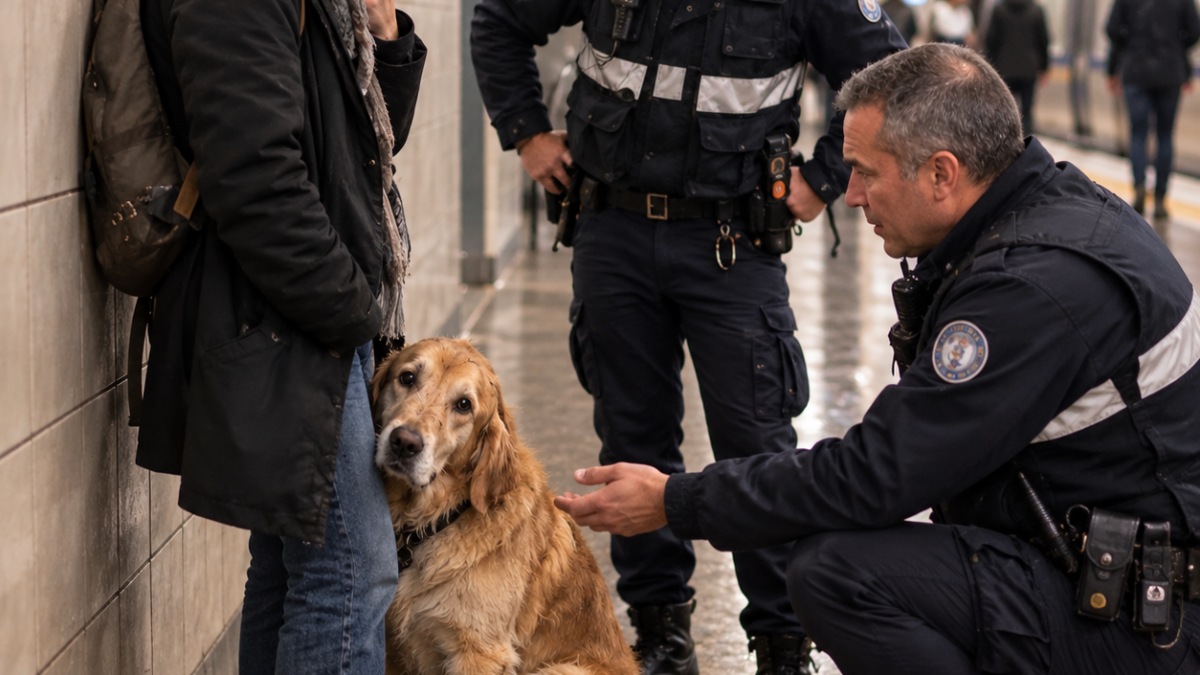
PART 2
I sat.
Not because Karen told me to.
Because the tone of her voice had already taken the strength out of my legs.
Max stood beside my chair in the veterinary clinic, one shoulder pressed against my knee. The technician had left us in a small examination room while the veterinarian prepared to look at him.
I tightened my hand around the phone.
“What happened?”
Karen was silent for a second.
“Laura passed away eleven months ago.”
I looked down at Max.
His head rested against my leg.
“What?”
“I just pulled the adoption file. Her son called us after it happened.”
“Her son?”
“Daniel Mercer.”
I remembered him vaguely.
Laura had brought him to the shelter once after adopting Max. He had been in his thirties then. Tall. Quiet. He had crouched in the yard while Max dropped a tennis ball into his lap.
“What did Daniel want?”
“He asked if we could take Max back.”
My throat tightened.
“And?”
“We told him yes.”
“Then why didn’t he bring him?”
“He called again a few days later and said he had found another arrangement.”
“What arrangement?”
“I don’t know. The note says private placement.”
I stared at the examination-room wall.
“Karen, Max has been living somewhere.”
“Yes.”
“He didn’t become this thin in one night.”
“I know.”
“He recognized me like he’d been waiting for somebody familiar.”
“I know.”
“Do you have Daniel’s number?”
“Yes.”
“Send it.”
“Rachel.”
“What?”
“Don’t call him angry.”
“I am angry.”
“I can hear that.”
“Max is sitting next to me looking like he’s been sleeping on concrete.”
“That is exactly why you need information before accusations.”
I closed my eyes.
Karen had always been better at slowing me down.
Even when I hated her for it.
“Fine.”
“Get Max examined first.”
“I will.”
“And Rachel?”
“Yes?”
“Don’t assume Daniel did this.”
I looked at Max.
“I won’t.”
That was technically true.
But I was already preparing myself not to like whatever explanation came next.
Dr. Priya Shah entered a few minutes later.
She crouched when she saw Max.
“Well, hello, handsome.”
Max raised his head.
His tail moved weakly.
“That is a good sign,” she said.
She checked his gums, eyes, ears, paws, heart and abdomen. Max tolerated everything, though he leaned into me whenever she moved behind him.
His condition was concerning but not catastrophic.
He was dehydrated.
Underweight.
His coat was badly matted.
One ear had an infection.
His paw pads were irritated, likely from spending too much time on hard or dirty surfaces.
He had mild arthritis in his hips.
No obvious fractures.
No major wound.
Nothing that explained where he had been.
“How long has he been like this?” I asked.
Dr. Shah shook her head.
“I can’t tell you that from one exam.”
“Days?”
“Some of the dehydration could be recent.”
“Weeks?”
“The weight loss and coat condition suggest longer than a few days.”
I swallowed.
“Months?”
“Possible.”
Max looked up at me.
Dr. Shah softened her voice.
“Let’s not build a timeline before we have one.”
Apparently everyone in my life had formed a committee dedicated to preventing me from jumping ahead.
She ordered blood work, fluids and treatment for the ear infection.
Then she asked, “Who owns him?”
“That is becoming complicated.”
“Is he going home with you?”
“I don’t know yet.”
Max immediately placed his chin on my shoe.
Dr. Shah smiled.
“He may have an opinion.”
I called Daniel from the hallway.
He answered with a distracted, “Hello?”
“Daniel Mercer?”
“Yes.”
“My name is Rachel Evans. I used to work at Harbor County Animal Rescue.”
Silence.
Then, “Okay.”
“Do you remember a golden retriever named Max?”
Another silence.
Longer.
“Yes.”
“I found him tonight.”
The line went completely quiet.
I pulled the phone away to make sure the call had not dropped.
“Daniel?”
“Where?”
“Central Station.”
“Oh my God.”
The fear in his voice sounded real.
That slowed me down.
“He’s at a veterinary clinic.”
“Is he okay?”
“He’s alive. He’s dehydrated and underweight.”
Daniel exhaled shakily.
“I can’t believe it.”
“When did you last see him?”
“About seven months ago.”
That answer landed hard.
“Seven months?”
“Yes.”
“Where has he been?”
“With a placement service.”
“What kind of placement service?”
“A private rescue. Rehoming. I don’t know what you’d call it.”
“Name?”
“Second Chance Companions.”
I had never heard of it.
“Why was Max there?”
Daniel sighed.
“My mother died.”
“I know.”
“I live in Chicago. She was in Baltimore. I came back to settle the house. I already had two dogs in a small rental and my landlord had a limit.”
“You called Harbor County.”
“Yes.”
“They agreed to take Max.”
“I know.”
“So why didn’t you bring him?”
There was another silence.
“I thought I found something better.”
“What?”
“A woman named Vanessa Cole.”
I wrote it down.
“How did you find her?”
“She contacted me.”
“How?”
“I posted in a local neighborhood group asking if anyone knew a foster or senior-dog rescue.”
“And she responded?”
“Yes.”
“She said she ran a placement network. Home-based fosters. No kennels.”
“What did you give her?”
“Max.”
My jaw tightened.
“I understand that.”
“And money.”
I stopped.
“How much?”
“Twelve hundred dollars.”
“For what?”
“Medical check, food, foster care and finding him a permanent home.”
“Did she?”
“She said she did.”
I gripped the railing beside me.
“What exactly did she tell you?”
“That a retired couple outside Frederick adopted him.”
“When?”
“About three weeks after she took him.”
“Did you meet them?”
“No.”
“Speak to them?”
“No.”
“Do you have their names?”
Daniel hesitated.
“She said they preferred privacy.”
I closed my eyes.
“Daniel.”
“I know how it sounds now.”
“Did she send you anything?”
“Photos.”
“What kind?”
“Max in a yard. Max on a couch. A man with him.”
“Send them to me.”
“You think she lied?”
I looked through the clinic window.
Max was lying on a towel while a technician connected fluids.
“I think I found the dog she told you was living with a retired couple seven months ago.”
Daniel became quiet.
Then he said, “I’ll send everything.”
The first photograph arrived while we were still talking.
Max stood in a fenced backyard.
Healthy coat.
Blue bandanna.
The second showed him on a beige couch beside an older man’s leg.
The third showed him lying near a fireplace.
For a moment, hope flickered.
Maybe he really had been placed.
Maybe he later got lost.
Then I noticed something.
The blue bandanna.
I remembered it.
Laura had bought Max that bandanna.
He was wearing it in one of the photographs stored in his original shelter follow-up file.
I pulled up the old photo Karen had just sent me.
Same bandanna.
Same backyard.
Same fence.
I zoomed in.
My stomach dropped.
“Daniel.”
“What?”
“The first photo Vanessa sent you wasn’t taken after she got Max.”
“How do you know?”
“It was taken at your mother’s house.”
He said nothing.
I sent him the older photo.
A minute passed.
Then two.
When he spoke again, his voice was different.
“She used Mom’s photo.”
“Yes.”
“What about the couch?”
“I don’t know yet.”
“Rachel…”
“I need you to send me every message you have with Vanessa.”
“I will.”
“Do not contact her.”
“Why?”
“Because if she’s been lying for seven months, I don’t want her deleting anything before we understand what happened.”
That was the first time that night I heard real anger enter Daniel’s voice.
“She told me he was safe.”
“I know.”
“I paid her to keep him safe.”
“I know.”
“I should’ve brought him back to the shelter.”
“Yes.”
I regretted saying it the second it came out.
Daniel didn’t argue.
“I know,” he said quietly.
That made me feel worse.
I went back into the exam room.
Max raised his head.
I sat beside him.
“You were supposed to be in Frederick.”
His tail moved.
“Apparently nobody told you.”
Dr. Shah returned with his initial blood work.
Nothing immediately alarming.
That meant Max could leave after fluids.
But leave with whom?
Technically, his microchip still listed Laura.
Laura had passed away.
Daniel had inherited responsibility for Max but had transferred physical custody to Vanessa’s organization.
Whether that constituted ownership transfer depended on paperwork I hadn’t seen.
I called Karen.
She listened.
Then said, “Bring him here.”
“To the shelter?”
“For tonight.”
I looked at Max.
His ears dropped slightly when I stood.
I hated the idea.
“Can I foster him?”
Karen laughed softly.
“What?”
“You’ve known he’s alive for four hours.”
“So?”
“So you’re already asking to take him home.”
“He knows me.”
“I know.”
“He trusts me.”
“I know.”
“He shouldn’t spend tonight in a kennel.”
Karen became quiet.
“You left because you said you couldn’t carry this work home anymore.”
“This isn’t work.”
“That is exactly what worries me.”
I looked through the glass at Max.
“You’re going to say no?”
“No.”
Relief washed through me.
“I’ll file an emergency foster authorization. Bring him by first so we can document intake.”
Max came home with me at 1:13 in the morning.
He stood inside my apartment doorway for almost a full minute.
Then he inspected the living room.
Kitchen.
Hallway.
Bedroom.
He moved slowly, sniffing everything.
I put down a bowl of water.
He drank.
I put a soft bed beside my couch.
He ignored it.
Instead, he lay directly beside my feet.
“Of course.”
I sat on the couch.
Max put one paw across my shoe.
That was how we slept.
Or how he slept.
I barely did.
Every time I closed my eyes, I saw the shelter yard years earlier.
Max sprinting after tennis balls.
Max greeting school groups.
Max leaning against Laura the day she signed the adoption papers.
She had cried.
I remembered that clearly.
“He’s really mine?” she had asked.
I had laughed.
“As soon as you sign here.”
Laura had signed.
Then she sat on the floor and Max climbed halfway into her lap.
It had felt like one of the good endings.
At shelters, you collect those.
You need them.
You remember them on difficult days.
Now I wondered how many endings were only temporary.
At 6:00 a.m., Max woke me by pushing his nose under my hand.
“Morning.”
His tail moved.
I made coffee.
He followed me into the kitchen.
I opened the refrigerator.
He immediately became more alert.
“There you are.”
That small spark mattered.
The old Max was still somewhere inside him.
By eight, Daniel had sent me forty-three screenshots.
Messages.
Receipts.
Photos.
A digital contract.
Second Chance Companions described itself as a “private senior and special-needs placement network.”
Vanessa Cole had promised:
Temporary foster placement.
Veterinary assessment.
Microchip transfer.
Permanent-home screening.
Thirty-day follow-up.
Daniel had paid half up front and half when Vanessa texted:
MAX IS HOME!
Beneath that sentence was the photo of Max on the couch.
I zoomed in.
Something bothered me.
The couch wasn’t familiar.
The man’s leg might have belonged to anyone.
But the photograph looked oddly polished.
Too centered.
Too clean.
I reverse-searched nothing because I didn’t have that kind of tool at my fingertips.
Instead, I sent the image to Karen.
“Recognize this?”
Five minutes later she called.
“Yes.”
My stomach tightened.
“From where?”
“Our website.”
“What?”
“That’s Walter.”
“Who is Walter?”
“A golden we adopted four years ago.”
I stared at my phone.
“Are you sure?”
“Completely.”
“That’s not Max?”
“No.”
“The dog is only partially visible.”
“I know that living room. His adopter sent us a holiday update.”
I sat down.
Vanessa had taken a photograph from our shelter website, cropped it, and sent it to Daniel as proof Max had been placed.
The room seemed to tilt.
“Karen.”
“I know.”
“If she lied about placement…”
“I know.”
“Where was Max for seven months?”
“I don’t know.”
That question became the center of everything.
At noon, I called transit police.
Finding an unattended dog in a subway station was common enough that I expected a routine conversation.
Then I explained the history.
The officer transferred me to someone from station security.
“Yes, we have cameras,” a man named Officer Chen told me.
“How long is footage stored?”
“Depends on location.”
“I found him last night.”
“That should still exist.”
“I need to know when he arrived.”
“That could mean reviewing hours or days.”
“I understand.”
“Do you have an incident report?”
“Not yet.”
“File one.”
I did.
Then I contacted city animal services.
Then the shelter’s legal liaison.
Then Daniel.
Then, because my employer was beginning to wonder whether I planned to come to work, my boss.
“Family emergency?” he asked.
I looked at Max sleeping under my desk at home.
“Something like that.”
By evening, Officer Chen called.
“We have something.”
My heart jumped.
“What?”
“Dog appears on camera Monday morning at 4:37.”
That was almost thirty-eight hours before I found him.
“Alone?”
“Not initially.”
I stood.
“Who was with him?”
“A woman.”
“Can you describe her?”
“Mid-forties to early fifties. Dark jacket. Hair tied back.”
“Vehicle?”
“She enters through street level with the dog on leash.”
“Then what?”
There was a pause.
“She walks him into the corridor.”
“And leaves?”
“Yes.”
“With the leash?”
Another pause.
“Yes.”
I felt heat rise into my face.
“Can you see her face?”
“Somewhat.”
“Can I see the footage?”
“Not directly yet.”
“Do you have a still?”
“We can provide one to the investigating agency.”
I called animal services.
They called Officer Chen.
Two hours later, Karen received a still.
She forwarded it to me.
I opened it.
A woman stood beside Max near the station entrance.
I had never seen her before.
Daniel had.
He answered my video call and stared at the image.
His face changed instantly.
“That’s Vanessa.”
For several seconds, neither of us spoke.
Then Daniel whispered, “She left him there.”
I looked at Max.
He was asleep.
“She walked him inside and left.”
“I paid her.”
“I know.”
“She told me he had a family.”
“I know.”
“I sent her Christmas money for him.”
That stopped me.
“What?”
“She said the couple had unexpected veterinary expenses.”
“How much?”
“Three hundred.”
I shut my eyes.
Vanessa had not only lied about Max’s placement.
She had continued collecting money afterward.
Daniel sounded sick.
“I thought I was helping.”
“Send that message too.”
“What are we going to do?”
For the first time, I had an answer.
“We’re going to stop guessing.”
The next morning, I went back to Harbor County Animal Rescue.
Walking through those doors after two years felt like entering a version of myself I had packed away.
Same disinfectant smell.
Same bulletin board.
Same chorus of barking from the kennel wing.
Karen met me in the lobby.
She hugged me once.
Then she looked down at Max.
“Oh, buddy.”
Max’s tail started moving.
Karen crouched.
He walked straight into her.
That almost broke her.
She buried her face against his neck.
“You remember me.”
Of course he did.
Max remembered everyone who had ever been kind to him.
That was part of what made his condition so painful to see.
He had trusted the world completely.
Somebody had taught him not to.
Karen stood.
“Come on.”
We went into her office.
She had printed everything.
Daniel’s contract.
Receipts.
Messages.
Vanessa’s business page.
Public reviews.
At first, they looked excellent.
“Saved my mother’s dog when we had no options.”
“Found the perfect home for our senior beagle.”
“Kind, compassionate, professional.”
Then Karen pointed at the dates.
Most of the positive reviews were old.
The recent ones were different.
“Stopped responding.”
“Won’t provide foster address.”
“Still waiting for microchip transfer.”
“Claims our dog was adopted but won’t let us contact family.”
My stomach tightened.
“How many?”
“Seven concerning reviews in the last eighteen months.”
“Complaints?”
“I called city animal services.”
“And?”
“Two prior welfare complaints.”
“What happened?”
“Insufficient evidence.”
“Why?”
“Animals couldn’t be located.”
I stared at her.
“That is the problem.”
“Exactly.”
Karen slid another paper toward me.
Business registration.
Second Chance Companions was not a registered nonprofit.
It was a limited liability company.
That was not illegal.
But the language on Vanessa’s website made it sound charitable.
“Does she have a facility?”
“No.”
“Foster addresses?”
“Not public.”
“Veterinary partner?”
“Website says several.”
“Names?”
“None.”
I leaned back.
“So she takes animals, money, and then sends people photos.”
“That is what we can prove happened with Max.”
“Maybe more.”
Karen gave me a look.
“Careful.”
“I’m not accusing her of anything else.”
“You are thinking loudly.”
I almost smiled.
“I learned from you.”
We contacted Daniel’s attorney.
Then city animal services.
A formal investigation opened.
That should have been enough for me.
It wasn’t.
Not because I wanted to play detective.
Because Max still had seven missing months.
I wanted to know where he had slept.
Who fed him.
When his ear became infected.
Whether anyone had called him by name.
Whether he had spent those months expecting Laura to return.
That last thought hurt worst.
Laura had adopted Max when he was four.
She had him for almost five years.
According to Daniel, they were inseparable.
“She planned her day around him,” he told me during one of our calls. “If she went to the grocery store, she was home in forty minutes because Max was waiting.”
“Did she walk him?”
“Every morning.”
“Anywhere specific?”
“Riverside Park.”
I took Max there that weekend.
I didn’t expect anything.
The moment we entered the south path, his pace changed.
His head came up.
He pulled gently.
Not hard.
Just enough to tell me he knew.
We passed a bench.
Max stopped.
He stared at it.
Then sat.
I looked at the small brass plaque attached to the backrest.
IN MEMORY OF MICHAEL MERCER.
Laura’s husband.
I called Daniel.
“Was this your father’s bench?”
He went silent.
“Yes.”
“Your mother brought Max here?”
“Every day.”
Max rested his chin on the bench seat.
Daniel began crying.
“I haven’t been there since the funeral.”
I sat beside Max.
“He remembers.”
“Of course he does.”
That afternoon Daniel told me the part of the story I had been missing.
Laura had adopted Max a year after Michael died.
She was lonely.
Daniel lived far away.
Friends visited, but the house felt empty.
Then Max arrived.
“He gave her routine,” Daniel said. “That’s what she used to say.”
Max forced her outside.
Made her laugh.
Gave her somebody to talk to.
When Laura’s health began declining, Max stayed beside her.
She worried more about him than herself.
“She made me promise,” Daniel said.
“What?”
“That I’d make sure he was okay.”
The guilt in his voice had become its own presence.
“You tried.”
“I handed him to a stranger from the internet.”
“You checked references.”
“Fake references.”
“You had a contract.”
“Worthless contract.”
“You called the shelter first.”
“And then ignored the safest option because Vanessa told me Max would never see another kennel.”
There it was.
That was why he had chosen her.
Guilt.
Vanessa had understood exactly which sentence to use.
A loving son who couldn’t keep his mother’s dog did not want to imagine Max behind kennel bars again.
So she promised couches.
Gardens.
Retired couples.
Individual attention.
And Daniel paid for the story he wanted to believe.
“You made a bad choice,” I said.
He laughed bitterly.
“That’s generous.”
“No. It’s accurate.”
“What if you hadn’t found him?”
I looked at Max.
“I did.”
“That doesn’t answer it.”
“No.”
He became quiet.
“I want to come see him.”
I hesitated.
Not because Daniel had harmed Max.
Because Max had been moved enough.
But Daniel was part of Laura.
“Come.”
He flew in the following weekend.
I met him at the shelter’s enclosed yard.
Max stood beside me.
Daniel entered through the gate.
He stopped.
Max stared.
For maybe three seconds, nothing happened.
Then Max’s tail moved.
Daniel covered his mouth.
“Hey, buddy.”
Max walked toward him.
Not with the wild recognition he had shown me.
But he knew him.
Daniel crouched.
Max sniffed his jacket.
Then pushed his head beneath Daniel’s arm.
Daniel broke.
He wrapped both arms around Max.
“I’m sorry.”
Max licked his chin.
“I’m so sorry.”
I walked away and let them have the moment.
Later, we sat under a tree.
Daniel told me he wanted to take Max.
That did not surprise me.
“I can make it work,” he said. “I’ll move if I have to.”
“Daniel.”
“I owe him.”
“That’s not a reason to take a dog.”
He looked offended.
“I love him.”
“I believe you.”
“Then why—”
“Because guilt makes people promise things they can’t sustain.”
He stopped.
I continued.
“You live in a third-floor rental. You have two dogs. You travel for work.”
“I can change all of that.”
“Maybe.”
“I will.”
“Then change it first.”
He stared at me.
I expected anger.
Instead, he nodded.
“That sounds like Mom.”
“Should I be offended?”
“No.”
He looked at Max.
“What are you planning?”
“I don’t know.”
The truth was becoming obvious.
I just wasn’t ready to say it.
Max had started sleeping beside my bed.
He followed me from room to room.
He waited at the door when I left.
When I returned, his tail hit the wall.
I had bought three tennis balls.
Then five.
Then an orthopedic bed.
Then a second water bowl because apparently walking from the living room to the kitchen was an unreasonable burden for a golden retriever.
I had not planned to adopt him.
Planning was becoming irrelevant.
Meanwhile, the investigation into Vanessa expanded.
Animal services contacted people who had posted negative reviews.
Four families agreed to speak.
One had surrendered an eleven-year-old spaniel after the owner’s father entered assisted living.
Vanessa claimed the dog was adopted by a schoolteacher.
No direct contact was allowed.
The family later discovered the microchip had never been transferred.
Another family paid Vanessa to place two bonded terrier mixes.
She sent photographs of them in what she described as their new yard.
The photos came from an unrelated rescue page in another state.
One terrier had later been found wandering near a shopping center.
The second was still missing.
That changed the tone of the investigation.
This was no longer only Max.
Detective Luis Ortega from the city’s animal-welfare unit came to the shelter to interview me.
He was careful.
Methodical.
Not easily impressed by outrage.
“Tell me only what you personally know.”
“I found Max.”
“Where?”
I told him.
“Did you see Vanessa leave him?”
“No.”
“Then don’t say she abandoned him.”
“Camera shows it.”
“Did you personally review the full footage?”
“No.”
“Then say transit security informed you the footage shows a woman later identified by Daniel Mercer as Vanessa Cole entering with Max and leaving without him.”
I exhaled.
“You must be fun at parties.”
“Terrible.”
He almost smiled.
Then he looked toward Max sleeping beside my chair.
“How long did you work here?”
“Six years.”
“Know the dog well?”
“Very.”
“Any doubt it’s him?”
“None.”
He nodded.
“We’re seeking records.”
“What kind?”
“Business, veterinary, financial, communication.”
“Will she hand them over?”
“We’ll see.”
“What happens if she doesn’t?”
His expression told me he was not going to discuss investigative procedure with an impatient former shelter employee.
I changed questions.
“Can you find out where Max was for seven months?”
“That is one of the goals.”
“Good.”
“Rachel.”
“What?”
“If Vanessa contacts you, don’t engage.”
“Why would she contact me?”
He looked at me.
“You’ve been calling people.”
“I’ve been helping locate witnesses.”
“You’ve also posted nothing publicly, which is good.”
“I know better.”
“Keep knowing better.”
Three days later, Vanessa called me.
I almost didn’t answer because I didn’t recognize the number.
“Rachel Evans?”
“Yes.”
“This is Vanessa Cole.”
My stomach tightened.
I said nothing.
She continued.
“I understand you have Max.”
“Why are you calling me?”
“Because there has been a misunderstanding.”
“About?”
“Daniel Mercer has apparently become confused.”
I felt anger rise so quickly that I stood from my chair.
“He’s confused?”
“Yes.”
“About the dog you told him was adopted?”
“I can explain.”
I remembered Ortega.
Don’t engage.
“Then explain it to the investigator.”
She became quiet.
“I’d rather resolve this without turning it into something ugly.”
I almost laughed.
“Vanessa, you should not be calling me.”
“I helped that dog.”
I looked down at Max.
He was sleeping under my desk at work because my boss had finally stopped pretending Max wasn’t going to become a regular presence.
“How?”
“I found him temporary care.”
“Where?”
“I can’t disclose private foster information.”
“Then tell the investigator.”
“I already have.”
That surprised me.
“And?”
“This is being blown out of proportion.”
I said nothing.
Vanessa’s voice hardened slightly.
“Daniel was desperate to get rid of Max.”
That sentence changed the conversation.
“No.”
“You weren’t there.”
“He called the shelter first.”
“He wanted someone else to take responsibility.”
“That is what rehoming means.”
“He didn’t care where the dog ended up.”
I thought of Daniel crying in the yard.
“You chose the wrong person to tell that lie to.”
“I’m not lying.”
“Then why did you send him a photograph from our shelter website and claim it was Max?”
Silence.
There it was.
She hadn’t expected me to know.
Finally she said, “I use representative photos sometimes to protect adopter privacy.”
“That is not what you wrote.”
“I need to go.”
“Good.”
Before she hung up, I said, “Do not call me again.”
My hands were shaking afterward.
Not from fear.
From the effort of not saying everything I wanted to say.
I called Ortega.
He was unimpressed.
“I told you not to engage.”
“She called me.”
“And you engaged.”
“She lied.”
“People under investigation sometimes do.”
“She said Daniel wanted to get rid of Max.”
“Write down the conversation while it’s fresh.”
“I already did.”
“Good.”
“Are you mad?”
“I’m professionally disappointed.”
“That sounds worse.”
“It is.”
A week later, the city obtained access to Vanessa’s business records.
That was when the case broke open.
Second Chance Companions had taken in at least twenty-six animals over two years.
Families had paid placement fees ranging from four hundred to fifteen hundred dollars.
Vanessa’s records listed each animal as:
PLACED.
RETURNED.
TRANSFERRED.
Or FOSTER ACTIVE.
But the supporting documentation was inconsistent.
Some adopter addresses did not exist.
Some phone numbers belonged to unrelated people.
Several photographs had been copied from shelter and rescue pages.
Veterinary invoices did not match the animals described.
Then they found Max’s file.
Daniel called me the evening he learned what it contained.
His voice sounded hollow.
“She had him listed as transferred.”
“To who?”
“A rescue called Golden Years Haven.”
I had never heard of it.
“Where?”
“West Virginia.”
“Does it exist?”
“No.”
I closed my eyes.
“What else?”
“There’s a transport receipt.”
“Real?”
“No. The company says the invoice number isn’t theirs.”
“So everything is fake.”
“Almost.”
That word mattered.
“Almost?”
“There are food receipts.”
“Where?”
“A farm supply store outside Hagerstown.”
“When?”
“For about four months.”
I sat straighter.
“Max was somewhere near Hagerstown?”
“Maybe.”
Investigators traced the address associated with Vanessa’s purchases.
A rented farmhouse.
That was where she had been keeping several animals.
Not as a foster network.
As one overcrowded private property.
When animal services inspected it, they found six dogs still there.
All were removed for evaluation after their ownership and care arrangements were reviewed.
Max was not among them.
But one former neighbor remembered him.
A large golden retriever.
Friendly at first.
Then quieter.
The neighbor, Mr. Howard, spoke to me only after Ortega approved contact.
“I saw him through the fence,” he said.
“How long?”
“Months.”
“Was he outside?”
“Sometimes.”
“Did you ever see Vanessa with him?”
“Yes.”
“Did she walk him?”
“Not really.”
“What happened to him?”
Mr. Howard hesitated.
“I asked her once.”
“What did she say?”
“That his family had come back for him.”
“When?”
“Maybe two months ago.”
That timeline placed Max leaving the farmhouse roughly eight weeks before I found him.
“Did you see anyone pick him up?”
“No.”
“Did you see Vanessa take him anywhere?”
“One morning she loaded three dogs into a van.”
My grip tightened around my phone.
“Three?”
“Yes.”
“Did all three come back?”
“I don’t think so.”
“How do you know?”
“It got quieter.”
Ortega later confirmed transit-camera evidence placed Vanessa’s van near three different transportation hubs over a six-week period.
One was Central Station.
Another was a bus terminal.
The third was a commuter rail parking lot.
At the bus terminal, an older mixed-breed dog had been found and taken to a municipal shelter.
At the commuter lot, no animal had been officially reported.
Investigators began checking missing-dog reports.
A week later, the second dog from the terrier pair was located.
A family had found her months earlier and, because her microchip information was outdated, adopted her after the required hold period.
The original family cried when they learned she was alive.
They ultimately chose not to disrupt the new home after speaking with the adopters.
That decision stayed with me.
Sometimes getting justice does not mean rewinding time.
Sometimes it means accepting the safest ending available.
Max’s case became the center of a larger licensing investigation.
Vanessa retained an attorney.
Her business page disappeared.
Then reappeared with a statement saying she was the victim of “false accusations by disgruntled clients.”
I wanted to respond.
Karen physically took my phone.
“Give that back.”
“No.”
“I am thirty-four years old.”
“You are behaving like sixteen.”
“She is calling people disgruntled.”
“Yes.”
“She left Max in a subway.”
“We know.”
“She lied about other dogs.”
“We know.”
“I can correct the record.”
“The investigation can correct the record.”
I stared at her.
“You enjoy this.”
“Deeply.”
She kept my phone for an hour.
She was right.
Public anger would not help.
Records would.
Camera footage would.
Receipts would.
Messages would.
Vanessa’s own files would.
That became the most satisfying part.
Every shortcut she had taken to make the business look legitimate created evidence.
The fake placement photos.
The false transfer receipts.
The contradictory intake logs.
The payment requests.
The message telling Daniel that Max was “thriving with his new family” three months after Mr. Howard had seen Max behind Vanessa’s fence.
Her own words were doing more damage than anything I could have posted online.
Meanwhile, Max was becoming himself again.
Slowly.
The first real breakthrough came with a tennis ball.
I had been tossing one gently in my apartment.
Not for him.
I was sitting on the floor while answering email and bouncing it against the wall.
Max watched.
Once.
Twice.
Three times.
Then his ears lifted.
I stopped.
He stared at the ball.
“Seriously?”
His tail moved.
I rolled it.
He watched it cross the floor.
Nothing.
I rolled it back.
He stood.
I almost cried.
“Go on.”
I rolled it again.
Max walked after it.
Picked it up.
Turned around.
For half a second, I saw the shelter dog.
Then he carried the ball to his bed and lay down with it between his paws.
I laughed.
“That is not retrieving.”
His tail thumped.
The next day he brought it back.
After that, everything accelerated.
He greeted me at the door.
He started demanding breakfast at 6:10.
He discovered the couch.
He remembered how much he loved car rides.
He barked at a squirrel and then looked surprised by his own voice.
Karen came over one Sunday and found him upside down on my rug with all four legs in the air.
She stopped inside the doorway.
“There he is.”
I knew exactly what she meant.
Not the dog.
The personality.
The Max we remembered had begun coming back.
Daniel saw it too.
He had followed my advice.
He moved to a dog-friendly townhouse.
Reduced travel.
Arranged daycare for his own dogs.
He sent photographs of the fenced yard.
Then he came back to visit.
By then, Max greeted him warmly.
Daniel sat on the floor and let Max climb halfway into his lap.
After an hour, he asked me the question I knew was coming.
“Do you want to keep him?”
I looked away.
“That wasn’t the original plan.”
“That wasn’t my question.”
Max was asleep with his head on my foot.
“Yes.”
Daniel nodded.
“I figured.”
“I don’t want to take him from Laura.”
His expression softened.
“You wouldn’t.”
“I mean from you.”
“He was Mom’s dog.”
“And you’re her son.”
Daniel looked at Max for a long time.
Then he said, “When Mom died, I thought honoring her meant taking responsibility for everything she left behind.”
I listened.
“The house. Furniture. Bills. Max.”
His voice dropped.
“I treated him like one more problem I had to solve.”
“You were grieving.”
“Still.”
“Yes.”
“I wanted him somewhere good, but I also wanted the decision finished.”
That was honest.
Painfully honest.
He continued.
“Then Vanessa told me what I wanted to hear.”
“What was that?”
“That I could pay enough money to make the guilt disappear.”
I said nothing.
Daniel scratched Max’s ear.
“It doesn’t work like that.”
“No.”
He looked at me.
“When I see him with you, I don’t feel like I’m losing him.”
My throat tightened.
“What do you feel?”
“Like Mom’s dog finally got lucky twice.”
I laughed softly.
“You’re trying to make me cry.”
“Is it working?”
“Yes.”
He reached into his jacket.
“I brought something.”
It was a tennis ball.
Old.
Faded.
One side flattened.
“Mom kept it in the basket by the back door.”
Max woke immediately.
His eyes locked on it.
Daniel smiled.
“You remember this?”
Max stood.
Daniel threw the ball across my living room.
Max chased it.
Not fast.
But joyfully.
He brought it straight back.
That settled everything.
Daniel signed a transfer agreement through the shelter the following week.
Max became legally mine.
I thought I would feel triumphant.
Instead, I felt scared.
Adoption is a promise.
I knew better than most how long a promise can last.
Karen handed me the paperwork.
“Any regrets?”
I looked at Max.
He was trying to steal a pen from her desk.
“One.”
“What?”
“I should have bought pet insurance sooner.”
She laughed.
The hearing in Vanessa’s case happened three months after I found Max.
By then, multiple agencies were involved.
The city sought to revoke her animal-care business registration.
Several families pursued refunds and restitution.
Prosecutors filed charges related to financial misrepresentation and animal abandonment under local statutes.
I was subpoenaed as a witness.
So was Daniel.
So was Mr. Howard.
I hated the word revenge by then.
Not because I had become kinder toward Vanessa.
Because revenge made it sound like I needed to hurt her back.
I didn’t.
I needed her to be unable to do the same thing again.
That was different.
The hearing room was smaller than people imagine.
No grand jury box.
No dramatic television lighting.
Just wood paneling, attorneys, folders and uncomfortable chairs.
Vanessa sat across the room.
It was the first time I saw her in person.
She looked ordinary.
That surprised me even though it shouldn’t have.
Dark hair.
Gray blazer.
Glasses.
Nervous hands.
People who make selfish decisions do not come with visual warnings.
Her attorney argued that Second Chance Companions had become overwhelmed financially.
Vanessa had started with good intentions.
Too many owners asked for help.
Too few foster homes were available.
Costs increased.
Some records became disorganized.
Some placements failed.
The attorney used the word “mistakes” repeatedly.
Then the transit footage played.
Vanessa entered Central Station with Max.
He walked beside her.
His tail was low.
At one point, he looked up at her.
She led him toward the wall where I later found him.
She removed the leash.
Max stood still.
Vanessa walked away.
He followed three steps.
She turned.
Pointed back toward the wall.
Max stopped.
My hand tightened around the edge of my chair.
I had not seen that part before.
She had told him to stay.
Then she left.
Max waited.
Just as he had probably been taught to do.
The video followed Vanessa to the stairs.
She never turned around.
Max stayed in the corridor.
For hours.
Then overnight.
Then into the next day.
Watching it felt different from hearing about it.
Daniel stared at the floor.
I couldn’t.
I watched every second they showed.
When the lights came back up, Vanessa’s attorney said, “Ms. Cole believed leaving the dog in a populated public location created the best chance of immediate assistance after an emergency situation made continued care impossible.”
I nearly stood.
Karen, sitting behind me, put one hand on my shoulder.
Stay seated.
The city attorney asked, “What emergency?”
Vanessa’s attorney objected.
The hearing officer allowed the question.
Vanessa testified.
She claimed the farmhouse lease had ended suddenly.
She had too many animals.
A foster canceled.
She had been “desperate.”
“Why did you not contact Mr. Mercer?” the city attorney asked.
“I was embarrassed.”
“Why not contact Harbor County Animal Rescue?”
“I didn’t know their involvement.”
“Max’s original adoption paperwork was in your file.”
Vanessa looked at her attorney.
The city attorney continued.
“Why did you tell Mr. Mercer that Max had been adopted seven months earlier?”
“I believed a placement was going to work.”
“That is not the question.”
Vanessa became quiet.
“Why did you send him a photograph of another dog and represent it as Max?”
“I was trying to reassure him.”
“About something that was not true?”
Her attorney objected again.
The hearing officer overruled.
Vanessa’s voice lowered.
“Yes.”
That single word changed the room.
The city attorney placed another message on the screen.
Vanessa to Daniel:
Max is doing wonderful. His new family adores him.
Date:
Three months before she left Max at Central Station.
Then another.
They’re taking him to the lake this weekend.
At that exact time, Mr. Howard testified, Max had been behind Vanessa’s rented farmhouse fence.
Then came the financial records.
Daniel’s twelve hundred dollars.
His additional three hundred.
Fees from other families.
Payments collected after animals had supposedly been “placed.”
Vanessa’s attorney tried to separate poor recordkeeping from intentional deception.
Then the prosecutor produced one of Vanessa’s internal spreadsheets.
I had not seen it before.
A column labeled:
STATUS.
Another:
OWNER CONTACT.
Another:
FEE COMPLETE.
Next to several animals—including Max—was a note.
NO FURTHER CONTACT NEEDED.
I stared at those words.
That was Max’s life reduced to a cell in a spreadsheet.
No further contact needed.
The city attorney asked what that meant.
Vanessa said she didn’t remember.
Then they showed another column.
DIFFICULT TO PLACE.
Max had been marked YES.
So had the older spaniel.
So had both terriers.
So had three other animals later found in public places.
The pattern was suddenly visible.
Not emotion.
Not accusation.
Pattern.
The animals easiest to place had real adopter records.
The older, medically complicated or harder-to-place animals had incomplete documentation, false transfers, or unverifiable destinations.
Vanessa’s own spreadsheet did what angry social-media posts never could.
It connected everything.
Daniel testified after lunch.
He did not try to make himself look innocent.
That made his testimony stronger.
“I should have returned Max to the shelter,” he said.
Vanessa’s attorney asked, “But you chose my client’s service instead?”
“Yes.”
“You paid voluntarily?”
“Yes.”
“You wanted Max out of your responsibility?”
Daniel paused.
“I wanted him in a home.”
“But you could not personally keep him.”
“No.”
“So Ms. Cole was solving a problem for you.”
Daniel looked directly at Vanessa.
“She was supposed to solve it by caring for him, not by lying to me.”
The attorney moved on.
When it was my turn, I described finding Max.
His condition.
Recognition.
The microchip.
Nothing more than I knew.
Vanessa’s attorney asked why I was so certain Max recognized me.
I almost laughed.
Instead, I said, “Because I worked with him nearly every day for more than a year.”
“Animals respond to many people.”
“Yes.”
“You cannot know what he was feeling.”
“No.”
“So when you say he was emotionally distressed—”
“I didn’t say that.”
The attorney stopped.
I continued.
“I said he vocalized, climbed against me, licked my hands and stayed physically pressed to me after I said his name.”
The city attorney smiled slightly.
Vanessa’s attorney tried again.
“You’ve become attached to Max?”
“Yes.”
“You eventually adopted him?”
“Yes.”
“So you benefited personally from this situation.”
The question irritated me.
But it also made sense strategically.
I took a breath.
“If by benefited you mean I got a dog I love, yes.”
“Then you had an emotional interest in portraying Ms. Cole negatively.”
“No.”
“You don’t dislike her?”
“I dislike what the evidence shows happened to Max.”
“That wasn’t my question.”
“Then yes. I dislike her decisions.”
A few people shifted.
The attorney asked, “You want her punished.”
There it was.
The word he wanted.
I looked at Vanessa.
Then at the hearing officer.
Then back at the attorney.
“I want her unable to take another family’s money, promise their dog is safe, and then leave that family wondering where the dog really went.”
The room went silent.
That was the closest I came to revenge.
Vanessa’s business registration was revoked.
She was prohibited for a period set by the court from operating a commercial animal-placement or boarding service.
The financial case ended with restitution orders to several families.
Other penalties followed under the applicable local charges.
Not every missing animal was found.
That was the part nobody celebrated.
The older spaniel was eventually located in another county shelter and reunited with his original family.
One terrier remained with the family that had found and adopted her.
The second returned to the original family after a careful transition.
Two animals from Vanessa’s records were never conclusively traced.
Those missing endings stayed with all of us.
Justice did not make them reappear.
It only stopped Vanessa from controlling the story.
A reporter approached me outside the courthouse.
“Are you satisfied?”
I hated the question.
Satisfied?
Max had spent months in uncertainty.
Families had been lied to.
Animals had disappeared into false records.
What did satisfied mean?
I looked at the reporter.
“I’m relieved it’s harder for this to happen again.”
“Do you forgive Ms. Cole?”
“That isn’t my job.”
“Do you think she started out trying to help?”
I looked back toward the courthouse doors.
“Maybe.”
That answer surprised the reporter.
It surprised me too.
But months earlier, I had found photographs on Vanessa’s old business page that appeared genuine.
Dogs placed successfully.
Families thanking her.
There had probably been a time when Second Chance Companions was exactly what she claimed.
Then too many animals came.
Too little money.
Too few fosters.
Maybe she panicked.
Maybe pride kept her from admitting failure.
Maybe money made the lies easier.
Then one lie required another.
And eventually animals became entries on a spreadsheet instead of lives she had promised to protect.
Understanding how someone deteriorates does not excuse what they do.
It simply makes the warning more useful.
Good intentions are not a substitute for accountability.
Max did not care about any of this.
That was one of his best qualities.
While humans argued about contracts and responsibility, Max focused on tennis balls.
Food.
Squirrels.
My couch.
He gained twelve pounds.
His coat grew glossy again.
The ear infection disappeared.
His arthritis improved with treatment.
He learned the exact sound of my refrigerator cheese drawer.
And slowly, very slowly, he stopped reacting every time I walked toward the apartment door.
At first he followed me.
Always.
Bathroom?
Max.
Laundry room?
Max.
Mailbox?
Max wanted to come.
If I closed the door between us, he waited directly on the other side.
When I left for work, even with Karen taking him to the shelter office for the day, he watched until I disappeared.
Then one morning, six months after I found him, I picked up my keys.
Max remained on his bed.
I stopped.
He looked at me.
“I’m leaving.”
His tail moved once.
“You heard me?”
Nothing.
I opened the door.
Max put his head back down.
I almost cried.
It sounds ridiculous.
Most dog owners celebrate when their dog greets them.
I was celebrating because mine felt safe enough not to follow.
I drove to work with tears in my eyes.
My boss looked at me when I entered.
“Everything okay?”
“My dog ignored me.”
He stared.
“Congratulations?”
“Exactly.”
Daniel became part of Max’s life rather than disappearing from it.
He visited twice a year.
Sent birthday toys.
Paid for part of Max’s arthritis medication even after I told him he didn’t need to.
On the anniversary of Laura’s passing, Daniel and I took Max to Riverside Park.
We sat on Michael’s memorial bench.
Daniel brought a small framed photograph.
Laura on her back porch.
Max beside her.
Both looking ridiculously happy.
“I found this in a box,” he said.
I took it.
“She loved him.”
“She did.”
“You want it?”
I shook my head.
“It belongs to you.”
Daniel looked at Max.
“No.”
He handed it back.
“It belongs where he lives.”
So I put it in my living room.
Max never looked at the photograph.
But I did.
Especially on difficult days.
A year after the court case, Karen called me at work.
“I have a proposal.”
“That sounds dangerous.”
“Come back.”
I laughed.
“No.”
“Part-time.”
“No.”
“One Saturday a month.”
“Karen.”
“You already volunteer every second weekend.”
“That is different.”
“How?”
“I can leave.”
“So can employees.”
“You’ve changed.”
“I became desperate.”
I looked beneath my desk.
Max was sleeping there.
My office had officially given up trying to enforce the no-pets rule after my boss discovered Max increased attendance at Friday meetings.
“I’ll think about it.”
Karen knew that meant yes.
The first Saturday I returned as an official part-time adoption counselor, I wore the same old shelter T-shirt style I had worn years earlier.
Max came with me.
The moment we entered the yard, he transformed.
He trotted toward the ball bin.
Karen laughed.
“He knows.”
“Of course he knows.”
We used him carefully.
Not with frightened dogs.
Not in chaotic situations.
But with nervous adopters.
Families uncertain whether older dogs could still be playful.
People who believed shelter dogs carried only sadness.
Max became living evidence that history did not erase personality.
One afternoon, a widower named Frank sat in the adoption room looking at a seven-year-old shepherd mix.
“I wanted a puppy,” he said.
“Why?”
“So I’d have more years.”
I understood.
Max was almost eleven by then.
I sat beside Frank.
“More years aren’t guaranteed.”
“I know.”
“The question is whether you want this dog.”
Frank looked through the glass.
The shepherd sat quietly.
“I don’t know.”
Max walked over and rested his head on Frank’s knee.
Frank smiled.
“Does he do that to everyone?”
“Pretty much.”
Max’s tail moved.
Frank adopted the shepherd.
Two weeks later, he sent a photograph of both of them asleep in the same recliner.
I printed it.
Put it on the shelter wall.
The wall slowly filled again.
Good endings.
Temporary perhaps.
But real.
That was when I understood what I had gotten wrong after leaving shelter work.
I had thought caring meant carrying every outcome forever.
It doesn’t.
You do what you can while the animal is in front of you.
You make the best decision you can.
You build systems that make good outcomes more likely.
Then you let life continue.
That lesson would matter when Max got older.
At twelve, his face turned almost completely white.
He slowed down.
Tennis-ball sessions became shorter.
He still demanded them.
He simply expected me to retrieve the ball more often.
“You have misunderstood the game,” I told him.
He wagged.
Daniel visited for Max’s twelfth birthday.
We made the mistake of buying a dog-safe birthday cake.
Max ate too fast and spent the rest of the evening staring at us hopefully as if birthdays entitled him to unlimited dessert.
“He hasn’t changed,” Daniel said.
I looked at Max.
“Yes, he has.”
Daniel nodded.
“I mean the important parts.”
That was true.
At thirteen, Max developed a heart murmur.
Mild.
Manageable.
Dr. Shah recommended monitoring.
I became obsessive.
Every cough meant a phone call.
Every long nap made me check his breathing.
Finally Dr. Shah said, “Rachel, he is allowed to be old.”
“I know.”
“No, you don’t.”
I stared at her.
She smiled gently.
“You rescued him from uncertainty. You cannot rescue him from time.”
I hated that sentence.
Because it was true.
Max stayed active another year.
At fourteen, he no longer came to the shelter every weekend.
Too tiring.
Instead, I shortened my shifts.
We walked slowly through the neighborhood.
He had favorite trees.
Favorite yards.
A particular corner where someone once dropped a piece of hot dog and Max remained convinced the event might repeat.
Then one winter morning, Daniel called.
His voice sounded excited.
“I found something.”
“What?”
“A video.”
“Of?”
“Mom and Max.”
He emailed it.
I opened it on my television.
Laura appeared in the backyard.
Alive.
Laughing.
Max was younger.
Bright gold.
He carried a tennis ball.
Laura threw it.
Max ran.
Returned.
She threw it again.
He ran again.
Then Laura looked toward whoever was filming.
“I think he’s going to wear me out before I wear him out.”
Daniel’s voice came from behind the camera.
“You wanted an active dog.”
“I wanted companionship.”
Max slammed the ball against her knee.
Laura laughed.
“I got management.”
I laughed so hard I cried.
Max lifted his head from his bed.
He heard Laura’s voice.
His whole body froze.
I stopped breathing.
On the television, Laura called, “Max!”
My old dog stood.
Slowly.
Painfully.
He walked toward the screen.
The video continued.
Laura knelt.
The younger Max ran into her arms.
My Max stood in front of the television.
His tail moved.
Once.
Again.
Then faster.
I sat on the floor beside him.
“Oh, buddy.”
He stared at the screen.
I don’t know what he understood.
I would never pretend I did.
Maybe only the voice.
Maybe the rhythm of a name spoken by someone he had loved.
Maybe nothing more complicated than recognition.
But when the video ended, Max stayed there.
I played it again.
He lay down beside me.
We watched Laura throw that tennis ball six times.
That became a ritual.
Not every day.
I didn’t want to turn memory into a wound.
But every few weeks, I played the video.
Max always listened.
The following spring, his health began to decline.
Not dramatically.
Small things.
He left breakfast unfinished.
Needed help standing after long naps.
Stopped asking for evening walks.
Dr. Shah adjusted medication.
Blood tests showed kidney changes.
Manageable at first.
Then less manageable.
I knew what was coming.
Knowing didn’t help.
One Sunday, Max refused a tennis ball.
That frightened me more than any lab result.
I rolled it toward him.
He watched it stop near his paw.
Didn’t move.
“Max?”
He looked at me.
Tail once.
That was all.
I sat beside him.
“Okay.”
I put the ball down.
“We don’t have to.”
That became our new routine.
No pressure.
Short walk?
Only if he wanted.
Food?
Whatever Dr. Shah approved and Max would eat.
Couch?
I built a ramp.
Bed?
I bought a thicker one.
Daniel came more often.
Karen too.
One afternoon, all three of us sat in my living room while Max slept.
Daniel said quietly, “I used to think finding him again fixed what I did.”
I looked at him.
“It did not need fixing the way you think.”
“I failed Mom.”
“Daniel.”
“I promised.”
“You made a mistake.”
“A big one.”
“Yes.”
He smiled sadly.
“Thank you for not lying.”
I touched Max’s back.
“Laura’s promise wasn’t that you’d make a perfect decision.”
“How do you know?”
“I don’t.”
He looked at me.
“I think she wanted Max safe.”
Daniel nodded.
“He is.”
“Yes.”
“Then maybe that’s enough.”
It was.
Eventually.
Max’s final decline happened over a long weekend.
Friday morning, he ate half his breakfast.
Saturday, almost nothing.
Sunday, he couldn’t get comfortable.
Monday, Dr. Shah came to my apartment.
She examined him on his bed.
Her expression told me before she spoke.
“We can hospitalize him.”
“What would that do?”
“Fluids. Additional testing. Maybe stabilize him temporarily.”
“Temporarily.”
“Yes.”
I looked at Max.
He hated clinics now.
Not because anyone had treated him badly.
Because he wanted home.
“What would you do?”
Dr. Shah exhaled.
“If he were mine?”
“Yes.”
“I would keep today peaceful.”
My throat closed.
Daniel was already on a flight.
Karen came over.
We sat with Max.
Nobody tried to make the day dramatic.
That would have been for us.
Max slept.
Ate two pieces of chicken.
Walked into the yard once.
Lay in the sun.
Daniel arrived at four.
Max heard his voice.
His tail moved.
Daniel dropped to the floor beside him.
“Hey, buddy.”
Max lifted his head.
Daniel pressed his forehead against Max’s.
“Mom’s boy.”
I turned away.
Karen put her arm around me.
At sunset, I carried Max’s old tennis ball onto the balcony.
The same one Daniel had brought from Laura’s house.
I placed it beside his paw.
Max sniffed it.
Then looked at me.
That look undid every defense I had built.
I sat beside him.
“You know what I thought when I left the shelter?”
Karen and Daniel were quiet.
“I thought if I stopped working there, I’d stop losing animals.”
My voice shook.
“Turns out you can only avoid losing them by never loving them.”
Daniel wiped his face.
I stroked Max’s ear.
“Terrible deal.”
Max sighed.
His head settled onto my lap.
Dr. Shah returned that evening.
We had agreed not to wait until fear or discomfort took over.
I did not want Max’s last hours to become an emergency.
We stayed in the living room.
Laura’s photograph on the shelf.
His tennis ball beside him.
Daniel on one side.
Me on the other.
Karen near the couch.
Dr. Shah explained everything even though I already understood.
I leaned close to Max.
The first time I had found him, years earlier at the shelter, I had promised him we’d find somebody.
Then I handed his leash to Laura.
Years later, in a subway station, he had found me instead.
Now there was nothing left to find.
“You did good,” I whispered.
His eyes stayed on mine.
“You don’t have to follow me anywhere.”
His breathing slowed.
“You’re home.”
His tail moved once against the blanket.
Dr. Shah gave the medication.
Max relaxed.
No fear.
No struggle.
Only sleep getting deeper.
I kept my hand on the scar at the tip of his left ear.
The scar that had made me recognize him in the subway.
The scar that had connected one version of his life to another.
His breathing became softer.
Then quiet.
Dr. Shah waited.
Finally she placed one hand over mine.
“He’s gone.”
Daniel made a broken sound.
Karen cried silently.
I didn’t move.
For a long time, Max’s head stayed in my lap.
I thought I would remember the station most.
The dust.
The matted fur.
The way he clung to me.
Instead, another memory came.
The shelter yard.
Years earlier.
Max racing toward me with a tennis ball.
No sadness.
No fear.
Just joy.
That was who he had been before everything happened.
And somehow, before the end, that was who he had become again.
Months later, Harbor County renovated the adoption wing.
Karen called me.
“Come Saturday.”
“Why?”
“Just come.”
When I arrived, she took me to the main lobby.
There was a new wall.
Photographs covered it.
Older dogs.
Dogs adopted after long stays.
Dogs returned and adopted again.
Dogs whose first homes had not worked out but whose stories continued.
At the center was Max.
Not the subway photo.
I had refused to let that become the picture people remembered.
Instead, Karen used one from Laura’s backyard.
Max running with a tennis ball in his mouth.
Beneath it were six words:
A bad chapter is not the ending.
I stared at it.
“You wrote that?”
Karen nodded.
“Too sentimental?”
“Yes.”
“You hate it?”
“No.”
I touched the frame.
“I love it.”
Daniel had funded part of the renovation.
The rest of the money came from restitution he received from Vanessa’s case.
He had refused to keep it.
Instead, he created a small emergency-placement fund for families dealing with hospitalization, housing loss, or sudden life changes.
The purpose was simple.
Give people a safe option before desperation created a dangerous one.
The shelter named it the Mercer-Max Emergency Care Fund.
Daniel wanted Laura’s name first.
I wanted Max’s.
We compromised.
The first dog helped by the fund was an eleven-year-old beagle named Rosie.
Her owner had entered the hospital unexpectedly.
A temporary foster kept Rosie for six weeks.
Then she went home.
No false placement.
No missing records.
No broken promise.
Just help when somebody needed it.
That was the consequence I ended up caring about most.
Vanessa lost her business.
She faced court-ordered consequences.
Families got some money back.
Those things mattered.
But they were still reactions to harm already done.
The fund prevented the next Max.
That felt bigger.
Two years after I found Max in the subway, I returned to Harbor County full-time.
Not because I had forgotten why I left.
Because I finally understood how to stay.
Boundaries.
Teamwork.
Records.
Asking for help.
Going home at the end of a shift instead of pretending every animal’s future belonged to me personally.
I became adoption-services coordinator.
Karen claimed that meant she had won.
I told her she was insufferable.
She agreed.
Every few months, somebody recognizes Max’s photograph.
“Wasn’t that the dog from the subway case?”
“Yes.”
“What happened to him?”
For a while, answering hurt.
Now I smile.
“He went home.”
People usually assume I mean Laura’s home.
Or Daniel’s.
I don’t correct them.
Because the word home became bigger than one address in Max’s life.
Home was Laura’s backyard.
The shelter yard.
My apartment.
Daniel sitting on the floor with the old tennis ball.
Karen sneaking him treats behind my back.
Home was any place where he no longer had to wonder whether the person walking away intended to return.
I still use the subway.
I still pass the column where I found him.
The station has been renovated now.
The wall is cleaner.
The lighting brighter.
The exact corner looks ordinary.
Most commuters never notice it.
Sometimes I do.
Once, on a rainy evening, I stopped there.
People streamed around me.
Phones in their hands.
Bags over shoulders.
Everyone rushing toward somewhere else.
For a moment I remembered Max as I first saw him that night.
Curled small despite being a large dog.
Dirty paws.
Head low.
A dog who had once believed every stranger was a possible friend and had somehow learned to disappear into a corner.
Then I remembered what happened when he saw my face.
The sound.
The paws against my coat.
The way he clung to me.
For years, I thought I had rescued Max twice.
Once at the shelter.
Once in the subway.
I was wrong.
The first time, I helped him find Laura.
The second time, Max found me.
And somewhere between those two moments, the happiest dog I had ever known taught me why I had never really been able to leave that work behind.
I walked toward the train.
Before going down the stairs, I glanced back at the empty corner.
There was no dog there.
No forgotten leash.
No matted golden fur.
Nothing waiting to be saved.
For once, that emptiness felt exactly right.
[END OF STORY]








