PART 2: He Dumped His Old Golden Retriever on a Country Road and Drove Away—He Never Expected Someone to Be Watching
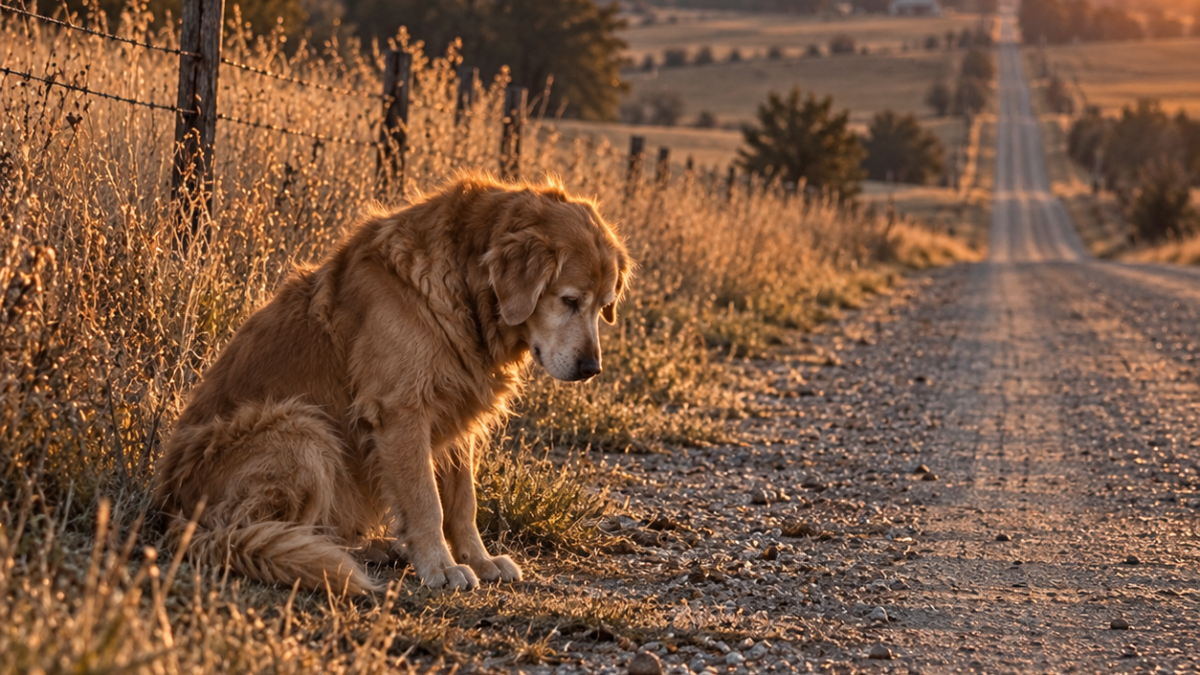
PART 2
I didn’t touch the camera at first.
I just stood there with one hand on the car door, staring at that little blinking light.
My dashcam wasn’t fancy. I had installed it after somebody sideswiped my parked car the previous winter and disappeared before I came out of a hardware store. It recorded continuously whenever the engine was running, overwriting older footage after several hours.
When I had slowed behind the SUV, the camera had been pointed straight down the road.
Straight at him.
I looked back at the golden retriever.
He was watching the bend again.
“Maybe you weren’t as alone as he thought,” I said.
I pulled the memory card, put it carefully in the center console, and replaced it with the spare I kept in the glove box. I didn’t want the footage overwritten while I waited for animal control.
Then I sat back down in the grass.
The dog had moved perhaps a foot closer to the water.
No closer to me.
That was fine.
I had nowhere urgent to be anymore.
I had originally been driving to a supply store forty minutes away to pick up electrical parts for a job I could finish the next day. I called my customer and told him I had an emergency.
“What kind of emergency?” he asked.
I looked at the old dog.
“Long story.”
“You okay?”
“Yeah.”
“Then handle it. Tomorrow’s fine.”
That bought me time.
Another twenty minutes passed before a white county animal-control truck appeared in the distance.
The golden saw it before I did.
His entire body stiffened.
He backed away from the road and moved toward the ditch.
“Easy,” I said. “Nobody’s rushing you.”
The truck stopped behind my car.
A woman in a tan uniform stepped out. She was in her late forties, maybe early fifties, with gray streaks at her temples and the calm movements of somebody who had learned that frightened animals notice everything.
“You Ben?” she asked.
I nodded.
“Denise?”
“That’s me.”
She looked past me.
“That him?”
“Yeah.”
She didn’t approach.
That immediately made me trust her.
Instead, she leaned against the front of her truck and studied him from a distance.
“How long have you been here?”
“About an hour and a half.”
“He come near you?”
“For water. That’s it.”
“Growl?”
“No.”
“Show teeth?”
“No.”
“Try to leave?”
“No. That’s what worries me.”
Denise looked at the dog again.
“He’s still waiting.”
“Yeah.”
She sighed.
“I hate these.”
“You get a lot?”
“More than I’d like.”
She opened a compartment in the truck and took out a slip lead, canned food, a collapsible bowl and several pieces of cooked chicken.
“You said you saw the dumping?”
“I did.”
“Tell me exactly what happened.”
I described it from beginning to end.
She did not interrupt.
When I mentioned the dashcam, she turned her head sharply.
“Your camera was recording?”
“I think so.”
“Do not edit the file.”
“I wasn’t planning to.”
“Don’t crop it, don’t convert it, don’t post it online. Make a copy if you know how, but keep the original file exactly as it is.”
“You think it’ll matter?”
“If it shows what you say it shows, yes.”
For the first time since I stopped, I felt something resembling hope.
Not because I wanted revenge yet.
I wanted accountability.
There was a difference.
At least I thought there was.
Denise opened the canned food.
The golden’s nose lifted.
“There you go,” she murmured.
He looked at her.
She set the food near the water and backed away.
He waited.
Five minutes.
Ten.
Then hunger won.
He approached slowly, one stiff step at a time.
He ate without looking away from us for long.
Denise watched the movement of his hips.
“Arthritis, probably.”
“I thought so.”
“He may have other issues.”
“He looks old.”
“He is old.”
The dog finished half the food and stepped back.
Denise crouched sideways rather than facing him directly.
“Hey, Grandpa.”
One ear twitched.
I almost smiled.
“Grandpa?”
“Until we get a name.”
She tossed a small piece of chicken.
It landed several feet in front of him.
He sniffed it.
Ate it.
Another piece landed closer to Denise.
Then another.
It took almost forty minutes, but eventually he was standing six feet from her.
She didn’t reach for him.
Instead, she tossed a piece toward me.
He followed it.
I sat absolutely still.
The dog ate.
Then he lifted his head and found himself only a few feet from my knee.
His eyes met mine.
“Hi,” I whispered.
His tail did not wag.
But it moved once.
One slow sweep.
Then he stepped away again.
Denise smiled.
“There.”
“What?”
“He’s thinking.”
“About what?”
“Whether you’re worth the risk.”
“That doesn’t sound flattering.”
“Trust me. With what he just went through, thinking about it is a compliment.”
We continued like that until the sun had shifted noticeably west.
Denise eventually managed to lay the slip lead on the ground near him.
He sniffed it.
No panic.
Then she touched his shoulder.
He flinched.
She stopped.
Waited.
Touched him again.
This time he stayed.
His coat felt rough under her hand.
She scratched lightly under his chin.
His eyelids lowered.
“That’s it,” she whispered. “Nobody’s leaving you here.”
When the lead finally slipped over his head, he did not fight.
He simply looked back down the road one more time.
Then Denise turned toward her truck.
The dog planted his feet.
She stopped.
“He doesn’t want the truck.”
“Can you blame him?”
“Nope.”
We tried the open rear compartment.
He backed away.
We tried treats.
Nothing.
Denise looked at my sedan.
“Would he get into yours?”
“Maybe.”
“He knows your car has been sitting here.”
I opened the rear door and spread the fleece blanket across the seat.
The dog stared at it.
I patted the blanket once.
“No pressure, buddy.”
He approached.
Stopped.
Walked away.
Approached again.
His back legs trembled.
I realized jumping was probably painful.
“Wait.”
I took the blanket out, folded it into a wide strip and laid it over the low edge between the road and my back seat so he had something to step against.
Denise supported his hindquarters gently.
He put one front paw into the car.
Then the other.
He looked inside.
I was standing on the opposite side with the door open.
“Come on,” I said.
He climbed in.
His rear legs nearly buckled.
Denise caught him.
Once he was on the seat, he turned in a slow circle and lay down.
His head rested on the blanket.
The entire fight went out of him.
Denise looked at me across the car.
“Looks like you’re driving.”
“Where?”
“County veterinary clinic. We need a scan, exam and photographs.”
“I’m coming anyway.”
“I figured.”
During the drive, I kept the radio off.
The dog lay behind me.
Every few minutes I checked him in the mirror.
At first he stayed alert.
Then his head dropped.
Ten minutes later, he was asleep.
Not deeply.
Whenever I braked, his eyes opened.
Whenever another vehicle passed, one ear lifted.
Still, he slept.
I remember thinking that he must have been exhausted before he was abandoned.
Whatever happened on that road was probably not the beginning of his bad day.
Maybe not even the beginning of his bad year.
At the clinic, a technician brought out a ramp.
That helped.
The dog stepped down slowly.
Inside, the smell of disinfectant and other animals made him nervous again, but he never snapped.
He leaned against my leg while Denise completed paperwork.
That surprised both of us.
I looked down.
“Apparently I passed the interview.”
Denise smiled.
“Don’t get cocky.”
A veterinarian named Dr. Patel examined him.
The first thing he did was scan the dog’s shoulders.
The machine beeped.
“Microchip.”
Denise straightened.
“Good.”
Dr. Patel read the number aloud while the technician typed.
The screen loaded.
Then she stopped.
“I’ve got a registration.”
I felt my stomach tighten.
“Name?” Denise asked.
The technician looked at the dog.
“Charlie.”
The golden’s head lifted.
I stared at him.
“Charlie?”
His ears came forward.
I said it again.
“Charlie.”
This time his tail tapped the floor.
Once.
Then twice.
There was no question.
That was his name.
I crouched beside him.
“Hi, Charlie.”
His head pressed lightly into my chest.
It was the first time he had touched me voluntarily.
For some reason, that nearly undid me.
Denise was reading over the technician’s shoulder.
“Registered owner?”
The technician hesitated.
“Evan Keller.”
“Address?”
She gave it.
Denise wrote everything down.
“Phone current?”
“Let’s find out.”
She stepped into the hallway to make the call.
I stayed with Charlie during the examination.
Dr. Patel moved carefully from his ears to his teeth, chest, abdomen, paws and hips.
Charlie tolerated everything.
Too quietly.
His right ear had an untreated infection.
His nails were badly overgrown.
His teeth showed significant dental disease.
His coat had mats behind the ears and along the back legs.
He was underweight, though not dangerously so.
The worst immediate problem was his hips.
Dr. Patel gently extended one hind leg.
Charlie winced.
“Advanced arthritis,” he said.
“Can you help him?”
“Yes.”
“Will he walk normally?”
“He’ll always be an old dog.”
“I know.”
“But pain management could make a major difference.”
He continued the exam.
There was a small fatty lump along Charlie’s side that appeared benign but needed testing.
His heart had a mild murmur.
His blood pressure was slightly elevated, possibly from stress.
Nothing suggested he was dying.
Nothing justified abandoning him.
When Denise returned, her expression had changed.
“What?” I asked.
“I spoke to Mr. Keller.”
“And?”
“He says Charlie ran away.”
I stared at her.
“What?”
“He says the dog escaped from his yard yesterday.”
“That’s a lie.”
“I know what you told me.”
“I watched him take off.”
“Ben.”
“He was standing beside that SUV.”
“Ben.”
I shut my mouth.
Denise’s voice stayed calm.
“This is exactly why I told you not to touch the video.”
“What did he say when you told him there was a witness?”
“I didn’t.”
“Why not?”
“Because I wanted his version before he knew what we had.”
That made me pause.
“He said Charlie escaped yesterday?”
“Yes.”
“From where?”
“His house.”
“How far is that from the road?”
“About twelve miles.”
I looked at Charlie.
A dog with advanced arthritis, twelve miles, overnight.
“No chance.”
“Don’t make conclusions for me.”
“You already know.”
“I know it raises questions.”
She looked toward Dr. Patel.
“Document every condition. Photographs. Weight. Nails. Ear. Everything.”
Dr. Patel nodded.
Denise turned back to me.
“I need the dashcam file.”
“I’ll give you the card.”
“No. Keep the original. We’ll make an evidence copy with you present.”
“You really think this is going somewhere?”
She looked through the exam-room door at Charlie.
“That depends on what’s on the video.”
I drove home that evening without him.
County policy required Charlie to remain in protective custody while the ownership issue was investigated. Denise explained it twice, and I understood every word.
I still hated leaving.
Charlie stood behind the kennel gate at the clinic.
When I stepped away, he followed.
When I reached the door, he made his first sound since I found him.
One soft whine.
I stopped.
My hand froze on the handle.
Denise was behind me.
“Don’t.”
I looked over my shoulder.
“I can’t just—”
“You can.”
“He thinks I’m leaving.”
“He needs to learn that people can leave and come back.”
I looked at Charlie.
He was standing on those painful back legs, watching me.
“When can I see him?”
“Tomorrow.”
“You sure?”
“Yes.”
I pointed at her.
“I’m holding you to that.”
“I’ve been threatened by scarier people.”
I went home.
The house felt strangely quiet.
I lived alone in a small ranch house outside town. There had been dogs in it before. My last one, a mutt named Moose, had died three years earlier at fourteen. I had told myself I wasn’t getting another dog because work kept me busy.
That had been true.
It had also been convenient.
Losing Moose had hurt enough that I had never really wanted to volunteer for the experience again.
That night I sat at my kitchen table with the dashcam card in front of me.
Denise had instructed me not to open or alter it until we copied the file together the next morning.
So I didn’t.
But I stared at it.
A thumbnail-sized piece of plastic.
Maybe it showed everything.
Maybe nothing.
I slept badly.
At eight the next morning, I met Denise and a sheriff’s deputy named Cole at the animal-control office.
Cole was younger than I expected, quiet and serious.
He placed a clean storage drive on the desk.
“We’ll copy the original video, record the file information, preserve your card, and then you can take it back.”
“Fine.”
He looked at me.
“Don’t post this.”
“Denise already threatened me.”
“I did not threaten you,” Denise said.
“You used your government voice.”
“That was my normal voice.”
Cole almost smiled.
We loaded the footage.
The video began several minutes before I reached the SUV.
Empty road.
Fields.
My dashboard.
Music playing quietly.
Then the SUV appeared ahead.
“Pause,” Denise said.
Cole froze the frame.
The rear plate was visible but small.
He enlarged it.
Blurred.
“Can you get that?” I asked.
“Maybe.”
He resumed.
My car approached.
The SUV’s passenger door was open.
A man stood beside Charlie.
The angle wasn’t perfect, but it was clear enough to see him holding the dog’s collar.
Then something happened that I had missed in real time.
The man bent down.
He removed something from Charlie’s neck.
“Go back,” Denise said.
Cole rewound.
We watched again.
The man held Charlie with one hand.
With the other, he unclipped a black strap.
Then he tossed it into the SUV.
“What was that?” I asked.
Denise leaned closer.
“Harness, maybe.”
Cole replayed it.
It looked like a harness.
The faded blue collar remained on Charlie.
The man removed the black harness, got into the driver’s seat, and pulled away.
Charlie took two steps after the vehicle.
Then stopped.
I felt my jaw tighten.
The dashcam recorded my voice.
“No. No way.”
Nobody in the office spoke.
The SUV accelerated.
For several seconds its rear plate was centered in frame.
Cole paused again.
“That’s better.”
He zoomed carefully.
Three characters were clear.
A fourth probably.
“Partial plate,” he said.
“Enough?”
“With vehicle registration and a named owner? Probably enough to corroborate.”
Denise folded her arms.
“So Charlie ran away from a yard twelve miles away, put himself beside Mr. Keller’s SUV, let Mr. Keller remove his harness, and then accidentally stayed behind while Mr. Keller drove off?”
Cole looked at her.
“When you say it like that, it sounds unlikely.”
“That was the intention.”
My anger came back.
“He knew exactly what he was doing.”
Denise nodded slowly.
“It appears that way.”
“What happens now?”
“We interview him.”
“I want to be there.”
“No.”
“Why?”
“Because this isn’t television.”
“I saw it.”
“And you may be a witness. You don’t participate in suspect interviews.”
The word caught me.
“Suspect?”
Denise looked at the frozen image on the monitor.
“Yes.”
That should have satisfied me.
It didn’t.
I visited Charlie that afternoon.
He was lying on a thick orthopedic mat.
When I entered, he raised his head.
“Hey, old man.”
His tail started moving.
This time it did more than tap.
It swept across the bed.
I sat on the floor.
Charlie stood slowly.
Then he walked over and placed his forehead against my shoulder.
I closed my eyes.
“You remembered.”
He smelled like medicated shampoo.
Someone had trimmed his nails.
His ears had been cleaned.
The difference in one day was small but visible.
Denise stood at the doorway.
“You’ve created a problem.”
“What problem?”
“He likes you.”
“I fail to see the problem.”
“We’re full.”
I looked at her.
She continued.
“If Keller relinquishes ownership or the county obtains custody, Charlie needs somewhere to go.”
“You’re asking me to foster.”
“I’m wondering aloud.”
“You rehearsed that.”
“Maybe.”
I looked at Charlie.
“No.”
Denise blinked.
“No?”
“I mean, yes.”
She smiled.
“You’re terrible at this.”
“I wasn’t ready.”
“You don’t have to decide today.”
Charlie sat on my shoe.
I looked down.
“I think he decided.”
But nothing was simple yet.
The next afternoon, Denise called.
“Keller wants his dog back.”
I nearly dropped my screwdriver.
I was standing on a ladder in a customer’s garage.
“What?”
“He says he never abandoned Charlie.”
“You have video.”
“He says we’re misinterpreting it.”
“How?”
“He claims he pulled over because Charlie was carsick, took him out for a bathroom break, then Charlie wandered off while Keller was checking something in the vehicle.”
I climbed down.
“The video literally shows him driving away.”
“He says he didn’t realize Charlie wasn’t in the car.”
I laughed once.
There was no humor in it.
“He removed the harness.”
“I know.”
“Then drove off.”
“I know.”
“And lied yesterday that Charlie escaped from his yard.”
“I know, Ben.”
“So give me the part I’m missing.”
“The part you’re missing is that legal ownership doesn’t disappear just because somebody tells a stupid story.”
I went silent.
Denise continued.
“We’ve placed an administrative hold on Charlie. Keller cannot take him while the investigation is active.”
“Good.”
“He is contesting it.”
“Of course he is.”
“He has an attorney.”
That surprised me.
“Over an old dog he dumped?”
“People care about strange things once consequences appear.”
I leaned against my workbench.
“What does he want?”
“To establish that the incident was accidental and regain custody.”
“Why?”
“I can’t answer that.”
I could.
Because if he admitted he did it, there were consequences.
If he could make Charlie’s disappearance look accidental, maybe there weren’t.
“He doesn’t want Charlie,” I said. “He wants the story to go away.”
Denise did not answer.
She didn’t have to.
Three days later, I officially became Charlie’s temporary foster.
The paperwork was twelve pages.
Denise explained every condition.
Charlie remained under county custody.
I couldn’t take him out of state.
I had to bring him to scheduled veterinary appointments.
I couldn’t give him to anyone else.
If the legal hold changed, I might be required to return him.
That last sentence stayed in my head.
“You really think they could give him back?” I asked.
“I think you should understand what you’re agreeing to.”
“That wasn’t my question.”
Denise put down her pen.
“Based on what I’ve seen, I would fight that.”
“So would I.”
“I know. That’s why I’m warning you not to make this personal.”
Too late.
I brought Charlie home at four in the afternoon.
He walked through the front door carefully.
Every room required inspection.
Living room.
Kitchen.
Hallway.
Bedroom.
Back door.
He did not sniff like an excited dog.
He checked exits.
That was the only way I can describe it.
After ten minutes, he returned to the front door and lay down facing it.
I put his new bed in the living room.
He ignored it.
I moved it closer to the door.
He moved off it and lay directly on the floor.
“Fine,” I said. “We’re negotiating.”
I put the fleece blanket from the roadside beside him.
He sniffed it.
Then lay on it.
That night, Charlie slept by the front door.
At 11:20, headlights swept across my living-room wall.
Charlie woke so fast he slipped trying to stand.
He hurried to the window.
A neighbor’s pickup passed.
Charlie watched until the red taillights disappeared.
Then he returned to the door.
At 1:03 a.m., another car passed.
Same reaction.
At 3:40, I found him awake.
I sat down beside him.
“You think he’s coming?”
Charlie looked at me.
I scratched the white fur around his muzzle.
“I don’t know why you would.”
He rested his chin on my leg.
For three nights, he slept at the door.
On the fourth, he moved halfway down the hallway.
That felt like progress.
The arthritis medication worked quickly.
Within a week, Charlie stood more easily.
He still had a stiff gait, but the constant tension in his face began to disappear.
His ear infection improved.
He started eating with enthusiasm.
Then I discovered he loved scrambled eggs.
That was an accident.
I made breakfast one morning and dropped a small piece.
Charlie caught it before it hit the floor.
I looked at him.
He looked at me.
“No.”
His tail moved.
“You have your own breakfast.”
Tail.
“No.”
He took one step closer.
“Absolutely not.”
Ten minutes later, I was making him an egg without salt.
I blamed age.
His, not mine.
The more comfortable Charlie became, the more pieces of his personality appeared.
He hated the vacuum cleaner.
He loved cardboard boxes.
He refused to retrieve tennis balls but would carry one around for hours.
He snored.
He barked exactly once when a raccoon crossed my porch, then seemed startled by his own voice.
And he loved riding in my car.
That surprised me after what happened.
The first time I opened the back door for a veterinary appointment, I expected hesitation.
Charlie walked straight to the car.
Then stopped.
He looked up at me.
I put the ramp down.
He climbed inside and settled on the same fleece blanket.
The difference was simple.
I got in too.
And when the car stopped, I got out with him.
On the way home, I pulled into a gas station.
I was gone less than two minutes.
When I returned, Charlie was standing with his front paws on the seat, staring through the window.
The relief when I opened the door was unmistakable.
“I’m here,” I said.
He pressed his head against my chest.
I never left him alone in the car again.
Not because I thought every ordinary separation would traumatize him forever.
Because I could avoid that one.
So I did.
Two weeks into the foster arrangement, an unfamiliar number called me.
“Is this Ben Carter?”
“Yes.”
“My name is Rachel Morrison.”
I waited.
“I think you have my father’s dog.”
My hand tightened around the phone.
“Who is your father?”
“Thomas Keller.”
The last name hit immediately.
“Evan Keller’s father?”
“Yes.”
Charlie was asleep beside my desk.
I stood.
“What do you mean, your father’s dog?”
“Charlie was Dad’s.”
“Was?”
“My father died eleven months ago.”
The anger I had been carrying shifted.
Rachel’s voice shook.
“Evan took Charlie afterward.”
I looked at the old dog.
He was dreaming, one paw twitching.
“How did you get my number?”
“I called the county. They wouldn’t give me your address, but I told them I had information about Charlie. Denise asked whether you were willing to speak to me.”
That sounded like Denise.
“What information?”
Rachel took a breath.
“Charlie lived with my dad since he was eight weeks old.”
I sat down slowly.
“He’s how old now?”
“Thirteen.”
Thirteen years.
I looked at Charlie’s white face.
Rachel continued.
“My mom died six years ago. After that, Charlie was basically Dad’s shadow. Grocery store? Charlie waited by the door. Garden? Charlie sat under the porch. Dad had surgery three years ago, and that dog slept beside his recliner for two months.”
Her voice cracked.
I didn’t interrupt.
“When Dad got sick last year, I asked Evan to help because I live three hours away. He started staying at the house. After Dad died, Evan said he’d keep Charlie.”
“Why didn’t you?”
The question came out harsher than I intended.
Rachel didn’t defend herself.
“My apartment didn’t allow dogs over forty pounds, and my husband had just started chemotherapy.”
I closed my eyes.
“I’m sorry.”
“Don’t be. I should have found another solution.”
“You believed your brother.”
“Yes.”
There was something in that one word that told me the story was going somewhere I wasn’t going to like.
“What happened?”
“At first he sent pictures. Charlie on the couch. Charlie in the yard. Then I stopped getting them.”
“When?”
“About five months ago.”
“Did you ask?”
“He said Charlie was fine.”
I looked at the dog.
“Did your father leave money for Charlie?”
Silence.
That silence mattered.
“Rachel?”
“Yes.”
“How much?”
“Dad left Evan five thousand dollars specifically for Charlie’s care.”
I sat straighter.
“Veterinary bills?”
“Food, medication, whatever he needed.”
“And your brother took the money?”
“The estate transferred it.”
“Did he spend it on Charlie?”
“I don’t know.”
That answer told me she had been wondering the same thing.
“Why are you calling now?”
Another pause.
“Because Denise told me Charlie was found abandoned.”
“She told you that?”
“She said there was an investigation and asked if I knew anything about his care.”
“What did you tell her?”
“The truth.”
“Which is?”
Rachel’s voice became quieter.
“Three weeks ago Evan texted me asking whether I knew anybody who wanted an old dog.”
I stopped breathing for a second.
“What did you say?”
“I said I’d find someone if he gave me time.”
“How much time?”
“He didn’t say.”
“Do you still have the messages?”
“Yes.”
“Send them to Denise.”
“I already did.”
My heart started beating harder.
“What exactly did he write?”
“I don’t want to misquote it.”
“Rachel.”
She exhaled.
“He wrote, ‘You know anyone who wants Dad’s dog? I’m done paying for him.’”
I looked at Charlie.
“And you?”
“I told him not to do anything stupid. I said I would make calls.”
“What did he say?”
“Nothing that day.”
“And after?”
“The morning Charlie was abandoned, he texted me again.”
I stood.
“What did he say?”
Rachel started crying.
Not loudly.
Just enough that I heard her trying to breathe.
“‘Don’t worry about the dog anymore. Problem solved.’”
For several seconds, neither of us spoke.
Then I said, “Send everything to Denise.”
“I did.”
“Keep the original messages.”
“I will.”
“Don’t delete anything.”
“I won’t.”
Charlie woke and lifted his head.
I crouched beside him.
Rachel whispered, “Is he okay?”
I looked at the dog.
His ear infection was nearly gone.
His coat had been brushed until the gold returned.
He had gained three pounds.
He slept inside now.
Not always by the door.
“He’s getting there.”
“Can I see him?”
I wasn’t expecting that.
I hesitated.
“I need to ask the county.”
“Of course.”
“Rachel?”
“Yes?”
“If you come, don’t expect anything.”
“What do you mean?”
“He may not recognize you.”
“I know.”
“He’s been through a lot.”
“I know.”
Her voice broke again.
“I just want him to know someone from Dad’s family didn’t forget him.”
The visit happened the following Saturday at a county-owned fenced exercise yard.
Denise insisted on neutral ground.
Rachel arrived with her husband, Mark.
She was carrying an old green blanket.
The moment I saw it, I knew it mattered.
Charlie was beside me on a loose leash.
Rachel stopped twenty feet away.
Her hand went over her mouth.
“Oh, Charlie.”
His ears lifted.
She didn’t move.
Neither did he.
Then she crouched.
“Charlie Bear.”
The effect was immediate.
Charlie froze.
His head tilted.
Rachel said it again.
“Charlie Bear.”
His tail moved.
Once.
Then faster.
He walked toward her.
Not ran.
He couldn’t.
But he moved with more purpose than I had ever seen.
Rachel dropped to both knees.
Charlie reached her and buried his face against her chest.
She wrapped both arms around his neck.
“I’m sorry,” she whispered. “I’m so sorry.”
Charlie wagged so hard his hips swayed.
I stepped away.
Mark turned his face.
Even Denise looked down at her clipboard.
Rachel unfolded the green blanket.
Charlie sniffed it.
Then something happened I will never forget.
He lay down on it immediately.
Rachel laughed through her tears.
“That was Dad’s.”
I swallowed.
“He remembers.”
“Dad kept it over his recliner.”
Charlie rolled onto one side.
For several minutes Rachel simply stroked his ears.
Eventually she looked at me.
“Thank you.”
“You don’t have to thank me.”
“Yes, I do.”
“I was on the road.”
“You stopped.”
I didn’t know what to say to that.
So I said nothing.
Then Rachel’s expression changed.
“I need to tell you something else.”
Denise looked up.
Rachel had already given her the text messages.
So this was new.
“What?” I asked.
“My brother called me last night.”
Denise’s posture changed.
“What did he say?”
“He knows I spoke to you.”
“To me?” I asked.
“To animal control. To whoever.”
“How?”
“I told him.”
Denise closed her eyes briefly.
“Rachel.”
“I know. I shouldn’t have.”
“What happened?”
“He was furious.”
“Did he threaten you?”
“Not exactly.”
“Exactly what did he say?”
Rachel glanced at Mark.
Then back at Denise.
“He said I was helping strangers steal his property.”
My jaw tightened.
“Charlie isn’t a lawn mower.”
“I know.”
“He said he’s going to get him back.”
Rachel nodded.
“And?”
“He said once the dog is home, this whole thing goes away.”
Every hair on my arms stood up.
Denise wrote something on her clipboard.
“Anything else?”
Rachel hesitated.
“Yes.”
“What?”
“He said I had no idea what I was doing to him.”
“What does that mean?”
“I think he’s worried about Dad’s estate.”
Denise stared at her.
“Explain.”
Rachel looked uncomfortable.
“The five thousand dollars.”
I remembered.
“For Charlie’s care.”
“Yes.”
“What about it?”
“The estate required Evan to use it for Charlie.”
“How?”
“My father put the instruction in writing.”
Denise’s eyes narrowed.
“Not just a verbal request?”
“No.”
“Do you have a copy?”
“Yes.”
“Send it to me.”
Rachel nodded.
I looked between them.
“You think he abandoned Charlie to keep what’s left?”
Rachel’s face went pale.
“I don’t know.”
Denise answered before I could push.
“We don’t speculate.”
I almost laughed.
That had become her favorite sentence.
But I understood why.
The story was getting larger.
Evan Keller had not simply abandoned an inconvenient dog.
There might have been money attached.
Not enough to make anyone rich.
Enough to make motive uglier.
The veterinary records added another piece.
Rachel gave Denise the name of Charlie’s old clinic.
With estate authorization, investigators obtained his treatment history.
For years, Charlie had been consistently cared for.
Annual exams.
Vaccinations.
Dental work.
Arthritis screening.
Weight checks.
Then Thomas Keller died.
Charlie changed homes.
For almost eleven months, no veterinary visits appeared anywhere investigators could locate.
The medication Charlie had been prescribed for early arthritis had not been refilled in seven months.
That explained the painful hips.
It also made Evan’s statement that Charlie “had no medical problems” difficult to defend.
But Evan did defend it.
Aggressively.
Through his attorney, he filed a petition seeking Charlie’s immediate return.
The county denied the request pending the investigation.
His attorney appealed the administrative hold.
That meant there would be a hearing.
Denise called me to explain.
“He’ll be there?”
“Yes.”
“So will I.”
“You may testify.”
“Good.”
“Ben.”
“What?”
“This isn’t your chance to unload on him.”
I was standing in my kitchen.
Charlie lay under the table.
“What if I want five minutes?”
“You won’t get them.”
“Three?”
“No.”
“Thirty seconds?”
“Answer the questions you’re asked.”
I looked down at Charlie.
“I’m trying.”
“I know.”
“He left a thirteen-year-old dog beside a road.”
“I know.”
“He lied.”
“I know.”
“He stopped the pain medication.”
“I know.”
“And now he wants him back.”
“That is why the hearing exists.”
I hated how calm she was.
Later I realized her calmness was not indifference.
It was discipline.
People like Denise work inside systems that move slower than anger.
If she allowed herself to react to every case the way I reacted to Charlie, she would burn out in a month.
My job was different.
My job was to keep Charlie safe until the system caught up.
The night before the hearing, I barely slept.
Charlie did.
He had finally abandoned the front door.
Sometime during the previous week, he had begun sleeping beside my bed.
Not on it.
He tried once.
His hips wouldn’t let him jump.
I bought a low platform ramp.
Then he decided the carpet was preferable.
That was Charlie.
Give him a solution and he would invent his own.
At 2:00 a.m., I sat on the floor beside him.
He opened one eye.
“Tomorrow I meet Evan.”
His tail tapped once.
“I have a lot I’d like to say.”
Charlie sighed.
“You think I should behave?”
Another sigh.
“Easy for you to say.”
He put one paw over my wrist.
I stayed there until I got tired enough to sleep.
The hearing was held in a small county administrative room, not a dramatic courtroom.
No jury.
No polished wooden witness box.
Just fluorescent lights, a county hearing officer, a clerk, Denise, an assistant county attorney, Evan Keller, his attorney, Rachel, me and several chairs that looked like they had been purchased in 1994.
Evan was younger than I had imagined.
Maybe thirty-eight.
Clean shirt.
Short hair.
Wedding ring.
The kind of person I could have passed in a grocery store without remembering.
That bothered me.
I had wanted him to look cruel.
People rarely cooperate with your need for visual simplicity.
He looked tired.
Nervous.
And angry.
When I entered, his eyes went directly to me.
“That him?” he asked his attorney.
The attorney whispered something.
Evan kept staring.
I stared back.
Denise touched my elbow.
“Don’t.”
“I didn’t say anything.”
“You were saying plenty.”
The hearing began.
Evan’s attorney argued first.
Charlie was legally registered to Evan.
Evan had taken responsibility for him after his father’s death.
The roadside incident, he said, was a misunderstanding.
Evan had stopped because Charlie appeared nauseated.
He removed Charlie’s harness because the dog had soiled it.
While Evan cleaned the rear cargo area, Charlie supposedly wandered away.
Evan believed the dog had climbed back into the vehicle through another door.
He drove several miles before realizing Charlie was gone.
At that point, according to the attorney, Evan panicked.
“He intended to return,” the attorney said.
I looked at Denise.
Her face gave nothing away.
The attorney continued.
The initial statement about Charlie escaping the yard had been “made under stress.”
That phrase almost got me.
Under stress.
I pressed both feet into the floor.
The attorney explained that Evan had feared being unfairly accused and had answered the first phone call poorly.
Poorly.
That was one word for it.
Then Evan testified.
He described Charlie as a beloved family dog.
He said caring for him after his father’s death had been difficult.
He admitted money was tight.
He denied neglect.
When asked about the arthritis medication, he claimed Charlie “didn’t like taking pills.”
The county attorney asked, “So you stopped providing prescribed pain medication because the dog resisted?”
Evan shifted.
“I didn’t say that.”
“When was the last refill?”
“I don’t remember.”
“Seven months before the roadside incident.”
Evan looked at his attorney.
“I gave him other stuff.”
“What other stuff?”
“Supplements.”
“Prescribed by a veterinarian?”
“No.”
“Which supplements?”
“I don’t remember the brand.”
The county attorney let the silence sit.
Then came the dashcam footage.
The room changed when the video played.
It is one thing to hear an accusation.
Another to watch it.
There was Evan.
There was Charlie.
There was the black harness coming off.
There was Evan returning to the SUV.
There was Charlie standing on the shoulder.
There was the vehicle leaving.
My own voice came through the speakers.
“No. No way.”
Evan stared at the table.
His attorney spoke immediately when the video ended.
“The footage does not show my client intentionally abandoning the dog.”
The county attorney nodded.
“No. It shows him drive away without the dog.”
“He believed Charlie was inside.”
“After physically removing Charlie’s harness while standing beside him?”
“He was distracted.”
“Did you search for Charlie afterward?” the attorney asked Evan.
“Yes.”
My head came up.
That was new.
The county attorney looked at her notes.
“When?”
“Later that day.”
“Where?”
“The road.”
“What time?”
“I don’t know.”
“Did you call animal control?”
“No.”
“Sheriff’s office?”
“No.”
“Veterinary clinics?”
“No.”
“Shelters?”
“No.”
“Post online?”
“No.”
“Contact the microchip company?”
“No.”
Evan’s jaw tightened.
“I drove around.”
“For how long?”
“Maybe an hour.”
“Did anyone accompany you?”
“No.”
“Do you have any phone-location record showing that?”
His attorney objected.
The hearing officer allowed the question.
Evan said, “I don’t know.”
Then Rachel testified.
I had worried about her.
She looked like she might turn around and leave right up until her name was called.
But once she sat down, something changed.
She became steady.
She described their father.
She described Charlie’s life with him.
Then she described the texts.
Copies were entered into the record.
The hearing officer read them silently.
Evan stared at Rachel.
She did not look at him.
The county attorney read the first message aloud.
“You know anyone who wants Dad’s dog? I’m done paying for him.”
Then Rachel’s reply.
“Give me a few days. Do not dump him somewhere. I’ll find a rescue or take him temporarily.”
Then Evan’s message the morning Charlie was abandoned.
“Don’t worry about the dog anymore. Problem solved.”
Evan’s attorney leaned forward.
“That doesn’t say he abandoned the dog.”
Rachel finally looked at her brother.
“No,” she said. “But I knew what he meant the second animal control called.”
Evan shook his head.
“You always do this.”
The room went quiet.
His attorney whispered, “Evan.”
But he was no longer listening.
Rachel’s face changed.
“Do what?”
“Make me the bad guy.”
“You left Dad’s dog on a road.”
“I couldn’t keep doing it!”
His attorney grabbed his sleeve.
“Stop.”
Evan pulled his arm away.
“You have no idea what it was like. Dad dies, everybody expects me to handle the house, the bills, the dog, everything. You live three hours away and send texts.”
Rachel’s eyes filled.
“I offered to take Charlie.”
“For what? Two weeks? Then what?”
“I said I’d find a place.”
“And meanwhile I’m paying for him.”
“You had Dad’s money.”
That landed.
Evan’s mouth closed.
Rachel continued.
“Five thousand dollars.”
The hearing officer looked toward the county attorney.
Evan’s lawyer said quickly, “That issue is outside the scope of this custody proceeding.”
The hearing officer nodded.
“For today, yes.”
But the damage was done.
Evan had lost control of himself.
I could see it.
He knew it too.
His face changed.
He leaned back.
His attorney took over.
I testified last.
The questions were simple.
Where had I been driving?
What did I see?
How far away was I?
Did I know Evan before that day?
No.
Had I ever seen Charlie before?
No.
Had I received money or publicity for taking him?
No.
Why had I stopped?
That question surprised me.
“Because he left the dog.”
Evan’s attorney stood.
“My question is why you involved yourself rather than simply contacting authorities and continuing on your way.”
I looked at him.
“Because the dog was standing beside a road.”
“You’re not an animal-control officer.”
“No.”
“Veterinarian?”
“No.”
“Law-enforcement officer?”
“No.”
“So you had no professional obligation to remain there.”
“No.”
“Yet you stayed for several hours.”
“Yes.”
“Why?”
I looked toward Evan.
Then remembered Denise’s warning.
Answer the question.
I looked back at the attorney.
“Because everybody else had already driven away.”
For the first time that day, nobody immediately asked another question.
The hearing officer called a recess.
We waited in the hallway.
Evan came out with his attorney.
I moved aside.
He stopped anyway.
“You enjoying this?”
His attorney turned sharply.
“Evan.”
I said nothing.
He stepped closer.
“You think you’re some kind of hero because you stole my dog?”
Denise appeared between us so quickly I never saw her move.
“Mr. Keller, keep walking.”
“He has my property.”
I felt my hands close.
Denise looked at me.
Not him.
Me.
That was enough.
I opened my fists.
Evan’s attorney pulled him away.
Rachel stood against the opposite wall crying silently.
I walked over.
“You okay?”
“No.”
“Fair.”
She wiped her face.
“He wasn’t always like this.”
I didn’t know what to say.
She continued.
“When we were kids, he used to bring injured birds home.”
That surprised me.
“Seriously?”
“He’d make shoebox nests.”
I looked down the hallway where Evan had disappeared.
“What happened?”
Rachel shook her head.
“I don’t know.”
That answer stayed with me.
It was easier to make Evan a monster.
Monsters are simple.
Human beings are harder.
Maybe grief changed him.
Maybe resentment did.
Maybe money problems.
Maybe he felt trapped by responsibilities he had agreed to and then discovered he couldn’t handle.
None of that made the road disappear.
None of it made Charlie less abandoned.
But it reminded me that accountability did not require pretending the person being held accountable had never possessed anything decent.
The hearing officer returned after forty minutes.
Her ruling was direct.
Charlie would remain in county protective custody.
Evan’s request for immediate return was denied.
The video, inconsistent statements, veterinary evidence and messages created substantial concern that returning Charlie would place him at risk.
The county was authorized to continue the case toward permanent forfeiture of ownership while the separate criminal investigation proceeded.
I did not cheer.
I wanted to.
Instead, I closed my eyes.
Denise whispered, “Breathe.”
I had not realized I was holding it.
Outside, Rachel hugged me.
“Does that mean you keep him?”
“For now.”
She smiled through tears.
“For now is better than yesterday.”
She was right.
But Evan wasn’t finished.
Three nights after the hearing, someone drove slowly past my house at 11:30.
Charlie heard the vehicle first.
He woke beside the couch.
Head up.
Body stiff.
The SUV outside was dark.
It slowed.
Then continued.
I stood behind the curtain.
I couldn’t see the plate.
The next morning, I called Denise.
“Could be nothing,” she said.
“I know.”
“Did the vehicle stop?”
“No.”
“Come onto the property?”
“No.”
“Any threat?”
“No.”
“Camera?”
“I have one over the garage.”
“Check it.”
The video showed a dark crossover.
Not Evan’s SUV.
At least not the one from the roadside.
The plate was unreadable.
Denise told me to save the footage anyway.
Two days later, another car passed slowly.
Different vehicle.
That made me feel stupid for being suspicious.
Then an envelope appeared in my mailbox.
No stamp.
Inside was a single printed sheet.
RETURN MY DOG.
No signature.
I stared at it for a long time.
Then I called Denise.
This time her voice changed.
“Don’t touch it more than you already have.”
“It’s paper, Denise.”
“I know what paper is.”
“Do you think it’s him?”
“I think I’m going to document it.”
“That’s not an answer.”
“No.”
A deputy came to collect it.
Nothing useful came from fingerprints.
No camera showed who placed it there.
Could have been Evan.
Could have been someone who had read about the case through local court records.
Could have been an idiot.
But it changed me.
Until then, I had treated the case as something happening around Charlie.
Now it was at my house.
I installed two more cameras.
I changed the gate latch.
I stopped leaving Charlie alone in the yard.
Not because I believed Evan would come steal him.
Because I couldn’t tolerate the possibility.
Charlie noticed my tension.
Dogs always do.
Whenever I walked to the window, he followed.
Whenever I checked the driveway, he stood beside me.
One evening I realized what I was doing.
I was teaching him to watch the road again.
That made me angry at myself.
I closed the curtain.
“Enough.”
Charlie looked up.
“No more waiting.”
I sat on the floor.
He leaned against me.
For the next week, I forced myself to live normally.
Work.
Vet appointments.
Short walks.
Scrambled egg on Sunday.
Charlie became stronger.
We had a route around the back field that took twenty minutes at his pace.
He stopped often.
Not because he couldn’t continue.
Because every smell required investigation.
One afternoon he found a dead frog and attempted to eat it.
I took it away.
He looked deeply offended.
“You are thirteen years old,” I told him. “You should know better.”
He sneezed on my shoe.
By the end of the month, he had gained nearly seven pounds.
Dr. Patel said his target was another three or four.
His ear infection was gone.
The lump on his side was benign.
His arthritis would never disappear, but medication and gentle exercise had made him visibly more comfortable.
Then came the second hearing.
This one involved permanent custody.
Evan’s attorney had changed tactics.
Instead of insisting nothing happened, they argued that one mistake should not permanently sever ownership.
Evan had been grieving.
Financially overwhelmed.
Under pressure.
He had panicked.
His attorney said Evan now regretted leaving Charlie and was willing to comply with veterinary treatment.
That argument was stronger.
Not emotionally.
Legally.
People make terrible decisions and sometimes get second chances.
I knew that.
I also knew Charlie would pay for the wrong second chance.
The county’s case depended on proving the abandonment was intentional and that the broader pattern of care made returning him unsafe.
The veterinary records helped.
The texts helped.
The dashcam helped.
Then, two days before the hearing, Rachel called me.
“I found something.”
“What?”
“Dad’s old tablet.”
I sat up.
“What about it?”
“He used it for email. Evan used it after Dad died because the estate stuff was on there.”
“And?”
“There are messages.”
“To who?”
“A classified-ad account.”
My chest tightened.
“What messages?”
“Evan tried to give Charlie away months ago.”
That wasn’t surprising.
The next part was.
“Three people responded,” Rachel said. “He wanted money.”
“For Charlie?”
“Yes.”
“How much?”
“Five hundred dollars.”
I frowned.
“A thirteen-year-old dog with arthritis?”
“He didn’t tell them Charlie was thirteen.”
“What did he say?”
“‘Older trained golden, healthy, good family dog.’”
I stood.
“Did anyone agree?”
“One person asked for vet records. Evan stopped responding. Another offered a hundred dollars. Evan said no.”
I stared out the window.
The five thousand dollars from the estate.
The attempt to sell Charlie.
The refusal to spend on veterinary care.
Then the roadside.
“Rachel, send it to Denise.”
“I already called her.”
“Good.”
“There’s more.”
Of course there was.
“What?”
“One message from the week before Charlie was abandoned.”
“To who?”
“A guy offering two hundred.”
“What does it say?”
Rachel hesitated.
“Evan wrote, ‘Not worth the hassle. I’ll handle it.’”
I sat back down.
That was the moment my understanding of Evan changed again.
Until then, I could almost imagine a desperate act.
A man overwhelmed.
An old dog.
Bills.
Grief.
A bad decision made in one ugly morning.
The messages showed planning.
He had tried to turn Charlie into money.
When that failed, he decided Charlie was a problem to be “handled.”
I felt cold.
Not explosive anger.
Something quieter.
More focused.
The kind of anger that doesn’t need to shout.
Denise called later.
“The tablet is being preserved.”
“Will it matter?”
“Yes.”
“Enough?”
“We’ll see.”
“Stop saying that.”
“Then stop asking questions whose answers depend on a hearing that hasn’t happened.”
I sighed.
“Fair.”
“Ben.”
“What?”
“There’s another development.”
My stomach tightened.
“What now?”
“The estate attorney confirmed the five-thousand-dollar care provision.”
“And?”
“Records show Evan withdrew the balance six weeks after his father died.”
“All of it?”
“Yes.”
“For Charlie?”
“We don’t know where it went.”
“How much was left?”
“Approximately forty-six hundred.”
I laughed once.
“That dog hadn’t even been to the vet.”
“I know.”
“Is that criminal?”
“That’s a question for the estate attorney and prosecutor.”
“Rachel?”
“She’s been informed.”
For once I did not ask for more.
The trap Evan had built around himself was becoming obvious.
Every explanation created another contradiction.
He couldn’t say Charlie was a financial burden while hiding money specifically provided for the dog’s care.
He couldn’t say he desperately wanted Charlie while advertising him for sale.
He couldn’t say Charlie accidentally disappeared when the dashcam showed the abandonment and his own message said “problem solved.”
And he couldn’t say he intended to return when he had made no effort to find him until authorities called.
I didn’t need to get revenge.
All I needed to do was stop getting in the way of the truth.
The second hearing was fuller than the first.
An estate attorney attended.
So did a representative from the county prosecutor’s office.
Evan looked different.
His face was drawn.
His attorney spoke to him in whispers before proceedings began.
Rachel sat beside Mark.
I sat beside Denise.
Charlie stayed home with my neighbor Mrs. Alvarez—not related to the shopkeeper from my rescue work, just a coincidence—and I think he had the better day.
The county presented the new evidence.
The advertisements.
The messages.
The estate provision.
The withdrawal.
Evan’s attorney objected to much of it.
Some objections were sustained.
Others weren’t.
Then the hearing officer asked Evan directly whether he still wanted Charlie returned.
“Yes.”
“Why?”
The question was so simple it seemed to surprise him.
“He’s my dog.”
“That establishes your legal claim. It does not answer my question.”
Evan looked at his attorney.
The hearing officer continued.
“Why do you want this specific animal returned to your care?”
Evan’s jaw tightened.
“Because he belonged to my father.”
Rachel closed her eyes.
“And because?”
“He’s family.”
The hearing officer looked at the messages in front of her.
“You advertised him for sale.”
“I was desperate.”
“You requested five hundred dollars.”
“I needed someone serious.”
“You rejected an offer of one hundred.”
“That person didn’t sound responsible.”
“You told another prospective buyer the dog was healthy.”
“I thought he was.”
“You had not taken him to a veterinarian for months.”
“He seemed fine.”
“You stopped refilling prescribed arthritis medication.”
“He hated pills.”
“You withdrew funds designated for his care.”
His attorney stood.
“That matter is disputed.”
The hearing officer nodded.
“Noted.”
Then came the question that ended it.
“Mr. Keller, when did you first realize Charlie was missing from your vehicle?”
Evan leaned forward.
“A few minutes after I drove away.”
“How many minutes?”
“Five. Maybe ten.”
“And you returned?”
“Yes.”
“To the exact location?”
“Yes.”
I looked at Denise.
She did not move.
The hearing officer looked toward the county attorney.
“Do we have evidence on that point?”
The attorney stood.
“We do.”
I hadn’t known.
Neither had Evan.
The county attorney connected a laptop.
A map appeared.
Phone-location data.
Evan’s face changed.
His attorney went rigid.
The county had obtained the records through the investigation.
The data showed Evan’s phone traveling from the roadside directly toward town.
No return.
No loop.
No search.
The device remained at his residence for the rest of the morning.
The county attorney spoke calmly.
“Mr. Keller’s phone left the location at approximately 8:17 a.m. and did not return within twelve miles of that site that day.”
Evan stared at the map.
His attorney whispered something.
The hearing officer asked, “Would you like to revise your answer?”
Evan did not speak.
“Mr. Keller?”
His voice was low.
“I don’t remember.”
Five minutes earlier, he had remembered returning.
Now he didn’t.
The room went completely still.
That was the moment the balance shifted.
Not dramatically.
No shouting.
No confession.
Just a lie collapsing under a map.
The hearing officer announced her decision before lunch.
Evan Keller’s ownership interest in Charlie was forfeited.
Permanent custody transferred to the county, with authority to place Charlie through an approved rescue or adoption.
Evan was prohibited from reclaiming him through the county process.
Any separate criminal or estate matters would continue independently.
I heard the words.
For several seconds, I didn’t understand them.
Denise leaned close.
“He’s not going back.”
I looked at her.
“What?”
“Charlie.”
She smiled.
“He’s not going back.”
My eyes burned.
I looked away.
Evan stood abruptly.
His chair scraped backward.
“This is ridiculous.”
His attorney grabbed his arm.
“Evan.”
“You people took my dog because some stranger decided he knows better than me?”
The hearing officer’s expression hardened.
“Mr. Keller.”
He pointed at me.
“He’s been waiting for this.”
I stood before I meant to.
Denise caught my sleeve.
Evan continued.
“You wanted him.”
That sentence hit differently than he expected.
Because he was right about one thing.
I did want Charlie.
But not on that road.
Not abandoned.
Not hurting.
Not after somebody else broke his trust.
I would have preferred never to meet him if the alternative was that he lived safely with someone who loved him.
I looked at Evan.
“No,” I said. “I wanted you to turn around.”
The room went quiet.
His face changed.
For once, there was nothing immediate for him to say.
His attorney pulled him toward the door.
I sat down.
Denise whispered, “That was more than answering a question.”
“He wasn’t asking under oath.”
“I’ll allow it.”
Rachel came to me after the hearing.
“Are you adopting him?”
“If they’ll approve me.”
She laughed.
“Ben.”
“What?”
“You’ve rearranged your house for his hips.”
“That’s not legally binding.”
“You cook him eggs.”
“How do you know that?”
“Denise.”
I looked at Denise.
She lifted both hands.
“Public safety required disclosure.”
Rachel hugged me.
When she stepped back, her face was wet.
“I think Dad would be okay with this.”
I didn’t know her father.
I couldn’t claim that.
So I said the only thing I could.
“I’ll take care of him.”
She nodded.
“I know.”
The adoption became official eleven days later.
Denise brought the paperwork herself.
She sat at my kitchen table.
Charlie slept beside my chair.
“Initial here.”
I did.
“Sign here.”
I signed.
“And here.”
“Why does adopting one old dog require more paperwork than buying a truck?”
“Trucks don’t bite postal workers.”
“Charlie barely gets up for the postal worker.”
“Still counts.”
I signed the final page.
Denise took the pen.
“Congratulations.”
“That’s it?”
“That’s it.”
I looked down.
“Charlie.”
He opened one eye.
“You’re stuck with me.”
His tail thumped twice.
Denise stood.
“I think he’ll survive.”
The criminal case did not end with a dramatic trial.
Real life rarely delivers justice in the most entertaining format.
Once the dashcam footage, messages, veterinary records and phone data were assembled, Evan’s attorney negotiated.
He eventually entered a guilty plea related to animal abandonment and neglect.
The estate matter was handled separately.
Rachel later told me he had to repay a substantial portion of the money taken from the fund designated for Charlie.
The exact financial details remained between the family and the court.
His sentence included fines, restitution connected to Charlie’s veterinary care, probation, community service and a prohibition on owning or possessing animals during the probationary period.
Some people who heard about it thought that was too little.
Others thought ruining a man’s life over one abandoned dog would have been too much.
I stopped caring about the argument.
The part that mattered to me was simple.
He could not take Charlie back.
He had to answer for what he did.
And Charlie got to live somewhere else.
The anonymous note at my house was never tied to Evan.
I never claimed it was.
The slow-moving cars stopped.
Life became ordinary again.
That was the best part.
No hearings.
No statements.
No calls from attorneys.
No waiting for Denise to tell me whether somebody could legally take Charlie away.
Just ordinary mornings.
Charlie became an expert at ordinary mornings.
At 6:15 he woke me by breathing directly into my face.
At 6:17 he went outside.
At 6:24 he expected breakfast.
At 6:30 he stared at my scrambled eggs despite having already eaten.
At 6:32 I usually surrendered.
He learned the sound of my work boots.
He learned that when I picked up the brown pair, I would be gone several hours.
When I wore sneakers, there was a chance he was coming too.
He preferred sneakers.
His favorite place became the porch.
For an animal I first met staring down a road, he developed an ironic obsession with watching traffic.
But the watching changed.
At first, every dark SUV made him stand.
Every engine slowing near the driveway made his body stiffen.
Months passed.
The reactions faded.
One afternoon a dark gray SUV—the same general shape as Evan’s—stopped at the neighbor’s mailbox.
Charlie lifted his head.
I watched him from inside.
The SUV drove away.
Charlie looked after it for two seconds.
Then he rolled onto his side and went back to sleep.
I stood in my kitchen holding a coffee mug and felt something loosen inside me.
He wasn’t waiting anymore.
At Christmas, Rachel visited.
She brought a wooden box.
“I found this in Dad’s attic.”
Inside were photographs.
Charlie as a puppy, ears too large for his head.
Charlie beside Thomas Keller in a fishing boat.
Charlie wearing a ridiculous red bandanna.
Charlie stretched across a couch with his head in Thomas’s lap.
Charlie older, white beginning around the muzzle.
I sat at the table turning through them.
Rachel watched me.
“I thought you should have these.”
“Are you sure?”
“I kept copies.”
One picture stopped me.
Thomas sat in a lawn chair.
Charlie rested against his shin.
On the back, in faded ink, Thomas had written:
My shadow.
I looked down at Charlie.
He was sleeping underneath the table.
Rachel saw the photograph.
“Dad called him that all the time.”
I swallowed.
“He follows me to the bathroom.”
She laughed.
“That sounds right.”
Then her face softened.
“I’m glad he still does that.”
We framed the photograph.
It stayed on the shelf beside my front door.
By spring, Charlie could walk almost half a mile on good days.
Slowly.
Very slowly.
A squirrel could have completed the route, filed taxes and taken a nap before we finished.
I didn’t care.
He stopped at every fence post.
Every patch of grass.
Every suspicious leaf.
I learned to leave my phone at home.
Charlie had spent enough of his life being rushed by human schedules.
He could have twenty minutes to smell a bush.
One Sunday, I drove him near the country road where I had found him.
I did not plan to stop at the exact place.
I wasn’t trying to stage some emotional moment.
I needed supplies from a farm store on the other side of town, and that road was the shortest route.
When I realized where we were, my hands tightened on the steering wheel.
Charlie was in the back seat.
His head was out of the partly opened window.
The fields looked almost identical to that first day.
Same long pavement.
Same open land.
Same line of trees.
We approached the shoulder.
I slowed.
Charlie pulled his head inside.
For one second, I wondered whether he recognized it.
Then he looked at me through the mirror.
I kept driving.
He settled back onto his blanket.
We passed the spot.
Nothing happened.
No trembling.
No whining.
No desperate stare through the rear window.
Just road.
I laughed.
Not because anything was funny.
Because I had spent months imagining that place as a permanent wound.
To Charlie, perhaps it had become exactly what it should have been.
A place behind him.
The first anniversary of his adoption came quietly.
Denise showed up with a bag.
“I brought him something.”
Charlie came to the door.
He loved Denise now.
Mostly because Denise had discovered he could be bribed with freeze-dried liver.
“What did you buy?” I asked.
She pulled out an orthopedic dog bed.
I stared at it.
“He already has three.”
“This one has cooling foam.”
“He sleeps on the floor.”
“He deserves options.”
“You used to lecture me about spoiling him.”
“I’ve evolved.”
Charlie sniffed the bed.
Walked around it.
Then lay beside it on the floor.
I pointed.
“See?”
Denise looked offended.
“Ungrateful.”
Charlie wagged.
We sat on the porch.
The sun was dropping over the field.
“He looks good,” she said.
“He is.”
“How old now?”
“Fourteen, according to Rachel’s records.”
“That’s a good age.”
I knew what she meant.
I didn’t want to think about it.
She noticed.
“Ben.”
“Don’t.”
“I’m not saying anything.”
“You were about to.”
“I was going to say enjoy him.”
“That sounds suspiciously philosophical.”
“It means enjoy him.”
Charlie shifted closer until his shoulder rested against my leg.
Denise smiled.
“See?”
“I do.”
The next winter was harder.
His arthritis progressed.
Dr. Patel adjusted medication.
We added rugs through the hallway so Charlie wouldn’t slip.
I built a low ramp for the porch steps.
Then rebuilt it because the first angle was too steep.
Then built it a third time because apparently I had become the kind of person who spent Saturday calculating ramp slopes for a golden retriever.
Charlie supervised every version.
He contributed nothing.
At fifteen, he slept more.
He still loved eggs.
Still hated the vacuum.
Still refused to retrieve anything thrown for him.
He had started carrying one of my old work gloves around the house.
I never figured out why.
Every morning I found it somewhere different.
Living room.
Hallway.
Beside his bed.
Once inside the bathroom.
Rachel visited every few months.
She never tried to reclaim a role Charlie had already reassigned.
She simply sat with him.
Sometimes she talked about her father.
Sometimes she told me stories.
One afternoon she said, “You know what I think Dad would hate?”
“What?”
“That Charlie has your last name at the vet now.”
I laughed.
“He’s technically Charlie Carter.”
“Dad would say Keller sounded better.”
“Tell him to file an appeal.”
She smiled.
Then she became quiet.
“I don’t speak to Evan anymore.”
I didn’t ask why.
After a minute she continued.
“He blames me.”
“For the case?”
“For everything.”
“I’m sorry.”
“I’m not.”
That surprised me.
Rachel looked at Charlie.
“For a while I was. Then I realized I kept confusing guilt with responsibility.”
I didn’t say anything.
She scratched behind Charlie’s ear.
“I felt guilty because I couldn’t take him when Dad died. That part was mine. But I didn’t leave him on the road.”
“No.”
“Evan made that choice.”
“Yes.”
She nodded.
“I finally understand the difference.”
Charlie sighed and rolled onto his side.
Rachel smiled.
“Apparently he’s tired of therapy.”
“His hourly rate is high.”
The years after the roadside rescue were not all about Evan.
That mattered.
For a long time, when people asked how I got Charlie, the story began with abandonment.
Eventually I stopped starting there.
I said, “I met him when he was thirteen.”
Then I talked about the eggs.
The work glove.
The porch.
The way he snored.
The fact that he could detect cheese being unwrapped from two rooms away despite occasionally pretending not to hear his name.
Because being abandoned was something that happened to Charlie.
It wasn’t who he was.
That distinction took me longer to learn than it took him.
One spring afternoon, almost three years after I found him, I came home early.
Charlie was asleep on the porch.
His face was almost completely white now.
A breeze moved the long fur around his ears.
My truck door closed.
Normally that sound brought his head up.
This time it didn’t.
My heart stopped.
“Charlie?”
Nothing.
I walked faster.
“Charlie.”
His ear twitched.
Then one eye opened.
I nearly sat down in the driveway from relief.
“You’re going to kill me.”
His tail tapped.
I crouched beside him.
He tried to stand.
“Don’t.”
I sat on the porch instead.
Charlie lowered his head into my lap.
We stayed there for almost an hour.
Cars passed occasionally.
He didn’t look at them.
A dark SUV went by.
Nothing.
A delivery van slowed at the driveway.
Nothing.
The dog who once watched every vehicle as if one of them might bring his old life back was no longer interested in the road.
He was watching me.
A few weeks later, Dr. Patel told me Charlie’s kidneys were beginning to fail.
Not immediately.
Not catastrophically.
But clearly.
We changed his diet.
Adjusted medication.
Monitored blood work.
Good days continued.
So did bad ones.
I knew where it was going.
I hated that I knew.
There is a strange cruelty in loving an old dog.
You spend years convincing them they are safe.
Eventually they convince you that you are too.
Then time reminds both of you that safety was never permanence.
I did not tell myself Charlie owed me more years because I rescued him.
He didn’t.
He had already given me more than I had expected.
Still, I wanted them.
Every morning.
Every ridiculous egg.
Every slow walk.
Every stolen glove.
All of it.
By late summer, he stopped wanting longer walks.
We went to the mailbox and back.
Then just the yard.
Then sometimes only the porch.
One evening Rachel came over.
Charlie recognized her immediately.
His tail moved.
She sat beside him on the blanket that had belonged to her father.
“You remember this, huh?”
Charlie rested his head on it.
Rachel looked at me.
“Is it time?”
“Not yet.”
“You sure?”
“No.”
That was the truth.
The next morning Charlie ate half his breakfast, then carried my work glove into the living room.
I took that as evidence.
Not yet.
Two weeks later, he stopped eating.
Even eggs.
That was different.
Dr. Patel examined him.
His kidney values had worsened sharply.
We could hospitalize.
IV fluids.
Tests.
Maybe gain days.
Maybe weeks.
I looked at Charlie on the exam-room floor.
He hated hospitals less than most dogs.
But he hated being away from me.
“What would you do?” I asked.
Dr. Patel didn’t hide behind medical language.
“If he were mine?”
“Yes.”
“I’d take him home.”
My throat closed.
“Okay.”
We went home.
Rachel came that evening.
Denise came too.
Charlie lay on his green blanket on the porch.
No crowd.
No drama.
Just people who knew him.
Rachel fed him one tiny piece of cheese.
He ate it.
I looked at her.
“He refused egg.”
“Apparently Dad raised him with priorities.”
Denise laughed through tears.
Charlie slept.
The sun went down.
One car passed.
Then another.
He never lifted his head.
The next morning, Dr. Patel came to the house.
I had asked for that.
If Charlie’s life had been changed beside a road because someone left him, I was not going to let his last moments happen in a strange room because it was easier for me.
He was on the porch.
Head in my lap.
Rachel sat on one side.
Denise stood near the steps.
Dr. Patel explained everything even though I already knew.
When he gave the first medication, Charlie relaxed.
His breathing slowed.
I scratched the place between his ears.
“You’re okay.”
His eyes stayed on me.
“You don’t have to wait for anybody.”
My voice broke.
“I’m right here.”
His tail moved once against the blanket.
The same slow sweep I had seen on the roadside years earlier.
Then his eyes closed.
I kept my hand on him after Dr. Patel quietly told me his heart had stopped.
Nobody rushed me.
For a long time, I listened to the silence.
It was not the same silence as that first morning.
Back then, Charlie’s silence had been confusion.
Waiting.
A world that had stopped making sense.
This silence was different.
He knew exactly where he was.
Home.
Months later, I drove that country road again.
Not because I wanted to relive anything.
I was returning from a job.
The sun was low.
Fields stretched gold on both sides.
I recognized the bend before I reached it.
Then the shoulder.
The exact place.
I pulled over.
For a minute I stayed in the driver’s seat.
The passenger side was empty.
No Charlie in the back.
No white muzzle in the mirror.
I got out.
The grass had grown high.
There was nothing to mark the spot.
No sign.
No memorial.
Just an ordinary piece of roadside.
I walked to where I remembered sitting that first day.
It amazed me how small the place looked.
For years it had occupied such a huge space in my memory.
I thought about Evan.
I hadn’t seen him since the hearings.
Rachel said he eventually moved away.
His probation ended.
The financial dispute with the estate was settled.
As far as I knew, he had not owned another animal during the prohibited period.
I didn’t know whether he regretted what he did.
For a long time, I wanted him to.
I wanted him to wake up at three in the morning and remember Charlie standing beside that road.
I wanted the memory to follow him.
That had been my version of revenge.
Standing there years later, I realized it no longer mattered to me.
The better revenge had already happened.
Charlie had not spent the rest of his life waiting for Evan.
He had spent it waiting for breakfast.
For walks.
For Rachel.
For Denise’s treats.
For me to come home from work.
Then, eventually, he had stopped waiting altogether because he knew I would come back.
That was the part Evan never got to take from him.
I went to my car.
Before opening the door, I looked once more at the road where the dark SUV had disappeared.
I could still see that first image if I wanted to.
Charlie standing alone.
White muzzle raised.
Eyes fixed on the distance.
But another image came stronger now.
An old golden retriever asleep on my porch while cars passed without earning even a glance.
Head on his green blanket.
My work glove beside one paw.
Safe enough to close his eyes.
I got into the car.
On the passenger seat sat Charlie’s faded blue collar.
I had kept it after he died.
I ran my thumb across the worn edge.
Then I started the engine.
The dashcam light blinked red beneath the mirror, just as it had that first morning.
For years, I had thought that camera was the reason Charlie got justice.
Maybe it was.
But it wasn’t the reason he got a life afterward.
That happened because on one ordinary morning, a frightened old dog stepped backward when I approached him, and instead of forcing him to trust me, I sat in the grass and waited.
He had spent long enough watching someone drive away.
For the rest of his life, I made sure he saw me come back.
[END OF STORY]








