PART 2: Grampa Returns to the Ranch After 10 Years — Shocked When Karen Calls Fake Cops to Kick Him Out
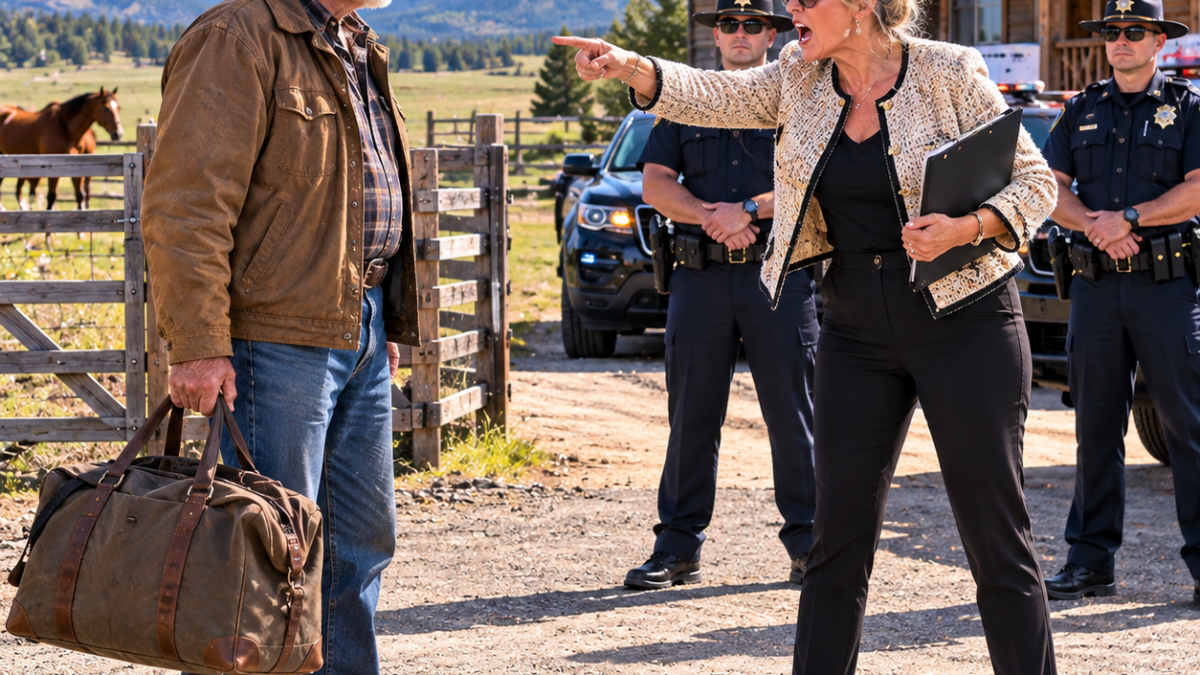
The first thing the two uniformed men told me when I returned to my ranch after ten years was to get on the ground and keep my hands where they could see them.
Behind them, the woman living in my house screamed that I was a confused old trespasser who needed to be arrested before I hurt someone.
What none of them knew was that thirty years behind a county clerk’s desk had taught me to recognize one tiny detail that would turn their perfect little performance into the first crack in something much bigger.
My name is Madison Hall, and I was seventy-two years old when I finally pointed my pickup south toward Cedar Hollow, Texas.
I had been gone almost ten years.
Not because I wanted to leave.
My wife, Margaret, died after forty-seven years of marriage, and six months later my younger sister Eleanor called from Oregon to tell me the cancer in her lungs had spread. I went north believing I would stay six months, maybe a year.
Instead, one illness turned into another complication, then another.
By the time Eleanor died, almost a decade of my life had disappeared.
My son, Arthur, had promised to watch the ranch.
His ex-wife, Gloria Peterson, had come back around shortly before I left, claiming she wanted to help him straighten out his life.
At first, Arthur called every Sunday.
Then twice a month.
Then once every few months.
Eventually, nothing.
Letters came back unopened.
Voicemails disappeared into silence.
I told myself he was angry.
I told myself he was embarrassed.
I told myself every lie a father tells himself when the truth might hurt too badly.
Six months after Eleanor’s funeral, I finally drove home.
Nineteen hours on the road.
Cold coffee beside me.
A tin document box on the passenger seat containing my deed, tax records, birth certificate, marriage certificate, and every other paper I considered irreplaceable.
Thirty years as Cedar Hollow County Clerk had taught me one lesson I never forgot.
Memories can be challenged.
Paper can be authenticated.
The sun was rising when I turned onto the dirt road leading to Hall Ranch.
For a few seconds, everything looked exactly as I remembered it—the long Texas grass glowing gold, the ancient live oaks bent by decades of wind, and the hills rolling toward a horizon so wide it had once convinced me nothing bad could ever reach us there.
Then I saw the gate.
My father’s wooden gate was gone.
In its place stood black iron, eight feet high, with security cameras mounted on stone pillars.
And where our old mailbox had once carried the name HALL, somebody had painted two new words in gold.
PETERSON ESTATE.
I stopped breathing.
I checked the address.
Route 7.
Cedar Hollow.
My land.
My ranch.
My home.
I stepped out of the truck.
Two men immediately emerged from a black sedan parked inside the gate.
Dark uniforms.
Badges.
Holsters.
One raised his hand.
“Stop right there.”
I froze.
“This is private property,” he said. “You need to leave.”
“My name is Madison Hall.”
Neither man reacted.
“I own this ranch.”
The younger one laughed.
“We were warned about you.”
“Warned?”
“Mrs. Peterson said you might show up.”
Then he stepped closer.
“She said you’ve been telling people this property belongs to you. She also said you have some mental problems.”
I felt those words somewhere below my ribs.
Behind them stood the house where Margaret and I had raised our son.
Smoke curled from my chimney.
Curtains I had never seen hung behind my windows.
“Where is Arthur?”
The older man moved his hand toward his cuffs.
“You get one warning, old man. Leave now, or we’ll arrest you for trespassing and harassment.”
For one terrible moment, I almost obeyed because I believed them.
Then sunlight struck the badge on his chest.
I read the words.
TEXAS STATE POLICE.
My fear vanished.
Texas had highway patrol.
County sheriffs.
Municipal police.
State investigators.
But after thirty years working beside every law-enforcement agency in our county, I knew something those men clearly didn’t expect an exhausted seventy-two-year-old rancher to know.
There was no Texas State Police.
There never had been.
I raised my hands.
“All right,” I said quietly. “I’m leaving.”
The younger man smirked.
“Smart choice, Grandpa.”
I climbed back into my truck and drove away.
Only when the gate disappeared behind the trees did I pull onto an empty side road.
My hands were trembling.
But not from fear anymore.
I rewound my dash cam.
There they were.
Faces.
Uniforms.
Badges.
The black sedan.
Everything.
I zoomed in until TEXAS STATE POLICE filled the little screen.
Then I looked at the metal document box beside me.
Whoever Gloria Peterson had become during the ten years I was gone, she had just made one enormous mistake.
She thought she had frightened an old man off his property.
What she had actually done was give a retired county clerk his first piece of evidence.
PART 2
I didn’t go back to the ranch that afternoon.
Every part of me wanted to.
I wanted to slam the deed against that iron gate and demand Gloria come outside. I wanted to walk through my front door, sit at the kitchen table Margaret and I had bought when Arthur was six, and tell every stranger inside my house to pack their things.
But anger is a terrible investigator.
It makes you hurry.
Hurrying makes you careless.
So I drove twenty minutes outside Cedar Hollow and checked into a motel where nobody knew my name.
The room smelled faintly of bleach and old cigarette smoke. A neon VACANCY sign pulsed red against the curtains every few seconds, making the walls look as though someone had poured blood-colored light across them.
I locked the door.
Then I put the tin box on the bed.
The deed was exactly where I had left it.
Original purchase records.
Tax documents.
The survey.
Everything still showed what I already knew.
Hall Ranch belonged to Madison Hall.
Me.
I slept less than two hours.
At eight the next morning, I was standing outside the Cedar Hollow County records office.
Walking through those doors felt stranger than returning to the ranch.
I had worked there for thirty years.
I knew where the old plaster ceiling cracked every summer.
I knew which counter drawer stuck during humid weather.
I knew the smell of record books that had spent eighty years absorbing Texas dust.
But none of the faces behind the counter belonged to the people who had worked with me.
A young clerk looked up.
“Can I help you?”
“My name is Madison Hall.”
Her expression changed.
Not dramatically.
Just enough.
“You were county clerk.”
“Long time ago.”
“I’ve seen your name on old filings.”
“I need the complete property record for Hall Ranch. Route 7, Cedar Hollow.”
She typed.
I watched her eyes move across the screen.
Then she looked at me.
“The deed is still in your name.”
For the first time since I’d seen that black gate, my chest loosened.
“Print me a certified copy.”
“Of course.”
“Everything else filed against the parcel too.”
That was when she hesitated.
“What?”
“There is an affidavit.”
“What kind?”
She turned the monitor slightly.
Seven years earlier, Gloria Peterson had filed a document identifying herself as an authorized property manager acting through Arthur.
It didn’t transfer ownership.
But it redirected notices.
Tax correspondence.
Utility billing.
Administrative communications.
All toward addresses Gloria controlled.
I leaned closer.
“Where’s my authorization?”
“I don’t see one.”
“Power of attorney?”
“No.”
“Management agreement?”
“No.”
“My signature anywhere?”
She swallowed.
“Not on this filing.”
I felt the old part of my mind wake up.
The county clerk part.
The man who had spent decades watching people attempt to turn lies into legal reality by putting them on paper.
“Print everything.”
She did.
I left carrying certified copies.
I should have gone straight back to the motel.
Instead, I went to the ranch.
That was my first reckless decision.
Gloria was already waiting.
She stood on the other side of the iron gate wearing dark slacks, expensive boots, and a cream sweater that looked entirely wrong against the dusty Texas morning.
The two fake officers stood behind her.
“Madison.”
She said my name the way someone might greet a relative they had hoped was dead.
“Gloria.”
“It’s been a long time.”
“Where is Arthur?”
“We’re going to begin like that?”
“Where is my son?”
Her mouth tightened.
“Arthur doesn’t want to see you.”
“I’d like to hear him say it.”
“He has said it.”
“Not to me.”
Gloria stepped closer to the gate.
“Do you know what people here think of you?”
“I don’t care.”
“You should.”
She folded her arms.
“They remember Margaret dying.”
Something inside me went still.
Gloria smiled softly.
“They remember you disappearing.”
“I left after Margaret died.”
“That’s not the story people know.”
“What story did you give them?”
She tilted her head.
“The truth.”
I nearly laughed.
She continued.
“You ran off to Oregon with another woman while your wife was sick. Arthur begged you to come home. You refused. Margaret died believing you’d abandoned her.”
My fingers tightened around the certified deed in my hand.
“I held Margaret’s hand when she died.”
“Can you prove that?”
I stared at her.
She smiled.
That was the first moment I understood Gloria’s method.
She didn’t need her lies to be perfect.
She only needed them to be repeated enough times that truth would sound like the defensive version.
“I have witnesses,” she said. “I have people willing to testify about your behavior. Medical professionals willing to discuss your deteriorating mental condition.”
“My what?”
“Memory issues. Paranoia. Confusion.”
One fake officer stepped forward.
“Mrs. Peterson has been very patient.”
I looked at him.
Up close, his uniform was even worse.
Wrong shoulder patch.
Generic trousers.
A badge bought somewhere that probably sold Halloween accessories.
But his holster was real.
That mattered.
Gloria lowered her voice.
“You have two choices, Madison.”
“I’m listening.”
“You go back to Oregon.”
“No.”
“You forget this ranch.”
“No.”
Her face hardened.
“Then I petition for emergency guardianship.”
The words were deliberate.
“You’ll be declared incompetent. Your finances will be frozen. Your medical decisions will be controlled. If necessary, we’ll find a facility appropriate for someone in your condition.”
I felt a chill despite the Texas heat.
This was no longer a property dispute.
It was an annihilation strategy.
Take my credibility.
Then my liberty.
Then whatever remained.
“You’re threatening to have me institutionalized.”
“I’m explaining consequences.”
The younger fake officer laughed under his breath.
I looked at him.
His sleeve had ridden up.
There was a tattoo on his wrist.
An eagle spreading its wings over a shield.
I had seen the same symbol on a billboard outside town.
PATRIOT GUARDIAN SERVICES.
Private security.
Not police.
I said nothing.
Gloria continued.
“One more incident here and these officers will conduct a citizen’s arrest.”
“Officers?”
The older man’s eyes narrowed.
I almost smiled.
Almost.
Instead, I nodded slowly.
“I understand.”
Gloria looked surprised.
“Good.”
“I’ll leave.”
“Smart.”
I turned toward my truck.
Then stopped.
“Gloria.”
“What?”
“Where is Arthur?”
Her hands curled.
The reaction lasted less than a second.
But I saw it.
“He’s where he wants to be.”
“Then give me his phone number.”
“He doesn’t want you calling.”
“Let him tell me.”
“You need to stop.”
The fake patience vanished.
“Arthur wants nothing to do with you.”
I drove away with something I hadn’t possessed the day before.
Not proof.
But direction.
Whatever Gloria had done to me involved Arthur.
And she was terrified of him speaking.
That night, I replayed the dash-camera footage.
I froze the younger man’s wrist.
PATRIOT GUARDIAN.
Then my phone buzzed.
Unknown number.
I opened the message.
Grandpa, don’t believe anything she says.
A second line appeared.
I’m sorry.
My heart stopped.
“Arthur?”
Before I could type anything, the message disappeared.
Deleted.
I stared at the empty screen.
Then remembered something.
My phone automatically captured notification previews.
I opened the notification history.
There it was.
Grandpa, don’t believe anything she says. I’m sorry.
I took screenshots.
Backed them up.
Sent copies to two email accounts.
For ten years I had wondered if Arthur hated me.
For ten years I had imagined every possible reason he stopped calling.
Now, in six words, my son had told me enough.
He was alive.
He wanted me to know the truth existed.
And someone close enough to his phone had deleted his message almost immediately.
The next morning, I walked into Martha’s Diner.
Margaret and I had eaten breakfast there after church for nearly thirty years.
The bell above the door chimed.
Every conversation stopped.
Martha stood behind the counter.
Her hair had gone gray.
Her eyes had gone cold.
“We don’t serve troublemakers.”
I looked around.
Tom Garrett.
Nancy Webb.
Men I had coached in Little League.
Women Margaret had brought casseroles to after surgeries.
People whose marriage licenses I had certified.
Whose property transfers I had recorded.
Whose children I had watched grow up.
Nobody greeted me.
“What did she tell you?”
Martha wiped the same spot on the counter.
“You need to leave Madison.”
“Did Gloria tell you I abandoned Margaret?”
Martha said nothing.
“I held my wife’s hand when she died.”
“Please don’t make a scene.”
“I’m not making one.”
I looked around.
“Did any of you ask Arthur?”
No answer.
“Did any of you ask me?”
Tom lowered his eyes.
That hurt more than open hostility.
I left.
Outside, I sat in my truck with both hands on the steering wheel.
Grief is strange.
Margaret had been dead ten years.
But that morning, sitting outside the diner where she used to steal bacon from my plate, I missed her with the force of the first week.
She would have known what to say.
Probably something simple.
Maddie, stop feeling sorry for yourself and find the truth.
So I did.
Cedar Hollow First National Bank still occupied the same red-brick building.
I had kept an account there since 1978.
Property taxes.
Insurance.
Maintenance money.
Margaret’s life insurance settlement.
About eighty thousand dollars when I left Texas.
A young banker pulled up the account.
His expression changed.
“Mr. Hall.”
“Yes?”
“Your account structure was changed six years ago.”
“Changed how?”
“Converted to joint ownership.”
“With who?”
“Arthur Hall.”
My chest tightened.
“And there’s an additional authorized signer.”
I already knew.
“Gloria Peterson?”
He nodded.
“Balance?”
His eyes dropped.
“$47.32.”
For a moment, every sound in the bank disappeared.
Eighty thousand dollars.
Margaret’s life insurance.
My savings.
The money she had once joked was our “too-old-to-work fund.”
Gone.
“Print the transactions.”
“I can’t.”
“I’m the original account holder.”
“Because of the joint ownership and signatory structure, we’d need formal authorization or a court order for a complete historical disclosure.”
I stared at him.
He looked terrified.
Not dishonest.
Terrified.
“Who set this up?”
“I can’t discuss anything beyond what I’m authorized to show.”
“Was I present?”
He said nothing.
That was answer enough.
I left before anger made me careless.
When I returned to the motel, the black sedan was waiting.
The same two men.
No fake uniforms this time.
Tactical shirts.
Jeans.
Boots.
The older one leaned against the hood.
“Mr. Hall.”
I stopped fifteen feet away.
“What do you want?”
“To help you understand.”
I slipped my hand into my jacket pocket and tapped the recording button on my phone.
The younger one moved behind me.
“Understand what?”
“That you have forty-eight hours.”
“Before what?”
“Before this becomes unpleasant.”
I looked at the older man.
“More unpleasant than stealing my property?”
He smiled.
“Your truck’s pretty old.”
“So?”
“Brake lines on old vehicles fail.”
The younger man chuckled.
“People your age fall asleep driving too.”
I kept my breathing slow.
“Are you threatening to sabotage my truck?”
“We’re telling you accidents happen.”
“Anything else?”
The younger man leaned close enough that I smelled cigarettes.
“Sometimes old men wander into the woods and disappear.”
My stomach turned cold.
He tapped my chest with one finger.
“The sheriff writes it up. Family holds a funeral. Everybody moves on.”
The older one opened the car door.
“Forty-eight hours.”
They drove away.
I waited until the taillights disappeared.
Then I stopped recording.
Five minutes and twelve seconds.
Clear voices.
Explicit threats.
I uploaded the recording to three different cloud accounts.
Then I checked my truck.
Brake lines.
Tires.
Steering.
Fuel.
Nothing looked disturbed.
Yet.
At 11:47 that night, my phone rang.
“Madison.”
I recognized the voice immediately.
“Bill?”
Bill Thompson had been my neighbor for fifty years.
The same man whose curtain had moved when the fake officers confronted me at the gate.
“I’m sorry.”
His voice trembled.
“I should’ve come outside.”
“Why didn’t you?”
“Because I’m scared.”
“Of Gloria?”
“Of what happens to people who get in her way.”
I sat down.
“What has she done?”
“Not over the phone.”
“Then where?”
“Cemetery.”
I closed my eyes.
“Margaret’s grave?”
“Six tomorrow morning.”
The line disconnected.
I walked to the window.
Across the motel parking lot sat a black sedan.
Lights off.
Someone inside lit a cigarette.
The orange glow briefly illuminated a face.
They were watching me.
Forty-eight hours.
I slept dressed.
At 5:30, I slipped out through a maintenance exit behind the motel, crossed a drainage ditch, and walked almost a mile before Bill picked me up in an old farm truck with the lights off.
We reached Cedar Hollow Cemetery before sunrise.
Margaret’s grave sat beneath a live oak.
Fresh flowers rested against the headstone.
I touched them.
“Those yours?”
Bill nodded.
“Every month.”
My throat tightened.
“Thank you.”
“Don’t thank me yet.”
He looked older than seventy-four.
Fear does that to people.
He told me what had happened after I left.
Gloria arrived with documents.
Letters supposedly signed by me.
Property-management papers.
Claims that Arthur and Gloria had reconciled.
Claims that she had authority while I cared for Eleanor.
“Why didn’t anybody call me?”
“We tried.”
“My number didn’t change.”
“Mail started getting intercepted.”
“Phone?”
“Arthur said you didn’t want contact.”
I stared at him.
Bill looked ashamed.
“Madison, she made everything look official.”
“What happened when people questioned her?”
His eyes shifted toward the empty cemetery road.
“Mrs. Henderson asked about ranch expenses.”
I remembered Evelyn Henderson.
Eighty-three.
Five feet tall.
Afraid of nobody.
“What happened?”
“Her barn burned.”
My stomach tightened.
“Accident?”
“The fire department called it electrical.”
“But?”
“But she’d rewired that barn six months earlier.”
Bill continued.
“Tom Garrett started forwarding some of your mail. His mailbox got smashed three nights in a row. Then those security guys visited him.”
“Fake officers?”
“Different uniforms back then. Same kind of men.”
Bill reached into his jacket and handed me a photograph.
Arthur.
My son looked twenty years older.
Thin.
Hollow eyes.
Unshaven.
“Where did you get this?”
“Tucson.”
“When?”
“Three years ago.”
“You saw him?”
“At a gas station. By accident.”
“What did he say?”
Bill’s voice cracked.
“He grabbed my arm and told me not to trust Gloria.”
I looked at the photograph.
“He said she had something on him. Said he couldn’t get out.”
Bill handed me a scrap of paper.
1847 Mesa Drive.
Tucson, Arizona.
“He was staying near there.”
“Why didn’t you tell me?”
Bill looked toward Margaret’s stone.
“Because I was a coward.”
I wanted to be angry.
Instead, I saw the old man standing beside me, shoulders collapsed under ten years of guilt.
“You came today.”
“Too late.”
“Maybe.”
I put the address in my pocket.
“But you came.”
Back at the motel, I built my evidence file.
Fake police encounter.
Dash cam.
Fraudulent property affidavit.
Arthur’s deleted text.
Bank account changes.
Recorded death threats.
Bill’s statement.
Patriot Guardian Services.
I searched the company.
Private security headquartered outside Austin.
Their website used words like “risk management,” “asset protection,” and “dispute resolution.”
Public complaints painted another picture.
Intimidation.
Unlawful detention.
Men allegedly representing themselves as government officers.
Property disputes.
Elderly clients frightened into signing documents.
Nothing had stuck.
No convictions.
No shutdown.
Someone knew how to keep complaints isolated.
That afternoon, I made a call.
Jordan Johnson answered.
“Madison Hall?”
“Been a while.”
“Ten years is more than a while.”
Jordan and I had played high-school football together.
He had stood beside me at my wedding.
He now served as sheriff in the neighboring county.
I told him everything.
When I finished, he went quiet.
“They actually said Texas State Police?”
“On the badge.”
“Idiots.”
“They nearly fooled me.”
“That’s worse.”
“What do you mean?”
“If they’re willing to impersonate police that openly, they either think they’re protected or they’ve gotten away with it enough times to stop being afraid.”
I looked toward the motel curtain.
The black sedan was gone.
For now.
“Can you help?”
“Not directly. Wrong county.”
“I know.”
“But I know somebody.”
“Who?”
“Special Agent Tyler Richardson. FBI elder fraud task force.”
“FBI?”
“Madison, fake state officers used threats to support possible financial exploitation and property fraud involving interstate movement. That’s enough to make a phone call.”
“How fast?”
“I don’t know.”
“Jordan.”
“I’ll make it now.”
Hope is dangerous when you’ve been alone too long.
You grab it too quickly.
You start believing rescue is coming.
I forced myself to keep working.
Then, at 9:47 that night, Arthur texted again.
Grandpa, I’m at 1847 Mesa Drive, Tucson.
A second message.
She controls me with something I did when I was drunk.
Then:
Please help me.
A photograph loaded.
Arthur was sitting on a narrow cot inside what looked like a storage building.
Concrete walls.
One metal door.
No windows.
I pressed the phone against my chest.
My son.
My little boy who had once slept with a toy horse under his pillow because he believed it protected him from nightmares.
The grown man Margaret had worried about until the day she died.
Alive.
Afraid.
Asking me.
I grabbed my truck keys.
Arizona was fourteen hours away.
I could be there by noon.
Then Jordan called.
“Do not drive to Tucson.”
“Arthur is there.”
“I know.”
“How?”
“Richardson checked the address. Listen to me carefully. They’re moving on it.”
“When?”
“He won’t tell me.”
“My son may be locked in a storage facility.”
“I understand.”
“No, you don’t.”
“Madison, if you drive there alone and these people are watching you, you could lead them straight to whatever contact Arthur is using.”
That stopped me.
“You have to trust this.”
“I trusted people for ten years.”
“I know.”
“No, Jordan. Everybody keeps saying that. Nobody knows.”
My voice broke.
“I buried my wife. I buried my sister. I will not bury my son.”
Silence.
Then Jordan said quietly, “You won’t.”
I stayed.
It was the hardest decision I made.
Not facing Gloria.
Not confronting fake police.
Staying still while my son needed me.
At three in the morning, I sat on the edge of the bed staring at Arthur’s photograph.
“I’m sorry,” I whispered.
“I’ll get you home.”
At noon the next day, Bill called.
“Gloria’s holding a town meeting.”
“What?”
“Emergency community safety briefing.”
I laughed once.
It wasn’t funny.
“About me?”
“Your picture is on the flyer.”
He read it.
WARNING: POTENTIALLY DANGEROUS INDIVIDUAL.
“She says you’re unstable.”
“Of course.”
“Says families should keep children away from you.”
That one hurt.
Not because it was clever.
Because it was cruel.
“What time?”
“Seven.”
“Where?”
“Town hall.”
“Madison—”
“I’ll be there.”
“No.”
“I spent thirty years recording the official truth for that county, Bill. I’m not going to let Gloria erase me in my own town while I hide in a motel.”
At 6:58, I walked into Cedar Hollow Town Hall.
Nearly one hundred people filled the room.
Gloria stood behind the podium.
Navy suit.
Small pearl earrings.
Concerned expression.
The fake officers stood at the side entrance in their counterfeit uniforms.
I remained near the back.
Gloria’s voice trembled perfectly.
“Ten years ago, Madison Hall abandoned my family.”
Someone murmured.
“He left while his wife was dying.”
My fingers curled.
“My husband Arthur begged his father to come home.”
Lie.
“Madison refused.”
Lie.
“He disappeared to Oregon with another woman.”
Lie.
“Since returning, he has displayed confusion, aggression, paranoia, and escalating hostility.”
Every lie was carefully selected.
Not random.
Strategic.
She was creating a diagnosis before I could speak.
Anything I said afterward would become evidence of instability.
“He has repeatedly trespassed.”
No.
“Threatened officers.”
No.
“Harassed me.”
No.
“I fear for my safety.”
She wiped a tear.
I stepped forward.
“My name is Madison Hall.”
People turned.
Gloria froze.
I walked down the center aisle.
Some residents actually pulled their chairs away.
I stopped ten feet from her.
“I was born in Cedar Hollow.”
My voice sounded calmer than I felt.
“I served this county for thirty years.”
A few older people looked up.
“My wife Margaret Hall is buried three miles from here.”
Silence.
“I did not abandon her. I held her hand when she died.”
Gloria shook her head sadly.
“Madison—”
“I’m speaking.”
The room changed.
Just slightly.
“I went to Oregon because my sister Eleanor had terminal cancer.”
I looked around.
“My son Arthur agreed to manage Hall Ranch.”
Gloria folded her arms.
“I returned because Eleanor died.”
I held up the certified deed.
“The ranch is still legally titled to me.”
Gloria smiled.
“You see?”
She looked at the audience.
“This is exactly what I’ve been describing.”
I stared at her.
“The delusion is deeply fixed. He genuinely believes these documents mean what he says.”
I almost admired the audacity.
I held up the county seal.
“This is certified.”
“He was county clerk for thirty years,” Gloria said. “Imagine how easily someone with that experience could manufacture convincing documents.”
A murmur spread.
She had prepared for everything.
“Where is Arthur?”
I asked.
Gloria’s face tightened.
“My husband doesn’t want contact.”
“Then let him tell us.”
“He is frightened of you.”
“Put him on the phone.”
“Enough.”
Her mask slipped.
Just one second.
Then she looked toward the fake officers.
“Please escort Mr. Hall outside.”
They moved quickly.
The younger man grabbed my wrist.
“Don’t touch me.”
“Easy, Grandpa.”
Real handcuffs clicked around my wrists.
The room erupted in nervous whispers.
“You’re not police.”
I said it loudly.
The older man twisted my arm.
“Keep moving.”
I looked toward Bill.
He sat in the back.
His eyes met mine.
Then dropped.
They marched me outside.
Nobody stopped them.
Nobody asked which agency they belonged to.
Nobody looked at the fake badge closely.
Because uniforms don’t need to be convincing when people already want the person wearing them to be right.
They shoved me into the sedan.
“Where are you taking me?”
“Somewhere you’ll finally understand.”
We drove twenty minutes out of town.
No radio chatter.
No dispatch.
No police equipment.
They stopped at an abandoned gas station.
The younger man pulled me out.
The older took my phone.
“Forty-eight hours are up.”
He unlocked the cuffs.
“If we see you in Cedar Hollow again, there won’t be another conversation.”
“You kidnapping me now?”
He smiled.
“We gave you a ride.”
“You stole my phone.”
“Must’ve lost it.”
The younger man leaned close.
“Next time we leave you somewhere nobody drives through.”
They disappeared.
I sat on the curb.
An old man.
No phone.
No car.
Twenty miles from town.
For the first time, I felt genuinely defeated.
Not frightened.
Finished.
I thought about Margaret.
Maybe Gloria was right about one thing.
Maybe ten years was too long.
Maybe I had left too much unattended.
Maybe the ranch had stopped being mine in every way except paper.
Headlights eventually appeared.
A pickup slowed.
Bill.
“Get in.”
I climbed inside.
“How did you find me?”
“I followed them.”
I looked at him.
His hands were shaking.
“I couldn’t sit there again.”
He swallowed.
“Jordan called me. He couldn’t reach you.”
“They took my phone.”
“The FBI’s involved.”
I turned.
“What?”
“Officially.”
Bill almost smiled.
“Your recordings connected Patriot Guardian to a case they’ve been building for months.”
“Arthur?”
Bill’s eyes filled.
“They found him.”
My breath stopped.
“What?”
“He’s safe.”
I grabbed Bill’s arm.
“Where?”
“Federal agents have him.”
“Is he hurt?”
“Alive. Safe. And willing to testify.”
I covered my face with both hands.
For ten years, I had controlled myself through funerals, threats, lies, and humiliation.
I broke in Bill’s truck.
I cried so hard I couldn’t breathe.
My son was alive.
My son was safe.
Jordan arrived at Bill’s farmhouse an hour later.
He put two photographs on the table.
Vincent Marsh.
Derek Cole.
The fake officers.
Both had criminal histories.
Both worked for Patriot Guardian Services.
“Richardson says this is bigger than Gloria.”
“How big?”
“Five states.”
I looked at the photographs.
“Elder fraud. Property coercion. Fake law enforcement. Financial exploitation. They’re investigating multiple cases.”
“Then arrest Gloria.”
“Not yet.”
“Why?”
“Because they want the network.”
“I don’t care about the network.”
“I know.”
“I care about my son.”
“Arthur is protected.”
I stood.
“And my land.”
“Madison.”
“And Gloria threatened to kill me.”
Jordan looked down.
“That’s why Richardson wants one more thing.”
I knew before he said it.
“No.”
“He needs Gloria directing them.”
“No.”
“Something explicit.”
“I have recordings.”
“Of the men. Not necessarily Gloria.”
I stared at him.
“You want me to walk back to the gate.”
“Federal agents will be close.”
“How close?”
“Close enough.”
“That isn’t an answer.”
“No.”
The kitchen went silent.
Bill shook his head.
“Absolutely not.”
Jordan leaned forward.
“Nobody is forcing anything.”
I looked at Margaret’s old photograph in my wallet.
Her smile.
The wind lifting her hair.
Then I thought about Arthur sitting in that concrete room.
“What happens if I say no?”
“They continue the investigation.”
“How long?”
“Could be days. Weeks.”
“Meanwhile Gloria knows I’m still here.”
“Yes.”
I looked at Jordan.
“Can Arthur testify?”
“Yes.”
“Will he?”
“Richardson says he wants to.”
That mattered.
My son had spent years being controlled.
I would not let my revenge become another person making decisions for him.
“I want to talk to Arthur first.”
Twenty minutes later, Agent Richardson called through a secured line.
Then Arthur came on.
“Dad.”
One word.
I couldn’t speak.
“Dad?”
“I’m here.”
He started crying.
So did I.
“I’m sorry.”
“No.”
“I should’ve called.”
“No.”
“I should’ve stopped her.”
“No.”
“Dad—”
“Listen to me.”
My voice shook.
“You survived.”
Silence.
“That’s your job right now. Survive. Everything else can be rebuilt.”
“She said you’d hate me.”
“I could never hate you.”
“She has videos.”
“I don’t care.”
“Documents I signed.”
“I don’t care.”
“I did things—”
“Arthur.”
He stopped.
“Your mother loved you on your worst day.”
I pressed my fist against my mouth.
“So do I.”
Arthur breathed unevenly.
Then he said, “Finish it.”
“What?”
“She’s never going to stop.”
I closed my eyes.
“I want to come home.”
“You will.”
“Then finish it, Dad.”
At dawn, I put on the dark suit I had worn to Margaret’s funeral.
Bill stared at me.
“That’s what you’re wearing?”
“It was either this or work jeans.”
“Work jeans seem safer.”
“If I’m going to get threatened by counterfeit law enforcement on my own ranch, I might as well look respectable.”
Bill laughed despite himself.
I handed him an envelope.
“What is this?”
“Letter for Arthur.”
“You’re giving it to him yourself.”
“Probably.”
“Madison.”
“Just keep it.”
He tucked it inside his jacket.
Bill dropped me a quarter mile from the ranch.
I walked the rest.
Each gravel crunch sounded enormous.
The black gate appeared.
Gloria stood behind it.
Marsh and Cole beside her.
Fake uniforms again.
She was furious.
“You really don’t learn.”
I held the certified deed.
“My property.”
“You have no property.”
“I do.”
“Arthur transferred everything.”
“He couldn’t transfer something that wasn’t his.”
“He signed his inheritance.”
“I wasn’t dead.”
Her face hardened.
That line landed.
“Where is Arthur?”
“Not your concern.”
“I spoke with him.”
Silence.
There.
For the first time, Gloria looked frightened.
“You spoke to nobody.”
“I spoke to my son.”
“He’s unstable.”
“Interesting.”
“What?”
“Everyone who disagrees with you becomes unstable.”
“You’re confused.”
“Arthur says otherwise.”
She turned toward Marsh.
I took one more step.
“Your men impersonated police.”
“They’re security.”
“Their badges said Texas State Police.”
“I don’t control what uniforms they wear.”
“Your affidavit redirected my mail.”
“It was authorized.”
“By whom?”
“Arthur.”
“He didn’t own the ranch.”
“He acted on your behalf.”
“Show me my authorization.”
Her jaw clenched.
I kept going.
“My bank account was drained.”
“Arthur had access.”
“How did you become authorized?”
“Ask the bank.”
“I did.”
That rattled her.
“How much did Patriot Guardian charge you?”
Her eyes narrowed.
“You think you’re clever because you spent your life filing papers?”
“No.”
I looked at the gate.
“I think you forgot papers remember things people don’t.”
Marsh stepped forward.
“That’s enough.”
Gloria raised a hand.
“No.”
She walked closer.
“Do you understand what I have on Arthur?”
“I understand you blackmailed him.”
“He signed documents drunk.”
“You recorded him.”
“He committed fraud.”
“You made him sign.”
“Prove it.”
“We will.”
That was when control left her face.
“We?”
“Me. Arthur. Anybody else you frightened.”
She laughed.
“Arthur will say anything now because he’s weak.”
“He’s your husband.”
“He’s pathetic.”
The word came out with such contempt that even Marsh looked at her.
Gloria kept going.
“He signed away his inheritance for a bottle of bourbon and then spent ten years whining about how unfair life was.”
I stayed silent.
People confess into silence because they rush to fill it.
“I gave him everything.”
She pointed at the ranch.
“I kept this place alive.”
“With my money.”
“You abandoned it.”
“I cared for my dying sister.”
“You disappeared.”
“I paid the taxes.”
“I redirected them.”
There.
I nearly reacted.
“Why?”
“So they actually got handled.”
“Using a fraudulent affidavit?”
“Nobody cared until you came back.”
Another one.
My pulse hammered.
“Arthur told me about Arizona.”
Gloria’s face changed.
“He shouldn’t have.”
“What did you do to him?”
“I protected myself.”
“By imprisoning him?”
“He was free to leave.”
“Was he?”
“He knew what would happen.”
“What?”
“I would give the recordings to the police. I would show them every document he signed. I would prove he helped me.”
“You mean you’d blame him.”
“He was useful.”
I felt sick.
“He’s your husband.”
“Ex-husband. Husband. Whatever paper was convenient.”
The words hung between us.
She realized too late what she’d said.
I saw it.
Then she looked around.
Noticed something.
Maybe a glint beyond the trees.
Maybe movement.
Her eyes sharpened.
“Who are you talking to?”
“No one.”
“Marsh.”
The older fake officer stepped through the gate.
“Take him.”
“On what authority?”
“Criminal trespass.”
“This is my land.”
“Doesn’t matter.”
Cole pulled cuffs.
I raised my voice.
“You two know you’re being used.”
Cole smiled.
“We’re getting paid.”
Gloria snapped.
“Arrest him.”
Marsh grabbed my arm.
I didn’t resist.
“That’s an unlawful detention.”
“Call somebody.”
Gloria laughed.
I looked directly at her.
“Tell them what happens after.”
“What?”
“If I don’t cooperate.”
She smiled.
And I knew she wanted me afraid.
“Accidents happen.”
“Meaning?”
“Oh, for God’s sake.”
Her voice rose.
She turned to Marsh and Cole.
“Get him off this property. Drive him somewhere far enough that he doesn’t come walking back.”
Marsh glanced at her.
“And if he does?”
Gloria looked directly at me.
“Then make sure he can’t.”
Silence.
My heart beat once.
Twice.
Then sirens split the morning.
Cole spun.
Marsh released me.
Three sheriff’s vehicles burst around the bend.
Behind them came two dark SUVs with federal plates.
Gloria stepped backward.
“No.”
Doors opened.
Weapons remained low but ready.
A tall man in a navy windbreaker moved forward.
“Federal agents! Hands where we can see them!”
Marsh reached toward his waistband.
“Don’t.”
The command cracked across the road.
Real authority sounds different when you’ve heard imitation.
Marsh froze.
Cole ran.
He made it twelve yards.
A deputy brought him down against the grass.
Gloria turned toward the house.
Two agents intercepted her.
“This is insane!”
The tall agent held up identification.
“Special Agent Tyler Richardson, FBI.”
Gloria’s face emptied.
“Gloria Peterson, you are under arrest in connection with conspiracy, fraud, extortion, financial exploitation, witness intimidation, and impersonation of law enforcement.”
“You can’t—”
“Turn around.”
“My lawyer—”
“Turn around.”
She pointed at me.
“He set this up!”
I stared at her.
Richardson ignored the accusation.
Real handcuffs clicked around her wrists.
Marsh was cuffed beside the black sedan.
Cole lay facedown while a deputy secured him.
Gloria screamed.
“This ranch is mine!”
I held up the deed.
“No.”
Agents entered the house.
Others photographed the fake uniforms.
Badges.
Weapons.
Documents.
Computers.
The entire black gate suddenly looked ridiculous.
Not powerful.
Not permanent.
Just metal built around a lie.
Then another vehicle approached.
A gray SUV.
It stopped near the sheriff’s cars.
The passenger door opened.
A thin man stepped out.
For one second, I didn’t recognize him.
Then he lifted his head.
Arthur.
My son.
He was fifty-one.
He looked sixty-five.
Gray threaded his hair.
His shoulders curved inward as if he had spent years trying to occupy less space.
But his eyes were still his mother’s eyes.
Brown.
Gentle.
Terrified.
“Dad.”
Everything around me disappeared.
Sirens.
Agents.
Gloria screaming.
Radios.
Nothing existed except that one word.
I walked toward him.
Arthur took two steps.
Then stopped.
“I’m sorry.”
I crossed the remaining distance and grabbed him.
He collapsed against me.
“I’m sorry.”
“Stop.”
“I ruined everything.”
“Stop.”
“I let her—”
“Arthur.”
I held his face in both hands.
“You came home.”
He cried like the little boy I remembered.
And I held him the way I should have been able to ten years earlier.
Behind us, Gloria shouted his name.
Arthur flinched.
I felt it.
His entire body reacted.
He turned.
Gloria stood beside an FBI vehicle.
“Arthur! Tell them! Tell them your father threatened us!”
My son’s face changed.
Fear first.
Then something else.
He stepped away from me.
Richardson watched.
Arthur looked directly at Gloria.
“No.”
She froze.
“Arthur.”
“No.”
“You know what I have.”
He swallowed.
“No.”
“I’ll release everything.”
His hands trembled.
Then he said the bravest sentence I had ever heard him speak.
“I don’t care anymore.”
Gloria’s mouth opened.
“I don’t care what people see.”
Arthur’s voice grew stronger.
“I don’t care what I signed drunk. I don’t care what you tell them. I don’t care if everybody in Texas knows the worst thing I’ve ever done.”
He took another step.
“You don’t own me anymore.”
Gloria went silent.
Richardson placed her in the vehicle.
As the door shut, I realized something.
I had spent days imagining justice as Gloria being defeated.
But watching Arthur stand upright for the first time in years felt bigger than anything that could happen to her.
Three days later, the FBI held a press conference at the Cedar Hollow courthouse.
I almost didn’t attend.
Richardson asked me to.
Arthur wanted to.
So we sat in the back.
Cameras filled the room.
Cedar Hollow filled the rest.
Martha.
Tom.
The banker.
Bill.
People who had watched fake officers drag me from the town hall.
Richardson stepped to the microphone.
“Federal and state authorities have dismantled an interstate criminal operation targeting elderly and absent property owners.”
A screen behind him showed Patriot Guardian Services.
“The organization provided intimidation services, fraudulent security interventions, document assistance, and individuals who impersonated law-enforcement officers.”
Photos appeared.
Marsh.
Cole.
Counterfeit badges.
Richardson continued.
“The name Texas State Police appearing on these badges refers to no legitimate Texas law-enforcement agency.”
People murmured.
I looked at Martha.
Her hand covered her mouth.
Next came documents.
The affidavit.
Bank records.
Security payments.
Messages.
Recordings.
Then my audio played.
Sometimes old men disappear.
The room became silent.
Richardson stopped the recording.
“Mr. Hall preserved extensive evidence, including dashboard video and contemporaneous audio recordings.”
Another slide.
Gloria.
“Investigators allege that Gloria Peterson used fraudulent documents and coercive control to gain access to property, communications, and finances belonging to members of the Hall family.”
Then came the number.
More than two million dollars in property and financial exposure tied to the Hall Ranch and associated assets.
My stomach tightened.
Seeing the value said aloud felt obscene.
Generations reduced to a number.
Richardson discussed other victims across several states.
Other ranches.
Other homes.
Other old men and women who had been called confused.
Difficult.
Unstable.
Forgetful.
People whose vulnerability had been manufactured after someone decided their property was more valuable than their voice.
Then Arthur stood.
I grabbed his wrist.
“You don’t have to.”
“I know.”
That was why I let go.
He walked to the microphone.
“My name is Arthur Hall.”
His hands trembled against the podium.
“Gloria Peterson came back into my life when I was drinking heavily.”
He paused.
“I was ashamed.”
Nobody moved.
“I signed papers I didn’t understand.”
He swallowed.
“She recorded me doing it.”
Gloria had told him the recordings made him a criminal.
She threatened to send them to police.
To my old colleagues.
To newspapers.
To me.
Then she controlled his phone.
His finances.
His transportation.
Eventually his movements.
“Why didn’t you leave?”
a reporter asked.
Richardson started to intervene.
Arthur raised a hand.
“It’s okay.”
He looked at the reporter.
“Because when somebody spends enough years convincing you that leaving will destroy everything, the unlocked door stops mattering.”
Nobody spoke.
Arthur looked toward the Cedar Hollow residents.
“My father did not abandon my mother.”
Martha began crying.
“He was with her when she died.”
Arthur’s voice cracked.
“He left Texas to care for his sister.”
Tom stared at the floor.
“Every story Gloria told about him was designed to keep me from him and him from me.”
Then my son turned toward me.
“Dad.”
I hated being looked at by a hundred people.
But I looked back.
“I’m sorry I believed her when she told me you wouldn’t forgive me.”
I stood.
“You never had to earn that.”
He nodded.
Then finished.
“My father came home because he thought he had lost a ranch.”
Arthur looked around.
“But what she really stole from us was ten years.”
That sentence broke the room.
Not with applause.
With silence.
Heavy.
Uncomfortable.
Necessary.
Afterward, people approached slowly.
Martha came first.
She hugged me.
“I’m sorry.”
I stood stiffly.
“I should have known.”
“No.”
She pulled back.
“You should’ve asked.”
Tears ran down her face.
“Yes.”
That mattered more.
Tom Garrett shook my hand.
“I was afraid.”
“I know.”
“That’s not an excuse.”
“No.”
Bill stood nearby.
The young banker approached.
“I should’ve done more.”
“You did what the rules allowed.”
“I could’ve asked questions.”
I nodded.
Maybe he could have.
Maybe we all could have.
A reporter stopped me outside.
“Mr. Hall, how does it feel to be vindicated?”
I thought about the word.
Vindicated.
Clean.
Simple.
Nothing about the last ten years felt clean or simple.
“Truth isn’t improved by how I feel about it.”
She waited.
“The truth was always there. The problem was that too many people found a lie more convenient.”
“What do you want to see happen to Gloria?”
I looked toward Arthur.
“Whatever the court decides.”
“No revenge?”
I shook my head.
“I already have what I came for.”
“What?”
“My son.”
The legal process took months.
Gloria eventually entered a guilty plea rather than face trial on the full indictment.
The sentence was fifteen years in federal prison.
Marsh and Cole each received eight years after cooperating in the broader Patriot Guardian investigation.
The company collapsed.
Assets were seized.
Investigators expanded cases into four other states.
Several executives were indicted.
Victims we had never met began getting calls telling them their complaints had been connected.
I attended none of Gloria’s sentencing proceedings.
People were surprised.
Bill asked me why.
“What would I gain?”
“Closure?”
“I closed that door when Arthur came home.”
“You don’t want to watch her hear fifteen years?”
“No.”
“Not even a little?”
I thought about it.
“Maybe a little.”
Bill laughed.
“But I don’t want to become somebody who needs another person’s suffering to prove mine mattered.”
Three months after the arrest, Arthur and I returned to Hall Ranch permanently.
The iron gate was gone.
Federal investigators had released the property after executing their warrants.
Bill and three neighbors had removed the Peterson Estate sign.
In its place hung a wooden board.
HALL RANCH — ESTABLISHED 1952.
Arthur touched it.
“Bill made that?”
“Apparently.”
“Crooked.”
“Your grandfather’s original was crooked.”
“Tradition.”
We laughed.
It was the first easy laugh we had shared since he was young.
The house hurt.
Margaret’s kitchen was different.
Gloria had replaced the cabinets.
Painted the living room.
Removed family photographs.
My chair was gone.
Margaret’s china was gone.
Some things would never return.
Arthur stood in the doorway.
“I’m sorry.”
“Stop apologizing for furniture.”
“It’s not furniture.”
“I know.”
I touched the wall.
“We’re still here.”
The barn needed work.
Fence posts had rotted.
Pastures were neglected.
The west field drainage ditch was choked with brush.
I had never been happier to see problems that could be fixed with tools.
Arthur struggled.
Freedom did not instantly heal him.
Some mornings, he couldn’t leave his room.
Certain phone sounds made him panic.
A black sedan once slowed near the ranch and he dropped a coffee mug so hard it shattered.
I found him breathing against the kitchen counter.
“She’s gone.”
“I know.”
“You’re safe.”
“I know.”
But knowing isn’t always the same as feeling.
He joined a recovery group.
Started counseling.
Stopped drinking.
One day became seven.
Seven became thirty.
Thirty became ninety.
At ninety days, Bill brought a cake.
It looked terrible.
“What is that?”
Arthur asked.
“A cake.”
“Looks like roofing insulation.”
“I don’t bake.”
“Clearly.”
Arthur laughed.
Bill’s eyes filled.
Mine did too.
Healing often arrives dressed as ordinary things.
Coffee.
Bad cake.
Fence repair.
A morning without fear.
The Cedar Hollow community came back slowly.
Martha brought casseroles every Sunday.
For the first month, I suspected she was trying to kill us through sodium.
Arthur loved them.
Tom organized men to repair the barn roof.
The young banker brought lumber.
A church group repaired the east fence.
I never asked.
They came anyway.
I didn’t tell them I forgave them.
That would have made forgiveness sound like a ceremony where I stood above everyone and granted absolution.
I didn’t want that.
They had failed.
Some badly.
They had believed something comfortable instead of asking difficult questions.
But now they were trying.
That had value.
One afternoon, I drove to Margaret’s grave.
Arthur came with me.
We stood beneath the live oak.
I cleaned dust from her headstone.
“Your mother would be proud of you.”
Arthur stared down.
“I wasted ten years.”
“You survived ten years.”
“I should’ve been stronger.”
I turned toward him.
“Strong people can be trapped.”
He shook his head.
“I let her make me weak.”
“No.”
I pointed toward the grave.
“Your mother had cancer.”
He looked at me.
“Was she weak?”
“Of course not.”
“It controlled her body. Gloria controlled your fear. Different weapon. Same principle.”
Arthur wiped his eyes.
“I wish Mom were here.”
“So do I.”
We stood quietly.
Then he asked, “Do you hate Gloria?”
I thought for a long time.
“No.”
“You don’t?”
“I did.”
“What changed?”
“I’m seventy-two.”
He smiled faintly.
“That’s your answer?”
“I don’t have enough years left to let somebody I hate keep taking hours from me.”
Arthur looked at Margaret’s grave.
“Mom would’ve liked that.”
“Your mother would’ve said it better.”
Winter settled over the ranch.
One evening, Arthur and I repaired a section of fence near the old oak where Margaret and I had carved our initials when we were nineteen.
The letters were still there.
M + M.
Arthur ran his fingers over them.
“You really did that?”
“Your mother made me.”
“Mom vandalized Grandpa’s tree?”
“Your mother was a criminal.”
Arthur laughed.
I leaned against the trunk.
For the first time since returning, the ranch felt like home instead of recovered evidence.
The sun lowered beyond the hills.
Cattle moved slowly toward the water trough.
Arthur packed away the tools.
“Ready?”
“In a minute.”
He waited.
I looked over the land.
Ten years ago, I thought ownership was a deed.
After all, I had spent thirty years recording deeds.
Legal descriptions.
Transfers.
Liens.
Boundaries.
I believed paper answered the question of what belonged to whom.
I still believed documentation mattered.
Without those records, Gloria might have succeeded.
But standing there, I realized the ranch was more than acreage.
My father building a gate in 1952.
Margaret carrying lemonade into the field.
Arthur learning to ride.
Eleanor visiting every Thanksgiving.
Bill climbing fences without asking because neighbors never needed invitations.
It was memory attached to dirt.
Gloria had occupied the house.
Changed the gate.
Redirected mail.
Drained money.
Bought uniforms.
Built an entire false reality.
For ten years, it worked.
And then one exhausted old man drove home.
She thought I was vulnerable because I was seventy-two.
She thought my absence made me irrelevant.
She thought uniforms would make me obedient.
She thought repetition could turn lies into history.
She thought fear had already conquered everyone who might challenge her.
What she didn’t understand was that truth doesn’t become weaker simply because nobody has looked at it lately.
Sometimes it sits inside a courthouse archive.
Sometimes inside a bank ledger.
Sometimes inside a dash camera.
Sometimes inside an old neighbor who finally decides fear has cost him enough.
And sometimes inside a son who has spent years believing silence is the only thing keeping him alive.
A year after I returned to Cedar Hollow, Arthur and I rebuilt the front gate.
Not iron.
Wood.
Cedar.
Simple.
We copied my father’s old design from a photograph taken sometime in the 1960s.
Arthur held one side while I drove the final bolt.
“Level?”
he asked.
I stepped back.
“No.”
“Want me to fix it?”
I looked at the slightly crooked beam.
“No.”
He laughed.
“Tradition?”
“Exactly.”
Then Arthur carried out the old sign Bill had painted.
HALL RANCH — ESTABLISHED 1952.
We hung it together.
A pickup slowed on the road.
Martha waved.
We waved back.
No guards.
No cameras tracking strangers.
No fake badges.
No Peterson Estate.
Just a crooked wooden gate under a huge Texas sky.
That evening, Bill joined us for dinner.
He brought another cake.
Arthur stared at it.
“You haven’t improved.”
“I’ve been busy.”
“Doing what?”
“Not baking.”
We laughed until my ribs hurt.
After dinner, Arthur washed the dishes.
Bill and I sat on the porch.
“You ever think about Oregon?”
he asked.
“Sometimes.”
“Miss it?”
“I miss Eleanor.”
He nodded.
“Ten years.”
“Yeah.”
“Long time.”
“Too long.”
Bill stared toward the gate.
“You know, everybody in town thought you came back for revenge.”
“So did I for about three days.”
“What changed?”
I looked through the kitchen window.
Arthur was drying a plate.
“Found something I wanted more.”
Bill nodded.
We sat without speaking.
Later, after he left, I walked down to the gate alone.
The stars over Cedar Hollow looked the same as they had when I was sixteen.
The same as the night Margaret first kissed me.
The same as the night Arthur was born and I drove home from the hospital because I’d forgotten the blanket we packed.
Ten years can change people.
It can’t change everything.
I rested my hand on the cedar post.
For years, Gloria had counted on one fact.
That I wasn’t there.
She built her entire system around absence.
Mine.
Arthur’s.
The truth’s.
Then I came home.
That was all it took to begin.
Not an army.
Not revenge.
Not money.
One old pickup.
One metal box full of documents.
One dash camera.
One question after another.
And eventually, the people who had been too frightened to speak discovered that fear becomes less powerful when shared.
Bill spoke.
Arthur spoke.
Other victims spoke.
Investigators listened.
The network collapsed.
People later liked to tell the story differently.
They would say, “Madison Hall came back and destroyed Gloria Peterson.”
That wasn’t true.
I didn’t destroy her.
I documented her.
There is a difference.
She destroyed herself every time she forged a paper.
Every time she redirected a letter.
Every time she drained an account.
Every time she paid a man to wear a fake badge.
Every time she threatened somebody who asked the wrong question.
Every time she told Arthur he was too ashamed to be loved.
Every time she assumed an old man would be too frightened to look closely.
All I did was stop looking away.
And if you asked me which moment mattered most, I wouldn’t tell you about the FBI sirens.
I wouldn’t tell you about Gloria turning white when Agent Richardson showed his badge.
I wouldn’t tell you about the courtroom or the fifteen-year sentence.
I’d tell you about the morning after Arthur reached ninety days sober.
I was standing in the barn repairing a hinge when he came through the door carrying two cups of coffee.
He handed me one.
“Morning, Dad.”
“Morning.”
Nothing dramatic.
No tears.
No sirens.
No courtroom.
Just my son saying good morning on our ranch.
For ten years, I thought Gloria had stolen my land.
I was wrong.
Land was the easiest thing to recover.
The deed had always been mine.
The harder thing was recovering time.
Trust.
Family.
A man’s belief that he still deserved a future after someone spent years convincing him he didn’t.
Those things came back slowly.
Piece by piece.
Some never came back exactly the same.
Maybe that is what rebuilding really means.
Not restoring life to what it was before the damage.
Building something honest from what survived.
I returned to Cedar Hollow expecting to reclaim a ranch.
Instead, I reclaimed my son.
My neighbors reclaimed their courage.
Bill reclaimed the friendship fear had almost cost him.
Arthur reclaimed his name.
And eventually, I reclaimed something Gloria had tried hardest to take from me.
The certainty that I knew where I belonged.
The ranch still carries scars.
So do we.
There is a patch on the driveway where Gloria’s iron gate once stood.
I could cover it.
I don’t.
Every time I see those marks, I remember two men standing there in counterfeit uniforms telling me to leave my own land.
I remember reading the words TEXAS STATE POLICE on a badge from an agency that didn’t exist.
I remember raising my hands and pretending to surrender.
They thought that was the moment they won.
In truth, that was the moment everything started turning against them.
Because they had finally given me something better than suspicion.
Evidence.
And evidence, unlike fear, doesn’t need courage to remember what happened.
It only needs somebody willing to preserve it.
I’m older now.
Slower.
Arthur does most of the heavy ranch work.
He complains about my knees.
I complain about his fence posts.
Bill still brings terrible cake.
Martha still cooks enough food to feed a cavalry regiment.
Cedar Hollow isn’t perfect.
It never was.
But when someone says something about a neighbor now, people ask questions before choosing sides.
At least most of them do.
Maybe that’s progress.
Sometimes, on cool mornings, I sit on the porch with coffee and watch sunlight move across the hills.
Margaret should be sitting beside me.
Eleanor should still call and complain that Texas is too hot.
There are absences no justice system can correct.
But Arthur will come through the screen door.
“Morning, Dad.”
And for a moment, what remains feels larger than what was taken.
Gloria once believed she could erase a man by changing a sign at his gate.
She replaced HALL with PETERSON and expected ten years of history to surrender.
But names painted on mailboxes aren’t ownership.
Uniforms aren’t authority.
Rumors aren’t truth.
Fear isn’t loyalty.
And silence isn’t consent.
The ranch belonged to the Hall family before Gloria arrived.
It belongs to us now.
Not because we frightened someone away.
Not because we had more power.
Because when the lies were finally stripped away, the truth underneath had never changed.
One evening, Arthur and I stood beside that crooked wooden gate after finishing the day’s work.
He looked at the sign.
“You think Grandpa would approve?”
“My father?”
“Yeah.”
I studied the uneven top rail.
“Absolutely not.”
Arthur laughed.
“He’d make us rebuild the whole thing.”
“Probably.”
“You want to?”
I looked toward the house.
Lights glowed through the windows.
Dinner waited inside.
Bill’s truck was coming down the road.
Home.
“No.”
Arthur smiled.
“Why?”
I put one hand on the cedar post my father would certainly have declared unacceptable.
“Because after ten years, son, I’m finally done trying to make everything perfect.”
We walked back toward the house together.
Behind us, the wooden gate remained slightly crooked.
Exactly where it belonged.








