PART 2: For 724 Mornings, His Dog Waited at the Same Gate—Then One Day, He Finally Saw Who Was Coming Down the Road
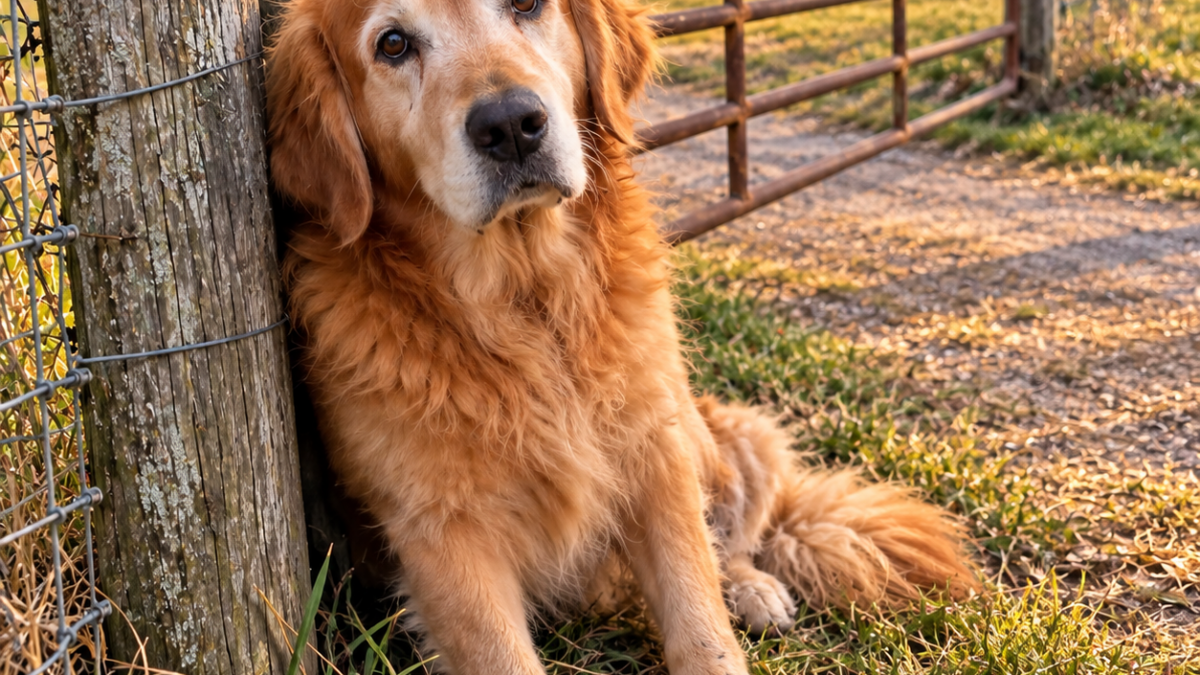
PART 2
The second month passed.
Then the third.
Michael did not come home.
Another letter arrived.
This one was shorter.
He wrote that his assignment had been extended and apologized for not being able to give me a definite return date.
But the letter was still addressed to Buddy.
“Dear Buddy,
I know I told you I’d be back quickly. Turns out humans are terrible at keeping schedules.
I hope you’re still stealing Mrs. Carter’s socks.
Don’t worry. I haven’t forgotten our river trail.
Save me a place by the gate.
I’ll be home soon.”
I smiled as I read it.
Buddy didn’t.
He listened with his head resting on his paws.
At the final sentence, his eyes lifted toward me.
Sometimes I wondered how much of our voices dogs truly understand.
Probably less than we imagine.
And somehow more.
By the fourth month, Buddy had moved almost completely into my house.
His food bowls sat beside my refrigerator.
His bed was near my kitchen window.
His toys were scattered across the living room.
But Michael’s house remained his home.
Every morning at exactly seven, Buddy walked across the road.
I started going with him.
We would sit beside the gate for twenty or thirty minutes.
Some mornings I brought coffee.
Buddy watched the road.
I watched Buddy.
People noticed.
Our mail carrier, Pete, began slowing down whenever he passed.
“Still waiting?”
“Every day.”
Pete would shake his head.
“That’s something.”
It was.
The story spread quietly through our little community.
People began asking about Michael.
I knew very little.
His letters were deliberately vague.
He never wrote locations.
He never described operations.
Mostly he wrote about ordinary things.
Food he missed.
The sound of rain on the farmhouse roof.
Fishing.
Buddy.
Especially Buddy.
Then, during the fifth month, Michael’s older brother came to town.
His name was Richard.
I had met him only twice.
He was eleven years older than Michael, and the two had never been close.
Their mother had been married twice.
Richard came from the first marriage.
Michael from the second.
When their mother died, she left the farmhouse to Michael.
That decision had created years of resentment.
Richard believed half of it should have been his.
Michael believed their mother had made her choice.
As far as I knew, they had spoken perhaps three times in five years.
Richard arrived in a black SUV on a Saturday afternoon.
Buddy and I were at Michael’s gate.
Richard slowed.
He lowered his window.
“That Michael’s dog?”
Buddy stood immediately.
“Yes.”
Richard parked.
He stepped out wearing an expensive shirt and polished boots that had probably never touched mud before that afternoon.
He looked at Buddy.
“Thought he’d be dead by now.”
I stared at him.
“What an unpleasant thing to say.”
Richard gave a dismissive shrug.
“He’s old.”
“He’s seven.”
“Same difference.”
He walked toward Michael’s house.
“Where are you going?”
“Inside.”
“You have a key?”
“I don’t need your permission.”
“I didn’t ask whether you needed mine. I asked whether you had a key.”
He stopped.
For the first time, he looked directly at me.
“I’m Michael’s brother.”
“And?”
“And this is family property.”
“No. It’s Michael’s property.”
His jaw tightened.
Apparently he had hoped nobody remembered that distinction.
Richard pulled a key from his pocket.
I recognized it.
Years earlier, Michael’s mother had hidden a spare in a magnetic box beneath an old metal bench.
Michael must never have moved it.
Richard had remembered.
Before he could reach the door, Buddy moved.
He didn’t bark.
Buddy almost never barked.
He simply positioned himself on the porch.
Between Richard and the door.
Richard laughed.
“Move.”
Buddy didn’t.
“Buddy,” I said quietly.
His eyes remained fixed on Richard.
Richard tried stepping around him.
Buddy shifted.
No growl.
No teeth.
Just a seventy-pound golden retriever saying no.
Richard looked at me.
“Control him.”
“He seems pretty controlled.”
“This is ridiculous.”
“Then leave.”
His face changed.
“You know, old woman, you’re getting a little too comfortable acting like this property is yours.”
I was sixty-two.
I had spent thirty-seven years teaching middle school children.
Men like Richard did not frighten me nearly as much as twelve-year-olds with permanent markers.
I smiled.
“Call me old woman again and you’ll discover exactly how comfortable I am.”
He stared at me.
Then he laughed.
“Michael isn’t coming back anytime soon.”
My smile disappeared.
“What does that mean?”
“He extended his contract.”
“How do you know?”
“Because unlike you, I’m family.”
Something in the way he said it bothered me.
“Michael writes every month.”
Richard glanced at Buddy.
“To the dog?”
“Yes.”
He laughed again.
“Of course he does.”
He walked back toward his SUV.
Before leaving, he turned.
“He left that house sitting empty. Somebody needs to deal with it.”
“Michael is dealing with it.”
“From overseas?”
“Yes.”
“How?”
“By continuing to own it.”
Richard’s expression hardened.
Then he drove away.
I stood beside Buddy for a long time after that.
I told myself the visit meant nothing.
An angry older brother.
An old inheritance fight.
That was all.
I was wrong.
Three weeks later, a man named Leonard Price came to my door.
He introduced himself as a real estate broker.
“I’m here about the property across the road.”
“Michael’s house?”
“Yes.”
“What about it?”
“I’m conducting a valuation.”
“Why?”
“Potential sale.”
Every part of me went cold.
“It isn’t for sale.”
Leonard looked confused.
“My client says otherwise.”
“Who is your client?”
He checked his paperwork.
“Richard Hayes.”
I almost laughed.
“He doesn’t own that house.”
Leonard’s expression changed immediately.
“He represents the owner.”
“No.”
“I have documents—”
“So do I.”
That wasn’t entirely true.
But Michael’s letters existed.
His bills were current.
His taxes were current.
And I knew enough about property to know that an older brother could not simply decide to sell a younger brother’s house.
I stepped onto the porch.
“Mr. Price, before you take another photograph or measurement, I suggest you verify exactly who owns that property.”
He did.
He called me the following morning.
“You were right.”
“I know.”
“My apologies.”
“What did Richard give you?”
There was a pause.
“A power of attorney.”
I gripped the phone.
“Signed by Michael?”
“Yes.”
“May I ask when?”
Leonard told me.
The date was eleven days earlier.
Michael’s most recent letter had arrived fourteen days earlier.
In it, he had written:
“Please keep checking the house, Mrs. Carter. I’ve made no changes to anything back home. Tell Buddy his bed is still waiting.”
No changes.
The phrase suddenly mattered.
I called Michael’s attorney.
His name was David Brennan.
I found his number in the emergency folder Michael had left with me.
David listened without interrupting.
Then he asked me to repeat what Leonard had said.
“Do you have the document?”
“No.”
“I’ll get it.”
Two hours later he called.
His voice had changed.
“Mrs. Carter, Michael has never granted Richard power of attorney.”
I sat down.
“Then what did Richard show the realtor?”
“That’s what we’re going to find out.”
The answer came quickly.
A copy of the document reached David that afternoon.
The signature looked like Michael’s.
Almost.
I knew because I had seen his handwriting every month for half a year.
Michael formed the capital H in his last name with a strange backward loop.
The signature on Richard’s document didn’t.
David noticed other problems.
The notary information didn’t match.
The date format was wrong.
And the document gave Richard broad authority over property, bank accounts, and personal assets.
David contacted law enforcement.
The sale stopped before it began.
But Richard wasn’t arrested immediately.
Forgery cases take evidence.
Evidence takes time.
And Richard had an explanation.
He claimed Michael had signed it before deployment.
He claimed the date had been entered incorrectly.
He claimed the notary error was clerical.
He claimed everyone else was confused.
Then he came to my house.
At night.
Buddy heard him before I did.
It was almost eleven.
I was reading in the living room when Buddy rose suddenly.
His body stiffened.
A truck door closed outside.
Three knocks hit my front door.
Hard.
Buddy moved in front of me.
“Who is it?”
“You know who.”
Richard.
I didn’t open the door.
“What do you want?”
“You’ve caused enough trouble.”
“I didn’t forge your brother’s signature.”
“You don’t know what happened.”
“I know the house isn’t yours.”
Silence.
Then:
“Open the door.”
“No.”
“Mrs. Carter.”
“No.”
He hit the door with his palm.
Buddy barked.
Once.
Deep.
Loud.
Richard stopped.
I had never heard Buddy bark like that.
“Get that dog away from the door.”
“Leave my property.”
“You think Michael cares what happens here?”
That sentence hit me differently.
“What do you mean?”
“He’s gone.”
“For now.”
“For good, probably.”
I said nothing.
Richard continued.
“You’ve been reading those stupid letters like bedtime stories to a dog. You think that means anything?”
Buddy stood rigidly beside me.
Richard’s voice became colder.
“My brother made his choice. He left. People who leave don’t get to control what happens forever.”
I walked to the window.
I could see his outline beneath the porch light.
“You have ten seconds to get off my property before I call the sheriff.”
He laughed.
“I’ll save you the trouble.”
He left.
I called anyway.
The deputy documented everything.
The following morning, I sat beside Buddy at Michael’s gate.
It was raining.
A soft spring rain.
Buddy’s golden coat darkened as drops collected along his back.
“You know,” I whispered, “your person has an exceptionally unpleasant brother.”
Buddy looked at me.
“I assume you already knew.”
He returned his attention to the road.
The seventh letter came three days later.
I opened it carefully.
“Dear Buddy,
I had a dream about home last night.
You were sitting by the gate.
Mrs. Carter was yelling because you’d tracked mud through her kitchen.
I came up the road and you ran so fast you nearly knocked me over.
I hope that’s how it happens.
I don’t know exactly when yet.
But I’m still coming.
Don’t let anyone convince you otherwise.”
My voice stopped.
Buddy lifted his head.
I read the final line again.
“Don’t let anyone convince you otherwise.”
Had Michael heard about Richard?
I didn’t know.
Communication was unreliable.
I wrote back through the address Michael had provided.
I told him everything.
The attempted sale.
The forged power of attorney.
Richard’s visit.
Buddy’s waiting.
Especially Buddy’s waiting.
I ended with:
“He still goes to your gate every morning. Rain or shine. If you promised him you’d come home, I suggest you keep your promise.”
A month passed.
Then another.
Michael’s reply finally came.
This time the envelope contained two letters.
One for me.
One for Buddy.
Mine was short.
“Mrs. Carter,
Thank you.
David contacted me through the appropriate channels. I never signed anything giving Richard authority over my house.
Please don’t confront him.
Please don’t put yourself in danger.
If he comes again, call law enforcement.
I don’t care about the house nearly as much as I care about Buddy and you being safe.
I owe you more than I can say.
Michael.”
Then I read Buddy’s.
“Buddy,
Apparently you’re guarding the house better than I ever did.
Good boy.
Don’t bite Richard.
I know you’re thinking about it.
I’m still coming home.
Wait for me.”
Buddy put his paw on the envelope.
I cried.
Not loudly.
Just enough that Buddy noticed.
He got up and rested his head against my knee.
“You’re supposed to be the one I’m comforting,” I told him.
His tail tapped the floor.
The legal dispute became uglier.
David discovered Richard had contacted two lenders using the forged document.
He had also tried to gain access to one of Michael’s investment accounts.
That shifted the investigation from a family argument into something much more serious.
Richard stopped coming around.
For a while.
Meanwhile, Buddy waited.
Summer became fall.
The trees along the road changed color.
Michael had been gone ten months.
Then eleven.
Then twelve.
On the one-year anniversary of his departure, I brought a folding chair to the gate.
Buddy sat beside me.
“You know what today is?”
He looked at me.
“One year.”
I hated saying it.
Michael had promised weeks.
Buddy had given him a year.
That afternoon, the mail came.
Another letter.
“Dear Buddy,
A whole year.
I’m sorry.
I don’t know how to explain time to a dog.
I don’t know how to explain duty either.
Maybe it doesn’t matter.
Maybe all you know is that I left and haven’t come back.
If I could tell you one thing you would truly understand, it would be this:
Leaving you was never the same as leaving you behind.
There is a difference.
I hope someday I get to show you.”
I stopped reading.
Buddy’s eyes were on me.
I folded the letter.
“Your person better come home, Buddy.”
He placed his paw on the envelope.
Another winter came.
Buddy was slowing.
Not dramatically.
But I noticed.
He took longer to stand after sleeping.
Cold mornings stiffened his hips.
His muzzle had begun whitening around the nose.
Dr. Collins, our veterinarian, examined him.
“Nothing alarming,” she told me. “He’s getting older.”
I hated that phrase.
“How old?”
“Eight now?”
“Almost nine.”
“He’s healthy. Just watch his joints.”
I bought supplements.
A new orthopedic bed.
A ridiculous heated pad.
Buddy ignored all of it and continued sleeping on my kitchen floor whenever I cooked.
Every morning, we still went to the gate.
Sometimes I wondered whether I should stop him.
Was I encouraging something painful?
Would he adjust faster if I stopped letting him wait?
Dr. Collins answered that question for me.
“Don’t take away his ritual.”
“You think he understands?”
“No. But routine is security. That gate means Michael to him.”
“So I let him wait?”
“Unless it’s hurting him physically, yes.”
It wasn’t hurting his body.
I wasn’t sure about his heart.
Thirteen months.
Fourteen.
Fifteen.
Letters continued arriving.
Richard’s case crawled through the legal system.
Then one morning, I found him standing beside Michael’s fence.
Buddy saw him and stopped.
Richard looked thinner.
Angrier.
“What do you want?”
He held up his hands.
“Relax.”
“I’m relaxed.”
“You called the police last time.”
“You were pounding on my door at eleven at night.”
“I came to talk.”
“You can talk from there.”
He looked at Buddy.
“That dog still doing this?”
“Yes.”
“For God’s sake.”
Buddy sat.
Richard shook his head.
“He isn’t coming back.”
“You don’t know that.”
“I know more than you.”
Something about his tone made my stomach tighten.
“What have you heard?”
He smiled.
That was the moment I knew he was lying.
People with terrible news don’t smile when they deliver it unless there is something wrong inside them.
“Maybe you should prepare yourself.”
“For what?”
“My brother’s unit had casualties.”
I felt the blood drain from my face.
Buddy looked from him to me.
“What happened?”
Richard shrugged.
“I don’t have details.”
“Then don’t stand there pretending you do.”
“I’m family. They contacted me.”
“Why would they contact you?”
His smile weakened.
“Because I’m next of kin.”
“No.”
I knew enough to know Michael had listed someone else.
Years earlier, during a surgery, Michael had named David Brennan and me as emergency contacts because he didn’t trust Richard.
“You’re lying.”
Richard’s face changed.
“You think you’re part of his family because you babysit his dog?”
“No.”
I stepped closer to the fence.
“But I know you.”
His eyes narrowed.
“You don’t know anything.”
“I know you tried to steal your brother’s house while he was serving his country.”
His face reddened.
“That’s not what happened.”
“I know you forged his signature.”
“You can’t prove that.”
“Maybe I can’t.”
I looked toward the road.
“But apparently the prosecutor thinks someone can.”
He stepped toward me.
Buddy stood.
That stopped him.
Richard pointed at the dog.
“You’re wasting your life waiting for someone who’s never coming through that gate.”
I looked down at Buddy.
Then back at Richard.
“Maybe.”
He seemed surprised.
I continued.
“But Buddy’s loyalty has cost him nothing except time.”
I looked directly into Richard’s eyes.
“Your greed is about to cost you much more.”
He left without another word.
I called David.
There had been no casualty notification.
Michael’s status, as far as David knew, had not changed.
Richard had lied simply to hurt me.
Or Buddy.
Or his brother.
I wasn’t sure which possibility was worse.
When Michael’s next letter arrived, I almost didn’t tell him what Richard had said.
Then I remembered Michael deserved the truth.
I wrote everything.
His response came six weeks later.
There was no anger in the letter.
That surprised me.
Only one sentence about Richard.
“When I come home, I’ll deal with him.”
I read it twice.
Then came eighteen months.
A year and a half.
Buddy waited.
By then, nearly everyone in town knew him.
Children waved when school buses passed.
Pete the mail carrier sometimes brought him treats.
A photographer from the local paper asked whether she could take a picture.
I refused at first.
“It isn’t a circus.”
“I understand.”
She came back another day without a camera.
She sat with us.
Watched Buddy.
Listened.
Then she said, “This isn’t really about a dog, is it?”
I looked at him.
“No.”
“What is it about?”
“Keeping your word.”
She returned the next week.
This time I let her photograph him.
The newspaper ran a small story.
WAITING AT THE GATE.
A golden retriever.
A deployed soldier.
A promise.
The story spread farther than I expected.
People mailed Buddy treats.
Children sent drawings.
One little boy wrote:
“Dear Buddy, I hope your soldier comes home.”
I read that one aloud too.
Buddy put his paw on it.
For the first time in months, I laughed until I cried.
Then something happened that scared me more than Richard ever had.
The letters stopped.
Month nineteen passed.
Nothing.
At first, I wasn’t worried.
Military mail could be slow.
Month twenty began.
Still nothing.
I called David.
He had no new information.
“You can’t contact his unit?”
“There are procedures.”
“David, he hasn’t missed a letter in almost two years.”
“I know.”
“Something is wrong.”
“I’ll find out what I can.”
Buddy kept waiting.
Every morning.
The road remained empty.
I began dreading the mailbox.
Every time Pete’s truck stopped, my heart jumped.
Nothing.
Twenty-one months.
No letter.
Buddy knew.
I swear he did.
He began staying longer at the gate.
Some mornings an hour.
Sometimes two.
If I went home without him, he remained.
So I stopped leaving.
One December morning, snow covered the road.
Buddy’s hips were stiff.
I tried to keep him inside.
“No gate today.”
He stood beside the door.
“No.”
He stared at me.
“It’s freezing.”
He continued staring.
I sighed.
“You’re impossible.”
We went.
I wrapped a blanket around his shoulders while he sat.
“You realize this is insane?”
His eyes remained on the road.
I sat beside him.
“Fine.”
Thirty minutes passed.
Then forty.
No Michael.
I rubbed Buddy’s ears.
“Let’s go home.”
Buddy suddenly stood.
His entire body changed.
His ears lifted.
He stared beyond the hill.
I heard an engine.
For one wild second, I stopped breathing.
A vehicle appeared.
Dark green.
Military markings.
I stood so quickly my chair fell backward.
Buddy pulled toward the road.
The vehicle slowed.
Then continued past us.
Wrong house.
Wrong soldier.
Buddy watched until it disappeared.
Then sat down again.
I turned away before he could see me crying.
Month twenty-two.
Still no letter.
David finally called.
“Mrs. Carter.”
His voice told me to sit.
“What happened?”
“Michael was injured.”
I closed my eyes.
“Is he alive?”
“Yes.”
My knees nearly gave out.
“What happened?”
“I can’t give you operational details. There was an incident. He’s been receiving treatment.”
“How badly?”
“He was unconscious for some time.”
I looked across the room.
Buddy was sleeping near the kitchen door.
“Can he walk?”
“Yes.”
“Can he come home?”
“Eventually.”
“When?”
“I don’t know.”
“Does he know about Buddy?”
There was a pause.
“He asked.”
That broke me.
I covered my mouth.
David continued.
“Apparently one of the first things he asked after becoming fully oriented was whether the dog was okay.”
I started laughing through tears.
“Of course he did.”
“There’s something else.”
“What?”
“He wrote a letter before the incident.”
My heart tightened.
“Where is it?”
“It was among his personal effects. They’re sending it.”
The envelope arrived eight days later.
It had dirt along one corner.
Michael’s handwriting was shaky.
Still unmistakable.
BUDDY CARTER.
I sat at the kitchen table.
Buddy came over.
I couldn’t open it.
Not at first.
My hands were trembling.
Finally, I slid my finger beneath the flap.
“Dear Buddy,
I don’t know when you’ll get this one.
Things are complicated here.
I’ve been thinking about all the mornings Mrs. Carter says you sit at the gate.
I wish I could tell you not to wait.
But that would be a lie.
Because selfishly, the thought of you sitting there makes home feel real.
So wait a little longer.
If I have to crawl up that road, I’ll come through that gate.
I promised you.
And I’m not done keeping that promise.”
I couldn’t continue.
There was one more sentence.
My vision blurred.
Buddy rested his head against my leg.
I wiped my eyes and forced myself to read.
“You were the last thing I hugged before I left, and if I have anything to say about it, you’ll be the first thing I hug when I come home.”
Buddy moved toward the envelope.
He placed his paw on it.
Then he lay down beside my chair.
I pressed the letter against my chest.
“He’s alive.”
Buddy looked up.
“He’s alive, Buddy.”
His tail moved once.
“Your person is alive.”
For the first time in three months, I slept through the night.
Michael spent weeks in rehabilitation.
I didn’t know the full extent of his injuries until much later.
A shattered lower leg.
Three broken ribs.
Damage to his left shoulder.
A concussion severe enough to affect his memory for several weeks.
Doctors told him recovery would be slow.
Michael apparently responded:
“So is my dog. We’ll match.”
When David told me that, I laughed.
Buddy and I continued waiting.
Month twenty-three.
Then twenty-four.
Two years.
Exactly two years and eleven days after Michael left, I received a phone call at 5:17 in the morning.
I almost didn’t answer.
“Mrs. Carter?”
The voice sounded rough.
Older.
But I knew it immediately.
“Michael?”
Silence.
Then:
“Yeah.”
I sat up.
“Michael.”
“Don’t cry.”
“Then don’t call an old woman before sunrise after disappearing for two years.”
He laughed.
Then coughed.
“Still mean.”
“Where are you?”
Another pause.
“Closer.”
My heart began pounding.
“How close?”
“Don’t tell Buddy.”
I stood.
“Michael.”
“I mean it.”
“What are you doing?”
“I want to see if he remembers.”
I almost cursed at him.
“You’ve made that dog wait seven hundred mornings and now you want to test him?”
“Mrs. Carter.”
“What?”
“Please.”
I closed my eyes.
“When?”
“Today.”
The phone nearly slipped from my hand.
“Today?”
“Late morning.”
I looked toward the kitchen.
Buddy was asleep.
“Does anyone else know?”
“David.”
“Richard?”
The silence changed.
“No.”
“What are you going to do about him?”
“Later.”
There was something in Michael’s voice I had never heard before.
Not anger.
Something colder.
“I don’t want him anywhere near the house today.”
“I’ll make sure of it.”
“No. Don’t involve yourself.”
“Michael, I’ve been involved for two years.”
He sighed.
“Fair point.”
When the call ended, I sat in the dark.
Buddy eventually walked into the room.
He looked at me.
I smiled.
“Morning.”
He tilted his head.
I wondered whether dogs could hear secrets in a heartbeat.
At seven, we went to the gate.
Exactly as always.
No decorations.
No crowd.
No newspaper.
I hadn’t told anyone.
This belonged to Buddy.
The road was quiet.
Eight o’clock.
Nine.
Ten.
Buddy sat.
My nerves became unbearable.
At ten forty-three, an unfamiliar pickup appeared over the hill.
Buddy watched.
The truck approached slowly.
Then stopped approximately fifty yards from the gate.
The passenger door opened.
A man stepped out.
He was thinner than Michael.
He used a cane.
His hair was shorter.
A pale scar crossed one side of his forehead.
For a moment, Buddy did nothing.
Michael stood in the road.
His hands hung at his sides.
I heard him say one word.
“Buddy.”
The dog’s body went completely still.
Michael said it again.
“Buddy.”
The cane hit the ground.
Buddy ran.
Not walked.
Not trotted.
Ran.
The stiffness disappeared from his legs.
The age disappeared from his body.
He crossed that distance like the seven-year-old dog who had watched Michael leave.
Michael dropped to one knee.
Buddy hit him so hard they both nearly fell.
Michael wrapped both arms around the dog.
Buddy made sounds I had never heard before.
Whining.
Crying.
Panting.
Trying to lick Michael’s face while pressing his entire body into him.
Michael buried his face in Buddy’s neck.
“I came back.”
Buddy’s tail struck the road.
“I told you.”
I stood by the gate crying so hard I could barely see.
Michael held him tighter.
“I told you I’d come back.”
Buddy tried climbing into his lap.
Michael laughed.
Then winced because of his ribs.
“Easy, buddy.”
Buddy ignored him.
Two years of waiting had ended in less than ten seconds.
Michael finally looked toward me.
“Mrs. Carter.”
I wiped my face.
“You took your time.”
He smiled.
Then he opened one arm.
I walked toward him.
I intended to hug him gently.
I failed.
For the next hour, Buddy refused to let Michael out of his sight.
If Michael moved three feet, Buddy followed.
When Michael entered the farmhouse, Buddy ran ahead, then turned as if checking whether he was really coming.
Michael stopped in the living room.
Everything was nearly exactly as he had left it.
His books.
His photographs.
Buddy’s old bed.
Michael touched the back of a chair.
“Home.”
Buddy stood against his leg.
Michael looked down.
“Yeah.”
He sat.
Buddy immediately rested his head across Michael’s knees.
Neither moved for a long time.
Then Michael noticed the wooden box on the table.
“What’s that?”
“Your letters.”
“All of them?”
“Every one.”
He opened the box.
Twenty-four envelopes.
Some worn.
Some stained from Buddy’s nose.
Michael picked up the first one.
There was a faint paw mark near the corner.
I told him about our ritual.
Michael didn’t speak.
He picked up another.
Then another.
Every envelope carried some trace of Buddy.
A bent corner.
A smudge.
A paw print.
Michael pressed his lips together.
“He really listened?”
“Every month.”
Michael looked down at Buddy.
“You crazy old dog.”
Buddy’s eyes closed.
Michael’s hand trembled as he stroked his head.
That afternoon, the news of Michael’s return spread.
Pete arrived first.
Then Dr. Collins.
Then neighbors.
Eventually the newspaper photographer asked permission to return.
Michael agreed to one photograph.
It showed him sitting on his front steps with Buddy pressed against his side.
No uniform.
No medals.
No dramatic pose.
Just a man and his dog.
The headline appeared the following morning.
HE KEPT HIS PROMISE.
Richard saw it too.
He arrived that evening.
Michael and I were on the porch.
Buddy lay between us.
A black SUV stopped beside the gate.
Michael’s expression changed.
Richard walked toward the house.
Buddy stood.
Michael touched his collar.
“Stay.”
Buddy remained.
Richard stopped near the bottom step.
“So you’re back.”
Michael stared at him.
“So I am.”
Richard shoved his hands into his pockets.
“You look terrible.”
Michael smiled faintly.
“You haven’t changed.”
Neither brother spoke for several seconds.
Then Richard said, “We need to talk.”
“We do.”
“Privately.”
Michael glanced at me.
“Mrs. Carter stays.”
Richard looked annoyed.
“This is family business.”
Michael’s expression hardened.
“She protected my home, my dog, and my property while you tried to steal all three.”
Richard’s face reddened.
“That’s not what happened.”
Michael reached behind his chair.
He picked up a folder.
“I’ve read everything.”
Richard said nothing.
Michael opened it.
“The fake power of attorney.”
“Michael—”
“The attempted property sale.”
“I was trying to protect the house.”
“The investment account.”
Richard looked toward me.
I almost laughed.
Michael continued.
“You told Mrs. Carter I was probably dead.”
“That was misunderstood.”
“You lied about casualty notifications.”
“I heard something—”
“You heard nothing.”
His voice never rose.
That made the moment more powerful.
Michael had changed overseas.
The young man who once argued emotionally with Richard was gone.
This Michael spoke slowly.
Carefully.
Each word placed exactly where he wanted it.
Richard took a breath.
“Look, I made mistakes.”
“You committed crimes.”
“I’m your brother.”
Michael looked down at Buddy.
Then back at him.
“That sentence has protected you your whole life.”
Richard flinched.
Michael continued.
“Every time you took something, every time you lied, every time you blamed Mom for leaving this house to me—you expected ‘I’m your brother’ to end the conversation.”
“Mom treated me like garbage.”
“No.”
Michael’s voice remained calm.
“She stopped trusting you.”
Richard’s face changed.
Michael leaned forward.
“You want to know why she left me the house?”
Richard said nothing.
“Because you borrowed against her savings.”
“That was years ago.”
“You never paid her back.”
“I was struggling.”
“So was she.”
Richard looked away.
Michael’s hand rested on Buddy’s neck.
“She told me something before she died. I didn’t understand it then.”
“What?”
“She said, ‘Richard thinks being family means he should never face consequences.’”
Richard’s jaw tightened.
Michael stood carefully.
His injured leg made the movement slow.
Buddy immediately moved beside him.
Michael reached the bottom step.
For the first time, the brothers stood face-to-face.
“You came here while I was gone because you thought I couldn’t stop you.”
Richard said nothing.
“You tried to sell my home while I was deployed.”
Silence.
“You tried to access my money.”
Silence.
“You frightened the woman taking care of my dog.”
“I never touched her.”
“You showed up at her house at eleven at night.”
Richard opened his mouth.
Michael raised one hand.
“No.”
Richard stopped.
“I spent two years thinking about home.”
Michael glanced toward Buddy.
“I thought about this porch. That road. That dog.”
Then he looked at Richard.
“And while he sat at my gate waiting for me, my own brother stood outside trying to decide what parts of my life he could take before I returned.”
Richard looked smaller somehow.
Michael held out the folder.
“You wanted my answer.”
Richard stared at it.
“What is that?”
“My victim statement.”
Richard’s eyes widened.
“You’re really going through with the charges?”
“I don’t control whether you’re prosecuted.”
“But you can tell them you don’t want this.”
“I could.”
“Then do it.”
Michael shook his head.
Richard laughed once in disbelief.
“After everything I’ve been through?”
Michael’s eyes hardened.
“Everything you’ve been through?”
“I lost clients. People think I’m some criminal.”
“You forged my signature.”
“It was complicated.”
“You tried to sell my house.”
“I was trying to settle the estate.”
“What estate?”
Richard said nothing.
Michael stepped closer.
“I wasn’t dead.”
The words landed like a hammer.
Richard looked away.
Michael continued.
“You just needed me to be gone long enough to act like I was.”
Richard’s face twisted.
“You got everything.”
There it was.
The real wound.
The real resentment.
“You got Mom. You got the house. You got everybody feeling sorry for you. Now you come back a hero.”
Michael looked genuinely sad.
“This was never about a house, was it?”
Richard’s eyes filled with fury.
“You always had everything handed to you.”
Michael lifted his cane slightly.
“Does this look handed to me?”
Richard said nothing.
“I spent months learning to walk again.”
Michael’s voice broke for the first time.
“I woke up in a hospital not remembering where I was.”
Buddy pressed against his leg.
Michael put one hand on his head.
“The first thing I could remember clearly was this dog waiting at the gate.”
Richard’s anger faded.
Just slightly.
Michael continued.
“You could have spent those two years being my brother.”
Richard stared at him.
“You could have checked on Buddy.”
Silence.
“You could have helped Mrs. Carter.”
Silence.
“You could have protected the house Mom loved.”
Silence.
“Instead, you saw my absence as an opportunity.”
Michael stepped back.
“So no, Richard. I’m not saving you from the consequences this time.”
Richard stared at him for several seconds.
Then his eyes shifted toward Buddy.
“The dog gets more loyalty from you than I do.”
Michael looked down.
Buddy was leaning against his good leg.
“Yes.”
Richard’s face hardened.
Michael continued quietly.
“Because he earned it.”
Richard left.
No shouting.
No fight.
No dramatic punch.
He simply walked back to his SUV and drove away.
Some people later told Michael he should have forgiven him.
Michael always answered the same way.
“Forgiveness doesn’t mean removing consequences.”
Richard eventually pleaded guilty to charges connected to the forged documents and attempted financial fraud.
Because he had no major prior criminal record, he didn’t receive the enormous prison sentence some people expected.
But he did receive consequences.
Probation.
Restitution.
Community service.
Legal fees that nearly ruined him.
The fraudulent transactions became part of the public record.
Several business partners stopped working with him.
He lost the reputation he had spent years carefully constructing.
Michael never celebrated.
Neither did I.
But I will admit something.
The day Richard was sentenced, I sat beside Buddy at the gate and felt something close to satisfaction.
Not because Richard had suffered.
Because he had finally learned that absence does not equal permission.
And loyalty does not make someone weak.
Michael’s recovery took nearly another year.
Some days were good.
Others weren’t.
His leg hurt in cold weather.
Loud noises sometimes made him freeze.
Sleep was difficult.
Buddy adapted instantly.
Before the deployment, Buddy slept at the foot of Michael’s bed.
Afterward, he slept beside the bedroom door.
Always facing outward.
The first time I noticed, I asked Michael about it.
“He started doing that the first night.”
“Why?”
Michael looked at Buddy.
“I think he figures I waited long enough for somebody else to stand guard.”
There were nights Michael came to my kitchen at two in the morning because he couldn’t sleep.
Buddy always came too.
We drank coffee.
Michael talked when he wanted.
When he didn’t, we sat silently.
One night he pulled one of the old letters from his jacket.
“You saved all these.”
“Of course.”
“I was embarrassed writing them.”
“Why?”
“Writing to a dog?”
I smiled.
“You weren’t writing to a dog.”
Michael looked at me.
“Who was I writing to?”
“Home.”
He became quiet.
I continued.
“Buddy was just the address.”
Michael stared at the letter.
Then nodded.
“Maybe.”
Spring returned.
Michael slowly began walking the river trail again.
At first, a quarter mile.
Then half a mile.
Buddy walked beside him.
Never pulling.
Never running ahead.
Before the deployment, Buddy had spent every walk trying to reach the next smell before Michael.
Now he matched Michael’s pace.
If Michael stopped, Buddy stopped.
If Michael sat, Buddy sat.
One afternoon I followed them toward the creek.
Michael rested against a tree.
Buddy lay beside him.
“You know,” Michael said, “he used to be terrible on a leash.”
“I remember.”
“Now he’s perfect.”
“He got older.”
Michael shook his head.
“So did I.”
Buddy looked between us.
“Two old men,” I said.
Michael looked offended.
“I’m thirty-two.”
“Ancient.”
He laughed.
Buddy wagged his tail.
For a while, life became ordinary.
Beautifully ordinary.
Michael repaired the farmhouse.
He returned to work part-time.
Buddy slept on the porch.
I crossed the road too often.
Michael complained that I cooked too much.
I ignored him.
The gate stayed open most days now.
Buddy no longer needed to wait there.
Michael was home.
But habits built from love don’t disappear immediately.
Every morning, Buddy still walked to the gate.
Only now Michael went with him.
They would stand there for a minute.
Sometimes two.
Then Buddy turned around and followed Michael home.
I once asked why.
Michael smiled.
“Maybe he’s making sure I don’t leave again.”
Three years passed.
Buddy turned twelve.
His face became almost completely white.
His hips grew weaker.
He couldn’t walk the river trail anymore.
Michael bought him a ramp for the truck.
Then a larger orthopedic bed.
Then rugs because Buddy slipped on the hardwood floor.
“He hates the rugs,” I said.
“He hates falling more.”
Buddy stared at us from his bed as if both of us were incompetent.
His hearing faded.
His eyesight dimmed slightly.
But every morning, he still woke before Michael.
And every morning, he walked slowly toward the gate.
One cold November morning, Buddy didn’t get up.
Michael called me.
His voice was different.
I crossed the road without putting on a coat.
Buddy was lying beside the fireplace.
Michael sat on the floor.
“I think something’s wrong.”
Dr. Collins came immediately.
She examined him.
Blood tests followed.
Then imaging.
The diagnosis was cancer.
Aggressive.
Advanced.
Michael didn’t speak for nearly five minutes.
Finally he asked, “How long?”
Dr. Collins looked at Buddy.
“We can keep him comfortable.”
“How long?”
“Weeks. Maybe a couple months.”
Michael nodded.
I knew that expression.
I had seen it when he came home with a cane.
He was building walls.
Dr. Collins touched his shoulder.
“Michael.”
He looked at her.
“This isn’t something you failed to protect him from.”
“I know.”
But he didn’t.
Not yet.
Buddy lasted seven weeks.
Seven extraordinary weeks.
Michael stopped everything unnecessary.
No work unless it could be done from home.
No travel.
No long appointments.
He cooked Buddy chicken.
Carried him outside when his legs hurt.
Sat beside him at night.
And every morning, no matter how slow Buddy became, Michael helped him reach the gate.
I joined them on Christmas morning.
Snow covered the ground.
Buddy wore a ridiculous red coat Michael had bought him.
“He looks embarrassed,” I said.
“He’s warm.”
“He looks like Santa’s elderly assistant.”
Michael smiled.
Buddy sat at the gate.
The road was empty.
Michael knelt beside him.
“You don’t have to wait anymore, buddy.”
Buddy looked at him.
“I’m here.”
His tail moved once.
Michael swallowed.
“You did it.”
Buddy leaned against his chest.
“You waited long enough.”
I looked away.
The end came in January.
Buddy stopped eating.
Then drinking.
Dr. Collins came to the house.
Michael knew before she said anything.
He asked for one more hour.
We carried Buddy outside.
The winter sun was soft.
Michael sat beside the gate.
Buddy’s head rested in his lap.
I brought the wooden box of letters.
Michael looked at it.
“What are you doing?”
“You spent two years writing to him.”
I placed the box beside him.
“Maybe you should read one.”
Michael chose the first letter.
The paper was yellowed slightly at the fold.
He opened it.
His voice shook.
“Dear Buddy…”
Buddy’s ears moved.
Barely.
Michael stopped.
He covered his mouth.
I put my hand on his shoulder.
He tried again.
“Dear Buddy,
I know this is stupid because you’re a dog and you can’t read.”
Michael laughed through his tears.
“I hope Mrs. Carter reads this anyway.”
I laughed too.
Buddy’s eyes remained half closed.
Michael continued.
“I’ll be home soon.”
His voice broke.
Buddy’s head shifted against his knee.
Michael put the letter down.
“I came home.”
Buddy breathed slowly.
“I kept my promise.”
He bent forward until his forehead touched Buddy’s.
“And you kept yours.”
Dr. Collins waited inside.
There was no rush.
No pressure.
Eventually Michael carried Buddy into the living room.
He placed him on the blanket beside the fireplace.
I sat nearby.
Dr. Collins explained everything.
Michael nodded.
Then she asked if he was ready.
“No.”
His voice was almost a whisper.
Then he looked at Buddy.
“But he is.”
Michael held him.
Buddy’s breathing became slower.
Then peaceful.
Then stopped.
Michael didn’t move.
For nearly an hour.
Eventually he whispered:
“He waited two years for me.”
I sat beside him.
“And you came back.”
Michael cried then.
Not the quiet tears I had seen before.
He cried like a child.
I held him.
The next morning, I woke at seven out of habit.
For nearly six years, Buddy had controlled my mornings.
I walked into the kitchen.
No dog.
No collar rattling.
No paws against the floor.
I made coffee.
Then I looked through the window.
Across the road, Michael stood at the gate.
Alone.
I put down my cup.
When I reached him, neither of us spoke.
Michael looked down the road.
The same road Buddy had watched for two years.
“I keep expecting him to come out.”
“I know.”
“He was supposed to be here.”
“I know.”
Michael reached into his coat.
He held the final letter he had written during deployment.
The one that said:
“If I have to crawl up that road, I’ll come through that gate.”
He folded it carefully.
Then he placed it beneath the small stone beside the gatepost.
Weeks later, Michael installed a simple wooden plaque.
BUDDY
HE WAITED.
I thought that was all it needed.
A year after Buddy died, something unexpected happened.
Michael called me from the county animal shelter.
“I need you to come here.”
“Why?”
“Just come.”
When I arrived, Michael was standing outside a kennel.
Inside was an older golden retriever mix.
Ten years old.
Gray face.
One cloudy eye.
The card on the kennel said his owner had died.
Nobody in the family wanted him.
“How long has he been here?” I asked.
“Four months.”
I looked at Michael.
“No.”
“I haven’t said anything.”
“You have the face.”
“What face?”
“The stupid decision face.”
He smiled.
The dog approached the kennel door.
Michael crouched.
The dog sniffed his hand.
“You can’t replace Buddy.”
“I know.”
“You understand that?”
“Yes.”
I looked at the dog.
He leaned against the bars.
“What’s his name?”
“Charlie.”
I sighed.
Michael smiled wider.
“I hate you.”
“That sounds like approval.”
An hour later, Charlie rode home with us.
He never became Buddy.
Nobody expected him to.
He had his own habits.
His own fears.
His own strange obsession with stealing dish towels.
But something changed in Michael after Charlie arrived.
He stopped looking only backward.
The gate remained.
Buddy’s plaque remained.
The letters remained.
But grief slowly became memory instead of injury.
Several years after Michael returned, Richard sent him a letter.
He had completed probation.
His life had changed considerably.
He apologized.
Not vaguely.
Not “I’m sorry if you were hurt.”
A real apology.
He named what he had done.
The forgery.
The lies.
The attempt to take the house.
The things he said to me.
At the end, he wrote:
“I spent years believing you had taken something from me. I understand now that I destroyed what little relationship we had because I wanted things that were never mine.”
Michael showed me the letter.
“What are you going to do?”
“I don’t know.”
“Do you forgive him?”
Michael stared toward the gate.
“Maybe.”
“Does that mean you’ll let him back into your life?”
He shook his head.
“Not yet.”
I smiled.
“Good answer.”
Forgiveness and trust are different things.
Buddy would probably have understood that.
Dogs forgive quickly.
But even dogs remember which hands are safe.
Eventually Michael did meet Richard.
Coffee in town.
Neutral place.
One hour.
Then another meeting months later.
Their relationship never became what Richard wanted it to be.
But it became civil.
Michael didn’t need revenge anymore.
The consequences had already happened.
Richard had lost years.
Trust.
Money.
Reputation.
Most painfully, he had lost the chance to stand beside his brother during the two years when Michael had needed family most.
There are things no court can order returned.
That was punishment enough.
Today, more than a decade has passed since the morning Michael stood on my porch with a duffel bag.
I’m older now.
Much older.
Michael has a few more gray hairs than he likes to admit.
Charlie has also passed.
There have been other dogs.
None like Buddy.
There will never be another Buddy.
The farmhouse still stands.
So does the gate.
And beside it is a larger plaque now.
Michael replaced the original after weather damaged it.
It reads:
BUDDY
HE WAITED HERE FOR 724 MORNINGS.
AND ON THE 725TH, HIS PERSON CAME HOME.
Visitors occasionally stop when they hear the story.
Some photograph the plaque.
Some cry.
Children ask Michael whether Buddy really understood the letters.
Michael always gives them the same answer.
“I don’t know.”
Then he smiles.
“But he understood the promise.”
The wooden box sits on Michael’s bookshelf.
Every letter remains inside.
Twenty-four envelopes.
Twenty-four promises written to a dog who couldn’t read a single word.
People sometimes laugh when they first hear that part.
Then they see the paw marks.
Those tiny, faded marks on the paper.
And they stop laughing.
I have thought about those letters many times.
Michael believed he was writing to Buddy because Buddy was what he missed most.
But I eventually understood something deeper.
Those letters kept Michael connected to home.
Reading them kept me connected to Michael.
And waiting for them gave Buddy something he never surrendered.
Hope.
We usually talk about loyalty as though it belongs to the person who stays.
But Michael taught me loyalty can also belong to the person who fights his way back.
Buddy waited.
Michael returned.
Neither abandoned the other.
That was the promise.
Richard once told me I was wasting my life helping a dog wait for a man who might never come home.
He was wrong.
Those mornings at the gate were not wasted.
Not one of them.
Because love is not foolish simply because there is no guarantee at the end.
Loyalty is not weakness simply because someone else takes advantage of it.
And waiting for someone you love is not the same as refusing to live.
Buddy ate.
Played.
Slept beside my kitchen.
Chased squirrels.
Stole socks.
Grew old.
And every morning, he saved a piece of himself for Michael.
Just in case.
The last time I stood beside that gate with Michael, he ran his hand over Buddy’s plaque.
“You know what bothers me?”
“What?”
“I told him a few weeks.”
I laughed softly.
“You were off by a little.”
“Seven hundred days.”
“He didn’t hold it against you.”
Michael smiled.
“How do you know?”
“Because he nearly knocked you over when you came back.”
Michael looked down the road.
For a moment, neither of us spoke.
Then he said:
“I used to think the biggest promise I ever made was to the military.”
I waited.
“I was wrong.”
He touched Buddy’s name.
“The biggest one was made on this porch to a dog who didn’t understand why I was leaving.”
“And you kept it.”
“Eventually.”
I slipped my arm through his.
“Eventually counts.”
We walked back toward the house.
Behind us, the gate stood open.
It had been closed during most of those two long years.
Buddy had sat beside it every morning, watching the same stretch of road.
Waiting.
Believing.
And when Michael finally appeared, Buddy didn’t care about the months.
He didn’t care about missed birthdays.
He didn’t care that Michael walked with a cane or carried scars that hadn’t been there before.
He didn’t ask why it had taken so long.
He didn’t punish him for leaving.
He ran.
That was all.
Sometimes I think animals understand something humans spend entire lives complicating.
They know the difference between being left and being abandoned.
Michael had left.
But he never abandoned Buddy.
And Buddy, in return, never abandoned him.
For two years, one man wrote letters home.
For two years, one old woman read them aloud.
For two years, one golden dog sat beside a gate.
And every single morning, he looked down that road as if he knew something the rest of us were too afraid to believe.
Michael was coming home.
Buddy simply believed it first.
And in the end, he was right.








