PART 2: I Inherited a Mega Ranch, HOA Claimed It Was ‘Shared Property’ — They Have No Warning of What’s Next
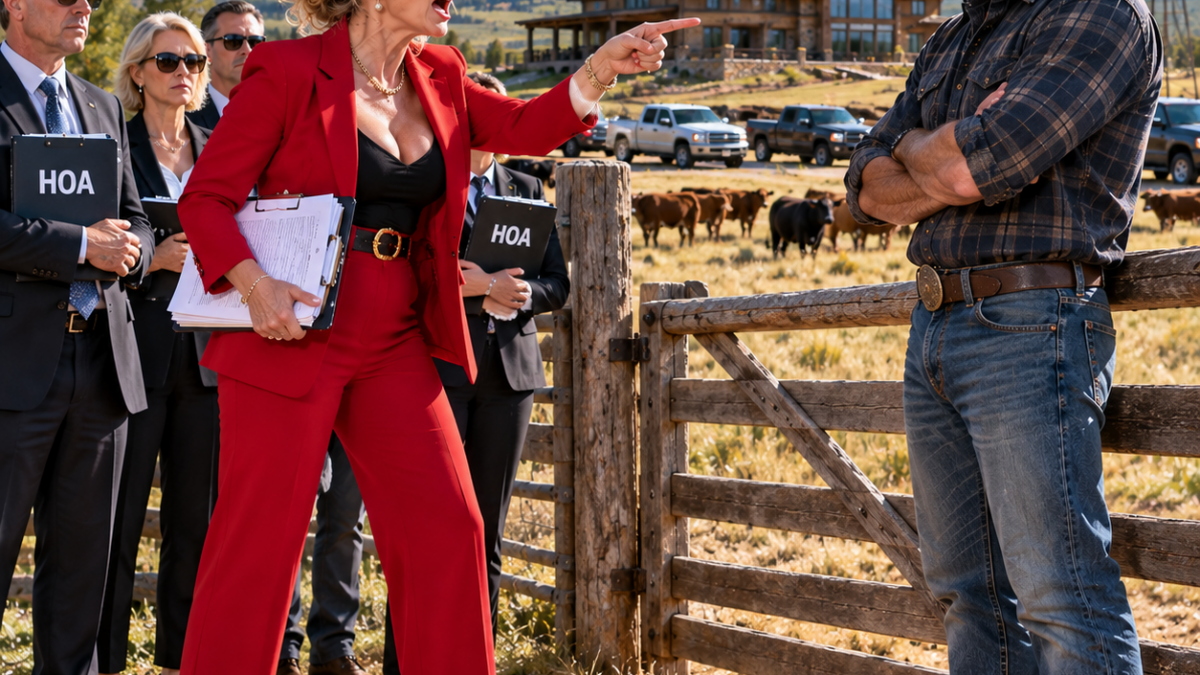
I drove four hours to claim the 180-acre ranch my grandfather had protected since 1952, only to find strangers picnicking beside his pond under a professionally installed sign that called sixty acres of our land “HOA Shared Property.”
The woman running the neighborhood barely glanced at my grandfather’s will before telling me he had voluntarily surrendered part of the ranch years earlier—and then casually suggested his memory had failed near the end of his life.
What she didn’t know was that Walter Callahan had left something behind in an old filing cabinet, and once I found it, the question stopped being whether the HOA had taken our land and became how many other families they had done this to.
My name is Owen Callahan.
I was thirty-six when my grandfather died.
Walter raised me after my parents were killed when I was young, and almost everything I knew about patience, money, land, and people came from him.
He taught me to fish in the pond behind the eastern pasture.
He taught me to ride on an old bay mare named Lucy.
And because he knew I eventually became a financial analyst, he loved reminding me that numbers could lie just as easily as people if you arranged them carefully enough.
Three weeks after he died, I left Denver and drove back to Dry Creek to settle the estate.
Walter had left me everything.
The farmhouse.
The barns.
The equipment.
The pond.
And one hundred eighty acres his family had held for generations.
I hadn’t visited in almost three years.
That fact still bothers me.
Work became deadlines, quarterly reports, travel, and promises that I would come next month.
Walter always said he understood.
Now I know he had simply stopped asking.
The first thing I noticed when I turned onto County Road 12 was the sound of machinery.
A riding mower was cutting through Walter’s eastern pasture.
He never owned one.
Then I saw the sign.
SUNSET VALLEY HOA
COMMUNITY GARDEN & RECREATION AREA
I stopped my truck.
Behind the sign, maybe fifteen people had folding chairs arranged beside Grandpa’s pond.
A woman walked a dog through the field where Walter used to plant winter wheat.
Two children were throwing rocks into the water.
Someone had installed picnic tables near the barn.
For several seconds, I honestly wondered whether I had turned onto the wrong property.
Then I saw Grandpa’s windmill.
His fence.
His house.
My house now.
I got out holding a copy of the will.
A woman started walking toward me almost immediately.
Mid-sixties.
Silver hair pulled tight.
Green polo embroidered with SUNSET VALLEY HOA.
Clipboard under one arm.
“Can I help you?”
“I’m Owen Callahan.”
Her expression changed slightly.
Not surprise.
Recognition.
“I’m Margaret Price, HOA president.”
I held up the will.
“Walter Callahan was my grandfather. This property passed to me.”
She barely looked at it.
“The house did.”
I stared at her.
“The ranch did.”
“Parts of the ranch.”
She opened the clipboard and removed a folded document.
“Approximately sixty acres of the eastern section were designated shared community property twelve years ago.”
“That’s impossible.”
“It’s recorded.”
“Who signed it?”
“Your grandfather.”
She held the page long enough for me to see Walter Callahan written near the bottom.
Then she pulled it away.
“I want a copy.”
“You can request one from the county.”
“What exactly did Grandpa agree to?”
“A permanent community land-use arrangement.”
“He never mentioned one.”
Margaret smiled.
It was the kind of smile people use when they want their insult to sound compassionate.
“Walter was quite cooperative once everything was explained to him.”
She lowered her voice.
“Of course, toward the end, his memory wasn’t what it used to be.”
Something inside me went cold.
Grandpa had written me two weeks before he died.
Three pages.
He discussed property-tax assessments, interest rates, and an article about municipal bonds.
His mind had been fine.
I called the sheriff.
Two deputies came.
They looked at my will.
Then Margaret’s paper.
The senior deputy finally said, “Civil matter. You’ll need a court.”
Margaret straightened as though she had just won.
But behind her, an elderly man standing near the pond looked at me.
Not angry.
Not smug.
Ashamed.
When Margaret turned toward him, he immediately looked away.
That night, alone in Walter’s farmhouse, I opened his old metal filing cabinet.
Third drawer.
Folder marked PROPERTY.
At the bottom was a single sheet of notebook paper.
Grandpa’s handwriting.
Margaret Price asked to buy the east section. I refused.
She claims I already signed an agreement.
I never signed anything.
She says the paperwork is filed anyway.
They have been using my land without permission.
They are trying to steal what is mine.
I read those lines until midnight.
Then I looked out the kitchen window toward the dark eastern pasture.
Walter had not forgotten.
He had been fighting.
Alone.
And now the people who thought his death had ended the problem had just discovered he left the ranch to me.
PART 2
I barely slept that night.
Every time I closed my eyes, I saw Grandpa’s handwriting.
They are trying to steal what is mine.
There are sentences you read and understand immediately, and there are sentences that rearrange everything you thought you knew about the last years of someone’s life.
That one did both.
For three years, Walter had written me letters about weather, cattle prices, broken fence posts, the fox that kept appearing near the creek, and whether I was eating enough.
Never Margaret.
Never Sunset Valley.
Never the community garden.
Never the fact that strangers had apparently been using sixty acres of his ranch as if they owned it.
He had carried the entire fight alone.
And I had been in Denver telling myself quarterly reports were important enough to miss another summer.
At seven the next morning, I showered, made coffee in the same dented metal pot Walter had used my entire childhood, and drove to the county recorder’s office.
It opened at eight.
I was there at 7:45.
The building looked exactly like county buildings everywhere seem to look—single-story brick, narrow windows, faded flag out front, fluorescent light visible through the lobby.
I sat in my truck with Grandpa’s property folder beside me.
By the time the doors opened, I had written twelve questions.
The clerk behind the counter was an older woman named Susan Greer.
I gave her the parcel number.
“I need every recorded land-use agreement, easement, covenant, or transfer affecting this property.”
She typed.
“How far back?”
“1952.”
That earned a glance.
“Everything?”
“Everything.”
She disappeared for almost twenty minutes.
When she returned, she carried one manila folder.
Inside was exactly one document that mattered.
COMMUNITY LAND USE AGREEMENT.
SUNSET VALLEY HOMEOWNERS ASSOCIATION.
Twelve years old.
The language was broad.
Walter Callahan allegedly granted approximately sixty acres of the eastern ranch “for perpetual shared recreational, agricultural, and community purposes.”
No sale price.
No consideration that I could identify.
No clear explanation of what Walter received.
At the bottom:
Walter Callahan.
Signature.
I stared at it.
Something felt wrong immediately.
I took out my phone and pulled up a photograph of Grandpa’s will.
The will had been signed six months earlier.
Walter had suffered a mild stroke four years before his death.
His mind recovered.
His hand never fully did.
His later signature was careful.
Slightly shaky.
Every letter looked as if he had placed it deliberately.
The community agreement was the opposite.
Smooth.
Long strokes.
Strong pressure.
Confident loops.
A signature from a healthy hand.
The odd part was the date.
The community agreement supposedly predated his stroke.
So the difference alone did not prove forgery.
But Grandpa’s note said he never signed anything.
That changed the meaning.
“Can I get a certified copy?”
Susan nodded.
While she processed it, I asked:
“Who filed this?”
She looked at the record.
“Sunset Valley HOA.”
“Who specifically?”
“Submitted through Margaret Price.”
Of course.
“When?”
“The recorded date is here.”
“Any supporting documents?”
“No.”
“No witness affidavit?”
“No.”
“No attorney acknowledgment?”
“Not in this file.”
I paid the fee.
Then I drove back to the ranch.
A white pickup was blocking the driveway.
A large man leaned against the hood.
Forties.
Contractor’s vest.
SHAW CONSTRUCTION embroidered across the back.
He looked at me as if he had been waiting long enough to become irritated.
“You Owen Callahan?”
“Yes.”
“Derek Shaw.”
I knew the name from the Sunset Valley website.
Vice president.
He did not offer his hand.
“Margaret said you might need some guidance.”
“I went to the recorder’s office, not kindergarten.”
He smiled.
“Funny.”
“What do you want?”
He handed me an envelope.
“Notice of violations.”
I opened it.
Three citations.
Unauthorized parking.
My truck.
On my driveway.
Unapproved visible moving materials.
My boxes.
Inside my property.
Unauthorized occupancy of a structure within the community-use zone.
My grandfather’s house.
My inheritance.
Total fines:
$500.
I looked up.
“Really?”
“You’re inside Sunset Valley enforcement boundaries.”
“No, I’m not.”
“Margaret showed you the agreement.”
“I saw something.”
“That agreement has stood for twelve years.”
“I’m challenging it.”
Derek stepped closer.
He was a big man.
He wanted me to notice.
“Mr. Callahan, people around here are tired of conflict.”
“I’ve been here less than forty-eight hours.”
“Exactly.”
“What does that mean?”
“It means you have a chance to make this easy.”
“How?”
“You could sell.”
There it was.
Not subtle.
Not community standards.
Sell.
“To whom?”
“There are interested buyers.”
“You?”
He smiled again.
“I build things. I don’t collect ranches.”
That statement would become interesting later.
“I’m not selling.”
His smile disappeared.
“You may feel differently once you understand the situation.”
Then he got into the pickup.
The second truck that had been parked fifty yards away on the county road started at the same time.
They drove off together.
I stood beside my mailbox holding a $500 fine for moving into my own inherited home.
Pressure.
Grandpa’s note suddenly made more sense.
They had a process.
Margaret smiled.
Derek intimidated.
Paper arrived.
Costs accumulated.
Then someone offered to make the problem disappear.
At six that evening, I saw the elderly man from the pond walking along the road.
The one who had looked guilty.
I went to the gate.
“Sir?”
He stopped.
Looked toward the subdivision.
Then toward me.
“Owen?”
“Yes.”
“I’m Edgar Quinn.”
The name opened a memory.
Grandpa had mentioned Edgar hundreds of times.
Fishing.
Fence repair.
Cattle.
Poker games.
“You were Walter’s friend.”
“Forty-three years.”
I opened the gate.
“Come in.”
“No.”
He glanced down the road.
“Not inside.”
That told me immediately how frightened he was.
We stood near the fence.
“Grandpa never signed that agreement, did he?”
Edgar’s face changed.
“No.”
“How do you know?”
“He told me.”
“How many times?”
“Enough.”
“What happened?”
Edgar rubbed both hands over his face.
“Margaret showed up one day and told him the land had already been designated community space.”
“He denied it.”
“He was furious.”
“Did he sue?”
“He talked about it.”
“Why didn’t he?”
“Money.”
That answer hurt.
Grandpa wasn’t poor.
But he wasn’t wealthy enough to fund years of litigation casually.
Edgar continued.
“Margaret told him fighting would cost more than the east pasture was worth.”
“What did she do after he refused?”
“Used it anyway.”
“The pond?”
“Yes.”
“Community garden?”
“Yes.”
“Farming?”
Edgar looked at me.
I noticed.
“What?”
“Nothing.”
“No. What?”
He hesitated.
“We’ll get to that.”
“Get to it now.”
“Not yet.”
I wanted to press harder.
Something in his face stopped me.
He had spent years afraid.
If I wanted everything, I needed him talking.
“Who else did they do this to?”
That question opened him.
“The Hendersons.”
“What happened?”
“Forty acres west of the subdivision. Complaints for almost two years. Weed fines. Equipment violations. Access disputes. Finally they sold for half of what the property should’ve brought.”
“To whom?”
“Some company.”
“Which company?”
“Don’t know.”
“Who else?”
“The Morales family.”
Edgar’s jaw tightened.
“They wouldn’t sell. Their equipment got vandalized. Three times. Somebody painted warnings on their barn.”
“Police reports?”
“Yes.”
“Arrests?”
“No.”
“What happened?”
“They moved to New Mexico.”
“And the Dawsons?”
He looked surprised.
“How do you know about them?”
“I don’t. You just told me.”
He nodded slowly.
“Older couple. Margaret’s lawyers buried them in letters. Anonymous calls at night. Every night sometimes.”
“Outcome?”
“They gave up rights to part of their land.”
“How many families?”
“At least three.”
“At least?”
“There’s Helen Cross.”
“Who?”
Edgar looked away.
“Sixty-three acres.”
“What happened?”
“She sold.”
“Why?”
“Same reason.”
Fear.
Money.
Exhaustion.
Edgar finally looked directly at me.
“Walter was the last one who kept saying no.”
That night I returned to the filing cabinet.
This time I emptied the whole property drawer onto the kitchen floor.
Surveys.
Insurance.
Old cattle invoices.
Tax statements.
Maps.
Then, near the bottom, an envelope.
Addressed to a law firm in Austin.
Stamped.
Never mailed.
Date:
Eighteen months earlier.
I opened it carefully.
Grandpa described Margaret.
The forged land-use agreement.
Years of trespass.
Threats.
The possibility that other older owners had experienced similar treatment.
Then near the end:
I don’t know how much fight I have left.
I don’t want Owen dragged into this.
He has built a life away from here.
If I can fix it myself, I will.
I sat on the floor for a long time.
Anger does strange things when mixed with grief.
Part of me wanted to be furious at Walter.
He should have called me.
I would have come.
At least that’s what I told myself.
Then another part asked a harder question.
Would I?
If Grandpa had called during year-end reporting and said some HOA woman was using part of the pasture, would I really have understood?
Or would I have said:
“I’ll come next month.”
That question stayed.
I opened my laptop.
Property attorneys.
Austin.
The first attorney I called never returned my message.
The second wanted a retainer large enough to make me understand exactly why Walter had hesitated.
The third was Miranda Vance.
She answered after six in the evening.
“Vance.”
“My name is Owen Callahan.”
“What’s going on?”
“I inherited a ranch.”
“Congratulations.”
“An HOA says sixty acres are shared property.”
“That’s less congratulatory.”
“The agreement appears forged.”
Silence.
“Go on.”
I told her everything.
When I finished, she asked:
“Any threats?”
“Pressure.”
“Define pressure.”
“Fines. Surveillance. Prior owners pushed out. Grandpa believed the document was forged.”
“Physical intimidation?”
“Not yet.”
“Keep saying ‘not yet’ like that and eventually you’ll summon it.”
I almost laughed.
“When can you come?”
“Three days.”
“Why three?”
“Because if this is what you think it is, I want a full day to clear my schedule.”
The smear campaign started before she arrived.
At the hardware store, the clerk who had been friendly two days earlier stopped talking when I approached.
By evening, I found the neighborhood posts.
DENVER CON ARTIST TRYING TO STEAL COMMUNITY LAND.
GRANDSON MANIPULATED ELDERLY MAN’S WILL.
OUTSIDER THREATENS SUNSET VALLEY RECREATION AREA.
My grandfather’s pond had become “public land” simply because enough people used the phrase.
Then I noticed the gray sedan.
Parked near my driveway.
Driver inside.
Binoculars.
I walked toward it.
The sedan pulled away.
Slowly.
Not trying to hide.
They wanted me to know.
Thursday was the HOA meeting.
I decided to attend.
The community center held sixty people.
Nearly all of them looked at me as if Margaret had already convicted me.
She stood at the podium.
Derek behind her.
“This is a members-only meeting.”
“I understand.”
“Non-members may observe but not speak.”
“My land is on the agenda.”
“That does not confer membership.”
I remained standing.
“My name is Owen Callahan. Your organization claims my grandfather permanently transferred use of sixty acres. I have questions.”
Margaret smiled tightly.
“The agreement has existed for twelve years.”
“Then why won’t you show members the original?”
“It’s recorded publicly.”
“Why does Walter’s signature look different from his authenticated documents?”
I held up two enlarged copies.
“Agreement.”
Then the will.
“Six months before he died.”
People leaned.
A woman in the middle row whispered to her husband.
I continued.
“My grandfather left a written statement saying he never signed the agreement.”
Margaret’s face hardened.
“That is hearsay from a deceased man who had declining health.”
Something inside me snapped.
But I kept my voice level.
“My grandfather’s mind was sound.”
“He was elderly.”
“He understood investment yields better than most people in this room.”
A man in the back stood.
“Why not show us the original, Margaret?”
Another voice:
“Yeah, what does it hurt?”
Doubt moved through the room.
Then Derek stepped down.
He walked straight toward me.
“Time to leave.”
“I’m speaking.”
“No.”
His hand closed around my upper arm.
Hard.
“You’ve said enough.”
“Take your hand off me.”
He tightened it.
People watched.
No one intervened.
He marched me toward the door.
I could feel bruises forming under his fingers.
Before I crossed the threshold, I looked back.
Margaret stood at the podium.
Still smiling.
But the room no longer looked certain.
That mattered.
At eleven that night, a rock shattered my kitchen window.
Glass exploded across Walter’s floor.
A note was rubber-banded around the stone.
LEAVE OR REGRET IT.
Deputy Lawrence Wells arrived twenty minutes later.
He photographed the damage.
Bagged the rock.
Read the note.
Then said quietly:
“I’ll file everything.”
“But?”
He looked toward the broken window.
“Mrs. Price has friends.”
“In the sheriff’s department?”
“I didn’t say that.”
“You almost did.”
He sighed.
“County budgets. Elections. Contracts. People talk.”
“Are you telling me to leave?”
“I’m telling you to understand what you’re standing in front of.”
That was the first honest thing anyone in uniform had said to me.
Two days later, I drove into town for plywood and glass.
On the way home, the gray sedan followed me.
It disappeared a mile before my property.
Fifteen minutes later, a white pickup blocked County Road 12 near the creek.
Three men stood beside it.
Bandanas.
Baseball bats.
I stopped twenty feet away.
My hands stayed on the steering wheel.
The leader approached.
Slight limp.
“Denver boy.”
I said nothing.
“This is the last friendly conversation.”
Nothing about three masked men with bats felt friendly.
“Sell.”
I looked at him.
“Leave town.”
I glanced at the truck.
Partial plate.
I memorized it.
Second man.
Silver watch.
Black face.
“Next time,” the leader said, tapping his bat against his leg, “we won’t just talk.”
I nodded.
“I hear you.”
That answer seemed to disappoint him.
They wanted fear.
Or confrontation.
I gave them neither.
They drove away.
Only after they disappeared did I realize my hands were shaking.
Deputy Wells took the report the next morning.
“No witnesses?”
“No.”
“Faces?”
“Covered.”
“Plate?”
“Partial.”
He wrote slowly.
Then he looked at me.
“Mr. Callahan.”
“Yes?”
“You seem like a decent man.”
“I appreciate that.”
“Some fights aren’t worth dying over.”
I drove home thinking about that sentence.
He wasn’t wrong.
That was the problem.
I could sell.
Return to Denver.
Let Margaret keep the pond.
Let strangers mow Grandpa’s pasture.
Tell myself land wasn’t worth dying over.
Then I walked into the kitchen.
The broken window was boarded.
Walter’s filing cabinet sat across the room.
The letter he never mailed was beside my laptop.
He had fought until he was too tired to send one final envelope.
I picked up my phone.
Called Miranda.
“I think we’re past civil disagreement.”
“What happened?”
I told her.
She arrived three days later.
Black SUV.
Sharp eyes.
No wasted movements.
She spent an hour reading Walter’s documents without speaking.
Then she placed the forged agreement beside his later authenticated handwriting.
“This needs an expert.”
“I know.”
She opened his unsent letter.
Read it.
Then Edgar’s notes.
Then my reports.
When she looked up, she was angry.
Not emotional.
Controlled.
The type of anger lawyers get when facts begin organizing themselves into causes of action.
“This isn’t just a boundary dispute.”
“What is it?”
“Potential fraud.”
She tapped the signature.
“Forgery.”
Another document.
“Possible elder exploitation.”
Then the harassment reports.
“And if the intimidation connects back to them, potentially much worse.”
“What do we do?”
“We stop improvising.”
I liked her immediately.
We drove to the recorder’s office.
Miranda found records I had missed.
Four old properties.
Four similar agreements.
Elderly owners.
Adjacent to Sunset Valley.
Henderson.
Morales.
Dawson.
Cross.
The pattern was ugly.
Different dates.
Same structure.
Same wording.
Same Sunset Valley letterhead.
Same outcome.
Land shifted away from the original owners.
That evening, I did what I knew best.
Financial analysis.
For fourteen years, I had followed money through corporate structures for clients who thought complexity could hide bad decisions.
This was simpler.
Property sales.
Tax records.
LLCs.
Construction permits.
Mortgage releases.
I built a spreadsheet.
Three properties had sold within two years of their “community” disputes.
Discounts between forty and sixty percent below comparable market value.
Two buyers were companies connected to Derek Shaw.
The third buyer later hired Shaw Construction for more than two million dollars in work.
Margaret created pressure.
Derek found profit.
The ranch was not their first project.
It was the largest prize they hadn’t captured.
Miranda found Helen Cross.
Sixty-eight.
Living in a San Marcos apartment.
I drove there.
Helen opened the door with the chain still attached.
“I don’t talk about Dry Creek.”
“My name is Owen Callahan.”
Nothing.
“Walter Callahan was my grandfather.”
Her eyes changed.
“I’m sorry.”
“Sunset Valley says he gave them land.”
She looked away.
“I told you. I don’t talk about it.”
“They did it to you too.”
Silence.
“Please.”
She studied me.
“And when you lose?”
“I’m not planning to.”
She laughed.
Not kindly.
“That’s what people say before lawyers bill them into surrender.”
“I have a lawyer.”
“So did I.”
“What happened?”
“I ran out of money first.”
I told her about Walter’s note.
The forged signature.
The other families.
Miranda.
The financial trail.
Finally Helen unhooked the chain.
“Come in.”
Her apartment was small.
Boxes along one wall.
No ranch photographs visible.
“They started with notices,” she said.
“Weeds.”
“Fence.”
“Equipment storage.”
“Then?”
“Threats.”
“Legal?”
“At first.”
“And later?”
“Someone cut my irrigation lines.”
I wrote nothing.
I just listened.
“Then I got calls.”
“What kind?”
“Silence.”
“How often?”
“Every night for weeks.”
“What finally happened?”
“A lawyer sent me a demand.”
“Sell?”
“Two hundred thousand.”
“What was it worth?”
“Four.”
“Buyer?”
“Company.”
“Connected to Shaw?”
“I learned that later.”
“Would you testify?”
Helen looked at me.
Fear arrived immediately.
“They’ll come back.”
“They won’t face you alone.”
“You can’t promise that.”
“No.”
Her expression softened slightly.
“I can promise Miranda will prepare you.”
“That’s not the same thing.”
“No.”
“What can you promise?”
“That if you say yes, I don’t disappear when it gets expensive.”
Long silence.
Then:
“Eight years.”
“What?”
“I’ve waited eight years for someone to ask.”
She nodded.
“I’ll testify.”
Miranda assembled the case.
Handwriting expert.
George Lawson.
Former FBI document examiner.
Certified comparisons.
Helen affidavit.
Edgar affidavit.
My grandfather’s notes.
Recorded documents.
Corporate records.
Transfer histories.
My harassment reports.
The handwriting report arrived ten days later.
Seven major inconsistencies.
Stroke angle.
Pressure.
Spacing.
Letter formation.
Pen lifts.
Proportions.
Baseline behavior.
Conclusion:
The Walter Callahan signature on the community land-use agreement was not consistent with authentic known samples and showed indicators of simulation.
Miranda read the report twice.
Then called me.
“Ready?”
“For what?”
“To stop asking politely.”
The lawsuit was filed that afternoon.
Defendants:
Margaret Price.
Derek Shaw.
Sunset Valley HOA.
Three related companies.
Claims:
Fraud.
Forgery-related civil claims.
Conspiracy.
Unjust enrichment.
Property interference.
Financial exploitation.
The county knew by morning.
Small towns don’t need newsrooms.
They have cash registers.
Gas pumps.
Church parking lots.
The first physical response came two days later.
A dead coyote on my porch.
Throat cut.
Note pinned to the fur.
LAST CHANCE.
I stood there staring at it.
Grandpa had loved coyotes.
Said they were survivors.
Too stubborn to die just because ranchers hated them.
Seeing one used like a threat made my stomach turn.
I photographed everything.
Called Wells.
Called Miranda.
“They’re scared,” she said.
“Doesn’t feel like fear.”
“People with control don’t threaten like this until control starts slipping.”
Two weeks later, Judge Patricia Coleman issued a temporary restraining order.
No Sunset Valley activity on Callahan property.
No garden.
No recreation.
No maintenance.
No access.
Nothing without my written permission.
A process server posted the order on the eastern fence.
An hour later, Margaret arrived.
I watched from the farmhouse.
She stopped her car.
Walked to the fence.
Read the order.
Tore it down.
Crumpled it.
Threw it into the dirt.
Then drove away.
I called Miranda.
“She tore the court notice down.”
There was a pause.
Then laughter.
Not joy.
Disbelief.
“On camera?”
“Yes.”
“Owen.”
“What?”
“You need to stop receiving gifts from these people.”
“What happens?”
“I file contempt.”
“Tomorrow?”
“Immediately.”
Margaret responded with a special HOA meeting.
Not about court orders.
Not forgery.
Not money.
About me.
LEGAL ATTACK ON OUR COMMUNITY.
Neighbors were told a wealthy Denver outsider was attempting to steal recreational land.
Derek helped organize a legal defense fund.
They raised twelve thousand dollars that night.
I did not attend.
Miranda advised against it.
“Let her speak.”
“Why?”
“Because every sentence she says now creates a record.”
So I stayed home.
The surveillance worsened.
Community patrol vehicles drove past my windows nightly.
Slow.
Headlights sweeping across the house.
Rumors multiplied.
I was supposedly building luxury condos.
I had hired private investigators to spy on elderly residents.
I was planning mass evictions.
The irony would have been funny if it had not worked.
Some people believed everything.
Miranda sent cease-and-desist letters.
Margaret ignored them.
Derek ignored them.
Good.
Paper trail.
Then the partial plate I memorized during the roadside threat came back.
White pickup.
Shaw Construction.
Reported stolen two days before the confrontation.
Recovered abandoned three days afterward.
Convenient.
The silver watch offered another connection.
Edgar recognized the description.
Derek’s nephew wore one constantly.
Shaw Construction employee.
Prior minor criminal record.
Still circumstantial.
But the circle tightened.
Then Edgar visited one Sunday carrying a six-pack and guilt.
He sat on the porch.
Watched sunset.
Didn’t speak for five minutes.
Finally:
“There’s something else.”
I waited.
“Walter showed me a check stub.”
“What check?”
“Farm rental.”
“What farm rental?”
Edgar looked sick.
“Margaret leased part of the east field.”
“To whom?”
“Company out of Austin.”
“My grandfather authorized it?”
“No.”
“How long?”
“Maybe ten years.”
“How much?”
“Fifteen thousand a year.”
I went completely still.
“Who got the money?”
“HOA account.”
“Walter?”
“Nothing.”
“You’re telling me Sunset Valley rented my grandfather’s land to a commercial farming operation for a decade.”
“Yes.”
“And kept the rent.”
Edgar nodded.
“Why didn’t you tell me?”
“Because I was ashamed.”
“Of what?”
“Knowing.”
I stood.
Walked to the railing.
One hundred fifty thousand dollars.
Not theoretical use.
Not picnics.
Not a misunderstanding.
Income.
Generated from land Walter said they didn’t own.
While Walter paid taxes.
Maintained fences.
Fought alone.
Miranda amended the complaint.
The farming company cooperated almost immediately.
They thought the HOA legitimately controlled the property.
They produced ten years of records.
Lease agreements signed by Margaret.
Checks.
Bank transfers.
Total paid:
$147,000.
Where had the money gone?
Miranda requested an audit.
Sunset Valley objected.
Judge Coleman ordered it.
Margaret’s contempt issue remained pending.
Public filings changed the town.
Slowly.
At first, nobody apologized.
They just stopped staring.
Then somebody leaked the amended complaint to a local news site.
SUNSET VALLEY PRESIDENT ACCUSED OF PROFITING FROM DISPUTED RANCH LAND.
That title did what months of my explanations hadn’t.
Now people asked questions.
At the grocery store, a woman nodded at me.
At the gas station, a man asked:
“Is the money really missing?”
“I don’t know yet.”
“Margaret says it went to community maintenance.”
“The audit will tell us.”
That answer seemed to bother him.
He wanted me to attack her.
I wanted documents.
Attendance at HOA meetings fell.
Residents stopped donating.
Derek and Margaret started arguing publicly.
The alliance was cracking.
At night, doubt still visited me.
I would sit in Walter’s kitchen.
Boarded window.
Stacks of records.
Millions of dollars of property at stake.
And wonder whether I had confused being right with being destined to win.
Courts make mistakes.
Evidence gets excluded.
Witnesses recant.
Money wins time.
Time exhausts people.
Margaret had survived twelve years.
Maybe she could survive me too.
Then I would see Grandpa’s filing cabinet.
And his unsent letter.
I don’t know how much fight I have left.
That line always stopped me.
Walter had carried this alone until he had nothing left.
I didn’t need certainty.
I needed enough courage for the next filing.
The town hall came two months into the case.
Margaret called it herself.
Transparency.
Open dialogue.
Community unity.
Miranda read the notice and smiled.
“She’s losing control.”
“Why would she put herself in front of a crowd?”
“Because control has always worked for her in that room.”
“So we attend.”
“Yes.”
The community center overflowed.
More than one hundred people.
Helen Cross sat two rows behind me.
Edgar stood near the wall.
Deputy Wells was near the back.
Margaret took the podium.
Derek sat front row.
She spoke for ten minutes.
Shared values.
Community gardens.
Generosity.
Sacrifice.
Voluntary agreements.
Everything done for residents.
Not one word about the forensic report.
Not one word about the $147,000.
Not one word about the court order she tore from my fence.
Then she said:
“Anyone claiming these agreements were coerced or fraudulent is lying.”
I stood.
“Mrs. Price.”
Her smile tightened.
“This is an HOA meeting.”
Miranda stood.
“Your bylaws adopt Robert’s Rules. Mr. Callahan has a direct material interest in the matter being discussed.”
Margaret looked toward Derek.
He gave a tiny shrug.
“Five minutes.”
I walked forward.
The room felt hotter with every step.
I held up the handwriting report.
“A former FBI forensic document examiner compared the signature on the Callahan land-use agreement with authenticated samples.”
Silence.
“His conclusion is that the signature was simulated.”
Margaret interrupted.
“Contested evidence.”
I laid the report on the table.
“Seven indicators.”
Next document.
“The HOA leased Callahan land to an Austin farming company.”
I held up ten years of payment summaries.
“Total paid: one hundred forty-seven thousand dollars.”
People leaned.
“Not one payment to Walter Callahan.”
Margaret gripped the podium.
“Those funds supported community operations.”
“Then the audit will show that.”
Her face changed.
I continued.
“Four nearby properties received similar agreements.”
Next.
“Three owners sold shortly afterward.”
Next.
“Two properties went to entities connected to Derek Shaw.”
Derek went pale.
Margaret said:
“This is a coordinated attempt to destroy people who have served this community.”
Then Helen stood.
Slow.
Hands trembling.
“I’m Helen Cross.”
The room went silent.
Margaret recognized her.
I saw it.
Helen continued.
“I owned sixty-three acres.”
Her voice nearly failed.
She forced it back.
“I signed nothing.”
Margaret said:
“Helen, this is not—”
“They told me the paperwork was already filed.”
No one looked away.
“They fined me.”
“They called.”
“They threatened litigation.”
“I sold for half value because I was alone.”
Her eyes fixed on Margaret.
“I have waited eight years to say this to you where people could hear me.”
Another woman stood.
“My mother said the same thing.”
Then a man.
“I want the financial statements.”
Another.
“Where is the rent money?”
Questions multiplied.
Margaret tried to speak over them.
Nobody listened.
For fourteen years, she had controlled that room because only one frightened person challenged her at a time.
Now there were dozens.
Derek stood.
Moved toward the side aisle.
Margaret suddenly shouted:
“You have no idea what I sacrificed building this community!”
The room stopped.
She was breathing hard.
“You people enjoy the pond.”
“The garden.”
“The roads.”
“The events.”
“You complain now, but none of it existed before me.”
Someone shouted:
“Did Walter sign?”
Margaret’s grip tightened around the podium.
“If some signatures were not perfect—”
Derek froze.
So did Miranda.
Margaret kept going.
“If some procedures weren’t followed exactly, it was because things had to get done.”
Silence.
Absolute silence.
She seemed not to hear herself yet.
“That land serves everyone now.”
She pointed toward me.
“It does not matter who signed what.”
I felt Miranda lean toward me.
“Don’t say anything.”
I didn’t.
Margaret had just done something no cross-examination could guarantee.
She had spoken from arrogance instead of preparation.
Deputy Wells had his notebook out.
Several residents had phones recording.
Derek stared at her.
Then stepped away.
Margaret’s face changed.
She finally understood.
“That’s not what I meant.”
Nobody answered.
“I’m calling the meeting adjourned.”
People stayed seated.
Then began talking.
Not whispering.
Talking.
Demanding.
Edgar moved near the side exit.
Derek and Margaret approached.
He did not threaten them.
He just said:
“Running won’t help.”
Three days later, the district attorney opened a formal investigation.
The HOA accounts were frozen.
Independent audit ordered.
Margaret hired criminal counsel.
Derek hired separate counsel.
They stopped appearing together.
That told me almost as much as the filings.
The audit took three weeks.
Forty-seven pages.
I read every one.
Over twelve years:
Approximately $280,000 transferred from HOA-related accounts into personal or affiliated accounts connected to Margaret and Derek.
Sources included disputed land rental income.
Fines.
Defense-fund donations.
Maintenance charges.
Contractor payments.
Not every dollar could be characterized the same way.
But the pattern was devastating.
The public narrative collapsed overnight.
The newspaper headline:
SUNSET VALLEY AUDIT REVEALS HUNDREDS OF THOUSANDS IN UNDISCLOSED TRANSFERS.
The HOA board held an emergency meeting.
Margaret was removed unanimously.
Derek resigned before the vote.
Edgar Quinn became interim president.
His first action was a written apology to the Callahan family.
His second was opening HOA financial records to members.
The arrests came Tuesday morning.
Margaret at six.
Derek an hour later.
Charges involved document fraud, financial misconduct, elder exploitation, and conspiracy connected to the property scheme.
Then the roadside case came back.
Shaw Construction truck.
Phone records.
Derek’s nephew.
Eventually he admitted involvement.
Derek had directed the intimidation.
Additional charges followed.
Threatening.
Witness intimidation.
Conspiracy.
The same man who had handed me a $500 “parking violation” during my first week now faced the consequences of an intimidation campaign he believed nobody would connect to him.
Community apologies arrived slowly.
A woman came to my porch crying.
“I called you a con artist online.”
“I know.”
“Margaret told us you planned to take the pond away from our children.”
“The pond was never hers to give them.”
“I know that now.”
She wiped her eyes.
“I’m sorry.”
“Thank you.”
“That’s all?”
“What else should I say?”
She looked confused.
“I thought you’d be angry.”
“I am.”
That honesty surprised her.
“Accepting an apology doesn’t mean I’m not angry.”
She nodded.
Then left.
The hardware-store owner appeared with bourbon.
His apology took three tries.
Others sent notes.
Some never came.
I understood.
People prefer discovering they were ignorant to admitting they were complicit.
Miranda called about civil strategy.
“We can go broad.”
“How broad?”
“HOA liability. Individuals who participated. Additional damages.”
“How many?”
“Potentially many.”
I looked across the pasture.
“What does that get me?”
“Money.”
“What does it cost?”
“Years.”
“Neighbors?”
“Yes.”
“Community?”
“Yes.”
I thought about Grandpa.
About the rock.
The threats.
Derek’s hand on my arm.
The men with bats.
Part of me wanted everyone to pay.
Then the analyst in me did what he always did.
Ran the numbers.
Years of legal fees.
Years of discovery.
Years of anger.
Judgments against people who didn’t have much.
A town permanently divided around my victory.
It didn’t make sense financially.
It didn’t make sense morally.
“Margaret and Derek.”
“Only?”
“Full damages.”
“And the HOA?”
“Restoration and reform.”
Miranda was quiet.
“You’re sure?”
“Yes.”
“You could extract more.”
“I didn’t come here to extract.”
That sentence sounded like Walter.
Edgar came three days later.
Bourbon.
Two glasses.
We sat on the porch.
“I heard.”
“What?”
“You’re not suing everyone.”
“No.”
“Why?”
“I want my land.”
“You have it.”
“I want what they stole repaid.”
“That’s happening.”
“I want the system fixed.”
Edgar nodded.
“And then?”
“I want to live here.”
He looked at me.
“You staying?”
That question stopped me.
I had not decided.
I had assumed I would eventually return to Denver.
But the ranch no longer felt like an estate problem.
It felt like unfinished belonging.
“I think so.”
Edgar raised his glass.
“To Walter.”
“To Walter.”
Six months after I first drove into Dry Creek, Margaret and Derek were sentenced.
The courthouse was limestone.
Old.
Crowded.
Helen sat beside me.
Families from the Henderson and Dawson properties attended.
Margaret entered in jail clothing.
No silver-haired authority.
No clipboard.
No podium.
Just a defendant.
Judge Coleman spoke calmly.
Four years in state prison.
Six years supervised probation.
Fines.
Restitution.
Permanent prohibition from HOA board service.
Helen squeezed my hand.
Margaret did not look toward us.
Derek followed.
Three years.
Probation.
Fines.
Restitution.
Contractor-license consequences.
His intimidation conduct weighed heavily.
As bailiffs led him away, he looked back.
Not at me.
At the residents.
People who had hired him.
Trusted him.
Applauded him.
Whatever he saw in their faces made him turn quickly.
Some judgments come from courts.
Others come from discovering that nobody believes you anymore.
Two weeks later, the civil case resolved.
The Callahan community land-use agreement was declared void.
The sixty acres returned—legally, formally, unmistakably—to the estate and then to me.
Helen received compensation.
The Hendersons recovered damages.
The Dawsons’ children received relief for claims their parents had never lived to see resolved.
It wasn’t perfect.
Some land could not be returned.
Some years could not be restored.
Some people had died believing they had failed.
But the paper changed.
And paper matters.
Sunset Valley adopted new bylaws.
Independent legal review for land agreements.
Quarterly financial disclosures.
Term limits.
Conflict rules.
No single officer controlling accounts.
No property acquisition without member review.
Edgar stayed president eight months.
Then stepped down.
He said he wanted the organization to learn not to depend on one person.
That may have been the smartest decision anyone made.
Summer came.
For the first time, nobody mowed my east pasture except the man I hired.
The community sign disappeared.
The picnic tables were removed.
The garden plots were dismantled where they crossed my boundary.
I kept one bench beside the pond.
Not because the HOA had a right to it.
Because Walter would have liked the bench.
The hardware-store owner arrived one morning with lumber.
Two sons.
Tools.
“What’s this?”
“Barn roof.”
“I didn’t ask.”
“No.”
“You expect money?”
“No.”
“Then why?”
He looked uncomfortable.
“We should’ve done it for Walter.”
That shut me up.
They worked three days.
At sunset on the third, he shook my hand.
“I’m sorry.”
“I know.”
“We should’ve helped him.”
“Yes.”
“I don’t know how to fix that.”
“Do it differently next time.”
He nodded.
“That’s all?”
“That’s everything.”
August brought probate paperwork.
My estate attorney called.
“Owen, you still have attic inventory outstanding.”
“I know.”
“Deadline end of month.”
“I know.”
“You’ve said that three times.”
“I’m hoping repetition counts as progress.”
“It doesn’t.”
So on a Thursday afternoon, I climbed into Walter’s attic.
Dust.
Heat.
Boxes.
Old photographs.
Tax returns.
Christmas decorations.
Receipts older than I was.
I found an envelope under a stack of pictures.
My name.
Walter’s handwriting.
Stamped.
Never mailed.
Dated three months before he died.
My hands started shaking before I opened it.
Owen,
I know you’ll come back here someday, probably after I’m gone.
I’m sorry you’ll find a mess.
I tried to fix it.
I ran out of time.
He wrote about the ranch.
Weather.
A fox.
How proud he was of me.
How he missed me.
Then near the end:
If you’re reading this, you probably decided to fight.
I knew you would.
You’re stubborn like me.
I laughed through tears.
Then the next lines broke me.
Winning isn’t the only thing that matters.
How you win matters too.
Don’t let them turn you into something you’re not.
Keep the land.
Keep your integrity.
And when it’s over, try to forgive the people who didn’t know any better.
That part is harder than winning.
But it matters more.
I sat on the attic floor crying in a way I had not cried at his funeral.
Because at the funeral, grief had been simple.
Walter was gone.
Now grief carried guilt.
Three years without visiting.
Calls cut short.
Promises to come next month.
A fight he hid because he didn’t want to burden me.
And still, in his final letter, he wasn’t angry.
He was worried about who I might become after he was gone.
That was Walter.
I folded the letter.
Put it in my wallet.
Then I walked outside.
Across the ranch.
Toward the eastern pasture.
The HOA sign was gone.
Grass had grown over the holes where the posts had stood.
The pond reflected the late-summer sky.
A hawk circled.
I stopped near the place where I first saw families picnicking.
Six months earlier, I had stood there furious that strangers thought my inheritance belonged to them.
Now the field was quiet.
Mine.
But Walter’s letter had made ownership feel different.
I had spent months saying:
My ranch.
My pond.
My land.
Walter had spent seventy-eight years understanding something I was only starting to learn.
Land outlives the pronouns.
The question isn’t only who owns it.
The question is what they become while protecting it.
Margaret thought ownership was something you could manufacture through signatures, pressure, and repeated use.
Derek thought value meant opportunity.
The residents thought permission repeated long enough became entitlement.
Walter thought differently.
He never said the ranch made us powerful.
He said it made us responsible.
That autumn, I made my first decision as the unquestioned owner of all one hundred eighty acres.
I reopened the pond.
Not to Sunset Valley.
Not as “shared property.”
Not automatically.
I created a simple written permission policy.
Edgar could fish whenever he wanted.
The Henderson grandchildren could visit by arrangement.
Local veterans’ groups could request weekend access twice each summer.
A school outdoor club could use a marked section once a year if teachers supervised.
Why?
Because Walter had never been against neighbors.
He had been against theft.
That distinction mattered.
The first time children returned to the pond, I watched from the porch.
For a moment, I remembered the day I arrived.
The green HOA sign.
Strangers walking through winter wheat.
Margaret telling me Grandpa’s memory had failed.
I expected anger.
Instead I felt relief.
Permission changes everything.
The same activity that once felt like invasion now felt like generosity because the choice belonged where it should have belonged all along.
With the owner.
Helen Cross visited the ranch the following spring.
It was the first time she had returned to Dry Creek in eight years.
She stood beside my truck looking at the landscape.
“I thought I would hate seeing it.”
“Do you?”
“I don’t know yet.”
We drove past the parcel she once owned.
A newer home stood on part of it.
Her hands tightened in her lap.
“That oak tree used to be ours.”
I slowed.
“You want to stop?”
“No.”
Then:
“Yes.”
We pulled over.
Helen got out.
Walked to the fence.
She did not cross.
She just looked.
“My husband planted that.”
“How long ago?”
“Thirty-one years.”
She smiled faintly.
“He planted it too close to the driveway.”
“Sounds like something husbands do.”
“He insisted it would be fine.”
“Was it?”
“No.”
We both laughed.
Then she cried.
I stood beside her.
Eventually she said:
“Money didn’t give me this back.”
“No.”
“Court didn’t either.”
“No.”
“What was the point then?”
I thought carefully.
“So they couldn’t do it again.”
Helen looked at me.
Then toward Sunset Valley.
“That’s enough?”
“It has to be.”
She nodded.
“Maybe.”
Healing is full of maybes.
The HOA’s new president was a woman named Carol Bennett.
She requested a meeting with me.
We sat at Grandpa’s kitchen table.
No lawyers.
No board entourage.
She brought a folder.
“I want you to see everything.”
Inside were new policies.
Budgets.
Controls.
Audit schedule.
Conflict statements.
“You don’t need my approval.”
“I know.”
“Then why bring it?”
“Because your family deserved transparency twelve years ago.”
I read the first pages.
“You’re overcorrecting.”
She smiled.
“Probably.”
“Three signatures for purchases under a thousand dollars?”
“We’re traumatized.”
“Fair.”
Then she asked:
“What do you want from Sunset Valley?”
The question surprised me.
“Nothing.”
“There must be something.”
“I want you to stay inside your boundaries.”
She winced.
“Deserved.”
“And stop treating questions as disloyalty.”
She wrote that down.
“You’re writing that?”
“Yes.”
“Why?”
“Because that is better advice than half the governance consultants we hired.”
I laughed.
Before leaving, Carol looked toward the filing cabinet.
“That where Walter kept everything?”
“Yes.”
“I wish someone had listened to him.”
“So do I.”
“Do you blame us?”
I remembered Walter’s letter.
Try to forgive the people who didn’t know any better.
“I blame people for choices they understood.”
Carol waited.
“And the others?”
“I’m working on it.”
That answer was honest.
Forgiveness did not arrive dramatically.
It happened in pieces.
The hardware-store owner.
A neighbor fixing fence.
A woman deleting an old defamatory post and sending me a handwritten apology.
A family returning a picnic table because they realized it had been purchased with questionable funds.
Margaret had weaponized community.
Rebuilding meant learning community could also repair.
One evening, Edgar and I sat beside the pond.
He was almost eighty.
He moved slower.
Still complained about everyone.
“What are you doing with the ranch long-term?” he asked.
“I haven’t decided.”
“You moving back to Denver?”
“No.”
“Good.”
“Why?”
“You look less stupid here.”
“Thank you.”
“City made you soft.”
“You were scared of Margaret for ten years.”
Edgar stared at me.
Then laughed.
“Fair.”
He cast his line.
Nothing bit.
After a while he said:
“Walter worried about you.”
“Work?”
“Everything.”
“He never told me.”
“He was a man.”
“That isn’t an explanation.”
“It is for his generation.”
He reeled in.
Cast again.
“He thought if he told you about Margaret, you’d quit your job and come running.”
“I would have.”
“No.”
I looked at him.
He shrugged.
“You think that now.”
The truth hurt.
“You really think I wouldn’t have come?”
“I think you would’ve tried to solve it by phone first.”
I looked across the pond.
“Probably.”
“And Walter knew it wasn’t a phone problem.”
That stayed with me.
Sometimes love protects.
Sometimes protection becomes silence.
Sometimes silence helps the wrong people.
Walter had meant well.
So had Edgar.
Fear and love had both kept them quiet.
Margaret had benefited from both.
That was another lesson.
Predatory systems do not rely only on bad people.
They rely on good people hesitating.
The following year, Miranda invited me to speak at a property-rights seminar.
I said no.
She asked again.
No.
Third time:
“Walter’s case is being taught informally anyway.”
“Then teach it without me.”
“Why?”
“I’m a financial analyst, not an activist.”
“You uncovered shell structures.”
“That was my job.”
“You followed money.”
“My job.”
“You helped expose elder exploitation.”
“Accidental extracurricular.”
She laughed.
Finally she convinced me to attend one panel.
I spoke for twenty minutes.
Not about Margaret.
Not about prison.
About patterns.
Look for asymmetry.
Who pays?
Who benefits?
Who controls information?
Who controls deadlines?
Who appears repeatedly on both sides of a transaction?
People think fraud looks complicated.
Often it looks boring.
An old owner.
A new document.
A deadline.
A shell company.
A neighbor too tired to fight.
Margaret’s greatest weapon was never a forged signature.
It was making each victim believe they were alone.
Afterward, a woman approached.
Her father owned thirty acres in another county.
A development association had recently begun claiming access rights.
She had documents.
I gave her Miranda’s card.
Six months later, Miranda called.
“You’ll hate this.”
“What?”
“Her agreement was legitimate.”
“Good.”
“Good?”
“Yes.”
“Why?”
“Because the point isn’t proving every HOA is crooked.”
Miranda laughed.
“You’re learning.”
“No. I’m becoming annoying.”
“Same thing in law.”
Years passed.
The ranch improved.
Barn roof.
Fences.
Creek crossing.
Grandpa’s tractor finally died permanently.
I refused to repair it a ninth time.
Edgar called me a traitor.
I bought a used replacement.
I kept Walter’s tractor behind the barn anyway.
Some things stop working before you stop needing to see them.
The pond bench weathered.
I replaced the boards.
The community garden never returned to my east field.
But Carol and the new HOA board built one on land Sunset Valley actually owned.
I helped them review the budget.
Free.
When Carol asked why, I said:
“Because your spreadsheet was terrible.”
She threw a pencil at me.
The garden succeeded.
Residents used it.
No stolen land required.
That amused me more than it should have.
Sunset Valley became boring.
Meetings about drainage.
Mailbox colors.
Road reserves.
Snow removal.
Exactly what an HOA should be arguing about.
Edgar once complained:
“The meetings are unbearable now.”
“Good.”
“How is that good?”
“Nobody’s going to prison over culvert maintenance.”
“Give it time.”
I laughed.
Margaret was released eventually.
Years later.
I knew the date because Miranda mentioned it.
I did not ask where she went.
I didn’t care.
Derek served his sentence too.
Lost much of the company.
His contractor’s license never recovered.
Again, I did not follow his life.
People expected revenge to require watching their downfall.
It didn’t.
The most satisfying day came long before either release.
It was a quiet Tuesday morning.
I walked outside.
No surveillance car.
No threatening letter.
No community patrol.
No strangers.
Just dew on the eastern grass.
I realized I had gone an entire week without thinking about Margaret Price.
That was freedom.
Not prison sentences.
Not restitution.
Not headlines.
Indifference.
The ranch had finally become a ranch again instead of a crime scene.
On what would have been Walter’s eighty-third birthday, I took his final letter to the pond.
The paper was protected in plastic now.
I read it again.
Keep the land.
Keep your integrity.
Try to forgive.
I had kept the first.
I hoped I had kept the second.
The third remained work.
I thought about residents who cheered Margaret.
People who called me a con artist.
The man at the store.
Deputy Wells warning me to quit.
Edgar staying silent too long.
Then I thought about what happened later.
The same store owner rebuilding my barn.
Wells recording Margaret’s admission.
Residents demanding financial records.
Carol rebuilding governance.
Maybe forgiveness did not mean declaring everyone innocent.
Maybe it meant allowing people to become more than their worst fearful decision.
Walter would have liked that interpretation.
He always hated wasting things.
Even people.
I folded the letter.
The pond was still.
A hawk moved overhead.
The east field stretched toward the subdivision.
Once, Margaret told everyone that land served the community now and therefore it did not matter who signed what.
She had been wrong about ownership.
But there was one piece of that sentence I eventually reclaimed.
Land can serve a community.
When the owner chooses.
When consent is real.
When generosity is not extracted.
That is why local kids still fish twice each summer.
Why Edgar has permanent permission.
Why veterans camp near the creek.
Why Sunset Valley occasionally borrows the field for wildfire evacuation drills—with written permission, insurance, and a clearly defined date.
The first time Carol requested it, she arrived carrying six pages.
“Temporary access request.”
I read the title.
“You people have changed.”
“We’re terrified of you.”
“Good governance model.”
She laughed.
I signed.
Not because Sunset Valley owned anything.
Because they finally understood they didn’t.
That was what made saying yes possible.
One autumn afternoon, a young boy fishing at the pond asked:
“Mr. Callahan, is all this yours?”
I looked over the field.
Barn.
Creek.
Pasture.
House.
Then I heard Walter in my head.
Land doesn’t really care whose name is on the paper.
“Yes,” I said.
“For now.”
The boy frowned.
“What does that mean?”
“It means someday it belongs to someone else.”
“Are you selling?”
“No.”
“Then how?”
I smiled.
“You’ll understand when you’re older.”
He hated that answer.
I had hated it too when Walter used it.
That night I returned to the attic.
The boxes were mostly organized now.
Probate finished years earlier.
But I kept one carton untouched.
Walter’s old photographs.
I found one of us beside the pond.
I was ten.
Walter maybe fifty-two.
He had one arm around my shoulders.
I was holding a fish far too proudly for its size.
On the back he had written:
OWEN’S “GIANT” TROUT. DO NOT TELL HIM THE TRUTH.
I laughed alone in the attic.
Then cried a little.
Grief becomes strange with time.
Less sharp.
More welcome.
At first memories hurt because they prove someone is gone.
Eventually they comfort because they prove someone was here.
I put the photograph inside my wallet behind Walter’s final letter.
For years, I thought my inheritance was one hundred eighty acres.
Then I thought it was the responsibility to expose what happened.
Then I thought it was the duty to protect others.
All of those were partly true.
But Walter’s last letter gave me the real answer.
The inheritance was choice.
Who do you become when you finally have enough power to hurt the people who hurt you?
Margaret had power.
She used it to take.
Derek had money and muscle.
He used them to frighten.
The residents had numbers.
For years they used those numbers to stay safely silent.
Eventually, all of us had to choose differently.
I could have sued everyone.
I didn’t.
Edgar could have stayed afraid.
He testified.
Helen could have buried the past.
She stood up.
Deputy Wells could have kept his notebook closed.
He wrote.
Sunset Valley could have denied everything.
It changed its rules.
That was not perfect redemption.
It was enough progress to keep the future from becoming the past again.
On the tenth anniversary of Walter’s death, Sunset Valley asked permission to place a small memorial bench beside the county road overlooking the east pasture.
Not on my land.
Public right-of-way.
The plaque proposed:
WALTER CALLAHAN
NEIGHBOR, RANCHER, FRIEND
1952–2021
I stared at it.
“He wasn’t born in 1952.”
Carol blinked.
“Oh.”
“That’s when he came to the ranch.”
“We misunderstood.”
“He would find that hilarious.”
“What dates should we use?”
I thought.
Then shook my head.
“No dates.”
“What should it say?”
I wrote:
WALTER CALLAHAN
HE KEPT HIS WORD.
Carol looked at me.
“That’s it?”
“That’s enough.”
The bench went in that spring.
Sometimes I sit there.
Not often.
Usually when the ranch feels too full of memory.
From that spot, you can see the pond.
The farmhouse.
The east field.
The subdivision.
The line between them.
A boundary that once existed only on maps but became the center of twelve years of lies.
Now it is just a fence again.
I like that.
Fences should be boring.
Deeds should be boring.
HOA meetings should be boring.
When those things become dramatic, somebody is usually having a bad year.
The last time Edgar sat with me on that bench, he was eighty-seven.
He leaned heavily on a cane.
Looked toward the field.
“Walter would be proud.”
“You think?”
“No.”
I looked at him.
He grinned.
“He’d say you paid too much for the new tractor.”
“That also sounds right.”
Edgar’s smile faded.
“I’m sorry.”
“For what?”
“You know.”
Silence.
“For leaving him alone.”
I thought about Walter’s letter.
“Then don’t leave me alone.”
Edgar looked at me.
“What?”
“Keep showing up.”
He nodded.
“Can do that.”
That was forgiveness in the form I understood.
Not erasing.
Not pretending.
Continuing.
When Edgar died two years later, his daughter gave me his fishing rod.
I keep it beside Walter’s.
Two old men who were afraid differently.
Two friends.
Two rods.
One pond.
The land stayed.
Everything else moved through it.
Margaret’s sign.
Gone.
Derek’s trucks.
Gone.
The picnic crowd that thought it belonged to them.
Gone.
Walter.
Gone.
Edgar.
Gone.
Someday me.
That fact no longer frightens me.
It clarifies things.
The ranch will outlive the argument.
What matters is what record I leave behind.
So I updated the estate documents.
Clear title.
No ambiguity.
No unrecorded promises.
No vague “community use.”
Any future public access must be voluntary, written, time-limited, and revocable.
Miranda reviewed it.
“You learned something.”
“I learned lawyers charge too much.”
“We do.”
“And paperwork matters.”
“We’ve been saying that for centuries.”
“You should market it better.”
She laughed.
I also created a small legal-defense reserve in the estate plan.
If a future heir ever faces fraudulent encroachment, they will not have to sit in an attic holding an unsent letter because legal help feels unaffordable.
That was one thing I could fix permanently.
Walter fought alone because he thought asking for help would burden me.
My heirs will not have to make that mistake.
The last line of the trust is not legal language.
Miranda hated it.
I insisted.
It reads:
Protect the land without letting the fight destroy the person protecting it.
Walter would understand.
He already wrote the first version.
One evening, late summer, I stood in the eastern pasture where the green Sunset Valley sign had once been.
The grass was high.
The pond caught orange light.
Children from the outdoor club were packing fishing gear in the distance.
A teacher walked toward me.
“Thank you for letting us come.”
“You’re welcome.”
“The kids love it.”
“Walter would’ve liked that.”
She looked across the ranch.
“Hard to imagine an HOA once claimed this was theirs.”
I smiled.
“Most bad ideas sound strange after they fail.”
She left.
I stayed.
I put my hand over the wallet in my pocket.
Walter’s letter was still inside.
So was the photograph of my ridiculous trout.
The first day I came back, I thought I was inheriting land.
Then Margaret Price stood between me and my grandfather’s pond and told me strangers had voted themselves ownership of his work.
That moment began a war I never asked for.
It ended with forged agreements voided.
Money traced.
Families compensated.
Two people convicted.
An HOA rebuilt.
And one hundred eighty acres still carrying the Callahan name.
But that wasn’t the best ending.
The best ending was quieter.
The pasture grew back.
The neighbors stopped being afraid.
Helen stopped believing surrender made her weak.
Edgar stopped hiding.
Sunset Valley learned the difference between shared use and stolen use.
And I finally stopped measuring my relationship with Walter by the years I failed to visit.
I could not change those years.
I could decide what I did with the ones after.
That is what his final letter gave me.
Not permission to be angry.
I already had that.
Permission to finish the fight without becoming consumed by it.
Some inheritances arrive as deeds.
Some as money.
Some as old houses and leaking barns.
Mine arrived as a choice.
Margaret had tried to make the story about who owned the land.
Walter’s last words made it about who I would be once I proved that I did.
I kept the ranch.
I kept my integrity.
And eventually, slowly, imperfectly, I learned to forgive people who should have known better but finally chose to do better.
That was harder than winning.
Walter was right about that too.
[END]








