They Worked Every Day for 21 Years Without Stopping—Then Their 12-Year-Old Son Asked, “Are You Sick?” When His Father Finally Took an Afternoon Off
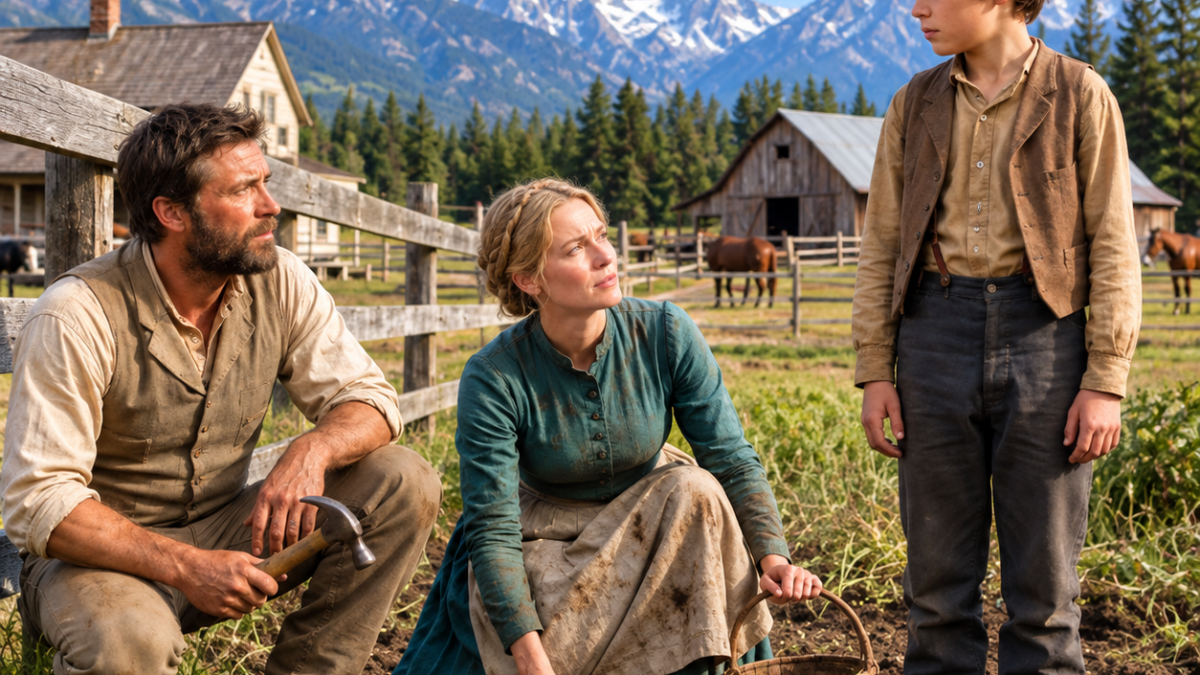
They Worked Every Day for 21 Years Without Stopping—Then Their 12-Year-Old Son Asked, “Are You Sick?” When His Father Finally Took an Afternoon Off.
For twenty-one years, my wife and I worked from before sunrise until after dark to build the Montana ranch we had dreamed about when we were young, and we were proud of nearly every acre we owned.
Then one ordinary Tuesday, I saddled two horses in the middle of the afternoon with no cattle to move, no fence to inspect, and no chore waiting at the end of the ride—and my twelve-year-old son stared at me in genuine concern and asked, “Dad… are you sick?”
That was the moment I realized my children had grown up believing a man only stopped working when something was wrong with him, and I began wondering whether I had spent twenty-one years building a good life without ever teaching my family how to actually live it.
My name is Robert Ashcroft.
In the summer of 1890, I was forty-six years old and could tell you almost everything worth knowing about my ranch.
I knew which section of the north fence sagged every spring after the thaw.
I knew how many days the lower pasture could carry thirty head before the grass began thinning.
I knew which mare threw her left shoe more often than her right.
I knew the creek ran six inches higher after three days of mountain rain and which bend froze first in November.
I knew how much hay we needed before the first hard snow.
How many sacks of flour remained in the pantry.
How much we owed the feed supplier.
How many shingles the barn roof would need replaced before another winter.
What I could not have told you without considerable thought was the last time my wife had laughed so hard she had to wipe tears from her eyes.
That should have frightened me long before it did.
Instead, for years, I called our life successful.
And by almost every reasonable measure, it was.
Alyssa and I had come into that Montana valley in 1869 with two horses, a wagon that had already lost one wheel on the journey west, a handful of tools, and the kind of confidence people possess only before life has demonstrated how much can go wrong.
I was twenty-five.
She was twenty-two.
We had been married seven months.
The land was almost empty then.
Grass.
Creek.
Pine along the northern rise.
Mountains so large they looked close enough to touch until you rode toward them for half a day and realized they had not moved at all.
Our first home was canvas.
Not metaphorically.
A tent.
We slept beneath it while I raised the first room of the house board by board.
Alyssa helped more than I did in some ways, though I would not have admitted that at twenty-five.
I swung the hammer.
She kept us fed.
Held boards straight.
Sorted nails.
Mixed mud.
Carried water.
Once caught me measuring a wall incorrectly and prevented us from building a house whose back corner would have wandered three inches into the future.
I told her nobody would notice.
She said:
“I’ll notice every morning until one of us dies.”
I corrected the wall.
That was marriage in our first year.
Work.
Argument.
Laughter.
More work.
The first night we slept inside that unfinished room, there were still gaps between boards large enough for wind to pass through.
We had one bed.
One chair.
A crate for a table.
PART2:
The roof leaked in one corner.
I thought it was the finest house in Montana.
Alyssa sat beside me on the threshold.
Sun dropping behind the mountains.
Gold across the grass.
She rested her head against my shoulder.
“Promise me something.”
“What?”
“Someday, when we have more than one chair, build a porch.”
“How large?”
“Wide enough for two.”
I laughed.
“Two whole chairs?”
“Two.”
“Luxury.”
“And facing west.”
“Why west?”
She pointed toward the mountains.
“So after all this work, we’ll have somewhere to sit and look at what we worked for.”
I remember saying:
“I’ll build it next year.”
I did.
Good lumber.
Proper posts.
Roof enough for shade.
PART3:
Two chairs and room for a small table between.
I was proud of that porch.
For a while, we used it exactly as intended.
Coffee in the morning.
Supper sometimes.
Sunsets.
Alyssa mending while I sharpened tools.
Then Levi was born.
Then Iris.
Then Charlie.
Then cattle multiplied.
Then fences.
Barn.
Chicken coop.
Garden.
Bills.
Illnesses.
Winters.
Drought.
One hard season followed another.
The porch remained.
The sitting stopped.
By 1890, the two chairs had been pushed aside.
One held rope.
The other a saddle blanket.
Muddy boots lived beneath the small table.
We passed across those boards ten times a day without once remembering why I had built them.
That was how a promise disappeared.
Not through betrayal.
Neglect.
Small enough not to notice.
Until one evening I noticed.
I was repairing a gate near the house.
The sun was going down behind the mountains.
I had seen thousands of sunsets on that ranch.
That evening looked different.
Gold at first.
Then orange.
Then a deep violet spreading across snow still clinging to the highest peaks.
I stopped with the hammer raised.
No reason.
Just stopped.
The cattle were quiet.
Wind almost gone.
I watched.
A full minute.
Maybe more.
Then I looked toward the kitchen.
Alyssa stood at the counter.
Back to the window.
Hands in dough.
Working.
The sunset behind her turned the glass gold.
She never looked up.
Something inside me hurt.
Not because she was doing anything wrong.
Because I understood suddenly that I had done the same thing the day before.
And the day before that.
And perhaps for years.
We had spent twenty-one years earning the right to own that view.
And neither of us had time to look at it.
I set the hammer down.
Alyssa noticed when I came inside.
“You finished?”
“No.”
She looked toward the door.
“Something wrong?”
“No.”
That was the problem.
Nothing was wrong.
Everything functioned.
Children healthy.
Roof sound.
Cattle alive.
Marriage intact.
No disaster.
No debt threatening the ranch.
Nothing dramatic enough to force us to reconsider our lives.
We had simply become efficient at missing them.
I sat at the kitchen table.
Alyssa continued shaping bread.
“You’re staring.”
“I’m thinking.”
“That has caused trouble before.”
I almost smiled.
“When’s the last time we watched the sunset?”
Her hands slowed.
“What?”
“Together.”
She thought.
“Last summer?”
“No.”
“The year before?”
I waited.
Alyssa’s expression changed.
“Oh.”
Exactly.
“Do you remember?”
She wiped flour onto her apron.
“Not exactly.”
“Neither do I.”
The silence afterward felt embarrassingly serious for such a small question.
I looked around.
The house we had built.
Cabin no longer one room.
Kitchen expanded.
Bedrooms.
Proper table.
Clock on wall.
Alyssa’s shelves filled with preserves.
Children’s boots near the door.
Everything we had once wanted.
Yet almost every conversation between us now sounded like ranch management.
How much grain?
Which cow?
Repair the well?
Does Charlie need new boots?
Can Levi handle the north herd?
Has Iris finished the washing?
When had I last asked my wife what she was thinking about?
Not what needed doing.
Thinking.
I could not remember.
That night, I slept badly.
Next morning, work began at five.
Old habits do not surrender because a sunset makes a man philosophical.
I fed stock.
Checked water.
Rode fence.
By noon I had almost forgotten.
Then I passed the porch.
Rope on one chair.
Boots under another.
I remembered.
That afternoon, I walked along the creek.
Not for pleasure.
I was checking erosion near the bank.
Still work.
But the path caught my attention.
Or what used to be a path.
Weeds had covered most of it.
I remembered when it had been worn smooth by small boots.
Iris used to build little stone villages there.
She would stack pebbles into houses and become furious when water knocked them down.
Charlie had once fallen into the creek chasing a frog.
Levi caught his first fish at the bend.
How long since we used that path as a family?
I counted.
Iris had been seven the last summer she spent whole afternoons there.
She was sixteen now.
Nine years.
Not “a while.”
Nine.
I went home disturbed.
My first attempt at fixing our lives was idiotic.
Good intentions make men stupid when mixed with enthusiasm.
I came through the kitchen door an hour earlier than usual.
Alyssa had a pot on the stove.
Bread rising.
Charlie outside finishing chores.
I announced:
“We’re going fishing.”
She looked up.
“Who?”
“All of us.”
“Tonight?”
“Yes.”
“Now?”
“Yes.”
Alyssa stared at me as though I had announced we were moving to France.
“Robert.”
“What?”
“The bread.”
“It can wait.”
“No, it cannot.”
“Supper can.”
“The stew is half finished.”
“Then leave it.”
“Charlie hasn’t completed chores.”
“He can tomorrow.”
Alyssa put both hands on the table.
Flour on her fingers.
“Did you hit your head?”
“No.”
“I thought we should do something together.”
“Wonderful.”
Her tone suggested it was not wonderful.
“Then why are you angry?”
“I’m not angry.”
“You sound angry.”
“Because you have spent twenty-one years keeping a schedule so regular I could set the kitchen clock by when you walk through that door.”
She pointed at the bread.
“I planned supper around it.”
“I planned baking around it.”
“Charlie planned chores around it.”
“You cannot arrive one afternoon, suddenly discover leisure, and expect the rest of us to drop everything as proof we appreciate your revelation.”
I stood there.
Fishing poles leaning against the wall behind me.
Feeling like a fool.
She continued, gentler:
“I like what you’re trying to do.”
“You have a terrible way of showing it.”
“I’ve had twenty-one years to practice your method.”
Fair.
“You’re right.”
That surprised her.
I was not famous for immediate surrender.
“You planned the day.”
I said.
“I changed it without asking.”
“Yes.”
“I’m sorry.”
Her expression softened.
“Ask tomorrow.”
“For fishing?”
“Not tomorrow.”
“Why?”
“Laundry.”
I groaned.
She smiled.
“Ask properly.”
“With notice.”
“Yes.”
“Seems romantic.”
“We’re beginners.”
Apparently we were.
The following week, I tried again.
No grand announcement.
No fishing expedition.
I came in before sunset.
Put my tools away.
Alyssa looked through the kitchen window.
Then outside.
Then at me.
“There’s daylight.”
“I noticed.”
“Fence fixed?”
“Half.”
“Something wrong?”
“No.”
“Are you ill?”
That should have prepared me for Charlie later.
“It’ll still be there tomorrow.”
Alyssa stared.
“The fence?”
“Yes.”
“Tomorrow.”
“Yes.”
She touched my forehead.
I pushed her hand away.
“I’m serious.”
“So am I.”
I went to the barn.
Saddled two horses.
Led them to the house.
Alyssa came onto the porch.
“What are you doing?”
“Asking you to ride.”
“Where?”
“Nowhere.”
She narrowed her eyes.
“What needs checking?”
“Nothing.”
“Stray cattle?”
“No.”
“Neighbor?”
“No.”
“Then why?”
I held out the reins.
“Because I want to ride with my wife.”
That silenced her.
I continued:
“Not to inspect anything.”
“Not to bring anything back.”
“I want to see our land the way we saw it when we first came.”
Alyssa looked toward the kitchen.
Bread cooling.
Dinner not finished.
Old reflex.
Then toward the horse.
Hope crossed her face in a way I had not seen for years.
She took the reins.
We rode slowly.
That mattered.
I usually rode with purpose.
Destination.
Time.
Efficiency.
That evening, the horses chose half the pace.
We let them.
At the creek, Alyssa stopped.
“Look.”
Smooth stones.
I knew immediately.
“Iris.”
She nodded.
“She built entire towns here.”
“I remember.”
“She’d name every building.”
“Post office.”
“Schoolhouse.”
“Hotel.”
“She always made the church too large.”
“She said God needed room.”
I laughed.
We had not talked about that memory in years.
Further on, wildflowers spread across the field.
Purple.
Blue.
Red.
Alyssa watched them longer than necessary.
I noticed.
I did not yet know about the tin of seeds.
We reached the hill we used to climb before we had children.
From there the whole ranch opened below.
House.
Barn.
Pastures.
Creek.
Mountains west.
We dismounted.
Sat in grass.
Alyssa pulled her knees toward her chest exactly as she had at twenty-two.
For one instant I saw the girl I married beneath the woman I had watched become mother, ranch wife, cook, gardener, nurse, accountant, and everything else our life demanded.
“Do you remember why we chose this hill?”
I asked.
“You thought it had the finest view on the claim.”
“You thought I was foolish.”
“We did not have a roof.”
“Views seemed less urgent.”
“They seemed like the reason.”
I said.
Alyssa watched the mountains.
“When did they stop?”
“What?”
“Being the reason.”
I thought.
“I don’t know.”
“No single day.”
“Just got quieter.”
She nodded.
“I used to think we’d come here every season.”
“I remember.”
“Then Levi arrived.”
“Then winter.”
“Then Iris.”
“Then more cattle.”
“Charlie.”
She smiled.
“Always something.”
“Twenty-one years.”
She said.
“That’s a hard thing to admit.”
“What?”
“That we worked twenty-one years for a life we barely stopped long enough to notice.”
I looked down at the ranch.
“We were there.”
“Yes.”
“But were we?”
That question stayed.
We did not decide to stop working.
That would have been foolish.
A ranch does not care that its owner has discovered emotional balance.
Cows still need water.
Fences still fall.
Winter still kills animals if a family chooses philosophy instead of hay.
Especially after the terrible winter of 1886 and 1887.
We remembered that season.
Every rancher did.
Cattle froze by the thousands across the northern plains.
Families lost nearly everything because open grazing had worked until suddenly it did not.
After that, work became even more obsessive.
Hay.
Shelter.
Preparation.
Never get caught unready.
I had learned the lesson perhaps too thoroughly.
Prepare for winter.
Prepare for drought.
Prepare for illness.
Prepare for loss.
Always preparing.
Never arriving.
Alyssa and I talked the next morning.
Not romantically.
At the table.
Coffee.
Ledger.
Kids still asleep.
“We need rules.”
I said.
She laughed.
“Of course you would turn leisure into rules.”
“I’m a rancher.”
“Fine.”
“Not every usable hour belongs to work.”
She considered.
“Agreed.”
“One afternoon each week.”
“Impossible every week.”
“Most weeks.”
“Better.”
“Family does something.”
“Planned beforehand.”
I nodded.
“No surprise fishing.”
“Especially no surprise fishing.”
“And us.”
I said.
She looked up.
“What about us?”
“Not only the children.”
That expression again.
Hope.
“We need time too.”
Alyssa wrapped both hands around the cup.
“We’ll fail.”
“Yes.”
“Work will interfere.”
“Yes.”
“One of us will say it’s foolish.”
“Probably me.”
“Definitely you.”
I smiled.
“Then we try again.”
She nodded.
“Fair.”
That Sunday, we went fishing.
Properly planned.
Levi, nineteen, pretended he had better things to do.
He came anyway.
Iris brought a basket.
Charlie ran ahead.
For three hours, nobody accomplished anything important.
It was wonderful.
Charlie caught three fish.
Levi caught none.
The humiliation became family entertainment.
“Perhaps the fish recognize competence.”
Charlie said.
“You’re twelve.”
Levi replied.
“Old enough to count to three.”
I sat beneath the cottonwoods with Alyssa.
Watching.
“You hear them?”
She asked.
“Hear what?”
“The boys.”
They were arguing about whether Charlie’s smallest fish counted.
I smiled.
“When’s the last time?”
“I don’t know.”
Levi looked toward me.
“Don’t recall the last time you two carried on like that over something so small.”
I called.
He shrugged.
“Don’t recall the last time we had a chance.”
He did not mean it cruelly.
That made it land harder.
I looked at Alyssa.
She had heard too.
Our children had not been miserable.
That is important.
They were loved.
Fed.
Safe.
Taught responsibility.
We ate supper together.
I attended their needs.
But perhaps I had confused providing a childhood with participating in one.
A week later came Charlie’s question.
Alyssa and I had planned another ride.
Tuesday afternoon.
No emergency.
I saddled two horses.
Charlie came around the barn.
He stopped.
“Where are you going?”
“Riding.”
He looked toward the pasture.
“Fence?”
“No.”
“Cattle?”
“No.”
“Town?”
“No.”
“What then?”
“Just riding.”
Charlie stared.
Then looked at the horse.
Then me.
“Should I get Levi?”
“Why?”
“I think you might be sick.”
Alyssa, coming off the porch, stopped.
“What?”
Charlie explained:
“Dad’s leaving in the middle of the day for no reason.”
“I have a reason.”
“What?”
“I want to ride.”
“That’s not a reason.”
“It is.”
He crossed his arms.
“Mrs. Pruitt said her husband started behaving strange before he got fever.”
“I do not have fever.”
“That’s what sick people say.”
Alyssa burst out laughing.
Not polite laughter.
Bent against the porch rail.
Tears.
Charlie stared.
I almost joined her.
Then I realized what he had said.
My son had never seen me do something simply because I wanted to.
Not once he could remember.
Twelve years.
That realization hurt in a place laughter could not reach.
I crouched slightly.
“Charlie.”
“Yes?”
“I’m not sick.”
“All right.”
“And riding for no reason is allowed.”
He looked doubtful.
“Since when?”
I could have lied.
Said always.
Instead:
“Since I remembered.”
“Remembered what?”
I looked toward Alyssa.
“How.”
Charlie did not understand.
He did not need to yet.
But I did.
We rode that afternoon.
When we returned, Charlie reported to Levi that Father had “survived another mysterious episode.”
The joke lasted years.
I was grateful for it.
Alyssa began changing too.
One afternoon she brought out a small tin.
I had seen it in the linen cupboard.
Never opened it.
She placed it on the kitchen table.
“What’s that?”
She lifted the lid.
Seeds.
Packets folded in paper.
Names written carefully.
Larkspur.
Columbine.
Poppies.
“How long have you had these?”
Her face reddened.
“Some before Charlie.”
I stared.
“Twelve years?”
“Some.”
“Why haven’t you planted them?”
She looked almost embarrassed.
That disturbed me.
“Flowers feed nobody.”
“So?”
“Water matters.”
“Garden matters.”
“Children.”
“Laundry.”
“There was always something more useful.”
I picked up one packet.
“You wanted flowers.”
“Yes.”
“Then why would that be foolish?”
Alyssa looked toward the window.
“Because women around here work.”
“I work.”
“I know.”
“And?”
“If someone saw me spending an afternoon on flowers…”
She stopped.
“I don’t know.”
“What would it say?”
“That I had time for something useless.”
I understood.
That was exactly the disease we shared.
“Maybe useless is allowed.”
She smiled.
“You learning this faster than expected.”
“I have an excellent teacher.”
She cleared soil beside the south wall.
I helped.
Not because she needed me.
Because I wanted to.
The first shoots appeared weeks later.
Alyssa checked them every morning.
Once I caught her kneeling there before breakfast.
“You watch those the way you watched the children when they were babies.”
She smiled.
“Perhaps that’s what tending something looks like.”
I liked that.
I had my own buried wish.
Horses.
Before cattle, I had wanted to raise horses.
My father trained them.
When I was a boy, there was nothing finer than watching a difficult young horse learn trust and balance.
But cattle were practical.
Cattle paid.
So I became a cattleman.
One afternoon, I rode past a neighboring ranch.
A man was working a young colt.
Good eye.
Smooth gait.
I stopped.
Watched nearly an hour.
Normally, guilt would have pushed me away after five minutes.
That day I stayed.
At supper:
“I used to want to raise horses.”
Alyssa looked at me.
“You do raise horses.”
“Work horses.”
“Different.”
“Yes.”
“You mean breed them.”
“Train.”
“Sell good stock.”
“Why didn’t you?”
“Cattle.”
“More practical.”
She smiled.
“Sounds familiar.”
I looked toward her flower bed outside.
“Too old?”
“For horses?”
“Yes.”
“You’re forty-six.”
“Ancient.”
“I’ll notify the preacher.”
I laughed.
“Do it.”
Then she became serious.
“Maybe wanting something later is still wanting it.”
I remembered that sentence.
Not every change lasted easily.
That would make a nice story.
False one.
A month later, I failed.
I had promised Alyssa sunset coffee on the porch.
The porch.
The two-chair promise.
I thought about it all day.
Ridiculous how excited I was.
Ordinary Tuesday.
Coffee.
Wife.
Then a hired hand arrived hard.
“South fence is down.”
I stood immediately.
“How much?”
“Maybe forty yards.”
“Cattle?”
“Drifting toward Hendricks timber.”
I reached for tools.
No thought.
Reflex.
Fence.
Cattle.
Problem.
Fix.
Alyssa stood by the table.
She said nothing.
I headed toward the door.
Then saw her.
She picked up the second coffee cup.
Walked inside.
Put it on the shelf.
No complaint.
No:
“But you promised.”
No anger.
Just expectation.
Of course work wins.
It always does.
That small movement stopped me harder than any argument.
She was not disappointed enough to fight because she had twenty-one years of practice losing evenings to “necessary” things.
I looked at the hand.
“Can the cattle be turned with dogs?”
“Probably.”
“Any road risk?”
“No.”
“Neighbor’s crops?”
“Mostly timber.”
“Then push them back if they wander.”
“What about the fence?”
“Morning.”
He stared.
“Morning?”
“Yes.”
He rode away uncertain whether I had lost my mind.
I put the tools down.
Went inside.
Alyssa turned.
“You forgot something?”
“Yes.”
I took the cup off the shelf.
“What?”
“You.”
Her face changed.
“Robert.”
“The fence is real.”
“I know.”
“It needs repair.”
“I know.”
“But not tonight.”
“You don’t have to prove—”
“I’m not proving anything.”
I set her cup on the porch table.
“Old habits don’t break because we decide they should.”
“They break because we notice ourselves choosing the old thing again and choose differently.”
Alyssa looked at me.
“You noticed.”
“Yes.”
“I wasn’t going to say anything.”
“I know.”
She sat.
“I’ve gotten good at not saying anything.”
“That needs changing too.”
She looked toward the mountains.
“What if I sound unreasonable?”
“Tell me anyway.”
“What if work really matters?”
“Then we decide together.”
That evening, we drank coffee while the sun went down.
The south fence remained broken.
Nobody died.
Morning came.
Fence waited.
Sunset did not.
That may sound simple.
It took me forty-six years to understand.
We started using the porch.
Not occasionally.
Most mornings.
Ten minutes.
Coffee before children woke.
Sometimes no meaningful conversation.
Weather.
Sleep.
A bird.
Alyssa’s flowers.
That was the point.
Life does not only happen during profound conversation.
Sometimes intimacy is learning again how your wife takes coffee.
One morning I told her:
“I forgot what your coffee tasted like when I wasn’t drinking mine standing near the door.”
She smiled.
“I forgot I could finish a whole cup before it became cold.”
We talked about children.
Not chores.
Levi wanted more responsibility.
I had not noticed he was ready because I had been too busy doing everything myself.
I gave him more.
That helped me.
Helped him.
Iris liked teaching.
She spent afternoons with younger children from neighboring ranches, helping with letters and sums.
Previously, I might have considered that unproductive time.
Now I saw her come home alive with stories.
Charlie learned to swim.
Simply because swimming was fun.
I took him to the creek.
He swallowed half of Montana.
Then finally floated.
His face when he realized water could hold him—
I can still see it.
We laughed all afternoon.
That night I lay awake thinking:
I almost missed this boy.
Not physically.
He lived in my house.
But childhood can disappear while a father remains ten yards away repairing something.
That truth frightened me.
The children noticed changes.
Iris was uncomfortable with free afternoons at first.
She wandered.
Asked whether something needed cleaning.
Alyssa finally said:
“You are allowed to be bored.”
Iris looked horrified.
“What am I supposed to do?”
“Discover something.”
She started gathering wildflowers.
Then sketching.
Then helping teach.
Levi copied our new rule when he later took greater responsibility for the herd.
Some afternoons stayed empty.
His friends thought him lazy.
He did not care.
Charlie mocked all of us.
At every family gathering:
“Remember when Father became mysteriously ill and rode a horse at noon?”
His version worsened yearly.
By seventeen, he claimed he had nearly summoned the doctor.
By twenty-five, he claimed I was hallucinating.
By forty, I suspect he would claim a priest performed last rites.
I never corrected him.
That silly story contained the lesson better than any sermon.
The boy had believed leisure was a symptom.
Then we changed enough for the joke to become absurd.
Alyssa’s flowers bloomed.
Not all.
Some seeds too old.
Some soil wrong.
But columbine came.
Larkspur.
A few poppies.
She stood beside the bed one morning staring.
“Worthless.”
I said.
She looked at me.
“Completely.”
“Feed no one.”
“Not a soul.”
“Terrible use of ground.”
“Scandalous.”
We laughed.
They were beautiful.
I bought a mare.
Not expensive.
Chestnut.
Good build.
Kind eye.
Alyssa came to the corral.
“So this is your impractical flower.”
I rubbed the mare’s neck.
“Costs considerably more.”
“Of course yours does.”
I started breeding horses slowly.
Never abandoned cattle.
The ranch still had to work.
But a small line of good horses grew.
Within a few years, people came specifically for them.
The irony pleased me.
The thing I had dismissed as impractical became modestly profitable.
Not every passion must.
That is important.
Alyssa’s flowers never made money.
They did not need to.
Something does not have to become useful to justify joy.
We attended the autumn dance.
Had not gone in years.
There was always a reason.
Calving.
Fence.
Rain.
Animals.
That year, we went.
Alyssa wore a dress I had forgotten.
Blue.
She came down the stairs.
I stared.
“You’re staring.”
“I’m married to you.”
“That isn’t a defense.”
“I believe it gives limited permission.”
She smiled.
“You haven’t stared in years.”
“I’m making up lost time.”
At the dance, I had forgotten steps.
I blamed the musicians.
Alyssa blamed me.
Correctly.
“You’re moving too fast.”
“Tempo.”
“Your feet.”
“Fiddler.”
“Robert.”
She put her hand firmly on my shoulder.
“Follow.”
“I thought men led.”
“Not men who’ve forgotten the dance.”
Fair.
We danced.
Badly.
Then better.
Charlie watched from the refreshment table.
“They’re doing it again.”
He told his siblings.
“What?”
“The strange thing where they leave for no reason and come back happy.”
Iris said:
“It’s called courting.”
“They’re already married.”
“Married people can still court.”
Charlie looked skeptical.
“Seems inefficient this late.”
We heard him.
Alyssa laughed so hard she missed a step.
Later we rode home under stars.
I looked up.
How many nights had that sky been there while I stared only at road?
Too many.
Five years passed.
Not magically.
Work still crowded.
There were weeks we broke every new rule.
Sick cattle.
Bad weather.
Harvest.
But the difference was that we noticed.
Then returned.
That is how habits change.
Not one decision.
Hundreds.
Levi married.
Took over much of the herd.
From his first year, he protected some afternoons.
His wife appreciated it.
I was proud.
Iris planted flowers beside Alyssa’s.
Then taught children two afternoons every week.
Charlie became a young man who worked hard but never fully lost his suspicion of unnecessary seriousness.
Good.
The horse herd grew.
Not large.
Good stock.
I discovered I was not too old.
One afternoon years later, I picked up tools.
Fence needed work.
My body started moving automatically.
Then I looked up.
Alyssa stood by two saddled horses.
No words.
I looked toward the fence.
Then her.
I set the tools down.
We rode.
The sun fell behind the same mountains.
The land looked different every time once we started looking.
That amazed me.
For years I thought scenery stayed the same.
It did not.
Light.
Season.
Age.
Our own eyes.
Everything changed.
Alyssa rode beside me.
Older.
Hair threaded with gray.
Still the woman from the canvas tent.
Still not.
We stopped on the old hill.
“Fence?”
She asked.
“Tomorrow.”
“Certain?”
“No.”
“Good.”
I smiled.
Below us, the ranch.
Everything we had worked for.
The mistake had never been work.
I want that understood.
Hard work gave us the ranch.
Fed our children.
Protected livestock.
Carried us through winters.
There is dignity in responsibility.
The danger was believing responsibility deserved every hour simply because another task always existed.
Work is greedy that way.
Finish one fence.
Another weakens.
Cut hay.
Stack it.
Repair roof.
Sharpen tools.
Check cattle.
There will always be one more thing whose importance can be defended.
A sunset cannot defend itself.
A child does not announce:
“This is the last summer I will ask you to teach me to swim.”
A wife does not know:
“This is one of the final evenings before our daughter stops building stone towns at the creek.”
Life does not label its last ordinary moments.
That is why attention matters.
When Levi left our house to build his own, I remembered him at twelve.
Then nineteen.
Then gone.
Not gone from us.
But childhood gone.
Room quieter.
Alyssa stood in his doorway.
“You all right?”
“Yes.”
“You’re lying.”
“Yes.”
She took my hand.
“We did better at the end.”
I knew what she meant.
Not perfect.
Better.
We had fishing days.
Rides.
Dances.
Coffee.
Conversations.
Enough memories not built from work alone.
When Iris eventually married, she took flower seeds from Alyssa’s bed.
I watched my wife place them in a tin.
Same sort she had hidden for years.
“For her house.”
Alyssa said.
“Useful?”
I asked.
“Absolutely not.”
“Good.”
Charlie stayed longest.
One evening at seventeen he sat with me on the porch.
The same boy who once thought I was sick.
“Dad.”
“Yes?”
“Do you regret it?”
“What?”
“Working so much when we were little.”
That question frightened me.
Because fathers want answers that protect their children.
Truth rarely cooperates.
“Yes.”
Charlie looked surprised.
“All of it?”
“No.”
“The ranch needed building.”
“You needed feeding.”
“Winters were real.”
“Work mattered.”
I looked toward the fields.
“But I regret believing every task mattered more than whatever else was happening.”
Charlie nodded.
“Were we unhappy?”
“No.”
“I don’t remember being unhappy.”
“Good.”
“I remember chores.”
He smiled.
“A lot of chores.”
“I remember fishing too.”
Relief moved through me.
“And you nearly dying from recreational horseback riding.”
He laughed.
“There it is.”
He leaned back.
“I think I’ll work like you.”
“That’s terrible news.”
“No.”
“Hard.”
He said.
“But not all the time.”
That was enough.
Maybe parenting is not preventing your children from inheriting your flaws.
Impossible.
Maybe it is letting them watch you correct them.
Alyssa and I grew old.
Not ancient all at once.
Gradually.
My knee began hurting.
Her hands stiffened in winter.
Children brought grandchildren.
The porch expanded.
More chairs.
The original two remained.
One morning, a granddaughter asked:
“Grandpa, why do you sit out here every day?”
I almost said:
“Because I’m old.”
Instead:
“Because I waited twenty-one years to start.”
She frowned.
I told her the story.
Not all.
Enough.
The sunset.
My hammer.
Alyssa at the kitchen window.
Charlie asking if I was sick.
She laughed.
“Why did he think that?”
“Because I taught him work was normal and stopping was strange.”
“That’s silly.”
“Yes.”
Children say truth easily.
“Are chores bad?”
“No.”
“Then?”
“Chores are good.”
“Work is good.”
“But they’re not the whole reason you’re alive.”
She considered that, then ran off before wisdom could become boring.
Probably ideal.
One evening, Alyssa and I sat with coffee.
The flower bed below the porch had spread.
Columbine returned each spring.
Some things reseeded without permission.
Alyssa looked toward it.
“I almost never planted those.”
“I know.”
“Why did I wait?”
“Same reason I waited on horses.”
“Practicality.”
“Fear.”
She looked at me.
“Fear?”
“Yes.”
“Of what?”
“Wanting something that couldn’t justify itself.”
Alyssa was quiet.
“That’s a sad way to live.”
“It was.”
Then she smiled.
“Good thing we were only foolish for twenty-one years.”
“Could’ve been twenty-two.”
“Tragedy avoided.”
I laughed.
Her laugh.
I knew it now.
That sounds small.
But remember:
At forty-six, I had trouble recalling it.
Now I could identify it from another room.
That alone felt like redemption.
Our marriage had not been broken before.
That is important.
There was no affair.
No betrayal.
No dramatic separation.
We had loved each other faithfully while slowly becoming coworkers in the same life.
That can happen quietly.
Perhaps more quietly than a broken marriage.
We still shared bed.
Table.
Children.
Responsibilities.
We simply stopped turning toward each other unless there was something to solve.
The solution was not grand romance.
It was attention.
Coffee.
Ride.
Dance.
A sentence unrelated to cattle.
Looking.
Asking.
Listening.
Leaving a fence until morning.
There were losses later.
Of course.
Parents died.
Friends.
Animals.
Years.
One winter, the old chestnut mare I bought died.
I buried her near the pasture.
Alyssa stood beside me.
“You got nearly fifteen years.”
“Not enough.”
“No.”
Nothing good ever becomes enough before it ends.
That may be why we should notice it while present.
When grandchildren stayed, I sometimes found myself about to assign them chores every waking hour.
Old reflex.
Then remembered.
They worked.
Absolutely.
Children should know usefulness.
Then I would say:
“Enough.”
They stared.
“Go to creek.”
“What do we do?”
“Nothing productive.”
Confusion.
Generational progress.
One boy built stone towns.
Iris saw him.
Started crying.
“Why?”
I asked.
“That was me.”
Yes.
Time folds strangely.
Our children become adults.
Grandchildren recreate moments we thought gone.
The creek never cared.
It just kept moving.
Years after that first sunset, I repaired the old porch.
Several boards rotted.
I considered replacing the whole thing.
Alyssa objected.
“You promised me this porch.”
“I can promise another.”
“No.”
“So sentimental now?”
“Apparently.”
We replaced only what needed replacing.
Kept original posts where sound.
The porch leaned slightly by then.
So did we.
Still stood.
One evening, long after children had homes of their own, Alyssa brought out two cups.
Sat.
We watched the sun.
The exact thing I had promised at twenty-five.
I said:
“Sorry it took me so long.”
“For what?”
“Using it.”
She looked around.
“The porch?”
“Yes.”
Alyssa rested her hand over mine.
“We got here.”
That could have been enough.
But because old age makes people more honest:
“Barely.”
She smiled.
“Yes.”
“Barely.”
That word matters.
Because I do not want to turn our story into comforting nonsense.
There are people who realize too late.
A spouse dies before the second ride.
A child leaves before the father notices.
Health fails.
Time is not guaranteed simply because regret arrives.
We were fortunate.
I saw the sunset while Alyssa was still at the kitchen window.
Charlie was twelve, not thirty.
Iris still home.
Levi not yet married.
We had time to change some memories before childhood closed.
That is why Charlie’s question stayed with me more than any sermon.
“Dad, are you sick?”
Imagine what a man must have taught his child for pleasure to look like illness.
I had not intended that lesson.
Parents teach thousands of things they never say.
What children watch becomes law.
They watched me work before dawn.
After dark.
Sunday sometimes.
Always another task.
So Charlie learned:
Good men work.
Responsible men work.
Rest follows exhaustion.
Pleasure requires justification.
Leaving at noon without an errand means something must be wrong.
I had taught him all of that without one sentence.
Then I had to teach something else with behavior.
A father can sit.
A husband can ask his wife to ride.
A rancher can leave a fence until morning.
A family can spend an afternoon catching fish nobody needs.
A woman can grow flowers that feed no one.
A man can train horses because he loves horses.
Work can support life without consuming it.
That lesson also required years.
Children need repetition.
So do adults.
Near the end of my working years, a young rancher visited.
Newly married.
Hardworking.
Ambitious.
Reminded me painfully of myself.
He asked:
“How did you build all this?”
I gave him practical advice first.
Hay.
Water.
Diversify pasture.
Save money.
Don’t expand herd faster than winter feed.
Then:
“Build a porch.”
He laughed.
“A porch?”
“Yes.”
“Before second barn?”
“Probably.”
He thought I was joking.
I pointed west.
“Make sure it faces whatever view made you want the land.”
“And sit on it.”
“How often?”
“Often enough your children don’t think you’re dying when you do.”
He looked confused.
I laughed.
“Never mind.”
But I hope he remembered.
People like to ask what my twelve-year-old son’s “simple question” taught me.
The answer was not that work did not matter.
Work mattered enormously.
Nor that family time should always defeat responsibility.
Sometimes a fence must be fixed tonight.
Sometimes a sick animal cannot wait.
Sometimes crops need harvesting before weather turns.
Love does not suspend reality.
The lesson was attention.
Choose consciously.
Do not let urgency choose every time.
Ask:
Must this be done now?
Or have I simply become a man who no longer knows how not to do it now?
That question changed me.
I still failed.
Many times.
But I noticed.
Like the evening with the south fence.
Tools in hand.
Alyssa putting the second cup away.
That was the moment old Robert would have left.
New Robert almost did.
Then stopped.
Not because I became different overnight.
Because I caught myself.
That is all improvement often is.
Catching yourself earlier.
Years passed.
One day, the future I had spent decades preparing for arrived.
The mortgage long gone.
Herd stable.
Children independent.
Barns sound.
Enough money.
Enough hay.
Enough almost everything.
And what I discovered was that the future had not been waiting at the end.
It had been passing through the kitchen every morning.
Growing taller at the supper table.
Building stone villages beside the creek.
Saving flower seeds in a tin.
Watching sunsets through windows while kneading bread.
The future was never a destination.
It was all those days.
I simply did not understand until enough of them had disappeared.
If I could speak to my twenty-five-year-old self beneath that canvas shelter, I would not tell him to work less at first.
We needed work.
I would tell him something harder.
“Remember what the work is for.”
When you build the porch, use it.
When your wife laughs, listen.
When your daughter asks you to see her stone village, go before the creek knocks it down.
When your son wants to fish, the fence may survive an afternoon.
When you see the mountains burn violet at sunset, look up.
Not every time.
Enough times.
Enough that when your children remember their childhood, they remember your hands without only remembering tools inside them.
Enough that your wife remembers your face turned toward hers, not always toward the next task.
Enough that you know your own life while you are still living it.
That was what I nearly missed.
Not success.
I had success.
Presence.
A man can own a thousand acres and be absent from his own life.
I came close.
Then a sunset stopped me.
My wife laughed.
My son thought I was sick.
And somehow those small things turned me around.
Years later, after the children had families of their own, Charlie stood on our porch with his little boy.
His son asked:
“Grandpa, can we go fishing tomorrow?”
I began to answer automatically.
“Depends what needs—”
Charlie interrupted.
“No.”
I looked at him.
He smiled.
“We’re fishing.”
“What if there’s work?”
“It’ll wait.”
I stared.
“That sounds familiar.”
“Had a strange father.”
“So I’ve heard.”
His son ran off.
Charlie leaned against the rail.
“You know I don’t really remember thinking you were sick.”
“I do.”
“You’ve told the story enough.”
“Your version is worse.”
“It improves with age.”
We watched the sunset.
Then Charlie said:
“I’m glad you changed.”
That sentence nearly undid me.
“Were things that bad?”
“No.”
He looked toward the fields.
“That’s not what I mean.”
“I remember you working.”
“I remember Ma working.”
“I remember all of us working.”
He smiled.
“But I remember the creek too.”
“The fishing.”
“You teaching me to swim.”
“The dance where you stepped on Ma’s dress.”
“I did not.”
“You did.”
“I remember the rides.”
He looked at me.
“I remember you sitting here.”
There.
That was what I had hoped.
Not erase the years before.
Add something after.
Enough.
A man cannot rewrite his children’s earliest memories.
He can still influence the rest.
Alyssa joined us with coffee.
Three cups now.
Charlie took one.
We sat.
No urgency.
No problem to solve.
The mountains went gold.
Then violet.
Exactly as they had the evening everything started.
I looked at Alyssa.
She was looking too.
Finally.
So was I.
And if there is one lesson I would carry from those twenty-one years of working toward a life we nearly forgot to live, it is this:
There will always be another fence.
Another bill.
Another chore.
Another season to prepare for.
Work has remarkable patience.
Leave it today and much of it will still be waiting tomorrow.
Your children will not.
Your wife will not remain forty-three.
You will not remain forty-six.
The small boy asking why you are leaving the ranch in the middle of the day will become a man before you understand how quickly it happened.
The little girl stacking stones will stop asking you to look.
The seeds in the tin will eventually become too old to grow.
The horse you always wanted to train will belong to someone else.
And the mountains will keep turning gold every evening whether you are watching or not.
So work.
Work hard.
Build something worth having.
Provide.
Prepare.
Keep your promises.
But remember the oldest promise too.
The reason you built the house.
The reason you wanted the land.
The reason the porch needed two chairs.
Because a good life is not only something you build.
At some point—
you have to sit down long enough to live in it.








