They Were the Tiniest Newborn Kittens I’d Ever Seen—But Their Attitude Was Bigger Than the Whole House
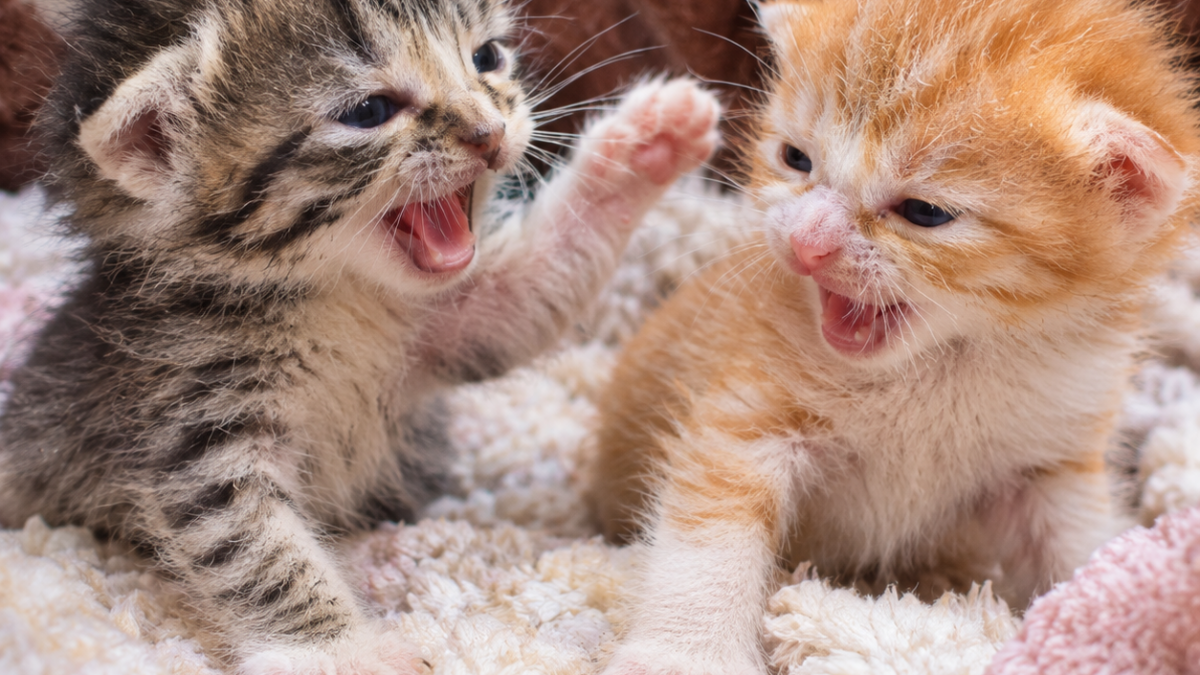
They Were the Tiniest Newborn Kittens I’d Ever Seen—But Their Attitude Was Bigger Than the Whole House
Their eyes were barely open, their bodies were no bigger than tangled balls of yarn, and neither kitten could even stand without wobbling—but somehow they had already decided that every human hand, sibling, dog, and camera in the house was a personal enemy.
One moment they were screaming, hissing, biting each other and fighting over food that was practically bigger than both of them combined; the next, separating them for even a short time had them crying desperately until they were back together.
Then I reached toward the smallest one expecting another furious hiss, and instead she slowly melted beneath my hand, revealing what all that ridiculous newborn rage had really been hiding.
The first thing you need to understand about newborn kittens is that nobody tells them they are small.
Nobody sits them down and explains that their legs barely work.
Nobody reminds them that their ears are tiny, their claws are microscopic, and their entire body could fit inside two human hands.
Nobody tells them that the world is several thousand times larger than they are.
So they behave accordingly.
Like lions.
Very angry, very unstable, extremely fluffy lions.
That was how these two arrived in my life.
Two little bodies tangled together so tightly that from a few feet away they barely looked like separate animals.
They looked like two dirty balls of yarn someone had accidentally left breathing.
One darker.
One lighter.
Both tiny.
Both furious.
And both absolutely convinced they were terrifying.
The first time I reached toward the smaller kitten, she flattened her ears.
Her mouth opened.
A sound came out that was supposed to be a hiss.
What it actually sounded like was air escaping from a squeaky toy.
I stopped.
She stared.
Her entire body was maybe a handful.
Her courage was approximately the size of a mountain.
“Oh,” I whispered. “You’re vicious.”
She hissed again.
Then screamed.
Not because I touched her.
I had not.
Apparently being looked at was offensive enough.
I laughed.
That made things worse.
Her sibling moved beside her.
Now both of them were awake.
Two little heads.
Two sets of barely open eyes.
Four ears trying very hard to lie flat.
Suddenly I was facing the most poorly organized defensive unit in the animal kingdom.
“Okay. Okay.”
Hiss.
“Very scary.”
Another hiss.
“Terrifying.”
PART2:
One attempted to move backward.
His legs tangled beneath him and he rolled sideways into his sister.
She immediately became angry at him.
Within seconds, they were fighting.
Not a real fight.
Newborn-kitten warfare.
Paw.
Mouth.
Tiny squeal.
One climbed partly over the other.
The other protested.
Then they switched positions.
A minute earlier, they had been united against me.
Now apparently their greatest enemy was each other.
I watched them bicker.
“Are you two serious?”
They were.
At that age, every disagreement looked enormous.
Who got the warm spot.
Who was touching whose face.
Who was closer to Mama.
Who had a paw where the other kitten believed a paw should not be.
Who received attention first.
Everything could become a crisis.
Yet the strange thing was this:
Separate them, and the war stopped immediately.
A few hours apart?
Crying.
Calling.
Looking for each other.
PART3:
The same sibling you were biting ten minutes ago suddenly became the most important living creature in the world.
That contradiction became the theme of their early days.
I hate you.
Do not touch me.
Give me your food.
Move your paw.
Also, where are you going?
Come back immediately.
They were ridiculous.
And completely inseparable.
Their mother had her own opinion about all of this.
She had already learned something humans eventually learn about babies.
Some battles are not worth joining.
When the kittens began climbing over each other, Mama might glance down.
Sometimes she adjusted her body.
Sometimes she washed one.
Sometimes she simply looked away with the expression of a mother who had already been awake for far too many hours.
Then the babies would find milk.
Peace.
For perhaps thirty seconds.
Watching them nurse was one of my favorite things.
Because all the aggression disappeared.
The flattened ears relaxed.
The tiny mouths that had been hissing at me were suddenly completely occupied.
Their paws pressed against Mama.
Little kneading motions.
Push.
Release.
Push.
Release.
They drank as if they had never eaten before and would never eat again.
Then, somehow, while still nursing, one would discover the other kitten’s paw.
And the fighting would begin again.
Without even leaving dinner.
I once watched one kitten drink while pushing his sibling’s face away with a front paw.
The sibling responded by crawling directly on top of him.
Neither stopped eating.
“Seriously?”
Mama closed her eyes.
I understood.
They would refuel on milk and immediately burn every calorie fighting each other.
That was probably why they always seemed hungry.
Their lives consisted of three activities.
Eat.
Sleep.
Start unnecessary drama.
Sometimes all three happened within five minutes.
One particular kitten developed a reputation early.
The little girl.
She had a face permanently designed to look disappointed with humanity.
Round.
Tiny.
Ears that flattened dramatically whenever she was annoyed.
And she was annoyed often.
I would approach.
Hiss.
I would speak.
Hiss.
I would move too quickly.
Hiss.
I would move too slowly.
Probably also offensive.
“Why are you mad?”
She stared.
“Your eyes aren’t even fully open.”
Hiss.
“You don’t even know what you’re angry about.”
That earned another scream.
I started asking her questions.
“Did someone forget to tell you you’re a baby?”
She opened her mouth.
“You weigh practically nothing.”
Another hiss.
“You can’t even walk straight.”
She tried to stand.
Wobbled.
Sat down accidentally.
Then hissed again.
Apparently balance problems were my fault.
It was impossible not to laugh.
But beneath the comedy was something real.
Fear.
These kittens were still learning what humans were.
A hand approaching from above could look enormous.
A face leaning close might feel threatening.
A voice could be loud.
A new smell could be dangerous.
Their attitude was not bad behavior.
It was defense.
They were tiny animals equipped with only a few tools.
Hiss.
Spit.
Scream.
Bite.
Try to look bigger.
When you have no size, confidence becomes armor.
So I never punished the hissing.
Never forced them into affection.
I talked softly.
Moved slowly.
Let them decide.
Sometimes that meant sitting nearby while a kitten glared at me like I owed her money.
That was fine.
Trust does not become stronger because you rush it.
One day I leaned toward her.
“Can I have one kiss?”
Her ears flattened immediately.
“Just one.”
I kissed the top of her head.
Nothing happened.
So I got brave.
Second kiss.
She turned.
Opened her mouth.
And protested directly into my face.
I pulled back laughing.
“Okay. One kiss is free. The second costs extra milk.”
She remained furious.
Naturally.
Another day I tried reaching for her while she was curled near Mama.
“Oh, are you hissing at me?”
She absolutely was.
Tiny mouth.
No teeth worth respecting yet.
Maximum commitment.
“Oh my goodness.”
She hissed harder.
I began to wonder whether she practiced when nobody was watching.
Maybe Mama taught a class overnight.
Introduction to Intimidation.
Lesson one:
Flatten ears.
Lesson two:
Look personally offended.
Lesson three:
Make a noise far louder than your body should physically allow.
The funny thing was how quickly her attitude disappeared when she became sleepy.
One minute:
Stay away from me, giant creature.
Thirty seconds later:
Eyes closing.
Head dropping.
Body melting.
Then she would fall asleep in a position that made absolutely no sense.
Half on her sibling.
Half off the blanket.
One paw in the air.
The most dangerous kitten in the world suddenly unconscious.
I could touch her forehead lightly.
No reaction.
Stroke between her ears.
Nothing.
Sleep had defeated the warrior.
Then she woke.
Hiss.
Back on duty.
Her brother was different.
Still feisty.
But less theatrical.
Where she seemed angry at the entire world, he seemed mostly annoyed when the world interrupted what he was doing.
Eating?
Do not bother him.
Sleeping?
Do not bother him.
Biting his sister?
Definitely do not bother him.
I once separated them because one had the other pinned awkwardly.
The moment my hand appeared, he screamed as though I were committing a crime.
“Oh, okay.”
I moved him.
He continued complaining.
His sister looked at me.
Then looked at him.
Then started crying too.
“You two were fighting!”
Neither cared.
I put them back together.
Silence.
Five minutes later, they were fighting again.
That is sibling love in its purest form.
Nobody is allowed to attack my sibling except me.
As they became stronger, their personalities grew louder.
Their eyes opened more.
Their legs became more reliable.
And every improvement in mobility created a new category of trouble.
At first they could only wiggle.
Then crawl.
Then stand.
Then take a few unstable steps.
Suddenly every object became something worth investigating.
Blankets.
Hands.
Shoelaces.
Mama’s tail.
Each other.
The edge of their bed.
They moved like tiny drunk explorers.
Step.
Wobble.
Recover.
Two more steps.
Fall sideways.
Get angry.
Continue.
The little girl especially hated being caught after losing balance.
If I steadied her:
Hiss.
“You were falling.”
Hiss.
“I helped you.”
Hiss.
“Okay. Next time I’ll let gravity handle it.”
She seemed satisfied.
Sometimes I wondered how something that small could contain so much attitude.
She could sit inside my hand.
Yet she behaved like she owned the entire room.
When strangers saw videos of her, they always had the same reaction.
How can something so angry be so cute?
That was the problem.
Her anger made her cuter.
Which meant humans wanted to approach.
Which made her angrier.
Which made her cuter.
A terrible cycle.
Someone would say:
“Oh, look at that grumpy face!”
Hiss.
“Oh my goodness!”
Hiss.
“She’s so spicy!”
HISS.
Then she would scream.
And everyone would laugh.
Poor kitten.
Nobody respected her authority.
I tried.
Sometimes.
“You’re very scary.”
She stared.
“Extremely intimidating.”
Tiny paw lifted.
“I am terrified.”
Paw lowered.
Maybe she believed me.
Her confidence did not stop at humans.
Eventually the kittens began noticing the other animals in the home.
That included the dog.
Unfortunately for everyone involved, the dog once came home smelling terrible.
Skunk.
There are smells you can describe politely.
Then there is skunk.
The dog entered.
The kittens smelled him before they really understood what they were seeing.
Their faces changed.
Even Mama looked offended.
I remember looking at the dog.
“You smell horrible.”
He did not disagree.
One kitten froze.
The other pulled back.
For once, neither hissed at me.
The dog had united us.
Everybody had a common enemy now.
The smell.
The poor dog was confused.
He wanted to come closer.
Absolutely not.
The tiny kittens reacted as if the apocalypse had entered the room wearing fur.
Even after the worst odor disappeared, they watched the dog suspiciously.
He could lie twenty feet away doing nothing.
They still stared.
Particularly the little girl.
Guard mode.
Her body would stiffen.
Ears turn.
Eyes focus.
Like she had personally been assigned to defend the entire household.
I looked at her.
“Are you really guarding us?”
Yes.
Apparently.
She weighed a handful.
The dog could probably cover her completely with one paw.
Still, she was on duty.
“Oh, scary.”
She glared.
I learned not to question security.
As their bodies grew, food became another source of chaos.
Mama’s milk remained important.
But eventually other smells became interesting.
The first time meat appeared nearby, both kittens reacted as if they had discovered buried treasure.
The piece looked enormous next to them.
Possibly heavier than both kittens combined.
That did not matter.
They wanted it.
Both.
Immediately.
One moved first.
The other noticed.
Competition began.
Little paws.
Tiny growls.
Someone tried climbing onto the food.
Someone else tried climbing onto the sibling.
I laughed.
“That meat is bigger than both of you.”
No one cared.
Food has its own laws.
They fought.
Then ate.
Then fought because the other was eating.
Mama watched.
Again.
Tired.
I could practically hear her thinking:
I gave birth to these?
Sometimes I asked her.
“Mom, are they always like this?”
She would blink.
No comment.
She had the patience of someone who understood the temporary nature of chaos.
The kittens did not.
Every crisis was permanent.
Every meal was the last meal.
Every sibling disagreement was a betrayal.
Every human hand was suspicious.
Every nap was complete surrender.
Yet they kept getting bigger.
Not quickly enough to notice from one hour to the next.
But compare one week to another and suddenly they looked different.
Ears larger.
Eyes brighter.
Bodies rounder.
Fur fluffier.
Movement faster.
Their hisses sounded slightly more convincing.
Unfortunately.
I began seeing something else too.
Curiosity was starting to compete with fear.
Before, my hand meant:
Danger.
Now sometimes it meant:
Maybe danger.
But also warmth.
Maybe petting.
Possibly food.
Interesting.
The little girl would hiss.
Then sniff.
Hiss again.
Then move one step closer.
I had to pretend not to notice.
Trust is fragile when it first appears.
If you celebrate too loudly, you scare it away.
So I would sit.
Wait.
Let her investigate.
Once she reached my hand.
Sniffed one finger.
Then touched it with her paw.
No claws.
Just contact.
I stayed still.
She sniffed again.
Then suddenly remembered she was supposed to be angry.
Hiss.
I laughed.
Progress.
“You almost liked me.”
She looked horrified by the accusation.
Another day, she was sleepy.
Very sleepy.
I touched her head.
Usually she would complain.
This time:
Nothing.
I rubbed gently between her ears.
Her eyes closed farther.
Then I stroked the side of her face.
Her body softened.
“Oh.”
There it was.
The tiny boss had a weakness.
Warm hands.
She relaxed completely.
No hiss.
No scream.
No attempt to look dangerous.
Just a baby beneath a gentle hand.
That moment explained everything.
The attitude was real.
But so was the need beneath it.
Warmth.
Safety.
Mother.
Sibling.
Food.
Sleep.
The whole enormous personality lived inside a baby whose eyes had only recently opened.
Of course she was defensive.
The world was new.
Everything was huge.
She was trying to survive it.
My job was not to defeat the attitude.
It was to make the attitude unnecessary.
So I kept moving slowly.
Speaking softly.
Offering contact.
Accepting no.
Some days she allowed more.
Some days less.
That was fine.
Meanwhile her brother discovered climbing.
First onto bedding.
Then onto low objects.
Then, eventually, onto another cat.
The older cat in the home became what I started calling “big brother.”
At first he tolerated the babies.
Then tolerated them slightly closer.
Then somehow one of the kittens discovered his neck.
The kitten climbed up.
Settled across him.
Like a tiny rider.
Big brother looked at me.
The expression was pure resignation.
“What?”
He did not move.
The kitten adjusted.
Comfortable.
From that day forward, climbing onto big brother became an activity.
Every day if allowed.
Shoulder.
Back.
Neck.
Tiny paws gripping fur.
Big brother carried the little passenger around like this was somehow included in the responsibilities of adulthood.
I started laughing every time.
“You spoil that baby.”
He did.
He pretended not to.
But he did.
If the kitten slipped, he slowed down.
If the baby climbed awkwardly, he waited.
That was acceptance.
Not dramatic.
No grand maternal instinct.
Just patience.
The kittens gradually collected relationships.
Mama meant milk and safety.
Sibling meant wrestling and comfort.
Big brother meant transportation.
Humans meant suspiciously warm hands and food.
Dog meant questionable smell.
Everyone had a role.
Every day became its own tiny comedy.
One kitten sleeping.
The other attacking.
Mama trying to rest.
Sibling stepping on her face.
Human trying to take a picture.
Kitten hissing at the camera.
Someone saying:
“Oh, you’re so vicious.”
Kitten proving the point.
There were moments I wondered whether they were actually trying to sound threatening or simply experimenting with their voices.
The noises changed constantly.
Tiny growl.
Hiss.
Scream.
Squeak.
Something that sounded like a broken toy.
Once one of them produced such a strange sound that I stopped.
“What was that?”
The kitten looked equally surprised.
Maybe he had no idea.
Growing bodies discover themselves in real time.
Voice included.
The little girl developed what I called her sulky streak.
If something did not go her way, her whole face changed.
Ears.
Eyes.
Mouth.
She did not need language.
The message was clear.
I disapprove.
Sometimes I wondered whether she inherited it from Mama.
I would look at Mama.
“Huh?”
Mama stared.
Possibly.
One day the siblings were arguing loudly.
Again.
I jokingly told them:
“One more hiss and nobody gets pâté tonight.”
Instantly another hiss.
Of course.
“Oh, you’re angry.”
The kitten screamed.
“Very angry.”
I almost admired the commitment.
People would say:
“Where did you learn such bad words?”
The kitten answered in kitten profanity.
Hiss.
Spit.
Scream.
Maybe Mama taught them.
Maybe babies are born fluent.
I watched Mama sometimes after a particularly dramatic episode.
Her face said:
Do not involve me.
I understood.
Parenthood is exhausting in every species.
Especially when your children believe they run the household before they can even walk correctly.
There was one little kitten whose eyes were not fully open when she already demanded all of Mama’s attention.
If another sibling moved closer:
Problem.
If Mama shifted position:
Problem.
If a human approached:
Major problem.
Yet eventually sleep always won.
I would watch the kitten fight drowsiness.
Eyes narrowing.
Head bobbing.
Sudden wake-up.
Hiss.
Then head dropping again.
“You were asleep.”
No response.
Eyes closed.
Three seconds later:
Completely gone.
It was impossible to take their anger seriously.
They looked like two fuzzy potatoes having emotional emergencies.
From a distance they sometimes blended into each other.
Two tangled balls of yarn.
You might have asked:
Are those even kittens?
Then one head appeared.
Another paw.
A scream.
Definitely kittens.
Feral instincts made them especially dramatic during introductions.
Sometimes I would approach and say:
“Hey, kitties.”
Immediately:
Hiss.
“Kitty kitties.”
Hiss.
“Are you hissing at me?”
Yes.
Obviously.
The funniest part was how quickly food changed everything.
Offer milk.
Suddenly diplomacy became possible.
One kiss?
Maybe.
Second kiss?
Extra milk required.
That became the house joke.
Affection had a price.
The kitten knew her value.
Ten out of ten.
Plus ten.
Minus nothing.
Absolute perfection.
Even covered in dirt.
Even screaming.
Especially screaming.
There were days one kitten looked filthy.
Milk dried around the mouth.
Tiny paws dusty.
Fur slightly messy from sibling wrestling.
I would hold the baby up.
“Look at you.”
The face remained angry.
“Ten out of ten.”
Hiss.
“Plus ten.”
Hiss.
“Minus nothing.”
That usually earned another protest.
But the truth was that tiny kittens do not need to look perfect.
Their awkwardness is part of the beauty.
Big bellies.
Short legs.
Half-open eyes.
Round heads.
Fur going in every direction.
They look unfinished because they are unfinished.
The world is still assembling them.
One day the little girl’s grumpy face appeared on a screen while I was filming.
I laughed.
“There it is. Your angry face for the whole world.”
She looked toward the phone.
Hiss.
Perfect timing.
If she understood cameras, she hated them.
Or loved them.
Hard to tell.
Every video seemed to capture a different form of outrage.
One moment she was defending herself from a fingertip.
Another she was fighting her sibling.
Another she was demanding Mama.
Another she was sitting alone looking as though she had been personally betrayed by life.
Then someone would touch her gently.
Instant softness.
That contrast made her unforgettable.
The feral kittens were not mean.
They were scared babies practicing bravery.
The difference matters.
When people see hissing kittens, there is a temptation to label them aggressive.
But aggression at that age often means:
I do not understand you yet.
Do not come closer.
I am afraid.
Give me space.
That is why I never wanted to punish the sound out of them.
A hiss is communication.
Better a kitten tell you she is uncomfortable than feel forced to defend herself with teeth and claws.
So when she hissed, I answered gently.
“Okay.”
Sometimes I backed away.
Sometimes I stayed still.
Sometimes I offered a hand and waited.
Eventually the distance she needed became smaller.
Hiss from across the room.
Then hiss from one foot away.
Then hiss while touching my finger.
At some point, the hiss stopped matching the body language.
She would hiss but lean toward warmth.
Hiss while accepting a stroke.
Hiss, then fall asleep in my hand.
It became habit more than warning.
A tiny kitten holding onto the identity she had built.
The fierce one.
The spicy one.
The boss.
I did not mind.
She could keep the title.
As long as she felt safe.
The siblings also started playing differently.
At first bickering was clumsy.
Later it became proper kitten wrestling.
Stalk.
Pounce.
Roll.
Grab.
Kick.
Pause.
Switch.
Sometimes one screamed dramatically while clearly returning for more.
I learned to distinguish genuine distress from theatrical outrage.
Most of it was theater.
If I separated them:
Instant reunion.
They would sleep touching.
Head on sibling.
Paw over back.
Bodies pressed together.
Then wake.
Fight again.
Family.
One of them would occasionally wake first and immediately begin chewing on the other.
The victim would open one eye.
Scream.
Fight.
Then both would fall asleep ten minutes later.
It looked exhausting.
They loved it.
The bigger they became, the more their personalities filled the house.
They were still small.
But their drama was larger than life.
The phrase “tiny boss” became accurate.
Especially with the little girl.
She seemed to believe every event required her approval.
Someone moved a blanket.
Inspect.
Food arrived.
Inspect.
Big brother walked by.
Climb.
Dog approached.
Guard.
Human asked for affection.
Negotiate.
Sibling touched her while sleeping.
War.
Mama moved.
Follow.
Life with her meant constant supervision by a creature who could not reach the top of a shoe.
One afternoon she stood in the middle of the floor.
Not fully steady.
Legs spread slightly.
Body wobbling.
Face furious.
I laughed.
“You can’t even stand yet.”
She hissed.
“But the attitude works perfectly.”
Another hiss.
“Priorities.”
She took two steps.
Almost fell.
Recovered.
Then strutted away.
I had to admire it.
Confidence often arrives before competence.
Maybe that is not only true for kittens.
Eventually the kittens began spending more time away from Mama.
Not because they no longer needed her.
Because curiosity grew.
A room that once felt enormous became familiar.
Then another corner became interesting.
Then another animal.
Then a human lap.
Then a neck to ride on.
The world expanded.
Their fear shrank.
That is what socialization looked like.
Not one magical moment.
Hundreds of ordinary exposures where nothing bad happened.
A hand approached.
Nothing bad.
A voice spoke.
Nothing bad.
Big brother walked past.
Nothing bad.
Dog entered after receiving a very necessary bath.
Nothing bad.
Someone lifted a kitten gently.
Nothing bad.
Someone kissed her once.
Mostly nothing bad.
Second kiss remained controversial.
Over time, all those harmless moments taught their bodies something their instincts had not known at birth.
This place is safe.
That lesson appeared physically.
Ears stayed forward longer.
Bodies loosened.
Movement became playful instead of defensive.
They approached voluntarily.
They slept exposed.
Bellies up.
Paws everywhere.
No animal sleeps like that when it believes danger is close.
One afternoon I watched the little girl sleeping on her back.
Mouth slightly open.
Front paws curled.
A kitten who had once hissed whenever I came near.
I touched her belly lightly.
She did not wake.
I whispered:
“Where did all that attitude go?”
One eye opened.
Hiss.
There it was.
I laughed so hard she woke completely.
Some things never disappear.
And I was glad.
The goal was never to erase who she was.
Only to make sure fear was not driving everything.
Her courage was beautiful.
Even when absurd.
Especially when absurd.
She may have weighed only a handful.
But she confronted every new thing.
Humans.
Cameras.
Dogs.
Food.
Sibling.
Her world.
She did not hide forever.
She protested.
Investigated.
Adapted.
That is courage in a tiny body.
I started thinking about how different the kittens looked now compared with the first days.
Their eyes were open.
Fur cleaner.
Legs stronger.
Faces more defined.
They no longer resembled two tangled balls of yarn.
They looked like little predators.
At least they thought they did.
I once watched one crouch low.
Stare.
Tail position serious.
Eyes locked.
The target?
A piece of fabric.
The kitten pounced.
Missed.
Rolled.
Got up.
Pretended nothing happened.
“Well, look at that.”
The kitten stared.
“Real predator now.”
Hiss.
Obviously.
Their appetite kept growing.
Meals became louder.
Milk first.
Then increasing interest in other foods as age allowed.
Food transformed them into competitors.
Even the calm kitten became dramatic.
But afterwards?
Sleep.
The championship only paused for meals and naps.
Then resumed.
If one kitten slept while the other wanted to wrestle, peace lasted until the sleeper woke.
Sometimes the awake kitten tried biting anyway.
Then came a sleepy paw to the face.
Fair.
Mama still supervised.
Her role changed slowly too.
Less constant nursing.
More boundaries.
If a kitten became too rough, she corrected them.
If they demanded attention when she needed a break, sometimes she simply moved away.
The babies complained.
They survived.
Independence begins with small disappointments.
The humans in the house became substitutes for some comfort.
A warm palm.
A lap.
A soft voice.
The little girl who once acted like my hand was an approaching monster began leaning under it.
At first accidentally.
Then deliberately.
I would stroke from forehead to shoulders.
She softened.
Sometimes the eyes closed.
Sometimes a purr appeared so quietly I almost thought I imagined it.
The first time I clearly heard it, I froze.
“Are you purring?”
She continued.
“You?”
No hiss.
Just vibration.
That felt like winning a medal.
Not because I had conquered her.
Because she had decided she did not need armor at that moment.
That was trust.
One of the most beautiful things about frightened animals is watching them discover they have choices.
At first, every interaction feels unavoidable.
Human approaches.
Defend.
Then they learn:
I can move away.
I can stay.
I can sniff.
I can accept a touch.
I can climb onto someone.
I can leave.
Safety gives choices.
The kitten became braver because she had control.
If she moved away, I did not chase.
If she came forward, I stayed.
Soon she came forward more often.
The tiny boss was still the boss.
That was fine.
Big brother remained one of the kittens’ favorite companions.
I would find one riding his neck again.
He walked slowly.
Tiny passenger balanced.
Sometimes the kitten climbed higher until almost sitting behind his head.
“Why do you allow this?”
Big brother looked at me.
No answer.
Probably love.
Or exhaustion.
Sometimes those look similar.
The kitten believed this arrangement was completely normal.
Why walk when a larger animal exists?
Efficient.
I almost respected the strategy.
Then the dog would appear.
The kittens became alert.
After the skunk incident, the dog’s reputation never fully recovered.
Even when clean, he was watched.
One kitten occasionally puffed slightly.
Trying to look large.
It did not work.
He remained tiny.
But again:
He did not know.
That was their superpower.
They never measured their courage against their size.
Humans do that.
We decide we are too small.
Too inexperienced.
Too weak.
Kittens skip that part.
They hiss at the universe.
Perhaps not always wise.
But admirable.
There were moments when the babies wanted privacy too.
Humans forget that.
A tiny kitten sleeps somewhere adorable.
Naturally everyone wants a picture.
Phone appears.
Human leans in.
Kitten wakes.
Expression:
Why?
One particularly dramatic awakening came after a deep nap.
The kitten blinked.
Saw the camera.
Screamed.
I pulled back laughing.
“Nobody told us babies need privacy?”
Apparently not.
She buried her face.
Message received.
I began filming farther away.
Sometimes.
The truth was, I wanted to remember everything.
Those stages disappear unbelievably fast.
Today:
Eyes barely open.
Tomorrow:
Standing.
Then running.
Then climbing.
Then suddenly they no longer fit in your hand.
You think you will remember every tiny sound.
You will not.
Memory compresses.
Videos help.
Photos help.
That was why I kept capturing the grumpy face.
The hisses.
The sibling fights.
The bottle-drunk naps.
The wobbly legs.
The ridiculous bravery.
Because eventually those babies would grow.
And it is difficult to remember exactly how small small once was.
One image especially stays with me.
Both kittens asleep together.
After spending what felt like the entire day fighting.
Their bodies pressed side by side.
One paw over the other.
Completely relaxed.
No hissing.
No screaming.
No food argument.
Nothing.
That was their real relationship.
The fighting was noise.
The attachment ran underneath.
Siblings.
They irritated each other because they were always together.
They were always together because the other represented safety.
Warmth.
Smell.
Familiarity.
Mama mattered.
But sibling mattered too.
That was why separation made them cry.
Their world had started together.
Neither knew how to imagine it alone.
I found that beautiful.
Even if they drove each other crazy.
As the kittens grew, the house slowly became less of a battlefield.
Not peaceful.
Never peaceful.
Just less fearful.
The hisses became rarer.
The little girl still used hers whenever she felt the situation required formal protest.
But now I knew the difference.
Angry hiss.
Nervous hiss.
Habit hiss.
I-have-just-woken-up-and-disapprove hiss.
There were categories.
Her ears also gave her away.
Sometimes she hissed while the ears remained mostly neutral.
That was theater.
“You’re not even mad.”
Hiss.
“Your ears told me.”
Instant ears back.
“Oh. Now you remembered.”
I laughed.
She lunged about half an inch toward me.
Terrifying.
Then climbed into my hand.
The contradiction was perfect.
One day I said:
“You’re the baby. Why are you upset?”
She stared.
I could imagine Mama asking the same question.
Is this really the kitten I brought into the world?
Probably.
The smallest children often have the strongest opinions.
Eventually even strangers could approach more easily.
Not everyone.
Not immediately.
But the kittens had learned that humans brought good things.
Warmth.
Food.
Comfort.
Play.
The transformation was visible.
One early video might show:
Stay back.
Weeks later:
Approach.
Sniff.
Maybe climb.
That was the reward.
Not making a wild kitten perform affection.
Watching fear loosen its grip.
I never stopped respecting their attitude, though.
Because attitude had helped carry them through those early vulnerable days.
Tiny animals cannot fight real danger effectively.
But instinct tells them to try.
Hiss.
Spit.
Claw.
Appear larger.
Make noise.
It is their declaration:
I am here.
Do not hurt me.
There is something moving about that when the animal is small enough to fit in your palm.
No power.
Still resistance.
That is why I stopped joking that they were “bad.”
They were spicy.
Feisty.
Dramatic.
Exhausting.
But not bad.
They were babies learning the rules of a world that had not yet proven itself safe.
And every day, we tried to prove it.
Warm bed.
Mama nearby.
Sibling nearby.
Food arriving.
Gentle hands.
No one forcing affection.
Big brother available for unauthorized transportation.
Dog mostly deodorized.
A stable routine.
Eventually the world became less threatening.
The kittens softened.
Even the tiny boss.
Not completely.
Thank goodness.
One afternoon she was lying beneath my hand.
I rubbed slowly between her ears.
Her entire body relaxed.
Eyes closed.
Tiny paw curled against my finger.
No hiss.
No scream.
Nothing to prove.
There she was.
Not the warrior.
Not the viral grumpy face.
Not the tiny predator.
Just a baby.
Warm.
Sleepy.
Safe.
I remember thinking:
This is what all that attitude was protecting.
Something incredibly soft.
That is why you cannot rush frightened animals.
If I had punished every hiss, grabbed her every time she backed away, forced every cuddle, maybe she would have learned that humans really were something to fear.
Instead, we waited.
Let the little lion decide.
Eventually she put the armor down herself.
For a while.
Then woke up and hissed at me again.
Naturally.
The other kitten grew braver too.
They played harder.
Ran faster.
Explored farther.
The tangled yarn stage passed.
The wobbly potato stage passed.
Soon their little faces looked distinctly feline.
Eyes wide.
Ears upright.
Bodies balanced.
I looked at old footage.
“Were you really that small?”
They were.
It felt impossible.
That is one reason tiny newborns are so special.
They change while you are looking at them.
The baby who cannot stand today may be climbing something next week.
The kitten whose eyes are barely open suddenly stares at you with complete confidence.
Development feels like magic because it happens faster than adult memory expects.
And still:
Their personalities were there from almost the beginning.
Especially hers.
That grumpy little streak never had to be taught.
Maybe Mama gave it to her.
Maybe the universe did.
Maybe some cats simply arrive with opinions.
Whatever the answer, it became part of why everyone loved her.
Not because anger is cute.
Because watching such a tiny animal express herself so completely is irresistible.
She was never invisible.
Never passive.
Never unsure about letting you know when a boundary had been crossed.
One kiss?
Acceptable.
Second?
Payment required.
That kitten understood economics early.
One day she allowed me to kiss her twice without protesting.
I froze.
“Oh.”
No hiss.
“Did we become friends?”
She looked at me.
Then bit my finger.
Progress comes in complicated forms.
There were still tiny wars.
Sibling wrestling.
Food stealing.
Mama attention disputes.
Climbing big brother.
Running from grooming.
Attacking toys.
But now these were not survival behaviors.
They were childhood.
That distinction was everything.
A kitten playing rough because she feels secure is different from a kitten hissing because she expects danger.
The noise sounded similar.
The body told the truth.
Loose.
Bouncy.
Returning for more.
Safe.
Sometimes both kittens would race until exhaustion.
Then collapse beside each other.
From chaos to sleep instantly.
I would look down.
Two little bodies.
Breathing slowly.
The house quiet for perhaps ten minutes.
I learned to appreciate those ten minutes.
Mama definitely did.
She stretched farther away.
Eyes closed.
Finally.
Then someone woke.
The championship resumed.
Tiny paws.
Huge feelings.
Drama larger than life.
That was them.
People online eventually saw little clips and reacted to the obvious part.
The hissing.
The expressions.
The unbelievable attitude.
“How can something that small be that angry?”
“Why is she so spicy?”
“She thinks she’s a tiger.”
“Look at those ears!”
I understood.
It was funny.
But living with them showed me the other story beneath the comedy.
The kittens were learning trust in real time.
Every ridiculous hiss was one frame.
Every relaxed nap was another.
Every sibling cuddle.
Every meal with Mama.
Every climb onto big brother.
Every hand they eventually accepted.
The entire process was a conversation.
Are you safe?
Yes.
Are you still safe?
Yes.
What if I hiss?
Still safe.
What if I bite?
Still safe, but please stop.
What if I sleep?
Still safe.
What if I close my eyes completely?
Still safe.
That is how trust accumulates.
Not through one dramatic act.
Through repetition.
The babies did not understand the concept.
Their nervous systems did.
Eventually they stopped preparing for danger every second.
That is when their real personalities became fun instead of defensive.
The little girl remained bossy.
The boy remained stubborn.
They still argued.
Still demanded food.
Still competed for Mama.
But underneath all of it:
Security.
By then, when I reached toward the tiny boss, she might still give me a warning sound.
Then lean into the touch anyway.
Her own contradiction.
I adored it.
Sometimes I would say:
“Honestly, you humans are such a handful.”
Speaking for her.
Because her face clearly said it.
She tolerated us.
Barely.
We were loud.
Always touching things.
Always taking pictures.
Always demanding kisses.
Terrible staff.
Yet somehow she stayed near us.
That was our permission to keep trying.
One day she sat upright looking almost grown.
Not grown.
But compared with the first week?
A predator.
I smiled.
“Well, look at you.”
She stared.
“Real cat now.”
Then she attempted to chase something.
Missed.
Reality restored.
She would get there.
They both would.
That was the bittersweet part.
Every improvement moved them farther from being the tiny babies everyone had fallen in love with.
But that was exactly what we wanted.
Healthy kittens should grow.
The goal is not preserving fragility because fragility is cute.
The goal is helping them become strong enough that they no longer need constant protection.
So when their legs strengthened, I celebrated.
When their eyes opened completely, celebrated.
When they fought harder, sometimes celebrated from farther away.
When they explored, celebrated.
When Mama needed less time beside them, celebrated.
Growth is the success.
Even if you miss the tiny stage.
And I knew I would miss it.
The screaming.
Maybe not.
The 3 a.m. drama.
Definitely not.
But the way they fit together like yarn?
Yes.
The first tiny hisses?
Yes.
The furious faces?
Absolutely.
The way one little body could fit in a hand while acting like it could defeat the world?
I would miss that most.
Maybe that is why we remember newborn animals so strongly.
They are impossible contradictions.
Completely dependent.
Completely determined.
Physically helpless.
Emotionally enormous.
Soft.
Fierce.
Afraid.
Curious.
They need everything from you while acting like they need nothing.
That was these kittens.
Especially the little girl.
The tiniest boss in the house.
One evening she fell asleep beneath Mama’s warm body.
Her sibling pressed beside her.
Big brother nearby.
Dog asleep farther across the room.
No hissing.
No competition.
No cameras close to her face.
Nothing happening.
Just a house full of animals resting.
I watched for a while.
This was the part nobody thinks will go viral.
Quiet.
But it was my favorite.
The kittens looked completely safe.
No guard duty.
No tiny wars.
No proving how tough they were.
The world had finally become gentle enough for them to stop fighting it for a few hours.
That felt like the real achievement.
The next morning?
Hiss.
Of course.
I laughed.
“Good morning to you too.”
The little girl stared at me with the same offended expression she had worn from the beginning.
But this time she walked forward after hissing.
Climbed onto my hand.
Curled herself into my palm.
Then started falling asleep.
I looked down at her.
“You know, nobody believes you’re scary anymore.”
One eye opened.
Very slowly.
Her ears moved back.
A tiny warning sound escaped.
I smiled.
“Okay.”
I lowered my voice.
“Very scary.”
Her eye closed again.
Peace restored.
Maybe she never wanted us to stop believing.
So I never did.
To this day, when I remember those early weeks, I do not first remember how small they were.
I remember how enormous they seemed to themselves.
The confidence.
The noise.
The impossible determination.
Two little kittens who could barely coordinate their own legs but were already prepared to challenge the entire world.
And maybe that was exactly what something that vulnerable needed.
They were tiny.
But nobody had told them.
So they behaved like they could handle anything.
Sometimes Mama handled it for them.
Sometimes a sibling did.
Sometimes big brother.
Sometimes us.
And slowly, they learned something even better than being fearless.
They learned they did not always have to be.
Because beneath all the hissing, screaming, sibling wars, bottle fights and tiny attempts at intimidation, what those babies wanted was the same thing every newborn wants.
Warmth.
Food.
Family.
And somewhere safe enough to finally put the attitude down and sleep.








